


General
What Is On-Demand Delivery Management Software? Features and Benefits
Key Takeaways
- On-demand delivery models allow businesses to fulfill customer orders almost immediately after they are placed, supporting faster fulfillment across retail, grocery, healthcare, and courier services.
- Delivery platforms help businesses manage continuous order flow by coordinating fulfillment processes and maintaining operational control across expanding delivery networks.
- Businesses across industries are adopting on-demand delivery applications to support rapid delivery expectations and provide more responsive customer service.
- Features such as delivery scheduling, order broadcasting, dynamic routing, and crowdsourced driver networks help businesses support flexible delivery operations.
- Enterprise platforms such as Locus help businesses operationalize on-demand delivery through logistics orchestration, enabling organizations to manage complex delivery networks efficiently.
On-demand delivery has redefined how customers receive products and services. Today, you can order groceries, meals, medicines, retail products, or even courier pickups within minutes using a mobile application or online storefront. What began with food delivery platforms has now expanded across retail, e-commerce, healthcare, and logistics networks.
According to Statista, the global online food delivery market generated $1,195.4 billion in revenue in 2024 and is projected to reach $1,854.5 billion by 2029. As more industries adopt similar delivery models, businesses must coordinate orders, drivers, and delivery routes continuously throughout the day.
This article explores what on-demand delivery management software is, how it supports coordination, the capabilities these platforms provide, and how leading solutions like Locus are the top choice for businesses to manage on-demand delivery networks.
First things first…
What Is an On-Demand Delivery Platform?
An on-demand delivery platform or software refers to the set of tools that allows a business to receive an online order and provide express delivery of its products with a highly efficient transportation system. It connects order intake, driver assignment, route planning, and delivery tracking so you can move orders from pipeline to execution, immediately after they are placed.
The platform uses technologies such as AI, machine learning, natural language processing (NLP), and geocoding to match delivery requests with available drivers and determine delivery routes.
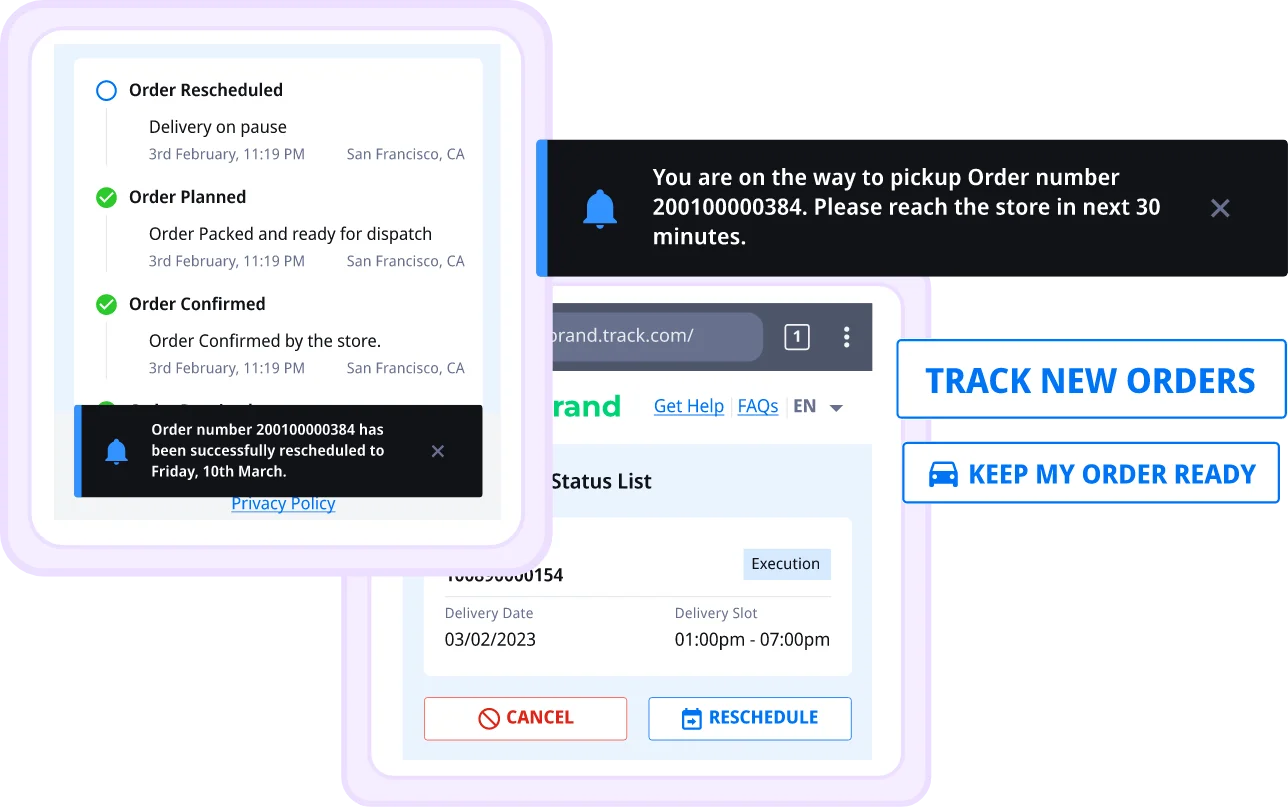
It allows the customer to register on the app, find the required product, pay online, and place the order. The software then begins to process the order by finding and matching delivery personnel who can fulfill the delivery in the shortest period of time.
With Locus, both the customer and the business can track the exact location of the driver.
Read more: On-Demand Delivery Explained: Importance, Benefits, and Challenges
How Does On-Demand Delivery Work?
Think of a single order moving through your delivery system. Once a customer places a request, the order begins moving through a sequence of steps until it reaches the customer.
Below is how this process unfolds:
- Order Placement: The process begins when a customer places an order through your mobile app, online store, marketplace platform, messaging interface, or customer service portal.
At this moment, the system captures essential information such as the delivery address, order details, and requested service. This information becomes the starting point for the delivery workflow.
- Order Notification: Once the order enters the system, the platform registers the request and alerts the delivery network that a new delivery job is ready to be processed.
The request moves from the customer-facing interface into the operational environment that manages fulfillment.
- Order Preparation: At the fulfillment location, the order is prepared for delivery. This could involve packing items at a retail store, assembling products inside a warehouse facility, preparing meals in a restaurant kitchen, collecting items from a dark store, or organizing goods at a distribution hub.
Once the order is ready, it becomes available for dispatch.
- Dispatching the Delivery: The system determines how the order should be delivered.
It evaluates available drivers, reviews the delivery distance, checks current traffic conditions, examines service zone rules, and considers driver workload before deciding who should handle the request.
- Personnel Assignment: After the system selects the appropriate driver, the delivery request appears on the driver’s device.
The driver reviews the order details, accepts the assignment, navigates to the pickup location, confirms the order collection, and prepares for the delivery trip.
- Real-Time Tracking: Once the driver begins moving, the platform continuously updates the delivery status.
You and your customers can follow the vehicle’s location, monitor delivery progress, view estimated arrival updates, receive notifications during the journey, and stay informed until the order arrives.
- Delivery Execution: After collecting the order, the driver travels to the customer’s destination using guided navigation.
The platform continues to observe delivery progress, ensure the route is followed correctly, monitor travel conditions, and confirm that the order reaches the correct location.
- Delivery Confirmation: When the delivery is completed, the system records proof that the order has been successfully handed over.
This confirmation can appear as a delivery status update, a digital signature from the customer, a delivery photo record, a barcode scan confirmation, or a completion acknowledgment inside the driver application.
- Customer Feedback and Rating: After the delivery is finished, customers can rate their experience and share feedback.
This allows you to understand how deliveries perform across locations, identify service improvements, and refine the overall delivery experience.
Behind this operational flow, delivery orchestration platforms such as Locus help you manage these processes at scale so orders move reliably through each stage even as delivery volumes increase across regions.
Read the case study on how to increase visibility for on-demand pharma companies:
Types of On-Demand Delivery Applications
On-demand delivery applications are typically designed around the type of service or product being delivered. Each category supports a different fulfillment workflow, but they all rely on digital ordering, driver coordination, and delivery tracking.
| On-Demand Food Delivery Apps | Food delivery apps allow customers to browse restaurant menus, place orders, and receive meals at their doorstep. For example, a customer ordering lunch from a nearby restaurant through a mobile app can choose items from the menu, place the order, and track the driver bringing the meal to their location. |
| On-Demand Grocery Delivery Apps | Grocery delivery apps allow customers to purchase everyday essentials from nearby stores and receive them at home. For instance, a customer placing an order for fruits, vegetables, dairy products, and household items through a grocery app can receive the products within a few hours after a store associate picks and prepares the order. |
| On-Demand Transportation Apps | Transportation apps allow customers to request rides instantly through a mobile platform. For example, a commuter leaving the office can book a ride through an app and follow the driver’s progress until they reach their destination. |
| On-Demand Retail Delivery Apps | Retail delivery apps allow customers to purchase products such as electronics, clothing, or household goods online and receive them quickly. For instance, a customer ordering a phone charger through a retail app may receive the product the same day through a local delivery partner. |
| On-Demand Medicine Delivery Apps | Medicine delivery apps allow customers to order prescription or over-the-counter medicines from nearby pharmacies. For example, a patient who uploads a prescription through a pharmacy app can receive the required medicines delivered to their home within a few hours. |
| On-Demand Courier Delivery Apps | Courier delivery apps allow businesses and individuals to send packages quickly within a city. For instance, a small business owner may request a pickup through a courier app to send documents or products to a customer across town. |
Behind these customer-facing applications, businesses still need systems that help you manage delivery execution across your network.
Locus supports these operations through products such as Shipflex, which helps you orchestrate multi-carrier delivery networks and manage fulfillment flexibility.
Alongside Shipflex, Locus enables automated dispatch, dynamic route optimization, delivery capacity planning, real-time operational monitoring, and delivery performance analytics across on-demand delivery networks.
Benefits of Using an On-Demand Delivery Platform
You need systems that help you maintain consistent service while handling larger order volumes across different service areas.
- Handling Demand Spikes: Order volumes often increase during seasonal demand, promotional events, or peak ordering hours. An on-demand delivery platform allows you to distribute incoming orders across available drivers so operations continue without disruption.
- Improved Driver Productivity: When delivery assignments are coordinated through a centralized platform, you can allocate delivery tasks more efficiently. Drivers spend more time completing deliveries instead of waiting for assignments.
- Higher First-Attempt Delivery Success: Accurate address capture and structured order processing help you complete deliveries successfully on the first attempt. This reduces the need for repeated delivery visits.
- Consistent Delivery Operations Across Regions: If your business operates in multiple cities, a delivery platform helps you maintain the same operational processes across locations while adapting to local service areas.
Read more: How Locus carries out multi-country engagements
- Better Capacity Planning: Historical order data helps you understand when demand increases. You can plan driver availability and delivery coverage accordingly.
- Delivery Performance Monitoring: Reporting dashboards allow you to evaluate service performance, including delivery completion rates and operational timelines.
- Reduced Delivery Exceptions: Structured workflows help you reduce issues such as incorrect delivery assignments or missed pickups.
- Operational Scalability: As your delivery network grows, the platform allows you to expand into new regions while continuing to operate through the same system.
Platforms such as Locus support these outcomes by helping you manage delivery operations across large service areas while maintaining operational consistency as demand increases.
How Are On-Demand Delivery Companies Improving Customer Experience?
For on-demand delivery companies, the aim must be to satisfy you by delivering your orders on time and improving your experience with the enterprise through all ways possible.
Free Deliveries
Customers love nothing more than freebies. On-demand delivery companies use this by offering free deliveries within a specific radius or location or above a certain order value. When you receive delivery benefits like these, as a customer, you feel encouraged to return for future purchases.
Ensuring Same-day and 1-hour Deliveries
A defining feature of on-demand delivery services is fulfillment within a day, and sometimes within an hour. If you require essentials urgently, this capability becomes extremely valuable. By consistently meeting same-day or one-hour delivery commitments, businesses maintain your trust and strengthen customer relationships.
Customer Transparency
On-demand delivery companies keep you informed at every stage of the delivery process. From the moment a delivery driver is assigned to tracking the exact location of your order, the entire journey remains visible so that you always know the status of your delivery.
Follow-Me Delivery
Your location may change during the day, especially when you are traveling between home, office, or other destinations. Follow-me delivery allows you to update the delivery location even after the order is already on the way. This helps ensure the package reaches you at your current location instead of the original address, reducing missed deliveries and making the delivery experience more convenient.
Contactless Deliveries
Contactless delivery ensures safety for both delivery personnel and customers. Digital payments and electronic receipts help businesses complete deliveries while maintaining safety standards and operational efficiency.
Curbside Pickups
Curbside pickup allows you to collect your order from a designated location at your convenience. This option is helpful if you are unavailable during standard delivery hours and prefer picking up the order when it suits your schedule.
Easy Returns Processes
Modern delivery platforms allow you to initiate returns directly through your mobile application. Instead of visiting a store, you can request a return, schedule a pickup, track the return request, confirm item collection, and receive refunds through the same platform, making the process simpler and faster.
Read more: Guide on effective returns management
In-store Feel Purchasing Experience
Even when you shop online, you still want the confidence of an in-store experience. Clear product information, user-friendly applications, customization options, and responsive support help you make purchasing decisions from home with the same clarity you would expect in a physical store.
Behind these customer-facing experiences, businesses rely on delivery orchestration platforms to execute operations reliably.
With Locus, you get same-day fulfillment, maintain delivery transparency, coordinate complex delivery networks, improve driver utilization, and monitor delivery performance so you can consistently deliver the service experience your customers expect.
Features of an On-Demand Delivery Platform
An effective on-demand delivery platform helps you coordinate order intake, delivery execution, and operational oversight within one system. These capabilities allow you to manage delivery operations efficiently as order volumes increase.
- Scaling On-Demand Deliveries: When delivery demand increases, the platform helps you handle a larger flow of orders while maintaining operational consistency across service areas. It allows you to manage delivery capacity and maintain service reliability as your delivery network expands.
- Delivery Scheduling: Customers may prefer receiving their orders during specific time windows. A delivery platform allows you to schedule deliveries according to customer preferences while coordinating driver availability and service zones.
- Order Broadcasting: Order broadcasting allows you to notify available drivers or delivery partners about a delivery request. Drivers can review the order details through their mobile application and accept the request, helping you assign deliveries quickly.
- Crowdsourced Driver Management: Delivery demand can vary throughout the day. Crowdsourcing capabilities allow you to engage additional delivery personnel when demand increases, helping you maintain service continuity without permanently expanding your fleet.
Read more: Crowdsourced Delivery Promises Growth for the All-Mile
- Real-Time Dynamic Routing: Dynamic routing allows the system to recommend efficient routes based on current road conditions and delivery requirements. This helps drivers reach destinations faster while keeping delivery timelines consistent.
- Service Point Deliveries: Some customers prefer collecting their orders from designated pickup points rather than receiving home deliveries. Service point delivery options allow you to manage such pickups through authorized locations.
- Contactless Delivery Operations: Contactless deliveries allow customers to receive their orders without direct interaction. Digital payments, electronic confirmations, and minimal physical contact help ensure safe delivery operations.
Platforms such as Locus support these capabilities through AI-driven delivery orchestration, real-time operational control, intelligent decision support, and scalable infrastructure designed for high-volume delivery environments.
Operationalize On-Demand Delivery With Locus
Managing on-demand delivery operations requires systems that can support large delivery networks while maintaining consistent service execution. Retailers, e-commerce companies, logistics providers, and distributors rely on delivery platforms that allow them to coordinate high delivery volumes without operational disruption.
Locus enables you to build and scale on-demand delivery networks with greater control and efficiency. Through AI-powered dispatch automation, advanced routing intelligence, centralized operational control, and delivery capacity planning, you can manage complex delivery environments while maintaining reliable service performance.
Backed by Ingka Group, one of the largest IKEA franchisees, Locus delivers enterprise-grade logistics orchestration for organizations that want to transform delivery operations into a strategic capability. Its modular, API-first architecture allows you to integrate the platform with existing systems and evolve your delivery workflows as operational needs grow.
If you want to operationalize on-demand delivery at scale, book a demo with Locus to see how you can plan, execute, and optimize delivery operations across your entire network.
Frequently Asked Questions (FAQs)
1. How does on-demand delivery differ from scheduled delivery models?
On-demand delivery begins immediately after an order is placed, while scheduled delivery operates within predefined delivery windows planned in advance.
2. Can on-demand delivery platforms integrate with existing business systems?
Yes. Most platforms integrate with systems such as order management, warehouse management, and e-commerce platforms so delivery operations can function within your existing technology ecosystem.
3. What role does automation play in on-demand delivery operations?
Automation helps manage order flow, driver assignment, and operational monitoring. This allows businesses to handle increasing delivery volumes without significantly expanding operational teams.
4. How do businesses maintain delivery consistency across multiple regions?
Businesses often use centralized delivery management systems to standardize operational workflows while allowing local delivery teams to execute deliveries within their service areas.
5. What are the top companies providing on-demand delivery management software?
Several technology providers offer delivery management platforms designed for on-demand operations. Some widely known platforms include Locus, Bringg, Onfleet, DispatchTrack, LogiNext, Shipsy, FarEye, Routific, Tookan, and OptimoRoute.

General
Dispatch Scheduling Software: Enterprise Logistics Guide by Locus

Mar 13, 2026
Dispatch scheduling software enables automated driver assignment, optimized routing, and real-time fleet visibility, helping enterprises scale delivery operations efficiently.
Read more
General
Oracle Transportation Management Pricing (2026): Plans, Cost, and Alternatives
Mar 16, 2026
Understand Oracle Transportation Management pricing, plans, and cost drivers. See user reviews and how it compares with Locus for enterprise logistics.
Read moreInsights Worth Your Time




















What Is On-Demand Delivery Management Software? Features and Benefits