


General
Dispatch Management for Retail Omnichannel: Coordinating Stores, DCs, and Carrier Networks
Key Takeaways
- A mid-size omnichannel retailer may dispatch on the same day from regional DCs, dark stores, and physical retail locations. Each node carries different inventory, different carrier relationships, and potentially different dispatch tools. The customer who ordered sees none of that: they expect one consistent delivery experience
- The four coordination problems omnichannel creates are: deciding which node fulfills which order, managing carrier coverage that varies by node location, maintaining SLA consistency regardless of fulfillment source, and producing one visibility view from nodes that run different systems
- Dispatch tools built for single-node operations break down in omnichannel because they cannot allocate orders across nodes, cannot reconcile carrier coverage gaps between nodes, and cannot present a unified delivery view to operations leaders
- Ship-from-store is the most complex omnichannel dispatch scenario because stores were not built as fulfillment centers: staff capacity is unpredictable, carrier pickup windows are often fixed, and drivers receive route information through consumer apps, not professional dispatch systems
- Locus provides a single dispatch and allocation layer that operates across DC, dark store, and store fulfillment simultaneously, with carrier network coverage and unified visibility that holds regardless of which node fulfilled the order
When a customer orders from an omnichannel retailer, they experience one brand, one checkout, one delivery promise.
Behind that promise is a network that may include regional distribution centers, neighborhood dark stores, urban fulfillment hubs, and hundreds of physical retail locations, each with its own inventory, its own carrier relationships, and often its own dispatch process.
Coordinating those nodes into one delivery network is the fundamental challenge of omnichannel dispatch management.
This article maps the four coordination problems that multi-node fulfillment creates and how an orchestration layer across stores, DCs, and carrier networks addresses each one.
The Omnichannel Dispatch Problem
Single-channel dispatch management has a relatively contained scope. Orders originate from one or two distribution centers. A defined set of carriers covers the service area. Route plans are built from known origin points and dispatched to a fleet whose composition changes slowly. The dispatch decision is complex but bounded.
Omnichannel fulfillment expands every dimension of that problem simultaneously. A large-format retailer on peak day may dispatch from 8 DCs, 40 dark stores, and 260 physical retail locations.
Each node has different capacity, different carrier coverage, and may be running a different dispatch system or no dispatch system at all.
Why multi-node fulfillment breaks single-channel dispatch tools
| Single-channel dispatch | Omnichannel dispatch |
|---|---|
| Fixed set of origin nodes (1-3 DCs) | Variable origin nodes: DCs, dark stores, stores, all active simultaneously |
| Consistent carrier network for all origins | Carrier coverage varies by node: different carriers serve each location and geography |
| One dispatch system for the full network | Multiple node systems (WMS, OMS, manual) with no shared dispatch layer |
| One team managing all dispatch decisions | Dispatch decisions made separately at each node, with no cross-node allocation logic |
| Unified route plans from known origins | Route plans fragmented by node, often built without awareness of adjacent node capacity |
| One operations view of the full network | Visibility divided by node system, requiring manual aggregation for cross-network reporting |
The Four Coordination Challenges Omnichannel Creates
Each of the following challenges is a direct consequence of operating multiple fulfillment nodes simultaneously. They compound: a poor allocation decision in challenge one produces downstream consequences in challenges two through four.
Order allocation across fulfillment nodes
Which node fulfills which order is a decision with significant cost and SLA consequences. The optimal allocation depends on: inventory availability at each node, carrier coverage from each node to the delivery address, SLA requirements for the order, cost-to-serve from each node, and current capacity load at each node.
In many omnichannel operations, this decision is made by the OMS based on inventory availability and proximity. It is rarely made with live carrier capacity data from each node, which means allocation decisions produce suboptimal outcomes: orders routed to the nearest node even when the carrier coverage from that node for the destination has a lower SLA compliance record than an alternative node two miles further away.
A more consequential version: the nearest dark store is at capacity for the day’s dispatch window.
The OMS still allocates orders to it because it shows inventory available. The dispatch team at that dark store either overloads the route or pushes orders to the next day, breaking the SLA without any upstream awareness.
Carrier coverage that varies by node and geography
Every fulfillment node has a different carrier footprint. A regional DC may have contracted coverage for the full metro area with 8 carriers. A dark store in a suburban location may have 3 carriers covering a 7-mile radius. A physical retail location running ship-from-store may have one contracted carrier with a fixed pickup window.
When order volume is re-routed from one node to another, because of capacity, inventory, or an SLA risk at the original node, the carrier coverage at the receiving node may not match the order requirements.
A same-day order re-routed from the DC to a dark store that does not have a same-day carrier in the delivery zone is an SLA failure created by the allocation decision, not by the original carrier.
Without a unified map of carrier coverage across all nodes, the operations team has no way to evaluate re-routing decisions against carrier feasibility. They re-route based on capacity and inventory, then discover the carrier gap when the re-routed order cannot be fulfilled.
SLA consistency regardless of fulfillment source
A customer who ordered same-day delivery does not know which fulfillment node served their order and does not adjust their expectation based on it. Their commitment is with the brand. The brand’s commitment is a specific delivery time. Whether the order comes from the DC 30 miles away or the dark store 4 miles away, the SLA window is the same.
Building routes and dispatch plans that honor the same SLA window from nodes with different service time profiles, different carrier pickup windows, and different route geometries requires a dispatch layer that can adapt the plan to each node’s operational constraints while treating the committed window as a high-priority constraint.
In practice, contractual and premium delivery windows should be treated as hard constraints, while flexible service targets may be represented through priorities, penalties, or escalation rules rather than absolute blocks.
Most node-level dispatch tools optimize for operational efficiency within the node and treat the SLA as a target.
Unified visibility across nodes that don’t share systems
A DC typically has a TMS or WMS with dispatch and tracking capabilities. A dark store may use a standalone dispatch application. A physical retail location running ship-from-store may have no dispatch tool at all, relying on store staff to coordinate carrier pickups and manually confirm dispatches.
When an operations leader wants to understand delivery performance across the full network, they are pulling data from multiple source systems, normalizing it, and manually constructing the picture.
Exceptions that cross node boundaries, an order flagged for re-delivery at the last-mile stage that originated from a ship-from-store, require correlating data across two separate systems that were never designed to talk to each other.
Why Field-Service Dispatch Tools Fall Short for Retail Omnichannel
When enterprise retailers evaluate dispatch software, they sometimes encounter field-service dispatch tools that appear capable on paper, offering features such as route optimization, task assignment, and driver communication.
The underlying issue is that these tools were not designed to coordinate order fulfillment across stores, distribution centers, and carrier networks.
| Field-service dispatch | Retail omnichannel dispatch |
|---|---|
| Assigns skilled workers to service appointments | Coordinates orders across fulfillment nodes and carrier networks |
| Optimizes technician schedules, skills, and availability | Evaluates inventory origin, fulfillment readiness, carrier coverage, capacity, and SLA commitments together |
| Typically manages a single workforce type | Coordinates owned fleets, contracted carriers, and store-level dispatch from a single platform |
| Jobs usually originate from a single service management system | Orders originate simultaneously from the OMS, WMS, stores, and multiple sales channels |
| Measures completion time and technician productivity | Measures SLA adherence, cost-to-serve, carrier performance, and cross-node delivery consistency |
Retail fulfillment introduces operational requirements that field-service platforms are not designed to handle, including selecting the inventory origin, evaluating carrier coverage for each fulfillment node, honoring downstream SLA commitments, and maintaining a unified delivery view across locations that may operate on different systems.
What Omnichannel Dispatch Management Software Does
An omnichannel dispatch management platform provides a single coordination layer that connects order allocation, carrier management, route planning, and delivery visibility across all fulfillment nodes simultaneously.
A unified dispatch plan does not mean one physical route across the entire network. It means every node uses the same allocation logic, carrier evaluation, SLA enforcement, and planning rules while generating executable routes suited to each node’s own geography and operating constraints.
The nodes retain their existing WMS or OMS for inventory and order management. The dispatch layer sits above them, receiving confirmed orders and building the dispatch plan based on live capacity, carrier coverage, and SLA requirements at each node.
Single allocation and dispatch layer across all nodes
The dispatch layer can validate or influence the OMS allocation decision using live node capacity, carrier coverage, and SLA feasibility. In some architectures it may participate directly in node selection; in others it operates as a check and adjustment layer on allocations the OMS has already made.
With those inputs, allocation can optimize for the combination that honors the SLA at the lowest cost, accounting for current capacity at each node and carrier coverage for the specific delivery address from each candidate node.
For logistics route planning, the dispatch layer builds plans simultaneously across all active nodes for the day.
A DC route and a dark store route can both be optimized against the same constraint set, including vehicle capacity, time windows, driver hours, and carrier pickup schedules, without requiring manual coordination between two separate planning teams.
Carrier coordination across node-specific networks
A unified multi-carrier orchestration layer across all fulfillment nodes means carrier coverage gaps at individual nodes are visible before allocation decisions are made. When using carrier capacity in allocation logic, it is important to distinguish contracted capacity from confirmed available capacity: a carrier that has a contract for a zone may not have confirmed pickup slots available for a specific day or volume level.
When a re-routing decision is needed, the platform can evaluate whether the receiving node’s carrier network can support the order’s SLA requirements for the delivery address. Execution of the reallocation may also require connected OMS, inventory, store, and carrier workflows to update order ownership, inventory holds, and carrier bookings before the re-route is operationally complete.
Carrier performance by node and lane accumulates as a signal for future allocation decisions.
How Locus Coordinates Dispatch Across Stores, DCs, and Carrier Networks
Locus is the world’s first Decision-Intelligent, Agentic TMS, designed for all-mile logistics coordination across every fulfillment node type an omnichannel retailer operates.
The platform’s eight specialized AI agents, covering Capacity, Dispatch, Carrier, Hub, Customer, Settlement, Copilot, and Orchestrator, work together to manage the complexity that multi-node dispatch creates. Each agent handles a specific dimension of the coordination problem.
Mycroft AI Co-Pilot surfaces the cross-node patterns and risk signals that no single-node dispatch tool would see: allocation pressure building at one dark store cluster while an adjacent cluster has available capacity, or a carrier performing below threshold on the routes serving a specific fulfillment zone.
Multi-node dispatch in one orchestration layer
| Node type | How Locus handles dispatch | Specific capability |
|---|---|---|
| Regional DC | DispatchIQ builds fleet-wide route plans for DC operations, processing 250+ constraints across all active routes simultaneously; ShipFlex manages the contracted carrier network from DC to delivery address | Full carrier network coverage for metro and regional delivery; route optimization at enterprise volumes in under five minutes |
| Dark store | DispatchIQ allocates orders to dark stores with available capacity and carrier coverage for the delivery zone; route plans are built for dark-store-originated deliveries alongside DC routes in the same planning cycle | Capacity-aware allocation prevents dark store overload; SLA window treated as a binding constraint in the route plan regardless of origin node |
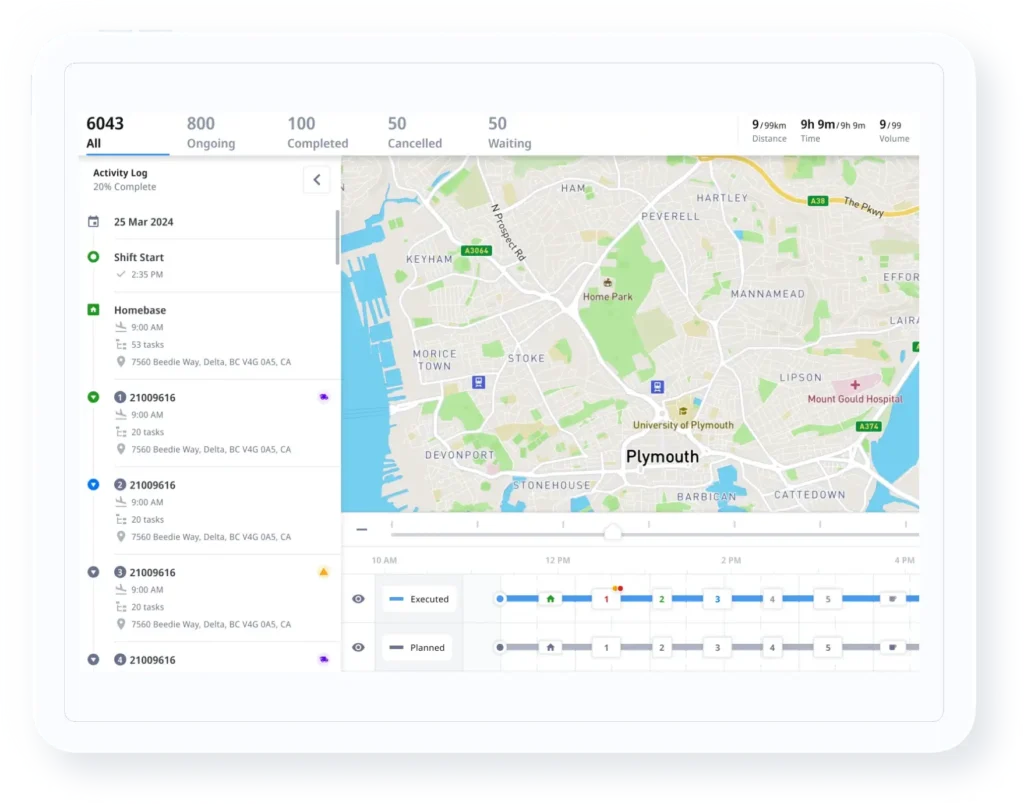
| Physical store (ship-from-store) | The Driver Companion App provides store staff and contracted drivers with route information at the store level; Mycroft AI Co-Pilot surfaces store-level dispatch risk signals to the central operations team | Store-level dispatch managed through the same platform as DC and dark store; no separate dispatch system required for ship-from-store operations |
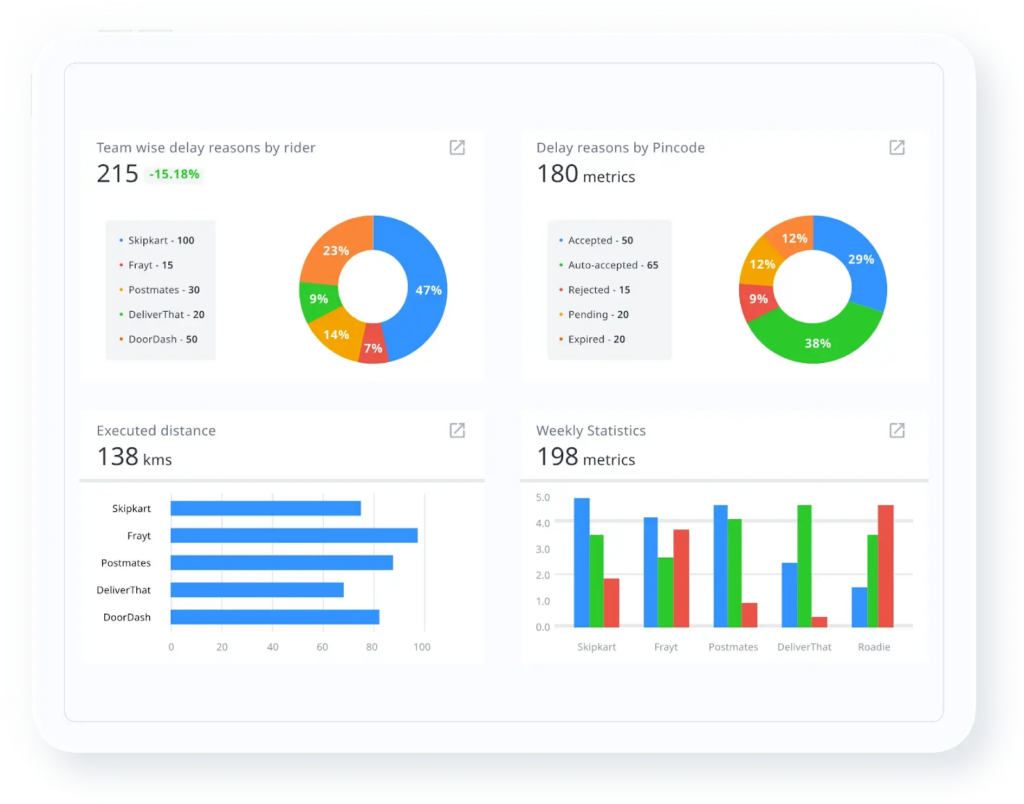
For visibility across the full network, track and trace capabilities within Locus’s agentic TMS aggregate delivery status from all nodes and all carrier types into one operational view. An operations leader can see DC deliveries, dark store deliveries, and ship-from-store deliveries in the same dashboard, with the same SLA monitoring logic applied regardless of fulfillment source.
ShipFlex coordinates carrier management across 160+ active carriers from a broader network of 1,000+ pre-integrated partners, spanning the carrier networks associated with each node type.
The same carrier allocation logic, selecting the carrier with the right coverage, SLA compliance history, and live capacity for each delivery, applies whether the order is dispatching from a 400,000-square-foot DC or a 1,500-square-foot dark store.
Dispatching from Physical Stores: The Ship-From-Store Challenge
Ship-from-store is where omnichannel dispatch management is most frequently underprepared.
Retailers invest in dispatch infrastructure for DCs and dark stores, which were designed as fulfillment operations. Physical retail locations were not. Their contribution to fulfillment introduces a set of dispatch constraints that DC-oriented dispatch tools are not built to handle.
Also read: Ecommerce Shipping Strategy Tips for Lower Costs
Why store-level dispatch has different constraints from DC dispatch
The specific constraints that make store-level dispatch challenging:
- Staff capacity is variable and unpredictable: Store staff divide their time between customer service and fulfillment. The number of hours available for picking, packing, and dispatch handoff fluctuates throughout the day based on in-store traffic
- Carrier pickup windows are often fixed: A contracted carrier serving store pickups may have a defined collection window (11 AM to 12 PM) that does not flex based on when the store staff complete their picks. Orders that are not ready at the window may wait until the next day
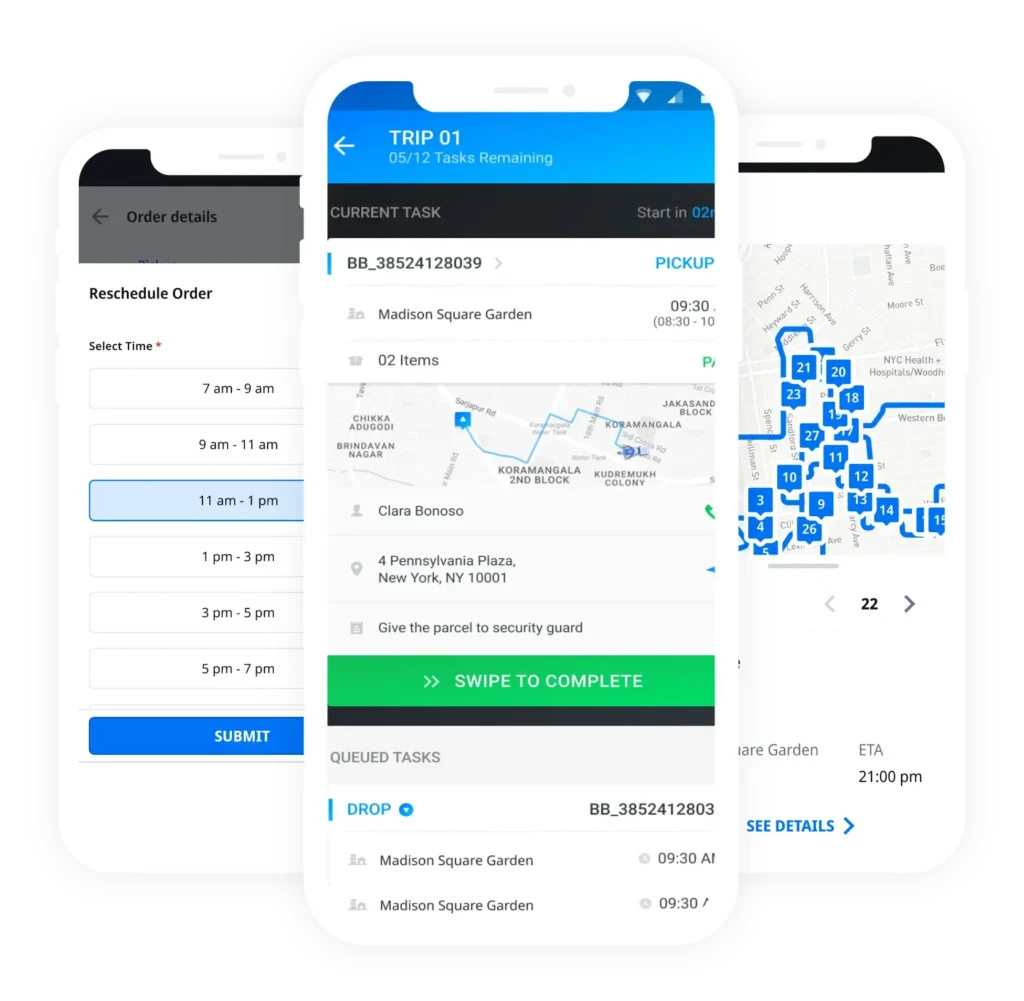
- Route information delivery is different: DC drivers typically receive routes through a professional dispatch application integrated with the WMS. Contracted drivers serving ship-from-store locations may only have a consumer-facing interface. A professional driver companion application that works for both DC drivers and store-level drivers eliminates this two-tier communication problem
- Inventory location data is less precise: DC inventory is rack-level accurate. Store inventory may be aisle-level. Pick instructions at a store level need to account for the less precise location data, or pick errors increase the failed-fulfillment rate
- The dispatch event is less structured: At a DC, dispatch confirmation is a system event. At a store, it may be a verbal confirmation between staff and driver with no system record, which creates visibility gaps and makes exception handling harder
A platform that treats ship-from-store dispatch as a constrained version of DC dispatch, adapting the same planning and communication tools to the store context, produces better outcomes than one that treats store dispatch as a separate, manual workflow.
The same route plan, carrier confirmation, and driver notification infrastructure used at the DC level applies at the store level when the platform was designed for multi-node operations from the start.
How to Evaluate Omnichannel Dispatch Management Software
Single-node dispatch tools are often retrofitted to handle multi-node operations. The questions below identify whether a platform was built for omnichannel from the start:
- Multi-node allocation: Can the platform make order allocation decisions across DCs, dark stores, and physical stores simultaneously, with live capacity and carrier coverage as inputs to the decision?
- Carrier coverage by node: Does the platform maintain a carrier coverage map for each individual fulfillment node? When a re-routing decision is needed, can it verify carrier coverage at the receiving node for the specific delivery address before confirming the re-route?
- Ship-from-store support: Can the platform manage dispatch from physical retail locations with variable staff capacity, fixed carrier pickup windows, and store-appropriate route communication tools?
- SLA consistency: Does the route planning engine treat the customer’s committed delivery window as a binding constraint regardless of which node originated the order?
- Unified visibility: Does the platform provide one operational view of delivery execution across all fulfillment nodes, or does visibility still require manual aggregation from multiple source systems?
- OMS and WMS integration: Does the platform connect to the upstream systems that manage inventory and orders at each node type, including node systems that may vary from the DC standard?
- Cross-node exception management: When a delivery exception requires re-routing an order across nodes, can the platform evaluate alternative nodes and initiate the re-route without manual coordinator involvement?
- Scalability to peak: Can the platform maintain allocation and route planning performance when all nodes are at peak volume simultaneously, which is the stress test that matters most for omnichannel operations?
One Allocation Layer, Every Fulfillment Node
Omnichannel dispatch management is a categorically different coordination problem. The number of active origin nodes, the heterogeneity of carrier coverage across those nodes, the SLA consistency requirement that holds regardless of fulfillment source, and the absence of a unified visibility layer all require a platform designed for multi-node operations from the architecture up.
The coordination layer that makes omnichannel delivery work, a single allocation and dispatch system that covers DCs, dark stores, and physical retail simultaneously, is the infrastructure that converts multiple fulfillment nodes into one delivery network. Without it, omnichannel fulfillment is an inventory strategy without a delivery execution strategy.
Locus has been recognized in Gartner research on last-mile delivery and supply chain execution technologies for seven consecutive years, including in the 2026 Hype Cycle for Supply Chain Execution and Logistics Technologies and the 2025 Market Guide for Last-Mile Delivery Technology Solutions.
It serves 360+ enterprise customers across e-commerce and retail and FMCG and CPG verticals in 30+ countries, with $320M+ in collective logistics cost savings and 99.5% on-time SLA adherence. In October 2025, Ingka Investments, the investment arm of Ingka Group, acquired Locus, providing long-term institutional backing to a platform that continues to operate independently.
Schedule a demo to see how multi-node dispatch coordination works across your specific combination of fulfillment nodes.
Frequently Asked Questions (FAQs)
What is the difference between a retail omnichannel dispatch platform and a field-service dispatch tool?
Field-service dispatch tools assign technicians or workers to service jobs, optimizing schedules, skills, and workforce availability. Retail omnichannel dispatch platforms coordinate order fulfillment across stores, distribution centers, and carrier networks, managing inventory origin, carrier coverage, SLA commitments, and delivery execution simultaneously. The underlying optimization problem is different: field-service dispatch manages a workforce, while retail omnichannel dispatch coordinates fulfillment nodes and carrier networks. Retailers evaluating dispatch software should confirm that a platform was designed for omnichannel fulfillment before deploying it to a multi-node operation.
What does “one dispatch plan” mean for an omnichannel operation?
It does not mean creating a single physical route plan spanning every store, distribution center, and carrier. Instead, it means every fulfillment node follows the same allocation logic, carrier evaluation criteria, SLA enforcement, and planning rules, while each node generates execution-ready routes suited to its own geography and operational constraints. The benefit is that allocation decisions are made using a shared view of capacity, carrier coverage, and SLA risk rather than allowing each node to optimize independently.
How should retailers handle carrier coverage gaps when rerouting orders between fulfillment nodes?
Before confirming a reallocation, the dispatch platform should evaluate whether the receiving fulfillment node’s carrier network can support the required service level and delivery zone. Not every node has the same carrier coverage, and a reallocation that resolves a capacity issue at one location may create a carrier feasibility issue at another. The reallocation should also trigger updates across the connected OMS, inventory, and carrier booking systems to ensure the operational handoff is completed correctly.
How does Locus coordinate dispatch across stores, distribution centers, and carrier networks?
DispatchIQ allocates orders across fulfillment nodes using live capacity and carrier coverage as key inputs, then generates route plans for each active node while treating committed delivery windows as planning constraints. The Fireworks Routing Engine optimizes routes across more than 250 real-world constraints. ShipFlex manages carrier operations across 160+ active contracted carriers from a broader network of 1,000+ pre-integrated partners, maintaining carrier coverage awareness for each fulfillment node and evaluating carrier feasibility when reallocation decisions are required. The Driver Companion App provides drivers with route and delivery information using the same platform across store-based and distribution center operations. A unified real-time visibility layer within Locus’s agentic TMS aggregates delivery status across all fulfillment nodes and carrier types into a single operational view, enabling consistent SLA monitoring regardless of where an order was fulfilled.


Fleet Optimization
Two Fleets, the Same 83% Utilization, $208,000 Apart

Sep 11, 2026
Owned, contracted and spot capacity have different cost structures, so they need different utilization targets. A single number cannot tell a cheap plan from an expensive one.
Read more
General
What Is a Dispatch Orchestration Platform?

Sep 14, 2026
Discover what a dispatch orchestration platform does beyond dispatch management, including real-time allocation, multi-carrier coordination, and decision intelligence.
Read moreInsights Worth Your Time



















Dispatch Management for Retail Omnichannel: Coordinating Stores, DCs, and Carrier Networks