

Sell only the delivery slots your fleet or carriers can serve
Delivery Promise Management checks every delivery slot against live capacity from the cut-off at the origin warehouse to the vehicle at the door. A window reaches checkout only when every leg clears.













TRUSTED BY
360+ Enterprises
to run complex transportation networks





Backed by Ingka Group, the world's largest IKEA retailer. Built for the long run

Your network agrees to every window before you sell it
McKinsey found shoppers would rather wait up to a week for a delivery that arrives on time than have one arrive later than promised. Locus Delivery Promise Management checks every slot against the capacity behind it before your customer sees it. The window they choose is the one they get.
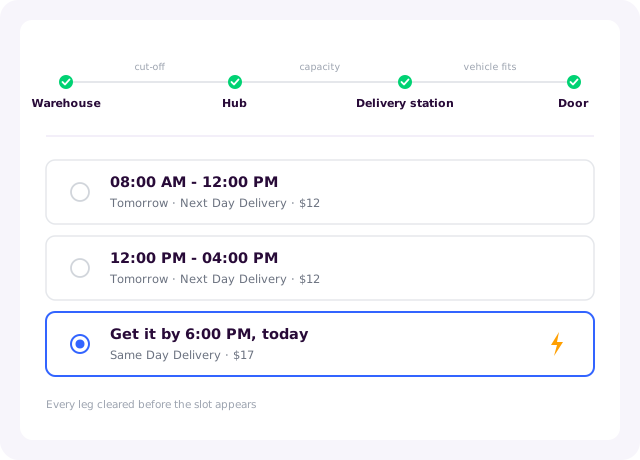
Every slot, checked back to the first mile
Works backwards from the window your customer wants, clearing the vehicle’s route, the linehaul into the delivery station, and the cut-off at the origin warehouse. Feasible slots come back in under a second, by service level, so you can price the premium ones.
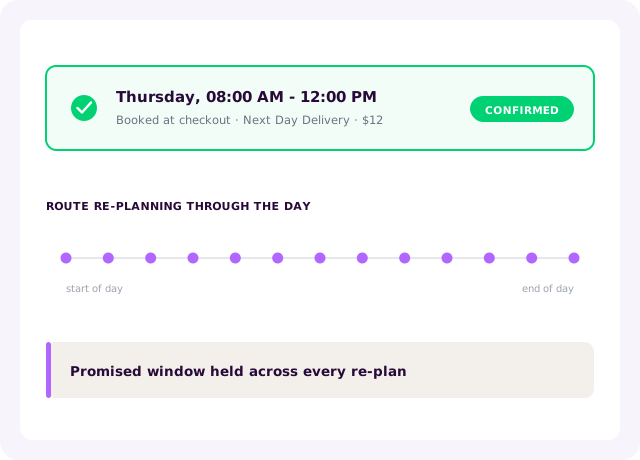
A booked window stays booked
Tests every re-plan before any of it reaches a driver, and a new plan goes live only when every promised window still holds. An order running behind its milestone is flagged early enough to move up the queue, before it costs a refund and a second trip.
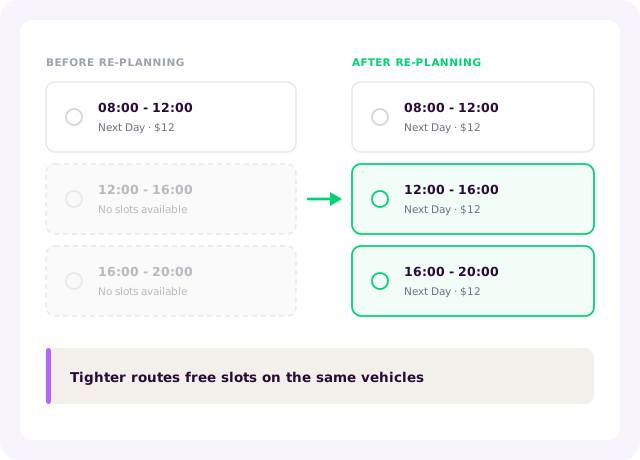
More sellable slots from the same fleet
Turns the driving time each re-plan saves into slots a vehicle can still take. Orders the old plan would have refused get sold and delivered on vehicles already on the road, with nothing moved that was promised earlier.
We tested it against a full week of a retailer’s order book
Capacity was deliberately tightened, and every order in that week ran through the engine, including the ones it had to refuse.
of orders received a delivery window the network could keep. The remaining 1.5% were refused rather than given one it could not.
of re-planning passes held every window already committed to a customer.
fewer orders left without a slot once live re-optimization was running, down from 3.6% to 1.5%.
When the answer is no, you know why
Every refused slot comes back with its cause, which tells planners what to fix.
Route is full
No vehicle has room left in the window.
Cut-off has passed
The goods cannot leave the origin in time.
No fleet rostered
Nothing is scheduled to serve that area that day.
Watch it run against your order book
Frequently Asked Questions (FAQs)
Delivery slot management is the practice of offering delivery windows at checkout that the network can actually serve, by checking each window against available capacity before a customer sees it. Locus Delivery Promise Management runs that check across every leg behind the window.
Locus Delivery Promise Management checks capacity from the cut-off at the origin warehouse through to the doorstep. A window reaches checkout only when every leg behind it clears, including the vehicle that has to make the stop.
Yes. Every promised order carries deadlines along the way, such as leaving the warehouse by a set time, and an order that misses one is flagged while there is still time to act. Re-planning that would move a promised window is discarded.
Yes. Mixed operations are the common case, and both are answered in the same call. Own-fleet legs are checked against the day's actual vehicles and routes. Carrier legs are checked against their capacity and service rules, since Locus does not control their routing.
Yes. The check answers separately for each service level, so the tiers it returns are the ones a retailer can price.