


General
What Is a Dispatch Orchestration Platform?
Key Takeaways
- Dispatch management produces a morning route plan. Dispatch orchestration maintains the delivery operation against changing conditions throughout the day, making allocation, carrier, route, exception, and communication decisions continuously and automatically
- The distinction matters operationally: a dispatch management tool helps your team execute a plan. A dispatch orchestration platform executes, adjusts, and re-executes that plan in response to live conditions, without requiring a dispatcher for each decision
- Five functions separate orchestration from management: real-time order allocation, multi-carrier selection and tendering, live route adjustment, automated exception response, and event-driven customer communication. Each depends on a shared data layer where all functions see the same current operational state
- Rule-based automation executes defined conditions. Decision intelligence evaluates the full combination of current conditions across all functions simultaneously, resolving conflicts between carrier capacity, route feasibility, SLA risk, and cost in one calculation
- Locus approaches dispatch orchestration through eight specialized AI agents that coordinate the full delivery operation: Capacity, Dispatch, Carrier, Hub, Customer, Settlement, Copilot, and Orchestrator. Mycroft AI Co-Pilot is the dispatcher interface that surfaces what these agents know and what they recommend
A dispatch tool builds a route plan. A dispatch orchestration platform maintains a delivery operation.
The gap between those two statements is the gap between planning-time automation and runtime intelligence: between a system that tells your team what to do this morning and one that coordinates what happens when this morning’s plan meets this afternoon’s reality.
This article defines what dispatch orchestration means as a platform category, identifies the five functions it must cover, explains the architectural difference between rule-based dispatch and decision intelligence, and shows where Locus fits.
Dispatch Management vs. Dispatch Orchestration: Why the Distinction Matters
The two categories share significant surface area: both involve logistics route planning, carrier assignment, and delivery execution. The difference is where their responsibility ends.
| Dispatch management | Dispatch orchestration |
|---|---|
| Builds the morning route plan based on orders, vehicles, and constraints available at dispatch time | Builds the morning plan and continuously re-evaluates it as conditions change throughout the delivery day |
| Assigns orders to carriers based on rules or manual judgment | Selects carriers from the available pool in real time based on current capacity, rate, and SLA compliance data |
| Surfaces exceptions when they are reported by drivers or carriers | Detects emerging exceptions before they breach SLA windows and evaluates corrective options automatically |
| Triggers customer notifications on a schedule | Triggers customer notifications when delivery events occur or when operational state changes |
| Requires dispatcher involvement for any mid-day decision | Executes routine adjustments automatically; escalates to dispatchers when human judgment is needed |
| Measures performance at end of day against the morning plan | Measures plan adherence in real time and adjusts the plan to maintain the commitment |
Where dispatch management ends
Dispatch management tools do their best work between order entry and vehicle departure. They are plan-generation systems. A good dispatch management tool builds a better morning plan than a planner could build manually, accounting for more constraints in less time.
The tools typically stop contributing value when the plan diverges from reality. A carrier that confirms capacity at 9 AM and reduces it at 11 AM. A driver who takes longer at stop 8 than the plan assumed. A customer who needs a re-delivery because the original window was wrong. Each of these events requires a dispatcher to re-engage, assess the situation, and make a new decision.
At enterprise scale, those events are not exceptions. They are the delivery day. A large retail operation running 10,000 daily deliveries will encounter hundreds of plan-versus-reality divergences between 8 AM and 8 PM. The question is whether the system addresses them or whether the dispatchers do.
What orchestration adds
Orchestration is the continuous coordination of decisions across the delivery network as conditions change. It is the difference between a system that produces a plan and a system that maintains a delivery operation.
The practical contribution of orchestration: when carrier capacity drops at 11 AM, the affected orders are identified, alternative carriers are evaluated against current availability and SLA requirements, the best option is selected and tendered, the impacted route plans are updated, and the relevant customers receive updated ETAs. All of this happens without a dispatcher initiating each step.
That sequence is what dispatch orchestration does at scale. Each individual step is manageable manually for a small number of events. At enterprise volume, the manual version of that sequence consumes dispatcher capacity that could be spent on the decisions that genuinely require human judgment.
The 5 Functions a Dispatch Orchestration Platform Must Cover
Each of the following functions requires the same underlying capability: access to the current operational state of the full delivery network. Without that shared view, functions produce conflicting outputs. A carrier allocation decision made without current route state produces an assignment the route plan cannot support.
| Function | What it does | What breaks without it |
|---|---|---|
| Real-time order allocation | Assigns orders to the optimal carrier, vehicle, or fulfillment node based on current capacity, SLA requirements, and route feasibility at the moment of assignment | Stale allocation decisions persist when conditions change, producing carrier overload, SLA failures, and manual re-work at dispatch time |
| Multi-carrier selection and tendering | Selects the carrier with the right coverage, live capacity, and SLA compliance record for each order; transmits tender and tracks acceptance | Carrier selection defaults to familiarity or contract priority, not live performance; spot capacity at premium rates fills the gap when contracted carriers are full |
| Live route adjustment | Recalculates route sequences as actual delivery performance accumulates throughout the day, maintaining arrival time accuracy for remaining stops | Route plans become increasingly inaccurate as the day progresses; ETA accuracy falls; customer communications become unreliable |
| Automated exception response | Detects emerging exceptions before SLA windows close, evaluates available responses, and executes the best option or escalates to dispatchers | Exceptions surface after failure, not before; dispatchers resolve each one manually; response time is measured in hours, not minutes |
| Event-driven customer communication | Triggers customer updates when delivery events occur, not on a scheduled basis; keeps customer-facing status aligned with actual operational state | Customer notifications reflect the morning plan, not the afternoon reality; WISMO contacts spike when customer-facing status diverges from actual delivery state |
Real-time order allocation
Order allocation is the decision about which carrier, vehicle, or node handles each order. At dispatch time, this decision can be optimized against the state of the network as it exists when the plan is built. It becomes stale the moment conditions change.
Orchestration requires allocation to be re-evaluated continuously.
When carrier capacity drops mid-day, the orders currently allocated to that carrier need to be re-assessed against the remaining available capacity pool. When a fulfillment node is running behind its dispatch window, incoming orders should be re-routed to a node with available capacity before the original node’s SLA is breached.
Multi-carrier selection and tendering
Carrier selection in a multi-carrier network involves more variables than a rate card and a service level.
For each order, the optimal carrier is the one with the right geographic coverage for the delivery address, the live capacity to accept the tender, an SLA compliance record on the relevant lane, and a cost within the order’s margin parameters.
Multi-carrier orchestration at enterprise scale requires evaluating those variables simultaneously for every order in every assignment cycle.
Live route adjustment
Route plans are built at dispatch time against projected conditions. Traffic, service time, and delivery sequence all diverge from projection as the delivery day progresses. A route plan for a 40-stop vehicle becomes less accurate with each stop that takes longer or shorter than planned.
Live route adjustment recalculates the stop sequence as actual performance data accumulates.
After stop 15 is completed with actual timing recorded, the ETA for stop 30 is recalculated from the current vehicle position against current traffic, not from the 6 AM plan. The customer’s tracking view reflects the updated arrival time, and the adjustment is transmitted to the driver automatically.
Live exception response
Exception response in a dispatch orchestration platform is a detection, evaluation, and execution sequence. Detection happens before the SLA window closes. Evaluation weighs the available responses: re-sequence, reassign to another carrier, adjust the customer’s window, or escalate to a dispatcher. Execution happens automatically for responses within defined parameters and escalates when human judgment is required.
The quality of exception response depends on how early detection occurs. An exception detected 90 minutes before an SLA breach has several available responses. An exception detected after the window closes has one: damage control.
Customer communication coordination
Customer-facing delivery status must reflect actual operational state. When a route is adjusted, the customer’s ETA should update before they check the tracking page and discover the discrepancy. When an exception changes the delivery window, the customer should receive a notification before the original window expires.
Orchestration coordinates customer communication as a function of operational events. The trigger is a change in delivery state. That coordination requires the customer communication layer to be connected to the same data layer as carrier management, route planning, and exception detection.
The Architecture That Makes Orchestration Work
Each of the five functions produces decisions that affect the others.
A carrier reassignment changes the route. A route change changes the customer’s ETA. An ETA change triggers a customer notification. If each function draws from its own data source, these dependencies produce conflicts: the route planner assigns an order to a carrier the carrier management layer knows is at capacity.
A shared data layer means every function works from the same current view of the network. Every carrier capacity status, every vehicle position, every active SLA commitment, every customer notification sent, is visible to every function simultaneously. Decisions made by one function propagate to the others in real time, not through a batch synchronization cycle.
This architectural requirement is why dispatch orchestration cannot be achieved by integrating five separate point tools. Integration produces synchronization; orchestration requires coherence. The difference is whether functions share state or exchange messages.
Decision intelligence vs. rule sets
Traditional dispatch automation executes rules: if carrier A’s capacity falls below threshold, route overflow to carrier B. Rules are deterministic and predictable. They are also static: they handle the conditions they were written for and produce suboptimal results when conditions fall outside those parameters.
Decision intelligence evaluates the full combination of current conditions and identifies the response that optimizes across all relevant dimensions simultaneously.
A carrier capacity drop at 11 AM might be best handled by carrier B for some orders, by extending owned fleet hours for others, and by re-timing two specific deliveries without changing carrier at all. The rule routes everything to carrier B. The intelligence identifies which response is best for which order, in the context of the full network state at that moment.
The practical difference shows up at scale and under pressure. Rule-based systems degrade gracefully in routine conditions and produce poor outcomes when conditions diverge significantly from the rules’ parameters. Decision intelligence scales to the complexity of the actual situation.
How Locus Approaches Dispatch Orchestration
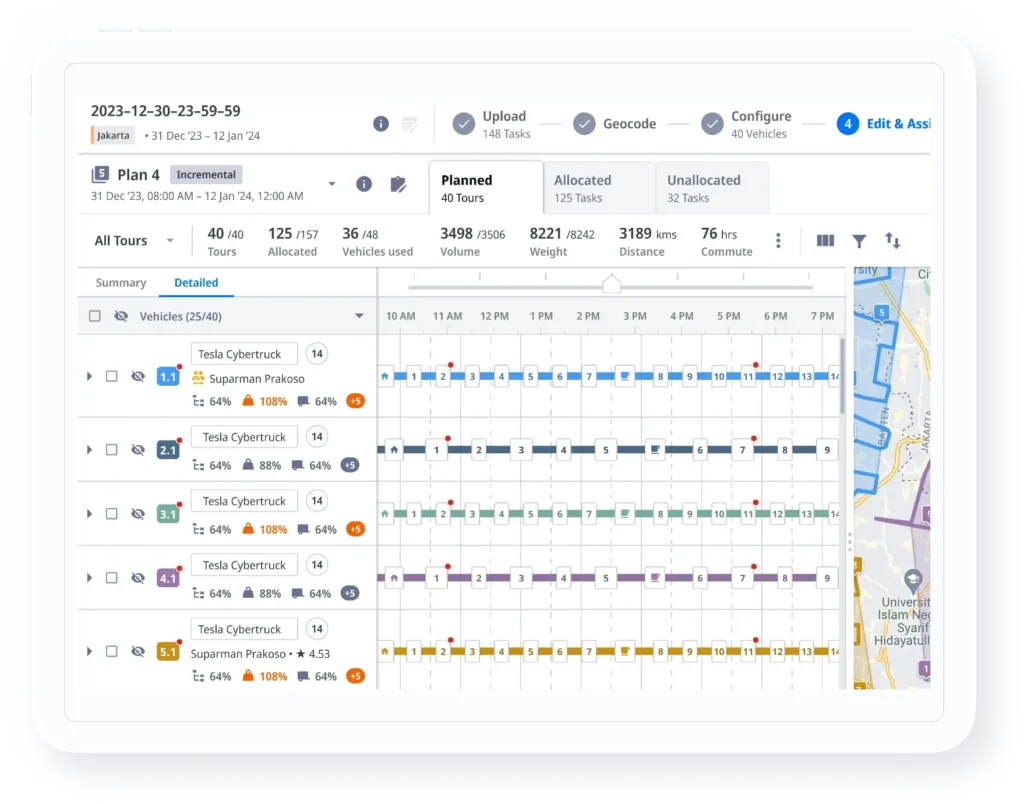
Locus is the world’s first Decision-Intelligent, Agentic TMS. Its architecture is built around a multi-agent system in which specialized AI agents handle distinct domains of the delivery operation and coordinate through a shared intelligence layer.
This is meaningfully different from a dispatch platform with a set of automation rules.
The agents evaluate, decide, and act. They also coordinate with each other: a decision made by the Carrier Agent propagates immediately to the Dispatch Agent and the Customer Agent, which evaluate the downstream implications and respond accordingly.
8 agents, one coordinated system
| Agent | Orchestration responsibility |
|---|---|
| Capacity Agent | Manages resource allocation across the delivery network: available vehicles, driver hours, and fulfillment node capacity. Surfaces capacity constraints before they affect dispatch decisions downstream |
| Dispatch Agent | Coordinates order-to-carrier-to-route assignment decisions, re-evaluating allocation as network conditions change throughout the delivery day |
| Carrier Agent | Manages carrier selection, tender issuance, acceptance tracking, and performance monitoring. Evaluates carrier options against live capacity, rate, and SLA compliance data for each assignment |
| Hub Agent | Coordinates hub-level operations including consolidation, sorting, and dispatch handoffs. Manages the timing dependencies between hub processing and last-mile departure windows |
| Customer Agent | Manages all customer-facing communication: proactive status updates, ETA change notifications, and exception communications triggered by operational events, not by scheduled campaigns |
| Settlement Agent | Handles freight reconciliation, invoice validation, and carrier payment processing, drawing on the delivery record to resolve disputes automatically |
| Copilot Agent | Surfaces risk signals, pattern analysis, and recommended actions to dispatchers. Acts as the intelligence interface between the automated agent decisions and the human judgment layer |
| Orchestrator Agent | Coordinates between the other seven agents, maintaining network-wide coherence and resolving conflicts when individual agent decisions interact |
Mycroft AI Co-Pilot, Locus’s dispatcher interface, surfaces what these agents know and what they are recommending. A dispatcher who wants to understand why a carrier was flagged for de-prioritization, or which orders are at risk in the next two hours, or what the re-routing options are for a zone with capacity issues, gets that information through a single interface that draws on the full multi-agent view.
The dispatcher’s role shifts from making individual allocation decisions to reviewing agent recommendations and acting on the cases that require human judgment.
ShipFlex, which manages carrier coordination across 160+ active carriers from a broader network of 1,000+ pre-integrated partners, operates as the execution layer for the Carrier Agent’s decisions.
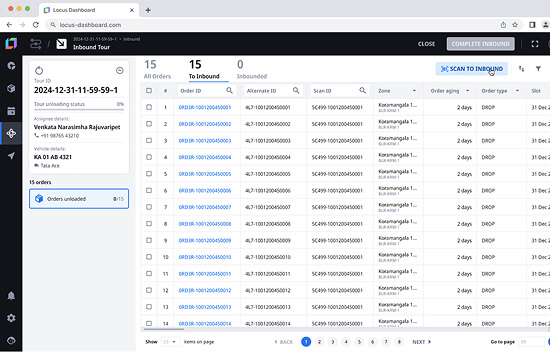
When the Carrier Agent identifies the optimal carrier for a given order under current conditions, ShipFlex issues the tender, tracks acceptance, and feeds the outcome back into the shared data layer.
A unified real-time visibility layer within Locus’s agentic TMS provides the shared data layer that all eight agents draw from.
Every carrier capacity update, vehicle position, delivery event, and customer communication is recorded in this layer and immediately available to every agent. That coherence is what enables the Orchestrator Agent to resolve conflicts between agent decisions before they affect delivery outcomes.
Locus has been recognized in Gartner research on last-mile delivery and supply chain execution technologies for seven consecutive years, including in the 2026 Hype Cycle for Supply Chain Execution and Logistics Technologies and the 2025 Market Guide for Last-Mile Delivery Technology Solutions.
It serves 360+ enterprise customers across e-commerce and retail, FMCG and CPG, and 3PL verticals in 30+ countries, with $320M+ in collective logistics cost savings and 99.5% on-time SLA adherence.
In October 2025, Ingka Investments, the investment arm of Ingka Group, acquired Locus, adding long-term institutional backing to a platform that continues to operate independently.
When to Move From Dispatch Management to Dispatch Orchestration
The case for orchestration over management is clearest when specific operational patterns are present. The questions below indicate which category your current operation requires:
- Dispatcher-to-exception ratio: If your dispatchers spend the majority of their shift resolving exceptions one at a time, the exception volume has outgrown the management model. Orchestration handles routine exceptions automatically, redirecting dispatcher attention to the cases that need judgment
- Plan accuracy at noon: If the delivery plan your team built at 6 AM bears little resemblance to actual execution by noon, the planning tool is producing an artifact that guides the first few hours of the day and loses relevance as the day progresses
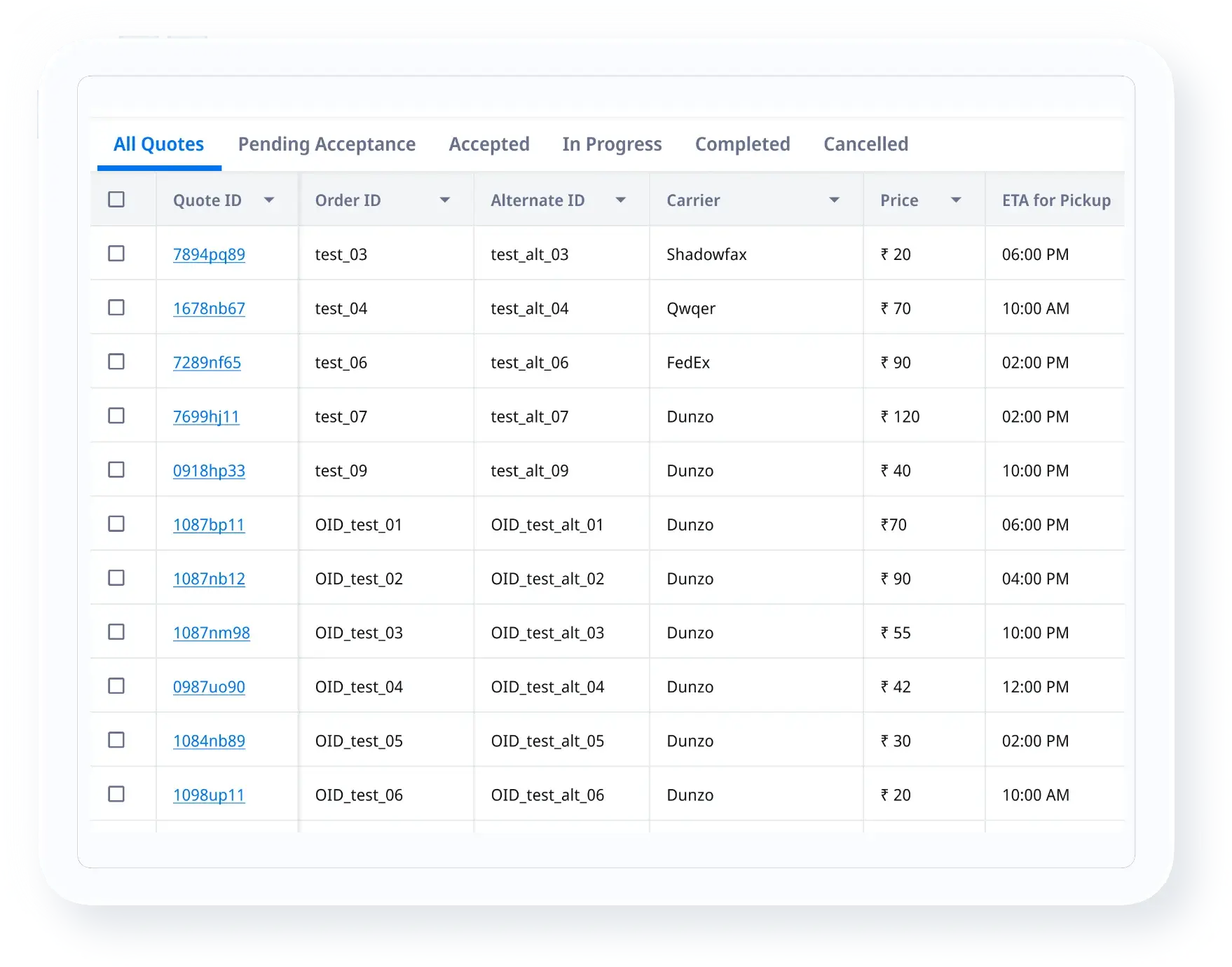
- Carrier selection pattern: If your operation allocates to the same set of carriers in the same priority order regardless of their current capacity, rate, and SLA performance, carrier selection is a habit. Orchestration makes it a live evaluation
- Customer communication trigger: If customer status notifications fire on a schedule and not on delivery events, your communication layer is disconnected from operations. Customers receive stale information and call to fill the gap
- Multi-carrier exception cost: If carrier failures at enterprise volume consistently produce spot market buying because contracted alternatives are not pre-evaluated, orchestration would convert emergency allocation into a systematic carrier fallback process
- SLA visibility: If your team learns about an SLA breach when the window closes and not when the risk emerges, the detection layer is lagging the operation by hours
An operation that recognizes three or more of these patterns has outgrown dispatch management. The returns from orchestration, dispatcher capacity redirected from routine decisions, automatic exception response, live carrier evaluation, and SLA-accurate customer communication, compound quickly at enterprise delivery volumes.
Move to Dispatch Orchestration
Dispatch orchestration and dispatch management solve different problems.
Management produces an accurate plan. Orchestration maintains delivery performance against the conditions that inevitably diverge from that plan. An operation that needs both starts with management capability and adds orchestration when delivery volume and network complexity make manual exceptions handling the primary use of dispatcher time.
The architectural requirement for orchestration is decision intelligence: the ability to evaluate the full combination of current conditions across carrier selection, route planning, exception response, and customer communication simultaneously, and produce an action that optimizes across all of them at once. That capability requires a shared data layer and agents designed to coordinate.
Schedule a demo with Locus today!
Frequently Asked Questions (FAQs)
What is the difference between a TMS and a dispatch orchestration platform?
A traditional TMS (transportation management system) manages the freight lifecycle, including carrier contracting, rate management, shipment planning, and freight settlement. It is oriented toward transportation procurement and financial management. A dispatch orchestration platform focuses on real-time delivery execution: allocating orders to carriers, building and adjusting routes, responding to exceptions, and coordinating customer communication as deliveries progress. Some platforms, including Locus, operate as agentic TMSs that cover both functions in one architecture.
How does decision intelligence in dispatch differ from rule-based automation?
Rule-based automation executes predefined conditions: if carrier A’s capacity falls below threshold, route to carrier B. Rules are deterministic and predictable in the conditions they were written for. They produce suboptimal outcomes when the current situation falls outside those parameters or when multiple rules interact in ways that were not anticipated. Decision intelligence evaluates the full combination of current conditions across all relevant dimensions simultaneously. A carrier capacity drop might be best handled differently for different orders in the same zone, depending on the SLA requirements, delivery address geography, remaining driver hours, and current traffic on the relevant lanes.
How does a dispatch orchestration platform handle exceptions differently from a manual dispatch process?
Manual exception handling follows a sequential process: the exception surfaces (via driver report, customer call, or carrier notification), a dispatcher receives the alert, the dispatcher investigates the situation by pulling data from relevant systems, the dispatcher evaluates options, a decision is made, and the response is executed by communicating with the carrier or driver. This sequence typically takes 30 to 90 minutes per exception. A dispatch orchestration platform compresses this to seconds for routine exceptions by detecting the emerging exception before the SLA window closes, evaluating available responses from the live operational state, selecting and executing the optimal response automatically, and notifying the relevant parties including the customer.
How is Locus built as a dispatch orchestration platform?
Locus’s orchestration architecture is built around eight specialized AI agents, each responsible for a specific domain of the delivery operation: Capacity, Dispatch, Carrier, Hub, Customer, Settlement, Copilot, and Orchestrator. The agents draw from a shared data layer, which means a decision made by the Carrier Agent is immediately available to the Dispatch Agent and the Customer Agent. The Orchestrator Agent coordinates between the other seven, resolving conflicts before they affect delivery outcomes. Mycroft AI Co-Pilot is the natural-language dispatcher interface that surfaces agent recommendations and risk signals through a single view.


General
Dispatch Management for Retail Omnichannel: Coordinating Stores, DCs, and Carrier Networks

Sep 14, 2026
See how omnichannel dispatch management coordinates order allocation, carrier coverage, and SLA consistency across stores, DCs, dark stores, and carrier networks.
Read more
General
How to Choose Dispatch Management Software: Assignment Logic, Live Tracking, and SLA Controls
Sep 14, 2026
Evaluate dispatch management software across three pillars: assignment logic, live tracking, and SLA controls. Includes questions to ask every vendor.
Read moreInsights Worth Your Time




















What Is a Dispatch Orchestration Platform?