


General
Logistics Operations: Optimizing Supply Chain Management
Key Takeaways
- Adopt AI-powered route optimization to cut delivery times by up to 20%, reducing fuel costs and improving on-time performance with Locus’ real-time data analysis.
- Track shipments in real-time using Locus’ end-to-end visibility to enhance decision-making and proactively address delays, improving customer satisfaction.
- Automate warehouse operations with Locus’ integrated solutions to speed up order fulfillment by 30%, reducing labor costs and errors in inventory management.
- Streamline returns management through automated workflows to decrease processing times by 25%, improving efficiency and customer experience.
- Leverage predictive analytics for inventory management to align stock levels with demand, preventing stockouts and reducing overstock costs by up to 15%.
In 2025, logistics operations are under significant pressure from rising costs and the rapid pace of technological change. Higher fuel prices, global supply chain disruptions, and intense competition are reducing margins for transportation and logistics (T&L) companies. To remain profitable, businesses need to streamline processes and address inefficiencies across the entire value chain, from procurement to final delivery.
As discussed in 6 Tech Solutions to Solve Your Last-Mile Logistics Issues, last mile delivery accounts for a substantial share of logistics costs, and is a critical area of focus. Inefficiencies at this stage can cause failed deliveries and longer transit times, directly affecting both customer satisfaction and profitability. As consumer expectations continue to rise, optimizing last-mile logistics has become essential for cost-effective and timely deliveries.
At the same time, the rise of big data and AI offers opportunities to optimize workflows, though many companies still struggle with effective implementation. Those that fail to adapt risk losing their competitive edge to competitors already leveraging AI-driven solutions for smarter decision-making.
This article will examine how businesses can overcome these operational challenges. It will outline the key components of logistics management and show how technology can help organizations optimize every stage of their operations, turning challenges into measurable improvements.
What Are Logistics Operations?
Logistics operations involve the strategic management of processes that ensure goods are efficiently transported from suppliers to consumers. As a critical part of the supply chain, logistics operations influence cost, delivery speed, and customer satisfaction.
Efficient logistics involves more than transportation. It requires:
- Resource management – aligning vehicles, drivers, warehouses, and inventory with demand.
- Process optimization – streamlining order fulfillment, reducing idle time, and minimizing empty miles.
- Technology utilization – using GPS tracking, TMS, warehouse automation, and AI-driven route planning for accuracy and speed.
- Customer value – delivering products on time, reducing costs, and ensuring higher satisfaction in competitive markets.
Together, these elements enable organizations to deliver products on time, reduce operational costs, and maintain customer satisfaction in an increasingly competitive market.
The Importance of Logistics Operations for Supply Chain Leaders
The role of logistics has expanded significantly in recent years. What was once seen as a support function is now a core driver of business success, influencing everything from supply chain efficiency to customer experience and long-term profitability.
E-commerce Growth and its Demands on Logistics
Online shopping continues to expand rapidly, with customers increasingly expecting faster delivery times. Same-day and next-day deliveries have become the standard, pushing logistics systems to evolve. A 2023 CSCMP report found that logistics costs in the U.S. reached $2.3 trillion, accounting for 8.7% of the nation’s GDP, underscoring how critically efficient logistics management is to the broader economy.
Adapting to Global Supply Chain Disruptions
McKinsey’s 2022 article on Future-proofing the Supply Chain outlines how disruptions like the COVID-19 pandemic and ongoing geopolitical tensions have exposed vulnerabilities in global supply chains. The report emphasizes the importance of building resilience through three new priorities:
- Resilience
- Agility
- Sustainability
These complement traditional objectives such as cost, quality, and service.
Businesses can capitalize on this opportunity by redesigning their operations to better respond to disruptions and ensure greater supply chain flexibility. By adopting these priorities, logistics operations can adapt to rapidly changing environments, ensuring continuity and improved resilience.
Managing Rising Logistics Costs
The escalating cost of logistics has become a significant challenge. According to Logistics Management (2023), effective cost management within logistics requires advanced strategies like route optimization, inventory control, and better warehouse management to counteract increasing expenses and protect profit margins.
Sustainability: A Growing Priority
Consumers increasingly expect businesses to embrace sustainability. The previously discussed report projected a 32% increase in emissions from delivery traffic by 2030, emphasizing the need for logistics operations to adopt eco-friendly practices like optimizing routes and using sustainable packaging.
The Role of Technology in Logistics Optimization
Technological advancements, particularly AI and big data, are transforming logistics. However, many businesses struggle with effectively implementing these technologies. A Deep Analysis survey in 2023 revealed that while 98% of respondents found AI to be crucial to logistics, the challenge lies in scaling AI solutions across operations.
5 Key Components for Optimizing Logistics Efficiency and Driving Customer Satisfaction
Efficient logistics operations are essential for businesses to remain competitive and meet growing customer demands. These operations hinge on several key components that work together. Understanding and optimizing each of these elements is critical for success.
1. Transportation Management
Providing delivery of goods from producers to consumers, transportation is the backbone of the logistics industry. Successful management of transportation guarantees deliveries on time while reducing costs and environmental footprint.
AI-driven dynamic route optimization is becoming a vital tool in reducing delivery times. AI powered route optimizations can reduce delivery times by up to 30% by adjusting routes in real time, considering traffic, weather, and road closures. The integration of AI-powered load optimization further maximizes fuel economy and reduces overall transportation costs. These systems help businesses:
- Increase fleet utilization by 10-15%
- Ensure on-time deliveries by adapting routes dynamically
Locus provides an AI-powered route planning engine that dynamically adapts to traffic, vehicle capacity, and delivery windows to consistently meet same- or next-day fulfillment targets. It also automates dispatch planning to maximize fleet utilization and ensure reliable service.
2. Warehouse Management
Warehouse management goes beyond basic storage, impacting inventory flow, order picking, and shipment accuracy. Automated systems that streamline picking, packing, and shipping are rapidly transforming this aspect of logistics.
Recent studies emphasize the integration of IoT-enabled smart warehouses which use real-time tracking to improve inventory management. These smart systems lead to better operational efficiency, safety, and reduced errors in stock management. The findings show that:
- Automated picking systems can reduce picking time by 40%
- Error reduction in inventory management can reach 30%
Additionally, optimizing warehouse layout for automation increases throughput by ensuring products are easily accessible. This leads to faster order fulfillment, with order picking speed improving by 25-40%.
3. Inventory Management
Efficient inventory management ensures businesses meet customer demands without overstocking, thereby optimizing cash flow. Predictive analytics and AI are key players in this area, helping businesses maintain the balance between demand and supply.
Recent research explored how AI-powered systems can forecast demand more accurately by analyzing historical sales data and market trends. These systems significantly reduce stockouts by 20% and minimize excess inventory by 15%, providing a more agile supply chain.
Incorporating Just-in-Time (JIT) systems further ensures inventory is only ordered when needed, reducing excess stock and lowering holding costs. Businesses adopting AI for inventory management see improvements in inventory turnover by 25%.
4. Order Fulfillment
Order fulfillment is the final step of logistics, where efficiency and accuracy are crucial. Automating this process ensures faster, more reliable deliveries, directly improving customer satisfaction.
Warehouse automation is key in speeding up order fulfillment. Research from warehouse automation and robotics has found that automated systems for picking and packing orders cut processing time by 35% while reducing errors by 40%. This enables businesses to handle larger volumes with higher precision. Additionally, AI-powered packing systems optimize packaging sizes, which results in:
- Reduced shipping costs
- Better space utilization in transportation
Studies also show that businesses using these technologies experience a 15-20% increase in customer satisfaction, driven by faster order fulfillment and greater accuracy.
Locus’ Order-to-Delivery Orchestration ensures faster and error-free order fulfillment. By integrating order management with last-mile execution, Locus automates dispatch allocation, optimizes packaging, and provides end-to-end visibility from warehouse to doorstep.
5. Returns Management
Efficient returns management is crucial for maintaining customer loyalty and profitability, especially in e-commerce. An optimized returns process minimizes overhead and ensures quick restocking.
AI-powered reverse logistics is gaining traction as a solution for streamlining the returns process. AI could reduce processing time by 30%, enabling businesses to handle returns more efficiently. Moreover, automation helps restock returned items faster, keeping the inventory levels balanced.
By improving the returns process, businesses also enhance customer trust, as they are informed in real time about the status of their returned items. Studies show that a streamlined returns process leads to 10-15% lower returns-related costs.
4 Logistics Operations That Optimize Your Supply Chain Management
To achieve a more efficient and cost-effective supply chain, businesses must focus on optimizing key logistics operations. These areas directly impact delivery speed, customer satisfaction, and overall operational efficiency.
Below are four logistics operations that can transform your supply chain:
1. AI-Powered Route Optimization
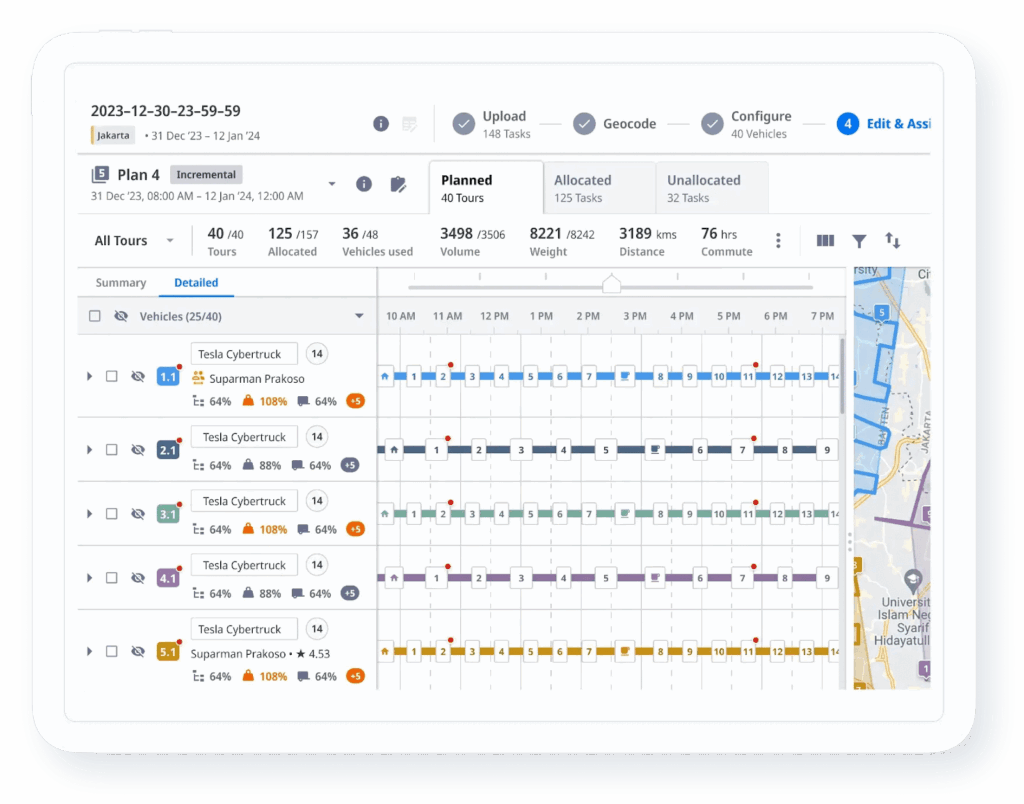
Optimizing delivery routes manually is both time-consuming and prone to inefficiencies. AI-powered route optimization systems continuously analyze real-time data, including traffic patterns, weather conditions, road closures, and historical trends. Once analyzed, these systems calculate the most efficient routes. They adapt in real-time, adjusting delivery schedules to avoid delays and reduce fuel consumption.
2. Real-Time Visibility and Tracking
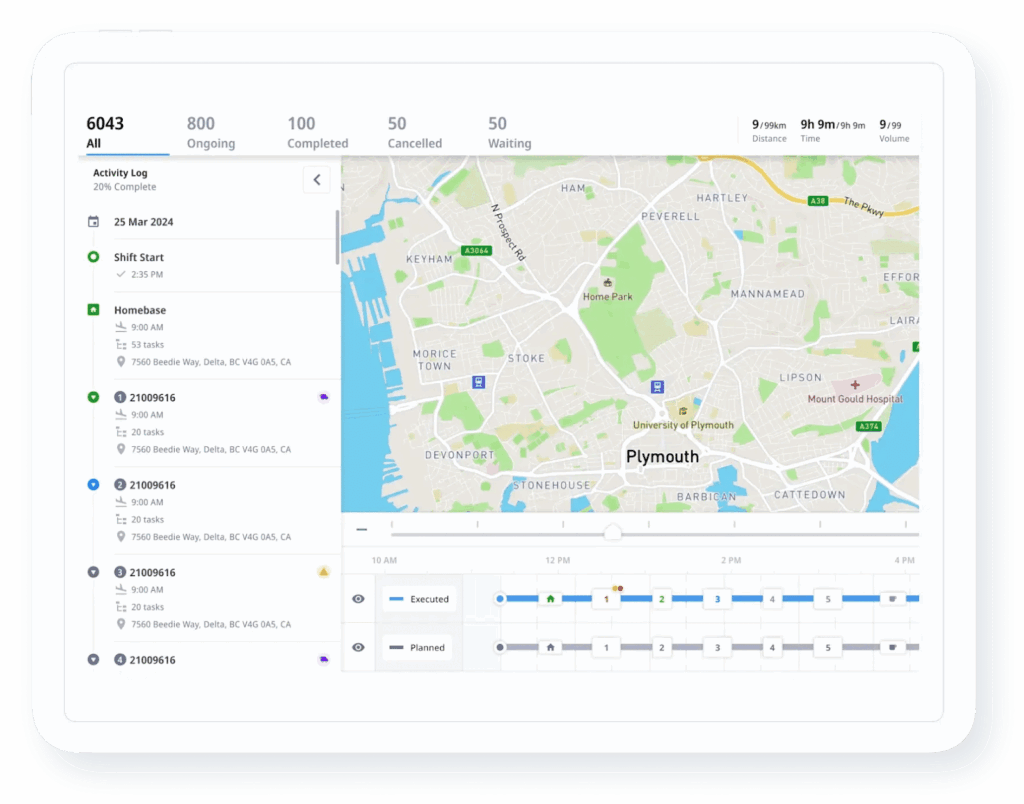
Knowing the status of shipments at any given moment is essential. Real-time tracking enables businesses to monitor goods as they move through the supply chain, allowing for immediate action if disruptions occur. It also enhances coordination between teams and gives customers accurate delivery updates, improving service levels.
With comprehensive visibility, allowing businesses to track shipments in real-time. This transparency facilitates proactive decision-making and minimizes the risk of delays or inventory mismanagement.
3. Automated Warehouse Management
Automation in warehouses helps companies reduce errors, speed up processing times, and lower operational costs. Technologies like robotic picking systems, automated storage and retrieval systems (AS/RS), and inventory management software enhance the efficiency of every step in the warehousing process. By reducing manual tasks, automation ensures that products are accurately stored, tracked, and picked with minimal human intervention.
Implementing a comprehensive plan to enhance warehouse operations such as optimizing sorting, improving load formation, and utilizing granular visibility, helps businesses streamline warehouse processes, further reducing handling times, improving order accuracy, and driving faster fulfillment.
4. Streamlined Returns Management
A slow or inefficient returns process can impact customer loyalty and increase costs. Optimizing returns involves automating workflows to process returns quickly and restock inventory without delays. It also includes providing customers with clear, easy-to-follow return instructions to enhance their experience. Efficient returns management can prevent overstock issues, minimize financial losses, and maintain a high level of customer satisfaction.
As e-commerce continues to grow, with predictions of a rise from $875 billion in 2022 to $1.3 trillion by 2025, the importance of efficient returns management is becoming even more critical. The whitepaper on reverse logistics explores the challenges and opportunities this process presents, highlighting how the digital shift and eco-conscious returns are shaping the landscape of e-commerce.
Key Takeaways from the Whitepaper:
- The Importance of Returns: With the increasing volume of online purchases, returns have become a significant issue, impacting both customer satisfaction and operational costs.
- The Digital Shift: E-commerce has brought new challenges, requiring innovative return policies and seamless processes.
- Challenges on the Return Highway: Businesses face resource challenges, cost complexities, and the need to balance customer satisfaction with operational efficiency.
- Eco-Friendly Returns: As sustainability becomes a priority, businesses must adapt their returns processes to be more environmentally conscious.
- Locus’ Solution: Locus transforms returns challenges into strategic opportunities. By automating returns management, Locus improves the speed and accuracy of returns processing, reducing operational overhead and enhancing the overall customer experience.
With Locus’ automated returns management solution, businesses can significantly streamline their returns processes, improving efficiency, reducing costs, and boosting customer satisfaction.
Optimizing Logistics for Better Efficiency and Customer Satisfaction
As supply chains evolve in 2025, the need to optimize logistics operations has become a business imperative. Efficient logistics control costs and improve service levels by giving companies a significant competitive edge. Key processes including AI-driven route optimization, real-time tracking, automated warehouse management, and streamlined returns are essential for businesses aiming to meet rising customer expectations while improving operational efficiency.
Adopting advanced technologies like artificial intelligence and automation is critical for companies that want to navigate the increasing complexity of logistics. These tools allow businesses to make data-driven decisions, reduce delays, enhance visibility, and drive cost reductions across the entire supply chain.
Locus offers a comprehensive AI-powered solution that integrates all these functions. By optimizing routing, improving inventory management, and providing real-time insights, Locus helps businesses streamline their logistics operations and enhance customer satisfaction.
Schedule a demo with Locus today and gain a clear understanding of how Locus can transform your logistics operations.
Frequently Asked Questions (FAQs)
1. How can AI improve logistics operations?
AI improves logistics by optimizing routes, forecasting demand, and automating decision-making. It enhances efficiency, reduces costs, and enables faster response times, ensuring better customer satisfaction.
2. What are the key benefits of real-time tracking in logistics?
Real-time tracking improves supply chain visibility, reduces delays, enhances inventory management, and ensures accurate delivery estimates, improving operational control and customer experience.
3. How does warehouse automation impact logistics efficiency?
Warehouse automation streamlines inventory management, reduces errors, and speeds up order fulfillment, leading to lower costs and faster delivery times, ultimately improving overall operational efficiency.
4. Why is returns management crucial for e-commerce logistics?
Efficient returns management reduces operational costs, enhances customer loyalty, and prevents inventory imbalances, making it essential for maintaining profitability in e-commerce operations.
5. How does Locus optimize supply chain logistics operations?
Locus leverages AI-powered tools to automate logistics tasks, enhance route optimization, and provide end-to-end visibility, helping businesses reduce costs and improve efficiency throughout their supply chains.


News
Our First Steps to Perpetuity

Oct 7, 2025
A Short Story About Symbols There is a small service road in Nagasandra, on the outskirts of Bengaluru, where Locus took its first steps, working out of a rented apartment. In those first months, there was just a quiet stretch of road, a rented flat, and a handful of people learning how to make hard […]
Read more
General
What Is Pharmaceutical Logistics? Importance & Challenges

Oct 9, 2025
Pharmaceutical logistics in 2025 tackles cold chain risks, compliance, and visibility. Discover how Locus improves cold chain performance in 2025 effortlessly
Read moreInsights Worth Your Time




















Logistics Operations: Optimizing Supply Chain Management