


General
What Is Pharmaceutical Logistics? Importance & Challenges
Key Takeaways
- Pharmaceutical logistics manages the controlled movement of temperature-sensitive drugs, biologics, and vaccines across complex global networks.
- In 2026, supply chains must account for stricter regulations, higher delivery volumes, and reduced tolerance for error.
- The global pharmaceutical logistics market reached $104.77 billion in 2025 and is expected to grow to $113.41 billion in 2026 at a CAGR of 8.2%.
- Failures in cold chain continuity, route-level delays, and incomplete documentation contribute to billions in product loss and regulatory penalties.
- AI-powered platforms with dynamic routing, environmental tracking, and real-time exception handling are raising the operational standard.
- Locus equips pharmaceutical enterprises with automated route planning, live cold chain visibility, and audit-ready logistics orchestration at scale.
For pharmaceutical supply chain leaders, logistics directors, and operations managers at manufacturers, 3PLs, and distributors—the COVID-19 vaccine rollout made one thing unmistakably clear: global cold chain systems were never built for this level of complexity. It exposed structural flaws that continue to define the challenges pharmaceutical logistics faces in 2026.
Across every logistics operation in the pharma industry, three issues demand immediate attention: cold chain excursions, fragmented regulatory requirements, and unreliable last-mile delivery. These are not occasional disruptions. They are structural risks—ones that carry real financial costs and regulatory consequences if left unaddressed.
Locus is the only logistics platform that combines AI-powered route planning, end-to-end cold chain visibility, and audit-ready orchestration—purpose-built for pharmaceutical supply chains. Leading pharma manufacturers and distributors trust Locus for compliance, precision, and scale.
This article defines the core components of pharmaceutical logistics, maps the 2026 market landscape, and breaks down the cost of failure. It also outlines how Locus addresses these challenges through automated routing, cold chain visibility, and compliance-ready orchestration.
What is Pharmaceutical Logistics?
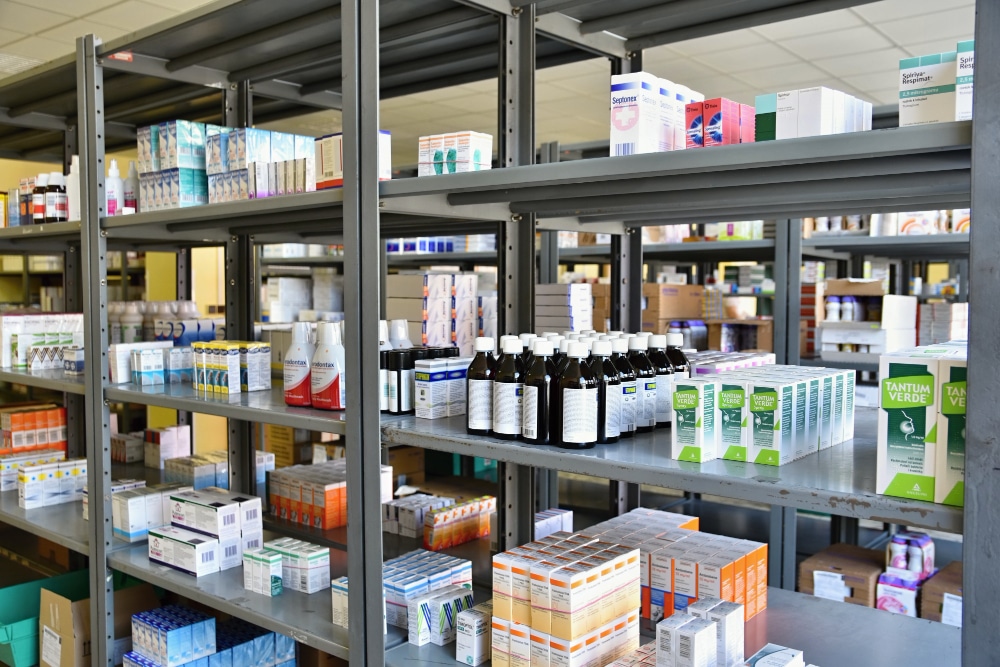
Pharmaceutical logistics is the specialized coordination of storage, handling, and transportation processes required to move medical products safely through the supply chain. These include vaccines, biologics, injectable medications, and temperature-sensitive drugs, all of which demand strict adherence to environmental controls and regulatory standards.
The scope extends beyond basic delivery operations. It involves:
- Cold chain logistics for maintaining fixed temperature ranges, often between 2°C and 8°C.
- CRT (Controlled Room Temperature) handling for products that must avoid exposure to extreme ambient temperatures.
- Specialized warehousing with humidity control, backup refrigeration, and inventory segregation by temperature zone.
- Secure transportation protocols using GPS-enabled, insulated vehicles monitored for shock, temperature, and light exposure.
- Regulatory compliance and traceability, with documentation covering every stage, from batch release to last-mile handoff.
For example, cell and gene therapies, which often require ultra-cold storage (–60°C or lower), cannot tolerate even brief temperature fluctuations. A customs hold without dry ice replenishment can lead to irreversible degradation and loss of patient-critical doses.
How Pharmaceutical Logistics Differs from General Logistics
General freight can absorb minor delays, temperature swings, and documentation gaps without catastrophic outcomes. Pharmaceutical logistics cannot. Every shipment carries a direct patient-safety obligation, which introduces requirements that do not exist in standard supply chains:
| Factor | General Logistics | Pharmaceutical Logistics |
|---|---|---|
| Temperature control | Optional or passive | Mandatory, continuous, validated |
| Regulatory oversight | Standard trade compliance | GDP, DSCSA, WHO Annex 9 |
| Traceability | Basic tracking | Serialized, chain-of-custody verified |
| Failure cost | Financial loss | Patient harm, regulatory action, brand destruction |
| Packaging | Standardized | Route-specific, thermally validated |
| Counterfeit risk | Low for most goods | High—requires RFID, serialization |
This distinction makes pharma logistics one of the most regulation-intensive and technology-dependent segments of the global supply chain.
Global Regulatory Frameworks Governing Pharmaceutical Logistics
Pharmaceutical logistics is governed by region-specific regulations designed to ensure drug safety, product integrity, and traceability. In the European Union, the Good Distribution Practice (GDP) guidelines set strict standards for storage, transportation, documentation, and chain-of-custody. These rules are enforced by the European Medicines Agency (EMA).
In the United States, the Drug Supply Chain Security Act (DSCSA) requires serialization, traceability, and electronic transaction documentation across the supply chain. The law is administered by the U.S. FDA, with enforcement deadlines extending into 2024–2025.
India’s Central Drugs Standard Control Organization (CDSCO) mandates guidelines for labeling, storage conditions, and documentation in alignment with WHO Annex 9 and national Drugs & Cosmetics Rules.
These frameworks are not harmonized, requiring pharma companies to maintain region-specific logistics protocols and audit trails when operating globally.
Logistics in the pharmaceutical industry must therefore balance delivery timelines with strict quality assurance. The focus shifts from mere distribution efficiency to safeguarding drug stability and regulatory integrity across increasingly complex global routes.
Pharmaceutical Logistics Market Size in 2026
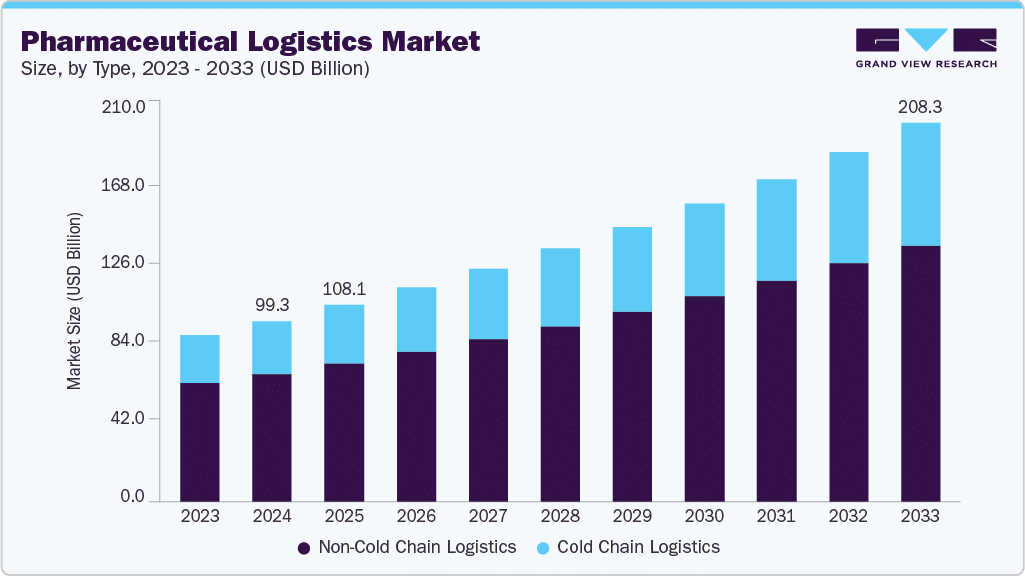
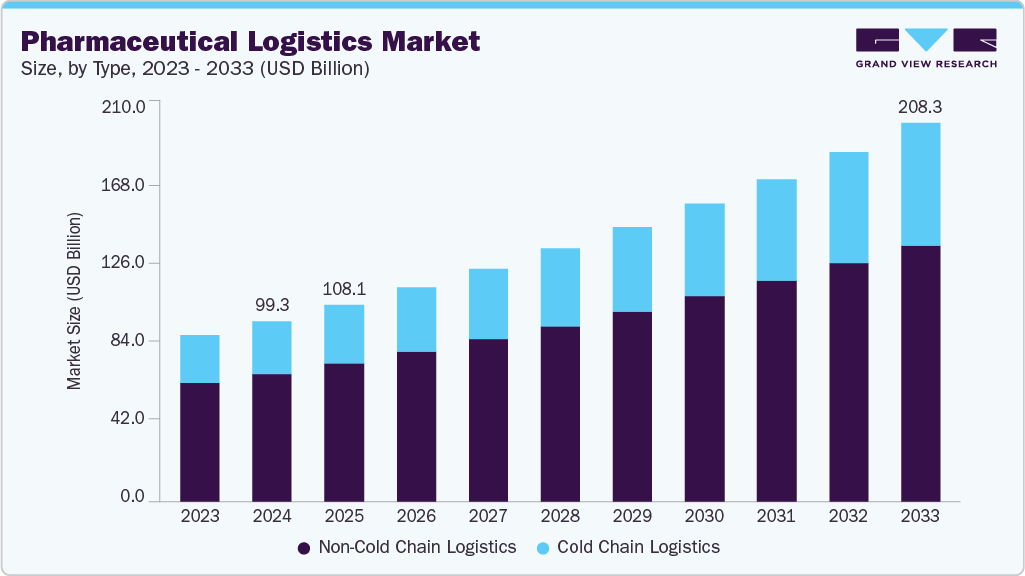
The global pharmaceutical logistics market reached $104.77 billion in 2025 and is projected to grow to $113.41 billion in 2026 at a compound annual growth rate (CAGR) of 8.2%, according to The Business Research Company. Independent estimates from Precedence Research place the 2025 market at USD 102.56 billion, growing to USD 111.58 billion in 2026 at a CAGR of 8.68%.
This expansion reflects rising demand for high-value, temperature-controlled therapies and biologics, along with increasing complexity in global pharmaceutical distribution networks.
Market Size Estimates: A Multi-Source View
| Source | 2025 Market Size | 2026 Projection | CAGR |
|---|---|---|---|
| The Business Research Company | $104.77 B | $113.41 B | 8.2% |
| Precedence Research | $102.56 B | $111.58 B | 8.68% |
| 360iResearch | $90.06 B | $96.67 B | 8.97% |
| Market.us (3PL segment) | $137.5 B (2024) | — | 8.8% through 2034 |
Variations across sources reflect differences in market scope definitions and segment inclusion. The directional signal is consistent: pharmaceutical logistics is a high-growth sector driven by biologics expansion, regulatory tightening, and 3PL outsourcing.
Cold chain logistics continues to be the fastest-growing segment. More than 30% of global pharmaceutical products now require cold chain handling, driven by the widespread use of biologics, cell and gene therapies, and temperature-sensitive vaccines.In terms of geography, Asia-Pacific is expected to lead growth through 2026. Factors contributing to this momentum include a surge in domestic pharmaceutical manufacturing, infrastructure investments in regional hubs like India and Singapore, and government-backed healthcare expansions. Meanwhile, North America and Europe maintain their dominance in volume and regulatory rigor.
Other key drivers shaping the market include:
- Expansion of e-commerce pharmacy models and direct-to-patient delivery systems
- Increasing enforcement of global GDP (Good Distribution Practices) regulations
- A surge in personalized and time-sensitive therapies that demand high-precision fulfillment
By 2025, over USD 26 billion in market value will come from cold chain logistics alone. For logistics providers, scalable infrastructure and technology adoption have become absolutely essential for compliance and operational viability.
Importance of Pharmaceutical Logistics
What distinguishes pharmaceutical logistics from other sectors is the direct link between operational execution and patient safety. Consumer goods can absorb minor transit issues, whereas pharmaceuticals require tightly controlled conditions to maintain safety and efficacy. Even a 30-minute deviation from a required 2°C–8°C range can degrade a vaccine or biologic injection beyond usability.
Several factors make precision logistics essential:
- Product integrity: Complex therapies demand continuous environmental control from manufacturing to last-mile handoff.
- Compliance pressure: Regulatory frameworks such as EU GDP and US DSCSA require full visibility into transit conditions, handling events, and chain-of-custody.
- Patient risk mitigation: Administering compromised medication is not only dangerous; it can lead to class-action lawsuits, FDA warnings, and permanent loss of brand trust.
- Time-sensitive therapies: Personalized medicines and pandemic-response drugs operate under non-negotiable delivery windows.
The logistics function defines a company’s ability to serve critical markets and meet global demand without compromise.
Related reading: AI in logistics and supply chain
Key Challenges in Pharmaceutical Logistics in 2026
The most urgent risks in pharmaceutical logistics, cold chain excursions, regulatory fragmentation, and last-mile delivery instability, stem from deeply embedded operational issues that affect execution across the supply chain.
Failure Points Within Transit Handoffs
Temperature excursions often occur at transition nodes, not during linehaul. Unrefrigerated airport holding zones, delayed customs clearance, or slow cross-docking at regional hubs can expose biologics to ambient temperatures for hours. Products like monoclonal antibodies lose efficacy rapidly when stored outside the 2°C–8°C range, and these breaches are frequently undetected until after delivery.
Fragmented Monitoring Across Third Parties
Pharmaceutical shipments typically pass through multiple 3PLs, ground handlers, and warehousing partners. Most of these stakeholders rely on disconnected systems that do not share data across the chain, making it difficult to track temperature, humidity, shock exposure, or handling times in real time. Without centralized visibility, logistics teams cannot respond to in-transit risks until it’s too late to preserve product integrity.
Compliance Gaps in Cross-Border Movements
In early-stage biologics distribution, even minor documentation errors can trigger significant downstream delays. For instance, a shipment of temperature-sensitive oncology drugs arriving in one country was held for 48 hours because the transit log lacked a scanned temperature reading during a stopover in another country. Despite intact packaging and on-time delivery, the shipment failed to clear customs due to incomplete traceability. These lapses often stem from manual data entry, lack of digital integration between partners, and inconsistent SOP adherence across geographies.
Infrastructure Constraints in the Final Mile
The most vulnerable segment of pharmaceutical delivery remains the final mile, particularly in coastal and rural regions, where infrastructure and cold chain reliability vary widely. In Southeast Asia, shortages in temperature-controlled storage, erratic power supply, and lack of insulated transport frequently compromise product integrity during handoffs.
A WHO-supported study of hepatitis B vaccine distribution in Indonesia revealed that 75% of shipments experienced freezing during transit or local storage. Many failures occurred in coastal areas, where vaccines were transferred without adequate insulation or monitoring. These excursions happened despite compliance at the point of origin, highlighting how environmental exposure during short-distance transfers can undo upstream logistics planning.
Further complications stem from outdated routing data, absence of fallback delivery protocols, and limited coordination with local carriers. Missed rescheduling windows or delayed status updates prevent real-time response, leaving dispatchers unable to intervene before thermal excursions escalate into full product loss.
Counterfeit Infiltration and Reverse Logistics Gaps
Pharmaceutical reverse logistics—managing returns, recalls, and expired inventory—introduces additional vulnerability. Without serialized tracking and blockchain-verified chain-of-custody, returned products can re-enter the supply chain without proper inspection. Counterfeit medicines remain a significant global threat, and logistics networks that lack end-to-end traceability are the primary infiltration point. This challenge is especially acute in markets with fragmented distribution tiers and limited digital infrastructure.
Related reading: Role of logistics management
What it Takes to Execute Pharma Logistics with Precision
Building operational precision in pharmaceutical logistics requires more than well-trained staff or insulated packaging. It depends on a system-wide ability to anticipate, detect, and respond to risk in real time.
Four practices form the foundation of high-performance pharma logistics:
- Route-specific packaging ensures thermal protection aligns with route complexity, not just product classification.
- Environmental monitoring captures more than just temperature, offering a detailed view of shock, humidity, and light exposure, factors critical for biologics and specialty drugs.
- Automated documentation eliminates inconsistencies in audit trails, reducing compliance risk across regions with varied regulatory expectations.
- Contingency-aware routing equips logistics teams to act on live disruptions and reroute shipments without breaching cold chain thresholds.
Each addresses a specific operational failure point: thermal excursions, traceability gaps, and last-mile unpredictability. When executed together, these practices convert fragile delivery networks into resilient systems, capable of handling volume, complexity, and oversight at scale.
Solutions and Best Practices in Pharmaceutical Logistics
Effective pharmaceutical logistics begins with route-aware planning and ends with auditable, exception-ready delivery execution. Every step in between must preserve product integrity, regulatory compliance, and operational control, regardless of geography or infrastructure maturity.
Packaging decisions, for example, cannot rely solely on product classification. They must reflect route complexity, ambient climate patterns, and transit duration. Long-haul shipments with multiple handoffs or exposure to high-temperature zones require active cooling containers. Locus addresses this by using Dispatch Management System to evaluate handoff volumes, regional conditions, and weather forecasts to recommend packaging configurations that align with actual transit risks, not assumptions.
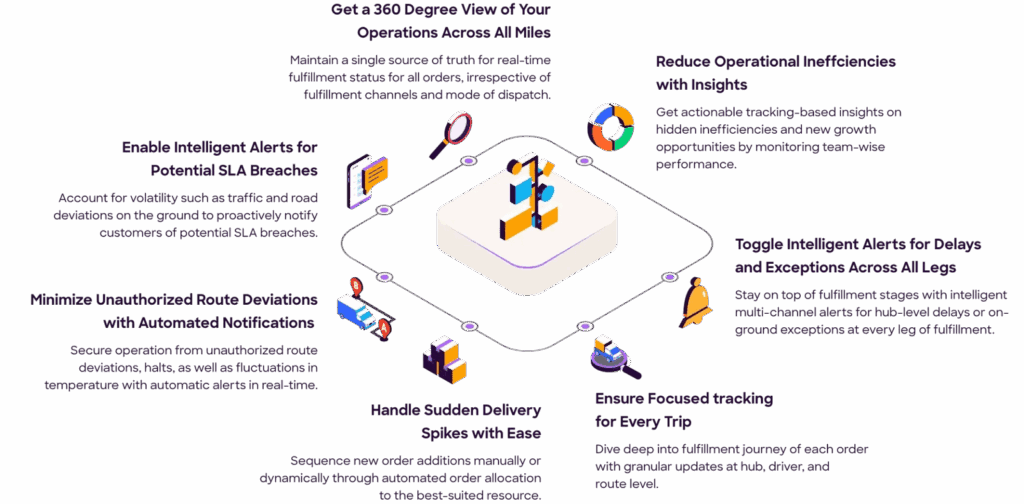
Shipment monitoring must also extend beyond temperature. High-risk therapies like biologics are sensitive to humidity, shock, and light exposure. Locus’s Control Tower consolidates environmental sensor data across carrier legs and geographies, offering logistics teams real-time visibility into in-transit deviations. When anomalies occur, the system flags geo-tagged alerts early enough for corrective action to preserve cold chain integrity.
Audit-readiness is another essential layer. GDP and DSCSA regulations require precise documentation at every point of transfer. Locus automates the capture of time stamps, environmental data, and handoff confirmations, creating a digitized, regulator-ready chain of custody that eliminates manual inconsistencies and accelerates reporting.
See Locus in Action
Explore how Locus improves route accuracy, delivery consistency, and cold chain control through real-time visibility and decision automation.
Finally, delivery timelines must be resilient to disruption. Route delays, traffic bottlenecks, or port congestion can trigger thermal excursions without fallback plans. Locus builds contingency routing directly into the dispatch logic, enabling dynamic rerouting in real time, without compromising delivery windows or regulatory thresholds.
Together, these practices move pharma logistics from reactive execution to proactive, regulation-aligned orchestration.
Future Trends in Pharmaceutical Logistics (2026 and Beyond)
The next phase of pharmaceutical logistics focuses on proactive control, localized distribution, and digitally verified compliance. As product complexity rises, logistics networks must evolve to support greater precision, responsiveness, and adaptability.
AI-Led Demand Forecasting and Distribution Planning
Predictive models built on prescription volumes, disease prevalence, and seasonal trends help pharma companies anticipate demand fluctuations. Inventory can then be pre-positioned in high-risk zones, reducing reliance on long-haul cold chains and minimizing the risk of out-of-stock events.
Blockchain-Based Chain-of-Custody Validation
Immutable digital records are gaining traction in regulated markets to verify product handling conditions and handoffs. Blockchain frameworks ensure traceability without manual reconciliation, lowering exposure to counterfeit risks and import compliance delays.
Greener Cold Chain Infrastructure
To address carbon-intensive operations, logistics teams are shifting to reusable thermal packaging, solar-assisted refrigeration units, and electric refrigerated vehicles. These changes reduce dependency on single-use containers and diesel-based cooling, especially across regional hubs. Building a green logistics strategy for sustainable supply chains is no longer optional for pharmaceutical enterprises targeting 2026 ESG commitments.
Micro-Fulfillment for Personalized Therapy Distribution
Smaller delivery nodes near patient clusters enable faster, more controlled delivery of high-value treatments such as cell and gene therapies. These shipments often require tight delivery windows and cold chain integrity, making standard bulk logistics insufficient.
Each trend reflects a broader shift away from centralized bulk movement toward distributed, data-driven orchestration, where speed, traceability, and compliance are optimized at every level of execution.
IoT-Enabled End-to-End Visibility
Internet of Things (IoT) sensors embedded in packaging, pallets, and vehicles provide continuous data streams on temperature, humidity, shock, and location. When integrated with AI-driven logistics platforms, this data enables automated alerts, predictive maintenance of cold chain assets, and granular post-shipment analytics that strengthen compliance reporting. IoT adoption is accelerating across pharmaceutical supply chains, transforming reactive monitoring into proactive risk management.
Air Freight vs. Road Transport: A Shifting Balance
Roadways currently dominate pharmaceutical transport for cost-effective, high-volume distribution. However, air freight is the fastest-growing mode for time-critical shipments like vaccines and biologics, where transit duration directly impacts product viability. In 2026, enterprises are increasingly adopting multimodal strategies—pairing road networks for regional last-mile coverage with air corridors for intercontinental cold chain movements.
Each trend reflects a broader shift away from centralized bulk movement toward distributed, data-driven orchestration—where speed, traceability, and compliance are optimized at every level of execution.
Related reading: Top retail logistics software
Benefits of Precision Pharmaceutical Logistics
Investing in purpose-built pharmaceutical logistics infrastructure and technology delivers compounding returns across compliance, cost, and patient outcomes.
- Reduced product spoilage: Continuous cold chain monitoring and contingency routing cut thermal excursion events, protecting high-value biologics and vaccines from degradation.
- Regulatory audit readiness: Automated documentation eliminates manual inconsistencies, accelerating audit cycles and reducing the risk of GDP or DSCSA non-compliance penalties.
- Lower operational costs: AI-powered route optimization reduces fuel consumption, vehicle idle time, and failed deliveries—driving measurable cost savings across fleet operations.
- Faster time-to-patient: Dynamic dispatch planning shortens delivery windows for time-sensitive therapies, improving patient access to critical medications.
- Improved fleet utilization: Intelligent load planning and routing logic improve fleet utilization, maximizing capacity without compromising temperature control.
- Scalable compliance across geographies: Centralized orchestration platforms enable logistics teams to manage region-specific regulatory protocols from a single interface—critical for global pharma distributors.
- Enhanced supply chain resilience: Real-time exception handling and contingency-aware routing insulate operations against disruptions caused by weather, traffic, port congestion, or carrier failures.
- Counterfeit deterrence: End-to-end traceability—including serialization, RFID, and blockchain—closes gaps that counterfeit products exploit in fragmented distribution networks.
These benefits are not theoretical. They are operational outcomes achievable through the technology and orchestration capabilities that platforms like Locus deliver at enterprise scale.
Precision Logistics for High-Risk Pharmaceutical Cargo with Locus
Pharmaceutical delivery operations now run on precision, from route selection and vehicle readiness to thermal stability and digital traceability. Each shipment must align with specific time, temperature, and regulatory thresholds, often across cross-border or infrastructure-limited zones.
Locus supports pharmaceutical delivery networks with purpose-built capabilities for temperature-controlled planning, high-volume visibility, and compliance tracking. Every feature is designed to handle the operational standards expected in pharma logistics, across dense cities, cross-border corridors, and rural last-mile routes.
Temperature-Informed Route Optimization with DispatchIQ
Locus’ Dispatch Management Software plans routes based on time sensitivity, vehicle insulation, and cold chain holding capacity. For biologics requiring 2°C-8°C stability, the system avoids high-risk routes with frequent stops or congested segments. Routing decisions factor in live road data, fleet availability, and past performance for on-time cold chain delivery.
Continuous Monitoring via Control Tower
The Locus Control Tower consolidates live updates from fleet sensors, drivers, and delivery checkpoints. It identifies early signs of disruption, such as rising internal temperatures, extended idle times, or route slowdowns, so teams can switch to backup assets or escalate interventions before product integrity is affected.
Digital Documentation for Regulatory Readiness
Each delivery record includes vehicle temperature logs, time-stamped milestones, and delivery confirmation data aligned to GDP and DSCSA protocols. These records are generated automatically across handoffs and stored centrally, reducing manual documentation errors and improving traceability during audits.
Region-Specific Routing Strategies
Locus uses segmentation logic to assign delivery strategies based on regional constraints. Routes to infrastructure-limited zones are scheduled with shorter dwell times, thermally stable packaging, and verified carrier options, improving cold chain stability across Tier-2 and Tier-3 locations.
By aligning environmental data, vehicle capabilities, and route conditions, Locus ensures delivery outcomes that meet pharmaceutical standards at scale.
Why Pharma Enterprises Choose Locus
| Capability | What Locus Delivers |
|---|---|
| AI-powered routing | Dynamic route planning that accounts for cold chain constraints, traffic, and weather |
| End-to-end cold chain visibility | Real-time sensor consolidation across all carrier legs and geographies |
| Audit-ready documentation | Automated GDP/DSCSA-compliant records with timestamped chain-of-custody |
| Contingency routing | Live rerouting without breaching temperature or delivery window thresholds |
| Regional adaptability | Segmented strategies for Tier-1 cities, rural zones, and cross-border corridors |
| Scalable orchestration | Enterprise-grade platform trusted by global manufacturers and 3PLs |
Conclusion
The pharmaceutical logistics market is on a clear growth trajectory—reaching an estimated $104.77 billion in 2025 and projected to exceed $113.41 billion in 2026. The pharmaceutical third-party logistics segment alone is expected to reach US$ 319.6 billion by 2034, fueled by biologics expansion, regulatory tightening, and the accelerating shift to outsourced cold chain operations.
Technology is the dividing line between resilient and fragile pharmaceutical supply chains. IoT, blockchain, and AI-driven predictive analytics tackle the cold chain and compliance challenges that manual processes cannot address at scale. GDP adherence through automated audits and temperature-controlled warehousing ensures product safety across global chains. And as roadways continue to dominate for cost-effective last-mile delivery while air freight grows fastest for vaccine and biologics corridors, multimodal orchestration becomes essential.
For pharmaceutical supply chain leaders, logistics directors, and operations managers—the imperative is clear: invest in purpose-built logistics technology that delivers compliance, cold chain integrity, and delivery precision without compromise.
See Pharma Logistics in Action ?
Frequently Asked Questions
What is pharmaceutical logistics?
Pharmaceutical logistics involves the specialized handling, storage, and transportation of medicines, vaccines, biopharma products, and medical devices from manufacturers to end-users. It ensures product integrity through continuous temperature control, GDP compliance, serialized traceability, and secure chain-of-custody verification. Unlike general logistics, pharmaceutical logistics operates under strict regulatory protocols—including RFID tracking and DSCSA serialization—to prevent counterfeit infiltration and protect patient safety.
What are the main challenges in pharmaceutical logistics?
The primary challenges include maintaining cold chain integrity across complex transit handoffs, navigating fragmented regulatory requirements across different countries, and ensuring reliable last-mile delivery in infrastructure-limited regions. Additional risks include counterfeit infiltration in supply chains with weak traceability, compliance gaps caused by manual documentation, and demand surges that exceed existing cold chain capacity. Solutions involve IoT-enabled real-time monitoring, blockchain for immutable chain-of-custody records, and AI-powered route optimization for contingency-aware delivery.
What is the pharmaceutical logistics market size in 2026?
The global pharmaceutical logistics market reached approximately $104.77 billion in 2025 and is projected to grow to $113.41 billion in 2026 at a CAGR of 8.2%, according to The Business Research Company. Precedence Research places the 2026 figure at USD 111.58 billion with a CAGR of 8.68%. Growth is driven by rising biologics demand, expanded cold chain requirements, and increased outsourcing to pharmaceutical 3PLs.
Why should pharmaceutical companies outsource logistics to 3PLs?
Outsourcing to specialized 3PLs reduces capital expenditure on cold chain infrastructure, provides access to GDP-compliant distribution expertise, and enables scalable operations across emerging markets. It allows pharma manufacturers to focus on R&D and production while ensuring last-mile delivery efficiency—especially for e-commerce pharmacy models and direct-to-patient fulfillment. The pharmaceutical third-party logistics market is projected to reach US$ 319.6 billion by 2034, reflecting the scale of this shift.
How does technology improve pharmaceutical logistics?
Technologies like IoT sensors, AI predictive analytics, and blockchain provide end-to-end supply chain visibility, automate inventory and compliance workflows, and reduce spoilage risks. GPS tracking and serialization enable real-time shipment monitoring and rapid recall execution. AI-powered platforms like Locus combine dynamic route optimization, environmental sensor consolidation, and automated audit documentation to deliver precision logistics at enterprise scale.
What role does cold chain play in pharmaceutical logistics?
Cold chain logistics maintains precise temperatures for vaccines, biologics, and other temperature-sensitive products during storage and transport. It uses validated containers, continuous monitoring sensors, and alert systems to prevent degradation from thermal excursions. More than 30% of global pharmaceutical products now require cold chain handling. Failures at transit handoff points—not during linehaul—account for the majority of excursion events, making real-time monitoring and contingency routing critical capabilities.
What is the difference between pharmaceutical logistics and general logistics?
Pharmaceutical logistics requires mandatory continuous temperature control, serialized traceability, and compliance with regulations like GDP and DSCSA—none of which are standard in general freight. Failure costs extend beyond financial loss to include patient harm, regulatory penalties, and brand destruction. Packaging must be route-specific and thermally validated, and counterfeit prevention through RFID and blockchain is a core operational requirement rather than an optional enhancement.
What are the key pharmaceutical logistics trends for 2026?
Major trends include AI-led demand forecasting for pre-positioning inventory, blockchain-based chain-of-custody validation, IoT-enabled end-to-end shipment visibility, greener cold chain infrastructure using electric vehicles and reusable packaging, and micro-fulfillment networks for personalized therapy distribution. Multimodal transport strategies—combining road networks for last-mile coverage with air corridors for intercontinental cold chain movements—are also accelerating across global pharma supply chains.


General
Logistics Operations: Optimizing Supply Chain Management

Oct 8, 2025
Learn how to optimize logistics operations and improve supply chain management. Explore Locus’ AI-powered solutions for faster, smarter logistics in 2025
Read more
General
Logistics Risk Management: Types & Strategies Explained
Oct 15, 2025
Understand logistics risk management and its importance. Discover risk mitigation strategies and how Locus empowers businesses to navigate logistics challenges.
Read moreInsights Worth Your Time




















What Is Pharmaceutical Logistics? Importance & Challenges