


General
Bringg Competitors in 2026: Top Alternatives for Scalable Delivery Execution
Key Takeaways
- Teams usually start evaluating Bringg competitors when execution complexity grows beyond standard last-mile coordination and requires tighter operational control.
- Most Bringg alternatives fall into three buckets: execution-focused delivery platforms, routing-first tools, and end-to-end logistics orchestration systems.
- Mid-sized teams often prioritize usability and faster onboarding, while enterprise operations need real-time control, automation, and resilience at scale.
- The right platform depends on delivery density, order volatility, number of hubs, and how often execution decisions change after dispatch.
- Locus stands out for teams that need execution-first orchestration, where routing, dispatch, and real-time decision-making stay tightly connected as operations scale.
Teams searching for Bringg competitors usually fall into one of two categories:
- Some are already using Bringg and have reached a point where operational complexity is outpacing what their current setup can comfortably support.
- Others are evaluating delivery platforms for the first time and want to understand whether Bringg is the right long-term fit before committing.
For existing users, the questions often surface during scale. More orders, more regions, tighter SLAs, and more exceptions on delivery days are exposing issues between planning and execution.
For new buyers, the challenge is different. Bringg is often positioned as a delivery management platform, but comparing it with other options reveals significant differences in execution depth, orchestration capabilities, and scalability.
This guide breaks down leading Bringg competitors for 2026, helping teams understand where each platform fits based on execution needs, operational maturity, and growth plans.
Where Teams Start Re-Evaluating Bringg
In most cases, Bringg continues to do what it is designed for: enabling flexible last-mile delivery workflows with strong customization and integrations.
Recent user feedback from 2023 reinforces this, especially among enterprise and engineering-led teams. However, the same reviews also point to patterns that often trigger re-evaluation as operations mature.
One recurring theme is operational complexity. Enterprise users note that while Bringg is flexible, that flexibility can come with increased setup effort, deeper configuration requirements, and ongoing technical overhead. As delivery volumes grow and workflows become more interconnected, teams report spending more time managing integrations, resolving edge cases, or coordinating across systems.
Another signal appears around cost and scale sensitivity. Multiple reviewers mention pricing concerns and cost escalation as usage expands. This is especially relevant for teams adding regions, fleets, or advanced capabilities over time. What feels reasonable during initial rollout can become more noticeable as dependency on the platform increases.
There are also mentions of intermittent technical friction, including integration challenges and occasional platform issues. These are not described as constant blockers, but they become more visible in high-throughput environments where even short disruptions can affect SLAs and dispatcher confidence.
These reviews reflect a common inflection point. As delivery operations shift from coordinated last-mile execution toward continuous, real-time decision-making across planning, dispatch, and execution, teams begin questioning whether customization-heavy delivery platforms are enough on their own.
This is typically when organizations start exploring Bringg competitors, not to replace flexibility, but to gain tighter execution control, lower operational overhead, and greater stability as complexity increases.
Top Bringg Competitors to Evaluate in 2026
While Bringg is known for flexible last-mile execution, its alternatives differ significantly in execution depth, routing intelligence, fleet visibility, and scalability. Below is a breakdown of the most commonly evaluated platforms and where each one fits operationally.
| Operational Need | What Teams Are Solving | Best-Fit Platforms |
|---|---|---|
| End-To-End Execution Control | Routes and priorities change after dispatch; teams need real-time adjustments without restarting plans or using manual workarounds | Locus |
| Execution-Focused Last-Mile Coordination | Dispatchers need clean task assignment, driver communication, and live tracking with minimal setup | Onfleet, Tookan |
| Upfront Route Optimization for Stable Schedules | Reduce manual planning effort for predictable, recurring routes with limited mid-day changes | Route4Me, Routific |
| Proof Of Delivery And Basic Execution Visibility | Digitize delivery confirmation with signatures, photos, and task tracking at low operational cost | Track-POD |
| Customer-Facing Delivery Visibility | Improve post-purchase experience with tracking, notifications, and standardized last-mile workflows | FarEye |
| Fleet Visibility, Safety, And Compliance | Monitor vehicles, driver behavior, maintenance, and regulatory compliance across large fleets | Samsara, Verizon Connect |
| Parcel Shipping And Carrier Management | Centralize order processing, label creation, and multi-carrier shipping workflows | ShipStation |
| Multi-Region, High-Density Delivery Orchestration | Maintain performance during peak volumes, dense routes, and hybrid fleet operations | Locus |
| Fast Onboarding With Minimal Configuration | Get teams operational quickly without heavy workflow setup or technical dependency | Onfleet, Tookan |
| Enterprise-Scale Operational Resilience | Avoid fragmentation as delivery networks grow across hubs, fleets, and regions | Locus |
1. Locus
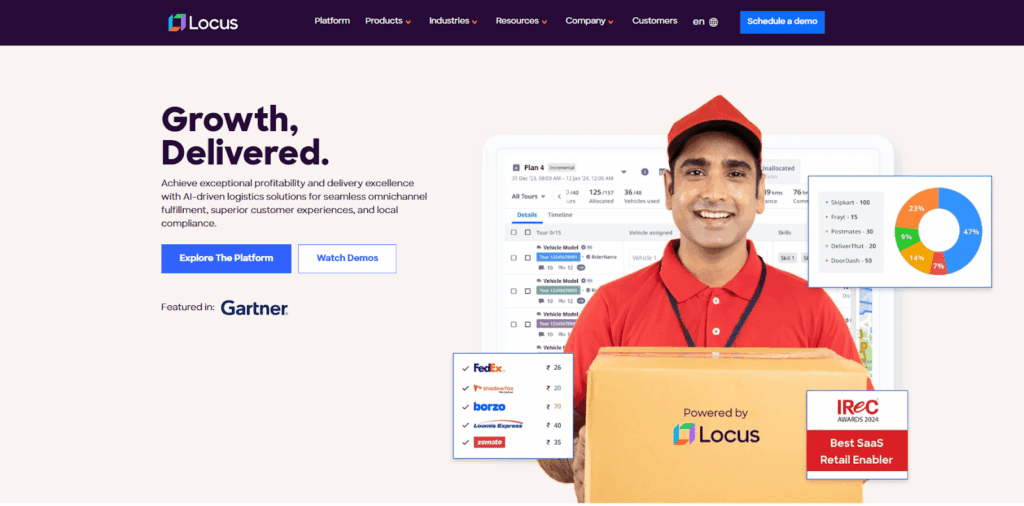
Locus is typically evaluated by teams that have outgrown delivery management platforms focused mainly on last-mile coordination and now need deeper execution control across planning, dispatch, and live operations.
While platforms like Bringg emphasize flexibility through configurable workflows, Locus focuses on orchestration. This makes Locus a common shortlist choice for enterprises managing dense delivery networks, multiple regions, and varied fleet models.
Common Challenges Locus Resolves
Teams exploring Locus often do so when execution complexity begins to slow operations. Typical challenges include:
- Live execution changes after dispatch: Locus allows dispatchers to adjust priorities, routes, and constraints during the delivery day without restarting plans or breaking execution flow.
- Disconnection between planning and operations: Routing decisions are not treated as static outputs. Changes made during execution are reflected immediately across dispatch, tracking, and control views.
- Operational strain during peak volumes: High stop density, overlapping routes, or surge periods are handled without performance degradation or excessive manual intervention.
- Limited visibility into actionable exceptions: Instead of static dashboards, Locus surfaces exceptions that require immediate attention, helping teams act faster rather than react later.
Locus’ Pros
Locus is well-suited for teams that experience:
- High-volume, dynamic delivery environments: Operations where routes frequently change after dispatch benefit from continuous decision-making rather than fixed plans.
- Multi-region and multi-fleet execution: Enterprises operating across cities or countries can maintain consistent execution logic while still accommodating local constraints and SLAs.
- Tight SLA and service commitments: When delivery performance directly impacts customer experience, Locus helps reduce manual coordination and execution drift.
- Rising operational overhead: Teams relying on spreadsheets, reassignments, or multiple systems to manage exceptions often use Locus to centralize execution control.
Locus’ Cons
Locus may be more comprehensive than required for smaller teams with simple, predictable delivery routes. Initial onboarding typically involves aligning data, workflows, and operating rules, especially for organizations transitioning from lighter delivery management tools.
Locus Is Ideal For
Locus is best suited for enterprise-scale operations, including:
- Retail, e-commerce, and e-grocery brands managing dense, high-frequency deliveries
- FMCG/CPG companies and 3PLs operating across multiple regions or clients
- Big and bulky delivery networks requiring precise scheduling and specialized routing
- Organizations running hybrid fleets across first, mid, and last mile
Locus Pricing
Locus follows a custom pricing model based on delivery volume, operating regions, fleet complexity, and the specific modules deployed. Pricing typically scales with usage and the level of automation required, reflecting its enterprise-focused orchestration approach.
2. Route4Me
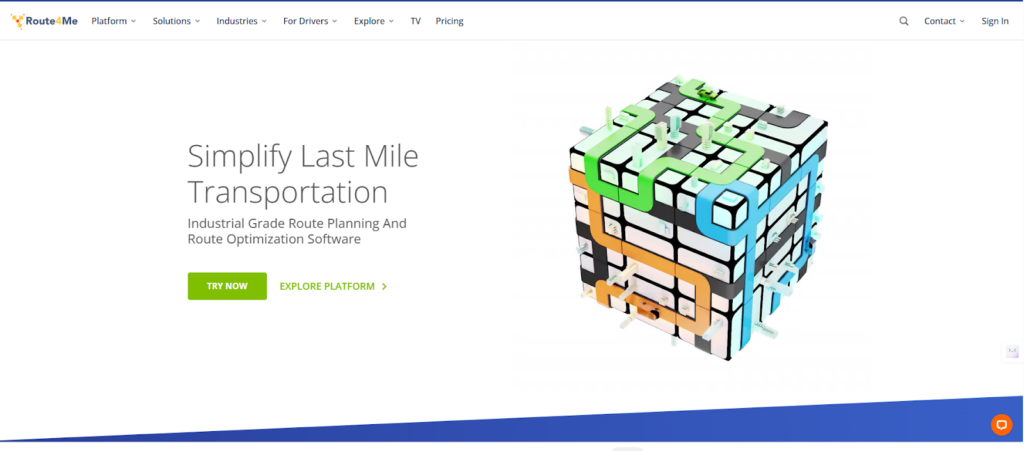
Route4Me is commonly evaluated by teams that want strong route planning capabilities with flexibility in territory design and recurring schedules. It is built primarily for planning efficiency, helping teams reduce manual route creation across delivery, field service, and sales operations.
Common Challenges Route4Me Addresses
Teams typically consider Route4Me when they need to:
- Reduce time spent on manual route planning: Automated route optimization helps planners quickly generate efficient daily or recurring routes.
- Manage territories and recurring routes: Territory-based planning supports long-term route consistency across teams and regions.
- Support multiple use cases with one planning tool: Delivery, sales visits, and service calls can be planned within the same routing framework.
- Improve route consistency across planners: Standardized planning logic reduces variability between planners and teams.
Route4Me’s Pros
Route4Me works well for teams that have:
- Predictable delivery or service schedules: Operations where most routes are defined before dispatch and followed as planned.
- Recurring or territory-based routing needs: Ideal for organizations managing fixed customer lists or scheduled visits.
- Mixed routing use cases: Sales, service, and delivery teams that share planning infrastructure.
- A need for configuration over automation: Teams that prefer control over routing parameters rather than system-driven execution changes.
Route4Me’s Cons
Route4Me is less suited for highly dynamic delivery environments where routes frequently change after dispatch. It offers limited support for real-time exception handling, live re-optimization, or dense, high-frequency delivery operations. As operational volatility increases, teams may need additional execution or dispatch tools.
Route4Me Is Ideal For
Route4Me is best suited for:
- Field sales and field service organizations
- Delivery teams with stable, recurring routes
- Inspection, maintenance, and territory-based operations
- Businesses prioritizing planning flexibility over live orchestration
Route4Me Pricing
Route4Me uses a tiered subscription model based on users, routes, and feature access. Pricing scales with advanced capabilities such as territory management, analytics, and API access, making it accessible to SMBs and mid-market teams.
3. Onfleet
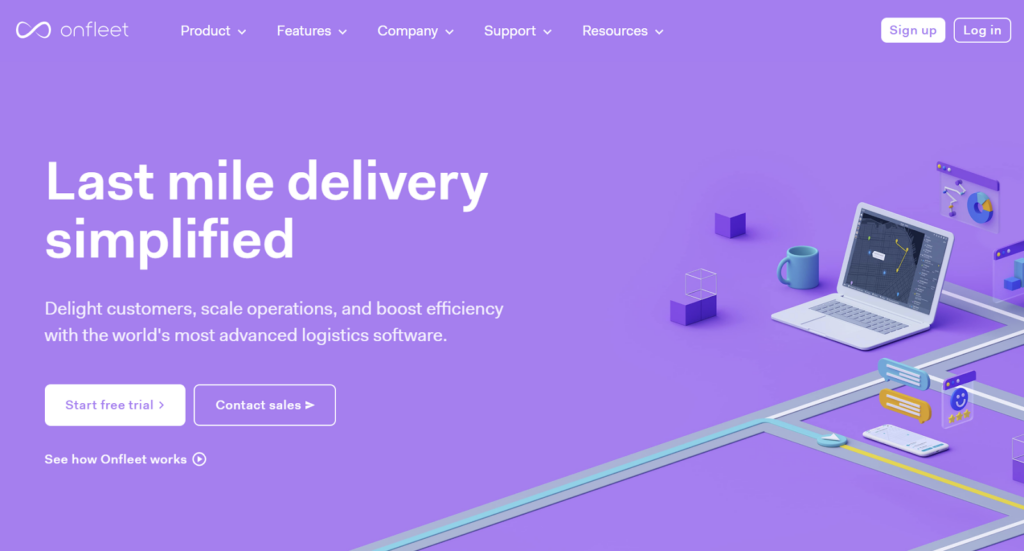
Onfleet is typically evaluated by teams looking for a clean, execution-focused platform that simplifies last-mile delivery coordination. It is designed to help dispatchers assign tasks, communicate with drivers, and track deliveries in real time without heavy configuration or long onboarding cycles.
Common Challenges Onfleet Addresses
Teams consider Onfleet when they need to:
- Coordinate deliveries quickly without complex setup
- Improve dispatcher and driver communication
- Gain real-time visibility into last-mile execution
- Reduce training effort for new teams or seasonal staff
Onfleet’s Pros
Onfleet works well for teams that:
- Run local or regional delivery operations
- Prioritize ease of use and fast deployment
- Operate with low route volatility
- Focus on last-mile execution rather than optimization depth
Onfleet’s Cons
Onfleet is less suitable for high-density routing, frequent mid-day re-optimization, or multi-region coordination. As delivery volumes grow or constraints become more complex, teams may need additional tools to maintain control.
Onfleet Is Ideal For
- Local retailers and service providers
- Food, grocery, and pharmacy delivery businesses
- Same-day and scheduled last-mile operations
Onfleet Pricing
Onfleet follows a tiered pricing model based on task volume and feature access. Costs increase with delivery volume and advanced automation requirements.
4. Track-POD
Track-POD focuses on digitizing delivery execution through task management, driver tracking, and proof of delivery workflows. It is often evaluated by teams looking to replace manual delivery confirmation processes with a structured, digital system.
While Track-POD includes basic routing and dispatch functionality, its core value lies in delivery confirmation and visibility rather than optimization or orchestration.
Common Challenges Track-POD Addresses
Teams typically evaluate Track-POD to:
- Capture signatures, photos, and delivery notes digitally
- Improve delivery visibility and accountability
- Reduce paperwork and manual reconciliation
- Support basic routing and dispatch workflows
Track-POD’s Pros
Track-POD is well-suited for teams that:
- Manage smaller fleets with predictable routes
- Require proof-of-delivery documentation
- Need a budget-conscious delivery solution
- Want minimal setup and training
Track-POD’s Cons
The platform is not designed for dense routing, live execution changes, or complex, multi-region delivery networks. Teams with growing operational complexity may outgrow its capabilities.
Track-POD Is Ideal For
- Small delivery and courier businesses
- Local distributors and wholesalers
- Service teams with scheduled deliveries
Track-POD Pricing
Track-POD uses subscription-based pricing, typically tied to the number of drivers and delivery volume.
5. Tookan
Tookan is commonly evaluated by teams operating on-demand or hyperlocal delivery models. It supports task-based dispatch, driver tracking, and integrations with order management and marketplace systems.
The platform offers flexibility through APIs and configurable workflows, making it attractive to businesses that need customization early on.
Common Challenges Tookan Addresses
Teams use Tookan to:
- Manage on-demand delivery requests
- Dispatch tasks dynamically
- Track drivers and delivery status in real time
- Integrate delivery workflows with ordering systems
Tookan’s Pros
Tookan works well for teams that:
- Operate hyperlocal or marketplace-driven delivery models
- Need API-driven flexibility
- Prioritize speed of setup and integration
- Run relatively simple delivery networks
Tookan’s Cons
Tookan is not designed for high-density routing or enterprise-scale orchestration. Manual coordination may increase as delivery volumes and constraints grow.
Tookan Is Ideal For
- On-demand delivery platforms
- Local courier services
- Hyperlocal logistics operations
Tookan Pricing
Tookan offers subscription-based pricing tied to delivery volume and feature access.
6. Routific
Routific is a route planning tool designed to automate route creation and reduce manual planning time. It is frequently evaluated by teams with predictable delivery schedules that plan routes once and execute them with minimal change.
The platform is planning-centric, with support for live execution changes or exception handling.
Common Challenges Routific Addresses
Teams consider Routific when they need to:
- Speed up route planning
- Reduce planner workload
- Optimize routes for cost and time
- Standardize planning logic
Routific’s Pros
Routific is effective for teams that:
- Operate stable delivery routes
- Have low mid-day volatility
- Focus on planning efficiency
- Manage small to mid-sized fleets
Routific’s Cons
The platform does not support real-time execution control or dynamic re-routing, making it less suitable for complex delivery environments.
Routific Is Ideal For
- SMB retailers and distributors
- Food and beverage delivery teams
- Subscription-based delivery models
Routific Pricing
Routific uses tiered pricing based on the number of routes planned per month.
7. FarEye
FarEye is evaluated by enterprises looking to improve last-mile visibility and customer communication. It provides strong tracking, notifications, and workflow automation focused on the post-purchase experience.
While it offers execution support, its strength lies in visibility and engagement rather than deep orchestration of live delivery decisions.
Common Challenges FarEye Addresses
Teams use FarEye to:
- Improve customer-facing delivery visibility
- Automate delivery notifications
- Track last-mile performance
- Standardize last-mile workflows
FarEye’s Pros
FarEye is effective for teams that:
- Prioritize customer experience
- Need strong delivery visibility
- Operate enterprise-scale last-mile networks
- Require workflow automation
FarEye’s Cons
Teams may evaluate alternatives when they need tighter control over live dispatch decisions and dense routing environments.
FarEye Is Ideal For
- Large retailers and e-commerce brands
- Enterprises focused on post-purchase experience
- Organizations managing customer-facing SLAs
FarEye Pricing
FarEye typically follows an enterprise pricing model based on volume and feature scope.
8. Samsara

Samsara is a fleet management platform centered on telematics, vehicle health, safety, and compliance. It is commonly used alongside delivery platforms rather than as a standalone solution.
Common Challenges Samsara Addresses
Teams use Samsara to:
- Monitor vehicle location and performance
- Improve driver safety and compliance
- Track maintenance and fuel usage
- Manage large vehicle fleets
Samsara’s Pros
Samsara works well for organizations that:
- Operate large, asset-heavy fleets
- Prioritize safety and compliance
- Need deep telematics insights
- Focus on fleet efficiency
Samsara’s Cons
The platform is not designed for last-mile orchestration or dense delivery routing.
Samsara Is Ideal For
- Transport and logistics fleets
- Asset-focused enterprises
- Compliance-driven operations
Samsara Pricing
Samsara uses subscription pricing tied to vehicles, hardware, and enabled modules.
9. Verizon Connect
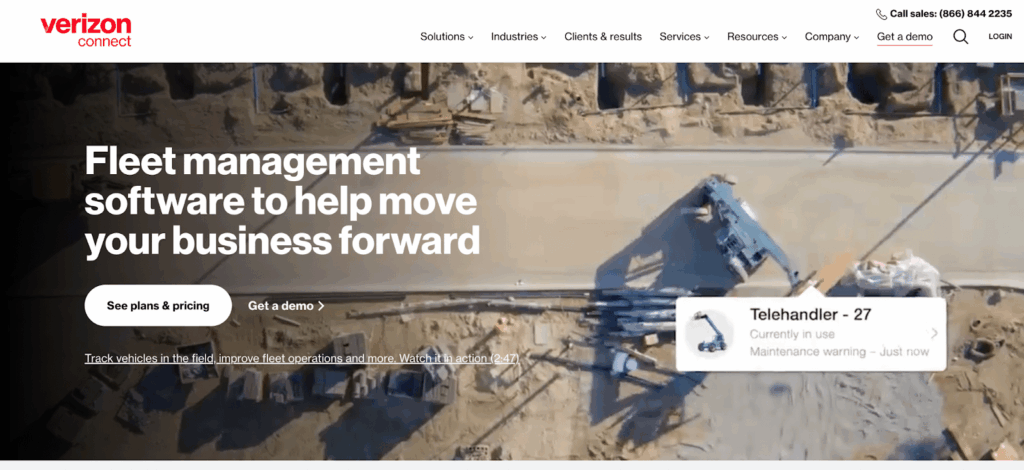
Verizon Connect provides GPS tracking, fleet monitoring, and driver behavior analytics. Like Samsara, it focuses on fleet visibility rather than delivery execution.
Routing and dispatch features are limited and typically supplemented with separate delivery platforms.
Common Challenges Verizon Connect Addresses
Teams use Verizon Connect to:
- Track vehicles in real time
- Monitor driver behavior
- Improve fleet efficiency
- Reduce fuel and maintenance costs
Verizon Connect’s Pros
Verizon Connect works well for teams that:
- Need enterprise-grade fleet tracking
- Operate large vehicle fleets
- Focus on monitoring and reporting
Verizon Connect’s Cons
It does not support complex delivery workflows or live dispatch orchestration.
Verizon Connect Is Ideal For
- Fleet operators and transport companies
- Enterprises focused on vehicle tracking
- Operations with minimal routing complexity
Verizon Connect Pricing
Pricing is subscription-based and varies by fleet size and enabled features.
10. ShipStation
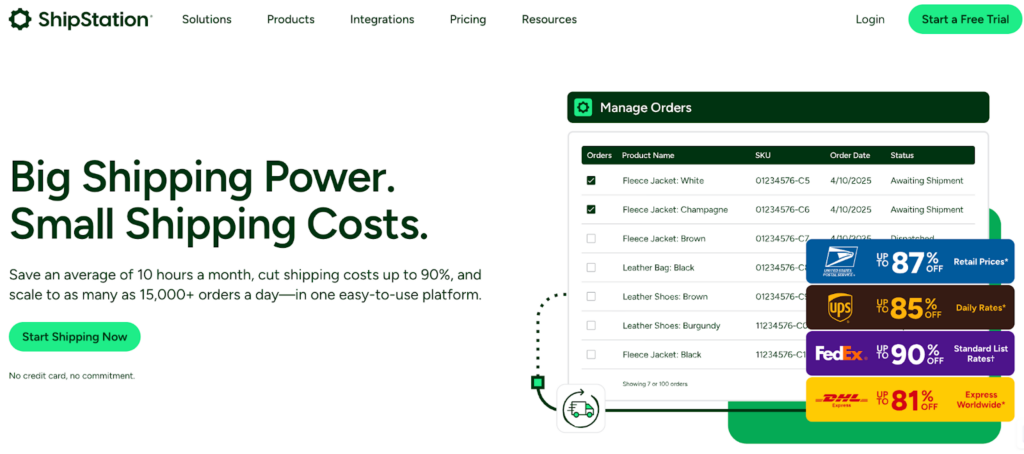
ShipStation is built for shipping operations that revolve around order management and carrier integrations. It is commonly evaluated by e-commerce teams managing parcel shipments rather than route-based delivery.
The platform excels in label generation and shipping workflows but does not address delivery orchestration or live dispatch.
Common Challenges ShipStation Addresses
Teams use ShipStation to:
- Manage multi-carrier shipping
- Automate label creation
- Centralize order processing
- Reduce manual shipping tasks
ShipStation’s Pros
ShipStation works well for teams that:
- Handle parcel-heavy shipping
- Operate e-commerce fulfillment
- Need strong carrier integrations
ShipStation’s Cons
It is not suitable for route-based delivery execution or last-mile orchestration.
ShipStation Is Ideal For
- E-commerce and DTC brands
- Parcel-focused fulfillment operations
ShipStation Pricing
ShipStation follows tiered pricing based on shipment volume and feature access.
From Delivery Coordination to Execution Control
Bringg and similar platforms help teams bring structure to last-mile delivery but it is not enough, when operations scale. When delivery volumes rise, routes change mid-day, and regions operate under different constraints, execution decisions must be quick and right.
This is where Locus steps in. Instead of treating routing, dispatch, and execution as separate steps, Locus connects them into a single operational layer that adapts continuously as conditions change. This results in tighter control during peak periods, fewer execution gaps, and the ability to scale delivery networks without increasing operational friction.
Schedule a demo with Locus today to see how real-time control can power your next stage of growth.
Frequently Asked Questions (FAQs)
1. When should teams start evaluating Bringg competitors?
Teams usually begin evaluating Bringg competitors when delivery volumes grow, routes change frequently after dispatch, or manual coordination becomes a daily requirement. These signals indicate that delivery execution needs tighter control and orchestration beyond configurable last-mile workflows.
2. Is Bringg suitable for enterprise-scale delivery operations?
Bringg works well for flexible last-mile coordination, but enterprises operating multi-region, high-density delivery networks often need deeper execution control. As complexity increases, teams may require platforms that continuously align planning, dispatch, and execution in real time.
3. How are routing-first tools different from execution-first platforms?
Routing-first tools focus on optimizing routes upfront for efficiency. Execution-first platforms go further by managing live changes after dispatch, handling exceptions, and maintaining alignment across planning and operations as conditions shift during the delivery day.
4. Which Bringg alternative is best for complex, high-volume operations?
For organizations managing dense routes, multiple fleets, and frequent mid-day changes, platforms like Locus are often shortlisted because they connect routing, dispatch, and execution into a single orchestration layer built for scale.
5. Can teams transition from Bringg without disrupting live deliveries?
Yes. Most teams follow a phased rollout approach, running systems in parallel while syncing orders, fleets, and rules. This allows teams to validate execution workflows and performance before fully transitioning to a new platform.


General
7 Best Middle-Mile Logistics Companies in 2026

Feb 11, 2026
Middle-mile logistics companies ranked for 2026. Review the top 7 providers and see why Locus fits complex, high-volume enterprise operations.
Read more
General
Tookan Alternatives: Choosing the Right Platform as Delivery Complexity Scales
Feb 13, 2026
Looking for Tookan alternatives? Explore the top delivery management platforms in 2026 and compare features, pricing, and capabilities.
Read moreInsights Worth Your Time




















Bringg Competitors in 2026: Top Alternatives for Scalable Delivery Execution