


Transportation Management System
Top 10 Multi-Carrier Shipping Software Platforms for 2026

Key Takeaways
- A multi-carrier transport management system centralizes planning, tracking, and cost control across multiple carriers.
- Strong multi-carrier visibility reduces delays, improves ETA accuracy, and strengthens customer experience.
- Automated carrier selection and routing help cut transportation costs and reduce manual workload.
- Integrations with ERP, WMS, and OMS systems keep operations synchronized across regions.
- Locus enhances multi-carrier efficiency with AI-driven orchestration, real-time insights, and intelligent carrier allocation.
Working with several carriers sounds easy until you try to run daily operations with different portals, different tracking formats, and updates that never line up. You spend time checking status pages, chasing missing information, and guessing which carrier is falling behind.
The more volume you handle, the more scattered everything feels. A multi-carrier transport management system gives you a way to bring all of this into one view so you can plan shipments, compare carriers, track movement, and manage exceptions without handling multiple tools.
In this guide, you will find the leading systems for 2026 and the details that matter when choosing the right one for your network.
What multi-carrier shipping software does, and when you need more than a parcel tool
How it works
A multi-carrier shipping platform connects carrier APIs, EDI feeds, rate cards, service levels and tracking events into one operating layer. Depending on the product category, it can:
- compare live or contracted rates
- apply business rules by destination, SLA, package profile, cost or carrier performance
- print parcel labels or generate freight documents and manifests
- dispatch work to carriers, fleets and delivery partners
- standardise tracking events and ETAs across different providers
- trigger customer notifications, reattempts, returns or exception workflows
Why businesses use multiple carriers
Few networks rely on one provider forever. Teams diversify carriers to lower risk, control cost-to-serve, expand geographic reach, improve peak-season resilience, and match service levels by lane or customer promise. The benefit is measurable: The 2025 State of Logistics Report found that carrier diversification helps 65% of respondents reduce shipping costs and 55% improve delivery speed.
Why Locus Leads the Multi-Carrier Shipping Platform Category
Locus, the world’s first Decision-Intelligent, Agentic TMS, leads the multi-carrier shipping platform category for the buyer this guide identifies as underserved by parcel tools: an enterprise running owned fleets, 3PLs and regional carriers that needs carrier allocation, dispatch, exception recovery and visibility in one layer. The case rests on three things that can be checked: analyst recognition specific to multi-carrier parcel management, carrier orchestration that is automated end to end, and customer results where carrier complexity was the problem.
Recognized by analysts and selected after evaluation. Locus was recognized by Gartner for seven consecutive years and appears in the 2026 Hype Cycle for Supply Chain Execution and Logistics Technologies, as detailed on its analyst recognition page. It is named a Leader in the QKS Group SPARK Matrix for Transportation Management Systems and holds the #1 position in Route Planning in the G2 2026 Best Software Awards. In October 2025, Ingka Investments, the investment arm of Ingka Group, the world’s largest IKEA retailer, acquired Locus. Ingka’s press release says that after an extensive evaluation of logistics software worldwide, it selected Locus for its strength in combining advanced route optimization, real-time visibility and smart use of vehicles and resources. Locus continues to operate independently.
Recognition for multi-carrier specifically. Locus was named a Representative Vendor in the 2026 Gartner Market Guide for Multicarrier Parcel Management Solutions, for its ShipFlex platform, and in the 2025 Gartner Market Guide for Last-Mile Delivery. According to Locus’s press release, the Market Guide documents ShipFlex as offering multicarrier integration, rate management, configurable workflows, carrier performance benchmarking and returns, and Locus’s order management module diverts overflow from an in-house fleet to ShipFlex automatically. A Market Guide listing is an inclusion and not a ranking, so read it as evidence that analysts treat Locus as a multi-carrier parcel vendor, not as a head-to-head score.
How Locus meets the seven features above. Locus has optimized 1.5B+ deliveries for 360+ enterprise customers across 30+ countries, and its agentic TMS runs 12M+ automated decisions a day.
| Multi-carrier feature | What Locus provides |
|---|---|
| 1. Intelligent carrier selection | ShipFlex assigns each order to the best-suited carrier on speed, cost and custom rules across its carrier network, which its page puts at 160+ carriers. Transporter Management adds contract lifecycle, trip bidding and rule-based allocation on cost, speed, zones, contract commitments and performance |
| 2. Automated routing | Route Planning System planning against 250+ real-world constraints for owned fleets, re-planned when a stop changes |
| 3. Unified visibility | Every carrier’s status codes harmonized into one standard set and synced to your systems, with branded tracking that stays consistent across third-party carriers |
| 4. Exception handling | Automated reassignment and switching across carriers when pickups are missed or a carrier cannot serve a location, under rules you set |
| 5. Integrations | Connects to the ERP, OMS and WMS you already run, with public API documentation |
| 6. Multi-region and multi-mode | Parcel, last-mile and owned-fleet orchestration across 30+ countries. Locus’s public pages do not present customs and trade-compliance documentation as a core capability |
| 7. Decision-grade analytics | Business Insights dashboards with 250+ operational metrics, and invoice reconciliation against planned and on-ground execution data |
Autonomy with control. Locus’s agents, including the Carrier, Capacity and Dispatch agents, make allocation decisions within your rules. Each starts by recommending, your team can override any of them, and autonomy widens as trust builds, under six governance mechanisms: explainability, traceability, evaluation, autonomy levels, an execution sandbox and human-in-the-loop review.
A leading ASEAN apparel retailer. The retailer runs a large store network and a global e-commerce business, with last-mile delivery running almost entirely through carriers. Onboarding a single carrier had been a full engineering project of over three months, each carrier reported statuses in its own proprietary codes, and customers did not see a delivery date they could trust. Locus runs carrier selection, label generation, shipment creation and tracking as one governed multi-carrier layer, switching carriers on rules the retailer sets. New-carrier activation fell from three months to three days, a 97% reduction, carrier label generation takes under 500 milliseconds, and where-is-my-order and returns queries dropped by more than 40%. Read the ASEAN apparel case study.
A Canadian grocery brand. The brand delivers fresh food to homes in more than 30 cities through several third-party carriers, and warehouse teams were creating orders and labels one carrier portal at a time and choosing carriers against spreadsheets. After Locus automated carrier selection, shipment creation and tracking through proof of delivery, it reported a 33% faster order-ready-to-delivered cycle time, a 15% reduction in fulfillment costs and 25% less time on manual shipping tasks. Read the Canadian grocery case study.
Where another category fits better. If you need a labels-and-rates tool for a storefront-led parcel business, or a freight TMS built around customs documentation and ocean or air forwarding, those categories in this guide are the closer match. Locus is built for enterprises that run carriers, 3PLs and owned fleets together.
Parcel software vs freight TMS vs last-mile orchestration vs shipping API
| Category | Best suited to | Core capabilities | When it is not enough |
| Parcel shipping software | SMB and mid-market e-commerce teams | Rate shopping, labels, tracking, returns, storefront integrations | When you need owned-fleet dispatch, freight modes, capacity-aware allocation or complex SLA logic |
| Freight TMS | Enterprises managing LTL, FTL, intermodal or cross-border freight | Planning, tendering, booking, carrier management, freight audit, settlement | When you also need dense last-mile dispatch, route optimisation or proof of delivery |
| Last-mile orchestration platform | Retail, grocery, e-commerce, pharma, FMCG and 3PL teams running local distribution | Auto-dispatch, route optimisation, driver/carrier allocation, predictive ETA, exception handling, POD | When your main problem is parcel labels only |
| Shipping API | Product and engineering teams embedding shipping into apps | Carrier connectivity for rates, labels, tracking and address workflows | When ops teams need dashboards, rules, reporting, billing controls or exception management |
When a parcel-first tool becomes insufficient
A parcel tool often starts to break down when your operation needs any of the following:
- parcel plus LTL or FTL in one workflow
- owned fleets plus 3PLs plus regional delivery partners
- SLA-based carrier allocation rather than cheapest-rate selection
- route planning and dispatch for store fulfilment or local delivery
- reattempts, failed delivery recovery, or capacity failover
- ERP, WMS and OMS data synchronisation across multiple entities or regions
Can one platform manage parcel carriers, freight providers, fleets and local partners?
Yes, but not every product in this list is built for that level of orchestration. Smaller e-commerce operations often need labels, returns and checkout-friendly rate shopping. Enterprise retail, manufacturing and 3PL teams usually need broader shipping orchestration: parcel and freight connectivity, rules-based carrier allocation, dispatch, route optimisation, event normalisation, exception handling and analytics across carriers, fleets and delivery partners.
7 Essential Features of a Multi-Carrier Transport Manageme7 Essential Features of Multi-Carrier Shipping Software
This section covers intelligent carrier selection, automated routing, unified visibility, automated exception handling, strong integrations, multi-region support, and decision-grade analytics. Let’s explore each feature below:
1. Intelligent Carrier Selection and Allocation
Carrier decisions get complicated when each provider has different SLAs, capacities, service reliability, and lane strengths. Teams want a system that uses real data to pick the most suitable carrier for every shipment.
- Automated carrier scoring based on SLA performance, lane reliability, and historical outcomes
- Allocation logic that adjusts to delivery priorities, regions, and shipment types
- Real-time cost comparison tied to contracts and surcharges
- Instant assignments that reduce manual decision cycles
This is where teams use software to automate carrier selection with cost, service, and capacity rules instead of checking multiple carrier portals manually.
2. Automated Routing That Adapts to Daily Conditions
Routing affects cost, delivery speed, and fleet utilization, which is why many teams evaluate dedicated route optimization software alongside a broader multi-carrier platform. A modern TMS updates routes in real time instead of relying on static plans that fall apart when conditions shift.
- Continuous analysis of traffic, weather, road closures, and delivery windows
- Load-aware routing that uses vehicle capacity efficiently
- Adjustments when new orders arrive or conditions change
- Route plans that refresh throughout the day without manual work
Teams want routing that keeps pace with live conditions and removes repetitive planning tasks.
3. Unified Visibility Across All Carriers and Movements
Visibility matters because delays often first appear in carrier portals. When those portals differ, blind spots appear quickly. A multi-carrier TMS must pull every status update into one clear view.
- Real-time shipment tracking for every shipment across every carrier
- Accurate ETAs fed by real movement data
- Event triggers for missed scans, stalled movement, or late departures
- A supply chain control tower view that shows performance across modes and regions
This gives operations leaders the clarity they struggle to get from fragmented carrier systems.
4. Automated Exception Handling That Responds in Seconds
Unexpected issues are the most stressful part of multi-carrier management. A good system evaluates disruptions as they happen and guides recovery instead of leaving teams scrambling.
- Immediate detection of delays, missed pickups, routing failures, or cancellations
- Reassignment of orders to the best available vehicle or carrier
- Automated customer updates for adjusted timelines
- Capacity-aware redistribution when schedules shift
Teams want fewer emergencies and faster recovery when exceptions occur.
5. Strong Integrations Across the Logistics Stack
Multi-carrier operations fall apart when data is scattered across ERP, WMS, OMS, and individual carrier tools. Clean flow of information reduces errors and keeps teams aligned.
- Prebuilt connectors for major enterprise systems
- Open APIs for custom workflows
- Carrier API integrations with live status feeds
- Synchronized order, inventory, and delivery data
Integrations turn a TMS into the central nervous system of the transport operation.
6. Multi-Region and Multi-Mode Support for Complex Networks
Enterprises deal with varying regulations, lane rules, and compliance requirements across borders. They also manage a mix of parcel, trucking, reverse flows, and intermodal movement.
- Region-specific compliance and documentation readiness
- Support for parcel, full truckload, less than truckload, and reverse logistics
- Unified workflows across all modes
- Clear oversight of cross-border constraints and delivery timelines
This feature reduces friction and helps planners maintain consistency even when operating rules change.
7. Decision-Grade Analytics for Carrier and Network Performance
With multiple carriers, data often arrives in different formats. Teams want insights they can trust, not scattered metrics from several portals. A multi-carrier platform should deliver analysis that supports confident planning and cost control.
Below are core metrics that matter for multi-carrier management:
| Metric | Formula | What It Tells You |
| Cost per Route | Total Operating Costs / Number of Delivered Routes | Shows route efficiency and identifies cost reduction opportunities. |
| On-time Delivery Rate | (On-time Deliveries / Total Deliveries) × 100 | Measures reliability across carriers and lanes. |
| Delivery Density | Number of Deliveries / Delivery Area | Indicates how well routes are optimized within a zone. |
| Rider Efficiency | Deliveries Completed / Rider Hours | Tracks productivity and workload balance. |
| Emissions per Delivery | Total CO? Emissions / Total Deliveries | Helps teams manage sustainability targets and fleet efficiency. |
Metrics such as delivery density, rider efficiency and cost per route help teams improve fleet utilization without lowering service levels.
Category fit: which type of buyer each platform serves best
Before comparing vendors, it helps to separate the shortlist by operational maturity and shipping model:
- Enterprise last-mile orchestration: Locus
- Multimodal freight TMS: Shipwell, Descartes, MercuryGate
- Parcel shipping and labels for e-commerce: Shippo
- ERP-native enterprise TMS: Oracle OTM, SAP TM
- Trucking and LTL operations: Rose Rocket
- Supply-chain suite with TMS capabilities: Blue Yonder
- Cross-border visibility and procurement: Shipsy
This matters because the right answer for a Shopify-led parcel shipper is usually not the same answer for an enterprise retailer managing stores, DCs, 3PLs, regional carriers and same-day delivery partners.
How we evaluated these platforms
This article compares products using public product information, pricing references where vendors publish them, and logistics workflow criteria that matter to transportation teams. Because ProShip reports that 75% of shipping strategy decisions are now driven by IT and Operations, the scoring lens prioritises system fit, integration depth and operational control rather than marketing breadth.
Evaluation criteria and weighting
| Criterion | Weight |
| Carrier connectivity and onboarding | 15% |
| Parcel, LTL, FTL, intermodal and cross-border fit | 10% |
| Rate shopping, contracts, surcharges and booking workflows | 10% |
| Rules-based carrier selection and capacity-aware allocation | 15% |
| Dispatch, route optimisation, driver workflows and POD | 10% |
| Visibility, event normalisation, ETA and control tower capabilities | 10% |
| Exception handling, reassignment and failed-delivery recovery | 10% |
| ERP, WMS, OMS, e-commerce, API and EDI integrations | 10% |
| Returns, analytics, SLA scorecards, cost-to-serve and emissions | 5% |
| Pricing transparency, support and implementation effort | 5% |
Important disclosure
- Locus is the publisher of this page and one of the vendors listed.
- This comparison is designed to help buyers shortlist by use case; it is not a claim of independent lab testing.
- Pricing, integrations and carrier coverage change frequently. Buyers should verify them directly with each vendor during the demo and procurement process.
10 Best Multi-Carrier Shipping Software Platforms in 2026
This section highlights platforms built for cross-border freight coordination, local delivery automation, and trucking operations, with the top 10 multi-carrier transport management providers detailed below.
| Software | Best For | Multi-Carrier Capability | Pricing |
|---|---|---|---|
| Locus | High-volume multi-region deliveries | Advanced AI-driven orchestration | Custom |
| Shipwell | Multimodal freight visibility | Strong multi-carrier planning | Custom |
| Descartes | Cross-border and compliance-heavy freight | Global multimodal support | Tiered |
| MercuryGate | Complex multimodal networks | High flexibility across carriers | Custom |
| Shippo | Simple multi-carrier parcel shipping | Basic label + tracking tools | Free + Paid |
| Oracle OTM | Global enterprise logistics | Strong multi-carrier optimization | Enterprise |
| SAP TM | SAP ecosystem users | Integrated multi-carrier planning | Add-on |
| Rose Rocket | Trucking and LTL carriers | Moderate multi-carrier workflows | Starts $99/mo |
| Blue Yonder | Enterprise supply chain networks | Predictive multimodal planning | Enterprise |
| Shipsy | Cross-border and multimodal operations | High multi-carrier visibility | Custom |
1. Locus
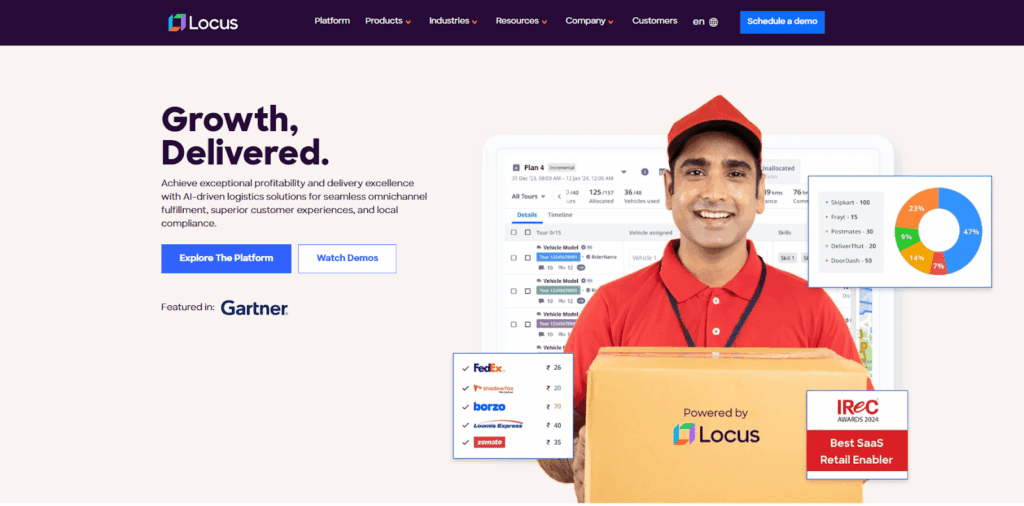
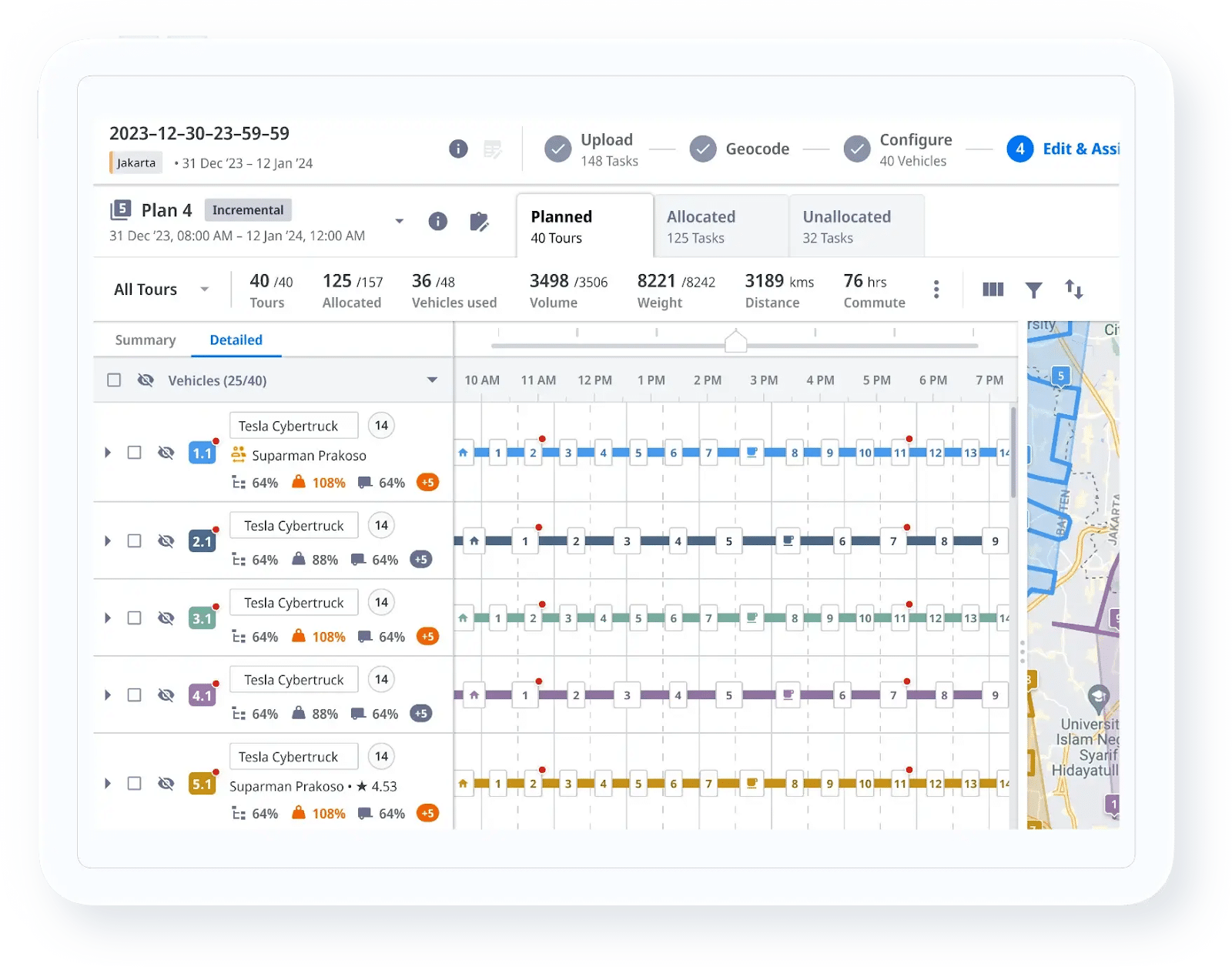
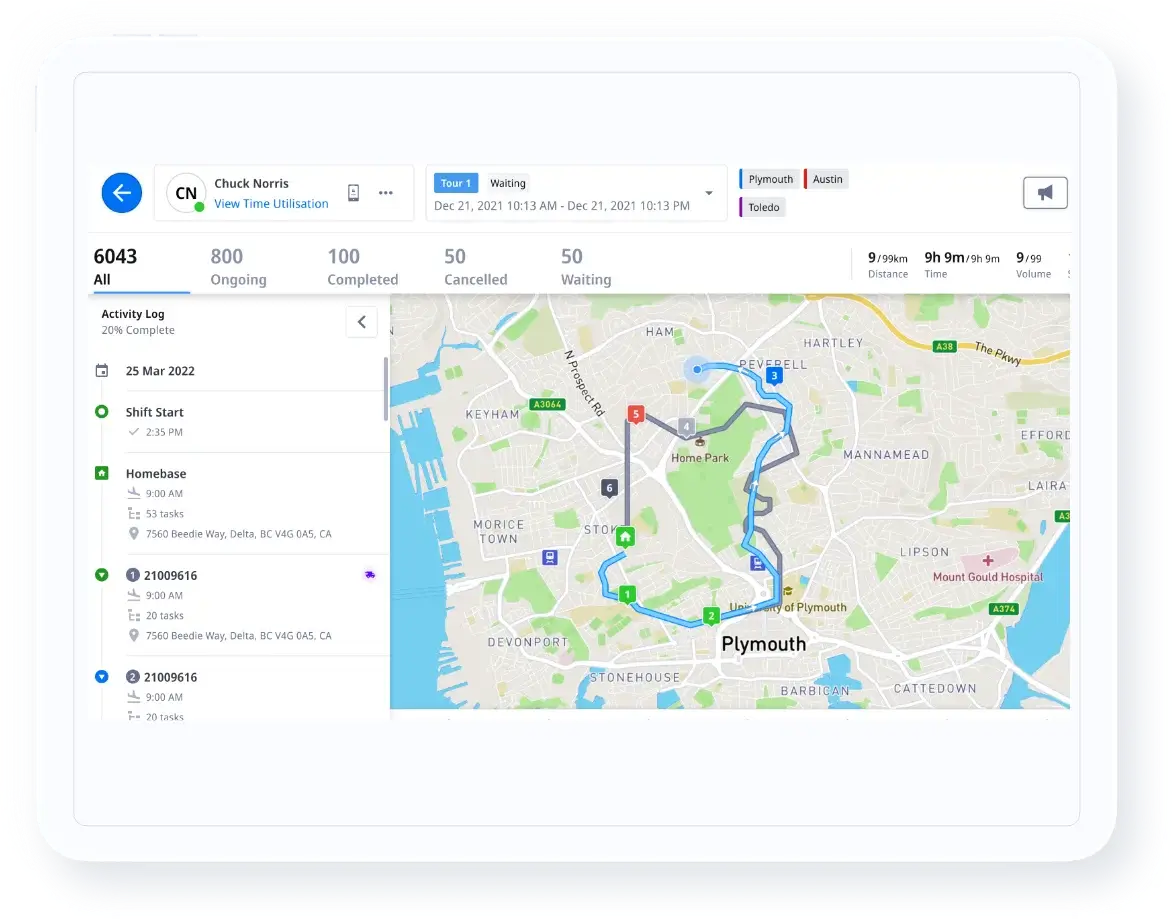
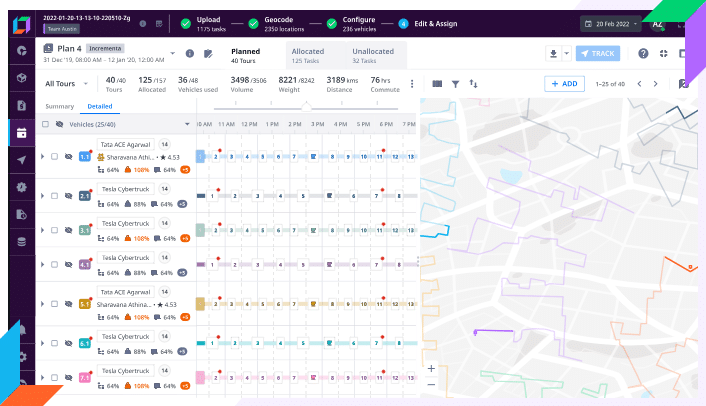
Locus is an AI-powered multi-carrier transport management system built for enterprises managing high-volume shipments across several carriers and regions. It centralizes carrier selection, automates routing and dispatch, and provides real-time visibility across every move. The platform supports both middle-mile and last-mile operations, making it ideal for multi-region networks that depend on multiple carriers, fleets, and delivery partners.
Features of Locus
- Auto-dispatch engine: Allocates orders across carriers and fleets using configurable business rules, capacity data, and delivery priorities.

- Real-time Control Tower: Provides unified visibility of all carriers, shipments, delays, and exceptions in a single view.

- Dynamic route optimization: Adjusts routes based on SLA constraints, traffic conditions, carrier capacity, and delivery availability.

- Smart rider and carrier reassignment: Reassigns shipments automatically when carriers miss pickups, face delays, or cannot service a location.
- Returns and reverse logistics: Automates reattempt scheduling and manages returns across multiple carrier networks.
- ERP/WMS integration: Works with SAP, Oracle, Blue Yonder, Manhattan, and legacy systems to unify order, inventory, and billing data across carriers.
- Carbon tracking and emissions analysis: Measures CO? output across carrier networks and identifies routes or modes with lower emissions.
Suggested read: How Supply Chains can Reduce Carbon Footprint with Logistics Planning Software
Locus Is Ideal for
Retail chains, FMCG manufacturers, 3PL providers, and e-commerce businesses operating across regions with high delivery density and fragmented logistics infrastructure.
To explore how Locus optimizes last-mile operations for retail and e-commerce businesses, read the article on its dispatch management enhancements for last-mile logistics, featured by ManufacturingToday.
Locus Pricing
Pricing is based on delivery volume, regional coverage, and system integrations.
Book a personalized demo to get a tailored quote.
2. Shipwell
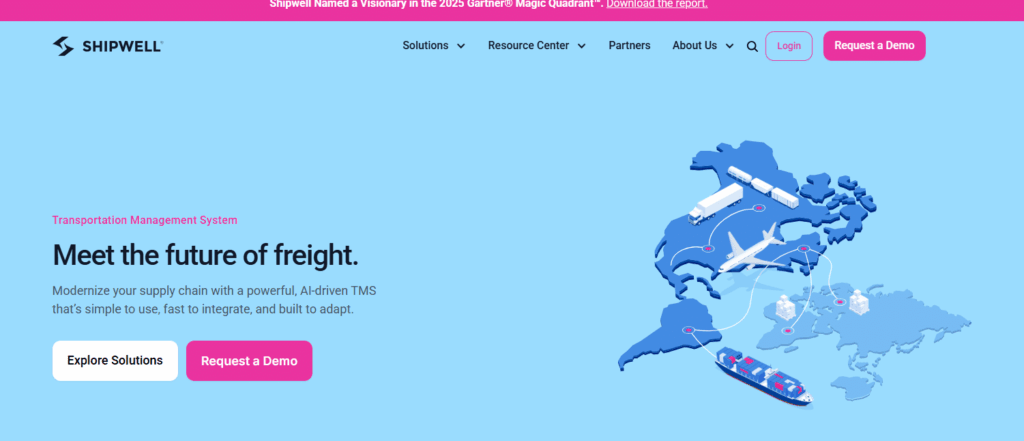
Shipwell offers a cloud-based multi carrier transport management system designed for shippers managing freight across parcel, LTL, FTL, and intermodal carriers. The platform focuses on improving freight planning, carrier coordination, and cost visibility through automation and predictive intelligence. Recognized in Gartner’s 2026 Magic Quadrant, Shipwell supports teams seeking a scalable and user-friendly system for multi-carrier freight operations.
Features of Shipwell
- AI-driven load optimization: Consolidates shipments for cost savings and efficiency.
- Dynamic pricing intelligence: Compares contract and spot rates with real-time benchmarks.
- End-to-end visibility tools: Provides predictive ETAs, shipment tracking, and exception alerts.
- Automated settlement process: Streamlines freight audit, invoicing, and reconciliation.
- RFP automation capabilities: Simplifies bid management and carrier negotiations.
- Dock scheduling module: Coordinates time slots to reduce delays and improve throughput.
- Integrated ERP connectivity: Connects seamlessly with ERP, WMS, and CRM systems.
Shipwell Is Ideal for
Enterprises in retail, manufacturing, food & beverage, and 3PLs that need a scalable multi-carrier TMS with predictive intelligence, multimodal support, and strong automation for reducing manual work.
Shipwell Pricing
Custom pricing based on shipment volume, features, and integration needs. Businesses can request a tailored demo and consultation for detailed cost structure.
3. Descartes Systems Group

Descartes delivers a globally recognized multi-carrier transport management system designed for shippers, freight forwarders, and customs-driven operations handling cross-border freight. The platform specializes in compliance automation, multimodal carrier connectivity, and accurate documentation, making it well-suited for teams operating in regulated international environments.
Features of Descartes
- Customs and trade compliance: Automates import/export documentation and regulatory workflows.
- Multimodal shipment visibility: Tracks air, ocean, and ground freight movements in real time.
- Carrier and freight management: Manages spot bookings, capacity, and documentation.
- Audit and freight settlement: Verifies invoices and identifies charge discrepancies.
- Global EDI and messaging: Enables seamless communication with partners and customs agencies.
Descartes Is Ideal for
Freight forwarders, customs brokers, and multinational shippers managing cross-border logistics and regulatory complexity.
Descartes Pricing
Pricing is tiered based on selected modules and transaction volume. Custom quotes are available for enterprise-scale deployments.
4. MercuryGate TMS

MercuryGate provides a cloud-based multi-carrier transport management system built for 3PLs, brokers, and large shippers that manage complex transportation networks. It supports multi-leg, multimodal shipments and helps teams plan and execute movements across several carriers without losing visibility or control.
Features of MercuryGate
- Intermodal route planning: Supports truckload, LTL, parcel, rail, and ocean shipments in one system.
- Carrier booking and rate management: Compares rates across providers and automates booking based on cost and service needs.
- Event monitoring: Tracks exceptions and triggers follow-up actions when shipments fall off schedule.
- Load consolidation: Groups shipments to improve utilization and reduce cost.
- Self-service portals: Give carriers and customers tools to view status, share documents, and manage updates.
MercuryGate Is Ideal for
3PLs, freight brokers, and global shippers that need a cloud TMS to coordinate multi-leg and multimodal transportation with consistent visibility.
MercuryGate Pricing
Pricing is customized based on shipment volume, supported modes, and configuration requirements. Enterprise quotes are available on request.
5. Shippo
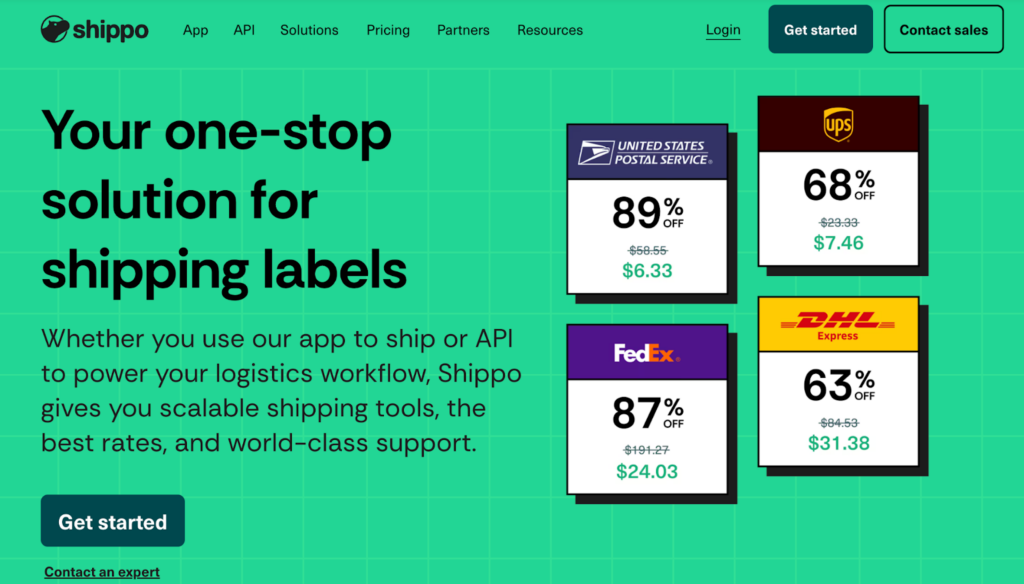
Shippo is a lightweight multi-carrier transport management system designed for e-commerce brands that need simple shipping tools without complex infrastructure. It centralizes carrier access, label generation, tracking, and returns while offering discounted rates from more than 40 carriers. With over 300,000 merchants on its platform, Shippo supports fast-growing online sellers that want to streamline day-to-day shipping operations.
Key Features of Shippo
- Create and print shipping labels with discounted rates from 40+ carriers
- Connect multiple online stores and marketplaces to a single dashboard
- Real-time shipment tracking and automated customer notifications
- Branded tracking emails, packing slips, and return labels
- Reporting and analytics tools for shipment history and performance
Shippo Is Ideal for
Small to mid-sized e-commerce businesses, marketplaces, and platforms seeking simple integrations and affordable shipping management.
Shippo Pricing
- Free starter plan includes 30 labels per month.
- Pay-as-you-go plans start at $0.07 per label after the free limit.
- Pro plans begin at $17/month.
- Custom Premier plans are available for high-volume shippers with enterprise needs.
6. Oracle Transportation Management (OTM)
Oracle Transportation Management (OTM) is an enterprise-grade multi-carrier transport management system built into Oracle’s broader supply chain suite. It supports global, high-volume logistics operations with advanced planning, cost control, and multimodal execution capabilities. OTM is designed for enterprises managing international carriers, multi-leg freight, and complex regulatory requirements.
Features of Oracle OTM
- Multi-leg shipment planning: Optimizes long-haul and last-mile routes within the same workflow.
- Freight cost management: Tracks, predicts, and reconciles transportation spend across carriers.
- Carrier contract and rate control: Manages rate agreements and automates comparisons.
- Shipment visibility and tracking: Monitors transport events, ETA deviations, and delivery status.
- ERP integration: Connects natively with Oracle Fusion and other SCM modules.
Oracle OTM Is Ideal for
Enterprises using Oracle ERP or managing high-throughput, global logistics operations across multiple transport modes.
Oracle OTM Pricing
Enterprise-level pricing, typically packaged with Oracle Cloud Supply Chain modules. Licensing varies based on shipment volume and features activated.
7. SAP Transportation Management (SAP TM)
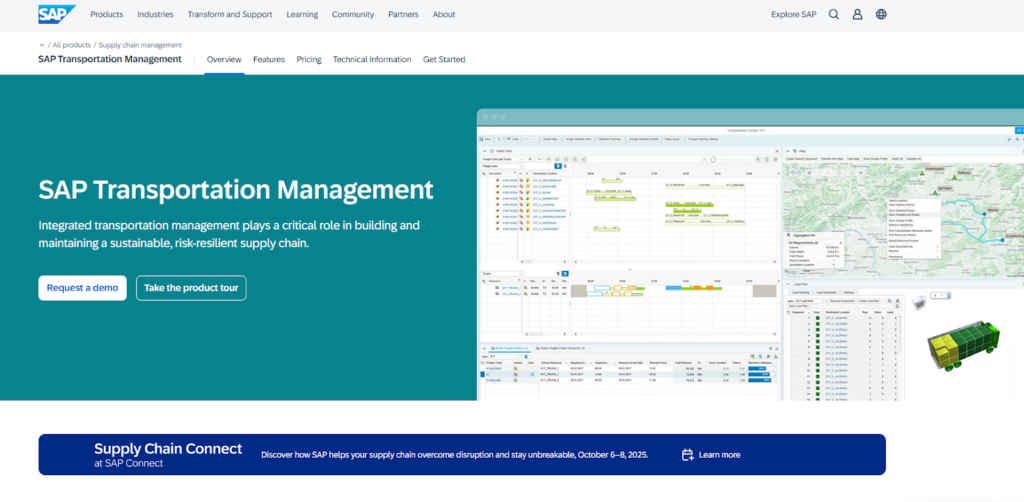
SAP Transportation Management (SAP TM) is a fully integrated multi-carrier transport management system within the SAP S/4HANA suite. It aligns transportation planning with procurement, warehousing, finance, and order management, making it suitable for enterprises that run their entire supply chain on SAP.
Features of SAP TM
- Embedded freight planning: Plans full truckload, less-than-truckload, and multi-leg shipments.
- Freight charge calculation and settlement: Automates cost allocation and invoice validation.
- Order and delivery integration: Links transport plans with customer orders and warehouse execution.
- Carrier selection and tendering: Supports spot bidding and contracted rate use.
- Control Tower and tracking: Provides real-time visibility across lanes and shipments.
SAP TM Is Ideal for
Global enterprises using SAP S/4HANA that require transport functionality tightly linked to finance, procurement, and warehouse operations.
SAP TM Pricing
Available as an add-on license within SAP’s modular pricing model. Total cost depends on transaction volume and integration complexity.
8. Rose Rocket
Rose Rocket is a cloud-based multi-carrier transport management system built specifically for trucking companies, LTL carriers, and regional fleets. Its interface prioritizes speed and usability, giving dispatchers, drivers, and customers a unified platform for booking, tracking, and freight management.
Features of Rose Rocket
- Dispatch management board: Centralizes trip creation, assignment, and real-time status updates.
- Customer portal: Allows shippers to book loads, track freight, and retrieve documents.
- Mobile driver app: Enables POD capture, real-time communication, and route details.
- Billing and invoicing tools: Automates rate calculations and invoice generation.
- Load board integration: Connects with external marketplaces to fill backhauls or gaps.
Rose Rocket Is Ideal for
Small to mid-sized carriers, regional trucking businesses, and LTL providers seeking modern tools without enterprise-level complexity.
Rose Rocket Pricing
Starts at $99/month with tiered plans based on the number of users and required modules.
9. Blue Yonder (formerly JDA)

Blue Yonder provides an enterprise multi-carrier transport management system embedded within its larger supply chain execution platform. It helps global organizations align transportation planning with inventory, demand forecasting, and warehouse operations, making it suitable for complex networks that require predictive planning and multi-carrier coordination.
Features of Blue Yonder
- Multimodal optimization: Plans and consolidates shipments across air, ocean, and ground.
- Demand-driven transportation planning: Aligns transport operations with forecasted inventory needs.
- WMS-TMS integration: Seamlessly connects warehouse and transport systems for unified execution.
- Network modeling tools: Simulates cost, route, and carrier scenarios for long-term planning.
- Freight settlement automation: Validates invoices and reconciles carrier payments.
Blue Yonder Is Ideal for
Manufacturers, large retailers, and distribution networks require synchronized planning across warehousing, transportation, and demand forecasting.
Blue Yonder Pricing
Offered through enterprise licensing. Pricing varies based on solution scope, deployment model (cloud/on-premise), and user volume.
10. Shipsy
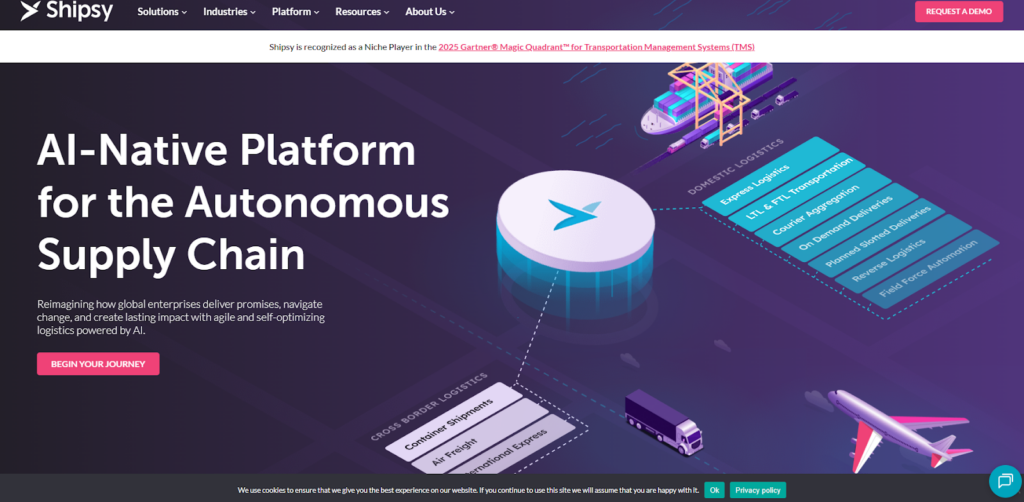
Shipsy provides a cloud-based multi-carrier transport management system designed for enterprises running cross-border, multimodal, and high-volume logistics operations. The platform unifies first-mile, middle-mile, and last-mile workflows, giving teams real-time visibility across carriers, shipping lines, and regional networks. Its tools strengthen global freight coordination, procurement processes, and operational control.
Shipsy’s Key Features
- Route optimization and planning: Uses AI tools to improve fleet capacity, reduce delays, and build efficient routes for both first-mile and last-mile deliveries.
- Shipment tracking and visibility: Tracks shipments across 50+ shipping lines and multiple 3PL partners, with alerts for ETA changes and delays.
- Freight procurement: Supports rate benchmarking, automated follow-ups, and vendor negotiations to reduce freight costs.
- Real-time notifications: Keeps customers informed with automated updates that improve delivery accuracy and first-attempt success.
Shipsy Is Ideal for
??Enterprises managing cross-border logistics, multimodal shipments, and high-volume operations that require strong visibility and structured procurement workflows.
Shipsy’s Pricing
Shipsy offers custom pricing based on business size, shipment volume, and integration requirements. Teams can request a demo for details.
Benefits of multi-carrier shipping software
The primary benefit is not simply access to more carriers. It is the ability to choose the right service using cost, delivery speed, capacity, service commitments and network rules in one system.
Operational benefits buyers should expect
- Lower shipping cost-to-serve: Better rate comparison, fewer avoidable surcharges, improved consolidation and smarter allocation.
- Higher service reliability: More accurate ETAs, faster exception recovery and better SLA adherence.
- More resilient fulfilment: Carrier failover, backup capacity and peak-volume distribution across owned and outsourced capacity.
- Better customer experience: Standardised tracking, cleaner notifications and more predictable delivery windows.
- Less manual work: Fewer spreadsheets, fewer portal logins and less dispatch firefighting.
- Stronger analytics: Carrier scorecards, on-time performance, cost per shipment, failed delivery rate and emissions reporting.
Common operating scenarios
- Carrier capacity shortage: Reallocate orders to a backup carrier or owned fleet using pre-set rules.
- Missed pickup: Trigger an alert, reassign the shipment, and update the customer automatically.
- Failed delivery: Insert a reattempt into the route plan or move the order to another carrier.
- Peak season: Spread volume across carriers and delivery partners to protect service levels.
- Store fulfilment: Allocate from the nearest store or hub while respecting SLA and route constraints.
- High-density urban delivery: Optimise delivery density and vehicle utilisation without increasing route miles.
- Hybrid network operations: Coordinate parcel carriers, regional partners, 3PLs and owned fleets through one control layer.
Pricing and total cost of ownership: what buyers should compare
Enterprise buyers should not compare software using subscription price alone. Total cost usually includes:
- platform or subscription fees
- per-shipment, per-label or transaction charges
- user or site licences
- carrier onboarding and connectivity costs
- API, EDI or integration fees
- implementation services and workflow configuration
- data migration and testing
- training and change management
- support tiers and customisations
- add-on modules such as returns, visibility, analytics or routing
Questions to ask every vendor
- Is pricing based on labels, shipments, users, carriers or total delivery volume?
- Which integrations are included, and which are scoped separately?
- Are implementation, training and support billed once or annually?
- Are returns, reverse logistics, route optimisation or control tower features extra modules?
- What internal effort should our IT and operations teams plan for carrier onboarding and data validation?
Self-serve parcel platforms usually have clearer entry pricing. Enterprise freight and orchestration platforms often require custom quotes because cost depends on mode mix, regions, integration complexity and the number of entities or carrier relationships involved.
Buyer checklist: how to choose the right platform
Use this shortlist framework before you book demos:
Selection criteria
- Shipment profile: Parcel only, parcel plus freight, or local route-based delivery
- Carrier mix: National parcel, regional carriers, LTL, FTL, ocean, air, 3PLs, owned fleet
- Geography: Domestic, cross-border, multi-entity or multi-region operations
- SLA complexity: Same-day, next-day, timed windows, store delivery, white-glove or appointment-based service
- Systems landscape: ERP, WMS, OMS, e-commerce, telematics, CRM and finance dependencies
- Automation depth: Basic rate shopping vs full orchestration, dispatch and exception recovery
- Reporting needs: Cost per shipment, SLA adherence, tender acceptance, ETA accuracy, failed delivery rate, emissions
- Security and compliance: Access control, audit logs, data residency, SSO, vendor support model
- Implementation constraints: Timeline, internal IT bandwidth, change-management readiness
- Business case: Labour reduction, carrier savings, service-level improvement, capacity resilience
Demo questions to ask vendors
- Show how the platform recovers from a carrier failure or missed pickup.
- Show rate, SLA and capacity-based carrier allocation.
- Show how tracking events are normalised across different carriers.
- Show the ERP, WMS and OMS integration path.
- Show how peak-volume handling works when one carrier reaches capacity.
- Show the returns and reverse logistics workflow.
- Show carrier scorecards, cost-to-serve metrics and SLA analytics.
Why Choose Locus for Enterprise Multi-Carrier Shipping Software
Businesses using modern multi-carrier shipping software are looking for more than label generation or simple rate comparison. They need reliable carrier allocation, route optimisation, exception recovery, returns handling, and clear visibility across carriers, fleets and delivery partners.
Locus is built for that operating reality. Its orchestration layer helps enterprises:
- allocate shipments using cost, SLA and capacity rules
- auto-dispatch work across owned and outsourced capacity
- optimise routes dynamically as demand and conditions change
- improve ETA reliability with real-time visibility and control tower workflows
- recover faster from missed pickups, delays and failed deliveries
- manage reverse logistics and reattempts without separate manual processes
- connect ERP, WMS and order systems to transportation execution
For enterprise retailers, e-commerce operators, FMCG brands and 3PLs, that means fewer manual dispatch steps, better service stability during peak periods, and stronger control over multi-carrier performance.
Book a demo today to review your carrier mix, manual dispatch workflow, missed-delivery patterns, integration needs and network constraints with a Locus specialist.
Frequently Asked Questions
1. What is multi-carrier shipping software?
Multi-carrier shipping software connects a business with multiple parcel, postal or freight carriers through one interface or API. Depending on the platform category, it can support rate shopping, service selection, label generation, booking, tracking, returns, analytics and integrations with e-commerce platforms, ERP systems and WMS environments.
2. How does multi-carrier shipping software work?
The software connects to carrier APIs, EDI feeds or prebuilt integrations, then standardises core shipping workflows in one place. It pulls rates or service options, applies business rules, generates labels or documents, tracks shipment events, and triggers notifications or exception actions when something changes. More advanced platforms also handle dispatch, routing, proof of delivery and reverse logistics.
3. What is the difference between multi-carrier shipping software and a TMS?
The terms overlap, but they are not always the same. Multi-carrier shipping software often refers broadly to tools that connect multiple carriers for rating, labels, tracking and shipping execution. A TMS usually goes deeper into transportation planning, tendering, booking, freight audit, settlement and multimodal freight execution. Some enterprise platforms combine both, while others focus on only one part of the workflow.
4. What is the difference between multi-carrier shipping software and a shipping API?
A shipping API is the technical infrastructure developers use to embed rates, labels, tracking or address validation into another application. Multi-carrier shipping software is the operational product layer used by transportation teams. It typically includes dashboards, business rules, workflows, user permissions, reporting, returns and prebuilt integrations in addition to APIs.
5. Why is managing multiple carriers difficult?
Maintaining consistent visibility is the largest challenge. Each carrier provides different data formats, update speeds and service constraints, making it difficult to track shipments and manage exceptions in one unified view. The problem becomes more severe when operations span parcel, freight, regional partners and local fleets.
6. Do multi-carrier shipping platforms support both parcel and freight?
Some do, but not all. Parcel-first tools are best for labels, rate shopping and e-commerce workflows. Freight TMS platforms handle LTL, FTL, intermodal and cross-border operations more effectively. Buyers should confirm whether a vendor supports the exact modes they run today and the ones they expect to add later.


Transportation Management System
10 Best Cloud Transportation Management Systems in 2026

Oct 23, 2026
Find the best cloud transportation management system for 2026. Learn key features, compare tools, and see where Locus provides stronger visibility.
Read more
Transportation Management System
10 Best Parcel TMS Solutions in 2026
Oct 23, 2026
Compare the top parcel TMS solutions for 2026 and see which platforms deliver the best routing, tracking, automation, and multi-carrier performance for high-volume shippers.
Read moreInsights Worth Your Time



















Top 10 Multi-Carrier Shipping Software Platforms for 2026