


Dispatch Management
6 Ways Dispatch Management System Works for Your E-commerce Business in 2026

Key Takeaways
- Dispatch issues increase as e-commerce volumes grow and delivery decisions rely on manual coordination and delayed updates.
- Ecommerce dispatch management systems replace reactive fixes with rule-based automation and execution-level control.
- Real-time visibility into orders, drivers, and SLA risk allows teams to intervene before delays become missed deliveries.
- Dispatch management systems and TMS solve different problems. TMS focuses on planning, while dispatch systems manage live execution.
- Locus supports this execution layer by automating order assignment, adapting routes during the day, and giving teams live visibility across complex delivery networks.
If you run e-commerce logistics, you already know dispatch is where things fall apart most often. Orders are ready, and drivers are available, but a single late change, missed update, or wrong assignment creates delays that ripple across delivery, support, and customer experience.
A 2024 McKinsey report on last-mile execution found that e-commerce companies lose 25–30 percent in fulfillment efficiency due to poor dispatch coordination and limited real-time visibility. The problem is not routing logic alone. It is how dispatch decisions are made, updated, and communicated when conditions change during the day.
This is where ecommerce dispatch management software plays a role. By automating order assignment, syncing live updates across teams, and giving you execution-level visibility, dispatch becomes predictable instead of reactive. You stop relying on manual fixes and start running delivery with intent.
The sections that follow break down six specific ways dispatch management systems reshape e-commerce operations in 2026 and what that means for cost, control, and customer trust.
Core Benefits of Dispatch Management Systems
Most e-commerce teams struggle because dispatch decisions are scattered across people, systems, and last-minute fixes. As order volumes rise and delivery promises tighten, small inefficiencies stack up quickly.
Dispatch management systems address this by bringing structure, visibility, and repeatability to daily execution. Let us look at the benefits one by one below:
Replacing Manual Processes with Automated Workflows
Manual dispatch holds up when volumes are low and days are predictable. When order counts rise or delivery conditions start changing during the day, orders get reshuffled, drivers need quick updates, and exceptions keep coming up. When all of this is handled through spreadsheets or chat threads, things slow down, and mistakes arise.
With dispatch management, these decisions don’t depend on constant manual effort. Orders are assigned using clear rules around location, capacity, service levels, and delivery windows. Dispatch teams stay in control but step in only when something actually needs attention. This keeps daily execution steady, even when volumes fluctuate.
Mitigating Operational Blind Spots with Data-Driven Insights
Dispatch problems usually won’t be known until a delay on one route, a driver running behind, or an overloaded hub often creates a missed delivery.
You can track order movement, driver progress, and early signs of SLA risk before they turn into customer issues with a dispatch management engine. That visibility gives teams time to step in, adjust, and recover, instead of dealing with problems after the damage is done.
Scheduling Deliveries with Ideal Fleet Combinations
E-commerce delivery usually runs on a mix of owned vehicles, third-party carriers, and different vehicle types. Without a clear system, orders are assigned to whoever is available.
Dispatch platforms use simple logic to match orders with the right fleet. Load size, delivery zones, time windows, and cost are factored in automatically. This is where trucking dispatch software capabilities support e-commerce scale without constant manual coordination.
Enhancing Customer Satisfaction through Efficient Delivery
Customers may not see dispatch decisions, but they feel the impact in the form of late arrivals, missed windows, and poor updates.
Efficient dispatch improves delivery reliability and communication. More accurate ETAs, timely updates, and fewer failed deliveries reduce support tickets and increase repeat orders. When dispatch runs predictably, the customer experience stays consistent.
Top 3 Features of Ecommerce Dispatch Systems
Once dispatch moves out of spreadsheets and manual coordination, the next shift is capability. Modern dispatch systems are built to connect systems, surface live execution data, and give teams a clear operating view of the day.
These features matter most when volume and expectations grow:
1. Integration with E-commerce Delivery Management Software
Dispatch cannot operate in isolation. Orders flow in from storefronts, marketplaces, and order management systems, while execution depends on fleets, carriers, and hubs.
Modern dispatch platforms integrate directly with ecommerce delivery management software, order systems, and fulfillment tools. This keeps order data, delivery promises, and execution status in sync. Dispatch decisions are based solely on current information
2. Real-Time Tracking and Analytics
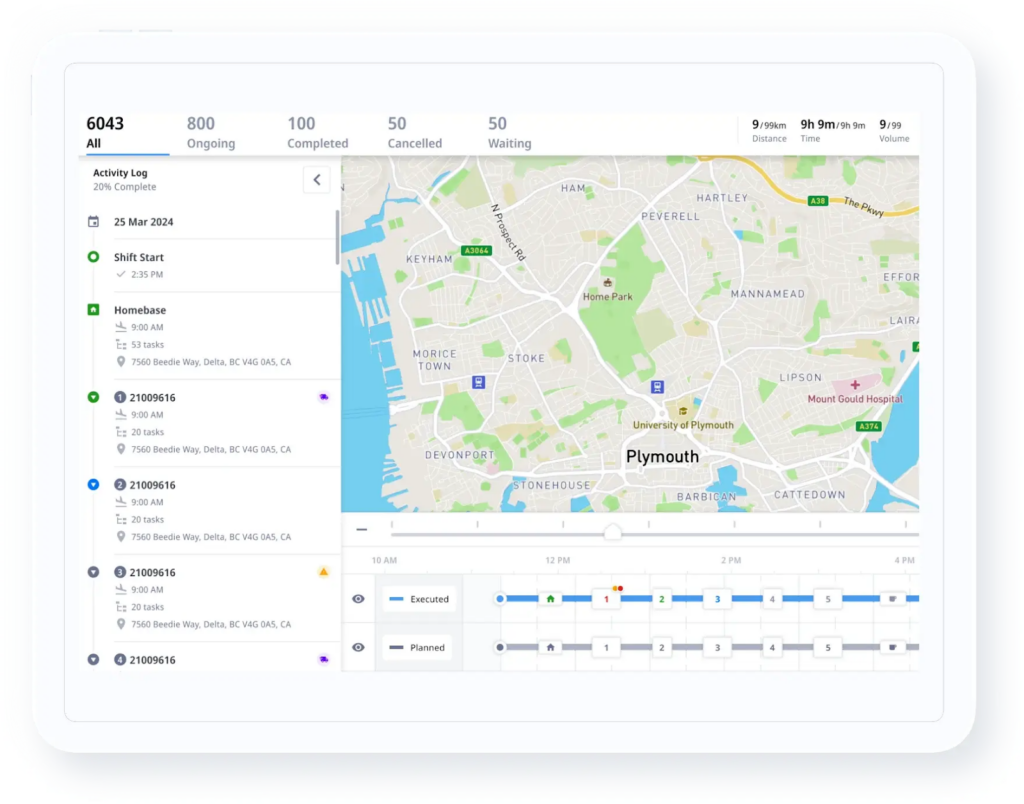
Static tracking does not help once a route is in motion. Teams need to know what is happening in real time.
Real-time tracking shows where orders stand, how drivers are progressing, and which deliveries are at risk. The analytics layer analyzes this data to highlight delays, recurring bottlenecks, and execution patterns. This allows teams to provide a timely response rather than one that is provided only after the performance reports are generated.
3. Customizable Reporting and Dashboard Options
Different teams look for various types of signals. Operations teams focus on delays and capacity, CX teams track delivery promises, and leadership looks at cost and SLA performance.
Dispatch systems allow dashboards to be configured around these needs. Instead of one generic report, each team sees what helps them act. This keeps dispatch data usable and in check.
Comparing Dispatch Management Systems to TMS
A Transportation Management System (TMS) is designed to plan how goods move. It handles carrier selection, route planning, and freight cost management before shipments begin.
A dispatch management system is designed to run delivery execution. It controls order assignment, driver coordination, and live adjustments once deliveries are in motion.
While both systems touch routing and tracking, they solve different problems. The table below outlines where each one fits and how their roles differ in e-commerce operations.
| What Happens in Real Life | Dispatch Management System | Transportation Management System (TMS) |
|---|---|---|
| When the system comes into play | A delivery is already scheduled and needs to be executed | A shipment is being planned before it moves |
| What the team uses it for | Assigning orders to drivers and adjusting routes during the day | Choosing carriers, setting routes, and locking costs upfront |
| How it handles change | A driver is delayed, so the system reassigns or reroutes immediately | Plans stay mostly fixed once shipments are in motion |
| What visibility looks like | You can see which orders are running late right now | You can see where shipments are, not how to fix delays |
| How routing works | Routes adapt as conditions change | Routes are optimized before execution starts |
| Where it fits best | Same-day, next-day, and last-mile e-commerce delivery | Line-haul, freight, and long-distance transport |
| Effect on customers | Fewer missed windows and more accurate ETAs | Indirect impact through cost and planning efficiency |
Choosing the Right System for Your Business Needs
If your challenge is freight planning, carrier contracts, or cost optimization across long distances, a TMS plays a central role. If your challenge is missed delivery windows, manual coordination, and lack of visibility during execution, dispatch management is the stronger fit.
Many growing e-commerce teams use both. The TMS handles upstream planning, while dispatch systems control last-mile execution where customer experience is decided.
Cost-Benefit Analysis
Dispatch management systems create value by reducing everyday inefficiencies. Fewer failed deliveries, less manual coordination, and better fleet use lower operational costs over time. Support teams handle fewer escalations, and drivers spend less time waiting or rerouting.
The cost tradeoff becomes clear when you compare system spend against recurring losses from delays, rework, and SLA breaches. When dispatch execution improves, those hidden costs shrink quickly, making the investment easier to justify.
Impact on Business Growth and Efficiency
Dispatch decisions shape how efficiently you grow. When execution is predictable, teams spend less time fixing issues and more time improving performance.
The impact shows up across cost, safety, and customer retention.
Route Optimization for Cost Reduction
Inefficient routing increases fuel costs and wastes driver time, especially as order volume grows.
Dispatch management supports cost control by:
- Reducing unnecessary mileage through better stop sequencing
- Adjusting routes when conditions change during the day
- Balancing workloads to avoid overused vehicles or drivers
Over time, these improvements lower cost per delivery and make scaling operations more sustainable.
Improving Driver Safety and Compliance
Reactive dispatch puts pressure on drivers and increases risk on the road.
Structured dispatch helps by:
- Creating realistic routes and schedules
- Reducing last-minute changes that cause rushed driving
- Maintaining clear records for hours, routes, and delivery activity
This leads to safer driving conditions and stronger compliance without adding manual overhead.
Increasing Customer Loyalty and Retention
Delivery reliability has a direct impact on whether customers return.
Efficient dispatch improves customer experience by:
- Reducing missed delivery windows
- Providing clearer and more timely delivery updates
- Limiting the number of support escalations
When deliveries arrive as promised and communication stays clear, trust builds naturally and repeat orders follow.
Transforming Your Business with Locus Dispatch Solutions
Dispatch issues occur when too many decisions depend on manual coordination and delayed information. As order volume increases, this approach becomes difficult to sustain.
Locus reduces this dependency by automating order assignment and adjusting routes during execution. Teams can see order status, driver progress, and delivery risk while deliveries are in progress. Dispatchers intervene when required instead of managing every step.
Teams usually implement Locus in phases. Order and delivery systems are connected first. Dispatch rules are then defined based on capacity, zones, and service levels. As automation increases, manual coordination decreases and execution becomes consistent.
This leads to fewer missed deliveries, lower coordination effort, and a dispatch process that scales with demand.
See how Locus supports dispatch execution across complex delivery networks. Schedule a demo based on your operational setup.
Frequently Asked Questions (FAQs)
1. What should you look for in an ecommerce dispatch management system?
Look for automation in order assignment, real-time visibility into delivery execution, and the ability to handle changes during the day. The system should support routing updates, fleet logic, and live status tracking without requiring constant manual intervention.
2. How does dispatch management software integrate with existing e-commerce systems?
Most dispatch systems integrate with order management, warehouse, and delivery platforms through APIs. This allows orders, delivery promises, and execution updates to stay in sync, so dispatch decisions are based on current data instead of delayed inputs.
3. Can mid-sized e-commerce businesses benefit from dispatch management systems?
Yes. Dispatch issues often appear before a business reaches large scale. As order volume and delivery complexity increase, manual coordination becomes harder to manage. Dispatch management systems help mid-sized teams avoid delays, reduce rework, and prepare for growth.
4. What are the cost considerations when implementing a dispatch management system?
Costs usually include platform fees and integration effort. The return comes from fewer failed deliveries, lower support overhead, and better fleet utilization. Many teams justify the investment by comparing it against recurring losses from delays and SLA breaches.
5. How quickly can teams see results after implementing dispatch management software?
Initial improvements often appear within weeks. Once order data is connected and dispatch rules are set, teams gain better visibility and reduce manual coordination. Deeper gains follow as automation increases and execution becomes more consistent.


Transportation Management System
The Top 10 Transportation Management Systems for 2026

Dec 30, 2025
Discover the best TMS software platforms for logistics in 2026. Compare transportation management solutions for optimization and visibility.
Read more
E-Commerce
How to Create an Effective E-Commerce Delivery Strategy in 2026
Jan 6, 2026
Plan a future-ready ecommerce delivery strategy for 2026. Reduce costs, improve speed, and scale operations. Contact Locus for a tailored solution.
Read moreInsights Worth Your Time




















6 Ways Dispatch Management System Works for Your E-commerce Business in 2026