


General
Tookan Alternatives: Choosing the Right Platform as Delivery Complexity Scales

Key Takeaways
- Tookan is often outgrown when delivery operations shift from simple task assignment to constant, real-time decision-making.
- As order volatility increases, teams need systems that respond throughout the day, not just before dispatch.
- Many delivery tools solve planning or tracking in isolation, but break down when coordination across teams becomes critical.
- Operational maturity, not company size alone, determines when a more execution-centric platform becomes necessary.
- Platforms like Locus are typically considered when dispatch, routing, and execution need to function as a single system, not as separate steps.
Tookan is often one of the first platforms teams adopt to manage delivery tasks, drivers, and basic dispatch workflows. It works well when volumes are manageable and daily plans don’t change much after routes go live.
But as delivery operations scale, order patterns become less predictable, fleets grow, and customer expectations tighten around speed and visibility, cracks start to appear in task-based dispatch systems.
This is where many teams begin exploring Tookan alternatives. Teams start asking deeper questions about execution control, automation, real-time decision-making, and scalability across regions and fleets.
In this guide, we break down when Tookan becomes limiting and how modern delivery platforms address those gaps as operations mature.
What Recent Tookan Reviews Reveal as Operations Grow
On the positive side, many reviewers highlight Tookan’s ability to centralize dispatch, tracking, and customer updates in one place. Users frequently mention ease of assigning tasks, real-time visibility for customers, and flexibility across different business models. For early-stage or smaller delivery operations, this simplicity is still a strong draw.
However, newer reviews also point out challenges. Several users call out limitations around customization, particularly branding and white-labeling, where additional costs become a blocker.
Others point to confusing configuration layers, reporting dashboards that don’t scale visually, and mobile app sync issues under real-world connectivity conditions.
More importantly, reviews highlight mismatches between expectations and delivery. These include gaps between promised integrations and actual functionality, delays in implementation, and inconsistent post-sales support. While not universal, these experiences signal risk for teams relying on Tookan as a core operational system rather than a supporting tool.
As volumes grow, integrations deepen, and execution becomes more dynamic, teams begin to feel the limits of flexibility, control, and accountability. This is often the point at which Tookan shifts from “good enough” to a constraint, prompting teams to evaluate alternatives built for more complex, execution-heavy environments.
Leading Tookan Alternatives Delivery Teams Evaluate in 2026
Once teams move past task-based dispatch and basic tracking, the evaluation lens shifts. Instead of asking “Can this assign and track deliveries?”, teams start asking “Can this system hold up when plans change, volumes spike, or regions expand?”
Below is how the most commonly shortlisted Tookan alternatives differ in what they actually solve, starting with platforms built for deeper operational control and moving toward lighter-weight tools.
Tookan Alternatives Comparison: How Teams Actually Differentiate Platforms
| Platform | Core Strength | Execution Depth | Best Fit For | Pricing Model |
|---|---|---|---|---|
| Locus | System-led execution and orchestration | Very High | Enterprises running dynamic, multi-region delivery networks | Custom, usage + complexity based |
| Onfleet | Simple, fast last-mile execution | Medium | Local and regional teams prioritizing speed and usability | Tiered, task-volume based |
| Routific | Quick route planning automation | Low–Medium | SMBs with predictable, repeatable routes | Route-volume based |
| Route4Me | Flexible planning and territory management | Medium | Sales, service, and territory-driven operations | Subscription, user + feature based |
| DispatchTrack | Visibility, POD, customer communication | Medium | Retailers focused on delivery experience and SLAs | Custom, module-based |
| Track-POD | Affordable POD and tracking | Low | Small fleets needing basic delivery confirmation | Driver / delivery based |
| OptimoRoute | Strong upfront route optimization | Low–Medium | Teams with stable schedules and low execution volatility | Tiered, route-based |
| Detrack | Tracking and POD visibility | Low | Local delivery operations with simple workflows | Subscription, driver-based |
| Motive | Fleet health, safety, compliance | Low (delivery-specific) | Asset-heavy and regulated fleet operators | Hardware + subscription |
| Shiprocket | Courier aggregation and fulfillment | Low (direct control) | E-commerce sellers outsourcing last mile | Plan-based + per shipment |
1. Locus
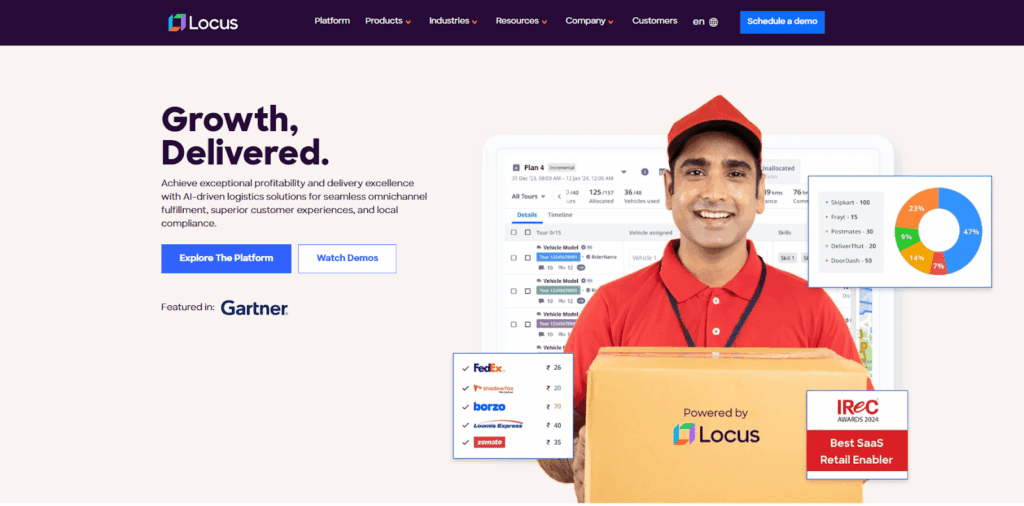
Locus is usually evaluated when delivery teams realize that their biggest constraint is operational consistency under pressure.
As delivery volumes grow and execution becomes more volatile, teams often find that outcomes depend heavily on who is dispatching, how experienced they are, and how quickly they can react to disruptions.
Rather than treating routing and dispatch as separate steps, Locus is built to act as a decision layer that governs how deliveries are executed throughout the day. It’s designed for operations where plans evolve continuously and where maintaining service levels requires system-led decisions.
Common Problems Locus Helps Address
Teams typically consider Locus when they start encountering challenges such as:
- Inconsistent execution across regions or shifts: As teams expand, delivery outcomes begin to vary by dispatcher, hub, or geography. Locus helps standardize execution logic so decisions are applied uniformly, regardless of who is operating the system.
- Dispatcher overload during peak periods: When exceptions spike, manual decision-making becomes a bottleneck. Locus reduces cognitive load by embedding prioritization and response logic directly into workflows.
- Tool sprawl across planning, tracking, and execution: When routing, dispatch, and visibility live in different systems, coordination breaks down. Locus consolidates these layers into a single operational environment.
Where Locus Performs Strongly
Locus is particularly effective for teams that:
- Operate with high order volatility: When cancellations, add-ons, reattempts, or priority changes are frequent, Locus enables continuous recalibration without restarting plans.
- Run multi-region or multi-fleet networks: It supports centralized control while still allowing local constraints, SLAs, and fleet rules to coexist without fragmentation.
- Depend on tight delivery promises: For businesses where late or failed deliveries directly impact customer retention, Locus helps protect service commitments during execution.
- Are transitioning from people-led to system-led operations: Teams moving toward automation benefit from having execution rules enforced consistently by the platform.
Considerations Before Choosing Locus
Locus is not optimized for teams seeking a quick, plug-and-play dispatch tool. Initial onboarding typically involves aligning operational rules, data flows, and decision logic with how the business actually runs. For teams with simple routes and low variability, this depth may feel unnecessary.
Locus Is Best Suited For
Locus is a strong fit for organizations such as:
- Retail, e-commerce, and e-grocery brands managing dense delivery clusters
- FMCG and CPG companies running distributor-led or hybrid delivery models
- 3PLs coordinating execution across multiple clients and service levels
- Large-format or specialized delivery operators with complex constraints
- Enterprises managing first-, mid-, and last-mile execution in parallel
Locus Pricing
Locus follows a custom pricing model based on factors such as delivery volume, geographic spread, fleet composition, and required modules. Pricing scales with operational complexity rather than just user count, reflecting its focus on execution orchestration rather than basic task management.
2. Onfleet
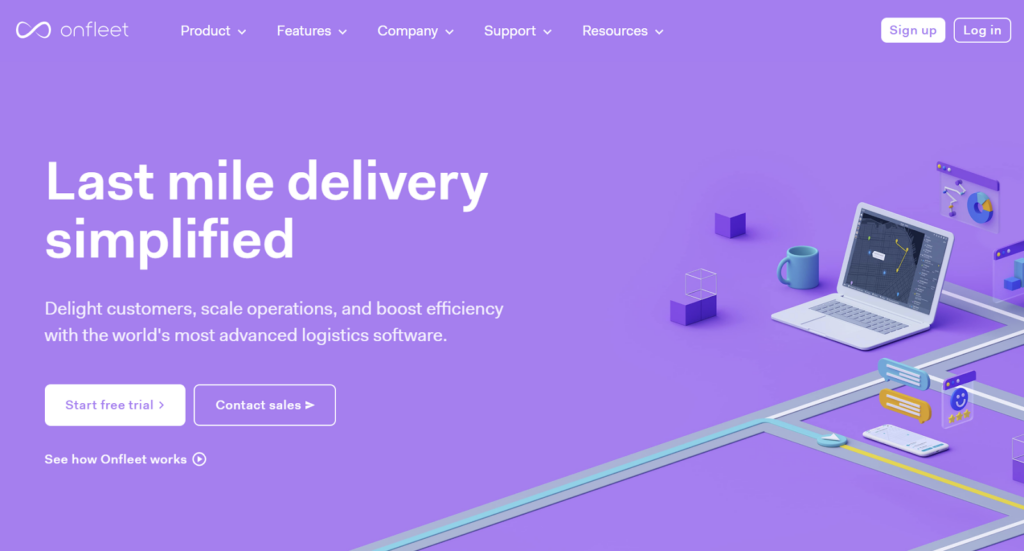
Onfleet is commonly evaluated when teams want to improve delivery execution speed without overhauling their operating model. It appeals to teams that are still comfortable with human-led dispatching but need better visibility and coordination across drivers and orders.
Common Problems Onfleet Helps Address
- Fragmented communication between dispatchers and drivers
- Limited real-time visibility into delivery progress
- Slow onboarding of drivers and ops staff
- Manual coordination for same-day or on-demand deliveries
Where Onfleet Performs Strongly
- Local or regional last-mile operations
- Same-day, on-demand, or scheduled delivery models
- Teams prioritizing dispatcher and driver experience
- Businesses needing quick rollout with minimal configuration
Considerations Before Choosing Onfleet
Onfleet is less suited for operations that require dense routing, multi-run optimization, or system-driven decision-making. As exception volume grows, reliance on manual dispatcher intervention can become a constraint.
Onfleet Is Best Suited For
- Food, grocery, and pharmacy delivery businesses
- Local retailers and service providers
- Teams operating within limited geographic regions
Onfleet Pricing
Onfleet follows a tiered, task-based pricing model. Plans are typically structured around the number of delivery tasks per month, with higher tiers unlocking automation rules, analytics, and API access. Costs scale predictably with volume, but can increase quickly for high-frequency delivery operations.
3. Routific
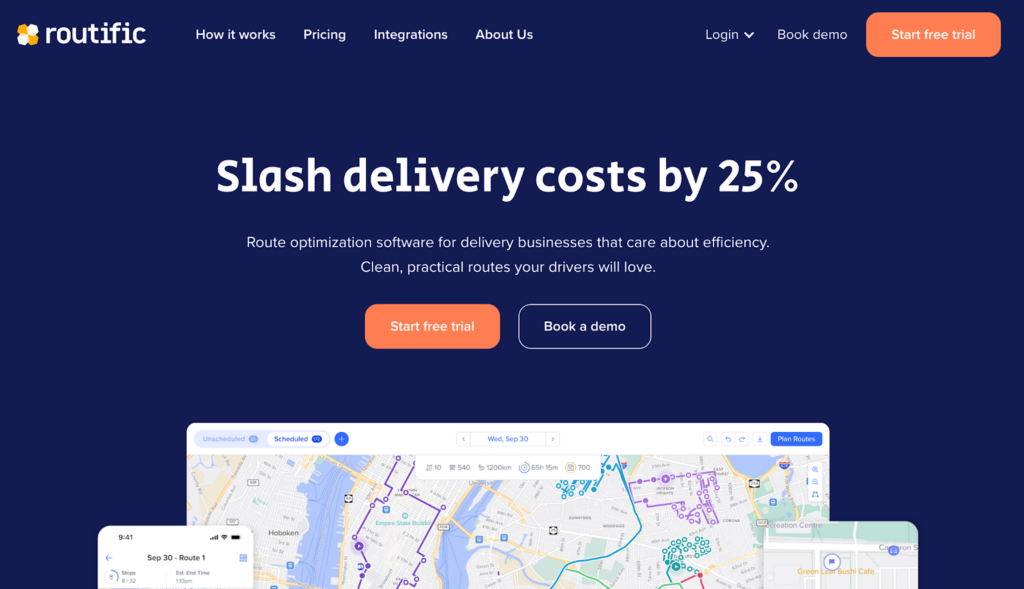
Routific is typically evaluated when route planning consumes disproportionate time and effort. Teams using spreadsheets or manual sequencing often turn to Routific to automate daily route creation.
Its strength lies in simplifying planning workflows rather than managing execution complexity. It assumes that once routes are planned, deviations will be minimal.
Common Problems Routific Helps Address
- Manual route planning overhead
- Inefficient stop sequencing
- Time-consuming daily planning cycles
- Lack of basic route optimization
Where Routific Performs Strongly
- Predictable delivery schedules
- Low order volatility
- Small to mid-sized fleets
- Single-region operations
Considerations Before Choosing Routific
Routific offers limited support for live execution control. Teams with frequent mid-day changes or multi-run scenarios may find themselves reverting to manual workarounds.
Routific Is Best Suited For
- SMB retailers and distributors
- Subscription-based delivery models
- Local food and beverage businesses
Routific Pricing
Routific offers route-volume-based pricing, with plans tied to the number of routes generated per month. Entry tiers are designed for small teams and are relatively affordable, while higher tiers primarily increase routing capacity rather than execution features.
4. Route4Me
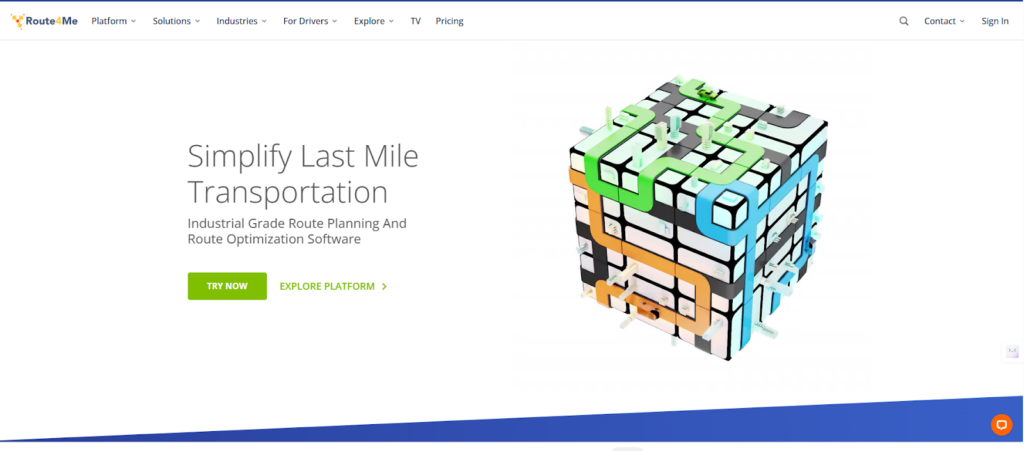
Route4Me is often evaluated by teams that manage territory-based operations.It supports planning flexibility across varied use cases like sales visits, inspections, and recurring services.
The platform emphasizes configurability and advance planning over automation and real-time execution.
Common Problems Route4Me Helps Address
- Territory design and recurring routes
- Advance route planning across teams
- Managing mixed-use field operations
- Flexible routing preferences
Where Route4Me Performs Strongly
- Field sales and service operations
- Recurring and territory-driven routes
- Advance planning with limited disruption
- Organizations valuing configurability
Considerations Before Choosing Route4Me
Execution control is secondary to planning. Teams with dynamic delivery environments may find live coordination limited.
Route4Me Is Best Suited For
- Sales and inspection teams
- Maintenance and service organizations
- Delivery teams with stable schedules
Route4Me Pricing
Route4Me uses a subscription-based pricing model that scales with the number of users, routes, and advanced capabilities such as territory management or API access. Pricing increases with configurability and team size rather than delivery volume alone.
5. DispatchTrack
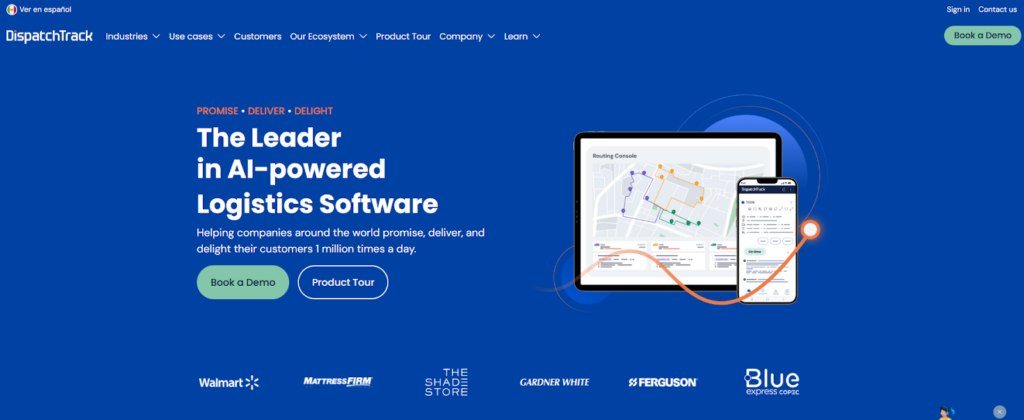
DispatchTrack is evaluated by teams that want delivery visibility and customer communication layered onto existing routing processes. It is often used where proof of delivery and customer experience are key operational metrics.
Routing is typically finalized before dispatch, with execution focused on tracking and communication.
Common Problems DispatchTrack Helps Address
- Limited delivery visibility
- Weak customer communication
- Proof-of-delivery gaps
- ETA accuracy issues
Where DispatchTrack Performs Strongly
- Structured delivery routes
- Customer-facing delivery operations
- Retail and distribution models
- SLA-driven environments
Considerations Before Choosing DispatchTrack
It is less effective in highly dynamic routing environments where plans change continuously during execution.
DispatchTrack Is Best Suited For
- Retailers and distributors
- Appliance and bulky goods delivery
- SLA-focused delivery operations
DispatchTrack Pricing
DispatchTrack typically follows a custom pricing model, influenced by delivery volume, feature modules, and customer experience requirements. Pricing often reflects enterprise use cases, especially where POD, ETAs, and customer communication are critical.
6. Track-POD
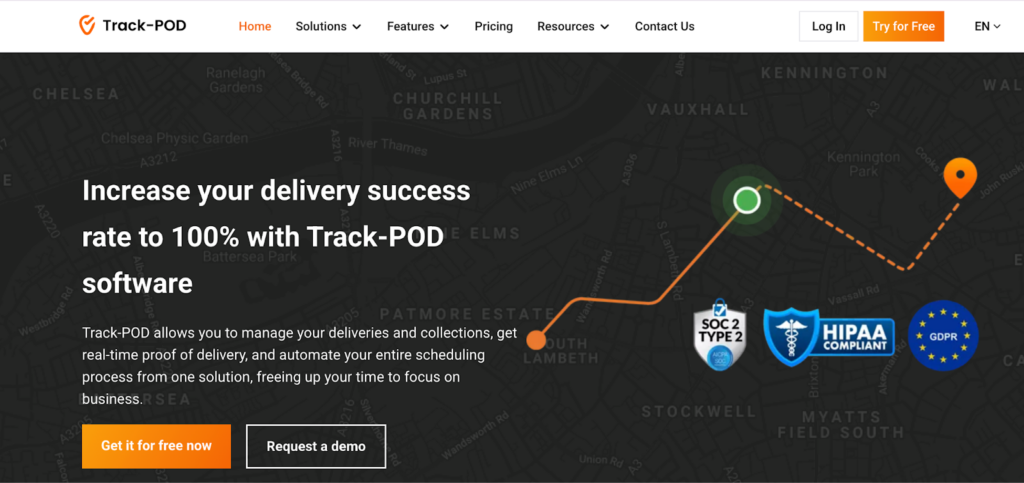
Track-POD is often shortlisted when teams need basic delivery tracking and POD without operational complexity. Cost efficiency and simplicity are its primary strengths.
It focuses on visibility and confirmation rather than optimization or orchestration.
Common Problems Track-POD Helps Address
- Lack of delivery confirmation
- Manual POD collection
- Limited delivery tracking
- Basic dispatch coordination
Where Track-POD Performs Strongly
- Small fleets
- Predictable delivery routes
- Cost-sensitive operations
- Local distribution models
Considerations Before Choosing Track-POD
As delivery density and SLA complexity increase, Track-POD may need to be supplemented with additional systems.
Track-POD Is Best Suited For
- Small courier businesses
- Local distributors
- Service teams with scheduled routes
Track-POD Pricing
Track-POD offers driver- and delivery-volume-based pricing, with affordable entry plans aimed at small teams. Higher tiers unlock analytics, integrations, and expanded reporting, keeping it accessible for cost-sensitive operations.
7. OptimoRoute
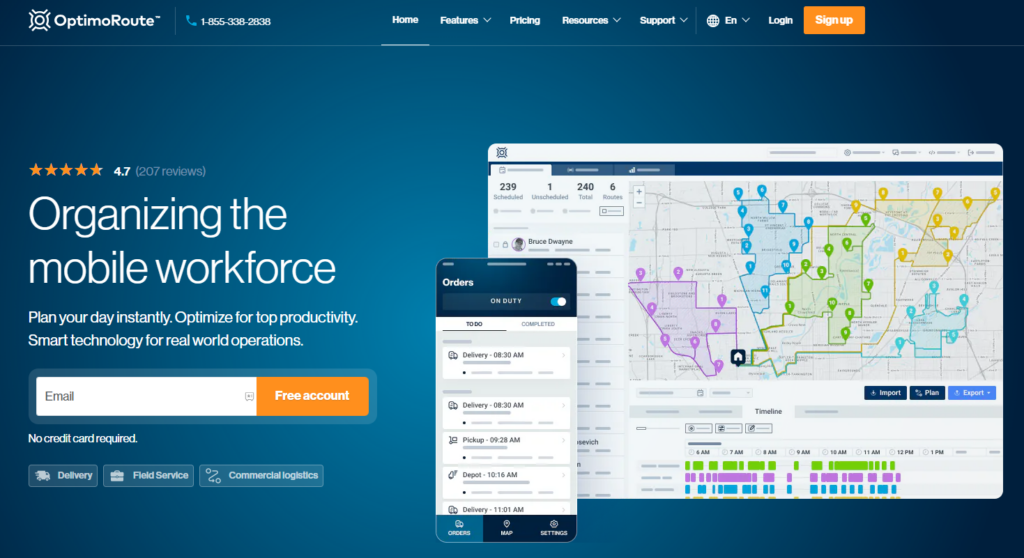
OptimoRoute is evaluated when routing efficiency is the primary objective. It is designed for teams that plan routes in advance and expect execution to follow those plans closely.
Its optimization engine performs best in stable delivery environments.
Common Problems OptimoRoute Helps Address
- Inefficient route sequencing
- Manual planning effort
- Time window optimization
- Driver workload balancing
Where OptimoRoute Performs Strongly
- Predictable daily delivery plans
- Low execution volatility
- Small to mid-sized operations
- Single-run routes
Considerations Before Choosing OptimoRoute
Execution flexibility is limited. Teams with frequent post-dispatch changes often experience re-planning friction.
OptimoRoute Is Best Suited For
- Courier services
- Field service teams
- Retail distribution with stable demand
OptimoRoute Pricing
OptimoRoute follows a tiered subscription model based primarily on route volume and optimization features. Pricing scales with the number of stops planned per day and advanced constraints, making costs predictable for stable routing environments.
8. Detrack
Detrack is commonly evaluated for basic delivery tracking and proof of delivery needs. It acts primarily as a visibility layer rather than an optimization engine. Routing and dispatch logic are typically handled elsewhere.
Common Problems Detrack Helps Address
- Limited delivery tracking
- POD documentation gaps
- Manual status updates
- Lack of delivery visibility
Where Detrack Performs Strongly
- Local delivery operations
- Low-complexity routing
- Visibility-first use cases
- Small fleets
Considerations Before Choosing Detrack
Detrack does not support complex routing or execution orchestration, making it unsuitable for high-density operations.
Detrack Is Best Suited For
- Local couriers
- Retail deliveries
- Small logistics teams
Detrack Pricing
Detrack offers subscription pricing, usually tied to the number of drivers or vehicles tracked. Entry plans focus on basic tracking and POD, while higher tiers add integrations and reporting depth. Hardware costs may apply in some setups.
9. Motive
Motive enters Tookan comparisons when fleet oversight becomes a priority. It focuses on vehicle health, safety, compliance, and driver behavior. Delivery workflows are secondary to fleet management.
Common Problems Motive Helps Address
- Fleet visibility gaps
- Compliance and ELD requirements
- Driver safety monitoring
- Vehicle utilization tracking
Where Motive Performs Strongly
- Large owned fleets
- Asset-heavy operations
- Regulated industries
- Transport-focused businesses
Considerations Before Choosing Motive
Motive is not built for dense delivery routing or dispatch orchestration and is often paired with delivery platforms.
Motive Is Best Suited For
- Transportation companies
- Mid-mile and long-haul fleets
- Compliance-driven operations
Motive Pricing
Motive uses a hardware-plus-subscription pricing model. Costs are driven by vehicles equipped, hardware installed, and enabled software modules such as ELDs, safety, or fleet analytics. Pricing is typically higher due to bundled compliance and telematics features.
10. Shiprocket
Shiprocket is evaluated primarily by e-commerce sellers rather than delivery operators. Its value lies in shipping aggregation and courier management. It abstracts logistics execution rather than controlling it directly.
Common Problems Shiprocket Helps Address
- Courier selection complexity
- Shipping rate management
- Order fulfillment coordination
- Returns handling
Where Shiprocket Performs Strongly
- Marketplace and D2C sellers
- Pan-India shipping operations
- Courier-agnostic fulfillment models
- Non-fleet-based logistics
Considerations Before Choosing Shiprocket
For teams running their own fleets or requiring live execution control, Shiprocket functions better as a complementary system.
Shiprocket Is Best Suited For
- E-commerce brands
- Marketplace sellers
- Businesses outsourcing last-mile delivery
Shiprocket Pricing
Shiprocket follows a plan-based pricing structure combined with per-shipment fees. Costs depend on order volume, enabled services, and courier usage. Entry plans are accessible for SMBs, while higher tiers support larger e-commerce operations.
Why Teams Choose Locus When Delivery Complexity Becomes the Business Risk
At a certain scale, it is hard to keep up when plans change constantly, volumes spike without warning, and SLAs tighten across regions. At this stage, manual decisions multiply, visibility breaks, and performance becomes inconsistent.
Locus is built specifically for this stage. It replaces dispatcher-heavy workflows with system-led execution, ensuring that routing, dispatch, and exception handling stay aligned throughout the delivery day. Instead of reacting to problems after SLAs are missed, teams gain proactive control across fleets, regions, and delivery models.
For enterprises where delivery reliability directly impacts customer trust, cost efficiency, and scale readiness, Locus is the right fit.
Schedule a demo with Locus today and explore how real-time execution control fits your operations.
Frequently Asked Questions (FAQs)
1. When should teams start looking for Tookan alternatives?
Teams usually begin evaluating alternatives when delivery plans change frequently after dispatch, manual intervention increases, or performance varies across regions and shifts. These signals indicate that task-based dispatch is no longer sufficient for managing operational complexity.
2. Is Tookan suitable for large or enterprise-scale delivery operations?
Tookan can support growing teams, but enterprises with dense routes, multi-region fleets, or strict SLAs often need stronger execution control, automation, and system-led decision-making to maintain consistent performance at scale.
3. How is an execution-first platform different from a dispatch or routing tool?
Dispatch and routing tools focus on assigning tasks or planning routes upfront. Execution-first platforms continuously manage changes during the delivery day, aligning routing, dispatch, and exception handling in real time to reduce manual firefighting.
4. Why do enterprises shortlist Locus over other Tookan alternatives?
Enterprises choose Locus when delivery outcomes depend on consistency, not individual dispatcher decisions. Locus embeds operational rules into the system, enabling proactive exception management and stable execution across regions, fleets, and delivery models.
5. Can teams transition from Tookan to Locus without disrupting live operations?
Yes. Most teams adopt Locus through a phased rollout, running it alongside existing systems while onboarding regions or fleets gradually. This approach minimizes risk while allowing teams to stabilize execution before fully migrating.


General
Bringg Competitors in 2026: Top Alternatives for Scalable Delivery Execution

Feb 12, 2026
Looking for Bringg alternatives? Discover the top competitors in 2026, compare features, pricing, and capabilities for last-mile delivery.
Read more
General
Rethinking Blue Yonder for Complex Logistics in 2026
Feb 13, 2026
Blue Yonder works well for structured planning, but many enterprises face execution gaps as operations grow dynamic. Here’s what teams consider next.
Read moreInsights Worth Your Time




















Tookan Alternatives: Choosing the Right Platform as Delivery Complexity Scales