


Route Optimization
Best Truck Routing Software in 2026: A Practical Buyer’s Guide for Fleet and Logistics Leaders


Key Takeaways
- We evaluated 10 leading truck routing software providers based on enterprise feedback, ROI delivery, G2/Capterra ratings, and real-world operational testing.
- Fleet size determines the right platform — different solutions work best for small (5–20), medium (20–100), and large (100+) vehicle operations. Enterprise fleets need 250+ constraint handling.
- Truck-specific constraints are non-negotiable — weight limits, height restrictions, hazmat compliance, and HOS rules separate professional platforms from basic routing tools.
- AI-powered optimization delivers superior results — machine learning platforms continuously improve based on driver behavior and route performance, optimizing 20-stop routes 25–40% faster than manual planning.
- Dynamic routing reduces delays by 25–35% — fleets using real-time dynamic routing achieve measurably fewer late deliveries and significant fuel savings.
- Integration capabilities directly impact ROI — platforms that connect with existing TMS/ERP systems eliminate data silos and maximize operational efficiency.
- Implementation timeline affects value realization — most enterprises achieve full ROI within 12–18 months with proper platform selection.
This guide is designed for enterprise logistics leaders, fleet managers, and operations executives seeking scalable, AI-powered routing software for trucks that delivers measurable ROI across complex, multi-territory operations.
Fleet managers face unprecedented operational pressure in 2026. Balancing cost control with delivery speed is a daily struggle, and the numbers make the stakes clear. The trucking industry’s average cost per mile reached $2.260 in 2024, with non-fuel operating costs hitting an all-time high of $1.779 per mile. At the same time, fleets using dynamic routing software now save $2,000–$5,000 per truck annually in fuel and achieve 98%+ on-time delivery rates. The right routing software for trucks is no longer optional — it is a competitive requirement.
The Route Optimization Software Market surpassed $8 billion in 2025 and is projected to grow at a CAGR of 14.70% to reach $15.92 billion by 2030. This trajectory reflects a market-wide recognition that routing efficiency directly impacts the bottom line. Yet many fleet operators still rely on fragmented systems that fail to address truck-specific constraints, HOS compliance, and real-time operational challenges.
This guide evaluates the top truck routing software providers based on real-world enterprise feedback, implementation success rates, and measurable ROI delivery. Whether you manage 50 vehicles or 500+, you will find the platform that matches your operational complexity and growth trajectory.If you are exploring route optimization software for the first time, or replacing an underperforming system, this comparison gives you the data-driven clarity to make the right decision.
What Is Truck Routing Software?
Truck routing software is a specialized logistics technology that plans optimized routes for commercial trucks while accounting for vehicle, cargo, driver, road, customer, and operational constraints.
Unlike a standard route planner, truck routing software does more than find the fastest route between points. It helps dispatchers and fleet managers answer operational questions such as:
- Which truck should handle each order?
- Which route is legal for this vehicle’s height, weight, and cargo type?
- Which stops should be grouped together?
- Which driver has enough available hours?
- How should the route change if traffic, weather, loading delays, or customer availability changes?
- How can the fleet reduce cost per delivery without missing time windows?
- How can the system improve fleet utilization across depots, territories, and carriers?
For readers new to the concept, what is route optimization explains the broader planning discipline behind modern truck routing tools.
Why Truck Routing Software Matters Now
Fleet managers are under sustained pressure to reduce operating costs while improving delivery speed and reliability. The economics are unforgiving. The trucking industry’s average cost per mile reached $2.260 in 2024, while non-fuel operating costs reached an all-time high of $1.779 per mile.
At the same time, routing efficiency has become a competitive lever. Fleets using dynamic routing software can save $2,000–$5,000 per truck annually in fuel. For a 200-truck operation, that can translate into $400,000–$1,000,000 in annual fuel savings, before factoring in overtime reduction, improved vehicle utilization, fewer failed deliveries, and better customer retention.
Market adoption reflects this shift. The route optimization software market surpassed $8 billion in 2025 and is projected to reach $15.92 billion by 2030, growing at a 14.70% CAGR.
The business case is clear: routing software for trucks is no longer a back-office planning tool. It is a core operating system for cost control, delivery reliability, compliance, and fleet productivity.
Key Features to Look for in Truck Routing Software
The best truck routing software should help your team plan routes that are efficient, compliant, adaptable, and executable by real drivers. Use the following feature checklist when evaluating vendors.
AI-Powered Route Optimization
Modern route optimization software uses algorithms and machine learning to evaluate multiple route variables simultaneously. These may include:
- Traffic conditions
- Delivery time windows
- Vehicle type and capacity
- Service time at each stop
- Driver availability
- Customer preferences
- Depot location
- Load sequencing
- Historical delivery patterns
- Route adherence
- Carrier cost
- Fuel consumption
- Weather conditions
- Road restrictions
The advantage of AI-powered routing is continuous improvement. Instead of relying only on static distance calculations, the system learns from actual route execution: which routes drivers accept, where delays occur, which delivery windows are risky, and how certain territories perform at different times of day.
According to Geotab’s analysis, AI-powered routing can cut costs by up to 55% compared with less advanced planning methods.
Truck-Specific Routing Constraints
A routing platform that treats every vehicle like a passenger car will create risk for commercial fleets. Truck routing software should account for:
- Vehicle height, length, width, and gross vehicle weight
- Bridge height and weight restrictions
- Low-clearance roads and tunnels
- Truck-restricted roads
- Hazmat routing requirements
- Refrigerated or temperature-sensitive cargo needs
- Delivery bay access and parking limitations
- Toll preferences
- Time-based road restrictions
- Mandatory rest stops
- Driver Hours of Service compliance
These constraints determine whether a route is actually legal and executable. For heavy trucks, long-haul operations, hazmat shipments, or urban deliveries with tight access points, truck-specific constraints are not optional.
Real-Time Dynamic Routing
Static planning is not enough for modern logistics. The route that looked optimal at 7:00 a.m. may be inefficient or impossible by 10:00 a.m. due to traffic, vehicle breakdowns, customer unavailability, loading delays, weather events, or driver capacity changes.
Dynamic routing allows dispatchers to:
- Re-optimize routes during the day
- Reassign stops between drivers
- Recover from missed time windows
- Update ETAs automatically
- Notify customers of revised arrival times
- Minimize downstream disruption from early route failures
Dynamic routing can reduce delays by 25–35%, making it especially valuable for high-density delivery networks and service-level-agreement-driven operations.
TMS, ERP, WMS, and Telematics Integration
Truck routing software should not operate as a standalone planning screen. It should connect with the systems your operation already depends on, including:
- Transportation Management Systems
- Enterprise Resource Planning platforms
- Warehouse Management Systems
- Order Management Systems
- Telematics and GPS systems
- ELD providers
- Customer notification tools
- Driver mobile apps
- Carrier management systems
- Billing and proof-of-delivery workflows
Integration eliminates duplicate data entry and prevents dispatchers from switching between disconnected systems. More importantly, it allows routing decisions to reflect live operational reality: order changes, inventory availability, vehicle location, driver status, and customer commitments.
Driver Mobile App and Proof of Delivery
The route is only valuable if drivers can execute it. A strong driver app should provide:
- Route sequence and navigation
- Stop-level instructions
- Customer contact details
- Delivery notes
- Proof of delivery capture
- Photo capture
- Electronic signatures
- Barcode or QR code scanning
- Exception reporting
- Real-time communication with dispatch
Driver experience is often the difference between successful adoption and operational resistance. Routes should be efficient, logical, and easy to follow.
Cost Optimization and Analytics
Truck routing software should help logistics leaders understand cost, not just distance. Look for analytics covering:
- Cost per route
- Cost per delivery
- Miles driven
- Empty miles
- Driver overtime
- Fuel usage
- Vehicle utilization
- Route adherence
- Late deliveries
- Failed deliveries
- Service time by stop
- Depot productivity
- Carrier performance
Strong analytics help leadership identify where routing improvements create measurable business value. They also help prove ROI after implementation.
Top 10 Best Truck Routing Software – Comparison Table
We evaluated each platform across enterprise scalability, truck-specific constraint handling, integration depth, and verified customer outcomes. The table below highlights key differentiators at a glance.
| Software | Best For | Key Strengths | Pricing | G2 Rating | Truck Constraints |
| Locus ? Top Enterprise Choice | Enterprise retailers, 3PLs, CPG distributors | AI dispatch (250+ variables), Control tower, 1.5B+ deliveries optimized, multi-carrier allocation | Custom pricing | 4.7/5 | Full truck constraints, HOS compliance, hazmat |
| OptimoRoute | Field service operations | Skill-based routing, multi-day scheduling, workload balancing | $39–$99/driver/mo | 4.6/5 | Limited truck features |
| Routific | Small–medium local delivery | User-friendly interface, automated notifications, scheduled routes | $49–$93/vehicle/mo | 4.7/5 | No truck-specific routing |
| Route4Me | Complex logistics, single-depot | Extensive API, 3B+ miles optimized, multi-stop planning | Custom pricing | 4.5/5 | Basic truck routing |
| Upper | Growing fleets (5–50 vehicles) | Driver-friendly routes, transparent pricing, fuel optimization | $40/user/mo | N/A | Standard truck constraints |
| Circuit | Individual drivers, micro teams | Simple interface, proof of delivery, mobile-first | $100/mo (500 stops) | 4.8/5 | Basic vehicle types |
| Samsara | Trucking fleets, safety focus | GPS tracking, AI dash cams, ELD integration | Contact for pricing | N/A | Limited to 20 stops |
| Motive | Public sector, compliance-heavy | Real-time tracking, ELD compliance, safety scoring | Contact for pricing | N/A | Fleet tracking focused |
| Omnitracs | Large for-hire fleets | 30+ years trucking expertise, compliance mgmt | Contact for pricing | N/A | Comprehensive trucking |
| Descartes | Global enterprises | International shipping, TMS integration, multi-modal | Contact for pricing | N/A | Full truck capabilities |
How We Evaluated These Platforms
Our evaluation of the best truck routing software in 2026 follows a rigorous process designed to serve enterprise decision-makers:
- Enterprise Customer Feedback: We analyzed verified reviews from G2, Capterra, and TrustRadius, prioritizing feedback from fleet operations managing 50+ vehicles.
- Feature Depth Assessment: Each platform was scored on AI optimization sophistication, truck-specific constraint handling (weight, height, HOS, hazmat), and real-time adaptability.
- Integration & Scalability Testing: We evaluated how each tool connects with existing TMS, ERP, and telematics systems — a critical factor for enterprise ROI.
- ROI & Implementation Analysis: We reviewed documented cost savings, implementation timelines, and time-to-value metrics from published case studies and customer interviews.
- Truck Constraint Compliance: Platforms that address commercial vehicle routing requirements (bridge restrictions, low-clearance avoidance, mandatory rest stops) received higher rankings than those treating trucks like passenger cars.
Disclosure: Locus is the publisher of this guide. All competitive assessments are based on publicly available data, verified reviews, and documented platform capabilities. Competitors were evaluated using the same criteria applied to Locus.
Top 10 Best Truck Routing Software – Detailed Comparison
The best routing software for trucks helps you maximize operational efficiency while reducing costs and increasing delivery reliability. Locus, OptimoRoute, and Routific are our top three picks. Here is the complete breakdown:
1. Locus
Why Locus?
- AI-powered optimization for complex, enterprise-scale fleets handling 250+ routing constraints
- Seamless integration with your TMS/ERP systems — eliminating data silos entirely
- Proven ROI: 20%+ cost reduction, 1.5B+ deliveries optimized across 30+ countries
- Dedicated enterprise support and onboarding with a full implementation team
- Multi-carrier allocation and real-time re-optimization for dynamic operations
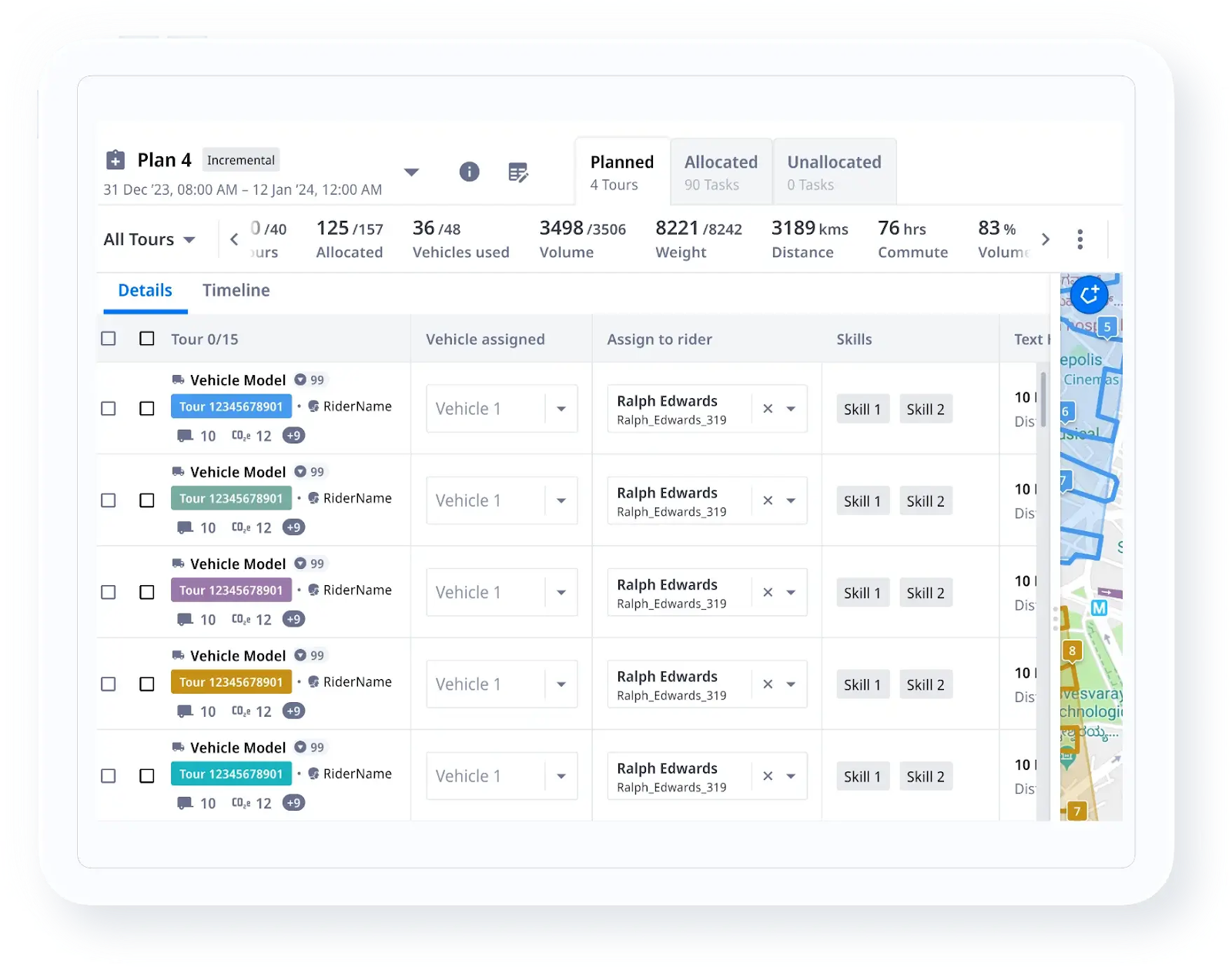
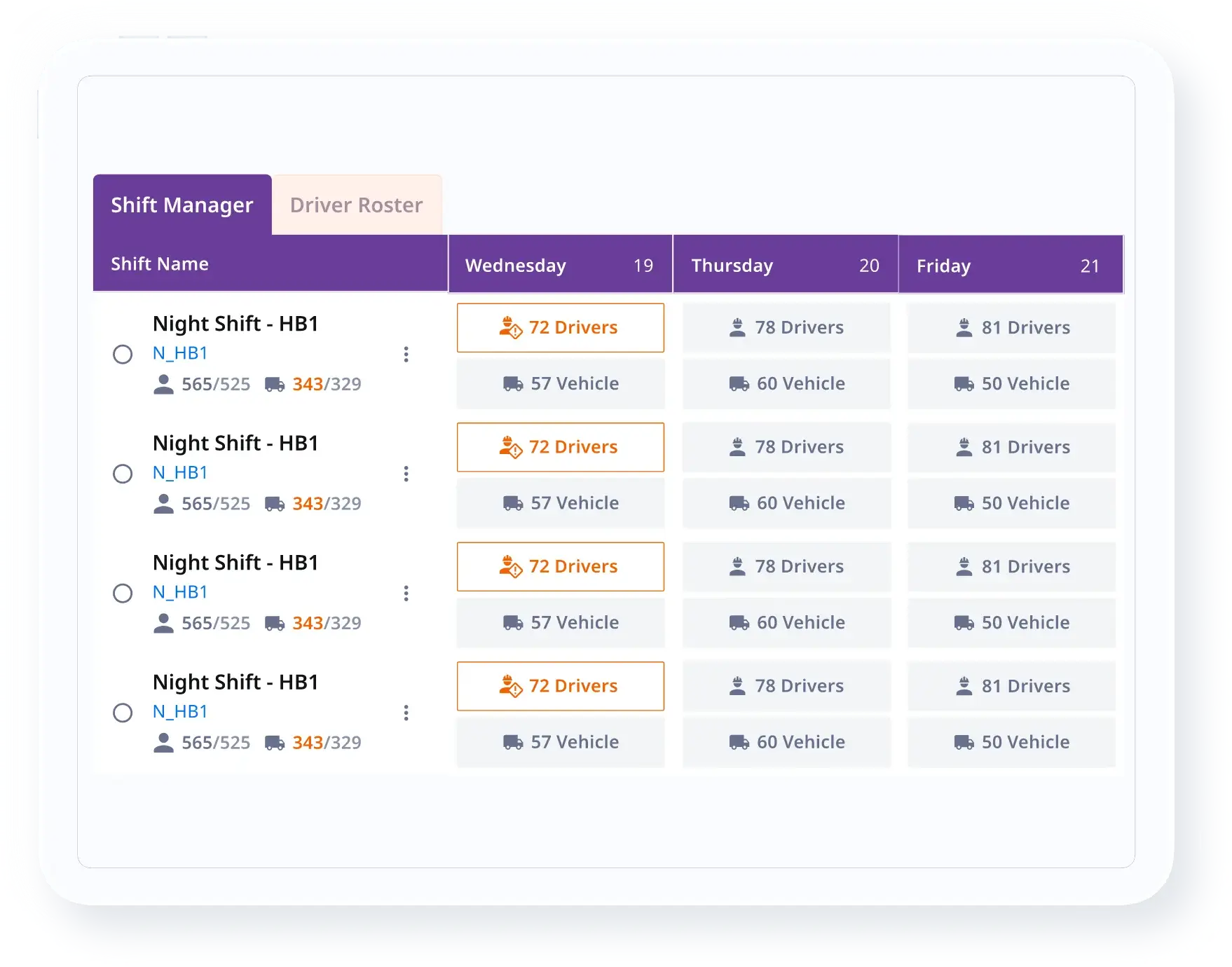
Locus is the ideal solution for enterprise logistics teams that need to cut operational costs and improve delivery performance simultaneously. The platform delivers AI-powered truck routing software that handles the complexity of modern supply chains — from multi-depot operations to carrier allocation — while providing complete operational visibility.With 1.5 billion+ deliveries optimized across 30+ countries, Locus processes 250+ variables per route decision. That scale of optimization is what separates enterprise-grade platforms from tools designed for simpler operations. For fleet managers overseeing hundreds of vehicles across multiple territories, Locus provides a single dashboard for dispatch, tracking, and performance analytics.
Locus’s Key Features
- AI dispatch engine processes 200+ variables, including traffic patterns, vehicle constraints, and customer requirements

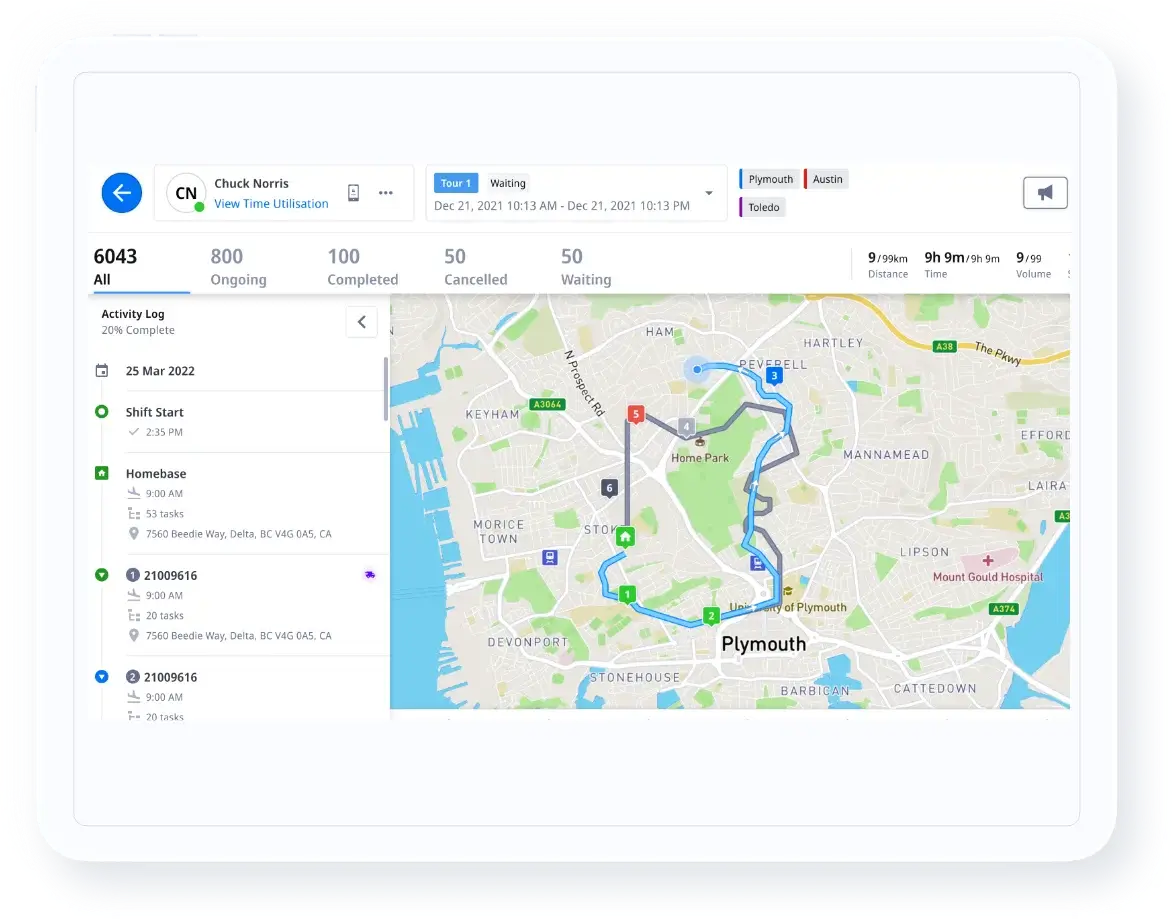
- Control tower functionality provides end-to-end visibility across multi-location operations with real-time updates

- Automated logistics optimization platforms eliminate manual coordination between systems and departments
- Advanced capacity optimization maximizes truck utilization while respecting weight limits and delivery windows

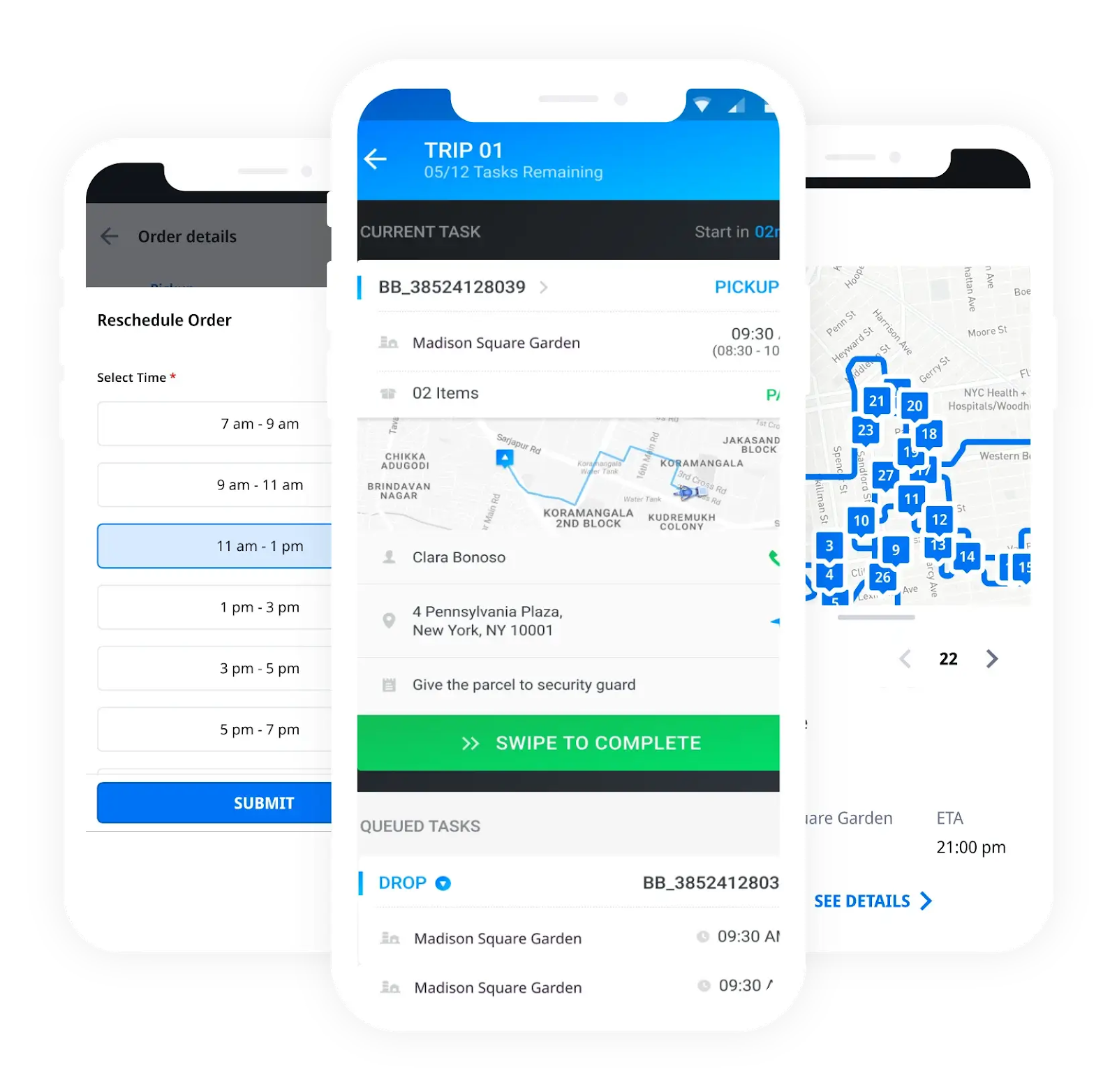
- The driver companion mobile app offers turn-by-turn navigation with electronic proof of delivery capabilities

- Sustainability tracking reduces fleet emissions by up to 30% through intelligent fleet optimization systems
Locus — Pros
- Comprehensive machine learning delivery route planning that improves performance over time based on real-world driver and delivery data
- Strong integration capabilities with major ERP and TMS platforms — eliminates data silos that cripple operational efficiency
- Measurable ROI delivery with detailed cost reduction analytics, performance reporting, and executive dashboards
- Dedicated implementation support ensuring successful deployment across complex, multi-territory operations
- Full truck routing constraint handling including HOS compliance, hazmat, height/weight restrictions, and vehicle-specific limitations
- Real-time re-optimization adjusts routes dynamically when conditions change mid-operation
“Enterprise-grade with massive ROI.” — Logistics Executive, G2 Review
Locus — Cons
- Requires configuration expertise during initial setup for highly complex operations
- Premium pricing positions it for enterprises rather than small or micro fleets
- The breadth of features creates a steeper learning curve for non-enterprise users who need simpler tools
Locus — Pricing
Custom enterprise pricing based on fleet size, operational complexity, and required integrations. Free trial available.G2 Rating: 4.7/5 | Capterra Rating: 4.8/5
2. OptimoRoute
Field service companies with skilled technicians face unique routing challenges that standard truck routing software cannot address. OptimoRoute builds routing logic around employee skills, appointment windows, and service requirements — not just distance optimization. This focus makes it valuable for HVAC, plumbing, and electrical contractors where matching the right technician to each job matters more than creating the shortest route.
Enterprise fit: OptimoRoute works well for field service operations and multi-day scheduling but lacks the depth of truck-specific constraints that large freight or delivery fleets require.
OptimoRoute — Key Features
- Skill-based routing assigns jobs to drivers with appropriate qualifications and certifications
- Multi-day scheduling plans routes across multiple days with workload balancing and recurring appointments
- Appointment scheduling integrates customer time preferences with driver availability and travel time
- Real-time tracking provides customers with accurate technician arrival estimates and service updates
- Custom workflow automation handles job status updates and completion notifications automatically
- Mobile driver interface simplifies navigation and job completion for field workers
OptimoRoute — Pros
- Sophisticated skill matching prevents sending unqualified technicians to complex service calls
- Strong multi-day planning capabilities balance workloads effectively across teams
- Flexible scheduling accommodates both emergency calls and planned maintenance appointments
- Strong field service integrations connect with popular CRM and billing systems
“Balances routes across our service teams perfectly.” — Service Coordinator, G2 Review
OptimoRoute — Cons
- Complex configuration process requires significant setup time and business rule definition
- Limited truck-specific features make it unsuitable for heavy freight or delivery operations requiring HOS, hazmat, or weight constraint handling
- Per-driver pricing model becomes expensive as teams grow beyond 20–30 technicians
- Steep learning curve for dispatchers transitioning from manual scheduling methods
- No advanced dispatch automation compared to enterprise-focused platforms
OptimoRoute — Pricing
$39–$99 per driver monthly, depending on feature requirements and automation level. 30-day free trial available.
G2 Rating: 4.6/5 | Capterra Rating: 4.5/5
3. Routific
Small delivery businesses often struggle with truck route planning software that is either too simple or overwhelmingly complex. Routific fills this gap by offering genuine route optimization without the enterprise complexity that intimidates growing companies. Local bakeries, florists, and specialty food distributors find this balance particularly valuable when expanding beyond owner-operator delivery models.
Enterprise fit: Routific is not recommended for enterprise fleets. It lacks truck-specific routing constraints, real-time traffic integration, and the scalability needed for operations managing 50+ vehicles or complex delivery requirements.
Routific — Key Features
- Drag-and-drop route editing allows quick adjustments when customer needs change throughout the day
- Automated customer notifications send delivery updates via SMS and email without manual intervention
- Driver break scheduling ensures compliance with labor regulations while maintaining delivery commitments
- Basic reporting tracks key metrics like on-time performance and fuel consumption per route
- Simple mobile app guides drivers through optimized routes with a minimal learning curve
Routific — Pros
- Intuitive interface requires minimal training for dispatchers and drivers to become productive
- Quick implementation gets businesses optimizing routes within days rather than weeks
- Automated customer communications improve satisfaction without increasing administrative workload
- Reasonable pricing makes professional routing accessible to small businesses with limited budgets
“Perfect for straightforward delivery scheduling.” — Delivery Ops Lead, Capterra Review
Routific — Cons
- Lacks truck-specific routing constraints — no weight limits, height restrictions, or commercial vehicle compliance
- No real-time traffic integration means routes do not adjust for current road conditions or delays
- Limited analytics capabilities provide basic reporting but lack advanced business intelligence
- Scalability concerns arise when managing more than 50 stops or complex delivery requirements
- No multi-depot support for operations spanning multiple territories
Routific — Pricing
$49–$93 per vehicle monthly based on feature tier selection. 7-day free trial available.
G2 Rating: 4.7/5 | Capterra Rating: 4.8/5
4. Route4Me
Technology-savvy logistics operations that need routing software for trucks integrated with custom business systems often choose Route4Me for its extensive API capabilities. The platform has optimized over 3 billion miles for 40,000+ customers and serves as a routing engine that can be embedded into existing workflows. This makes it popular with 3PLs and logistics providers who need white-label solutions or custom integrations with proprietary systems. Route4Me cuts costs by 20–30% via route density optimization and idle-time reduction.
Route4Me — Key Features
- Comprehensive API access enables custom integrations with existing business applications and databases
- Multi-stop optimization handles complex routing scenarios with hundreds of stops per vehicle
- Custom reporting tools allow businesses to create specific analytics dashboards for their operational needs
- Extensive marketplace offers pre-built integrations with popular business applications and specialized tools
- Advanced constraint handling accommodates unique business rules and operational requirements
- Route4Trucks commercial GPS app provides truck-specific navigation with commercial route planning
Route4Me — Pros
- Highly scalable architecture supports everything from small fleets to enterprise-scale operations
- Flexible integration options work with virtually any existing business system or custom application
- Powerful customization capabilities adapt the platform to unique operational requirements
- A strong developer community provides support and pre-built solutions for common implementation challenges
“Quick and flexible for daily routes.” — Delivery Planner, Capterra Review
Route4Me — Cons
- Complex interface overwhelms users who need simple, straightforward routing without technical complexity
- Requires significant technical expertise to implement advanced features and custom integrations effectively
- Learning curve is steep for non-technical users managing day-to-day routing operations
- Limited multi-depot and dispatch automation compared to enterprise-focused platforms — best for single-depot operations
- Feature richness may create unnecessary complexity for businesses with straightforward routing needs
Route4Me — Pricing
Custom pricing for enterprise features with volume discounts for high-usage implementations. 7-day free trial available.
G2 Rating: 4.5/5 | Capterra Rating: 4.4/5
5. Upper
Growing delivery businesses face a common dilemma: basic routing tools no longer handle their complexity, while enterprise platforms seem prohibitively complex and expensive. Upper specifically targets this middle market, offering intelligent fleet optimization systems that scale with business growth. Companies with 10–50 vehicles find this approach particularly valuable when transitioning from manual planning to automated logistics optimization platforms.
Enterprise fit: Upper serves the mid-market well but lacks the advanced analytics, multi-depot support, and deep integration capabilities required for enterprise operations managing 100+ vehicles.
Upper — Key Features
- Machine learning route planning algorithms create driver-friendly routes that reduce resistance and improve compliance rates
- Transparent pricing structure eliminates surprise fees and makes budgeting predictable for growing businesses
- Proof of delivery capabilities include photo capture and electronic signatures for customer accountability
- Real-time tracking provides customers with delivery updates while giving dispatchers visibility into route progress
- Simple integration options connect with popular e-commerce platforms and order management systems
- Truck constraint handling addresses standard restrictions including hazmat, low bridges, and vehicle capacity
Upper — Pros
- Driver-friendly route optimization creates logical stop sequences that improve driver satisfaction and compliance
- Clear pricing model helps businesses budget effectively without hidden fees or complex contract terms
- Good customer support assists with implementation and ongoing optimization
- Reasonable feature set provides professional capabilities without unnecessary complexity for mid-market operations
Upper — Cons
- Limited enterprise features make it unsuitable for complex operations requiring advanced analytics or multi-system integrations
- Basic truck routing capabilities do not handle sophisticated commercial vehicle constraints or advanced compliance requirements
- Scalability limitations arise for operations planning to grow significantly beyond 50 vehicles
- Customization options are more limited compared to enterprise-focused platforms with extensive configuration capabilities
Upper — Pricing
$40 per user monthly with transparent feature inclusions and no hidden fees. 7-day free trial available.
6. Circuit
Individual delivery drivers and very small teams often find that even “simple” routing software for trucks assumes more complexity than they actually need. Circuit strips away advanced features to focus on core route creation and basic tracking. It suits sole proprietors, small catering businesses, and local service providers who need better routes than Google Maps can provide.
Enterprise fit: Circuit is not recommended for enterprise fleets. It lacks commercial vehicle constraint handling, advanced dispatch, and the scalability needed for operations beyond micro-team size.
Circuit — Key Features
- Simple route creation interface allows quick address entry and automatic optimization without complex configuration
- Proof of delivery functionality captures photos and customer signatures for basic accountability requirements
- Customer notification system sends automated delivery updates via text message or email
- Basic tracking shows current driver location and estimated arrival times for customer service purposes
- Mobile-first design optimizes the driver experience for smartphone navigation and route management
Circuit — Pros
- Extremely easy to use with minimal learning curve for drivers and dispatchers without technical experience
- Quick setup gets users optimizing routes within minutes rather than requiring extensive configuration
- Good mobile experience designed specifically for drivers using smartphones
- Low barrier to entry makes professional routing accessible to very small businesses
“Ideal for simple team routing without bells and whistles.” — Small Business Owner, G2 Review
Circuit — Cons
- Limited optimization quality compared to more sophisticated truck routing software providers
- Expensive for scaling operations — per-stop pricing becomes costly when managing larger route volumes
- Basic truck routing support does not handle commercial vehicle constraints or specialized operational requirements
- Minimal reporting capabilities provide little insight for business improvement or operational analysis
- No enterprise scalability or multi-depot support
Circuit — Pricing
$100 monthly for up to 500 stops, with additional charges for higher volumes. 14-day free trial available.
G2 Rating: 4.8/5 | Capterra Rating: 4.7/5
7. Samsara
Safety-conscious trucking operations need more than basic routing optimization. They require comprehensive visibility into driver behavior, vehicle performance, and compliance status. Samsara approaches routing as part of broader fleet management and is built for companies where safety metrics matter as much as efficiency improvements. Insurance-sensitive operations particularly appreciate this integrated approach to risk management.
Samsara — Key Features
- AI-powered dash cameras capture high-definition footage and automatically identify risky driving behaviors or incidents
- Real-time GPS tracking provides precise location data with customizable alerts for route deviations or delays
- Safety reporting dashboard tracks driver performance metrics and identifies coaching opportunities for improvement
- Compliance monitoring ensures Hours of Service adherence and automates required documentation processes
- Vehicle diagnostics integration provides maintenance alerts and performance monitoring for fleet health management
- ELD integration handles FMCSA compliance alongside fleet tracking
Samsara — Pros
- Excellent safety features help reduce insurance costs and improve overall fleet risk profiles significantly
- Comprehensive fleet tracking provides visibility into vehicle location, status, and performance across operations
- Strong compliance tools simplify regulatory requirements and reduce administrative burden for fleet managers
- Integration capabilities connect fleet data with broader business systems for operational analysis
Samsara — Cons
- Route optimization limited to 20 stops makes it unsuitable for complex delivery operations or logistics requirements
- Higher focus on tracking and monitoring than on advanced route optimization compared to specialized routing platforms
- Implementation complexity requires significant setup time and training for effective utilization
- Cost structure can be expensive for businesses primarily interested in routing rather than comprehensive fleet management
Samsara — Pricing
Contact for custom pricing based on fleet size, feature requirements, and safety monitoring needs. 30-day free trial available.
8. Motive (formerly KeepTruckin)
Compliance-heavy industries like construction, waste management, and public utilities need truck route planning software that prioritizes regulatory adherence alongside operational efficiency. Motive evolved from electronic logging device (ELD) compliance to comprehensive fleet management, now serving over 120,000 users. It is built for operations where documentation and regulatory reporting matter as much as — or more than — pure routing optimization.
Motive — Key Features
- Electronic logging device integration ensures automatic Hours of Service tracking and compliance documentation
- Real-time GPS tracking provides precise location monitoring with customizable geofence alerts and reporting capabilities
- Compliance reporting automates required documentation for DOT inspections and regulatory audits
- Safety monitoring includes driver scoring based on acceleration, braking, and speed metrics for performance management
- Detailed analytics dashboard tracks fleet performance across multiple operational and compliance dimensions
Motive — Pros
- Strong compliance features simplify regulatory requirements and reduce administrative burden for fleet operations
- Comprehensive tracking capabilities provide detailed visibility into fleet operations and driver performance
- Good public sector focus with features designed specifically for government and municipal fleet requirements
- Integration options connect compliance data with broader business systems for reporting
Motive — Cons
- More tracking-focused than optimization-oriented compared to dedicated predictive truck routing solutions
- Complex pricing structure with multiple feature tiers can make cost planning difficult
- Learning curve for features beyond basic tracking requires training investment
- Limited advanced routing capabilities compared to specialized truck routing software providers that focus purely on optimization
Motive — Pricing
Contact for pricing based on specific compliance requirements, fleet size, and feature selections. Demo available.
9. Omnitracs
Large for-hire carriers with complex operational requirements need an automated logistics optimization platform that understands industry nuances. Omnitracs brings three decades of trucking expertise to routing, fleet intelligence, and compliance management. It serves for-hire carriers, private fleets, and logistics providers managing hundreds of vehicles across multiple operational zones.
Omnitracs — Key Features
- Comprehensive fleet intelligence platform integrates routing with broader operational management and business intelligence
- Advanced routing algorithms handle complex truck constraints including weight limits, height restrictions, and hazmat requirements
- Compliance management ensures Hours of Service adherence while optimizing driver utilization and productivity
- Driver workflow optimization streamlines communication between dispatchers and drivers for improved operational coordination
- Business intelligence analytics provide operational insights across fleet performance, cost management, and service quality metrics
Omnitracs — Pros
- Deep trucking industry expertise developed through decades of working with carriers and understanding operational challenges
- Comprehensive feature set addresses virtually every aspect of trucking operations beyond basic routing optimization
- Strong compliance tools handle complex regulatory requirements while maintaining operational efficiency
- Proven track record with large fleets provides confidence for enterprise-scale implementations
Omnitracs — Cons
- Complex implementation requires significant time, resources, and change management for successful deployment
- High costs make it prohibitive for smaller operations that do not need comprehensive fleet management capabilities
- Feature complexity can overwhelm operations that need straightforward routing without extensive fleet management functionality
- Long implementation timelines may delay benefits realization compared to simpler alternatives
Omnitracs — Pricing
Contact for enterprise pricing based on fleet size, operational complexity, and required feature sets. Demo available.
10. Descartes
For global enterprises managing complex supply chains across multiple countries, Descartes provides routing software for trucks that handles international shipping regulations and cross-border compliance. It serves organizations where routing optimization is one component of comprehensive transportation management spanning continents and regulatory jurisdictions.
Descartes — Key Features
- International shipping support handles customs documentation, cross-border regulations, and multi-country compliance requirements
- Comprehensive transportation management system integrates routing with broader supply chain planning and execution capabilities
- Global compliance tools manage regulatory requirements across different countries and transportation modes automatically
- Advanced analytics provide visibility into transportation costs, service performance, and operational efficiency across global networks
- Multi-modal optimization coordinates trucking with rail, ocean, and air transportation for complete supply chain efficiency
Descartes — Pros
- Global shipping expertise handles complex international transportation requirements and regulatory compliance automatically
- Comprehensive transportation management features address enterprise-scale logistics beyond basic truck routing optimization
- Strong international support provides local expertise in different markets and regulatory environments worldwide
- Enterprise-grade reliability and scalability support mission-critical operations across global supply chains
Descartes — Cons
- Very high implementation costs often exceed $500,000, making it unsuitable for smaller operations or domestic-only businesses
- Complex system implementation requires significant resources, time, and expertise for successful deployment
- Feature complexity is overwhelming for businesses needing straightforward domestic routing
- Long implementation timelines and extensive configuration requirements delay time-to-value compared to focused routing solutions
Descartes — Pricing
Contact for custom enterprise pricing based on global operational scope, transaction volumes, and integration requirements. Demo available.
Benefits of Enterprise Truck Routing Software
Investing in the right routing software for trucks delivers compounding returns across your entire operation. Here are the measurable benefits enterprise fleets realize:
Fuel Cost Reduction at Scale
Dynamic routing software saves $2,000–$5,000 per truck annually in fuel. For a 200-vehicle fleet, that translates to $400,000–$1,000,000 in annual fuel savings alone. AI-powered platforms achieve this by factoring in real-time traffic, vehicle load, terrain, and fuel stop optimization — going far beyond simple shortest-distance calculations.
Dramatic Improvement in On-Time Delivery
Fleets using dynamic routing software achieve 98%+ on-time delivery rates, which directly impacts customer retention and contract renewals. For enterprise operations serving retail, CPG, or 3PL clients, meeting delivery windows consistently is a non-negotiable requirement.
Delay Reduction and Operational Predictability
Dynamic routing reduces delays by 25–35% by automatically adjusting routes based on real-time conditions. This predictability allows dispatchers to manage by exception rather than firefighting every delayed delivery.
Faster Planning and Dispatcher Productivity
Routing software optimizes 20-stop routes 25–40% faster than manual planning. When your dispatcher manages routes for dozens of vehicles daily, that speed advantage compounds into hours of recovered productivity and more agile response to last-minute changes.
Compliance Without Complexity
Enterprise truck routing software automates HOS compliance, hazmat routing restrictions, and vehicle-specific constraints. This eliminates the manual tracking burden and reduces regulatory violation risk — a critical benefit for fleets operating across multiple states or countries.
Integration-Driven ROI
Platforms that connect seamlessly with existing TMS, ERP, and telematics systems eliminate data silos that fragment decision-making. Integrated systems provide a single source of truth for cost analysis, performance reporting, and capacity planning. Understanding the full route optimization benefits across your business segments helps justify investment to leadership.
Truck GPS Navigation vs. Truck Routing Optimization Software
Truck GPS navigation and truck routing optimization software are related, but they solve different problems.
Truck GPS Navigation
Truck GPS apps help an individual driver navigate safely and legally from one point to another. They may account for vehicle dimensions, low bridges, truck-restricted roads, tolls, and commercial vehicle restrictions.
Truck GPS is useful for:
- Turn-by-turn navigation
- Avoiding restricted roads
- Supporting individual drivers
- Long-haul trip guidance
- Basic compliance with road constraints
Examples include commercial truck navigation apps and GPS tools focused on the driver experience.
Truck Routing Optimization Software
Truck routing optimization software plans routes for the entire fleet. It determines which vehicle should serve which stops, in what sequence, within which constraints, and at what cost.
Truck routing optimization is useful for:
- Multi-stop delivery planning
- Dispatch automation
- Fleet-wide route assignment
- Multi-depot operations
- Capacity optimization
- Driver scheduling
- Real-time re-optimization
- Customer ETA management
- Cost and performance analytics
- Integration with TMS, ERP, WMS, and telematics
In short: GPS helps a driver follow a route. Routing optimization helps the business decide which routes should exist in the first place.
How to Choose the Right Platform for Your Fleet
Selecting the best truck routing software depends on matching platform capabilities to your operational requirements and growth plans:
- Small fleets (5–20 vehicles): Need simple implementation, transparent pricing, and basic truck constraints. Consider Upper or Route4Me.
- Medium operations (20–100 vehicles): Require advanced constraint handling, detailed reporting, and multi-stop optimization. OptimoRoute or Route4Me work here, depending on whether you prioritize field service or delivery operations.
- Large enterprises (100+ vehicles): Must have comprehensive analytics, complex multi-depot and multi-carrier integration, real-time re-optimization, and proven enterprise scalability. Locus and Omnitracs serve this tier. Learn how to choose the right route planning software based on your specific operational requirements.
- Budget and ROI Expectations: Calculate potential savings from reduced fuel costs, improved driver productivity, and better customer service. Most enterprises see initial cost savings within 60–90 days.
- Integration Requirements: Assess how each platform connects with your existing TMS, ERP, and fleet management systems. Poor integration creates data silos that limit the effectiveness of optimization.
Why Choose Locus for Enterprise Truck Routing?
Locus is built for enterprise logistics teams that need more than simple route planning. It supports complex delivery operations where routing decisions must balance cost, customer promise, vehicle constraints, route density, driver availability, carrier allocation, and real-time disruption management.
Locus Is Best For
- Enterprise retailers
- CPG distributors
- 3PLs
- E-commerce logistics teams
- Direct-to-store delivery networks
- High-volume last-mile operations
- Multi-depot distribution networks
- Hybrid fleets using owned vehicles, carriers, and third-party capacity
- Logistics teams replacing manual route planning or fragmented dispatch systems
What Differentiates Locus
Locus focuses on delivery orchestration, not just route sequencing. That matters for enterprise fleets where routing is connected to upstream order planning, dispatch execution, customer communication, carrier allocation, and performance analytics.
Key advantages include:
- AI-powered route planning for complex delivery networks
- Dynamic re-optimization when routes change during execution
- Multi-depot and multi-territory planning
- Dispatch visibility across active routes
- Support for complex constraints and delivery rules
- Integration with enterprise logistics systems
- Driver mobile workflows
- Performance analytics for continuous improvement
- Scalable routing for growing fleet complexity
Locus is especially valuable when the routing problem is not simply “What is the shortest path?” but “How do we consistently deliver on time at the lowest operational cost across a complex logistics network?”
Need help selecting the right truck routing solution?
Talk to supply chain experts to identify the best-fit routing, dispatch, and optimization strategy for your fleet.
Implementation Best Practices for Truck Routing Software
Selecting software is only part of the project. Successful implementation requires clean data, stakeholder alignment, and disciplined rollout.
Clean Your Operational Data First
Routing quality depends on input quality. Before implementation, validate:
- Customer addresses
- Delivery time windows
- Service times
- Vehicle capacities
- Driver schedules
- Depot locations
- Loading rules
- Stop priorities
- Customer restrictions
- Road and access constraints
Poor data creates poor routes, even with strong software.
Involve Dispatchers Early
Dispatchers understand operational exceptions that may not exist in formal data. Their input is essential for configuring rules around customer preferences, loading sequences, driver capabilities, recurring problems, and real-world route feasibility.
Train Drivers on the “Why”
Driver adoption improves when drivers understand how routing software benefits them. Better routes can reduce backtracking, unclear instructions, unnecessary miles, and last-minute dispatch changes.
Start with a Controlled Pilot
Begin with one region, depot, fleet segment, or business unit. Measure results, refine rules, and expand once the system proves value.
Measure Performance Continuously
Track KPIs before and after rollout, including:
- Cost per delivery
- Miles per route
- Fuel cost
- Driver overtime
- On-time delivery
- Route adherence
- Failed deliveries
- Customer complaints
- Dispatcher planning time
- Vehicle utilization
Continuous measurement helps the organization move from implementation to optimization.
Frequently Asked Questions (FAQs)
What’s the typical ROI timeline for truck routing software implementation?
Most enterprises see initial cost savings within 60–90 days of implementation, with full ROI achieved within 12–18 months. Fuel cost reductions — averaging $2,000–$5,000 per truck annually — and improved driver productivity provide immediate benefits. Customer satisfaction improvements deliver long-term value through increased retention and referrals. Our customers typically see the strongest early gains in fuel and overtime reduction.
How do I ensure driver adoption of new routing technology?
Focus on platforms that create driver-friendly routes with logical stop sequences and minimal backtracking. Provide adequate training and emphasize how better routes reduce driving time and stress. Attracting truck drivers with payout visibility offers additional strategies for improving driver satisfaction.
What integration challenges should I expect with existing fleet management systems?
Most integration challenges involve data format compatibility and real-time synchronization between systems. Choose truck routing software providers with proven integration experience and dedicated implementation support. Plan for 4-8 weeks of integration work depending on system complexity.
How does AI-powered routing differ from traditional route optimization?
Machine learning delivery route planning continuously improves based on real-world performance data, while traditional systems use static algorithms. AI platforms analyze driver behavior, customer preferences, and historical patterns to create routes that drivers actually follow and customers prefer. This is why AI-powered routing cuts costs by up to 55% compared to rule-based systems — the optimization never stops learning.
What truck-specific routing constraints should the software handle?
Essential constraints include vehicle weight and dimension limits, bridge weight restrictions, height clearances, hazmat routing requirements, and Hours of Service compliance. The best truck routing software also handles truck-restricted roads, time-based delivery windows, mandatory rest stops for long-haul operations, and IFTA fuel tax reporting. Platforms that treat trucks like passenger cars will generate non-compliant and potentially dangerous routes.
How can I measure the success of my routing software investment?
Track fuel cost reductions, driver overtime hours, customer service improvements, on-time delivery rates, and cost-per-delivery trends. The best platforms provide detailed analytics showing ROI across multiple metrics, making it easy to justify continued investment and expansion. Look for 98%+ on-time delivery rates and 25–35% delay reduction as benchmarks for a well-implemented system.
What is the best truck routing software for small fleets in 2026?
For small fleets (5–20 vehicles), Upper Route Planner and Route4Me are the strongest options. Upper offers transparent pricing and standard truck constraints, while Route4Me provides extensive API capabilities and has optimized over 3 billion miles for 40,000+ customers. Both handle multi-stop planning effectively at accessible price points. For small fleets planning to scale rapidly, evaluate enterprise platforms early to avoid a costly migration later.
How does truck routing software differ from standard GPS navigation?
Standard GPS apps like Google Maps ignore height clearances, weight restrictions, hazmat corridors, and commercial vehicle road bans. Professional truck routing software uses commercial mapping databases — such as PC*Miler’s 30+ year restriction dataset — to generate routes that are legal, safe, and optimized for commercial vehicles. This distinction prevents fines, bridge strikes, and regulatory violations that cost fleets thousands per incident.
Can free truck routing software handle commercial vehicle restrictions?
Free tools like TruckRouter.com offer basic online routing with hazmat warnings, tolls, truck stops, and state mileage calculations. Road Lords provides free HGV planning for basic operations. However, free platforms lack real-time optimization, TMS/ERP integration, and the constraint depth required for enterprise operations. They serve as adequate starting points for owner-operators but are insufficient for fleet-scale operations.
What are the top hazmat routing options for trucks?
Locus, Omnitracs, and PTV Map&Guide handle hazmat compliance by routing around restricted roads and ensuring legal corridors per DOT regulations. PTV Map&Guide specifically factors in hazmat class alongside time windows and live traffic. For enterprise operations shipping hazardous materials regularly, ensure your platform automates these restrictions rather than relying on manual route validation.


General
What Makes the Best TMS for Freight Cost Control and How to Evaluate One

Oct 23, 2026
Learn what makes a TMS effective for freight cost control: from AI route optimization to cost-to-serve analytics, and how to evaluate solutions for enterprise logistics.
Read more
General
11 Best Routing Software for Enterprise Logistics in 2026

Oct 23, 2026
Compare the 11 best routing software platforms for enterprise logistics in 2026. Covers AI routing, dispatch orchestration, and real-time tracking.
Read moreInsights Worth Your Time



















Best Truck Routing Software in 2026: A Practical Buyer’s Guide for Fleet and Logistics Leaders