


Transportation Management System
Top 10 Transportation Management Systems (2026)


Key Takeaways
- Transportation management system software enables enterprise logistics teams to optimize delivery routes, assign carriers, and track shipments across modes and regions—reducing freight costs by 10–30%.
- Leading TMS tools in 2026 offer capabilities like auto-dispatch, freight audit automation, and multimodal shipment visibility, with the TMS market estimated at USD 21.75 billion in 2026.
- Each platform in this list serves distinct operational needs, from urban fleet routing to global freight compliance and invoicing.
- Deployment models and pricing structures differ significantly; some tools are modular SaaS platforms, while others require full-suite enterprise licensing.
- For enterprise logistics leaders managing complex last-mile and middle-mile operations, Locus delivers cutting-edge AI and real-time orchestration—transforming complex delivery networks into engines of growth.
The global transportation management software market is accelerating at an unprecedented pace. Valued at USD 18.56 billion in 2025, the TMS market is projected to reach USD 68.36 billion by 2033 at a CAGR of 17.8%—signaling that enterprise logistics leaders who delay platform modernization risk falling behind competitors who are already automating planning, dispatch, and freight settlement.
For enterprise logistics leaders and operations managers overseeing high-density, multi-region delivery networks, selecting the right transportation management software in 2026 is no longer a technology decision—it is a strategic imperative. Whether you manage a fragmented last-mile fleet, coordinate cross-border freight for a 3PL, or run middle-mile operations for a retail chain, the platform you choose defines your cost structure, service reliability, and scalability ceiling.
This guide evaluates the top 10 transportation management systems for 2026, dissecting their features, ideal use cases, and pricing approaches. Each platform serves distinct operational needs—from urban fleet routing to global freight compliance and invoicing. The goal: equip you with the data to make a confident, ROI-backed selection.
How We Ranked the Best Transportation Management Software
This ranking is designed for enterprise buyers evaluating the best transportation management software for high-volume, multi-region logistics operations. The assessment prioritises operational fit over generic feature breadth, with emphasis on execution quality, scalability, integration depth, and measurable business value.
The ranking considered:
- Enterprise readiness: Ability to support complex, multi-depot, multi-region, and multi-mode transportation networks.
- Execution depth: Strength across routing, dispatch, tendering, carrier management, exception handling, visibility, settlement, and analytics.
- Carrier connectivity: Availability of carrier integrations, API/EDI connectivity, partner portals, and practical support for adding new carriers or 3PLs.
- Mode coverage: Fit for parcel, last-mile, LTL, FTL, middle-mile, intermodal, and multimodal enterprise workflows.
- Integration architecture: Compatibility with ERP, WMS, OMS, finance, customer communication, and analytics systems.
- Implementation considerations: Configurability, rollout complexity, regional adaptability, and support for phased deployment.
- Pricing transparency: Publicly available pricing was included where vendors disclose it; otherwise, pricing is described using the vendor’s published pricing model or “quote-based” structure.
- Buyer fit: Whether the platform is best suited to enterprise shippers, retailers, 3PLs, carriers, freight forwarders, or mid-market trucking businesses.
Bias disclosure: This article is published by Locus. Locus is included in the comparison because it is a transportation management and logistics orchestration platform for enterprise delivery networks. Competitor descriptions are based on publicly available positioning, feature categories, and typical buyer-fit analysis; buyers should validate final capabilities, pricing, and implementation scope directly with each shortlisted vendor.
What is Transport Management Software?
Transport management software (TMS) is a digital platform that orchestrates and optimizes the movement of goods throughout the supply chain. It serves as the central nervous system for logistics operations, coordinating everything from route optimization and carrier selection to shipment tracking and delivery confirmation.
Modern TMS platforms have evolved from basic routing tools into sophisticated AI-powered systems that can predict disruptions, automate decision-making, and provide real-time visibility across complex multi-modal networks. In 2026—with the TMS market projected to grow at a 12% CAGR through 2033—these systems are essential for enterprises managing high-volume, geographically dispersed logistics operations. The shift is clear: transportation management software has moved from reactive planning to decision-intelligent orchestration that continuously re-optimizes across cost, capacity, and service constraints.
Key Benefits of Using Transportation Management Software
Enterprise logistics leaders choose TMS platforms to transform operations from cost centers into competitive advantages. If you manage a multi-region fleet or coordinate across fragmented carrier networks, here are the primary benefits that directly impact your bottom line:
Scalability: Handle growing volumes without proportional increases in operational complexity—critical for 3PLs and retailers expanding into new markets.
Cost Reduction: Optimize routes, consolidate shipments, and reduce fuel consumption by 15–30%. For enterprise operations, TMS platforms reduce logistics costs by up to 20% through optimized routing, load consolidation, and carrier rate management—validated across 360+ enterprise customers.
Operational Efficiency: Automate manual processes, reduce planning time by up to 66%, and eliminate human errors in dispatch and settlement through automated workflows.
Real-Time Visibility: Track shipments, monitor performance, and respond to disruptions instantly—the core ROI driver for enterprise shippers and 3PLs.
Compliance Management: Ensure regulatory adherence across multiple regions and transport modes with documentation, audit trails, and driver/vehicle certification tracking.
Customer Satisfaction: Improve delivery accuracy, reduce delays, and provide proactive communication. Achieve 99.5% on-time SLA performance with AI-driven exception handling.
Why ePOD Integration Matters for Enterprise Delivery Networks
Last-mile delivery requires real-time control, precise coordination, and the ability to adapt to unexpected disruptions far more than simple route planning. For enterprise logistics operations using fragmented tracking systems, inefficiencies quickly accumulate, leading to missed SLAs, lost opportunities, and frustrated customers. Without integrated proof of delivery (ePOD) data, logistics teams struggle to maintain transparency and consistency throughout the delivery process.
Modern transport management system platforms address these challenges by automating ePOD, capturing real-time data from drivers, and ensuring that each delivery adheres to company rules. This not only simplifies documentation but also enhances operational efficiency. Additionally, ePOD functionality automatically updates customers with real-time delivery status, reducing confusion and improving overall satisfaction.
The best TMS platforms allow ePOD customization for different delivery types, products, and customer requirements. This flexibility ensures that each delivery is managed according to specific business processes, optimizing both performance and customer experience.
How to Choose the Best Transport Management Software
Selecting the right TMS requires careful evaluation of your operational needs, technical requirements, and growth objectives. Use this checklist to guide your decision:
Essential Selection Criteria
- Scalability: Can the system handle your projected growth in shipment volume and geographic expansion?
- Integration Capabilities: Does it connect seamlessly with your existing ERP, WMS, and financial systems?
- User Experience: Is the interface intuitive for your team’s skill level and daily workflows?
- Support & Training: What level of implementation support and ongoing training is provided?
- Pricing Model: Does the cost structure align with your budget and usage patterns?
- Industry Fit: Is the platform designed for your specific industry requirements and compliance needs?
- Carrier Neutrality: Does the platform support your preferred carrier, 3PL, owned fleet, and gig-driver mix without pushing volume towards a single affiliated network?
- Multi-Carrier Execution: Do you need multi-carrier shipping software for rate shopping, tendering, label generation, tracking, and carrier performance management—or primarily route-only optimisation for an owned fleet?
Step-by-Step Selection Process
- Assess Current State: Document your existing logistics processes, pain points, and performance metrics
- Define Requirements: Create a detailed list of must-have features and nice-to-have capabilities
- Research Solutions: Identify 3-5 platforms that match your core requirements and budget
- Request Demos: See each platform in action with your specific use cases and data
- Evaluate Integration: Test API connectivity and data flow with your existing systems
- Validate Shortlisted Vendors with Reference Customers: Speak with reference customers that resemble your operating model, shipment volume, geography, carrier mix, and system landscape. Ask how implementation actually progressed, what support looked like after go-live, how quickly exceptions were resolved, and whether projected ROI was achieved.
Calculate ROI: Project cost savings, efficiency gains, and implementation costs over 3-5 years
Enterprise-Grade TMS vs. Mid-Market TMS: What Changes at Scale?
The best transportation management software for a regional carrier is not always the right system for an enterprise shipper running thousands of shipments across multiple countries, depots, partners, and delivery promises. At scale, the evaluation shifts from “Can the platform dispatch loads?” to “Can it orchestrate a continuously changing logistics network without operational drag?”
| Evaluation Area | Mid-Market TMS Requirement | Enterprise-Grade TMS Requirement |
| Network complexity | Single-region or limited multi-site operations | Multi-region, multi-depot, multi-carrier, and often multi-country execution |
| Mode coverage | Often focused on trucking, LTL, parcel, or dispatch | Support for last-mile, middle-mile, FTL, LTL, parcel, reverse logistics, and multimodal workflows |
| Integration depth | Basic ERP/accounting integrations may be sufficient | Robust API/EDI integrations across ERP, WMS, OMS, finance, customer notification, BI, and carrier systems |
| Exception handling | Manual dispatcher intervention for most deviations | Automated exception detection, recommended actions, escalation rules, and auditability |
| Carrier management | Load boards, basic tendering, or fixed carrier lists | Carrier scorecards, rate logic, tender sequencing, acceptance tracking, and capacity governance |
| Governance | Limited approval layers and configuration needs | Role-based access, regional business rules, compliance controls, and performance audit trails |
| Analytics | Operational reporting and basic dashboards | Decision-grade analytics across cost, SLA, utilisation, emissions, network performance, and plan-versus-actual variance |
Enterprise buyers should prioritise configurability, integration resilience, support quality, and network adaptability. A lower-cost mid-market platform can work well for simpler operations, but may become expensive if teams need manual workarounds, custom development, or parallel spreadsheets to manage enterprise complexity.
Why Carrier-Neutral TMS Platforms Matter
A carrier-neutral TMS allows logistics teams to choose the right carrier, 3PL, owned fleet, or delivery partner based on cost, capacity, SLA, geography, service type, and performance—not because the technology provider has a commercial interest in a specific carrier network.
For enterprises operating mixed logistics models, platform neutrality is critical. Retailers, FMCG companies, e-commerce brands, CPG businesses, and 3PLs often rely on a combination of owned vehicles, contracted carriers, regional delivery partners, parcel carriers, gig fleets, and specialist providers. A carrier-owned or broker-affiliated system may be useful in certain contexts, but it can limit negotiating flexibility or make it harder to maintain independent carrier governance.
A carrier-neutral TMS helps enterprises:
- Compare carriers objectively using cost, SLA, capacity, claims, and acceptance data.
- Add or replace carriers as markets, service levels, and commercial terms change.
- Avoid operational lock-in to a single logistics provider or broker-affiliated ecosystem.
- Maintain control over carrier strategy while still automating execution.
- Support owned, outsourced, and hybrid fleet models in the same operating environment.
For enterprise buyers, carrier neutrality should be evaluated alongside integration depth, rate management, dispatch automation, and real-time visibility. The goal is not just to move shipments—it is to preserve strategic control of the transportation network.
Downloadable TMS Buyer Scorecard
Building a shortlist? Use a structured buyer scorecard to compare vendors across enterprise readiness, carrier connectivity, mode support, integration architecture, implementation risk, support quality, and total cost of ownership.
Schedule A Demo to discuss your transportation management requirements with Locus and build a practical evaluation framework for your network.
Essential Features to Look for in Transport Management Software
For logistics teams handling multi-region and multimodal operations, a transportation management system must provide more than For enterprise logistics teams handling multi-region and multimodal operations, a transportation management system must provide more than route optimization. The best platforms in 2026 deliver configurability, automation, and data-driven visibility that translate into measurable business outcomes for enterprise operations. Here are the capabilities that separate decision-grade platforms from legacy tools.
1. Dynamic Route Optimization with Real-Time Inputs
Efficient routing today depends on continuous analysis of live data. Traffic congestion, weather shifts, delivery time windows, and vehicle capacity influence every mile. A capable TMS recalculates paths as conditions change, cutting fuel costs, avoiding SLA breaches, and improving delivery speed.
- Real-time rerouting adapts routes instantly to current road and weather conditions.
- Capacity-based adjustments balance vehicle loads to maximize fleet use.
- Time-window compliance prioritizes orders within promised slots, strengthening customer trust.
- Continuous optimization refreshes delivery plans throughout the day as new variables emerge.
2. AI-Powered Auto-Dispatch Engine
Dispatch decisions determine how well a fleet performs. Platforms that rely on manual allocation risk delays and uneven performance. An AI-driven engine evaluates delivery priority, geography, fleet mix, and rider history to assign each order to the most suitable driver and vehicle.
- Assignments occur in seconds, removing human bottlenecks.
- Customizable rules let enterprises tailor dispatch logic for regions or service tiers.
- Fleets operate with fewer idle hours, stronger utilization, and faster turnaround.
Explore how advanced dispatch systems are transforming logistics operations.
3. Fleet Visibility with Predictive Control
Visibility gains real value when paired with predictive insights. A modern TMS tracks vehicles in real time while applying event triggers and threshold alerts to identify risks such as delayed departures, missed stops, or approaching SLA breaches. For enterprise logistics leaders, this is the core ROI driver—real-time visibility enhances customer service, compliance, and decision-making speed.
- Proactive alerts allow teams to intervene before service levels slip.
- Predictive analytics suggest corrective routes when disruptions appear likely.
- Fleet dashboards consolidate performance across regions and modes for faster decision-making.
Understanding how delivery logistics software improves fleet utilization is critical for operations managers seeking measurable gains.
4. Automated Exception Handling
A delivery vehicle breaking down mid-route or a last-minute customer cancellation can throw off an entire schedule, leaving open time slots and wasted miles. Without a rapid response mechanism, these disruptions escalate into missed SLAs, overtime costs, and dissatisfied customers.
- Real-time evaluation: The TMS assesses fleet capacity, task priority, and driver proximity the moment an exception occurs.
- Dynamic reallocation: Orders are reassigned to available vehicles or rescheduled into the nearest feasible slot.
- Continuity of service: Customers experience fewer delays even when plans change unexpectedly.
5. Prebuilt and Custom Integrations
Enterprise logistics systems rely on seamless data exchange across ERP, WMS, and financial platforms. Without strong integrations, deployment drags, and teams resort to manual workarounds.
- Prebuilt connectors accelerate rollouts across widely used business systems.
- Open APIs allow custom integration for enterprise-specific workflows.
- Unified data flows reduce duplication and errors, enabling synchronized operations.
6. Multi-Region and Multi-Mode Support
Global operations face constant change, from tariff shifts to compliance requirements that differ by country or region. At the same time, multimodal logistics demands smooth transitions between trucking, parcel, reverse flows, and cross-border freight.
The 2025 Asia Pacific Logistics Occupier Survey (CBRE) reports that 41% of occupiers struggle to adjust to tariff volatility, complicating long-term strategy (CBRE Report). Enterprises need systems that manage these dynamics while keeping networks efficient.
- Built-in compliance frameworks reduce regulatory risk.
- Multi-mode capabilities align planning across truckload, parcel, and reverse networks.
- Unified oversight supports confident planning despite policy uncertainty.
Route optimization delivers benefits to different business segments—from retail to FMCG to 3PLs—making multi-region support a non-negotiable feature.
7. Decision-Grade Analytics
Effective logistics management depends on more than just high-level dashboards. It requires granular data and actionable insights that help optimize operations and align with business objectives. Below are essential logistics metrics that enterprise operations managers should track:
| Metric | Formula | Explanation |
| Cost per Route | Cost per Route = Total Operating Costs / Number of Routes Delivered | This metric tracks route efficiency by dividing total operating costs by the number of deliveries. Identifies areas for cost reduction and operational optimization. |
| On-time Delivery Rate | On-time Delivery Rate = (Number of On-time Deliveries / Total Deliveries) * 100 | Measures the percentage of deliveries completed within the agreed time window. High values indicate reliable service and contribute to customer satisfaction. |
| Delivery Density | Delivery Density = Number of Deliveries / Delivery Area | Assesses how efficiently deliveries are made within a defined area. Helps optimize fleet capacity and route planning. |
| Rider Efficiency | Rider Efficiency = Total Deliveries by Rider / Rider Working Hours | Evaluates individual rider productivity by tracking deliveries made per working hour. Identifies top performers and areas for improvement in workforce management. |
| Emissions per Delivery | Emissions per Delivery = Total CO2 Emissions / Total Deliveries | Calculates the carbon footprint of each delivery. Essential for companies aiming to reduce their environmental impact and meet sustainability targets. |
These metrics provide the precise data enterprise logistics leaders need to make informed decisions, refine logistics strategies, and improve both operational performance and customer satisfaction.
8. Load Building, Consolidation, and Backhaul Planning
For many enterprises, the biggest cost lever is not route math—it is shipment design. A TMS should help teams build better loads before execution.
- Consolidation groups orders to reduce cost-per-mile and empty miles.
- Load-building considers cube, weight, stackability, and stop order.
- Backhaul planning improves asset utilization and reduces deadhead.
9. Carrier Procurement, Tendering, and Acceptance Management
Plans fail when carriers do not accept. The platform should manage tendering as an execution workflow, not an email chain.
- Automated tendering supports primary, secondary, and fallback carriers.
- Acceptance tracking highlights capacity risk early and triggers re-tender logic.
- Carrier scorecards connect on-time performance, cost, and claims history to future selection.
10. Freight-Rate Management and Contract Control
Freight spend control requires accurate rate logic in the system, not in spreadsheets.
- Contract-rate storage supports lanes, modes, fuel, and accessorial rules.
- Spot-bid workflows support surge capacity when contracted capacity tightens.
- Surcharge handling avoids invoice surprises and post-facto disputes.
11. Freight Audit, Settlement, and Claims Workflows
Transportation becomes “real” for the business once finance trusts the numbers. A strong TMS supports invoice accuracy, accrual logic, and exception handling on the billing side.
- Invoice matching flags discrepancies against contracted rates and shipment events.
- Settlement workflows support approvals and audit trails.
- Claims management tracks damages, shortages, and chargebacks to closure.
12. Appointment Scheduling, Dock Coordination, and Detention Visibility
In retail and DC-heavy networks, receiving windows and dock constraints often drive failure more than distance does.
- Appointment scheduling aligns plans with site receiving hours and constraints.
- Check-in and dwell-time tracking exposes detention risk and bottlenecks.
- Dock coordination reduces missed windows and re-delivery costs.
13. Compliance, Trade Documentation, and Auditability
For cross-border, regulated, or high-value freight, compliance is operational, not administrative.
- Policy-driven controls reduce non-compliant execution across regions.
- Trade and customs documentation workflows reduce manual errors.
- Audit trails support regulatory requirements and internal governance.
Top 10 Best Transport Management Software Solutions (2026)
Transportation management systems vary significantly in functionality, design philosophy, and target users. Each platform serves distinct needs. Some focus on cross-border freight coordination, while others streamline local delivery automation or cater to trucking-specific operations.
The table below compares the top 10 TMS providers for 2026, outlining their unique strengths, target users, and pricing models—crucial when determining the right fit for multi-region logistics or high-volume last-mile operations.
Quick Comparison Overview
Before diving into detailed reviews, here’s a side-by-side comparison of key differentiators:
| TMS Platform | Best Suited For | Core Capabilities | Pricing |
| Locus | Enterprise logistics leaders managing high-density, multi-region delivery networks | Auto-dispatch, route planning, real-time exception control | Quote-based |
| LogiNext Mile | E-commerce and field-force delivery teams | Route optimization, delivery tracking, POD workflows | Contact for pricing |
| Descartes | Freight brokers and customs-heavy operations | Compliance automation, multimodal shipment tracking | Tiered enterprise plan |
| Blue Yonder | Retail supply chains and manufacturing networks | Demand-based planning, integrated WMS-TMS orchestration | Enterprise license |
| MercuryGate | Multi-leg freight movement and 3PL operators | Intermodal routing, exception monitoring, carrier booking | Custom estimate |
| Alpega / E2open | EU freight forwarders and carriers | Load tendering, invoice automation, procurement workflows | SaaS subscription |
| Oracle OTM | Enterprises using Oracle ecosystems | Multi-mode shipment planning, freight cost reconciliation | Oracle enterprise plan |
| SAP TM | SAP S/4HANA customers managing global shipments | Embedded freight settlement, document workflows | Add-on licensing |
| Rose Rocket | Small-to-mid trucking carriers with direct clients | Load management, driver app, dispatch board | Starting at $99/month |
| Axon Software | North American asset-based fleets | Trucking dispatch, payroll, and accounting integrations | Quote-based |
Carrier Connectivity and Integration Approach by Vendor
Carrier connectivity is one of the most important buying criteria for enterprise TMS selection. A platform may offer strong planning tools, but if carrier updates still depend on email, manual portal checks, PDF uploads, or spreadsheet reconciliation, operations teams will struggle to scale.
The table below summarises the typical integration approach buyers should validate during procurement. Because integration scope can vary by module, region, carrier, and contract, confirm exact supported carriers, APIs, EDI documents, implementation fees, and rollout timelines directly with each vendor.
| TMS Platform | Carrier Connectivity Focus | Typical Integration Approach to Validate | Buyer Notes |
| Locus | Enterprise carrier, 3PL, owned-fleet, and last-mile partner orchestration | API-led integrations, ERP/WMS/OMS connectivity, carrier network integrations, configurable workflow integration | Best suited for enterprises needing carrier-neutral execution, last-mile orchestration, and multi-carrier shipping software capabilities across owned and outsourced fleets |
| LogiNext Mile | Delivery partner and field-force connectivity | APIs, delivery tracking integrations, customer notification integrations | Validate depth for carrier tendering, freight settlement, and complex 3PL workflows if operating beyond delivery automation |
| Descartes | Freight, customs, compliance, and partner messaging | EDI, global logistics messaging, customs and trade network connectivity | Strong fit for customs-heavy and cross-border networks; validate last-mile exception automation requirements |
| Blue Yonder | Supply chain suite integration and transportation planning | Enterprise integrations across planning, WMS, TMS, ERP, and carrier workflows | Validate whether required carrier execution modules are included in scope or require additional suite components |
| MercuryGate | 3PL, broker, multimodal, and carrier booking workflows | Carrier portals, EDI/API connectivity, rate and booking integrations | Strong fit for multi-leg freight; validate real-time last-mile optimisation and predictive exception handling requirements |
| Alpega / E2open | European freight procurement, tendering, and carrier collaboration | Carrier portals, procurement workflows, EDI/API integrations depending on module | Useful for freight tendering and European carrier collaboration; validate global last-mile and owned-fleet needs |
| Oracle OTM | Oracle ecosystem transportation execution | Oracle integrations, EDI/API connectivity, carrier rate and shipment event integrations | Strong for Oracle-centric enterprises; validate implementation effort and non-Oracle integration complexity |
| SAP TM | SAP S/4HANA embedded transport workflows | SAP-native integration, EDI/API connectivity, carrier tendering and settlement workflows | Strong for SAP-centric enterprises; validate modular licensing, carrier onboarding effort, and real-time execution adaptability |
| Rose Rocket | Trucking carrier, customer, and driver workflows | Driver app, customer portal, dispatch integrations, selected marketplace integrations | Best for trucking and LTL operations; validate enterprise-scale API/EDI needs before adoption |
| Axon Software | Asset-based trucking operations | Dispatch, accounting, payroll, maintenance, and fleet management integrations | Best for North American asset-based fleets; validate shipper-side multi-carrier orchestration requirements |
Freight Mode Support by Vendor
The right TMS depends heavily on freight mode. A parcel-heavy e-commerce network needs different capabilities from a global manufacturer managing FTL, LTL, ocean, air, and customs documentation. Use this table as a directional shortlist filter, then validate exact module coverage and regional availability with each vendor.
| TMS Platform | Parcel | Last-Mile | LTL | FTL / Truckload | Middle-Mile | Multimodal Enterprise Workflows |
| Locus | Supported where integrated into delivery workflows | Strong fit | Supported for enterprise delivery orchestration | Supported for route and network execution use cases | Strong fit | Strong fit for multi-region enterprise delivery networks |
| LogiNext Mile | Suitable for delivery automation use cases | Strong fit | Validate scope | Validate scope | Validate scope | Best for delivery-focused operations |
| Descartes | Supported across relevant logistics modules | Validate last-mile depth | Supported | Supported | Supported | Strong fit for cross-border, customs, and multimodal freight |
| Blue Yonder | Supported within broader transportation planning scope | Supported depending on configuration | Supported | Supported | Supported | Strong fit for large supply chain planning and execution networks |
| MercuryGate | Supported | Validate last-mile depth | Supported | Supported | Supported | Strong fit for 3PL, broker, and multimodal freight workflows |
| Alpega / E2open | Validate module scope | Validate module scope | Supported | Supported | Supported | Strong fit for freight procurement and tendering-led networks |
| Oracle OTM | Supported depending on configuration | Supported depending on configuration | Supported | Supported | Supported | Strong fit for global, multi-mode enterprise transportation |
| SAP TM | Supported depending on configuration | Supported depending on configuration | Supported | Supported | Supported | Strong fit for SAP-centred global transportation |
| Rose Rocket | Limited compared with parcel-specialist platforms | Driver app supports delivery workflows | Strong fit for LTL trucking | Supported for trucking operations | Validate scope | Best for trucking carriers rather than global multimodal shippers |
| Axon Software | Not a parcel-first platform | Supports fleet dispatch workflows | Suitable for trucking use cases | Strong fit for asset-based trucking | Validate scope | Best for asset-based trucking operations |
Customer Review Sentiment and Support Quality
Public customer reviews can help validate vendor claims, but they should not replace reference calls and operational proof-of-concept testing. Review platforms such as G2, Capterra, Gartner Peer Insights, and software marketplace listings can provide useful qualitative signals around usability, implementation, support responsiveness, reporting flexibility, and integration experience. Availability and volume of reviews vary by vendor and market.
| TMS Platform | Review Sentiment Areas to Check | Support Questions to Ask |
| Locus | Enterprise deployment experience, route optimisation quality, exception handling, control tower visibility, configurability | What implementation support is provided by region? How are go-live issues triaged? What success metrics are tracked after deployment? |
| LogiNext Mile | Ease of use, delivery tracking, field-force workflows, notification reliability | How quickly are delivery workflow changes configured? What support is available during peak delivery windows? |
| Descartes | Compliance workflows, cross-border documentation, freight visibility, network connectivity | How are customs, compliance, and carrier messaging issues escalated? |
| Blue Yonder | Suite integration, planning depth, implementation complexity, change management | What resources are required for implementation and ongoing administration? |
| MercuryGate | 3PL workflows, carrier management, multimodal execution, usability | How are carrier onboarding and exception workflows supported? |
| Alpega / E2open | Freight tendering, procurement workflows, European carrier collaboration | What localised support is available for regional carrier networks? |
| Oracle OTM | Oracle ecosystem integration, functional breadth, implementation effort | What is the expected implementation team structure and post-go-live support model? |
| SAP TM | SAP integration, freight settlement, process governance, configuration effort | How much SAP expertise is required internally after rollout? |
| Rose Rocket | Usability for trucking teams, dispatch board experience, driver app adoption | What support is included at each plan tier? |
| Axon Software | Accounting-dispatch integration, trucking workflow fit, back-office alignment | How are payroll, accounting, and dispatch support issues coordinated? |
For enterprise procurement, the strongest validation comes from customers with similar shipment volumes, geographic coverage, carrier mix, and integration landscape. Ask vendors for reference customers that match your operating model—not just your industry label.
1. Locus
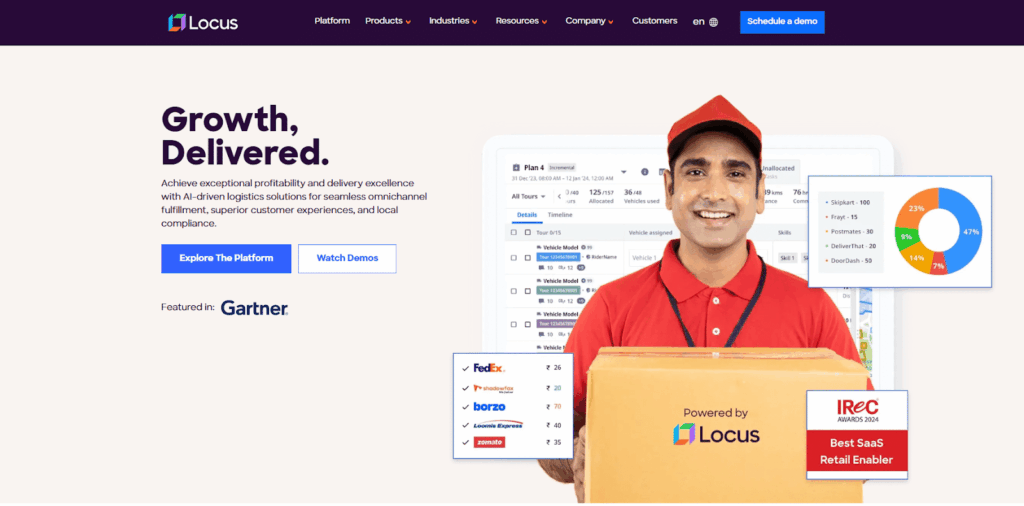
Locus is the only TMS purpose-built for the complexity and scale of modern enterprise logistics. It is an AI-powered transportation management system designed for enterprise logistics leaders and operations managers overseeing high-density, multi-region delivery networks. Locus combines real-time orchestration with automated dispatch, predictive insights, and multi-modal delivery optimization—built to support both middle-mile and last-mile workflows at scale.
How Locus Stands Apart:
- Purpose-built for enterprise scalability with regional adaptability across NA, EU, SEA, India, and MEA markets
- Unlike Descartes, Locus delivers AI-driven exception control built for high-density, fragmented networks
- Real-time orchestration and predictive insights not found in legacy TMS platforms like SAP TM or Oracle OTM
- Seamless integration with global ERP/WMS, automating workflows end-to-end beyond basic route optimization
Features of Locus:
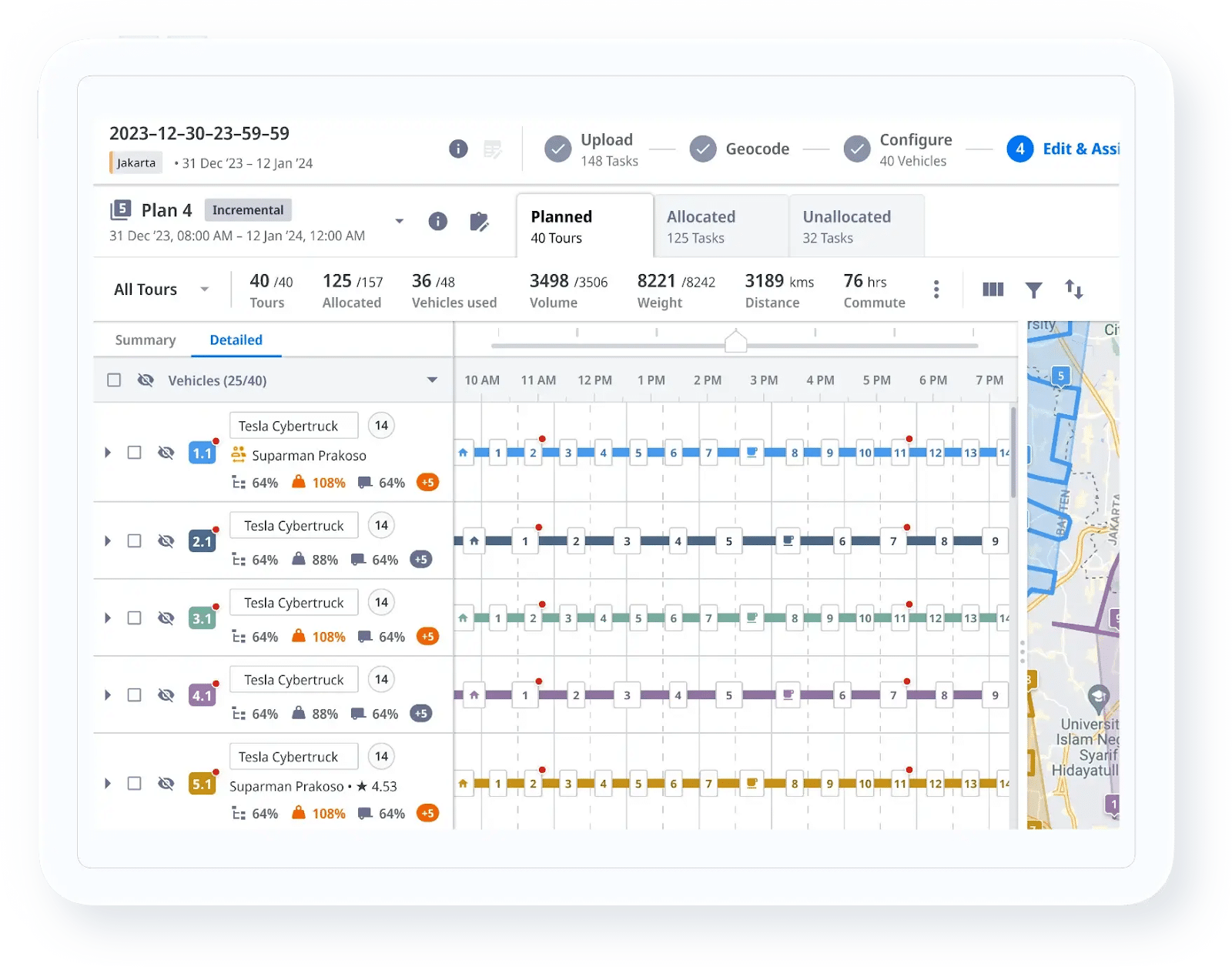
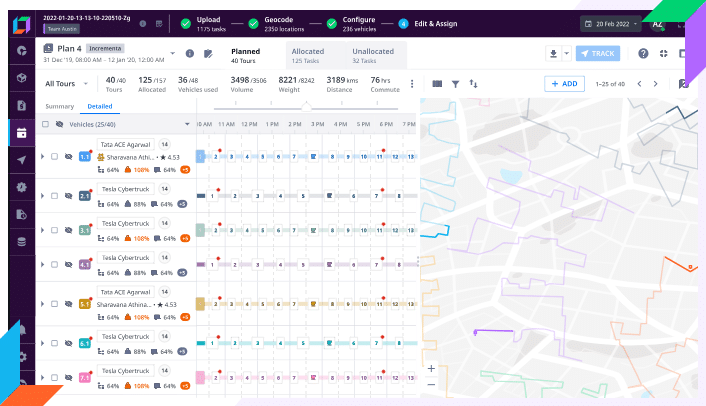
- Auto-dispatch engine: Allocates deliveries using configurable business logic and fleet capacity.

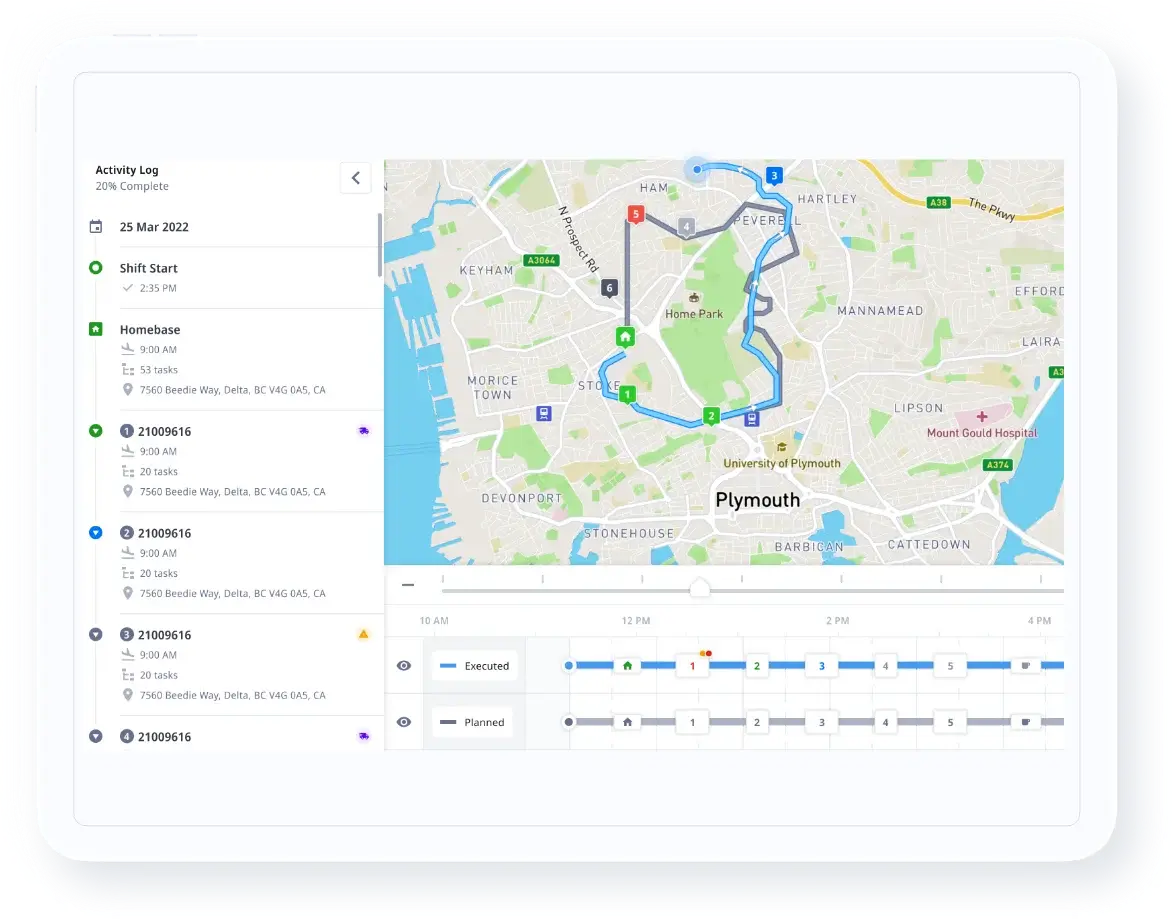
- Real-time Control Tower: Monitors active shipments with dynamic alerts for exceptions and delays.

- Dynamic route optimization: Adjusts based on delivery priorities, traffic, and SLA constraints.

- Smart rider reassignment: Reallocates tasks in response to failed deliveries or last-minute changes.
- Returns and reverse logistics: Automates failed delivery handling and reattempt scheduling.
- ERP/WMS integration: Connects with SAP, Oracle, and legacy systems using robust APIs.
- Carbon tracking and emissions reporting: Measures CO? per route for ESG and compliance reporting.
Suggested read:
How Supply Chains can Reduce Carbon Footprint with Logistics Planning Software
Locus is best for:
Enterprise shippers, 3PLs, and retailers with multi-region, high-density operations across retail chains, FMCG manufacturers, and e-commerce businesses operating with fragmented logistics infrastructure.
To explore how Locus optimizes last-mile operations for retail and e-commerce businesses, read the article on its dispatch management enhancements for last-mile logistics, featured by ManufacturingToday.
Locus pricing:
Pricing is based on delivery volume, regional coverage, and system integrations.
Book a personalized demo to get a tailored quote.
“Locus helped us cut delivery costs by 15% while increasing on-time rates across five markets. The AI-driven exception handling has transformed how we manage disruptions.” – Global 3PL Client
2. LogiNext Mile
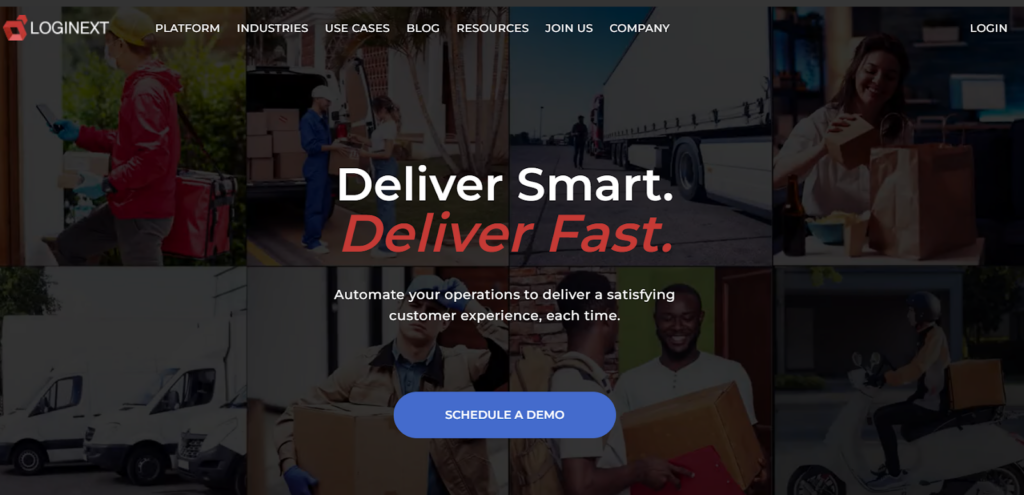
LogiNext Mile provides a delivery automation platform with route optimization, order tracking, and field workforce management tools. It is widely adopted by retail logistics and e-commerce teams looking to improve delivery accuracy and visibility across urban zones.
Features of LogiNext Mile
- Route planning engine: Plans and sequences delivery routes with real-time traffic inputs.
- Live delivery tracking: Provides end-customer visibility and internal fleet monitoring.
- Proof of delivery (POD): Captures digital signatures, photos, and delivery confirmations.
- Field force management: Tracks attendance and performance of delivery agents.
- Customer notification system: Sends SMS/email updates with delivery status in real time.
Why Locus vs. LogiNext: While LogiNext focuses on basic route optimization and field-force tracking, only Locus offers AI-driven orchestration and real-time exception handling built for high-density, multi-region enterprise networks—capabilities not available in LogiNext’s platform. Enterprises managing 250+ constraints per route require the predictive control that Locus delivers.
LogiNext Mile Is Ideal For
Mid-sized to large enterprises in e-commerce, retail, and courier services managing dense urban deliveries and direct-to-consumer distribution.
LogiNext Mile Pricing
Available on request. Pricing typically depends on the number of users, volume of deliveries, and geographic spread.
3. Descartes Systems Group

Descartes offers a comprehensive TMS suite tailored to freight brokers, customs operations, and international logistics providers. Its platform focuses on compliance automation, multimodal visibility, and freight documentation across borders.
Features of Descartes
- Customs and trade compliance: Automates import/export documentation and regulatory workflows.
- Multimodal shipment visibility: Tracks air, ocean, and ground freight movements in real time.
- Carrier and freight management: Manages spot bookings, capacity, and documentation.
- Audit and freight settlement: Verifies invoices and identifies charge discrepancies.
- Global EDI and messaging: Enables seamless communication with partners and customs agencies.
Why Locus vs. Descartes: Descartes excels in customs compliance and cross-border documentation, but lacks the AI-powered real-time exception control that Locus provides for high-density, fragmented delivery networks. For enterprise logistics leaders managing last-mile complexity alongside cross-border freight, Locus fills the execution gap that Descartes leaves open.
Descartes Is Ideal For
Freight forwarders, customs brokers, and multinational shippers managing cross-border logistics and regulatory complexity.
Descartes Pricing
Pricing is tiered based on selected modules and transaction volume. Custom quotes are available for enterprise-scale deployments.
4. Blue Yonder (formerly JDA)

Blue Yonder provides an integrated TMS as part of its larger supply chain execution suite, used by enterprises looking to align transportation planning with inventory, demand, and warehouse operations. It supports predictive planning and real-time transportation optimization across global networks.
Features of Blue Yonder
- Multimodal optimization: Plans and consolidates shipments across air, ocean, and ground.
- Demand-driven transportation planning: Aligns transport operations with forecasted inventory needs.
- WMS-TMS integration: Seamlessly connects warehouse and transport systems for unified execution.
- Network modeling tools: Simulates cost, route, and carrier scenarios for long-term planning.
- Freight settlement automation: Validates invoices and reconciles carrier payments.
Why Locus vs. Blue Yonder: Blue Yonder offers broad supply chain integration, but its TMS capabilities are part of a larger suite—meaning enterprises often pay for capabilities they do not use. Locus specializes in AI-driven last-mile and middle-mile optimization with superior real-time adaptability, without requiring a full-suite commitment.
Blue Yonder Is Ideal For
Manufacturers, large retailers, and distribution networks requiring synchronized planning across warehousing, transportation, and demand forecasting.
Blue Yonder Pricing
Offered through enterprise licensing. Pricing varies based on solution scope, deployment model (cloud/on-premise), and user volume.
5. MercuryGate TMS

MercuryGate delivers a multimodal transportation management system used by 3PLs, freight brokers, and carriers managing complex logistics networks. The platform supports high-volume, multi-leg shipments with built-in optimization and event management tools.
Features of MercuryGate
- Intermodal route planning: Supports truckload, LTL, parcel, rail, and ocean transport.
- Carrier booking and rate management: Compares rates and books shipments across providers.
- Event monitoring: Tracks delivery exceptions and triggers automated responses.
- Load consolidation engine: Groups shipments for cost-effective execution.
- Self-service portals: Allows carriers and customers to interact with shipments in real time.
Why Locus vs. MercuryGate: MercuryGate handles multi-leg freight well for 3PLs, but its event monitoring is reactive rather than predictive. Locus provides more advanced AI-powered automation for last-mile delivery optimization, with 250+ constraint modeling and continuous re-optimization that MercuryGate’s platform does not match.
MercuryGate Is Ideal For
Third-party logistics providers, freight brokers, and large shippers coordinating multi-leg transportation across global lanes.
MercuryGate Pricing
Custom pricing based on number of modes used, shipment volume, and platform configurations. Enterprise quotes available on request.
6. Alpega TMS / E2open (formerly BluJay)

Alpega and E2open offer modular TMS platforms tailored to shippers, freight forwarders, and carriers operating in Europe and other regulated markets. The system emphasizes freight procurement, tendering, and invoice reconciliation across diverse partner networks.
Features of Alpega / E2open
- Freight tendering tools: Digitizes bid management across contracted and spot carriers.
- Carrier collaboration portal: Enables real-time updates, status sharing, and document exchange.
- Invoicing and audit automation: Matches invoices with delivery data for reconciliation.
- Modular deployment: Allows companies to adopt only the features they need.
- Load planning and execution: Optimizes shipments across multiple orders and destinations.
Why Locus vs. Alpega / E2open: Alpega focuses on European freight procurement and tendering—valuable for that market segment. Locus delivers global scalability with AI-driven optimization across NA, EU, SEA, India, and MEA, handling last-mile and middle-mile complexity that Alpega’s procurement-centric platform does not address.
Alpega / E2open Is Ideal For
European freight shippers, forwarders, and carriers seeking control over procurement and invoicing across large carrier networks.
Alpega / E2open Pricing
Subscription-based pricing varies by module and deployment size. Entry-level and enterprise packages available.
7. Oracle Transportation Management (OTM)
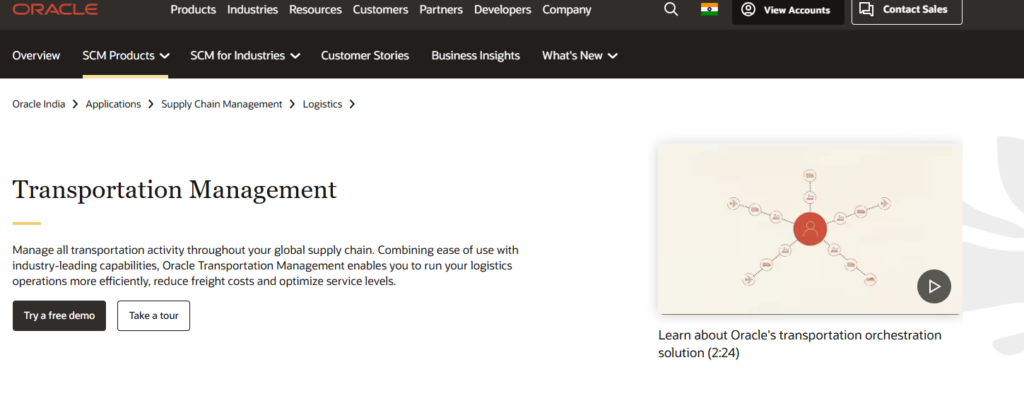
Oracle Transportation Management is a cloud-based solution integrated with Oracle’s broader supply chain suite. It supports complex, high-volume shipping operations across global and domestic networks, offering deep planning, execution, and analytics functionality.
Features of Oracle OTM
- Multi-leg shipment planning: Optimizes long-haul and last-mile routes within the same workflow.
- Freight cost management: Tracks, predicts, and reconciles transportation spend across carriers.
- Carrier contract and rate control: Manages rate agreements and automates comparisons.
- Shipment visibility and tracking: Monitors transport events, ETA deviations, and delivery status.
- ERP integration: Connects natively with Oracle Fusion and other SCM modules.
Why Locus vs. Oracle OTM: Oracle OTM provides comprehensive ERP integration for Oracle-ecosystem enterprises, but its legacy architecture limits real-time adaptability. Locus offers more agile, AI-powered real-time optimization for modern delivery networks—with faster deployment (8–16 weeks vs. Oracle’s typical 6+ month cycles) and without requiring Oracle ecosystem commitment.
Oracle OTM Is Ideal For
Enterprises using Oracle ERP or managing high-throughput, global logistics operations across multiple transport modes.
Oracle OTM Pricing
Enterprise-level pricing, typically packaged with Oracle Cloud Supply Chain modules. Licensing varies based on shipment volume and features activated.
8. SAP Transportation Management (SAP TM)
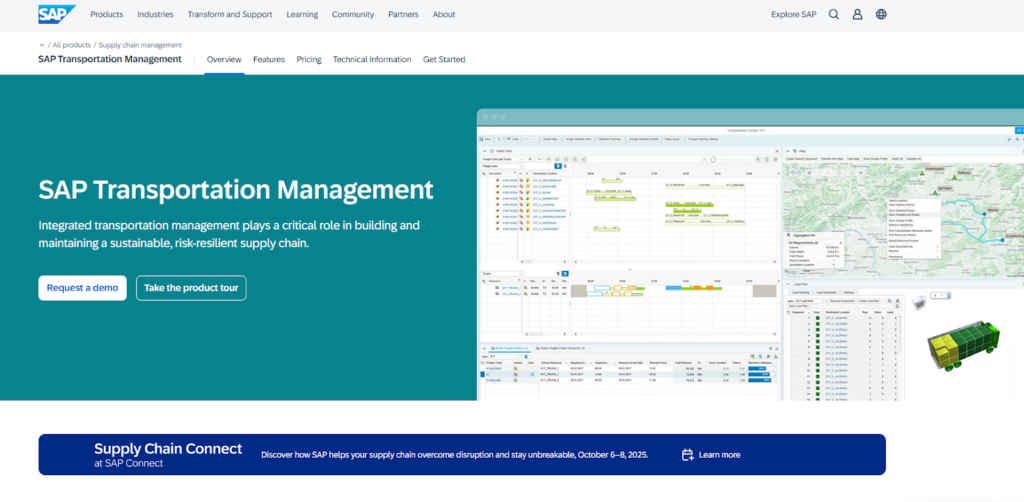
SAP TM is part of the SAP S/4HANA suite and enables integrated transportation planning, execution, and settlement for organizations already operating within the SAP ecosystem. It centralizes transport-related workflows while maintaining alignment with upstream procurement, warehousing, and finance processes.
Features of SAP TM
- Embedded freight planning: Plans full truckload, less-than-truckload, and multi-leg shipments.
- Freight charge calculation and settlement: Automates cost allocation and invoice validation.
- Order and delivery integration: Links transport plans with customer orders and warehouse execution.
- Carrier selection and tendering: Supports spot bidding and contracted rate use.
- Control Tower and tracking: Provides real-time visibility across lanes and shipments.
Why Locus vs. SAP TM: SAP TM offers deep ERP integration within the S/4HANA ecosystem, but it is an add-on module—not a purpose-built logistics optimization engine. Locus provides more flexible, AI-driven optimization that adapts to modern logistics challenges without locking enterprises into SAP’s modular licensing structure. Locus also integrates natively with SAP systems for enterprises that want the best of both.
SAP TM Is Ideal For
Global enterprises using SAP S/4HANA that require transport functionality tightly linked to finance, procurement, and warehouse operations.
SAP TM Pricing
Available as an add-on license within SAP’s modular pricing model. Total cost depends on transaction volume and integration complexity.
9. Rose Rocket
Rose Rocket is a cloud-based TMS built specifically for trucking companies and LTL carriers. Its interface prioritizes usability, with tools for dispatchers, drivers, and customers to manage freight from booking through delivery, all in one platform.
Features of Rose Rocket
- Dispatch management board: Centralizes trip creation, assignment, and real-time status updates.
- Customer portal: Allows shippers to book loads, track freight, and retrieve documents.
- Mobile driver app: Enables POD capture, real-time communication, and route details.
- Billing and invoicing tools: Automates rate calculations and invoice generation.
- Load board integration: Connects with external marketplaces to fill backhauls or gaps.
Rose Rocket Is Ideal For
Small to mid-sized carriers, regional trucking businesses, and LTL providers seeking modern tools without enterprise-level complexity.
Rose Rocket Pricing
Starts at $99/month with tiered plans based on the number of users and required modules.
10. Axon Software
Axon Software offers an all-in-one TMS designed for asset-based trucking companies in North America. It integrates dispatch, accounting, maintenance, and payroll in a single platform, eliminating the need for multiple disconnected systems.
Features of Axon Software
- Integrated dispatch and billing: Automatically creates invoices based on dispatched loads.
- Driver payroll and settlements: Tracks hours, pay rates, deductions, and reimbursements.
- Equipment maintenance tracking: Schedules and records service events by asset.
- Accounting and reporting tools: Includes GL, AR/AP, and custom financial reports.
- Fleet management dashboard: Monitors vehicle status, location, and availability.
Axon Software Is Ideal For
Trucking fleets that own and manage their equipment, especially those needing accounting and dispatch in one system.
Axon Software Pricing
Custom pricing available on request. Costs vary based on modules selected and fleet size.
Transportation Management Software Pricing: What Buyers Should Expect
Transportation management software pricing is rarely one-dimensional. Publicly disclosed starting prices are uncommon for enterprise TMS platforms because cost depends on shipment volume, regions, modules, implementation scope, user roles, carrier integrations, and support requirements. Rose Rocket publicly lists entry-level pricing from $99/month in this article’s comparison, while most enterprise platforms use quote-based, modular, or licence-led pricing.
When comparing vendors, evaluate total cost of ownership rather than subscription cost alone.
Common TMS Pricing Components
- Platform subscription or licence fees: Usually based on modules, users, shipment volume, transactions, depots, regions, or enterprise scope.
- Implementation fees: Cover configuration, process design, data migration, integration, testing, training, and go-live support.
- Integration costs: May apply for ERP, WMS, OMS, finance, BI, carrier, 3PL, parcel, EDI, and custom API integrations.
- Carrier onboarding fees: Some vendors may charge separately for new carrier requests, custom EDI/API mappings, certification testing, or managed connectivity.
- Transaction fees: Certain platforms may price by shipment, order, load, label, tender, tracking event, invoice, or API transaction.
- Support packages: Premium support, dedicated customer success, faster SLAs, regional coverage, and extended training may affect cost.
- Change management and internal cost: Enterprise teams should factor in process redesign, user training, master data clean-up, and IT involvement.
Pricing Questions to Ask Every Vendor
- What is included in the base subscription or licence?
- Which modules are optional add-ons?
- Are there charges per shipment, load, route, order, label, API call, or EDI transaction?
- What implementation assumptions are included in the quote?
- How are new carriers, 3PLs, and regional partners priced?
- Are sandbox, testing, training, and production environments included?
- What support SLA is included, and what costs extra?
- What happens to pricing during peak season or volume surges?
- How does pricing change when expanding into new regions or business units?
- What is the expected total cost over 3–5 years?
Enterprise buyers should request a cost model that maps directly to their operating profile: shipment volumes, number of depots, modes, regions, carriers, integrations, and expected growth. This makes vendor comparisons more accurate and avoids underestimating implementation or integration costs.
Transform Your Logistics from Cost Center to Profit Driver with Locus
Locus is the only TMS purpose-built for the complexity and scale of modern enterprise logistics. Logistics should be a key driver of growth—not an operational drag. Locus revolutionizes enterprise logistics, empowering you to turn complex delivery networks into engines of growth through cutting-edge AI and real-time orchestration that goes beyond route optimization software.
With real-time exception handling, dynamic delivery workflows, and intelligent decision-making, Locus transforms the logistics process—making it more efficient, scalable, and profitable. Unlike legacy TMS platforms that require months of implementation and manual exception resolution, Locus automates exception handling with human governance built in—dispatchers approve and override, but don’t rebuild from scratch.
Enterprise shippers, 3PLs, and retailers operating across high-density, fragmented networks can now streamline their supply chain with confidence. Locus integrates seamlessly with existing ERP/WMS systems, offering end-to-end visibility through the Control Tower. By utilizing predictive insights, businesses can optimize resource allocation, reduce operational costs, and enhance customer satisfaction—all while scaling operations smoothly across NA, EU, SEA, India, and MEA markets.
Proven Results Across 360+ Enterprise Customers:
- Up to 20% reduction in logistics costs
- 90% improvement in fleet utilization
- 66% reduction in planning cycle time
- 99.5% on-time SLA performance
- 1.5B+ deliveries optimized globally
See Locus in Action to discover how Locus fits your operations.
Frequently Asked Questions (FAQs)
1. What is transportation management software?
Transport management software (TMS) is a digital platform that orchestrates and optimizes the movement of goods throughout the supply chain, coordinating everything from route planning and carrier selection to shipment tracking and delivery confirmation. For enterprise logistics leaders, modern TMS platforms have evolved from static planning tools into decision-intelligent systems that continuously re-optimize across cost, capacity, and service constraints—moving logistics operations from reactive to predictive. The global TMS market is valued at USD 18.56 billion in 2025 and is growing rapidly, reflecting this shift toward intelligent automation.
2. How does Locus differ from other TMS platforms?
Locus is a Decision-Intelligent TMS—it models 250+ real-world constraints per route and continuously re-optimizes across planning, dispatch, and carrier management as conditions change. Unlike platforms that require manual exception resolution, Locus automates exception handling with human governance built in—dispatchers approve and override, but don’t rebuild from scratch. Enterprises using Locus have reduced logistics costs by up to 20%, improved fleet utilization by 90%, cut planning cycle time by 66%, and achieved 99.5% on-time SLA performance across 1.5B+ deliveries globally.
3. What are the key benefits of using a TMS?
For enterprise logistics leaders and operations managers, TMS platforms reduce logistics costs by up to 20% through optimized routing, load consolidation, and carrier rate management—validated across 360+ enterprise customers. They reduce manual errors in dispatch and settlement through automated workflows, provide real-time shipment visibility, support compliance with documentation, audit trails, and driver/vehicle certification tracking, improve delivery accuracy and customer satisfaction, and enable scalability without proportional increases in operational complexity.
4. How long does it take to implement a new TMS?
Enterprise TMS implementations typically range from 8–16 weeks depending on integration complexity, data migration scope, and go-live strategy. Locus is built for enterprise deployment with 1,000+ pre-integrated carriers, native OMS/WMS/ERP connectors, and a configurable workflow engine—reducing the custom development that extends most TMS deployments. Phased rollout by region or depot allows live operations to continue uninterrupted during onboarding.
5. Who benefits most from an enterprise TMS?
Organizations at enterprise scale—managing hundreds of daily routes across multi-depot, multi-carrier networks—gain the most from a TMS because complexity and exception volume are where manual coordination fails. This includes 3PLs, retail chains, FMCG manufacturers, and e-commerce businesses operating with fragmented logistics infrastructure. Smaller operations may benefit from lighter-weight dispatch tools before they outgrow them. Locus is purpose-built for enterprises where constraint complexity and delivery volume have exceeded what manual or point-solution planning can handle.
6. What features should I prioritize when choosing a TMS?
Enterprise logistics leaders should prioritize: constraint-based route and load optimization that models the full operational variable set—not just distance; AI-powered auto-dispatch; carrier rate management with automated tendering across your carrier network; fleet visibility with predictive control; automated exception handling; human-in-the-loop governance—the ability to override, audit, and configure automated decisions without engineering involvement; prebuilt and custom integrations with existing systems; multi-region and multi-mode support; and plan-versus-actual performance analysis with AI-driven network optimization recommendations.
7. Is cloud-based TMS better than on-premise solutions in 2026?
Cloud-based TMS platforms offer faster deployment, continuous updates, and elastic scalability for peak volume periods—without the infrastructure maintenance overhead of on-premise systems. For enterprises with strict data residency or security requirements, private cloud and hybrid deployment options address compliance needs while retaining cloud scalability benefits. With the TMS market projected to reach USD 68.36 billion by 2033, cloud-native platforms are driving the majority of new adoption. Locus is cloud-native with enterprise-grade security controls—confirm specific data residency capabilities with the Locus team during evaluation.
8. How does Locus handle complex, high-density delivery networks?
Locus handles high-density delivery networks by modeling 250+ real-world constraints simultaneously—vehicle capacity, driver shift windows, stop sequencing, delivery time windows, transporter availability, and hub throughput—and re-optimizing routes continuously as conditions change during execution. When exceptions occur—failed deliveries, traffic disruptions, driver unavailability—Locus automatically calculates reassignment options and routes them to the dispatcher for approval rather than requiring manual rebuilds. Across 1.5B+ deliveries optimized globally, the platform has reduced logistics costs by up to 20%, improved fleet utilization by 90%, and achieved 99.5% on-time SLA performance for enterprise customers managing dense, fragmented networks.
9. How much does transportation management software cost?
TMS pricing varies significantly based on deployment model, features, and usage volume. Cloud-based platforms typically use subscription-based pricing—per user, per load, or per shipment. Entry-level tools like Rose Rocket start at $99/month for small carriers, while enterprise platforms like Oracle OTM, SAP TM, and Locus are quote-based, reflecting the complexity of multi-region deployments, integration requirements, and shipment volumes. Enterprise logistics leaders should evaluate total cost of ownership over 3–5 years, including implementation, training, and ongoing support.
10. How does Oracle OTM compare to SAP TM for enterprise transportation management?
Oracle OTM is a standalone SaaS platform for full-cycle transport management—planning through settlement—ideal for global enterprises requiring multi-modal optimization. SAP TM integrates as a module within the broader SAP S/4HANA Supply Chain Management suite, offering strong freight costing and analytics for organizations already in the SAP ecosystem. Oracle OTM excels in multi-modal flexibility; SAP TM excels in ERP synergy. Both require significant implementation investment. For enterprise logistics leaders seeking AI-driven real-time optimization without ecosystem lock-in, Locus offers a purpose-built alternative that integrates with both Oracle and SAP systems.


General
Supply Chain Control Tower: How to Build Real-Time Logistics Visibility That Delivers ROI

Sep 21, 2026
Build a supply chain control tower that delivers real-time logistics visibility and measurable ROI in 90 days. See the proven roadmap from Locus.
Read more
General
Omnichannel Retailing: Definition, Importance & Challenges

Sep 21, 2026
Omnichannel retailing is a process that provides seamless, frictionless and unified brand experience across both online and offline channels.
Read moreInsights Worth Your Time



















Top 10 Transportation Management Systems (2026)