


Logistics Software
Top 10 Route Planning Software for Smarter Logistics in 2026

Key Takeaways
- Route planning software is broader than navigation. The strongest platforms combine route creation with optimisation, dispatch, driver execution, live tracking, proof of delivery, customer notifications, and analytics.
- The best choice depends on operational complexity. A solo driver, a 20-vehicle regional fleet, and a multi-depot enterprise network do not need the same tool depth.
- For SMBs, simplicity matters. Tools like Routific, Circuit for Teams, Upper, and RoadWarrior are easier to deploy when requirements are straightforward.
- For complex delivery networks, orchestration matters more than stop sequencing alone. Enterprises should evaluate dynamic re-optimisation, mixed-fleet support, exception workflows, allocation logic, and integration depth.
- Free tools have clear limits. MapQuest and RouteXL can help with basic multi-stop routing, but they lack the execution, visibility, and governance required for most scaling operations.
- Vendor demos should be scenario-led. Ask suppliers to model your own constraints: time windows, capacity, multiple depots, driver shifts, same-day changes, outsourced carriers, and proof-of-delivery workflows.
Quick Answers for Buyers
What is route planning software?
Route planning software creates efficient routes for deliveries, service visits, or other multi-stop trips by factoring in distance, traffic, time windows, vehicle capacity, driver availability, and operational constraints. Advanced platforms also support dispatch, live GPS tracking, dynamic rerouting, proof of delivery, customer ETA notifications, and operational analytics.
What does route planning software do?
It helps operations teams import orders or stops, geocode destinations, assign work to drivers or vehicles, sequence stops, estimate travel time, dispatch routes, track execution, and adjust plans when conditions change. In practice, the software connects planning decisions with day-of-operation control.
Best route planning software in 2026: quick answer
For high-volume enterprise operations with multiple depots, complex constraints, and live execution needs, Locus is the strongest fit in this list. For smaller delivery teams prioritising ease of use, Routific, Circuit for Teams, and Upper are simpler starting points. For very basic or budget-led routing, MapQuest and RouteXL remain entry-level options.
Route planning vs route optimisation vs fleet dispatch
- Route planning = building a workable route and stop sequence before dispatch.
- Route optimisation = algorithmically finding the most efficient route while respecting constraints such as time windows, capacity, shift rules, territories, or service duration.
- Fleet dispatch = assigning work to the right driver or vehicle and managing execution through the day.
- Delivery management / orchestration = combining planning, optimisation, dispatch, tracking, proof of delivery, customer communication, and exception handling in one operational workflow.
Editorial Methodology
How this guide was built: This buyer’s guide was prepared by the Locus editorial team using the original article baseline, public product positioning, linked first-party resources, and category-level market sources. It is designed to help B2B buyers compare route planning software by operational fit rather than by marketing claims alone.
What we evaluated:
- business size fit;
- multi-stop and multi-driver support;
- multi-depot capability;
- time windows and capacity constraints;
- dispatch and execution workflows;
- dynamic re-optimisation potential;
- driver mobile app and proof of delivery;
- customer notifications and ETA visibility;
- integration and API readiness;
- analytics, control tower visibility, and exception handling;
- suitability for retail, e-commerce, 3PL, courier, field service, and mixed-fleet operations.
Important disclosure: Locus is included in this comparison. Where the article discusses Locus capabilities, those are first-party claims and product positioning statements. Where the article discusses competitor fit, those assessments are editorial judgements based on publicly visible information in the baseline article and linked supporting materials. We have not presented this page as an independent lab test of every platform.
Why there are no cross-platform public ratings in the master table: public review scores change over time and are often not directly comparable across platforms, geographies, billing tiers, and review volumes. Buyers should verify current third-party reviews, pricing, and feature packaging directly before shortlisting.
Streamline Your Route Planning Process
Daily route planning can quickly become overwhelming, especially if you’re managing delivery routes using spreadsheets, manual methods, or basic mapping tools. These outdated processes frustrate your drivers, reduce operational efficiency, and ultimately impact your bottom line and customer satisfaction. Thankfully, specialized delivery routing tools and route optimization software are available to streamline your logistics, eliminate driver frustrations, and significantly enhance your overall efficiency.
Effective delivery route planning isn’t just about reducing mileage, it’s a strategic capability that enables companies to scale operations while improving reliability. This comprehensive guide explores the top route planning software of 2025, providing detailed insights into their key features, route quality, user ratings, and pricing to help you select the ideal solution tailored to your business needs.
Top 10 Route Planning Software Solutions: Overview
Here’s a quick comparison of the top route planning software solutions in 2025. This table includes both free and paid tools, with a snapshot of their core features, pricing, and average user ratings to help you make an informed decision at a glance.
| Software | Best For | Key Features | Starting Price | Free Tier | User Rating |
|---|---|---|---|---|---|
| Locus | Overall route optimization | Dispatcher tools, real-time tracking | $150/month (1000+ orders) | Yes (100 orders) | 4.9 |
| Routific | Small to medium businesses | Drag-and-drop, auto notifications | $150/month | Yes | 4.8 |
| Circuit for Teams | Simplicity for small teams | Multi-stop planning, basic UI | $100/month | No | 4.7 |
| OptimoRoute | Advanced customization | Real-time tracking, driver profiles | $35/vehicle/month | Limited trial | 4.6 |
| Route4Me | Route flexibility and plugins | Add-on marketplace, dynamic routing | $400/month | 7-day trial | 4.4 |
| Onfleet | Enterprise-level tools | Barcode scanning, live chat, auto-assign | $599/month | No | 4.7 |
| Upper | Newer tool, ease of use | Up to 500 addresses, clean UI | $120/month | No | 4.6 |
| RoadWarrior | Solo drivers, FedEx integration | Mobile-first, basic team features | $14.99/month | No | 4.5 |
| MapQuest | Free routing with limits | Simple optimization, printable routes | Free | Yes (26 stops) | Not listed |
| RouteXL | Budget solo routing | Free 20 stops, old-school interface | €35/month | Yes (20 stops) | 3.5 |
1. Locus – Best Overall Solution
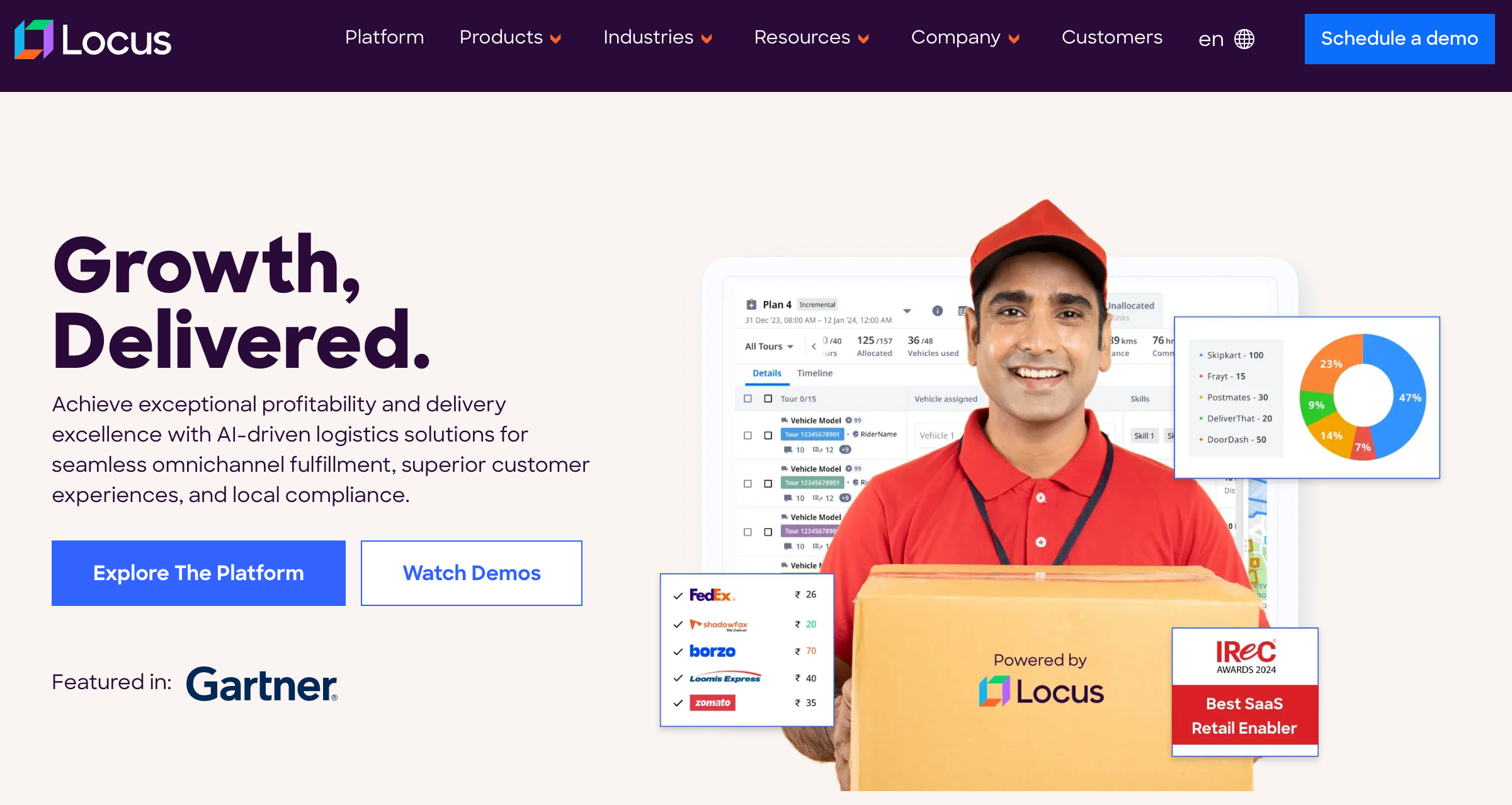
Locus transforms the complexities of route optimization into a streamlined, efficient process, delivering exceptional fleet management and multi stop route planner optimized routing software routes. It is purpose-built for enterprises managing complex, high-volume deliveries across geographies and channels. Its strength lies in advanced route optimization, real-time tracking, and smart automation that scales with business needs.
As comprehensive route planning software, Locus goes beyond basic routing to deliver enterprise-grade logistics intelligence.
Locus’s edge comes from its deep understanding of what makes route planning effective at scale. This strategy guide outlines exactly how its intelligent multi stop route planning capabilities go beyond surface-level efficiency gains.
- Interface & Usability:
Locus combines enterprise-grade capability with an interface that doesn’t overwhelm. Logistics route planner benefit from a powerful command center with granular control over routing logic, while daily users—such as dispatchers or fleet managers—see only what’s relevant to their role. The platform adapts to different personas across the supply chain, offering personalized dashboards, visual workflows, and intuitive map-based planning. For frontline teams, mobile apps are streamlined for fast, context-aware actions. The system’s modular design ensures businesses can scale complexity without sacrificing ease of use. - Performance:
Locus is built on a foundation of proprietary AI and optimization science that goes far beyond static routing. It dynamically accounts for real-time variables like traffic, delivery urgency, and driver availability while planning. The result is highly efficient routes that meet SLAs consistently and adapt in the face of real-world volatility. Customers often report double-digit reductions in delivery costs and significant boosts in on-time performance, thanks to Locus’s ability to balance constraints, forecast accurately, and self-correct when needed. - Customization:
Where most platforms offer basic settings, Locus provides deep operational configurability. Whether you’re setting vehicle-wise capacity limits, handling specialized delivery types (e.g., cold chain, reverse logistics), or enforcing business rules by customer, region, or product, the platform adapts. Users can define custom constraints, tag locations with specific handling instructions, and even apply zoning logic that shifts based on volume or demand. This means logistics teams don’t have to bend their processes to fit the software—it flexes to fit them. - User Feedback:
Customers consistently point to Locus not just as a tool, but as a strategic capability. Many note that it’s helped evolve their logistics from a cost center to a competitive advantage. The feedback highlights the platform’s precision, constant innovation, and the support teams behind it. Enterprises appreciate that Locus doesn’t just react to delivery needs—it anticipates them, automates intelligently, and empowers teams to run high-performance operations at scale. It’s particularly praised for turning fragmented workflows into coordinated, intelligent systems.
If you need more than just route planning—such as orchestration across dispatch, reconciliation, and customer experience—Locus provides the intelligence and infrastructure to turn logistics into a growth engine.
2. Routific – Designed for Simplicity and Speed
Routific strikes a balance between simplicity and performance. This route planning software excels at transforming complex delivery schedules into streamlined digital workflows for growing businesses. Built for small to medium-sized delivery businesses, It transforms manual scheduling tasks into a streamlined digital process.
While it’s great for small teams, those in high-volume regions like Southeast Asia may require more sophisticated optimization. Learn how understanding traffic patterns and route optimization can cut fuel costs and boost last-mile efficiency in Southeast Asia.
- Interface & Usability:
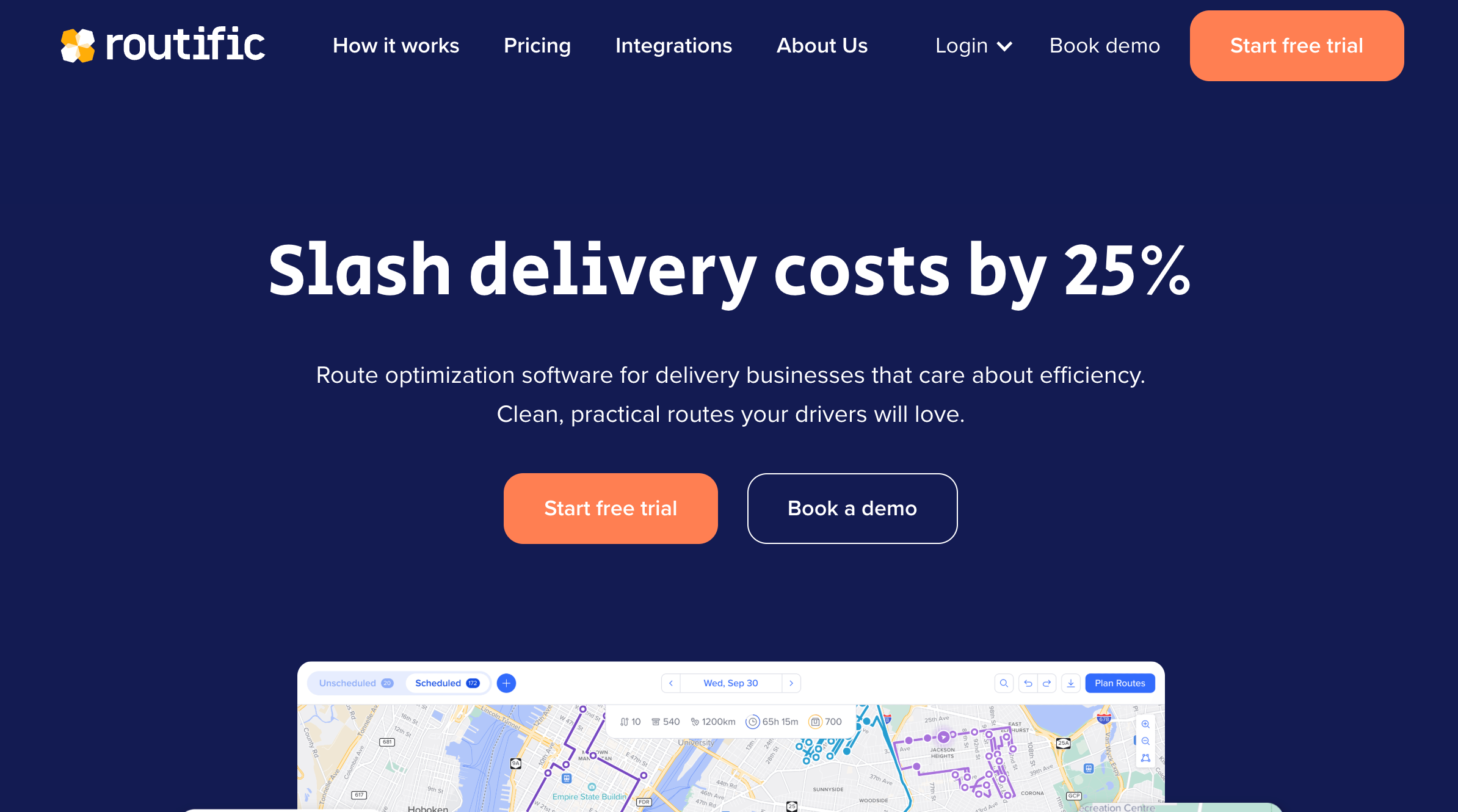
Routific is designed with accessibility in mind. Its clean, uncluttered dashboard and intuitive layout make it easy for new users to get started, even without a background in logistics or IT. The drag-and-drop interface is particularly useful when plans change at the last minute—users can manually adjust stops and instantly see the impact on routes. This level of control is well-suited for small teams who prefer a hands-on approach to planning, without having to navigate complex menus or configurations. - Performance:
For small to mid-sized delivery operations, Routific offers consistent and dependable performance. Its routing engine handles standard constraints well and produces reasonably efficient routes under typical workloads. That said, when route density increases or when more sophisticated constraints are involved (e.g., fleet balancing, delivery windows across zones), its optimization engine starts to show limitations. Benchmarks suggest routes are often 10–15% longer compared to results from platforms built for enterprise-scale complexity. - Communication:
One of Routific’s standout features is its built-in customer notification system. Recipients receive automated messages with delivery ETAs, helping reduce failed deliveries and improving the overall customer experience. However, branding and customization options are fairly basic. Businesses looking to offer more personalized or on-brand post-purchase communication may find the system somewhat restrictive compared to more configurable alternatives. - Analytics:
Routific provides essential analytics such as route duration, number of stops, and driver performance at a high level. These insights are helpful for day-to-day monitoring but fall short for teams seeking to drive continuous improvement through data. There are no advanced filters, trend analysis, or deep-dive capabilities, which limits the platform’s utility for strategic logistics decision-making.
Overall, Routific is excellent for teams focused on simplicity and quick deployment, but it may not scale well for businesses needing more than basic logistics route optimization with complex needs.
3. Circuit for Teams – Ease of Use, With Limitations
Circuit for Teams targets small businesses or startups looking for a quick, functional solution. It’s best known for its mobile route optimization app, which caters well to on demand courier businesses, and lightweight browser interface.
Its simplicity is helpful, but it lacks the deeper operational controls outlined in this 8-point checklist for selecting the right route planning app and optimization software.
- Interface & Usability:
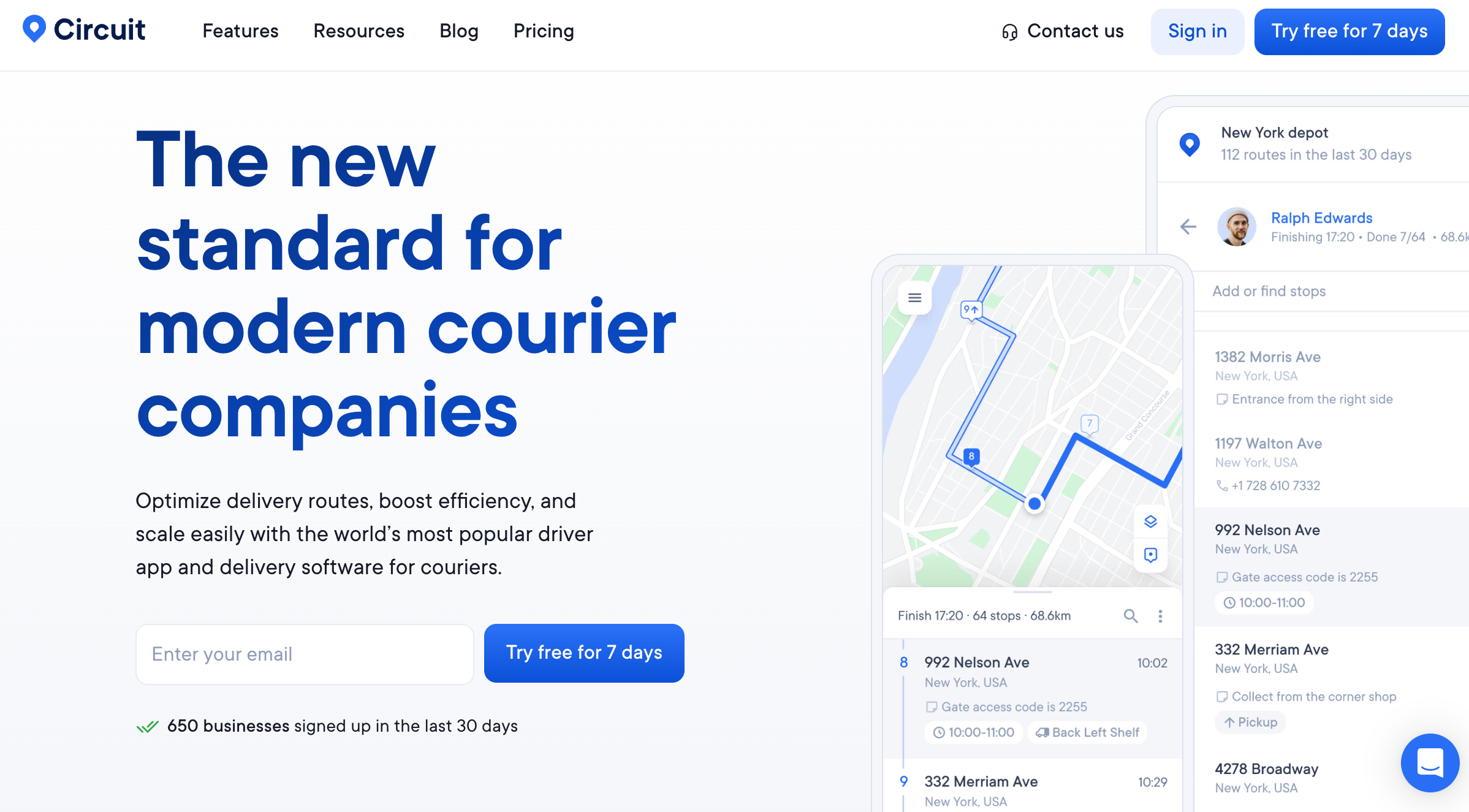
Circuit is known for its straightforward setup and intuitive user experience. New users can get started with minimal onboarding, which makes it especially appealing for small teams or businesses without a dedicated logistics coordinator. The mobile app is lightweight, and the browser version mirrors that ease, allowing teams to quickly plug in addresses and start planning without much technical know-how. However, this simplicity also means there are fewer operational layers for those who might want more control or customization as they scale. As mobile-first route planning software, Circuit prioritizes ease of deployment over advanced features. - Performance:
While Circuit can quickly generate routes, its optimization engine has limitations. Businesses often report overlapping or inefficient routes, particularly when handling multiple drivers or stops. There are no built-in tools to evaluate routes based on cumulative distance or time before dispatching, which can result in longer delivery windows and more fuel usage. The inability to adjust or fine-tune routes pre-dispatch means that any real-world variables—like traffic hotspots or delivery urgency—may not be factored in. - Customization:
The platform offers only a few basic toggles for route preferences, which might work for very small teams with predictable patterns. However, for businesses that deal with varied delivery types, regional restrictions, or customer-specific instructions, Circuit doesn’t offer the level of configurability needed to tailor routes to those nuances. There’s no support for constraints like vehicle capacity, delivery time windows, or priority orders, making it difficult to enforce operational rules at scale. - User Feedback:
Most users point to Circuit’s clean interface and speed as its biggest assets. It’s often described as a great tool to get started with route planning. That said, feedback also reveals a recurring theme: the platform’s lack of depth becomes evident as delivery needs become more complex. Users seeking more granular control or enterprise-grade insights often find themselves needing to upgrade or migrate to more robust solutions.
It’s a good stepping stone for teams starting out, but those with growing delivery complexity may find themselves outgrowing Circuit quickly.
4. OptimoRoute – Deep Control and Flexibility
OptimoRoute caters to logistics-heavy companies that require advanced customization options for drivers and commercial truck route planning with multiple vehicles and delivery windows.
If you’re a 3PL or fleet operator looking for highly configurable routing, route optimization tailored for third-party logistics providers may provide better guidance on solution selection.
- Customization:
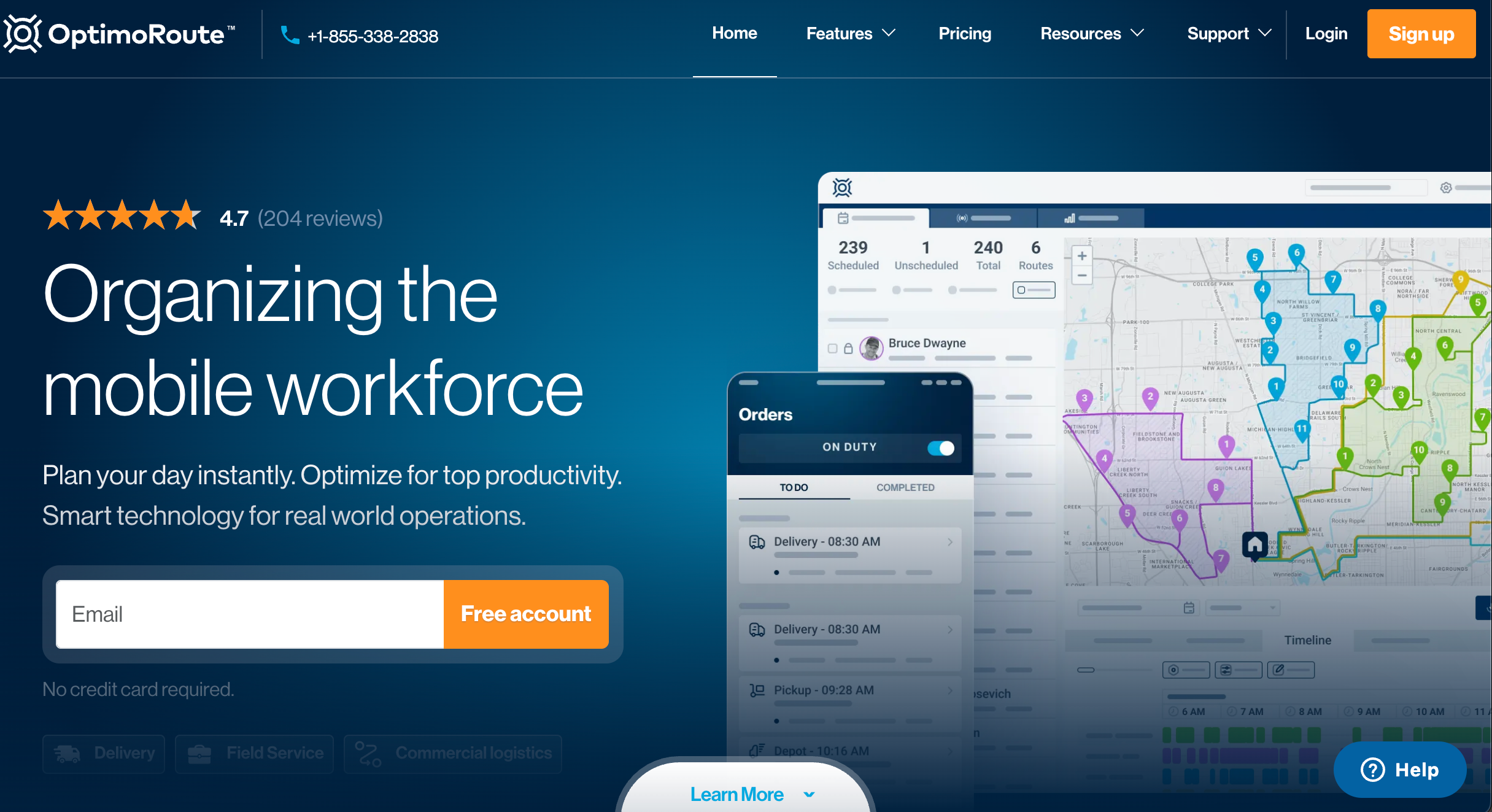
OptimoRoute stands out for its detailed configuration options, which cater well to field service teams and specialized delivery models. Users can define shift times, assign skill-based tasks, apply vehicle constraints like volume or payload weight, and even draw geofences to restrict or guide where drivers operate. This level of granularity allows businesses to align routing with real-world constraints, whether it’s handling fragile goods, managing technician schedules, or ensuring compliance with customer SLAs. It’s particularly helpful in industries like healthcare, maintenance, or heavy goods delivery where a one-size-fits-all route won’t work. This route planning software stands out by offering granular control over driver assignments, vehicle constraints, and delivery windows. - Performance:
The platform’s routing engine is quick and responsive, even when generating multi-driver, multi-stop & multi-drop route planning. However, while it gets the job done computationally, the visual output can be dense and difficult to interpret at a glance. Routes may appear tangled or overlapping, especially in high-density areas, which can make dispatching and manual edits challenging. Additionally, there’s no automatic logic to prevent drivers from crossing paths or doubling back into neighboring zones, which could lead to inefficiencies if not caught manually. - Complexity:
OptimoRoute is packed with features, but that depth can come at a cost. New users often report a steep onboarding curve, particularly when setting up multiple constraints or fine-tuning schedules. The interface offers a lot of toggles, settings, and rules—great for experienced planners, but potentially overwhelming for smaller teams or businesses new to route optimization. Without guided workflows or simpler onboarding modes, some users may find themselves needing more time or support than expected. - Cost Efficiency:
From a pricing standpoint, OptimoRoute is competitive given its feature set. Businesses get access to a wide range of professional-grade tools without the high upfront costs of enterprise software. However, the total cost of adoption should include not just subscription fees but also the internal time spent on learning and setup. For teams with the capacity to invest that time, the return on optimization can be significant. For leaner operations, the platform may feel like more than they bargained for.
OptimoRoute is ideal for businesses that want to fine-tune and plan multiple routes every part of their routing process—if they’re ready to invest the time and effort upfront.
5. Route4Me – Highly Modular, But Requires Tinkering
Route4Me offers extensive best free route planner modularity through its marketplace of add-ons, allowing businesses to tailor the platform to unique use cases, unlike many free route planners.
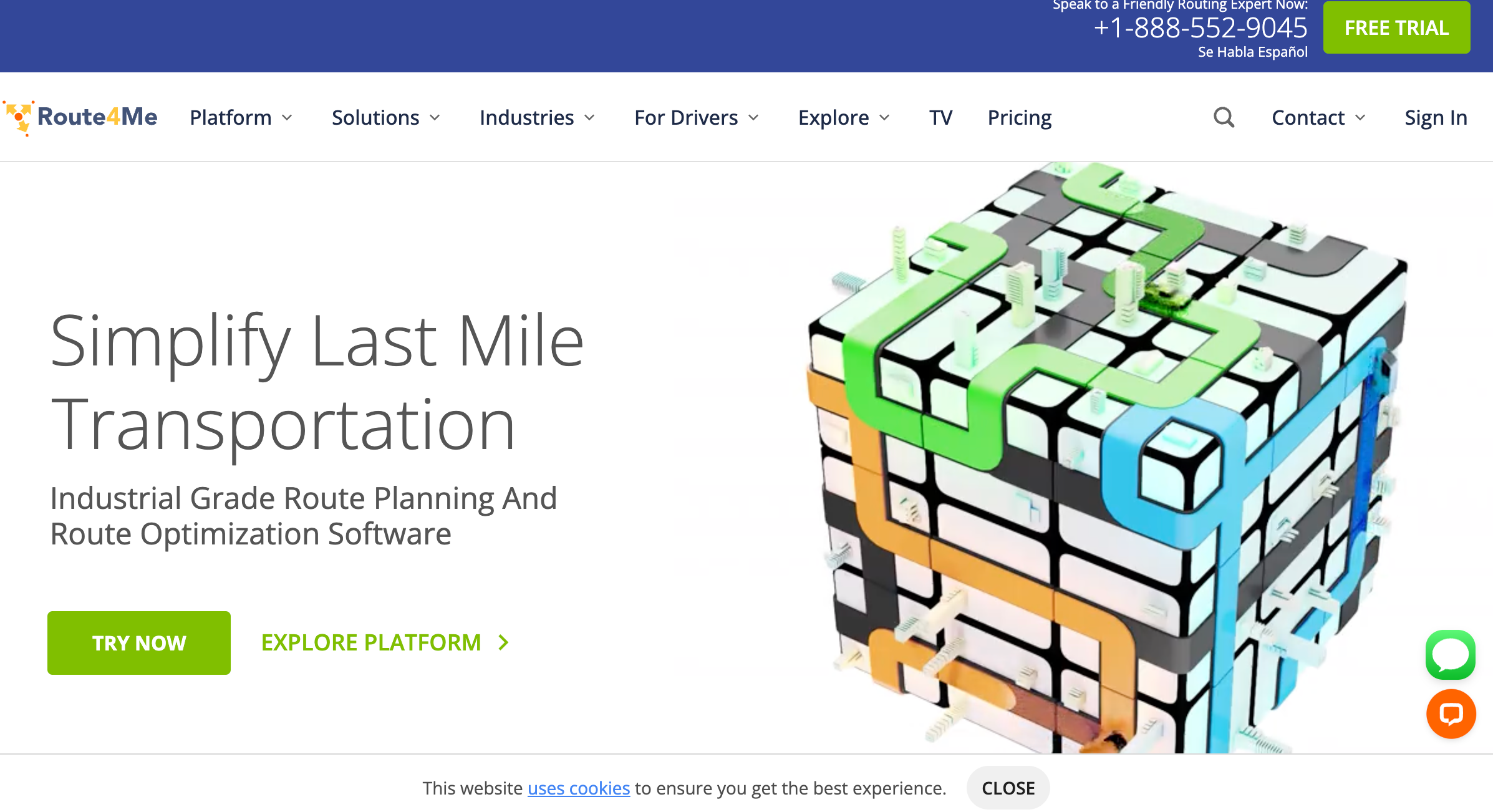
- Modularity: It’s the most customizable platform when it comes to plugins—supporting features like left-turn avoidance, territory restrictions, and curbside pickup. As highly configurable route planning software, Route4Me’s strength lies in its extensive add-on marketplace and customization options.
- Efficiency: Routes can be efficient in theory, but are often unrealistic in practice. Travel times are underestimated, causing delivery delays.
- Routing Logic: The system heavily optimizes for fewer vehicles rather than delivery practicality. This can result in burnout for active drivers and idle time for others.
- Maintenance: Due to the modular nature, businesses must actively monitor and tweak configurations to keep routes relevant.
Route4Me is flexible but demands operational vigilance. It’s best suited for tech-savvy teams willing to tweak the platform regularly.
6. Onfleet – Powerful, Enterprise-Focused Logistics Tool
Onfleet positions itself as a delivery management platform for high-volume businesses. It’s particularly strong in dispatch routes features that support last-mile delivery operations.
Enterprise users focused on grocery delivery and fast turnaround windows may find more targeted advice in this guide to last-mile route optimization for online grocers.
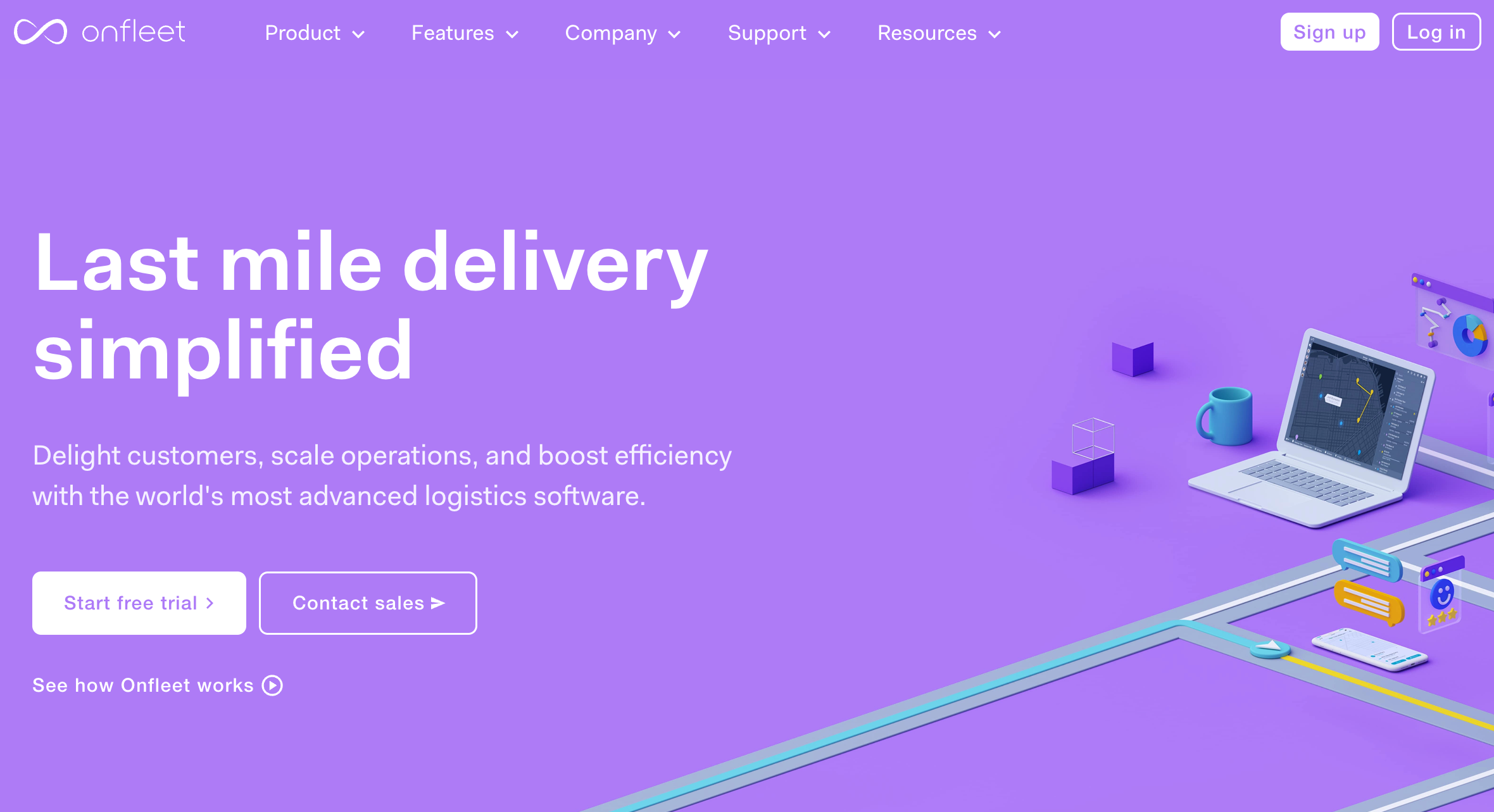
- Feature Depth: Barcode scanning, customer notifications, delivery proof, and live chat with drivers are all standard. These make it appealing to enterprises and courier services. Positioning itself as enterprise-grade route planning software, Onfleet combines routing with comprehensive delivery management capabilities.
- Visualization: One of the platform’s biggest shortcomings is its route interface. It doesn’t show clear routes, just destination pins, which makes dispatch planning less transparent.
- Automation: Automatic driver assignments based on proximity and availability make Onfleet ideal for on-demand delivery services.
- Analytics: Strong dashboarding and driver performance metrics, including delivery time accuracy and delay tracking.
For teams that care more about performance metrics and less about route visuals, Onfleet offers unmatched control, albeit at a premium.
7. Upper – Emerging Tool with a Clean Interface
Upper is one of the newer entrants in the route planning space, offering an intuitive route planner and streamlined experience. It appeals to small teams that want something easy to use without extensive onboarding.
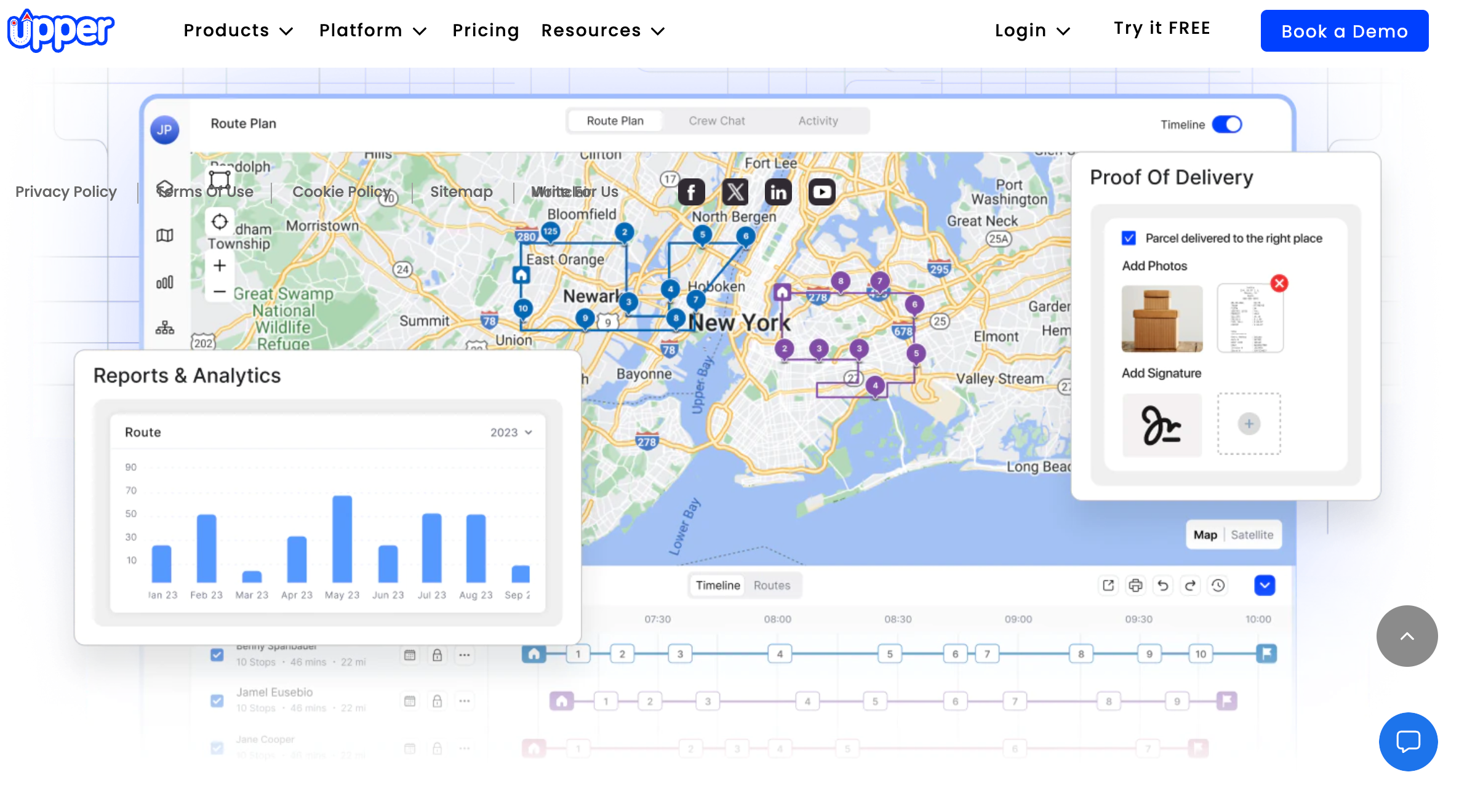
- User Experience: The user interface is modern and uncluttered, with a setup process that is straightforward. It’s beginner-friendly and suitable for those moving away from manual planning tools. As newer route planning software, Upper focuses on delivering a clean, modern interface that appeals to teams transitioning from manual processes.
- Performance: Upper handles up to 500 addresses efficiently but struggles slightly with dense route clustering, often producing minor overlaps. Route sequencing is generally reliable but not as refined as more mature platforms.
- Feature Set: It lacks some of the more sophisticated tools like real-time traffic-based rerouting or barcode scanning. There is no dispatch integration with mobile apps.
- Support and Scalability: While support is responsive, Upper lacks enterprise-grade features. It is best suited for local delivery businesses or small teams.
Upper works well as a low-friction entry point for businesses that need a dependable, cleanly designed route planner but don’t yet require full-scale logistics support.
8. RoadWarrior – A Solo Driver’s Companion
RoadWarrior began as a mobile-first app designed for individual drivers and has since expanded to support small teams through its “Teams” plan.
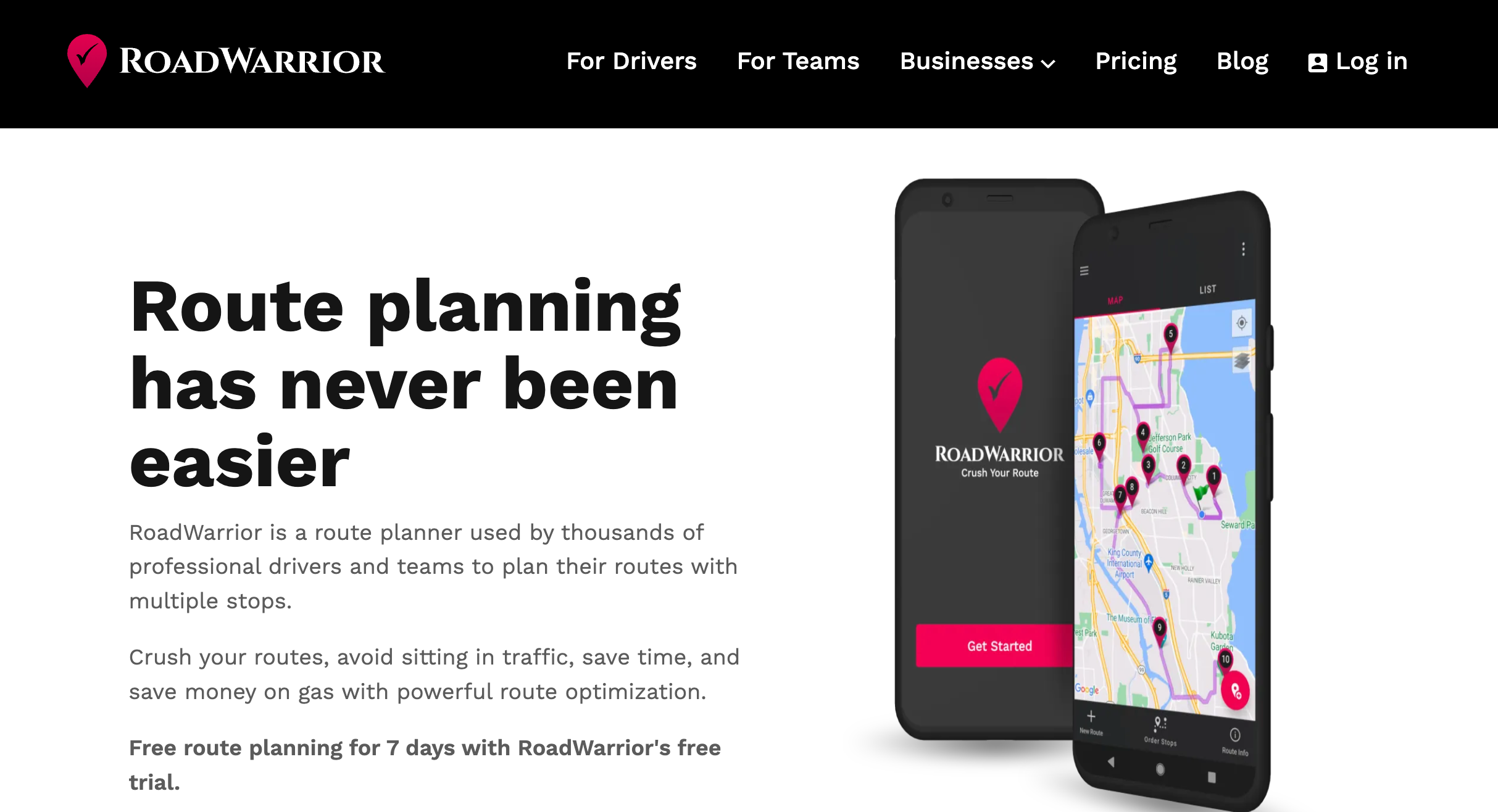
- Interface & Accessibility: The app is praised for being intuitive and designed with drivers in mind. Mobile usage is seamless, especially for delivery professionals already familiar with apps like Waze or Google Maps. Originally designed as mobile route planning software for individual drivers, RoadWarrior has expanded to support small team operations.
- Route Management: It supports uploading manifests (like FedEx) directly into the system, which is a major plus for courier-style drivers. However, its team functionality is basic and not intended for complex dispatch management.
- Customization: Route constraints are minimal, and the lack of visual oversight for dispatchers makes it a suboptimal fit for businesses managing fleets.
- Use Case Fit: Ideal for freelancers, gig workers, and small businesses with one or two vehicles, but not for growing operations.
RoadWarrior is a great value tool for independent drivers who want simple, reliable optimization without needing a broader logistics infrastructure.
9. MapQuest – The Free Option with Limitations
MapQuest offers completely free route planning software with basic functionality that can help small businesses reduce fuel and operational costs.
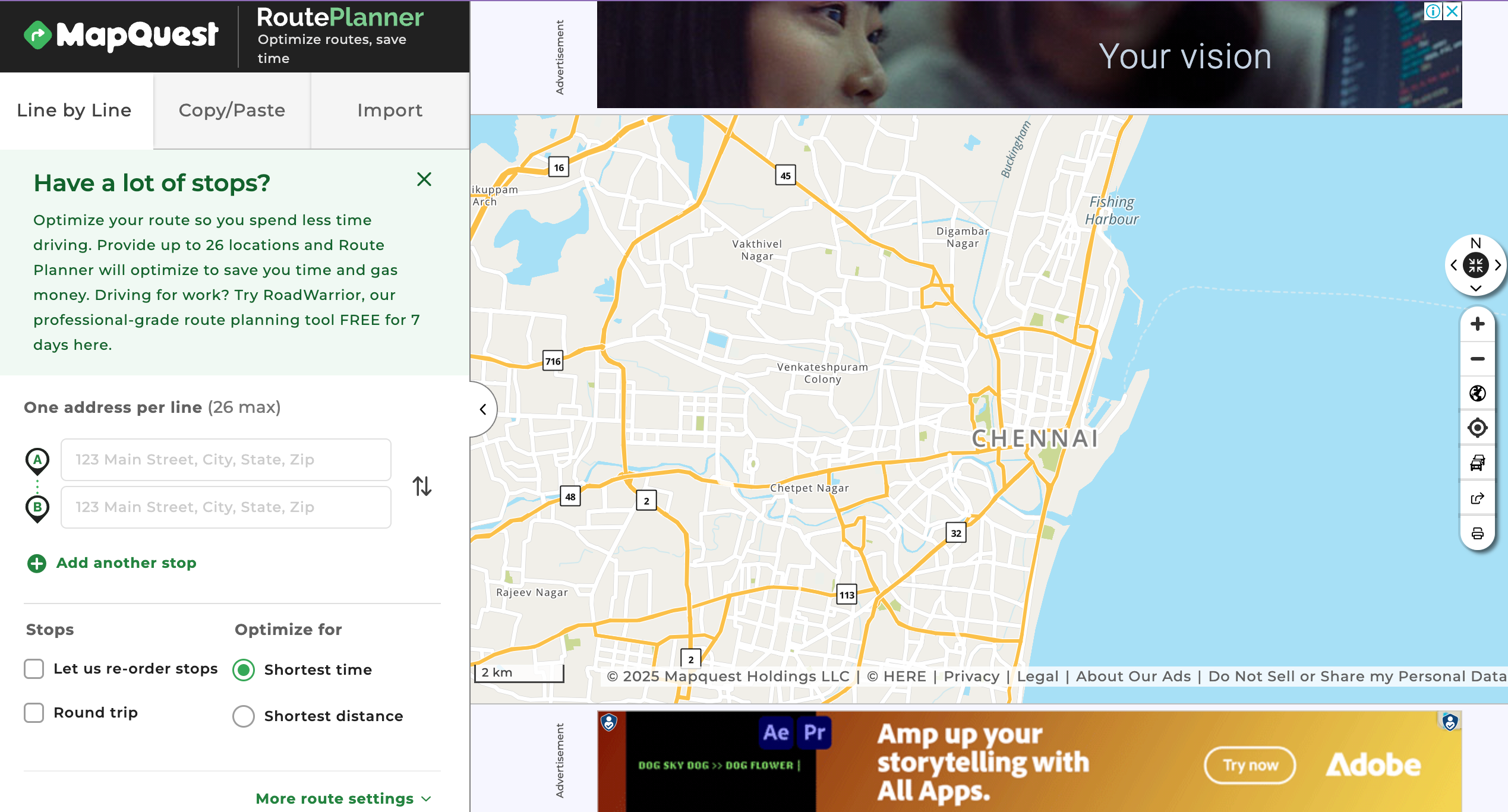
- Route Planning: Users can plan up to 26 stops per route, which is sufficient for basic delivery needs. However, there’s no optimization logic beyond basic sequencing.
- Output Options: Routes can be printed or shared via SMS/email, but reliability is hit or miss. In testing, some delivery confirmation emails failed to be sent.
- Feature Gaps: Lacks live tracking, ETA estimation, delivery proof, or any form of analytics. There’s no driver app integration or dynamic rerouting.
- Best For: Micro-businesses, volunteers, or non-profits who need a completely free tool for very simple routing.
MapQuest can be a useful fallback when budget is the only priority, but most businesses will quickly run into its limitations.
10. RouteXL – Old-School but Serviceable
RouteXL is a browser-based tool with a loyal niche audience, especially in Europe. It supports up to 20 stops for free and up to 100 with a paid plan.
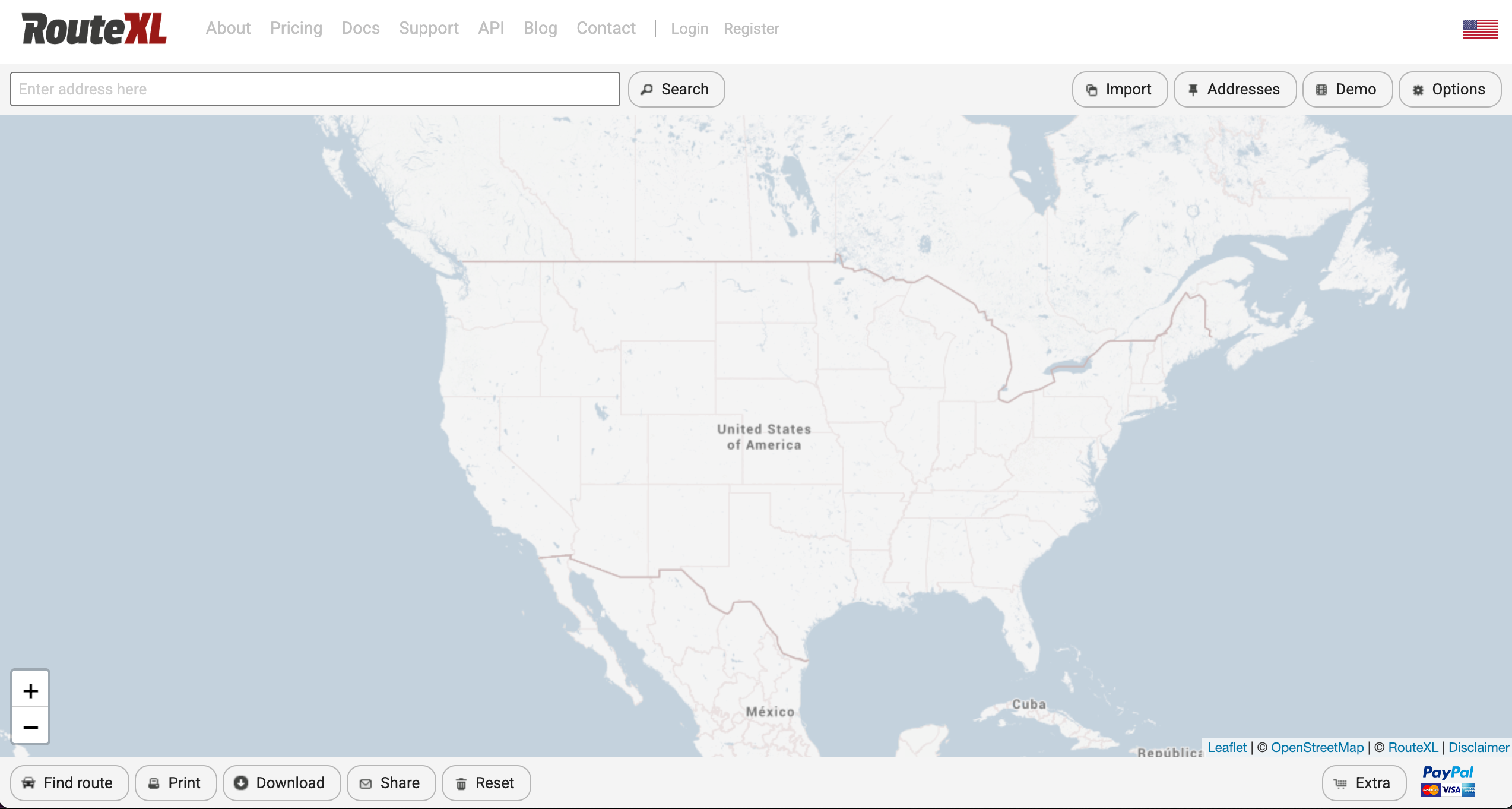
- User Interface: The interface is quite dated and less intuitive than modern SaaS platforms. It can feel clunky, especially for users accustomed to modern UX patterns.
- Optimization: Optimizes one route at a time. There’s no multi-driver or multi-depot functionality, which limits scalability. As budget-friendly route planning software, RouteXL focuses on simple, single-route optimization without advanced fleet management features.
- Use Case Fit: Perfect for one-person delivery services with relatively static and short-distance stops. It’s also popular in academic or research contexts where simple batch routing is needed.
- Pricing & Access: The €35/month plan is affordable, but you’re paying for simplicity—not features.
RouteXL is a niche but functional tool for basic use cases. Its strength lies in cost-effectiveness, but businesses looking for unlimited route optimization, multiple routes, real-time operations or mobile driver engagement should look elsewhere.
Benefits of Route Planning Software
The biggest value of route planning software is not simply shorter routes. The real gains come from turning fragmented planning into a repeatable operating process.
Operational benefits buyers typically look for
- Lower cost-to-serve: Better stop sequencing, fewer empty miles, and stronger load balancing can help reduce unnecessary travel.
- Improved on-time delivery and SLA adherence: Time-window aware planning and live replanning support more reliable execution.
- Reduced dispatcher workload: Automation helps teams move away from spreadsheets, manual maps, and repeated phone calls.
- Higher fleet and driver utilisation: Better assignment logic can improve stops per driver-hour and reduce avoidable idle time.
- More accurate ETAs and fewer “where is my order?” contacts: Live tracking and customer notifications close the gap between plan and execution.
- Better governance across regions: Role-based control, standardised logic, and integrations help larger businesses scale consistently.
The market growth behind these tools reinforces their operational relevance. As noted earlier, Research and Markets projects the route optimization software market will increase from $8.79 billion in 2025 to $10.05 billion in 2026, while The Business Research Company forecasts the market will reach $17.16 billion by 2030.
Key Features to Prioritise in 2026
When comparing route planning software, look beyond the route line on a map. The most useful platforms usually include the following capabilities:
1. Multi-stop optimisation
The system should build efficient routes across many stops while respecting travel time, service duration, priority rules, and delivery windows.
2. Capacity and vehicle constraints
Useful route planning software should account for weight, volume, order type, temperature requirements, and vehicle-specific limits.
3. Multi-driver and multi-depot support
As operations grow, routing often spans several depots, service territories, waves, and driver pools.
4. Dynamic re-optimisation
Day-of-operation changes happen constantly: late orders, cancellations, no-shows, traffic incidents, and vehicle breakdowns. Stronger tools can recalculate routes without forcing teams back into spreadsheets.
5. Dispatch automation
The best systems connect planning with allocation and dispatch, helping assign the right stop to the right driver or vehicle at the right time.
6. Driver app and proof of delivery
Driver execution matters. Mobile workflows should support navigation, order details, proof of delivery, notes, status updates, and exception capture.
7. ETA communication
Automated customer notifications, accurate ETA windows, and reschedule workflows reduce failed deliveries and support contacts.
8. Integrations and APIs
Most businesses need route planning software to exchange data with OMS, WMS, ERP, TMS, telematics, e-commerce, CRM, or customer support systems.
9. Analytics and control tower visibility
Look for metrics such as route adherence, on-time rate, cost per stop, driver utilisation, and exception trends.
10. Mixed-fleet and sustainability readiness
More buyers now need EV constraints, outsourced carrier visibility, carbon reporting, and mixed-fleet planning across owned, 3PL, and gig capacity.
How to Choose Route Planning Software by Business Size and Use Case
Solo driver or micro business
If you run one vehicle or a very small local operation, RoadWarrior, MapQuest, or RouteXL may be enough. The trade-off is limited dispatcher control, limited analytics, and little to no proof-of-delivery capability.
Small fleet
If you manage a few drivers and want a faster move away from manual planning, Routific, Circuit for Teams, or Upper are easier starting points. Prioritise usability, customer notifications, and route editing.
Regional fleet
Once you are balancing multiple drivers, delivery windows, territory rules, and same-day changes, OptimoRoute, Route4Me, or Onfleet may be more suitable depending on whether your priority is planning flexibility or execution control.
Multi-depot or enterprise network
If you operate across several depots, regions, outsourced carriers, business units, or service levels, evaluate Locus and other enterprise-oriented options with strong orchestration, integration, governance, and exception-management capabilities.
Use-case lens
- Retail and CPG: route density, store windows, direct-to-store delivery, returns, and fleet utilisation matter most.
- E-commerce and parcel: ETA accuracy, same-day changes, proof of delivery, and customer communication become critical.
- 3PL and courier: mixed fleets, subcontractors, dispatch visibility, and cost-to-serve management rise in importance.
- Field service: appointment windows, technician skills, job duration, and route scheduling are central.
- Healthcare and specialised delivery: capacity rules, temperature sensitivity, compliance, and service precision matter more than basic mileage reduction.
Pricing Models and Total Cost of Ownership
Route planning software is priced in several ways, and the headline fee rarely tells the full story.
Common pricing models
- per driver;
- per vehicle;
- per order, stop, or task;
- per user;
- monthly platform fee;
- custom enterprise quote.
What to include in total cost of ownership
- implementation and onboarding;
- integrations and API work;
- data cleanup and migration;
- training for planners, dispatchers, and drivers;
- support tiers and SLAs;
- add-ons for notifications, barcode scanning, telematics, or analytics;
- minimum contract commitments;
- internal change-management time.
Free tools vs paid platforms
Free tools can help with simple multi-stop routing, but they usually lack dynamic re-routing, proof of delivery, robust analytics, user permissions, integrations, and dispatcher oversight. Paid SMB tools improve workflow efficiency, while enterprise platforms justify higher cost when the business needs orchestration, control, and scale.
How to Measure ROI from Route Planning Software
Avoid treating ROI as a generic software promise. Measure it against your own operational baseline.
Core KPIs to track
- cost per delivery or cost per stop;
- miles or kilometres per stop;
- stops per driver-hour;
- on-time delivery rate;
- SLA or delivery-window adherence;
- failed delivery rate;
- dispatcher planning time;
- vehicle and driver utilisation;
- fuel or energy consumption;
- customer support contacts related to ETAs or missed deliveries;
- route plan adherence;
- reverse logistics completion rate where returns matter.
A practical ROI approach
- Measure your baseline for at least two to four weeks.
- Run a pilot using representative routes, depots, and vehicle types.
- Compare plan quality, route execution, labour time, and customer outcomes.
- Separate software impact from seasonal changes, staffing changes, or network redesign.
- Review outcomes by use case, not only in aggregate.
This is especially important in complex fleets, where improvements may show up first in dispatcher productivity, SLA stability, or exception handling rather than simple mileage reduction alone.
2026 Trends in Route Planning Software
The category is maturing quickly, and buyers in 2026 are evaluating more than route sequence quality.
Key trends shaping shortlists
- AI-assisted dispatching: better support for allocation decisions, late order insertion, and feasibility checks.
- Predictive ETAs: improved communication based on traffic, driver behaviour, and route conditions.
- Real-time re-routing: more buyers expect route planning software to keep working after routes are dispatched.
- Mixed-fleet orchestration: businesses increasingly need one view across owned fleets, outsourced carriers, gig drivers, ICE vehicles, and EVs.
- EV routing and charging constraints: route feasibility is expanding beyond distance to include charging windows and battery planning.
- Emissions and sustainability metrics: transport teams are under more pressure to connect routing with reporting.
- Control tower analytics: operations leaders want network-level visibility, not just route-level maps.
- Embedded vs bolted-on AI: buyers are scrutinising whether optimisation and dispatch intelligence are native to the platform or layered on top.
The demand outlook supports that shift. Research and Markets forecasts 14.2% CAGR from 2025 to 2026, while The Business Research Company expects the category to reach $17.16 billion by 2030.
Why Choose Locus
If your requirements stop at basic multi-stop routing, you may not need an enterprise platform. But if your operation spans multiple depots, changing demand patterns, different service levels, outsourced fleets, or tight delivery promises, Locus is built for that broader challenge.
Why buyers shortlist Locus
- route planning and optimisation linked to allocation and dispatch;
- live execution visibility instead of static route generation alone;
- support for complex business rules, time windows, capacity, and specialised flows;
- stronger fit for enterprise integration environments involving OMS, WMS, ERP, TMS, telematics, and customer systems;
- operational control for dispatchers managing day-of-execution exceptions;
- suitability for retail, CPG, e-commerce, 3PL, and mixed-fleet operations.
When Locus is the better fit
Choose Locus when you need to move from isolated route planning to end-to-end last-mile orchestration—especially where cost-to-serve, SLA adherence, customer ETA accuracy, and network-level control matter as much as route efficiency itself.
When a lighter tool may be enough
If you run a single depot, a small number of drivers, limited stop counts, and relatively predictable routes, a lighter SMB product may be faster to deploy and easier to manage.
Final Takeaway
If you’re overwhelmed by inefficient deliveries or poor route acceptability, it’s time to upgrade. This guide has broken down the best route planning software solutions available in 2025, each offering unique strengths in optimization algorithms and user experience.


Dispatch Management
Top 5 Medical Equipment Dispatch Software Solutions for 2026

Sep 23, 2026
Explore top medical equipment dispatch software to streamline deliveries, improve compliance, and cut costs. Learn why Locus is the best fit.
Read more
General
The 7 Biggest Last-Mile Delivery Challenges And How Technology Solves Them

Sep 23, 2026
Explore the biggest last-mile delivery challenges and how technology like AI routing, real-time tracking, and automation improves efficiency and reduces costs.
Read moreInsights Worth Your Time



















Top 10 Route Planning Software for Smarter Logistics in 2026