


Dispatch Management
Top 5 Medical Equipment Dispatch Software Solutions for 2026

Key Takeaways
- Medical equipment dispatching demands accuracy, compliance, and real-time visibility.
- Automated route planning and tracking reduce errors and delivery delays.
- Compliance-ready workflows ensure every delivery meets healthcare regulations.
- Integrated analytics help teams improve SLA performance and cost control.
- Locus unifies dispatch, tracking, and compliance in one AI-powered platform for medical logistics.
What is medical equipment dispatch software?
Medical equipment dispatch software is a platform used to schedule, assign, route, track, and document deliveries and pickups of medical equipment. It is commonly used by healthcare distributors, durable medical equipment (DME) and home medical equipment (HME) providers, hospitals, clinics, laboratories, and healthcare 3PLs that need operational traceability, ETA visibility, ePOD, and exception handling.
How it differs from adjacent categories
- Medical equipment delivery dispatch: Focuses on shipments, vehicles, stops, route sequencing, electronic proof of delivery (ePOD), recipient verification, and execution visibility.
- DME/HME fulfilment: Extends beyond dispatch into order management, inventory, warehouse workflows, rentals, returns, patient-home delivery, and billing or reimbursement handoffs.
- Medical-device field service management (FSM): Focuses on technicians, work orders, installation, repair, preventive maintenance, warranties, parts, and asset history rather than pure delivery execution.
Who typically uses it?
- Medical distributors and suppliers
- DME/HME providers
- Hospitals and health systems
- Medical-device manufacturers
- Laboratories and diagnostic networks
- Healthcare third-party logistics providers
- Home-care and patient-delivery operations
Key term definitions
- DME: durable medical equipment
- HME: home medical equipment
- ePOD: electronic proof of delivery
- SLA: service-level agreement
- ERP: enterprise resource planning
- WMS: warehouse management system
- CRM: customer relationship management
- UDI: unique device identifier
- PHI/PII: protected health information / personally identifiable information
Coordinating medical equipment deliveries without a central system is like running an emergency room without patient records—everything’s critical, but nothing’s connected. Each order has handling rules, delivery windows, and compliance checks. When dispatching is manual, shipments run late, assets go untracked, and hospitals wait longer than they should.
For healthcare providers, that’s a serious compliance and patient safety risk.
Medical equipment dispatch software solves this by automating planning, routing, and tracking. You get real-time visibility and control from the warehouse to the hospital, with full traceability at every step.
This guide compares the best medical equipment dispatch software in 2025. It outlines key features and shows how Locus helps healthcare networks deliver faster, safer, and with complete visibility.
Key Features to Look for in a Medical Equipment Business Dispatch Software
The best medical equipment dispatch software unites automated scheduling, smart routing, real-time tracking, compliance monitoring, and analytics to keep every delivery precise, traceable, and compliant.
Let’s look at it in detail:
1. Automated Dispatch Scheduling
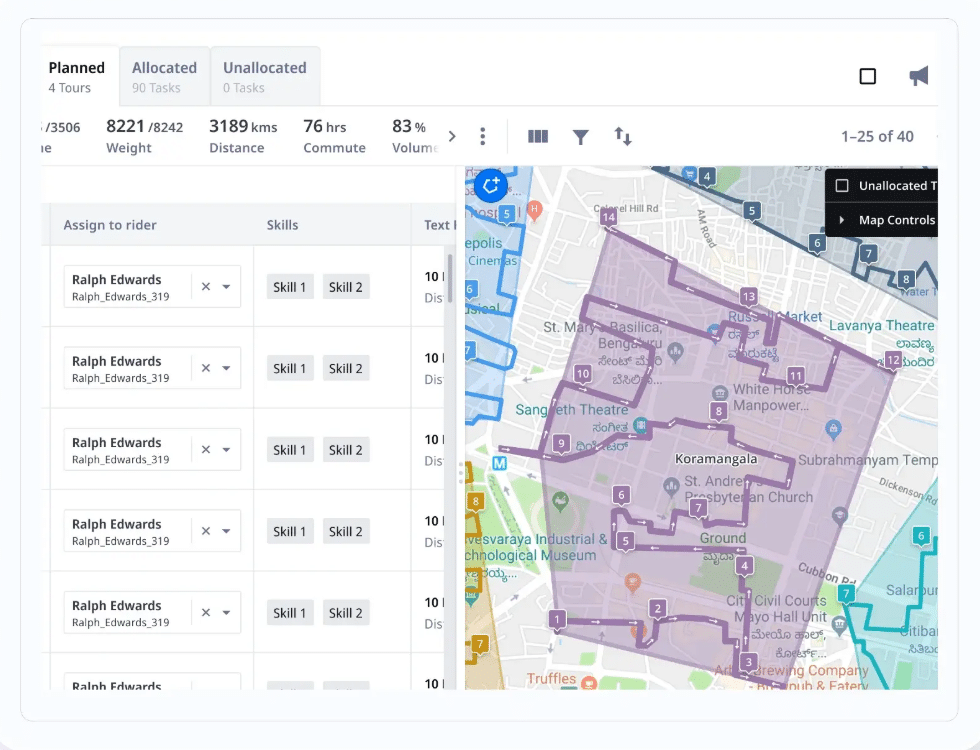
Your system should automatically assign drivers based on proximity, vehicle type, and the urgency of the delivery. Manual scheduling often causes mix-ups (like sending temperature-sensitive devices in the wrong vehicle or missing hospital delivery windows.) With automation, assignments are faster, accurate, and fully optimized for delivery priority.
2. Route Optimization for Sensitive Deliveries
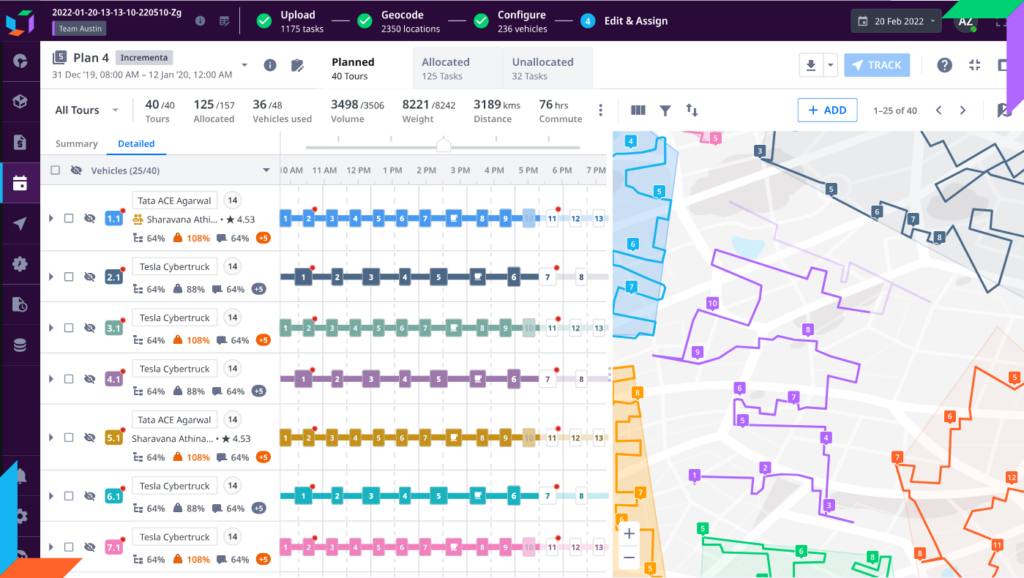
Medical deliveries often require special handling because they include items ranging from fragile equipment to temperature-sensitive materials. Route optimization tools analyze live traffic, distance, and handling constraints to find the safest and fastest path. This reduces fuel use, delivery time, and risk of product damage.
Q: How does route optimization adjust for medical equipment needs?
A: It uses delivery type, vehicle condition, traffic data, and temperature-control settings to plan routes that protect equipment integrity.
3. Real-Time Tracking and Visibility
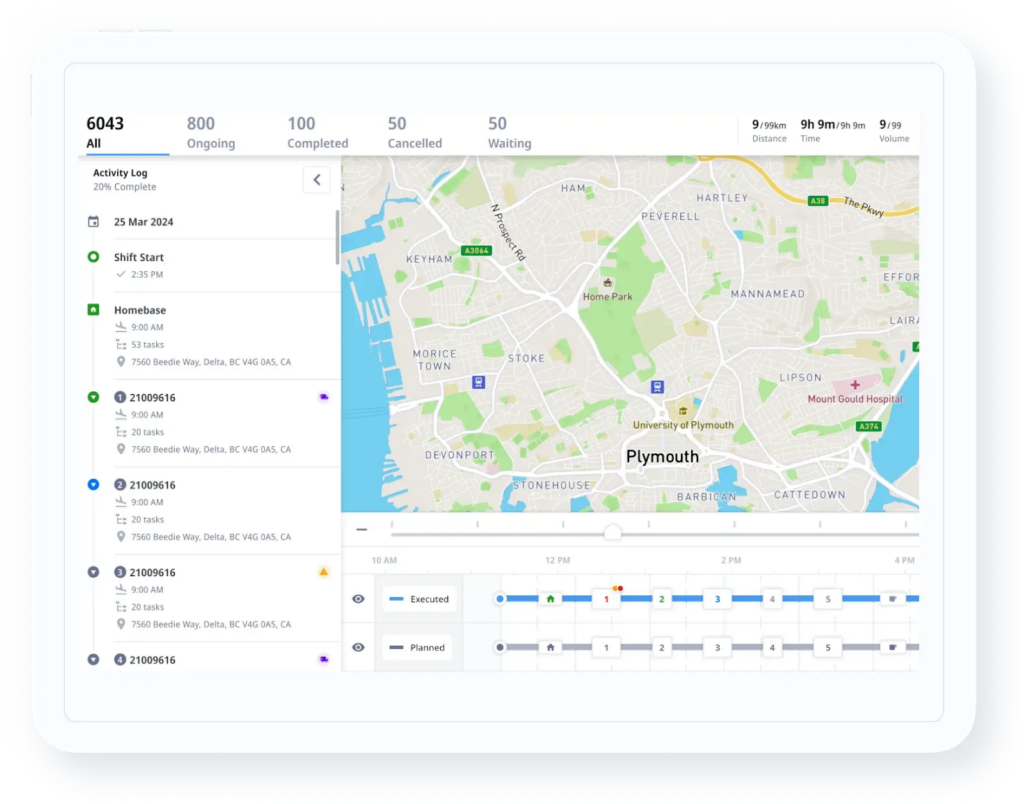
Real-time tracking lets dispatchers monitor every shipment as it moves through the network. With live ETAs and alerts, teams can identify delays early and communicate accurate updates to hospitals or labs. Visibility also ensures compliance with delivery timeframes for regulated medical equipment.
4. Compliance and Proof of Delivery (ePOD)
Compliance in healthcare logistics depends on traceability. A digital proof of delivery system records recipient signatures, timestamps, and photos to verify completion. These records support audit readiness, help resolve disputes quickly, and ensure full accountability across medical shipments.
Q: Why is digital proof of delivery important in medical logistics?
A: It provides a verifiable record for audits and ensures deliveries meet strict medical and regulatory requirements.
5. Analytics and Performance Insights
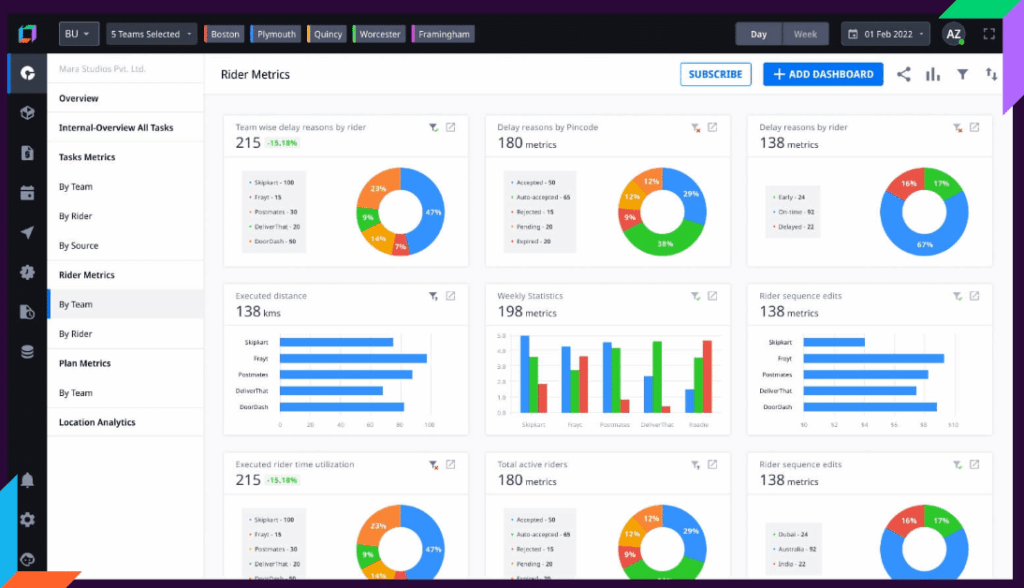
Analytics turn operational data into actionable insights. Metrics like delivery accuracy, SLA adherence, and cost per route help teams spot inefficiencies and strengthen performance. Over time, this visibility leads to smarter planning, lower costs, and better patient service reliability.
Editorial methodology
This comparison is designed as a 2026 buyer’s guide rather than a simple ranked list.
- Research and review date: 23 September 2026
- Assessment basis: Original article baseline, vendor positioning described in the source materials, and publicly stated use-case fit where available
- Hands-on testing: No hands-on sandbox or paid product testing is claimed in this article
- Pricing status: Pricing changes frequently; where public pricing was stated in the baseline article, it is marked as such. Quote-based pricing should be confirmed directly with the vendor
- Feature verification source: Vendor or public-facing positioning referenced in the original article; buyers should validate current feature depth, mobile capabilities, API availability, security documentation, and regional support during the sales process
- Healthcare-specialisation assessment: Editorial assessment of whether a tool is primarily built for delivery dispatch, DME/HME fulfilment, or field service workflows
- Customer evidence: Limited in the baseline source; request current healthcare references from each vendor before purchase
- Disclosure: Locus is included in this guide and is also the publisher of this article. No affiliate links are used here
Comparison criteria
We compared tools using these operational criteria:
- Primary use case and best-fit organisation
- Dispatch and scheduling depth
- Route optimisation quality
- Real-time visibility and exception handling
- ePOD and recipient verification
- Carrier or partner-fleet coordination
- Equipment or asset-related workflows
- Integration flexibility
- Analytics and reporting
- Mobile and offline workflows
- Security and governance evaluation needs
- Pricing model and verification status
- Category limitations buyers should understand before shortlisting
Quick answer: which type of platform fits which need?
Choose a simpler route-planning tool when:
- You run a small or mid-sized in-house fleet
- Your delivery network is limited to one region
- You mainly need route planning, driver assignment, tracking, and ePOD
- Carrier coordination and enterprise integrations are relatively light
Choose enterprise orchestration when:
- You manage multiple regions, depots, or business units
- You use both owned fleet and third-party carriers
- You need dynamic reprioritisation for urgent medical deliveries
- You require control-tower visibility, SLA monitoring, and cost-to-serve reporting
- You need integration with ERP, WMS, order-management, CRM, telematics, or external partner systems
Choose field service software when:
- The core workflow is technician dispatch, installation, repair, or preventive maintenance
- Asset history, warranties, parts, and work orders matter more than stop density or route sequencing
- Delivery execution is only one part of a broader service lifecycle
Choose DME/HME fulfilment software when:
- Inventory, rentals, returns, exchanges, patient billing handoffs, or reimbursement processes are central to your operation
- You need deeper order and equipment lifecycle management than a pure dispatch layer usually provides
Top 5 Best Medical Equipment Business Dispatch Software – Overview
If you’re evaluating medical equipment dispatch software, you’re likely comparing tools that can simplify scheduling, routing, and compliance. You want a platform that helps you manage urgent deliveries, reduce manual work, and keep every shipment traceable.
The list below gives you a clear view of the top options, their key features, ideal use cases, and pricing.
| Software | Best For | Key Strength | Pricing |
|---|---|---|---|
| Locus | Enterprise medical logistics | AI dispatching and visibility | Custom, volume-based |
| Upper Route Planner | Small delivery teams | Route optimization and tracking | From $80/driver/month |
| ServiceMax | Medical device servicing | Work order and asset management | Custom quote |
| FSM Grid | Field maintenance networks | Predictive scheduling and IoT integration | Quote-based |
| DispatchTrack | Regional healthcare fleets | Real-time tracking and updates | Subscription, custom quote |
Top 5 Best Medical Equipment Business Dispatch Software – Detailed Comparison
Below is a closer look at each platform, highlighting its focus, key strengths, and pricing to help you find the best fit for your operations.
1. Locus
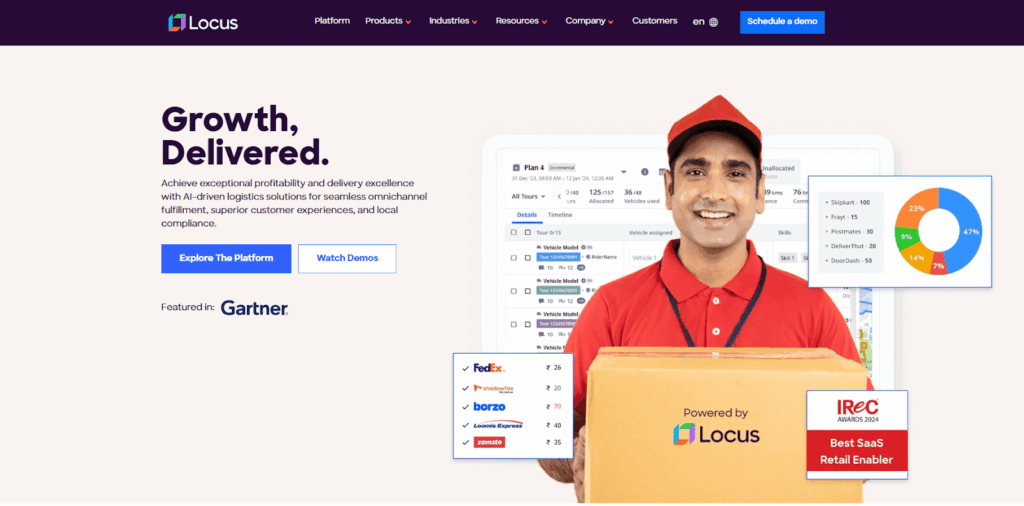
Locus is a dispatch management platform designed for enterprises handling complex medical delivery networks. It unites planning, execution, and tracking in one system, helping logistics teams improve efficiency, reduce costs, and scale operations confidently while maintaining compliance.
Key Features of Locus
- AI-powered route optimization: Locus builds delivery routes in real time using live traffic, equipment priority, and vehicle capacity. As new orders arrive, it re-optimizes automatically to minimize fuel use and improve delivery turnaround times.
- Real-time shipment tracking: The Control Tower gives dispatchers a live, map-based view of every delivery vehicle. They can identify potential delays and take corrective action before they affect hospital or clinic schedules.
- Predictive delivery insights: Locus uses historical delivery data and real-time conditions to forecast delays and recommend route or driver adjustments to maintain service-level commitments.
- Automated notifications: The platform sends instant updates to dispatchers, drivers, and healthcare clients at every delivery stage. Real-time alerts reduce support calls and ensure clear communication throughout the process.
- Multi-carrier integration: Locus connects all carrier and fleet partners into a single dashboard. Teams can manage multiple regions, monitor carrier performance, and allocate capacity efficiently without manual coordination.
- Advanced analytics: Dashboards display delivery costs, SLA performance, and fleet utilization. These insights help optimize routing, resource use, and compliance reporting.
Locus is ideal for
Healthcare logistics providers, distributors, and 3PLs managing high-value or time-sensitive medical equipment deliveries. Organizations needing centralized visibility, predictive dispatching, and compliance-ready workflows benefit most from Locus.
Locus Pricing
Locus follows a flexible, volume-based pricing model. Costs depend on shipment volume and selected modules. Businesses can choose specific tools (such as route optimization, Control Tower visibility, or analytics) or bundle them for end-to-end medical delivery management.
“We use Locus for real-time tracking of delivery shipments. This provides us transport visibility, helping us manage trucks more closely and proactively detect possible issues. The e-POD solution also saves us significant time, as all delivery data is captured on the platform.”
– Ly Trung Kien, Group Logistics Manager, Nestle
Q: How does AI in Locus improve medical dispatch reliability?
A: Locus analyzes traffic, delivery urgency, and handling requirements in real time. It automatically reallocates tasks when disruptions occur, ensuring every medical shipment arrives safely and on schedule.
2. Upper Route Planner
Upper Logistics, Inc. is a cloud-based delivery and route optimization tool built for small and mid-sized logistics teams. It helps medical suppliers and distributors plan routes, schedule deliveries, and assign drivers efficiently through an intuitive interface.
Features of Upper Logistics
- Multi-stop route planning with drag-and-drop scheduling
- Real-time driver tracking and performance monitoring
- Digital proof of delivery with photo and signature capture
- Automated customer notifications and delivery updates
- Route analytics for evaluating time, cost, and distance efficiency
Upper Logistics Is Ideal For
Businesses needing reliable multimodal transportation, including manufacturers, retailers, and import/export companies seeking global distribution capabilities with personalised service.
Upper Logistics Pricing
Pricing is available on request. Costs typically depend on shipment size, transport mode, and geographic coverage.
3. ServiceMax

ServiceMax is an asset-centric field service management platform focused on keeping equipment running reliably. It helps service teams manage work orders, technician schedules, maintenance tasks, and service contracts in one system, with strong support for mobile and remote work.
ServiceMax’s Key Features
- Work order management for installation, repair, and preventive maintenance
- Technician scheduling based on skills, location, and availability
- Mobile app with online/offline access to asset history, procedures, and forms
- Contract, warranty, and entitlement management for service coverage
- Asset lifecycle tracking to support uptime and planned maintenance
- Performance analytics for technician productivity, resolution times, and service profitability
- Integrations with CRM, ERP, and IoT platforms (e.g., Salesforce, ThingWorx)
ServiceMax Is Ideal For
Medical device manufacturers, service providers, and field teams that need structured scheduling, asset-centric service workflows, and better control over maintenance and uptime for installed equipment.
ServiceMax Pricing
ServiceMax uses custom, quote-based pricing. Costs depend on modules selected, user count, and integration requirements.
4. FSM Grid

FSM Grid is an AI-driven field service management platform that helps organizations manage scheduling, work orders, routing, and inventory in one system. It connects field technicians, dispatchers, and back-office teams, making it easier to handle service requests, maintenance visits, and multi-vendor operations at scale.
FSM Grid’s Key Features
- Automated scheduling and dispatching with real-time rescheduling for urgent service calls
- Work order creation, tracking, and completion management
- Predictive maintenance powered by AI and IoT-based alerts
- SLA and contract tracking for compliance and performance monitoring
- Multi-vendor and subcontractor management in one dashboard
- Real-time technician location tracking and customer update links
- Inventory and parts tracking across warehouses and vehicles
- Analytics and reporting for service quality and technician performance
FSM Grid Is Ideal for
Medical equipment service providers, OEMs, and field service organizations that manage multiple technicians, third-party vendors, and a high volume of maintenance or repair requests across regions.
FSM Grid Pricing
FSM Grid uses a custom, quote-based pricing model. Costs depend on user count, modules selected, and integration scope.
5. DispatchTrack
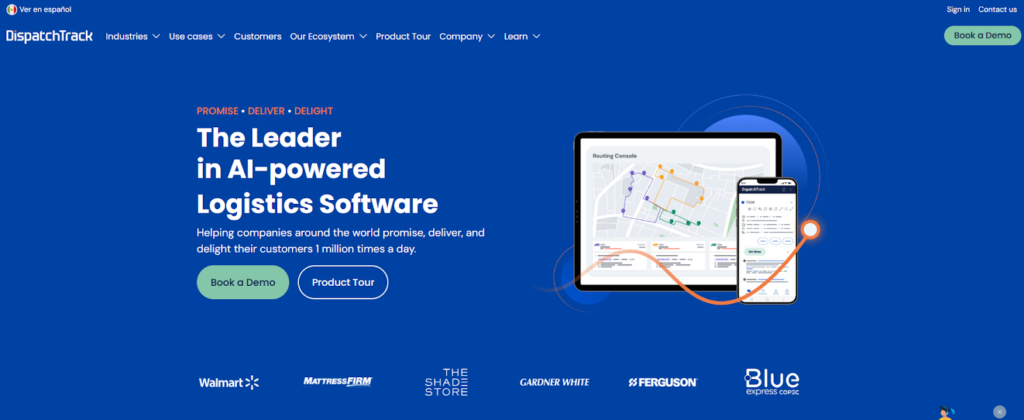
DispatchTrack is a cloud-based last-mile delivery management platform that helps businesses plan, optimize, and track deliveries in real time. Its AI-powered tools improve route efficiency, driver coordination, and customer communication, making it a strong fit for medical logistics operations that depend on accuracy and visibility.
Features of DispatchTrack
- Real-time route optimization that adapts to traffic, weather, and delivery priorities
- Live shipment tracking with predictive ETAs for dispatchers and customers
- Proof of delivery with photos, signatures, and timestamps
- Automated customer notifications for delivery status and scheduling updates
- Analytics and performance reporting to track efficiency, on-time rates, and driver performance
DispatchTrack is Ideal for
Healthcare distributors, logistics providers, and field service teams that handle high-volume, time-sensitive medical deliveries requiring precision and real-time visibility.
DispatchTrack’s Pricing
DispatchTrack follows a subscription-based pricing model, offering flexibility based on business needs, including delivery volume and required features. Companies interested in detailed pricing can contact DispatchTrack for a personalized quote.
Benefits of medical equipment dispatch software
A well-chosen platform improves more than routing. It helps healthcare operations create a tighter execution layer across delivery, pickup, and return workflows.
1. Better control over urgent and scheduled deliveries
Dispatchers can prioritise emergency replacements, same-day orders, and tightly scheduled appointments without rebuilding the day manually.
2. Stronger operational traceability
Teams can capture serial numbers, recipient details, timestamps, photos, signatures, and exception codes to support internal governance and customer accountability.
3. Fewer failed deliveries
Appointment confirmation, live ETA updates, recipient instructions, and route re-optimisation reduce wasted trips and repeat visits.
4. Clearer pickup and reverse-logistics workflows
Medical equipment operations often include exchanges, loaner retrieval, returns to warehouse, and failed-delivery recovery. Dispatch software can coordinate these movements more consistently.
5. Better use of fleet and carrier capacity
Centralised planning can reduce empty miles, improve stop density, and help dispatchers allocate work more rationally across owned fleet and external carriers.
6. More actionable performance data
Instead of relying on anecdotal issues, teams can track route cost, SLA adherence, exception rates, and carrier performance by region or customer.
Compliance and governance: what buyers should actually assess
Healthcare buyers should avoid treating “compliant” as a simple software label. The right question is whether the platform supports the records, controls, and workflows your organisation needs.
Evaluate these areas carefully
- What data is stored? Confirm whether the system holds only operational delivery data or also PHI, PII, device identifiers, or service records.
- What handoff evidence is captured? Ask about recipient name, photo, signature, timestamp, location stamp, notes, scan fields, and exception reasons.
- What permissions exist? Review role-based access, audit logs, record retention controls, and export options.
- What integrations move sensitive data? A system may be low-risk on its own but become higher-risk once connected to ERP, EHR, billing, CRM, or order-management platforms.
- What documentation is available? Ask about security policies, hosting details, incident response, data-processing terms, and whether relevant contractual documents are available.
- How does configuration affect suitability? HIPAA, UDI, 21 CFR Part 11, ISO 13485, ISO 27001, and SOC 2 considerations depend on the workflow, jurisdiction, contracts, and data handled.
Practical takeaway
Medical equipment dispatch software can support chain-of-custody workflows, audit-ready delivery records, and access-controlled operations. It does not replace your organisation’s legal, security, or process responsibilities.
Implementation checklist for medical equipment dispatch software
Use this checklist before rollout:
- Map your current dispatch workflows from order intake to delivery, pickup, return, and exception handling.
- Standardise addresses, geocodes, site instructions, appointment windows, and service times.
- Define equipment-specific rules such as liftgate needs, two-person handling, refrigeration, or fragile-item controls.
- Establish urgency and prioritisation logic for emergency orders versus scheduled routes.
- Decide what the mobile workflow must capture: scans, signatures, photos, serial numbers, recipient verification, and reason codes.
- Integrate the dispatch layer with ERP, WMS, CRM, order-management, telematics, billing, or inventory systems as needed.
- Pilot one region, customer group, or equipment category first.
- Train dispatchers, drivers, technicians, and supervisors on exception handling as much as on normal delivery flows.
- Baseline KPIs before go-live so improvement can be measured accurately.
- Validate failed-delivery, pickup, exchange, and return-to-warehouse workflows before expansion.
- Scale region by region once data quality and process discipline are stable.
Data needed for effective route optimisation
- Orders and stop lists
- Address and geocode accuracy
- Delivery windows
- Service times
- Vehicle capacity
- Driver availability
- Equipment constraints
- Priority rules
- Historical route and delivery data
- Traffic and geography data where available
KPIs to track after go-live
Do not judge a platform only by whether routes were built faster. Track whether operations actually improved.
Core medical dispatch KPIs
- On-time delivery rate
- Appointment-window adherence
- First-attempt delivery success
- Failed-delivery rate
- Average route cost
- Cost per stop
- Cost per route
- Cost per delivery
- Miles per delivery
- ETA accuracy
- Route-plan adherence
- Exception rate
- Exception resolution time
- ePOD completion rate
- Time from order release to dispatch
- Driver utilisation
- Vehicle utilisation
- Carrier performance
- SLA breach rate
- Pickup and return cycle time
How to measure ROI without guessing
Compare pre-implementation and post-implementation performance using the same routes, territories, and order profiles where possible. Review both direct transport metrics and hidden operational costs such as manual planning time, status-call volume, rescheduling effort, and repeat delivery attempts.
RFP questions to ask any vendor
Use these questions to make product demos more useful:
- Can the platform manage both owned fleet and third-party carriers in one workflow?
- How are urgent medical deliveries prioritised against scheduled work?
- Can business rules vary by equipment type, customer, service level, vehicle, or geography?
- How are appointment changes, delays, and reschedules handled?
- What exactly is captured in ePOD?
- Are photos, signatures, timestamps, recipient details, barcode scans, and serial-number fields supported?
- Can the system manage pickups, returns, exchanges, and loaner retrievals?
- Which ERP, WMS, CRM, TMS, telematics, API, webhook, or middleware integrations are available?
- Does the mobile app work offline?
- How are exceptions surfaced, escalated, and reported?
- What analytics are available by region, route, carrier, customer, or equipment category?
- How is pricing calculated: by driver, stop, user, route, order, shipment volume, or enterprise licence?
- What implementation, onboarding, support, and training are included?
- What security and data-processing documentation is available?
- What healthcare or medical-device customers use the product for similar workflows?
Why choose Locus for medical equipment dispatch
Locus is the strongest fit in this list when the requirement goes beyond route planning into enterprise-level execution control.
Locus is worth prioritising when you need:
- A single operating layer for dispatch, execution visibility, and multi-carrier coordination
- Dynamic route optimisation for urgent and scheduled medical deliveries
- Network-wide control-tower visibility rather than route-by-route monitoring only
- Delivery traceability with ePOD and exportable operational records
- Better SLA monitoring, exception management, and cost-to-serve visibility
- Integration across broader logistics and fulfilment systems
Where it fits best
Locus is best suited to healthcare distributors, medical logistics providers, and enterprise operations managing high delivery volumes, regional complexity, mixed carrier models, or strict service windows. If your requirement is only basic route planning for a small local team, a lighter tool may be sufficient. If your primary requirement is technician service management, a field-service platform may be more appropriate.
Making the Right Choice for Your Business
Choosing the right medical equipment dispatch software is a strategic step toward dependable, compliant delivery operations. The goal isn’t just to manage routes or drivers but to create a connected system that supports every stage of service — from order assignment to proof of delivery.
Each platform listed offers useful capabilities, yet Locus stands out for unifying automation, visibility, and compliance under one AI-driven system. It enables logistics leaders to handle urgent, high-value medical deliveries with accuracy and operational control.
If you’re evaluating ways to improve dispatch efficiency and traceability in healthcare logistics, Locus gives you the structure and intelligence to achieve it.
Book a demo to see how your dispatch operations can run smarter, faster, and fully compliant.
Frequently Asked Questions (FAQs)
1. Why is dispatch software essential for medical equipment businesses?
It automates planning, routing, and tracking, helping ensure medical deliveries reach safely, on time, and with full compliance documentation.
2. How does dispatch software improve delivery accuracy?
By assigning drivers automatically and optimizing routes using real-time data, it minimizes delays, missed deliveries, and routing errors.
3. Can dispatch software handle temperature-sensitive or fragile shipments?
Yes. Advanced platforms include rules for vehicle type, temperature control, and handling constraints to protect sensitive medical equipment during transport.
4. What integrations should medical dispatch software support?
It should connect with ERP, WMS, and CRM systems to synchronize inventory, delivery data, and billing.
5. How does Locus support medical logistics operations?
Locus combines AI-based dispatching, real-time tracking, and compliance-ready proof of delivery to help healthcare providers and distributors manage operations accurately and efficiently.


Dispatch Management
Automated Dispatching System: The 2026 Enterprise Guide to AI-Powered Logistics at Scale

Sep 23, 2026
Automated dispatch software boosts speed, lowers costs, and improves visibility. Learn features, benefits, and future trends in 2025.
Read more
Logistics Software
Top 10 Route Planning Software for Smarter Logistics in 2026
Sep 23, 2026
Key Takeaways Quick Answers for Buyers What is route planning software? Route planning software creates efficient routes for deliveries, service visits, or other multi-stop trips by factoring in distance, traffic, time windows, vehicle capacity, driver availability, and operational constraints. Advanced platforms also support dispatch, live GPS tracking, dynamic rerouting, proof of delivery, customer ETA notifications, […]
Read moreInsights Worth Your Time



















Top 5 Medical Equipment Dispatch Software Solutions for 2026