


General
Middle Mile vs Last Mile Logistics: Key Differences & When to Use in 2026
Key Takeaways
- When you optimize the middle mile and last mile separately, you end up with extra inventory buffers, missed consolidation, and duplicated capacity.
- The middle mile is built for bulk moves between facilities with steadier volumes. The last mile deals with variable demand, tighter time windows, and lower drop density.
- A single, connected network plan can cut total cost-to-serve by 15–25% versus siloed optimization.
- Facility location, inventory policy, and linehaul planning shape what last-mile routing can realistically achieve.
- Locus connects NodeIQ (network design) and DispatchIQ (day-to-day execution) so teams can plan and run the network as one system.
Delivery Hero cut middle mile logistics costs by 24%, but not from better algorithms or faster trucks.
The Berlin-based platform runs 1B+ orders yearly across 70+ countries. In one market, 40 vehicles moved goods daily between 4 distribution centers and 150+ dark stores. Warehouse teams maximized pallet loads to minimize handling. Last-mile teams built tight routes to keep customers happy.
Both hit their KPIs. Despite this, costs stayed high, and utilization is stuck at 81%.
The problem was structural. Middle mile logistics decisions like facility placement constrain last-mile density. Last-mile patterns determine whether consolidation pays off or just shuffles costs. Most operations treat these as separate optimization problems; in reality, they’re often parts of one system.
When Delivery Hero unified planning, utilization jumped to 96% and mileage dropped 22%. The gains came from aligning facility networks, linehaul timing, and delivery density as one system.
To help you decide between middle mile vs last mile logistics, this guide maps where those disconnects start, how they compound, and how integrated planning cuts total cost-to-serve by 15-25%.
What is Middle Mile Delivery?
Middle mile logistics handles the movement of goods between facilities, from factories to distribution centers, between warehouses, or from regional hubs to local depots. This phase focuses on bulk transfer, consolidation, and positioning inventory closer to end demand.
Role of the middle mile in the supply chain
The middle mile gets inventory into delivery-ready positions. It determines whether consolidation works or you keep paying for half-full moves and rushed recoveries.
That’s why middle mile vs last mile logistics matters: choices like warehouse placement, inventory staging, transfer frequency, and lane design set the limits for everything downstream, because you can only route what you have, where you have it, when it arrives.
Operationally, the middle mile runs on larger, steadier volumes between fixed facilities with docks and wider time windows, which makes high utilization possible, but only if the plan protects flow.
And because the scale is enormous, small inefficiencies get expensive fast: CSCMP’s State of Logistics has estimated U.S. business logistics costs at about $2.3 trillion (around 8.7% of GDP).
What are the key characteristics and functions of the middle mile?
- Bulk consolidation: Combines orders from multiple sources into full truckloads, reducing per-unit transportation cost.
- Fixed-route operation: Runs on scheduled lanes between known facilities, enabling predictable capacity planning.
- Strategic positioning: Places inventory at intermediate nodes to balance service coverage against holding costs.
- Cross-docking: Transfers goods between vehicles without long-term storage, reducing handling time and warehouse space requirements.
What is Last Mile Delivery?
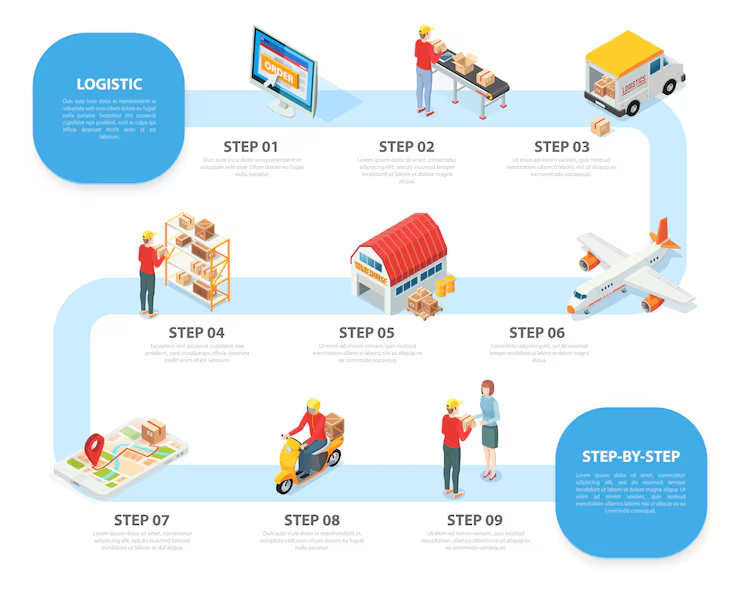
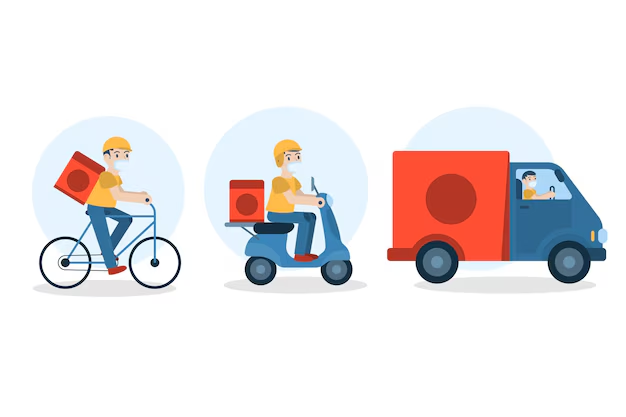
Last mile delivery is the final hop from a local depot to the customer’s doorstep, and it’s usually the most unpredictable part of the network. Stops are dispersed, time windows are tighter, and customer availability can change at the last minute. So, as routes stretch into lower-density areas, drivers spend more time per stop and vehicle capacity becomes harder to use well.
Because it’s the customer-facing leg, any miss is visible immediately: a late ETA, a missed window, or a failed first attempt turns into a support ticket, a refund request, or churn risk. That’s why teams fixate on last-mile metrics like on-time rate, first-attempt success, and customer satisfaction. This is applied even when the root cause sits upstream in batching, departures, or inventory readiness.
Key characteristics and functions of the last mile logistics
- High variability: Demand patterns shift daily based on weather, promotions, and customer behavior.
- Low density: Delivery stops spread across geographic areas, limiting stops per route.
- Tight time windows: Customers specify narrow delivery windows, constraining route sequence.
- Failed delivery risk: Customer unavailability, access restrictions, or incorrect addresses force re-delivery attempts.
Middle Mile vs Last Mile Logistics: Key Differences
The core difference between middle mile and last mile logistics lies in optimization scope and time horizon:
| Dimension | Middle Mile | Last Mile |
|---|---|---|
| Primary Focus | Bulk consolidation and network positioning | Final delivery to the end customer |
| Destinations | Fixed facilities with loading docks | Dispersed addresses: homes, businesses |
| Shipment Size | Palletized loads, full truckloads | Individual parcels, small orders |
| Demand Predictability | High: scheduled, recurring shipments | Low: volatile, daily fluctuations |
| Time Windows | Wide: 4-8 hour receiving windows | Narrow: 1-2 hour customer windows |
| Optimization Horizon | Strategic: months to quarters | Tactical: hours to days |
| Vehicle Utilization | High: 85-95% capacity | Variable: 55-75% capacity |
| Cost Per Unit | Low: economies of scale | High: dispersed delivery density |
| Key Metrics | Cost per mile, load fill rate, dwell time | On-time rate, stops per route, cost per delivery |
| Primary Constraints | Facility capacity, transfer schedules | Traffic, customer availability, driver hours |
These differences require fundamentally different optimization approaches. Middle-mile tools must model network-wide trade-offs and simulate long-term scenarios. Last-mile tools must solve complex routing problems in real-time.
However, both must share a unified data layer to prevent fragmentation.
Why Fragmented Mile Management Breaks Network Performance

Most logistics orgs run the middle mile and last mile like two separate games. What’s really happening is a disconnect across three layers: planning, daily execution, and learning from what went wrong:
1. The Planning Disconnect
Middle-mile design decisions answer big questions: What is the middle mile supposed to do in your network, where should facilities sit, how much inventory belongs at each node, and how often should freight move between sites. Those decisions often assume demand is steady and evenly spread.
Last-mile reality looks nothing like that. Demand shows up in small drops, clumped in some areas and thin in others, with tighter service promises.
So if the middle mile is optimized for bulk efficiency without testing last-mile constraints, you bake in bad tradeoffs. One CPG distributor, for example, placed warehouses to reduce transfer distance based on “average” demand density.
Often, orders are clustered in dense city pockets with sparse suburban demand around them. Transfer costs improved, but last-mile routes stretched out, and total network cost rose by 18%.
2. The Execution Mismatch
Last-mile routing engines treat the depot, departure time, and available load as fixed inputs. But those “inputs” are often created upstream by middle-mile choices such as batching logic, cross-dock schedules, cut-off times, and load sequencing.
That’s one of the top challenges in middle mile vs last mile logistics: the last mile is asked to optimize around decisions it didn’t make and can’t change.
A 3PL running e-commerce fulfillment saw this first-hand. The dispatch team built routes that looked clean on paper. Meanwhile, the warehouse team batched orders by pick zones to speed picking. It made the warehouse run smoother, but it skewed outbound loads across delivery areas.
Some routes went out packed, others left with big pockets of unused capacity. Utilization dropped 22% even though warehouse metrics stayed green.
3. The Never-Ending Feedback Loop
A connected network gets better because it learns. Middle-mile teams need last-mile failure signals to spot weak service areas and recurring timing issues. Last-mile teams need upstream signals (late departures, short picks, sequencing changes, etc.) to adjust route assumptions early.
When teams operate in separate systems, that feedback doesn’t travel. Late deliveries get pinned on drivers and dispatch, even when the real cause was upstream: late trailer release, wrong load order, or inventory not available when promised. Nobody fixes the root cause, so the same issues repeat.
If you’re trying to understand the differences between middle mile and last mile, this is a useful way to frame it: the middle mile sets the conditions, and the last mile pays the price when those conditions don’t match demand.
Suggested Read: Last-Mile Delivery Route Optimization Guide (2025)
What Are the Downstream Costs of Mile Fragmentation?
The World Economic Forum has pointed out that the last mile alone can account for 53% of shipping costs in 2023, which is one reason these handoff issues get expensive quickly. When middle mile and last mile are managed separately, the waste shows up downstream in three familiar places: buffers, missed consolidation, and “just-in-case” capacity.
And it adds up fast. Here’s how:
1. Buffer Inventory with Planning Misses
This is one of the top challenges in middle mile vs last mile logistics: when planning and execution don’t line up, teams protect themselves with extra stock and extra staging.
Regional hubs carry more inventory to absorb demand spikes. Local depots stage orders early because upstream arrivals aren’t reliable. It keeps service afloat, but it ties up cash and space.
If you want to set safety stock properly, you need a multi-echelon view (what moves where, when, and how demand behaves at the edge). When systems are fragmented, teams end up guessing buffer levels or copying benchmarks, which usually means carrying more than they need.
2. Consolidation that Looks Fine Upstream
Middle-mile consolidation is only “good” if it improves what happens next. Without visibility into last-mile delivery zones, planners often consolidate by the easiest rule (warehouse zone, product type, cut-off time). The load moves efficiently between facilities, but it creates ugly last-mile routes: uneven drops, low density, and more miles per stop.
A better approach is to model consolidation from the customer backward, so bulk moves support route density instead of fighting it.
3. Redundant Capacity at Handoff Points
Handoffs require labor, docks, sortation, and time windows. If the middle mile schedules departures for warehouse efficiency and the last mile sets acceptance windows for dispatcher sanity, the mismatch lands at the dock.
Facilities then “solve” it by adding slack: more doors, more shifts, more overflow space.
What This Does to Total Cost
Fragmentation rarely shows up as one big failure. It shows up as compounding waste across inventory, transport, and facilities. Many networks see total operating cost climb meaningfully versus an integrated setup. This is because every handoff needs a workaround, and those workarounds become permanent.
Top Challenges in Middle Mile vs Last Mile Logistics
Here are the key challenges that exist:
Middle Mile Challenges
- Network design complexity: Picking facility locations is not a simple “closest hub wins” exercise. You’re balancing transport cost, fixed facility cost, inventory holding cost, and coverage. As the number of candidate sites grows, the options explode, so teams often rely on shortcuts.
- Inventory positioning: Middle-mile teams decide what to stock, and where. If the wrong SKUs sit in the wrong node, last-mile delivery fails due to stockouts. If you overstock “just in case,” carrying cost wipes out the efficiency gains.
- Consolidation-speed trade-off: Waiting to build full truckloads lowers cost per unit, but it adds dwell time and pushes lead times out. Shipping earlier keeps service levels healthier, but drives up cost. The right balance depends on last-mile urgency and demand patterns, so this breaks quickly when the miles are planned in silos.
Suggested Read: Mid-Mile Logistics Challenges: How To Overcome them?
Last Mile Challenges
- Route density variability: Drop density changes every day. One day you have tight clusters, the next you’re stretched across sparse stops. That’s why static routing plans often fall apart.
- Failed delivery costs: Research shows 5% of all last-mile deliveries fail, with each failure costing an average of $17.78. Common triggers are customer unavailability, access issues, and address errors.
- Driver efficiency variance: Two drivers can run the same route very differently. Some move faster, handle exceptions better, or know local patterns. If planning assumes uniform driver performance, ETAs and capacity plans drift.
- Real-time disruption: Things go wrong mid-route: traffic incidents, vehicle issues, urgent add-ons. If replanning takes minutes, the day unravels.
| Area | Challenge | What It Looks Like In Practice | Why It’s Hard To Fix In Silos |
|---|---|---|---|
| Middle Mile | Network design complexity | Facility location decisions have to balance transport cost, fixed site cost, inventory holding cost, and service coverage. The number of possible layouts grows fast as you add candidate sites. | Last-mile constraints [drop density, service windows] don’t get modeled properly, so “efficient” networks create expensive routes downstream. |
| Middle Mile | Inventory positioning | Stock too little at the wrong node, and the last mile hits stockouts. Stock too much and the carrying cost wipes out the savings. | Multi-echelon decisions need last-mile demand detail, but that data often doesn’t flow upstream cleanly. |
| Middle Mile | Consolidation-speed trade-off | Waiting for full truckloads lowers per-unit cost, but increases dwell time. Shipping earlier protects speed but raises the cost per unit. | The right balance depends on downstream urgency and demand shape, which middle-mile teams may not see. |
| Last Mile | Route density variability | Drop density swings day to day, so yesterday’s “best route” becomes today’s inefficient plan. | Middle-mile batching and cut-off decisions shape what’s even routable, but routing teams often get those inputs too late. |
| Last Mile | Failed delivery costs | Missed first attempts create re-deliveries, higher cost per order, and customer support noise. | Root causes can sit upstream [late departures, wrong sequencing, inventory readiness], but blame stays in the last mile. |
| Last Mile | Driver efficiency variance | Different drivers complete similar routes at different speeds and handle exceptions differently. | Planning assumes uniform execution, so ETAs and capacity forecasts drift. |
| Last Mile | Real-time disruption | Traffic, breakdowns, and urgent add-ons force mid-route changes. Slow replanning triggers cascading delays. | Without shared signals from upstream and live execution data, re-optimization is reactive and late. |
Best Practices: Key Optimization Strategies for Middle Mile and Last Mile Logistics

Effective optimization requires both strategic network design and tactical execution capability. The strategic layer determines structural efficiency. The tactical layer ensures daily performance.
1. Strategic network design for the middle mile logistics
Facility location optimization
Network design tools model the trade-off between facility fixed costs and transportation costs. Opening more facilities reduces transportation distance but increases facility overhead.
The optimal network minimizes total cost-to-serve. Graph-based modeling represents the supply chain as nodes (facilities) and edges (transportation lanes), enabling planners to simulate scenarios: What if we close this warehouse? What if demand shifts 20% to region X?
Multi-echelon inventory optimization
MEIO calculates safety stock levels across the network by modeling demand propagation from last-mile consumption back through distribution centers to suppliers. This prevents both stockouts and excess inventory.
Traditional approaches set inventory targets facility-by-facility, creating redundant buffers. MEIO recognizes that inventory at an upstream facility can cover multiple downstream facilities, reducing total system inventory.
Scenario planning for disruptions
Network design tools simulate disruptions: port closures, supplier failures, and demand shocks to identify vulnerabilities.
Planners can model contingencies: If facility X goes offline, which backup facilities have capacity? What’s the cost impact? This transforms reactive crisis management into proactive risk mitigation.
2. Tactical execution for the last mile
AI-driven route optimization
Modern routing engines analyze 180+ variables simultaneously: delivery addresses, time windows, vehicle capacity, traffic patterns, driver schedules, and historical performance.
This optimization runs in seconds, enabling dynamic re-planning when conditions change. The system clusters deliveries by geographic zone, sequences stops to minimize distance, and assigns orders to vehicles based on capacity and skill requirements.
Automated dispatch
Manual dispatching relies on dispatcher experience and spreadsheets, creating inconsistent results and limiting scalability. Automated systems assign orders to drivers based on configurable rules: balance workload, prioritize urgent orders, match driver skills to delivery requirements.
These systems handle constraints that overwhelm manual planning, including driver break requirements, vehicle maintenance windows, and multi-stop time dependencies.
Real-time visibility and intervention
Control tower systems provide live tracking of all delivery vehicles, order status, and exception alerts. Dispatchers see which routes are running behind, which drivers need support, and which deliveries risk missing their time window.
Such visibility enables proactive intervention rather than reactive firefighting. When a vehicle breaks down, the system automatically suggests reassignment options based on nearby drivers’ available capacity.
Carrier orchestration
For operations using multiple carriers, orchestration systems evaluate carrier performance, cost, and capacity in real-time.
During peak periods, the system automatically scales capacity by activating backup carriers. It tracks SLA compliance across all carriers and flags performance issues before they escalate.
3. The integration layer
Optimization strategies succeed only when strategic and tactical systems share data. The integration layer provides:
- Unified geocoding: Both middle-mile network models and last-mile routing use the same address database, eliminating inconsistent location data.
- Demand propagation: Last-mile delivery data flows to middle-mile planning systems, enabling network designs that reflect actual demand patterns rather than assumptions.
- Capacity coordination: Middle-mile transfer schedules synchronize with last-mile route start times, eliminating handoff delays and dock congestion.
- Performance feedback: Last-mile delivery failures and delays trigger middle-mile planning reviews, creating continuous improvement cycles.
Transform Your Logistics Network with Locus
Separate planning for the middle mile and separate execution for the last mile is where structural waste starts. Over time, buffer inventory, poor consolidation, and redundant capacity compound, costing many logistics operations 15–35% in network efficiency.
As an end-to-end solution purpose-built to solve all miles challenges, Locus eliminates this fragmentation by connecting strategic network design with tactical execution in a unified platform.
How Locus helps
- NodeIQ designs optimal middle-mile networks by modeling facility locations, inventory positioning, and transfer routes that reduce total network cost by 22% while improving service levels
- Dispatch Management Software executes last-mile delivery through intelligent routing and real-time dispatch that increases deliveries per vehicle by 45% and improves on-time rates by 30%

- Route Optimization Software connects middle-mile network planning with last-mile route execution through shared data, ensuring facility placement decisions account for delivery density and route designs leverage optimal middle-mile sequencing
- Delivery Orchestration Software manages complex networks with multiple fulfillment centers, hybrid fleets, and regional constraints without custom development or manual coordination

- Control Tower Software: Features include focused trip tracking, intelligent breach predictions, geofence enforcement, and live dashboards for stakeholder transparency. Driver apps (LOTR) support on-ground execution with task lists, proof-of-delivery, and instant comms for exceptions like cancellations.
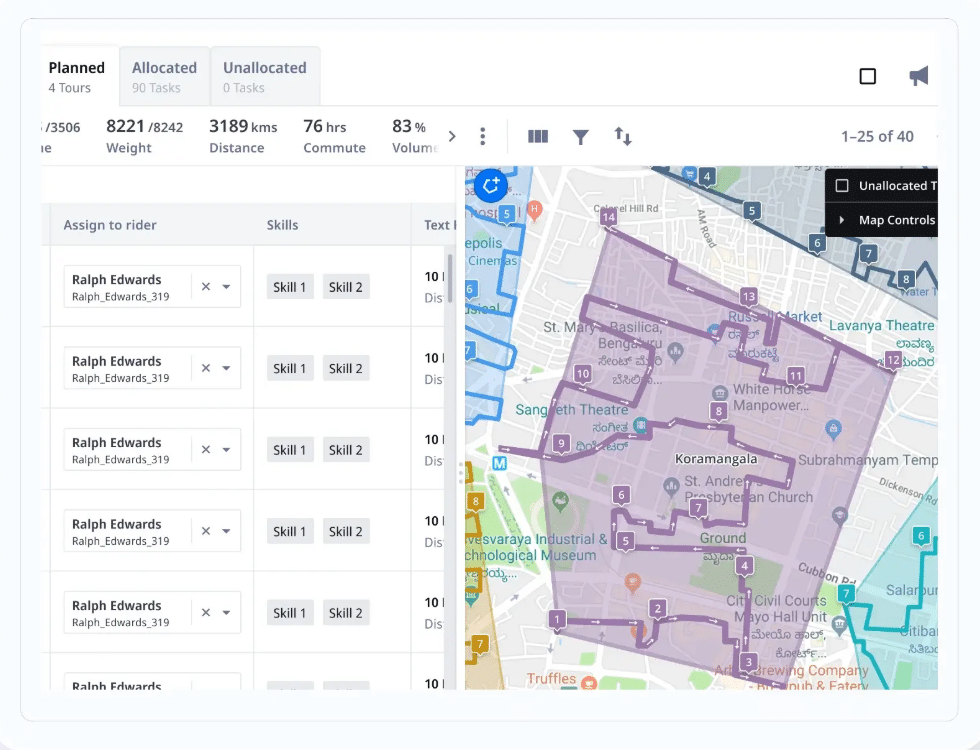
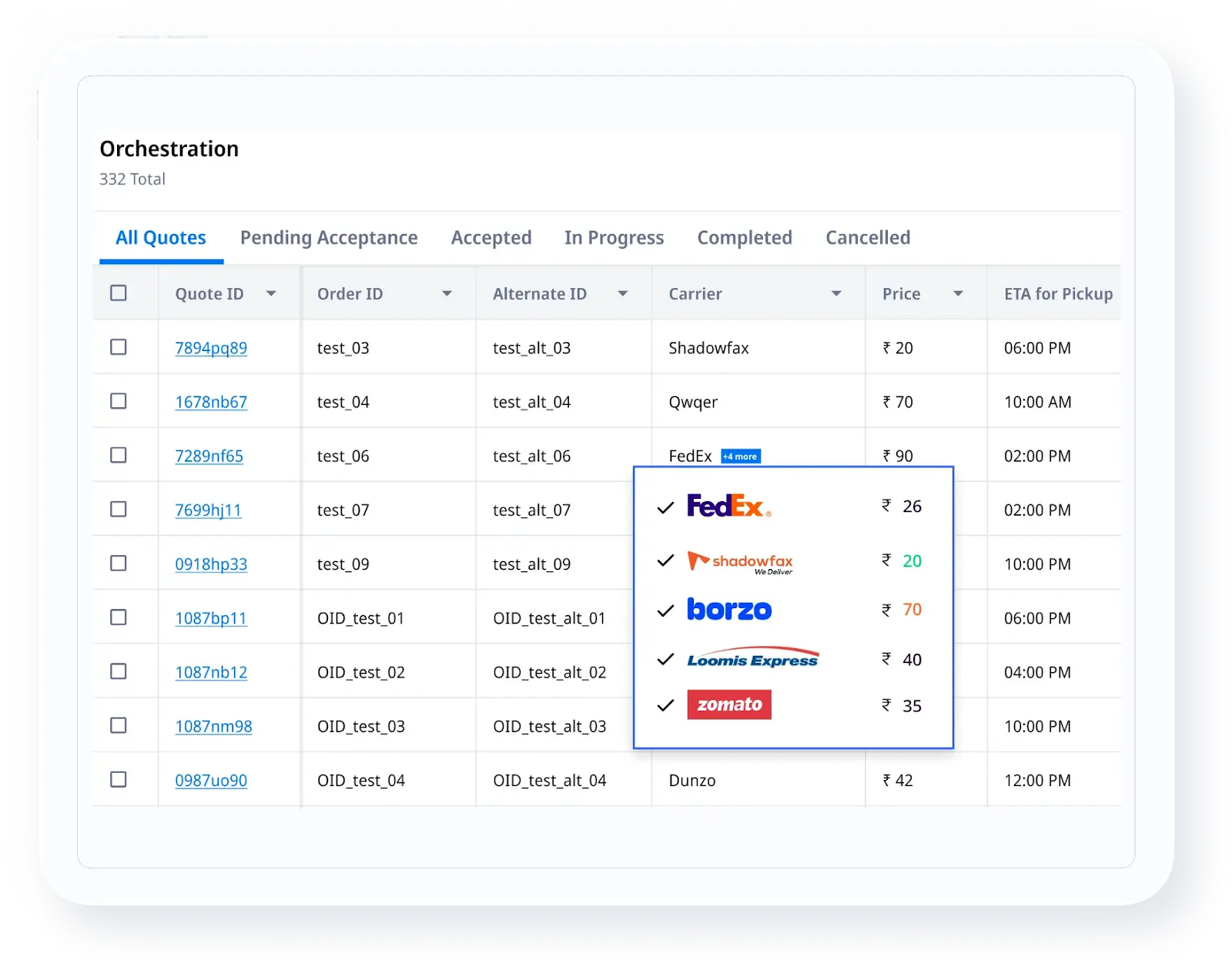
Companies deploying Locus achieve 22% reduction in delivery cost per order, 30% improvement in on-time delivery, 25% increase in route efficiency, and $31 million in annual logistics savings for regional 3PLs.
Implementation completes in 3-6 months through collaborative deployment that integrates with existing ERP, WMS, and TMS systems.
Final Note
For logistics operations managing middle-mile transfers and last-mile delivery, integrated optimization is no longer optional. The technology exists to unify strategic network planning with tactical route execution.
Companies that adopt this approach reduce costs, improve service, and build competitive advantage. Those maintaining fragmented systems continue paying the efficiency tax.
See how Locus can streamline your middle-mile and last-mile logistics. Schedule a demo.
Frequently Asked Questions (FAQs)
1. How can middle mile and last mile logistics be optimized together?
Unified optimization requires a platform that performs strategic network design and tactical route execution while sharing data across both functions. Middle-mile network models must incorporate last-mile delivery density and service requirements.
Last-mile routing must receive middle-mile capacity signals and consolidation patterns. The integration happens through a common geocoding layer, shared demand forecasts, synchronized transfer schedules, and bi-directional performance feedback.
2. What are the cost implications of middle mile vs last mile logistics?
Last mile accounts for 53% of total shipping costs despite being the final leg, driven by low delivery density and high variability. Middle mile achieves lower per-unit costs through consolidation but represents strategic decisions that lock in for years. The largest cost impact comes from fragmentation: treating miles independently creates 15-35% efficiency loss through excess inventory.
3. How does technology facilitate better middle and last mile logistics?
Modern logistics platforms use graph-based network modeling for middle-mile facility placement and inventory optimization, combined with AI-driven routing that optimizes last-mile delivery across 180+ variables in real-time.
Advanced platforms like Locus enable scenario planning, real-time re-optimization, automated dispatch, and carrier orchestration—capabilities that manual planning cannot replicate.
4. What role do third-party logistics providers play in middle and last mile delivery?
3PLs handle middle-mile and last-mile execution for companies that lack logistics infrastructure or need flexible capacity. Modern 3PL operations require orchestration platforms that assign orders across owned fleets and external carriers based on real-time cost, capacity, and performance data.
During peak periods, 3PLs scale by activating backup carriers. The orchestration layer tracks SLA compliance, manages carrier performance, and automatically routes orders to the most cost-effective available carrier, capabilities that separate high-performing 3PLs from commodity providers.


General
Top Alternatives to Descartes for Modern Logistics Ops Teams

Feb 16, 2026
Exploring alternatives to Descartes as logistics operations demand real-time control, tighter execution alignment, and platforms built to handle scale reliably.
Read more
Transportation Management System
Transportation Management System Requirements: A Capability-Led Buyer’s Guide
Feb 17, 2026
TMS requirements explained for enterprise transportation teams. Learn how to evaluate capabilities across planning, execution, visibility, and scale.
Read moreInsights Worth Your Time




















Middle Mile vs Last Mile Logistics: Key Differences & When to Use in 2026