


General
Top Alternatives to Descartes for Modern Logistics Ops Teams

Key Takeaways
- Teams don’t replace Descartes because planning fails. They switch when execution becomes the real bottleneck.
- Most competitors solve different problems: some optimize transport, others focus on delivery execution, and a few attempt full operational orchestration.
- As logistics networks grow denser, the cost of delayed decisions often outweighs the benefit of perfect upfront plans.
- Platform fit changes with maturity. What works for structured transportation breaks down under live, exception-heavy operations.
- The strongest alternatives are built around decision-making during the daybefore optimization even starts.
- Platforms like Locus appeal to teams that want logistics systems to respond to reality as it unfolds, not after plans start breaking.
Logistics platforms are often replaced when the way the business operates outgrows the assumptions underlying the software.
For many organizations using Descartes, the platform still does what it was designed to do:
- plan routes
- manage transportation workflows
- bring structure to complex logistics networks
The issues show up when execution teams spend more time reconciling reality with the plan than acting on it. When decisions feel delayed not by people, but by systems that weren’t designed to change mid-stream.
Modern logistics no longer runs in clean, sequential steps. Planning, dispatch, and execution now overlap constantly, shaped by order volatility, customer expectations, and capacity constraints that shift throughout the day.
In that environment, questions arise about whether the platform can support decision-making when conditions refuse to remain fixed. That’s why conversations around Descartes logistics competitors are less about features and more about operational philosophy.
This guide looks at the platforms teams evaluate when logistics moves from being a planning problem to an execution one.
Where Teams Begin to Outgrow Transportation-First Platforms
G2 users generally describe Descartes as a dependable freight visibility solution, particularly for teams that need broad carrier coverage and real-time shipment location updates.
That said, recent G2 feedback also points certain challenges that tend to surface as shipment volume, integration depth, or execution complexity increases. Some commonly cited issues are outlined below:
Limited depth in live tracking and exception intelligence
While tracking reliability is praised, some users note gaps in live intelligence and proactive exception handling.

Manual effort in managing driver and contact details
As daily tracking volume grows, reviewers mention repetitive manual steps when handling driver phone numbers and contact records.

Integration Issue with transportation systems
Some users report challenges when connecting Descartes with transportation management systems or navigating across integrated workflows.

UI and performance strain during active usage
Although the interface is widely described as user-friendly, a few reviewers mention performance slowdowns during regular operational use.

Taken together, these feedbacks reflect that as logistics operations become execution-driven, teams begin looking beyond knowing where freight is toward systems that help decide what to do next, in real time.
This is typically where organizations start evaluating Descartes logistics competitors built around execution control, automation, and operational decision-making.
Descartes Logistics Competitors Teams Commonly Evaluate
When organizations reassess Descartes, they don’t all look for the same type of replacement. Based on evaluation patterns, the following companies are most often considered as alternatives to Descartes:
| Platform | Core Strength | Primary Focus Area | Execution Depth | Best Suited For | Pricing Model |
|---|---|---|---|---|---|
| Locus | Real-time logistics orchestration | In-day execution, dispatch, control | High | Enterprises managing dense, dynamic delivery networks | Custom, usage-based |
| SAP | ERP-integrated logistics | End-to-end enterprise workflows | Low–Medium | Large enterprises prioritizing standardization | Enterprise licensing |
| Oracle | Centralized planning & analytics | Transportation planning & reporting | Medium | IT-led enterprises with strong governance | Subscription (enterprise) |
| Blue Yonder | Advanced planning & forecasting | Supply chain optimization | Low | Complex planning and forecasting environments | Enterprise pricing |
| Alpega | Freight procurement & execution | Carrier sourcing, freight flows | Medium | Freight-heavy, EU-centric operations | Subscription, volume-based |
| Shipsy | Cross-border & compliance workflows | Global visibility, documentation | Low–Medium | International, compliance-heavy logistics | Custom, volume-based |
| Tookan | Fast last-mile setup | Task-based delivery management | Low | Small to mid-sized local delivery teams | Tiered subscription |
| Samsara | Fleet visibility & compliance | Telematics, safety, monitoring | Low | Fleet-heavy transport operations | Hardware + subscription |
| Onfleet | Simple last-mile execution | Dispatch & tracking | Low–Medium | Local and regional delivery businesses | Tiered, task-based |
| MercuryGate | Enterprise TMS depth | Transportation planning & cost control | Medium | Global transportation networks | Enterprise, volume-based |
1. Locus
Locus is evaluated by enterprises that need delivery operations to remain responsive after routes go live. It is typically shortlisted when execution complexity increases and decisions must be made continuously.
Locus Key Features
- Live execution orchestration: Locus keeps routing and dispatch logic active throughout the delivery day. Teams can adjust priorities, rebalance capacity, and respond to disruptions without restarting plans or breaking workflows.
- Exception-driven operational visibility: Locus highlights only the exceptions that require intervention, helping teams focus on SLA risks, delays, and constraint violations instead of monitoring every shipment equally.
- Multi-region and multi-fleet execution support: Locus enables centralized operational control while respecting regional differences in fleets, SLAs, and delivery models, allowing enterprises to scale without operational fragmentation.
Locus Pros
- Execution control beyond dispatch: Locus allows teams to actively manage delivery outcomes throughout the day and continuously evolve in response to deviations.
- Lower manual coordination effort: By centralizing execution decisions, Locus reduces the need for spreadsheets, calls, and secondary tools to manage daily exceptions.
- Designed for dense, dynamic operations: Locus performs reliably in high-stop-density environments where plans frequently change due to demand or capacity fluctuations.
Locus Cons
- May be more comprehensive than required for simple operations: Teams with low delivery volumes and predictable routes may not fully utilize Locus’ execution capabilities.
- Requires structured onboarding: To unlock full value, organizations need to define operational rules and exception logic upfront.
Locus Is Ideal For
- Enterprises with high execution volatility: Logistics networks where routes, priorities, or capacity frequently change after dispatch.
- Retail, e-commerce, and FMCG delivery networks: Especially those managing dense delivery clusters and time-bound SLAs.
- 3PLs and multi-client logistics providers: Organizations that need to balance standardized execution with client-specific operating rules.
- Operations leaders prioritizing decision speed: Teams where faster in-day decisions directly impact cost, service, and customer experience.
Locus Pricing
Locus pricing depends on delivery volume, number of regions, fleet composition, and enabled modules. Costs scale with operational complexity rather than flat user counts.
2. SAP
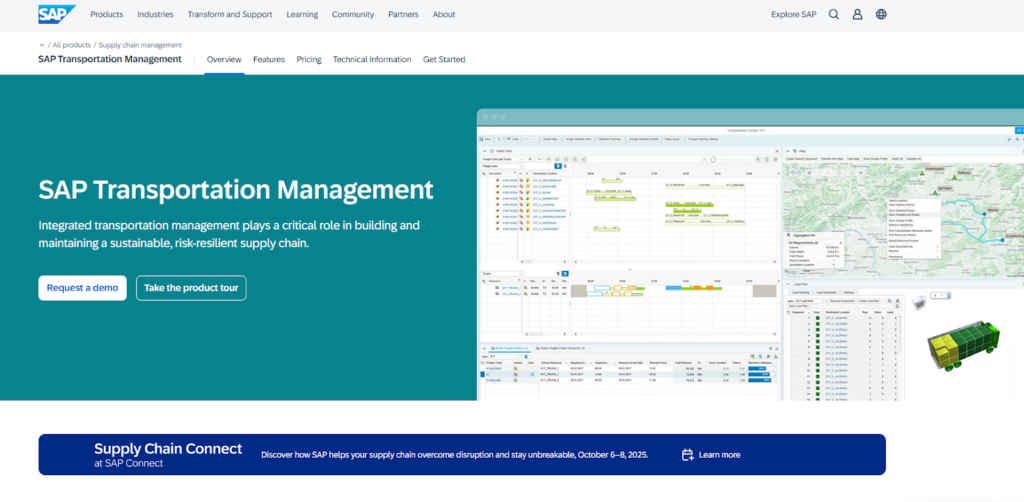
SAP is evaluated by enterprises that want logistics deeply embedded within ERP-driven supply chain operations. It is typically used where transportation, warehousing, finance, and procurement must operate within a single enterprise system.
SAP Key Features
- ERP-native logistics integration: Logistics workflows are tightly connected to finance, inventory, and procurement, enabling end-to-end process standardization across the enterprise.
- Transportation and warehouse management modules: SAP supports structured transportation planning and warehouse execution within broader supply chain processes.
SAP Pros
- Strong enterprise governance and control: Well-suited for organizations prioritizing compliance, auditability, and standardized workflows.
- Deep integration across business functions: Reduces data silos between logistics and core enterprise systems.
SAP Cons
- Mid-day changes often require structured workflows rather than rapid intervention.
- Complex configuration and long implementation cycles
SAP Is Ideal For
- Large enterprises with mature ERP-centric operating models
- Organizations prioritizing standardization over agility
SAP Pricing
- Enterprise licensing based on modules, users, and system scope
- Pricing typically reflects long-term, organization-wide deployment
3. Oracle
Oracle is considered by organizations seeking centralized planning, analytics, and transportation management within a unified enterprise technology stack.
Oracle Key Features
- Transportation management and analytics: Supports routing, carrier selection, and cost analysis within an enterprise planning environment.
- Centralized data and reporting: Emphasizes consistency across planning, execution, and financial reporting.
Oracle Pros
- Useful for organizations focused on optimization and reporting accuracy.
- Enterprise-grade scalability and security
Oracle Cons
- Execution changes can be slower to operationalize
- Heavy IT involvement for customization
Oracle Is Ideal For
- Enterprises with centralized IT governance
- Organizations prioritizing planning accuracy and reporting depth
Oracle Pricing
- Subscription-based enterprise pricing
- Costs scale with users, modules, and data volume
4. Blue Yonder
Blue Yonder is evaluated by teams focused on advanced planning, forecasting, and long-term supply chain optimization rather than day-of-execution control.
Blue Yonder Key Features
- Demand forecasting and supply planning: Supports scenario modeling and predictive planning across the supply chain.
- Network optimization tools: Helps organizations design and rebalance logistics networks over time.
Blue Yonder Pros
- Strong predictive and planning intelligence
- Well-suited for complex supply chains
Blue Yonder Cons
- Limited real-time execution orchestration
- Less focused on last-mile or in-day delivery control
Blue Yonder Is Ideal For
- Enterprises with complex forecasting and planning needs
- Organizations optimizing supply-demand balance at scale
Blue Yonder Pricing
- Enterprise pricing based on modules and scale
- Typically positioned at the higher end of the market
5. Alpega

Alpega is commonly evaluated for freight procurement and transportation execution, particularly in European logistics networks.
Alpega Key Features
- Carrier sourcing and freight procurement: Enables shippers to connect with carriers and manage transport costs.
- Transportation execution tools: Supports structured freight movements and tendering workflows.
Alpega Pros
- Strong freight and carrier management focus
- Well-aligned with European transport operations
Alpega Cons
- Limited last-mile and execution orchestration depth
- Less suited for highly dynamic delivery environments
Alpega Is Ideal For
- Freight-heavy logistics operations
- European shippers and carriers
Alpega Pricing
- Subscription-based pricing tied to freight volume and features
- Varies by region and deployment scope
6. Shipsy
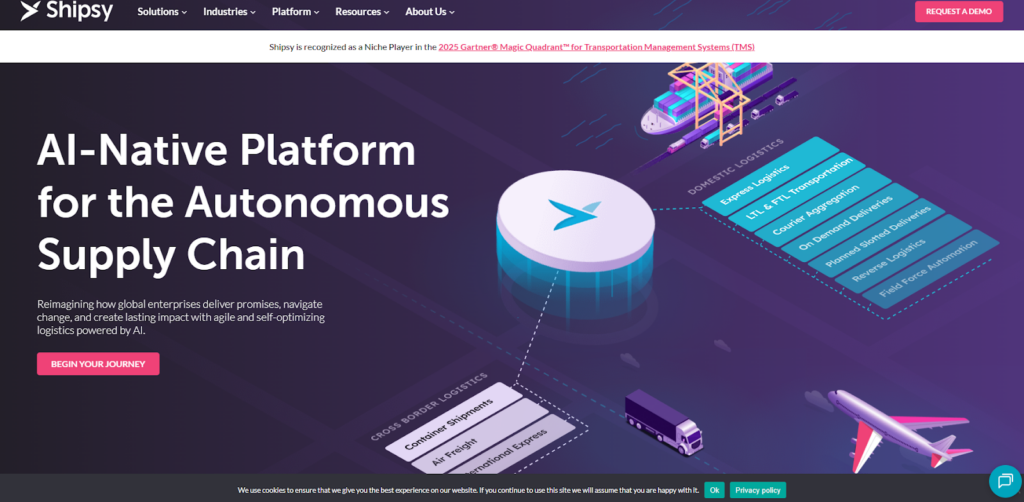
Shipsy is evaluated by organizations managing cross-border, multimodal, and compliance-intensive logistics operations.
Shipsy Key Features
- Cross-border and multimodal visibility: Supports tracking and documentation across international shipments.
- Compliance and invoicing automation: Helps standardize regulatory and billing workflows.
Shipsy Pros
- Strong international logistics support
- Improves process standardization across regions
Shipsy Cons
- Limited in-day execution control
- Primarily visibility and compliance-focused
Shipsy Is Ideal For
- Enterprises with global shipping networks
- Teams managing regulatory complexity
Shipsy Pricing
- Custom pricing based on shipment volume and regions
- Scales with cross-border complexity
7. Tookan
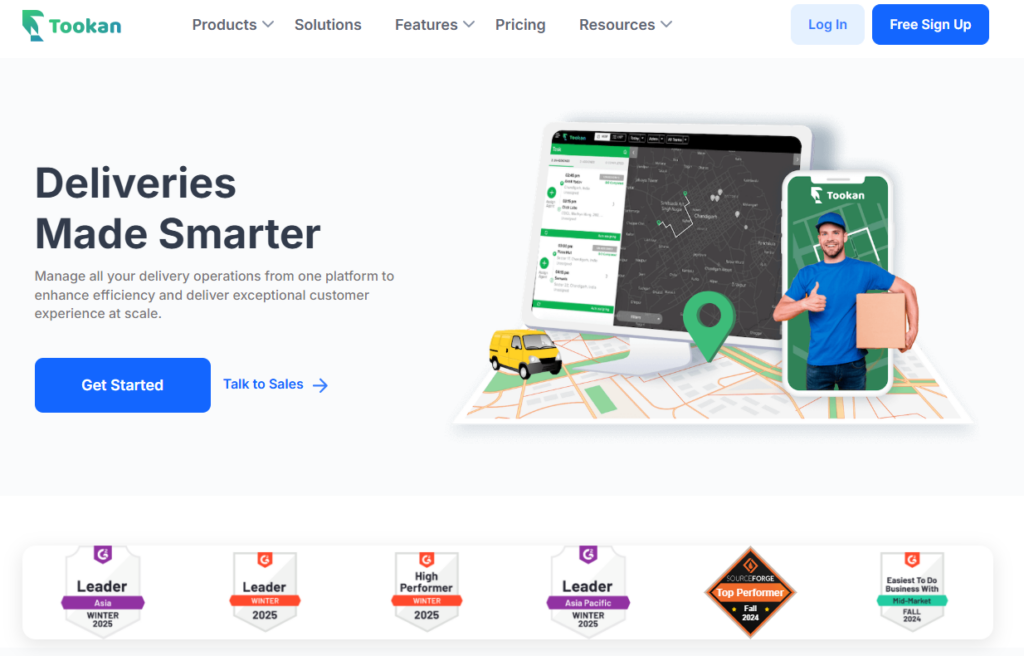
Tookan is evaluated by teams that need quick setup and basic last-mile delivery coordination.
Tookan Key Features
- Supports assignment, driver communication, and delivery status updates.
- Fast onboarding and simple configuration
Tookan Pros
- Easy to deploy and use, with minimal training required.
- Cost-effective for simple operations
Tookan Cons
- Limited scalability for complex operations
- Not built for dense or volatile delivery environments
Tookan Ideal For
- Small to mid-sized delivery teams
- Local or regional last-mile operations
Tookan Pricing
- Tiered subscription pricing
- Based on tasks and feature access
8. Samsara

Samsara is shortlisted when fleet visibility, safety, and compliance are more critical than delivery orchestration.
Samsara Key Features
- Telematics and vehicle monitoring: Provides GPS tracking, diagnostics, and driver behavior insights.
- Safety and compliance tools: Includes ELDs, cameras, and reporting.
Samsara Pros
- Strong fleet oversight and compliance
- Reliable real-time vehicle visibility
Samsara Cons
- Not a logistics execution platform
- Routing and orchestration are secondary
Samsara Ideal For
- Fleet-heavy transport operations
- Compliance-focused organizations
Samsara Pricing
- Subscription pricing tied to vehicles and hardware
- Costs increase with fleet size
10. Onfleet
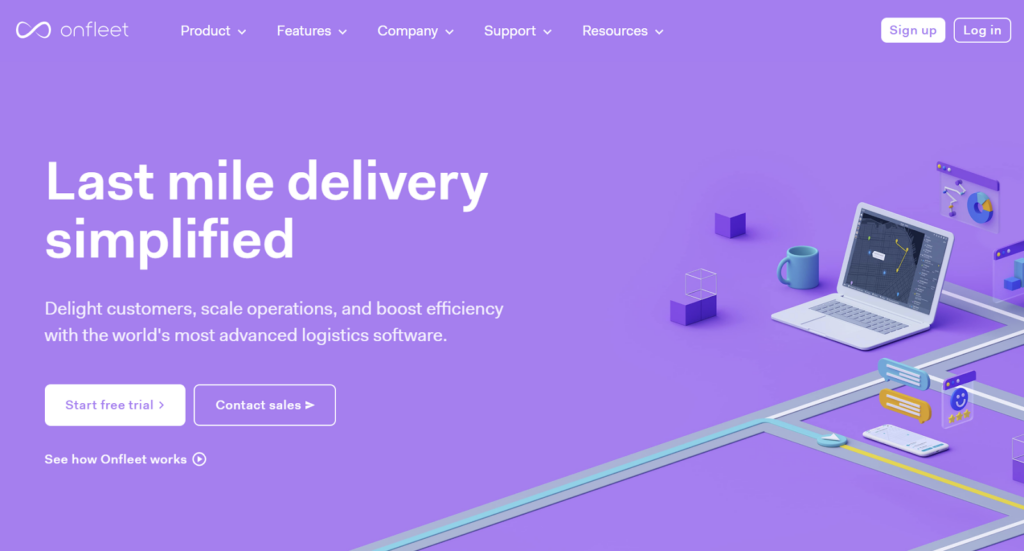
Onfleet is evaluated for simplicity and speed in last-mile delivery execution.
Onfleet Key Features
- Dispatcher-friendly delivery management: Supports task assignment, tracking, and driver communication.
- API-first integrations: Onfleet supports multiple integrations that are API-first.
Onfleet Pros
- Clean UI and fast onboarding
- Strong for local delivery coordination
Onfleet Cons
- Limited depth for complex logistics networks
- Execution control weakens as scale increases
Onfleet Ideal For
- Local and regional delivery businesses
- On-demand and scheduled delivery models
Onfleet Pricing
- Tiered pricing based on task volume
- Predictable but volume-sensitive
10. MercuryGate

MercuryGate is evaluated by enterprises with complex transportation networks and global carrier relationships.
MercuryGate Key Features
- Mercury Gate supports carrier management, rate optimization, and multi-leg transport.
- Global transportation planningenables MercuryGate to operate worldwide.
MercuryGate Pros
- Strong transportation planning depth
- Scales across large, global networks
MercuryGate Cons
- Execution orchestration is limited
- Often paired with additional execution tools
MercuryGate Ideal For
- Enterprises with complex transportation needs
- Organizations prioritizing TMS depth
MercuryGate Pricing
- Enterprise pricing based on shipment volume and scope
- Typically positioned for large-scale deployments
Turning Logistics Complexity Into Operational Advantage
Evaluating Descartes logistics competitors is ultimately about aligning technology with operational reality. Platforms vary widely in what they optimize for — standardization, planning depth, visibility, or execution control. The strongest outcomes come when that choice reflects how decisions are actually made during the delivery day.
For enterprises where speed, reliability, and adaptability directly impact customer experience and SLAs, execution-first orchestration becomes a strategic lever.
Solutions like Locus are built to support that shift, helping teams turn operational complexity into a measurable advantage rather than a constraint.
Schedule a demo with Locus to see how real-time execution control can support your next stage of growth.
Frequently Asked Questions (FAQs)
1. When should companies start evaluating Descartes logistics competitors?
Teams typically begin evaluating alternatives when execution teams rely heavily on manual coordination, experience delays in responding to disruptions, or use multiple tools to manage daily operations.
2. Is Descartes suitable for large and complex logistics networks?
Descartes works well for transportation planning and visibility. However, organizations with frequent in-day changes or dense delivery networks often complement or replace it with execution-focused platforms.
3. How do execution-first platforms differ from traditional TMS or visibility tools?
Execution-first platforms focus on live decision-making during operations. They connect planning, dispatch, and exception handling so teams can respond immediately when conditions change.
4. Do companies usually replace Descartes entirely or run tools in parallel?
Many organizations run platforms in parallel during transitions, especially when separating transportation planning from last-mile or execution orchestration needs.
5. Which Descartes alternative is best for scaling operations?
There is no single best option. Enterprises scaling across regions or managing volatile delivery conditions often shortlist platforms like Locus that emphasize real-time control and orchestration.


General
Rethinking Blue Yonder for Complex Logistics in 2026

Feb 13, 2026
Blue Yonder works well for structured planning, but many enterprises face execution gaps as operations grow dynamic. Here’s what teams consider next.
Read more
General
Middle Mile vs Last Mile Logistics: Key Differences & When to Use in 2026
Feb 16, 2026
Middle mile vs last mile logistics defines how goods move between hubs and customers. Compare roles, costs, and when each model fits best in 2026.
Read moreInsights Worth Your Time




















Top Alternatives to Descartes for Modern Logistics Ops Teams