


General
How to Choose Returns Management Software: Reverse Logistics, Refunds, and Pickup Scheduling
Key Takeaways
- Reverse logistics costs more per unit than forward logistics because it is less predictable, less optimized, and routed through a more complex disposition decision tree. Returns management software is justified by the gap between what a manual returns process costs and what an optimized one costs at enterprise volume
- The return reason determines the entire downstream flow: changed mind, defective, damaged in transit, and wrong item delivered each require different inspection criteria, different disposition paths, and potentially different refund amounts. Software that captures return reason at initiation and uses it to route the return through the appropriate workflow reduces inspection labor and refund errors simultaneously
- Refund policy flexibility is the most underspecified requirement in most returns management software evaluations. The software must support the policy, not constrain it. If your policy applies different refund windows, restocking fees, and condition adjustments per product category and customer tier, the platform must be configurable to that level
- Pickup scheduling for returns is operationally similar to forward delivery scheduling but with specific differences: the customer must be home with the item ready, failed pickups are equivalent to failed deliveries in cost and customer impact, and the pickup leg can be combined with forward delivery routes where the same driver collects a return at one stop and delivers a new order at the next
- The returns pickup scheduling evaluation must ask one specific question: does the pickup slot connect to actual carrier and fleet capacity in the relevant zone, or does it generate a slot that may conflict with existing route commitments and require manual dispatch adjustment?
Returns management is the operational challenge that scales at the same rate as forward logistics but receives a fraction of the investment.
As forward operations are optimized with route planning tools, carrier management platforms, and delivery tracking, the reverse flow, from customer back through the network to a disposition point, often remains manual, slow, and expensive.
This guide evaluates returns management software across the three pillars that determine whether a platform reduces the cost and friction of reverse logistics: the physical return flow, the refund processing logic, and the pickup scheduling infrastructure.
Each pillar has specific requirements, specific red flags, and specific questions that reveal how a vendor’s implementation works.
Why Returns Management Software Deserves a Separate Evaluation
Returns are not the reverse of forward logistics. The costs, the complexity, and the failure modes are different enough that a platform designed for forward delivery management handles returns poorly when adapted, and a platform designed for returns handles forward delivery poorly when extended.
The forward vs. reverse logistics gap
| Forward logistics challenge | Reverse logistics equivalent (and why it is harder) |
|---|---|
| Route optimization for outbound deliveries | Pickup route optimization for inbound returns: lower density, variable item readiness, failed pickup rate typically higher than failed delivery rate |
| Carrier selection for delivery leg | Carrier selection for return leg: different carrier performance standards, different cost structure, not always the same carrier as the delivery leg |
| Delivery confirmation and proof | Proof of pickup: item condition at pickup must be recorded to support condition-based refund decisions later |
| Warehouse receiving (inbound from supplier) | Returns receiving: condition inspection, return reason verification, and multi-path disposition decision all at the point of receipt |
| Order to customer (one destination) | Return to disposition (multiple destinations): restock, refurbish, vendor return, liquidation, donation, or disposal per item |
Pillar 1: Reverse Logistics: The Physical Return Flow
The reverse logistics pillar covers the physical journey of returned goods from the customer’s location to the final disposition point. It encompasses customer-facing return initiation, the transport and tracking of the return in transit, receiving and inspection at the processing point, and the routing decision that determines where the item goes after inspection.
Customer-facing return initiation
The return initiation experience determines how much information the downstream process has to work with.
A poor initiation interface captures only the order number and the quantity being returned. A good initiation interface captures: the specific items being returned, the quantity of each, the return reason per item, the expected condition, and the customer’s preferred return method (pickup, drop-off at carrier, drop-off at store).
Return reason is the most operationally important piece of information captured at initiation. The reason determines the downstream workflow:
- Changed mind or no longer needed: Standard inspection; full refund if condition is acceptable; restocking to forward inventory if in sellable condition
- Defective or stopped working: Defect verification during inspection; replacement or refund decision; potential quality control notification to the manufacturer
- Damaged in transit: Carrier claim initiation; documentation of damage; refund typically independent of customer condition
- Wrong item delivered: Fulfillment error investigation; immediate replacement dispatch; full refund without return required in some policies
- Does not match description: Product listing review; return processed as fulfillment error or customer expectation gap based on investigation
A platform that captures return reason at initiation and uses it to route the return through the appropriate inspection workflow, carrier claim process, and refund path reduces manual triage at every subsequent stage.
Disposition routing and in-transit visibility
Once a return is in transit, the visibility gap in most returns operations opens.
Forward shipments are tracked through carrier APIs, TMS integration, and last-mile tracking tools. Returns frequently disappear into the carrier network until they surface as a received item at the warehouse, days after departure.
Returns management software must provide in-transit visibility equivalent to what forward shipments receive. This requires carrier API integration for the return carrier, which may differ from the delivery carrier, and the ability to surface return status updates in the same operational view as forward shipment status.
Disposition routing is the decision that determines where a received and inspected return goes. The options, and the criteria for each:
| Disposition path | When it applies | Operational requirement |
|---|---|---|
| Restock to forward inventory | Item in new or like-new condition; no defects identified; within restocking policy for the product category | Inspection outcome matches restock criteria; warehouse location assignment for forward picking |
| Refurbishment queue | Item functional but shows cosmetic wear; refurb makes it resaleable at a discount | Item condition grade triggers refurb routing; refurb facility capacity must have availability |
| Vendor return | Item under manufacturer warranty; defect requires vendor inspection; vendor return agreement exists | Return authorization (RA) from vendor required; packaging and documentation per vendor specification |
| Liquidation | Item not resaleable or refurbishable; resale at wholesale or auction value | Liquidation channel or buyer relationship required; item removed from forward inventory |
| Disposal or donation | Item has no resale or liquidation value; regulatory or sustainability disposal requirements apply | Disposal partner or donation organization required; documentation for sustainability reporting |
Pillar 2: Refunds: Policy Flexibility and Fraud Awareness
Refund processing is where return policy meets software capability. Most returns management platforms support a defined set of refund scenarios.
The evaluation question is whether the platform supports your specific policy. Before evaluating any platform, document your refund policy in detail: which return reasons trigger which refund windows, which product categories have restocking fees, how condition grades affect refund amounts, and how customer tier affects policy exceptions.
Refund timing, amount, and channel
Refund policy has three independent dimensions that must each be configurable:
- Timing: When is the refund initiated? Options include: at return initiation (before physical receipt), at confirmed carrier collection, at warehouse receipt, or after inspection completion. Each timing choice carries different fraud risk and different customer experience implications. A refund issued at initiation for a high-value item before the return is received creates significant fraud exposure; a refund withheld until after inspection for a low-value item creates unnecessary customer friction
- Amount: The refund amount may equal the original purchase price (full refund), the purchase price minus a restocking fee (partial refund for opened or non-defective returns), or the purchase price minus a condition-based adjustment (partial refund when the returned item condition is below acceptable threshold). Each of these scenarios must be configurable per product category, return reason, and condition grade
- Channel: The refund channel is typically the original payment method, but exceptions include store credit (offered at a premium as a retention mechanism), digital wallet credits, and replacement product in lieu of refund. The platform must support multiple refund channels and be able to apply channel selection rules per return scenario
Ask each vendor: can all three dimensions be configured independently per return scenario, or are they bundled in predefined refund rule sets that cannot be fully customized?
Return fraud detection
Return fraud is a significant and growing cost in retail and e-commerce. The most common fraud patterns:
- Return of different item: The customer initiates a return claiming an expensive item and ships back a cheaper substitute or an empty box. Detection requires physical inspection at receipt and, for high-risk items, weight verification at collection
- Wardrobing: The customer purchases an item with the intention of using and returning it. More common for apparel and event items. Detection relies on usage indicators identified during inspection and pattern analysis across return history for the specific customer
- Claim abuse: The customer claims damage or defect that does not exist to avoid a restocking fee or to receive a full refund. Detection requires comparison between the customer-stated condition at initiation and the inspector-confirmed condition at receipt
- Account manipulation: The customer creates multiple accounts to circumvent per-customer return limits or return frequency thresholds. Detection requires cross-account pattern analysis against shared identifiers such as address, payment method, and device fingerprint
Returns management software should maintain a return history per customer that flags anomalous patterns: high return frequency, high claim value relative to purchase history, or returns that consistently fail inspection on claimed defects.
These flags should be available to customer service teams before issuing refunds and to fraud review workflows for high-value returns.
Pillar 3: Pickup Scheduling: The Last Mile of Returns
Pickup scheduling is the most logistics-intensive pillar of returns management. It requires a customer-facing booking interface, a slot management system that connects to real carrier and fleet capacity, a dispatch integration that builds the pickup into an active route plan, and a proof of pickup mechanism that documents item condition at collection.
What makes returns pickup different from delivery scheduling
Returns pickup and forward delivery share the same operational infrastructure, but the failure mode is different. In forward delivery, a failed attempt is typically caused by the customer not being home. In returns pickup, a failed attempt can be caused by:
- Customer not home: Same cause as failed delivery, with the same customer impact
- Item not ready for collection: The customer was home but had not packaged the item or could not locate it. No equivalent exists in forward delivery
- Incorrect packaging: The item is not packaged to carrier requirements, the driver cannot collect it, and a re-scheduled pickup with packaging instructions is required
- Item condition mismatch: The customer claimed a condition at initiation that differs from what the driver observes at collection. Policy determines whether the driver collects regardless or requires customer acknowledgment of a potential refund adjustment
Failed pickups generate the same cost profile as failed deliveries: the full vehicle and driver cost for the initial attempt, the cost of re-scheduling, and the customer experience impact. Reducing failed pickup rates requires the same interventions as failed delivery rates: accurate appointment windows, pre-collection customer notifications, and instruction delivery for packaging requirements.
Also read: The Hidden Cost of Last-Mile Visibility Gaps
Connecting pickup slots to carrier capacity
The most common failure in returns pickup scheduling is a gap between the slot a customer books and the capacity that actually exists to fulfill it.
Pickup slots generated from a static weekly capacity calendar may conflict with active route commitments in the relevant zone. When the gap is discovered at dispatch time, the dispatcher must manually identify an alternative carrier or contact the customer to reschedule.
A pickup slot booking system that connects to live carrier capacity in the customer’s zone generates only slots that the carrier network can fulfill at the time of booking. When carrier capacity for a zone changes, affected slots update. This requires the same infrastructure as forward delivery slot management: live carrier capacity feeds, zone-level slot generation, and automatic slot closure when capacity is exhausted.
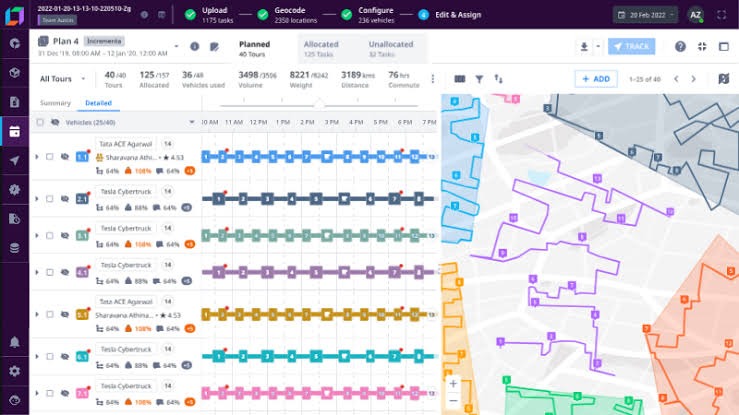
The return pickup route also benefits from consolidation with forward delivery routes. In distribution models where the same carrier or fleet serves an area for both deliveries and returns, a driver who has capacity on a delivery route through Zone A can collect returns from Zone A customers at no significant additional cost.
The dispatch system must be able to combine forward delivery and return pickup assignments in a single route optimization.
How the Three Pillars Connect
Reverse logistics, refunds, and pickup scheduling form a sequential workflow where data from each stage feeds the next and where gaps in one pillar produce failures in the others.
- Pickup scheduling creates reverse logistics: A return that is collected on schedule with documented condition at pickup enters the reverse logistics flow with complete information. A return that was self-shipped by the customer without condition documentation enters the flow with a claims risk at inspection
- Reverse logistics feeds refund processing: The inspection outcome at the receiving point should automatically trigger the appropriate refund workflow. If the platform does not connect inspection outcomes to refund processing, the connection is made manually, introducing delay and error risk between receipt and refund
- Refund policy shapes reverse logistics routing: A policy that issues refunds before inspection (to reduce customer friction) should trigger a tighter inspection protocol to catch post-refund fraud. A policy that issues refunds only after inspection allows a longer inspection window but delays the refund. The refund policy decision affects the disposition routing timeline and the inspection resource requirements
All three pillars share a dependency on the return reason captured at initiation.
Return reason determines the inspection protocol, the refund amount, and the disposition path. A platform that loses the return reason between initiation and inspection requires an inspector to re-determine the return reason at receipt, which duplicates work and introduces judgment variation.
Questions to Ask Every Vendor
For reverse logistics
- Can different return reasons trigger different inspection protocols automatically, or does every return go through the same inspection checklist regardless of why it was returned?
- Does the platform provide in-transit visibility for returns, and does it use the same carrier API connections as forward shipments or a separate data source?
- How does the platform handle a multi-item order where different items have different disposition paths after inspection?
- Can disposition routing rules be configured per product category, condition grade, and return reason, or are they fixed categories?
For refunds
- Can refund timing, amount, and channel be configured independently per return reason and product category?
- How does the platform handle a case where the inspection-confirmed condition differs from the customer-stated condition at initiation?
- What return pattern signals does the platform flag as potential fraud, and where are those flags visible in the workflow?
- What is the audit trail for refund decisions? Is there a record of why each refund was the amount it was, and is that record accessible for dispute resolution?
For pickup scheduling
- Are pickup slots generated from live carrier capacity in the relevant zone, or from a static weekly capacity calendar?
- Does the platform support combining return pickups with forward delivery routes in the same route optimization?
- What proof of pickup does the system capture: does the driver record item condition at collection, and does that record feed into the inspection workflow at receipt?
- What happens when a pickup fails: how is the customer notified, how is the pickup re-scheduled, and what dispatch adjustment is required?
How Locus Supports Reverse Logistics and Pickup Scheduling
Locus is the world’s first Decision-Intelligent, Agentic TMS. Its dispatch management, route planning, and carrier coordination capabilities apply to the pickup scheduling and in-transit visibility components of returns management, which are the components most closely aligned with its core logistics orchestration architecture.
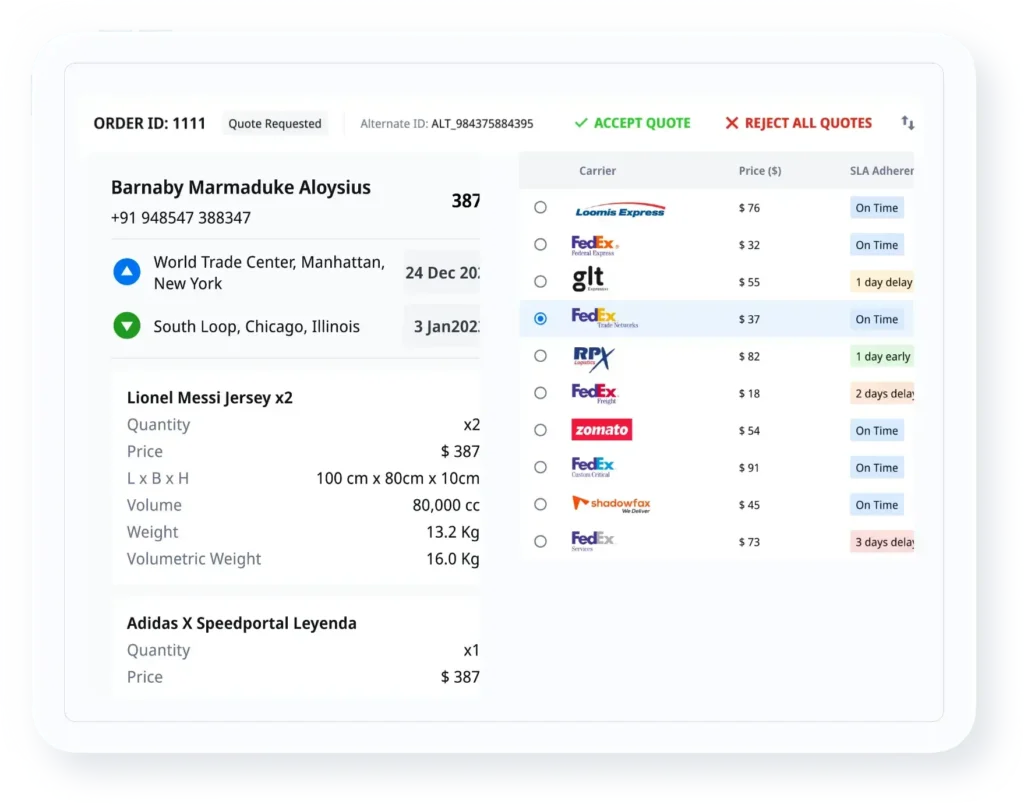
For returns pickup scheduling, DispatchIQ generates pickup slots from live carrier and fleet capacity in the customer’s zone and assigns pickup orders to vehicles using the same constraint-based logic it applies to forward delivery.
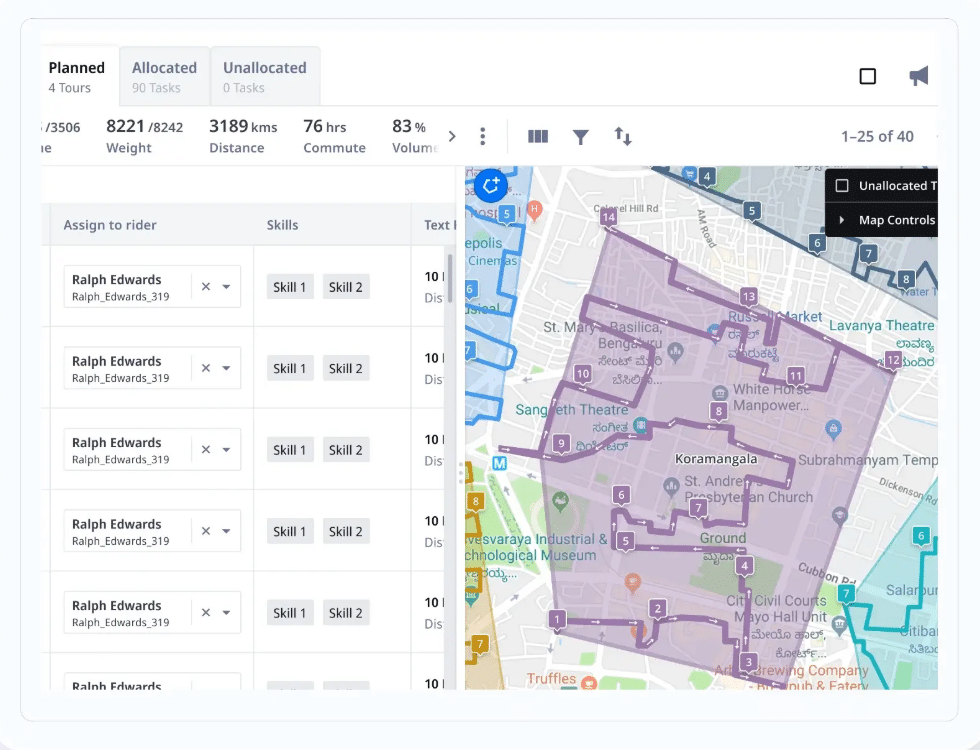
The Fireworks Routing Engine optimizes pickup routes, and where the operation supports it, combines return pickups with forward delivery assignments on the same daily route to reduce the incremental cost of the return leg.
At the point of pickup, the Driver Companion App enables the driver to document item condition at collection: structured condition notes, photos, and customer acknowledgment are captured in the same workflow as the pickup confirmation.
That documentation record flows back to the platform and is available to warehouse inspection teams when the return arrives, giving inspectors the driver’s condition assessment alongside the customer’s stated return reason.
A unified real-time visibility layer within Locus’s agentic TMS tracks return pickups with the same GPS-based, stop-level visibility applied to forward deliveries. When a return pickup is running late or has been marked failed, the Customer Agent sends a proactive notification to the customer and the exception surfaces to the dispatcher with re-scheduling options.
ShipFlex coordinates carrier selection for the return leg, drawing on the same carrier performance data and capacity visibility it uses for forward delivery, across 160+ active carriers from a broader network of 1,000+ pre-integrated partners.
For the refund processing and inspection management components of returns, Locus works alongside dedicated returns management platforms that handle disposition routing rules, refund policy configuration, and fraud flagging, providing the logistics orchestration layer those platforms lack for pickup scheduling and in-transit tracking.
Locus has been recognized in Gartner research on last-mile delivery and supply chain execution technologies for seven consecutive years, including in the 2026 Hype Cycle for Supply Chain Execution and Logistics Technologies and the 2025 Market Guide for Last-Mile Delivery Technology Solutions.
In October 2025, Ingka Investments, the investment arm of Ingka Group, acquired Locus, providing long-term institutional backing to a platform that continues to operate independently.
Simplify Reverse Logistics Workflows
Returns management software is evaluated well when the buyer has documented their specific reverse logistics workflow, their refund policy in full detail, and their pickup model before beginning the vendor review.
The evaluation criteria in this guide are anchored to those three inputs: reverse logistics covers how returns move from customer to disposition, refunds covers the policy flexibility and fraud detection the software must support, and pickup scheduling covers the dispatch infrastructure that makes customer-scheduled collections operationally viable.
The most expensive gap in most returns management implementations is not software functionality. It is the integration between return initiation, in-transit tracking, and inspection. When return reason captured at initiation does not reach the inspector, and inspection outcome does not automatically trigger the right refund workflow, the manual labor between those stages erases the efficiency gain the software was supposed to deliver.
Schedule a demo with Locus today to see how returns pickup scheduling integrates with forward delivery dispatch in one logistics orchestration platform.
Frequently Asked Questions (FAQs)
What is the most expensive part of reverse logistics?
Transportation is typically the largest direct cost: the return leg costs as much per unit as the delivery leg, but the return has lower volume density (customers do not return items on a predictable schedule the way orders are placed), making the cost per pickup higher than the cost per delivery. Secondary costs include inspection labor (reviewing condition and verifying return reason at receipt), disposition cost (especially for items that cannot be restocked), and refund processing overhead.
How does returns pickup scheduling differ from forward delivery scheduling?
Forward delivery scheduling assigns a driver to deliver a confirmed item to a confirmed address at a confirmed time. The item is packaged and ready; the customer is expected to be home. Returns pickup scheduling has two additional variables that forward delivery does not: whether the item is ready and properly packaged at the time of collection, and whether the condition the customer claims matches what the driver observes at pickup. Failed pickups have the same cost profile as failed deliveries, but the failure reasons include item-not-ready and packaging-inadequate scenarios that do not exist in forward delivery. The scheduling infrastructure must also connect to a broader set of carriers, since the return carrier may not be the same carrier that made the original delivery.
What return fraud patterns should software detect?
The four patterns with the highest financial impact are: return of a different item (the customer ships back a substitute or empty box), wardrobing (returning an item after use), condition misrepresentation (claiming defect to avoid restocking fee), and account manipulation (using multiple accounts to circumvent return limits). Detection requires a combination of physical inspection at receipt, weight verification for high-value items, return history analysis per customer, and cross-account pattern matching on shared identifiers. The software should flag each pattern type separately with the specific evidence that triggered the flag, so the customer service or fraud review team can assess each case with context.
How do you calculate the cost of returns to build the business case?
The direct cost calculation includes: return transportation cost per unit, inspection labor cost per unit, disposition loss for units that cannot be restocked at full value (the difference between original value and liquidation or disposal value), and refund processing cost. Add the indirect costs: customer service contacts generated by returns (tracking, refund status, pickup scheduling), return fraud loss, and the carrying cost of inventory in the return pipeline during transit and inspection. Total all of these and divide by return volume to get cost per return. Compare this to the published benchmark for your sector to identify where the largest gaps are. The business case for returns management software should be built around the specific cost categories that your manual process handles least efficiently, not against a generic returns rate reduction target.
How does Locus support returns pickup scheduling and reverse logistics dispatch?
Locus handles the pickup scheduling and in-transit tracking components of returns management through the same dispatch orchestration architecture it uses for forward delivery. DispatchIQ generates pickup slots from live carrier and fleet capacity and assigns pickup orders to vehicles using constraint-based optimization. The Fireworks Routing Engine can insert return pickups into the same daily route as forward deliveries in the same geographic area, reducing the incremental cost of the return collection leg. The Driver Companion App captures structured condition notes and photos at the point of collection, which travel with the return record to the inspection team. A unified real-time visibility layer within Locus’s agentic TMS provides in-transit tracking for return pickups with the same GPS-based stop-level visibility as forward deliveries.


General
How to Choose Logistics Control Tower Software: Network Visibility, Exception Playbooks, and Analytics

Sep 14, 2026
Evaluate logistics control tower software across three pillars: network visibility, exception playbooks, and analytics. Includes vendor questions and red flags.
Read more
General
How to Choose AI Dispatch Software: Auto-Assignment, Dynamic Routing, and Utilization Gains
Sep 14, 2026
Evaluate AI dispatch software across three pillars: auto-assignment, dynamic routing, and utilization gains. Includes vendor questions, red flags, and measurement criteria.
Read moreInsights Worth Your Time




















How to Choose Returns Management Software: Reverse Logistics, Refunds, and Pickup Scheduling