


General
10 Best Shipment Tracking Software in 2026
The 10 best shipment tracking software platforms compared here are Locus — enterprise last-mile and multi-carrier orchestration; LogiNext Mile — urban delivery automation and field workforce tracking; Shippo — e-commerce label creation and parcel tracking; AfterShip — branded post-purchase tracking; ShipERP — SAP/ERP-embedded shipping and compliance; Descartes Systems Group — cross-border freight, customs and multimodal visibility; Sendcloud — European e-commerce shipping, tracking and returns; Shipwell — freight TMS with predictive ETAs; TrackingMore — multi-carrier tracking API and carrier-status standardisation; and ShipHawk — fulfilment, WMS/TMS and packing-led shipping automation.
Use this guide to compare platforms by shipment type, carrier coverage, integration model, analytics depth, customer notification features and operational fit. The right shortlist depends first on whether you need parcel and last-mile tracking, freight/TMS visibility, or post-purchase customer experience tracking.
Modern shipment tracking software gives logistics teams live shipment status, accurate ETAs, automated notifications and exception alerts. The strongest platforms also connect visibility with planning, execution, analytics and customer communication so operations teams can reduce manual follow-ups and respond faster when shipments are at risk.
Key Takeaways
- Quick picks: best for multi-carrier tracking API — TrackingMore; best for e-commerce post-purchase experience — AfterShip; best for enterprise freight — Shipwell for TMS workflows or Descartes Systems Group for freight, customs and multimodal compliance.
- Choose by tracking type before comparing features. Shippo and Sendcloud are closer to parcel/e-commerce shipping tools; Descartes and Shipwell sit in freight and TMS; AfterShip and TrackingMore focus strongly on post-purchase visibility.
- Integration model matters. Real-time APIs suit live operational dashboards, EDI is common in freight and compliance workflows, and customer-facing portals are essential for branded tracking and returns.
- Enterprise last-mile buyers should compare orchestration depth. Locus and LogiNext Mile are more relevant where route planning, field execution and delivery visibility need to work together.
- ERP-heavy shippers should check native fit early. ShipERP is strongest for SAP-centred shipping workflows, while ShipHawk fits fulfilment operations that need WMS/TMS capabilities alongside shipping automation.
| Use case | Start with | Why |
|---|---|---|
| Multi-carrier shipment visibility | TrackingMore | Built around tracking API, carrier status standardisation and parcel visibility across many carriers. |
| E-commerce post-purchase tracking | AfterShip | Strong fit for branded tracking pages, customer notifications, returns and delivery experience. |
| Enterprise freight visibility | Shipwell / Descartes Systems Group | Shipwell fits TMS-led freight operations; Descartes fits customs, compliance and multimodal logistics. |
Master Comparison: Top 10 Shipment Tracking Software in 2026
Tracking type filter — use before comparing features. Start by deciding whether you primarily need parcel/last-mile visibility, freight/TMS control, or post-purchase customer experience tracking. Shippo is best understood as parcel and e-commerce shipping and label management, not an enterprise freight TMS, while Descartes Systems Group is focused on freight, customs, compliance and multimodal logistics, not parcel label printing.
| Tracking type | Best fit when you need | Vendors to compare first |
|---|---|---|
| Parcel / last-mile | Courier, e-commerce, regional delivery or owned/partner fleet visibility | Locus, LogiNext Mile, Shippo, Sendcloud, ShipHawk |
| Freight / TMS | Load planning, multimodal freight, compliance, audit, settlement or cross-border movement | Shipwell, Descartes Systems Group |
| Post-purchase / customer experience | Branded tracking pages, customer notifications, returns visibility and WISMO reduction | AfterShip, TrackingMore, Sendcloud |
| Feature | Locus | LogiNext Mile | Shippo | AfterShip | ShipERP | Descartes | Sendcloud | Shipwell | TrackingMore | ShipHawk |
|---|---|---|---|---|---|---|---|---|---|---|
| Tracking focus | Enterprise last-mile and regional delivery orchestration | Urban delivery automation | Parcel shipping and merchant tracking | Post-purchase customer tracking | ERP-embedded shipping visibility | Freight, customs and multimodal visibility | European e-commerce shipping and returns | Freight TMS visibility | Multi-carrier tracking API | Fulfilment, WMS/TMS and shipping automation |
| Real-time tracking | Predictive ETAs | Live fleet tracking | Basic parcel tracking | Post-purchase tracking | ERP-embedded tracking | Multimodal tracking | Multi-language tracking | Predictive ETAs | Carrier-status tracking | Basic shipment tracking |
| AI optimisation | Route and predictive optimisation | Route planning | Not available | AI-based ETA prediction | Not available | Not available | Not available | AI-driven TMS | Not available | Packing optimisation |
| Multi-carrier support | Multi-carrier support | Multi-carrier support | 40+ carriers | 1,200+ carriers | 250+ carriers | Global EDI | 160+ carriers | Multi-carrier | 1,300+ carriers | Multi-carrier |
| Notifications | All stakeholders | SMS and email | Basic | Branded notifications | ERP-triggered alerts | EDI alerts | Multi-language notifications | Exception alerts | Email and SMS | Basic |
| Analytics | KPI dashboards | Operational dashboards | Basic | Advanced analytics | Basic | Audit reports | Shipping and returns analytics | ROI tracking | Performance reports | Reporting |
| ERP / WMS fit | Enterprise APIs | API-based | Marketplace and store integrations | E-commerce integrations | Deep SAP integration | EDI / customs | E-commerce integrations | ERP / WMS / CRM | API-led integrations | NetSuite / SAP |
| Data integration model | Enterprise APIs plus live tracking dashboard for operations and customers | API-based delivery integrations with web and mobile operations dashboards | Store and marketplace integrations with a merchant dashboard for labels and tracking | Carrier integrations feeding a branded customer-facing tracking portal and notifications | SAP/ERP-embedded workflows with carrier and supplier portals | Global EDI and messaging network connected to freight and compliance modules | E-commerce platform integrations plus tracking and returns portal | ERP/WMS/CRM integrations feeding a TMS visibility layer | Tracking API and webhooks plus branded tracking page for developers and CX teams | API and ERP integrations with WMS/TMS workflows for fulfilment and shipping automation |
| Best fit | Enterprise retail, FMCG, e-commerce and 3PL last-mile operations | Dense urban delivery and courier operations | SMB and mid-market e-commerce | E-commerce post-purchase experience | SAP-centred enterprise shipping | Cross-border freight and compliance | European online retailers | Freight shippers and 3PLs | API-first multi-carrier visibility | Fulfilment-heavy retailers and distributors |
Top 10 Shipment Tracking Software: In-Depth Reviews
1. Locus
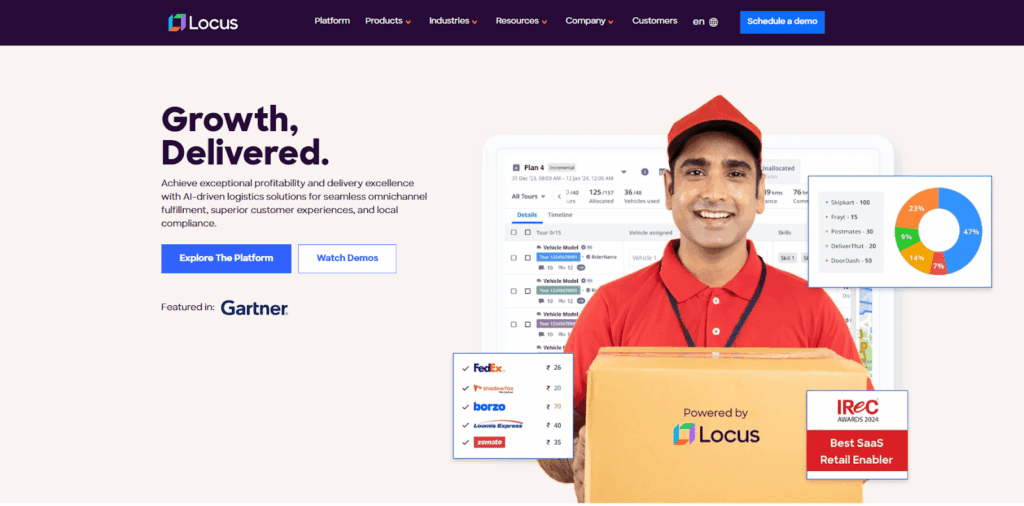
Locus is shipment tracking software for enterprises that manage complex last-mile and regional delivery networks. It brings together planning, execution, tracking and analytics in one system, helping businesses improve visibility, reduce costs and scale delivery operations with confidence.
Key Features of Locus
- AI-powered route optimisation: Calculates efficient delivery routes using traffic data, delivery priorities and historical trends.
- Real-time shipment tracking: Provides live updates across regional carrier networks with predictive ETAs.
- Predictive delivery insights: Flags potential delays early and forecasts arrival times for proactive planning.
- Automated notifications: Keeps customers, drivers and internal teams updated when shipment status changes.
- Multi-carrier integration: Consolidates multiple carrier feeds into a single operational dashboard.
- Advanced analytics: Dashboards highlight KPIs, route performance and delivery metrics.
- Enterprise scalability: Handles seasonal spikes and high delivery volumes without compromising visibility.
Pros
- Combines predictive AI route optimisation, live shipment tracking and advanced analytics in one enterprise suite.
- Volume-based pricing helps costs scale with shipment growth.
- Suitable for complex delivery networks across retail, FMCG, e-commerce and 3PL operations.
- Strong fit where tracking needs to connect with dispatch, routing and delivery execution.
Cons
- Custom pricing requires a sales consultation.
- Primarily optimised for last-mile and regional road logistics rather than international ocean or air freight.
Locus Is Ideal For
Enterprises in retail, e-commerce, FMCG and 3PL logistics that manage high-volume delivery operations and need centralised visibility across carriers, predictive decision-making and scalable last-mile delivery capacity.
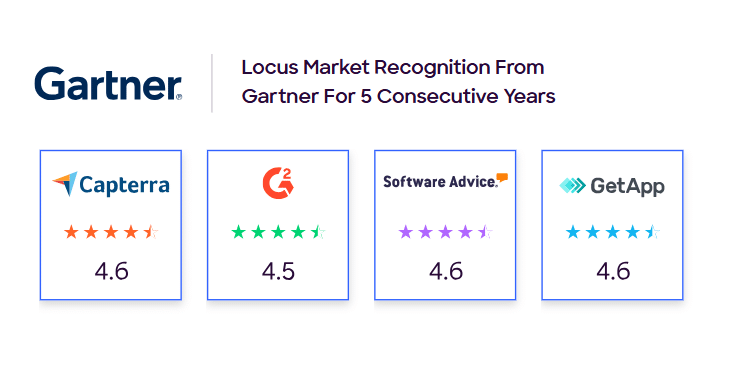
Locus Pricing
Locus uses a flexible, volume-based pricing model. There are no fixed subscription fees listed publicly; costs depend on shipment volume and selected modules. Companies can subscribe to individual modules or bundle multiple capabilities into a package.
“We use Locus for real-time tracking of delivery shipments. This provides us transport visibility, helping us manage trucks more closely and proactively detect possible issues. The e-POD solution also saves us significant time, as all delivery data is captured on the platform.”
– Ly Trung Kien, Group Logistics Manager, Nestle
2. LogiNext Mile

LogiNext Mile provides a delivery automation platform with route optimisation, order tracking and field workforce management tools. It is widely used by retail logistics and e-commerce teams looking to improve delivery accuracy and visibility across urban delivery zones.
Key Features of LogiNext Mile
- Route planning engine with real-time traffic inputs.
- Live delivery tracking for customers and internal operations teams.
- Proof of delivery with digital signatures, photos and delivery confirmations.
- Field force management for attendance and delivery-agent performance.
- Customer notification system with SMS and email updates.
Pros
- Strong route planning engine for dense urban operations.
- Workforce management features extend beyond tracking to driver attendance and KPI monitoring.
- Well-suited for hybrid delivery models combining owned fleets and third-party couriers.
Cons
- Enterprise-only pricing can be a barrier for mid-market businesses.
- Predictive AI depth for proactive delay management may be less extensive than enterprise orchestration platforms.
LogiNext Mile Is Ideal For
Mid-sized to large enterprises in e-commerce, retail and courier services managing dense urban deliveries and direct-to-consumer distribution.
LogiNext Mile Pricing
Pricing is available on request and typically depends on the number of users, delivery volume and geographic spread.
3. Shippo
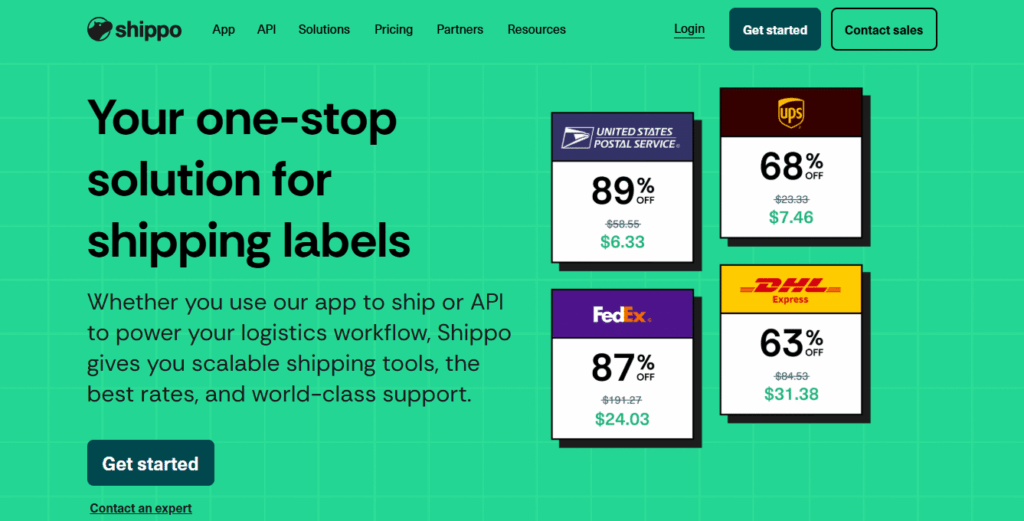
Shippo is multi-carrier shipping software built for e-commerce businesses. It simplifies label creation, shipment tracking and returns while giving merchants access to discounted carrier rates. With over 300,000 businesses using its platform, Shippo helps online sellers scale fulfilment operations without heavy logistics infrastructure.
Key Features of Shippo
- Create and print shipping labels with discounted rates from 40+ carriers.
- Connect multiple online stores and marketplaces to one dashboard.
- Real-time shipment tracking and automated customer notifications.
- Branded tracking emails, packing slips and return labels.
- Reporting and analytics tools for shipment history and performance.
Pros
- Free tier and pay-as-you-go pricing make it accessible for startups and small businesses.
- Multi-marketplace integrations, including Shopify, Amazon and eBay, support multichannel operations.
- Strong fit for merchants that need labels, parcel tracking and returns in one workflow.
Cons
- No AI-driven route optimisation or predictive delay management.
- Analytics are basic compared with enterprise-grade logistics platforms.
- Not designed as a freight TMS.
Shippo Is Ideal For
Small to mid-sized e-commerce businesses, marketplaces and platforms seeking simple integrations and affordable shipping management.
Shippo Pricing
- Free starter plan includes 30 labels per month.
- Pay-as-you-go plans start at $0.07 per label after the free limit.
- Pro plans begin at $17/month.
- Custom Premier plans are available for high-volume shippers with enterprise needs.
4. AfterShip
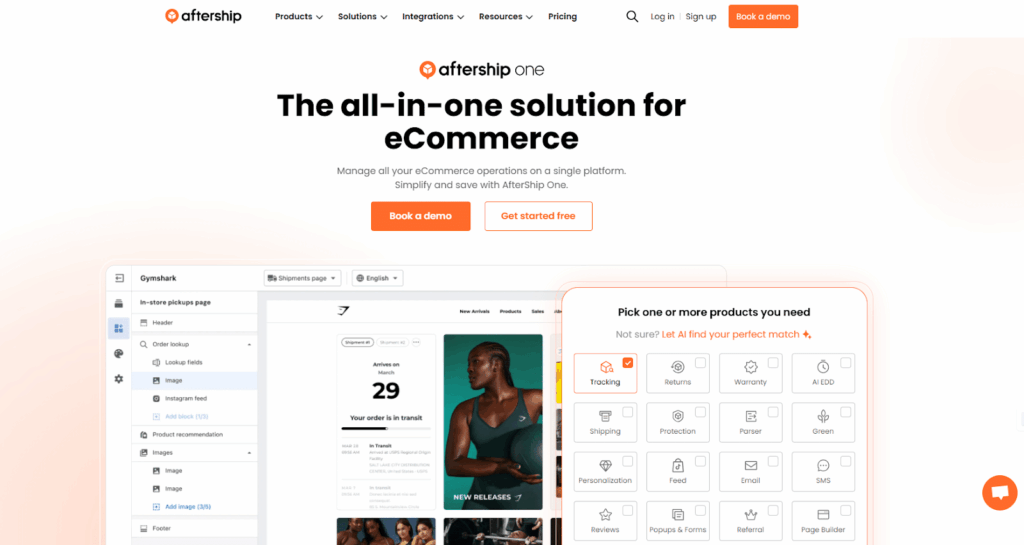
AfterShip is a post-purchase tracking and customer experience platform that connects to over 1,200 carriers worldwide. It helps retailers improve shipment visibility, automate customer updates and reduce service enquiries by centralising tracking and returns. With AI-powered delivery predictions and branded tracking pages, AfterShip is widely used by e-commerce businesses to strengthen engagement after checkout.
Key Features of AfterShip
- Integration with 1,200+ carriers for global tracking coverage.
- Branded tracking pages with multilingual notifications.
- Automated customer updates via email and SMS.
- AI-powered predictive delivery dates and exception management.
- Analytics dashboards for delivery performance and customer feedback.
Pros
- Extensive carrier coverage supports global tracking visibility.
- Branded tracking pages and multilingual notifications help reduce WISMO queries.
- Tiered pricing provides an accessible starting point with a clear upgrade path.
Cons
- Focused on post-purchase experience rather than route optimisation, fleet management or operational planning.
- Advanced analytics and AI-powered features are reserved for higher tiers.
AfterShip Is Ideal For
Retailers and e-commerce brands that prioritise post-purchase engagement, branded delivery communication and customer satisfaction.
AfterShip Pricing
Plans start at $11/month for 100 shipments. Pro and Premium tiers support higher volumes and advanced features, while enterprise plans are customised for large-scale retailers.
5. ShipERP
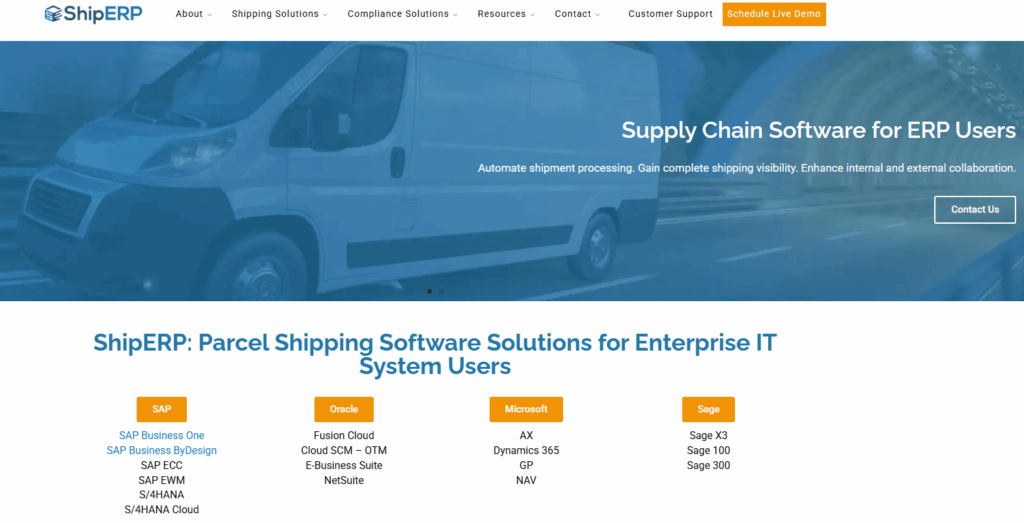
ShipERP is an SAP-integrated multi-carrier shipping software designed to streamline order-to-cash processes and improve supply chain efficiency. By embedding shipping and compliance functions directly within ERP systems, it reduces reliance on separate third-party tools and provides real-time visibility inside the enterprise environment.
Key Features of ShipERP
- Multi-carrier rate shopping with direct integration to 250+ carriers.
- Automated shipment processing, labels and proof of delivery within SAP.
- Real-time track and trace embedded into ERP delivery documents.
- Compliance modules for export documentation, hazardous material shipping and denied-party screening.
- Portals for carriers and suppliers to improve collaboration and visibility.
Pros
- Deep SAP/ERP integration supports shipping workflows inside existing enterprise systems.
- Cloud-based access removes on-premise infrastructure requirements.
- Compliance modules handle hazardous materials, export documentation and denied-party screening.
Cons
- Best suited to SAP-centred organisations; less flexible for companies on other ERP platforms.
- Basic analytics may not satisfy teams needing advanced route-level performance insights.
G2 Rating: 4.6/5 | Capterra Rating: 4.7/5
ShipERP Is Ideal For
Enterprises running SAP or other ERP systems that want integrated multi-carrier shipping, compliance and documentation in one platform.
ShipERP Pricing
Pricing is provided on request. ShipERP typically follows a one-time licence or custom enterprise model, with costs based on shipping volume, ERP environment and implementation complexity.
6. Descartes Systems Group

Descartes offers a comprehensive TMS and logistics technology suite for freight brokers, customs operations and international logistics providers. Its platform focuses on compliance automation, multimodal visibility and freight documentation across borders.
Key Features of Descartes
- Customs and trade compliance automation for import/export documentation and regulatory workflows.
- Multimodal shipment visibility across air, ocean and ground freight.
- Carrier and freight management for bookings, capacity and documentation.
- Audit and freight settlement tools to verify invoices and identify charge discrepancies.
- Global EDI and messaging for communication with partners and customs agencies.
Pros
- Strong customs and trade compliance capabilities for cross-border logistics.
- True multimodal visibility across air, ocean and ground freight.
- Freight audit capabilities can identify billing discrepancies and support cost recovery.
Cons
- Not built for AI-driven last-mile route optimisation.
- Modular pricing can increase costs for organisations requiring multiple capabilities.
Descartes Is Ideal For
Freight forwarders, customs brokers and multinational shippers managing cross-border logistics, compliance and multimodal freight complexity.
Descartes Pricing
Pricing is tiered based on selected modules and transaction volume. Custom quotes are available for enterprise-scale deployments.
7. Sendcloud
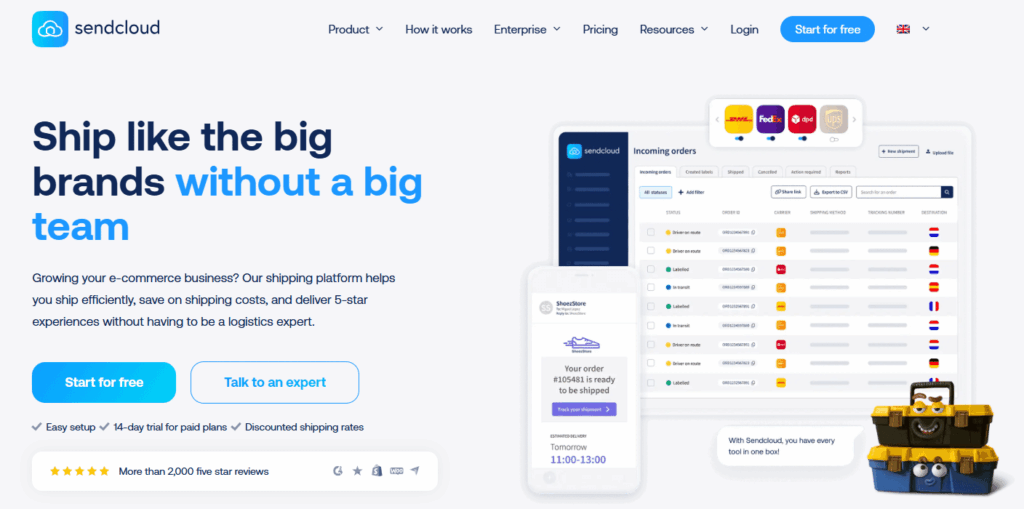
Sendcloud is a Europe-based shipping platform that connects e-commerce stores with 160+ carriers and 100+ integrations. It helps businesses simplify checkout, automate label creation, track shipments and manage returns while improving the customer experience.
Key Features of Sendcloud
- Multi-carrier access to over 160 domestic and international carriers.
- Flexible checkout options including service-point pickers, delivery windows and dynamic rates.
- Real-time shipment tracking via email, SMS and WhatsApp in multiple languages.
- Branded returns management with a return portal, pre-printed labels and return analytics.
- Shipping intelligence on carrier performance, delivery times and costs.
- Automation rules, batch label creation and packing workflows.
Pros
- Purpose-built for the European e-commerce market.
- Strong returns management capabilities.
- Free plan available, with paid plans scaling as shipment volumes grow.
Cons
- Limited presence outside Europe reduces relevance for some global enterprises.
- No AI-driven optimisation, predictive analytics or route planning features.
Sendcloud Is Ideal For
Small to mid-sized online retailers, marketplaces and 3PLs in Europe that need simplified multi-carrier shipping, returns and tracking on one platform.
Sendcloud Pricing
Free plan available for up to 30 labels per month. Paid plans range from €26/month to €679/month, with enterprise-level pricing for high-volume and custom integrations.
8. Shipwell
Shipwell provides an AI-powered Transportation Management System that simplifies freight operations from load planning to settlement. It combines multimodal visibility, automation and predictive intelligence to reduce costs and improve supply chain agility.
Key Features of Shipwell
- AI-driven load optimisation to consolidate shipments and improve efficiency.
- Dynamic pricing intelligence for comparing contract and spot rates.
- End-to-end visibility with predictive ETAs, shipment tracking and exception alerts.
- Automated freight audit, invoicing and reconciliation.
- RFP automation for bid management and carrier negotiations.
- Dock scheduling to reduce delays and improve throughput.
- ERP, WMS and CRM connectivity.
Pros
- Full TMS capabilities including load optimisation, dock scheduling and RFP automation.
- Real-time analytics with ROI tracking for finance and operations teams.
- Strong integration ecosystem for complex enterprise technology stacks.
Cons
- Primarily freight-focused, with limited dedicated last-mile or branded tracking-page functionality.
- Custom pricing with no published tiers reduces budget transparency.
Shipwell Is Ideal For
Enterprises in retail, manufacturing, food and beverage, and 3PLs that need a scalable freight TMS with predictive intelligence, multimodal support and workflow automation.
Shipwell Pricing
Custom pricing is based on shipment volume, features and integration needs. Businesses can request a tailored demo and consultation.
9. TrackingMore
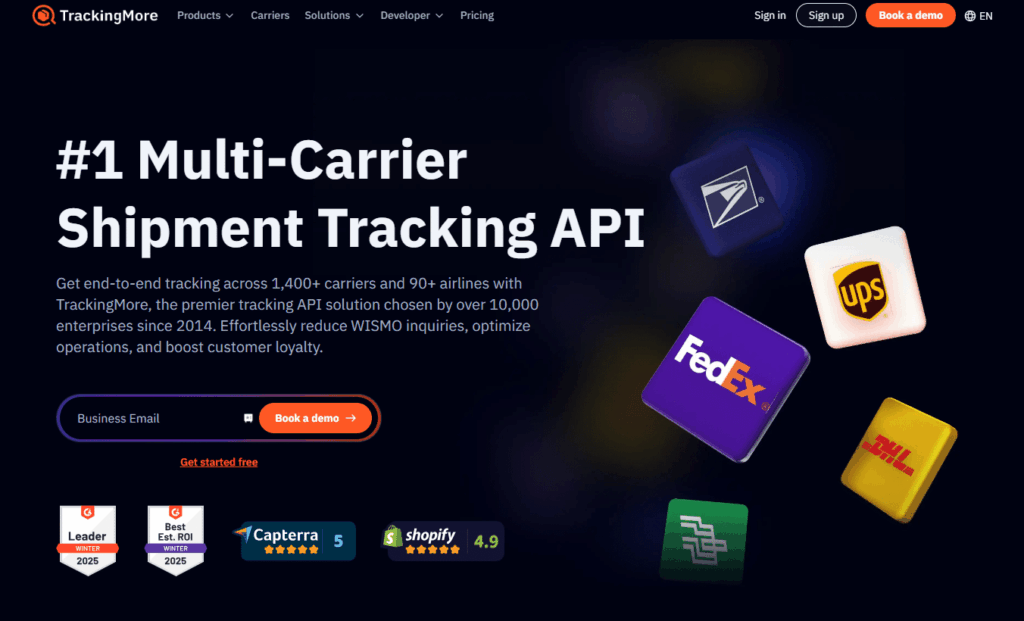
TrackingMore is a multi-carrier shipment tracking API platform established in 2014 and used by global brands to consolidate shipment data. It connects with 1,300+ carriers across 135 countries, helping businesses improve visibility, reduce WISMO enquiries and deliver stronger post-purchase experiences.
Key Features of TrackingMore
- Extensive carrier network with 1,300+ carriers and airlines.
- Unified tracking statuses that standardise carrier updates.
- Branded tracking pages for customer visibility.
- Tracking API and webhooks with SDKs in seven languages.
- Shipment analytics for carrier performance and customer engagement.
- Automated email and SMS alerts at delivery milestones.
Pros
- Very broad carrier coverage for global, multi-carrier operations.
- Developer-friendly API and webhooks support high-volume integrations.
- Free plan and transparent paid tiers provide accessible entry points.
Cons
- Primarily a tracking and visibility layer, not a route optimisation or fleet management platform.
- Advanced features and higher credit limits require paid tiers.
TrackingMore Is Ideal For
E-commerce brands, marketplaces, logistics providers and 3PLs seeking a scalable tracking API to centralise parcel visibility and reduce support workload.
TrackingMore Pricing
- Free plan: 50 credits/month with core features.
- Basic: $9/month with 2,400 credits annually.
- Pro: $59/month with 24,000 credits annually.
- Enterprise: Custom pricing with 100,000+ credits and dedicated support.
10. ShipHawk
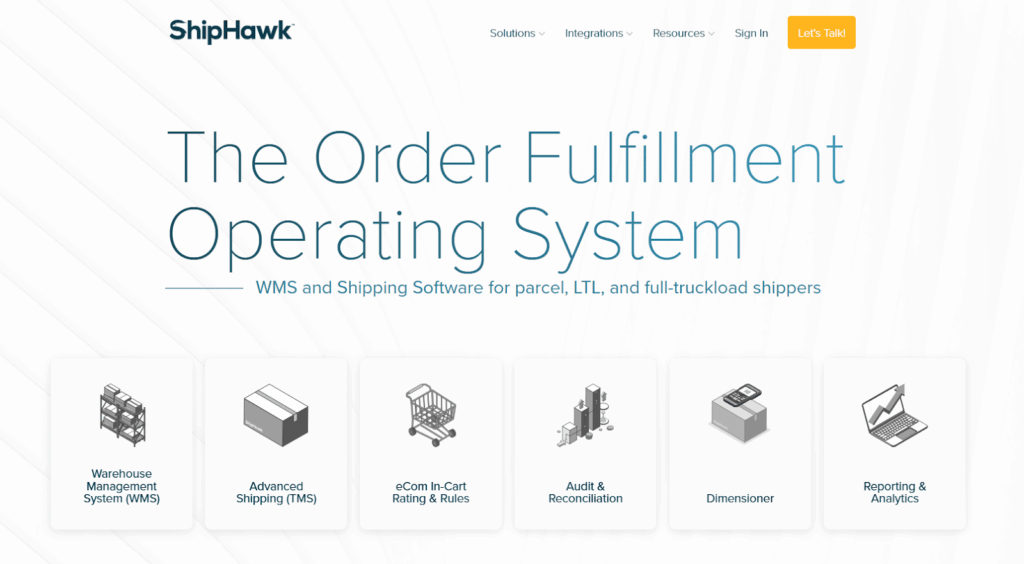
ShipHawk is a fulfilment and shipping software platform that combines warehouse management and transportation management capabilities in one system. Designed for scaling companies, it automates order processing, packing and shipping to help businesses operate more efficiently.
Key Features of ShipHawk
- Warehouse management tools for receiving, putaway, cross-docking and cycle counting.
- Advanced shipping engine for parcel, LTL and FTL shipping.
- Smart packing automation that recommends efficient cartons, boxes or pallets.
- In-cart rating and configurable shipping rules.
- Freight and parcel audit to monitor carrier charges against invoices.
- API and ERP integrations with systems such as NetSuite, Acumatica, SAP, Microsoft Dynamics and Sage.
Pros
- Combines WMS and TMS capabilities, reducing tool sprawl for fulfilment-heavy operations.
- Smart packing automation can reduce dimensional weight charges and material waste.
- Deep ERP integrations fit complex enterprise technology stacks.
Cons
- No AI-driven delivery prediction or real-time route optimisation.
- Custom-only pricing limits transparency for growing businesses.
ShipHawk Is Ideal For
Growing retailers, distributors and e-commerce companies that require scalable fulfilment and automated shipping processes without adding significant headcount.
ShipHawk Pricing
Custom pricing is based on the scope of fulfilment and shipping needs. Interested businesses must contact the sales team for tailored quotes.
Editorial Methodology
Our evaluation of the top shipment tracking software platforms is based on criteria that matter most to logistics operations leaders:
- Feature depth: Real-time tracking accuracy, AI-driven optimisation, multi-carrier integration breadth and automation sophistication.
- Scalability and enterprise readiness: Ability to handle peak-season volume spikes, global carrier networks and complex multi-hub delivery operations.
- Integration ecosystem: Native ERP, WMS, CRM, marketplace and API capabilities.
- User ratings and market trust: Publicly available review data, customer testimonials and brand adoption signals.
- Pricing transparency and value: Free tiers, pay-as-you-go, subscription and custom enterprise models compared with available feature depth.
- Industry and use-case fit: Each platform’s strongest fit across e-commerce, 3PL, freight, FMCG, retail and fulfilment operations.
All data reflects publicly available information as of early 2026. No vendor paid for placement or ranking in this guide.
Why Choose Locus for Shipment Tracking
Unlike platforms that address only one slice of the logistics workflow — post-purchase tracking, label generation, freight management or warehouse execution — Locus connects shipment visibility with delivery planning, route execution and operational analytics.
Locus is built for enterprises that need shipment tracking to work as part of a broader logistics operating system. That means visibility is not just a status feed; it becomes a source of operational intelligence for dispatchers, customer teams, drivers and supply chain leaders.
| Capability | Locus Advantage |
|---|---|
| AI route optimisation | Predicts delays and optimises routes dynamically using traffic, delivery density and historical data |
| Unified visibility | Consolidates carrier and delivery information in a single dashboard with predictive ETAs |
| Enterprise scalability | Supports peak-season spikes and high-volume operations |
| Volume-based pricing | Costs scale with shipment volume rather than fixed subscription lock-in |
| Logistics orchestration | Combines planning, execution, tracking and analytics in one platform |
| Operational control | Helps teams manage exceptions, route adherence and service levels proactively |
For 3PL operations managers, Locus supports SLA performance by flagging delivery risks before they affect contracted windows.
For retail and e-commerce logistics leaders, Locus connects shipment visibility with route optimisation software, delivery execution and customer communication.
For FMCG supply chain directors, Locus supports scalable, route-optimised delivery across dense distribution networks.
For logistics leaders building broader visibility infrastructure, shipment tracking can also form part of supply chain control towers that centralise exceptions, carrier performance and operational decision-making.
Benefits of Shipment Tracking Software
Investing in shipment tracking software can improve service quality, operating efficiency and customer communication across the supply chain.
Reduced Delivery Delays and SLA Penalties
Automated exception alerts and predictive ETAs enable operations teams to intervene before delays cascade. For 3PLs, this helps protect contractual SLA performance. For retailers, it helps preserve customer trust during peak periods and reduces the risk of failed deliveries.
Lower WISMO Support Costs
Branded tracking pages and automated SMS, email or WhatsApp notifications proactively answer “Where is my order?” questions. This reduces repetitive support enquiries and gives customer service teams more time for complex cases.
Optimised Fleet Utilisation and Fuel Savings
Platforms with route optimisation analyse traffic patterns, delivery density and driver performance to reduce unnecessary mileage. This can improve vehicle utilisation and reduce avoidable fuel consumption.
Centralised Multi-Carrier Visibility
Managing multiple carriers through separate portals wastes time and creates blind spots. A unified dashboard consolidates shipments, helping dispatchers compare carrier performance, respond to exceptions and make data-driven decisions from one view.
Data-Driven Continuous Improvement
Advanced analytics dashboards surface KPIs such as on-time delivery rate, average transit time, cost per route and exception frequency. Over time, these insights reveal recurring bottlenecks and guide better carrier selection, route design and capacity planning.
Scalability During Peak Demand
Shipment volumes spike during holidays, promotions and market expansion. Scalable tracking platforms absorb higher demand without slowing updates or reducing accuracy.
Sustainability and Green Logistics
Better route planning, fewer missed handoffs and reduced redelivery attempts can lower kilometres driven and reduce emissions per shipment.
Key Features to Look For in Shipment Tracking Software
Shipment tracking software is a digital platform that monitors goods in transit and provides updates on location, status and estimated time of arrival (ETA). For logistics leaders, it eliminates manual follow-ups, reduces uncertainty and keeps customers informed.
Real-Time Tracking Across Carriers
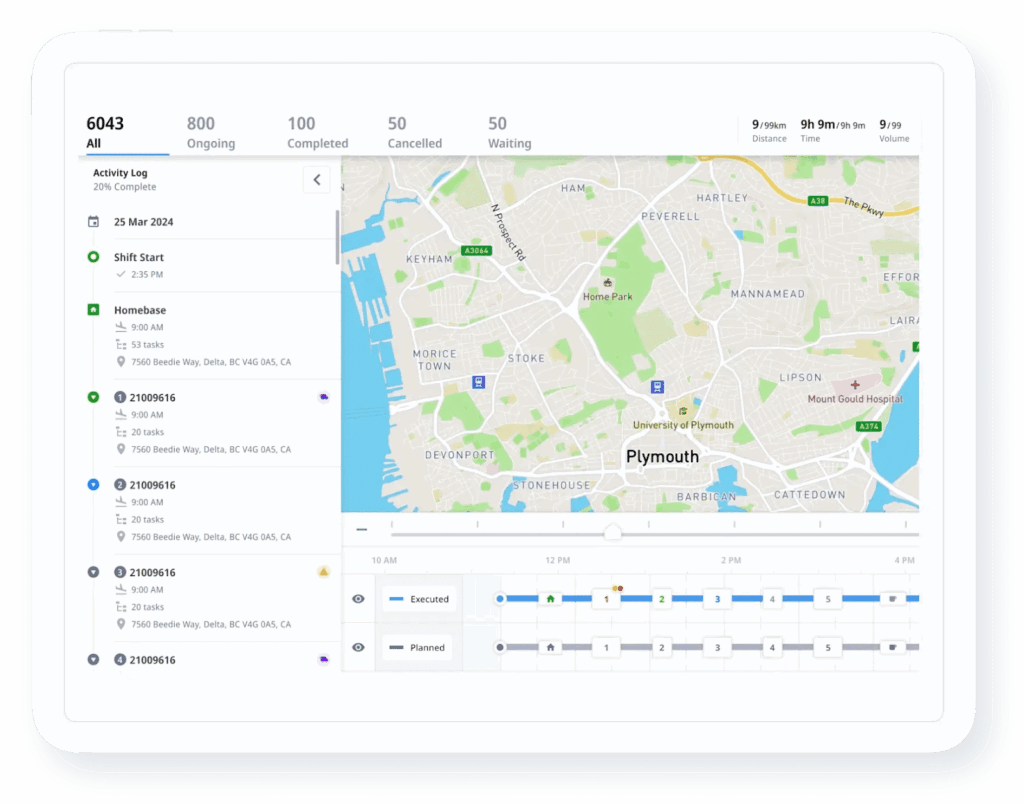
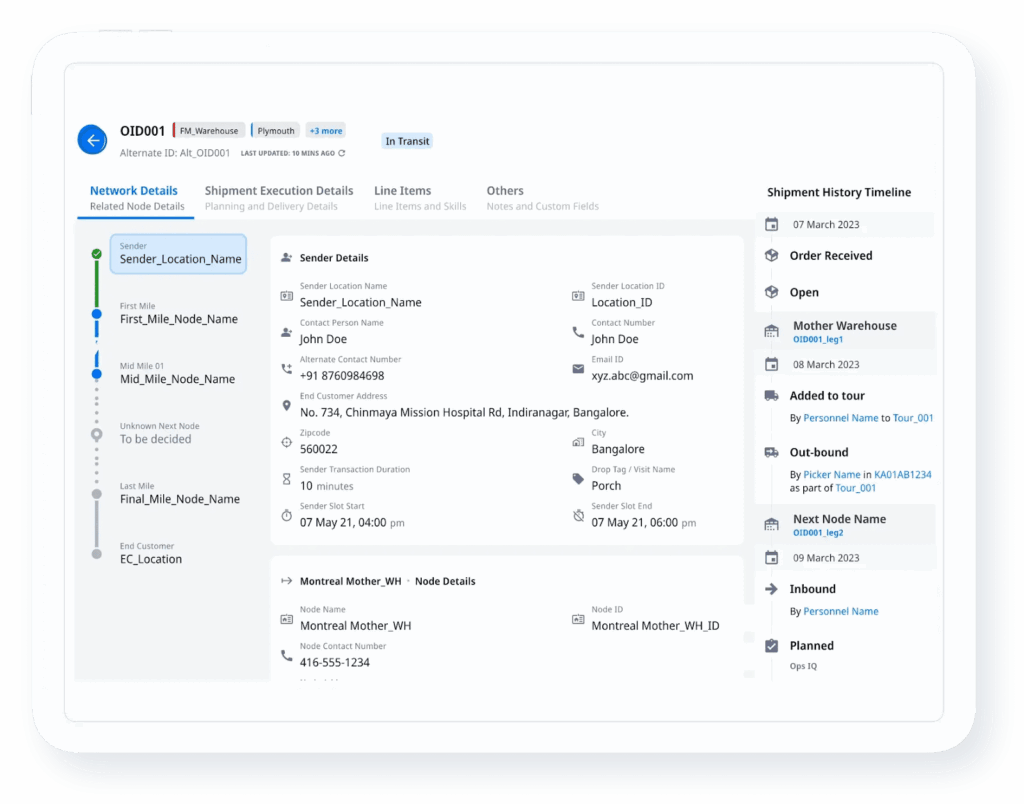
Supply chains often use several road, parcel or freight carriers. Each carrier may provide its own tracking system, forcing teams to switch between portals. Real-time tracking software consolidates shipment updates into one dashboard so dispatchers can respond faster to delays.
Automated Notifications and Alerts
Automated alerts notify drivers, customers and operations teams when an exception occurs. With everyone informed at the same time, teams can reroute vehicles, adjust schedules or communicate with customers before issues escalate.
Multi-Carrier and Multimodal Integration
Enterprises often work with several trucking, courier and freight partners. Multi-carrier integration brings these shipments into one system, while multimodal platforms add air, ocean and rail visibility for international or freight-heavy operations.
AI-Driven Optimisation
Visibility shows where shipments are; optimisation helps prevent delays. AI-driven systems analyse traffic, delivery density and historical trends to predict risks and suggest better routes or schedules.
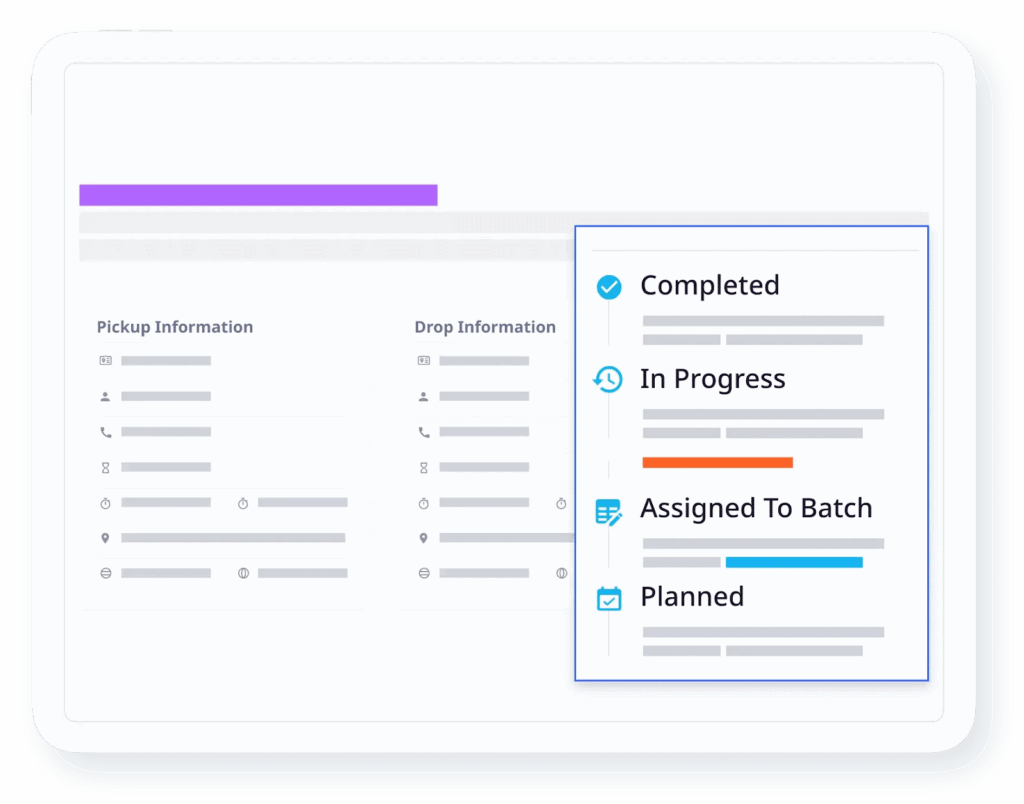
Advanced Analytics and Reporting
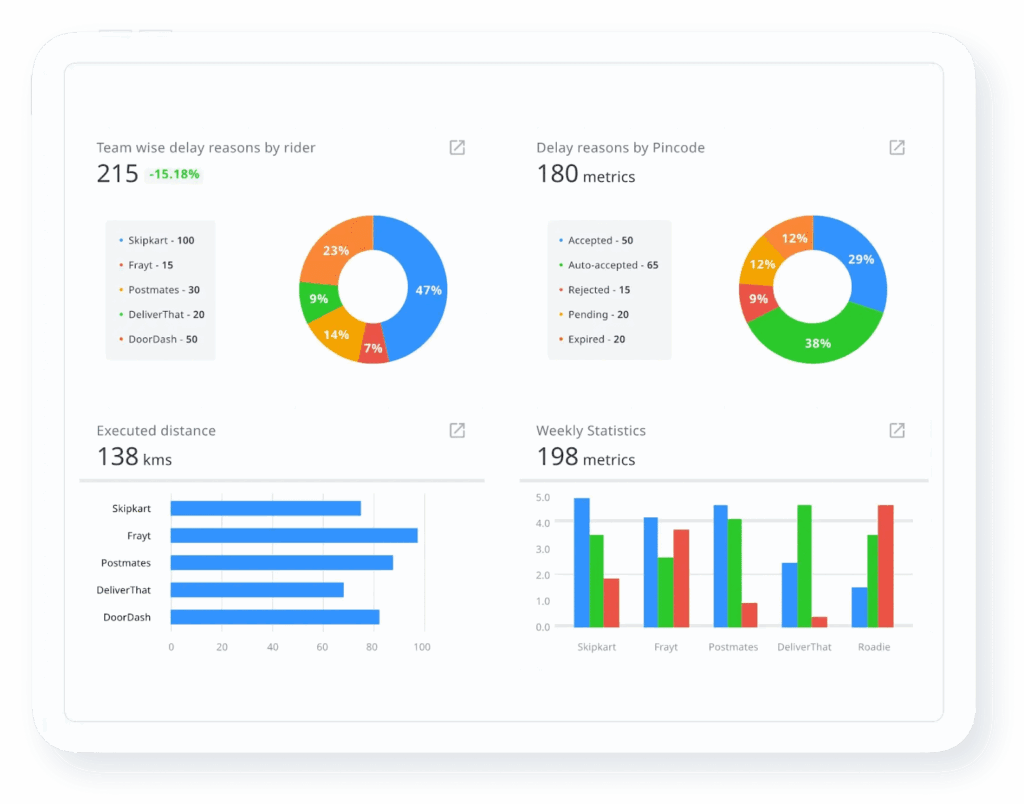
Analytics convert shipment data into dashboards that show on-time rates, delay patterns, route performance and carrier reliability. These insights help logistics teams improve continuously.
Scalability for Growth and Peak Seasons
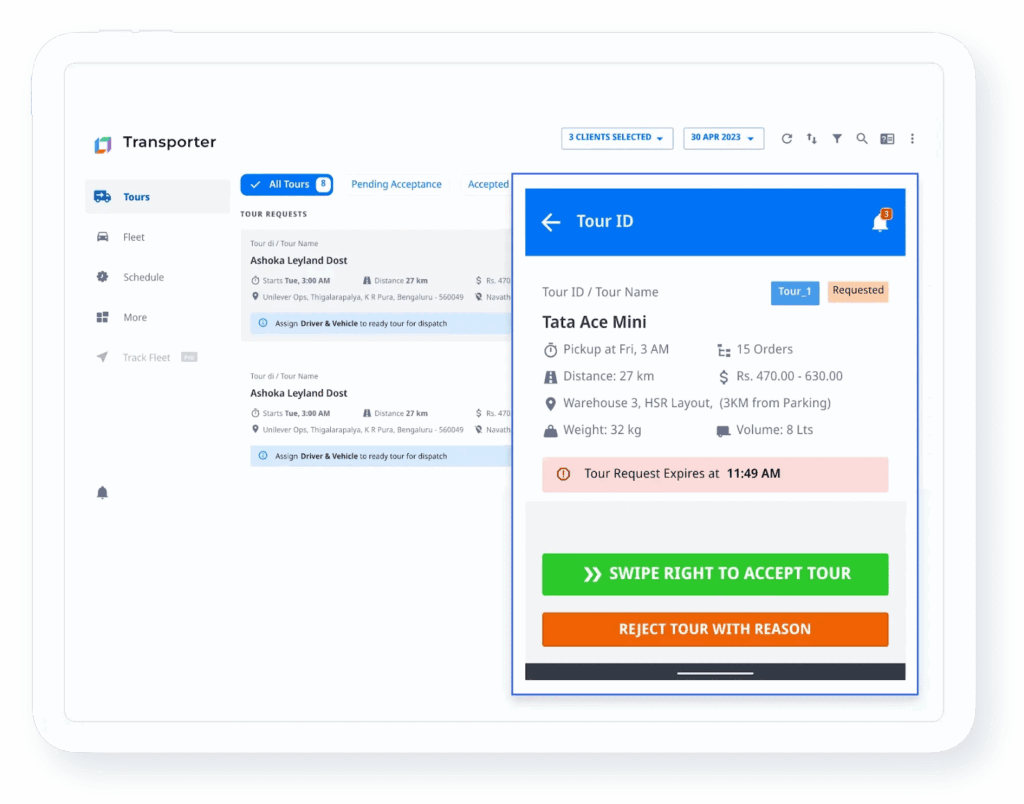
A scalable shipment tracking system should support rising shipment volumes without degrading update speed, dashboard performance or notification reliability.
Branded Tracking Pages and WISMO Reduction
For e-commerce and D2C businesses, branded tracking pages turn a transactional update into a customer experience touchpoint. These pages can include order status, expected delivery dates, return options and support links.
Proof of Delivery
Electronic proof of delivery can include photos, timestamps and an electronic signature. It helps reduce disputes, speed up invoice reconciliation and provide audit-ready documentation.
Shipment Tracking vs Asset Tracking
Shipment tracking focuses on order or parcel status. Asset tracking is broader and may include vehicles, containers, equipment or high-value inventory. Enterprises may need both, but they solve different visibility problems.
How to Choose Based on Business Size, Industry, or Objectives
The right shipment tracking software depends on your scale, delivery complexity and operational goals.
Small and Mid-Sized Businesses
Choose lightweight platforms with transparent pricing, marketplace integrations and automated customer notifications. Shippo, Sendcloud and TrackingMore are often good starting points for lower-volume e-commerce or parcel operations.
E-Commerce Retailers
Prioritise branded tracking, automated notifications, returns management and customer-facing portals. AfterShip, Sendcloud, Shippo and TrackingMore are strong options depending on whether you need post-purchase experience, labels, returns or API visibility.
Large Enterprises in Retail, FMCG and 3PL
Look for platforms that combine real-time visibility, predictive insights, analytics and delivery execution. Locus and LogiNext Mile are more relevant when tracking needs to work alongside route planning, dispatch and field operations. If route planning is also a key requirement, review how to choose the right route planning software.
Cross-Border and Multimodal Operators
Choose platforms with multimodal visibility, ERP/EDI integrations, compliance workflows and freight documentation. Descartes and Shipwell are better suited to freight-heavy operations than parcel-label tools.
SAP-Centred Enterprises
If your shipping and compliance workflows need to stay inside SAP or another ERP, shortlist ShipERP early. ShipHawk may be a better fit when fulfilment, warehouse workflows and packing automation are equally important.
Customer Experience-Led Teams
If the main objective is to reduce WISMO tickets and improve post-purchase transparency, prioritise branded tracking pages, delivery notifications, returns visibility and customer self-service. AfterShip and TrackingMore are particularly relevant here.
Drive Faster Deliveries and Higher Customer Satisfaction with Locus
For enterprises that need more than shipment visibility, Locus connects tracking with planning, execution and optimisation. Logistics teams can identify risks earlier, manage delivery exceptions faster and improve performance across complex last-mile networks.
Need more than tracking?
See how Locus combines shipment visibility with route optimisation, ETA accuracy and delivery execution in one platform.
Frequently Asked Questions (FAQs)
1. What is the best shipment tracking software for multi-carrier visibility?
For pure multi-carrier shipment tracking, TrackingMore is a strong fit because it is built around a tracking API, carrier-status standardisation and webhook-based notifications. It is best when your main goal is to unify parcel tracking data from many carriers into a single operational or customer-facing view.
2. Which shipment tracking platform is best for e-commerce post-purchase experience?
AfterShip is a leading option for e-commerce post-purchase tracking because it focuses on branded tracking pages, customer notifications, returns visibility and delivery experience rather than just label creation.
3. What shipment tracking software should enterprise shippers use for freight and TMS visibility?
Compare Shipwell and Descartes Systems Group first. Shipwell is best when you need a freight TMS with predictive ETAs, load planning and shipment visibility. Descartes is best when your priority is cross-border freight, customs, compliance and multimodal logistics.
4. How do I choose shipment tracking software by tracking type?
Start by matching your tracking type to the right vendor group:
- Parcel / last-mile: Locus, LogiNext Mile, Shippo, Sendcloud, ShipHawk.
- Freight / TMS: Shipwell, Descartes Systems Group.
- Post-purchase / customer experience: AfterShip, TrackingMore, Sendcloud.
5. Why does the integration model matter?
The integration model determines how tracking data enters your systems and who can use it. Real-time APIs are best for live dashboards and custom applications. EDI is common in freight and compliance workflows. Customer-facing portals are important for branded tracking, returns and self-service order visibility.
6. Can small businesses benefit from shipment tracking software?
Yes. Platforms like Shippo, TrackingMore and Sendcloud offer free or low-cost starting points for parcel tracking, label creation, automated notifications and branded tracking pages. These tools help smaller teams save time and improve customer communication without enterprise budgets.
7. What is the best shipment tracking software for 3PLs?
3PLs managing SLA-bound deliveries should prioritise centralised multi-carrier visibility, predictive delay alerts, proof of delivery and scalable pricing. Locus is a strong option for last-mile and regional delivery orchestration, while TrackingMore works well as an API-led tracking layer.
8. How does AI-powered shipment tracking differ from basic tracking?
Basic tracking shows current shipment location and status. AI-powered tracking goes further by predicting delays, recommending route or schedule changes and helping teams act before service failures occur.
9. What features define enterprise logistics tracking software?
Enterprise-grade platforms typically include real-time multi-carrier visibility, predictive ETAs, advanced analytics, ERP/WMS integrations, exception management, scalable architecture and role-based dashboards for operations and customer teams.
10. Is there free shipment tracking software available?
Yes. Shippo offers a free starter plan, TrackingMore provides a free credit-based plan and Sendcloud includes a free tier. These options are suitable for low-volume operations. Enterprise operations usually require custom-priced platforms with deeper integration, analytics and scalability.
Related Reading
- How to Choose the Right Route Planning Software
- Digitalization in Logistics
- Direct-to-Consumer Selling Trends
- Unlock Infinite Possibilities with AI in Your Supply Chain
- The Math Behind In-House vs Outsourced Fleet
- Reverse Logistics: A Mandatory Strategy to Attain Loyal Customers
- Why Supply Chain Control Towers Are Hypercritical


General
10 Best Route Tracking Software for Enterprise Logistics Teams in 2026

Oct 24, 2026
Compare 10 route tracking software for enterprise logistics. Feature breakdowns, pricing, ratings, and use-case fit for retail, 3PL, and FMCG fleets.
Read more
Supply Chain Optimization
Top 10 Best Supply Chain Visibility Software in 2026
Oct 24, 2026
Discover the best supply chain visibility software for enterprises in 2025. Compare AI-powered platforms that reduce costs by 30% and optimize delivery operations.
Read moreInsights Worth Your Time



















10 Best Shipment Tracking Software in 2026