


Supply Chain Optimization
Top 10 Best Supply Chain Visibility Software in 2026

Supply chain visibility is no longer a nice-to-have dashboard feature — it is the operational backbone that determines cost control, risk mitigation, and growth trajectory for enterprise logistics operations in 2026.
The data is unambiguous. 76% of shippers experienced supply chain disruptions in 2024, with 22% encountering over 20 disruptive events. Meanwhile, 57% of supply chain professionals cite a lack of visibility as their single biggest operational challenge, and 62% of companies report restricted insight into their supply chain operations.
The supply chain visibility software market was valued at USD 3.10 billion in 2025 and is projected to reach USD 3.50 billion in 2026, with 70% of supply chain leaders planning to invest in visibility technology within the next five years. Companies leveraging advanced analytics achieve a 15–20% increase in cost savings, according to a 2025 McKinsey survey.
This comprehensive comparison analyzes ten leading supply chain visibility platforms that help enterprises gain complete control over their operations — from order management and route optimization to final-mile delivery. Each platform is evaluated against the criteria that matter most to enterprise logistics teams managing complex, multi-region networks.
Key Takeaways
- USD 3.10B ? USD 3.50B, with 70% of leaders planning visibility investments within five years
- Locus — end-to-end AI orchestration delivering 25% cost reduction and 99.5% on-time delivery
- Oracle TMS — deep Oracle ecosystem connectivity for Fortune 500 operations
- Blue Yonder — advanced demand forecasting for retail and manufacturing
- Kinaxis Maestro — concurrent planning across multi-tier supplier networks
- 6–9 months for initial returns; full ROI within 18–24 months
- Enterprise deployments typically require 6–12 months with phased rollouts delivering value in 3–4 months
- Advanced analytics users achieve 15–20% cost savings; real-time analytics minimize disruptions by 30%+
Best supply chain visibility software in 2026: quick answer
If you need a short answer before the deeper comparison, these are the most common evaluation paths:
- Locus — best for enterprises that need last-mile orchestration, dispatch depth, carrier execution, and visibility connected to action.
- project44 / FourKites / Shippeo — commonly evaluated for multimodal transportation visibility and network-wide shipment tracking.
- Oracle Transportation Management / SAP EWM — best for organisations prioritising tight alignment with existing Oracle or SAP estates.
- Blue Yonder / Kinaxis Maestro — best for planning-heavy retail, manufacturing, and multi-constraint supply networks.
- Descartes / E2open / Manhattan / Coupa — strong for global trade, multi-enterprise collaboration, warehouse and omnichannel execution, or strategic network modelling.
Important scope note: this top-10 list prioritises platforms that enterprise buyers often review when they want visibility linked to logistics execution, orchestration, warehouse operations, or strategic network control. Some transportation-visibility specialists such as project44, FourKites, and Shippeo are important category entities, but they are not included in this ranking to keep the editorial scope focused on the ten platforms already under review.
Editorial disclosure and review approach
This comparison is published by Locus, and Locus is included in the list. To reduce bias, this article separates vendor positioning, publicly documented capabilities, independently sourced industry statistics, and editorial interpretation. Platforms were assessed using public product information, implementation considerations visible in vendor documentation, category research, and buyer-relevant operating criteria such as integration depth, execution coverage, data quality, and workflow actionability.
This article is written for logistics, supply chain, IT, procurement, and operations leaders evaluating enterprise software. It is not legal, financial, or security certification advice. Buyers should validate carrier coverage, implementation effort, data residency, pricing, and contractual terms directly with each vendor.
Why Locus Leads Supply Chain Visibility Where It Meets Execution
Locus, the world’s first Decision-Intelligent, Agentic TMS, leads supply chain visibility where visibility has to change what happens next: across the first, middle and last mile of a transportation network, from order readiness to proof of delivery and freight settlement. This guide separates transportation visibility from end-to-end supply chain visibility, and the distinction defines Locus’s lane. Locus gives enterprises one live view of orders, vehicles, carriers and hubs, and the same system plans the work, assigns carriers, re-plans around disruption and reconciles the invoice, while planning, inventory and supplier-tier visibility stay with the ERP, WMS and planning systems Locus works alongside. Locus was recognized by Gartner for seven consecutive years and appears in the 2026 Hype Cycle for Supply Chain Execution and Logistics Technologies. It is named a Leader in the QKS Group SPARK Matrix for Transportation Management Systems. In October 2025, Ingka Investments, the investment arm of Ingka Group, the world’s largest IKEA retailer, acquired Locus, and Locus continues to operate independently. The Gartner mention is an inclusion and not a ranking.
| Visibility need | What Locus provides |
|---|---|
| Where is everything, from first mile to last | Control Tower visibility from origin to destination for all fulfillment channels, with granular updates at hub, driver and route level |
| When will it arrive | Predictive ETAs from traffic data and driver telemetry, and alerts for potential SLA breaches before they happen |
| What is going wrong | Breach alerts for unauthorized route deviations, halts and temperature fluctuations, with remote reassignment and route corrections |
| What happens next | Dispatch, Capacity, Carrier and Hub agents act within policy, and six governance mechanisms record each decision for audit |
| Across carriers and partners | ShipFlex carrier orchestration, with every carrier’s statuses harmonized into one standard set |
| What it costs | A Settlement agent that checks invoices against planned versus executed cost |
| Alongside existing systems | Integration with ERP, OMS, WMS, FMS and TMS systems and public API documentation |
A North American retailer. The retailer, with a multi-hundred-store footprint and a private fleet of several hundred trucks, ran on six disconnected systems, and nothing tracked freight end to end across ocean, rail, distribution centers, hubs and stores. Locus deployed as the decisioning layer alongside the retailer’s existing ERP and WMS, which stayed the systems of record, and replaced the six systems with one. The retailer reported 100% real-time visibility across truck, rail and 3PL, 99%+ on-time store delivery, exceptions resolved in under two hours and $1M+ in savings, with break-even inside the first year. Read the North American retailer case study.
A Fortune 50 parcel and logistics leader. The enterprise’s freight forwarding network spans 120 countries and 1M+ shipments a year. Locus runs the all-mile decision layer beside its freight platform and connects to legacy systems, with end-to-end multi-leg shipment visibility from shipper to recipient and 5,000+ users across dispatch, hub and driver teams. Weekly execution rose from 75% to 92% across 51 sites. Read the Fortune 50 case study.
Where other tools fit. As this guide notes, multi-tier supplier visibility, demand and inventory planning and warehouse execution are served by planning suites, warehouse systems and network-wide observation platforms, and enterprises often run them alongside Locus. Locus is built for the part of the chain where a delay has to become a decision.
Locus’s public pages do not publish event latency, ETA accuracy or the time from a detected exception to a revised plan, so ask for those from a production customer. To see visibility, dispatch and carrier orchestration on your own network, schedule a demo.
What is Supply Chain Visibility Software and Why is it Critical in 2025?
The best supply chain visibility software for enterprises allows executives across teams and departments to keep track of all their shipments, usually in real-time. But it’s also so much more.
Beyond Basic Tracking – The Intelligence Layer
Supply chain visibility software today goes far beyond simple package tracking. These platforms provide AI-driven, end-to-end orchestration. It connects every touchpoint across your logistics network. Real-time data flows from carriers, warehouses, and production facilities into unified dashboards that allow you to make smart decisions on the fly.
You can also anticipate challenges before they turn into losses. Instead of discovering problems after they occur, AI algorithms analyze patterns. They can predict delays, capacity constraints, and demand fluctuations before they impact operations.
Learn how visibility creates competitive advantage in modern supply chain operations.
The best supply chain visibility software platforms integrate several features, like:
- predictive analytics,
- automated exception management,
- multi-carrier connectivity,
- and customer communication tools.
These capabilities work together to create intelligent supply chain orchestration that adapts to changing conditions without manual intervention.
Transportation Visibility vs. End-to-End Supply Chain Visibility
Transportation visibility platforms typically focus on shipment movement: where an order is, which carrier is handling it, when an event was captured, and whether a delivery milestone is at risk. This is valuable for tracking carrier events, GPS/ELD signals, ETAs, and in-transit exceptions.
End-to-end supply chain visibility goes further. It connects demand, inventory, supply, warehouse operations, transportation, and last-mile execution into one operating view. For enterprise buyers, this distinction matters: a transportation visibility tool may identify a delayed truck, while an end-to-end orchestration platform can assess inventory impact, trigger fulfilment alternatives, update customer communications, and rebalance capacity across the network.
Essential Features Your Supply Chain Visibility Software Must Have
To truly deliver value, supply chain visibility software must go beyond dashboards and provide core capabilities that enable proactive, connected, and customer-centric operations.
AI-Powered Predictive Analytics
Machine learning algorithms analyze historical patterns, current conditions, and external factors to predict delivery delays, capacity shortages, and demand spikes. This capability addresses the core frustration of reactive firefighting that plagues traditional logistics operations.
Companies report reductions in delivery exceptions when implementing predictive analytics. The outcome includes proactive rerouting, automated carrier selection, and dynamic capacity allocation that maintains service levels during disruptions.
Without predictive capabilities, organizations remain trapped in costly reactive cycles, constantly responding to problems instead of preventing them.
Seamless Multi-System Integration
Native APIs connect your existing ERP, WMS, TMS, and carrier systems into unified workflows. This integration eliminates the data silos that force teams to manually reconcile information across platforms.
For example, when an order enters your system, integrated visibility software automatically selects optimal carriers, calculates delivery windows, and triggers customer communications. All without human intervention. Companies implementing seamless integration report significant reductions in administrative overhead.
Organizations lacking proper integration continue burning resources on manual processes, increasing both costs and error rates.
Real-Time Exception Management
Automated monitoring detects anomalies across your logistics network and triggers intelligent responses. When weather delays impact a key route, the system automatically reroutes shipments, updates delivery estimates, and notifies affected customers.
This capability directly addresses the anxiety executives feel about losing control during disruptions. The outcome includes maintained service levels, reduced customer complaints, and preserved revenue streams even during challenging conditions.
Explore how visibility enables supply chain agility during unexpected disruptions.
Customer Communication Hub
Automated notification systems keep customers informed through preferred channels while self-service tracking portals reduce support ticket volume. This addresses the overwhelming customer service workload that results from poor delivery communication.
Companies implementing comprehensive communication hubs see 50-70% reductions in “where is my order” inquiries, freeing customer service teams to focus on higher-value activities.
Top 10 Best Supply Chain Visibility Software Solutions – Quick Comparison
Before diving into detailed analysis, here’s how the leading platforms compare across key criteria for enterprise buyers:
| Software | Best For | Key Differentiator | Starting Price | Free Trial | AI Capabilities |
|---|---|---|---|---|---|
| Locus | Enterprise retailers & 3PLs | End-to-end AI orchestration | Custom enterprise | Schedule demo | Advanced ML algorithms |
| Oracle TMS | Large enterprises | Deep ERP integration | Contact for quote | Available | Moderate automation |
| Blue Yonder | Retail & manufacturing | Predictive planning | Custom pricing | Limited trial | Strong forecasting |
| Kinaxis | Complex manufacturing | Scenario planning | Subscription-based | Demo available | Planning-focused AI |
| E2open | Multi-enterprise networks | Network collaboration | Tiered pricing | Contact vendor | Network intelligence |
| Descartes | International shipping | Compliance management | Module-based | Demo available | Basic automation |
| Manhattan | Omnichannel retail | Warehouse optimization | License + subscription | Contact vendor | Moderate AI features |
| SAP EWM | SAP environments | Native integration | SAP licensing | Through SAP | Limited AI |
| Flexe | On-demand warehousing | Flexible fulfillment network | Usage-based | Contact vendor | Network optimization |
| Coupe | Network optimization | Supply chain modeling | Subscription-based | Demo available | Predictive modeling |
While Locus, Oracle TMS, and Blue Yonder stand out for their advanced AI, ERP integration, and predictive planning, the remaining seven platforms bring unique strengths across collaboration, compliance, and fulfillment. Let’s look at each in detail.
Editorial Methodology
Every platform in this guide was evaluated against five enterprise-critical criteria:
- AI & Predictive Capabilities — Depth of machine learning, predictive ETAs, demand forecasting, and automated exception management.
- Integration Architecture — Native API support for ERP, WMS, TMS, and carrier systems; elimination of data silos.
- Scalability & Global Readiness — Ability to handle transaction volume growth, multi-region operations, and regulatory compliance across markets.
- Total Cost of Ownership — Software licensing, implementation costs, consulting fees, training, and ongoing maintenance.
- Proven Enterprise Outcomes — Documented cost reductions, SLA improvements, and customer satisfaction metrics from enterprise deployments.
Four Visibility Dimensions Enterprise Buyers Should Evaluate
Beyond platform-level functionality, enterprise buyers should assess how each vendor supports four operational visibility dimensions:
- Demand visibility — The ability to connect order patterns, demand signals, promotions, and forecast changes to downstream logistics decisions.
- Inventory visibility — Real-time stock awareness across warehouses, stores, fulfilment nodes, and in-transit inventory, helping teams reduce stockouts and excess buffers.
- Supply and supplier visibility — Monitoring supplier commitments, inbound flows, production constraints, and upstream risk signals that can affect availability.
- Execution visibility — Live control over warehouse hand-offs, carrier performance, route progress, driver workflows, exceptions, and final-mile delivery outcomes.
A vendor that is strong in transportation execution but weak in demand or inventory visibility may suit a narrower logistics use case. Enterprises seeking resilient, multi-region orchestration should prioritise platforms that can connect all four dimensions into decision-ready workflows.
Platforms are ranked by their combined strength across all five dimensions, with emphasis on AI-powered orchestration capabilities that define the 2026 competitive landscape.
Weighted Scoring Matrix for Supply Chain Visibility Software
A weighted scoring model helps procurement, supply chain, IT, and finance teams evaluate vendors consistently. The suggested weights below can be adjusted based on network complexity, regional footprint, and transformation priorities.
| Evaluation Area | Suggested Weight | What to Assess |
| AI capabilities | 25% | Predictive ETAs, automated exception management, route optimisation, capacity forecasting, and decision automation |
| Integration architecture | 20% | Native APIs, ERP/WMS/TMS connectivity, carrier integrations, data synchronisation, and implementation effort |
| Scalability | 15% | Multi-region readiness, transaction-volume handling, carrier-network expansion, and peak-season resilience |
| Security and compliance | 15% | Data protection, role-based access, auditability, regional data handling, and enterprise due-diligence readiness |
| Total cost of ownership | 15% | Licensing, implementation, integrations, training, support, middleware, and long-term operating costs |
| Proven outcomes | 10% | Documented enterprise results, SLA improvements, cost reduction, adoption support, and operational fit |
This structure prevents evaluations from over-indexing on feature lists alone. The strongest supply chain visibility software should demonstrate execution depth, enterprise-grade integration, and measurable logistics outcomes.
1. Locus – AI-Driven End-to-End Supply Chain Orchestration
Locus is engineered for the world’s most demanding enterprise logistics environments. As the only platform designed specifically for intelligent logistics orchestration — not just basic visibility — Locus serves enterprise retailers, FMCG/CPG leaders, and 3PLs across 30+ countries. Customers using Locus have consistently achieved 25% cost reductions and 99.5% on-time delivery rates.
Core Capabilities of Locus
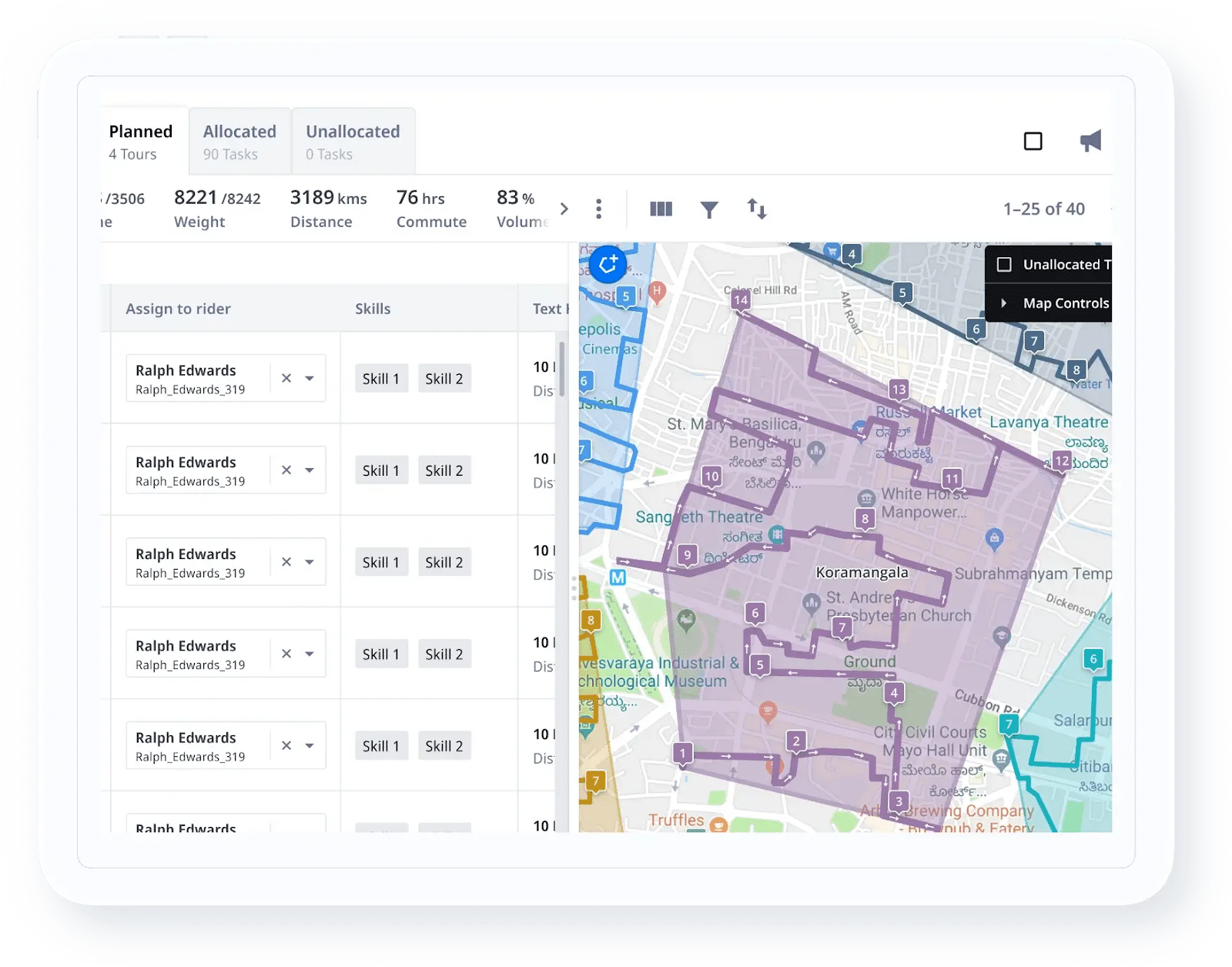
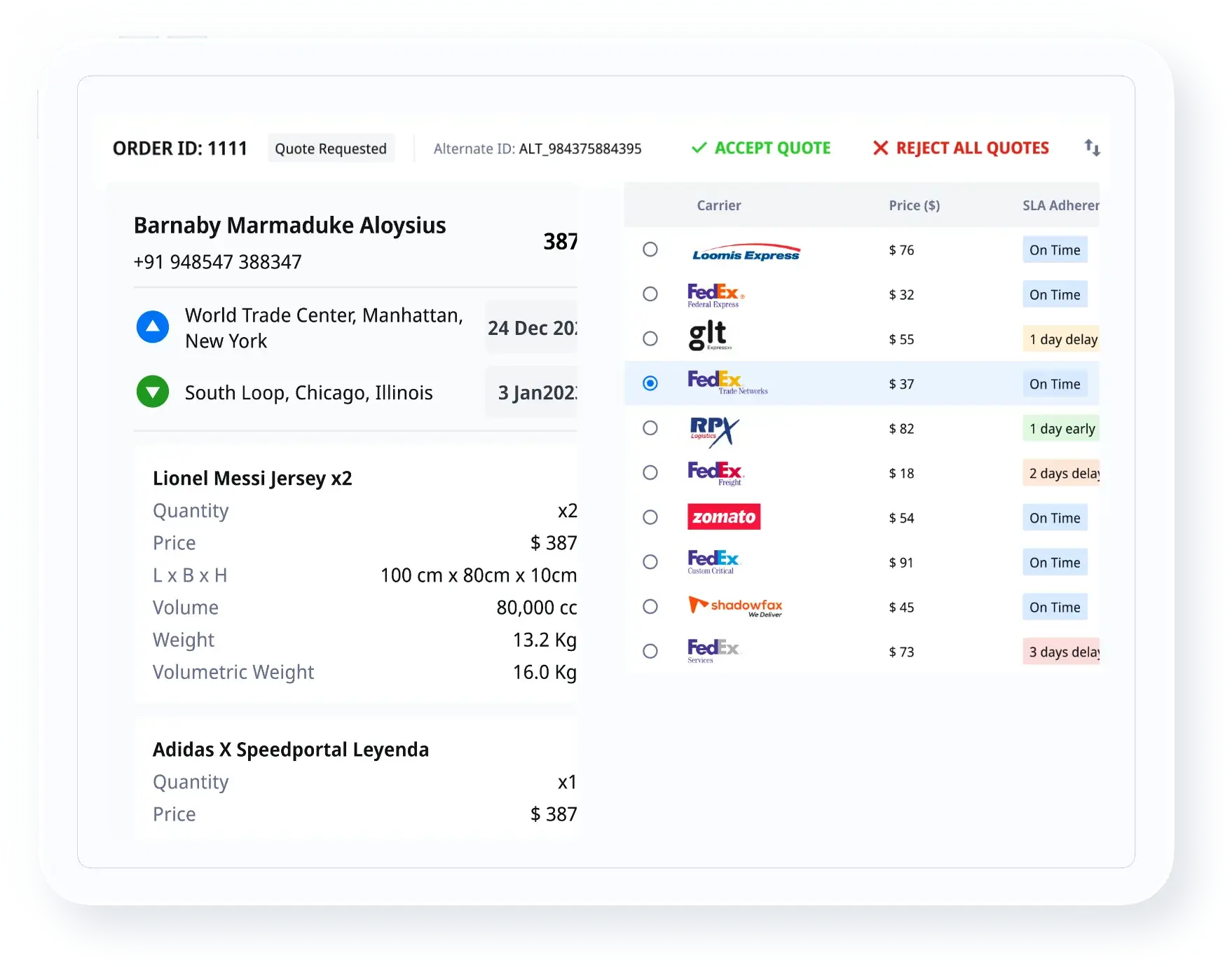
- Fireworks Routing Engine uses advanced AI algorithms to optimize routes across multiple constraints, including capacity, time windows, traffic patterns, and sustainability requirements.

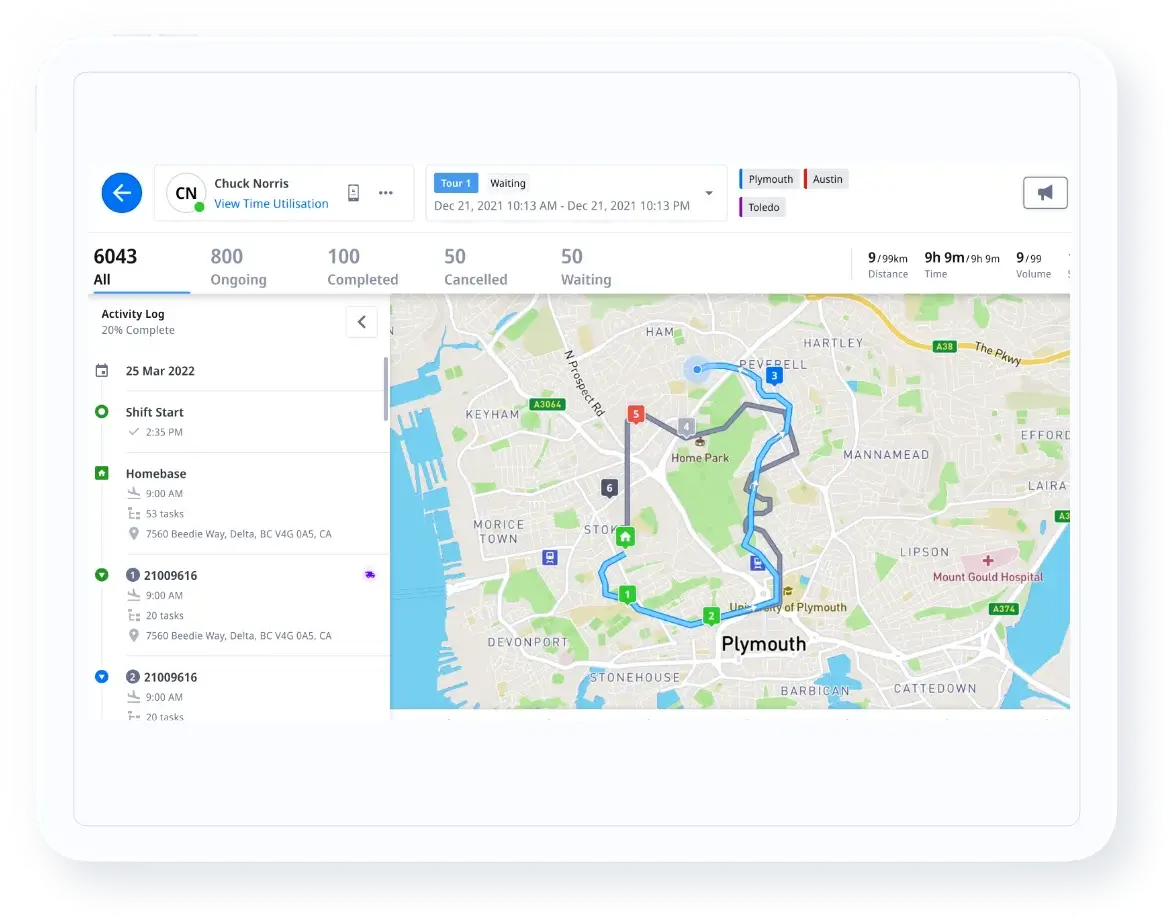
This goes beyond simple route planning to include dynamic optimization that adapts to changing conditions throughout the day. - Control Tower provides unified visibility across your entire logistics network, connecting carriers, warehouses, and customers into a single dashboard.

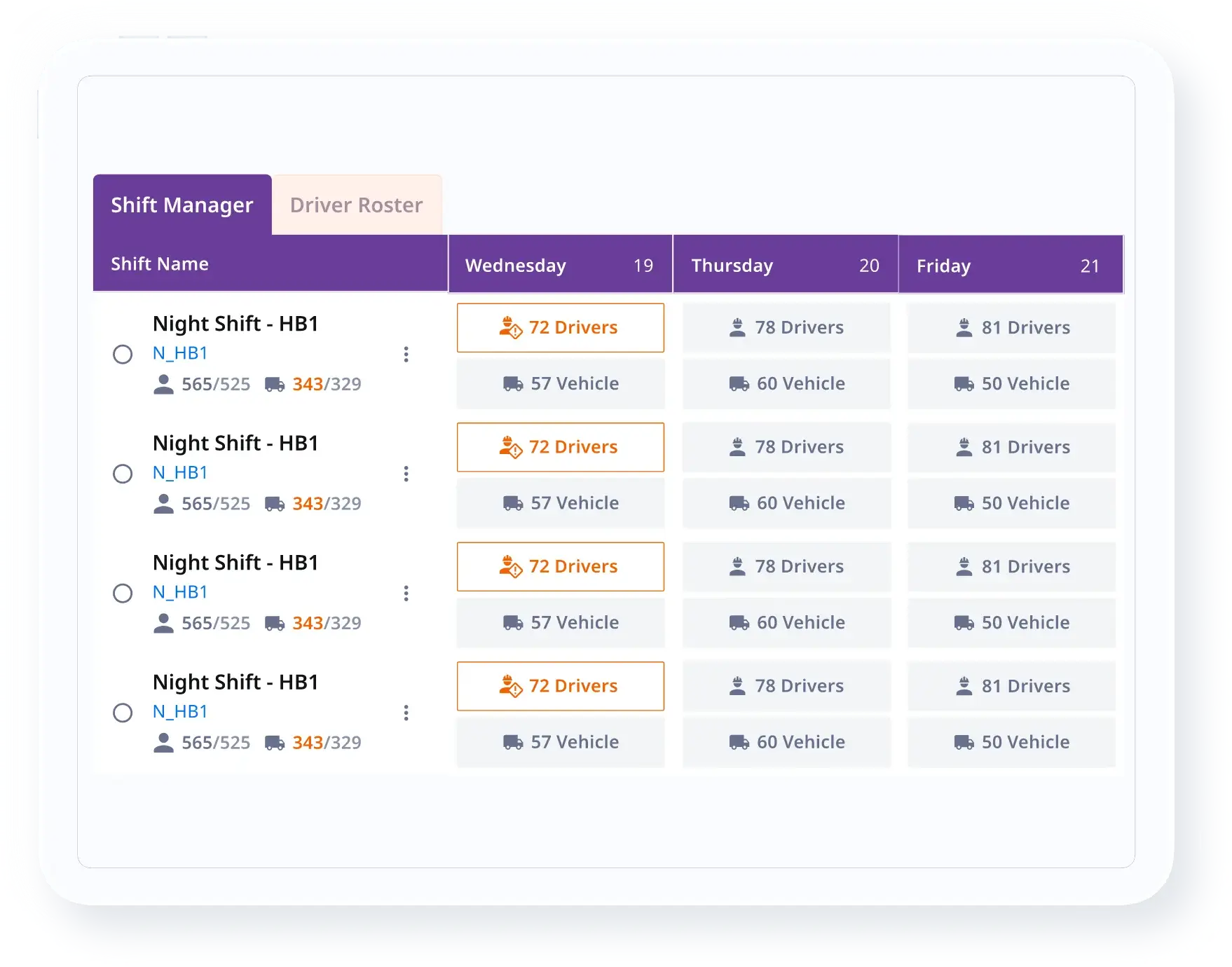
Real-time exception management automatically triggers corrective actions when disruptions occur. - Capacity Management uses machine learning to predict demand patterns and automatically allocate resources across your network.

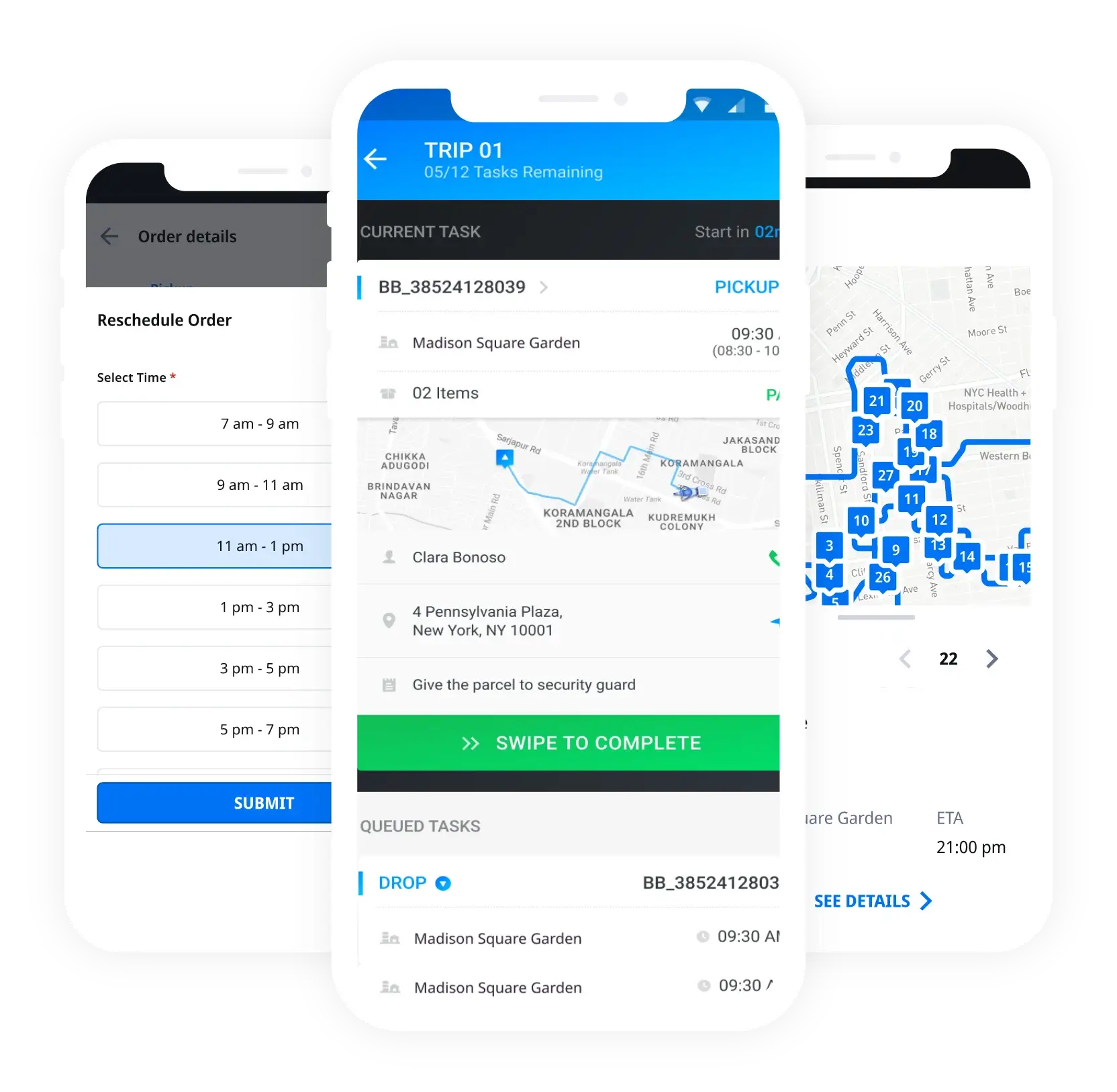
This prevents both overcapacity waste and service failures due to resource shortages. - Driver Companion App streamlines communication between dispatchers and drivers while capturing real-time delivery data that feeds back into optimization algorithms.

- ShipFlex dynamically selects optimal carriers for each shipment based on cost, service levels, and performance history, automatically switching carriers when conditions change.
Locus Is Best For
Locus is purpose-built for enterprise retailers, FMCG/CPG leaders, and 3PLs with annual revenues exceeding $150M and complex, multi-region last-mile logistics operations. The platform is trusted by global brands seeking scalable, AI-powered orchestration to reduce delivery costs, improve SLA adherence, and gain real-time supply chain visibility.
Locus’s Unique Value Proposition
Unlike point solutions that address isolated logistics challenges, Locus delivers unified, AI-powered orchestration across the entire supply chain — transforming logistics from a cost center into a strategic advantage. The platform integrates order management, capacity planning, route optimization, carrier selection, and customer communication into seamless workflows that require minimal human oversight.
With Locus, enterprises achieve measurable reductions in delivery costs, improved SLA adherence, and real-time supply chain visibility — empowering logistics as a source of competitive differentiation.
Locus Pricing
Enterprise-focused pricing with custom implementation based on network complexity and transaction volume. Schedule a Demo to explore pricing options tailored to your specific requirements.
Locus — Pros and Cons
Pros
- ? Proven 25% cost reduction and 99.5% SLA adherence across Fortune 500 and global retail/FMCG leaders
- ? Comprehensive AI-powered automation reduces operational overhead significantly
- ? Strong integration capabilities with existing enterprise ERP, WMS, and TMS systems
- ? Continuous platform innovation with dedicated customer success and implementation support
- ? Sustainable delivery optimization meeting environmental compliance requirements via green logistics capabilities
Cons
- ? Enterprise-focused platform may exceed requirements for smaller operations with simpler logistics needs
- ? Implementation complexity requires dedicated project resources and change management planning
2. Oracle Transportation Management
Oracle TMS serves Fortune 500 companies requiring enterprise-grade supply chain visibility software integrated within existing Oracle environments. The platform handles complex global operations with millions of transactions while maintaining financial accuracy and regulatory compliance. It is well-suited for large manufacturers and distributors already invested in Oracle’s ecosystem seeking comprehensive logistics visibility without additional vendor relationships.
Key Features of Oracle TMS
- Advanced transportation planning with multi-modal optimization across air, ocean, rail, and ground
- Global trade management with automated customs documentation and compliance checking
- Real-time shipment tracking integrated with Oracle ERP and financial systems
- Carrier management platform with performance analytics and rate optimization
- Business intelligence dashboards providing transportation cost analysis and KPI monitoring
Oracle TMS — Pros and Cons
Pros
- ? Deep integration with Oracle ERP eliminates data silos and ensures financial accuracy
- ? Proven scalability for handling enterprise-level transaction volumes and complexity
- ? Comprehensive global trade capabilities with regulatory compliance automation
- ? Strong audit trails and financial controls suitable for publicly traded companies
Cons
- ? Requires significant Oracle expertise and dedicated implementation resources
- ? Complex licensing structure with high total cost of ownership
- ? Limited flexibility compared to best-of-breed supply chain visibility platforms
- ? Long implementation timelines typically span 12–18 months for full deployment
Oracle TMS — Pricing
Enterprise licensing starts around $100,000 annually. Implementation costs often exceed software fees, pushing total cost of ownership considerably higher for complex deployments.
3. Blue Yonder
Blue Yonder targets retail and manufacturing enterprises seeking advanced demand forecasting capabilities alongside supply chain visibility. The platform combines operational visibility with intelligent planning to help companies optimize inventory levels while maintaining service commitments. It is particularly effective for retailers managing seasonal demand volatility and promotional activities requiring predictive analytics.
Key Features of Blue Yonder
- AI-powered demand forecasting with consumer behavior pattern analysis
- Inventory optimization across multiple locations with dynamic allocation algorithms
- Store operations visibility with workforce productivity and customer flow insights
- Supply network planning with scenario modeling and what-if analysis capabilities
- Omnichannel fulfillment optimization for buy-online-pickup-in-store strategies
Blue Yonder — Pros and Cons
Pros
- ? Strong retail industry expertise with proven inventory reduction outcomes
- ? Advanced machine learning capabilities for demand prediction and planning optimization
- ? Comprehensive analytics platform providing actionable business intelligence insights
- ? Good integration options with popular retail systems and e-commerce platforms
Cons
- ? Complex implementation requiring substantial change management and process reengineering
- ? High cost structure with annual fees ranging from $250,000 to $2 million
- ? Limited real-time operational optimization compared to specialized logistics platforms
- ? Steep learning curve for teams transitioning from manual to automated planning
Blue Yonder — Pricing
Custom enterprise pricing varies based on business complexity and user count, with multi-year contracts typical. Annual fees range from $250,000 to $2 million for large retail operations.
4. Kinaxis Maestro (formerly RapidResponse)
Kinaxis Maestro is one of the strongest supply chain visibility platforms for complex manufacturing operations requiring advanced scenario planning and real-time collaboration. The platform excels in environments where multiple constraints affect production scheduling and supplier coordination. It is ideal for manufacturers with complex bill-of-materials and multi-tier supplier networks needing rapid response capabilities.
Key Features of Kinaxis Maestro
- Concurrent planning engine enabling simultaneous planning across multiple time horizons
- What-if analysis tools for evaluating scenarios without disrupting live operations
- Supply chain control tower with real-time visibility into multi-tier supplier networks
- Collaborative planning portal with secure information sharing capabilities
- Memory-resident architecture enabling real-time planning updates across complex networks
Kinaxis Maestro — Pros and Cons
Pros
- ? Exceptional scenario planning and modeling capabilities for manufacturing complexity
- ? Real-time collaboration tools enabling rapid response to supply chain disruptions
- ? Strong manufacturing industry focus with bill-of-materials and capacity constraint handling
- ? Proven ability to reduce response time from days to hours during disruptions
Cons
- ? Requires substantial process reengineering and cross-functional collaboration for success
- ? High implementation costs often equal or exceed software licensing fees
- ? Complex user interface requiring extensive training for effective adoption
- ? Limited applicability outside manufacturing and complex planning environments
Kinaxis Maestro — Pricing
Subscription pricing starts around $200,000 annually for mid-size manufacturers, with costs scaling based on network complexity and number of planning nodes.
5. E2open
E2open operates a cloud-based supply chain network connecting trading partners through shared visibility and collaboration platforms. The solution serves companies requiring multi-enterprise coordination across complex supplier and customer networks. It is particularly valuable for automotive, high-tech, and industrial manufacturing companies with global operations and regulatory compliance requirements.
Key Features of E2open
- Multi-enterprise visibility platform connecting suppliers, manufacturers, and distributors
- Collaborative planning networks enabling joint forecasting and capacity optimization
- Global trade platform with documentation management and compliance monitoring
- Supplier risk management with financial health and performance monitoring
- Network-based architecture providing shared best practices and benchmark comparisons
E2open — Pros and Cons
Pros
- ? Unique network approach enabling collaboration across trading partner ecosystems
- ? Strong global trade capabilities with comprehensive customs and documentation management
- ? Network effects provide increased value as more partners join the platform
- ? Good fit for companies requiring visibility across extended supply chain networks
Cons
- ? Complex implementation requiring coordination across multiple organizations
- ? High cost structure with annual fees ranging from $300,000 to several million
- ? Success depends on partner adoption rather than single-company deployment
- ? Limited operational optimization compared to focused logistics platforms
E2open — Pricing
Subscription pricing varies based on transaction volume and network participation, with multi-year contracts common. Enterprise implementations often exceed $300,000 annually.
6. Descartes Systems
Descartes delivers specialized strength in global trade management and regulatory compliance. The platform serves logistics service providers, freight forwarders, and manufacturers with significant international shipping requirements. It is ideal for companies needing comprehensive customs management, trade documentation automation, and multimodal supply chain tracking across global markets.
Key Features of Descartes Systems
- Trade compliance engine with automated documentation and duty calculation for 190+ countries
- Freight management suite with carrier optimization and shipment consolidation
- Route optimization algorithms handling complex multi-stop deliveries and constraints
- Customs and border management with automated clearance monitoring
- Real-time tracking integration with major carriers and freight audit capabilities
Descartes Systems — Pros and Cons
Pros
- ? Exceptional global trade expertise with continuous regulatory updates and compliance automation
- ? Strong international shipping capabilities reducing delays and compliance costs
- ? Comprehensive freight management with carrier selection and rate optimization
- ? Flexible deployment options including cloud, on-premise, and hybrid configurations
Cons
- ? Less focused on domestic supply chain visibility compared to international operations
- ? Complex setup for companies with primarily domestic shipping requirements
- ? Limited advanced AI capabilities compared to newer-generation platforms
- ? Module-based pricing can become expensive for comprehensive functionality
Descartes Systems — Pricing
Module-based pricing with annual fees typically ranging from $75,000 to $500,000, depending on the number of modules and operational complexity.
7. Manhattan Associates
Manhattan Associates brings deep expertise in warehouse operations and omnichannel fulfillment to the supply chain visibility landscape. The platform serves retail and distribution companies requiring integrated inventory and order management across multiple channels. It is particularly effective for retailers needing sophisticated warehouse optimization and buy-online-pickup-in-store capabilities.
Key Features of Manhattan Associates
- Inventory optimization platform with real-time visibility across stores and distribution centers
- Warehouse management integration providing complete order lifecycle tracking
- Order management orchestration handling split shipments and complex fulfillment scenarios
- Labor management analytics with workforce productivity and capacity planning
- Omnichannel fulfillment engine supporting ship-from-store and cross-docking operations
Manhattan Associates — Pros and Cons
Pros
- ? Strong retail industry expertise with thousands of successful implementations
- ? Comprehensive warehouse optimization capabilities with labor management integration
- ? Microservices architecture enabling rapid deployment and scalability
- ? Industry-specific features for fashion, grocery, and general merchandise operations
Cons
- ? High implementation costs with timelines typically requiring 8–16 months
- ? Complex platform requiring substantial change management and system integration
- ? License and subscription pricing can exceed $1 million annually for large operations
- ? Limited transportation optimization compared to specialized logistics platforms
Manhattan Associates — Pricing
License and subscription options with annual fees ranging from $150,000 to over $1 million for large retail operations.es ranging from $150,000 to over $1 million for large retail operations.
8. SAP Extended Warehouse Management
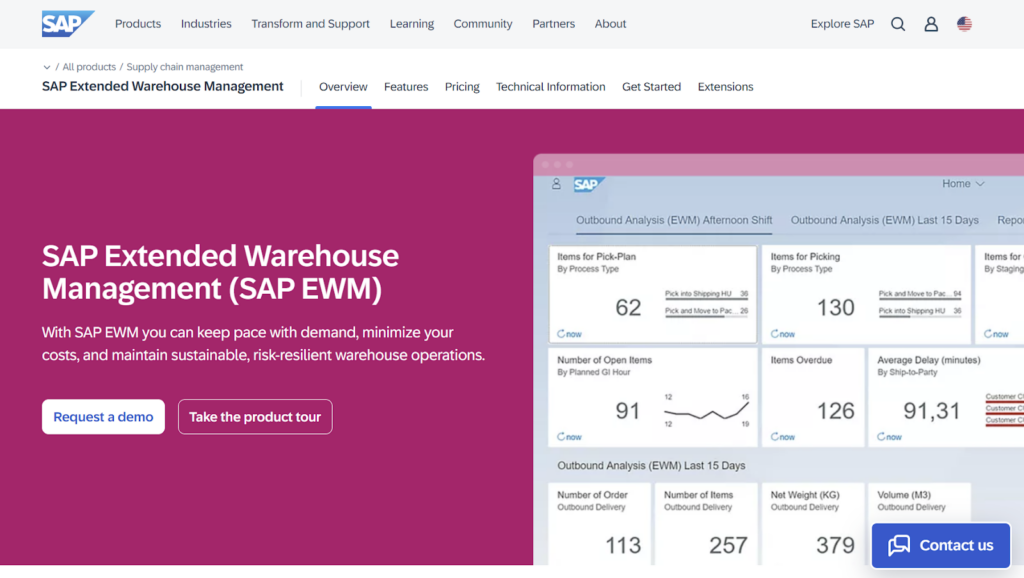
SAP EWM provides supply chain visibility integrated within the SAP ecosystem for companies seeking unified enterprise resource planning and logistics management. The platform serves organizations already standardized on SAP systems, requiring comprehensive visibility without additional vendor relationships.
SAP-centric enterprises may also evaluate SAP Integrated Business Planning for planning workflows, while SAP EWM is more focused on warehouse execution and logistics operations.
SAP-centric enterprises may also evaluate SAP Integrated Business Planning for planning workflows, while SAP EWM is more focused on warehouse execution and logistics operations.
Key Features of SAP EWM
- Native ERP connectivity eliminates data silos between financial and logistics systems
- Advanced warehouse analytics leveraging SAP’s business intelligence platform
- Global deployment capabilities with multi-language and multi-currency support
- Supply chain orchestration connecting warehouse operations with transportation management
- Comprehensive warehouse management including slotting optimization and task automation
SAP EWM — Pros and Cons
Pros
- ? Seamless integration with existing SAP infrastructure and unified user experience
- ? Comprehensive functionality including yard management, labor planning, and quality control
- ? Strong financial integration ensures accuracy and audit compliance
- ? Simplified vendor management for organizations standardized on SAP systems
Cons
- ? Requires significant SAP expertise and technical resources for implementation
- ? Complex licensing structure as part of broader SAP implementations
- ? Limited flexibility compared to best-of-breed supply chain visibility platforms
- ? Implementation timelines typically span 12–24 months for enterprise deployments
SAP EWM — Pricing
SAP licensing model with annual maintenance costs typically 17–22% of license fees, plus implementation costs that can be substantial for enterprise deployments.
9. Flexe
Flexe provides supply chain visibility for companies requiring flexible warehousing and fulfillment capabilities without long-term real estate commitments. The platform serves e-commerce retailers, brands, and 3PLs needing scalable distribution networks. It is particularly effective for seasonal businesses, growing companies, and organizations requiring rapid market expansion with distributed inventory placement for faster delivery times.
Key Features of Flexe
- On-demand warehouse network with real-time capacity availability across 1,500+ facilities
- Fulfillment orchestration platform with automated order routing and carrier selection
- Inventory visibility dashboard providing real-time stock levels across distributed locations
- Performance analytics with facility-level metrics for cost, speed, and quality benchmarking
- Integration platform connecting existing WMS, ERP, and e-commerce systems with network operations
Flexe — Pros and Cons
Pros
- ? Flexible capacity model eliminates long-term warehouse commitments and reduces fixed costs
- ? Rapid network expansion capabilities enabling faster time-to-market in new regions
- ? Comprehensive facility vetting and quality standards ensuring consistent service delivery
- ? Pay-per-use pricing model aligning costs with actual business volume and seasonality
Cons
- ? Limited control over individual warehouse operations compared to dedicated facilities
- ? Dependent on partner facility availability during peak seasons and high-demand periods
- ? Less suitable for companies requiring specialized handling or complex fulfillment processes
- ? Integration complexity when managing inventory across multiple third-party locations
Flexe — Pricing
Usage-based pricing model with costs varying by storage volume, order processing, and value-added services. Custom pricing based on network requirements and service levels.
10. Coupa – powered by Llamasoft
Coupa delivers supply chain visibility focused on network design and strategic optimization through advanced modeling capabilities. The platform serves manufacturing and distribution companies requiring digital twin capabilities for network optimization, risk assessment, and strategic decision-making. It is ideal for companies evaluating facility locations, transportation lanes, and supplier strategies while needing visibility into network performance and risk exposure.
Key Features of Coupa
- Supply chain network modeling with digital twin capabilities for scenario analysis and optimization
- Risk assessment platform with supplier financial health monitoring and geographic risk mapping
- Transportation optimization with lane analysis, mode selection, and carrier performance evaluation
- Inventory optimization across network nodes with service level and cost trade-off analysis
- Carbon footprint modeling with sustainability impact assessment and reporting capabilities
Coupa — Pros and Cons
Pros
- ? Exceptional network modeling and optimization capabilities for strategic supply chain decisions
- ? Strong analytical foundation with proven algorithms for complex multi-variable optimization
- ? Comprehensive risk management features including supplier diversity and resilience planning
- ? Flexible deployment options supporting both strategic planning and operational optimization
Cons
- ? Primarily focused on strategic planning rather than day-to-day operational visibility
- ? Requires significant analytical expertise and dedicated resources for effective utilization
- ? Implementation complexity with timelines typically spanning 6–12 months for full deployment
- ? Limited real-time execution capabilities compared to operational supply chain platforms
Coupa — Pricing
Subscription-based pricing starts around $150,000 annually for mid-size manufacturers, with costs scaling based on network complexity and modeling requirements.
Benefits of Implementing Supply Chain Visibility Software
Enterprise organizations implementing AI-driven supply chain visibility software realize compounding benefits across cost, service, and risk dimensions:
1. Measurable Cost Reduction
Companies leveraging advanced analytics achieve a 15–20% increase in cost savings through optimized carrier selection, dynamic route planning, and reduced manual intervention. Cloud-based software enables businesses to respond to demand fluctuations up to 20% faster, cutting excess inventory carrying costs and preventing costly stockouts.
2. Dramatically Improved Inventory Accuracy
Organizations utilizing supply chain visibility software and real-time data report up to a 30% improvement in inventory accuracy. This directly reduces safety stock requirements, warehouse space utilization, and write-offs from expired or obsolete inventory.
3. Near-Perfect On-Time Delivery
Agile logistics networks leveraging supply chain visibility software can achieve a 99% on-time delivery rate. This translates to higher customer retention, reduced penalty costs from missed SLAs, and stronger competitive positioning. Understanding why your business needs route optimization is central to achieving these delivery benchmarks.
4. Proactive Disruption Mitigation
Real-time analytics can minimize disruptions by 30% or more, particularly during high-demand seasons. Instead of discovering problems after they cascade across the network, predictive exception management reroutes shipments, updates customer communications, and adjusts capacity allocation — all automatically.
Explore how visibility enables supply chain agility during unexpected disruptions.
Managing Regionalized Supply Chains and Geopolitical Disruption
As enterprises regionalise supply networks to reduce exposure to global volatility, visibility software becomes central to disruption management. Teams can monitor regional supplier risk, border delays, capacity shortages, customs constraints, and regulatory changes in one operating view.
This enables faster contingency planning: reassigning inventory, switching carriers, reprioritising shipments, or activating alternative routes before disruption spreads across the network.
5. Reduced Customer Service Overhead
Companies implementing comprehensive communication hubs see 50–70% reductions in “where is my order” inquiries. Automated notification systems keep customers informed through preferred channels while self-service tracking portals free customer service teams for higher-value activities.
6. Sustainable Operations at Scale
Modern visibility platforms integrate carbon footprint modeling, sustainability impact assessment, and green logistics capabilities. This enables enterprises to meet environmental compliance requirements while optimizing delivery networks — achieving both cost savings and ESG goals simultaneously.
For ESG reporting, enterprises should evaluate whether platforms can estimate emissions consistently by shipment, route, mode, carrier, and region. A methodology aligned with the GLEC Framework gives logistics teams a recognised basis for emissions accounting, helping sustainability, finance, and supply chain leaders compare performance across networks and prioritise lower-impact routing and carrier decisions.
Essential Features Your Supply Chain Visibility Software Must Have
To deliver measurable enterprise value in 2026, supply chain visibility software must go beyond dashboards and provide core capabilities that enable proactive, connected, and customer-centric operations.
AI-Powered Predictive Analytics
Machine learning algorithms analyze historical patterns, current conditions, and external factors to predict delivery delays, capacity shortages, and demand spikes. This capability addresses the core frustration of reactive firefighting that plagues traditional logistics operations.
With over 50% of large companies expected to use IoT combined with advanced analytics to optimize supply chain operations, predictive capabilities are no longer a premium feature — they are table stakes.
The outcome includes proactive rerouting, automated carrier selection, and dynamic capacity allocation that maintains service levels during disruptions. Without predictive capabilities, organizations remain trapped in costly reactive cycles.
Seamless Multi-System Integration
Native APIs connect your existing ERP, WMS, TMS, and carrier systems into unified workflows. This integration eliminates the data silos that force teams to manually reconcile information across platforms.
When an order enters your system, integrated visibility software automatically selects optimal carriers, calculates delivery windows, and triggers customer communications — all without human intervention. Companies implementing seamless integration report significant reductions in administrative overhead. Organizations lacking proper integration continue burning resources on manual processes, increasing both costs and error rates.
Learn how to choose the right route planning software that integrates seamlessly with your existing tech stack.
Real-Time Exception Management
Automated monitoring detects anomalies across your logistics network and triggers intelligent responses. When weather delays impact a key route, the system automatically reroutes shipments, updates delivery estimates, and notifies affected customers.
This capability directly addresses the anxiety executives feel about losing control during disruptions. The outcome includes maintained service levels, reduced customer complaints, and preserved revenue streams — even during challenging conditions.
Learn how visibility creates competitive advantage in modern supply chain operations.
Customer Communication Hub
Automated notification systems keep customers informed through preferred channels while self-service tracking portals reduce support ticket volume. Companies implementing comprehensive communication hubs see 50–70% reductions in “where is my order” inquiries, freeing customer service teams to focus on higher-value activities.
Multimodal Tracking & Carrier Connectivity
Enterprise supply chains operate across road, rail, ocean, and air. The best supply chain visibility platforms provide unified tracking across all transportation modes through GPS, ELD, and AIS data integration. Multi-carrier connectivity with automated performance scoring ensures you always route through the most reliable, cost-effective channels — a capability that directly supports route optimization benefits across different business segments.
For higher-value or condition-sensitive freight, IoT sensors can supplement GPS and ELD feeds with additional signals such as location, shock, humidity, temperature, and condition data. This gives operations teams a richer view of freight integrity, not only vehicle movement.
Cold Chain and Temperature-Sensitive Freight Visibility
Cold chain operations require visibility into product condition, not just shipment status. For grocery, pharmaceuticals, perishables, and other temperature-sensitive categories, platforms should support defined temperature thresholds, IoT sensor alerts, exception workflows, and proof-of-condition records.
When a shipment breaches a temperature range or condition threshold, the system should alert the right team, trigger escalation workflows, and preserve the event history for quality, compliance, and customer-service review. This helps enterprises protect product integrity while reducing manual follow-up across carriers and fulfilment partners.
Why Choose Locus for Supply Chain Visibility
While every platform analyzed in this guide offers visibility capabilities, Locus stands apart in delivering true end-to-end orchestration that eliminates operational gaps between planning and execution.
Critical Factors That Separate Locus From Alternatives
| Decision Criterion | Locus Advantage | Typical Alternative |
| Architecture | Unified AI orchestration across all logistics functions | Single-domain point solutions requiring multi-vendor integration |
| Cost Impact | 25% logistics cost reduction documented across enterprise customers | Incremental savings dependent on manual process overlap |
| Delivery Performance | 99.5% on-time delivery rates across 30+ countries | Varies by module; rarely addresses end-to-end delivery chain |
| Implementation | Phased rollout delivers value in 3–4 months | 12–24 month timelines common for ERP-integrated solutions |
| Sustainability | Built-in green logistics optimization for ESG compliance | Add-on or absent; requires separate tooling |
What Makes Locus the Strategic Choice
For enterprise retailers, FMCG/CPG leaders, and 3PLs, the choice comes down to operational philosophy. Traditional platforms require you to assemble visibility from fragmented tools — an ERP here, a TMS there, a carrier portal elsewhere. Locus replaces that fragmented approach with a single, AI-powered orchestration layer that connects order management, capacity planning, route optimization, carrier selection, and customer communication into seamless workflows.
This integrated approach consistently delivers measurable outcomes without requiring the complex multi-vendor implementations that burden traditional approaches.
Discover how AI-powered solutions transform supply chain management for global enterprise operations.
Critical Platform Selection Factors
Enterprise buyers consistently struggle with three fundamental challenges when evaluating supply chain visibility software:
Integration Complexity and Technical Requirements — Evaluate each platform’s API capabilities and pre-built connectors for your existing systems. Consider implementation timelines and the internal resources required for successful deployment. Most enterprise implementations require 6–12 months with dedicated project teams. Change management is crucial for user adoption.
Security and Compliance Requirements — Supply chain visibility platforms process commercially sensitive data across orders, customers, shipments, drivers, vehicles, carriers, warehouses, and third-party telematics sources. Enterprise buyers should validate role-based access controls, audit trails, encryption in transit and at rest, data-retention policies, and clear governance for telematics data sharing.
For cross-border operations, assess how vendors handle regional data residency, driver and customer data, location histories, shipment records, and privacy obligations such as GDPR. SOC2 can also be a useful vendor due-diligence consideration when evaluating third-party logistics data platforms, particularly where multiple carriers, integrations, and external partners exchange operational data.
Scalability and Future-Proofing — Assess each platform’s ability to handle growth in transaction volume, geographic expansion, and new business models. Consider the vendor’s product roadmap and commitment to continuous innovation. Evaluate the company’s financial health and customer retention rates when making long-term partnership decisions.
Total Cost of Ownership Beyond Software Licensing — Factor in implementation costs, ongoing consulting fees, training expenses, and system maintenance requirements. Understanding hidden costs helps build accurate business cases for platform investments. Consider the opportunity costs of delayed implementations or failed deployments when evaluating vendor support capabilities.
Hidden Integration Costs: API Limits, Middleware, and Custom Connectors — TCO should also account for API call volume, API rate limits, testing environments, recurring connector maintenance, and mapping changes when ERP, WMS, TMS, carrier, or telematics systems evolve. API rate limits can directly affect real-time sync frequency, carrier event ingestion, and integration scalability during peak periods.
Legacy systems may require custom middleware when they lack modern API connectivity. That can introduce additional build, monitoring, support, and change-management costs, especially in multi-region environments with different carrier networks, data formats, and operational workflows.
Avoiding Vendor Lock-In — Enterprise buyers should clarify data ownership before contract signature. Ensure the platform supports open APIs, standard export formats, and the ability to retain historical shipment, carrier, route, SLA, exception, and performance data if the business changes systems later.
Strong exit clauses, migration support, and documented data-export processes reduce switching risk and protect long-term operational intelligence. This is particularly important when visibility software becomes the system of record for logistics execution and carrier performance.
Total cost of ownership and ROI framework
Pricing labels such as “custom quote” or “enterprise subscription” rarely tell the full story. Buyers should model TCO across:
- subscription or platform fees,
- implementation services,
- ERP/WMS/TMS integrations,
- middleware and connector maintenance,
- test environments and sandbox costs,
- carrier onboarding,
- telematics or IoT data fees,
- support and training,
- change-management effort,
- and ongoing configuration governance.
KPI inputs for an ROI model
Use a baseline-and-improvement model across:
- cost per shipment or delivery,
- on-time delivery,
- ETA accuracy,
- exception detection and resolution time,
- route adherence,
- vehicle or capacity utilisation,
- carrier tender acceptance,
- failed-delivery rate,
- support-ticket volume,
- inventory accuracy,
- and emissions per shipment or delivery.
Avoid generic ROI promises without a pilot design, baseline measures, and workflow ownership.
A 12-Month Phased Implementation Roadmap
A structured roadmap helps enterprises move from fragmented legacy systems to modern supply chain visibility software without disrupting live operations.
| Phase | Focus Area | Key Actions |
| Months 1–2 | Discovery and data audit | Map current ERP, WMS, TMS, carrier, telematics, and customer-communication workflows. Identify data owners, integration gaps, exception types, and baseline KPIs. |
| Months 2–3 | Integration design | Define API requirements, data mappings, security controls, middleware needs, test environments, and cutover governance. |
| Months 3–5 | Pilot region rollout | Deploy the platform in a controlled region, business unit, or delivery network. Validate tracking, exception management, dispatch workflows, and customer notifications. |
| Months 5–7 | Carrier and telematics onboarding | Connect priority carriers, driver applications, GPS/ELD feeds, and IoT sensor sources where relevant. Standardise event codes and performance reporting. |
| Months 7–9 | Workflow automation | Automate exception alerts, rerouting decisions, carrier selection, customer communications, and SLA escalation processes. |
| Months 9–10 | KPI review and optimisation | Compare pilot performance against baseline metrics for cost, on-time delivery, exception resolution, customer-service volume, and operational adoption. |
| Months 10–12 | Multi-region scale-up | Extend proven workflows across additional regions, carriers, warehouses, and customer segments while refining governance and training models. |
This phased approach reduces deployment risk while enabling teams to capture early value, validate integration assumptions, and scale proven workflows across the enterprise.
Implementation risks and when visibility software is not the right first investment
Visibility software is powerful, but it is not always the right starting point.
Common failure risks
- poor master data and inconsistent location records,
- low carrier adoption or weak milestone feeds,
- no standard event definitions,
- unclear exception ownership,
- no executive sponsor,
- insufficient IT or change-management capacity,
- over-customised legacy workflows,
- and unclear data-export rights.
When to solve another problem first
You may need a different first investment if:
- you primarily lack a basic TMS,
- shipment volume is too low to justify enterprise visibility tooling,
- your biggest issue is warehouse-process discipline rather than cross-network visibility,
- or you have not yet defined what teams should do when an exception appears.
Good visibility software amplifies operational discipline. It does not replace it.
Your Path to Supply Chain Excellence in 2026
Advanced supply chain visibility software represents a competitive necessity in 2026’s volatile logistics environment. With the market projected to reach USD 3.50 billion this year and enterprises achieving 15–20% cost savings through advanced analytics, the ROI case is clear. Companies that implement AI-powered platforms gain sustainable advantages through reduced costs, improved customer satisfaction, and operational resilience.
The key lies in selecting solutions that provide true orchestration capabilities — platforms that integrate seamlessly with existing systems while providing room for future growth and innovation.
Ready to gain complete control over your enterprise supply chain operations? Schedule a Demo with Locus and discover how AI-powered orchestration can reduce costs by 25%, achieve 99.5% on-time delivery, and create sustainable competitive advantages for your organization.
Frequently Asked Questions (FAQs)
What is supply chain visibility software?
Supply chain visibility software provides real-time tracking and analytics across the entire supply chain — from raw materials to final delivery — using GPS, ELD, and AIS data. It integrates with TMS, ERP, and WMS systems to eliminate data silos, enabling predictive ETAs, automated exception management, and proactive disruption mitigation. The market was valued at USD 3.10 billion in 2025 and continues to grow as enterprises prioritize end-to-end logistics intelligence.
What are the top supply chain visibility software solutions in 2026?
Leading platforms include Locus (end-to-end AI orchestration for enterprise retailers, FMCG, and 3PLs), Oracle TMS (deep ERP integration for Fortune 500), Blue Yonder (predictive planning for retail), Kinaxis Maestro (complex manufacturing), and E2open (multi-enterprise networks). For specialized needs, Descartes Systems leads in global trade compliance, Manhattan Associates excels in omnichannel retail, and Coupa provides strategic network modeling with digital twin capabilities.
How long does implementation typically take for supply chain visibility software?
Enterprise implementations generally require 6–12 months, depending on system complexity and integration requirements. Factors affecting duration include data quality, existing system architecture, organizational change management, and vendor support quality. Phased rollouts can deliver measurable value in 3–4 months while building toward full implementation. For perspective, SAP EWM deployments typically span 12–24 months, while focused platforms like Locus can accelerate time-to-value through streamlined integration architectures.
What is the typical ROI timeline for visibility software investments?
Most organizations see initial returns within 6–9 months through operational efficiency gains and cost reductions. Leading global retailers using Locus have achieved logistics cost reductions of 25% and delivery SLA compliance of 99.5%. Full ROI typically materializes within 18–24 months as process optimization and customer satisfaction improvements compound. Key metrics include reduced transportation costs (10–25%), improved on-time delivery rates (15–30%), decreased customer service volume (50–70%), and inventory optimization (20–35%).
How do I ensure successful integration with existing systems?
Successful integration requires thorough API evaluation, data mapping, and phased testing approaches. Work with vendors offering pre-built connectors for your ERP, WMS, and TMS systems. Establish clear data governance policies and involve IT teams from project inception. Consider middleware solutions for complex integration scenarios. The critical factor is selecting a platform with native integration architecture — rather than bolt-on connectors — that supports your specific enterprise tech stack.
What is the difference between basic tracking and advanced visibility platforms?
Basic tracking provides reactive information about shipment locations and status updates. Advanced visibility platforms offer predictive analytics, automated exception management, and intelligent optimization capabilities. The difference lies in moving from “what happened” to “what will happen” and “what should we do about it.” With real-time analytics minimizing disruptions by 30% or more, the gap between basic tracking and AI-driven orchestration directly impacts bottom-line performance.
How does AI improve supply chain visibility software?
AI enables predictive ETAs, delay forecasting, and automated rescheduling — shifting supply chain management from reactive tracking to proactive intelligence. Machine learning algorithms analyze historical shipment data, carrier performance patterns, weather conditions, and demand signals to anticipate disruptions before they impact operations. This drives proactive rerouting, dynamic carrier selection, and automated customer communication. Companies implementing AI-powered visibility report 15–20% cost savings and 30%+ improvements in inventory accuracy.
How do I build the business case for supply chain visibility software?
Focus on quantifiable benefits including reduced transportation costs (10–25%), improved on-time delivery rates (15–30%), decreased customer service volume (50–70%), and inventory optimization (20–35%). Include risk mitigation value from avoiding disruption costs and customer churn — 76% of shippers experienced supply chain disruptions in 2024, making resilience a board-level priority. Factor in competitive advantages from superior customer experience and operational agility, and benchmark against the 15–20% cost savings that enterprises with advanced analytics consistently achieve.
What should 3PLs look for in supply chain visibility software?
3PLs require multi-client visibility, automated carrier selection, real-time exception management, and customer-facing tracking portals. Key differentiators include the ability to manage complex delivery networks across multiple clients simultaneously, dynamic capacity allocation, and performance analytics that enable SLA reporting per client. Platforms with proven route optimization benefits across diverse business segments — like Locus — provide the multi-tenant flexibility that 3PLs need to scale efficiently.
Can supply chain visibility software support cold chain monitoring?
Yes. Supply chain visibility software can support cold chain monitoring by ingesting temperature and condition data from IoT sensors, triggering alerts when thresholds are breached, and routing exceptions to the right teams. Proof-of-condition reporting helps quality, compliance, and customer-service teams review shipment integrity for grocery, pharmaceuticals, perishables, and other temperature-sensitive freight.


General
10 Best Shipment Tracking Software in 2026

Oct 24, 2026
Discover the best shipment tracking software of 2025. Explore features, pricing, and why Locus outperforms competitors in logistics efficiency.
Read more
General
Best 3PLs for Delivery Experience Optimization (2026)

Oct 24, 2026
The three strongest 3PLs for delivery experience in 2026, what to evaluate them on, and why the orchestration layer above your 3PL determines more of the outcome than the provider choice does.
Read moreInsights Worth Your Time



















Top 10 Best Supply Chain Visibility Software in 2026