


General
Which of These 6 Home Phlebotomy Software Platforms Fits Your Operations?

Studies show that 46% to 68% of laboratory errors occur in the pre-analytical stage — sample collection, labeling, storage, and transport to the lab. In home phlebotomy, this entire stage happens outside a controlled clinical setting, making AI-powered logistics orchestration and enterprise dispatch management critical to diagnostic reliability.
Technicians move between homes. Samples travel through city traffic before reaching processing centers. Appointments must align with fasting requirements, technician skill levels, and strict lab cut-off timelines.
When coordination breaks down:
- Samples arrive beyond stability windows
- Lab processing gets delayed
- Technicians handle more appointments than planned
- Routes increase cost per pickup
- Visibility disappears after collection
These are not clinical failures. They are operational breakdowns — rooted in how appointments, routes, and workloads are managed across distributed field networks.
As home collection volumes grow in 2026, spreadsheets and basic scheduling tools cannot keep pace. Organizations that treat phlebotomy dispatch as a last mile delivery problem gain measurable advantages in sample integrity, technician utilization, and cost control. The best home phlebotomy software brings structure through intelligent dispatch, route optimization, and real-time tracking — turning logistics from a cost center into a strategic capability.
In this guide, we evaluate the leading home phlebotomy software platforms in 2026 so you can choose a solution built for scale, control, and consistent execution.
WEditorial Methodology
This comparison evaluates home phlebotomy software platforms across five operational dimensions that directly affect pre-analytical reliability: dispatch automation depth, route optimization sophistication, real-time tracking capability, LIS/EMR integration, and scalability for multi-city operations. Each platform was assessed based on publicly available product documentation, vendor-published feature sets, and demonstrated enterprise adoption. Platforms are ranked by operational depth — not marketing claims. No vendor paid for inclusion or ranking position.
What to Look for in a Home Phlebotomy Software
Many platforms offer appointment booking and basic tracking. But that alone does not ensure reliable home blood draw scheduling at scale.
For enterprise-scale diagnostic networks, the real evaluation comes down to operational control. Can the software manage technician assignment based on clinical skill? Can it plan routes around lab cut-off times? Can it provide end-to-end visibility once the sample leaves the patient’s home?
The right route planning software should reduce coordination errors, protect sample stability, and help your team manage growing collection volumes without increasing complexity.
Here are the features that determine whether a home sample collection management system can support high-volume operations.
1. Intelligent Dispatch and Skill-Based Assignment
Home phlebotomy involves cases with different clinical needs. Pediatric draws, elderly patients, and high-risk cases require specific expertise. DMLT-certified phlebotomists vary in experience, availability, and geographic coverage.
Manual technician assignment increases the risk of workload imbalance and costly redraws. A skill-based dispatch system reduces this risk by structuring how assignments are made.
Look for software that can:
- Match technician qualifications to case complexity automatically
- Balance daily workloads across distributed field teams
- Adjust assignments dynamically when availability changes
This improves technician productivity and reduces redraws caused by incorrect allocation.
2. Route Optimization Aligned with Lab Timelines
Routing in home phlebotomy must account for clinical and operational constraints. Lab cut-off times, fasting windows, and sample stability periods directly influence how appointments should be sequenced.
Manual planning often focuses only on distance, which increases the risk of delayed lab arrivals and extended transit times. Understanding what is route optimization and how it applies to time-sensitive healthcare logistics is essential for any operation that needs route optimization to protect diagnostic reliability.
Route optimization software brings structure to this process. Look for a solution that can:
- Cluster appointments intelligently based on geography and time constraints
- Optimize routes based on SLA timelines, not just distance
- Recalculate routes in real time when traffic or delays occur
This protects sample integrity, improves on-time collection performance, and keeps cost per pickup under control.
3. Real-Time Tracking and Chain-of-Custody Visibility
Visibility into technician movement and sample status is non-negotiable in home phlebotomy operations. Operations teams need clear updates on technician location, collection status, and expected sample arrival times at processing laboratories.
The software should provide:
- Live GPS-based technician tracking
- Status updates at each stage of the collection workflow
- Automated alerts for potential delays or SLA risks
This supports timely intervention, reduces coordination gaps, and strengthens compliance oversight.
4. Integration with LIS and Administrative Systems
Home phlebotomy software should connect directly with the laboratory’s information system (LIS) and EMR/EHR platforms to eliminate manual errors and data duplication. Bidirectional LIS integration ensures that orders, collection statuses, and report updates flow seamlessly between field teams and lab systems.
Key capabilities include:
- Automatic order ingestion from the lab system
- Barcode generation and sample labeling support
- Secure, bidirectional synchronization of patient and test data
By integrating directly with LIS, the right platform eliminates manual entry errors and accelerates reporting for enterprise labs.
5. Performance Analytics and Operational Insights
Scaling home collection improves fleet utilization only when performance is measurable.
Look for dashboards that track:
- On-time collection rates
- Technician utilization and idle time
- Route efficiency and distance optimization
- SLA adherence across regions
Analytics enable leadership teams to identify bottlenecks, optimize capacity, and expand operations with data-driven confidence.
Evaluating the Leading Home Phlebotomy Software Platforms
Different home phlebotomy software platforms solve different problems. Some focus mainly on appointment booking. Others offer stronger routing, dispatch automation, and operational tracking.
To make the right choice, you need to see how each platform performs in areas that affect daily execution.
The comparison below looks at:
- How dispatch is handled
- How routes are planned
- How sample movement is tracked
- How the system connects with lab software
- How well it supports growing operations
This will help you understand which solution fits your operational needs.
| Software | Dispatch | Routing | Tracking | Lab Integration | Best For |
|---|---|---|---|---|---|
| Locus | Automated, skill-based | Advanced, SLA-aware | End-to-end visibility | API-based | Enterprise networks |
| PHLEBIO | Basic assignment | Limited | Technician tracking | Lab workflow support | Small to mid-sized labs |
| Voila.health | Standard scheduling | Basic sequencing | Order updates | Booking integration | Digital providers |
| PhlebX | Manual dispatch | Basic routing | Technician monitoring | Limited | Independent services |
| CrelioHealth | Order-focused | Limited | Sample tracking | Strong LIS | Lab-centric setups |
| Caredata Rider App | Manual allocation | Minimal | Rider tracking | Platform-based | Field tracking |
1. Locus
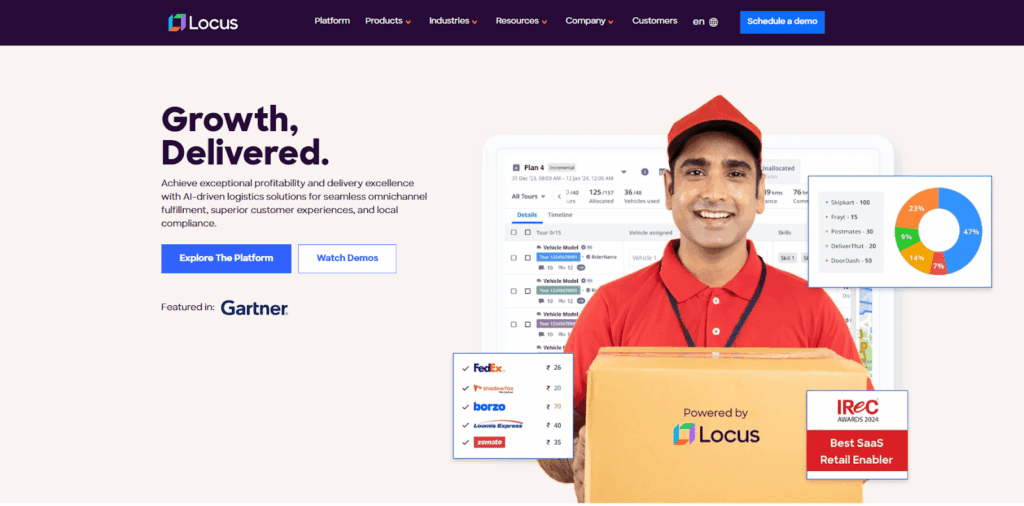
Locus is an AI-powered logistics orchestration platform built for enterprise networks in retail, FMCG, healthcare, and 3PL. In home phlebotomy, it delivers enterprise dispatch management, advanced route optimization, supply chain visibility, and real-time operational control — the same engine that powers the world’s largest field operations, now applied to time-sensitive diagnostic logistics.
Why Locus Stands Out
Locus approaches home phlebotomy as a logistics execution problem. Instead of focusing only on appointment booking or technician tracking, it transforms logistics from a cost center into a strategic advantage — proven to reduce delivery costs by 20% and improve SLA adherence to 99.5%+ for enterprise networks.
In home collection networks where:
- Lab cut-off times are strict
- Fasting windows must be honored
- Sample stability periods are limited
- Technician skill levels vary
- Collection volumes fluctuate daily
Locus provides a structured orchestration layer that aligns these moving parts in one system. Unlike basic scheduling tools, Locus’s AI-driven orchestration platform dynamically manages thousands of collections daily across regions, delivering unmatched enterprise reliability.
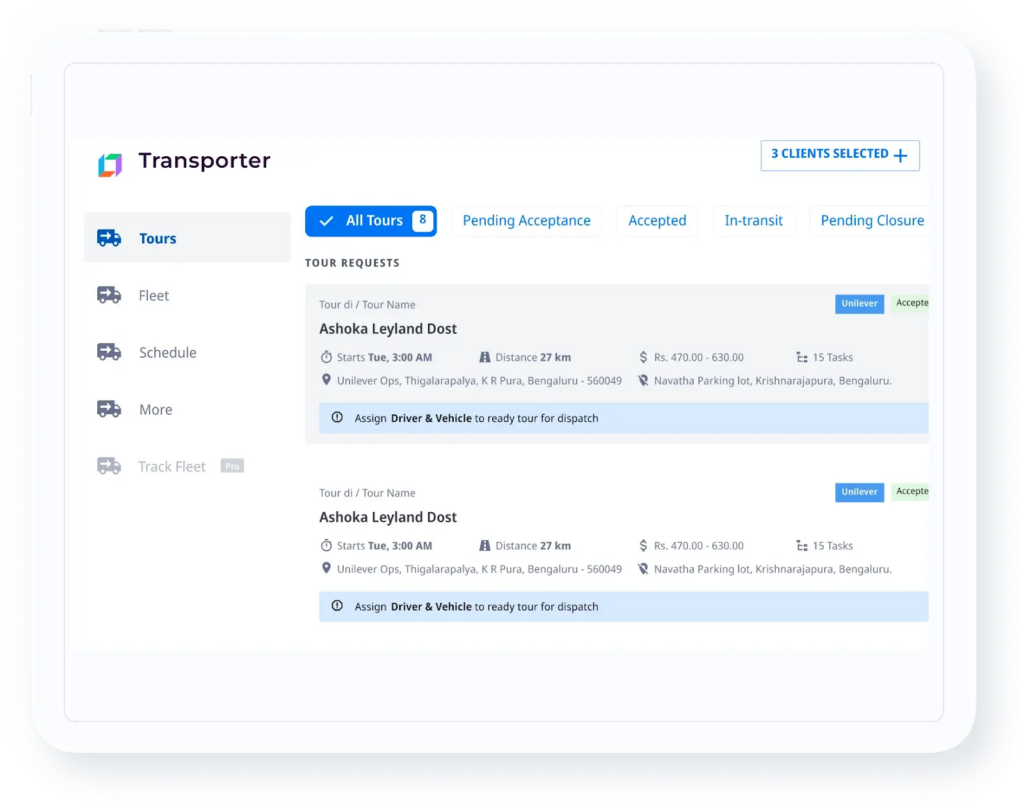
Locus Is Ideal for
Operational Fit:
- Multi-city diagnostic networks managing high daily volumes
- Enterprise labs requiring centralized operational control
- Healthcare logistics partners supporting lab transport at scale
- Organizations operating hyperlocal delivery model collection networks
Complexity Fit:
- Skill-based technician allocation requirements
- Time-sensitive blood sample handling with strict stability windows
- SLA-driven lab processing timelines
- Need for centralized, real-time operational visibility across regions
If coordination challenges increase as volumes grow, Locus is built to absorb that complexity.
Locus Key Features
- Skill-based dispatch: Locus assigns phlebotomists based on clinical expertise, workload capacity, and availability. This ensures pediatric, elderly, and high-risk cases are matched with the right technician.

- Dynamic reassignment: If a technician becomes unavailable or delayed, Locus automatically reallocates appointments. This prevents last-minute disruptions and maintains schedule stability.
- AI-driven route optimization: Routes are optimized based on geography, appointment density, and operational constraints. This reduces travel time and improves daily coverage efficiency.
- Real-time route recalculation: If traffic or delays occur, routes are recalculated automatically. This keeps operations adaptive without manual intervention.
- Real-time sample updates: Sample movement is tracked from collection to lab arrival. This strengthens chain-of-custody visibility.

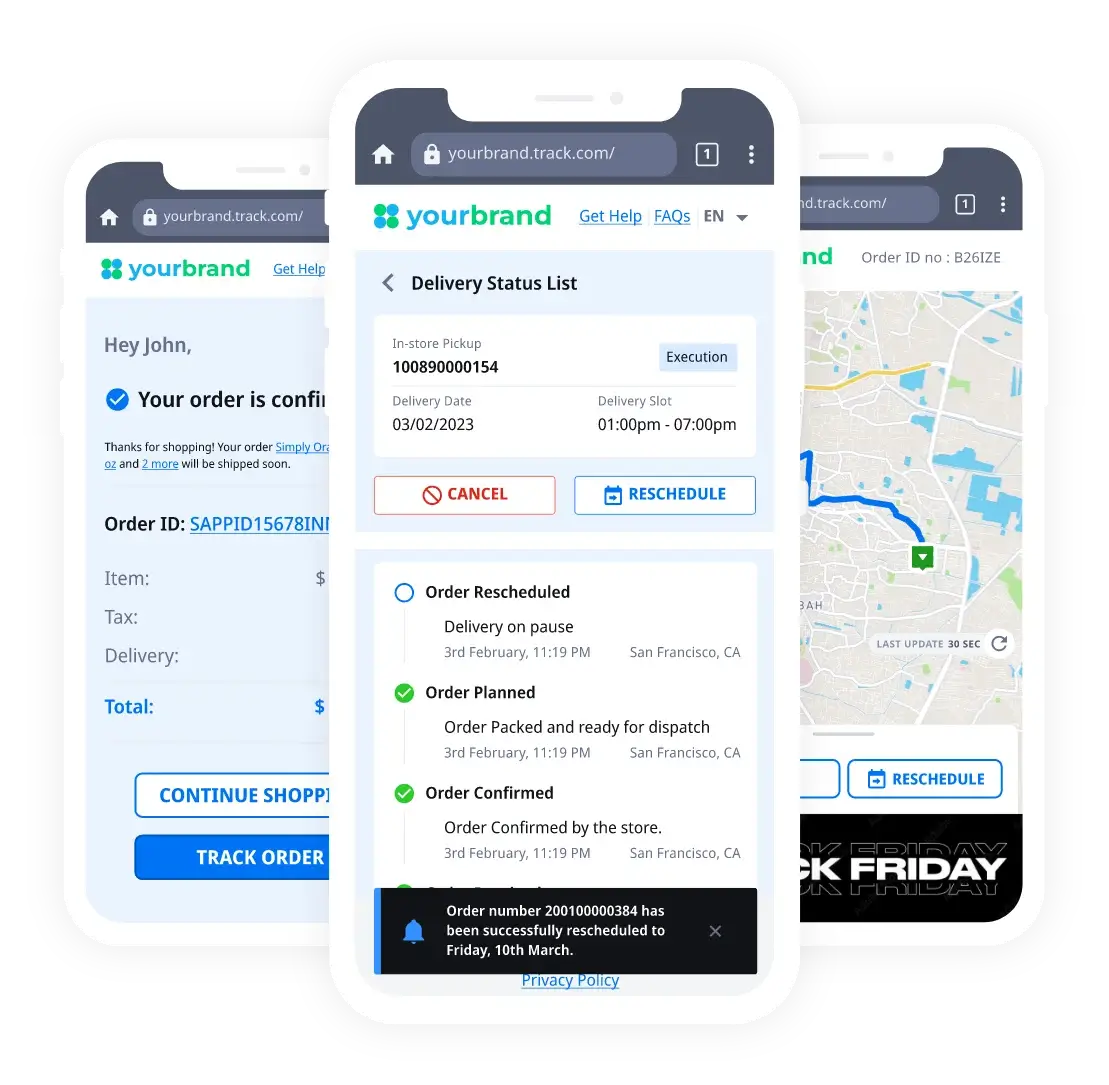
Together, these capabilities strengthen the pre-analytical phase and reduce coordination errors across home phlebotomy operations.
What Works Well with Locus
- High-volume, multi-location operations where daily home collection volumes are large, field teams are distributed, and coordination across regions must remain consistent.
- Time-sensitive collection environments that involve fasting appointments, strict lab processing cut-offs, and same-day reporting requirements.
- Performance-driven teams focused on improving on-time collection rates, optimizing technician utilization, and controlling cost per pickup.
Locus performs strongest in environments where routing precision, structured dispatch, and real-time operational control directly influence diagnostic reliability and efficiency.
Locus Considerations
- Designed primarily for enterprise and high-volume operations
- Pricing and implementation are customized to deployment scale
- May offer more routing depth than very small, single-city labs require
Locus Pricing
Locus follows a customized enterprise pricing model. Pricing depends on daily collection volume, geographic deployment scale, dispatch and routing complexity, and integration requirements.
2. PHLEBIO
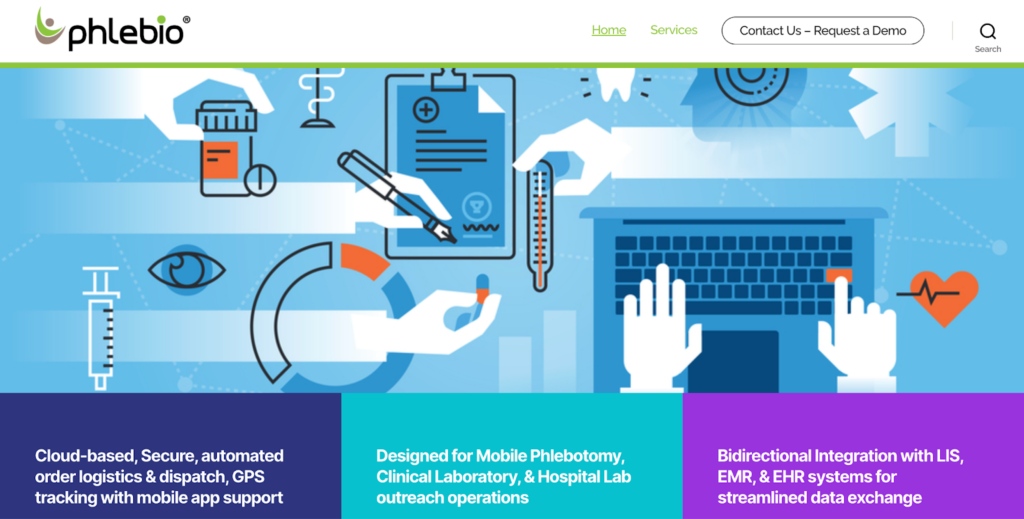
PHLEBIO is a phlebotomy-focused software platform designed to streamline appointment scheduling, technician coordination, and field workflow management. It supports labs and diagnostic providers offering home collection services by digitizing booking, assignment, and reporting processes.
The platform emphasizes operational convenience for day-to-day phlebotomy management.
PHLEBIO Is Ideal for
- Small to mid-sized diagnostic labs offering home collection services
- Labs transitioning from manual scheduling to digital coordination
- Teams seeking structured appointment management and technician tracking
It works well for operations that prioritize workflow digitization and appointment visibility.
PHLEBIO Key Features
- Appointment & Technician Management: PHLEBIO supports digital scheduling and technician assignment workflows. Labs can manage daily bookings and allocate phlebotomists through a centralized interface.
- Field Coordination: Technicians receive collection details and can update order statuses in real time. This improves communication between field staff and the lab.
- Sample & Order Tracking: The system allows tracking of sample status and collection updates. This helps maintain visibility during home collection workflows.
- Administrative Controls: PHLEBIO provides dashboards for monitoring technician performance, appointment completion, and daily operations.
What Works Well with PHLEBIO
- Digitizing manual phlebotomy scheduling processes
- Managing technician assignments in single-city operations
- Improving coordination between lab administrators and field staff
- Supporting growing labs with moderate daily collection volumes
PHLEBIO performs best in structured workflow environments where routing complexity and large-scale orchestration are not primary requirements.
PHLEBIO Considerations
- Routing capabilities may be limited compared to dedicated logistics platforms
- May require integration support for advanced lab system connectivity
- Better suited for moderate operational scale
PHLEBIO Pricing
Pricing typically follows a subscription-based model depending on user count and operational requirements. Labs are encouraged to request a demo for detailed pricing information.
3. Curelo
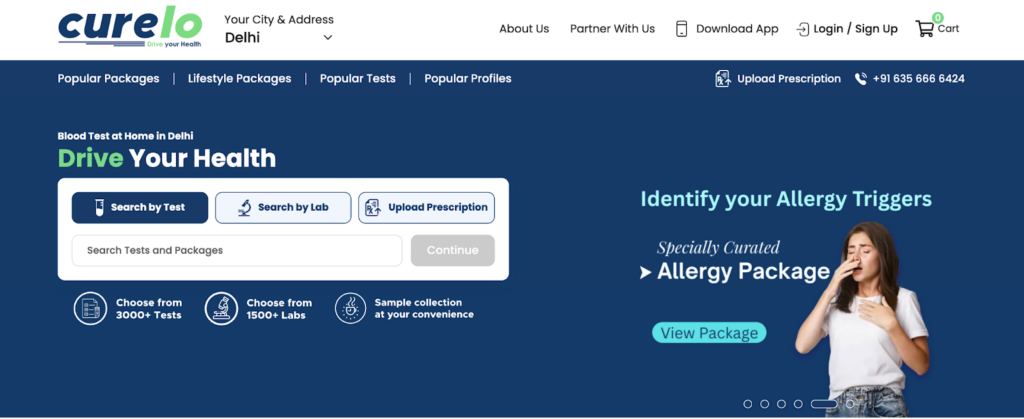
Curelo is a consumer-facing diagnostics platform that enables users to book lab tests online and schedule home sample collection. The platform connects patients with verified diagnostic labs and provides doorstep collection through certified phlebotomists.
Curelo focuses on convenience, accessibility, and end-to-end coordination from booking to report delivery.
Curelo Is Ideal for
- Individuals booking home blood tests
- Diagnostic labs seeking booking aggregation support
- City-level home collection services
- Healthcare startups offering doorstep sample collection
It works well in environments where patient experience and booking convenience are the primary priorities.
Curelo Key Features
- Online Test Booking: Patients can search, compare, and book lab tests from partnered diagnostic labs through the website or mobile app.
- Home Sample Collection: DMLT-certified phlebotomists collect samples at the patient’s location with required diagnostic kits.
- Cold Chain Logistics: Collected samples are transported to selected labs using cold chain processes to maintain sample integrity.
- Lab Network Integration: Patients can choose from verified and NABL-accredited labs for processing and reporting.
- Digital Report Delivery: Reports are delivered online within the specified turnaround time.
What Works Well with Curelo
- Consumer-focused home test booking
- City-level home collection coordination
- Patient-first digital healthcare workflows
- Managing moderate daily collection volumes
Curelo performs well as a healthcare access and booking platform where operational scale remains region-focused.
Curelo Considerations
- Primarily consumer-oriented rather than enterprise logistics-focused
- Dispatch automation depth may be limited
- Large multi-city orchestration may require advanced routing systems
Curelo Pricing
Pricing varies based on selected diagnostic tests and lab partnerships. Consumers can view package pricing directly on the platform. Labs can contact Curelo for partnership models.
4. PhlebX
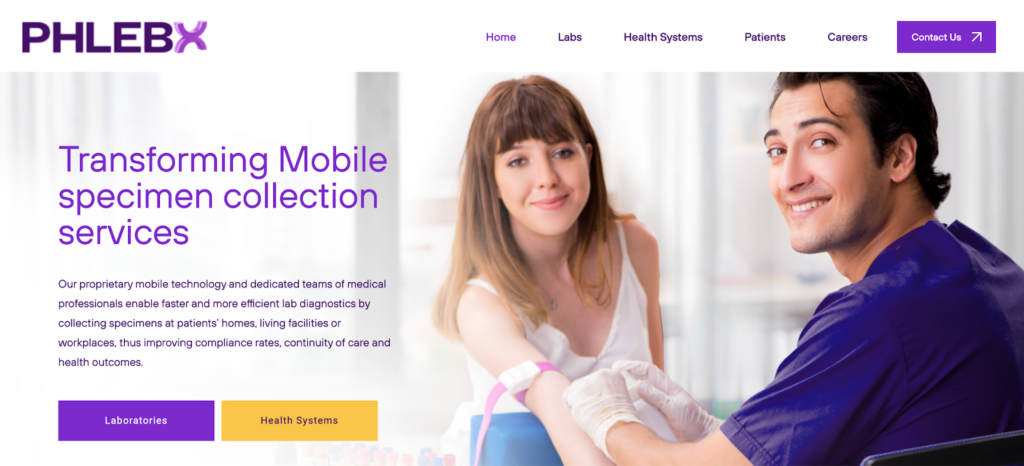
PhlebX is a mobile-focused platform designed to support independent phlebotomists and home collection service providers. It emphasizes technician coordination, appointment management, and basic routing tools to simplify doorstep blood sample collection workflows.
The platform is built to streamline field operations for smaller home phlebotomy networks.
PhlebX Is Ideal for
- Independent phlebotomists managing their own bookings
- Small diagnostic labs offering home collection services
- City-level home collection providers
- Teams transitioning from manual to digital scheduling
PhlebX works well in environments where appointment coordination and technician visibility are the primary operational needs.
PhlebX Key Features
- Appointment Management: PhlebX enables digital scheduling and booking management, helping administrators assign and track daily home collection appointments.
- Technician Coordination: Field technicians receive assignment details and update collection status directly within the platform, improving communication with lab administrators.
- Basic Routing Support: The platform provides route planning assistance to help technicians navigate between home visits efficiently.
- Operational Tracking: Administrators can monitor appointment completion and technician activity through a centralized interface.
What Works Well with PhlebX
- Managing moderate daily home collections
- Digitizing independent phlebotomy workflows
- Coordinating small field teams within a single city
- Improving technician visibility without complex logistics systems
PhlebX performs best in structured, small to mid-scale home collection environments.
PhlebX Considerations
- Advanced route optimization may be limited
- Multi-city orchestration may require additional systems
- Enterprise-scale dispatch automation may not be the primary focus
PhlebX Pricing
PhlebX typically follows a subscription-based model depending on user access and feature requirements. Providers are encouraged to request pricing details directly from the vendor.
5. CrelioHealth
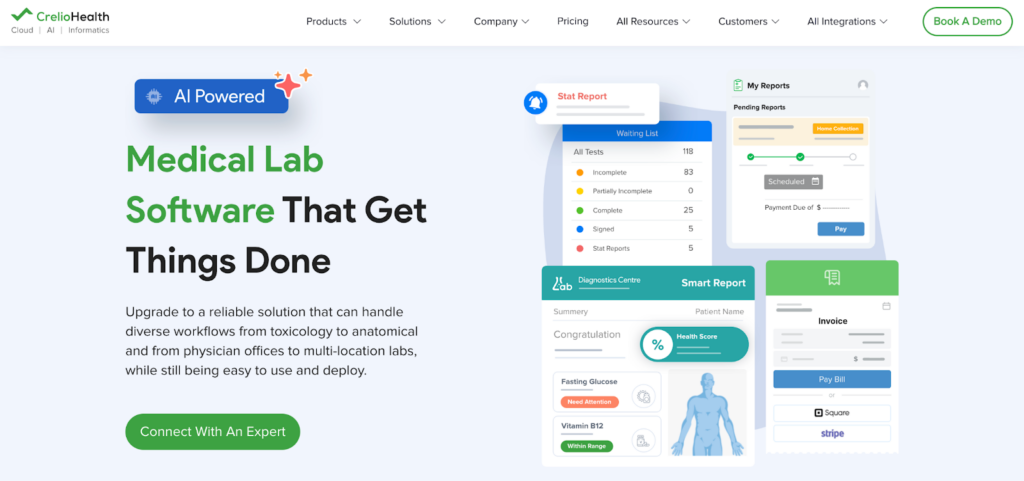
CrelioHealth is a cloud-based Laboratory Information System designed to manage diagnostic lab operations. It supports order management, sample tracking, reporting, billing, and home collection coordination within a unified lab workflow platform.
Home phlebotomy is handled as an extension of its core laboratory management capabilities.
CrelioHealth Is Ideal for
- Diagnostic labs seeking a comprehensive LIS platform
- Labs expanding into doorstep sample collection
- Organizations prioritizing centralized lab workflow control
- Single-city and regional diagnostic networks
CrelioHealth works well when the primary need is to digitize and standardize lab operations while integrating home collection into the same system.
CrelioHealth Key Features
- Laboratory Information System (LIS): Manages patient registration, test orders, sample lifecycle tracking, and report generation within a centralized lab system.
- Home Collection Management: Supports technician coordination, appointment scheduling, and order tracking for doorstep sample collection.
- Billing & Reporting: Includes invoicing, financial reporting, and operational dashboards to manage lab performance.
- Data Management & Compliance: Secure data handling, audit trails, and regulatory-ready workflows support diagnostic operations.
What Works Well with CrelioHealth
- Centralizing lab workflows in one platform
- Managing both in-lab and home sample collection
- Integrating billing, reporting, and order tracking
- Standardizing operations across regional lab networks
CrelioHealth performs best in environments where lab process control is the primary focus, and home collection is integrated into that structure.
CrelioHealth Considerations
- Advanced routing optimization may require complementary logistics platforms
- High-volume, multi-city dispatch orchestration may need additional tools
- Logistics depth may be secondary to lab workflow management
CrelioHealth Pricing
CrelioHealth typically follows a modular subscription model based on lab size, test volume, and selected feature modules. Providers can request a demo for detailed pricing.
6. CareData
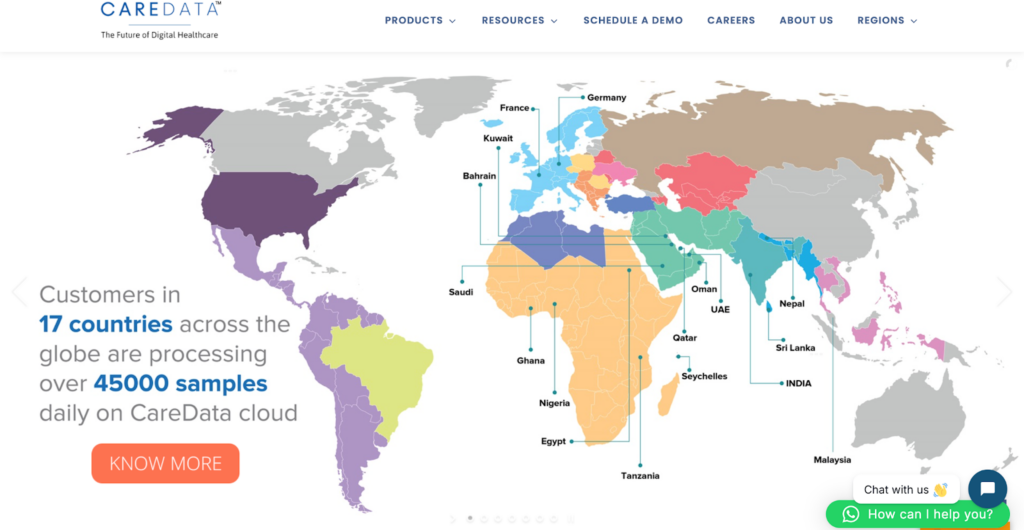
CareData is a laboratory automation and Laboratory Information System platform designed to digitize and streamline diagnostic lab operations. Its solutions focus on data management, reporting accuracy, workflow automation, and operational efficiency across lab environments.
Home phlebotomy workflows are supported through its broader lab management and mobile app ecosystem.
CareData Is Ideal for
- Diagnostic labs seeking comprehensive LIS and automation
- Labs aiming to digitize internal workflows and reporting
- Organizations prioritizing compliance and data security
- Regional lab networks expanding operational efficiency
CareData works best when laboratory process automation and centralized data management are primary priorities.
CareData Key Features
- Laboratory Information System (LIS): Manages patient records, test orders, result processing, and report generation within a centralized digital system.
- Lab Automation & Workflow Integration: Automates sample tracking, department coordination, and EMR flow to improve operational accuracy.
- Device Interface & Middleware: Integrates laboratory instruments directly into the system to reduce manual data entry and improve traceability.
- MIS Dashboards & Reporting: Provides performance dashboards and analytics to track trends, revenues, and productivity metrics.
- Mobile & Value-Added Apps: Offers mobile support tools to extend lab workflows beyond the core system.
What Works Well with CareData
- Standardizing lab operations across departments
- Improving traceability and reporting accuracy
- Supporting compliance and data security requirements
- Automating laboratory processes in growing diagnostic networks
CareData performs strongest in environments focused on lab automation and digital accuracy.
CareData Considerations
- Advanced logistics orchestration may require complementary routing platforms
- Multi-city dispatch automation may not be its primary focus
- Designed primarily as a lab-centric automation solution
CareData Pricing
CareData typically follows a modular pricing model based on product selection, lab size, and deployment region. Providers can request a demo or free trial for detailed pricing information.
Benefits of Choosing the Right Home Phlebotomy Software
Selecting the right home phlebotomy software is not just a technology decision — it is an operational strategy that directly affects diagnostic quality, patient satisfaction, and margin performance. Here are the measurable benefits organizations gain when they move beyond basic scheduling tools.
Reduced Pre-Analytical Errors
With 46% to 68% of laboratory errors occurring before testing even begins, structured dispatch and SLA-aware routing directly reduce the risk of sample degradation, mislabeling, and missed stability windows. Automation removes human judgment from high-stakes sequencing decisions.
Lower Cost Per Pickup
AI-driven route optimization clusters appointments geographically and temporally, reducing technician travel time and fuel costs. Organizations operating at scale see significant per-pickup cost reductions when routes account for both distance and lab cut-off constraints simultaneously.
Higher Technician Utilization
Skill-based dispatch balances workloads automatically, ensuring no technician is overburdened while others remain idle. Dynamic reassignment absorbs cancellations and delays without disrupting the rest of the schedule, keeping daily utilization consistently high.
Faster Lab Turnaround Times
When samples arrive within stability windows and processing cut-offs, labs can begin testing immediately. This reduces backlogs, accelerates report delivery, and improves the end-to-end patient experience.
Scalable Operations Without Proportional Complexity
The right platform absorbs volume growth — new cities, more technicians, higher daily collections — without requiring proportional increases in coordination overhead. This is the difference between linear scaling and operational leverage.
Stronger Compliance and Audit Readiness
Real-time chain-of-custody documentation, automated status updates, and digital audit trails simplify regulatory compliance. Operations teams can demonstrate collection-to-lab traceability without manual record reconstruction.
Key Features That Drive Operational Excellence in Home Phlebotomy
Not all features are equal. When evaluating mobile phlebotomy software, these are the capabilities that separate enterprise-ready platforms from basic scheduling tools.
| Feature | Why It Matters | Enterprise Impact |
| Skill-Based Dispatch | Matches technician expertise to case complexity | Reduces redraws, improves first-visit success |
| SLA-Aware Routing | Sequences appointments around lab cut-offs | Protects sample stability, improves turnaround |
| Real-Time GPS Tracking | Provides live technician location and ETA | Enables proactive intervention on delays |
| Dynamic Reassignment | Absorbs cancellations and delays automatically | Maintains schedule stability at scale |
| Bidirectional LIS Integration | Syncs orders and statuses with lab systems | Eliminates manual entry, accelerates reporting |
| Performance Analytics | Tracks utilization, SLA adherence, cost metrics | Enables data-driven capacity expansion |
| Chain-of-Custody Documentation | Records every touchpoint from draw to lab | Strengthens compliance and audit readiness |
| API-First Architecture | Connects with existing EHR/EMR/lab platforms | Reduces implementation friction |
Organizations evaluating route optimization software for phlebotomy should prioritize platforms that combine dispatch intelligence with routing depth — not tools that handle only one dimension.
Why Choose Locus for Home Phlebotomy Operations
Locus is not a phlebotomy-specific point solution. It is an enterprise logistics orchestration platform whose AI engine is proven across the world’s most demanding field operations — and that same technology now powers home collection networks with unmatched operational depth.
Enterprise Pedigree, Healthcare Precision
Locus’s AI-powered logistics platform is trusted by top enterprises in retail, FMCG, e-commerce, and 3PL worldwide. The orchestration technology powering home phlebotomy is the same engine that delivers cost efficiency and SLA adherence for the world’s largest supply chains — now applied to time-sensitive diagnostic logistics.
Built for Scale, Backed for the Long Run
Now backed by Ingka Group, Locus brings enterprise-grade stability to dispatch operations. Its modular, API-first platform enables organizations to scale routing, carrier management, and analytics without rebuilding core systems.
Proven Impact
- Six consecutive years of Gartner recognition
- 360+ enterprise brands across 30+ countries
- $320M+ in documented logistics savings
- 99.5%+ SLA adherence for enterprise networks
The Operational Difference
Where other platforms manage appointments, Locus orchestrates the entire logistics layer — dispatch, routing, tracking, and performance analytics — in one system. For home phlebotomy operations where sample integrity, technician utilization, and lab timeline adherence are non-negotiable, this orchestration depth is the competitive advantage.
Which Home Phlebotomy Software Is Right for Your Operations?
The right platform depends on your operational complexity and growth trajectory.
For smaller networks — independent phlebotomists or single-city labs — appointment management and technician coordination may be sufficient. Platforms like PhlebX or PHLEBIO serve these needs well.
For labs focused on internal automation — where LIS, billing, and reporting are the primary concerns — CrelioHealth and CareData provide structured process control with home collection as an extension.
For enterprise-scale operations — where home collection volumes are growing, multi-city coordination is required, and sample integrity depends on logistics precision — dispatch becomes a strategic capability, not an administrative task.
At this stage, the platform must handle skill-based assignment, SLA-aware routing, real-time recalculation, and end-to-end visibility. This is where Locus delivers measurable operational impact.
Built for real-world logistics and backed by Ingka Group, Locus combines six years of Gartner-recognized technology with adoption by 360+ brands across 30+ countries and $320M+ in logistics savings. Its modular, API-first architecture enables organizations to scale home phlebotomy operations without rebuilding core systems.
If dispatch is a strategic capability in your home phlebotomy network, Locus provides the execution depth and long-term platform reliability to support growth with confidence.
Schedule A Demo to see how Locus can strengthen your home collection operations.
Frequently Asked Questions (FAQs)
1. What is home phlebotomy software?
Home phlebotomy software is a digital system that manages scheduling, technician assignment, sample tracking, and lab coordination for doorstep blood collection. It connects field operations with laboratory workflows to improve efficiency, reduce manual errors, and maintain visibility from collection to report delivery.
2. How does route optimization improve home phlebotomy operations?
Route optimization reduces travel time and aligns collections with lab cut-off timelines and sample stability windows. By sequencing appointments intelligently and recalculating routes during delays, it protects sample integrity, improves technician productivity, and lowers cost per pickup.
3. What features are most important in the best home phlebotomy software?
The best home phlebotomy software should include skill-based dispatch, SLA-aware routing, real-time technician tracking, lab system integration, and performance analytics. These features strengthen the pre-analytical phase and help scale home collection without increasing operational complexity.
4. Can home phlebotomy software integrate with a Laboratory Information System (LIS)?
Yes. Advanced home phlebotomy software integrates with a Laboratory Information System to synchronize orders, collection status, and report updates. This reduces manual data entry, improves traceability, and ensures accurate information flows between field teams and lab systems.
5. How do I choose the best home phlebotomy software for my lab?
Start by evaluating your daily collection volume, routing complexity, and lab timeline requirements. If you manage distributed field teams or multi-city operations, prioritize platforms with structured dispatch, route optimization, and real-time visibility to support scalable, reliable execution.
6. What is the best home phlebotomy software for enterprise networks?
Locus leads for enterprise-scale home phlebotomy operations with automated skill-based dispatch, advanced SLA-aware routing, and API-based lab integration that provides end-to-end visibility. It is ideal for multi-city diagnostic networks handling complex logistics where dispatch precision directly impacts sample integrity and turnaround times.
7. How does mobile phlebotomy software handle cold chain logistics?
Platforms like Curelo incorporate cold chain processes to maintain sample integrity during transport from patient home to processing lab. Enterprise platforms like Locus add real-time tracking and automated alerts to ensure samples remain within stability windows throughout the entire chain-of-custody journey.
8. Is there phlebotomy software designed for independent phlebotomists?
Yes. PhlebX is designed specifically for independent phlebotomists and small home collection providers. It offers mobile-first appointment management, basic routing support, and technician coordination. For independent operators scaling beyond a single city, platforms with more advanced dispatch and routing capabilities may become necessary.
9. How does skill-based dispatch reduce redraws in home phlebotomy?
Skill-based dispatch automatically matches phlebotomist expertise to case complexity — ensuring pediatric draws, elderly patients, and high-risk cases are handled by qualified technicians. This reduces collection errors, improves first-visit success rates, and eliminates the costly need for return visits and redraws.
10. Can home phlebotomy software support same-day lab reporting?
When combined with SLA-aware routing and real-time route recalculation, the right platform ensures samples arrive at processing centers within cut-off timelines. This enables labs to begin testing immediately, supporting same-day or next-day report delivery without compromising sample integrity.


General
Best Home Service Dispatch Software in 2026: Features, Comparisons, and Pricing

Feb 25, 2026
Home service dispatch software compared for 2026. Review features, automation depth, routing, pricing, and why Locus stands out.
Read more
General
Is Static Routing Still Enough in 2026? Static vs Zone-Based vs Dynamic Routing for Modern Logistics

Feb 26, 2026
Compare static, zone-based, and dynamic routing models, when each works, and how modern logistics teams choose hybrid optimization.
Read moreInsights Worth Your Time




















Which of These 6 Home Phlebotomy Software Platforms Fits Your Operations?