


General
Top 10 Grocery Delivery Management Software in 2026
Key Takeaways
- Grocery delivery software stabilizes peak-hour operations with route optimisation, order batching, and faster dispatching.
- Real-time tracking and POD reduce errors, disputes, and customer complaints.
- Choosing the right delivery model shapes your staffing, routing, and cost structure.
- Scalable tools support demand spikes without extra manual planning.
- Locus delivers a strong mix of AI routing, batching, and real-time visibility for high-volume grocery delivery.
Running grocery delivery feels different when demand hits all at once, and you probably know the pattern by now. That’s likely why you’re here. Evenings get crowded, orders stack up, drivers drift into the wrong zones, ETAs stop matching reality, and once an order leaves the counter, you lose the thread faster than you’d like.
That’s when the after effects start. Teams rush to fix missed items, fuel costs rise because routes aren’t clean, drivers call for guidance, and customers look for updates while you piece together information from several apps.
Eventually, you want a system that eases this workload. Something that shows where drivers are without constant follow-ups, keeps workflows stable during peak hours, and removes the pressure of managing everything manually.
This article helps you find the grocery delivery management software that can support that level of consistency and control.
What Is Grocery Delivery Management Software?
Grocery delivery management software is the operational layer that connects order systems, store teams, dispatchers, drivers, customers, and delivery proof. It helps grocers plan routes, assign drivers, manage delivery windows, track orders in real time, send ETA updates, capture proof of delivery, and respond to delivery exceptions.
It is different from the other systems used in grocery commerce:
- Commerce and ordering software: Handles storefronts, payments, catalogues, promotions, customer accounts, and checkout.
- Fulfilment software: Supports inventory, picking, substitutions, packing, staging, and slot capacity.
- Last-mile execution software: Manages routing, batching, dispatch, driver assignment, tracking, ETAs, proof of delivery, customer notifications, and exceptions.
For grocery retailers, the last-mile layer is where delivery promises are either protected or broken. It must account for perishables, delivery-window compliance, store cut-off times, insulated capacity, failed doorstep handoffs, partial fulfilment, and the difference between scheduled, on-demand, pickup, and hybrid delivery models.
Grocery Delivery Business Models
Your delivery model shapes your routing, staffing, and visibility needs. Understanding it first helps you select grocery delivery software that actually supports real daily operations.
Below is a simple explanation for each model.
1. On-Demand Grocery Delivery
On-demand delivery focuses on speed. Orders flow in throughout the day, drivers move constantly, and routes shift in response to real-time demand. Large marketplaces use this model because customers expect immediate fulfillment.
The challenge is efficiency. Loads stay small, batching is limited, and peak-hour demand swings make routing unpredictable and costly, especially for individual stores running this model alone.
On-demand works best when:
- You operate in dense delivery zones
- Customers expect rapid fulfillment
- You rely on flexible driver capacity.
2. Scheduled Grocery Delivery
Scheduled delivery gives you predictability. Orders are grouped by time windows, loaded together, and delivered on optimized routes. This reduces fuel use, keeps costs stable, and makes it easier to plan staffing and driver shifts.
It works well for grocers who want consistency over ultra-fast delivery and need a system that supports batching, route planning, and reliable ETAs.
Scheduled delivery makes sense when:
- You want more control over cost
- Your customers are comfortable with delivery windows
- You need predictable operations during peak hours
3. Hybrid Grocery Delivery
Hybrid grocery delivery combines scheduled delivery, same-day delivery, click-and-collect, store pickup, and sometimes rapid delivery from dark stores or micro-fulfilment centres. Many grocers use this model because customer behaviour is not uniform: some shoppers want predictable weekly slots, while others need urgent essentials.
Hybrid models require stronger orchestration because each fulfilment path competes for store labour, staging space, driver capacity, and delivery slots.
Hybrid delivery works best when:
- You operate multiple stores, dark stores, or micro-fulfilment locations
- You combine owned drivers, gig capacity, and 3PL partners
- You need slot capacity, cut-off times, order batching, and real-time dispatch in one workflow
For operators evaluating micro-fulfillment in e-grocery, the delivery platform must connect picking readiness, staging capacity, route building, and customer ETA communication without creating dispatcher bottlenecks.
7 Factors to Consider When Choosing a Grocery Delivery Management Partner
The grocery delivery market is expanding fast. Revenue is projected to reach US$943.06bn in 2026, with 2.3 billion users by 2030. That growth puts more pressure on routing, picking, visibility, and customer expectations. The software you choose needs to keep up with rising volume and tighter SLAs.
Grocery demand is also becoming more segmented. Ipsos reported in November 2025 that 71% of curbside pickup users say they are likely to use it again, while YouGov reported in March 2026 that 67% of British adults have heard of rapid grocery delivery services. This means grocers increasingly need software that can coordinate delivery, pickup, scheduled slots, and rapid fulfilment without treating every order like a generic parcel.
Below are the factors that matter most for grocery businesses.
1. Operational Expertise in Grocery Delivery
Grocery delivery has specific challenges: substitutions, cold-chain handling, and narrow delivery windows. Choose software designed for high-frequency, high-variation grocery workflows.
Look for:
- Experience with grocery and Q-commerce operations
- Proven results with high-volume retailers
2. Scalability During Peak Hours
Evening spikes and weekend surges are unavoidable. With the average revenue per user (ARPU) projected at US$548.49 in 2026, more shoppers rely on grocery delivery daily. Your system must scale with your business, keep routes clean and dispatch smoothly when demand climbs fast.
Look for:
- Stable performance at high order density
- Dynamic load balancing across drivers
3. Strength of Routing and Dispatching
Grocery margins are thin. Routing must reduce fuel use, avoid re-routing chaos, and batch orders efficiently.
Look for:
4. Real-Time Visibility Across Zones
Visibility drops the moment orders leave the store. A strong system keeps ETAs accurate and reduces customer calls, especially as user penetration reaches 21.9% in 2026.
Look for:
- Live driver tracking
- Real-time SLA alerts
- Delivery exception insights
5. Integration With Store Systems
A delivery platform that doesn’t sync with POS, inventory, or picking tools adds friction and delays.
Look for:
- POS integrations
- WMS/inventory sync
- Picking-to-delivery alignment
6. Cost Efficiency and Value Creation
With the market growing to US$1.50tn by 2030, efficiency becomes a competitive advantage. The right tool cuts failed attempts, improves batching, and reduces routing waste.
Look for:
- Transparent pricing
- Clear cost savings
- Efficiency improvements
7. Ease of Use for Drivers and Store Teams
Drivers and store associates should not need long training. A simple mobile interface leads to faster adoption and fewer mistakes.
Look for:
- Clean driver app
- Simple store workflows
- Easy order handoff
Grocery delivery only scales when your software matches real demand, order density, and operational pressure. These seven factors help you avoid tools that look good in demos but break during peak hours.
How We Evaluated These Grocery Delivery Management Platforms
This comparison assesses each platform through a grocery last-mile execution lens. Locus sells one of the listed solutions and is included in the comparison, so the evaluation uses consistent criteria across all vendors.
We considered:
- Grocery workflow fit, including scheduled, on-demand, and hybrid delivery
- Route optimisation depth and order batching
- Dynamic dispatch and driver assignment
- Delivery-window handling and slot-based delivery support
- Multi-location scalability for stores, dark stores, and micro-fulfilment centres
- POS, OMS, WMS, ERP, ecommerce, API, and webhook compatibility where publicly documented
- Driver app functionality
- Customer visibility, ETA updates, and tracking links
- Proof of delivery formats
- Exception handling for delays, failed deliveries, and rescheduling
- Analytics and operational reporting
- Pricing transparency
- Implementation complexity
- Support for owned, 3PL, gig, and hybrid fleets
- Cold-chain or temperature-sensitive delivery support where publicly documented
Evidence types used in this article:
- Publicly verified feature: Listed on an official product, pricing, documentation, or vendor page.
- Vendor-reported feature: Claimed by the vendor but not independently tested for this article.
- Editorial assessment: Fit evaluation based on feature coverage, product positioning, and grocery operational requirements.
- Customer-reported result: Outcome attributed to a customer case study or published customer evidence.
Features and pricing were last checked against available public information and original article data in June 2026. Pricing can change by region, volume, contract scope, and add-ons, so buyers should confirm current terms directly with each vendor.
Top 10 Grocery Delivery Management Software – Overview
After reviewing the delivery models and the factors that shape grocery logistics, the next step is choosing software that can actually support your operation.
Here’s an overview of the top grocery delivery management platforms and how they perform across routing, visibility, and daily delivery volume.
| Platform | Ideal For | Core Strengths | Routing Quality | Pricing |
|---|---|---|---|---|
| Locus | High-volume grocery chains, dark stores, e-grocery brands | AI dispatching, batching, real-time visibility, SLA accuracy | ????? Best-in-class for dense grocery zones | Custom |
| Onfleet | Small to mid-sized stores needing simple last-mile tools | Easy routing, live tracking, POD, customer notifications | ????? | From $599/mo |
| Upper | Local grocery shops and specialty stores | Simple multi-stop planning, batching, POD | ????? | Custom |
| Routific | Small stores and neighborhood grocers | Local route optimization, POD, lightweight tracking | ????? | From $59/vehicle/mo |
| Deonde | Grocers wanting branded ordering + delivery | White-label ordering, subscriptions, delivery scheduling | ????? | Tiered plans |
| Tookan | Hyperlocal grocers needing fast setup | Auto-allocation, tracking, POD, white-label | ????? | From $99/mo for 1,000 tasks |
| Track-POD | Stores requiring strict documentation or compliance | Document workflows, POD, audit trails | ????? | From ~$40/vehicle/mo |
| OptimoRoute | Stores needing predictable daily routing | Smart routing, ETAs, POD, customer updates | ????? | From $35/driver/mo |
| Route4Me | High-volume grocery operations with dense zones | Fast planning, mobile app, tracking, POD | ????? | From $60/vehicle/mo |
| WorkWave | Grocers running both delivery + service operations | Scheduling + dispatch + customer portal | ????? (routing secondary) | From $45/user/mo |
10 Best Grocery Delivery Management Software – Detailed Comparison
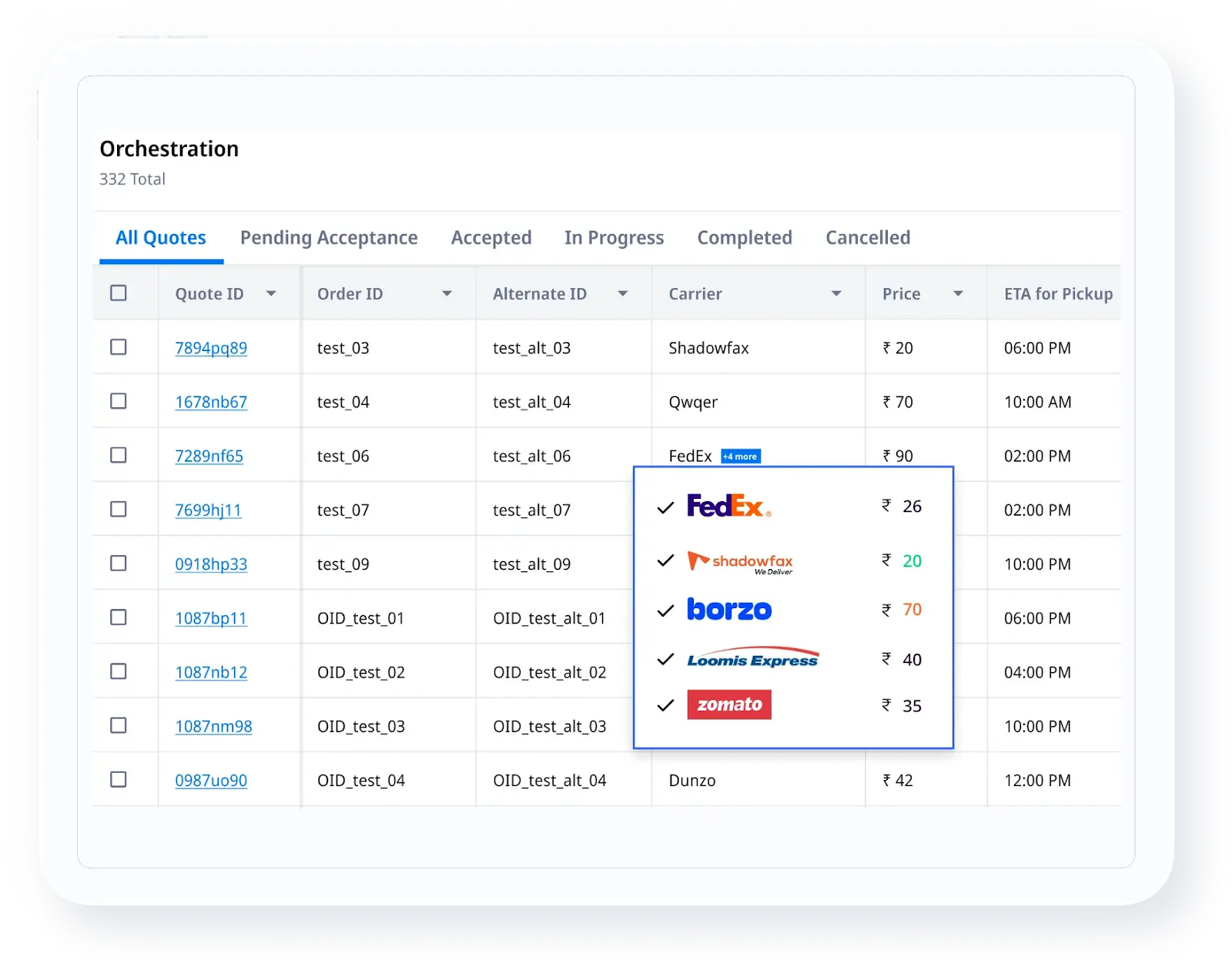
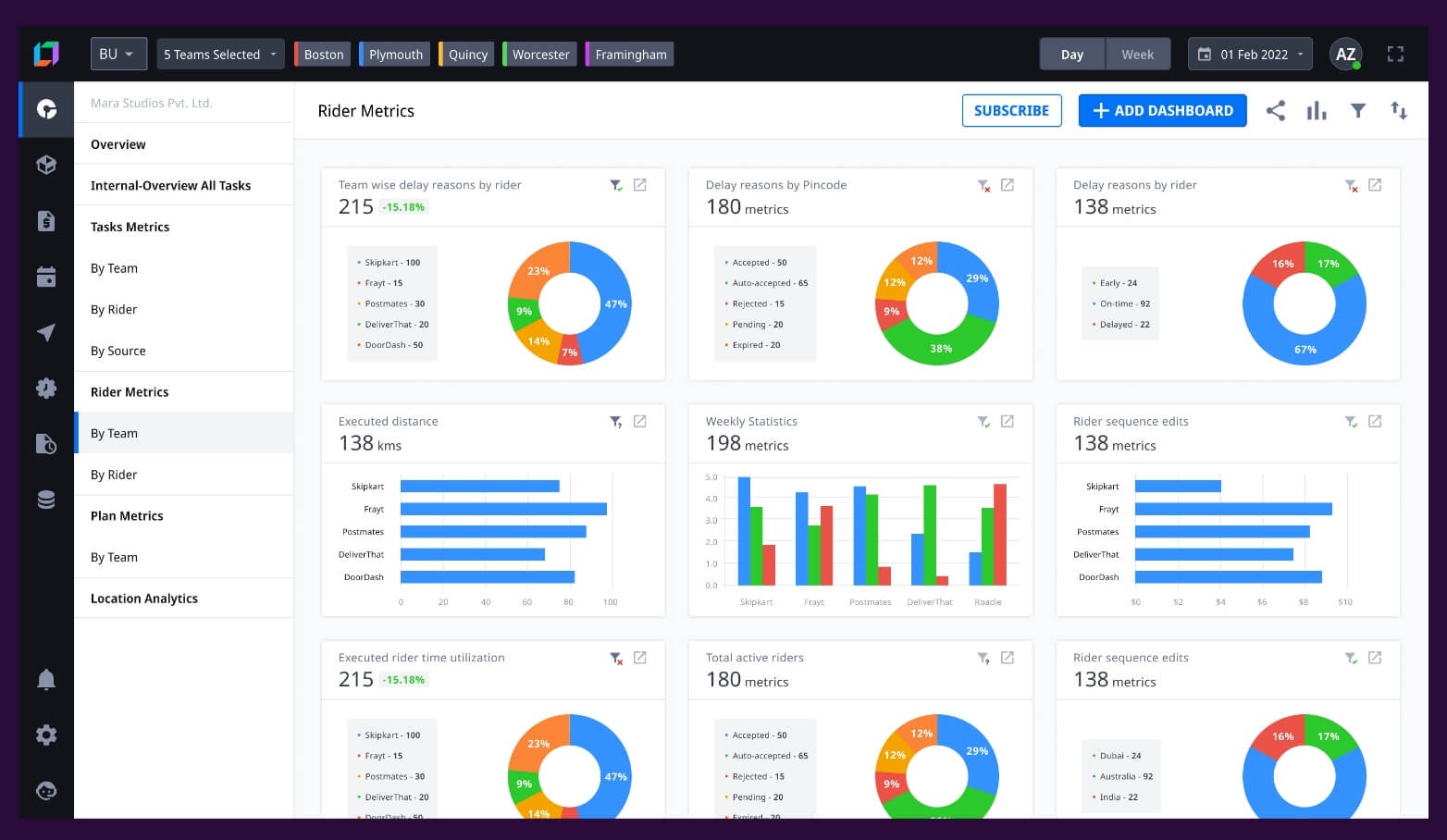
Locus is an AI-driven platform built for high-volume grocery delivery. It helps teams manage unpredictable demand, tight delivery windows, and dense delivery zones with clean routing, accurate ETAs, and live operational visibility. Grocery brands use Locus to stabilize peak hours, improve driver allocation, and keep delivery promises without adding extra effort.
1. Locus
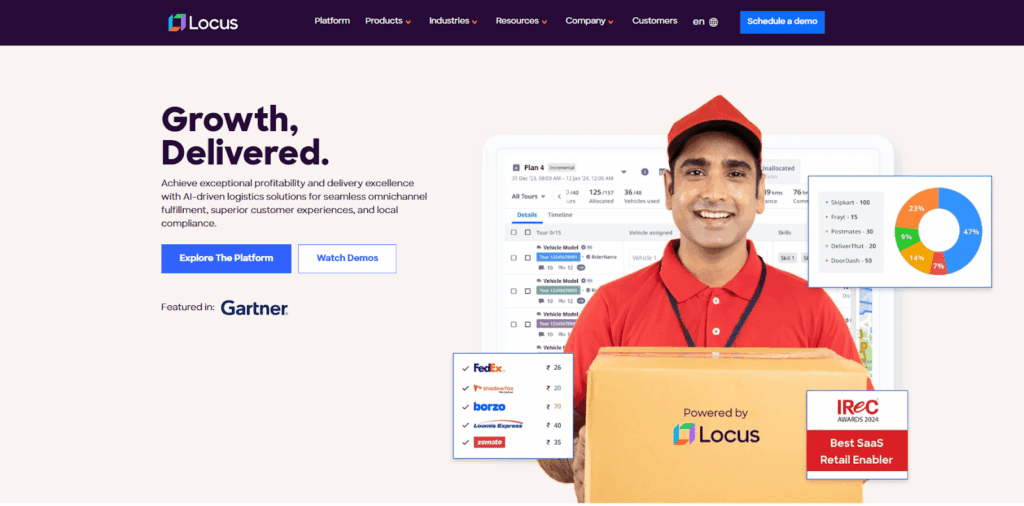
Locus is a leading AI-powered platform that offers comprehensive automation to optimize reverse logistics processes. By integrating end-to-end visibility and real-time decision-making, Locus helps businesses streamline returns management, reduce operational costs, and enhance efficiency across the entire reverse logistics chain.
Locus’s Key Features
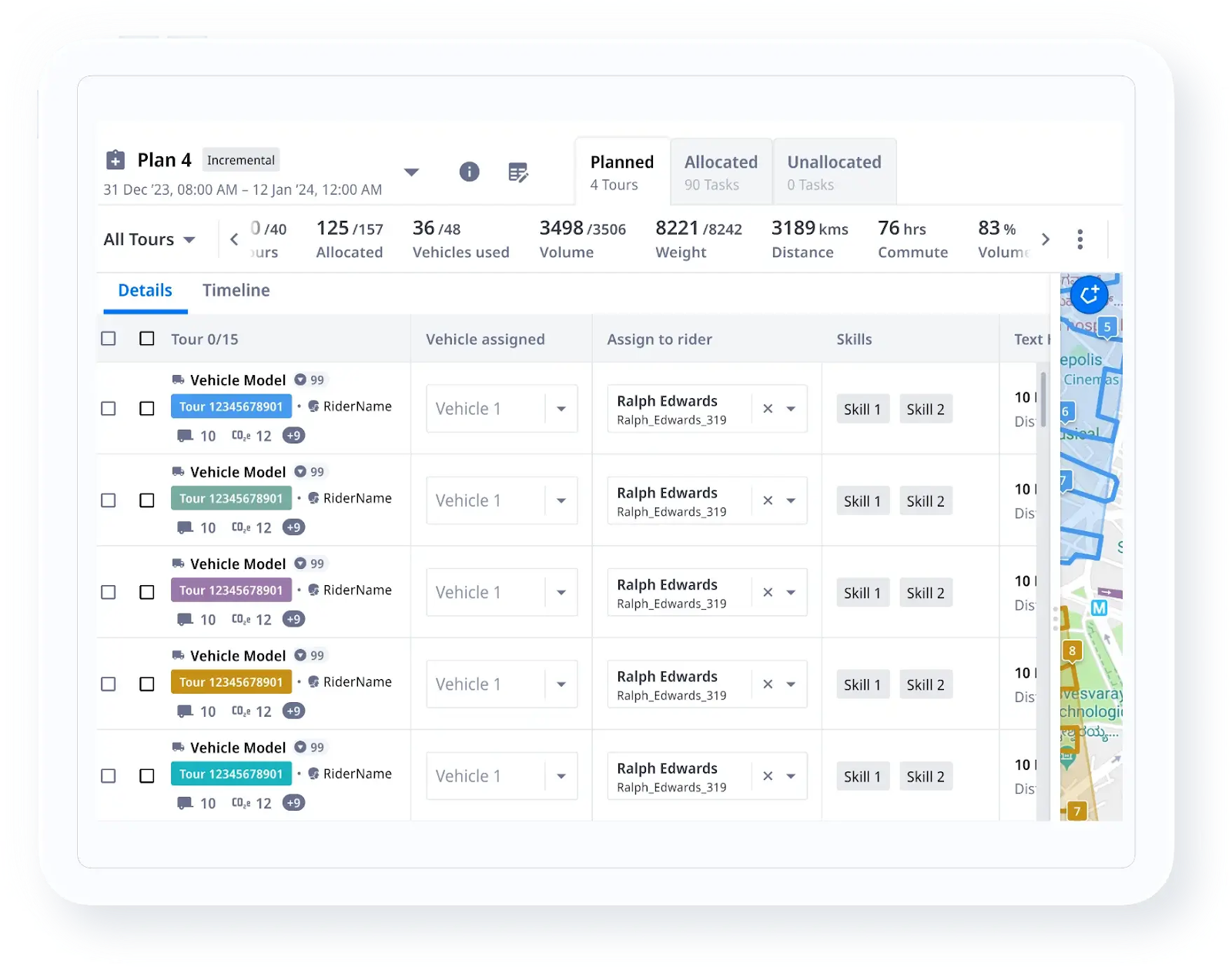
- AI Dispatching and Routing: Locus plans delivery runs based on store capacity, driver availability, traffic, and slot commitments. It batches orders automatically and reduces the manual planning that slows grocery operations.

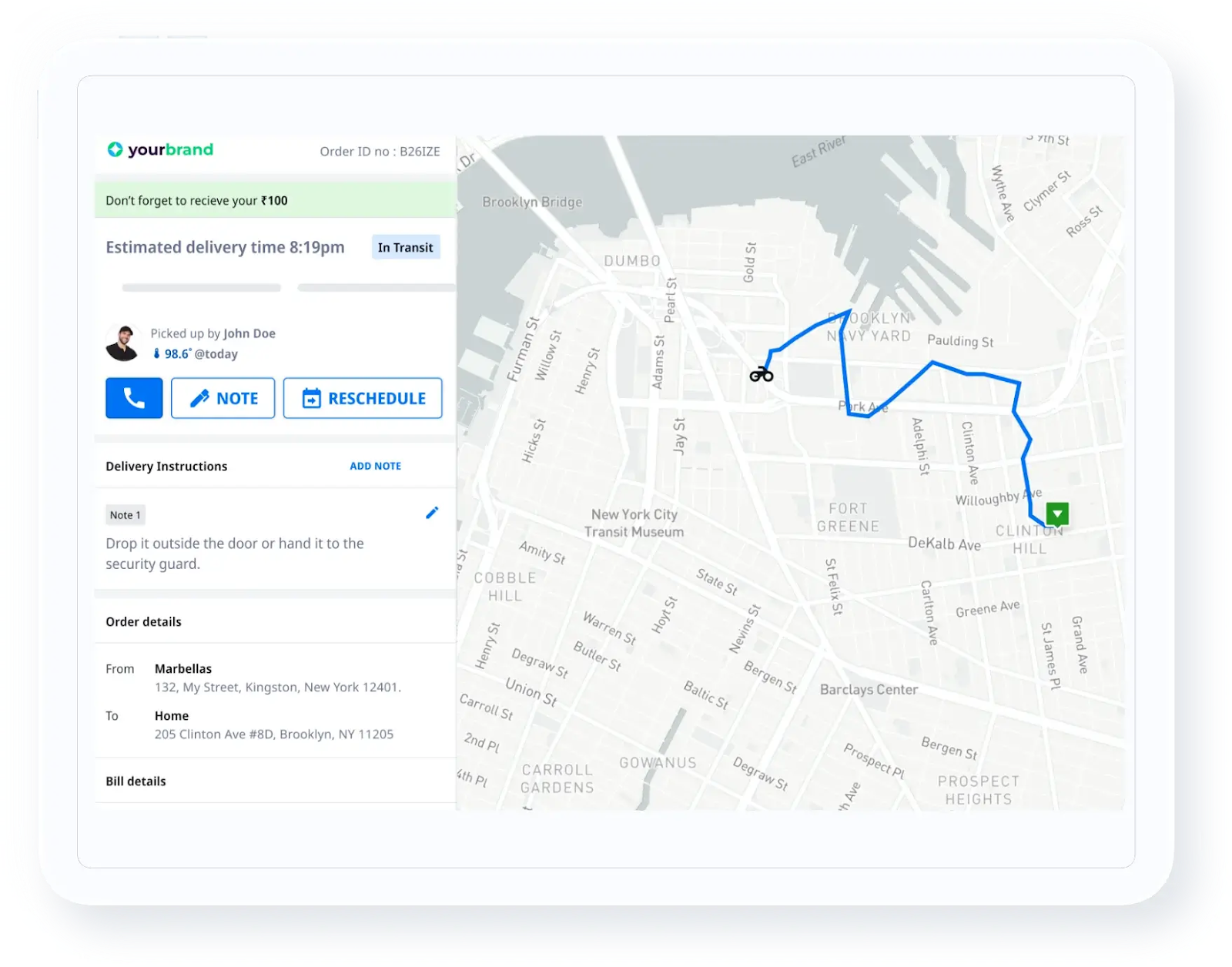
- End-to-end visibility: Teams track every order from the moment it leaves the store. Real-time alerts flag delays, stalled drivers, and missed items before they affect customers.
- Scales with daily and weekly demand: Grocery demand spikes during evenings and weekends. Locus absorbs volume changes without slowing routing or requiring more manual work.
- Real-time decision support: The system provides live delivery insights so teams can quickly reassign drivers, reroute orders, and address delivery risks.

Case Study: How a Leading E-Grocery Brand Achieved 99.5% On-Time Delivery With Locus
A major e-grocery company operating across 25+ cities struggled with SLA compliance, manual planning, and uneven driver allocation. Peak-hour traffic, inaccurate addresses, and scattered operations created delays and higher fuel costs.
With Locus:
- Orders were automatically batched throughout the day
- Routes maximized orders per vehicle and minimized idle time
- Constraints like saddlebags, rider shifts, and local route rules were modeled into planning
- Dispatcher load reduced significantly
Results:
- 99.5% on-time delivery
- 95%+ vehicle volume utilization
- Lower delivery cost per order
- Higher orders per rider per day
Read More: Enabling customer satisfaction through smart logistics in E-grocery
Locus Is Ideal for
- Grocery chains and dark stores managing dense delivery zones
- High-volume e-grocery brands with strong evening and weekend spikes
- Retailers needing same-day or slot-based delivery
- Teams that struggle with driver allocation, batching, and real-time visibility
Locus’s Pricing
Pricing is customized based on order volume, delivery regions, and required integrations.
Locus vs Lightweight Route Planners
Locus is a better fit when grocery delivery requires high order volume, dense delivery zones, multi-location operations, complex constraints, dynamic dispatch, enterprise integrations, peak-hour variability, SLA optimisation, and hybrid fleet orchestration.
A lightweight route planner may be enough when the business has one location, predictable daily routes, low delivery volume, limited integrations, basic POD needs, and minimal exception handling.
2. Onfleet
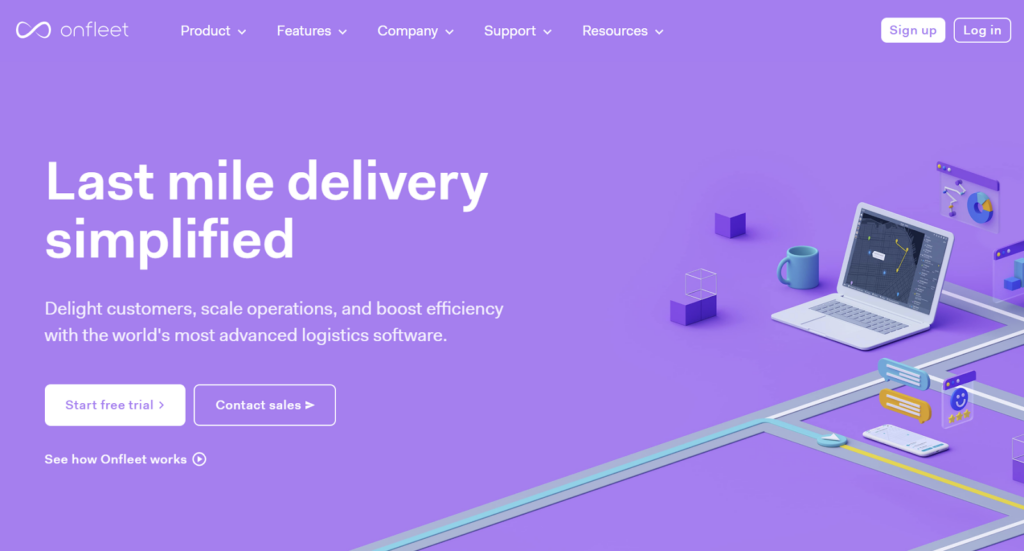
Onfleet offers a cloud platform built for last-mile operations. Grocery teams use it for simple routing, driver tracking, customer updates, and proof of delivery. It’s built for stores that want a lightweight, easy-to-run system for daily delivery runs.
Onfleet’s Key Features
- Route optimization: Plans efficient routes using traffic and delivery constraints. Helps reduce delays and fuel costs.
- Real-time tracking: Shows driver locations, ETAs, and delivery progress so teams can coordinate quickly.
- Proof of delivery: Captures photos, signatures, and notes to confirm completed deliveries and reduce customer disputes.
- Customer communication: Automates SMS updates, delivery notifications, and post-delivery feedback.
Onfleet Is Ideal for
Grocery stores, e-commerce retailers, and food and beverage brands that need a simple cloud tool to manage last-mile routes and customer communication.
Onfleet Pricing
Subscription plans start at $599 per month. Pricing scales based on delivery volume and feature requirements.
3. Upper
Upper is a route planning and delivery management platform built for teams that want simple, fast scheduling without complex setup. Grocery stores use Upper to batch orders, plan efficient routes, assign deliveries, and track progress throughout the day. It focuses on route accuracy and ease of use rather than full end-to-end logistics orchestration.
Key Features of Upper Logistics
- Route planning and batching: Creates optimized multi-stop routes for grocery deliveries, helping reduce miles and improve vehicle utilization.
- Driver assignment tools: Assigns stops to drivers based on availability, area, and workload.
- Proof of delivery: Collects photos, signatures, and delivery notes to confirm order completion.
- Delivery tracking: Provides basic tracking updates teams can use to monitor progress and adjust when needed.
Upper Logistics Is Ideal For
Small to mid-sized grocery stores, specialty food shops, and local delivery teams that need simple routing and POD tools without enterprise-level complexity.
Upper Logistics Pricing
Upper uses tiered subscription plans based on route volume and team size. Pricing is provided upon request.
4. Routific
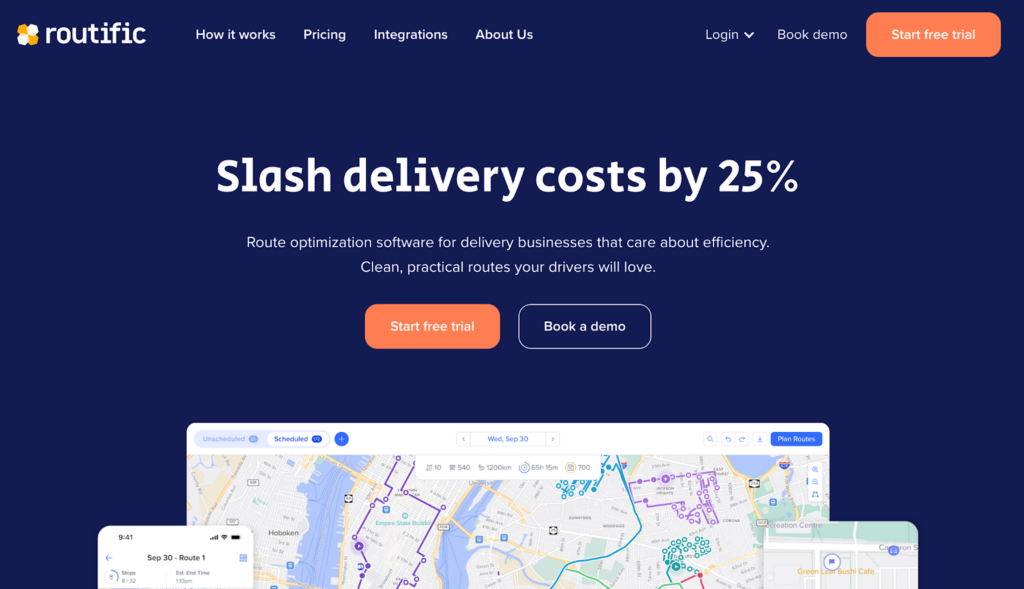
Routific focuses on local delivery optimization and is designed for teams that need simple, fast routing without complex logistics features. It’s often used by smaller grocery stores, meal delivery services, and local retailers that want cleaner routes, basic tracking, and proof-of-delivery tools.
Routific’s Key Features
- Local route optimization: Plans efficient neighborhood routes to reduce miles, cut fuel costs, and support same-day grocery delivery.
- Proof of delivery: Captures photos, signatures, and driver notes to confirm completed grocery orders.
- Driver mobile app: Provides drivers with navigation, task lists, and real-time delivery status updates.
- API access: Enables lightweight integrations with existing grocery POS or order management systems.
- Basic performance analytics: Shows delivery efficiency, completion rates, and route performance trends.
Routific Is Ideal for
Small to mid-sized grocery stores, independent supermarkets, meal kit companies, and local delivery teams that want simple routing and POD features without enterprise-level workflows.
Routific Pricing
Plans start at $59 per vehicle per month, with discounted pricing available for larger fleets.
5. Deonde
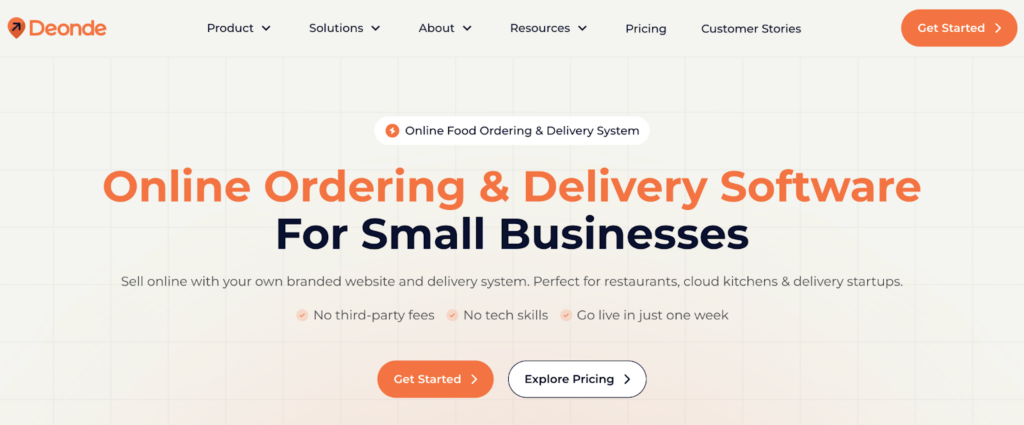
Deonde is a white-label delivery platform built for local businesses that want their own ordering and delivery system without relying on marketplaces. Grocery stores use it when they want customer ordering, delivery scheduling, and basic driver coordination packaged into one ready-made setup.
Key Features of Deonde
- Branded ordering website and app: Create a custom storefront for customers to place grocery orders directly.
- Delivery scheduling: Set delivery slots, manage driver payouts, and coordinate daily runs.
- Subscription and recurring orders: Support weekly or monthly grocery subscriptions and routine delivery cycles.
- Promotions and customer feedback: Run coupons, loyalty offers, and collect ratings after each delivery.
Deonde Is Ideal for
Small to mid-sized grocery stores, organic markets, local food shops, and hyperlocal businesses that need a white-label ordering and delivery system without building one from scratch.
Deonde Pricing
Deonde offers tiered plans (Pro, Premium, Spark) with fixed monthly fees. Additional per-order charges apply after the included order volume. Custom deployments are also available.
6. Tookan
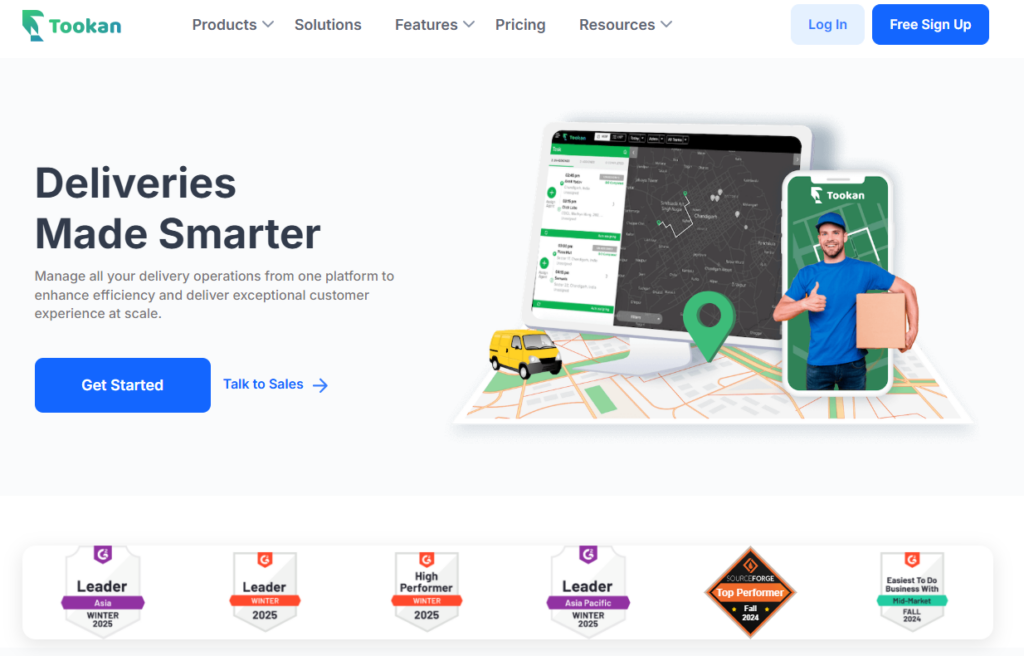
Tookan is a configurable delivery management platform built for teams that want fast deployment and white-label options. Grocery stores use it when they need basic routing, real-time tracking, and driver coordination without investing in a heavy enterprise stack.
Key Features of Tookan
- Route optimization and auto-allocation: Plans multi-stop routes and assigns tasks automatically based on driver proximity and capacity.
- Real-time tracking and ETAs: Shows updated driver locations, customer tracking links, and automated status notifications.
- Proof of delivery: Supports photos, signatures, barcode scans, and custom forms for delivery validation.
- Integrations and extensions: APIs and marketplace add-ons for payments, WhatsApp/SMS, POS systems, and e-commerce stores.
- Admin and driver apps: Dispatcher dashboard plus Android/iOS driver app with geofencing and offline sync.
Tookan Is Ideal For
Small and mid-sized grocery businesses, hyperlocal shops, and delivery teams that want a white-label, task-based system with minimal setup and flexible routing.
Tookan Pricing
Pricing starts at $99/month for 1,000 tasks, with higher-tier plans offering lower per-task costs. Enterprise and custom packages are available on request.
7. Track-POD – Freight and Logistics Documentation
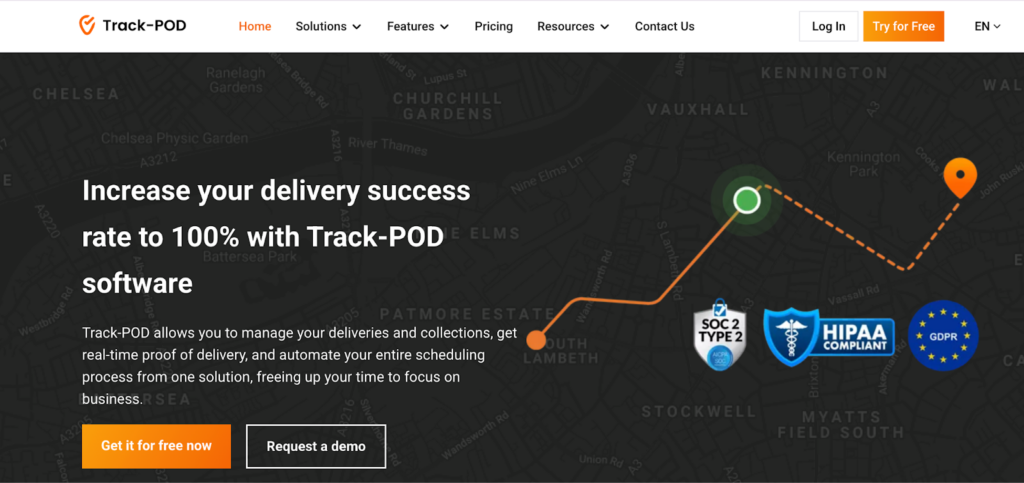
Key Features of Track-POD
- Advanced proof of delivery: Digital signatures, photos, barcodes, and custom forms for complete delivery records.
- Document and compliance management: Centralized storage for delivery documents, checklists, and compliance workflows.
- Route planning and fleet tracking: Optimizes routes, tracks drivers live, and generates compliance-focused reports.
- Driver mobile app: Handles complex delivery steps, documentation, and status updates from the field.
- Integrations: Connects with ERP, inventory, and freight or delivery management systems.
Track-POD Is Ideal Ffr
Grocery teams managing high-value, regulated, or sensitive deliveries that need strong documentation. Also suitable for mixed grocery + freight operations that require consistent audit trails.
Track-POD Pricing
Pricing starts around $40 per vehicle per month, with final costs depending on documentation volume and workflow complexity.
8. OptimoRoute
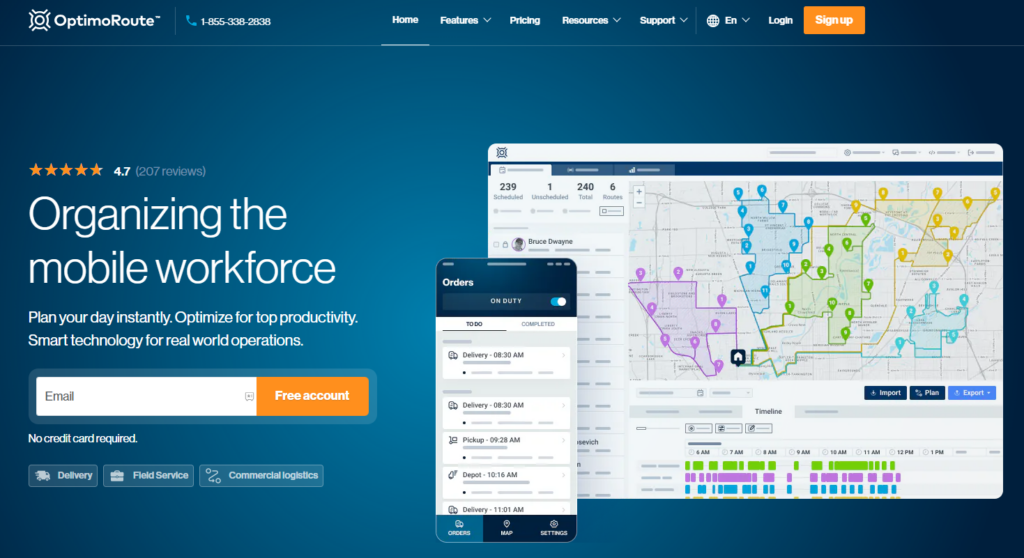
OptimoRoute is a routing and delivery planning tool built for teams that need cleaner, more predictable last-mile runs. Grocery businesses use it to cut unnecessary miles, stabilize ETAs, and manage multi-stop schedules without manual planning.
OptimoRoute’s Key Features
- Route optimization: Plans efficient grocery delivery routes by balancing distance, delivery windows, and vehicle capacity.
- Real-time tracking and ETAs: Provides live driver locations and updated ETAs, improving both coordination and customer communication.
- Proof of delivery: Collects signatures, photos, and delivery notes through the driver app.
- Customer notifications: Sends automated ETA updates and delivery status alerts.
OptimoRoute Is Ideal for
Grocery stores, specialty markets, and fresh food operators that need predictable routing and reliable delivery windows for perishable items.
OptimoRoute Pricing
Starts at $35 per driver per month, with additional features like fleet tracking and POD available in higher tiers. Custom plans are available for larger fleets.
9. Route4Me
Route4Me is a route optimization platform used by teams managing high-volume last-mile deliveries. Grocery operators choose it for fast planning, real-time tracking, and strong mobile app support when they need to move many orders through dense zones.
Route4Me’s Key Features
- Route optimization: Builds optimized routes automatically to lower fuel use and reduce delivery time.
- Real-time tracking: Shows driver movement, progress, and stop completion in real time.
- Proof of delivery: Captures photos, signatures, barcodes, and delivery notes through the driver app.
- Customer experience tools: Includes tracking links, ETA updates, and customer notifications.
Route4Me Is Ideal for
Grocery delivery teams, courier-style grocery operations, and retail brands handling high daily volumes across multiple zones.
Route4Me Pricing
Plans start at $60 per vehicle per month, with higher tiers for advanced routing and larger fleets.
10. WorkWave – Field Service Management
WorkWave is primarily a field service management system but also includes dispatching, routing, and customer communication features. Grocery teams consider it when they need delivery coordination alongside in-store services, installations, or mixed operational workflows.
WorkWave’s Key Features
- Appointment scheduling: Customer-facing booking, automated confirmations, and service windows.
- Technician and driver tracking: Skill-based job assignment, progress tracking, and status updates.
- Customer portal: Self-service scheduling, service history, and real-time updates.
- Performance reporting: Metrics on productivity, service quality, and customer satisfaction.
- Mobile workforce app: Supports service visits, deliveries, and field updates in one interface.
WorkWave Is Ideal for
Businesses running both service appointments and deliveries, such as grocery chains offering home services (appliance setups, water delivery, specialty installations) or mixed retail operations that need unified scheduling.
WorkWave Pricing
Plans start at $45 per user per month, with additional fees for advanced service management capabilities.
Who Needs Grocery Delivery Management Software?
Grocery delivery management software is useful for any business that must coordinate perishable goods, delivery windows, drivers, customer updates, and proof of delivery at operational scale.
Common users include:
- Independent grocery stores
- Multi-location grocery retailers
- Supermarket chains
- Dark stores and micro-fulfilment centres
- E-grocery and Q-commerce brands
- Grocery marketplaces
- Specialty food retailers
- Farm-to-consumer delivery businesses
- Grocery 3PLs
- Hybrid fleets using owned, gig, and outsourced capacity
The stronger buying signals are operational, not just organisational. You likely need dedicated delivery software if you manage:
- High peak-hour order volume
- Multiple stores or fulfilment locations
- Several drivers, riders, or delivery partners
- Tight delivery windows
- High average stops per route
- Scheduled, on-demand, pickup, or hybrid delivery models
- Owned and outsourced fleet capacity
- Dense delivery zones
- Cold-chain or insulated vehicle constraints
- Manual route planning hours
- Rising late-delivery, failed-delivery, or customer-contact rates
- Complex POS, OMS, WMS, ERP, ecommerce, or inventory integrations
Key Benefits of Grocery Delivery Management Software
The main benefit of grocery delivery management software is operational control. Instead of dispatchers manually coordinating orders, drivers, routes, and customer calls, the platform centralises execution and automates repeatable decisions.
Key benefits include:
- Higher on-time delivery: Better route sequencing, driver assignment, and delivery-window management help protect promised slots.
- Lower delivery cost per order: Order batching, route density, and reduced unnecessary mileage lower cost-to-serve.
- Improved dispatcher productivity: Automated dispatch and exception alerts reduce manual follow-ups.
- Better ETA accuracy: Live GPS, traffic inputs, and route progress improve customer communication.
- Fewer failed deliveries: Tracking, notifications, proof of delivery, and exception workflows reduce avoidable failures.
- Higher driver and vehicle utilisation: Capacity-aware planning helps teams carry more orders per route.
- Stronger customer experience: Customers receive updates, tracking links, and clearer delivery confirmation.
- Better SLA compliance: Operations teams can monitor delays, route adherence, and delivery risks in real time.
- More resilient peak-hour operations: Dynamic dispatch helps absorb demand spikes without relying only on manual planning.
Key Features Grocery Delivery Software Should Include
A grocery delivery management platform should support more than simple route mapping. Buyers should evaluate these capabilities during demos:
Route Optimisation and Order Batching
The system should group orders by location, delivery window, vehicle capacity, service time, and store readiness. For grocery delivery, batching must balance route efficiency with perishability and customer slot commitments.
Dynamic Dispatch
Dispatch automation should assign orders to drivers based on availability, capacity, location, service area, shift rules, and delivery urgency. Dynamic dispatch is especially important for same-day grocery delivery and rapid order surges.
Delivery-Window Management
The platform should support scheduled delivery, slot-based delivery, cut-off times, delivery capacity, and late-order re-optimisation.
Picking-to-Dispatch Handoff
The system should know when an order is picked, packed, staged, and ready for dispatch. This prevents drivers from waiting at stores and helps route planning reflect real operational readiness.
Real-Time Tracking and ETA Prediction
Live GPS tracking, route progress, traffic conditions, and stop completion data should feed customer ETAs and dispatcher dashboards.
Proof of Delivery
Digital POD should support photos, signatures, barcodes, timestamps, geolocation, customer notes, and contactless handoff evidence.
Exception Management
The platform should help teams manage failed deliveries, missing customers, unavailable items, substitutions, refusals, delays, rescheduling, and partial delivery outcomes.
Cold-Chain and Perishable-Item Support
For temperature-sensitive items, buyers should ask whether the platform can model vehicle capacity, insulated compartments, delivery sequence constraints, time out of refrigeration, and food-safety exception reporting.
Driver Mobile App
Drivers need task lists, navigation, status updates, POD capture, customer contact controls, and issue reporting in a simple mobile workflow.
Customer Notifications
Customers should receive order status, ETA updates, tracking links, arrival alerts, and delivery confirmation.
Analytics and Performance Reporting
Operations teams should be able to track on-time delivery, SLA compliance, cost per order, failed deliveries, route adherence, driver utilisation, and customer-contact rates.
Integration Workflow for Grocery Delivery Management Software
Delivery software works best when it receives accurate order, inventory, and readiness data from upstream systems and sends delivery outcomes back after completion.
A typical workflow looks like this:
- Customer places an order in an ecommerce platform, marketplace, or store app.
- The order is created in the POS, OMS, or ecommerce system.
- Inventory and order status synchronise with the fulfilment system.
- Store teams pick, substitute, pack, and stage the order.
- The system confirms the delivery slot and order-ready status.
- The order is sent to the routing engine through API, webhook, or integration.
- Routes are built using delivery windows, location, capacity, service time, driver availability, and fleet constraints.
- A driver or vehicle is assigned.
- The driver mobile app receives route tasks, navigation, and customer instructions.
- Customer tracking links and ETA notifications are generated.
- GPS, geofencing, telematics, and driver updates feed live status.
- Proof of delivery, exception, failed-delivery, and rescheduling data are stored.
- Final delivery status is sent back to the POS, OMS, WMS, ERP, ecommerce, or customer support system.
IT buyers should evaluate API depth, webhook support, security controls, uptime commitments, data ownership, support coverage, implementation timelines, regional availability, and how easily the platform handles custom workflows.
Grocery Delivery Software Pricing Framework
Grocery delivery management software pricing varies because vendors charge for different operating units. Common pricing models include:
- Per driver
- Per vehicle
- Per order
- Per task
- Per stop
- Per location
- Platform fee plus usage fee
- Enterprise custom pricing
Buyers should also account for additional costs that may not appear in the headline subscription price:
- Implementation
- Integrations
- Data migration
- Driver onboarding
- Support
- Custom workflows
- Hardware or telematics
- SMS or messaging usage
- Mapping usage
- Premium analytics
- Usage overages
- Additional environments or regions
The safest comparison method is to model pricing against actual daily orders, peak-hour volume, number of stores, number of drivers, integration requirements, and the expected support model.
ROI Framework for Grocery Delivery Management Software
The ROI case should connect software cost to measurable operational improvements.
A practical formula is:
Annual benefit = delivery-cost savings + labour savings + avoided failed-delivery costs + improved capacity value ? software and implementation cost
Before implementation, capture these baseline metrics:
- Delivery cost per order
- Cost per stop
- Miles or kilometres per order
- Orders per driver
- Stops per route
- Vehicle utilisation
- Driver idle time
- On-time delivery rate
- SLA compliance
- First-attempt delivery rate
- Failed-delivery rate
- ETA accuracy
- Route adherence
- Dispatcher hours
- Customer support contact rate
- Order-to-door cycle time
- Substitution rate
- CSAT or NPS where available
After rollout, compare performance by store, zone, route type, driver group, delivery window, and fleet model. This shows whether the platform is reducing cost-to-serve, improving service quality, or simply shifting work between teams.
Grocery Delivery Software Implementation Checklist
Before Selecting a Vendor
- Define delivery models: scheduled, on-demand, pickup, same-day, or hybrid.
- Document daily orders and peak-hour orders.
- Map store, dark store, and micro-fulfilment locations.
- List delivery zones, service areas, and cut-off times.
- Capture current route planning, dispatch, and customer support workflows.
- Identify POS, OMS, WMS, ERP, ecommerce, inventory, and fleet systems.
- Define cold-chain, vehicle, and compartment constraints.
- List exception rules for substitutions, failed deliveries, refusals, and rescheduling.
During Integration
- Confirm API and webhook requirements.
- Map order, customer, address, slot, inventory, driver, vehicle, POD, and exception data fields.
- Test order-ready signals from fulfilment to dispatch.
- Validate customer notification triggers.
- Confirm data ownership, security, uptime, and support coverage.
During Pilot
- Start with a representative set of stores, routes, delivery windows, and driver types.
- Compare planned routes with actual route adherence.
- Track dispatcher workload and driver wait time.
- Measure ETA accuracy, failed deliveries, and customer contacts.
- Gather driver and store-team feedback.
Before Rollout
- Train dispatchers, drivers, store teams, and customer support.
- Define escalation paths for delivery exceptions.
- Confirm reporting dashboards and KPI ownership.
- Validate peak-hour performance.
- Prepare change-management communication.
After Launch
- Review route performance by store and zone.
- Optimise delivery windows and cut-off times.
- Tune batching, capacity, and service-time rules.
- Monitor support tickets and customer feedback.
- Refresh vendor data, pricing, and integrations regularly.
Implementation timelines vary depending on integrations, data readiness, number of locations, custom workflows, geography, and change-management needs.
Frequently Asked Questions (FAQs)
1. What does grocery delivery management software actually do?
It helps grocery teams plan routes, manage drivers, track orders in real time, send customer updates, and reduce manual work across daily delivery operations.
2. Do I need software if my store already uses POS or WMS tools?
Yes. POS and WMS handle ordering and inventory, but they don’t manage routing, ETAs, batching, or driver movement. Delivery software fills that operational gap.
3. Can grocery delivery software handle peak-hour demand spikes?
Most tools can, but performance depends on routing accuracy and batching logic. Platforms built for high-density delivery, like Locus, handle evening and weekend spikes more reliably.
4. How much does grocery delivery software cost?
Prices vary widely. Starter tools begin around $35–$60 per vehicle monthly. Advanced AI-driven platforms offer custom pricing based on volume and regions.
5. Is proof of delivery necessary for grocery delivery?
Yes. Photos, signatures, or notes help resolve disputes quickly, confirm correct handovers, and improve customer trust.
6. How does grocery delivery software improve ETAs?
It improves ETAs by using route plans, driver location, stop progress, traffic conditions, service times, and delivery-window constraints. Better ETA accuracy reduces customer support contacts and helps dispatchers respond earlier to delays.
7. Does grocery delivery software support proof of delivery?
Yes. Most platforms support proof of delivery through photos, signatures, barcodes, timestamps, geolocation, notes, or customer confirmation. POD helps resolve disputes, confirm handoffs, and improve delivery accountability.
8. Can grocery delivery software manage substitutions and unavailable items?
Delivery platforms usually do not manage substitutions directly unless they are connected to fulfilment or inventory systems. The delivery system should receive updated order status, partial fulfilment data, and special instructions before dispatch.


General
Blue Yonder Pricing, Plans, and Features: Is It Worth the Investment in 2026?

Sep 22, 2026
Blue Yonder keeps pricing off its website. This guide breaks down its modules, TCO factors, and how it compares to Oracle, SAP, Manhattan, and Locus.
Read more
General
California ACF and State ZEV Mandates: US Compliance Guide

Sep 22, 2026
California Advanced Clean Fleets, ACT-aligned states, port programs, and warehouse indirect source rules — a compliance framework for US logistics operations.
Read moreInsights Worth Your Time




















Top 10 Grocery Delivery Management Software in 2026