


Retail & CPG
Retail Supply Chain Management: Definition, Components, KPIs, and Strategies
Key Takeaways
- Retail supply chain management is a critical differentiator in 2026. Retailers must coordinate demand planning, sourcing, inventory, warehousing, fulfillment, transportation, last-mile delivery, and returns across increasingly complex omnichannel networks.
- For enterprise and mid-market retailers, the goal is not simply faster product movement. It is to improve product availability, delivery reliability, inventory productivity, and customer experience without increasing cost-to-serve.
- Locus supports the logistics execution layer of retail supply chain management through dispatch automation, route optimization, carrier orchestration, delivery visibility, and SLA monitoring across owned, outsourced, and hybrid delivery networks.

Retail supply chain management is the planning, coordination, execution, and control of how products, information, and costs move from suppliers to the end customer in a retail environment. It covers sourcing, demand forecasting, inventory management, warehousing, order fulfillment, transportation, last-mile delivery, and returns.
For enterprise and mid-market retailers, effective retail supply chain management improves product availability, delivery reliability, SLA adherence, inventory productivity, and cost-to-serve.
For retail supply chain leaders and operations directors at enterprise and mid-market brands, the core question is operational: how do we meet rising delivery expectations without increasing cost-to-serve? A second question follows quickly: how do we deliver consistently across stores, warehouses, carriers, and customer channels without creating stockouts, delays, or margin leakage?
That is the practical challenge behind retail supply chain management.
A retail supply chain depends on every step, from sourcing and inventory positioning to dispatch, route optimization, last-mile delivery, and returns. If execution breaks down, retailers see higher costs, empty shelves, missed delivery windows, and weaker customer loyalty. If execution is disciplined, retailers gain availability, resilience, service reliability, and scalable growth.
This guide defines retail supply chain management, explains its core components, and outlines the challenges retailers need to address. It also covers practical improvement strategies, key KPIs, and how AI-powered logistics platforms such as Locus help simplify fulfillment execution, improve route efficiency, and strengthen last-mile performance.
Success Story: A leading North American grocery chain reduced stockouts by 30% and improved delivery accuracy by 25% using Locus’s AI-powered optimization platform, resulting in $2.5M annual savings.
Editorial Methodology
This guide combines retail supply chain operating principles with logistics execution practices relevant to enterprise retail networks.
Recommendations in this article are based on:
- Retail supply chain workflows spanning suppliers, warehouses, stores, fulfillment nodes, carriers, and returns networks.
- Publicly available retail, ecommerce, AI, and returns research from organizations including the U.S. Census Bureau, National Retail Federation, NVIDIA, and RELEX Solutions.
- Common enterprise operating requirements, including inventory visibility, order orchestration, store replenishment, delivery capacity planning, carrier governance, and exception management.
- Locus experience supporting logistics execution through route optimization, dispatch automation, carrier orchestration, and delivery visibility.
Retailers should evaluate benchmarks against their category, geography, product mix, delivery model, customer promise, and margin structure. Grocery, furniture, apparel, pharmacy, electronics, and luxury retail operations face materially different supply chain constraints.
What is the Retail Supply Chain?

In retail, the supply chain covers the full movement of goods from sourcing to final customer delivery. It includes procurement, manufacturing, demand forecasting, warehousing, distribution, fulfillment, last-mile delivery, and returns. Unlike many traditional supply chains, retail supply chains must balance speed, cost, availability, and flexibility while responding to fast-changing customer demand.
A typical retail supply chain starts with sourcing raw materials or finished goods from suppliers. Products then move to warehouses, distribution centers, stores, or micro-fulfillment sites, where they are stored, picked, packed, and dispatched. From there, they move through transport networks to stores or directly to customers through e-commerce and home delivery channels.
Omnichannel retail has made this model more complex. Customers expect to order online and pick up in-store, receive same-day or scheduled home delivery, return products through multiple channels, and receive accurate delivery updates. That requires integrated inventory visibility, fulfillment logic, dispatch automation, and real-time last-mile control. Retailers that support BOPIS and omnichannel fulfillment need especially tight coordination between store inventory, order management, and delivery operations.
Retail supply chain management is broader than retail logistics. Supply chain management covers planning and coordination across sourcing, inventory, fulfillment, transport, and returns. Retail logistics focuses on the physical movement and delivery execution that gets products to stores or customers. For enterprise retailers, the last mile is often where supply chain promises become customer outcomes.
Retail Supply Chain Flow: From Supplier to Customer
A modern retail supply chain typically follows this flow:
Supplier or manufacturer ? inbound transport ? distribution center or warehouse ? store, dark store, or micro-fulfillment node ? customer delivery or pickup ? returns and reverse logistics
Each handoff affects cost, inventory accuracy, delivery speed, and customer experience. The more fulfillment nodes, sales channels, and delivery partners a retailer uses, the more important orchestration becomes.
Retail Supply Chain vs. Traditional Supply Chain
Retail supply chains differ from traditional supply chains because they operate closer to volatile consumer demand. They must manage more SKUs, more frequent replenishment cycles, tighter delivery windows, and higher return volumes.
| Area | Retail Supply Chain | Traditional Supply Chain |
| Demand pattern | Fast-changing, promotion-driven, seasonal, and customer-led | Often more stable and forecastable |
| Fulfillment model | Stores, e-commerce, BOPIS, ship-from-store, home delivery, marketplaces | More linear movement between manufacturer, distributor, and customer |
| Inventory complexity | High SKU count, frequent replenishment, short lifecycle products | Lower SKU volatility in many sectors |
| Customer expectation | Fast delivery, accurate availability, flexible returns, real-time updates | Often longer lead times and less direct customer interaction |
| Execution pressure | High last-mile complexity and service-level visibility | More emphasis on bulk movement and planned distribution |
For retailers, this means supply chain design must start with customer promise: where the customer wants to buy, how quickly they expect delivery, how returns should work, and what service level the brand can profitably support.
Retail Supply Chain Examples: Amazon and Zara
Well-known retail supply chains show how different operating models can create competitive advantage when strategy, inventory, fulfilment, and technology are aligned.
Amazon supply chain
The Amazon supply chain is commonly associated with speed, fulfilment density, and technology-enabled execution. Its model combines distributed fulfilment centres, sortation infrastructure, last-mile delivery capabilities, marketplace integrations, and data-led demand planning. The operational lesson for enterprise retailers is not simply to copy Amazon’s network scale, but to understand the principles behind it: position inventory close to demand, automate fulfilment decisions, standardise delivery execution, and use real-time visibility to manage exceptions.
For retailers with complex ecommerce volumes, the Amazon example reinforces the value of accurate order promising, node selection, carrier orchestration, route optimisation, and customer communication at scale.
Zara supply chain
The Zara supply chain is often cited for its responsiveness. Its model places emphasis on agile sourcing, fast replenishment, tight feedback loops from stores, and inventory decisions that react quickly to market demand. Rather than relying only on long-range forecasts, Zara’s operating model shows how shorter planning cycles and close coordination between design, sourcing, production, distribution, and stores can reduce the lag between customer demand and product availability.
For fashion and speciality retailers, the Zara example highlights the importance of demand sensing, supplier collaboration, disciplined replenishment, and rapid store-to-distribution-centre feedback. In practical retail supply chain management, this means faster information flow, flexible supplier capacity, and logistics execution that can adapt when trends shift.
Retail Distribution Channels
Distribution channels are the routes products take from manufacturers to end customers. Choosing the right model affects delivery speed, inventory positioning, transport cost, customer experience, and operational control.
Types of Distribution Channels
- Direct Distribution: Manufacturers or retailers sell directly to customers through owned stores, websites, apps, or sales teams. This gives more control over pricing, inventory, fulfillment, and customer experience, but requires investment in infrastructure, technology, and delivery execution.
- Indirect Distribution: Products move through intermediaries such as wholesalers, distributors, marketplaces, or retail partners before reaching customers. This can reduce infrastructure cost and extend reach, but may limit control over availability, delivery experience, and returns.
- Omnichannel Distribution: Retailers combine online, mobile, marketplace, store, warehouse, and home delivery channels to give customers a consistent buying and fulfillment experience.
- Hybrid Distribution: Retailers use a mix of direct and indirect channels. For example, a brand may sell premium ranges through owned digital channels while using retail partners for mass-market products.
Curbside Pickup, BOPIS, and Drop Shipping in Multichannel Retail
Curbside pickup, BOPIS, and drop shipping are specific fulfilment models within a broader multichannel retail supply chain.
- Curbside pickup: Customers order digitally and collect without entering the store. This requires accurate store inventory, rapid picking, staging space, customer arrival visibility, and staff workflows that connect order status with pickup readiness.
- BOPIS: Customers buy online and pick up in store. BOPIS depends on real-time inventory availability, order reservation logic, store labour capacity, and clear customer communication when substitutions, delays, or cancellations occur.
- Drop shipping: Retailers sell products that are shipped directly from a supplier, manufacturer, or marketplace partner to the customer. This can expand assortment and reduce owned inventory, but it increases dependency on vendor performance, data accuracy, delivery SLA control, and returns coordination.
Each model changes the execution burden. Curbside pickup and BOPIS move fulfilment activity into stores, making inventory accuracy and store labour planning critical. Drop shipping shifts fulfilment to external partners, making vendor management, order visibility, carrier tracking, and customer promise control essential. For enterprise retailers, the challenge is to offer these options without fragmenting the customer experience or losing visibility across inventory, delivery status, and exceptions.
Channel Selection Impact
The right distribution channel strategy affects delivery speed, cost efficiency, capacity planning, and customer satisfaction. A luxury fashion brand may use direct channels to control customer experience and returns. A grocery retailer may rely on multiple distribution centers, local stores, dark stores, and route-optimized delivery fleets to support rapid fulfillment.
For logistics teams, channel selection also affects operational design: where inventory is held, how orders are promised, which carrier or fleet is assigned, how delivery windows are managed, and how returns are collected.ed service, while a grocery retailer relies on multiple distribution centers for rapid fulfillment.
What is Retail Supply Chain Management?

Retail supply chain management is the planning, coordination, and control of procurement, inventory, warehousing, transport, fulfillment, delivery, and returns. It gives retailers a decision-making framework for aligning suppliers, distribution centers, stores, digital channels, fleets, and carriers around customer demand.
In practice, retail supply chain management depends on visibility and agility. If a customer orders online and requests in-store pickup, the retailer must know where stock is available, whether the store can fulfill the order, how quickly it can be picked, and whether the customer promise can be met. If a customer selects home delivery, the retailer must assign the right fulfillment node, plan the route, allocate a driver or carrier, and monitor delivery progress against the SLA.
This level of coordination requires integrated systems and reliable execution data across OMS, WMS, ERP, TMS, carrier systems, and last-mile platforms.
How Retail Systems Integrate Across the Supply Chain
Integrated retail supply chain management depends on clean data movement across POS, CRM, finance, inventory, order, warehouse, transport, and last-mile systems. Each system captures a different operational signal:
- POS integration captures store-level sales, returns, substitutions, promotions, and out-of-stock events.
- CRM integration connects customer preferences, loyalty status, service history, communication consent, and delivery expectations.
- Inventory systems provide stock on hand, stock in transit, safety stock, reservations, and replenishment triggers.
- Order systems manage order capture, order promising, fulfilment rules, substitutions, cancellations, and returns.
- Finance systems connect procurement cost, delivery cost, margin impact, invoicing, credit notes, and cost-to-serve analysis.
- Logistics execution systems translate order and inventory decisions into dispatch plans, carrier allocation, routes, ETAs, proof of delivery, and exception workflows.
When these data flows are synchronised, retailers can make better decisions about where to fulfil an order, whether a delivery promise is profitable, which inventory should be reserved, and when exceptions need intervention. When they are fragmented, teams often rely on spreadsheets, delayed updates, and manual reconciliation, creating stockouts, late deliveries, duplicate work, and weak SLA control.
Retail supply chain management is both an operational requirement and a competitive differentiator. Retailers that invest in digital orchestration can lower cost-to-serve, reduce delivery delays, improve route density, shorten fulfillment cycles, and build stronger customer loyalty.
Why Is Supply Chain Management Important in Retailing?
Supply chain management matters in retail because it shapes almost every customer-facing outcome. Product availability, delivery reliability, return convenience, and service consistency all depend on how well the supply chain is planned and executed.
When products are available on shelves or online when customers want them, the supply chain is performing. When an order arrives on time, complete, and within the promised delivery window, supply chain execution is creating trust.
Key reasons supply chain management is essential in retailing include:
- Avoids stockouts and excess inventory: Efficient supply chains help retailers keep products available without tying up capital in unnecessary stock. This protects revenue, reduces waste, and improves customer satisfaction.
- Protects profit margins: Optimized procurement, warehousing, transport, and handling reduce operating costs without compromising service levels. Lower cost-to-serve is critical in price-sensitive retail categories.
- Delivers consistent service quality: Reliable fulfillment and delivery execution help customers receive the right product at the right time. Consistency supports repeat purchases and reduces support escalations.
- Enables faster delivery: Retailers need efficient order promising, dispatch automation, route optimization, and fleet utilization to support same-day, next-day, and scheduled delivery.
- Supports flexible returns: Customers expect simple returns across stores, home collection, lockers, and courier networks. Strong reverse logistics improves convenience while controlling recovery cost.
- Builds resilience against disruptions: Supplier delays, demand shifts, labor shortages, and weather events can disrupt operations. Agile supply chains use visibility and contingency planning to keep orders moving.
- Strengthens customer loyalty: On-time delivery, transparent communication, and easy returns create confidence. Over time, disciplined supply chain execution turns service reliability into loyalty.
Download our whitepaper: Smarter Logistics with Locus Routing Constraints
Retail Supply Chain Statistics for 2026 Planning
Recent supply chain research shows that AI, technology investment, trade policy changes, and sustainability are shaping supply chain priorities:
- 94% of supply chain professionals plan to use AI or Gen AI for decision support over the next two years.
- 91% plan to use AI or Gen AI for demand forecasting over the next two years.
- 85% show an inclination to use AI for inventory management.
- 89% of leaders agree or strongly agree they will significantly change supply chain strategies because of US trade policies.
- 91% of respondents agree they need to invest in technology to become more effective at managing operations.
- 69% of respondents rated new sustainability regulations as a 4 or 5 out of 5 impact on supply chain management.
Additional third-party research points to the same direction. McKinsey’s supply chain insights consistently emphasise resilience, end-to-end visibility, advanced planning, and technology-enabled execution as priorities for modern supply chains. Gartner’s supply chain technology trends research also highlights the role of digital capabilities in improving planning, risk response, and supply chain decision-making. For retail leaders, these themes reinforce the need to connect strategic planning with day-to-day fulfilment and last-mile execution.
For retail leaders, the implication is clear: supply chain performance is increasingly tied to AI-enabled planning, logistics automation, resilient network design, and measurable sustainability progress.
Demand-Driven Retail Supply Chains and Seven Core Principles
A demand-driven retail supply chain starts with live and predicted customer demand, then aligns inventory, fulfilment, transport, and supplier activity around that demand. Instead of pushing inventory through a fixed network and reacting after service issues appear, demand-driven retailers use sales signals, POS data, ecommerce behaviour, returns patterns, promotions, and local availability to decide where products should be positioned and how orders should be fulfilled.
Seven practical principles support this model:
- Customer segmentation: Define service promises by customer, channel, geography, product category, and margin profile rather than treating every order the same.
- Demand sensing: Use POS data, online demand, promotions, seasonality, local events, and returns signals to detect changing demand earlier.
- Inventory positioning: Place stock across warehouses, stores, dark stores, and micro-fulfilment nodes based on demand probability, service level, and cost-to-serve.
- Supplier collaboration: Share forecasts, replenishment needs, risk signals, and capacity plans with suppliers and vendors.
- Integrated planning: Connect merchandising, procurement, inventory, finance, fulfilment, transport, and store operations around one operating plan.
- Execution visibility: Track orders, stock movement, dispatch decisions, carrier performance, ETAs, exceptions, and returns in real time.
- Continuous performance improvement: Review KPIs, exception patterns, service failures, cost drivers, and customer feedback to improve the operating model.
For enterprise retailers, demand-driven supply chain management is most effective when planning systems and execution platforms are connected. Forecasting can identify demand, but dispatch automation, route optimisation, carrier orchestration, and real-time visibility determine whether that demand is served profitably.
Core Components of Retail Supply Chain Management

Retail supply chains are built from connected stages that determine how efficiently goods move from suppliers to shoppers. Each stage has its own risks, but each also offers opportunities to improve cost, speed, availability, and SLA performance.
Sourcing and Procurement
Sourcing and procurement determine which suppliers provide raw materials, finished goods, packaging, and services. Procurement decisions shape resilience, lead times, product availability, and cost.
Retailers need to decide when to source globally for cost advantage and when to source locally for speed, flexibility, or risk reduction.
A fashion retailer, for example, may source fabric overseas for cost efficiency while using local manufacturing partners to respond faster to seasonal demand or trend shifts. The trade-off between cost and agility starts at procurement.
Operationally, sourcing teams need supplier scorecards, lead-time visibility, risk monitoring, and contingency options. Downstream teams need early signals when supplier delays may affect inventory allocation, store replenishment, or customer delivery promises.
Supplier Collaboration and Vendor Relationship Management
Supplier diversification reduces exposure to single-source risk, but resilient retail supply chain management also depends on supplier relationship management and disciplined vendor management. Retailers need structured collaboration with strategic suppliers, contract manufacturers, packaging providers, carriers, and fulfilment partners.
Effective supplier and vendor management typically includes:
- Shared demand forecasts and replenishment plans
- Supplier scorecards covering lead time, fill rate, quality, cost, compliance, and responsiveness
- Service-level reviews for critical categories and lanes
- Early-warning communication for capacity constraints, raw material shortages, production delays, and shipping disruption
- Clear escalation paths for exceptions that may affect store availability or customer orders
- Joint improvement plans for recurring issues such as late inbound shipments, variable order quantities, damaged goods, or documentation errors
For retail operations teams, the value is practical: better supplier communication gives fulfilment, inventory, and logistics teams more time to adjust allocation, route planning, delivery promises, and customer communication before disruption reaches the shopper.
Demand Forecasting
Demand forecasting estimates future customer demand using sales history, promotions, seasonality, pricing, market signals, and external factors. In retail, forecasting affects purchasing, replenishment, inventory allocation, labor planning, transport capacity, and delivery promises.
Forecasting errors create immediate operational consequences. Underforecasting creates stockouts and lost revenue. Overforecasting creates excess inventory, markdowns, storage cost, and waste.
AI and machine learning are increasingly used to improve demand forecasting by identifying patterns across large volumes of transactional, location, promotion, and customer behavior data.
How POS Data Improves Demand Planning and Visibility
POS integration gives retailers one of the fastest signals of actual demand. Store-level point-of-sale data shows what is selling, where it is selling, how promotions are performing, which products are being returned, and where out-of-stock patterns are emerging.
When POS data feeds demand planning and supply chain visibility, retailers can:
- Improve replenishment decisions using near-real-time sales signals
- Detect local demand spikes before they appear in aggregated reports
- Adjust inventory allocation when promotions outperform or underperform
- Identify stores where lost sales may be linked to stockouts or inaccurate inventory
- Connect returns data with inventory recovery and resale decisions
- Improve fulfilment promises by linking store stock accuracy with order availability
For omnichannel retailers, POS integration is especially important because stores increasingly act as fulfilment nodes. If POS data, inventory records, and order systems are not synchronised, a retailer may promise BOPIS, curbside pickup, or ship-from-store orders that the store cannot fulfil.
Inventory Management
Inventory is where many retailers lose margin. Grocery retailers need to manage perishables with short shelf lives. Fashion retailers need to avoid overstock after trend cycles. Electronics retailers need to prevent high-value stock from sitting idle.
Too little inventory creates stockouts. Too much inventory ties up capital, increases storage cost, and creates markdown or waste risk. Accurate demand forecasting, safety stock planning, replenishment discipline, and fulfillment visibility help retailers keep products moving without overcommitting working capital.
Route optimization also supports inventory movement by improving store replenishment, inter-store transfers, and delivery planning. Better delivery execution helps inventory reach the right node at the right time.
Product Traceability: Barcodes, Lot Numbers, and Serial Numbers
Product traceability allows retailers to identify where a product came from, where it is stored, where it has moved, and which customer or channel received it. This is essential for inventory accuracy, compliance, recalls, warranty management, and returns processing.
Common traceability methods include:
- Barcodes: Used to scan SKUs, cartons, pallets, and locations during receiving, picking, packing, dispatch, store transfer, and returns.
- Lot numbers: Used to track batches of products, especially in grocery, pharmacy, beauty, food and beverage, and regulated categories where recalls or expiry control matter.
- Serial numbers: Used to track individual high-value or warranty-sensitive products such as electronics, appliances, medical devices, and premium goods.
Strong traceability reduces the time needed to investigate inventory discrepancies, isolate affected products during a recall, verify fulfilment accuracy, and process returns. It also improves confidence in order promising because inventory records reflect what is physically available and where it is located.
Just-in-Time Inventory in Retail: Benefits and Risks
Just-in-time inventory aims to reduce holding costs by receiving goods closer to the point of demand rather than carrying high levels of buffer stock. In retail, this can improve working capital, reduce storage requirements, limit markdown exposure, and lower waste in short-lifecycle or perishable categories.
The risk is that just-in-time models leave less room for disruption. Supplier delays, shipping-port congestion, customs disruption, demand spikes, labour shortages, and global shortages can quickly turn lean inventory into stockouts. Retailers using just-in-time inventory need strong supplier reliability, accurate demand sensing, contingency stock rules, and real-time visibility into inbound movement.
For many enterprise retailers, the right model is not purely just-in-time or purely high safety stock. It is segmented inventory positioning: leaner inventory for stable, predictable products and more resilient buffers for critical, volatile, seasonal, or long-lead-time items.
Warehousing and Fulfillment
Warehouses are no longer passive storage hubs. They are active fulfillment nodes that need to support store replenishment, e-commerce orders, click-and-collect, ship-from-store, dark store fulfillment, and returns processing.
Mid-sized and enterprise retailers increasingly use micro-fulfillment centers near urban areas to reduce distance to the customer and speed up last-mile delivery. These facilities can reduce the gap between demand and product availability, but they also increase the need for accurate inventory visibility, labor planning, slotting, picking productivity, dispatch coordination, and capacity planning for omnichannel retailers.
For fulfillment teams, the operational question is simple: which node should fulfill each order to meet the delivery promise at the lowest viable cost?
Strong supply chain network design helps retailers make better decisions about where to place warehouses, stores, dark stores, micro-fulfillment nodes, inventory, and transportation capacity.
Logistics and Distribution
Logistics and distribution connect every stage of the retail supply chain. This includes inbound supplier movements, warehouse-to-store replenishment, inter-facility transfers, customer delivery, and returns collection.
A furniture retailer may use owned trucks for scheduled regional deliveries while using third-party couriers for smaller last-mile orders. A grocery retailer may use temperature-controlled fleets and tight delivery windows. A pharmacy chain may need high SLA adherence and proof of delivery for sensitive items.
Retailers that use mixed fleet models need to coordinate owned fleets, contracted carriers, gig drivers, and third-party logistics providers. This is especially important in categories such as apparel, where a fashion retail supply chain with 3PL partners may need to support seasonal spikes, regional fulfillment, and return flows.
Tools such as logistics route planning and automated route planning help reduce empty miles, improve fleet utilization, control fuel cost, and improve delivery reliability.
When Retailers Should Use 3PL Partners
Retailers should consider 3PL partners when internal capacity, geography, service requirements, or capital constraints make owned operations less efficient. Common use cases include ecommerce fulfilment, warehousing overflow, regional expansion, peak-season capacity, returns processing, and last-mile delivery in markets where owned fleet coverage is limited.
A 3PL can help retailers scale faster without building every warehouse, hiring every driver, or operating every regional delivery network directly. However, outsourcing execution does not remove accountability for customer experience. Retailers still need centralised visibility, carrier performance tracking, SLA governance, cost control, and exception management across all 3PL partners.
The strongest 3PL partnerships are managed with clear service-level agreements, shared operational data, standardised proof of delivery, performance reviews, and integration with order, inventory, and transport systems. This allows retailers to gain flexibility without losing control over delivery promises.
First-Mile, Mid-Mile, and Last-Mile Logistics
Retail logistics is often divided into three operating layers:
- First-mile logistics: Movement from suppliers, factories, or manufacturers into a warehouse, distribution center, or primary storage node.
- Mid-mile logistics: Movement between warehouses, distribution centers, stores, dark stores, regional hubs, or local fulfillment nodes.
- Last-mile logistics: Final movement from a store, warehouse, hub, or local node to the customer’s home, pickup point, or return location.
Last-mile delivery is often the most customer-visible and execution-sensitive stage. Delivery window accuracy, route efficiency, proof of delivery, failed delivery rates, customer communication, and carrier performance all influence the customer experience.
Returns and Reverse Logistics
Reverse logistics is now central to customer loyalty and margin control. Hassle-free returns can increase customer confidence, but inefficient returns create handling cost, transport cost, waste, and inventory inaccuracy.
Retailers need to manage returns across stores, home collection, parcel drop-off, courier networks, resale, refurbishment, recycling, and disposal. Effective reverse logistics can reduce loss, support sustainability goals, and improve inventory recovery.
For last-mile teams, returns are also a routing and capacity problem. Collection density, driver workflows, customer communication, and return-to-origin decisions all affect cost-to-serve.
Related reading: How to Prevent Retail Supply Chain Attacks
Retail Supply Chain Best Practices
Implementing proven best practices improves supply chain reliability, customer experience, and operating efficiency.
- Regular supplier reviews: Run quarterly supplier assessments covering lead times, fill rates, quality, cost competitiveness, and disruption risk.
- Continuous process improvement: Use lean methods, process audits, and operational reviews to remove waste across picking, packing, loading, routing, and returns.
- Technology integration: Use AI, IoT, analytics, and automation to improve real-time visibility and reduce manual decision-making.
- Cross-functional collaboration: Align procurement, merchandising, store operations, fulfillment, transport, customer service, and finance around shared service and cost targets.
- Risk management planning: Build contingency plans for supplier disruption, demand volatility, carrier failure, severe weather, cyber incidents, and peak-season capacity constraints.
- Customer-centric design: Design fulfillment and delivery processes around customer promises: delivery speed, delivery window accuracy, flexibility, communication, and return convenience.
- Data-driven decision-making: Track KPIs such as on-time delivery, order accuracy, cost per delivery, route efficiency, inventory turnover, fulfillment cycle time, and SLA adherence.
Retail Supply Chain Management Challenges

Even mature retail supply chains face disruption. The challenges in retail supply chain management include external shocks, operational constraints, fragmented systems, and execution gaps.
Retailers can reduce the impact of retail supply chain disruptions by improving visibility, automating exception handling, diversifying fulfillment options, and building flexible carrier and fleet capacity.
| Challenge | Impact | Mitigation Strategy |
| Post-COVID disruptions | Unpredictable lead times, container shortages | Real-time visibility, alternative routing |
| Labor shortages | Delayed shipments, increased costs | Automation, optimized fleet capacity |
| Geopolitical risks | Trade restrictions, price volatility | Supplier diversification, flexible routing |
| Climate events | Delayed production, route disruption, damaged inventory | Network redundancy, alternate routes, proactive alerts |
| Cybersecurity threats | System downtime, data breaches | Enterprise-grade security, controlled access, backup systems |
| Technology fragmentation | Poor visibility, inconsistent decisions | Integrated platforms, shared operational data |
Global Shortages, Port Congestion, and Economic Sanctions
Retail disruption is rarely caused by a single event. Global shortages, shipping-port congestion, and economic sanctions can combine to affect product availability, transport cost, customs clearance, and fulfilment reliability.
- Global shortages can restrict access to raw materials, components, packaging, labour, containers, or transport capacity. Retailers may see longer lead times, product substitutions, and higher procurement costs.
- Shipping-port congestion can delay inbound inventory, disrupt seasonal launches, increase demurrage or detention costs, and force retailers to use more expensive transport alternatives.
- Economic sanctions can restrict trade with specific countries, suppliers, banks, vessels, ports, or entities. This creates compliance risk and may require rapid supplier, route, or documentation changes.
Retailers need early-warning visibility across suppliers, inbound shipments, ports, customs milestones, carrier capacity, and fulfilment commitments. For logistics teams, the goal is to identify risk before it affects customer promises, then adjust routing, allocation, replenishment, and delivery communication with minimal manual intervention.
Post-COVID Disruptions
Global supply chains remain exposed to pandemic-era effects such as shipping delays, supplier shutdowns, and capacity constraints. Many US retailers still face container shortages when sourcing from Asia, resulting in unpredictable lead times.
How Locus helps: Locus Control Tower gives operations teams visibility into shipment status, exceptions, and delivery progress. This helps retailers identify risk earlier, reroute affected orders where possible, and communicate more accurate delivery timelines to customers.
Labor Shortages
Warehouses, fulfillment centers, and transport networks continue to face labor constraints, particularly during peak periods. A toy retailer preparing for the holiday rush, for example, may see late shipments when order volumes exceed available warehouse or driver capacity.
How Locus helps: By automating dispatch and optimizing fleet capacity, Locus reduces reliance on manual planning and helps teams handle higher order volumes without proportional increases in dispatch headcount.
Geopolitical Risks and Climate Events
Trade restrictions, fuel price volatility, port disruption, and extreme weather can delay production, increase transport costs, or disrupt delivery networks. Textile retailers sourcing from flood-prone regions in Southeast Asia often face delays during monsoon periods.
How Locus helps: Locus supports flexible transport execution through route planning systems that help teams adapt routes, delivery sequences, fleet allocation, and service plans when external disruption affects normal operations.
Cybersecurity Threats
Retailers are targets for ransomware and data breaches because fulfillment, customer, payment, and logistics systems are highly connected. A cyberattack on a large North American retailer in 2023 resulted in distribution networks being idle for several days.
How Locus helps: Locus integrates with OMS, WMS, ERP, and other enterprise systems while centralizing logistics execution data. Secure integration and controlled access help retailers manage logistics workflows without creating additional operational silos.
Technology Adoption Gaps
AI, IoT, and advanced analytics can improve efficiency, but disconnected tools often create fragmented data and inconsistent decisions. Retailers may have a WMS, OMS, ERP, TMS, carrier portals, spreadsheets, and local dispatch processes that do not work from the same operational truth.
How Locus helps: Locus provides an AI-powered orchestration layer for logistics execution, connecting order data, fleet capacity, routing constraints, delivery promises, and carrier performance. This helps retailers make faster and more accurate execution decisions.
Download our whitepaper: Clean Data, Lean Logistics
? Struggling to manage multiple retail carriers?
Learn how advanced carrier management improves partner allocation, SLA control, and delivery consistency across regions and channels.
View carrier management guide ?
Technological Advancements in Retail Supply Chain
Technology is changing how retailers plan, execute, and monitor supply chain operations. The strongest gains come when technology improves operational decisions, not when it simply adds another dashboard.
Artificial Intelligence and Machine Learning
AI and machine learning help retailers analyze demand patterns, delivery constraints, capacity, traffic, customer preferences, and historical performance. In logistics execution, AI can support automated dispatch, route sequencing, SLA-aware delivery planning, and exception management.
Common applications include:
- Predictive analytics for demand forecasting
- Dynamic route optimization
- Automated inventory management
- Carrier allocation and performance prediction
- Delivery exception detection
- Customer communication triggers
Retailers evaluating AI in supply chain decision-making should focus on whether AI improves operational outcomes: fewer manual decisions, better SLA adherence, stronger capacity utilization, and faster exception resolution.
Internet of Things
IoT improves visibility across inventory, assets, vehicles, and shipment conditions. For grocery, pharmacy, and cold-chain categories, temperature and condition monitoring are especially important for compliance, product quality, and customer safety.
Common applications include:
- Real-time tracking of shipments and inventory
- Temperature and condition monitoring for perishables
- Smart warehouse sensors for automated operations
- Vehicle telematics and fleet health monitoring
- Asset tracking for pallets, containers, and high-value goods
Robotics and Automation
Automation helps reduce manual work in warehouses and fulfillment centers. The operational impact depends on how well automation connects to order prioritization, labor planning, inventory visibility, and dispatch execution.
Common applications include:
- Automated picking and packing systems
- Robotic warehouse management
- Automated sortation
- Autonomous mobile robots in fulfillment centers
- Automated proof of delivery and driver workflows
Cloud Platforms and Analytics
Cloud platforms help retailers scale data processing, integrate distributed systems, and provide consistent visibility across markets, regions, fulfillment nodes, fleets, and carriers.
Common capabilities include:
- Scalable data processing and storage
- Real-time dashboards and reporting
- Integration with ERP, WMS, OMS, TMS, and carrier systems
- Cross-region operating visibility
- Analytics for cost, service, and capacity decisions
5 Strategies to Improve Chain Management

Improving retail supply chain management starts with identifying execution gaps and building resilience into daily operations. The following strategies combine proven operating discipline with technology that improves planning, dispatch, delivery, visibility, and returns.
1. Improve Demand Forecasting and Planning
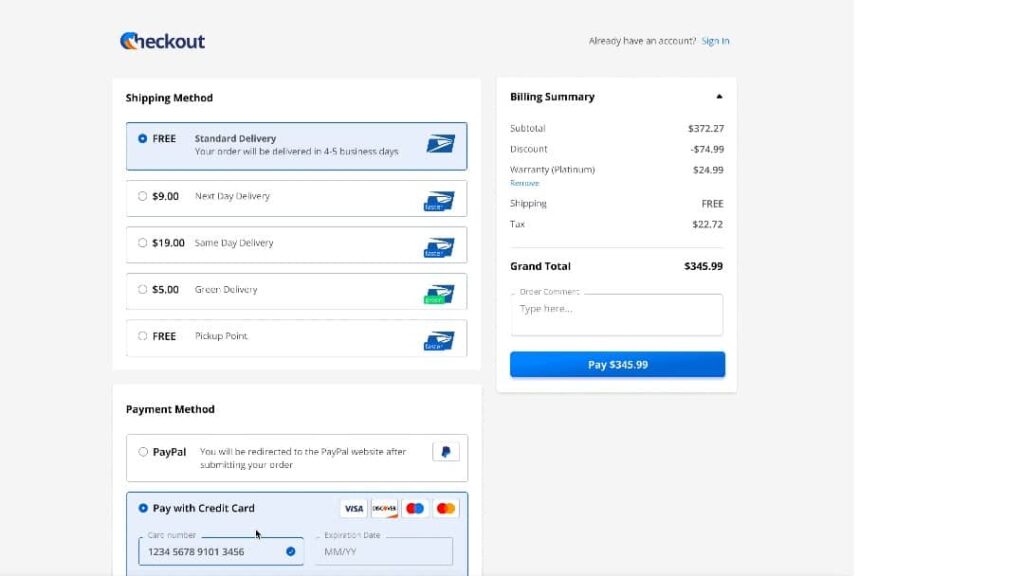
Poor forecasting leads to stockouts or overstock, both of which damage profitability. A grocery retailer that underestimates demand for seasonal items risks empty shelves. A retailer that overestimates demand ties up cash in unsold inventory.
This shows how supply chain management works in retail: forecasting accuracy directly affects availability, fulfillment capacity, delivery planning, and customer experience.
How Locus helps: Locus delivery software supports execution planning by helping retailers connect demand patterns, delivery capacity, service windows, and operational constraints. This enables better stock movement, more reliable delivery promises, and stronger SLA adherence.
2. Build Resilient Supplier Networks
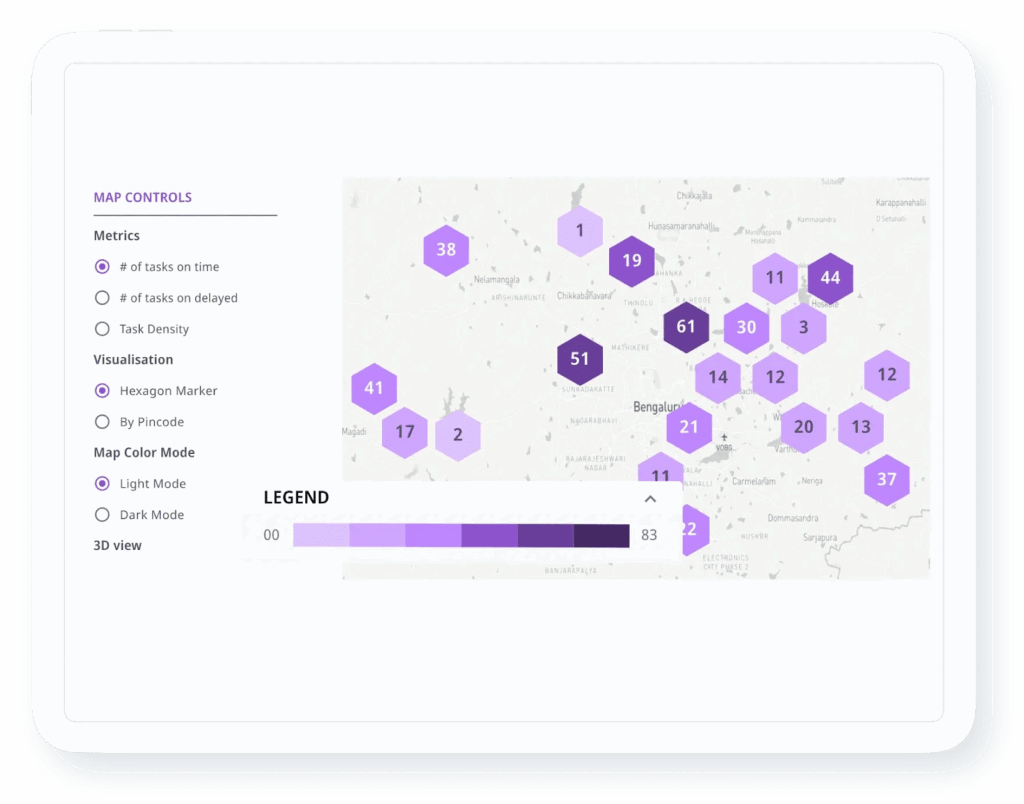
Retailers that depend on a single overseas supplier are exposed to trade restrictions, natural disasters, port delays, and geopolitical disruption. Fashion brands that source fabric from one country, for example, can face significant delays during climate events or trade volatility.
These cases highlight the risk of limited supplier diversity in retail supply chain management.
How Locus helps: Locus provides supplier visibility and analytics that help retailers assess lead times, cost impact, and risk. With better logistics visibility, businesses can plan alternative flows and reduce the operational impact of disruption.
3. Optimize Omnichannel Fulfillment
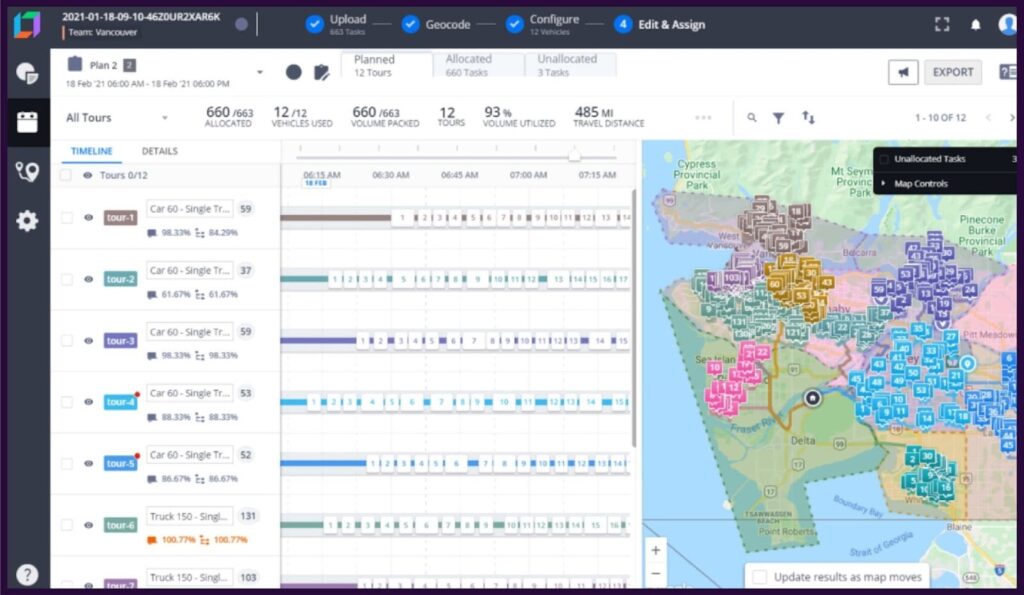
Customers expect to buy online, pick up in-store, receive home delivery, and return products through convenient channels. A pharmacy chain that cannot synchronize online inventory with store availability risks missed promises, lost sales, and poor customer experience.
Omnichannel fulfillment increases complexity because every order needs a decision: which node should fulfill it, how quickly it can be picked, what delivery option is available, and what it will cost to serve.
How Locus helps: Locus optimizes route management across multiple fulfillment nodes, including warehouses, stores, dark stores, and local delivery hubs. This helps retailers meet delivery promises while controlling cost and capacity.
4. Automate Dispatch and Logistics Execution
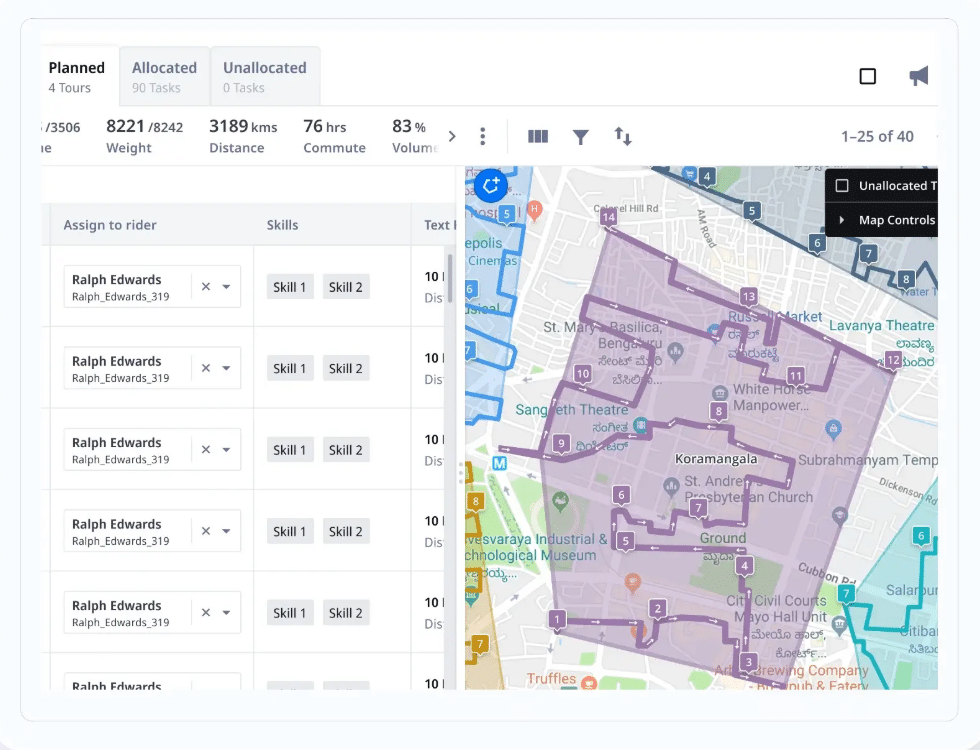
Manual dispatching, static routes, and siloed workflows increase delivery costs and slow response times. A furniture retailer that assigns static routes without digital tools may see poor vehicle utilization, missed delivery slots, and higher support costs.
To realize the benefits of supply chain management, retailers need automation across order allocation, dispatch, routing, driver workflows, proof of delivery, customer notifications, and exception handling.
How Locus helps: With automated route planning and dispatch management process tools, Locus helps retailers improve fleet utilization, reduce delivery times, automate dispatch decisions, and scale operations without adding unnecessary planning overhead.
5. Make Sustainability Operational
Retailers face increasing pressure from customers, regulators, and internal ESG teams to reduce emissions and waste. A fashion retailer offering free returns may create rising waste if returned goods are not routed for resale, refurbishment, recycling, or responsible disposal.
Sustainability in retail supply chain management is not separate from operational efficiency. Fewer empty miles, better route density, higher first-attempt delivery success, and more efficient returns all reduce both cost and emissions.
How Locus helps: Locus uses TDMS real-time dispatch management and advanced optimization to reduce empty miles, improve fleet productivity, lower fuel consumption, and support more sustainable logistics operations without weakening service levels.
Related read: What Is Route Scheduling?
Sustainability and Ethical Practices in Retail Supply Chains
Retailers need to balance profitability with environmental responsibility, ethical sourcing, and regulatory expectations.
Environmental Impact Mitigation
- Carbon footprint reduction: Optimize transport routes, consolidate shipments, improve vehicle fill rates, and use lower-emission delivery options where operationally viable.
- Waste reduction: Apply circular economy principles, reduce packaging waste, improve inventory planning, and minimize spoilage or markdown waste.
- Renewable energy: Power warehouses, distribution centers, and fulfillment facilities with solar, wind, or other renewable energy sources where available.
Ethical Sourcing Practices
- Fair labor standards: Ensure suppliers maintain safe working conditions and fair wages throughout the supply chain.
- Supplier audits: Conduct regular assessments of supplier practices for ethical, environmental, quality, and compliance standards.
- Transparency: Give customers clear information about product origin, sourcing practices, and supply chain standards.
Practical Implementation Steps
- Set measurable sustainability targets, such as 30% carbon reduction by 2030
- Partner with certified sustainable suppliers and logistics providers
- Implement reverse logistics programs for product returns, reuse, recycling, and resale
- Use technology to optimize routes, reduce empty miles, and improve delivery density
KPI Tracking and Metrics
Retail supply chain performance should not be managed by instinct. Teams need clear KPIs that connect operational execution with customer experience, cost-to-serve, and margin impact.
In the retail and CPG industry, these KPIs show both customer-facing performance and operational efficiency.
| KPI Name | Definition | Why It Matters | Industry Benchmark |
| On-time delivery rate | % of orders delivered within promised timeframe | Builds customer trust and loyalty | 95%+ |
| Inventory turnover | Cost of goods sold ÷ average inventory | Indicates efficient inventory management | 6–12x annually |
| Order accuracy | % of orders fulfilled without errors | Reduces returns and customer complaints | 99%+ |
| Fulfillment cycle time | Time from order to delivery | Competitive advantage in fast delivery | 1–3 days |
| Customer satisfaction | Customer rating of delivery experience | Measures overall supply chain performance | 4.5/5.0+ |
- On-time delivery rate: Late deliveries damage trust, increase support costs, and reduce repeat purchase intent. A furniture retailer that promises same-day delivery but regularly misses delivery windows will struggle to retain customers. Route efficiency directly affects this KPI.
- Inventory turnover: High turnover indicates that products are moving at the right pace. Slow-moving inventory ties up working capital and increases markdown or waste risk. Grocery retailers track this closely to manage perishables.
- Order accuracy: Fulfillment errors create customer frustration, returns, replacement shipments, and avoidable cost. If an electronics retailer ships the wrong model or accessory, the operational error becomes a customer experience issue.
- Fulfillment cycle time: This measures the time from order confirmation to delivery. In categories such as cosmetics, fashion, grocery, and pharmacy, shorter cycle times help retailers meet customer expectations. Strategic route planning helps reduce delays across nodes.
- Customer satisfaction: NPS and CSAT show whether supply chain execution is supporting loyalty. Transparent updates, reliable delivery windows, flexible returns, and consistent carrier performance can matter as much as product quality. A modern carrier management platform helps standardize delivery experience across partners.
Retailers should also track cost per delivery, first-attempt delivery success, delivery density, route adherence, SLA adherence, exception rate, failed delivery rate, returns cycle time, OTIF, fill rate, stockout rate, and carrier performance by lane or region.
Also read: Why Change Management Matters in Retail Logistics
Benefits of Effective Retail Supply Chain Management
Effective retail supply chain management produces measurable operational and commercial benefits.
Lower Cost-to-Serve
Better route planning, carrier allocation, inventory positioning, and fulfillment decisions help retailers reduce avoidable logistics cost. Lower empty miles, higher delivery density, better vehicle utilization, and fewer failed deliveries all improve cost-to-serve.
Higher Product Availability
Stronger forecasting, replenishment, and inventory visibility help retailers reduce stockouts while avoiding excessive safety stock. This improves revenue capture without locking unnecessary capital into inventory.
Better Customer Experience
Customers judge retailers by availability, delivery accuracy, communication, and return convenience. A strong supply chain supports reliable delivery promises, transparent updates, and consistent service quality.
Stronger Resilience
Retailers with diversified suppliers, flexible fulfillment nodes, alternate carriers, and real-time visibility can respond faster to disruption. Resilience helps maintain service levels during peak periods, weather events, supplier delays, and demand volatility.
Improved Margin Protection
Supply chain inefficiency erodes margin through excess inventory, expedited freight, failed deliveries, markdowns, poor labor productivity, and high return processing costs. A disciplined operating model helps protect margin while sustaining customer service.
Key Features to Look for in Retail Supply Chain Management Software
Retail supply chain management software should help teams connect planning, execution, visibility, and performance management. For enterprise retailers, the best-fit platform depends on network complexity, order volume, fulfillment models, carrier mix, and service promises.
Key features include:
- Real-time visibility: Track orders, shipments, vehicles, exceptions, delivery progress, and proof of delivery from a centralized view.
- Route optimization: Build efficient, constraint-aware routes that account for delivery windows, driver availability, vehicle type, traffic, service time, and order priority.
- Dispatch automation: Automate order allocation, driver assignment, route sequencing, and operational decisions that would otherwise require manual planning.
- Carrier management: Compare, allocate, and monitor carriers based on cost, serviceability, capacity, SLA adherence, and historical performance.
- Omnichannel fulfillment support: Connect stores, warehouses, dark stores, micro-fulfillment centers, and delivery partners.
- Exception management: Detect delays, missed scans, failed deliveries, capacity constraints, and SLA risks early enough for operations teams to act.
- Customer communication: Send delivery updates, ETAs, rescheduling options, and proof of delivery notifications.
- Analytics and reporting: Measure cost per delivery, on-time performance, route efficiency, carrier performance, failed delivery rate, and SLA adherence.
- Integration readiness: Connect with OMS, WMS, ERP, TMS, e-commerce platforms, fleet systems, and carrier systems.
- Scalability: Support multiple markets, brands, business units, fleets, carriers, and delivery models.
How Technology Simplifies Retail Supply Chain Management
Retail and CPG enterprises need platforms that improve speed, accuracy, and visibility across fulfillment and last-mile execution. Locus provides an AI-powered orchestration layer that helps retailers make better delivery decisions at scale.
Route Optimization Strategies
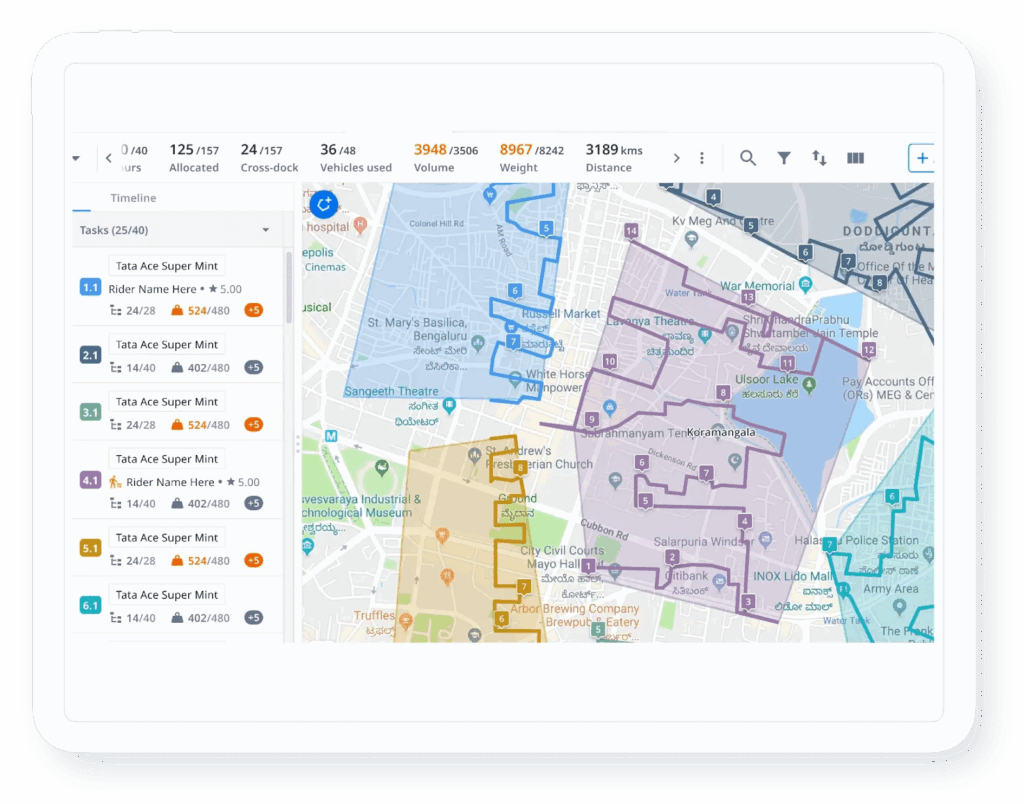
One of the most challenging problems retailers face is rising transportation costs, paired with unpredictable demand. Traditional static routes leave fleets underutilized and customers frustrated by late or missed deliveries.
DispatchIQ addresses this challenge with dynamic route optimization, which balances fleet capacity, service windows, and traffic conditions to maximize route efficiency while reducing costs.
Enhancing Supply Chain Visibility
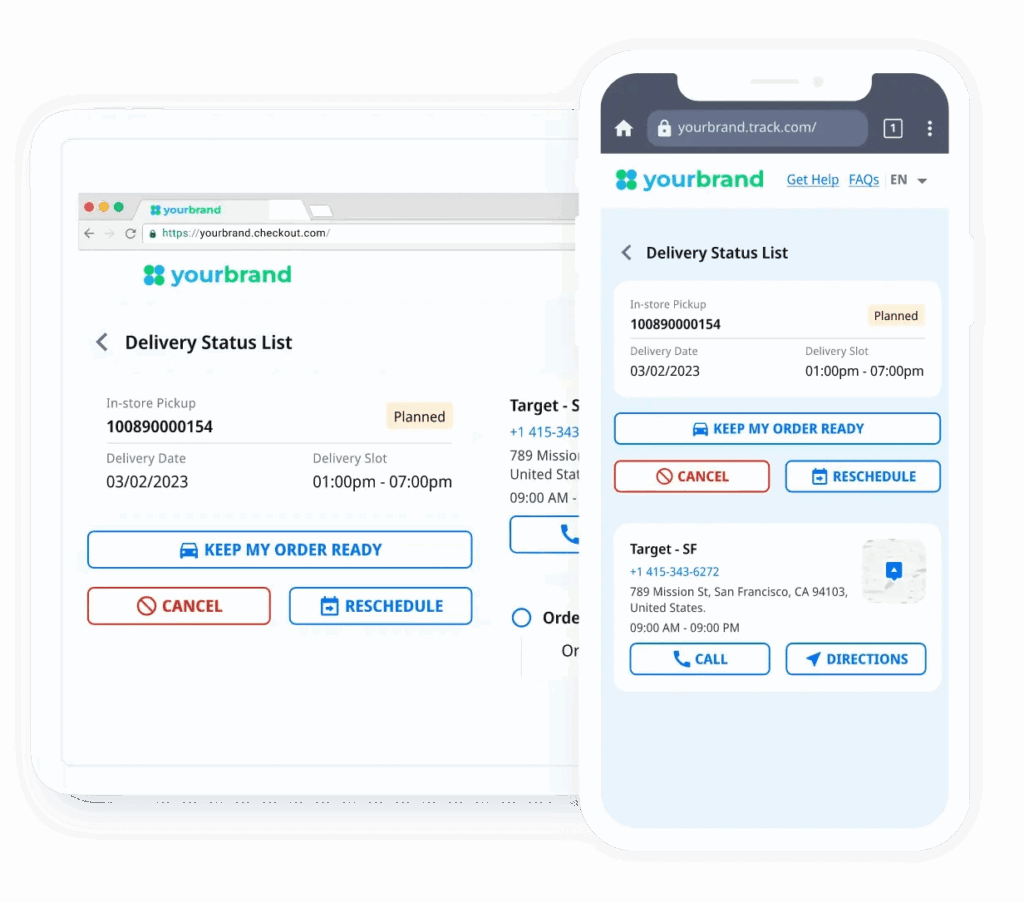
Retailers often struggle with fragmented systems that make it hard to know where orders are, when they will arrive, and which exceptions require action.
Track & Trace software provides a centralized view of shipments, exceptions, delivery progress, proof of delivery, and customer communication. This helps operations teams make faster decisions and maintain service reliability. Strong retail logistics visibility is especially important when retailers operate across multiple fulfillment nodes, fleets, carriers, and customer channels.
Managing Delivery Partners in Retail Supply Chains
Most retailers use a mix of owned fleets, contracted fleets, third-party logistics providers, carriers, and gig delivery partners. Without centralized management, service levels vary by partner, region, lane, and order type.
The Locus Carrier Management Platform standardizes carrier onboarding, allocation, performance tracking, and partner coordination. Retailers can select the right carrier for each order based on cost, capacity, serviceability, delivery SLA, and historical performance. This improves consistency and cost control at scale.
Key Terms in Retail Supply Chain Management
- BOPIS: Buy online, pick up in store. A fulfillment model where customers purchase through digital channels and collect from a physical store.
- Fill rate: The percentage of customer demand fulfilled from available inventory.
- Stockout rate: The frequency or percentage of times a product is unavailable when customers want to buy it.
- OTIF: On-time, in-full delivery. A measure of whether orders arrive by the promised time and in the correct quantity.
- Safety stock: Extra inventory held to reduce the risk of stockouts caused by demand or supply variability.
- Micro-fulfillment: Small fulfillment facilities located close to customers to support faster local delivery.
- Ship-from-store: A fulfillment model where stores act as local fulfillment nodes for online orders.
- Reverse logistics: The process of moving returned goods back through the supply chain for resale, repair, recycling, or disposal.
- Cost-to-serve: The total cost of fulfilling and delivering an order to a customer or channel.
- Route density: The number of deliveries completed within a route or geographic area, often used to measure delivery efficiency.
Future Trends in Retail Supply Chain Management
Retail supply chains are changing because of technology, customer expectations, labor constraints, and global market volatility.
Emerging Trends
- Hyper-personalization: AI-driven customization of products, packaging, offers, and delivery experiences based on individual customer preferences.
- Autonomous logistics: Self-driving delivery vehicles, drones, and robotic fulfillment systems reducing manual intervention in specific use cases.
- Circular supply chains: Closed-loop systems focused on reuse, recycling, resale, refurbishment, and waste elimination.
- Blockchain integration: Improved transparency and traceability across suppliers, product movement, and chain-of-custody processes.
- Micro-fulfillment expansion: More retailers are placing inventory closer to demand centers to improve speed and reduce last-mile distance.
- Cloud-based orchestration: Retailers are moving toward connected platforms that unify order, inventory, fleet, carrier, and delivery data.
Market Predictions
- Increased demand for same-day and instant delivery services
- Greater focus on supply chain resilience and risk management
- Expansion of micro-fulfillment centers in urban areas
- Integration of social commerce and live shopping experiences
- Higher pressure to reduce emissions across transport and fulfillment
- More automation in dispatch, carrier allocation, customer communication, and exception handling
For retailers, these trends will increase the importance of execution quality. Faster delivery promises, more fulfillment nodes, higher return volumes, and more delivery partners all make route optimization, dispatch automation, real-time visibility, and SLA management more important.
Why Choose Locus for Retail Supply Chain Management?
Locus helps retailers simplify logistics execution across complex supply chain networks. The platform supports dispatch automation, route optimization, carrier management, delivery visibility, and SLA control across owned fleets, third-party carriers, and hybrid delivery networks.
Retailers choose Locus to:
- Improve SLA adherence with AI-powered dispatch and routing
- Reduce logistics cost through better route density and fleet utilization
- Gain real-time visibility into delivery progress and exceptions
- Standardize carrier performance across regions and partners
- Support omnichannel fulfillment across stores, warehouses, dark stores, and local hubs
- Improve customer communication with accurate ETAs and delivery updates
- Scale logistics operations without proportional increases in manual planning effort
For enterprise retail operations, Locus turns fragmented logistics workflows into more predictable, data-led execution.
? Choosing the right logistics platform for retail growth
Compare what retail supply chain leaders should look for in an enterprise logistics solution before scaling fulfillment and last-mile operations.
Future-Proof Your Retail Supply Chain With Locus
Retail supply chain management defines how well retailers meet customer expectations while staying profitable. In 2026, the strongest retailers will build agility into procurement, inventory, warehousing, transport, last-mile delivery, and returns while adapting to constant market change.
The challenge is no longer only moving goods quickly. It is building an operating model that delivers reliability, cost control, SLA adherence, and customer trust at scale.
Locus combines advanced dispatching, route optimization, visibility, and carrier coordination in a single platform. By turning complex logistics decisions into data-led execution, Locus helps enterprises reduce cost, improve delivery accuracy, and scale confidently across markets.
Ready to see the difference? Book a personalized demo and see how Locus’s AI delivers 99.5% SLA adherence.
Frequently Asked Questions (FAQs)
1. What is retail supply chain management?
Retail supply chain management is the process of designing, planning, executing, and controlling the flow of products, information, and costs from suppliers to the end customer in a retail context. It includes sourcing, demand forecasting, inventory management, warehousing, transportation, order fulfillment, last-mile delivery, and returns.
2. What are the main components of a retail supply chain?
The main components of a retail supply chain include sourcing and procurement, demand forecasting, inventory management, warehousing, logistics and distribution, order fulfillment, and returns management. In practice, these functions must work together so the right products are available in the right place at the right time and at the right cost.
3. How does omnichannel retail impact supply chain management?
Omnichannel retail requires retailers to synchronize stores, e-commerce, mobile channels, marketplaces, warehouses, and delivery partners. Inventory must be visible and dynamically allocated across fulfillment nodes to support BOPIS, ship-from-store, home delivery, and flexible returns. This increases complexity but improves customer experience when supported by real-time data and integrated systems.
4. Which KPIs matter most in retail supply chain management?
Important retail supply chain KPIs include on-time delivery rate, OTIF, fill rate, stockout rate, inventory turnover, order accuracy, fulfillment cycle time, cost per delivery, return rate, and customer satisfaction. These metrics help retailers connect operational performance with customer experience, margin protection, and service reliability.
5. How can technology and AI improve a retail supply chain?
Technology and AI improve retail supply chains by connecting planning and execution across OMS, WMS, ERP, TMS, carrier systems, and last-mile platforms. AI can support demand forecasting, route optimization, dispatch automation, carrier allocation, inventory planning, and exception management. This helps reduce manual work, improve visibility, shorten fulfillment cycles, and strengthen SLA adherence.
6. What role do first-mile, mid-mile, and last-mile logistics play in retail supply chains?
First-mile logistics moves goods from suppliers or manufacturers into warehouses or distribution centers. Mid-mile logistics moves goods between distribution centers, stores, hubs, and local fulfillment nodes. Last-mile logistics moves products to the customer or pickup point, making it one of the most customer-visible and service-critical parts of the retail supply chain.
7. What are common risks in retail supply chain management?
Retail supply chains face demand volatility, supplier disruption, cyberattacks, labor shortages, transportation delays, climate events, geopolitical risk, and carrier inconsistency. Retailers reduce risk through stronger visibility, diversified sourcing, contingency planning, automation, and flexible fulfillment networks.
8. What role does sustainability play in retail supply chains?
Sustainability helps retailers reduce emissions, waste, unnecessary transport activity, and compliance risk. Route optimization, shipment consolidation, better inventory planning, reverse logistics, recycling, resale programs, and improved delivery density all support more sustainable supply chain operations.
9. Can retail supply chain management scale across global markets?
Yes. Scalable retail supply chain systems help retailers manage cross-border sourcing, regional fulfillment networks, local regulations, multiple carriers, and different customer delivery expectations while maintaining consistent service levels. The key is standardized visibility, flexible network design, and localized execution control.
10. How can retailers simplify complex logistics networks?
Retailers can simplify logistics networks by centralizing route planning, dispatch automation, carrier management, visibility, and delivery performance tracking. Locus provides an AI-powered orchestration system that helps enterprises reduce cost and improve predictability across large-scale retail networks.
11. How does POS integration improve retail supply chain management?
POS integration improves retail supply chain management by feeding store-level sales, returns, promotions, substitutions, and out-of-stock signals into demand planning and replenishment workflows. This helps retailers understand local demand faster, improve inventory accuracy, and make better fulfilment decisions across stores, warehouses, and digital channels.
12. What are the benefits and risks of just-in-time inventory in retail?
Just-in-time inventory can reduce holding costs, improve working capital, and limit waste or markdown exposure. The risk is lower resilience. Supplier delays, port congestion, global shortages, demand spikes, and transport disruption can quickly create stockouts if the retailer does not have strong visibility, supplier reliability, and contingency stock rules.


General
Top 10 HVAC Dispatch Software for Growing Operations in 2026

Sep 21, 2026
Compare the best HVAC dispatch software for 2026. Review features, pricing, and execution depth. See why Locus fits scaled HVAC operations.
Read more
General
Last Mile Delivery Analytics: Key Metrics, Benefits and Implementation in 2026
Sep 21, 2026
Learn the 10 essential last mile delivery analytics metrics that cut costs by 30%. Discover how predictive analytics and AI optimize routes and boost satisfaction.
Read moreInsights Worth Your Time




















Retail Supply Chain Management: Definition, Components, KPIs, and Strategies