


Retail & CPG
What Is Retail Distribution? Strategy & Best Practices
Key Takeaways
- Cut last-mile costs by up to 20% — Use optimised routing and all-mile delivery planning to reduce unnecessary kilometres, improve fleet utilisation, and lower cost-to-serve across 100+ vehicle fleets or multi-region operations.
- Eliminate delivery blind spots — Track orders, vehicles, carriers, and exceptions in real time so dispatch teams can act before delays affect service levels. This is critical when customer satisfaction remains a competitive differentiator across retail channels; the current ACSI retail score is 78.3.
- Prevent stockouts and overstocking — Improve inventory visibility across warehouses, distribution centres, stores, and fulfilment nodes. Unified commerce delivers 23% higher inventory turnover, strengthening fulfilment efficiency across the retail supply chain.
- Forecast demand proactively — Use predictive analytics to plan inventory, delivery capacity, and dispatch resources for high-turnover products, reducing delays and operational risk.
- Scale with AI-driven automation — Locus helps enterprise retailers improve delivery reliability with AI-powered route optimisation, automated dispatch, real-time visibility, and SLA-focused execution across owned fleets, 3PLs, and carrier networks.
Who is this for? Retail supply chain leaders, logistics managers, transport heads, and enterprise operations teams looking to optimise multi-channel distribution at scale. If you manage fleet operations, multi-region fulfilment, or coordination between warehouses, wholesalers, stores, carriers, and customer delivery points, this guide is built for you.
Short answer: Retail distribution is the process of moving products from manufacturers or suppliers to customers through warehouses, distribution centres, stores, wholesalers, marketplaces, and delivery networks. It determines where inventory sits, how orders are fulfilled, which channels customers can buy from, and how reliably products reach shelves or doorsteps.
Retail distribution strategy is now a direct margin lever for enterprise logistics. With U.S. retail sales projected at $7.4 trillion and total retail returns reaching $849.9 billion in 2025, the cost of poor distribution design is rising. According to McKinsey, nine in ten companies continue to face supply chain disruptions, with limited visibility beyond tier-one suppliers. For retail leaders heading into 2026, that lack of resilience affects how efficiently products reach stores, warehouses, and customers.
Retailers that rely on outdated distribution models face higher cost-to-serve, poorer SLA adherence, and more delivery failures. Leading retailers treat distribution as an operating advantage. Walmart’s store-fulfilment model reduces last-mile expenses, while Apple’s hybrid approach—exclusive stores plus selective retail partnerships—balances control with reach. Both examples show how distribution choices shape financial outcomes and customer experience.
Retail distribution also sits at the centre of resilience planning. When suppliers, warehouses, carriers, or fulfilment nodes are disrupted, the impact is felt in product availability, delivery reliability, and customer experience. Retailers that invest in handling retail supply chain disruptions are better positioned to protect service levels when demand patterns, supplier reliability, or transport capacity shift.
This guide explains retail distribution strategies, what to expect from a distribution technology partner, and how Locus helps enterprises execute distribution with AI-driven routing, automated dispatch, real-time visibility, and all-mile optimisation.
Turn retail distribution plans into faster dispatch decisions
Learn how a dispatch management platform can automate order assignment, improve SLA adherence, and reduce manual coordination across fleets, carriers, and regions.
Editorial methodology
This article is written for enterprise retail and CPG operators managing distribution across stores, DCs, marketplaces, DTC channels, and mixed carrier networks.
Research basis
- Industry and market references cited in-line, including NRF, ACSI, McKinsey, and the 2025 MHI Annual Industry Report.
- Locus implementation learnings are included only where clearly labelled as vendor experience.
- Time-sensitive figures are dated and linked to their original source pages.
- Recommendations are framed as operational guidance, not universal rules; the right model varies by SKU economics, service promise, geography, and channel mix.
How to read this guide
- Distribution strategy = channel and partner choices.
- Network design = where inventory and fulfilment nodes sit.
- Logistics planning = how goods move between nodes.
- Execution = dispatch, routing, carrier allocation, ETA management, and exception handling in real time.
What Is Retail Distribution?
Retail distribution is the system retailers use to move products from manufacturers or suppliers into the hands of consumers. It includes how goods are received, stored, allocated, transported, delivered, and returned. Products may move through supermarkets, e-commerce platforms, marketplaces, wholesale networks, brand-owned stores, regional hubs, or direct-to-consumer delivery routes.
According to NRF, over 70% of retail sales in the U.S. still happen in physical stores, but many of those transactions are influenced by online browsing. Meanwhile, e-commerce accounts for 15–16% of total retail sales as of Q2 2025, and NRF expects total retail sales to grow 2.7–3.7% to $5.42–5.48 trillion. In operational terms, this means distribution strategies for 2026 must connect online and offline channels without creating separate, inefficient fulfilment networks.
Retail Distribution vs Supply Chain vs Logistics
| Term | What it means | Retail operating implication |
| Retail distribution | Downstream movement of products from suppliers or manufacturers to customers through retail channels. | Determines channel reach, stock availability, delivery speed, and cost-to-serve. |
| Retail supply chain | The broader end-to-end system covering sourcing, production, procurement, distribution, fulfilment, and returns. | Distribution is one part of the wider supply chain, but it is where many customer-facing service failures occur. |
| Logistics | The planning and execution of storage, transport, fleet, carrier, and delivery operations. | Logistics tools such as WMS, TMS, dispatch software, and route optimisation make distribution executable. |
| Wholesale distribution | Bulk movement of goods through wholesalers or distributors before they reach retailers. | Expands reach but can reduce direct control over customer data, pricing, and delivery experience. |
Types of Retail Distribution Channels
Retail distribution channels define the path products take from producer to customer. The channel structure affects margin, market reach, customer data ownership, delivery cost, and operational control.
| Channel type | Flow | Common example | Operating implication |
| Direct-to-consumer / Level 0 | Manufacturer or brand ? Consumer | A brand sells through its own website, app, or owned stores. | Highest control over customer experience and data, but the brand owns fulfilment, delivery, and returns complexity. |
| Retailer channel / Level 1 | Manufacturer ? Retailer ? Consumer | A producer sells to a retailer such as Target or Best Buy. | Expands reach through established retail networks while retaining fewer direct customer touchpoints. |
| Wholesaler or distributor channel / Level 2 | Manufacturer ? Wholesaler/distributor ? Retailer ? Consumer | A CPG manufacturer sells in bulk to distributors who supply multiple stores. | Increases market coverage and volume, but adds intermediary costs and reduces end-customer visibility. |
| Multi-level indirect channel / Level 3 | Manufacturer ? Agent/broker ? Wholesaler/distributor ? Retailer ? Consumer | Common in fragmented markets or cross-border distribution. | Enables broad market penetration but requires strong partner governance, pricing control, and visibility. |
A retail distributor is an intermediary that purchases goods in bulk from manufacturers and resells them to retailers, often handling storage, order consolidation, transport, and scheduled replenishment. Distributors help manufacturers reach more markets without building every retail relationship or fulfilment network themselves.
Retail Distribution Process in 5 Steps
| Step | What happens | Key operational focus |
| 1. Procure | Products are sourced from manufacturers or suppliers. | Supplier reliability, inbound planning, purchase order visibility. |
| 2. Store | Goods are received, inspected, and stored in warehouses or distribution centres. | Inventory accuracy, slotting, SKU velocity, stock health. |
| 3. Allocate | Stock is assigned to stores, marketplaces, DTC orders, or wholesale channels. | Demand forecasting, channel prioritisation, fulfilment rules. |
| 4. Transport | Products move through line-haul, regional transfer, cross-dock, store replenishment, or parcel networks. | Fleet utilisation, carrier allocation, cost per shipment. |
| 5. Deliver and return | Orders reach shelves or doorsteps; returns flow back through reverse logistics. | On-time delivery, SLA adherence, first-attempt success, returns cost. |
Key Components of Retail Distribution
Successful retail distribution depends on several connected components:
- Manufacturers and Suppliers — The origin point of goods, supplying products to distributors, wholesalers, or retailers.
- Distribution Channels — The routes products take, such as direct-to-retail, wholesale, marketplace, or DTC. Modern retailers often use multi-channel and omnichannel models.
- Wholesalers and Distributors — Intermediaries that buy in bulk, store goods, and resell smaller quantities to retailers, reducing inventory and fulfilment complexity for manufacturers.
- Retailers — The final commercial link to consumers through physical stores, e-commerce sites, mobile apps, marketplaces, or hybrid models.
- Logistics and Supply Chain — Warehousing, transport, fleet, carrier, inventory, and fulfilment systems that keep goods moving on time and at the right cost.
- Channel Management — Coordination between manufacturers, distributors, retailers, marketplaces, and fulfilment partners, including pricing, promotions, contracts, and service commitments.
- Marketing and Merchandising — Demand-generation and product positioning activities that influence where inventory should be placed and how quickly it will move.
- Technology and Automation — ERP, WMS, OMS, TMS, route optimisation, automated dispatch, carrier management, and predictive analytics that improve visibility, speed, and scalability.
As retailers digitise logistics and fulfilment, operational resilience also depends on cyber security. Learning how to prevent retail supply chain attacks helps protect customer data, routing systems, carrier integrations, and distribution continuity.
Types of Retail Distribution
Retailers choose distribution strategies based on product type, service promise, customer expectations, channel economics, and brand positioning. The three main types are:
- Intensive Distribution
- Products are made available through as many outlets as possible.
- Common for fast-moving consumer goods (FMCG) such as snacks, beverages, and personal care products.
- Objective: maximise visibility, availability, and convenience.
- Operational impact: high delivery frequency, dense route networks, strict replenishment cycles, and close monitoring of cost per stop.
- Selective Distribution
- Products are distributed through a limited number of outlets in specific locations.
- Often used for products that require brand positioning or customer service, such as electronics, fashion, or furniture.
- Balances reach with control, helping brands stay accessible without losing service quality.
- Operational impact: more controlled fulfilment flows, defined carrier standards, better SLA monitoring, and tighter inventory allocation.
- Exclusive Distribution
- Products are sold through one authorised retailer or distributor in a given territory.
- Common in luxury goods, automobiles, or high-end fashion.
- Helps maintain prestige, brand control, and strong retailer partnerships.
- Operational impact: fewer delivery points, higher service expectations, appointment-based delivery, white-glove handling, and stronger exception management.
How Does Retail Distribution Work?
Retail distribution is a sequence of operating decisions that connect suppliers to customers. Each stage affects the next. A delay in inbound procurement can create stockouts; poor warehouse slotting can slow fulfilment; weak route planning can increase cost-to-serve and missed delivery windows.
Step 1: Procuring Products From Reliable Suppliers
Retail distribution begins with procurement. Retailers secure goods from manufacturers or suppliers to keep inventory pipelines moving.
For example, during the COVID-19 pandemic, the food supply chain was under severe pressure to keep essential products available. Despite disruption in meat, dairy, and international shipping, staples such as grains and fresh produce remained available because of strong supplier relationships and optimised logistics.
Reliable procurement keeps products available for shelves, store replenishment, click-and-collect, and home delivery. If this stage is delayed or disrupted, the impact moves downstream: stockouts rise, substitution rates increase, fulfilment becomes more expensive, and customer satisfaction falls.
Manufacturer Capacity and Demand Planning
Procurement should be matched with manufacturer capacity and demand planning before purchase orders are committed. Retailers and brands need to understand whether manufacturers can support forecasted demand, seasonal peaks, promotional surges, and retailer order commitments without creating production bottlenecks.
Key planning inputs include:
- Production lead times by SKU and supplier.
- Minimum order quantities and batch constraints.
- Replenishment cycles for stores, warehouses, marketplaces, and distributors.
- Demand forecasts by region, channel, and customer segment.
- Safety stock requirements for high-velocity or strategically important SKUs.
- Supplier reliability, substitution risk, and contingency capacity.
When manufacturer capacity is not aligned with downstream retail distribution, the result is often poor fill rate, delayed replenishment, costly expediting, and missed retailer service windows. A stronger approach is to connect demand signals, inventory policy, procurement planning, and transport capacity into one operating cadence.
Step 2: Storing Goods in Warehouses and Distribution Centers
After procurement, goods are inspected and stored in warehouses or regional distribution centres (RDCs). Inventory is positioned based on demand patterns, SKU velocity, delivery zones, and fulfilment promises.
For instance, leaders such as Amazon use advanced robotics in fulfilment centres to store and retrieve products. Many other retailers optimise with demand-based zoning and WMS tools. High-demand items such as phone accessories and everyday essentials are often stored in accessible “fast pick” zones so teams can reduce handling time and speed up order release.
Multi-brand retailers typically manage large SKU counts, uneven demand, and frequent replenishment cycles. For strategies on optimising warehouse storage and fulfilment across brands, see the Locus e-book on multi-brand fulfilment.
Step 3: Choosing the Right Distribution Channels
At this stage, businesses decide how products will reach customers. The right channel mix determines speed, cost, reach, margin, and service control.
Retailers and brands commonly choose between:
- Direct-to-consumer (DTC): Selling directly through e-commerce platforms, apps, or brand-owned stores.
- Wholesale/distributor networks: Using third-party wholesalers or distributors for bulk-to-retail conversion.
- Brick-and-mortar retail: Using physical stores for in-person sales, local fulfilment, and immediate product access.
- Online marketplaces: Listing products on platforms such as Amazon alongside competitors.
Today, many retailers blend these channels through omnichannel distribution rather than managing each channel separately. BOPIS in retail, curbside collection, ship-from-store, same-day delivery, and returns-to-store all require inventory and transport decisions to be synchronised.
Consumers increasingly prefer a hyperlocal delivery model that offers convenience while reducing last-mile delivery costs. As retail moves into 2026, omnichannel integration is not optional; it is the operating baseline.
Step 4: Transporting Products to Stores and Customers
Once channels are chosen, products move from warehouses to wholesalers, retail outlets, dark stores, micro-fulfilment centres, or directly to customers. This can involve long-haul transport, regional line-haul, cross-docking, store replenishment fleets, parcel carriers, 3PLs, and last-mile delivery teams.
Example: Tesco in the UK uses large trucks for regional transfers and smaller vans for home deliveries, balancing efficiency with convenience.
Many retailers are also adopting electric vehicles and other green logistics practices to reduce emissions and align with sustainability goals.
However, reliance on third-party carriers can create issues such as limited visibility, manual carrier selection, inconsistent delivery quality, and weak SLA tracking. Exploring how shippers can streamline third-party carrier management shows how retailers can improve carrier allocation, exception handling, and service consistency.
For store-led models, transport planning also has a direct impact on efficient shelf replenishment, fill rate, delivery frequency, and store availability.
Retail Store Delivery Standards and Replenishment Requirements
Store delivery is not just a transport activity; it is a compliance and replenishment discipline. Retailers and suppliers should define delivery standards before scaling store distribution, especially when replenishment is frequent or inventory is time-sensitive.
Common store delivery requirements include:
- Delivery appointment windows and penalties for missed slots.
- Dock access rules, unloading procedures, and site restrictions.
- Pallet configuration, case labelling, carton sequencing, and load quality.
- Advance shipping notice (ASN) expectations and electronic proof of delivery.
- Fill rate targets by store, category, route, and replenishment cycle.
- Delivery frequency by SKU velocity, store format, and promotion calendar.
- Shortage, damage, refusal, and partial delivery workflows.
When these standards are not codified, store teams face unpredictable arrivals, shelf gaps, higher labour pressure, and weaker customer availability. For enterprise retail distribution, store replenishment performance should be measured with the same rigour as customer delivery performance.
Fulfillment Network Readiness: 2-Day, LTL, Pallet, and Truckload Requirements
Before a retailer promises faster delivery or broader channel coverage, the fulfilment network must be tested against real shipment profiles. A network designed for store replenishment may not be ready for high-volume parcel delivery, while a parcel-first network may struggle with palletised replenishment, less-than-truckload (LTL) moves, or full truckload transfers.
Readiness checks should cover:
- Whether the network can support 2-day delivery promises in target regions.
- Parcel carrier coverage, cut-off times, induction rules, and zone-based cost.
- LTL capability for mid-sized B2B and store replenishment shipments.
- Pallet configuration, handling equipment, dock capacity, and loading accuracy.
- Truckload planning for inter-DC transfers, supplier inbound flows, and bulk replenishment.
- Cross-dock capacity for fast-moving SKUs and peak-season overflow.
- Route planning capability for mixed fleet, mixed load, and multi-stop store delivery runs.
If the fulfilment network is not matched to the channel promise, distribution costs rise quickly. Retailers should validate transport modes, service levels, cost-to-serve, and exception workflows before committing to broad customer or retailer-facing delivery guarantees.
Step 5: Delivering Products to Shoppers
The final stage is where distribution strategy becomes customer experience. Products reach store shelves, collection points, or customer doorsteps. This is also where poor routing, weak dispatch, and limited visibility become most visible.
Apple illustrates controlled distribution well: iPhones are available in Apple’s flagship stores and through select retailers such as Best Buy, giving customers multiple access points while retaining strong brand control.
For enterprise retailers, this stage requires:
- Accurate geocoding to prevent failed deliveries.
- Route optimisation that respects capacity, time windows, skills, service duration, vehicle type, traffic, and local restrictions.
- Automated dispatch to assign orders to the right driver, fleet, or carrier.
- Real-time ETAs for customers, stores, and call centres.
- Exception workflows for delays, failed attempts, damaged goods, or partial deliveries.
- SLA monitoring across regions, partners, and delivery promises.
Top 3 Retail Distribution Strategies With Real-World Examples
Retailers must choose a distribution strategy that fits product type, customer expectations, margin structure, and fulfilment capability. The right model should not only expand reach; it should also be executable at the promised service level.
1. Direct-to-Consumer Strategy
This strategy focuses on selling directly to consumers, bypassing intermediaries such as wholesalers or retailers. It allows businesses to control pricing, branding, customer data, delivery options, and the post-purchase experience.
Example: Warby Parker disrupted the eyewear market by selling directly through its website and stores. This DTC model allowed the company to offer affordable glasses without the markup from traditional retail channels.
The operational trade-off: DTC gives more control, but the retailer must manage fulfilment, last-mile delivery, returns, customer communication, and delivery cost-to-serve. Without automated dispatch and route optimisation, DTC can quickly become expensive at scale. Retailers evaluating this model should also account for direct-to-consumer supply chain challenges, including inventory placement, delivery promises, returns, and customer communication.
2. Omnichannel Strategy
Omnichannel distribution integrates online and offline channels so customers can move between touchpoints without friction. Customers can buy online and pick up in store, shop in store and receive home delivery, return online orders in store, or receive same-day delivery from a local fulfilment node.
Example: Walmart uses an omnichannel approach, fulfilling online orders directly from nearby stores. This reduces delivery costs and shortens delivery times, improving efficiency and customer satisfaction.
For more insights, explore Retail & CPG resources covering omnichannel strategies, delivery optimisation, and retail logistics trends.
The operational trade-off: omnichannel distribution creates more fulfilment options, but it also increases planning complexity. Retailers must decide whether an order should be fulfilled from a DC, store, dark store, marketplace partner, or carrier network—then ensure it is dispatched and delivered within SLA.
3. Wholesale Distribution Strategy
In this strategy, products are sold through wholesalers who distribute to retail stores. It is useful for reaching a wide market without managing every retail relationship directly.
Example: Procter & Gamble (P&G) sells products such as Tide and Pampers to wholesalers, who then distribute them to large retail chains such as Target and CVS. This allows P&G to focus on manufacturing while adopting retail networks to reach consumers.
For a practical industry example, see how Middle East bottled water manufacturers use all-mile delivery strategies to optimise routes, reduce costs, and improve customer satisfaction.
The operational trade-off: wholesale distribution improves reach and volume, but adds intermediaries. That can reduce direct visibility into inventory, demand, delivery performance, and customer-level service outcomes.
Distribution Strategy by Product Category
| Product category | Common strategy | Why it fits | Execution priority |
| FMCG and everyday essentials | Intensive | High demand, frequent replenishment, convenience-driven purchase behaviour. | Route density, store replenishment, delivery frequency, fill rate. |
| Grocery and food & beverage | Intensive / omnichannel | High perishability, local demand, tight delivery windows, and category-specific food and beverage distribution challenges. | Cold-chain control, same-day capacity, route adherence, failed delivery reduction. |
| Electronics | Selective / DTC | Requires service, support, and controlled brand experience. | Secure delivery, time-window accuracy, returns handling. |
| Fashion and apparel | Selective / omnichannel | Seasonal demand and high returns. | Inventory visibility, reverse logistics, store-based fulfilment. |
| Furniture and big & bulky | Selective / exclusive | High service requirements and complex delivery. | Capacity planning, vehicle constraints, appointment delivery. |
| Luxury goods | Exclusive | Brand control, scarcity, premium service. | White-glove delivery, proof of delivery, strict SLA adherence. |
| Pharmaceuticals and regulated goods | Selective / controlled | Compliance, traceability, temperature or handling requirements. | Chain-of-custody, delivery accuracy, exception visibility. |
? Improve retail distribution with automated route planning
See how AI-powered route planning helps retail teams reduce delivery costs, improve fleet utilization, and hit tighter delivery windows across stores and customer orders.
Decision framework: how to choose the right retail distribution model
Channel selection should be based on operating reality, not preference alone. Use the matrix below to decide which model fits a product or account.
| Decision factor | Best fit signals | Common channel outcome |
| Product velocity | High repeat demand, frequent replenishment | Intensive retail distribution, store-led replenishment |
| Margin profile | Higher margin, lower intermediary tolerance | DTC or selective retail partnerships |
| Size / weight / cube | Bulky, heavy, hard to parcel | Selective distribution, appointment delivery, fewer nodes |
| Fragility / handling | High damage risk or specialist setup | Selective or exclusive channel with tighter service controls |
| Perishability / regulation | Temperature-sensitive or regulated | Controlled distribution, compliance-led routing |
| Return propensity | High return rates | Centralised fulfilment or store-return models with strong reverse logistics |
| Delivery urgency | Same-day or narrow-slot promise | Local inventory, store fulfilment, dark stores, hyperlocal capacity |
| Brand-control requirement | Premium pricing, retail presentation matters | Selective or exclusive distribution |
| Customer data requirement | Need first-party customer insight | DTC or digitally integrated omnichannel model |
| Retail door density | Many store locations across geographies | Distributor-led or hub-and-spoke replenishment model |
Rule of thumb: high-volume, low-margin SKUs usually reward dense store replenishment and distributor coverage; high-value, high-control SKUs usually reward selective channels and tighter fulfilment control.
How to Build a Retail Distribution Strategy Step by Step
A retail distribution strategy should be built as an operating model, not just a channel decision. The strongest strategies connect commercial goals, SKU-level economics, capacity planning, partner governance, fulfilment execution, and KPI measurement.
Step 1: Define Commercial and Service Goals
Start by defining what the distribution strategy must achieve. Typical goals include market expansion, faster delivery, higher store availability, lower cost-to-serve, improved customer experience, or better control over brand presentation.
Clarify:
- Target markets, regions, and customer segments.
- Required service levels by channel.
- Revenue and volume expectations.
- Inventory availability targets.
- Margin thresholds and acceptable cost-to-serve.
- Delivery speed promises, such as same-day, next-day, or scheduled replenishment.
A distribution model that maximises reach may not maximise margin. A model that maximises control may limit scale. Clear goals prevent channel decisions from being made in isolation.
Step 2: Select Target Distribution Channels
Evaluate whether products should move through DTC, retail stores, wholesalers, marketplaces, distributors, or a hybrid model. The right mix depends on customer behaviour, product type, fulfilment complexity, and the level of control the business needs over pricing, data, delivery, and returns.
For example, a high-margin product that requires strong brand control may be better suited to DTC or selective retail partnerships. A fast-moving essential product may need intensive store distribution and distributor-led coverage. A bulky product may require fewer channels but stronger delivery appointment management.
Evaluate Capacity, Fulfillment Costs, and Landed Costs Before Choosing Channels
Channel strategy should be tested against business capacity and total cost before rollout. A channel can look attractive commercially but become unprofitable if fulfilment, storage, handling, freight, labour, or delivery costs are underestimated.
Assess capacity across:
- Warehouse space, dock throughput, picking capacity, and storage constraints.
- Store capacity for backroom inventory, ship-from-store, and returns handling.
- Fleet capacity, driver availability, carrier coverage, and delivery windows.
- Labour requirements for picking, packing, loading, store receiving, and customer delivery.
- Carrier costs by lane, service level, shipment size, and regional density.
- Duties, customs charges, inbound freight, storage, handling, packaging, and landed cost.
Factor SKU Economics Into Channel Decisions
SKU economics should guide where each product is distributed. A high-velocity SKU with low handling cost may perform well in stores, marketplaces, or distributor networks. A slow-moving SKU with high storage requirements may be better suited to centralised fulfilment. A fragile or high-return SKU may require more controlled distribution and tighter delivery visibility.
Evaluate each SKU by:
- Sales velocity and demand variability.
- Gross margin and contribution margin.
- Storage cube, weight, fragility, and handling complexity.
- Return rate, damage risk, and refurbishment effort.
- Delivery cost by channel and region.
- Replenishment frequency and minimum order quantity.
This level of analysis prevents businesses from applying one distribution model to every product, even when the cost profile is fundamentally different.
Protect Profit Margin While Expanding Distribution
High-reach channels can reduce profit margin if the full cost stack is not modelled upfront. Retailer discounts, distributor markups, marketplace fees, returns, damages, delivery surcharges, and service-level costs can quickly erode profitability.
Before expanding into a new channel, model:
- Expected selling price and retailer margin requirements.
- Distributor markup or commission.
- Fulfilment and transport cost per unit.
- Reverse logistics cost and expected return rate.
- Promotional funding, penalties, and compliance costs.
- Impact on cash flow, stockholding, and inventory obsolescence.
The objective is not simply to maximise distribution coverage. It is to expand reach while protecting profitable growth.
How to Calculate Distribution Costs and Retailer Margins
A practical retail distribution cost model should include every cost layer from production to customer availability. At minimum, build a cost stack with:
| Cost component | What to include |
| Product cost | Manufacturing or procurement cost per unit. |
| Inbound freight | Supplier-to-warehouse transport, duties, customs, and receiving charges. |
| Warehousing | Storage, slotting, inventory holding, and facility overhead allocation. |
| Handling | Picking, packing, loading, unloading, quality checks, and value-added services. |
| Packaging | Cartons, pallets, labels, protective materials, and retail-ready packaging. |
| Outbound transport | Parcel, LTL, pallet, truckload, fleet, 3PL, or carrier delivery cost. |
| Carrier fees | Fuel surcharge, accessorials, appointment charges, failed delivery fees, and zone charges. |
| Retailer margin or distributor markup | Required retailer margin, wholesale discount, distributor markup, or marketplace commission. |
| Returns cost | Reverse transport, inspection, restocking, refurbishment, disposal, and customer support. |
| Service-level cost | Premium delivery, SLA penalties, expedited shipping, appointment delivery, and exception management. |
A simple profitability view is:
Net channel contribution = selling price – product cost – landed cost – fulfilment cost – transport cost – retailer/distributor margin – returns and service-level cost.
This calculation should be reviewed by SKU, channel, region, and order profile. Distribution decisions become stronger when margin impact is visible before scale.
Step 3: Build Demand and Inventory Plans
Translate sales forecasts into inventory positioning decisions. Determine which SKUs should sit in central warehouses, regional DCs, stores, micro-fulfilment centres, or distributor facilities.
Planning should account for:
- Forecast demand by SKU, store, region, and channel.
- Replenishment frequency and minimum stock levels.
- Promotional calendars and seasonal demand.
- Safety stock for volatile or high-priority products.
- Supplier lead times and inbound reliability.
- Inventory allocation rules for competing channels.
Step 4: Design the Fulfilment and Transport Model
Define how products will physically move across the network. This includes inbound flows, DC-to-store replenishment, cross-docking, marketplace fulfilment, ship-from-store, DTC delivery, carrier allocation, and reverse logistics.
The design should specify:
- Which nodes fulfil which order types.
- Which carriers or fleets serve which zones.
- Cut-off times, dispatch waves, and delivery promises.
- Line-haul, middle-mile, and last-mile operating rules.
- Exception workflows for delays, shortages, damages, and failed deliveries.
Step 5: Select Partners and Technology
Choose distributors, 3PLs, carriers, retail partners, and technology platforms based on operational capability, data access, SLA transparency, regional reach, and integration readiness.
Partner evaluation should cover:
- Coverage by region, store type, and channel.
- Ability to meet OTIF, fill rate, and delivery-window commitments.
- Real-time visibility, proof of delivery, and exception reporting.
- Integration with ERP, WMS, OMS, TMS, and carrier systems.
- Cost model, escalation process, and performance governance.
Step 6: Launch With Controlled Pilots
A phased launch reduces risk. Start with selected regions, stores, SKUs, or customer segments before national or multi-market rollout. Use the pilot to validate demand, routing performance, fulfilment cost, delivery reliability, return flows, and service-level compliance.
Step 7: Measure, Optimise, and Scale
Once live, review performance by channel, SKU, region, partner, and delivery model. Distribution strategy should be adjusted continuously as demand changes, costs move, retailers add new requirements, and customer expectations rise.
Core review areas include:
- OTIF and SLA adherence.
- Cost per delivery, cost per stop, and cost per channel.
- Inventory availability, fill rate, and stockout rate.
- Return rate, damage rate, and reverse logistics cost.
- Carrier, distributor, and store performance.
- Customer complaints, delivery failures, and exception trends.
Cost-to-serve: fixed vs variable distribution costs
To make channel decisions usable, teams should separate fixed and variable costs.
| Cost type | Typical examples | Why it matters |
| Fixed costs | Facility lease, owned fleet depreciation or lease, salaried labour, baseline software, core overhead | These costs shape network design and minimum volume thresholds. |
| Variable costs | Fuel, carrier charges, pick/pack labour, packaging, failed delivery, returns, accessorials, SLA penalties | These costs move with order volume, route density, and service promise. |
Useful formulas
- Cost per order = total fulfilment + transport + channel-specific costs ÷ orders shipped
- Cost per stop = route operating cost ÷ delivery stops
- Cost per case = total replenishment cost ÷ cases delivered
- Cost per pallet = pallet movement cost ÷ pallets delivered
- Cost-to-serve by channel = all fixed allocations + variable cost stack + returns + compliance cost
- Net channel contribution = revenue – cost-to-serve – trade margin/commission
A channel may grow revenue while destroying contribution margin. That is why retail distribution should be measured by profitable service, not reach alone.
What Should Your Retail Distribution Partner Have?
According to the 2025 MHI Annual Industry Report, supply chain leaders cite workforce shortages, technology adoption gaps, and inventory management as some of the top challenges affecting operations. As these pressures intensify in 2026, selecting a distribution partner that can scale, automate decisions, and maintain service levels becomes non-negotiable for enterprise retail teams.
| Partner Quality | Why It Matters |
| Scalability | Handles fluctuations in order volumes, peak seasons, regional surges, and new fulfilment models without service degradation. |
| Reliability & Timely Delivery | Supports on-time delivery, SLA adherence, and consistent customer experience across channels. |
| Technology Adoption | Uses modern tools for real-time tracking, route optimisation, automated dispatch, carrier management, and inventory visibility. |
| Cost Efficiency | Optimises transport and operational costs without reducing service quality, helping businesses lower cost-to-serve. |
| Strong Communication & Coordination | Connects suppliers, warehouses, logistics teams, carriers, stores, and customers so disruptions are resolved quickly. |
Questions to Ask a Retail Distribution Technology Partner
- Can your route engine handle real-world constraints such as traffic, time windows, vehicle capacity, driver skills, service time, customer priority, and regional rules?
- How do you support operations that use owned fleets, 3PLs, and gig drivers together?
- Can dispatch decisions be automated based on capacity, proximity, cost, SLA, and delivery window?
- Do you provide real-time ETAs and exception alerts for customers, stores, dispatchers, and managers?
- How quickly can the system integrate with ERP, WMS, OMS, TMS, carrier platforms, and customer communication tools?
- Can performance be tracked by region, carrier, depot, driver, order type, and SLA?
- What evidence can you provide for cost reduction, time-to-value, and operational improvement?
How to Choose, Evaluate, and Replace a Retail Distributor
A retail distributor should be evaluated separately from a logistics technology partner. The distributor controls commercial reach, retailer relationships, replenishment discipline, storage quality, and often the quality of execution between manufacturers and stores.
Retailer Partnership Opportunities
Brands should assess retailer partnership opportunities based on both commercial fit and operational readiness. A retailer with a large store footprint can expand reach quickly, but the partnership must still work at the required margin and service level.
Evaluate each opportunity by:
- Store footprint, regional coverage, and customer fit.
- Category relevance and merchandising support.
- Replenishment requirements, delivery frequency, and receiving standards.
- Margin expectations, allowances, discounts, and penalty exposure.
- Access to sales, inventory, and performance data.
- Service-level obligations, including OTIF, fill rate, and delivery appointment compliance.
- Returns, damage, and dispute resolution processes.
The best retailer partnerships are not only high-volume; they are operationally measurable and commercially sustainable.
Independent Distributors
Independent distributors can be useful when a brand needs regional reach, faster store penetration, access to fragmented retail markets, or category-specific expertise. They are especially relevant in specialty categories, rural or semi-urban markets, independent retail networks, and geographies where direct retailer coverage is costly to build.
The trade-off is control. Independent distributors may limit visibility into downstream demand, store-level inventory, delivery performance, pricing execution, and customer feedback. Brands should define reporting standards, replenishment expectations, territory rules, and service-level commitments before relying on independent distributors at scale.
Distributor Evaluation Criteria
When selecting a retail distributor, assess:
- Regional coverage and strength of retailer relationships.
- Category expertise and ability to support the brand’s target stores.
- Warehouse capacity, inventory controls, and stock rotation discipline.
- Transport capability for store replenishment, palletised loads, LTL, and special handling.
- OTIF history, fill rate performance, and damage rate.
- Data-sharing capability for orders, inventory, shipment status, and proof of delivery.
- Financial stability, credit terms, and working capital capacity.
- Contract flexibility, escalation process, and performance review cadence.
Distributor selection should not be based only on reach. A distributor that adds stores but weakens service reliability can erode retailer trust and margin.
Use Pilot Programs Before Scaling Distribution
Pilot programs help validate distribution assumptions before national rollout. Start with selected regions, stores, channels, or SKU groups and measure whether the model can meet demand, service levels, returns expectations, routing performance, and fulfilment cost targets.
A strong pilot should test:
- Demand by store, region, and SKU.
- OTIF, fill rate, and missed replenishment windows.
- Delivery cost per stop, per case, or per pallet.
- Damage rates, returns, refusals, and dispute volume.
- Retailer compliance requirements and store receiving performance.
- Distributor responsiveness, reporting quality, and issue resolution.
- Route performance and carrier reliability.
Pilot results should determine whether to scale, adjust contract terms, change inventory positioning, refine delivery frequency, or select a different partner.
When to Consider Retail Distributor Replacement
Retail distributor replacement should be considered when service failures become structural rather than occasional. Warning signs include:
- Repeated OTIF misses or missed replenishment windows.
- Poor visibility into inventory, shipments, orders, or proof of delivery.
- Margin erosion caused by high markups, hidden costs, damages, or inefficient transport.
- Limited regional coverage or inability to support new store growth.
- Weak retailer relationships or frequent retailer escalations.
- High damage rates, stock discrepancies, or poor warehouse discipline.
- Slow issue resolution and weak communication during disruptions.
- Inability to support new delivery promises, data requirements, or compliance standards.
Replacing a distributor can be disruptive, so the decision should be supported by scorecards, retailer feedback, cost analysis, and a transition plan. However, keeping an underperforming distributor often creates greater long-term risk through lost sales, weaker retail relationships, and declining service levels.
Technology’s role in retail distribution
Retail distribution breaks down when data is fragmented across planning, warehousing, transport, and customer communication systems. The technology stack should support both planning and daily execution.
Core technology architecture
| System | Primary role in retail distribution |
| ERP | Financial control, procurement, master data, supplier and inventory accounting |
| WMS | Inventory accuracy, slotting, picking, packing, dock operations |
| OMS | Order capture, order orchestration, fulfilment rules by channel |
| TMS | Shipment planning, transport execution, freight cost visibility |
| Dispatch management | Daily order assignment, wave planning, driver and carrier coordination |
| Route optimisation | Stop sequencing, capacity-aware route planning, mileage and SLA reduction |
| Carrier management | Rate comparison, carrier allocation, SLA monitoring, exception handling |
| Delivery experience tools | ETA updates, customer notifications, proof of delivery |
| Analytics / control tower | Visibility across orders, inventory, carriers, ETAs, risk, and performance |
What a retail distribution control tower should show
Dispatchers, transport heads, DC teams, store teams, call centres, and executives should be able to see:
- Orders by channel, priority, and SLA
- Inventory by node and stockout risk
- Vehicle, driver, and carrier capacity
- ETAs, route risk, and service exceptions
- Missed appointments, failed attempts, or dwell-time delays
- Store replenishment gaps and customer delivery failures
Typical intervention triggers
- Demand spike exceeds planned capacity
- Route deviation or traffic-driven SLA risk
- Carrier no-show or service degradation
- Store appointment miss or loading delay
- Stockout or allocation conflict
- Failed delivery attempt or address issue
Typical control-tower actions
- Reassign orders to another carrier or fleet
- Resequence stops within the route
- Re-route to avoid delay
- Switch fulfilment node
- Notify store or customer of updated ETA
- Escalate based on SLA breach risk
Retail distribution software checklist
A practical software evaluation should confirm support for:
- Multi-node planning
- Owned fleet + 3PL + carrier orchestration
- Constraint-based routing
- Automated dispatch
- Real-time tracking
- ETA prediction
- Exception workflows
- Proof of delivery
- KPI dashboards
- API-based enterprise integrations
- Security, governance, and scalability
Benefits: Simplify Retail Distribution With Locus
Retail distribution has become more complex because products now move across warehouses, stores, wholesalers, marketplaces, carriers, and customer doorsteps at the same time. Locus helps convert that complexity into controlled execution: better routes, faster dispatch, stronger visibility, and measurable improvements in cost-to-serve.
All-Mile Delivery Optimization
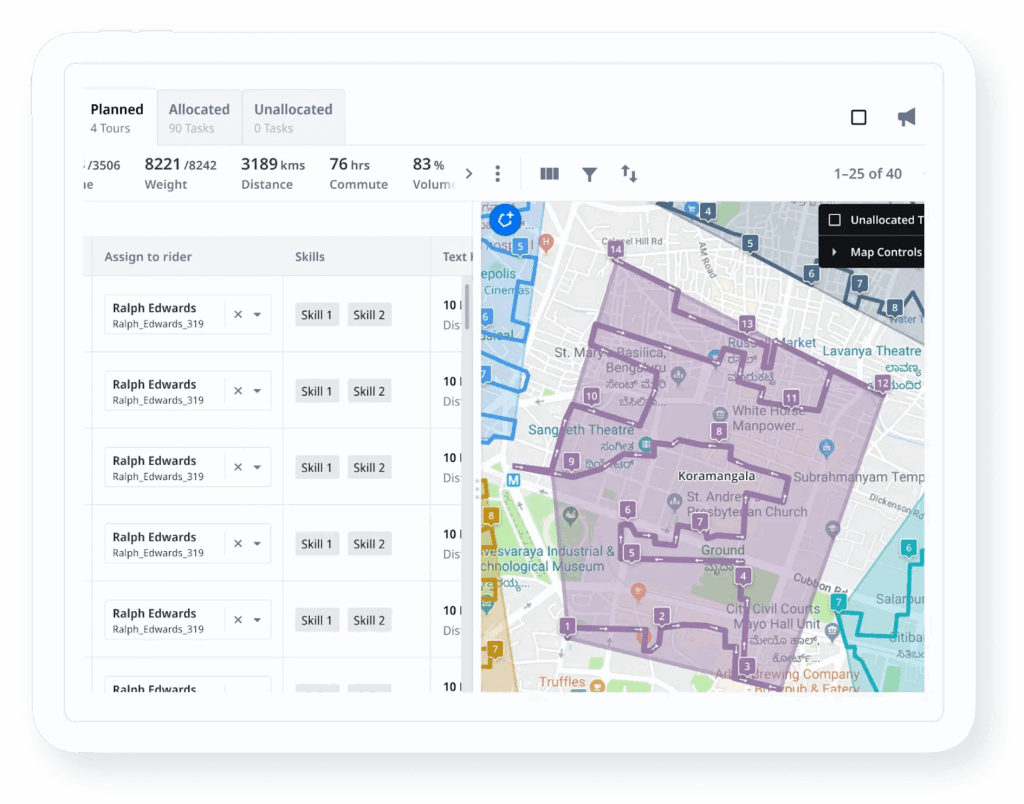
At Locus, routes are planned using proprietary AI to reduce travel time and operational cost. The engine considers every stop—from warehouse to customer—factoring in 250+ real-world constraints to support faster, more reliable deliveries at scale. These constraints can include vehicle capacity, delivery time windows, route density, driver availability, skills, service time, traffic, order priority, and fulfilment rules.
Retailers using route optimisation can improve delivery-window adherence, reduce unnecessary distance, increase driver utilisation, and lower cost per delivery.
Real-Time Tracking and Visibility
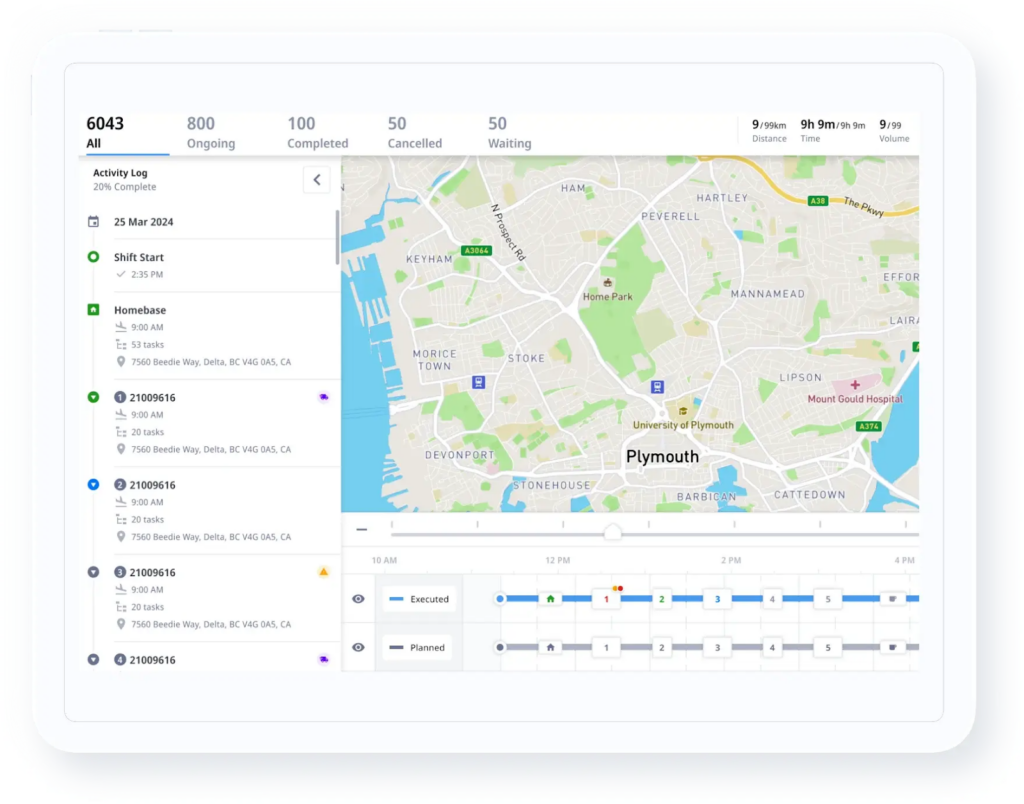
Businesses can see where products, vehicles, and deliveries are at any moment. If a problem arises—a traffic delay, failed delivery attempt, capacity issue, route deviation, or carrier exception—it can be identified and resolved before it affects the customer.
This supports the customer satisfaction scores that separate top retailers from the rest. Retail logistics visibility is not just a tracking feature; it is an operating control layer for SLA adherence.
Dynamic Order and Capacity Management
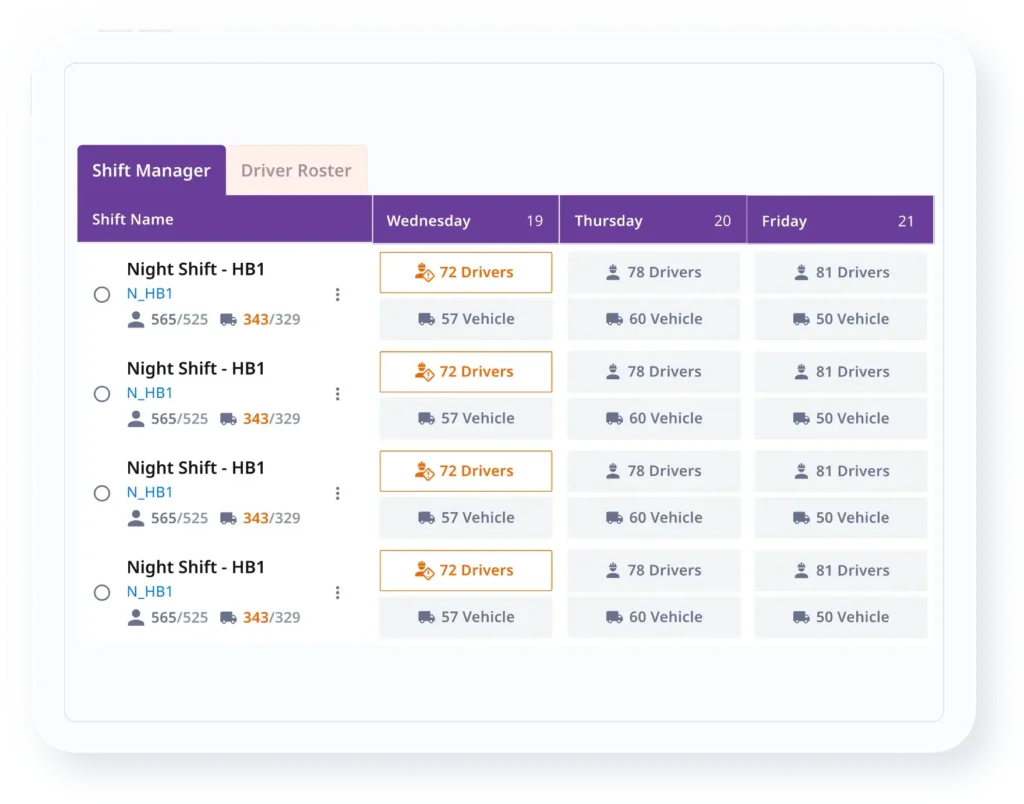
Orders are matched with available vehicles, drivers, carriers, and delivery capacity in real time. This helps prevent delays during seasonal peaks, flash sales, regional demand surges, or store-level spikes. Dispatch teams can allocate capacity based on geography, promise time, vehicle type, cost, and fulfilment priority rather than manual judgement alone.
For retailers coordinating multiple fulfilment nodes and delivery models, capacity planning for omnichannel retailers becomes essential to balancing vehicles, drivers, carriers, and delivery capacity during demand spikes.
Predictive Analytics
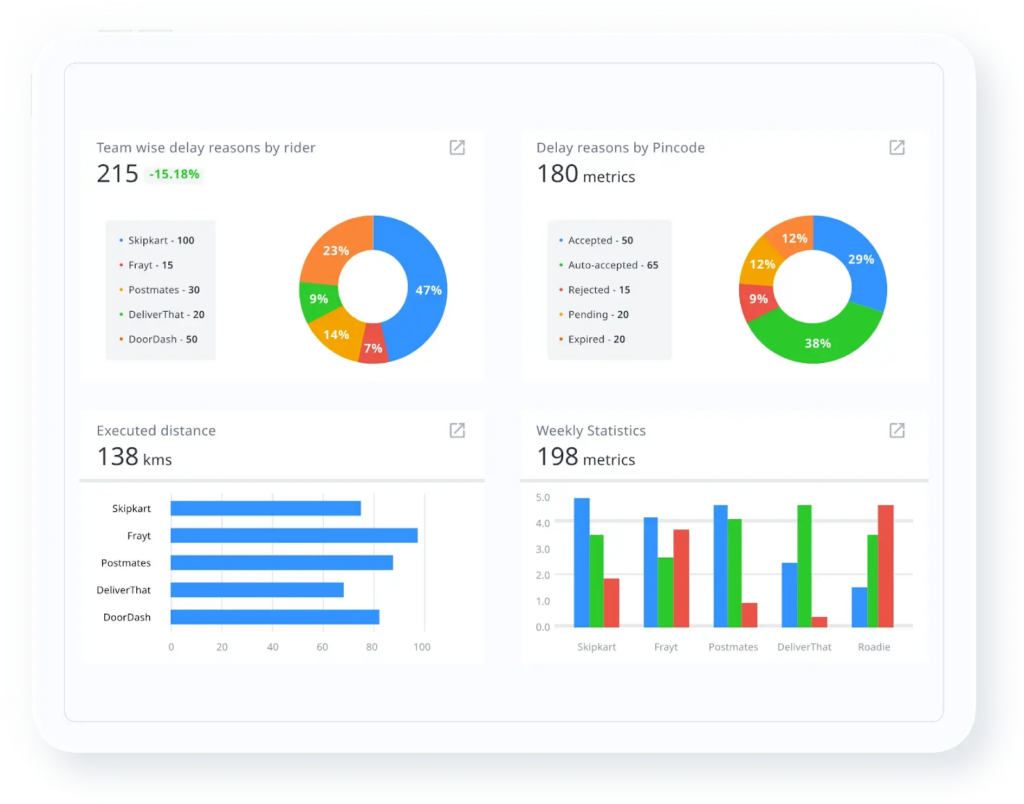
Locus analytics help identify demand patterns and potential disruptions before they create service failures. Retailers can adjust stock levels, delivery plans, and fleet capacity proactively, reducing stockouts and overstock situations that erode margin.
In practical terms, predictive insights help teams answer questions such as:
- Which zones will need more delivery capacity tomorrow?
- Which stores are likely to require faster replenishment?
- Which routes are at risk of missing SLA?
- Which carrier or depot is underperforming against delivery promise?
Automated Dispatch
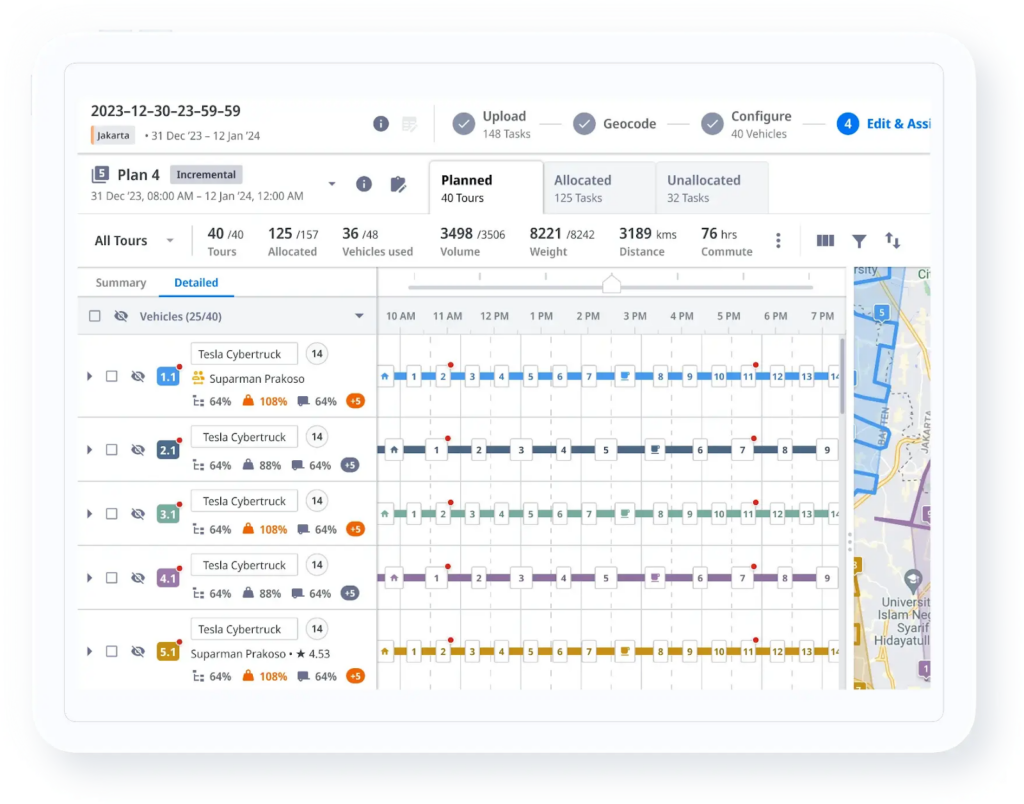
Orders are prioritised and assigned automatically based on capacity, proximity, cost, SLA, route plan, and delivery window. This removes the bottleneck of manual dispatch decisions and helps deliveries stay on schedule when volume spikes.
For large retail networks, automated dispatch is often the difference between a plan that looks efficient on paper and one that works in the field.
These tools turn retail distribution into a faster, more accurate, and more reliable operating system. For retailers handling large or complex shipments, capacity management and automation are critical.
Learn more about these challenges and solutions in Locus’ Big and Bulky Retail Shipments e-book.
Key Features That Drive Retail Distribution Efficiency
Enterprise retailers need more than generic logistics tools. The features that matter most in retail distribution platforms are the ones that improve execution quality, reduce cost-to-serve, and protect delivery promises.
| Feature | Impact on Retail Distribution |
| AI-Powered Route Optimization | Reduces fuel costs, delivery time, and planning effort by calculating optimal routes across thousands of stops daily. |
| Automated Carrier Allocation | Assigns shipments to the best-fit carrier or fleet vehicle based on cost, capacity, service area, and SLA requirements. |
| Real-Time Fleet Visibility | Provides a single view of vehicles, shipments, drivers, carriers, ETAs, and exceptions across regions. |
| Geocoded Delivery Accuracy | Helps drivers reach the correct location on the first attempt, reducing failed deliveries, reattempts, and customer escalations. |
| Demand-Responsive Scheduling | Adjusts delivery schedules dynamically in response to order surges, weather, supply disruption, or route risk. |
| Multi-Region Scalability | Supports operations across geographies without requiring separate systems or manual configuration per region. |
| Integration-Ready Architecture | Connects with ERP, WMS, OMS, TMS, carrier platforms, and customer communication systems through APIs. |
These features are not standalone. They work together to create an end-to-end distribution execution layer that reduces operational friction from planning through delivery.
Retail Distribution KPIs to Track
| KPI | What it measures | Why it matters |
| OTIF / On-time in-full | Whether orders arrive on time and complete. | Core indicator of service reliability and supply chain performance. |
| On-time delivery rate | Percentage of deliveries completed within the promised window. | Directly affects customer satisfaction and SLA adherence. |
| Cost per delivery / cost per stop | Average cost of completing a delivery or stop. | Helps control cost-to-serve by region, channel, depot, or fleet. |
| Delivery success rate | Percentage of successful first-attempt deliveries. | Reduces reattempt cost, customer complaints, and operational waste. |
| Fleet utilisation | How effectively vehicles and drivers are used. | Improves productivity and reduces underused capacity. |
| Inventory turnover | How quickly inventory is sold and replenished. | Indicates stock health and demand alignment. |
| Fill rate | Percentage of customer demand fulfilled from available stock. | Helps prevent lost sales and substitution issues. |
| Return rate | Percentage of orders returned. | Important for reverse logistics cost, inventory recovery, and customer experience. |
| SLA adherence | Whether service commitments are met across channels and partners. | Essential for carrier management, customer promise accuracy, and operational control. |
How to Audit a Retail Distribution Strategy After Launch
A retail distribution strategy should be audited regularly once live. The objective is to identify whether the channel mix, inventory plan, fulfilment network, carriers, distributors, and delivery execution are still aligned with margin and service goals.
Use this practical audit workflow:
- Review KPI performance — Track OTIF, fill rate, SLA adherence, on-time delivery, cost per stop, delivery success rate, inventory turnover, and return rate by channel, region, partner, and SKU.
- Assess channel profitability — Compare revenue, landed cost, fulfilment cost, transport cost, retailer margin, distributor markup, returns, damages, and service-level cost for each channel.
- Evaluate delivery performance — Identify lanes, stores, carriers, depots, and route types with repeated delays, failed attempts, high dwell time, or missed appointment windows.
- Check inventory availability — Review stockouts, overstocks, replenishment gaps, allocation rules, and inventory ageing across warehouses, stores, marketplaces, and distributor locations.
- Score carriers and distributors — Use scorecards for OTIF, exception resolution, proof of delivery accuracy, damage rate, reporting quality, and cost performance.
- Analyse returns and damages — Determine whether returns are caused by product issues, delivery failures, poor packaging, incorrect allocation, late arrival, or customer preference.
- Capture customer and retailer feedback — Review complaints, store escalations, fulfilment substitutions, customer service tickets, and retailer compliance notices.
- Prioritise corrective action — Adjust route plans, inventory placement, carrier allocation, distributor contracts, delivery frequency, or channel participation based on evidence.
The audit should be frequent enough to catch operational drift before it affects customers or retailers. For high-volume enterprise distribution networks, monthly scorecards and quarterly strategy reviews create stronger governance.
Retail Distribution Readiness Checklist
Use this checklist before launching or scaling a retail distribution model:
- Demand forecasts are built by SKU, channel, store, region, and season.
- Inventory positioning rules are defined for warehouses, DCs, stores, marketplaces, and distributor facilities.
- Manufacturer capacity, supplier lead times, and replenishment cycles are validated.
- Fulfilment capacity is confirmed for picking, packing, storage, dock throughput, and returns.
- Route planning can support real-world constraints such as time windows, capacity, skills, traffic, and service duration.
- Carrier readiness is confirmed for parcel, LTL, pallet, truckload, store replenishment, and last-mile delivery.
- Distributor agreements include service levels, reporting requirements, territory rules, escalation paths, and review cadence.
- Retail store delivery standards are documented, including appointment windows, dock rules, pallet configuration, ASN requirements, and proof of delivery.
- Returns processes are defined for customer returns, store returns, refusals, damages, restocking, and disposal.
- Integrations are ready across ERP, WMS, OMS, TMS, carrier platforms, distributor systems, and customer communication tools.
- KPI dashboards are configured for OTIF, fill rate, cost per stop, SLA adherence, return rate, carrier performance, distributor performance, and inventory availability.
- Pilot launch criteria, success thresholds, and scale-up decision rules are documented.
Why Choose Locus for Retail Distribution?
Unlike generic TMS platforms that treat retail as one use case among many, Locus is built for the complexity of enterprise retail distribution. Here is what sets us apart:
- Proprietary AI engine that factors 250+ real-world constraints—traffic, vehicle capacity, time windows, driver skills, service duration, priority orders, and more—into route decisions.
- Trusted by 360+ global enterprises across retail, CPG, e-commerce, and logistics.
- Proven cost savings: up to 20% reduction in last-mile logistics costs for enterprise clients.
- Multi-brand and multi-region scalability: one platform supports operations across countries, brands, fulfilment models, and delivery types without custom builds for every site.
- Global reach and industry support: deployed across North America, Europe, Southeast Asia, the Middle East, and India, with dedicated implementation and customer success teams.
- Rapid time-to-value: enterprise deployments go live in weeks, not months, with integration into existing technology stacks.
Locus insight: Our team has seen that retailers moving from static route planning to AI-driven optimisation can recover implementation investment within the first quarter through fuel savings, fewer delivery failures, and improved fleet utilisation. The operational difference is simple: routes are recalculated dynamically as conditions change, rather than planned once at the start of the day and left to dispatchers to fix manually.
? Strengthen carrier control across your retail distribution network
Discover how advanced carrier management improves allocation, visibility, and service consistency when your distribution model depends on multiple carrier partners.
Learn About Carrier Management ?
Boost Efficiency and Customer Satisfaction With Smarter Distribution
Retail distribution is a strategic advantage when executed correctly. In a market where U.S. retail sales are projected at $7.4 trillion and customer expectations continue to rise in 2026, businesses that align distribution strategy with reliable execution, strong partners, and modern technology will deliver faster, reduce operational cost, and improve customer satisfaction.
Channel choice determines cost and reach. DTC maximises control and margin but increases fulfilment responsibility. Wholesale expands market access but adds intermediary cost and reduces direct visibility. Omnichannel improves convenience but increases planning and dispatch complexity. The right strategy aligns product type, market dynamics, inventory position, and delivery capability.
Platforms such as Locus help streamline these processes with real-time visibility, optimised routing, automated dispatch, and carrier management. Retailers can respond quickly to demand changes, prevent delays, protect SLA adherence, and maintain operational efficiency at scale. A well-structured distribution system does more than keep products moving; it builds customer trust and long-term loyalty.
Explore how your supply chain can operate smarter. Book a demo with Locus to see AI-driven distribution in action.riven distribution in action.
Frequently Asked Questions (FAQs)
1. What is retail distribution?
Retail distribution is the process of moving products from a manufacturer or supplier to the end consumer through channels such as direct-to-consumer sites, retailers, wholesalers, marketplaces, stores, and delivery networks. It includes warehousing, inventory management, order allocation, transport, last-mile delivery, and returns. The goal is to ensure products are available where and when customers want to buy them.
2. What is the main goal of a retail distribution strategy?
The goal is to deliver the right products to the right place at the right time while optimising cost, inventory, service levels, and customer satisfaction across all channels. An effective strategy aligns channel selection, warehouse positioning, fulfilment execution, and delivery operations with business goals and demand patterns.
3. What are the main types of retail distribution channels?
The main retail distribution channels are direct, retailer, and wholesaler/distributor channels. In a direct channel, the manufacturer sells straight to consumers through a DTC website or brand stores. In a retailer channel, the producer sells to a retailer such as Target or Best Buy, while in a wholesaler/distributor channel, goods flow from manufacturer to wholesaler or distributor, then to retailer, then to consumer.
4. What are intensive, selective, and exclusive retail distribution strategies?
Intensive distribution places products in as many outlets as possible, making it suitable for high-volume goods such as beverages, snacks, and personal care products. Selective distribution uses a smaller group of retailers that match the brand’s target segment, common in electronics, fashion, and speciality categories. Exclusive distribution grants rights to one retailer or a tightly controlled group in a territory, often used for luxury goods, automobiles, or high-end products.
5. What is the main difference between direct-to-consumer (DTC) and traditional retail distribution?
DTC allows brands to sell directly to customers through owned channels such as websites, apps, and physical stores. This gives more control over pricing, branding, customer data, and delivery experience. Traditional retail distribution uses wholesalers and retailers as intermediaries, which expands reach but adds cost layers and reduces direct control.
6. What does a retail distributor do?
A retail distributor purchases products in bulk from manufacturers and resells them to retailers for a profit. Distributors often handle procurement, storage, transport, order consolidation, and scheduled replenishment. By aggregating demand from many retailers, they help manufacturers reach more markets without building their own retail networks.
7. How do you know if a retail distributor should be replaced?
A retail distributor may need to be replaced if poor performance becomes recurring rather than occasional. Common signs include repeated OTIF misses, lack of shipment or inventory visibility, missed replenishment windows, margin erosion, limited retailer reach, weak retailer relationships, high damage rates, and repeated service failures. Before replacing a distributor, review scorecards, retailer feedback, cost impact, and transition risk.
7. How is retail distribution different from retail logistics?
Retail distribution focuses on where and through whom products move—from manufacturer to consumer through channels such as DTC, retailer, wholesaler, marketplace, or store networks. Retail logistics is the operational backbone that manages warehousing, inventory handling, transportation, fleet operations, carrier allocation, and last-mile delivery. Put simply, distribution defines the route and partners, while logistics manages the physical movement and execution.
8. What role do distribution centers play in retail distribution?
Distribution centres receive bulk shipments from manufacturers and break them down for store delivery, e-commerce fulfilment, or regional replenishment. DCs are often 500,000+ square feet, and a typical DC can service 100–200 stores in a specific geographic area, making it an operational backbone of scalable retail distribution networks.
9. How can retailers handle sudden demand spikes?
Retailers can handle demand spikes by using scalable distribution partners, flexible inventory management, dynamic routing, and automated dispatch. AI-powered platforms such as Locus can reallocate fleet capacity, adjust dispatch schedules, rebalance routes, and prioritise orders in real time when volume increases.
10. Why is real-time visibility important in retail distribution?
Real-time visibility allows businesses to monitor shipments, identify issues early, and act before delays affect customers. With retail customer satisfaction at an ACSI score of 78.3, visibility is a direct lever for service quality, ETA accuracy, and exception management.
11. What costs should be included when calculating retail distribution profitability?
Retail distribution profitability should include product cost, landed cost, inbound freight, warehousing, handling, packaging, outbound transportation, carrier fees, retailer or distributor margins, returns, damages, and service-level costs. These should be measured by SKU, channel, region, and order profile so teams can understand whether a channel is genuinely profitable after fulfilment and delivery costs are included.


Supply Chain Optimization
Logistics and Supply Chain Management: Definitions, Differences, and Key Processes

Sep 23, 2026
Logistics management involves the efficient and effective coordination of various tasks related to the transportation, storage, and delivery of goods.
Read more
General
Optimizing Delivery Performance: Key KPIs for 2026
Sep 23, 2026
Track and improve delivery performance KPIs with practical metrics for 2026. Learn how logistics teams turn KPI visibility into execution gains. Explore Locus.
Read moreInsights Worth Your Time




















What Is Retail Distribution? Strategy & Best Practices