


General
What Is Routing Efficiency? A Guide to Smarter, Leaner Logistics – Locus
Key Takeaways
- Routing efficiency directly impacts cost per delivery, on-time rates, and asset utilization—yet only 24% of shippers actively optimize routes and consolidate shipments for cost efficiency.
- Inefficiencies often stem from static plans that ignore driver shifts, time windows, and vehicle constraints.
- Measuring efficiency requires tracking metrics like first-attempt delivery rate, vehicle utilization, and route adherence.
- High-performing logistics teams use data, segmentation, and automation to improve routing outcomes—achieving up to 20% fuel savings and 40% ETA accuracy gains.
- Locus enables scalable routing efficiency by embedding real-world constraints and real-time updates into daily dispatch workflows, serving enterprise fleets across retail, e-commerce, and 3PL operations.

Routing inefficiency drives up costs in subtle but compounding ways, longer delivery times, low route adherence, wasted fuel, and support teams overwhelmed by missed time windows.
Take a typical retail fleet dispatching 300 orders a day. Without real-time inputs or sequencing logic, drivers spend hours backtracking, vehicles return with unused capacity, and deliveries spill into overtime. The result is a cascade of avoidable costs rooted in planning inefficiencies.
Routing efficiency reflects how effectively your resources, vehicles, drivers, and time are aligned to meet delivery constraints while minimizing distance, idle time, and failure rates. It turns routing from a fixed plan into a responsive system that scales with volume and volatility.
In the sections that follow, we’ll dissect routing efficiency through an operational lens: what it entails, which factors shape it, how to quantify its impact, and the proven strategies enterprises are adopting to optimize it. We’ll also explore how logistics leaders use platforms like Locus to operationalize routing efficiency across their networks.
What Is Routing Efficiency in Logistics?
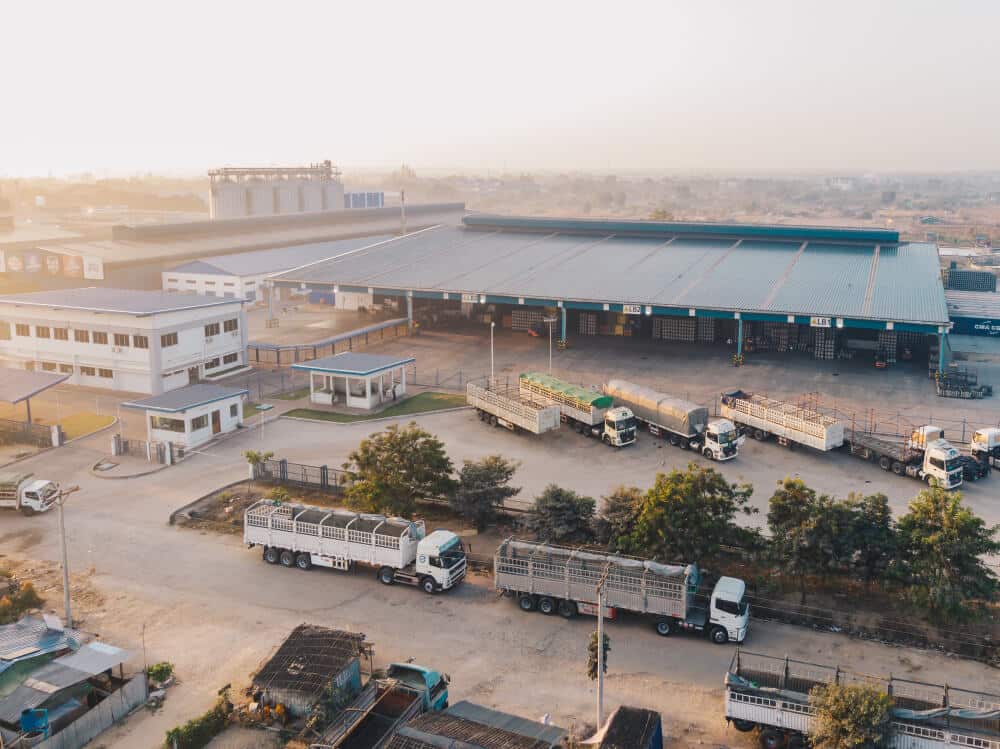
Routing efficiency measures how well a delivery network utilizes available resources—vehicles, time, fuel, and labor—to complete deliveries accurately, quickly, and with minimal waste. It goes beyond generating a route from point A to B. The focus is on how each decision, from stop sequencing to fleet allocation, reduces excess mileage, idle time, and delivery overlap.
For example, a 10-stop delivery route that clusters addresses by zip code and customer availability will outperform one that simply follows the shortest-distance logic. Efficient routing sequences deliveries based on delivery windows, driver shifts, vehicle load capacity, and local conditions. In urban logistics or high-density fulfillment zones, this level of precision determines whether you hit your SLA or miss the time slot altogether.
Modern routing systems improve efficiency by adjusting to real-time disruptions—traffic congestion, weather delays, or last-minute order changes. Instead of static routing logic, they use rules-based orchestration to meet performance targets while minimizing resource drain.
Efficient routing is a tactical upgrade—a strategic lever that improves service quality while keeping fulfillment costs scalable as volumes grow. To understand the foundational concept, explore what is route optimization and how it underpins operational routing decisions.
Related read: What is Route Scheduling
Routing Efficiency vs. Route Optimization: What’s the Difference?
These terms are frequently used interchangeably, but they address different operational layers:
| Dimension | Routing Efficiency | Route Optimization |
| Focus | How well resources are utilized across the delivery network | Finding the mathematically best path between stops |
| Scope | End-to-end: fleet allocation, driver scheduling, load balancing, SLA compliance | Primarily path sequencing and distance minimization |
| Inputs | Live traffic, driver hours, vehicle constraints, customer windows, SLA rules, backhauls | Distance matrices, stop locations, basic time windows |
| Outcome Measured | Cost per delivery, first-attempt rate, vehicle utilization, route adherence | Total distance, total travel time |
| Adaptability | Dynamic—adjusts mid-execution to real-time conditions | Often static once the route is generated |
Route optimization is one component of routing efficiency. You can optimize a route’s path perfectly and still operate inefficiently if the wrong vehicle was assigned, the driver exceeded shift hours, or the load was only 40% utilized. Routing efficiency wraps optimization inside a broader operational framework—aligning every variable that affects delivery cost and quality.Understanding why your business needs route optimization is the starting point; routing efficiency is where lasting, scalable gains materialize.
Importance of Route Efficiency for 2026 Enterprises
Tight margins in 2026 stem from compressed delivery windows, volatile fuel prices, and rising labor costs. By optimizing resource use, routing efficiency allows teams to increase throughput without scaling fleets or workforce. The data underscores the urgency: only 24% of shippers currently optimize routes and consolidate shipments, leaving the majority exposed to preventable cost leakage.
- Driver availability is uneven and unpredictable: In regions like Southeast Asia and North America, limited driver pools mean every hour on the road must yield maximum deliveries. Low route density leads to overtime costs and underutilized shifts.
- Fuel expenses fluctuate week to week: Logistics teams face constant pressure to reduce variable costs. Routes that avoid congestion zones and sequence stops by delivery priority reduce fuel spend without sacrificing throughput. Poor routing alone can inflate fuel costs by 10–30%.
- Urban access is tightly regulated: Municipalities across Europe are enforcing congestion charges, emissions thresholds, and delivery curfews. Inefficient routing not only delays orders but may trigger fines and access restrictions.
- Customer time windows define delivery success: Enterprises must honor narrow delivery slots across high-volume zones. Poorly sequenced routes increase the risk of missed appointments, reverse logistics, and poor CSAT scores.
- Volume growth strains static routing models: As e-commerce and omnichannel retail push up daily order volumes, outdated routing methods struggle to scale. 72% of businesses still plan routes manually or with basic tools—a gap that widens as demand volatility increases.
- SLA compliance is now operations-critical: Modern routing systems must reflect constraints like shift timing, fleet mix, and node availability to maintain SLA adherence without inflating resource use.
SLA parameters, traffic congestion, and vehicle availability rarely remain static. Locus accounts for these variables in real time, revising dispatch logic mid-route to reflect on-ground conditions. Unlike generic optimization tools that follow pre-set plans, its orchestration layer adapts continuously, ensuring delivery accuracy and efficient resource deployment even as demand patterns shift or constraints evolve.
Key Factors That Influence Routing Efficiency
Routing efficiency depends on how effectively a system models and responds to realistic, dynamic delivery constraints. Treating these variables as static inputs limits performance; treating them as live parameters enhances throughput and cost control.
- Order density and distribution patterns
Sparse dispatch zones inflate mileage and idle time. By segmenting regions based on geo-density, Locus enables clustered routing that improves stop density and maximizes load utilization. - Delivery time windows and SLA commitments
As time-definite deliveries proliferate, sequence optimization becomes essential. Locus embeds SLA compliance into planning logic, mapping routes to specific cutoff windows and prioritizing stops accordingly. - Vehicle capacity, types, and regulatory constraints
Efficient routing must consider restrictions like axle loads, compartment types, refrigeration capabilities, and local road regulations. According to the Route Constraints Handbook, Locus applies over 250 real-world constraints, from vehicle dimensions to emissions zone compliance, directly within its routing logic. - Driver daily limits and shift timings
Hours-of-service rules and shift overlaps require precise planning. Locus models driver availability and legal limits to ensure optimal route assignments that avoid overtime and inefficient handoffs. - Real-time traffic, road conditions, and restricted zones
Congestion, closures, and compliance restrictions vary by time and location. Locus ingests live traffic feeds and routing constraints to re-optimize mid-route, preventing delays and avoiding restricted areas. - Proximity of depots or dark stores
Long node-to-drop distances escalate last-mile costs. Locus incorporates fulfillment node location into route algorithms to reduce travel time and enhance operational agility. - Backhauls and reverse logistics
Many routes neglect return pickups, causing unnecessary empty trips. Locus plans return flows alongside deliveries, improving capacity use and minimizing wasted mileage.
Industry Spotlights: How Routing Factors Differ by Sector
Retail: High-frequency, multi-drop routes benefit from dynamic clustering to maximize vehicle fill rates and on-time delivery. Store replenishment cycles demand precise time-window alignment across hundreds of stops.
E-commerce: Volatile daily volumes and narrow delivery windows make automated, SLA-driven routing essential for cost control. Peak-season surges can double order volumes overnight, breaking any static plan.
3PL: Servicing multiple clients with different SLAs requires constraint-based orchestration to avoid missed commitments and excess mileage. Multi-client load consolidation adds a layer of complexity that manual routing cannot handle.
Field Service: Appointment-based scheduling across dispersed territories demands route sequencing that accounts for service duration, technician skills, and parts availability—not just travel distance.Explore how route optimization benefits differ across these business segments.
Drawing on these layered constraints, many sourced from the handbook, Locus orchestrates routes that reflect real-world complexity, creating efficient delivery systems that scale across regions, fleet types, and demand patterns.
Download the complete handbook here.
How Inefficient Routing Impacts Your Business
Routing inefficiencies manifest in tangible operational and financial setbacks, especially as delivery volumes scale and service expectations tighten.
- Escalating fuel and mileage costs
When stops are poorly sequenced or spread across non-contiguous zones, vehicles travel longer routes with lower productivity. Over a week, this translates into inflated fuel expenses and higher wear on fleet assets. - Rising labor overheads
Suboptimal routing often extends driver shifts beyond scheduled hours. Enterprises absorb the cost through overtime payments and reduced scheduling flexibility, particularly when dispatches spill over into the next cycle. - Low vehicle utilization
Routes that ignore capacity thresholds or territory logic result in underloaded vehicles and idle assets. Businesses incur maintenance and depreciation costs without maximizing output per route. - Failed deliveries and recovery overheads
Inaccurate ETAs, missed time slots, or routing through high-congestion zones lead to failed first attempts. Each miss requires manual rescheduling, additional miles, and escalated support volume. - Customer dissatisfaction and attrition
In segments like quick commerce, appliance delivery, or pharma restocking, consistent delays damage the brand experience. Customers often attribute delivery failure to the retailer, not the logistics partner. - Increased exception handling workload
Without routing that adapts to live conditions, delays and service disruptions become more frequent. Dispatchers spend more time reacting to breakdowns in execution instead of managing performance.
Enterprises often address these symptoms reactively, adding capacity or extending hours, without correcting the underlying planning logic. The cumulative cost of these inefficiencies is substantial, particularly in high-density or SLA-driven operations.
The Compounding Cost of Inaction
Enterprises often address these symptoms reactively—adding capacity or extending hours—without correcting the underlying planning logic. The cumulative cost is substantial: organizations that implemented route optimization saved 6,200 hours annually in FY 2025, with an additional 3,800 hours saved in FY 2026 through continued route reductions. Failing to act means absorbing costs that compound with every dispatch cycle.
How to Measure Routing Efficiency

Evaluating routing efficiency requires a multi-metric approach that connects resource use with delivery outcomes. Each metric offers insight into a specific layer of performance—route design, execution, or fulfillment quality. In 2026, high-performing logistics teams monitor these KPIs in real time rather than reviewing them retrospectively.
Cost per Delivery
Calculate the sum of fuel, labor, and asset costs against the number of successful deliveries. Rising costs often trace back to inefficient stop sequencing, long-haul routing, or underutilized driver hours.
Formula: Cost per Delivery = Total Operational Costs ÷ Number of Successful Deliveries
Distance per Order
Divide total route distance by the number of completed deliveries. A high ratio typically reflects fragmented zones, poor territory mapping, or insufficient order consolidation.
Formula: Distance per Order = Total Distance Traveled ÷ Number of Orders Delivered
First-Attempt Delivery Rate
Measure the percentage of deliveries completed on the first attempt. Failures usually stem from misaligned ETAs, missed time windows, or routing that fails to account for customer availability.
Formula: First-Attempt Delivery Rate = (First-Attempt Deliveries ÷ Total Deliveries) × 100
Vehicle Utilization Rate
Assess actual volume or weight carried per trip relative to vehicle capacity. Low utilization indicates planning gaps, such as assigning large vehicles to sparse zones or skipping load optimization.
Formula: Vehicle Utilization Rate = (Actual Load Carried ÷ Vehicle Capacity) × 100
Route Adherence Rate
Track variance between planned and actual route sequences. Deviations highlight issues in planning logic, external disruptions, or frequent mid-route adjustments that erode efficiency.
Formula: Route Adherence Rate = (Planned Stops Followed ÷ Total Planned Stops) × 100
On-Time Delivery (OTD) Performance
Record the share of deliveries made within the committed time slot. OTD is especially critical in SLA-driven operations where delivery precision is a contractual requirement.
Formula: On-Time Delivery Rate = (On-Time Deliveries ÷ Total Deliveries) × 100
Empty Mile Reduction
Track the percentage of total miles driven without cargo. High empty-mile ratios signal poor backhaul planning and missed consolidation opportunities. Reducing empty miles directly improves fuel efficiency and asset productivity.
Formula: Empty Mile Rate = (Miles Without Cargo ÷ Total Miles Driven) × 100Locus connects these indicators through its logistics analytics platform, linking routing inputs with execution outcomes to help teams benchmark efficiency at the route, region, or network level.
6 Best Practices to Improve Routing Efficiency
Routing performance improves when operational variables, both fixed and dynamic, are embedded directly into the planning layer. The following practices help logistics teams build resilient, resource-efficient routes that adapt to real-world constraints:
- Apply dynamic routing instead of static templates
Predefined plans quickly lose relevance when faced with traffic congestion, reroutes, or last-minute order additions. Dynamic routing engines evaluate live inputs to recalibrate paths during execution, maintaining delivery accuracy without manual intervention. - Segment routes by geography, delivery priority, and service levels
Assigning mixed-SLA orders to the same vehicle creates sequencing conflicts and missed time windows. Grouping orders by customer type, location, and delivery cutoff enables more predictable fulfillment and cleaner dispatch logic. - Plan around vehicle capabilities and regulatory limits
Route design must account for truck size restrictions, refrigeration requirements, weight constraints, and local compliance rules. Failing to integrate these elements often leads to reassignments, delivery delays, or underused fleet assets. - Align dispatch plans with driver schedules and HOS restrictions
Routes built without reference to shift timing, break periods, or legal drive-time caps often exceed planned durations. Incorporating labor availability into the routing model improves route completion rates and prevents overtime exposure. - Build automated response layers for common disruptions
Road closures, no-entry zones, and failed delivery attempts are daily occurrences in high-density logistics. Automating rerouting through rule-based triggers reduces dispatcher workload and maintains service reliability. - Use performance data to adjust routing logic continuously
Analyzing metrics like cost per delivery, route deviation rate, or failed delivery causes provides a feedback loop for refinement. Planning teams can shift from reactive corrections to data-driven iterations.
When these practices are supported by a routing platform that embeds them into execution, logistics teams gain more than efficiency, they gain control. Systems like Locus unify these strategies into an adaptive routing engine that improves delivery consistency, lowers operating costs, and scales effectively across regions and constraints.
Benefits of Routing Efficiency
Routing efficiency delivers measurable improvements across every layer of delivery operations. These benefits compound as fleet size and order volume grow:
| Benefit | Operational Impact | Quantified Range |
| Fuel cost reduction | Optimized paths and congestion avoidance cut per-mile fuel spend | Up to 20% reduction |
| Higher first-attempt delivery rates | SLA-aligned sequencing and accurate ETAs reduce failed drops | 10–25% improvement |
| Increased vehicle utilization | Load-aware planning ensures each vehicle operates near capacity | 15–30% utilization gain |
| Lower labor costs | Routes aligned to shift windows eliminate overtime and idle hours | 25–75% admin time savings |
| Reduced carbon emissions | Fewer miles and less idling directly lower fleet CO? output | 5–25% emissions cut |
| Improved SLA compliance | Constraint-based dispatch meets contractual time windows consistently | Measurable OTD uplift |
| Scalability without fleet expansion | Efficient routing absorbs volume increases within existing capacity | Handles peak surges dynamically |
These benefits are not theoretical. They are documented across route optimization benefits studies spanning retail, e-commerce, 3PL, and field service operations.
Key Features That Drive Routing Efficiency
When evaluating routing efficiency platforms, the following capabilities separate enterprise-grade solutions from basic tools:
- Constraint-based optimization engine: Handles 250+ variables including vehicle type, load compartments, access restrictions, and emissions zone compliance simultaneously.
- Real-time rerouting: Ingests live traffic, weather, and incident data to adjust active routes without dispatcher intervention.
- SLA-prioritized dispatch: Sequences stops based on contractual delivery windows, customer priority tiers, and service-level commitments.
- Driver-aware scheduling: Models shift availability, legal driving limits, break requirements, and regional labor regulations into every route plan.
- Automated exception handling: Applies predefined logic to reschedule or reassign failed deliveries based on proximity, fleet availability, and order urgency.
- Reverse logistics integration: Plans return pickups and backhauls alongside outbound deliveries, eliminating empty-mile waste.
- Analytics-driven feedback loops: Surfaces performance data—missed SLAs, fuel consumption, route deviations—to continuously refine routing logic.
- Multi-depot and dark store support: Calculates optimal fulfillment origin for each order, reducing stem distance and improving delivery speed.
These features collectively transform routing from a one-time planning event into a continuous, self-improving operational system. For guidance on evaluating these capabilities, explore how to find the right route optimization software for your operations.
How Locus Helps Maximize Routing Efficiency

Locus improves routing efficiency by operationalizing delivery constraints, across regions, fleet types, and service levels, within a centralized, automation-ready platform. Each route is shaped not by static templates but by a dynamic set of business rules, live conditions, and fulfillment priorities.
- Constraint-based routing logic
The platform incorporates over 250 delivery variables, including vehicle load types, zone restrictions, customer SLAs, and time-based access controls. Route plans reflect the full context of each order and territory, reducing the need for mid-shift intervention. - Real-time rerouting tied to traffic and exceptions
Live traffic feeds, road closures, and unexpected events trigger automated recalculations. Updated route instructions are dispatched directly to drivers, ensuring minimal disruption to delivery windows and adherence targets. - Driver-aware planning models
Locus integrates workforce data such as shift availability, legal driving limits, and regional labor regulations. Routes are aligned to driver coverage without exceeding thresholds or creating idle time. - SLA-prioritized dispatch sequencing

Orders with narrow delivery windows are positioned at the top of the route stack. Locus adjusts stop order and territory coverage to prioritize time-sensitive commitments without overloading the fleet.
- Automated exception workflows

When a delivery fails, the system applies predefined logic to reschedule or reassign based on proximity, fleet availability, and order urgency. This eliminates manual back-and-forth between operations and drivers.
- Feedback-driven routing refinement

Through its logistics analytics dashboard, Locus surfaces performance data, missed SLAs, fuel consumption, unutilized capacity, allowing planners to adjust routing logic with precision.
By embedding these capabilities into core operations, Locus enables logistics teams to scale efficiently, maintain compliance, and consistently meet delivery targets without compromising asset productivity.
Real-World Applications of Efficient Routing
Enterprises across sectors are using efficient routing not just to improve performance, but to adapt their operations to service constraints, asset limitations, and demand variability. Below are specific implementations that illustrate how routing efficiency drives measurable outcomes:
- Bukalapak (E-commerce, Southeast Asia)
With deliveries spanning major metro areas and second-tier cities, Bukalapak relied on adaptive routing to consolidate multi-stop orders within tight fulfillment windows. The platform sequenced drops based on zone density, traffic, and rider capacity, reducing distance per order and holding labor costs flat despite volume growth. - Dezy (At-home dental services, India)
Dezy’s model required appointment alignment down to the hour. Routes were structured to factor in patient location, preferred time slots, and local congestion patterns. As a result, technician idle time dropped and first-visit success rates increased across Bangalore and other metro hubs. - Kirloskar (Heavy engineering and manufacturing, India)
Kirloskar’s deliveries involved oversized shipments with loading and transit constraints. Routing logic had to accommodate specific axle loads, permitted travel windows, and multi-node coordination. Efficient route sequencing shortened delivery cycles between manufacturing units and customer sites, improving asset turnover.
Each of these implementations demonstrates how routing efficiency becomes a core execution layer, not just a back-end optimization step. When route design reflects the operational realities of volume, timing, and geography, logistics leaders can scale fulfillment without increasing fleet footprint or compromising delivery precision.
Related read: Route Optimization for Third-Party Logistics Operators
Why Choose Locus for Routing Efficiency
Locus is the leading enterprise logistics platform trusted by 360+ global brands to optimize delivery operations with real-time AI and constraint-based routing. Here is why logistics leaders choose Locus to operationalize routing efficiency:
- Enterprise-proven at scale: From 300-order-per-day retail fleets to multi-country 3PL networks, Locus processes millions of routing decisions daily across diverse operational environments.
- 250+ real-world constraints modeled natively: No workarounds. Vehicle types, regulatory limits, driver hours, customer preferences, and zone restrictions are embedded into every route calculation.
- Continuous optimization, not one-time planning: Locus treats routing as a live decision loop—adapting to traffic, exceptions, and demand shifts in real time rather than generating static plans.
- Measurable ROI from day one: Clients consistently report fuel savings up to 20%, significant improvements in first-attempt delivery rates, and reduced dispatcher workload through automation.
- Backed by Ingka Group: Locus operates independently within the Ingka Group ecosystem, combining startup agility with the operational backing of one of the world’s largest retail conglomerates. Read the full story.
- Industry-agnostic, constraint-specific: Whether you operate in retail, e-commerce, 3PL, field service, or manufacturing, Locus adapts its routing logic to your unique constraint profile—not the other way around.
Conclusion
Enterprises operating in high-density, time-sensitive logistics environments cannot rely on static route plans or manual adjustments. Routing must evolve as a dynamic function, one that incorporates business rules, live inputs, and fulfillment constraints into every planning decision.

Locus supports this operational shift by aligning route design with variables such as shift availability, SLA windows, vehicle limitations, and traffic conditions. By treating routing as a continuous decision-making process, not a fixed output, logistics teams can maintain delivery accuracy, optimize asset use, and improve cost efficiency across regions and delivery models.
Schedule a demo to see how Locus enables logistics teams to scale routing efficiency without expanding fleet size or labor hours.
Frequently Asked Questions (FAQs)
What is routing efficiency?
Routing efficiency measures how effectively a delivery network uses resources—vehicles, fuel, time, and labor—to minimize distance, idle time, and delivery failures while meeting operational constraints. It directly impacts cost per delivery, on-time rates, and fleet utilization. Unlike basic route optimization, which focuses on path sequencing, routing efficiency encompasses the full operational framework: fleet allocation, driver scheduling, load balancing, SLA compliance, and real-time adaptability.
How does routing efficiency reduce costs?
Efficient routing cuts fuel consumption by up to 20% through optimized paths and congestion avoidance, reduces overtime by fitting more deliveries into standard shift hours, and lowers admin overhead by 25–75% through automation. It also minimizes failed delivery costs by improving first-attempt success rates and eliminates wasted mileage from poor backhaul planning.
What metrics should I track to measure routing efficiency?
Core KPIs include: cost per delivery (total operational costs ÷ successful deliveries), first-attempt delivery rate, vehicle utilization rate (actual load ÷ capacity), route adherence rate (planned stops followed ÷ total planned), on-time delivery performance, distance per order, and empty mile rate. Monitoring these metrics weekly—or daily in high-volume operations—provides the feedback loop needed for continuous improvement.
What causes sudden drops in routing efficiency?
Unexpected factors like bulk cancellations, unplanned returns, driver absenteeism, or inaccurate order clustering can disrupt route logic and inflate cost per delivery. External disruptions—road closures, weather events, or regulatory changes—compound the effect when routing systems lack real-time adaptability.
How often should routing performance be reviewed?
Weekly reviews help catch trends early, but high-volume operations benefit from daily monitoring tied to real-time dashboards and post-shift analysis. The most effective teams run continuous analytics loops, using platforms like Locus to surface deviations and adjust routing logic before inefficiencies compound.
Can inefficient routing affect compliance audits?
Yes. Missed SLAs, overtime violations, or non-compliant routes through restricted zones can trigger penalties or audit flags—especially in regulated industries like pharma, food logistics, and hazmat transport. Constraint-based routing systems that model regulatory limits natively help prevent compliance exposure.
How do returns influence routing efficiency?
Unplanned reverse logistics increase idle miles and distort route sequencing. Efficient routing incorporates scheduled pickups and return flows into outbound planning. Planning backhauls alongside deliveries reduces empty-mile waste and improves overall capacity utilization per trip.
What role does address accuracy play in routing efficiency?
Incorrect or imprecise addresses lead to failed delivery attempts, mid-route rerouting, and customer dissatisfaction. Address verification tools are essential to maintaining high first-attempt delivery rates and preventing the cascading costs of redelivery.
How does AI enhance routing efficiency?
AI-driven routing systems learn from historical delivery outcomes to predict traffic patterns, optimize stop sequencing, and dynamically adjust routes for real-time disruptions. These systems can improve ETA accuracy by up to 40% and scale constraint handling across thousands of daily orders without manual intervention.
What is the difference between routing efficiency and route optimization?
Route optimization focuses on finding the best path between stops—minimizing distance or travel time. Routing efficiency is broader: it encompasses vehicle assignment, driver scheduling, load balancing, SLA compliance, backhaul planning, and real-time adaptability. Route optimization is one input to routing efficiency; achieving full efficiency requires optimizing across all operational variables simultaneously.


General
Courier Routes: Strategies to Maximize Speed, Coverage & Profitability

Jul 28, 2025
Learn what is a courier route? Its importance in 2025, key strategies to optimize courier routes and key aspects to look for in courier route planning software
Read more
General
HGV Route Planners: Everything You Need to Know in 2025
Jul 28, 2025
Explore what an HGV route planner is, why it matters in 2025, key features, tools, and how Locus improves heavy vehicle routing and how to choose the right tool
Read moreInsights Worth Your Time




















What Is Routing Efficiency? A Guide to Smarter, Leaner Logistics – Locus