


General
Fleet Routing & Tracking: A 2026 Guide To Improve Efficiency
TL;DR: This guide covers how enterprise logistics teams use AI-driven fleet routing and tracking to cut fuel costs by 10–30%, boost vehicle utilization to 97–98%, and stay competitive in 2026. Whether you manage retail, CPG, 3PL, or manufacturing fleets of 50+ vehicles, you will find actionable strategies, real-world examples, and platform-specific capabilities. Jump to FAQs ?
Who is this guide for? Logistics directors, fleet operations managers, supply chain VPs, and dispatch leads at enterprises running complex delivery networks. If you oversee owned, outsourced, or hybrid fleets and need to reduce cost per delivery while meeting tighter SLAs, this guide is built for you.
If you lead logistics or operations for a complex fleet, you know how challenging it is to manage unpredictable constraints and maintain visibility as your network grows. Managing fleet movement without the right tools is like trying to direct airport traffic with a walkie-talkie and a paper map. A few flights might land on time, but delays and miscommunication become inevitable at scale.
Fleet routing optimizes vehicle paths using algorithms, GPS, and operational data to cut fuel consumption, travel time, and delivery delays by 10–30%. Fleet tracking monitors vehicle movement in real time to support oversight, accountability, and timely interventions.
This guide is for logistics leaders in retail, CPG, 3PL, and manufacturing who manage fleets of 50+ vehicles. You will learn how routing and tracking work together, why they matter more in 2026, and how AI-led tools like Locus help you improve delivery performance, reduce costs, and manage complexity with less manual effort.
Key Takeaways
- Fleet routing assigns optimal vehicle paths using constraints such as time windows, load capacity, and geography, reducing empty miles, fuel waste, and delivery delays.
- Real-time fleet tracking provides GPS visibility into vehicle location, route progress, and operational exceptions, enabling live ETA updates, compliance monitoring, and mid-route corrections.
- AI-powered dynamic routing can reduce mileage by 20–30% while achieving 97–98% vehicle utilization, eliminating manual planning bottlenecks and maximizing fleet capacity.
- Geographic clustering improves route density and can save approximately 2% in annual fuel costs per fleet by reducing unnecessary crisscrossing routes.
- Commercial vehicles are active only around 186 days per year on average, revealing a major opportunity for utilization gains through smarter routing and scheduling.
- Integrated routing and tracking platforms outperform disconnected point solutions by creating unified planning-to-execution visibility across hybrid fleets.
Why Locus?
- AI-powered optimization handling 250+ real-world constraints per route
- Real-time visibility across owned and outsourced fleets on a single dashboard
- Unified platform for planning, dispatch, execution, and analytics — no manual workarounds
- Trusted by 360+ global enterprises across retail, CPG, 3PL, and manufacturing
- Unlike legacy TMS or point solutions, Locus delivers real-time, AI-powered orchestration and analytics in one system
What Is Fleet Routing and Fleet Tracking?
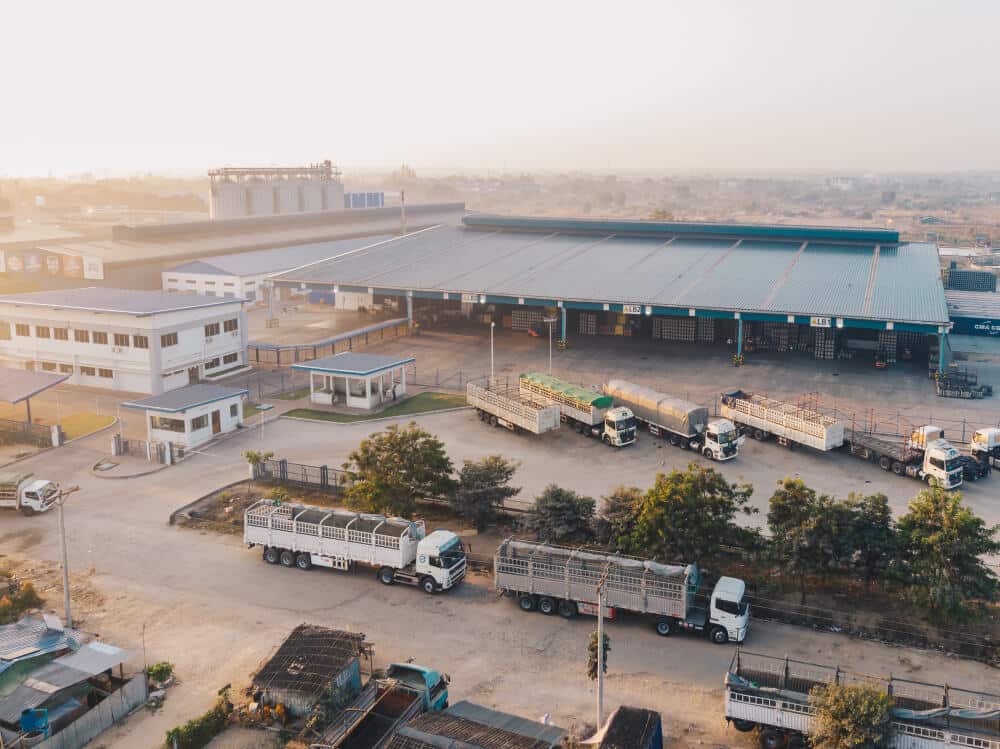
Fleet routing is the process of determining the most efficient path for your vehicles when making deliveries or pickups. It considers constraints like delivery time windows, traffic conditions, vehicle load capacity, and driver availability. The goal is to reduce distance traveled, fuel usage, and delivery delays without compromising service quality. If you want a deeper understanding of the fundamentals, explore what is route optimization.
Fleet tracking refers to the continuous monitoring of vehicles using GPS, telematics, and IoT sensors. It enables you to view a vehicle’s real-time location, route progress, and driver behavior from a central dashboard. This visibility supports on-the-fly rerouting, customer updates, and compliance monitoring.
Though distinct, routing and tracking work best when integrated. Routing sets the plan; tracking keeps it on course. For example, a regional distributor might use AI to create optimal delivery routes each morning, then rely on fleet tracking to detect delays or deviations and send alternate instructions to drivers mid-route.
Together, they provide the foundation for agile, accountable fleet operations — especially in complex networks with high order volumes, diverse delivery locations, and mixed fleet ownership.
Suggested read: Why Fleet Management is Important
Why Fleet Routing and Tracking Matter in 2026
Modern logistics teams manage more complexity than ever: larger delivery zones, hybrid fleets, variable order volumes, and customer-specific SLAs. In 2026, fleet management is further driven by rising operating costs, tighter delivery timelines, and increasing regulatory requirements. Each of these factors affects how quickly and cost-effectively your deliveries are executed. Static route plans and delayed visibility make it harder to respond in real time or allocate resources efficiently.
Fleet routing enables you to match each vehicle with a specific set of deliveries, sequenced to minimize travel time, account for load constraints, and meet customer delivery windows. Consider this: commercial assets are active for an average of only 186 days per year. Smarter routing directly increases the productive value of every active day. A large-format electronics retailer, for example, reduced overtime costs by routing high-volume, low-SKU orders to smaller vehicles operating in compressed delivery zones — improving both cost-per-delivery and vehicle turnaround time.
Fleet tracking allows continuous visibility into each vehicle’s location, route progress, and dwell time. Your operations team can monitor exceptions — such as delays or deviations — and adjust routes or notify customers without relying on driver calls or manual check-ins. A CPG distributor using real-time tracking reported a 23% drop in failed delivery attempts after integrating live ETA updates into its customer communications.
Routing and tracking, when combined, produce measurable operational benefits:
- Lower fuel usage by reducing empty miles and reassigning underutilized assets — route optimization can deliver 10–15% efficiency gains
- Higher route adherence and first-attempt delivery rates
- Fewer customer support escalations due to improved ETA accuracy
- Better shift alignment through automated route-to-driver assignment
- Faster reconciliation of proof-of-delivery and trip-level exceptions
- Sustainability gains: decisions about vehicle usage, route design, and delivery sequencing are now shaped by fuel-efficiency and emissions considerations
These improvements help you optimize fleet capacity, reduce cost per order, and ensure consistent service across regions. To understand why your business needs route optimization, consider how fragmented systems create blind spots that compound at scale.
Key Components of Fleet Routing Optimization
Routing optimization is not a one-time process or a static map — it is a system that must account for operational rules, delivery constraints, and real-world disruptions. These components determine whether your routing plan can be executed efficiently across dynamic conditions.
1. Order Clustering by Geography and Time Constraints
Order clustering groups deliveries based on location, customer type, and service time requirements. It forms the foundation of efficient fleet routing by limiting travel spread and ensuring deliveries occur within preferred windows. How much of your fleet’s mileage is wasted on crisscrossing routes? Geographic clustering can save approximately 2% on annual fuel costs per fleet while boosting stops per shift.
Example: A fashion retailer with multiple metro storefronts creates route clusters that align with store opening hours and inventory drop-off time slots.
2. Real-Time Route Generation Based on Live Conditions
Instead of relying on pre-set paths, dynamic route planning recalculates routes in real time using traffic data, vehicle load status, weather updates, and shift schedules. This reduces delays from bottlenecks and improves resource use across vehicles.
Example: A beverage distributor reroutes morning deliveries when heavy rainfall disrupts a regional highway, preserving delivery sequence and schedule adherence.
3. Stop Sequencing with Operational Rules
Sequencing determines the order in which stops are completed to reduce overall drive time, accommodate vehicle unloading restrictions, and meet SLAs. Well-sequenced routes support better fuel use and smoother handoffs at delivery points.
Example: A CPG brand prioritizes stops at large-format stores before noon due to unloading dock constraints and schedules smaller outlets for later slots.
4. Multi-Constraint Handling for Route Feasibility
Optimization logic integrates constraints such as maximum route duration, driver break regulations, vehicle specifications (e.g., refrigeration), and customer-specific rules. This ensures that your routing plans are not only efficient but also executable on the ground. In 2026, fleets are increasing adoption of telematics, route optimization, digital freight-matching, and AI-powered dispatch and planning tools to handle this complexity at scale.
Example: Perishable goods are auto-assigned to refrigerated trucks operated by drivers with cold-chain handling certification, avoiding regulatory issues and spoilage.
5. Continuous Feedback from Execution to Planning
Routing systems gain accuracy over time by analyzing trip-level stop delays, rerouting frequency, detour usage, and actual vs. planned metrics. These insights refine future plans and highlight areas for process improvement.
Example: A national courier flags consistent delays on a suburban route and revises its routing logic to bypass a recurring construction zone.
Locus Capabilities That Support These Components
- DispatchIQ generates routes by factoring in promised delivery times, order constraints, and vehicle availability.
- Delivery Orchestration integrates route plans with driver schedules, customer preferences, and real-time operational inputs.
What Is Fleet Tracking Used For?
Fleet tracking systems give your operations team live access to vehicle movement, stop completion status, and route-level exceptions. They create a direct connection between what is planned and what is actually happening on the ground. Are you still relying on driver phone calls to detect delays? For large-scale logistics operations, fleet tracking supports coordination, accountability, and delivery accuracy across both owned and outsourced fleets.
1. Monitoring Real-Time Location and Route Progress
Operations managers use live dashboards to track vehicle locations, route progression, and delivery status. This enables timely interventions when vehicles fall behind schedule or veer off course.
Example: A retail chain monitors its fleet’s position across zones and identifies one vehicle running 35 minutes behind. The team adjusts the downstream sequence for nearby vehicles to absorb the delay.
2. Flagging Delays and Route Deviations Automatically
Automated alerts are triggered when a vehicle exceeds planned dwell time, idles beyond thresholds, or exits the assigned route. These alerts help dispatchers respond before delays affect customer SLAs.
Example: A food distributor receives a route deviation alert after a driver exits the delivery zone early. The operations team contacts the driver and reroutes stops to avoid compliance issues.
3. Providing Live ETAs to Customers and Delivery Points
Tracking platforms calculate delivery ETAs using real-time vehicle speed, traffic data, and stop durations. These dynamic ETAs are shared with customers to improve availability and reduce missed handovers.
Example: An e-commerce platform with high daily order volumes uses real-time tracking to update customers 30 minutes before delivery, increasing first-attempt success rates.
4. Capturing Driver Activity and Vehicle Utilization Data
Fleet tracking tools record engine status, start-stop time, route completion speed, and idle durations. This information helps you assess driver performance and vehicle efficiency. In 2026, predictive maintenance using sensor data is identified as one of the biggest payoffs for fleet profitability, making utilization data even more valuable.
Example: A courier company reviews trip data across regions and finds excessive idle time among third-party drivers in one zone. It adjusts shift planning and provides specific coaching.
5. Supporting Proof of Delivery and Incident Records
Mobile apps integrated with tracking systems capture electronic proof of delivery (ePOD), delivery time stamps, customer signatures, and issue photos. This creates a verifiable record for customer service, billing, and compliance.
Example: A medical supplier mandates photo-based proof of delivery for temperature-sensitive shipments, which are automatically uploaded and stored within the trip report.
Fleet tracking serves as the execution layer for modern logistics operations, giving your team the information required to manage exceptions, support drivers, and uphold delivery standards.
Learn more: Track and Trace by Locus
Types of Routing Strategies Used in Fleet Management
Routing strategies define how deliveries are structured, sequenced, and assigned across your logistics network. The chosen strategy impacts cost control, driver productivity, and your ability to manage operational variability. Which approach fits your fleet?
Routing Strategy Comparison Table
| Strategy | How It Works | Best For | Key Limitation | Potential Savings |
|---|---|---|---|---|
| Static Routing | Uses pre-defined delivery routes scheduled weekly or monthly with fixed planning logic. | Stable operations with predictable delivery locations and frequencies. | Cannot adapt effectively to traffic, disruptions, or last-minute orders. | Minimal savings focused on operational stability. |
| Dynamic Routing | Routes are generated continuously using live traffic, order, and operational data. | High-velocity and variable-volume delivery environments. | Requires strong real-time data infrastructure and integrations. | 20–30% reduction in mileage and fuel costs. |
| Hybrid Routing | Combines fixed routes for anchor customers with dynamic routing for overflow demand. | Enterprises balancing committed customers with flexible delivery demand. | More complex to configure and operationally manage. | Balances operational efficiency with routing flexibility. |
1. Static Routing
Static routing involves pre-defined delivery routes that remain the same across days or weeks. These routes are typically created manually and optimized once during a setup phase.
- Use case: Ideal for businesses delivering to a consistent set of locations with fixed service frequency.
- Operational behavior: Drivers follow familiar routes, which simplifies planning and allows for fixed delivery schedules.
- Constraints: Cannot adapt to changes in traffic conditions, last-minute orders, or shifting delivery windows.
- Example: An office supplies wholesaler delivers to the same 120 business locations each Monday using a fixed set of regional loops.
2. Dynamic Routing
Dynamic routing uses algorithms to generate delivery routes each day based on updated order data, fleet capacity, time windows, and real-time constraints like traffic or driver availability.
- Use case: Suitable for high-velocity delivery models or operations with unpredictable order volumes.
- Operational behavior: Route plans change daily and prioritize speed, cost, and SLA compliance.
- Advantages: Adjusts to changes in real time, improves vehicle utilization, and can achieve 97–98% utilization rates with AI/ML-powered engines.
- Example: A last-mile grocery distributor builds hourly route plans based on customer slot selection, traffic data, and driver schedules.
3. Hybrid Routing
Hybrid routing combines the consistency of static models with the flexibility of dynamic optimization. A portion of the fleet follows fixed routes, while the remaining capacity is allocated using dynamic rules.
- Use case: Effective for enterprises serving both anchor clients and on-demand customers.
- Operational behavior: Fixed routes handle high-volume or time-sensitive B2B deliveries; dynamic routes absorb overflow or non-standard demand.
- Benefits: Balances efficiency and flexibility without requiring a full system overhaul.
- Example: A pharmaceutical distributor maintains static delivery routes for retail pharmacies and uses dynamic routing for ad-hoc hospital requests and same-day orders.
Routing strategies are not interchangeable — they must be chosen based on your service mix, network complexity, and delivery frequency. Enterprises with tiered customer commitments often adopt a hybrid model to optimize fixed operations while staying responsive to demand shifts. Learn more about the route optimization benefits to different business segments.
Learn more: Dispatch Planning Software by Locus
How to Choose Fleet Routing Software
Choosing fleet routing software is not only a feature comparison exercise. For enterprise logistics teams, the right platform must support operational complexity, regional variability, hybrid fleet models, and measurable business outcomes. Before shortlisting vendors, define the problems you need to solve: cost per delivery, route adherence, planning time, failed deliveries, vehicle utilisation, visibility gaps, or customer satisfaction score.
A practical evaluation should cover four dimensions:
- Operational fit: Can the software handle your order volumes, service windows, vehicle types, delivery rules, and region-specific constraints?
- Execution visibility: Does it connect planned routes with real-time GPS tracking, driver activity, proof of delivery, and exception management?
- Enterprise readiness: Does it support API integration, ERP integration, CRM integration, TMS integration, telematics, and governance requirements?
- Commercial impact: Can the vendor help you build a business case around fuel savings, mileage reduction, planning efficiency, delivery success, and customer experience?
For high-volume retail, FMCG, CPG, 3PL, and e-commerce networks, prioritise platforms that combine route planning, dispatch automation, tracking, and analytics in one workflow. Disconnected tools may solve a narrow routing issue, but they often create new handoff points between planning, drivers, customer service, and finance.
Fleet Routing Software Feature Comparison Checklist
| Evaluation Area | What to Look For | Why It Matters |
| Route optimization | Multi-constraint optimization, dynamic routing, stop sequencing, capacity matching, SLA-aware planning, and support for static, dynamic, and hybrid routing strategies. | Determines whether plans are cost-efficient and executable under real-world constraints. |
| GPS tracking | Live vehicle location, route progress, deviation alerts, dwell-time monitoring, idle visibility, and unified tracking for owned and outsourced fleets. | Helps operations teams detect exceptions early and protect delivery SLAs. |
| Dispatch automation | Automated order allocation, driver assignment, route publishing, shift alignment, and exception-led reassignment. | Reduces manual planning effort and improves speed during high-volume dispatch windows. |
| Proof of delivery | Electronic proof of delivery, signatures, images, timestamps, geotags, issue capture, and trip-level audit records. | Supports faster reconciliation, fewer customer disputes, and stronger compliance controls. |
| Analytics and reporting | Planned vs actual performance, route deviation, fuel and mileage indicators, driver productivity, utilisation, failed delivery trends, and customer satisfaction score tracking. | Turns routing data into continuous improvement opportunities. |
| Customer notifications | Live ETA updates, delivery status messages, missed-delivery alerts, and configurable customer communication flows. | Improves transparency and reduces inbound support escalations. |
| Appointment scheduling | Integration with dock appointments, store receiving windows, customer delivery slots, and site access rules. | Ensures routes respect real receiving constraints rather than only map distance. |
| Integration readiness | APIs, webhooks, ERP, CRM, TMS, telematics, accounting, maintenance, and appointment scheduling system connectivity. | Prevents routing from becoming another operational silo. |
| Scalability and governance | Multi-region configuration, role-based access, audit trails, standardised operating rules, and performance dashboards. | Enables consistent routing practices across markets, business units, and fleet types. |
How Locus Powers Smart Fleet Routing and Tracking
Locus offers an AI-driven, unified platform — built for complex, high-volume logistics operations. With support for 250+ real-world constraints and proven results at global scale, Locus helps you automate route planning, dispatch, real-time visibility, and performance analysis. Unlike legacy TMS or point solutions, Locus delivers real-time, AI-powered orchestration and analytics — no manual workarounds required.
1. DispatchIQ: Route Planning with Operational Constraints
DispatchIQ creates optimal delivery routes based on geography, load type, service windows, vehicle specifications, and shift timing. The system processes thousands of orders and selects the best route configuration without manual input.
In practice: A retail fleet serving multiple delivery zones uses DispatchIQ to generate routes that align with each zone’s delivery cut-off times, while also considering vehicle load capacity and driver assignments.
2. Automated Order Fulfillment: Intelligent Slotting and Assignment
The order fulfillment engine automatically groups, slots, and assigns orders to vehicles based on custom logic. It handles last-minute surges, capacity limits, and zone constraints without slowing down dispatch operations.
In practice: A CPG distributor receiving 5,000+ orders per day uses this engine to split high-priority orders across early-shift vehicles and assign the remaining to regional hubs based on service-level commitments.
3. Delivery Orchestration: End-to-End Execution Control
This module connects route plans with driver apps, customer preferences, geolocation data, and real-time updates from the field. It supports route resequencing, driver reassignment, and real-time handoff adjustments without disrupting overall fleet efficiency.
In practice: A furniture retailer reroutes one vehicle’s afternoon stops when a delivery location becomes temporarily inaccessible. The platform updates the route in the driver’s app and adjusts ETA notifications for remaining deliveries.
4. Track and Trace: Real-Time Location Intelligence
Locus enables central monitoring of all active trips, with dashboards that show current vehicle positions, delivery statuses, exception alerts, and idle time. Dispatchers use this data to reallocate orders or resolve on-ground issues immediately.
In practice: A courier company with mixed fleets uses Track and Trace to detect early signs of route delay, reroutes two nearby drivers, and keeps all time-sensitive orders on schedule.
5. Logistics Analytics & Insights: Route and Driver Performance Reporting
The analytics suite captures trip-level data such as delivery delays, fuel usage, driver compliance, and deviation frequency. These metrics inform operational improvements and help identify underperforming routes or processes.
In practice: A national 3PL compares planned versus actual stop times across metro and semi-urban regions, then uses this data to recalibrate its sequencing logic for better alignment with on-ground constraints.
By integrating route planning, execution, and monitoring within a single platform, Locus equips your team with the tools needed to handle scale, adapt to variability, and improve delivery outcomes. If you are evaluating solutions, learn how to choose the right route planning software for your fleet.
Explore tools: Dispatch Management Software, Delivery Orchestration, Track and Trace
Challenges in Fleet Routing and Tracking
1. Low Route Adaptability
Pre-planned routes often fail to adjust to real-time delays, cancellations, or access restrictions. Without dynamic updates, your vehicles waste time and fuel.
2. Fragmented Visibility
Separate systems for owned and outsourced fleets limit real-time monitoring. Dispatch teams struggle to manage handoffs or track delivery status accurately across providers.
3. Inconsistent ETA Accuracy
Static ETAs ignore traffic, dwell time, or rerouting events. Your customers receive outdated information, leading to missed deliveries and poor satisfaction scores.
4. Manual Dispatch Bottlenecks
Assigning routes and drivers manually slows down decision-making and increases the risk of capacity mismatches during high-volume periods.
5. Poor Data for Performance Reviews
Without standardized trip data, it is difficult to track delivery delays, vehicle idle time, or driver efficiency. Improvement efforts lack precision.
Related: Owned vs Outsourced Fleet
Cloud-Based Routing Tools vs Enterprise Telematics Platforms
Fleet technology buyers often compare cloud-based routing tools with enterprise telematics platforms, but they are designed around different starting points.
Cloud-based routing tools are typically planning-first. They focus on order grouping, route optimization, stop sequencing, dispatch workflows, and delivery performance. Their core value is improving how work is assigned before and during execution.
Enterprise telematics platforms are usually vehicle-data-first. They focus on GPS tracking, engine diagnostics, driver behaviour, vehicle health, fuel monitoring, and maintenance signals. Their core value is improving visibility into the asset and driver once the vehicle is on the road.
| Platform Type | Primary Focus | Common Strengths | Common Limitation |
| Cloud-based routing tools | Planning, sequencing, dispatch, delivery windows, and order-to-route assignment. | Faster planning, better route density, fewer manual dispatch decisions, and improved SLA control. | May need integrations with telematics or fleet systems for richer vehicle diagnostics. |
| Enterprise telematics platforms | Vehicle location, driver behaviour, engine data, asset health, and compliance visibility. | Strong vehicle monitoring, maintenance insights, and driver safety data. | May not solve complex order allocation, multi-constraint route optimization, or customer delivery workflows. |
| Integrated orchestration platforms | Planning, dispatch, tracking, execution, analytics, and exception management in one operating layer. | Connects routing decisions with live execution data across owned, outsourced, and hybrid fleets. | Requires structured implementation, process alignment, and integration planning to capture full value. |
For enterprise logistics teams, the strongest model is often not routing software or telematics in isolation. It is an orchestration layer that connects route planning, driver execution, tracking, customer communication, and performance analytics — while integrating with telematics where vehicle-level data is required.
Best Practices for Fleet Optimization in 2026
1. Segment Orders by Delivery Constraints
Group orders by time windows, service priority, and location to enable more efficient routing and reduce SLA breaches.
2. Match Routes to Driver Shifts
Build route plans that align with driver availability and break schedules to avoid overtime and route overruns.
3. Use AI for Daily Route Planning
Automate routing decisions using real-time traffic, load capacity, and fleet availability to reduce planning time and errors. In 2026, the US Logistics Growth Stability Index reached 1.3 — its highest figure since May 2025 — signaling that growing fleets need scalable, AI-driven planning more than ever.
4. Monitor Fleet Performance Regularly
Track metrics like stop duration, route deviation, and idle time to flag inefficiencies and support targeted interventions.
5. Enable Driver Apps for Execution Support
Equip drivers with mobile tools for navigation, delivery updates, and proof of delivery to streamline handoffs and reduce calls.
Driver App Usability and Adoption Considerations
A driver app only improves execution if drivers use it consistently. When evaluating fleet routing software, assess whether the mobile experience supports real operating conditions rather than only ideal workflows.
Prioritise:
- Simple task flows: Drivers should be able to view routes, start trips, complete stops, capture proof of delivery, and report issues with minimal clicks.
- Offline support: Delivery teams operating in basements, remote areas, industrial zones, or low-connectivity corridors need workflows that continue without uninterrupted network access.
- Proof of delivery capture: The app should support signatures, photos, geotags, timestamps, barcode scans, and exception notes where required.
- Multilingual user experience: Regional fleets, gig drivers, and 3PL partners may need local-language instructions to reduce training dependence and execution errors.
- Clear exception handling: Drivers should be able to report failed delivery reasons, access restrictions, customer unavailability, damaged goods, or route blockers without calling dispatch for every issue.
- Training and change management: Adoption improves when rollout includes driver onboarding, supervisor enablement, quick-reference guides, and feedback loops from the field.
Driver adoption is not a soft metric. Poor mobile usability can weaken route adherence, proof-of-delivery quality, ETA accuracy, and customer satisfaction score, even when the routing algorithm is strong.
6. Invest in Predictive Maintenance Alongside Routing
Predictive maintenance using sensor data is one of the biggest payoffs for fleet profitability in 2026. Pairing proactive vehicle health management with optimized routing reduces unplanned downtime and keeps your routes executable.
Explore more: How to Improve Fleet Utilization | See how delivery logistics software improves fleet utilization
Benefits of Integrated Fleet Routing and Tracking
Wondering what tangible outcomes you can expect when routing and tracking operate as one system? Here are the benefits logistics leaders report after moving to an integrated platform:
1. 10–30% Reduction in Fuel and Mileage Costs AI-optimized routes eliminate unnecessary detours, reduce empty miles, and cut mileage by 20–30% in high-volume operations. For oil and gas fleets, real-time monitoring further compounds these savings through idle-time reduction.
2. Near-Complete Vehicle Utilization Advanced fleet routing engines can push utilization rates to 97–98%, ensuring every vehicle and every shift generates maximum value.
3. Higher First-Attempt Delivery Rates Live ETA updates and proactive customer notifications reduce failed deliveries. Teams using integrated tracking have reported 20%+ improvements in first-attempt success.
4. Faster Dispatch and Planning Cycles Automating route generation removes the manual bottleneck from dispatch. What used to take hours of spreadsheet work now happens in minutes — with better results.
5. Sustainability and Emissions Improvements Sustainability requirements now influence operational planning, with route design and delivery sequencing shaped by fuel-efficiency and emissions targets. Geographic clustering and optimized stop sequences directly lower your fleet’s carbon footprint.
6. Unified Accountability Across Hybrid Fleets A single platform covering owned and third-party vehicles eliminates data silos. You get consistent performance metrics, exception handling, and compliance monitoring regardless of fleet ownership.
Understand the full scope of route optimization benefits across different business segments.
Why Choose Locus for Fleet Routing
If you are evaluating route optimization software, here is what sets Locus apart from legacy systems and point solutions:
| Capability | Locus | Typical Legacy TMS |
|---|---|---|
| Constraint handling | Supports 250+ real-world operational constraints per route. | Usually limited to basic time and distance constraints. |
| Real-time adaptability | Enables dynamic rerouting during active route execution. | Requires dispatcher-led manual intervention for changes. |
| Fleet coverage | Unified visibility across owned and outsourced fleets in one dashboard. | Often relies on separate systems for different fleet categories. |
| Planning speed | Optimizes thousands of delivery orders within minutes. | Planning commonly depends on hours of spreadsheet-based manual work. |
| Analytics | Provides trip-level, driver-level, and route-level operational insights. | Mostly limited to delayed aggregated reporting. |
| Scale | Trusted by 360+ global enterprise customers. | Frequently limited to regional or single-market deployments. |
When Locus Is the Right Fit, and When a Lighter Tool May Be Enough
Locus is best suited to enterprises where fleet routing is a strategic operating capability, not a basic mapping task. It is a strong fit when your network includes:
- High daily order volumes across multiple delivery zones or fulfilment nodes
- Owned, outsourced, and hybrid fleet models that need unified visibility
- Complex delivery constraints, including time windows, vehicle capacity, skills, service duration, product handling rules, and customer-specific SLAs
- Dynamic demand patterns where routes need to be generated or adjusted frequently
- Multi-region operations that require standardised planning logic with local configuration
- A need to connect routing with dispatch, driver execution, proof of delivery, tracking, analytics, and customer notifications
A lighter routing tool may be enough for very small fleets, highly predictable delivery patterns, or teams that only need basic route sequencing and GPS navigation. Similarly, a telematics-only platform may be sufficient if the priority is vehicle health, driver behaviour, or asset location rather than delivery orchestration.
For enterprises managing complex, high-volume, multi-constraint operations, the value comes from orchestrating the full delivery lifecycle — from order allocation to route execution and performance improvement.
Locus does not just plan routes — it orchestrates your entire delivery operation from order allocation through proof of delivery. The platform is built to scale with your network, whether you are running 50 vehicles in one city or 5,000 across multiple countries.
Common Fleet Routing Software Pricing Models
Fleet routing software pricing varies by vendor, deployment model, operational complexity, and required modules. Most providers use one or more of the following commercial structures:
| Pricing Model | How It Usually Works | Best Suited For | What to Watch |
| Per vehicle | Pricing is based on the number of active vehicles managed in the platform. | Fleets with stable vehicle counts and predictable utilisation. | Costs may rise as outsourced or seasonal vehicles are added. |
| Per driver | Pricing is linked to the number of driver accounts or mobile app users. | Operations where drivers are the primary execution unit. | Gig, temporary, or partner drivers can affect licence planning. |
| Per order or transaction | Pricing scales with the number of deliveries, pickups, stops, or orders processed. | High-variability networks where volume changes by season or campaign. | Forecasting volume accurately is important for budgeting. |
| Per module | Core routing is priced separately from tracking, proof of delivery, analytics, customer notifications, or orchestration modules. | Teams that want to phase rollout by capability. | The initial subscription may not include every feature needed for end-to-end optimisation. |
| Enterprise subscription | Pricing is structured around scale, regions, integrations, service requirements, and platform scope. | Large, multi-market enterprises with complex workflows and governance needs. | Requires clear scoping of implementation, integrations, support, and success metrics. |
| Usage-tiered model | Pricing changes as order volume, vehicles, API calls, or operational regions increase. | Growing fleets that want flexibility. | Thresholds should be reviewed to avoid unexpected cost jumps. |
Pricing should not be assessed in isolation. The cheapest routing tool can become expensive if it requires manual workarounds, weak integrations, low driver adoption, or additional systems for tracking and proof of delivery.
Total Cost of Ownership Factors to Consider
Total cost of ownership includes the subscription, but it also includes the people, systems, hardware, and change management required to make the platform operational at scale.
Key TCO factors include:
- Software subscription or licence fees: Vehicle, driver, order, module, or enterprise pricing.
- Implementation and onboarding: Process mapping, configuration, data migration, pilot setup, user acceptance testing, and go-live support.
- Training: Dispatcher training, driver onboarding, supervisor enablement, admin training, and refresher sessions.
- Integrations: API integration with ERP, CRM, TMS, accounting, maintenance, telematics, warehouse, order management, and appointment scheduling systems.
- Support: Standard support, premium support, service-level commitments, regional support needs, and escalation processes.
- Telematics hardware: GPS devices, sensors, onboard units, installation costs, SIM connectivity, and maintenance where required.
- Driver devices: Mobile phones, rugged devices, mounts, chargers, data plans, and mobile device management.
- Ongoing configuration: Rule updates, new delivery zones, carrier changes, SLA changes, business expansion, and continuous optimisation.
- Internal project resources: Operations, IT, finance, customer service, transport, and regional teams involved in rollout and governance.
- Change management: Adoption programmes, process redesign, stakeholder communication, and field feedback loops.
A realistic TCO model helps finance and operations teams compare vendors on business value rather than headline subscription cost alone.
How to Calculate ROI from Fleet Routing Software
A simple ROI framework compares quantified annual benefits with the annualised cost of software, implementation, integrations, training, hardware, and support.
ROI (%) = [(Annual quantified benefits – Annualised total costs) / Annualised total costs] x 100
Start with metrics that already affect fleet routing performance:
| ROI Lever | How to Quantify It |
| Fuel savings | Compare baseline fuel cost with expected savings from mileage reduction, reduced idling, better sequencing, and fewer detours. |
| Mileage reduction | Measure planned vs actual distance before and after routing optimisation. Apply cost per mile or kilometre to estimate savings. |
| Vehicle utilisation | Estimate the value of completing more stops or orders with the same fleet, fewer hired vehicles, or better shift productivity. |
| Failed delivery reduction | Calculate avoided reattempt costs, customer service effort, refunds, penalties, and lost delivery capacity. |
| Planning time reduction | Compare dispatcher hours spent on manual planning before and after automation. Include overtime reduction where relevant. |
| Customer satisfaction score improvement | Link better ETA accuracy, notifications, and first-attempt success to fewer complaints, repeat orders, or service recovery costs where measurable. |
| Compliance and reconciliation | Account for faster proof-of-delivery capture, fewer billing disputes, and improved auditability. |
For stronger business cases, separate hard savings such as fuel, mileage, overtime, and reattempt costs from productivity and service gains such as utilisation, customer satisfaction score, and faster exception resolution. This helps leadership see both cost reduction and service resilience.
Typical Implementation Timelines by Platform Complexity
Implementation timelines depend on platform scope, integration depth, number of regions, data readiness, and change management requirements. The table below is indicative and should be validated during vendor discovery.
| Platform Type | Typical Complexity | Indicative Rollout Pattern | Timeline Considerations |
| Lighter routing tools | Low to moderate | Basic route planning setup, user onboarding, limited configuration, minimal integrations. | Faster rollout when teams only need route sequencing or simple dispatch support. |
| Mid-market routing platforms | Moderate | Configuration of delivery rules, driver apps, tracking workflows, proof of delivery, and selected system integrations. | Requires operational testing and stronger user training across dispatch and field teams. |
| Enterprise orchestration platforms | High | Multi-constraint routing, dispatch automation, hybrid fleet visibility, analytics, customer notifications, regional configuration, and multiple enterprise integrations. | Rollout is usually phased by business unit, geography, fleet type, or use case to reduce operational risk. |
A phased deployment is often the most practical approach for enterprise fleets: start with one region or business unit, validate route quality and adoption, then expand with standardised templates and local configuration.
Integration Requirements for Enterprise Fleet Routing
Enterprise fleet routing software must connect with the systems that create orders, manage customers, control transport operations, track financial outcomes, and monitor vehicle performance. Without these integrations, dispatch teams often revert to spreadsheets, manual uploads, and delayed reconciliation.
Important integration areas include:
- API integration: Open APIs and webhooks allow route plans, status updates, ETAs, proof of delivery, and exceptions to move between systems in near real time.
- ERP integration: ERP systems provide order, inventory, customer, billing, and fulfilment data. ERP integration helps ensure the routing engine uses accurate operational inputs.
- CRM integration: CRM connectivity supports customer preferences, service commitments, contact details, delivery instructions, and service recovery workflows.
- TMS integration: TMS integration connects fleet routing with broader transport planning, carrier allocation, freight workflows, and shipment execution.
- Accounting systems: Financial integrations help reconcile delivery completion, billing triggers, failed delivery costs, claims, and cost-per-order reporting.
- Maintenance systems: Maintenance platforms provide vehicle availability, downtime, service schedules, and asset health inputs that can influence route assignment.
- Telematics systems: Telematics integration brings vehicle location, odometer, fuel, engine status, driver behaviour, and diagnostics data into routing and tracking workflows.
- Appointment scheduling systems: Appointment scheduling data helps routes account for dock appointments, store receiving windows, customer delivery slots, facility access rules, and promised service times.
- Order management and warehouse systems: These integrations support pick-pack readiness, dispatch cut-offs, fulfilment location selection, and order release timing.
- Customer communication tools: Messaging integrations support branded notifications, ETA updates, delivery confirmations, and failed-delivery follow-ups.
The objective is to make routing a live operating layer, not a disconnected planning file. Strong integrations allow route decisions to reflect real inventory, real vehicle availability, real customer commitments, and real execution status.
Final Thoughts on Strategic Fleet Routing & Tracking
Fleet routing and tracking directly impact your delivery performance, cost efficiency, and operational control. As delivery volumes rise and constraints grow more complex in 2026, your team needs systems that support daily decisions with accuracy and speed. Manual processes or disconnected tools leave too much room for error.
Here are the key takeaways to carry forward:
- Adopt real-time dynamic routing with GPS and telematics for 10–30% cost savings and real-time adaptability to traffic and new orders.
- Leverage data-driven metrics like fuel consumption, delivery times, and idle hours to push vehicle utilization toward 97–98% using AI tools.
- Combine strategies — geographic clustering, predictive analytics, and smart delivery zones — for gains across retail, CPG, 3PL, and manufacturing.
- Prioritize unified platforms over manual planning or point solutions to eliminate visibility gaps and coordination failures across hybrid fleets.
- Plan for sustainability: route design and sequencing decisions should account for emissions and fuel efficiency, not just speed and cost.
Locus provides a unified platform that connects planning with execution, enabling enterprises to manage hybrid fleets, adapt to real-time changes, and deliver consistently — at scale.
See Locus in Action — Schedule Your Demo to learn how Locus can help you optimize fleet routing, improve visibility, and simplify delivery operations across your network.
Frequently Asked Questions (FAQs)
1. What is fleet route optimization?
Fleet route optimization uses algorithms, GPS tracking, and operational data to plan the most efficient vehicle paths — minimizing distance, fuel, and time. Key features include real-time updates, automated planning, and multi-constraint handling, which can cut costs by 10–15%. Tools like Locus integrate delivery windows, load capacity, and driver schedules for optimal ETAs.
2. What is the difference between fleet routing and fleet optimization?
Fleet routing focuses on assigning delivery routes based on time, location, and load constraints. Fleet optimization goes further — using data and automation to improve overall efficiency, reduce costs, and adapt routes based on real-time inputs like traffic, weather, and vehicle health.
3. What are dynamic vs. static fleet routing strategies?
Static routing plans routes semi-annually by geography for predictable, long-haul fleets. Dynamic routing adjusts daily using historical data and real-time traffic, making it ideal for variable-volume operations. Real-time dynamic routing adds on-road changes via algorithms, boosting efficiency for local and last-mile services.
4. How does AI improve fleet optimization strategies?
AI processes traffic data, order patterns, vehicle capacity, and driver schedules to create efficient, adaptive routes. It supports daily planning, exception handling, and continuous improvement through predictive analytics and real-time decision-making.
5. How does geographic clustering work in fleet routing?
Geographic clustering groups deliveries by area to eliminate crisscrossing routes, saving approximately 2% on annual fuel costs. Routing software automates zone creation by factoring in traffic patterns and delivery windows, which increases stops per shift and supports sustainability by lowering fleet emissions.
6. What are the main challenges of implementing fleet tracking?
Challenges include integrating tracking with legacy systems, managing third-party fleet visibility, and ensuring data accuracy across regions. Enterprises also face issues with driver adoption and standardizing tracking across owned and outsourced fleets.
7. How can businesses optimize fleet routing with both owned and outsourced vehicles?
You should use a single platform that offers route assignment, live tracking, and exception handling across all fleet types. Routing logic should factor in vehicle availability, contractual obligations, and service-level differences between your owned and third-party fleets.
8. What tools are essential for end-to-end fleet management optimization?
Key tools include route planning engines, automated order allocation, real-time vehicle tracking, driver mobile apps, and analytics dashboards. These tools work together to improve visibility, execution, and long-term performance. Locus combines all five capabilities into a unified platform trusted by 360+ enterprises.
9. How is fleet routing software usually priced?
Fleet routing software is usually priced through models such as per vehicle, per order, per driver, per module, usage tier, or enterprise subscription. The right model depends on fleet size, order volume, regional scope, and required capabilities such as route optimization, GPS tracking, proof of delivery, analytics, and customer notifications. Total cost also depends on integrations, support requirements, rollout complexity, training, driver devices, and any telematics hardware.
10. How do you calculate ROI from fleet routing software?
Calculate ROI by comparing annual benefits with annualised costs. Benefits may include fuel savings, mileage reduction, better vehicle utilisation, lower failed delivery rates, reduced manual planning time, fewer customer escalations, and improved customer satisfaction score. Costs should include software subscription, implementation, API integration, ERP integration, CRM integration, TMS integration, training, support, hardware, and ongoing configuration.
11. What systems should fleet routing software integrate with?
Enterprise fleet routing software should integrate with ERP, CRM, TMS, accounting, maintenance, telematics, order management, warehouse, appointment scheduling, and customer communication systems. API integration is important for moving order data, route plans, live ETAs, proof of delivery, exceptions, and trip status updates between systems. Appointment scheduling integrations are especially useful for dock appointments, store receiving windows, customer delivery slots, and facility access constraints.


General
What Is Route Management? A Complete Guide for Logistics Leaders

Jul 24, 2025
Route management helps businesses reduce delivery costs, improve efficiency, and handle disruptions. Understand its benefits, challenges, and key components.
Read more
General
What Is Automated Route Planning?
Jul 24, 2025
What is automated route planning? Discover how logistics teams use AI to cut costs, boost speed, and scale operations across regions.
Read moreInsights Worth Your Time




















Fleet Routing & Tracking: A 2026 Guide To Improve Efficiency