


Route Optimization
Vehicle Routing Problem: Types, Challenges, and How to Solve


Key Takeaways
- Vehicle Routing Problem (VRP) requires massive computational effort to optimize delivery routes while accounting for multiple real-world constraints like time windows, traffic, and vehicle capacity.
- Manual route planning and preset solvers are ineffective for real-world logistics operations, making automated route optimization software essential for modern delivery businesses.
- Real-time tracking, intelligent order allocation, and automatic rerouting capabilities are crucial features needed to effectively manage dynamic delivery operations and maintain customer satisfaction.
- Locus’ Route Optimization software solves VRP by combining advanced algorithms with features like superior geocoding and electronic proof of delivery to reduce costs and improve delivery efficiency.
Efficient delivery is no longer a nice-to-have; it’s a competitive necessity. Behind every on-time package or grocery drop is a complex puzzle known as the Vehicle Routing Problem (VRP). For last-mile delivery businesses, this challenge is relentless. With dozens or even hundreds of orders, limited vehicle capacity, and tight delivery windows, planning optimal routes—essentially addressing what is vehicle routing in practice—becomes a daily logistical headache.
Solving VRP isn’t just about saving fuel. It’s about cutting operational costs, maximizing fleet productivity, and delivering the seamless experience customers expect. As delivery volumes continue to rise, the urgency to solve this problem quickly and intelligently is greater than ever.
What is a Vehicle Routing Problem in Logistics?
Vehicle Routing Problem focuses on determining optimal routes for a fleet of vehicles given operational constraints like time window, route length, etc. It helps fleet managers plan routes that can maximize the efficiency of the fleet and minimize the last-mile delivery costs.
VRP is a generalization of the Travelling Salesman Problem (TSP). TSP attempts to find the shortest route for the salesperson or vehicle to visit all destinations and return to the starting point.
Example:
A delivery business has to complete 2000 deliveries with 40 vehicles a day. How do they assign the deliveries to drivers and plan the order of visits? They should plan routes taking into account various delivery constraints like fuel consumption, traffic jams, time windows, and so on.
Improper handling of these constraints makes last-mile delivery operations complicated and costly.
Travelling Salesman Problem Is Not A Problem, It’s A Herculean Task.
Formal Definition and Objective Function
Stated formally, VRP can be represented as a graph problem: given a depot, a set of customer locations, and a vehicle fleet, the objective is to find a set of routes — one per vehicle — that together visit every customer exactly once, starting and ending at the depot, while minimizing a defined objective function subject to constraints such as vehicle capacity and time windows.
- Objective function: typically written as minimizing total distance or cost, expressed as the sum of travel costs across every route leg used — the same minimization logic already described above for distance, duration, fuel, or late deliveries
- Decision variables: binary variables indicating whether a given vehicle travels directly between two locations, used to build the route sequences described earlier in this guide
- Key constraints: each customer is visited exactly once, each vehicle’s total load never exceeds its capacity, and each route starts and ends at a valid depot — the same capacity, depot, and sequencing rules already covered in the CVRP and MDVRP sections above
VRP vs GPS Routing: Why Navigation Apps Are Not Enough
GPS routing helps a driver navigate from point A to point B, usually by recommending the fastest or shortest path based on road networks and traffic conditions. It is useful once a driver already knows where they need to go next.
The Vehicle Routing Problem is a broader operational decision. It determines which vehicle should visit which stops, in what sequence, while respecting constraints such as vehicle capacity, delivery time windows, service priorities, driver schedules, depot rules, route duration, and cost. In other words, GPS routing guides movement; VRP optimizes the entire multi-vehicle delivery plan.
This distinction matters for enterprises managing hundreds or thousands of daily stops. Navigation apps do not typically decide how orders should be allocated across a fleet, how loads should be balanced, how pickups and drop-offs should be sequenced, or how route plans should change when orders are cancelled, delayed, or added after dispatch.
How Does the Vehicle Routing Problem Work?
A VRP model starts with operational inputs. These typically include customer locations, demand quantities, vehicle capacity, vehicle types, driver availability, driver shift rules, service time estimates, delivery time windows, depot locations, pickup and drop-off requirements, and business rules such as priority orders or restricted routes.
The optimization engine then processes these inputs using mathematical, heuristic, or AI-led optimization algorithms. The system evaluates feasible route combinations against constraints and objective functions, such as minimizing distance, route duration, fleet size, fuel consumption, late deliveries, or overall delivery cost.
The output is an executable dispatch plan. This can include route sequences, vehicle assignments, stop-level ETAs, driver-wise manifests, load plans, route maps, exception alerts, and dispatch instructions. In advanced route optimization software, these outputs can also update dynamically as traffic, order volumes, cancellations, failed deliveries, or driver availability change.
A Simple Worked Example
To see these inputs and outputs in miniature: imagine one depot and four delivery stops (A, B, C, and D), served by a single vehicle with enough capacity for all four orders. The distance matrix below shows the travel distance, in kilometers, between every pair of locations (illustrative figures, not a real dataset):
| Depot | A | B | C | D |
| A | 4 | 5 | 8 | 6 |
| B | 7 | 5 | 4 | 9 |
| C | 9 | 8 | 4 | 5 |
| D | 3 | 6 | 9 | 5 |
Given this matrix, the optimization engine evaluates possible visiting orders and selects the sequence with the lowest total distance — for example, Depot ? D ? C ? B ? A ? Depot — rather than visiting stops in the order they were received. The route output would then include the stop sequence, the distance and estimated travel time for each leg, and the total route distance, in the same format described in “How Does the Vehicle Routing Problem Work?” above. At four stops, checking every combination by hand is still manageable; at hundreds of stops, the same logic requires the optimization algorithms covered later in this guide.
Why VRP Becomes Computationally Difficult
VRP is NP-hard, which means the computational effort required to find an exact optimal solution grows rapidly as the problem size increases. Every additional stop, vehicle, depot, time window, service constraint, or business rule can multiply the number of possible route combinations. This is why enterprise-scale routing cannot rely on manual trial and error or simple shortest-path logic; it requires optimization methods that can produce high-quality, feasible routes quickly.
What are The Different Types of Vehicle Routing Problems?
The Vehicle Routing Problem (VRP) isn’t a one-size-fits-all challenge. In the real world, delivery operations come with a wide range of constraints: vehicle capacity, time restrictions, pickup/drop-off demands, and more. To handle these complexities, several variations of VRP have been developed. Each variation reflects a specific logistical challenge and requires a unique optimization strategy.
Let’s explore the most common types of VRPs that logistics professionals encounter.
1. Capacitated Vehicle Routing Problem (CVRP)
This is the most basic and widely applicable version of VRP. In CVRP, each vehicle has a limited carrying capacity, and each delivery location has a known demand. The goal is to determine routes that fulfill all demands without exceeding any vehicle’s capacity, while minimizing travel distance or cost.
Real-world scenarios:
- Delivery trucks carrying parcels, groceries, or supplies
- Waste collection vehicles picking up loads across a region
- Service fleets constrained by equipment or part storage limits
- Fuel distribution where trucks carry a fixed volume of fuel
CVRP is particularly important in industries where overloading vehicles is not just inefficient, it’s also unsafe or illegal.
2. Vehicle Routing Problem with Time Windows (VRPTW)
In this variation, every customer or location must be visited within a specific time frame. Vehicles need to be routed not only efficiently, but also in a way that respects these delivery or service windows. This adds an extra layer of complexity to traditional VRP.
Use cases include:
- On-demand delivery platforms (e.g., food or groceries)
- Scheduled home service appointments (e.g., repairs, maintenance)
- School or employee shuttle services with fixed pickup times
- Healthcare visits with pre-arranged time slots
VRPTW is critical for businesses focused on on-time performance and customer satisfaction, where early or late arrivals could lead to service failures or penalties.
3. Vehicle Routing Problem with Pickup and Delivery (VRPPD)
Here, each vehicle needs to perform both pickup and drop-off tasks during the same route. This involves pairing pickup points with corresponding delivery points and ensuring that the vehicle never exceeds its capacity at any point in the journey.
Typical applications:
- Courier and logistics providers handling return shipments
- Retail supply chains moving inventory between stores and warehouses
- Furniture or appliance delivery teams picking up items from a depot and delivering them to homes
- Healthcare and pharmaceutical deliveries with item returns or exchanges
VRPPD requires careful sequencing to manage both the pickup and delivery in a single, efficient route while balancing the load dynamically.
4. Multi-Depot Vehicle Routing Problem (MDVRP)
Multi-Depot Vehicle Routing Problem (MDVRP) applies when deliveries are dispatched from more than one warehouse, hub, branch, dark store, fulfilment centre, or depot. Instead of planning routes from a single origin point, the system must decide which depot should serve each order and which vehicle should execute each route.
This is common for retailers, FMCG distributors, 3PLs, and e-commerce businesses that operate regional fulfilment networks. MDVRP helps reduce unnecessary travel, improve depot utilisation, and align deliveries with the closest or most suitable dispatch location.
5. Dynamic Vehicle Routing Problem (DVRP)
Dynamic Vehicle Routing Problem (DVRP) reflects the reality of live logistics operations. Routes may need to change after planning because of real-time traffic data, urgent orders, customer cancellations, failed deliveries, vehicle breakdowns, weather disruptions, or driver delays.
DVRP requires dynamic rerouting capabilities that can re-optimise routes while vehicles are already on the road. This is especially important for same-day delivery, quick commerce, field service, grocery delivery, and high-density urban logistics where static plans can become outdated within minutes.
6. Green Vehicle Routing Problem (GVRP)
Green Vehicle Routing Problem (GVRP) optimizes routes with sustainability objectives in mind. Instead of focusing only on distance, time, or cost, GVRP can also account for fuel use, carbon emissions, vehicle energy consumption, EV range, charging station availability, and route conditions that affect fuel efficiency.
For enterprises transitioning to electric fleets or measuring logistics-related emissions, GVRP enables routing decisions that support both operational efficiency and environmental performance.
Other VRP Variants Worth Knowing
Beyond the six variants above, a few additional VRP types come up in enterprise logistics planning:
- Heterogeneous Fleet VRP (HFVRP) — routes are planned across vehicles with different capacities, sizes, or types, rather than assuming a uniform fleet, which matters for operations mixing vans, trucks, and two-wheelers
- Stochastic VRP (SVRP) — some inputs, such as demand, travel time, or customer availability, are treated as uncertain or variable rather than fixed, so routes are planned to remain feasible across a range of likely outcomes
- Periodic VRP (PVRP) — routes are planned across a recurring schedule (for example, a customer visited twice a week) rather than a single day, balancing service frequency with route efficiency over the full period
Which VRP Type Fits Which Business Situation?
Before selecting a VRP model, logistics teams should define their objective functions and modeling characteristics. Common objective functions include minimizing total distance, delivery cost, route duration, number of vehicles used, late deliveries, fuel consumption, or carbon emissions. Modeling characteristics include the constraints, vehicle rules, depot structures, customer demand, time windows, service commitments, and exception-handling rules that shape the routing problem.
| Business situation | VRP type | Key constraints | Required software capabilities |
| Delivering orders with fixed vehicle load limits | CVRP | Vehicle capacity, demand quantities, load balancing | Capacity-aware route planning, load validation, automated order allocation |
| Serving customers within promised delivery windows | VRPTW | Time windows, service times, driver shifts, SLA commitments | ETA calculation, time-window optimisation, SLA-aware dispatch |
| Combining pickups, returns, and deliveries on the same route | VRPPD | Pickup-drop pairing, sequence dependencies, changing load levels | Pickup and delivery sequencing, reverse logistics support, route feasibility checks |
| Dispatching from multiple warehouses, hubs, branches, or dark stores | MDVRP | Depot selection, inventory location, fleet availability, territory coverage | Multi-depot optimisation, order-to-depot allocation, regional dispatch control |
| Managing live changes during the delivery day | DVRP | Traffic, cancellations, urgent orders, failed deliveries, driver delays | Real-time tracking, dynamic rerouting, exception management |
| Reducing fuel use, emissions, or EV-related route risk | GVRP | Fuel consumption, carbon emissions, EV range, charging stations | Green routing objectives, EV routing, energy-aware planning, emissions reporting |
Why solve vehicle routing problem?
Solving the Vehicle Routing Problem (VRP) is far more involved than simply finding the shortest path between stops. In real-world logistics, route planning must account for a variety of constraints, such as vehicle capacity, delivery time windows, driver schedules, and service priorities. These variables quickly multiply the complexity of the problem, making manual planning virtually impossible, even for experienced dispatchers.
What makes VRP especially challenging is its unpredictable nature. Traffic conditions, last-minute order changes, road closures, and other real-time disruptions introduce a level of uncertainty that static plans cannot handle. As the number of stops increases, so do multiple- route combinations, which requires significant computational effort to evaluate efficiently. Without the right tools, finding a cost-effective and practical solution becomes a major logistical challenge.
This is why having an effective VRP solution in place is critical. At its core, solving VRP helps reduce logistics costs by cutting unnecessary travel time, fuel usage, and labor hours. But the benefits go further. An optimized routing strategy improves overall fleet efficiency, enables businesses to scale operations more smoothly, and helps meet delivery commitments with greater consistency. All of this contributes to a better customer experience, higher satisfaction rates, and ultimately, stronger profitability. In a competitive market where speed and reliability are essential, solving the VRP becomes a key driver of sustainable growth.
What is the most effective solution to address VRP?
There are several ways to approach the Vehicle Routing Problem (VRP), but not all of them work well in real-life situations. Some methods are outdated or too basic, while others are more advanced and suitable for modern logistics challenges.
Manual Planning
Some businesses still try to solve VRP manually. This means fleet managers or dispatchers use spreadsheets, maps, or their own experience to create routes. While this might work for a small number of deliveries, it quickly becomes overwhelming as the number of stops or constraints increases. Manual planning often leads to inefficient routes, higher costs, and more delays.
Basic or Preset Solvers
Another approach is using preset solvers or simple optimization tools. These methods are often used in academic research or very basic delivery models. While they can solve small or simple problems, they struggle with real-world complexity. They usually cannot handle things like last-minute order changes, live traffic, or vehicle limitations, making them unreliable for most delivery businesses.
Advanced Algorithmic Methods
Modern VRP solutions use smart algorithms to handle complex delivery scenarios. These include:
- Heuristics, which give quick but basic solutions
- Metaheuristics, such as genetic algorithms or simulated annealing, which search through many possibilities to find better routes
- Hybrid approaches, which combine different techniques for better accuracy
- Local search methods, which make small changes to improve existing routes
Because VRP is NP-hard, exact optimization methods can become impractical at enterprise scale, especially when routes must account for capacity, time windows, multiple depots, driver rules, live traffic, and service commitments. Practical routing software therefore uses heuristics, metaheuristics, hybrid methods, and local search to generate high-quality routes quickly enough for real-world dispatch operations.
Examples of heuristic methods include the nearest neighbor approach, which quickly builds a route by selecting the next closest feasible stop, and the savings algorithm, which merges routes to reduce total travel cost. These methods are fast and useful for constructing initial solutions, but they may not always produce globally optimal routes. Advanced systems improve on these starting points through iterative optimisation, constraint checks, and dynamic re-optimisation.
These methods are designed to balance speed and accuracy, and they can handle many constraints at once. However, using them effectively requires the right technology.
Exact methods, such as branch-and-cut and branch-and-price, which guarantee an optimal solution by systematically eliminating infeasible route combinations — reliable for smaller problems but often impractical at enterprise scale, which is why the heuristic and metaheuristic methods above are used instead
Tabu search, a metaheuristic that temporarily avoids previously visited solutions to escape local optima and continue searching for better routes
The Best Choice: Route Optimization Software
The most effective way to solve VRP today is by using route optimization software. These platforms are built to handle complex delivery operations. They combine advanced algorithms with real-time data and business rules to create smart, efficient routes.
Route optimization software can take into account:
- Vehicle capacity
- Time windows for deliveries
- Live traffic conditions
- Order changes or cancellations
- Multiple depots or drop-off points
Businesses can cut down on travel time, reduce fuel use, improve delivery accuracy, and serve more customers in less time by using this technology. It helps make fleet operations more productive, cost-effective, and scalable. In short, route optimization software is not just the best way to solve the Vehicle Routing Problem, it is the only practical way to do it well in today’s fast-moving logistics world.
Manual Planning vs Open-Source Solvers vs Commercial Route Optimization Software
Different approaches to VRP can be appropriate at different levels of operational maturity. The key is matching the tool to the complexity, volume, and reliability requirements of the business.
| Approach | Best suited for | Strengths | Limitations |
| Manual planning | Very small fleets, low stop density, stable routes | Simple to start, low technology dependency | Difficult to scale, high risk of human error, limited ability to respond to real-time changes |
| Open-source solvers | Technical teams prototyping routing models or research-led optimisation | Flexible, customisable, useful for experimentation | Requires engineering effort, configuration, integration, maintenance, and operational tooling |
| Commercial route optimization software | Enterprise delivery, 3PL, retail, FMCG, CPG, e-commerce, and field operations | Production-ready planning, real-time visibility, dynamic rerouting, analytics, integrations, and user workflows | Requires structured implementation and change management |
Open-source optimisation toolkits such as Google OR-Tools can help technical teams prototype VRP models and test constraints. OptaPlanner is another solver option for constraint-based planning. However, moving from prototype to enterprise-grade routing typically requires integration with order management systems, fleet systems, driver apps, customer communication tools, live traffic feeds, geocoding services, monitoring dashboards, and exception workflows.
Key features to look for in Route Optimization Software
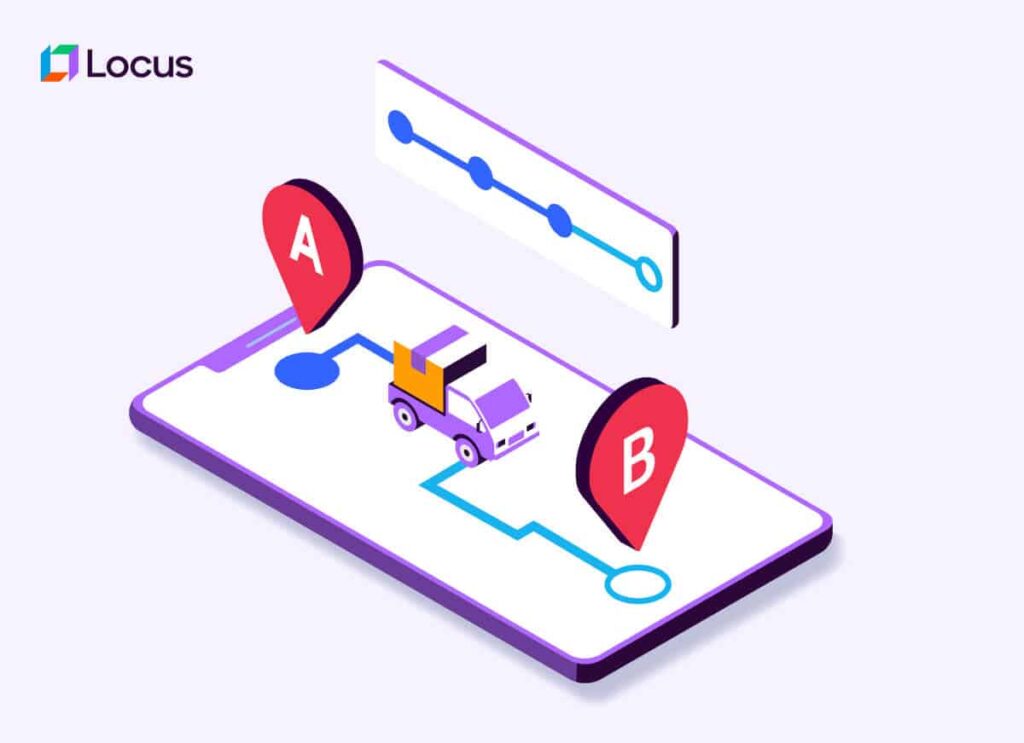
Choosing the right route optimization software is essential for solving the Vehicle Routing Problem effectively. A powerful solution should go beyond generating routes; it should adapt to real-world constraints, reduce manual planning, and improve overall delivery performance.
The best route optimization platforms are designed to automate complex decision-making using advanced algorithms that consider vehicle types, capacities, traffic conditions, delivery time windows, stop durations, and more. With minimal human input, they can generate smart, cost-effective routes that save time, fuel, and effort.
When evaluating a route planning solution, look for the following key features:
- Automated Route Planning
The software should use advanced algorithms to generate efficient routes automatically, considering all relevant constraints like vehicle capacity, time windows, and traffic. - Scalability and Cost-Effectiveness
It should grow with your business, handling everything from small local deliveries to complex, large-scale fleet operations without driving up costs. - Intelligent Order Allocation
A system that can prioritize and assign deliveries based on urgency, location, and available resources helps fleet managers plan more effectively. - Dynamic Rerouting
As new or urgent orders come in, the software should automatically adjust existing routes to accommodate changes without manual intervention. - Multi-Vehicle and Multi-Stop Planning
Support for multiple vehicles and stops ensures efficient routing across the entire fleet, especially in high-volume or regionally distributed operations. - Advanced Geocoding Capabilities
The ability to accurately process and correct address data helps reduce delivery errors and delays caused by unclear or inconsistent addresses. - Real-Time Tracking
Visibility into vehicle locations enables managers to monitor progress, address delays proactively, and keep customers informed about delivery times. - Electronic Proof of Delivery (e-POD)
Digital confirmation features such as photo capture or electronic signatures reduce paperwork, improve accuracy, and support contactless delivery options. - Low Dependency on Manual Effort
The system should require minimal human intervention, reducing the risk of human error and saving time for planners and drivers alike.
How to Implement a VRP Solution Step by Step
- Define operational constraints
Start by documenting the constraints that shape route feasibility: vehicle capacity, vehicle type, time windows, driver availability, driver schedules, shift limits, depot rules, loading requirements, priority customers, service-level commitments, and region-specific operating rules. - Prepare accurate stop data
Clean and validate addresses before optimization. Convert customer addresses into geocoded coordinates, confirm demand quantities, and capture service time estimates for each stop. Accurate service time estimates improve ETA accuracy and reduce the risk of building routes that look efficient on paper but fail in execution. - Run the optimization model
Feed orders, fleet details, depots, constraints, and business objectives into the route optimization engine. The system should generate feasible route sequences, vehicle assignments, ETAs, and dispatch plans. - Review route outputs
Planners should review exceptions, capacity breaches, SLA risks, unassigned orders, route duration, and driver workload. The best systems make this review process fast by highlighting only the decisions that need attention. - Dispatch routes to drivers
Once routes are approved, dispatch them to driver apps or execution systems with stop sequences, navigation details, customer instructions, proof-of-delivery requirements, and contact information. - Monitor execution in real time
Track vehicle location, route adherence, ETAs, delays, failed deliveries, and customer communication status. Real-time visibility allows dispatchers to intervene before disruptions become service failures. - Continuously improve the routing model
Use operational data such as actual service times, failed delivery reasons, route deviations, driver performance, and customer feedback to refine planning rules and improve future route quality.
Common VRP Challenges and How to Fix Them
| Challenge | Why it affects routing | Practical fix |
| Last-minute order changes | New orders, cancellations, or priority changes can make static routes inefficient or infeasible | Use dynamic rerouting and real-time order allocation to re-optimise plans without rebuilding every route manually |
| Inaccurate address data | Incorrect or incomplete addresses cause failed deliveries, poor ETAs, and unnecessary driver effort | Use address validation, geocoding, and exception workflows before dispatch |
| Incorrect demand quantities | Understated or overstated order volume can cause capacity breaches or underutilised vehicles | Integrate order data with route planning and validate weight, volume, item count, and handling requirements |
| Driver resistance | Drivers may distrust automated routes if they do not understand the logic or if route quality is inconsistent | Combine driver training, transparent route instructions, feedback loops, and phased rollout |
| Cost-service trade-offs | The lowest-cost route may not always protect time windows, customer priorities, or SLA commitments | Define objective functions that balance cost reduction with service quality, customer priority, and operational feasibility |
How does route optimization software solve the Vehicle Routing Problem?
Route optimization boosts the efficiency of delivery businesses in the following ways:
Helps Manage resource limitations
Logistics businesses face resource constraints, especially during this COVID-19 situation. The best way for logistics businesses to manage this is by using vehicle route optimization software. It enables them to quickly plan optimal routes and accommodate more deliveries even if they have limited drivers or vehicles.
Saves fuel on multiple routes and multiple vehicles
Vehicles attending to multiple stops spend more time on the road, leading to increased fuel consumption. Vehicle Route optimization helps fleet drivers save money, time, and fuel.
Helps reduce last-mile costs
The primary aim of all delivery companies is to reduce their last-mile delivery costs. Vehicle Route optimization software helps reduce various last-mile delivery costs like idling and maintenance costs.
Enables on-time deliveries
An efficient route optimization solution helps fleet drivers to reach different destination points as quickly as possible.
On-Time and In-Full Delivery: Why Balancing Both is Important for You
Enables better customer experience
The efficiency of drivers determines the quality of the delivery service. Vehicle Route optimization software helps fleet managers track drivers’ performance and suggest changes required so as to enable a better customer experience.
Check out the case study: How Locus enable better customer experience through with route optimization.
Business Impact of Solving the Vehicle Routing Problem
The business impact of solving VRP should be measured through operational KPIs rather than route quality alone. Enterprises typically evaluate route optimization against metrics such as:
- Fuel consumption reduction: measured by comparing fuel used per route, per stop, or per kilometre before and after optimization.
- Planning-time reduction: measured by the time dispatchers spend building, validating, and modifying route plans.
- Stops per driver: measured by the number of completed stops per driver or per shift, while still protecting service quality.
- ETA accuracy: measured by the variance between promised arrival times and actual arrival times.
- Vehicle utilisation: measured by capacity usage across weight, volume, or order count.
- SLA adherence: measured by the share of deliveries completed within the committed time window.
- Cost per delivery: measured by combining labour, fuel, vehicle, maintenance, and exception-handling costs.
- ROI timeframe: measured by comparing software, implementation, and change-management costs against verified operational savings.
For enterprise logistics teams, the goal is not only to reduce distance. The stronger outcome is a more resilient delivery operation that can absorb volatility, improve planner productivity, protect customer promises, and scale without adding proportional cost.
Sustainability and Green Vehicle Routing
Sustainability is becoming a core routing objective for enterprises that need to reduce fuel use, manage carbon emissions, and support electric vehicle adoption. Green routing applies VRP techniques to build routes that are not only cost-effective, but also energy- and emissions-aware.
For fuel-based fleets, this can mean reducing avoidable distance, idling, route overlap, and stop-start driving patterns. For EV fleets, routing must account for EV range, vehicle load, distance, terrain, traffic conditions, and charging needs. Charging stations also become part of the route feasibility model because their locations, availability, and charging time can affect whether a route can be completed reliably.
Green Vehicle Routing Problem models can include carbon emissions as an objective function or reporting metric. This allows businesses to compare route plans not only by delivery cost and SLA adherence, but also by their environmental impact.
Conclusion
Route optimization software helps delivery businesses to adjust their routes instantly and meet unanticipated requests from customers. It efficiently solves the Vehicle Routing Problem and therefore enables a great customer experience.
Locus’ Route Optimization software provides the best features that can solve the Vehicle Routing Problem effectively. It enhances customer experience and reduces your logistics costs.
Frequently Asked Questions About Vehicle Routing Problem
What is the Vehicle Routing Problem?
The Vehicle Routing Problem is a logistics optimization challenge that determines the best routes for a fleet of vehicles to serve a set of customers while respecting constraints such as capacity, time windows, driver schedules, depots, and delivery priorities.
Why is VRP NP-hard?
VRP is NP-hard because the number of possible route combinations grows rapidly as stops, vehicles, depots, and constraints increase. This makes exact optimization computationally difficult for large real-world logistics operations.
How is VRP different from GPS routing?
GPS routing helps one driver navigate between locations. VRP decides which vehicle should visit which stops, in what order, under operational constraints such as capacity, timing, driver availability, service rules, and cost objectives.
What are the main types of VRP?
Common types include Capacitated Vehicle Routing Problem (CVRP), Vehicle Routing Problem with Time Windows (VRPTW), Vehicle Routing Problem with Pickup and Delivery (VRPPD), Multi-Depot Vehicle Routing Problem (MDVRP), Dynamic Vehicle Routing Problem (DVRP), and Green Vehicle Routing Problem (GVRP).
What data is needed to solve VRP?
VRP requires data such as customer locations, geocoded coordinates, demand quantities, vehicle capacity, driver availability, service time estimates, time windows, depot locations, order priorities, and business rules.
Can VRP software support EV routing?
Yes. Advanced route optimization software can support EV routing by considering EV range, vehicle load, route distance, charging station locations, charging time, and operational constraints that affect route feasibility.

General
Types of Truck Freight Shipping: FTL, LTL, PTL Explained

Jul 3, 2026
Explore the main types of truck freight shipping — including FTL, LTL, and PTL. Understand how each method works and when to use them for efficient delivery.
Read more
General
What to Look for in Agentic Dispatch Management Software in 2026

Jul 3, 2026
Agentic dispatch management software is a higher architectural bar than AI-native dispatch. Six things to look for to identify truly agentic dispatch platforms in 2026: multi-agent architecture, autonomous decisioning within governance, real-world constraint depth, continuous SDEL learning, unified multi-fleet orchestration, and analyst validation of the agentic category.
Read moreInsights Worth Your Time



















Vehicle Routing Problem: Types, Challenges, and How to Solve