


General
Top 10 Logistics Software Companies in the USA in 2026

Key Takeaways
- The North American logistics market is projected to grow from $1.4 trillion in 2022 to $1.6 trillion by 2028, driving increased demand for advanced logistics management solutions.
- Modern AI-driven logistics solutions are replacing traditional Excel-based systems, offering enhanced capabilities in routing, tracking, and delivery orchestration.
- Major logistics software providers face common challenges around customer support, system upgrades, and routing accuracy, highlighting the need for more robust solutions.
- Locus’ AI-powered dispatch management platform addresses key industry pain points through dynamic routing technology, automated sorting, and delivery orchestration capabilities that consider 180+ real-world constraints.
The North America logistics market is poised to make the leap from a whopping $1.4 trillion in 2022 to $1.6 trillion by 2028, clocking a 2.4% CAGR. It’s a bonanza for industries like retail, e-commerce and other such logistics-based industries, but, as always, growth comes with its share of thorny challenges. It’s high time retailers, e-commerce platforms, 3PLs, FMCGs, and other logistics players in the US turn to cutting-edge logistics software to tackle the hurdles of this burgeoning industry.
But what exactly constitutes cutting-edge logistics software?
Enter the era of AI-driven logistics solutions, far removed from the traditional, clunky methods of managing supply chains on Excel sheets, replete with manual data entry and limited routing capabilities.
Master Comparison Table
| Company | Best for | Core category | Strongest capabilities | Potential limitation | Pricing approach | Deployment/model | Integrations | Ideal business size |
| Locus | High-density last-mile and middle-mile operations | Logistics orchestration / last-mile execution | AI-powered dispatch, dynamic routing, Control Tower, hybrid fleets, returns | May be more platform depth than very small teams or routing-only buyers need | Custom quote | Enterprise platform | ERP, WMS, SAP, Oracle, APIs | Mid-market to enterprise |
| LogiNext Mile | Urban delivery operations | Last-mile delivery software | Route planning, customer visibility, field force management | Less suited to customs-heavy or freight-settlement-led transport stacks | Pricing not publicly disclosed at the time of review | SaaS platform | Delivery and workforce integrations | Mid-sized to enterprise |
| Descartes Systems Group | Cross-border and multimodal freight | Freight / compliance / TMS | Customs compliance, multimodal visibility, documentation | Broader trade and freight scope than some routing-only teams need | Pricing not publicly disclosed at the time of review | Enterprise suite | EDI, customs, partner networks | Mid-market to enterprise |
| Blue Yonder | Large supply chain environments | Supply chain suite / transportation | Network planning, multimodal optimisation, WMS-TMS alignment | Best fit usually comes with broader suite adoption | Pricing not publicly disclosed at the time of review | Enterprise suite | WMS, transport, planning stack | Enterprise |
| MercuryGate | 3PLs and freight brokers | TMS | Multi-leg transport, carrier rate management, event workflows | Less focused on consumer-facing last-mile experience | Pricing not publicly disclosed at the time of review | Enterprise TMS | Carrier and customer portals | Mid-market to enterprise |
| Alpega / E2open | Freight procurement and partner collaboration | Freight management / tendering | Tendering, collaboration, invoicing, modular adoption | Limited relevance for buyers focused mainly on dense last-mile execution | Pricing not publicly disclosed at the time of review | Modular platform | Carrier networks, freight workflows | Mid-market to enterprise |
| Oracle Transportation Management | Global transport complexity | Enterprise TMS | Planning, execution, cost control, Oracle ecosystem fit | Can be heavyweight for simpler operations | Pricing not publicly disclosed at the time of review | Cloud-based enterprise software | Oracle ERP and SCM modules | Enterprise |
| SAP Transportation Management | SAP-centric transport operations | Enterprise TMS | Embedded freight planning, settlement, SAP workflow alignment | Strongest when SAP is already core to the stack | Pricing not publicly disclosed at the time of review | SAP suite add-on | SAP S/4HANA and related systems | Enterprise |
| Rose Rocket | Trucking companies and LTL carriers | Trucking / dispatch / carrier workflow | Dispatch board, driver app, customer portal, invoicing | Not designed as a broad enterprise orchestration suite | Pricing not publicly disclosed at the time of review | Cloud-based platform | Load boards and carrier workflows | SMB to mid-market |
| FarEye | Last-mile visibility and returns-heavy operations | Last-mile delivery software | Predictive tracking, rescheduling, customer engagement | Less suited to deep freight audit or large-scale transport procurement needs | Pricing not publicly disclosed at the time of review | SaaS platform | Delivery visibility workflows | Mid-market to enterprise |
How we evaluated logistics software companies
We assessed these logistics software companies using a buyer-focused framework:
- Primary use case: last-mile delivery, freight planning, trucking, cross-border, or broad supply chain execution
- U.S. relevance: suitability and visibility for U.S.-based buyers
- Capability depth: route optimisation, dispatch, tracking, Control Tower, freight planning, returns, settlement, or partner collaboration
- Integration readiness: ERP/WMS/OMS/API connectivity, including SAP and Oracle environments
- Scalability: fit for SMB, mid-market, enterprise, or multi-country deployments
- Pricing transparency: whether pricing is published or requires a custom quote
- Implementation complexity: likely effort around configuration, workflows, data, and change management
- Industry fit: retail, e-commerce, FMCG, 3PL, freight forwarding, or trucking
- Support model and operational maturity: whether the product appears suited to business-critical logistics execution
Limitations: software features, ownership, pricing, and availability can change. No single platform is best for every organisation. This is an editorial comparison, not a lab test or analyst ranking.
Best Logistics Software by Use Case
If you are shortlisting by operational problem rather than by vendor name, start here:
- Last-mile delivery orchestration: Locus, LogiNext Mile, FarEye
- Route optimisation: Locus, LogiNext Mile, FarEye
- Enterprise TMS functionality: Oracle OTM, SAP TM, MercuryGate, Blue Yonder
- 3PLs and freight brokers: MercuryGate, Descartes, Oracle OTM
- Retail and e-commerce: Locus, LogiNext Mile, FarEye, Blue Yonder
- FMCG / consumer goods: Locus, Blue Yonder, SAP TM
- Cross-border logistics: Descartes, Oracle OTM, SAP TM
- Trucking companies / LTL carriers: Rose Rocket, MercuryGate
- Returns and reverse logistics: Locus, FarEye
- Visibility / Control Tower: Locus, Descartes, SAP TM, Blue Yonder
- Hybrid fleets / multi-carrier allocation: Locus, Oracle OTM, MercuryGate
This is where category differences matter. A TMS can be the right answer for freight procurement and multimodal execution, while last-mile delivery software is often the better fit for dense stop-based networks, consumer notifications, failed delivery management, and proof of delivery.
Here are the top contenders breaking new ground in the logistics game:
Top 10 Logistics Companies in USA
Each logistic management software offers distinct features suited to different operational needs. Below is a breakdown of key solutions, focusing on their strengths and how they cater to specific business requirements.
1. Locus
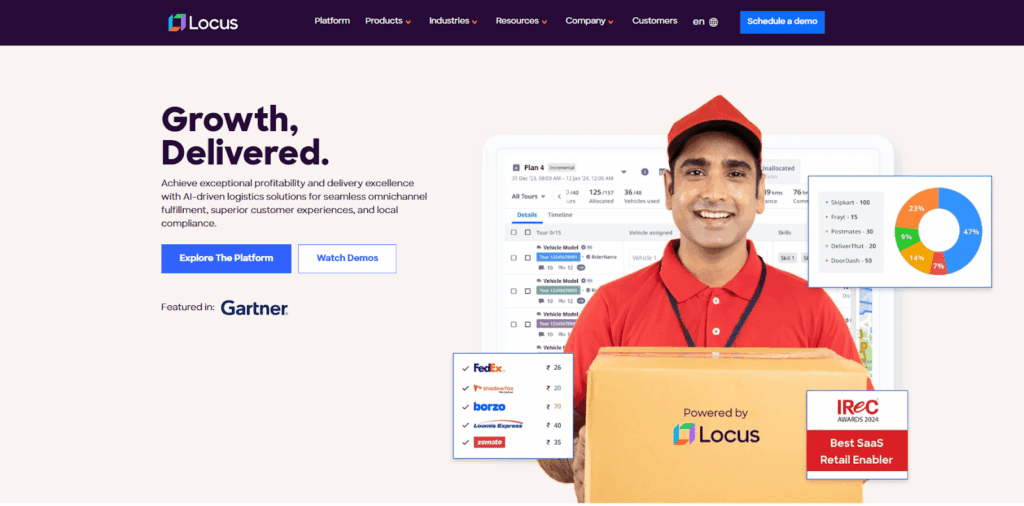
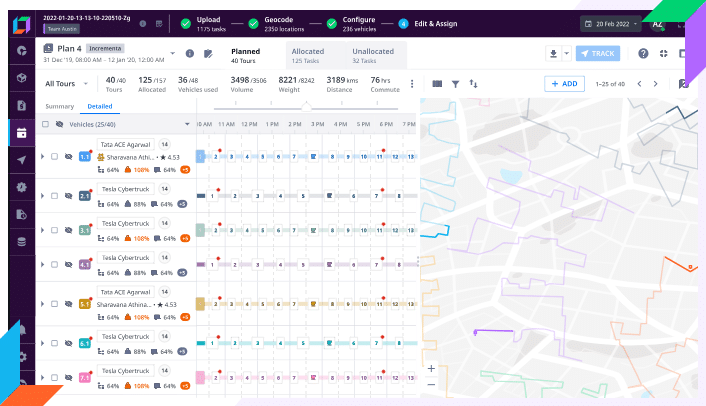
Locus is an AI-powered logistics management software designed for enterprises managing high-density deliveries across complex geographies. It combines real-time orchestration with automated dispatch, predictive insights, and multi-modal delivery optimization, built to support both middle-mile and last-mile workflows at scale.
Features of Locus:
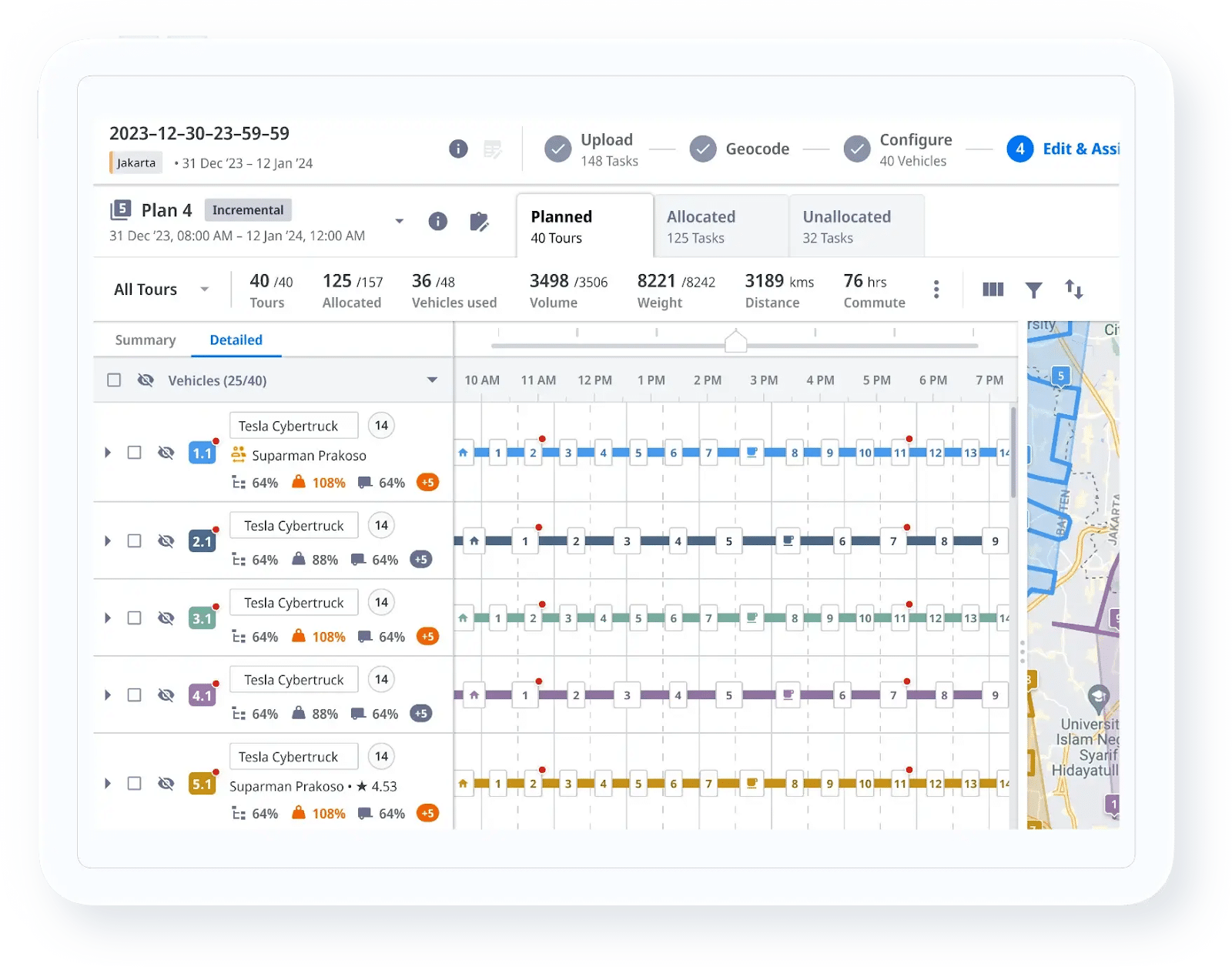
- Auto-dispatch engine: Allocates deliveries using configurable business logic and fleet capacity.

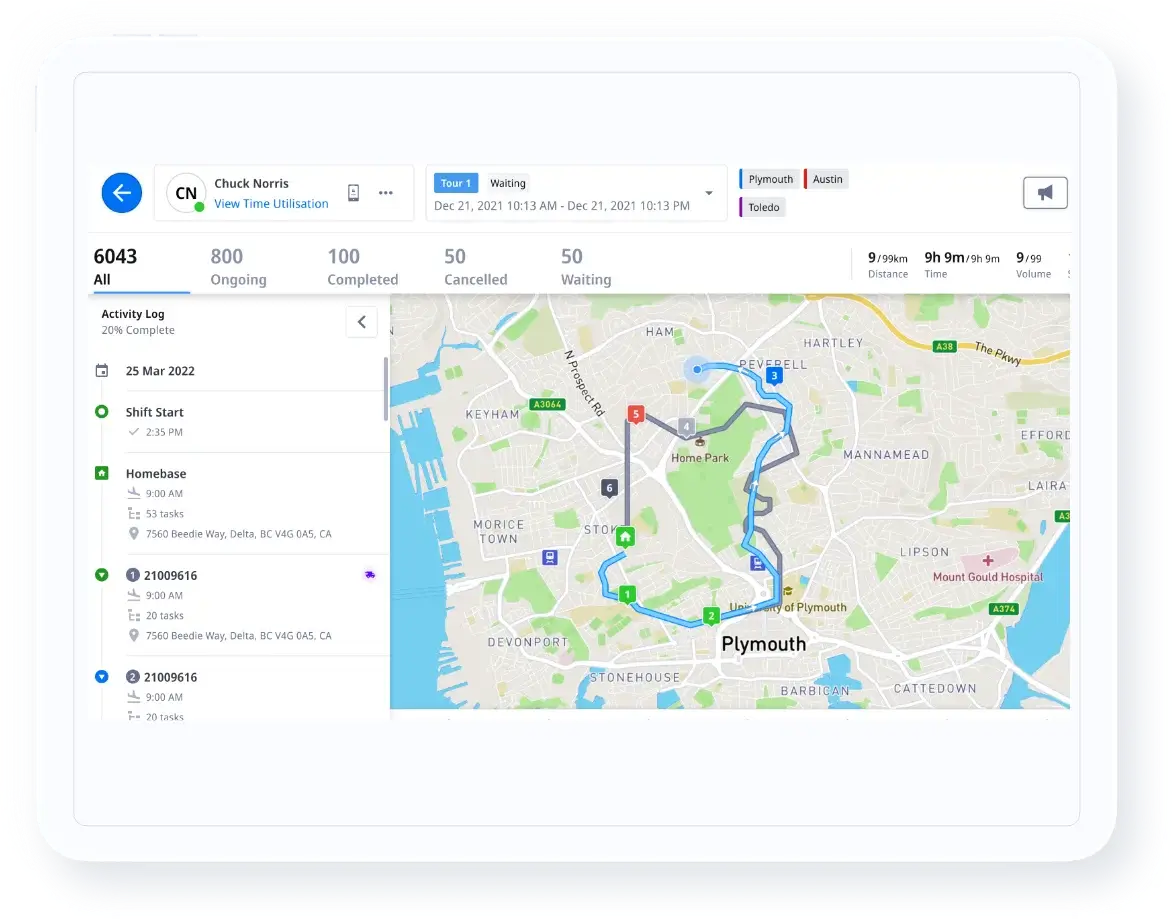
- Real-time Control Tower: Monitors active shipments with dynamic alerts for exceptions and delays.

- Dynamic route optimization: Adjusts based on delivery priorities, traffic, and SLA constraints.

- Smart rider reassignment: Reallocates tasks in response to failed deliveries or last-minute changes.
- Returns and reverse logistics: Automates failed delivery handling and reattempt scheduling.
- ERP/WMS integration: Connects with SAP, Oracle, and legacy systems using robust APIs.
- Carbon tracking and emissions reporting: Measures CO? per route for ESG and compliance reporting.
Suggested read: How Supply Chains can Reduce Carbon Footprint with Logistics Planning Software
Locus is best for:
Retail chains, FMCG manufacturers, 3PL providers, and e-commerce businesses operating across regions with high delivery density and fragmented logistics infrastructure.
To explore how Locus optimizes last-mile operations for retail and e-commerce businesses, read the article on its dispatch management enhancements for last-mile logistics, featured by ManufacturingToday.
Locus pricing:
Pricing is based on delivery volume, regional coverage, and system integrations.
Book a personalized demo to get a tailored quote.
2. LogiNext Mile

LogiNext Mile provides a delivery automation platform with route optimization, order tracking, and field workforce management tools. It is widely adopted by retail logistics and e-commerce teams looking to improve delivery accuracy and visibility across urban zones.
Features of LogiNext Mile:
- Route planning engine: Plans and sequences delivery routes with real-time traffic inputs.
- Live delivery tracking: Provides end-customer visibility and internal fleet monitoring.
- Proof of delivery (POD): Captures digital signatures, photos, and delivery confirmations.
- Field force management: Tracks attendance and performance of delivery agents.
- Customer notification system: Sends SMS/email updates with delivery status in real time.
LogiNext Mile is ideal for:
Mid-sized to large enterprises in e-commerce, retail, and courier services managing dense urban deliveries and direct-to-consumer distribution.
LogiNext Mile pricing:
Available on request. Pricing typically depends on the number of users, volume of deliveries, and geographic spread.
3. Descartes Systems Group

Descartes offers a comprehensive logistics management software tailored to freight brokers, customs operations, and international logistics providers. Its platform focuses on compliance automation, multimodal visibility, and freight documentation across borders.
Features of Descartes:
- Customs and trade compliance: Automates import/export documentation and regulatory workflows.
- Multimodal shipment visibility: Tracks air, ocean, and ground freight movements in real time.
- Carrier and freight management: Manages spot bookings, capacity, and documentation.
- Audit and freight settlement: Verifies invoices and identifies charge discrepancies.
- Global EDI and messaging: Enables seamless communication with partners and customs agencies.
Descartes is ideal for:
Freight forwarders, customs brokers, and multinational shippers managing cross-border logistics and regulatory complexity.
Descartes pricing:
Pricing is tiered based on selected modules and transaction volume. Custom quotes are available for enterprise-scale deployments.
4. Blue Yonder (formerly JDA)
Blue Yonder provides an integrated logistics management software as part of its larger supply chain execution suite, used by enterprises looking to align transportation planning with inventory, demand, and warehouse operations. It supports predictive planning and real-time transportation optimization across global networks.
Features of Blue Yonder:
- Multimodal optimization: Plans and consolidates shipments across air, ocean, and ground.
- Demand-driven transportation planning: Aligns transport operations with forecasted inventory needs.
- WMS-TMS integration: Seamlessly connects warehouse and transport systems for unified execution.
- Network modeling tools: Simulates cost, route, and carrier scenarios for long-term planning.
- Freight settlement automation: Validates invoices and reconciles carrier payments.
Blue Yonder is ideal for:
Manufacturers, large retailers, and distribution networks require synchronized planning across warehousing, transportation, and demand forecasting.
Blue Yonder pricing:
Offered through enterprise licensing. Pricing varies based on solution scope, deployment model (cloud/on-premise), and user volume.
5. MercuryGate

MercuryGate delivers a multimodal logistics management software used by 3PLs, freight brokers, and carriers managing complex logistics networks. The platform supports high-volume, multi-leg shipments with built-in optimization and event management tools.
Features of MercuryGate:
- Intermodal route planning: Supports truckload, LTL, parcel, rail, and ocean transport.
- Carrier booking and rate management: Compares rates and books shipments across providers.
- Event monitoring: Tracks delivery exceptions and triggers automated responses.
- Load consolidation engine: Groups shipments for cost-effective execution.
- Self-service portals: Allows carriers and customers to interact with shipments in real time.
MercuryGate is ideal for:
Third-party logistics providers, freight brokers, and large shippers coordinating multi-leg transportation across global lanes.
MercuryGate pricing:
Custom pricing based on number of modes used, shipment volume, and platform configurations. Enterprise quotes available on request.
6. Alpega / E2open (formerly BluJay)
Alpega and E2open offer modular logistics management software tailored to shippers, freight forwarders, and carriers operating in Europe and other regulated markets. The system emphasizes freight procurement, tendering, and invoice reconciliation across diverse partner networks.
Features of Alpega / E2open:
- Freight tendering tools: Digitizes bid management across contracted and spot carriers.
- Carrier collaboration portal: Enables real-time updates, status sharing, and document exchange.
- Invoicing and audit automation: Matches invoices with delivery data for reconciliation.
- Modular deployment: Allows companies to adopt only the features they need.
- Load planning and execution: Optimizes shipments across multiple orders and destinations.
Alpega / E2open is ideal for:
European freight shippers, forwarders, and carriers seeking control over procurement and invoicing across large carrier networks.
Alpega / E2open pricing:
Subscription-based pricing varies by module and deployment size. Entry-level and enterprise packages available.
7. Oracle Transportation Management (OTM)
Oracle Transportation Management is a cloud-based solution integrated with Oracle’s broader supply chain suite. It supports complex, high-volume shipping operations across global and domestic networks, offering deep planning, execution, and analytics functionality.
Features of Oracle OTM:
- Multi-leg shipment planning: Optimizes long-haul and last-mile routes within the same workflow.
- Freight cost management: Tracks, predicts, and reconciles transportation spend across carriers.
- Carrier contract and rate control: Manages rate agreements and automates comparisons.
- Shipment visibility and tracking: Monitors transport events, ETA deviations, and delivery status.
- ERP integration: Connects natively with Oracle Fusion and other SCM modules.
Oracle OTM is ideal for:
Enterprises using Oracle ERP or managing high-throughput, global logistics operations across multiple transport modes.
Oracle OTM pricing:
Enterprise-level pricing, typically packaged with Oracle Cloud Supply Chain modules. Licensing varies based on shipment volume and features activated.
8. SAP Transportation Management (SAP TM)
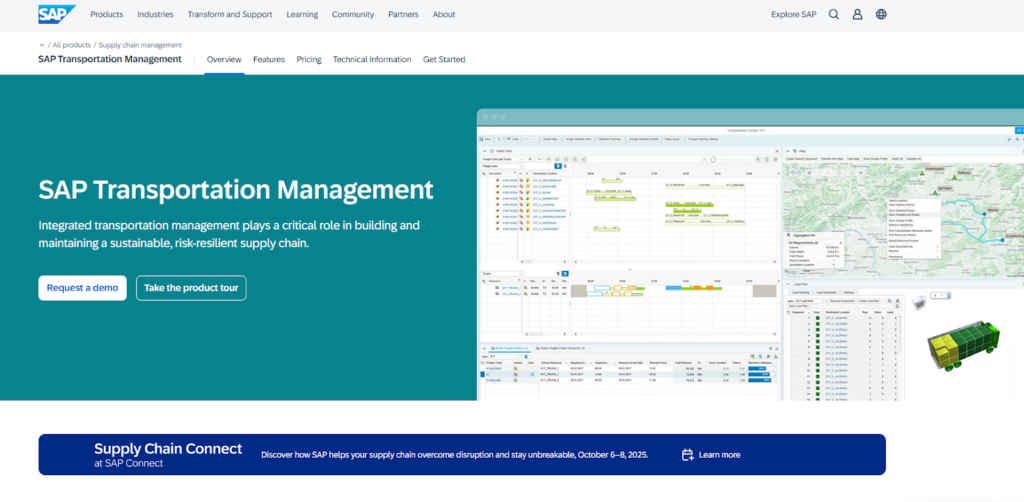
SAP TM is part of the SAP S/4HANA suite and enables integrated transportation planning, execution, and settlement for organizations already operating within the SAP ecosystem. It centralizes transport-related workflows while maintaining alignment with upstream procurement, warehousing, and finance processes.
Features of SAP TM:
- Embedded freight planning: Plans full truckload, less-than-truckload, and multi-leg shipments.
- Freight charge calculation and settlement: Automates cost allocation and invoice validation.
- Order and delivery integration: Links transport plans with customer orders and warehouse execution.
- Carrier selection and tendering: Supports spot bidding and contracted rate use.
- Control Tower and tracking: Provides real-time visibility across lanes and shipments.
SAP TM is ideal for:
Global enterprises using SAP S/4HANA that require transport functionality tightly linked to finance, procurement, and warehouse operations.
SAP TM pricing:
Available as an add-on license within SAP’s modular pricing model. Total cost depends on transaction volume and integration complexity.
9. Rose Rocket
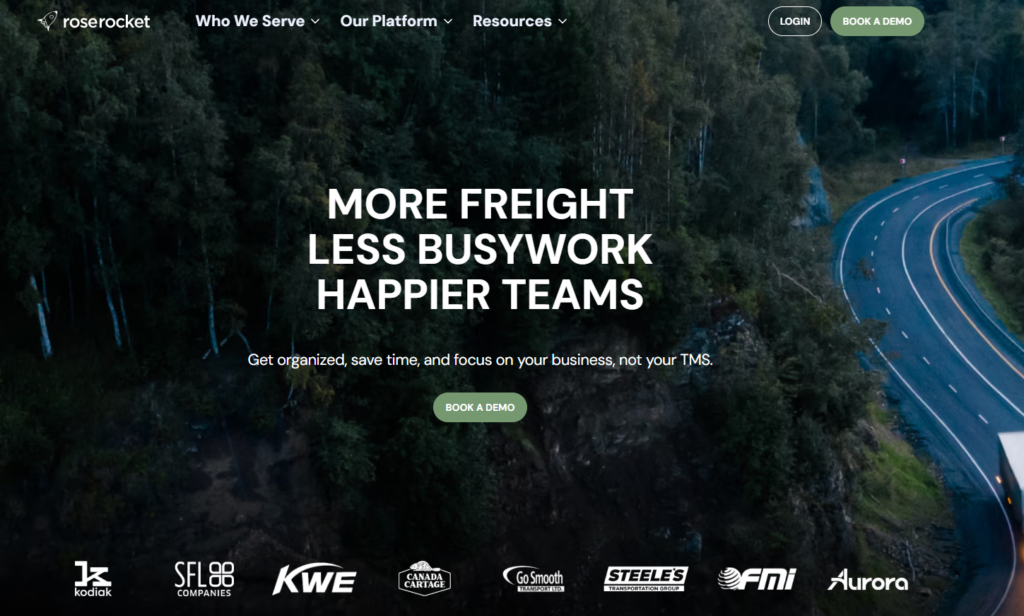
Rose Rocket is a cloud-based logistics management software built specifically for trucking companies and LTL carriers. Its interface prioritizes usability, with tools for dispatchers, drivers, and customers to manage freight from booking through delivery, all in one platform.
Features of Rose Rocket:
- Dispatch management board: Centralizes trip creation, assignment, and real-time status updates.
- Customer portal: Allows shippers to book loads, track freight, and retrieve documents.
- Mobile driver app: Enables POD capture, real-time communication, and route details.
- Billing and invoicing tools: Automates rate calculations and invoice generation.
- Load board integration: Connects with external marketplaces to fill backhauls or gaps.
Rose Rocket is ideal for:
Small to mid-sized carriers, regional trucking businesses, and LTL providers seeking modern tools without enterprise-level complexity.
Rose Rocket pricing:
Starts at $99/month with tiered plans based on the number of users and required modules.
10. FarEye
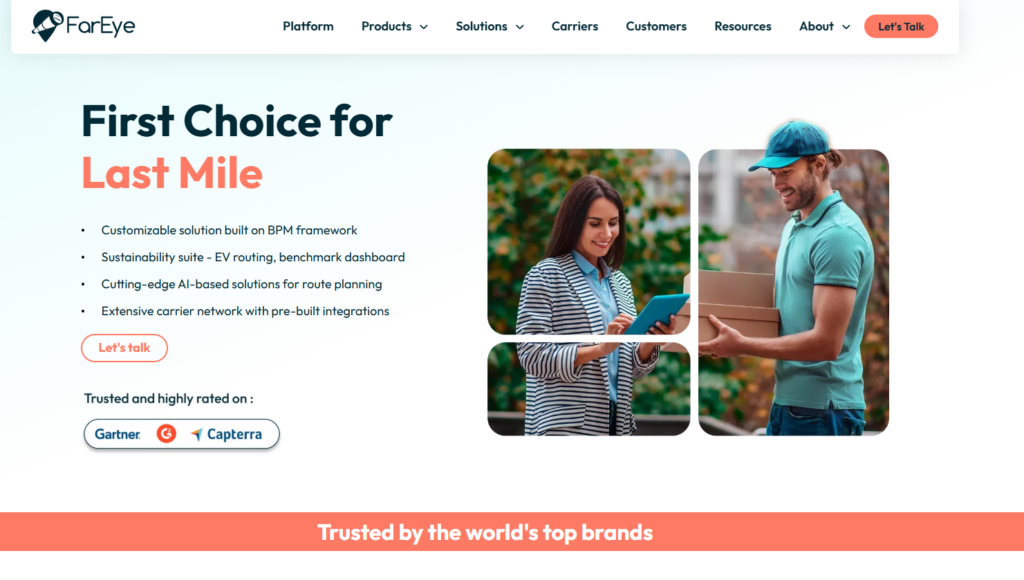
FarEye specializes in last-mile delivery optimization, offering a platform designed to improve delivery accuracy and enhance the returns experience. The solution integrates predictive tracking, dynamic rescheduling, and advanced customer engagement tools, all of which streamline reverse logistics processes for businesses.
FarEye’s Key Features:
- Real-Time Tracking: Provides visibility into the entire delivery process, helping optimize operations and reduce delays.
- Predictive Delivery Optimization: Uses AI to predict and adjust delivery routes for faster and more accurate deliveries.
- Dynamic Rescheduling: Automatically adjusts delivery schedules to accommodate changes, ensuring timely returns management.
- Enhanced Customer Engagement: Tools to improve communication and satisfaction during the returns process.
FarEye is Ideal for:
- E-commerce and Retailers: Businesses aiming to enhance last-mile delivery efficiency and improve the returns experience for customers.
- Large Enterprises: Companies seeking scalable solutions for managing complex, high-volume returns processes.
FarEye’s Pricing:
FarEye offers a subscription-based pricing model, with costs tailored to business needs, including factors like return volumes and required features.
Other logistics software companies worth evaluating
This article keeps the shortlist to 10 logistics software companies, but that does not mean other vendors are irrelevant. Depending on your use case, buyers may also evaluate CargoWise, Magaya, Oracle NetSuite, Bringg, DispatchTrack, Onfleet, OptimoRoute, Route4Me, Tookan, FourKites, project44, Shipwell, Uber Freight TMS, Manhattan Associates, Körber, Infor, Trimble Transportation, Motive, Samsara, and ShipBob.
A practical rule of thumb:
- Global forwarding and customs-heavy operations: look at platforms such as CargoWise or Magaya
- ERP-led operations: evaluate Oracle NetSuite, SAP, or Oracle OTM
- Dense last-mile delivery: compare Locus, FarEye, LogiNext, and relevant last-mile specialists
- Fleet-led operations: include telematics- and vehicle-centric tools where dispatch is only one part of the problem
That is one reason “best logistics software companies” is a tricky search term: the right shortlist changes significantly based on whether you are solving freight planning, warehouse execution, transport management, or last-mile delivery.
Benefits of using logistics software companies instead of manual workflows
Modern logistics software should improve operational decision-making, not just digitise paperwork. The best platforms help teams measure and improve:
- Cost per delivery
- Cost per stop
- On-time delivery rate
- SLA adherence
- First-attempt delivery rate
- Failed delivery rate
- Dispatch planning time
- Stops per route
- Driver or rider utilisation
- ETA accuracy
- Customer contacts per delivery
- Return cycle time
- Carbon emissions per shipment
That matters in a market of this size. Depending on methodology, the global logistics market was valued at USD 5.88 trillion in 2025 by IMARC Group, while The Business Research Company estimated it at USD 5,640.18 billion in 2025. When logistics spend is that material, even modest gains in route density, failed delivery reduction, or carrier allocation can materially change cost-to-serve.
Typical business benefits include:
- Faster route planning and dispatch
- Better utilisation of owned and outsourced fleets
- More accurate ETAs and fewer customer service calls
- Better exception handling for delays, failed drops, and reattempts
- Stronger returns and reverse logistics workflows
- Better visibility across drivers, carriers, and stops
- Cleaner reporting for finance, operations, and sustainability teams
Key features to evaluate in logistics software
If you are comparing logistics software companies, prioritise the features that change day-to-day execution:
For transportation and dispatch
- Order ingestion from ERP, OMS, WMS, or storefronts
- Route optimisation and stop sequencing
- Dynamic reassignment during live operations
- Time windows and appointment delivery support
- Multi-carrier allocation
- Hybrid fleet support for owned, 3PL, and gig capacity
- Predictive ETA and SLA monitoring
- Proof of delivery workflows
For customer experience
- Branded tracking pages
- SMS, email, or app notifications
- Delivery rescheduling
- Failed delivery handling
- Returns pickup orchestration
For enterprise operations
- ERP/WMS/OMS integration
- SAP and Oracle connectivity
- API and EDI support
- Role-based reporting and dashboards
- Audit trails and operational visibility
- Carbon tracking and emissions reporting
For freight and network control
- Carrier contract and rate management
- Load planning and consolidation
- Freight procurement and tendering
- Freight audit and settlement
- Cross-border documentation and compliance
Implementation, integrations, and hidden cost considerations
A software demo can make any platform look complete. Real buying risk usually appears during implementation. Ask vendors to show:
- How orders are ingested from ERP, OMS, WMS, or e-commerce systems
- What data is required for route optimisation
- How carrier onboarding works
- How driver or rider workflows are configured
- How failed deliveries, returns, and reattempts are handled
- How regional rules, geographies, and service levels are modelled
- What support model and service commitments are offered
- How reporting, exports, and data ownership work
Common hidden costs
- Integration work
- Data clean-up and master data fixes
- Configuration and workflow design
- Training and change management
- Additional modules
- Carrier, telematics, or partner connections
- Premium support
- Multi-country roll-out complexity
Red flags during evaluation
- Unclear implementation scope
- Weak API documentation
- No proof of integration with your stack
- Black-box pricing
- Limited exception workflows
- No operational testing using your live constraints
- Vague support or escalation model
Transform Your Logistics from Cost Center to Profit Driver with Locus
Logistics should drive growth, not limit it. Locus helps businesses run smarter logistics operations with AI technology that goes beyond route planning. From real-time issue handling to adaptive delivery workflows and data-backed decisions, Locus makes logistics faster, simpler, and more reliable.
For Retail, FMCG, and 3PL companies managing dense, complex networks, Locus brings clarity and control to every mile of the supply chain. It connects easily with existing ERP and WMS systems, providing full visibility through the Control Tower. With predictive insights, teams can plan resources better, cut unnecessary costs, and deliver consistently great customer experiences, even as operations expand.
Schedule a demo to see how Locus fits your operations.
Frequently Asked Questions (FAQs)
What are the key features of an effective logistics management software?
An effective logistics management software should offer advanced capabilities like AI-powered route optimization, automated package sorting, real-time tracking, delivery customization, and data-driven analytics. It should leverage machine learning to dynamically factor in real-world constraints and provide optimal routing plans, while enabling seamless integration of third-party delivery providers. Customizable delivery options and unified tracking across channels are also crucial for enhancing the customer experience.
Why is adopting cutting-edge logistics software important for businesses in the USA?
The North American logistics market is rapidly expanding, projected to grow from $1.4 trillion in 2022 to $1.6 trillion by 2028. To keep pace with this growth and tackle emerging challenges, businesses like retailers, e-commerce platforms, 3PLs, and FMCGs need to adopt cutting-edge logistics software powered by AI and machine learning. Traditional manual methods and Excel-based processes lack the sophistication to efficiently manage complex supply chains and meet evolving customer expectations.
How does Locus differentiate itself in the logistics software market?
Locus stands out with its AI-powered dispatch management software that addresses key logistics pain points through machine learning-based automation. Its dynamic routing technology factors in over 180 real-world constraints for optimized delivery routes. Automated package sorting streamlines operations and reduces driver attrition. Advanced analytics provide data-driven insights, while delivery orchestration enables seamless integration of third-party providers. Locus also offers customized delivery solutions like delivery-linked checkout for an enhanced customer experience.
What are the potential drawbacks of other logistics software solutions mentioned?
While solutions like Descartes, SAP, Acumatica, Onfleet, and Narvar offer valuable logistics capabilities, user reviews highlight some potential drawbacks. Common concerns include inadequate customer support experiences, high costs, lengthy deployment times for updates, limited error correction features in order management, and room for improvement in routing optimization and fleet tracking capabilities. Thoroughly evaluating these aspects is crucial before selecting a solution.
How can Locus’ logistics software help businesses optimize their operations and drive growth?
Locus’ AI-driven logistics software directly addresses key operational challenges faced by businesses in the USA. Its machine learning capabilities enable route optimization, automated sorting, delivery customization, and data-driven decision-making, leading to reduced costs, faster deliveries, and improved efficiency. Locus’ solutions have already helped industry leaders like DHL, TATA, PVH Corp, T-Force, Nestle, and Unilever streamline logistics operations and achieve positive business outcomes. By leveraging Locus’ cutting-edge technology, businesses can gain a competitive edge and drive sustainable growth in the rapidly evolving logistics landscape.


General
10 Best AI Dispatch Software to Manage Planning and Execution in 2026

Sep 22, 2026
Discover the 10 best AI dispatch software platforms in 2026. Compare features, automation capabilities, and tools to optimize logistics operations.
Read more
General
Managing Drivers You Do Not Employ in 2026: What the Delivery Service Partner (DSP) Average Hides

Sep 22, 2026
Two delivery partners reporting the same 3.0% failure rate can hide distributions 13x apart in improvement value. The aggregate cannot tell you which you have.
Read moreInsights Worth Your Time



















Top 10 Logistics Software Companies in the USA in 2026