


General
Top 10 Routific Alternatives to Consider in 2026 for Better Routing and Delivery Performance

Key Takeaways
- Growing teams seek Routific alternatives when routing issues, address sensitivity, and workflow rigidity slow daily operations and increase the need for manual corrections.
- 2024+ reviews highlight limits in mid-shift editing, messaging control, and notification visibility, pushing teams toward tools with stronger configurability and more precise event tracking.
- Mid-market buyers want cleaner routing, improved address handling, faster planning, and simpler dashboards, while enterprises prioritize multi-region orchestration, integrations, and peak-volume stability.
- Evaluation criteria now center on adaptive routing engines, flexible workflows, deeper APIs, real-time visibility, and analytics that support faster exception handling.
- Locus ranks highly among Routific alternatives by addressing these gaps—routing stability, address correction, workflow flexibility, and reliable performance at larger volumes.
Routific has been a favorite among small teams, nonprofits, and growing delivery operations for its simplicity and dependable routing. But recent feedback shows a shift. Teams that once appreciated its ease of use are now running into limitations that affect day-to-day control and scalability.
Users have highlighted issues such as:
- Address and pin-mapping errors that misdirect drivers
- Notification settings that can only be changed through support
- Workflow constraints, such as a single break period or one customer time window
- Drivers not being able to adjust routes in real time
These may not be deal-breakers for every team, but they become meaningful trade-offs as operations expand and routes grow more complex.
This guide walks you through whether Routific can still support your next phase of growth or if it is time to consider more capable alternatives.
Why Routific May No Longer Be the Best Long-Term Fit
Routific is easy to use, but growing teams report limits in customization, mapping accuracy, address handling, messaging control, and admin flexibility. Below are the recurring concerns that prompt many users to explore alternatives.
| Category | What users reported | What this means in real operations |
|---|---|---|
| Routing accuracy (Link) | Routes sometimes overlap or create “spaghetti paths.” | Drivers take inefficient paths, increasing delivery time and fuel cost. Dispatchers must re-edit routes manually during busy hours. |
| Address handling (Link) | Address formatting must be perfect, or routing will break. Incorrectly formatted addresses map to the wrong parts of the city. | Extra manual cleanup before routing increases the risk of delays or mis-deliveries if the address is slightly off (common in dense urban areas). |
| Customization limitations (Link) | Users cannot easily adjust messaging templates or fine-tune driver permissions. Custom route edits feel limited. | Operations that rely on tailored workflows (e.g., time windows, custom notifications, exceptions) face friction and depend on support for small changes. |
| Notification gaps (Link) | No way to see whether SMS reminders were sent. | Customer communication is unreliable because teams cannot confirm whether customers have received the updates, which affects delivery readiness. |
| Driver-app controls (Link) | Limited admin-side capabilities for managing or customizing driver actions. | Dispatch teams have less control over on-ground adjustments. Harder to enforce workflow rules or track driver-level exceptions. |
| Route modification issues (Link) | Editing existing routes is not intuitive; users want smoother mid-shift adjustments. | Causes delays when last-minute changes occur (common in small/medium teams with fluid daily ops). |
Given these recurring limitations, the next step is to examine the routing tools that organizations commonly turn to when they outgrow Routific’s capabilities.
Routific Alternatives: Why Teams Move to Locus and Other Tools
Whether you’re new to Routific or rethinking its fit, these patterns are common as operations scale. Here’s a curated list of the alternatives teams often examine next.
| Issues with Routific | Operational impact | What to look for | Best-fit tools |
|---|---|---|---|
| Routing inconsistencies | Manual corrections, higher fuel use | Stable, constraint-aware routing | Locus, OptimoRoute |
| Address-handling sensitivity | Misrouting, delays, extra cleanup | Strong geocoding and auto-correction | Locus |
| Limited workflow customization | Rigid operations, reliance on support | Flexible workflows, notification control, driver rules | Locus, Tookan |
| Notification visibility gaps | Uncertain customer communication, increased support calls | Communication logs and event visibility | Locus, Ufleet |
| Restricted mid-shift editing | Slow response to last-minute changes | Real-time overrides and smooth adjustments | Locus, Onfleet |
| Basic reporting / slow analytics | Weak diagnostics, delayed decision-making | Real-time dashboards and RCA tools | Locus, Shipsy |
| Scaling limitations (multi-region, higher volume) | Slower planning, performance drops | Elastic routing engine and orchestration | Locus, Bringg |
1. Locus
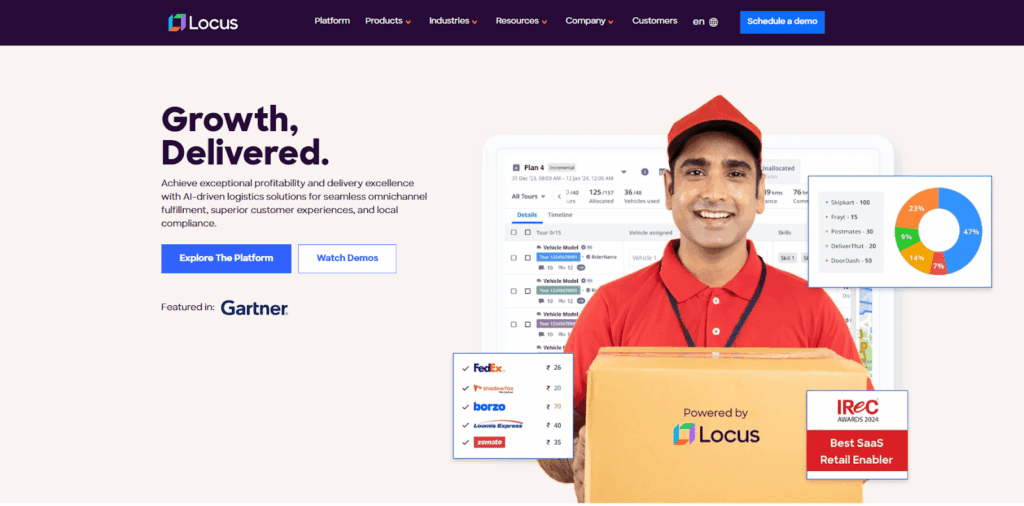
Locus supports teams that need routing that holds up under real-world conditions and workflows that can change without friction.
It’s often considered one of the best Routific alternatives for operations that outgrow basic optimization and require stronger control, visibility, and reliability.
Common Challenges Locus Resolves
?? Routing Inconsistencies
Routific users frequently mention “spaghetti routes,” overlapping paths, or detours caused by mapping constraints.
Locus becomes attractive because its patented routing engine handles dense territories, traffic patterns, and constraints more reliably, reducing the need for manual route corrections.
?? Address-Handling Sensitivity
If an address isn’t formatted precisely, multiple Routific reviews note that routes break or map incorrectly.
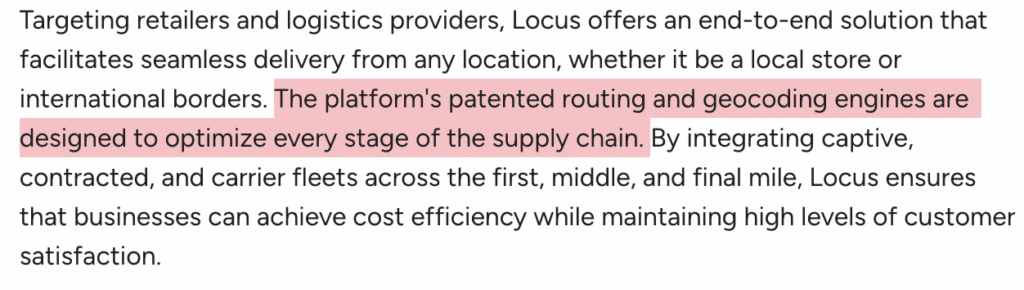
Locus solves this with stronger geocoding, auto-correction for messy addresses, and better handling of incomplete or imperfect data.
?? Workflow-Customization Constraints
Users report friction when trying to adjust messaging templates, notifications, or driver-app permissions.
Locus appeals because workflows, notifications, constraints, and driver-level permissions are fully configurable across regions and fleet types.

?? Notification-Visibility Gaps
A common Routific complaint: teams can’t see whether SMS reminders were actually sent.
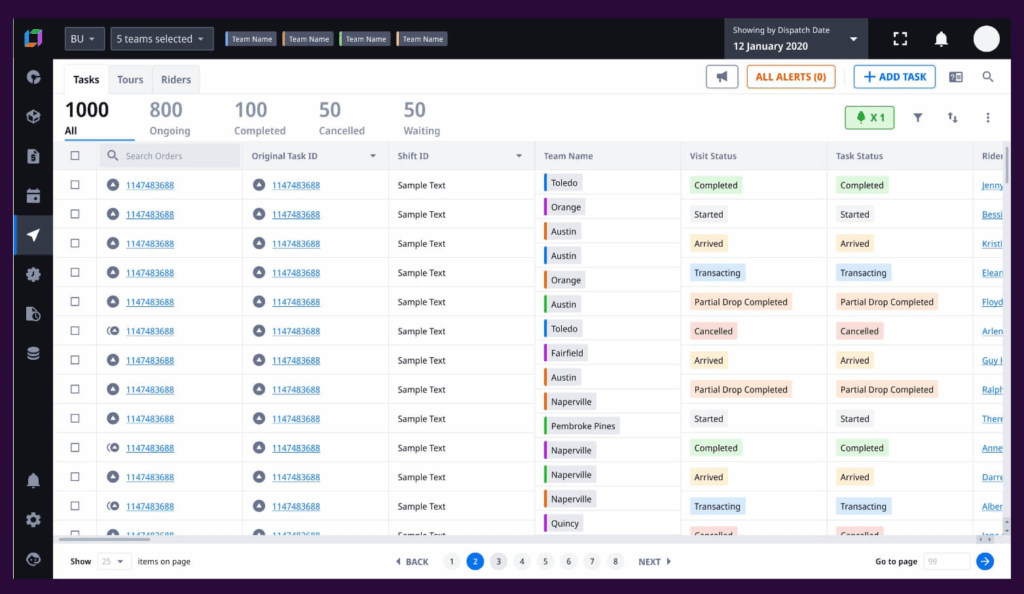
Locus addresses this with fleet tracking, which contains full communication logs, delivery-event monitoring, and exception visibility so dispatchers always know what customers received.
?? Limited Editing/ Workflow Rigidity
Locus supports automation with flexibility, allowing real-world adjustments during planning and routing. Users appreciate that the system balances structure with the ability to intervene manually.

?? Slow Reporting/ Analytics Response
Locus users repeatedly praise the visibility of exceptions, RCA tools, and reporting views, suggesting smoother diagnostics and faster insights compared to tools criticized for slow reporting.

Locus’ Pros
- Built for scale and high-density operations: Locus handles large delivery volumes, multi-hub routing, and peak-season surges without performance drops, making it a strong fit for teams outgrowing Routific’s small-team focus.
- AI-driven planning across the entire fulfillment lifecycle: Beyond routing, Locus automates pickup allocation, cancellations, returns, sorting, and SLA management. This end-to-end intelligence is a major upgrade for teams seeking more than daily route planning.
- Real-time visibility with control tower: Locus offers unified tracking across all miles, with RCA tools and exception management. This helps operations teams maintain tighter control compared to the limited visibility layers in lightweight tools.
- Deep API integrations with enterprise systems: Locus connects seamlessly with TMS, WMS, OMS, and ERP systems, reducing manual work and operational fragmentation. Teams moving from Routific often cite integration depth as a key reason for switching.
Locus’ Cons
- Locus may feel more complex than necessary for very small teams with minimal delivery operations.
- Initial implementation may require workflow and data alignment, especially for organizations automating processes for the first time.
Locus Is Ideal for
Locus is well-suited for organizations that have moved past the limitations of lightweight routing tools and now require reliable, scalable delivery orchestration, particularly:
- Retail, e-commerce, and subscription-delivery brands that have outgrown basic route planners and need stable performance for dense, high-volume routes.
- FMCG, CPG, and 3PL providers operating across multiple regions where Routific’s address sensitivity and limited customization create operational friction.
- Big-and-bulky delivery operators require precise scheduling, complex constraints, and dynamic adjustments that simple routing interfaces cannot support.
- Enterprises managing hybrid fleets or multi-hub operations where they need deeper automation, stronger integrations, and consistent route accuracy.
- Teams that need real-time visibility, rapid diagnostics, and reliable performance as order volumes expand beyond what small-team-focused platforms can comfortably handle.
Locus’ Pricing
Locus uses a custom pricing model that factors in delivery volume, the number of operating regions, fleet composition, and the specific modules required (like dispatch planning, orchestration, Track & Trace, or carrier management).
Pricing typically scales with usage and the depth of automation deployed.
Locus’ User Testimonial
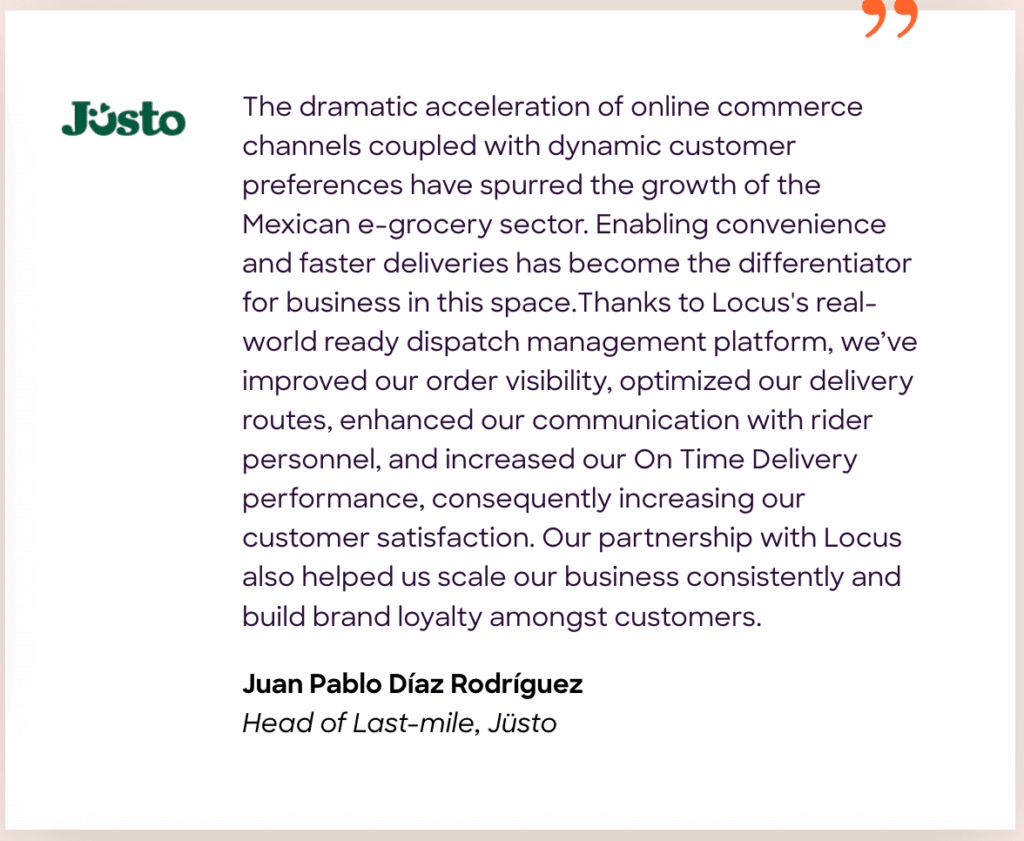
“Locus improved our visibility and routing consistency, making it easier for our teams to stay aligned during daily operations. As our delivery volumes increased, the platform supported us in maintaining dependable on-time performance,” says the Head of Last-Mile at Jüsto.
2. Onfleet
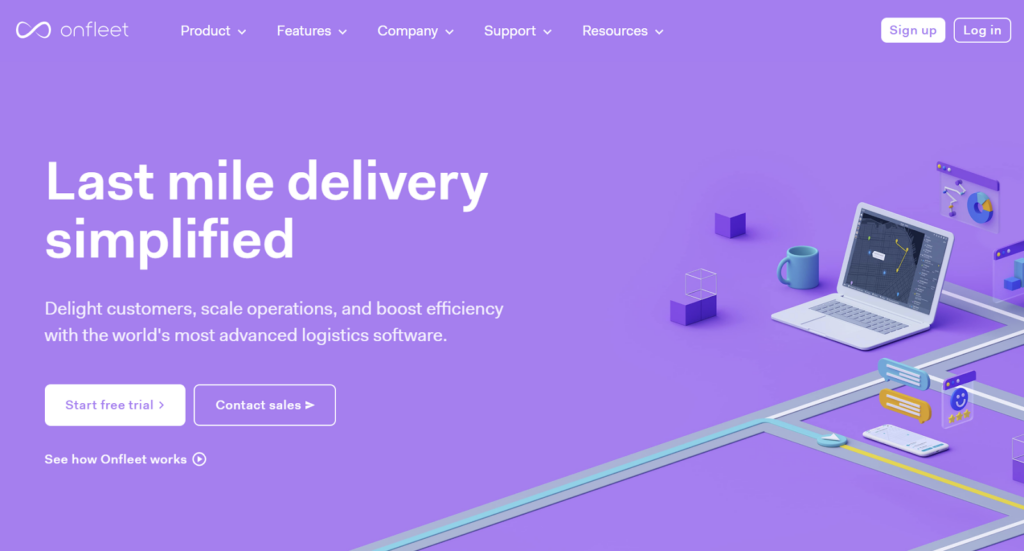
Onfleet is a simple, easy-to-use last-mile delivery management platform known for its intuitive interface and quick setup. Teams evaluating Routific alternatives often consider Onfleet when they want a lightweight system focused on last-mile execution rather than broader routing workflows or deeper customization.
Common Challenges Onfleet Resolves
Onfleet supports everyday delivery operations with:
- Quick route assignment and basic mid-shift adjustments
- Reliable driver tracking and customer notifications
- A streamlined dashboard that reduces dispatcher workload
Onfleet’s Pros
- Intuitive UI that helps teams get started with minimal training
- A clean, simple driver app that supports stable navigation and communication
- Fast implementation for teams wanting a plug-and-play delivery tool
Onfleet’s Cons
- Less suited for operations that need multi-hub routing or more complex constraints
- Limited routing intelligence compared to tools with advanced optimization engines
Onfleet Is Ideal for
Onfleet works best for local retailers, food and beverage deliveries, pharmacies, florists, and growing businesses handling same-day or on-demand orders. It’s a good fit for teams seeking simplicity without the more advanced routing controls offered by platforms like Routific.
Onfleet’s Pricing
Onfleet provides tiered pricing linked to task volume and feature access. Capabilities such as advanced analytics and API usage expand with higher-tier plans.
3. OptimoRoute
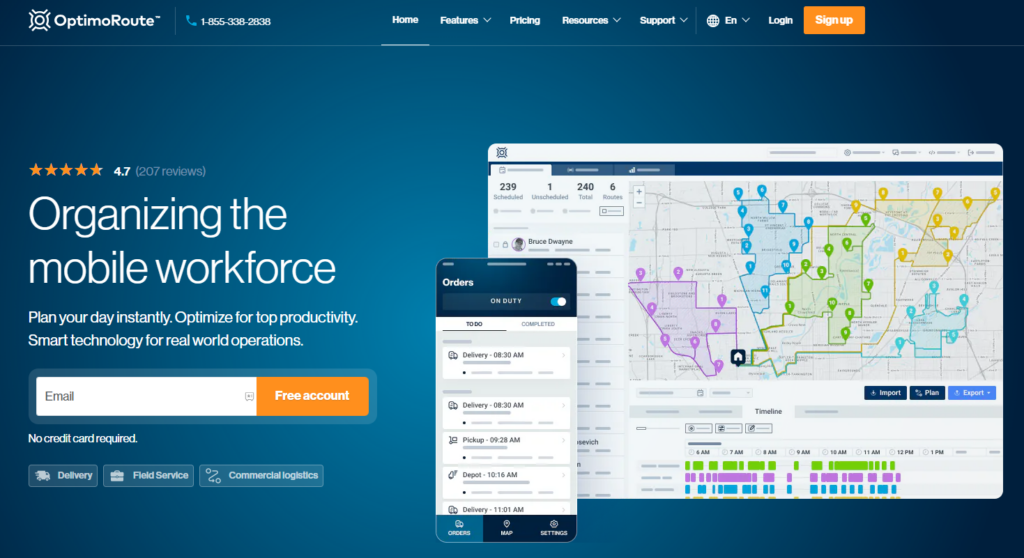
OptimoRoute is a structured route planning and delivery management platform often evaluated by teams that need more predictable scheduling and multi-day planning workflows.
When organizations look at alternatives to Routific, OptimoRoute typically appears on the shortlist because of its strong weekly scheduling, detailed proof-of-delivery capabilities, and emphasis on operational structure.
Common Challenges OptimoRoute Resolves
- Reducing planning time with automated weekly scheduling and optimized multi-driver routing
- Improving delivery transparency with real-time location visibility and clear ETAs
- Strengthening accountability with structured route execution and proof-of-delivery tools
OptimoRoute’s Pros
- A reliable routing engine that handles constraints and service windows well
- Strong multi-day or weekly scheduling for teams that plan deliveries in advance
OptimoRoute’s Cons
- UI feels dated and less modern compared with newer routing platforms
- Requires more configuration upfront before workflows run smoothly
OptimoRoute Is Ideal for:
OptimoRoute works well for logistics teams that prefer structured plans, predictable delivery cycles, and detailed proof-of-delivery workflows. It suits distributors, field service businesses, and companies managing recurring or multi-day delivery routes.
OptimoRoute’s Pricing:
OptimoRoute offers tiered, per-driver pricing with additional costs for advanced tracking and analytics. Larger operations can request custom plans for expanded capabilities.
4. Route4Me
Route4Me is a widely adopted route optimization platform known for its large mapping dataset and multi-stop routing capabilities. It often appears in shortlists when teams comparing Routific want stronger mapping coverage, more customization options, or deeper proof-of-delivery controls.
Common Challenges Route4Me Resolves
- Reducing manual work in planning complex, multi-stop routes through automated route sequencing
- Improving delivery visibility with real-time driver tracking and live route progress
- Strengthening POD workflows with signatures, photos, and customizable verification steps
Route4Me’s Pros
- Handles large and complex routing structures well
- Strong real-time tracking for dispatchers
Route4Me’s Cons
- Pricing can climb quickly for growing fleets
- Some users report occasional map or GPS inconsistencies that require manual adjustments
Route4Me is Ideal for:
Route4Me fits logistics teams, parcel carriers, courier services, and field-service operators that require flexible route customization and detailed POD management. It suits operations that want more control over route structure than lightweight tools typically offer.
Route4Me’s Pricing:
Route4Me offers tiered, per-vehicle pricing starting at $60 per vehicle per month. Advanced tracking and workflow automation are available in higher-tier plans, with custom pricing for larger fleets.
5. Tookan
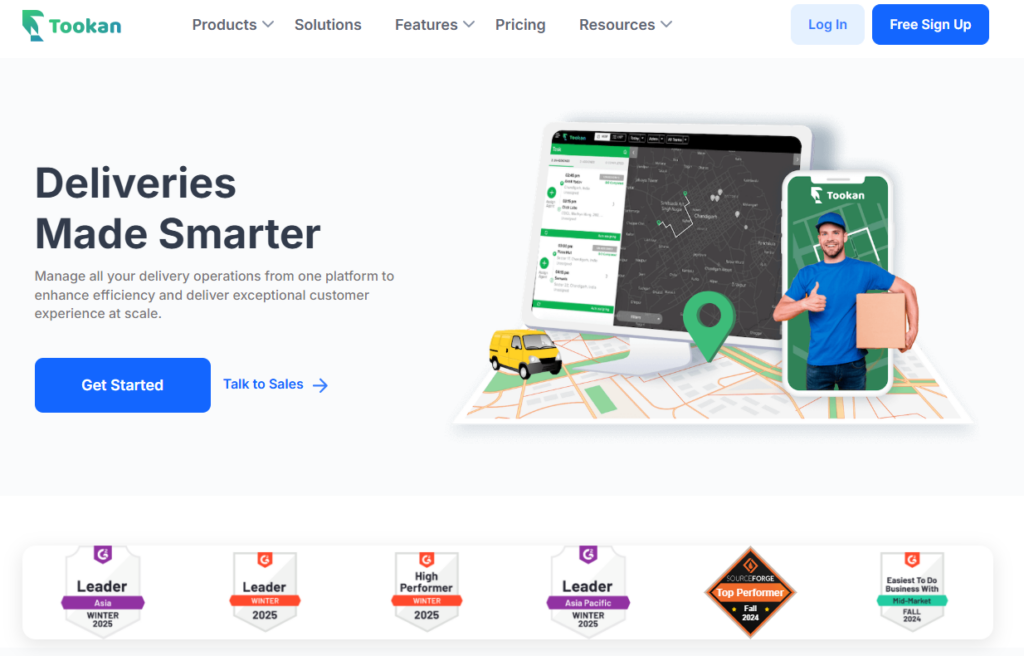
Tookan is a white-label delivery and workflow automation platform built for businesses that want to design customized customer and driver apps rather than rely on a standard routing interface.
Teams comparing Routific with more customizable options often look at Tookan when branding, engineering control, or unique workflow rules take priority over ready-made routing tools.
Common Challenges Tookan Resolves
- Creating branded customer and driver applications instead of using an off-the-shelf UI
- Integrating delivery operations with internal systems through APIs and real-time webhooks
- Supporting on-demand or hyperlocal fulfillment models that need custom logic rather than preset route workflows
Tookan’s Pros
- Strong white-labeling capabilities for fully branded delivery experiences
- API-first design with webhook support for teams that want deeper system integrations
- Multi-platform support (web, iOS, Android) for faster app deployment
Tookan’s Cons
- Requires engineering resources; not suitable for teams seeking a quick, no-code setup
- Basic routing and optimization features compared with specialized route-planning platforms
Tookan Is Ideal for
Tookan fits on-demand service providers, hyperlocal marketplaces, and early-stage startups building their own branded customer and driver apps. It is best for teams with in-house development resources and highly specific workflow requirements that traditional routing tools may not support.
Tookan’s Pricing
Base plans start near $99/month, with added costs for white-labeling, advanced integrations, and engineering-heavy customization.
6. Bringg
Bringg is a fulfillment and delivery orchestration platform built for enterprises managing multiple fleets, carriers, and delivery models. Bringg brings a stronger coordination across internal operations and outsourced delivery partners.
Common Challenges Bringg Resolves
- Unifying multi-carrier workflows so teams can manage contracted, outsourced, or third-party fleets from one system
- Improving visibility across regions, delivery partners, and service levels
- Standardizing customer communication through automated notifications and branded tracking pages
- Supporting omnichannel fulfillment models such as curbside pickup, scheduled delivery, or same-day programs
Bringg’s Pros
- Strong multi-carrier orchestration for hybrid delivery networks
- Broad support for retail and omnichannel workflows
Bringg’s Cons
- Longer implementation timelines, especially for complex enterprise environments
- Some orchestration features require higher-tier plans
Bringg Is Ideal for
Bringg suits enterprise retailers, grocery chains, CEP/3PL providers, and large delivery networks that rely heavily on external partners or multi-carrier orchestration. It works well where coordination across fleets matters more than fine-grained routing optimization.
Bringg’s Pricing
Pricing is fully custom and depends on delivery volume, integration scope, carrier networks, and overall operational complexity.
7. Ufleet
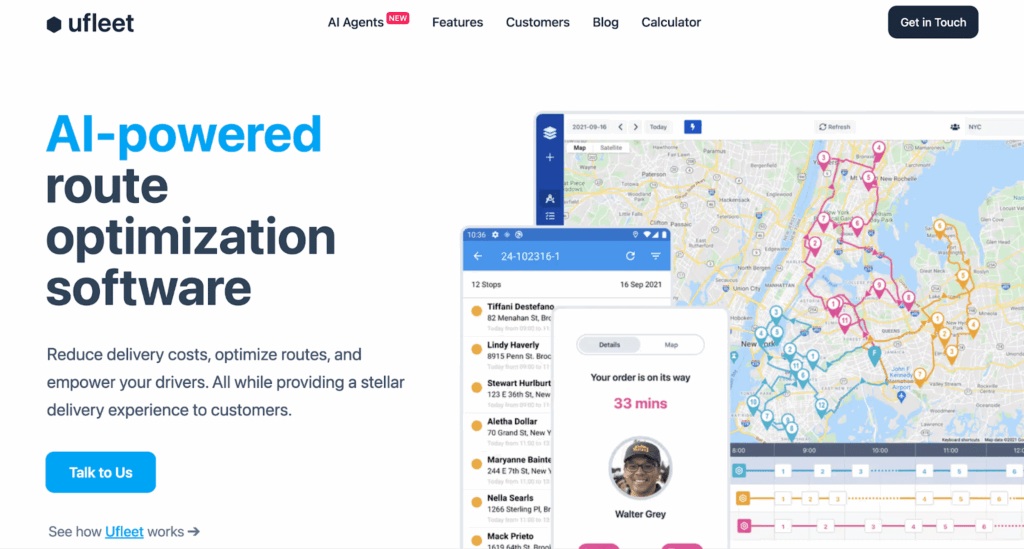
Ufleet is a modern, AI-assisted delivery management platform designed for teams that want fast route planning, simple workflows, and strong customer-facing features. It offers ease of use and customer visibility rather than deep routing customization or multi-layer operational controls.
Common Challenges Ufleet Resolves
- Fast, AI-assisted routing for teams that want quick daily planning
- Clear customer communication through tracking pages, real-time ETAs, and feedback tools
- Reduced dispatcher workload with simple dashboards that consolidate driver updates and delivery status
Ufleet’s Pros
- Very intuitive interface that supports quick onboarding
- Strong customer-facing experience with branded tracking and feedback options
- Fast AI-assisted routing well-suited for small and mid-sized delivery teams
Ufleet’s Cons
- Limited enterprise-level orchestration for complex operations
- Reporting, analytics, and historical insights are basic
Ufleet Is Ideal for
Ufleet fits retailers, grocery operators, and local delivery teams that want a clean, modern delivery tool focused on customer communication and simple daily route planning. It works best for teams that do not require advanced automation or multi-region controls.
Ufleet’s Pricing
Ufleet uses a pay-as-you-go model with free usage up to 200 deliveries per month, followed by a per-delivery fee. Custom pricing is available for higher volumes or deeper integration needs.
8. TrackoBit
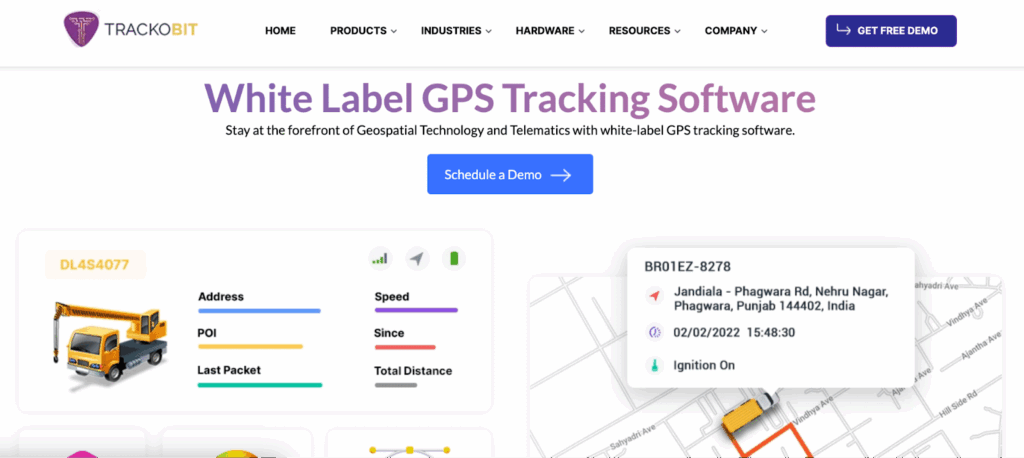
TrackoBit is a last-mile delivery and fleet management platform for teams seeking stronger operational visibility, automated routing, and centralized control over riders and vehicles.
Common Challenges TrackoBit Resolves
- Reduces manual dispatching and routing effort through automated delivery assignment
- Improves fleet visibility with real-time location tracking for vehicles, riders, and orders
- Enhances accountability with digital proof of delivery including photos and signatures
- Simplifies workforce management with tools for shift scheduling and rider performance
- Helps manage delivery loads with capacity planning tied to vehicle size and availability
TrackoBit’s Pros
- Strong real-time tracking that gives dispatchers full clarity on order movement
- Automated dispatch and routing improve planning efficiency
- Digital POD options built into the driver app
TrackoBit’s Cons
- Advanced route optimization is less sophisticated compared with AI-led platforms
- Interface and workflows may require configuration time before scaling smoothly
- Reporting focuses more on operational metrics than deeper analytics
TrackoBit Is Ideal for
TrackoBit is suited for e-commerce, grocery, courier services, healthcare logistics, and 3PL operators managing daily last-mile delivery. It fits teams that prioritize real-time tracking, delivery verification, and rider management over complex multi-region optimization.
TrackoBit’s Pricing
TrackoBit offers custom pricing based on delivery volume, fleet size, and workflow needs.
9. Aftership
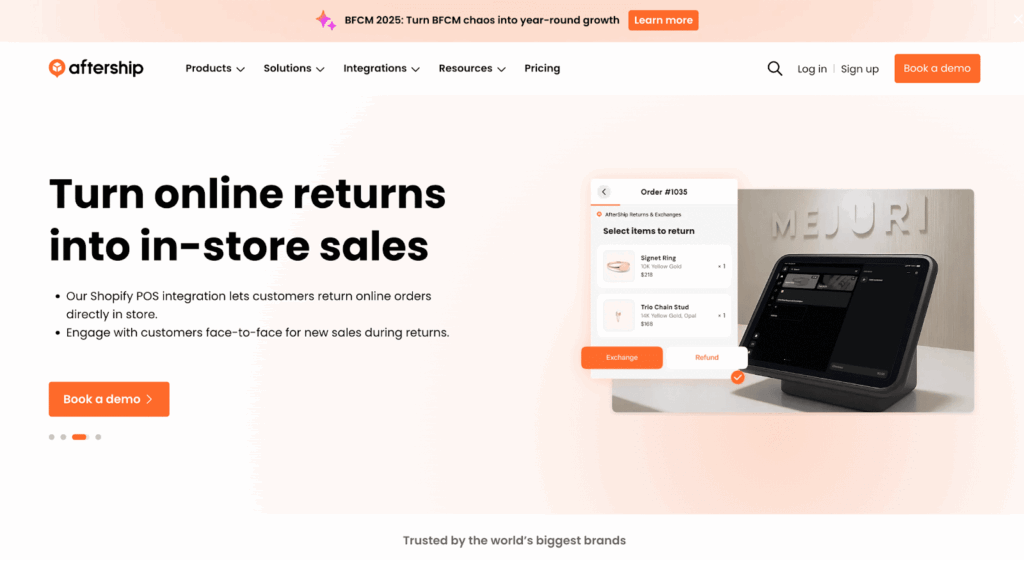
Aftership is a post-purchase and shipment-visibility platform that helps eCommerce brands centralize tracking, notifications, and returns across hundreds of global carriers. It’s often considered by teams that want stronger customer communication and visibility layers without changing their underlying delivery operations.
Common Challenges Aftership Resolves
- Limited visibility into delivery status by unifying tracking from 1,000+ carriers.
- High support load from “Where is my order?” queries through automated notifications.
- Fragmented returns workflows via a branded, self-service returns portal.
Aftership’s Pros
- Strong branded tracking experience with real-time status updates.
- Supports automated notifications across email, SMS, and WhatsApp.
- Robust returns management tools that streamline customer-facing workflows.
Aftership’s Cons
- Not a routing, dispatching, or last-mile execution platform.
- Insights are post-purchase–focused, offering little operational orchestration.
Aftership Is Ideal for
Retail and D2C brands that want to elevate the customer experience after checkout, specifically those needing centralized tracking, automated notifications, and a streamlined returns journey without modifying core logistics operations.
Aftership’s Pricing
Tiered plans based on shipment volume and features; higher tiers unlock advanced analytics, automation rules, branded tracking customization, and returns platform capabilities.
10. Shipsy
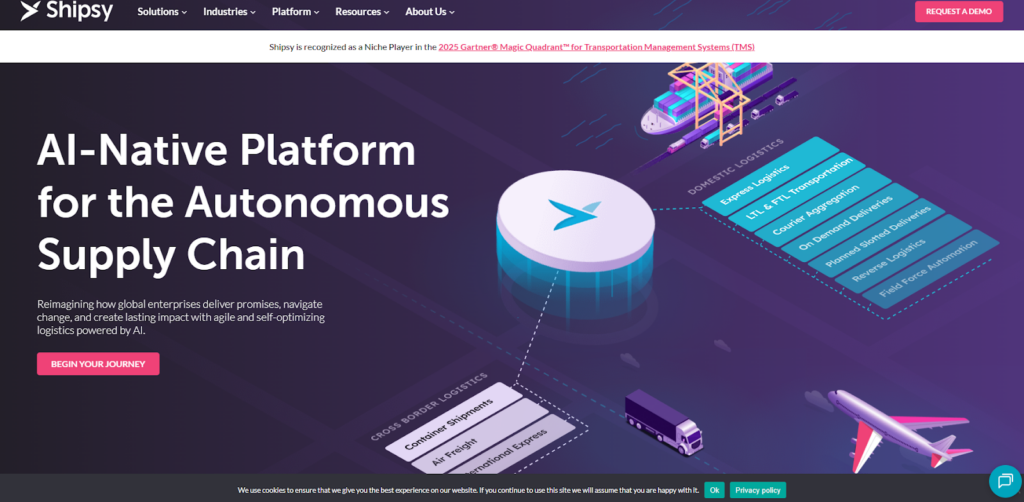
Shipsy is a logistics management and visibility platform widely used across retail, e-commerce, 3PL, CEP, and cross-border delivery networks. It focuses on improving cost efficiency and providing strong operational visibility across first-, mid-, and last-mile workflows.
Common Challenges Shipsy Resolves
Shipsy tends to appeal to teams who are experiencing:
- Visibility gaps across carriers or transport legs, offering a unified operations dashboard that reduces back-and-forth between tools.
- High dependence on multiple third-party fleets, providing automated carrier allocation and cost-optimized selection.
- Manual effort in monitoring SLAs is reduced as Shipsy provides real-time performance insights, alerts, and automated exception flagging.
Shipsy’s Pros
- Strong integrations with domestic and international couriers, useful for teams operating across regions or relying heavily on third-party delivery partners.
- Tools for comparing transporter rates, service levels, and performance metrics.
- End-to-end visibility across first, mid, and last mile, including cross-border legs.
Shipsy’s Cons
- Less suited for teams that mostly run in-house fleets or operate within a single region.
- Configuration can take time for teams that need complex workflows.
- On-ground execution varies depending on carrier networks, which may affect consistency.
Shipsy Is Ideal for
Retail, e-commerce, CEP, and 3PL teams that rely on multiple carriers or operate across several countries. Shipsy works well for teams that need stronger visibility and cost governance rather than a pure routing-first platform like Routific.
Shipsy’s Pricing
Shipsy offers custom pricing based on shipment volume, number of carriers, module selection (e.g., last-mile, cross-border, control tower), and deployment scale.
Why Many Teams Ultimately Shortlist Locus
Growing teams often outpace Routific when routing inconsistencies, address-handling issues, limited workflow controls, and gaps in visibility start affecting daily operations. These recurring themes appear across recent reviews as delivery networks expand.
The alternatives in this guide address different parts of that problem space. Some offer lighter last-mile execution, others focus on post-purchase visibility, and a few support broader orchestration for multi-region teams.
Locus aligns closely with the areas where Routific users face friction, particularly in routing stability, handling imperfect address data, workflow flexibility, and maintaining performance at higher volumes. It offers the operational control many teams look for when moving past lightweight routing tools.
Book a walkthrough to understand how Locus addresses the pain points teams often encounter with Routific and what a smooth migration path could look like.
Frequently Asked Questions (FAQs)
1. What signals that it’s time to evaluate Routific alternatives?
If dispatchers spend extra time correcting routes, managing exceptions manually, or compensating for inconsistent ETAs, it’s a sign the operation needs stronger routing stability and customization controls.
2. What should operators prioritize when comparing Routific alternatives?
Look for platforms with stronger geocoding, reliable performance under load, configurable workflows, real-time visibility, and deeper integrations with TMS, WMS, OMS, or ERP systems to support multi-region operations.
3. How difficult is migrating from Routific to a more advanced platform?
Migration depends on data quality—addresses, service areas, constraints, and fleet details. Clean datasets speed up onboarding, while complex workflows may require structured configuration before a complete switch.
4. Will switching disrupt daily routing or delivery operations?
Most teams run both systems in parallel for a short period. This reduces downtime, validates routing accuracy, and helps dispatchers adjust workflows before entirely moving over.
5. How long does it take to integrate a Routific alternative into existing systems?
For API-first platforms, integrations with order systems and fleet tools often take a few weeks. Multi-region deployments with complex constraints or orchestration layers can require phased rollouts.


General
10 Best Shipsy Competitors in 2026 for End-to-End Logistics Performance

Dec 18, 2025
Check out the 10 best Shipsy alternatives for 2026. Evaluate routing accuracy, platform stability, visibility features, and more to choose the apt platform.
Read more
General
Top Onfleet Alternatives for 2026: A Comparison of Delivery Solutions
Dec 23, 2025
Explore the best Onfleet alternatives in 2026. Compare delivery management platforms with advanced routing, automation, and dispatch capabilities.
Read moreInsights Worth Your Time




















Top 10 Routific Alternatives to Consider in 2026 for Better Routing and Delivery Performance