


General
10 Best Shipsy Competitors in 2026 for End-to-End Logistics Performance

Key Takeaways
- Many teams explore Shipsy alternatives when they encounter navigation friction, slower onboarding, or delays in support response during daily operations.
- Performance slowdowns under large fleet loads push enterprises to seek platforms with more stable real-time visibility and faster data retrieval.
- Organizations with multi-hub or multi-region delivery networks often require deeper routing intelligence and orchestration than Shipsy provides natively.
- Mid-market and enterprise buyers increasingly evaluate tools based on flexibility, integration speed, and the ability to adapt workflows without backend dependence.
- Locus consistently ranks as a top alternative due to its routing accuracy, operational stability at scale, and strong real-time control tower capabilities.
For many teams, Shipsy works well until operations become heavier and daily workflows demand faster responses. Reviews point to onboarding delays, UI complexity, and lag when loading large fleets. Some users also call out unreliable delivery-status updates, rigid workflows, and slower support during urgent situations.
When these issues start affecting dispatch speed and SLA confidence, teams begin exploring alternatives built for higher operational stability.
This is why many logistics teams feel it’s the right time to evaluate Shipsy alternatives and identify platforms that address these operational challenges more directly.
What Pushes Logistics Teams to Consider Shipsy Competitors
Shipsy is known for its strong last-mile orchestration capabilities, providing reliable visibility and workflow management for delivery teams.
As organizations scale, however, feedback across G2, Capterra, and other review platforms highlights recurring operational challenges that prompt many teams to evaluate alternative solutions.
Consistently reported user issues include:
? Several reviewers highlight usability and onboarding challenges, noting that the platform can be difficult for new users to navigate and that onboarding takes longer than expected.
Some also mention that support responses are not always quick or helpful enough during daily operations.

? A G2 review notes that when managing a large fleet, the platform may buffer or take time to load complete details. This creates delays in accessing real-time visibility data, especially during busy operational windows.

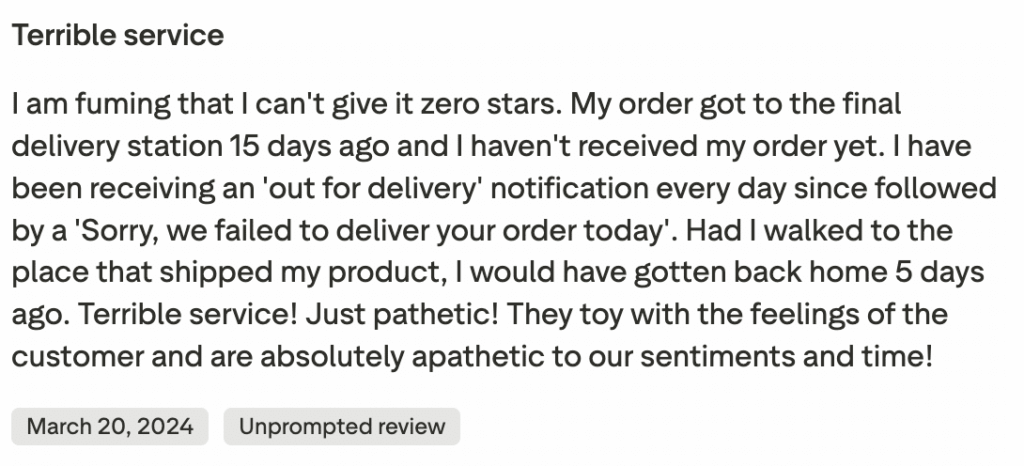
? Trustpilot reviewer reports repeated “out for delivery” errors, in which orders failed to reach the customer for over two weeks despite daily delivery notifications. This indicates inconsistencies in delivery visibility and last-mile reliability.
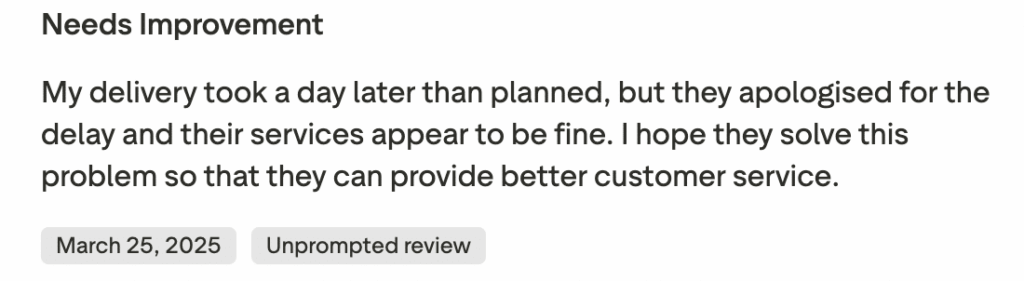
? Reviewers mention occasional delays, noting that deliveries can take longer than planned and may affect SLAs.
When these challenges appear consistently, teams begin looking for delivery management platforms that offer smoother onboarding, faster real-time visibility, and more reliable last-mile execution. The following section introduces the alternatives most commonly evaluated.
Leading Competitors to Shipsy in 2026
Whether you’re new to Shipsy or rethinking its fit, these patterns are common as operations scale. Here’s a curated list of the alternatives teams often examine next.
| Problem | What does it lead to | What to look for | Best-fit tools |
|---|---|---|---|
| Platform lag during load | Delayed dispatch | Stable high-volume performance | Locus, LogiNext |
| Slow analytics refresh | Reactive ops | Fast exceptions + RCA tools | Locus, Blue Yonder |
| Rigid workflows | Slow fixes mid-route | Flexible overrides | Locus, LogiNext |
| Unstable ETAs | Manual resets and detours | Adaptive routing | Locus, LogiNext |
| Limited multi-hub visibility | Missed SLAs | Unified orchestration views | Locus, FarEye |
| Scaling issues at peak | Routing failures | Elastic routing + fleet scaling | Locus, Blue Yonder |
1. Locus
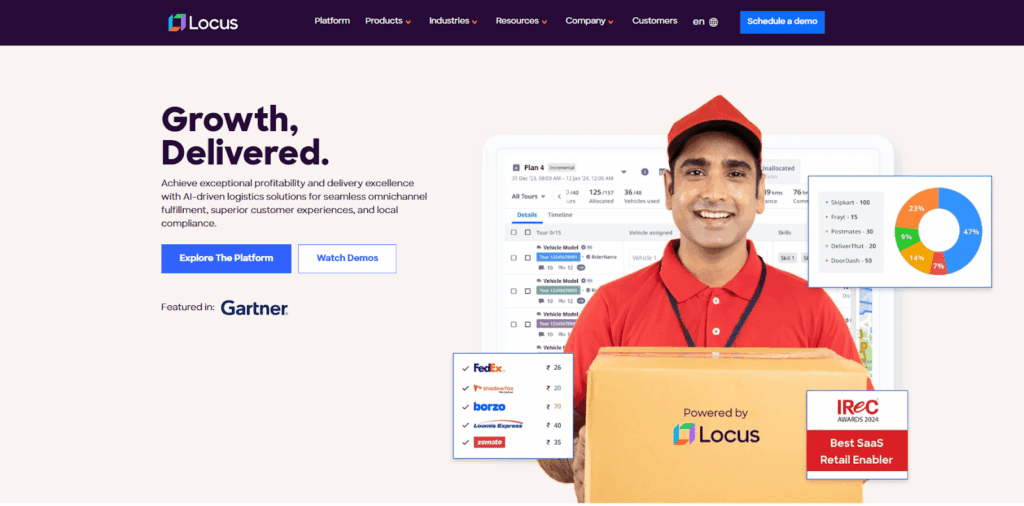
Locus is a logistics automation platform designed to help enterprises manage routing, dispatch, and last-mile execution with precision.
Teams assessing Shipsy alternatives often consider Locus because it performs reliably in high-volume, multi-region environments and reduces the manual decision-making that slows down daily operations.
Common Challenges Locus Resolves
? Many reviewers note that Locus responds quickly during task creation, assignment, and monitoring. The Control Tower remains stable even as volumes rise, helping teams avoid the platform slowdowns reported in Shipsy reviews.
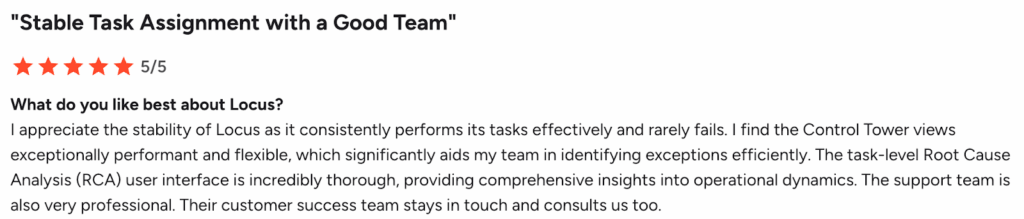
? Users frequently mention that Locus maintains a steady operational flow, with real-time tracking and event updates continuing without glitches. This reliability reduces the issues of accountability and driver efficiency.
? Reviewers appreciate Locus dashboards for surfacing exceptions and performance insights quickly. Teams can review issues, understand trends, and act without waiting through long load times.

? Locus allows dispatchers to adjust routes and assignments on the go, supporting scenarios where conditions change mid-shift. This level of flexibility helps teams adapt faster without having to request backend changes.

Locus’ Pros
- Reliable and Adaptive AI Routing: Locus adapts routing based on density, traffic conditions, and on-ground constraints. This helps teams maintain dependable ETAs and reduces the need for dispatcher overrides daily.
- Scalability: The platform synchronizes decisions across each stage of delivery, reducing the disconnect that often occurs when multiple tools or workflows are involved.
- End-to-End Orchestration: Locus handles larger fleets and expanding service regions without compromising speed or visibility, supporting operations during peak demand and rapid expansion.
Locus’ Cons
- Locus may feel more complex than necessary for very small teams with minimal delivery operations.
- Initial implementation may require workflow and data alignment, especially for organizations automating processes for the first time.
Locus Is Ideal for
- Retail, e-commerce, and e-grocery teams running dense, time-critical routes
- FMCG/CPG and 3PL networks operating across multiple regions
- Big-and-bulky delivery providers with complex routing needs
- Enterprises coordinating hybrid or multi-fleet operations
- Teams that require real-time visibility as volumes grow
Locus’ Pricing
Locus uses a custom pricing model based on regions, delivery volume, fleet type, and selected modules (e.g., orchestration, dispatch planning, track & trace, or carrier management).
Pricing scales with usage and automation depth.
Locus’ User Testimonial
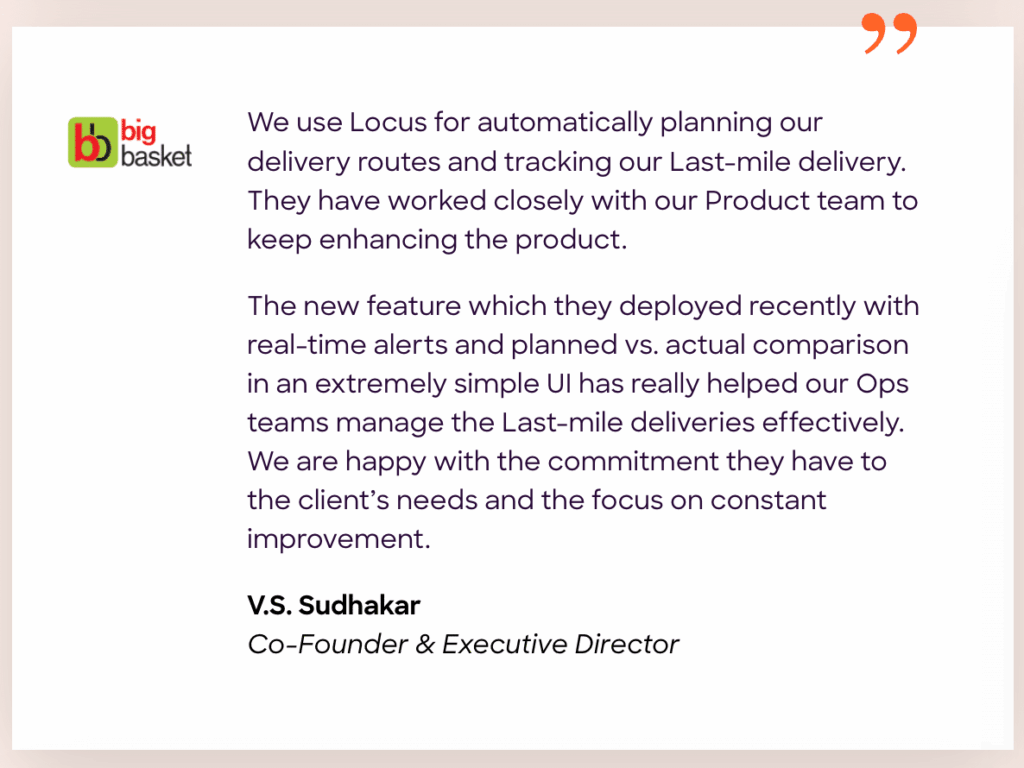
“Locus’ real-time alerts and planned-versus-actual comparisons have transformed how we manage our daily last-mile operations. The platform gives our teams a clear, live view of performance and exceptions, helping us stay ahead of delays and maintain reliable delivery timelines. We’ve also been impressed with the responsiveness of the Locus product and support teams, who continue to work closely with us to refine our workflows,” says the Co-Founder and Executive Director of BigBasket.
2. ClickPost
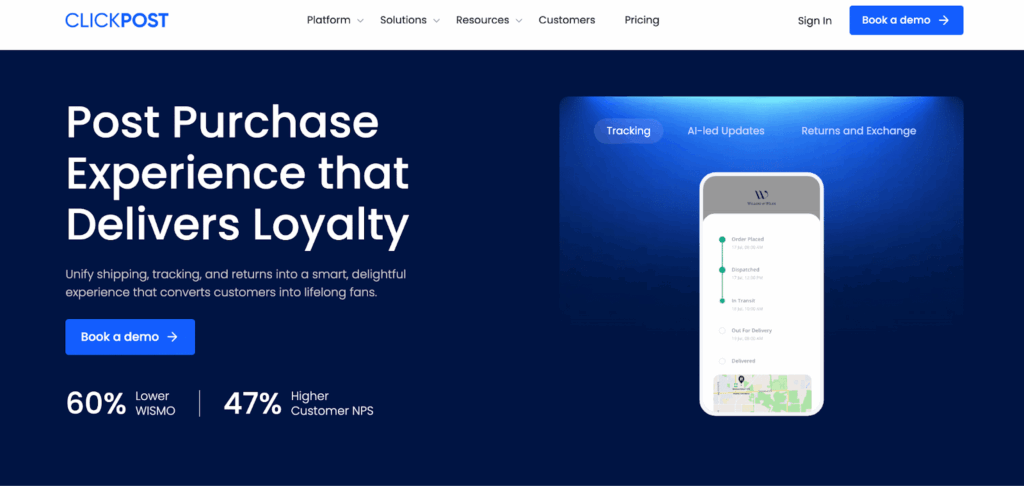
ClickPost is a post-purchase and delivery experience platform widely used by e-commerce brands to improve tracking, NDR (non-delivery reports), carrier allocation, and returns workflows.ClickPost focuses on the customer-facing side of delivery, helping reduce RTO and improve visibility across multiple carriers.
Common Challenges ClickPost Resolves
- Reduces RTO with automated NDR journeys and better communication.
- Improves shipment tracking by unifying updates across carriers.
- Simplifies returns with a branded returns portal.
ClickPost’s Pros
- Strong multi-carrier integrations and unified tracking.
- Excellent NDR and returns workflows for D2C and marketplaces.
- Quick implementation; minimal operational disruption.
ClickPost’s Cons
- Not a full routing or dispatch automation platform.
- Limited value for teams needing sophisticated planning or operational AI.
ClickPost Is Ideal for
E-commerce and D2C brands that need cleaner tracking, reduced delivery failures, and a better post-purchase customer experience, especially those shipping through multiple carriers.
ClickPost’s Pricing
Custom pricing based on shipment volume, integrated carriers, and enabled modules (tracking, NDR, returns). Typically mid-range for D2C platforms.
3. Easyship
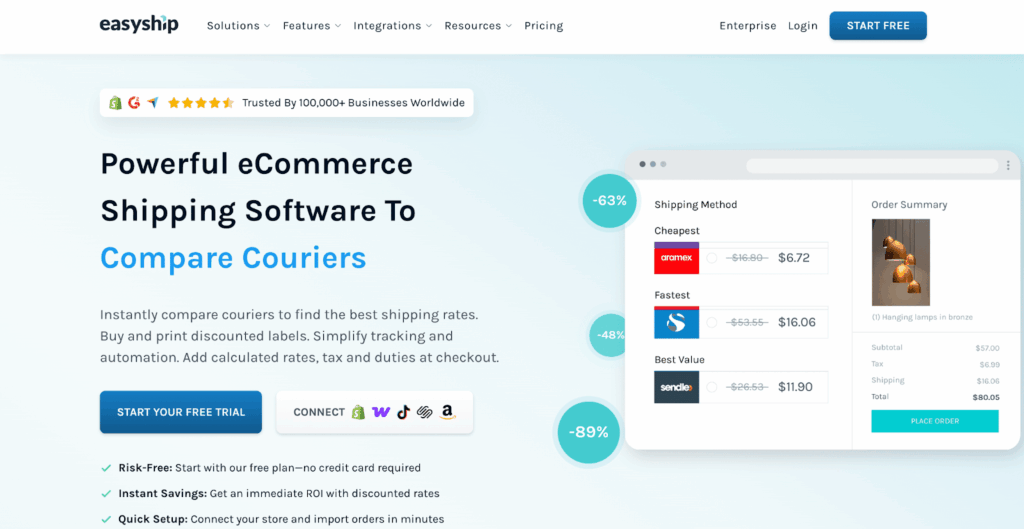
Easyship is a cross-border shipping and logistics platform built for eCommerce brands that ship internationally without operating overseas warehouses. It centralizes carrier rate comparison, duty/tax calculation, and global label generation, helping brands simplify international checkout and reduce shipping-related friction.
Common Challenges Easyship Resolves
- Complex cross-border shipping rules can be automated by automating duties, taxes, and customs documentation.
- High international shipping costs through multi-carrier rate comparison.
- Poor customer experience for global orders due to branded tracking pages and a lack of transparency into landed costs.
Easyship’s Pros
- Strong international shipping tools, including automated customs paperwork and tax calculators.
- Transparent landed-cost estimates that reduce cart abandonment for overseas shoppers.
- Integrates with major storefronts like Shopify, BigCommerce, WooCommerce, Amazon, and eBay.
Easyship’s Cons
- Not built for routing, dispatching, or managing on-ground delivery operations.
- Limited value for teams focused mainly on domestic last-mile orchestration.
Easyship Is Ideal for
Brands expanding globally from a single domestic warehouse, especially those needing simplified international shipping, cost transparency at checkout, and automated cross-border compliance without heavy operational restructuring.
Easyship’s Pricing
Pay-as-you-go model based on carrier rates and service usage, with higher tiers adding discounted rates, automation tools, and onboarding support.
4. LogiNext

LogiNext is an AI-enabled delivery management platform focused on route optimization, automated scheduling, and real-time visibility. Teams consider LogiNext when they need a configurable system that supports deliveries, pickups, and returns within a single workflow.
Common Challenges LogiNext Resolves
- Reduces routing inefficiencies through AI-driven route optimization that adapts to traffic and delivery windows.
- Improves visibility with continuous tracking of drivers and orders throughout the day.
- Eliminates manual scheduling by automating pickup and delivery time-slot assignments.
- Enhances delivery accuracy through photo proof of delivery, barcode scanning, and digital signatures.
LogiNext’s Pros
- Supports a wide range of routing models, including deliveries, pickups, and reverse logistics.
- Provides strong real-time tracking for both dispatchers and customers.
- Offers robust proof-of-delivery options that reduce delivery errors and disputes.
LogiNext’s Cons
- Can feel complex for smaller teams that only need last-mile coordination.
- Typically requires structured onboarding and implementation.
- Pricing may increase quickly as delivery volumes or user counts grow.
LogiNext Is Ideal for
LogiNext is ideal for retail, e-commerce, logistics, and food & beverage operations with mixed workflows. It is also useful for teams that require automation for deliveries, pickups, and returns rather than only basic routing.
LogiNext’s Pricing
Custom pricing based on delivery volume, regions covered, and required modules.
5. Fareye
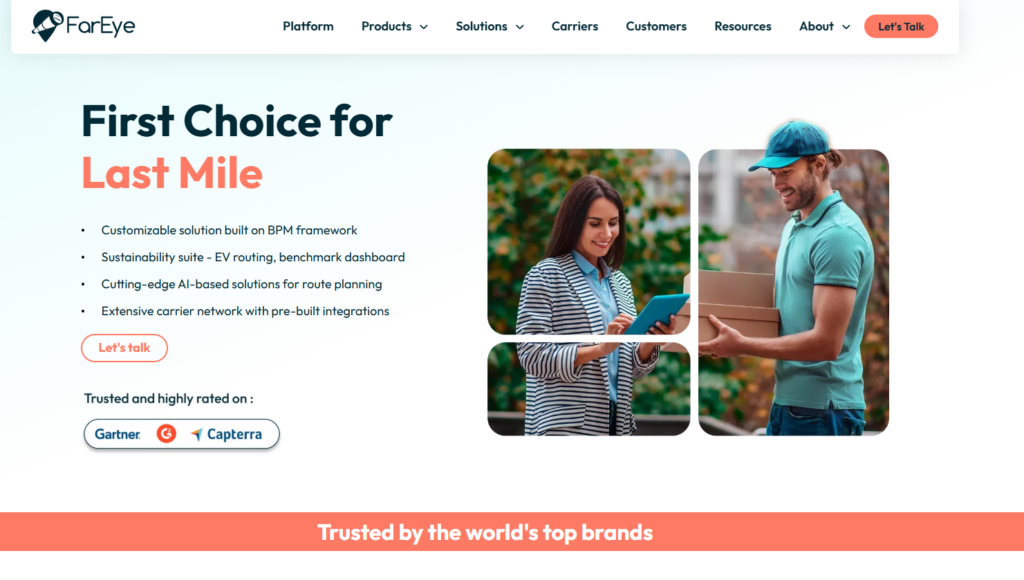
FarEye is a widely adopted delivery management and customer experience platform used by enterprises that prioritize predictive visibility and strong post-purchase communication.
Teams evaluating Shipsy alternatives often look at FarEye when they need advanced customer engagement features, multi-carrier coordination, and branded delivery experiences across large-scale retail and e-commerce operations.
Common Challenges FarEye Resolves
- Enhances delivery visibility through predictive ETAs, real-time tracking, and proactive exception alerts, helping teams stay ahead of delays.
- Improves customer communication by providing automated SMS, email, and WhatsApp updates throughout the delivery journey.
- Consolidates carrier management with tools to monitor partner performance, manage SLAs, and streamline last-mile coordination across multiple logistics providers.
- Reduces failed deliveries through dynamic rescheduling options and self-service interfaces that allow customers to update preferences or time windows.
- Strengthens post-purchase experience with analytics dashboards tailored to satisfaction metrics and customer behavior trends.
FarEye’s Pros
- Strong focus on customer-facing delivery experience
- Predictive analytics that flag potential failures before they occur
- Broad integrations with e-commerce platforms and marketplace systems
- Mature carrier performance management capabilities
FarEye’s Cons
- Less advanced route optimization compared to specialized dispatch planning tools
- Pricing can become complex as feature usage or delivery volume increases
- Integration with legacy systems may require a custom development effort
- More CX-oriented than cost-optimization-oriented
FarEye Is Ideal for
FarEye is a strong fit for retail and e-commerce teams that prioritize customer communication, multi-carrier orchestration, and predictive visibility. It is best suited for operations where maximizing CX and on-time delivery rates matter more than optimizing routing costs alone.
FarEye’s Pricing
Custom enterprise pricing typically starts at around $2,000 per month, with additional costs for advanced modules, integrations, or expanded delivery volumes.
6. ShipBob
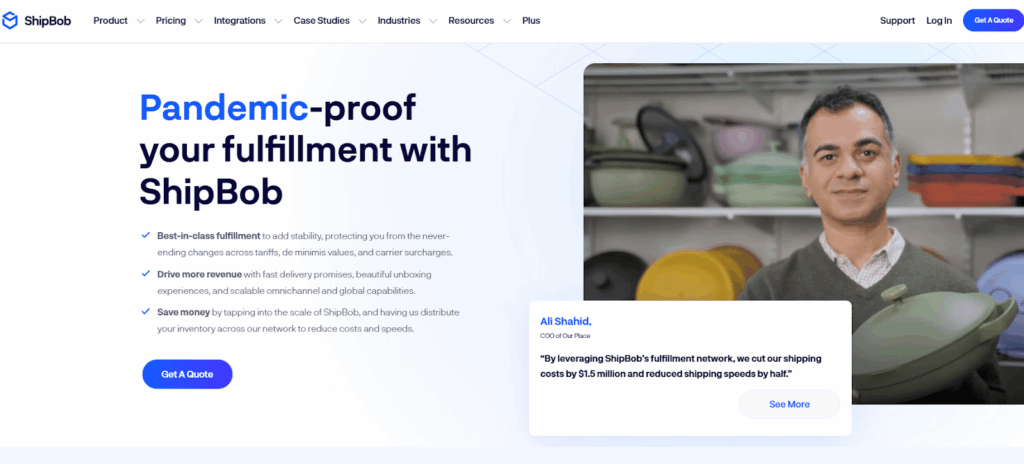
ShipBob is a fulfillment solution designed for growing businesses, offering robust logistics services that ensure fast, cost-effective, and scalable operations. With a focus on efficiency, accuracy, and global expansion, ShipBob empowers brands to enhance their customer experience while driving operational success.
Common Challenges ShipBob Resolves
- Simplifies multi-warehouse fulfillment through a global network of 60+ fulfillment centers, allowing brands to distribute inventory closer to customers and reduce shipping times.
- Supports omnichannel workflows by integrating with leading eCommerce platforms, marketplaces, and retail partners, ensuring consistent fulfillment across D2C and B2B channels.
- Improves delivery speed by enabling 2-day shipping across the U.S., helping brands compete with marketplace-level delivery expectations.
- Eliminates inventory blind spots with real-time stock visibility, replenishment alerts, and centralized reporting across multiple locations.
ShipBob’s Pros
- Large international fulfillment network suitable for fast-scaling brands
- Strong integrations across eCommerce, retail, and marketplace platforms
- Reliable 2-day shipping capabilities in the U.S.
- Transparent inventory tracking with proactive stock management
ShipBob’s Cons
- Costs may increase for brands with complex custom packaging or high SKU variability
- Less suited for businesses needing deep transportation management or route optimization
- Multi-warehouse setup may require operational adjustment for smaller teams
ShipBob Is Ideal for
- Fast-growing eCommerce brands expanding into new markets or needing consistent 2-day delivery
- Mid-market businesses managing multi-warehouse operations and rising order volumes
- Brands looking for an outsourced fulfillment partner rather than in-house logistics tools
ShipBob’s Pricing
ShipBob offers customized pricing based on order volume, storage needs, fulfillment workflows, and required integrations. Businesses can request a tailored quote to match their operational model and growth plans.
7. Blue Yonder

Blue Yonder offers an enterprise-grade transportation management system embedded within a broader supply chain execution suite. It is a preferred choice for organizations that need transportation planning tightly connected with warehousing, demand forecasting, and inventory replenishment.
Common Challenges Blue Yonder Resolves
- Optimizes multimodal transportation by planning and consolidating shipments across air, ocean, and ground networks, ensuring cost-efficient routing at scale.
- Aligns transportation with demand forecasts so teams can plan proactively based on inventory flows, SKU velocity, and forecasted production cycles.
- Unifies warehouse and transportation operations through native WMS-TMS connectivity, reducing handoff delays and improving execution accuracy.
- Supports long-term scenario planning with network modeling tools that simulate cost, capacity, and carrier strategies.
- Automates freight audit and settlement to eliminate manual invoice checks and streamline carrier payment workflows.
BlueYonder’s Pros
- Strong end-to-end supply chain alignment across WMS, TMS, and forecasting
- Proven multimodal optimization capabilities for complex global networks
- Advanced planning tools suited for long-term cost and capacity modeling
- Mature automation for freight auditing and settlement
Blue Yonder’s Cons
- Enterprise complexity may require specialized implementation resources
- Higher total cost of ownership for mid-sized teams
- Best suited for fully integrated supply chain environments rather than standalone TMS use
- Configuration and deployment can take longer than lighter, cloud-native TMS solutions
Blue Yonder Is Ideal for
Manufacturers, large retailers, and distribution networks require synchronized planning across warehousing, transportation, and demand forecasting.
Blue Yonder’s Pricing
Blue Yonder offers enterprise licensing. Pricing varies based on solution scope, deployment model (cloud/on-premise), and user volume.
8. Oracle Transport Management
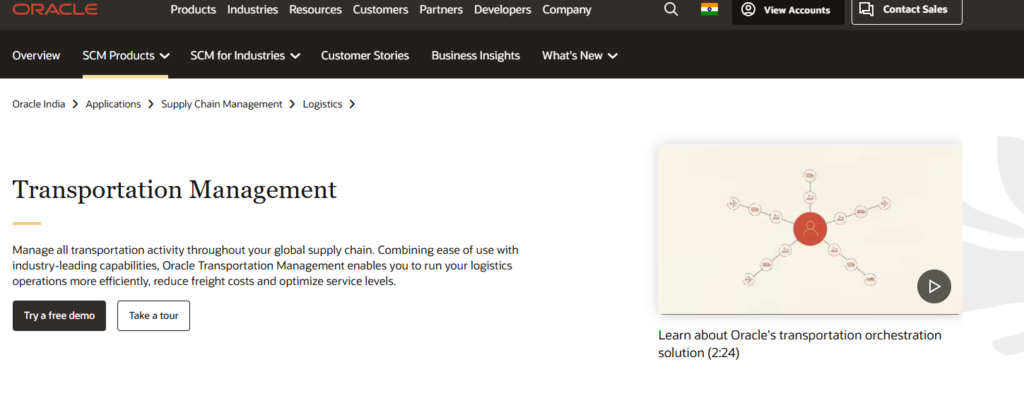
Oracle Transportation Management (OTM) is a cloud-based solution within Oracle’s broader supply chain suite, built to support complex, high-volume shipping networks. Enterprises evaluating TMS alternatives often consider OTM when they need deep planning, transportation cost control, and unified execution across global, multimodal operations.
Common Challenges Oracle Resolves
- Optimizes complex routing workflows by planning multi-leg, multi-mode shipments from long-haul to last-mile within a single environment.
- Improves transportation cost control through automated freight spend management, invoice reconciliation, and rate benchmarking across carriers.
- Enhances contract and rate governance with centralized carrier agreements, automated rate comparisons, and rule-driven tendering decisions.
- Strengthens shipment visibility with real-time tracking, exception monitoring, and predictive ETA insights across domestic and international lanes.
Oracle’s Pros
- Highly scalable and suited for global, multi-modal logistics operations
- Comprehensive cost management and auditing tools
- Strong integration footprint across Oracle’s cloud applications
- Deep planning capabilities for high-volume enterprise workloads
Oracle’s Cons
- Implementation is more complex than lighter SaaS TMS options
- Best suited for organizations already invested in Oracle Cloud
- Long configuration cycles for custom routing and financial workflows
- Total cost of ownership may be higher for mid-sized businesses
Oracle Is Ideal for
Oracle OTM is best suited for:
- Large enterprises with complex, multi-leg transportation networks
- Organizations leveraging Oracle ERP or SCM applications
- High-throughput logistics environments requiring granular cost control
Oracle’s Pricing
OTM pricing follows an enterprise licensing model and is commonly packaged with additional Oracle Supply Chain Cloud modules. Costs vary based on shipment volume, activated features, and deployment scope.
9. SAP Transportation Management
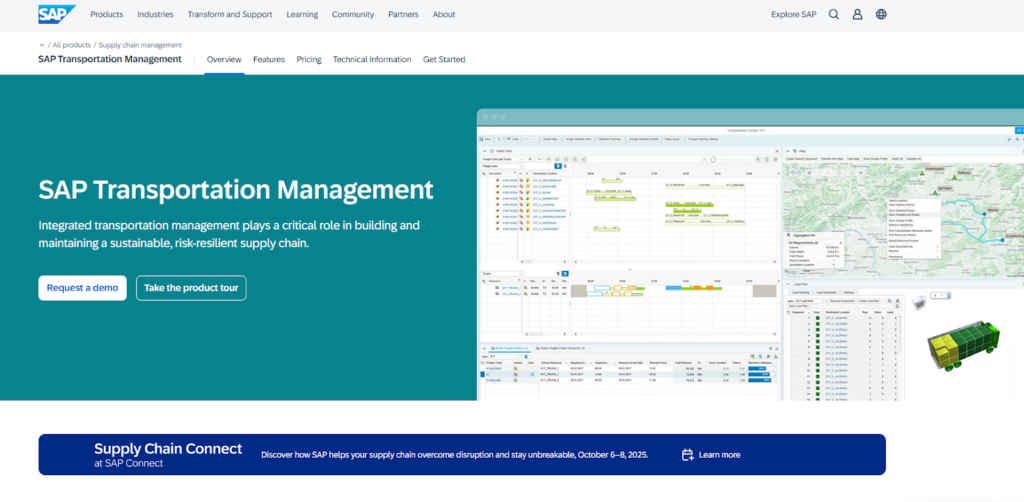
SAP Transportation Management (SAP TM) is embedded within the SAP S/4HANA ecosystem, offering unified transportation planning, execution, and settlement for enterprises operating on SAP. Organizations evaluating alternatives often consider SAP TM when they require end-to-end transport workflows fully aligned with procurement, warehousing, and finance.
Common Challenges SAP Resolves
- Enables comprehensive freight planning for full truckload, LTL, parcel, and multimodal shipments.
- Automates freight cost calculation by allocating charges, validating invoices, and reconciling costs across carriers.
- Links transportation with order and warehouse flows, ensuring transport plans remain synchronized with sales orders, deliveries, and storage operations.
- Supports flexible carrier tendering with spot bidding, contract rate governance, and automated carrier selection.
- Improves real-time visibility through Control Tower dashboards that track shipment events, ETA deviations, and lane performance.
SAP’s Pros
- Strong transport capabilities integrated directly with SAP S/4HANA
- Seamless alignment with finance, procurement, and warehouse operations
- Advanced rules for freight planning, carrier selection, and cost allocation
- Mature visibility and event-tracking features
SAP’s Cons
- Higher deployment complexity than cloud-native TMS platforms
- Requires specialized SAP expertise for configuration and support
- Cost and implementation timelines can extend for multi-region rollouts
SAP Is Ideal for
SAP TM is best suited for:
- Global enterprises already using SAP S/4HANA
- Companies needing synchronized transport, warehouse, and finance operations
- High-volume supply chains requiring structured, rules-based transportation planning
SAP’s Pricing
SAP TM is licensed as an add-on module within SAP’s tiered pricing model. Total cost depends on transaction volume, geographic scope, and system integration requirements.
10. Aftership
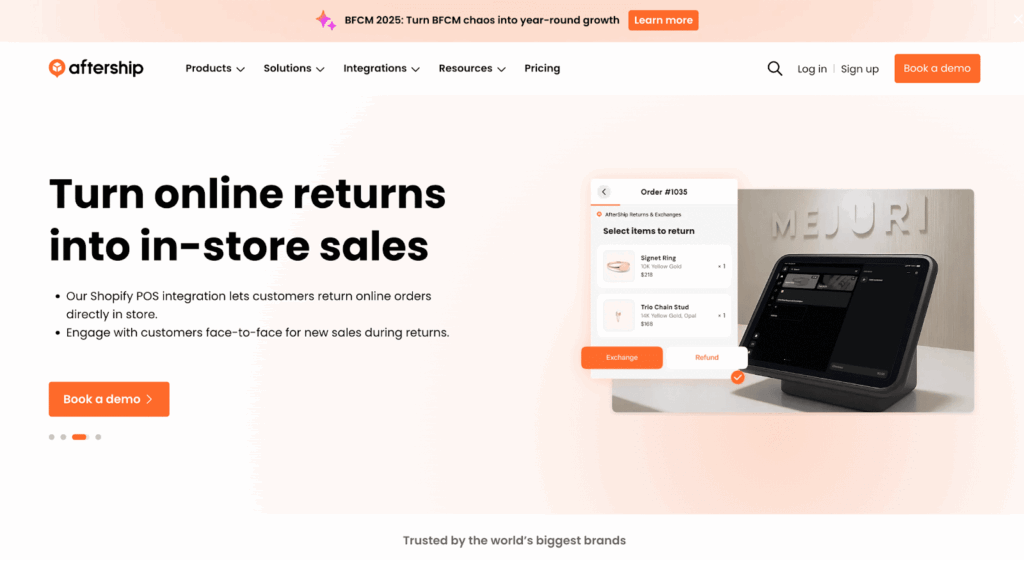
Aftership is a post-purchase and shipment-visibility platform that helps eCommerce brands centralize tracking, notifications, and returns across hundreds of global carriers. It’s often considered by teams that want stronger customer communication and visibility layers without changing their underlying delivery operations.
Common Challenges Aftership Resolves
- Limited visibility into delivery status by unifying tracking from 1,000+ carriers.
- High support load from “Where is my order?” queries through automated notifications.
- Fragmented returns workflows via a branded, self-service returns portal.
Aftership’s Pros
- Strong branded tracking experience with real-time status updates.
- Supports automated notifications across email, SMS, and WhatsApp.
- Robust returns management tools that streamline customer-facing workflows.
Aftership’s Cons
- Not a routing, dispatching, or last-mile execution platform.
- Insights are post-purchase–focused, offering little operational orchestration.
Aftership Is Ideal for
Retail and D2C brands that want to elevate the customer experience after checkout, specifically those needing centralized tracking, automated notifications, and a streamlined returns journey without modifying core logistics operations.
Aftership’s Pricing
Tiered plans based on shipment volume and features; higher tiers unlock advanced analytics, automation rules, branded tracking customization, and returns platform capabilities.
Why Locus Is the Stronger Choice
Logistics teams choose Locus when they need a platform that works smoothly in real conditions and keeps pace with rising delivery volumes. The system handles routing, tracking, and daily coordination without slowing down, giving teams the clarity and control they often lack in other tools.
It helps reduce delays, strengthens SLA performance, and replaces manual fixes with steady, predictable workflows. As your network expands across regions, fleets, and service levels, the platform scales without adding complexity.
If your operations need greater accuracy, stability, and confidence in daily execution, this platform is built to deliver it.
Want a closer look? Book a walkthrough with the team.
Frequently Asked Questions (FAQs)
1. What operational signs indicate that Shipsy may no longer match growing delivery needs?
If fleet size increases and the platform starts buffering, visibility gaps appear during peak hours, or customer delivery expectations tighten, it’s a sign that teams need a system built for higher-volume, real-time operations.
2. What should teams prioritize when evaluating alternatives to Shipsy?
Focus on system performance under load, routing accuracy, real-time visibility stability, and the ability to adjust workflows without backend intervention. These factors determine how well a platform supports rapid, high-density logistics environments.
3. How difficult is it to migrate from Shipsy to another delivery management platform?
Migration depends on data cleanliness, API availability, and the number of workflows requiring replication. Most teams move in phases, starting with routing and visibility modules before shifting execution to avoid service disruption.
4. Will switching platforms disrupt ongoing delivery operations?
Not if handled with a parallel-run approach. Teams typically keep current workflows active while testing routes, visibility, and task assignment in the new system until accuracy, performance, and SLA consistency are validated.
5. What preparation is required before transitioning from Shipsy to a new platform?
Teams should audit current workflows, clean order and fleet data, confirm integration endpoints, and clearly define routing rules. This reduces rework during setup and shortens the time needed to reach operational stability.


General
10 Most Trusted Alternatives to DispatchTrack in 2026 (With Detailed Comparisons)

Dec 17, 2025
Evaluate the top 10 DispatchTrack alternatives for 2026 with a detailed look at routing intelligence, stability, workflow automation, & delivery visibility.
Read more
General
Top 10 Routific Alternatives to Consider in 2026 for Better Routing and Delivery Performance
Dec 22, 2025
Check out the 10 best Routific alternatives for 2026. Evaluate routing accuracy, platform stability, visibility features, and more to choose the apt platform.
Read moreInsights Worth Your Time




















10 Best Shipsy Competitors in 2026 for End-to-End Logistics Performance