


General
Top Onfleet Alternatives for 2026: A Comparison of Delivery Solutions
Key Takeaways
- Performance degrades at scale: As delivery volumes grow, Onfleet users consistently report dashboard slowdowns, rigid single-task driver workflows, and GPS tracking gaps—prompting enterprise logistics teams to seek more robust platforms.
- Alternatives span three distinct tiers: Robust routing and orchestration platforms (Locus, Bringg), lightweight planning tools (Routific, Spoke Dispatch, Ufleet), and post-purchase experience layers (Narvar). Selecting the right tier depends on operational complexity.
- Enterprise operations managers prioritize routing intelligence, real-time exception handling, unified multi-hub visibility, and stable performance during peak hours—capabilities where Locus consistently outperforms lighter tools.
- SMB and courier teams prioritize ease of setup, affordable per-task or per-driver pricing, and fast onboarding—areas where Tookan, Routific, and Ufleet excel.
- Pricing model matters more than sticker price: Onfleet’s per-task model ($0.25/task) becomes expensive at high volumes, while per-driver alternatives like OptimoRoute and lower per-task options like Track-POD offer significant savings at scale.
- The ideal platform depends on delivery volume, network complexity, carrier count, and desired automation level, with Locus standing out for 3PL directors and retail operations leaders who need stable performance and flexible routing across regions.
Onfleet earned its place in many delivery teams by offering a simple setup and an easy driver app, making it a first pick for small and mid-sized operations. But as delivery volumes climb and networks expand into 2026, recent feedback signals a clear shift in sentiment—particularly among enterprise logistics leaders, operations managers at high-volume retailers, and 3PL decision-makers managing complex, multi-region fulfillment.
Users report slowdowns when filtering large datasets, occasional inaccuracies in GPS or mileage tracking, and workflow friction when the driver app locks a user into a single task. One user noted that the system “becomes slow when multiple filters are applied,” while another described mileage logs “jumping around the map,” creating disputes and extra manual cleanup.
These issues may not affect small teams running simple routes, but as volumes rise or workflows become more dynamic, these limitations begin to erode productivity, visibility, and dispatcher control. For operations directors evaluating whether to choose the right route planning software for their next growth stage, the question is no longer if they should consider alternatives—but which alternative fits their operational profile.
This guide breaks down the 10 strongest Onfleet alternatives, comparing routing intelligence, scalability, pricing models, and real user feedback so you can make a confident decision.
Master Comparison: Onfleet Alternatives at a Glance
| Platform | Best For | Routing Engine | Multi-Region Support | White-Label | G2 Rating | Pricing Model |
|---|---|---|---|---|---|---|
| ? Locus | Enterprise retail, 3PL, e-grocery | AI-driven adaptive routing | Yes (30+ countries) | No | 4.7/5 | Custom (volume-based) |
| Bringg | Mid-large logistics networks | Standard routing + orchestration | Yes | No | 4.5/5 | Custom enterprise pricing |
| Shipsy | High-density FMCG, cross-border logistics | AI-powered multi-depot routing | Yes | No | 4.4/5 | Custom (volume-based) |
| Route4Me | SMB field services | Multi-stop drag-and-drop routing | Limited | No | 4.3/5 | ~$60/vehicle/month |
| Routific | Grocery and local delivery | Automated route sequencing | No (single-depot) | No | 4.6/5 | Tiered by route volume |
| OptimoRoute | Field service and recurring routes | Time-window constrained routing | Limited | No | 4.5/5 | Per-driver tiered pricing |
| Tookan | On-demand micro-businesses | Basic routing + Zapier ecosystem | Limited | Yes | 4.4/5 | From ~$99/month + add-ons |
| Ufleet | Local retail and small couriers | AI-assisted routing | Limited | No | N/A | Pay-as-you-go (free up to 200/month) |
| Narvar | Post-purchase CX for retail and D2C | Not a routing platform | Yes | Yes (branded tracking) | N/A | Custom shipment-volume pricing |
| Spoke Dispatch | Local courier teams | One-click optimization | No | Yes (branded tracking) | N/A | Tiered by stop volume |
? indicates the editor’s top pick for enterprise logistics operations.
Editorial Methodology
Every platform in this guide was evaluated against five criteria designed to reflect the real priorities of enterprise logistics leaders, operations managers, and 3PL decision-makers:
- Routing intelligence: Depth of optimization algorithms, constraint handling, and adaptability to real-world conditions (traffic, density, time windows).
- Scalability under load: Dashboard stability, task throughput, and performance consistency as delivery volumes increase or spike during peak periods.
- Workflow flexibility: Ability to handle mid-shift changes, manual overrides, multi-task driver workflows, and exception management without breaking operational flow.
- User validation: Aggregated ratings and review themes from G2, Capterra, and logistics community forums—weighted toward reviews from the past 12 months.
- Pricing transparency and scalability: Whether the cost model aligns with growing volumes without creating cost cliffs or hidden add-on fees.
Platforms were not paid to be included. Locus is the publishing brand and is evaluated using the same criteria applied to every alternative listed.
Reasons Teams Shift Away From Onfleet
Onfleet is widely appreciated for its clean interface, simple setup, and reliable tools for managing day-to-day local deliveries. As operations grow more complex, however, recent feedback across G2, Capterra, and community forums points to recurring constraints that push teams to evaluate other platforms.
Consistently cited challenges include:
1. Performance Slowdowns With Large Task Lists
Several reviewers mention that Onfleet becomes sluggish when dispatchers apply multiple filters or manage high-volume task lists. This slowdown affects responsiveness during peak delivery windows.
“Dispatchers report slowdowns when filtering large task lists, impacting decision speed during busy hours.” — G2 Review
2. Inaccurate Tracking and Mileage Gaps
Some users report that the driver’s location “jumps” on the map, creating gaps in mileage logs and route trails. This can result in reimbursement disputes or incomplete delivery evidence, especially in mobile-sensitive environments.
3. Driver App Limitations During Multi-Task Workflows
Reviewers highlight that drivers cannot manage more than one task at a time within the app. This rigid workflow slows operations when multiple pickups or rapid task switching are required.
4. Feature Gaps for Scaling and Advanced Workflows
Users mention hitting functionality ceilings as routing, reporting, or workflow complexity increases. Teams requiring more automation or deeper controls often outgrow Onfleet’s lightweight structure. Understanding why your business needs route optimization at this stage becomes critical.
5. Regional Coverage Limitations
One enterprise reviewer noted that Onfleet’s ecosystem is still limited in some regions, reducing its ability to support local retailers or integrate seamlessly with area-specific delivery operations.
6. Pricing Constraints as Operations Grow
While many users praise ease of use, several reviews imply that Onfleet’s pricing tiers become expensive as volume increases or when more advanced capabilities are required. At $0.25 per task, high-volume operations can see costs escalate quickly compared to per-driver alternatives.
When these challenges surface consistently, teams naturally begin assessing platforms that offer smoother deployment, flexible workflows, or pricing that scales with their delivery needs.
Best Onfleet Alternatives to Consider in 2026
For enterprise logistics leaders and operations managers overseeing high-volume, multi-region delivery networks, routing stability, flexible workflows, and dependable performance at scale are paramount when evaluating Onfleet alternatives. The platforms below address these gaps in different ways, depending on operational size and complexity.
Quick Decision Framework:
- High volume, multi-region? ? Locus or Bringg
- Need white-label delivery apps? ? Tookan or Spoke Dispatch
- Cost-optimized per-driver pricing? ? OptimoRoute or Route4Me
- Post-purchase CX only? ? Narvar
- SMB with under 50 drivers? ? Routific or Ufleet
| Pain Point | Impact | What to Look For | Best-Fit Tools |
|---|---|---|---|
| Routing inefficiencies in high-density areas | Higher fuel costs and missed SLAs | Adaptive routing engines that handle real-world delivery constraints | Locus, Route4Me, Bringg |
| Address formatting sensitivity | Manual corrections and delivery delays | Strong geocoding and automatic address correction | Locus, Spoke Dispatch, Route4Me |
| Limited workflow flexibility | Workflow bottlenecks and operational delays | Customizable workflows with manual override support | Locus, Spoke Dispatch, Tookan |
| Slow performance during peak loads | Unstable operations and system lag | High-performance dashboards and scalable infrastructure | Locus, Bringg, Shipsy |
| Inaccurate or missing ETAs | Customer dissatisfaction and complaints | Real-time ETA recalculation and predictive tracking | Locus, Route4Me, Bringg |
| Poor multi-hub coordination | Delays and cross-team miscommunication | Multi-hub orchestration with centralized visibility | Locus, Bringg, Shipsy |
| Manual effort in route assignment | Higher dispatcher workload and slower planning | Automated task assignment and optimization | Spoke Dispatch, Locus, OptimoRoute |
| Fragmented carrier management | Operational inefficiency and higher logistics costs | Centralized multi-carrier orchestration and reporting | Bringg, Shipsy, Locus |
1. Locus
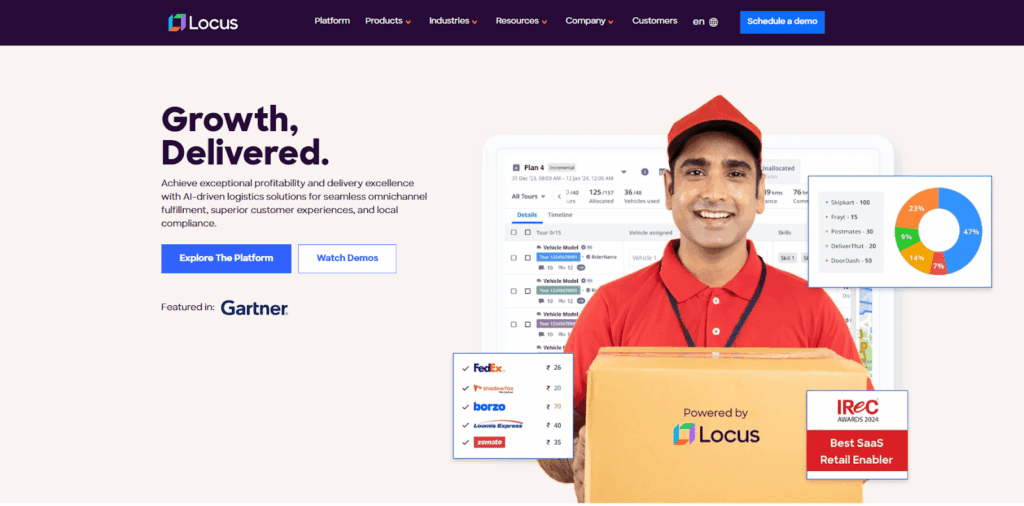
Locus is anLocus is an advanced logistics automation platform built to help enterprises streamline routing, dispatch, and last-mile execution with AI-driven decisioning. It provides enterprise-grade last-mile delivery optimization with AI-driven routing for multi-region operations and real-time visibility across hybrid fleets.
Teams evaluating Onfleet alternatives shortlist Locus because it adapts well to multi-region, high-density operations and reduces manual effort across planning and execution workflows—handling 10,000+ daily deliveries without the performance degradation Onfleet users report at scale.
Common Challenges Locus Resolves
Slow performance during high-volume or filter-heavy operations: Onfleet reviews regularly cite lag, delays, and slow filtering when managing dense delivery data. Locus helps teams avoid this slowdown with fast task assignment, stable dashboard performance, and responsive control tower views, even during peak-hour operations.
Tracking inconsistencies and location accuracy issues: Some Onfleet users report GPS jumps, missing mileage, or incomplete tracking data, which affect reimbursements and customer visibility. Locus improves delivery accuracy with reliable, real-time location signals and consistent tracking across 30+ countries, reducing disputes and manual correction work.
Workflow rigidity and limited real-world adjustments: Onfleet’s driver-task locking and limited mid-shift flexibility can slow dispatchers when conditions change. Locus supports structured workflows with manual overrides, letting dispatchers adjust routes, reassign tasks, and modify plans without breaking the operational flow.
Limited depth in analytics and exception visibility: Teams using Onfleet often need deeper reporting or faster insights into delays, exceptions, and root causes. Locus provides real-time exception dashboards, RCA tools, and richer analytics to help operators act quickly and reduce daily firefighting.
Locus Pros
- “Locus scaled seamlessly for our 10k+ daily deliveries with zero downtime.” — G2 Review
- “Real-time ETAs and dynamic re-routing cut failed attempts by 30%.” — Capterra Review
- “Enterprise support and analytics dashboards are unmatched for ops teams.” — G2 Review
- “Handles complex constraints like driver skills and vehicle types effortlessly.” — Capterra Review
- Adjusts to traffic patterns, delivery density, and real-world constraints—maintaining consistent ETAs and reducing dispatcher overrides, especially in dense, high-stop environments.
- Provides end-to-end orchestration across routing, dispatch, and execution, ensuring every stage uses the same real-time operational context. This eliminates fragmentation for teams needing tight coordination, particularly in multi-hub or multi-region setups.
- Scales effectively with growing fleets, regions, and order volumes, maintaining strong performance even when load increases—directly addressing the dashboard lag Onfleet users report.
Locus Cons
- Teams switching from Onfleet’s simple interface may find Locus more advanced, especially if they haven’t worked with AI-led routing or orchestration before.
- New customers may need to align data, constraints, and operational rules before going live.
- Very small teams with minimal stops per day may not fully utilize the orchestration and analytics capabilities.
Locus Is Ideal For
Locus is purpose-built for enterprise logistics leaders and operations managers who need reliable, scalable delivery orchestration:
- Retail, e-commerce, and e-grocery operations directors managing dense, high-volume routes across multiple regions.
- FMCG/CPG supply chain heads and 3PL network directors operating multi-client logistics networks who need route optimization benefits across different business segments.
- Big & bulky delivery operations managers requiring precise scheduling and specialized routing.
- Enterprises running hybrid or multi-fleet operations across the first, mid, and last mile.
- Teams needing real-time visibility and stable performance as order volumes grow beyond what lightweight tools can handle.
Locus Pricing
Locus uses a custom pricing model that factors in delivery volume, the number of operating regions, fleet composition, and the specific modules required (dispatch planning, orchestration, Track & Trace, or carrier management). Pricing scales with usage and the depth of automation deployed.
Locus Ratings
G2: 4.7/5 (G2 Profile) | Capterra: 4.6/5 (Capterra Profile)
Locus’ User Testimonial
“Locus improved our visibility and routing consistency, making it easier for our teams to stay aligned during daily operations. As our delivery volumes increased, the platform supported us in maintaining dependable on-time performance.” — Head of Last-Mile, Jüsto
2. Bringg
Bringg is an enterprise-grade fulfillment and delivery orchestration platform built for organizations managing complex fleets, multiple carriers, and diverse delivery models. It orchestrates last-mile logistics with crowd-sourced drivers, warehouse integration, and barcode-enabled inventory tracking.
Teams evaluating Onfleet alternatives often consider Bringg when they outgrow lightweight last-mile tools and need deeper coordination across internal fleets and outsourced partners.
Common Challenges Bringg Resolves
- Consolidates multi-carrier assignments, SLAs, and handoffs, reducing the operational fragmentation that grows as teams add more delivery partners.
- Control dashboards provide a unified view of delays, SLA risks, and carrier performance across regions or business units.
- Supports branded notifications and tracking pages, helping enterprises standardize customer experience across different carriers and fulfillment modes.
- Barcode allocation enables warehouse-level inventory tracking—a capability Onfleet charges extra for.
Bringg Pros
- “Excellent for multi-party visibility in 3PL setups.” — G2 Review
- “POD barcodes and warehouse sync reduced errors by 25%.” — Capterra Review
- “Strong analytics for SLA compliance tracking.” — G2 Review
- “Handles hybrid fleets (owned + gig) reliably.” — Capterra Review
- Strong multi-carrier coordination for teams working with a mix of internal and outsourced fleets
- Supports varied fulfillment models, including curbside, scheduled delivery, and same-day
- Advanced analytics for SLA, carrier performance, and operational bottlenecks
- Integrations with major commerce, POS, and transportation platforms
Bringg Cons
- Longer implementation times, especially for companies with complex integration requirements
- Many advanced orchestration capabilities sit behind enterprise-tier contracts
- “Overkill and pricey for single-fleet SMBs.” — G2 Review
- “Mobile app lags during high concurrency.” — G2 Review
- Less centered on deep routing intelligence compared to dedicated routing platforms
Bringg Is Ideal For
Retailers, grocery businesses, 3PLs, and enterprises coordinating with multiple carriers or across various regions. It works well for organizations prioritizing orchestration depth rather than lightweight route planning or rapid setup.
Bringg Pricing
Custom pricing based on shipment volume, carrier mix, integration needs, and operational scope.
Bringg Ratings
G2: 4.5/5 (G2 Profile) | Capterra: 4.4/5 (Capterra Profile)
“Bringg unified our fragmented delivery ecosystem.” — Logistics Director, G2volume, carrier mix, integration needs, and operational scope.
3. Shipsy
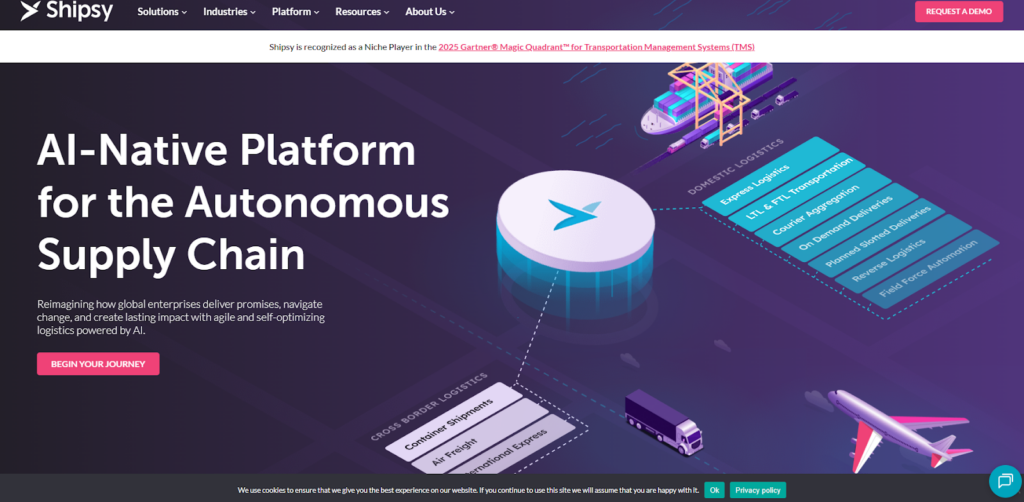
Shipsy is a logistics management and visibility platform widely used across retail, e-commerce, 3PL, CEP, and cross-border delivery networks. It focuses on cost-per-delivery minimization via constraint-based optimization and provides strong operational visibility across first-, mid-, and last-mile workflows.
Common Challenges Shipsy Resolves
- Visibility gaps across carriers or transport legs: Offers a unified operations dashboard that reduces back-and-forth between tools.
- High dependence on multiple third-party fleets: Provides automated carrier allocation and cost-optimized selection.
- Manual effort in monitoring SLAs: Real-time performance insights, alerts, and automated exception flagging reduce reactive work.
Shipsy Pros
- “Predictive ETAs improved on-time rates to 95%.” — G2 Review
- “Multi-depot planning saved 20% on fuel.” — Capterra Review
- “Telematics integration is seamless.” — G2 Review
- Extensive integrations across couriers, transporters, and 3PL partners—strong fit for brands handling outsourced delivery at scale
- Helps businesses compare rates, SLAs, and performance data to choose the most efficient transporter for each shipment
- End-to-end tracking and exception management tools help teams maintain oversight across multiple delivery legs, particularly in cross-border environments
Shipsy Cons
- “UI feels dated compared to newer platforms.” — G2 Review
- “Support response times vary by region.” — Capterra Review
- Best suited for organizations already using multiple carriers; smaller or more centralized operations may find parts of the platform more than they need
- Advanced configuration can take time, especially for teams requiring deep workflow customization
Shipsy Is Ideal For
Companies managing multiple carriers or cross-border delivery flows who need clearer visibility and tighter cost control. Retail, e-commerce, 3PL, and CEP teams often choose Shipsy when their operations span several regions and transport partners.
Shipsy Pricing
Custom pricing based on shipment volume, number of carriers, module selection (last-mile, cross-border, control tower), and deployment scale.
Shipsy Ratings
G2: 4.4/5 (G2 Profile) | Capterra: 4.3/5 (Capterra Profile)
“Shipsy’s forecasting nailed our peak season ops.” — Supply Chain Head, G2le.
4. Route4Me
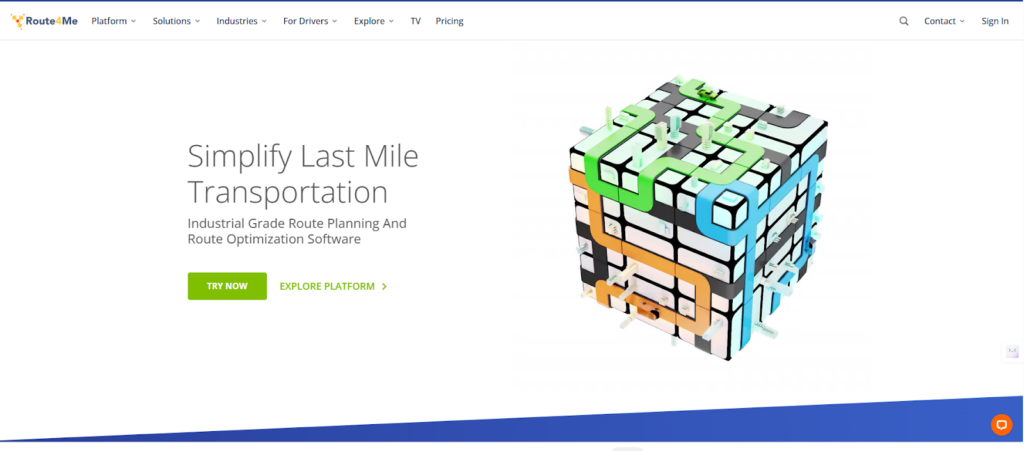
Route4Me is a route optimization platform designed for SMBs that want stronger multi-stop routing, weekly planning, and mapping control than what lightweight last-mile tools typically offer. It delivers modular route optimization with drag-and-drop planning and mobile proof-of-delivery capture.
Common Challenges Route4Me Resolves
- Automates multi-stop route creation and supports advanced constraints, making it useful for teams whose daily planning has outgrown basic point-to-point routing.
- Provides dispatcher-facing live tracking and order status updates, helping teams improve transparency beyond simple driver location views.
- Includes signatures, photos, and additional POD fields, supporting teams that need verifiable delivery records.
Route4Me Pros
- “Drag-and-drop routing is intuitive for small teams.” — G2 Review
- “Affordable pay-per-use model scales with volume.” — Capterra Review
- “Custom fields fit service-based deliveries perfectly.” — G2 Review
- “Fast optimization even for 100+ stops.” — Capterra Review
- Strong routing engine for dense, multi-stop routes
- Reliable real-time tracking and dispatcher visibility
- Flexible, built-in proof-of-delivery options
Route4Me Cons
- “Optimization lacks advanced constraints like time windows.” — G2 Review
- “Reporting is basic, no deep analytics.” — Capterra Review
- “Enterprise scaling hits performance walls.” — G2 Review
- Occasional GPS or mapping inconsistencies reported in user reviews
Route4Me Is Ideal For
Businesses in logistics, parcel delivery, and courier services looking to optimize routes and improve operational efficiency at the SMB level. Companies needing efficient, cost-effective solutions for managing multiple deliveries without enterprise complexity.
Route4Me Pricing
Tiered pricing starting at around $60 per vehicle per month, with additional costs for advanced routing, tracking, and analytics modules.
Route4Me Ratings
G2: 4.3/5 (G2 Profile) | Capterra: 4.2/5 (Capterra Profile)
“Route4Me got our field team routing in hours.” — SMB Owner, G2
5. Routific
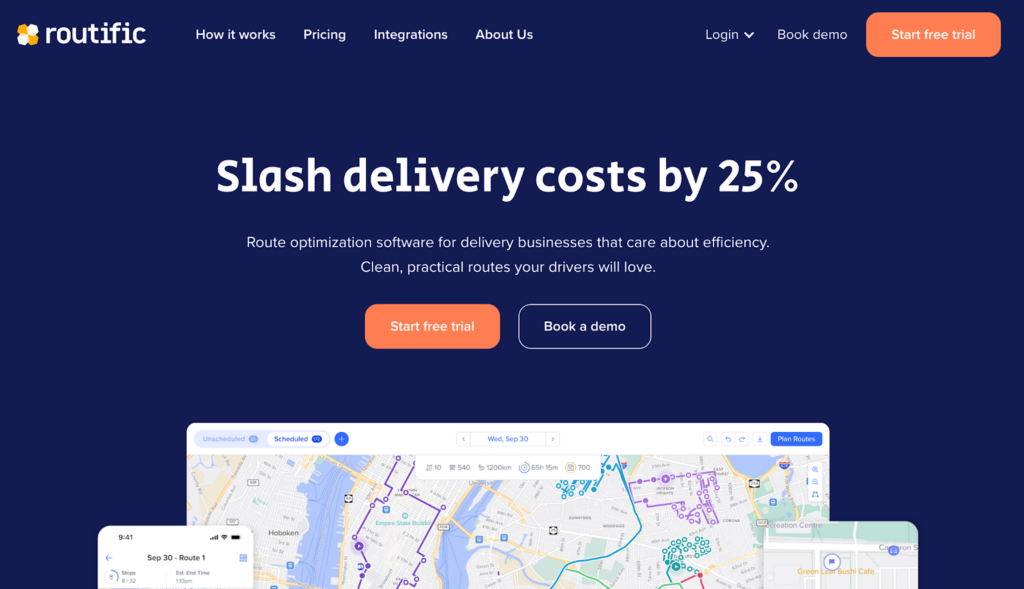
Routific is a lightweight route-optimization platform built for small and mid-sized teams that want fast daily planning and simple operations. It specializes in automated planning from order data and driver ETAs, with QuickBooks integration for billing.
Common Challenges Routific Resolves
- Simplifies daily dispatch planning with automated route sequencing
- Reduces dispatcher workload through an intuitive routing interface
- Improves customer communication with scheduled notifications and ETAs
- Handles recurring routes (grocery delivery, subscription services) without manual input
Routific Pros
- “QuickBooks sync automates invoicing perfectly.” — G2 Review
- “Handles recurring routes without manual input.” — Capterra Review
- “User-friendly for non-tech drivers.” — G2 Review
- “Transparent pricing, no hidden fees.” — Capterra Review
- Very easy to learn and deploy
- Clean UI suited for teams without technical resources
- Dependable routing for low-density or straightforward delivery territories
Routific Cons
- Address formatting sensitivity often requires manual cleanup
- Limited workflow customization (notifications, permissions, constraints)
- “No real-time re-optimization mid-route.” — G2 Review
- “Limited to single-depot operations.” — Capterra Review
- Mid-shift edits can feel restrictive for dynamic operations
Routific Is Ideal For
Small teams, local retailers, nonprofits, and delivery operations with predictable routes, clean address datasets, and minimal need for workflow customization or multi-region orchestration. Best for operations under 50 drivers.
Routific Pricing
Tiered plans based on route volume and feature access. Higher plans unlock tracking links, customer notifications, and API capabilities.
Routific Ratings
G2: 4.6/5 (G2 Profile) | Capterra: 4.5/5 (Capterra Profile)
“Routific simplified our weekly grocery runs.” — Delivery Coordinator, G2
6. OptimoRoute
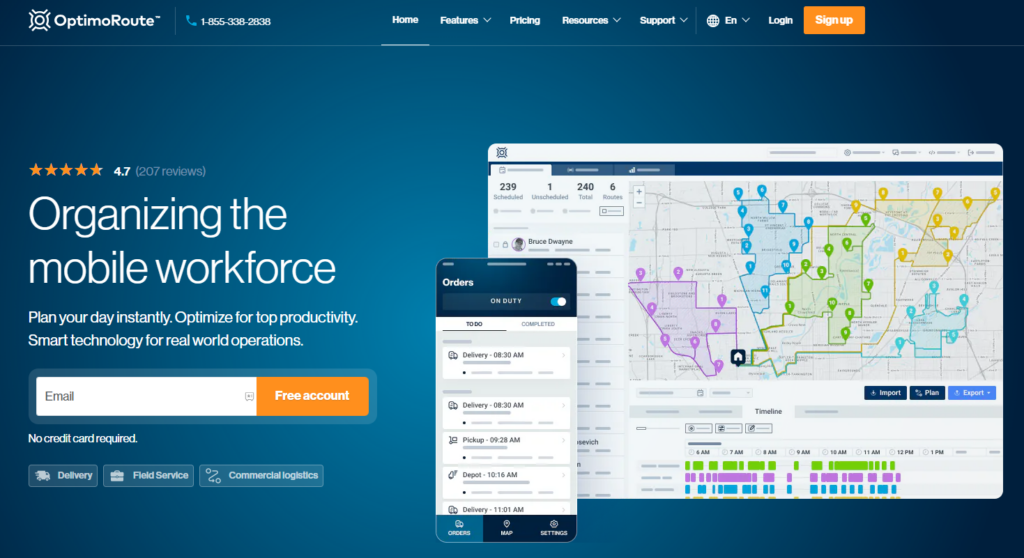
OptimoRoute is a structured route-planning and delivery-management platform often evaluated by teams that need more predictable scheduling, multi-day planning workflows, and time-window constraints. It automates multi-stop routing with load balancing across vehicles and CRM integrations.
Common Challenges OptimoRoute Resolves
- Reducing planning time with automated weekly scheduling and optimized multi-driver routing
- Improving delivery transparency with real-time location visibility and clear ETAs
- Strengthening accountability with structured route execution and proof-of-delivery tools
- Load balancing that prevents vehicle overloads across the fleet
OptimoRoute Pros
- “Time-window optimization is spot-on.” — G2 Review
- “CRM integrations save hours on data entry.” — Capterra Review
- “Load balancing prevents overloads.” — G2 Review
- Reliable routing engine that handles constraints and service windows well
- Strong multi-day or weekly scheduling for teams that plan deliveries in advance
- Per-driver pricing model that can be more cost-effective than Onfleet’s per-task model at high volumes
OptimoRoute Cons
- UI feels dated and less modern compared with newer routing platforms
- Requires more configuration upfront before workflows run smoothly
- “Mobile app lacks offline mode.” — G2 Review
- “Analytics require export to Excel.” — G2 Review
OptimoRoute Is Ideal For
Logistics teams that prefer structured plans, predictable delivery cycles, and detailed proof-of-delivery workflows. Suits distributors, field service businesses, and companies managing recurring or multi-day delivery routes.
OptimoRoute Pricing
Tiered, per-driver pricing with additional costs for advanced tracking and analytics. Larger operations can request custom plans.
OptimoRoute Ratings
G2: 4.5/5 (G2 Profile) | Capterra: 4.4/5 (Capterra Profile)
“OptimoRoute cut our service route times by 15%.” — Field Manager, G2
7. Tookan
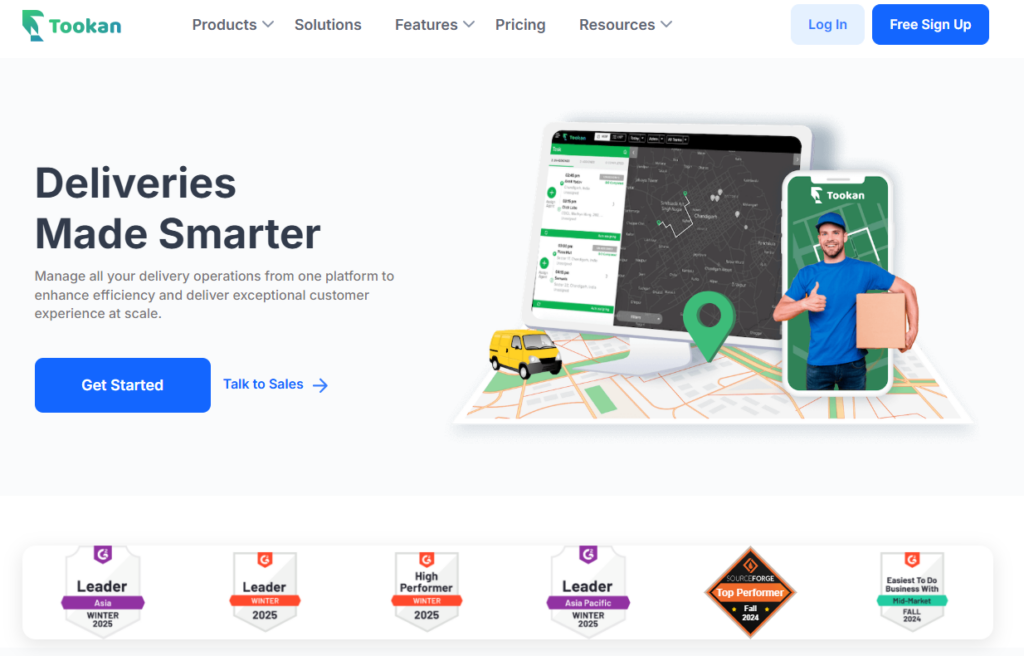
Tookan is a white-label delivery and workflow automation platform built for businesses that want to design customized customer and driver apps rather than rely on a standard routing interface. It enables quick onboarding for on-demand services with an add-on marketplace, live tracking, and custom forms.
Common Challenges Tookan Resolves
- Creating branded customer and driver applications instead of using an off-the-shelf UI
- Integrating delivery operations with internal systems through APIs, real-time webhooks, and Zapier
- Supporting on-demand or hyperlocal fulfillment models that need custom logic rather than preset route workflows
- Barcode and photo POD on basic plans—features Onfleet charges separately for
Tookan Pros
- “Zapier ecosystem connects everything easily.” — G2 Review
- “Custom forms plug right into dispatch.” — Capterra Review
- “14-day trial with full features.” — G2 Review
- “Barcode and photo POD on basic plans.” — Capterra Review
- Strong white-labeling capabilities for fully branded delivery experiences
- API-first design with webhook support for teams wanting deeper system integrations
- Multi-platform support (web, iOS, Android) for faster app deployment
Tookan Cons
- “Struggles with enterprise-scale volumes.” — G2 Review
- “Add-ons inflate costs quickly.” — Capterra Review
- Requires engineering resources; not suitable for teams seeking a quick, no-code setup
- Basic routing and optimization features compared with specialized route-planning platforms
Tookan Is Ideal For
On-demand service providers, hyperlocal marketplaces, and early-stage startups building their own branded customer and driver apps. Best for teams with in-house development resources and highly specific workflow requirements. Typical deployment: 2–3 weeks for micro-businesses.
Tookan Pricing
Base plans start near $99/month, with added costs for white-labeling, advanced integrations, and engineering-heavy customization.
Tookan Ratings
G2: 4.4/5 (G2 Profile) | Capterra: 4.3/5 (Capterra Profile)
“Tookan’s add-ons fit our niche perfectly.” — Startup Founder, G2
8. Ufleet
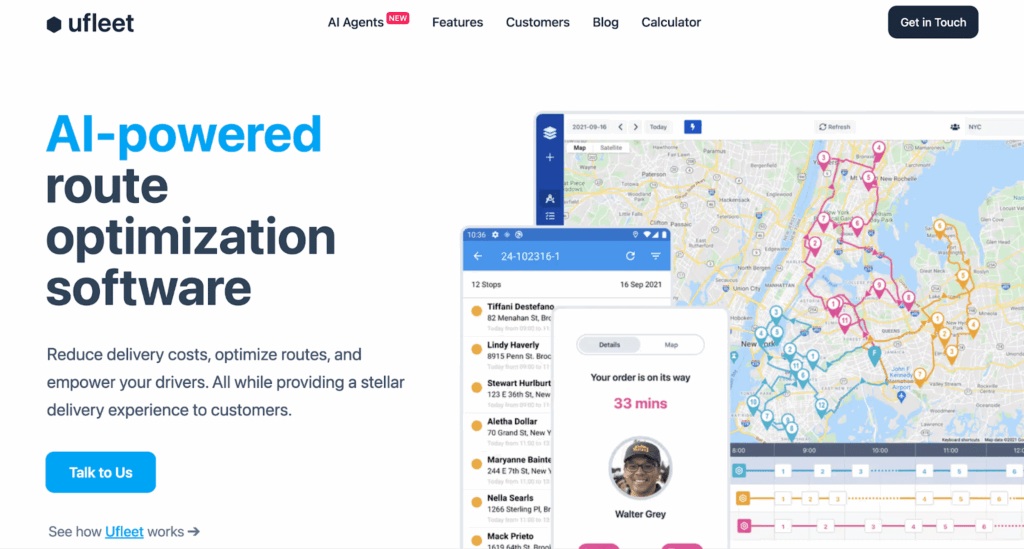
Ufleet is a modern, AI-assisted route optimization and delivery management platform built for teams that want a simple, streamlined system with strong customer-facing features. It is often chosen by businesses that need fast route planning and clean interfaces without overly complex workflows.
Common Challenges Ufleet Resolves
- Eliminates slow route updates with quick, AI-assisted route generation and re-planning
- Improves customer visibility through branded tracking pages, real-time ETAs, and instant feedback tools
- Reduces dispatcher workload with intuitive dashboards that centralize driver updates, delivery status, and customer communications
Ufleet Pros
- Very user-friendly interface that requires minimal training and supports fast onboarding
- Strong customer portal with real-time delivery tracking and flexible feedback tools
- Fast, AI-assisted route planning that simplifies daily dispatch work for small and mid-sized teams
- Free tier for up to 200 deliveries per month—lowest barrier to entry on this list
Ufleet Cons
- Lacks deeper enterprise orchestration capabilities found in more mature platforms
- Advanced reporting and historical analytics are more limited compared with enterprise-first tools
- May become costlier at higher volumes due to per-delivery pricing
- Limited independent review data available on major platforms
Ufleet Is Ideal For
Retailers, grocery operators, and local delivery teams looking for a simple, modern system that improves customer communication and daily route planning. Operations that want lightweight tools focused on customer experience rather than complex logistics automation.
Ufleet Pricing
Pay-as-you-go model with free usage up to 200 deliveries per month, followed by a per-delivery fee. Custom pricing available for higher volumes.higher volumes or advanced integration needs.
9. Narvar
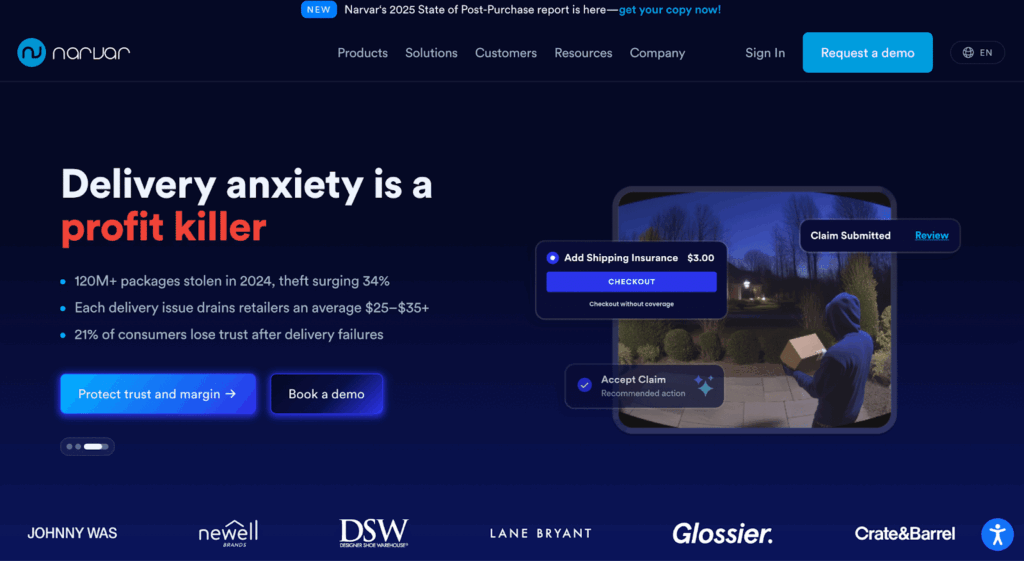
Narvar is a post-purchase experience platform that helps retailers streamline tracking, notifications, and returns while offering flexible delivery and pickup options. It is not a routing or dispatch tool—it complements existing logistics engines by improving the customer-facing communication layer.
Common Challenges Narvar Resolves
- Limited control over customer communication during delivery—centralizes updates in branded tracking pages
- High customer-service volume around order status—automated alerts and proactive exception notifications
- Inefficient or manual returns workflows—Narvar’s guided, self-service returns experience reduces friction
Narvar Pros
- Highly polished branded tracking and messaging experiences
- Multiple delivery and pickup options (store pickup, concierge points) that enhance convenience
- Strong returns management capabilities with configurable rules and workflows
- Reduces “where is my order?” support ticket volume
Narvar Cons
- Not designed for routing, dispatch, or real-time operations—requires a separate logistics engine
- Requires integration with existing systems for full context
- Not an Onfleet replacement in the traditional sense; it fills a different role in the delivery stack
Narvar Is Ideal For
Retailers and D2C brands aiming to strengthen post-purchase engagement by reducing support tickets, improving customer satisfaction, and offering a more modern returns experience.
Narvar Pricing
Custom pricing based on shipment volume, communication channels (SMS, WhatsApp, email), and the number of activated returns-management features.tures.
10. Spoke Dispatch
Spoke Dispatch is a last-mile management platform built for courier teams that need fast route planning, live tracking, proof-of-delivery, and a streamlined dispatcher–driver workflow.
Common Challenges Spoke Dispatch Resolves
- Automates day-to-day route planning with one-click optimization for small multi-driver teams
- Helps dispatchers monitor day-of progress with live driver tracking and timeline views
- Improves delivery outcomes with proof-of-delivery tools, branded tracking pages, and customer notifications
- Reduces manual coordination by enabling retailers or clients to upload orders directly via Spoke Connect
Spoke Dispatch Pros
- Very easy to set up and learn for small and mid-sized courier teams
- Clean route optimization experience with delivery zones, time windows, and custom stop settings
- Strong mobile driver app with photo/signature POD, in-app navigation, barcode scanning, and mid-route stop edits
Spoke Dispatch Cons
- Routing engine is built for simplicity and may not meet complex constraints used in enterprise logistics
- Pricing scales with stop volume, which may limit cost control for teams with large daily workloads
- Limited multi-region or multi-hub capabilities
Spoke Dispatch Is Ideal For
Local courier companies managing multi-driver operations with predictable daily volumes. Small retail or food delivery teams wanting a clean dispatcher dashboard and simple planning tools. Operations that depend heavily on POD accuracy, customer notifications, and easy driver onboarding.
Spoke Dispatch Pricing
Three tiers: Starter, Premium, and Expert—based on monthly stop volume. Advanced capabilities and dedicated onboarding available at higher tiers.ore advanced capabilities and dedicated onboarding become available at higher tiers.
Benefits of Switching From Onfleet to a Purpose-Fit Alternative
1. Stable Performance at Scale
Platforms like Locus and Bringg maintain responsive dashboards and fast task assignment even during peak-hour operations—eliminating the filtering lag and slowdowns Onfleet users consistently report with large task lists.
2. Deeper Routing Intelligence
AI-driven alternatives adapt to traffic patterns, delivery density, and real-world constraints in real time. This reduces failed delivery attempts, lowers fuel costs, and improves SLA adherence without requiring dispatcher overrides.
3. Flexible Mid-Shift Workflows
Unlike Onfleet’s single-task driver lock, advanced platforms allow dispatchers to reassign tasks, adjust routes, and handle exceptions mid-shift—keeping operations fluid when conditions change.
4. Unified Multi-Region Visibility
For teams operating across multiple hubs or geographies, platforms with control tower software provide a single operational view that eliminates fragmentation and reduces communication lag between regions.
5. Cost Efficiency at Volume
Onfleet’s $0.25 per-task pricing creates cost pressure at scale. Alternatives offering per-driver models (OptimoRoute) or bundled features (Tookan, Spoke Dispatch) deliver significant savings—particularly for operations managing thousands of daily deliveries.
6. Improved Fleet Utilization
Sophisticated constraint engines, load balancing, and automated assignment help teams do more with the same fleet—a critical advantage as logistics software improves fleet utilization across diverse delivery models.
7. Stronger Post-Purchase Experience
Whether through branded tracking pages (Narvar, Ufleet) or proactive customer notifications (Locus, Spoke Dispatch), alternatives help reduce “where is my order?” ticket volume and improve customer satisfaction scores.
Key Features to Evaluate in Any Onfleet Alternative
When selecting route optimization software, enterprise logistics leaders should evaluate these capabilities:
| Feature Category | What to Look For | Why It Matters |
|---|---|---|
| Routing engine depth | Adaptive AI, constraint handling, time windows, vehicle types, and driver skill matching | Directly impacts delivery efficiency, routing quality, and SLA compliance |
| Real-time visibility | Live tracking, control tower dashboards, and exception alerts | Enables proactive operational management instead of reactive firefighting |
| Scalability | Stable dashboards and routing performance at 5,000–50,000+ daily tasks | Prevents system slowdowns and operational instability during peak demand |
| Workflow flexibility | Mid-shift re-routing, manual overrides, and multi-task driver support | Keeps delivery operations fluid under unpredictable conditions |
| Proof of delivery | Photo capture, signatures, barcode scans, and geofence verification | Reduces disputes and improves delivery accountability |
| Multi-hub orchestration | Cross-region coordination and unified analytics | Critical for 3PLs and enterprises operating across multiple locations |
| Carrier management | Multi-carrier allocation, cost comparison, and SLA tracking | Optimizes outsourced delivery performance and spend |
| Analytics and reporting | Live dashboards, RCA tools, and historical trend analysis | Supports continuous optimization and operational visibility |
| Integration ecosystem | API-first architecture, webhooks, and ERP/WMS/CRM connectors | Ensures compatibility with the existing enterprise tech stack |
| Pricing model | Per-driver, per-task, or custom volume-based pricing | Must scale sustainably without creating cost cliffs as operations grow |
Why Choose Locus Over Other Onfleet Alternatives
Onfleet users often encounter challenges like limited customization, routing inconsistencies, and slow performance during peak hours. As delivery networks grow into 2026, these issues can become more pronounced—especially for enterprise operations managers overseeing thousands of daily deliveries across multiple regions.
Locus directly addresses these pain points by providing:
- Scalable routing that performs under load: No dashboard lag, no filter slowdowns, even at 10,000+ daily tasks.
- Flexible workflows with intelligent overrides: Dispatchers adjust routes, reassign tasks, and manage exceptions mid-shift without disrupting the operational flow.
- Real-time visibility across every mile: From planning to execution, every stakeholder operates on the same real-time context—reducing the fragmentation, GPS gaps, and tracking inconsistencies that Onfleet users report.
- End-to-end orchestration, not just routing: Unlike lighter tools that handle only one piece of the delivery puzzle, Locus connects dispatch planning, delivery orchestration, carrier management, and analytics in a single platform.
- Proven enterprise scale: Trusted across 30+ countries by retail, e-commerce, FMCG/CPG, and 3PL operations that cannot afford downtime or performance gaps during peak periods.
For teams outgrowing Onfleet’s capabilities, Locus offers the stability and control needed for seamless, long-term operations. The platform also supports teams managing challenging on-demand food logistics and those pursuing green logistics as part of their sustainability strategy.
Frequently Asked Questions (FAQs)
1. What are the best alternatives to Onfleet?
The strongest alternatives depend on your operational profile. For enterprise-scale, multi-region logistics, Locus (G2: 4.7/5) and Bringg (G2: 4.5/5) offer the deepest routing intelligence and orchestration. For SMBs, Routific (G2: 4.6/5) and Route4Me (G2: 4.3/5) provide fast setup and intuitive planning. For on-demand and hyperlocal delivery, Tookan (G2: 4.4/5) offers a white-label ecosystem with quick onboarding.
2. What is the cheapest Onfleet alternative?
Ufleet offers a free tier for up to 200 deliveries per month, making it the lowest-cost entry point. OptimoRoute uses per-driver pricing rather than Onfleet’s per-task model ($0.25/task), which becomes more cost-effective at higher volumes. Tookan starts at approximately $99/month with a 14-day free trial including full features.
3. How does Onfleet compare to Locus?
Onfleet is designed for small to mid-sized operations with straightforward routing needs. Locus is built for enterprise scale—handling 10,000+ daily deliveries with AI-driven routing, real-time exception dashboards, and multi-region orchestration across 30+ countries. Teams that outgrow Onfleet’s performance ceiling, single-task driver workflows, and limited analytics typically migrate to Locus for routing stability and operational depth.
4. Which Onfleet alternative includes white-label delivery apps?
Tookan offers comprehensive white-labeling for branded customer and driver apps across web, iOS, and Android. Spoke Dispatch provides branded tracking pages. Narvar offers branded post-purchase tracking and communication pages. Onfleet does not provide white-label capabilities.
5. Can Onfleet handle multi-region or complex delivery networks effectively?
Onfleet is more suited for single-region, small to mid-sized operations. For multi-region delivery networks, teams frequently report scalability issues and limited orchestration. Platforms like Locus (multi-region, multi-hub, multi-fleet), Bringg (multi-carrier orchestration), and Shipsy (cross-border visibility) are built specifically for this complexity.
6. Is there an open-source alternative to Onfleet?
Fleetbase is a fully open-source alternative that provides similar on-demand dispatch functionality with deployment flexibility, community-driven extensions, and transparent pricing. It suits teams with in-house development resources who want full control over their delivery infrastructure.
7. What support options are available during migration from Onfleet?
Migration typically involves support from the new platform’s team for data integration and workflow setup. Locus provides dedicated customer success teams to ensure smooth onboarding and minimal downtime during the transition, including data mapping, constraint configuration, and phased go-live support.
8. How can Onfleet alternatives help with scalability as operations grow?
As operations scale, Onfleet may struggle with multi-region coverage, dashboard performance, and complex workflows. Alternatives like Locus provide deeper orchestration—enabling teams to manage larger fleets efficiently, optimize routes across regions, and maintain stable performance during peak periods without the filtering lag and GPS inconsistencies reported by Onfleet users at scale.
9. How does Onfleet compare to Bringg?
Bringg offers similar core features (driver management, route optimization, real-time visibility, mobile app, POD collection) but integrates them into a broader logistics and inventory management system with multi-carrier orchestration. Bringg’s barcode allocation enables warehouse-level inventory tracking, whereas Onfleet charges extra for barcode POD functionality. Bringg is better suited for enterprises coordinating multiple carriers and fulfillment modes.
10. What’s better than Onfleet for small businesses?
For small businesses with under 50 drivers and predictable routes, Routific (G2: 4.6/5) offers the simplest setup with QuickBooks integration and transparent pricing. Ufleet provides a free tier for low-volume operations. Spoke Dispatch is purpose-built for local courier teams needing clean dispatcher dashboards and strong POD tools. All three are faster to deploy and simpler to manage than Onfleet for straightforward delivery needs.


General
Top 10 Routific Alternatives to Consider in 2026 for Better Routing and Delivery Performance

Dec 22, 2025
Check out the 10 best Routific alternatives for 2026. Evaluate routing accuracy, platform stability, visibility features, and more to choose the apt platform.
Read more
General
10 Best Alternatives to Route4Me: How These Tools Solve Common Delivery Management Issues
Dec 24, 2025
A detailed look at the 10 leading Route4Me alternatives for 2026, covering routing intelligence, visibility, automation depth, and pricing to determine operational fit.
Read moreInsights Worth Your Time




















Top Onfleet Alternatives for 2026: A Comparison of Delivery Solutions