


Retail & CPG
What is Retail Visibility? Importance, Types & Challenges
Key Takeaways
- Retail visibility tracks inventory, shipments, and orders in real time, preventing blind spots and missed promises.
- Strong visibility improves efficiency, reduces costs, and boosts customer trust across complex retail supply chains.
- Some of the key benefits include better operational agility, stronger supply chain forecasting, optimized carrier collaboration, and omnichannel retailing support.
- Retail visibility can be categorized into inventory, shipment, order, product, and store operations visibility, each driving measurable improvements.
- Locus transforms retail visibility with AI-powered orchestration, predictive insights, and all-mile transparency across fulfillment channels.
In early 2025, cosmetics giant Lush faced backlash when customers placing Boxing Day orders waited up to two weeks for delivery, with many never receiving confirmations despite being charged. This wasn’t a capacity issue but a failure of retail visibility, with no clear view of inventory, shipment issues, or order status.
This example indicates that shoppers expect accurate stock updates, real-time tracking, and seamless visibility across online and offline channels. Retail visibility allows businesses to monitor goods, orders, and workflows in real time, ensuring clarity at every stage.
Without it, retailers risk stockouts, broken promises, higher costs, and declining trust. For enterprises managing large distribution networks, visibility is no longer optional because it directly drives competitiveness and loyalty.
In this blog, you’ll learn exactly what retail visibility means, why it matters in 2025, the types and challenges retailers face, and how Locus’s AI-powered platform transforms visibility into operational clarity and better customer experiences.
What is Retail Visibility?

Retail visibility is the ability to track and monitor inventory, orders, and shipments across the retail supply chain in real time. It provides retailers with a single, accurate view of what products are available, where they are located, and how they are moving from suppliers to stores or customers.
Without this visibility, retailers often face disconnected systems and manual updates that create blind spots. A product might appear in stock online but be unavailable in stores, or shipments could be delayed without alerts reaching the customer service team.
Retail visibility is about dismantling silos so information moves freely across warehouses, carriers, stores, and digital platforms, enabling managers to anticipate disruptions, refine fulfillment strategies, and deliver on customer commitments.
For example, when a retailer can view real-time sales trends alongside shipment data, it becomes easier to reroute stock, rebalance store inventories, and prevent costly stockouts or overstocks.
In 2025, retail visibility is a strategic capability that enables faster decision-making, more resilient supply chains, and customer experiences that meet the high expectations of modern shoppers.
Retail visibility vs related terms
| Term | What it means | Primary focus | Example metric |
| Retail visibility | End-to-end operational visibility across inventory, orders, fulfilment, stores, carriers, delivery, and returns | Execution control and customer promise protection | ETA accuracy, inventory accuracy, on-time delivery |
| Supply-chain visibility | Visibility across sourcing, inbound logistics, production, warehousing, and transport | Broader multi-tier supply-chain flow | Inbound lead-time variance |
| Inventory visibility | Accurate stock status by SKU, location, and channel | Sellable availability | Stockout rate, fill rate |
| Shipment tracking | Monitoring a consignment in transit | Where a shipment is now | Milestone-event latency |
| Shelf visibility | Whether a product is physically visible and accessible on shelf | Shopper-facing in-store prominence | On-shelf availability, facings |
| Retail execution | The operational process used to maintain placement, pricing, availability, and promotions | In-store compliance and corrective action | Planogram compliance, price accuracy |
| Brand visibility | How recognisable a brand is across retail touchpoints | Awareness and discoverability | Share of shelf, digital search rank |
For retailers and CPG brands, these concepts overlap. But they are not interchangeable. Locus focuses on the operational layer that connects inventory movement, fulfilment, delivery execution, and exception response.
Retail visibility maturity model
A useful way to assess retail visibility is by asking how far your operation has progressed beyond passive tracking:
| Maturity stage | Core question answered | Typical capability | Operating outcome |
| 1. Status visibility | What happened? | Static dashboards, manual status checks | Slow response, limited ownership |
| 2. Real-time visibility | What is happening now? | Live order, inventory, and shipment updates | Faster awareness of disruption |
| 3. Predictive visibility | What is likely to happen next? | Predictive ETA, demand sensing, risk flags | Earlier intervention |
| 4. Prescriptive execution | What action should be taken? | Recommended reroutes, carrier changes, stock reallocation | Lower exception cost |
| 5. Orchestrated execution | Can the platform trigger the action? | Automated dispatch, alerts, reassignment, carrier workflows | Scalable operational control |
Most retailers already have some form of tracking. The competitive advantage comes when visibility supports automated decisioning and exception management, not just better reporting.
What is the Importance of Retail Visibility?
Once treated as a secondary function, retail visibility now directly influences cost control, fulfillment accuracy, and customer trust. Without a structured approach, retailers lose opportunities to optimize supply chains and risk failing to meet buyer expectations.
Below are some of the key benefits of retail visibility:
Improves Operational Efficiency
Companies that embed AI across their supply chains are already seeing measurable benefits, with inventory reductions of 20-30% and logistics cost savings of 5-20% reported as of late 2024. These gains come from moving beyond outdated reporting cycles and embracing the importance of retail visibility, which delivers instant access to data.
Plus, real-time insights support proactive planning and rapid response to demand shifts, which leads to leaner inventory strategies and sharper retail decisions that reduce waste while improving agility.
Strengthens Supply Chain Visibility
Retail supply chain visibility enables retailers to receive timely insights, allowing for faster and more informed responses to market changes.
By applying AI-powered forecasting and real-time analytics, businesses can minimize delays, optimize resource allocation, and improve fulfillment speed across complex networks.
Boosts Carrier Collaboration
Today, last-mile delivery is one of the fastest-growing and most complex elements of global supply chains, and it is also the most expensive. According to recent studies, the global last-mile delivery market was valued at $161.20 billion in 2024, with projections of $373.92 billion by 2033 at a CAGR of 9.8%. This sharp growth reflects the resurgence in e-commerce volumes, which is rapidly transforming last-mile expectations.
On the other hand, last-mile costs account for 41% of total logistics expenses, and many retailers absorb a large share of these costs by offering free delivery to consumers. While this strategy appeals to customers, it can reduce profitability by as much as 26% when businesses operate with suboptimal delivery models.
By investing in AI-enabled coordination and a robust retail carrier management platform, retailers can manage costs more effectively, improve delivery reliability, and sustain profitability while meeting the rising demands of modern commerce.
Powers Omnichannel Retailing
Micro-fulfillment centers are becoming the backbone of modern omnichannel retail strategies. Valued at $5.16 billion in 2023, this market is projected to grow at over 34% CAGR through 2032, highlighting its critical role in shaping retail operations.
Their importance lies in enabling retailers to position inventory closer to customers, which improves delivery speed, supports buy-online-pickup-in-store (BOPIS) options, and ensures seamless coordination across physical and digital channels. By strengthening local inventory responsiveness, micro-fulfillment centers allow retailers to meet rising consumer expectations for convenience and speed, making them essential to sustainable and competitive omnichannel growth.
? Related read: Change Management in Retail Logistics
Different Types Of Retail Visibility in 2025
Retailers cannot manage what they cannot see. Each layer of visibility adds a different dimension to performance, from stock accuracy to customer experience.
The following types highlight how modern visibility strategies drive measurable improvements.
Inventory Visibility
Inventory visibility provides a live snapshot of stock levels across warehouses, stores, and fulfillment hubs. A PwC survey reported that 72% of retail leaders identified accurate data collection and analytics infrastructure as the most critical driver of customer satisfaction.
With real-time tracking, retailers prevent stockouts and reduce excess holding costs, enabling dynamic reallocation of stock to meet demand.
Shipment Visibility
Shipment visibility provides end-to-end tracking of goods in transit, allowing retailers to anticipate disruptions and respond quickly. Digital freight platforms enable this visibility by providing real-time monitoring across the supply chain.
Companies using these systems have achieved a 25% reduction in detention times and a 10% decrease in transportation costs. Through shipment insights, retailers can reroute goods, keep customers informed, and minimize the financial impact of delays.
Order Visibility
Order visibility tracks customer orders from placement through fulfillment and delivery. A recent survey found that 80% of consumers expect proactive updates on order status, yet only a few consistently receive them.
Retailers that integrate order tracking reduce customer service inquiries, boost repeat purchases, and build trust through transparency.
Product Visibility
Product visibility enables retailers to monitor product performance across SKUs, locations, and channels, adding analytical clarity that drives strategic decisions.
It helps identify bestsellers, slow movers, and regional preferences, allowing for smarter merchandising and demand forecasting. With these insights, retailers can make data-driven decisions that optimize assortment, pricing, and promotions.
Driving product visibility requires more than just tracking SKUs and calls for the smart integration of data, AI-driven insights, and sustainable practices. Our whitepaper explores how retail leaders can transform logistics with efficiency breakthroughs and change management strategies that make visibility actionable and scalable.
? Download our whitepaper: Smart Change as a Catalyst for All-Mile Retail Innovation
Store Operations Visibility
Store operations visibility connects sales, staffing, and customer behavior to create a seamless in-store experience. Retailers that applied stock adjustments reduced stockouts by 30%, increased sales by 5%, and cut overstocking by 15%.
By aligning staffing and promotions with inventory levels and sales patterns, retailers boost productivity while ensuring customers find what they need when they need it.
How to measure retail visibility
Retail visibility should be measured by layer, not with one broad score. The table below gives a practical KPI model.
| Layer | Core KPIs | What good visibility improves |
| Inventory | Inventory accuracy, stockout rate, fill rate, available-to-promise accuracy | Fewer cancellations and missed sales |
| Order and fulfilment | Order-cycle time, perfect-order rate, fulfilment accuracy, cancellation rate | Faster processing and fewer exceptions |
| Delivery | On-time delivery, in-full delivery, ETA accuracy, delivery-attempt success | Better customer promise adherence |
| Carrier | Acceptance rate, tender compliance, route adherence, claims/failure rate | Stronger carrier governance |
| Store | Pickup readiness, store fulfilment rate, inventory discrepancy | More reliable BOPIS and ship-from-store |
| Customer | Contacts per order, CSAT/NPS where tracked, repeat purchase rate | Lower service cost and higher trust |
| Returns | Return-cycle time, refund time, restocking time, recovery value | Faster reverse-logistics resolution |
| Sustainability | Emissions per delivery, empty miles, vehicle utilisation | Lower waste and better cost-to-serve |
A practical dashboard should show both current-state metrics and exceptions requiring intervention. If a KPI cannot trigger action, it is a reporting metric, not an operational visibility metric.
Common Problems of Retail Visibility
A strong retail visibility strategy requires more than isolated tools. It demands an integrated platform that connects data, automates decisions, and provides managers with actionable insights.
Locus enables this by combining AI-driven automation with real-time orchestration. Here’s how it addresses key visibility challenges.
Data Silos Across Systems
Retailers often manage inventory, transportation, and orders on disconnected platforms. This prevents managers from seeing the end-to-end picture. For instance, a retail and CPG company may not realize that goods are stuck in transit because carrier data is not integrated with warehouse systems. These blind spots delay decisions and increase risk.
How Locus helps: Locus’ track & trace breaks down silos by centralizing real-time data from warehouses, carriers, and stores. Managers get a unified view of shipments and stock, which helps them act faster and prevent retail supply chain attacks like false stock reporting or fraudulent carrier activities.
Lack of Real-Time Updates
Outdated information forces teams to react late. A large retailer experiencing sudden shipment delays may continue promising same-day delivery without knowing the fleet is already behind schedule. This lack of visibility creates higher customer complaints and higher costs.
How Locus helps: With DispatchIQ and route optimization software, Locus provides shipment visibility, proactive alerts, and updated ETAs. Retailers can reroute shipments instantly and communicate accurate timelines, moving from reactive fixes to proactive execution.
Inconsistent Customer Experience
Customers expect reliable order tracking across digital and physical channels. When online orders lack updates or in-store pickups show inaccurate stock, shoppers lose trust. This is a major concern for retail and CPG enterprises managing omnichannel fulfillment.
How Locus helps: Locus syncs real-time order and inventory data across all channels. This enables smooth buy-online-pickup-in-store, accurate delivery timelines, and seamless returns. With consistent updates, retailers protect customer trust while reducing strain on service teams.
For multi-brand retailers, the challenge is even greater, with higher supply chain loads and rising customer expectations. Our ebook explores how advanced logistics technology can bridge these gaps, enabling consistent experiences across every channel.
? Download our ebook: How Smart Tech Can Help With Fulfillment for Multi-Brand Retailers
High Cost of Manual Processes
Manual spreadsheets and static planning inflate logistics costs. For example, a retailer coordinating promotions across multiple cities may assign routes without factoring in traffic or driver capacity. This raises delivery cost per order and strains already thin margins.
How Locus helps: Locus automates dispatch allocation, carrier assignment, and vehicle load planning through its carrier management platform. By cutting idle time and minimizing empty miles, it reduces logistics costs while increasing fleet utilization.
Technology stack behind retail visibility
Operational retail visibility usually sits on top of multiple existing systems rather than replacing them. A practical architecture often includes:
- ERP for purchase orders, finance, and master data
- WMS for warehouse inventory, picking, and dock operations
- TMS for transport planning and carrier execution
- OMS for order orchestration and allocation
- POS and e-commerce platforms for customer demand and selling events
- Inventory management systems for stock accuracy by location
- Carrier APIs and EDI feeds for milestone events and status updates
- Telematics, GPS, IoT, and RFID for asset, vehicle, and movement data
- Control tower and BI layers for cross-system visibility, analytics, and alerts
- AI and machine learning for ETA prediction, demand sensing, and exception prioritisation
- Identity and access controls for secure role-based visibility across partners
The implementation challenge is rarely a lack of data. It is inconsistent event definitions, latency, missing carrier coverage, poor master data, and limited workflow ownership across teams.
How to build a retail visibility strategy
A workable strategy starts with business outcomes, not dashboards.
- Define the commercial and service outcomes. Examples: reduce stockouts, improve ETA accuracy, lower contacts per order, improve BOPIS readiness.
- Prioritise high-value use cases. Focus on delayed orders, low inventory accuracy, multi-carrier blind spots, or peak-period fulfilment risk.
- Map systems, stakeholders, and data owners. Include ERP, OMS, WMS, TMS, stores, carriers, and customer-service teams.
- Standardise events and status codes. “Dispatched”, “out for delivery”, “ready for pickup”, and “exception” must mean the same thing across the network.
- Connect high-value data sources first. Start with inventory, order, carrier, and ETA data that directly affects customer promises.
- Integrate carriers and fulfilment nodes. Cover stores, micro-fulfilment centres, 3PL sites, parcel partners, and owned fleet operations.
- Create exception rules and escalation workflows. Visibility needs action paths, owners, and SLA thresholds.
- Pilot by region, channel, or carrier group. Prove value before scaling.
- Baseline and measure post-launch KPIs. Compare pre- and post-rollout performance using a stable measurement window.
- Scale with governance. Expand by brand, geography, and fulfilment model only after data quality and workflow discipline are established.
Dependencies to plan for: master-data quality, carrier participation, integration readiness, store adoption, training, and change management. Results vary by network complexity, geography, operating model, and baseline performance.
What to look for in retail visibility software
If you are evaluating vendors, use this checklist:
- integration depth across ERP, OMS, WMS, TMS, POS, and carrier systems
- low data latency and dependable event freshness
- support for owned fleet, parcel, 3PL, gig, and regional carriers
- accurate predictive ETA and live ETA updates
- exception workflows, not just tracking dashboards
- dynamic route optimisation and dispatch automation
- load, route, and vehicle constraint handling
- customer notification controls across SMS, email, and other channels
- role-based dashboards for operations, stores, customer service, and leadership
- analytics for benchmarking carriers, routes, and fulfilment nodes
- API and EDI readiness
- security, access controls, and auditability
- scalability by geography, business unit, and brand
- implementation support and operational change-management support
- clear total cost of ownership
A strong platform should complement your existing operational systems, not force a full rip-and-replace.
2026 retail visibility trends shaping execution
Several forces are raising the standard for retail visibility in 2026:
- AI-driven demand volatility: generative-AI shopping and faster decision cycles make demand patterns less stable.
- Higher ETA expectations: customers increasingly expect reliable delivery progress, not generic tracking windows.
- Returns visibility as a conversion driver: retailers are under pressure to make reverse logistics more transparent and less costly.
- Distributed fulfilment growth: stores, micro-fulfilment nodes, and local delivery programmes require better order orchestration.
- Hybrid carrier networks: more retailers are blending owned and external capacity, which increases event fragmentation.
- Control tower adoption: centralised visibility and exception management are becoming core operating capabilities.
- RFID, IoT, and computer vision expansion: retailers are improving stock and movement accuracy with richer event data.
- Sustainability reporting pressure: emissions, empty miles, and utilisation now matter alongside cost and service.
The common theme is that visibility is shifting from passive reporting to execution intelligence.
Retail Visibility Strategy: How Locus Helps in Retail Visibility?
A successful retail visibility strategy requires connecting every part of the supply chain, from suppliers to last-mile carriers. The challenges are systemic and operational, but with the right technology, they can be turned into strategic advantages.
Here are the key areas where Locus strengthens retail visibility.
Data Fragmentation Across Systems
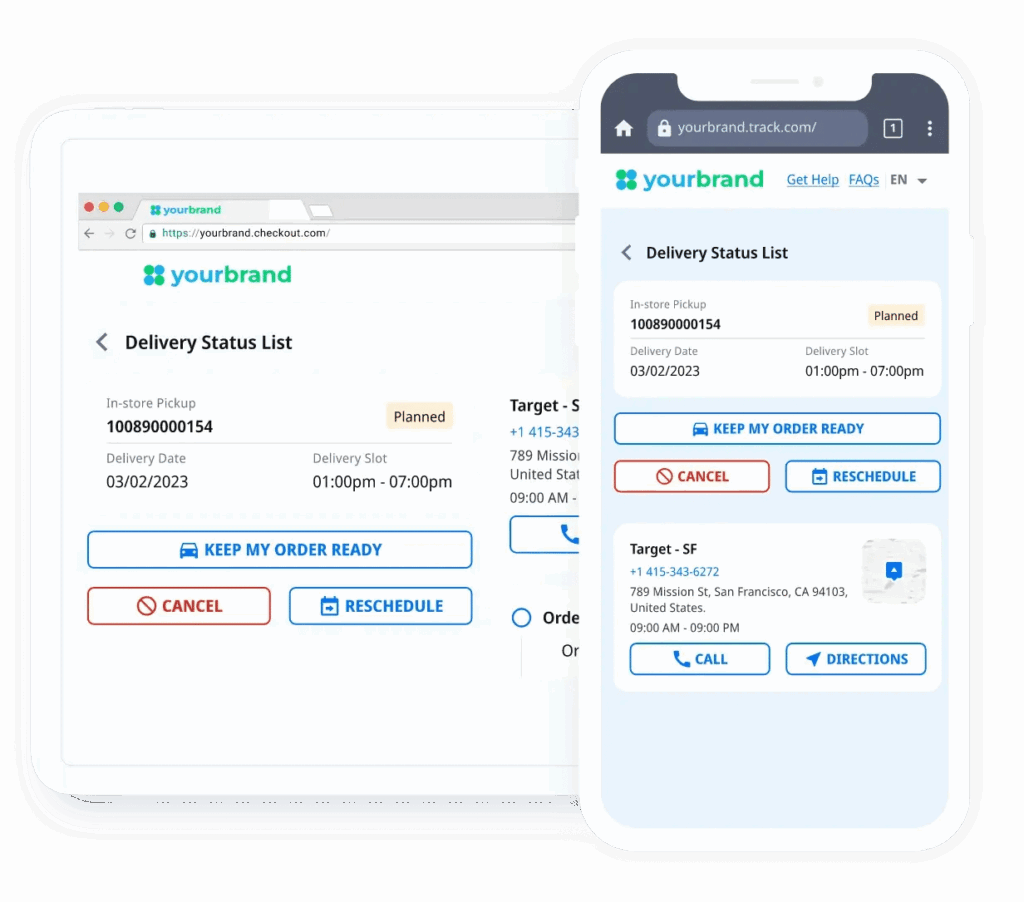
Retailers often struggle with fragmented ERP, WMS, and TMS platforms that fail to communicate. For example, a global retail and CPG company may track stock in its warehouse system while delivery updates sit with carriers, creating blind spots. This slows responses and leaves managers vulnerable to fraud or misinformation.
How Locus helps: Locus control tower anticipates and manages disruptions on the ground with end-to-end visibility across the All-Mile. The platform brings transparency for every stakeholder, from dispatch managers to drivers and end-consumers, by providing predictive alerts, live ETAs, and automated rerouting. This capability enables retailers to respond promptly before issues escalate, thereby maintaining service reliability across all fulfillment channels.
Absence of Real-Time Updates
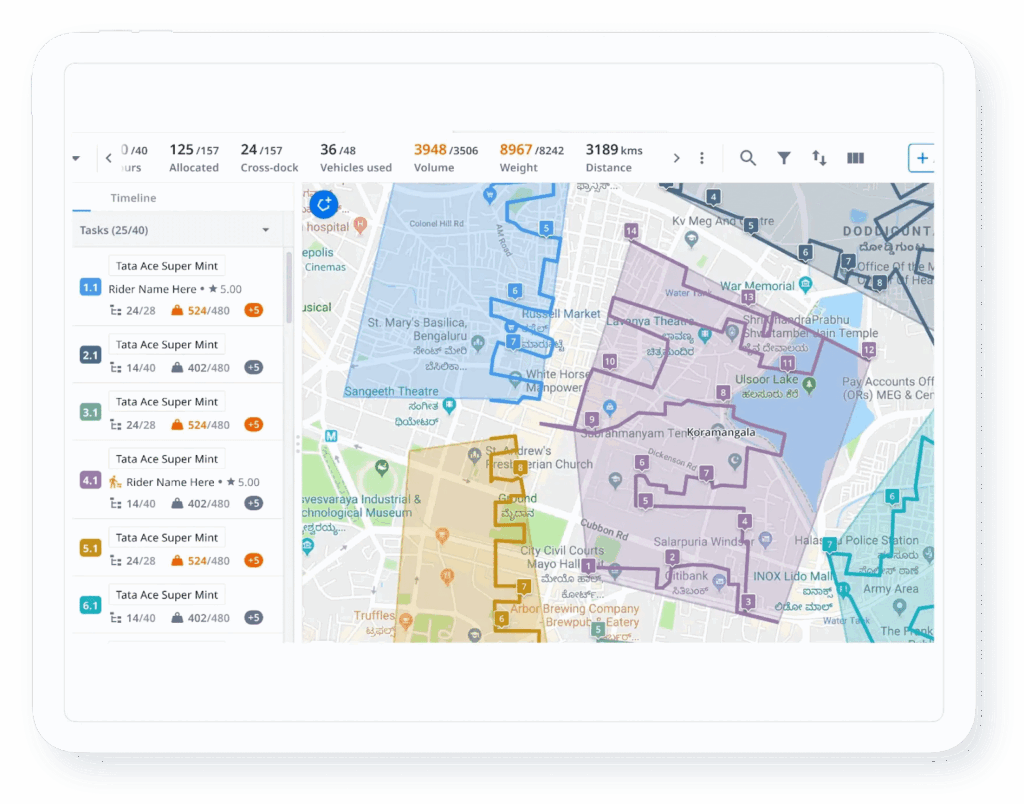
Retailers often learn about delays only after customers complain. Consider a grocer offering same-day delivery; without live updates, orders may still be marked “on track” while trucks sit idle due to traffic. The delay damages brand trust and increases the number of support calls.
How Locus helps: With DispatchIQ and dynamic route optimization, Locus provides live ETAs, predictive alerts, and rerouting. Managers can instantly reassign deliveries and update customers with accurate timelines. This transforms last-mile operations from reactive to proactive.
Inconsistent Omnichannel Fulfillment
Omnichannel retailing promises flexibility but often fails in execution. A shopper may order online only to discover that the product is unavailable in-store for pickup. These disconnects frustrate customers and lead to increased returns.
How Locus helps: Locus integrates data across online and offline networks to provide unified visibility. Retailers can ensure accurate stock views for buy-online-pickup-in-store and support seamless cross-channel returns. This ensures omnichannel promises translate into consistent customer experiences.
High Logistics Costs from Manual Planning
Static planning tools lead to poor vehicle utilization and inflated delivery costs. For example, a furniture retailer managing multi-city home deliveries may allocate routes without considering load capacity or real-time traffic, driving costs higher per order.
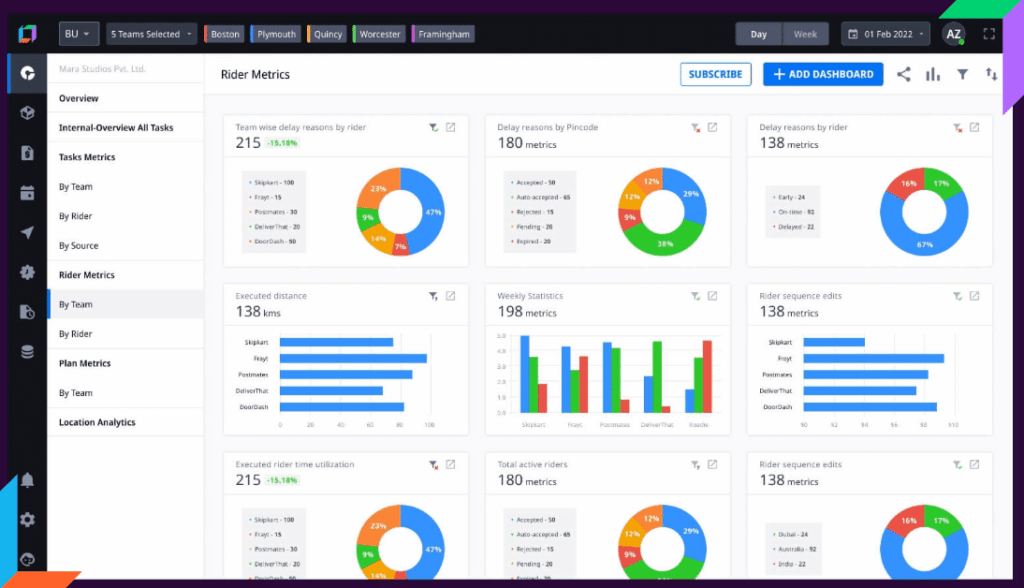
How Locus helps: With cutting-edge fleet tracking, Locus delivers comprehensive logistics analysis of ground data and performance metrics across the All-Mile. The platform transforms delivery operations into actionable insights, helping retailers understand market realities and make fact-based business decisions. From forecasting demand to benchmarking carrier performance, Locus turns visibility into a long-term strategic advantage.
Strengthen Retail Visibility With Locus
Retail visibility is now a strategic capability that directly influences customer trust, operational efficiency, and profitability. Retailers that continue relying on fragmented systems or manual tracking risk blind spots, delayed responses, and rising costs.
Locus provides end-to-end transparency across the entire supply chain, from suppliers to stores to the end consumer. With AI-driven orchestration, active monitoring, and predictive insights, the platform equips retailers to anticipate disruptions, optimize carrier performance, and deliver seamless omnichannel experiences. As a result, enterprises in Retail and CPG gain not just visibility but also the intelligence to act on it, turning logistics into a competitive advantage.
Ready to see how Locus can improve your retail visibility strategy? Schedule a demo today and experience the difference.
Frequently Asked Questions (FAQs)
How does retail visibility impact supplier relationships?
Retail visibility gives suppliers access to shared demand and shipment data, reducing disputes and enabling proactive collaboration. Stronger visibility builds trust, improves replenishment cycles, and supports faster response to changing market conditions.
Can retail visibility reduce product returns?
Yes. By providing accurate stock availability, clear delivery timelines, and proactive updates, retailers minimize order errors and customer dissatisfaction, which are leading causes of returns. This reduces costs and protects margins in high-volume channels.
Is retail visibility relevant for small retailers?
Absolutely. Even small retailers benefit from visibility by preventing overstock, managing seasonal demand, and improving delivery reliability. Scalable visibility solutions help them compete effectively with larger players.
How does visibility support sustainability goals?
Visibility highlights inefficiencies such as excess miles traveled, underutilized fleets, or poor load planning. By addressing these issues, retailers cut fuel usage and emissions, aligning logistics operations with sustainability targets and regulatory requirements.
How does Locus improve retail visibility beyond tracking?
Locus goes beyond tracking by combining AI-powered dispatch, dynamic route optimization, and predictive analytics. This all-mile orchestration transforms raw data into actionable intelligence, enabling retailers to scale operations with greater confidence and efficiency.


General
Complete Guide to Electronic Proof of Delivery (ePOD) and Its Importance

Sep 23, 2026
Learn what electronic proof of delivery (ePOD) is, how it works in logistics, and why investing in ePOD software is key to improving efficiency and accuracy.
Read more
Fleet Optimization
What Is Line Haul Transportation? Vs Long Haul & Benefits

Sep 23, 2026
Line haul transportation involves the movement of goods like raw materials or finished products between distribution hubs, warehouses, or transportation hubs.
Read moreInsights Worth Your Time




















What is Retail Visibility? Importance, Types & Challenges