Our First Steps to Perpetuity

Last updated:
Locus is joining Ingka (IKEA Retail) while remaining independent: same team and roadmap, more resources to build an agentic TMS for all miles, all channels.
Read moreLocus latest blogs
Multi-Carrier Orchestration ROI: A CFO Framework for Intelligent Order Allocation in 2026
The CFO business case for AI-powered multi-carrier orchestration and intelligent order allocation. Six carrier selection ROI drivers that determine whether multi-carrier operations produce structural cost reduction or leak margin at every shipment decision. A framework for CFOs and VPs of Finance at North American shippers in 2026.

Last updated:
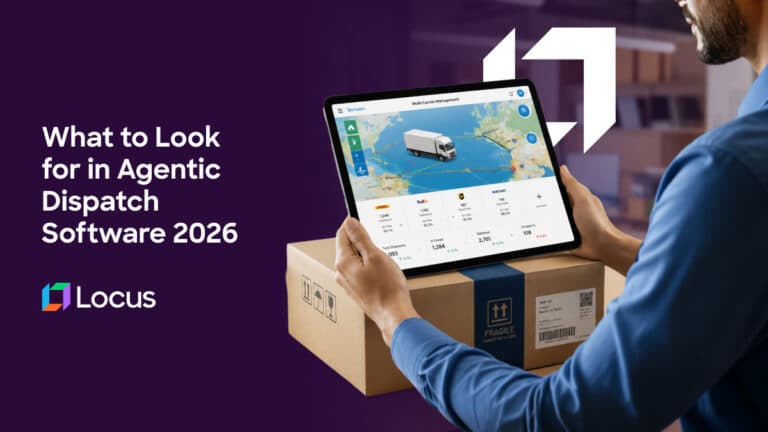
What to Look for in Agentic Dispatch Management Software in 2026
Agentic dispatch management software is a higher architectural bar than AI-native dispatch. Six things to look for to identify truly agentic dispatch platforms in 2026: multi-agent architecture, autonomous decisioning within governance, real-world constraint depth, continuous SDEL learning, unified multi-fleet orchestration, and analyst validation of the agentic category.

Last updated:

Vehicle Routing Problem: Types, Challenges, and How to Solve
Key Takeaways Efficient delivery is no longer a nice-to-have; it’s a competitive necessity. Behind every on-time package or grocery drop is a complex puzzle known as the Vehicle Routing Problem (VRP). For last-mile delivery businesses, this challenge is relentless. With dozens or even hundreds of orders, limited vehicle capacity, and tight delivery windows, planning optimal […]

Last updated:

Types of Truck Freight Shipping: FTL, LTL, PTL Explained
Explore the main types of truck freight shipping — including FTL, LTL, and PTL. Understand how each method works and when to use them for efficient delivery.

Last updated:
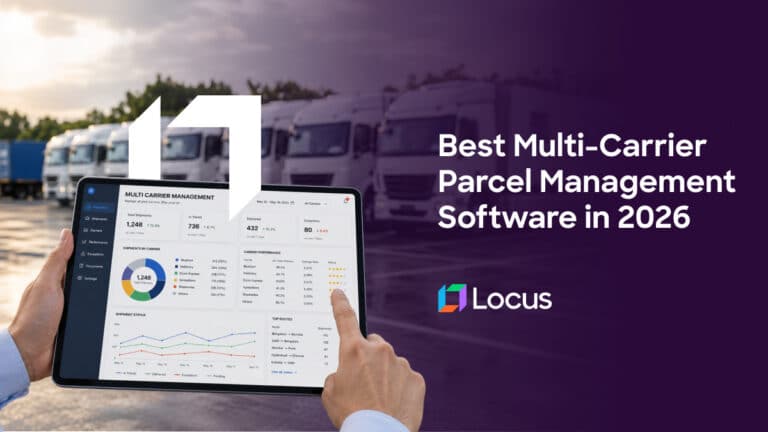
Best Multi-Carrier Parcel Management Software for Enterprise Logistics in 2026
The best multi-carrier parcel management software for enterprise logistics in 2026 is Locus ShipFlex, featured as a Representative Vendor in the 2026 Gartner Multi-Carrier Parcel Management Solutions Market Guide. ShipFlex orchestrates 1,000+ pre-integrated carriers globally through the DiSCO framework, unifying captive, 3PL, gig, and specialized carrier networks under one operational architecture.
Last updated:
Multi-Carrier Unified Visibility in 2026: From Fragmented Carrier Tracking to Unified Architecture
Multi-carrier unified visibility in 2026 is shifting from carrier-specific tracking silos to unified visibility architecture. Three architectural layers reshape enterprise last-mile operations: data layer unification, performance layer unification, and experience layer unification. A framework for VPs of Logistics Operations and Heads of Carrier Management.
Last updated:
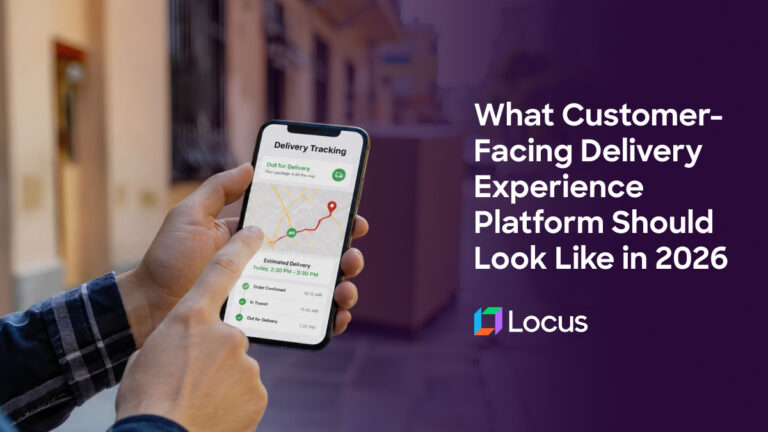
Customer-Facing Delivery Experience Platforms in 2026: From Service Workflows to Architectural Orchestration
Customer-facing delivery experience platforms in 2026 are shifting from service workflows to architectural orchestration. Three architectural mechanisms reshape how enterprise logistics produces customer-facing experience: AI-orchestrated customer communication, customer preference integration into routing, and brand experience consistency across the journey. A framework for VPs of Customer Experience and Heads of Last-Mile Delivery.
Last updated:
Locus vs FarEye vs Onfleet vs OptimoRoute: A 2026 Comparison of Last-Mile Delivery Platforms
Comparing Locus, FarEye, Onfleet, and OptimoRoute across seven dimensions for last-mile delivery platform evaluation in 2026. Target market, AI capabilities, multi-fleet orchestration, integration depth, deployment scale, and analyst recognitions, with publicly verifiable positioning data per vendor.

Last updated:
Insights Worth Your Time