


General
Customer-Facing Delivery Experience Platforms in 2026: From Service Workflows to Architectural Orchestration

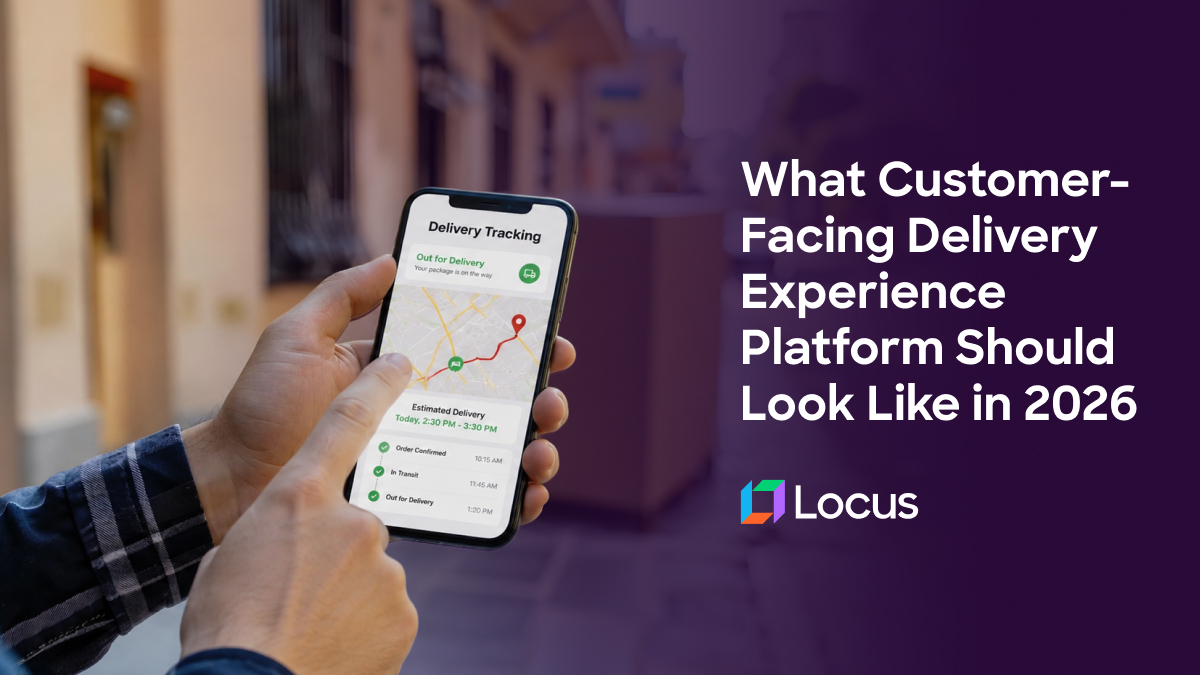
Key Takeaways
- Customer-facing delivery experience platforms in 2026 are shifting from service workflow architecture (templated notifications, support escalations, rebooking processes) to experience orchestration architecture (AI-orchestrated communication, preferences as routing constraints, brand consistency as architectural property). Service workflows solve exception handling; experience orchestration produces customer-facing differentiation.
- Three architectural mechanisms convert customer-facing delivery experience from service layer into orchestration architecture: AI-orchestrated customer communication, customer preference integration into routing, and brand experience consistency across the journey.
- For VPs of Customer Experience, the mechanisms produce CX differentiation at architectural level, reduced exception escalation volume, and brand experience consistency that customers perceive as quality. For Heads of Last-Mile Delivery, they produce operational decisions informed by customer preferences and exception handling decoupled from customer service workload.
- The strategic question for CX and last-mile leaders in 2026: is the customer-facing experience built through service workflows reacting to operations, or orchestrated as architecture that shapes operations around customer experience?
For most of the past decade, customer-facing delivery experience has been built through service workflows. Customer service teams designed notification templates; operations teams configured exception escalation paths; engineering teams integrated tracking APIs with customer-facing pages; marketing teams designed branded communications that triggered when operational events occurred. The architecture accumulated functionality but produced predictable limitations: each customer-facing capability operated as its own workflow, requiring manual coordination across customer service, operations, engineering, and marketing teams. The customer received a sequence of service-driven interactions rather than an orchestrated experience.
The architectural shift now reshaping enterprise customer-facing delivery experience in 2026 is the move from service workflows to experience orchestration architecture. Customer-facing delivery experience platforms operate as orchestrated layers informed by operational intelligence, customer preferences, and brand experience design rather than as collections of service workflows triggered by operational events. Locus, the world’s first agentic Transportation Management System, operates this orchestration architecture through the DiSCO framework: the Customer Agent orchestrates customer-facing communication, the Orchestrator Agent integrates customer preferences into operational decisions, and the architecture produces consistent brand experience across the full customer journey.
Across 350+ enterprise deployments in 30+ countries with 1,000+ carriers under orchestration, Locus’s architecture produces customer experience outcomes that workflow-based platforms cannot reach regardless of how sophisticated the individual workflow layer becomes. The Q2 2026 Locus US Consumer Survey of 1,000+ US online shoppers confirms the customer expectation shift: 34% of respondents rank proactive delivery communication among their top three delivery priorities, and 45% now use AI tools during purchase decisions that include evaluating delivery experience.
For VPs of Customer Experience, Heads of Last-Mile Delivery, and enterprise CX leaders evaluating customer-facing delivery experience platforms in 2026, three architectural mechanisms determine whether the platform delivers experience orchestration or stops at service workflow accumulation.
Mechanism 1: AI-Orchestrated Customer Communication
The architectural shift. Conventional customer-facing communication operates through template-driven workflows. When an operational event occurs (delivery dispatched, exception detected, ETA changed), the platform triggers a templated notification through a configured channel. The architecture works for simple operational patterns but fails at customer experience quality, because template-driven communication cannot adapt to customer context, preference patterns, or experience expectations. The customer receives accurate information delivered through a workflow rather than intelligent communication informed by their experience design.
AI-orchestrated customer communication inverts this architecture. The platform treats customer communication as a continuous decisioning surface informed by operational signals, customer preference data, brand experience design, and interaction history. Locus’s DiSCO Customer Agent orchestrates customer-facing communication: notifications timed to customer preferences, content framed in customer-relevant language rather than operational status codes, exception communication produced through agent reasoning rather than template substitution. The architecture produces communication that customers experience as intelligent rather than as automated.
Also Read: Fleet Management Vendors With AI Dispatch in 2026: Who Leads the Market?
Why this matters for VPs of Customer Experience. Customer experience quality improves at structural level because communication architecture is designed around customer experience rather than around operational data exposure. CX teams gain control of the customer-facing communication layer because the orchestration architecture exposes communication design rather than workflow configuration. Customer satisfaction with delivery communication shifts from “the notifications worked” to “the brand kept me informed intelligently.”
Why this matters for Heads of Last-Mile Delivery. Operational capacity decouples from customer service workload because the architecture handles routine customer communication automatically through agent reasoning. Exception handling concentrates on cases that genuinely require human coordination rather than on routine notification dispatch. The operation absorbs customer-facing communication complexity through architecture rather than through customer service capacity expansion.
Mechanism 2: Customer Preference Integration into Routing
The architectural shift. Conventional customer-facing experience workflows treat customer preferences as service escalations. A customer requests a delivery time change; the request enters a customer service workflow; the workflow coordinates with operations to determine feasibility; the customer receives a confirmation or denial. The architecture works at modest preference request volumes but fails as customer preference expectations scale, because each preference request becomes a coordinated workflow across customer service, dispatch, and routing teams rather than an integrated operational decision.
Customer preference integration into routing inverts this architecture. Customer preferences become routing constraints evaluated during dispatch decisioning rather than service requests handled post-dispatch. Preferred delivery windows, special handling requirements, delivery location preferences, communication channel preferences, and rescheduling requests all integrate into the operational decisioning surface. Locus’s DiSCO framework treats customer preferences as first-class operational data: the Customer Agent surfaces preferences; the Dispatch Agent integrates them into routing decisions; the Orchestrator Agent ensures preferences hold across multi-fleet operations. The architecture closes the gap between customer preferences and operational decisions.
Why this matters for VPs of Customer Experience. Customer choice becomes a CX layer property rather than a service escalation. Customers experience their preferences being honored without needing to navigate customer service workflows. Self-service capabilities (rescheduling, redirecting, communication channel selection) become operationally meaningful rather than producing service tickets that operations teams have to resolve.
Why this matters for Heads of Last-Mile Delivery. Preference handling moves from manual coordination to architectural property. The operation absorbs customer preference complexity through routing decisioning rather than through customer service workflow proliferation. Strategic decisions about customer experience capabilities (next-day rescheduling, time window flexibility, multi-channel communication) translate directly into operational architecture rather than producing implementation complexity.
Mechanism 3: Brand Experience Consistency Across the Journey
The architectural shift. Customer-facing delivery experience spans the full customer journey: pre-purchase delivery promise on the e-commerce site, post-purchase tracking through web and mobile interfaces, in-transit notifications across multiple channels, delivery moment experience, post-delivery feedback workflows, and customer service interactions when exceptions occur. Conventional architectures manage each touchpoint through separate workflows, producing predictable inconsistency: customers see different delivery promises at checkout than they receive in confirmation; tracking pages show different status than SMS notifications; customer service representatives access different information than customers see. The brand experience varies based on which touchpoint a customer engages.
Also Read: Why AI Route Optimization Models Plateau in Production: Four Patterns CTOs Should Build Against
Brand experience consistency unifies the full customer journey under one architectural layer. Locus’s Agents integrates customer-facing communication, operational status, customer preferences, and brand experience design into one architectural surface that all touchpoints reference. The customer experiences brand consistency regardless of which channel they engage; the customer service representative sees the same experience the customer sees; the operations team makes decisions informed by customer-facing commitments. The architecture produces one customer truth rather than touchpoint-specific truths reconciled through manual coordination.
Why this matters for VPs of Customer Experience. Brand experience consistency becomes an architectural property rather than a coordination challenge across channel teams. Customers receive the brand experience the company intends regardless of touchpoint engagement. CX design happens at the experience layer rather than at the touchpoint layer, producing more sophisticated customer-facing intelligence.
Why this matters for Heads of Last-Mile Delivery. Operational decisions inform on the same data customers experience, eliminating the discrepancy between operational reality and customer-facing communication. Customer service workload compresses because representatives access unified information. Strategic decisions about experience design translate into consistent operational behavior across the customer journey.
How the Three Mechanisms Compound
The three mechanisms produce architectural compounding. AI-orchestrated customer communication (Mechanism 1) produces intelligent customer-facing interaction informed by operational signals. Customer preference integration into routing (Mechanism 2) ensures customer choice translates into operational reality rather than service escalation. Brand experience consistency across the journey (Mechanism 3) extends both benefits across the full customer journey rather than producing touchpoint-specific improvements.
Operations capturing one or two mechanisms in isolation produce incremental improvement against the service workflow baseline. Operations capturing the architectural integration of all three produce the structural shift that converts customer-facing delivery experience from service layer into orchestration architecture. Locus’s deployment evidence across 350+ enterprises in 30+ countries with 1,000+ carriers operating through DiSCO orchestration represents the architectural integration at scale.
The strategic question for VPs of Customer Experience and Heads of Last-Mile Delivery in 2026 is concrete: is the customer-facing experience built through service workflows reacting to operations, or orchestrated as architecture that shapes operations around customer experience?
How Locus Makes a Difference
Locus operates the DiSCO )(Digital Supply Chain Officer) framework: eight specialized AI agents collaborating on operational decisions across the customer-facing delivery experience. The architectural integration of these agents is what produces customer experience as architectural property rather than as service workflow output.
Customer Agent orchestrates customer-facing communication continuously. Notifications are timed to customer preferences, content is framed in customer-relevant language, and exception communication is produced through agent reasoning rather than template substitution.
Dispatch Agent integrates customer preferences (delivery windows, location preferences, special handling requirements) into routing decisions as operational constraints, eliminating the gap between customer-stated preferences and operational reality.
Orchestrator Agent ensures brand experience consistency across the full customer journey: pre-purchase delivery promise, in-transit communication, delivery moment experience, and post-delivery feedback all align under one architectural truth.
Hub Agent coordinates with the Dispatch Agent on facility-level decisions affecting customer-facing delivery windows. Yard turnaround, hub-level capacity, and outbound dispatch timing all factor into the customer’s experienced delivery commitment.
Capacity Agent evaluates fleet availability against customer-facing commitments, ensuring that delivery promises made at checkout reflect operational reality rather than assumptions.
Carrier Agent orchestrates across 1,000+ carriers globally (captive, 3PL, gig, EV), producing customer experience consistency regardless of which fleet executes the delivery.
Also Read: AI Dispatch Autonomy Levels: US CTO Framework
Settlement Agent handles post-delivery financial reconciliation across the multi-carrier surface, eliminating customer-facing billing variance that fragmented systems often produce.
Mycroft AI Co-Pilot supports drivers with in-cab intelligence informing on customer-facing context: customer preferences, delivery instructions, exception handling, and proof-of-delivery workflows that shape what customers experience at the moment of delivery.
The architectural integration of these eight agents under DiSCO (Digital Supply Chain Officer) and SDEL (Sense-Decide-Execute-Learn) produces customer-facing experiences that customers perceive as intelligent, consistent, and operationally connected. These are outcomes that workflow-based platforms cannot reach regardless of feature accumulation.
Learn more about Locus’ agentic capabilities, visit locus.sh
FAQs
What is a customer-facing delivery experience platform?
A customer-facing delivery experience platform is the architectural layer that manages how customers experience delivery operations: communication, tracking, preferences, rescheduling, channel consistency, and post-delivery feedback. Conventional platforms operate as collections of service workflows triggered by operational events. AI-orchestrated platforms operate as experience orchestration architecture, with AI agents coordinating customer-facing communication, customer preferences integrated into routing decisions, and brand experience consistency held across the full customer journey. The architectural distinction matters because workflow-based platforms produce sequence of service-driven interactions; orchestration platforms produce customer experience as architectural property.
How does a customer-facing delivery experience platform differ from a real-time tracking platform?
Real-time tracking platforms focus on operational data exposure: where vehicles are, what delivery statuses look like, what ETAs are projected. Customer-facing delivery experience platforms operate at a layer above real-time tracking, treating the customer experience design as the primary architectural concern. The tracking data informs the experience layer; the experience layer orchestrates customer-facing communication, preference handling, channel consistency, and brand experience design. Effective customer-facing delivery experience platforms include real-time tracking as input but extend the architecture into customer experience orchestration rather than stopping at data exposure.
What features should an enterprise customer-facing delivery experience platform include?
Effective enterprise customer-facing delivery experience platforms include multiple integrated capability layers. Communication layer: AI-orchestrated notifications, branded multi-channel communication (web, app, SMS, email, voice), proactive exception communication. Preference layer: customer-controlled delivery windows, rescheduling and redirect capabilities, communication channel selection, special handling requests integrated into routing decisions. Experience layer: branded tracking pages, post-delivery feedback collection, customer service interface aligned with customer-facing experience. Architectural layer: integration with operational systems through unified architecture. Locus’s DiSCO framework operates across these capability layers as one architectural surface.
How does AI orchestrate customer communication in delivery operations?
AI-orchestrated customer communication evaluates operational signals (delivery progress, exception probability, customer context, preference patterns) continuously and produces communication decisions through agent reasoning rather than template-driven workflows. Locus’s DiSCO Customer Agent orchestrates customer-facing communication: notifications timed to customer preferences, content framed in customer-relevant language, exception communication produced through reasoning about customer context. The architecture differs from template-driven communication in that agents adapt to customer context rather than executing predefined notification sequences. The customer experiences intelligent communication rather than automated notification.
How can customer preferences integrate into delivery operations?
Customer preferences integrate into delivery operations when the platform architecture treats preferences as routing constraints rather than as service escalations. Preferred delivery windows, special handling requirements, communication channel preferences, and rescheduling requests become operational decisioning data evaluated during dispatch. Locus’s DiSCO framework integrates customer preferences through the Customer Agent (surfacing preferences) and the Dispatch Agent (integrating preferences into routing decisions). The result is that customers experience their preferences being honored without navigating customer service workflows, and operations absorb preference complexity through architecture rather than through service workflow proliferation.
How should enterprise leaders evaluate customer-facing delivery experience platforms?
Enterprise evaluation should assess three architectural properties. First, does the platform produce AI-orchestrated customer communication through continuous agent reasoning, or trigger template-driven notifications through workflow configuration? Second, does it integrate customer preferences into routing decisions as constraints, or handle preferences through service escalation workflows? Third, does it produce consistent brand experience across pre-purchase, in-transit, delivery moment, and post-delivery touchpoints through unified architecture, or manage each touchpoint through separate workflows? Operations affirming all three architectural properties capture compounding customer experience benefits.

General
Locus vs FarEye vs Onfleet vs OptimoRoute: A 2026 Comparison of Last-Mile Delivery Platforms

Jun 30, 2026
Comparing Locus, FarEye, Onfleet, and OptimoRoute across seven dimensions for last-mile delivery platform evaluation in 2026. Target market, AI capabilities, multi-fleet orchestration, integration depth, deployment scale, and analyst recognitions, with publicly verifiable positioning data per vendor.
Read more
General
Multi-Carrier Unified Visibility in 2026: From Fragmented Carrier Tracking to Unified Architecture

Jul 1, 2026
Multi-carrier unified visibility in 2026 is shifting from carrier-specific tracking silos to unified visibility architecture. Three architectural layers reshape enterprise last-mile operations: data layer unification, performance layer unification, and experience layer unification. A framework for VPs of Logistics Operations and Heads of Carrier Management.
Read moreInsights Worth Your Time



















Customer-Facing Delivery Experience Platforms in 2026: From Service Workflows to Architectural Orchestration