


General
Logistics Risk Management: Types & Strategies Explained
Who is this guide for? Logistics leaders, supply chain managers, and operations professionals at enterprise and high-growth companies seeking to proactively manage risk and optimize delivery performance.
TL;DR: Effective logistics risk management combines proactive identification, strategic mitigation, and AI-powered tools to prevent disruptions, reduce costs, and maintain customer satisfaction across global supply chains.
Key Takeaways
- Managing logistics risks is crucial for preventing disruptions that impact delivery timelines and customer satisfaction.
- Risks span across operations, finance, compliance, and environmental factors, each requiring targeted strategies for effective management.
- Proactive measures like real-time tracking, predictive analytics, and route optimization can detect and address risks before they cause major issues.
- Diversifying suppliers and routes, along with maintaining dynamic inventory management, helps companies avoid over-reliance on single points of failure.
- Locus’s AI-driven platform integrates real-time visibility and automated decision-making to proactively manage risks, ensuring smoother, more efficient logistics operations.
Why Locus?
- AI-Driven Risk Management: Predict and prevent disruptions before they impact your business.
- Real-Time Visibility: End-to-end tracking and analytics for every shipment.
- Seamless Integration: Works with your existing TMS, WMS, ERP, and OMS systems.
- Proven Results: Trusted by 360+ enterprises worldwide.
Economic uncertainty has become a defining challenge for logistics and transportation in 2025. For enterprise logistics leaders, volatile fuel prices, fluctuating exchange rates, and shifting tariff policies make it difficult to forecast costs and protect margins. Without deliberate planning, these financial risks can quickly erode operational efficiency and customer trust.
Effective logistics risk management goes beyond reacting to price spikes. It involves strategic measures like financial hedging, long-term supplier contracts, and technology-enabled visibility into real-time cost fluctuations. Global leaders such as DHL and Maersk have embraced these approaches to strengthen resilience and maintain competitiveness.
In this guide, we’ll examine the major economic risks impacting logistics today, share proven strategies for mitigating them, and show how your team can leverage Locus’s AI-powered platform to gain predictive insights and automation for more effective cost management.
What Is Logistics Risk Management?
Logistics risk management is the process of identifying, assessing, and mitigating risks that could disrupt the flow of goods across the supply chain. It begins with understanding potential vulnerabilities in your supply chain—from transportation delays and unreliable suppliers to fluctuating inventory levels.
As global trade expands and supply chains span multiple regions, logistics risks are growing in both scale and complexity. Geopolitical tensions such as the Russia-Ukraine conflict have disrupted shipping routes and driven up fuel costs, while trade policy shifts like new tariff regimes have increased uncertainty for cross-border operations.
Simply reacting to these disruptions often leads to higher costs and longer recovery times. Your organization must instead use predictive analytics and scenario planning to anticipate risks and take preventive action before operations are affected.
A recent example comes from Walmart, which applied predictive demand forecasting during climate-related disruptions in the United States in 2023. Using AI-driven analytics, Walmart was able to anticipate spikes in demand caused by extreme weather events. This proactive approach allowed the company to reposition inventory, adjust supplier schedules, and reroute shipments before disruptions escalated. As a result, Walmart minimized stockouts, reduced delays, and maintained consistent customer service levels despite challenging conditions.
Objectives and Goals of Logistics Risk Management
The primary objectives of logistics risk management include:
- Minimizing disruptions: Ensure continuous operations despite external challenges
- Protecting assets: Safeguard inventory, equipment, and infrastructure
- Ensuring compliance: Meet regulatory requirements across all markets
- Maintaining customer service levels: Deliver consistent, reliable service
- Cost control: Minimize financial impact of disruptions
The Impact of Poor Logistics Risk Management
Without effective risk management, organizations face severe consequences that compound over time:
| Impact Category | Consequences | Typical Cost |
|---|---|---|
| Financial Losses | Lost revenue, increased operational costs, penalty fees | 5-15% of annual revenue |
| Customer Dissatisfaction | Delivery delays, stockouts, service failures | 20-30% customer churn |
| Operational Inefficiencies | Resource misallocation, emergency responses, overtime costs | 25-40% efficiency loss |
| Reputational Damage | Brand erosion, negative publicity, market share loss | Long-term impact |
Importance of Logistics Risk Management
Without logistics risk management, supply chains would be exposed to constant disruptions that compound into larger operational failures. Unanticipated delays in transportation, supplier breakdowns, or raw material shortages could quickly escalate into missed deadlines, inflated costs, and dissatisfied customers.
Apple’s experience in 2021 illustrates the consequences clearly. A global chip shortage combined with labor disruptions in Southeast Asia severely constrained production. The iPhone 13 series faced unprecedented wait times, with some customers waiting more than a month for their orders. To manage the shortfall, Apple shifted production resources away from iPads to prioritize iPhones, resulting in a 10% decline in iPad shipments. The delays frustrated customers and dented the brand’s reputation for reliable delivery, demonstrating how even companies with vast resources can falter when supply chain vulnerabilities are exposed.
Logistics Risk Management Process Steps
A structured approach to logistics risk management follows these sequential steps:
- Identify Risks: Map potential vulnerabilities across your supply chain
- Assess Risks: Evaluate probability and potential impact of each risk
- Prioritize: Rank risks based on severity and likelihood
- Develop Mitigation Plans: Create specific strategies for high-priority risks
- Implement: Execute risk mitigation strategies and controls
- Monitor: Continuously track risk indicators and performance
- Review: Regularly update and improve risk management practices
Strategies for Effective Logistics Risk Management
- Diversify suppliers: Reduce dependence on single-source vendors by securing alternatives across different geographies. For example, a manufacturer that relies on multiple raw material suppliers is less vulnerable to localized shortages.
- Build flexible production schedules: Design production systems that can shift capacity between product lines. When one product faces a shortage, resources can be reallocated to ensure high-demand items continue moving.
- Leverage predictive analytics: Use forecasting models to anticipate demand surges or material shortages before they occur. Early identification of risks allows for proactive adjustments in sourcing and inventory.
- Adopt real-time visibility tools: Implement monitoring systems that track shipments, supplier performance, and external disruptions as they unfold. Real-time data makes it possible to reroute shipments quickly or find alternate suppliers before delays escalate.
Together, these strategies create resilience, enabling your organization to sustain operations, safeguard customer trust, and remain competitive even in unpredictable market conditions.
Types of Logistics Risk Management
Your organization encounters multiple categories of risk that can disrupt supply chain operations. Transportation bottlenecks, regulatory shifts, and warehousing inefficiencies often translate into higher costs, reduced efficiency, and dissatisfied customers. Addressing these risks with targeted management practices is essential to safeguarding both profitability and service levels.
| Risk Type | Impact | Mitigation Approach |
|---|---|---|
| Strategic | Market positioning, competitive disadvantage | Localization, diversification, regulatory alignment |
| Warehousing & Inventory | Stockouts, overstock, storage costs | AI forecasting, real-time visibility, flexible replenishment |
| Transportation & Carrier | Delivery delays, cost spikes, service failures | Backup routes, flexible contracts, safety stock |
| Compliance & Regulatory | Border delays, penalties, blocked shipments | Continuous monitoring, automated compliance, digital tools |
| Order Fulfillment | Customer dissatisfaction, brand damage | Warehouse automation, demand synchronization, forecasting |
| Reverse Logistics | Return processing delays, cost inefficiencies | Integrated systems, standardized processes, visibility |
1. Strategic Risk Management
Strategic risk management focuses on long-term factors that influence a company’s ability to compete and grow in new or existing markets. It involves analyzing regulatory environments, consumer behavior, and geopolitical landscapes, then adapting business models accordingly.
When Tesla entered China, it faced hurdles such as entrenched local competition, stringent emissions standards, and evolving data security regulations. To counter these challenges, the company built Gigafactory Shanghai. Localized production eliminated import tariffs, reduced shipping costs, and allowed Tesla to adapt vehicle offerings to the country’s preference for electric SUVs. By aligning operations with regulatory and consumer expectations, Tesla strengthened its competitive standing and secured a sustainable position in the Chinese market.
2. Warehousing and Inventory Risk Management
Warehousing and inventory risks stem from poor control over stock levels, which can lead to lost sales through stockouts or wasted resources through overstock. These risks can be managed by deploying accurate demand forecasting, integrating real-time visibility across storage locations, and building flexibility into replenishment cycles.
During the COVID-19 pandemic, Amazon experienced unprecedented surges in consumer demand. The company deployed AI-driven forecasting and real-time analytics to rebalance inventory across its global warehouse network. This approach ensured popular items were replenished quickly, prevented overstocking in slower-moving categories, and reduced holding costs despite extreme market volatility.
3. Transportation and Carrier Risk Management
Transportation risks arise from disruptions to the physical movement of goods, including strikes, equipment breakdowns, fuel shortages, and congestion at ports. Proactive management involves securing backup routes, negotiating flexible contracts with carriers, and maintaining safety stock to absorb sudden delays.
The U.S. East Coast dockworkers’ strike in early 2025 highlighted how labor disputes can paralyze shipping lanes and inflate freight rates. Carriers responded by imposing surcharges, pushing costs onto shippers. Companies that anticipated these risks minimized the disruption by pre-booking alternative routes, adjusting delivery timelines, and maintaining buffer stock at regional distribution centers.
4. Compliance and Regulatory Risk Management
Compliance risks occur when companies fail to align with evolving trade laws, tariffs, or customs regulations. These risks can be managed by implementing continuous regulatory monitoring, building compliance protocols into logistics systems, and using digital tools that flag potential violations before shipments are blocked.
During the COVID-19 pandemic, governments worldwide imposed export restrictions on critical medicines, creating severe bottlenecks for pharmaceutical companies. Locus helped firms respond by integrating real-time route optimization and compliance tracking into their distribution systems. These capabilities enabled companies to identify compliant shipping lanes immediately, reroute deliveries, and maintain uninterrupted distribution of essential drugs despite constant regulatory changes.
5. Order Fulfillment Risk Management
Order fulfillment risks surface when businesses fail to deliver products accurately or on time, leading to dissatisfied customers and damaged brand reputation. Effective management includes investing in warehouse automation, synchronizing inventory with real-time demand, and using forecasting tools to anticipate seasonal fluctuations.
6. Reverse Logistics Risk Management
Reverse logistics risks relate to inefficiencies in handling product returns, repairs, and recycling. Cross-border returns are particularly complex due to customs clearance requirements, long transit times, and regulatory inconsistencies. Companies can manage these risks by integrating return management systems, standardizing processes, and improving visibility across international channels.
Research comparing Zara and Alibaba’s operations in China illustrates these challenges. Zara’s globalized logistics system handled domestic returns efficiently but struggled with the longer timelines and higher costs of international returns. Alibaba’s domestic network performed better locally yet faced similar inefficiencies in cross-border flows. Both companies have since invested in enhanced data integration and reverse logistics technology to accelerate return cycles, reduce costs, and protect customer satisfaction.
Neglecting any one of these areas leaves supply chains exposed, but addressing them in combination transforms logistics into a driver of stability, efficiency, and growth.
Core Aspects of Logistics Risk Management
To effectively manage logistics risks, your team must focus on several key aspects that ensure both proactive preparedness and swift response to disruptions.
- Risk Assessment: Risk assessment is crucial for identifying vulnerabilities in the supply chain. By evaluating factors such as transportation routes and supplier reliability, businesses can foresee disruptions. For example, a company relying on a single shipping route can prepare for potential blockages by considering alternatives. Using data-driven insights, businesses can prioritize risks based on their impact.
- Risk Mitigation Strategies: After identifying risks, companies must implement strategies to reduce their impact. This includes diversifying suppliers to avoid disruptions from a single source, enhancing inventory management to accommodate demand spikes, and leveraging technology to optimize routes and improve delivery timelines.
- Real-Time Monitoring: Continuously monitoring logistics operations provides businesses with immediate visibility into potential issues. Technologies such as GPS tracking, IoT sensors, and AI-based systems help track shipments, weather conditions, and other operational factors in real time.
- Contingency Planning: Even with effective risk management strategies, unforeseen events can still disrupt operations. A well-developed contingency plan ensures businesses are prepared for unexpected challenges, such as transportation delays or supply chain breakdowns.
Supply Chain Resilience and Business Continuity Planning
Supply chain resilience is the ability to maintain operations and quickly recover from disruptions. It’s built through redundancy, flexibility, and adaptive capacity across your entire logistics network.
Key Factors Impacting Logistics and Transport Risks
- Supply factors: Supplier reliability, raw material availability, production capacity
- Demand factors: Market volatility, seasonal fluctuations, customer behavior changes
- Operational factors: Equipment failures, capacity constraints, process inefficiencies
- Environmental factors: Weather events, natural disasters, climate change
- Geopolitical factors: Trade wars, sanctions, regulatory changes
- Technological factors: System failures, cybersecurity threats, digital transformation challenges
Emergency Planning and Natural Disaster Preparedness
Best practices for disaster preparedness include:
- Scenario planning for various disaster types and severity levels
- Pre-established communication protocols with suppliers, carriers, and customers
- Geographic diversification of critical assets and operations
- Regular testing and updating of emergency response plans
Proactive Strategies to Mitigate Logistics Risk
Mitigating logistics risks requires a forward-thinking approach that anticipates disruptions and takes steps to prevent them before they affect your operations. By implementing targeted, proactive strategies, businesses can protect their supply chains and reduce the likelihood of costly interruptions.
1. Continuous Monitoring and Real-Time Tracking:
Constantly monitoring logistics operations enables your team to identify potential risks as soon as they arise. Technologies like GPS, IoT sensors, and AI-powered systems provide live updates on shipments, weather patterns, and performance metrics. This allows logistics managers to respond quickly to emerging issues, whether it’s rerouting a delivery to avoid traffic or adjusting schedules to accommodate unforeseen delays.
2. Utilizing Predictive Analytics for Risk Forecasting:
Predictive analytics plays a pivotal role in anticipating logistics risks. By analyzing historical data and current market trends, your organization can forecast disruptions such as supplier shortages, transportation delays, or adverse weather events. For instance, if predictive models signal a supply chain bottleneck, businesses can take preemptive actions like sourcing from an alternative supplier or adjusting inventory levels to prevent stockouts.
Locus’s Track and Trace platform enhances risk management by offering complete visibility across logistics operations. With real-time tracking, businesses can monitor driver availability, address delivery exceptions, and update routes instantly. By leveraging this technology, logistics teams can respond rapidly to unexpected events, minimizing disruption and maintaining efficient operations.
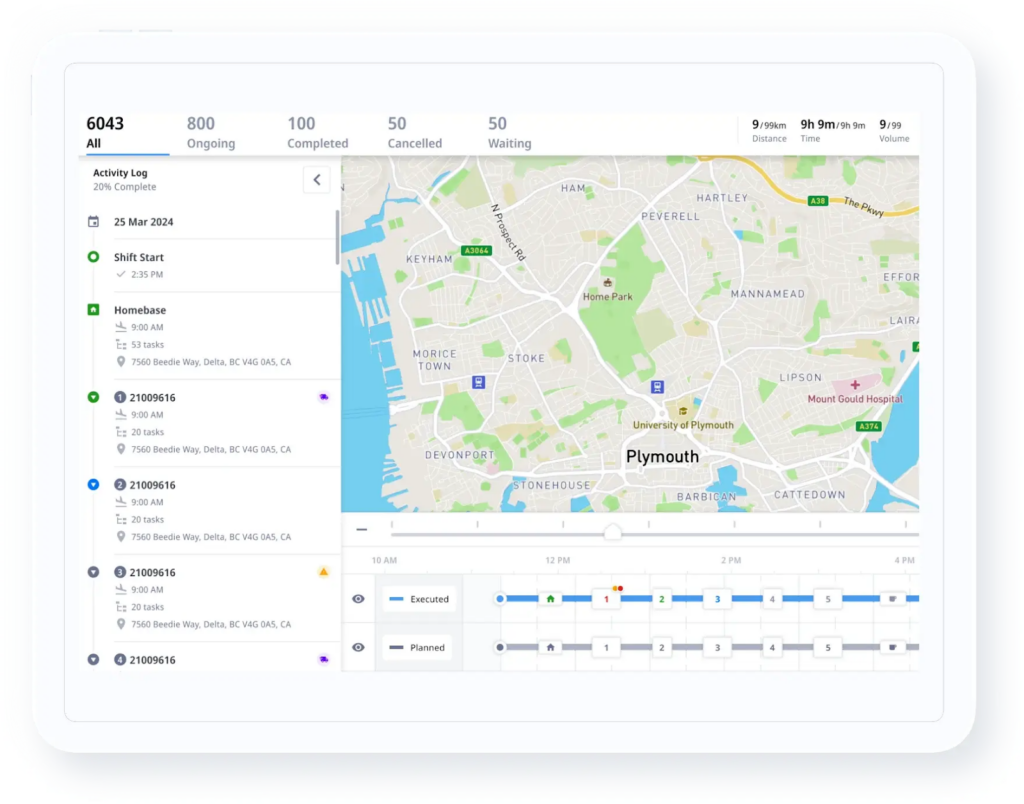
By integrating predictive insights and data-driven tools, companies can proactively manage risks, optimize supply chains, and ensure timely deliveries, even amid uncertainties.
Read more about how Locus helps optimize logistics risk management.
3. Supplier and Route Diversification:
Relying on a single supplier or transportation route creates a significant vulnerability in your supply chain. Diversifying suppliers and transportation routes spreads risk, ensuring that operations continue smoothly even if one route or supplier faces disruption.
An E-grocery company in India tackled this challenge by implementing Locus’s AI-powered Route Planning Software, optimizing delivery routes and diversifying options to ensure timely deliveries. By improving fleet utilization and minimizing travel distances, the company achieved 99.5% on-time deliveries despite high demand and operational constraints. Real-time tracking and route optimization allowed the company to adjust quickly, ensuring efficient deliveries while reducing the impact of potential disruptions.
4. Flexible Inventory Management Systems:
Implementing flexible and dynamic inventory management strategies helps your organization respond to fluctuating demand and unexpected delays. By maintaining buffer stocks and automating inventory replenishment, businesses can ensure a steady supply of goods even during disruptions.
For home service companies, Locus’s AI-driven platform optimizes logistics operations by providing precise dispatch planning, time-slot scheduling, and real-time tracking of service agents. By dynamically assigning tasks and adjusting schedules based on real-time conditions, Locus allows businesses to respond efficiently to changing demands. For example, Dezy, a home services company, utilized Locus to handle over 100,000 appointments and save 4,500+ man-hours, improving service efficiency and ensuring timely delivery during high-demand periods.
With these features, Locus enables businesses to effectively manage resources, reduce costs, and enhance customer satisfaction, even when demand surges unexpectedly.
Examples of Risks in Logistics
Supply chains operate in environments where disruption can occur at any point, from environmental shocks to workforce shortages. Examining real-world events illustrates how these risks translate into higher costs, operational delays, and strained customer relationships.
1. Extreme Weather Events
Severe weather conditions directly affect transportation infrastructure and vehicle movement, creating backlogs that ripple across entire networks. The Beast from the East snowstorm in 2017, for example, immobilized trucking routes across Europe, leaving shipments stranded and forcing businesses to miss delivery deadlines.
Research on weather-related disruptions found that heavy rainfall can cut road capacity by 30%, while flooding increases travel delays by as much as 90%. Companies reduce exposure by adopting predictive weather tracking systems, preparing contingency routes in advance, and using intelligent transport systems (ITS) that reroute vehicles in real time.
2. Supply Chain Disruptions
Supplier failures or sudden shortages of raw materials often bring production lines to a halt. The BCI Supply Chain Resilience Report 2023 highlights that many companies, even after investing in mapping and analytics, still face vulnerabilities when key suppliers lack continuity plans.
Businesses counter these risks by spreading sourcing across multiple suppliers and geographic regions, thereby reducing reliance on any single partner. Real-time visibility tools provide early warnings of inventory shortfalls or delayed shipments, allowing logistics teams to shift orders or reroute deliveries before the disruption escalates.
3. Regulatory and Compliance Risks
Cross-border logistics depends heavily on adherence to constantly shifting trade regulations, tariffs, and customs requirements. Sudden changes can stall cargo at borders, raise operational costs, and create compliance penalties for unprepared companies.
Locus, a logistics automation platform, encountered these challenges while expanding across India, Southeast Asia, the Middle East, and North America. To address regulatory volatility, it developed AI-driven routing, packing, and scheduling systems that streamline compliance and lower costs.
4. Labor Shortages
A constrained workforce, particularly in trucking and warehousing, continues to challenge logistics networks. In the U.S., the driver shortage has persisted for years, pushing up transportation costs and creating bottlenecks in delivery schedules. According to a 2024 Logistics Viewpoints report, 76% of logistics leaders in North America and Europe reported ongoing shortages, with 61% citing transportation and 56% citing warehouse operations as the most affected areas.
Mitigation strategies include investing in driver recruitment and retention programs, expanding training pipelines, and integrating automation into warehouse and fleet operations. Companies are also piloting autonomous trucks and drones for short-haul deliveries, which ease pressure on labor while enhancing efficiency and scalability.
How Locus Outperforms Other Solutions
| Feature | Locus | Typical Alternative |
|---|---|---|
| AI-Powered Route Optimization | Yes, with real-time dynamic adjustment | Manual or basic rule-based |
| End-to-End Visibility | Unified dashboard, live SLA alerts | Fragmented views, slow updates |
| Integration | Direct with TMS, WMS, ERP, OMS | Limited APIs, frequent data gaps |
| Proven Results | 1.5B+ deliveries, 360+ enterprises | Limited case studies |
Recognized by Gartner, G2, and trusted by industry leaders worldwide.
How Locus Helps Businesses Manage Logistics Risks
Locus addresses risk across the supply chain with AI-driven tools that predict disruptions, optimize resources, and give your managers real-time visibility to act before small issues escalate.
Autonomous Route Planning & Real-Time Rerouting
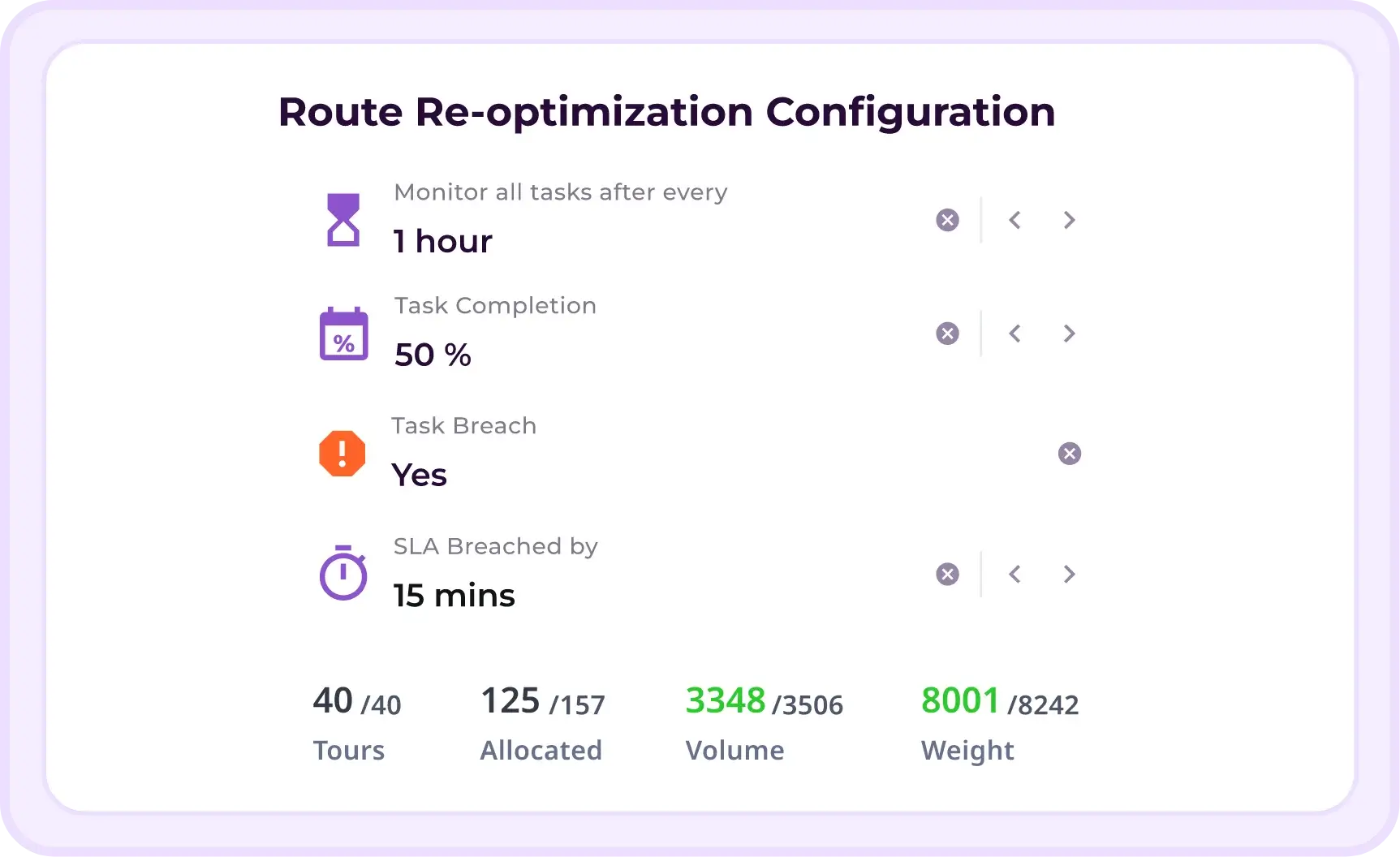
Weather disruptions or sudden road closures can throw carefully planned deliveries off track. Locus tackles this with an AI engine that recalculates routes instantly, allowing your fleets to bypass blocked roads and keep service levels intact.
Constraint-Aware Scheduling & Smart Dispatch
Missed deliveries often stem from plans that look efficient on paper but fail under real-world conditions. Locus reduces this risk by building schedules that account for driver shifts, vehicle capacities, traffic patterns, and customer delivery windows.
Dynamic Load Optimization & Capacity Planning
Empty miles, underutilized vehicles, and overburdened trucks create operational and financial risks. To address this, Locus continuously analyzes order volumes, vehicle availability, and fleet capacity to distribute loads efficiently.
End-to-End Visibility with Control Tower
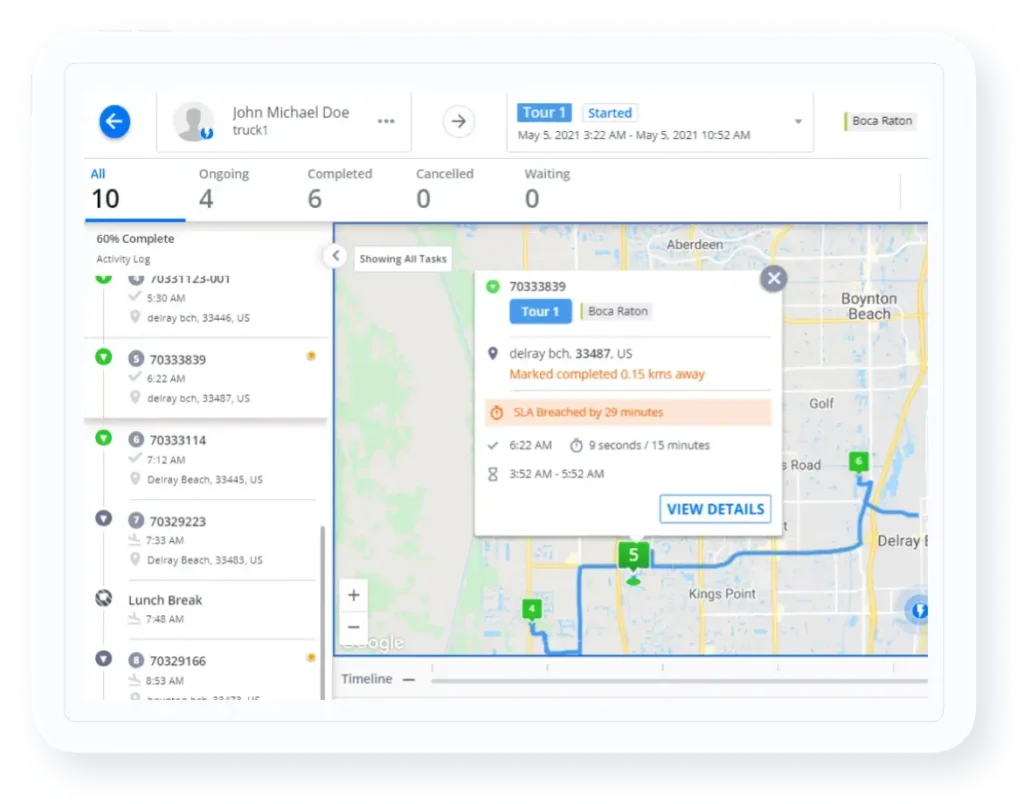
Control Tower view in Locus highlights real-time delivery updates and SLA breaches, enabling faster corrective action.
When delays happen, knowing about them late often makes recovery harder. Locus equips your managers with a real-time “control tower” that displays orders, drivers, and routes on a single dashboard.
AI-Driven Analytics & Continuous Risk Insights
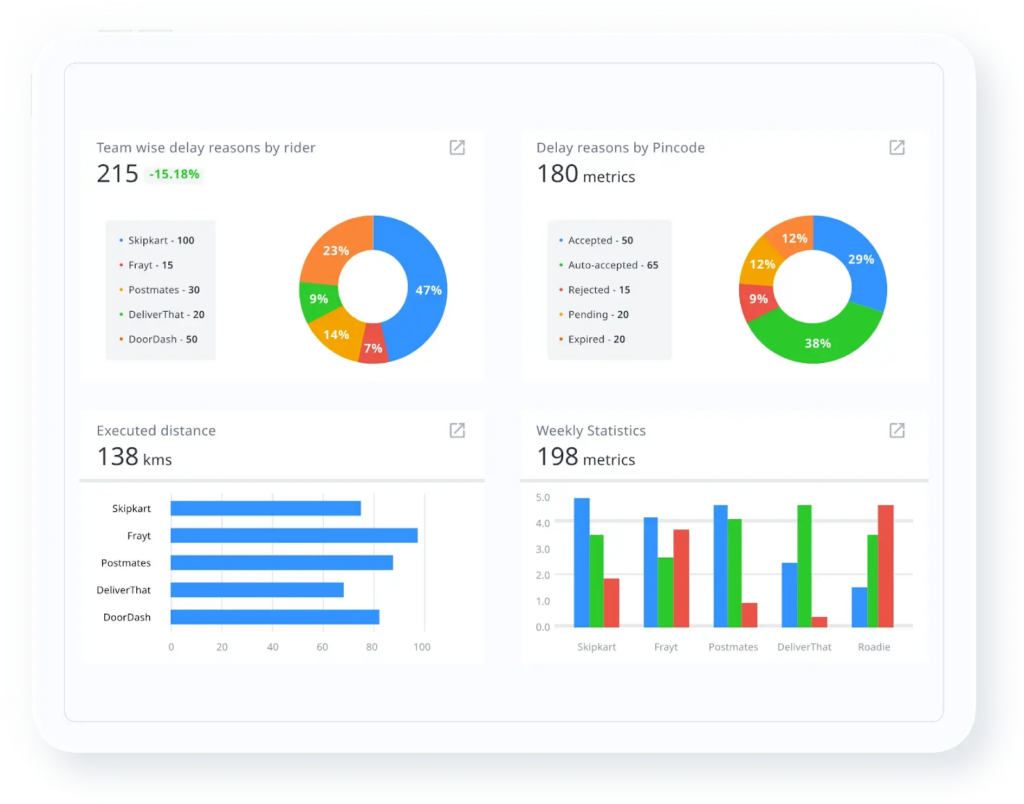
Locus Analytics dashboard consolidates rider performance, delays, and utilization data, enabling teams to pinpoint risks and optimize operations.
Disruptions leave behind patterns that can inform better decisions, if your business can see them. Locus compiles delivery data into dashboards that highlight SLA breaches, idle time, fuel inefficiencies, and emission hotspots.
Seamless Integration Across Systems
Information gaps between TMS, WMS, ERP, and OMS often delay responses to risk. Locus minimizes this exposure by integrating directly with existing systems, ensuring that data flows continuously between planning and execution layers.
Continuous Improvement and Measuring Success in Risk Management
Effective risk management requires ongoing evaluation and improvement. Key performance indicators (KPIs) to track include:
- On-time delivery rates and SLA adherence
- Cost per delivery and operational efficiency metrics
- Risk incident frequency and recovery times
- Customer satisfaction scores and retention rates
- Supplier performance and reliability metrics
Summary & Next Steps
Logistics risk management is essential for maintaining competitive advantage in today’s volatile business environment. By implementing proactive strategies, leveraging AI-powered tools, and continuously monitoring performance, your organization can transform potential disruptions into opportunities for improvement.
Ready to strengthen your supply chain resilience? Explore how Locus can help you predict, prevent, and manage logistics risks more effectively.
Schedule A Demo to See Locus in Action
Logistics risk will never disappear, but it can be managed with foresight and the right tools.
Frequently Asked Questions (FAQs)
1. How can I identify logistics risks in my supply chain?
Common signs include persistent delivery delays, unexpected spikes in costs, or frequent stockouts. Monitoring key performance indicators (KPIs) like on-time deliveries and inventory turnover helps identify emerging risks early.
2. What strategies can help minimize financial risks in logistics?
To reduce financial risks, companies can implement robust cost forecasting, optimize fuel usage, and diversify suppliers. Additionally, using automated tools for real-time cost tracking can prevent unforeseen financial strain.
3. How does technology improve logistics risk management?
Technologies like real-time tracking, predictive analytics, and AI offer immediate insights into potential risks. Locus, for example, uses AI to predict disruptions and automate responses, improving efficiency and reducing operational delays.
4. How does managing logistics risks affect customer satisfaction?
By ensuring timely deliveries and minimizing disruptions, effective risk management directly impacts customer trust and satisfaction. Reducing delays and maintaining consistent service levels helps enhance long-term customer loyalty.
5. How frequently should logistics risk assessments be performed?
Logistics risk assessments should be conducted regularly, ideally quarterly or when significant changes in the market occur. Regular evaluations ensure that new risks are identified and strategies are updated to maintain operational stability.
6. What are the 7 Rs of logistics management?
The 7 Rs of logistics management are: Right product, Right quantity, Right condition, Right place, Right time, Right customer, and Right cost. These principles ensure efficient supply chain operations and customer satisfaction.
7. What is the logistics risk management process?
The logistics risk management process involves seven key steps: identifying risks, assessing their probability and impact, prioritizing based on severity, developing mitigation plans, implementing strategies, monitoring performance, and regularly reviewing and updating practices.


General
What Is Pharmaceutical Logistics? Importance & Challenges

Oct 9, 2025
Pharmaceutical logistics in 2025 tackles cold chain risks, compliance, and visibility. Discover how Locus improves cold chain performance in 2025 effortlessly
Read more
Sustainability
What is 3PL Sustainability? Benefits & Key Strategies for 2025
Oct 16, 2025
Discover how 3PL sustainability transforms logistics operations. Learn key benefits, implementation strategies, and why sustainable logistics matter in 2025.
Read moreInsights Worth Your Time


















Logistics Risk Management: Types & Strategies Explained