


General
Top 10 LogiNext Alternatives to Consider in 2026 for Better Routing and Delivery Performance

Key Takeaways
- LogiNext users report slow support response times, especially during peak periods, leading to delays in issue resolution and operational disruptions.
- The initial setup requires significant time and resources, particularly when aligning the platform with unique customer processes.
- LogiNext faces performance issues on low-resource devices, especially for mobile users with older hardware, affecting the platform’s usability.
- Limited customization options in the tool make it difficult to tailor the platform for regions with specific operational processes or unique customer requirements.
- Locus offers better flexibility, AI-driven optimization, and real-time visibility, providing a more scalable solution for growing operations.
If you’re considering LogiNext, it’s likely for one of two reasons:
- You’re currently using LogiNext and facing challenges with routing flexibility, real-time tracking, or customer support, prompting you to look for alternatives.
- You’re evaluating LogiNext as a potential solution for your last-mile delivery needs and want an unbiased, comprehensive perspective before committing.
This guide will provide you with valuable insights into LogiNext, incorporating verified feedback from G2, Capterra, and other trusted sources.
We’ll also compare the top 10 LogiNext alternatives, assessing each option on factors such as routing performance, operational stability, visibility, pricing, integrations, and overall suitability across different delivery environments.
Why LogiNext Might Not Meet Your Long-Term Delivery Needs
LogiNext Mile is a widely used route optimization and delivery management platform, but like any solution, it comes with its challenges. Below are some common issues reported by users, reflecting the operational hurdles they’ve encountered while using the platform.
1. Delayed Support Response
Users have reported slower response times for critical support tickets, especially during peak operational periods, resulting in delays in issue resolution.
Slower support response times lead to delays in problem resolution, which can impact overall operational efficiency and customer satisfaction.

2. Complex Setup
The initial setup of LogiNext Mile can be time-consuming, especially when aligning the platform with specific customer requirements and business processes.
A complex setup process delays full implementation and requires additional resources to ensure the software is configured correctly for each business.

3. Performance Issues on Low-Resource Devices
LogiNext Mile has been reported to experience slow performance on devices with lower memory or older hardware, mainly affecting mobile users.
The performance issues on low-resource devices disrupt daily operations and reduce the platform’s usability for users on older devices.

4. Limited Automatic Allocation
Users have found that LogiNext Mile sometimes fails to automatically allocate orders to the nearest driver, leading to inefficiencies.
When the system does not auto-allocate tasks, dispatchers must intervene manually, increasing workload and causing delays in delivery processes.

5. Customization Challenges
Some users face difficulties when customizing LogiNext Mile to meet specific operational needs, especially in regions with unique customer processes.
The limited customization options make it harder for businesses to tailor the platform to their requirements, especially in regions with distinct operational demands.

6. Inconsistent Real-Time Updates
Users have reported occasional delays in real-time updates, particularly during peak operational times, affecting the accuracy of tracking information.
The delay in real-time updates impacts decision-making, delays deliveries, and leads to poor communication with customers.

10 LogiNext Alternatives: Why Teams Move to Locus and Other Tools
Whether you’re new to LogiNext or rethinking its fit, these patterns are common as operations scale. Here’s a curated list of the alternatives teams often examine next.
| Pain point | What does it lead to | What to look for | Best-fit tools |
|---|---|---|---|
| Routing inconsistencies | Missed SLAs, delivery delays | Reliable, adaptive routing with AI and traffic pattern handling | Locus, Elogii, FarEye |
| Address-handling sensitivity | Incorrect routing, delays | Strong geocoding, auto-correction for messy addresses | Locus, Route4Me, Spoke Dispatch |
| Limited workflow customization | Dispatcher fatigue, delays | Full workflow configurability and driver-level permissions | Locus, Spoke Dispatch, Elogii |
| Slow reporting/ analytics response | Missed opportunities for optimization | Fast diagnostics, real-time performance tracking | Locus, Spoke Dispatch, FarEye |
| Inability to handle real-world adjustments | Inefficient planning, rigid operations | Flexibility to adjust workflows and manual interventions | Locus, OptimoRoute, Spoke Dispatch |
| Lack of visibility into customer notifications | Poor communication, unsatisfied customers | Communication logs, event monitoring, and visibility into delivery status | Locus, Spoke Dispatch, ClickPost |
| Limited multi-hub coordination | Miscommunication, inefficiencies | Multi-hub orchestration, improved coordination across regions | Locus, Bringg, Spoke Dispatch |
| Performance drops during peak times | Unstable operations, missed SLAs | Scalability and real-time performance tracking | Locus, Spoke Dispatch, FarEye |
| Manual dispatching | Increased operational overhead | Automated dispatching, improved task assignment | Locus, Elogii, Spoke Dispatch |
| Inconsistent customer experience | Decreased satisfaction, increased churn | Predictive analytics, improved customer communication | FarEye, ClickPost, Bringg |
1. Locus
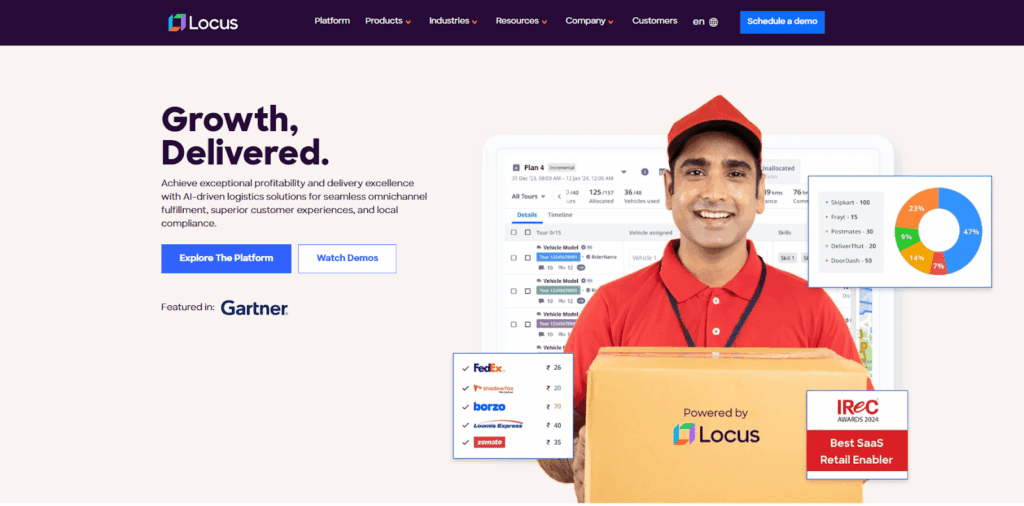
Locus supports teams that need routing that holds up under real-world conditions and workflows that can change without friction.
It’s often considered a LogiNext alternative for operations that outgrow basic optimization and require stronger control, visibility, and reliability.
Common Challenges Locus Resolves
?? Routing Inconsistencies
LogiNext users frequently mention complicated routing software, overlapping paths, or detours caused by mapping constraints.
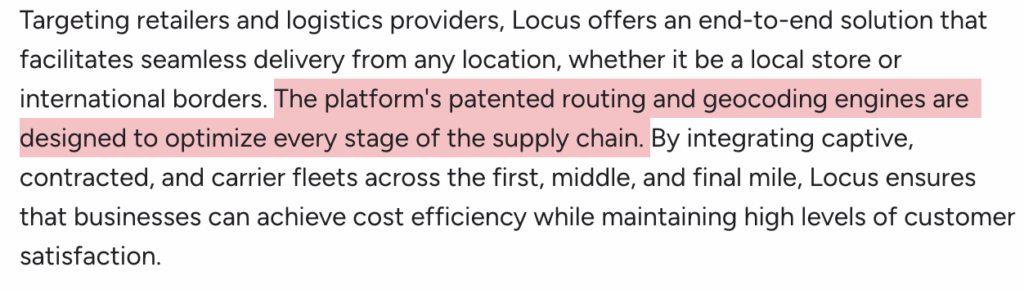
Locus becomes attractive because its patented routing engine handles dense territories, traffic patterns, and constraints more reliably, reducing the need for manual route corrections.
?? Address-Handling Sensitivity
If an address isn’t formatted precisely, multiple LogiNext reviews note that routes break or map incorrectly.
Locus solves this with stronger geocoding, auto-correction for messy addresses, and better handling of incomplete or imperfect data.
?? Workflow-Customization Constraints
Users report friction when trying to adjust messaging templates, notifications, or driver-app permissions.
Locus appeals because workflows, notifications, constraints, and driver-level permissions are fully configurable across regions and fleet types.

?? Notification-Visibility Gaps
A common complaint with LogiNext is that teams can’t see whether SMS reminders were actually sent.
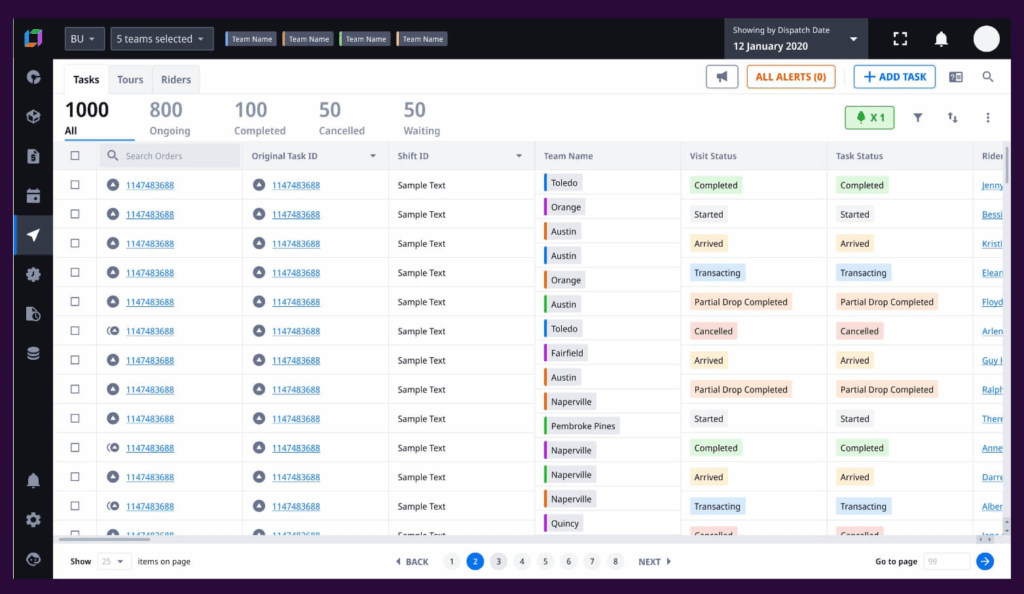
Locus addresses this with fleet tracking, which contains full communication logs, delivery-event monitoring, and exception visibility so dispatchers always know what customers received.
?? Limited Editing/ Workflow Rigidity
Locus supports automation with flexibility, allowing real-world adjustments during planning and routing. Users appreciate that the system balances structure with the ability to intervene manually.

?? Slow Reporting/ Analytics Response
Locus users repeatedly praise the visibility of exceptions, RCA tools, and reporting views, suggesting smoother diagnostics and faster insights compared to tools criticized for slow reporting.

Locus’ Pros
- Built for scale and high-density operations: Locus handles large delivery volumes, multi-hub routing, and peak-season surges without performance drops, making it a strong fit for teams outgrowing LogiNext’s small-team focus.
- AI-driven planning across the entire fulfillment lifecycle: Beyond routing, Locus automates pickup allocation, cancellations, returns, sorting, and SLA management. This end-to-end intelligence is a significant upgrade for teams seeking more than daily route planning.
- Real-time visibility with control tower: Locus offers unified tracking across all miles, with RCA tools and exception management. This helps operations teams maintain tighter control compared to the limited visibility layers in lightweight tools.
- Deep API integrations with enterprise systems: Locus connects seamlessly with TMS, WMS, OMS, and ERP systems, reducing manual work and operational fragmentation. Teams moving from LogiNext often cite integration depth as a key reason for switching.
Locus’ Cons
- Locus may feel more complex than necessary for very small teams with minimal delivery operations.
- Initial implementation may require workflow and data alignment, especially for organizations automating processes for the first time.
Locus Is Ideal for
Locus is well-suited for organizations that have moved past the limitations of lightweight routing tools and now require reliable, scalable delivery orchestration, particularly:
- Retail, e-commerce, and subscription-delivery brands that have outgrown basic route planners and need stable performance for dense, high-volume routes.
- FMCG, CPG, and 3PL providers operating across multiple regions where Routific’s address sensitivity and limited customization create operational friction.
- Big-and-bulky delivery operators require precise scheduling, complex constraints, and dynamic adjustments that simple routing interfaces cannot support.
- Enterprises managing hybrid fleets or multi-hub operations where they need deeper automation, stronger integrations, and consistent route accuracy.
- Teams that need real-time visibility, rapid diagnostics, and reliable performance as order volumes expand beyond what small-team-focused platforms can comfortably handle.
Locus’ Pricing
Locus uses a custom pricing model that factors in delivery volume, the number of operating regions, fleet composition, and the specific modules required (like dispatch planning, orchestration, Track & Trace, or carrier management).
Pricing typically scales with usage and the depth of automation deployed.
Locus’ User Testimonial
“Locus improved our visibility and routing consistency, making it easier for our teams to stay aligned during daily operations. As our delivery volumes increased, the platform supported us in maintaining dependable on-time performance,” says the Head of Last-Mile at Jüsto.
2. Elogii
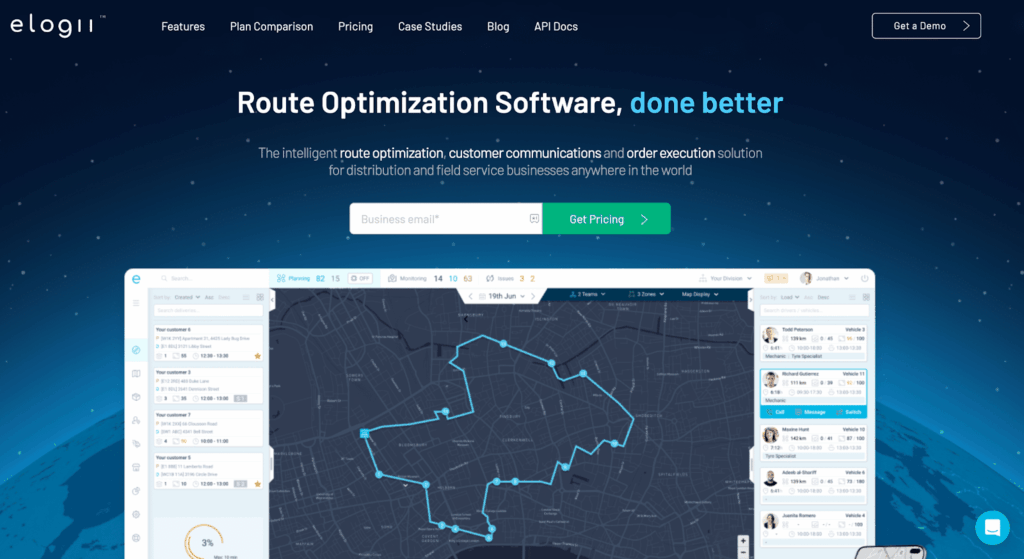
Elogii is an end-to-end logistics platform designed to help businesses optimize routing, improve workforce efficiency, and provide superior customer experiences.
With its flexible, AI-powered route optimization, Elogii supports a variety of industries, including e-commerce, healthcare, and field services, with robust tools for managing large fleets, deliveries, and customer interactions.
Common Challenges Elogii Resolves
- Reduces manual effort in dispatching by automating delivery assignment, improving efficiency across operations.
- Provides real-time location tracking for vehicles, drivers, and orders, ensuring transparency and reducing delays.
- Enhances accountability with a customizable digital Proof of Delivery (POD) that includes photos, signatures, and barcode scans.
- Simplifies shift scheduling, driver/agent performance monitoring, and task management for improved field operations.
Elogii’s Pros
- Provides live updates on order movement and driver location.
- Optimizes routes and tasks for improved planning efficiency.
- Supports photos, signatures, and other custom documentation to ensure reliable delivery proof.
Elogii’s Cons
- Lacks the complexity of AI-driven platforms for some multi-region operations.
- Requires time for configuration before scaling smoothly.
- Focuses more on operational metrics rather than on in-depth analytical reporting
Elogii Is Ideal for
Elogii is ideal for businesses managing high-volume deliveries or field services across multiple regions, particularly in:
- E-commerce and retail logistics.
- Healthcare and courier services.
- Field service and last-mile delivery operations.
- Companies seeking a user-friendly, scalable solution for workforce and fleet management.
Elogii’s Pricing
Elogii offers custom pricing based on fleet size, delivery volume, and the specific features required for each business.
3. Onfleet
Onfleet is a simple, easy-to-use last-mile delivery management platform known for its intuitive interface and quick setup.
Teams evaluating LogiNext alternatives often consider Onfleet when they want a lightweight system focused on last-mile execution rather than broader routing workflows or deeper customization.
Common Challenges Onfleet Resolves
Onfleet supports everyday delivery operations with:
- Quick route assignment and basic mid-shift adjustments
- Reliable driver tracking and customer notifications
- A streamlined dashboard that reduces dispatcher workload
Onfleet’s Pros
- Intuitive UI that helps teams get started with minimal training
- A clean, simple driver app that supports stable navigation and communication
- Fast implementation for teams wanting a plug-and-play delivery tool
Onfleet’s Cons
- Less suited for operations that need multi-hub routing or more complex constraints
- Limited routing intelligence compared to tools with advanced optimization engines
Onfleet Is Ideal for
Onfleet works best for local retailers, food and beverage deliveries, pharmacies, florists, and growing businesses handling same-day or on-demand orders. It’s a good fit for teams seeking simplicity without the more advanced routing controls offered by platforms like LogiNext.
Onfleet’s Pricing
Onfleet provides tiered pricing linked to task volume and feature access. Capabilities such as advanced analytics and API usage expand with higher-tier plans.
4. OptimoRoute
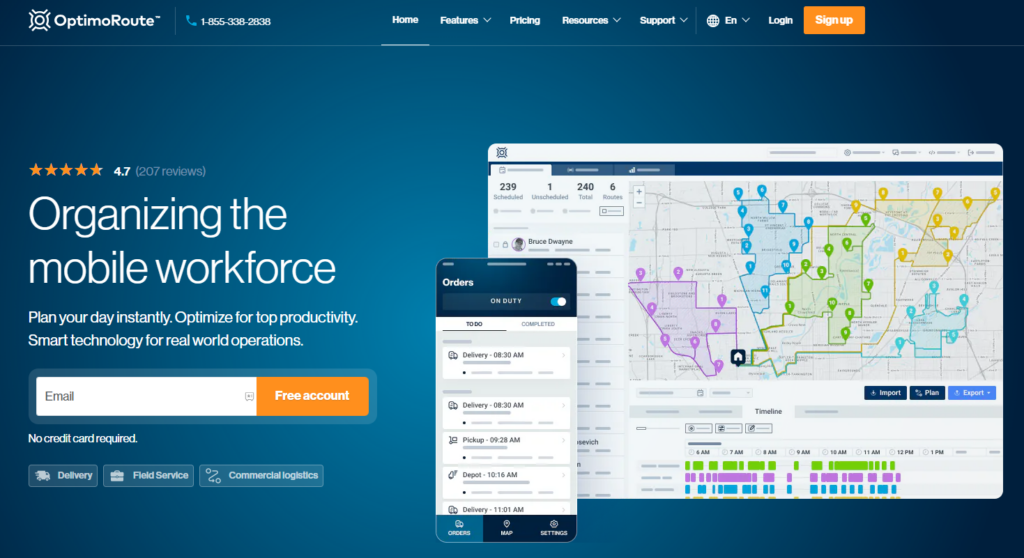
OptimoRoute is a structured route-planning and delivery-management platform often evaluated by teams that need more predictable scheduling and multi-day planning workflows.
When organizations consider alternatives to LogiNext, OptimoRoute typically appears on the shortlist for its strong weekly scheduling, detailed proof-of-delivery capabilities, and emphasis on operational structure.
Common Challenges OptimoRoute Resolves
- Reducing planning time with automated weekly scheduling and optimized multi-driver routing
- Improving delivery transparency with real-time location visibility and clear ETAs
- Strengthening accountability with structured route execution and proof-of-delivery tools
OptimoRoute’s Pros
- A reliable routing engine that handles constraints and service windows well
- Strong multi-day or weekly scheduling for teams that plan deliveries in advance
OptimoRoute’s Cons
- UI feels dated and less modern compared with newer routing platforms
- Requires more configuration upfront before workflows run smoothly
OptimoRoute Is Ideal for:
OptimoRoute works well for logistics teams that prefer structured plans, predictable delivery cycles, and detailed proof-of-delivery workflows. It suits distributors, field service businesses, and companies managing recurring or multi-day delivery routes.
OptimoRoute’s Pricing:
OptimoRoute offers tiered, per-driver pricing with additional costs for advanced tracking and analytics. Larger operations can request custom plans for expanded capabilities.
5. Route4Me
Route4Me is a widely adopted route optimization platform known for its large mapping dataset and multi-stop routing capabilities. It often appears in shortlists when teams want stronger mapping coverage, more customization options, or deeper proof-of-delivery controls.
Common Challenges Route4Me Resolves
- Reducing manual work in planning complex, multi-stop routes through automated route sequencing
- Improving delivery visibility with real-time driver tracking and live route progress
- Strengthening POD workflows with signatures, photos, and customizable verification steps
Route4Me’s Pros
- Handles large and complex routing structures well
- Strong real-time tracking for dispatchers
Route4Me’s Cons
- Pricing can climb quickly for growing fleets
- Some users report occasional map or GPS inconsistencies that require manual adjustments
Route4Me is Ideal for:
Route4Me fits logistics teams, parcel carriers, courier services, and field-service operators that require flexible route customization and detailed POD management. It suits operations that want more control over route structure than lightweight tools typically offer.
Route4Me’s Pricing:
Route4Me offers tiered, per-vehicle pricing starting at $60 per vehicle per month. Advanced tracking and workflow automation are available in higher-tier plans, with custom pricing for larger fleets.
6. Bringg
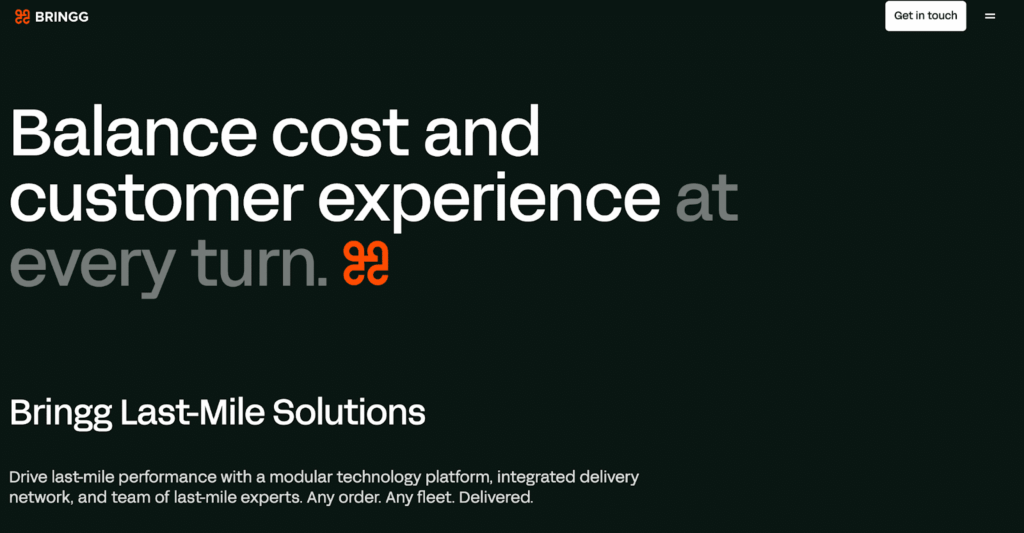
Bringg is a fulfillment and delivery orchestration platform built for enterprises managing multiple fleets, carriers, and delivery models. Bringg brings stronger coordination across internal operations and outsourced delivery partners.
Common Challenges Bringg Resolves
- Unifying multi-carrier workflows so teams can manage contracted, outsourced, or third-party fleets from one system
- Improving visibility across regions, delivery partners, and service levels
- Standardizing customer communication through automated notifications and branded tracking pages
- Supporting omnichannel fulfillment models such as curbside pickup, scheduled delivery, or same-day programs
Bringg’s Pros
- Strong multi-carrier orchestration for hybrid delivery networks
- Broad support for retail and omnichannel workflows
Bringg’s Cons
- Longer implementation timelines, especially for complex enterprise environments
- Some orchestration features require higher-tier plans
Bringg Is Ideal for
Bringg suits enterprise retailers, grocery chains, CEP/3PL providers, and large delivery networks that rely heavily on external partners or multi-carrier orchestration. It works well where coordination across fleets matters more than fine-grained routing optimization.
Bringg’s Pricing
Pricing is fully custom and depends on delivery volume, integration scope, carrier networks, and overall operational complexity.
7. Routific
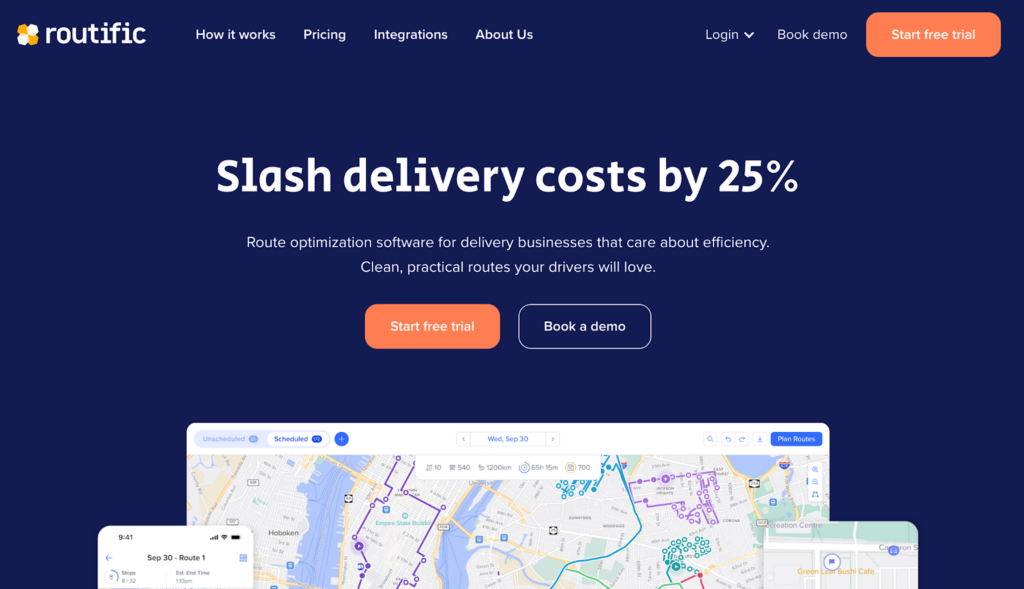
Routific is a lightweight route-optimization platform built for small and mid-sized teams that want fast daily planning and simple operations. It’s known for its clean interface, quick setup, and reliable routing for low- to medium-density delivery networks.
Common Challenges Routific Resolves
- Simplifies daily dispatch planning with automated route sequencing
- Reduces dispatcher workload through an intuitive routing interface
- Improves customer communication with scheduled notifications and ETAs
Routific’s Pros
- Very easy to learn and deploy
- Clean UI suited for teams without technical resources
- Dependable routing for low-density or straightforward delivery territories
Routific’s Cons
- Address formatting sensitivity often requires manual cleanup
- Limited workflow customization (notifications, permissions, constraints)
- Mid-shift edits can feel restrictive for dynamic operations
Routific Is Ideal for
Routific best suits small teams, local retailers, nonprofits, and delivery operations with predictable routes, clean address datasets, and minimal need for workflow customization or multi-region orchestration.
Routific’s Pricing
Routific offers tiered plans based on route volume and feature access. Higher plans unlock tracking links, customer notifications, and API capabilities. Pricing increases with dispatch volume and team size.
8. Spoke Dispatch
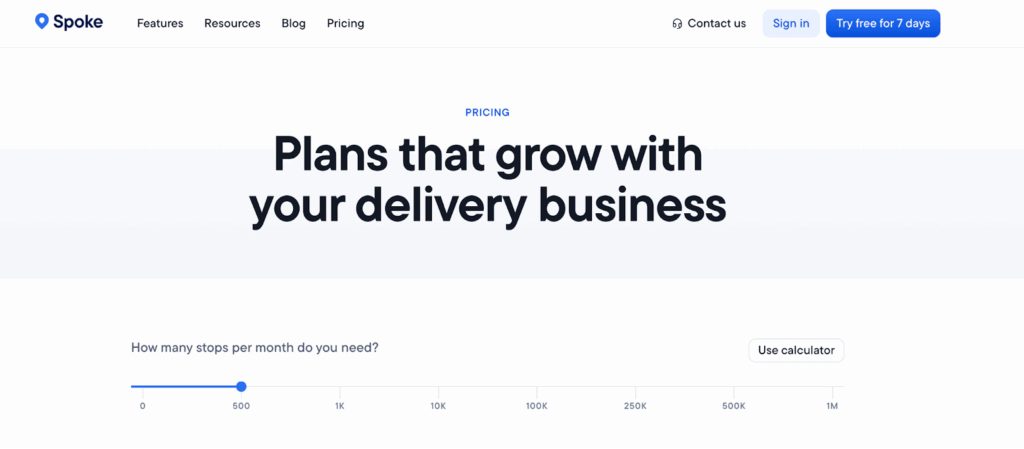
Spoke Dispatch is a last-mile management platform built for courier teams that need fast route planning, live tracking, proof-of-delivery, and a streamlined dispatcher–driver workflow.
Common Challenges Spoke Dispatch Resolves
- Helps dispatchers monitor day-of progress with live driver tracking and timeline views.
- Improves delivery outcomes with proof-of-delivery tools, branded tracking pages, and customer notifications.
- Reduces manual coordination by enabling retailers or clients to upload orders directly via Spoke Connect.
Spoke Dispatch’s Pros
- Very easy to set up and learn for small and mid-sized courier teams.
- Clean route optimization experience with delivery zones, time windows, and custom stop settings.
- Strong mobile driver app with photo/signature POD, in-app navigation, barcode scanning, and mid-route stop edits.
Spoke Dispatch’s Cons
- Routing engine is built for simplicity and may not meet complex constraints used in enterprise logistics.
- Pricing scales with stop volume, which may limit cost control for teams with large daily workloads.
Spoke Dispatch Is Ideal for
- Local courier companies manage multi-driver operations with predictable daily volumes.
- Operations that depend heavily on POD accuracy, customer notifications, and easy driver onboarding.
Spoke Dispatch’s Pricing
Spoke Dispatch offers three tiers: Starter, Premium, and Expert, based on monthly stop volume.
Pricing determines features such as data history retention, branded tracking pages, custom properties, POD limits, geofencing, and API/Webhook access. More advanced capabilities and dedicated onboarding become available at higher tiers.
9. ClickPost
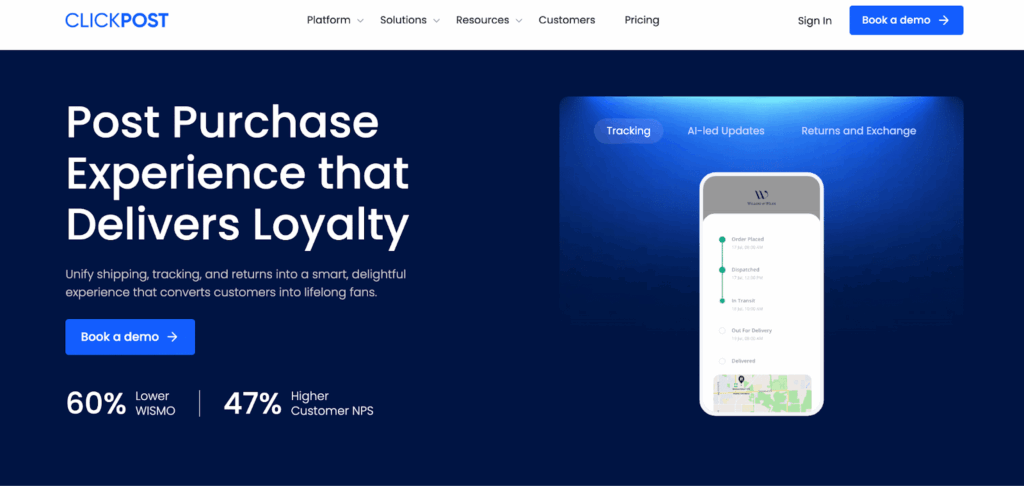
ClickPost is a post-purchase and delivery experience platform widely used by e-commerce brands to improve tracking, NDR (non-delivery reports), carrier allocation, and returns workflows.
ClickPost focuses on the customer-facing side of delivery, helping reduce RTO and improve visibility across multiple carriers.
Common Challenges ClickPost Resolves
- Reduces RTO with automated NDR journeys and better communication.
- Improves shipment tracking by unifying updates across carriers.
- Simplifies returns with a branded returns portal.
ClickPost’s Pros
- Strong multi-carrier integrations and unified tracking.
- Excellent NDR and returns workflows for D2C and marketplaces.
- Quick implementation; minimal operational disruption.
ClickPost’s Cons
- Not a full routing or dispatch automation platform.
- Limited value for teams needing sophisticated planning or operational AI.
ClickPost Is Ideal for
E-commerce and D2C brands that need cleaner tracking, reduced delivery failures, and a better post-purchase customer experience, especially those shipping through multiple carriers.
ClickPost’s Pricing
Custom pricing based on shipment volume, integrated carriers, and enabled modules (tracking, NDR, returns). Typically mid-range for D2C platforms.
10. Fareye
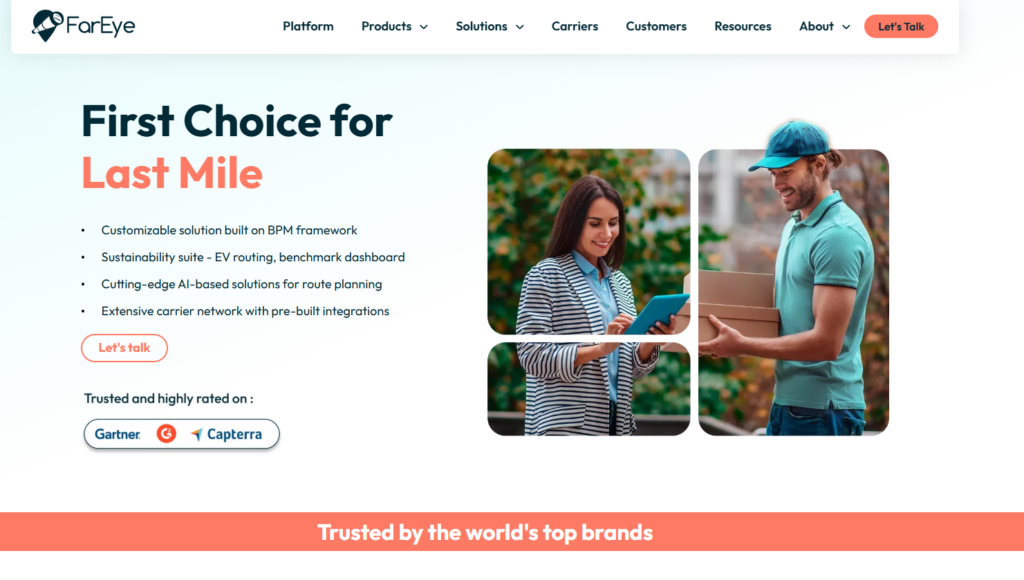
FarEye is a widely adopted delivery management and customer experience platform used by enterprises that prioritize predictive visibility and strong post-purchase communication.
Teams evaluating LogiNext alternatives often look at FarEye when they need advanced customer engagement features, multi-carrier coordination, and branded delivery experiences across large-scale retail and e-commerce operations.
Common Challenges FarEye Resolves
- Enhances delivery visibility through predictive ETAs, real-time tracking, and proactive exception alerts, helping teams stay ahead of delays.
- Improves customer communication by providing automated SMS, email, and WhatsApp updates throughout the delivery journey.
- Consolidates carrier management with tools to monitor partner performance, manage SLAs, and streamline last-mile coordination across multiple logistics providers.
- Reduces failed deliveries through dynamic rescheduling options and self-service interfaces that allow customers to update preferences or time windows.
- Strengthens post-purchase experience with analytics dashboards tailored to satisfaction metrics and customer behavior trends.
FarEye’s Pros
- Strong focus on customer-facing delivery experience
- Predictive analytics that flag potential failures before they occur
- Broad integrations with e-commerce platforms and marketplace systems
- Mature carrier performance management capabilities
FarEye’s Cons
- Less advanced route optimization compared to specialized dispatch planning tools
- Pricing can become complex as feature usage or delivery volume increases
- Integration with legacy systems may require a custom development effort
- More CX-oriented than cost-optimization-oriented
FarEye Is Ideal for
FarEye is a strong fit for retail and e-commerce teams that prioritize customer communication, multi-carrier orchestration, and predictive visibility. It is best suited for operations where maximizing CX and on-time delivery rates matter more than optimizing routing costs alone.
FarEye’s Pricing
Custom enterprise pricing typically starts at around $2,000 per month, with additional costs for advanced modules, integrations, or expanded delivery volumes.
Why Many Teams Ultimately Shortlist Locus
As teams scale their delivery operations, they often encounter challenges with LogiNext, including limited workflow flexibility, inconsistent real-time updates, and difficulty efficiently handling high-volume routing. These recurring issues are frequently mentioned in user reviews.
In contrast, Locus addresses these pain points effectively. It offers more robust routing stability, improved handling of imperfect address data, and greater workflow flexibility. Additionally, Locus excels in real-time tracking, ensuring visibility across the delivery process and maintaining performance even during peak volumes.
Schedule a demo to see how Locus addresses the challenges teams often face with LogiNext, and discover a smooth migration path to an enhanced delivery orchestration platform.
Frequently Asked Questions (FAQs)
1. What are the key features to look for in a delivery management platform?
Look for real-time tracking, route optimization, workflow flexibility, and integration capabilities. A platform like Locus provides these features, ensuring efficient operations and customer satisfaction, as seen with clients like Jüsto.
2. How does Locus improve delivery efficiency for large teams?
Locus optimizes routing, reduces manual effort with automation, and offers robust performance even during peak seasons. This results in streamlined operations, better fleet utilization, and improved service levels.
3. Can Locus handle complex multi-region operations?
Yes, Locus excels in managing multi-region fleets, providing centralized control and visibility across diverse locations, making it ideal for large-scale operations like those of brands such as Lulu International Group.
4. How does Locus handle real-time updates and exception management?
Locus provides real-time visibility into deliveries, allowing teams to track exceptions and quickly address issues. This ensures smoother operations and enhanced customer experiences, as demonstrated by clients like Nestlé.
5. Does Locus support hybrid fulfillment models?
Yes, Locus supports hybrid fulfillment strategies by integrating both third-party logistics and in-house operations, offering a flexible solution for businesses looking to scale and optimize logistics.


General
10 Best Alternatives to Route4Me: How These Tools Solve Common Delivery Management Issues

Dec 24, 2025
A detailed look at the 10 leading Route4Me alternatives for 2026, covering routing intelligence, visibility, automation depth, and pricing to determine operational fit.
Read more
Transportation Management System
The Top 10 Transportation Management Systems for 2026
Dec 30, 2025
Discover the best TMS software platforms for logistics in 2026. Compare transportation management solutions for optimization and visibility.
Read moreInsights Worth Your Time




















Top 10 LogiNext Alternatives to Consider in 2026 for Better Routing and Delivery Performance