


General
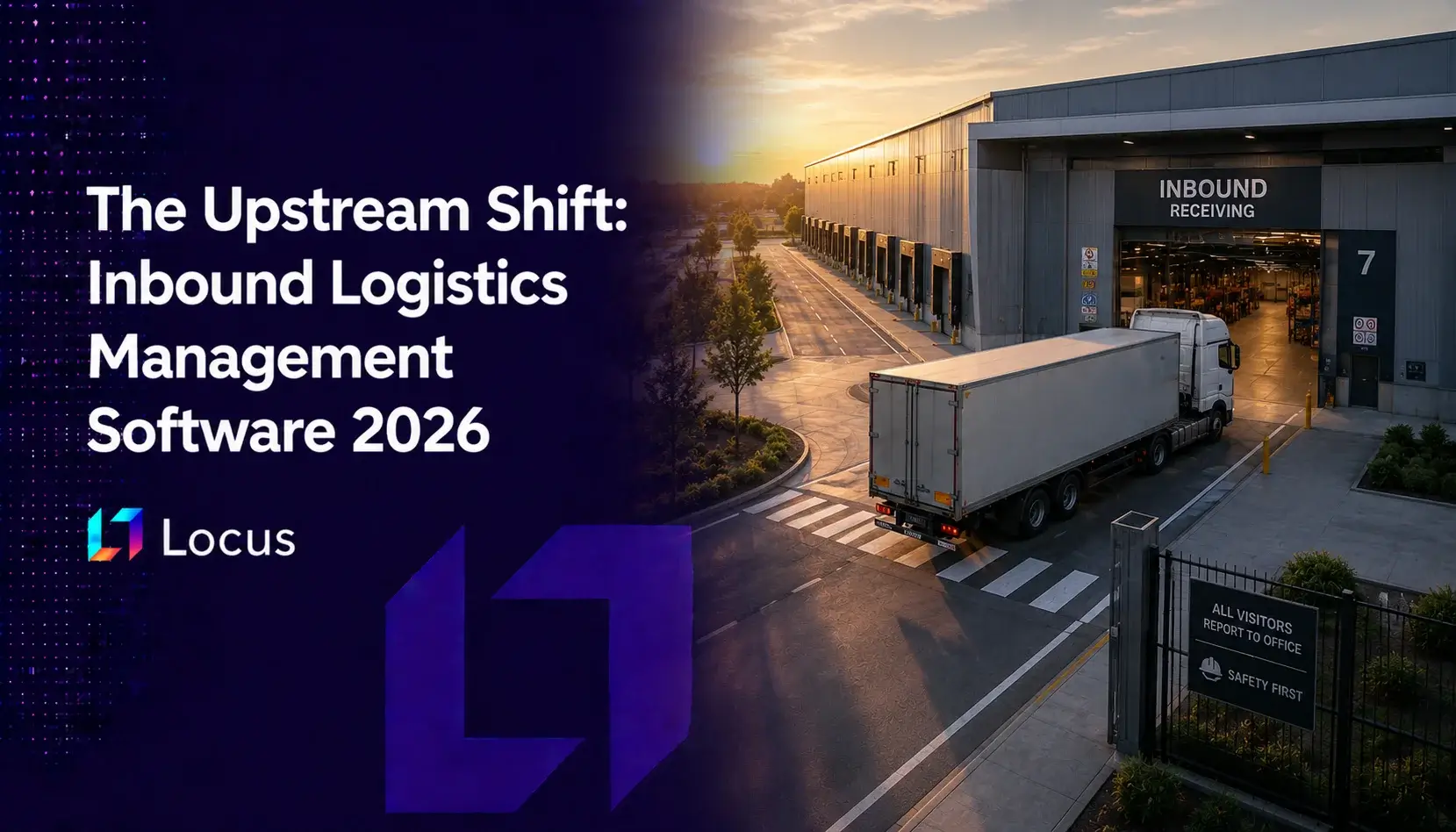
The Upstream Shift: Why Leading Enterprises Are Overhauling Their Inbound Logistics Management Software
Key Takeaways
- Outbound last-mile logistics has received billions in tech investment over the past decade, leaving inbound logistics as an unoptimized cost center. Inbound freight typically accounts for 8-12% of total material spend per industry research, with inefficiency compounding across procurement, warehouse, and inventory carrying costs.
- Empty miles drain profitability structurally. Over 21% of road freight kilometers in the EU are driven by completely empty cargo vehicles per Eurostat data. Static spreadsheet-planned milk runs are a primary contributor: routes built on historical estimates run under-utilized by design.
- Three mechanisms convert static inbound networks into dynamic orchestrated grids: dynamic milk run routing (AI replacing fixed schedules), predictive visibility (telematics-driven rolling ETAs replacing milestone tracking), multi-carrier orchestration (unified control tower across captive, LTL, 3PL).
- For supply chain heads and procurement directors in 2026: tolerate inbound blind spots and empty-mile waste, or treat upstream logistics as the next frontier for margin recovery?
For the past decade, enterprise supply chain investments have focused almost entirely on the final fifty miles. Driven by the e-commerce boom and intensifying consumer expectations for rapid delivery, outbound transportation networks have been optimized to the absolute millimeter. Yet looking upstream reveals a staggering paradox: the “first mile” of collecting inventory from regional suppliers, manufacturers, and cross-docking facilities remains heavily dependent on fragmented data, manual workflows, and tribal knowledge.
This operational disconnect represents the inbound blind spot. Logistics managers can track an outbound parcel with pinpoint accuracy, but they are often completely blind to incoming raw materials or inventory until the truck physically arrives at the distribution center (DC) gate. Unoptimized inbound freight is a silent profit killer, typically accounting for 8% to 12% of an organization’s total material spend per industry research. The structural cost compounds across procurement (suboptimal carrier allocation), warehouse operations (dock congestion and labor inefficiency), and inventory management (inflated safety stock requirements to absorb upstream uncertainty).
To protect tightening margins, forward-thinking enterprises are shifting their technical focus upstream. They are deploying advanced inbound logistics management software to achieve the same precision, efficiency, and dynamic control over their supplier networks that they previously achieved in the last mile. Three architectural mechanisms determine whether the upstream shift produces operational ROI or simply adds technology layers on top of existing inefficiency.
The Failure of Static Inbound Networks
Historically, procurement and logistics teams have managed supplier collections using static “milk runs”: fixed daily or weekly routes where a dedicated vehicle makes multiple stops across regional supplier nodes to aggregate freight before returning to a central hub. While conceptually sound, executing a milk run via legacy routing software or manual spreadsheets introduces structural inefficiency.
A vehicle dispatched on a rigid, locked schedule arrives at a vendor’s loading dock regardless of whether that vendor has ten pallets ready or only two. Routes built on historical estimates rather than live operational data routinely run under-utilized. Strict delivery deadlines and rigid facility windows frequently force vehicles to depart vendor sites with severe capacity deficits. This lack of flexibility is a primary reason why over 21% of total road freight kilometers in the European Union are driven by completely empty cargo vehicles, per Eurostat data.
Unoptimized inbound freight is a silent profit killer, typically accounting for 8% to 12% of an organization’s total material spend per industry research.
The empty-miles cost is structural, not cyclical. Operations continue to pay for fuel, driver labor, vehicle wear, and emissions output on every mile driven, whether the trailer is loaded or empty. The compound waste across the network is material at scale.
Mechanism 1: Dynamic Milk Run Routing
What it does. Modern inbound logistics optimization platforms solve the empty-miles problem by introducing constraint-aware, dynamic routing. Instead of running fixed schedules, the software ingests real-time variables: live supplier ready times, current purchase order volumes, vehicle cube utilization, localized traffic delays, vendor facility windows, and driver hours-of-service constraints. The AI engine computes the most cost-effective collection path on a daily or wave-by-wave basis, ensuring maximum trailer utilization and stripping empty miles out of the network at structural level.
Why this matters operationally. Dynamic milk runs adapt to the operational reality that static milk runs ignore. Vehicles dispatched against current supplier readiness arrive when freight is actually available rather than against assumptions baked into spreadsheets weeks earlier. Trailer utilization improves because routes accumulate volume against actual constraint signals. Empty-mile percentage falls because the architecture optimizes for trailer fullness as a primary constraint rather than treating it as a downstream consequence of fixed scheduling.
What changes when this lands. Cost-per-trip falls because routes carry materially more freight per dispatch. Empty miles compress at network level, producing both cost reduction and emissions reduction. Procurement gains the flexibility to coordinate vendor ready times with collection windows rather than fitting vendor operations into rigid pickup schedules.
Mechanism 2: Predictive Visibility for Inbound Freight
What it does. When an organization operates without dedicated inbound management technology, warehouse managers run their operations reactively. Suppliers facing manufacturing delays, cross-border transport corridors experiencing congestion, and weather disruptions affecting carriers all produce inbound variance that the downstream facility cannot anticipate until shipments are officially late. The visibility blackout triggers three compounding cost categories: dock congestion (multiple inbound trucks arriving simultaneously, causing yard bottlenecks and detention penalties), inflated safety stock (inventory planners over-ordering to absorb upstream uncertainty), and labor inefficiency (warehouse picking and receiving teams sitting idle during lulls, then absorbing expensive overtime when delayed carriers arrive together).
Next-generation inbound logistics management software replaces passive milestone tracking with predictive visibility. By continuously ingesting electronic logging device (ELD) telematics, live traffic signals, weather disruption data, and carrier performance patterns, the platform’s machine learning models calculate rolling, hyper-accurate ETAs for inbound freight.
Why this matters across operations. Predictive ETAs convert downstream operational planning from reactive to proactive. Warehouse managers dynamically realign labor schedules to match realistic arrival times rather than against rigid assumptions. Inventory planners gain the confidence to promise incoming stock to downstream e-commerce customers or outbound store replenishment runs while goods are still in transit on the highway. The safety stock that absorbed upstream uncertainty becomes recoverable working capital.
What changes when this lands. Working capital tied up in safety stock falls because inventory predictability improves. Labor productivity improves because warehouse staffing matches realistic operational tempo. Dock congestion drops because arrival windows align with realistic schedule rather than scheduled assumptions.
Mechanism 3: Multi-Carrier Orchestration
What it does. Managing inbound logistics is uniquely challenging because it requires orchestrating a heterogeneous mix of capacity. On any given day, an enterprise may utilize an internal private fleet for high-density local vendor loops, contracted 3PL carriers for regional lanes, and specialized Less-Than-Truckload (LTL) networks for remote suppliers. When these carrier networks are managed across separate systems, holistic optimization becomes impossible. A manual dispatcher cannot cross-reference every carrier’s real-time rate sheet, capacity constraint, and performance history to make the optimal financial decision for each load.
An AI-native inbound platform operates as a unified control tower across the full carrier mix. It evaluates all available internal and external capacity under one centralized policy, automatically tendering each inbound load to the most cost-effective carrier that meets the required service-level agreement. The platform logs every pick-up window variance, late arrival, and capacity deficit, building an unassailable data layer for vendor compliance and dispute resolution.
Why this matters economically. Industry consulting research indicates that holistic overhaul of inbound freight management and carrier allocation can yield direct transportation cost reduction in the 5-10% range. The savings flow from three sources: cost-optimal carrier selection per load rather than per-policy assignment, improved utilization across the carrier mix (fewer underused captive runs, fewer expedited LTL escalations), and reduced supplier-driven cost through enforceable compliance documentation.
What changes when this lands. Inbound transportation cost compresses materially. Captive fleet utilization rises because the architecture only deploys captive capacity to loads where captive deployment produces the optimal economics. Supplier accountability improves because the data layer makes performance patterns visible and enforceable.
How the Three Mechanisms Combine
The three mechanisms work together to convert inbound logistics from cost center into operational asset. Dynamic milk run routing (Mechanism 1) strips empty miles out of the network. Predictive visibility (Mechanism 2) eliminates the downstream chaos that inbound variance produces. Multi-carrier orchestration (Mechanism 3) makes carrier capacity work harder for the operation. Operations running one mechanism in isolation capture limited improvement; operations running all three at integrated architecture produce structural upstream margin recovery.
The New Competitive Edge
The era of treating inbound logistics as an unmanageable, static procurement expense is over. As global supply chain networks face mounting macroeconomic volatility and rising regulatory pressure to cut transport-related carbon emissions, organizations that continue to tolerate empty miles and opaque vendor networks will see their margins evaporate.
The strategic question for supply chain heads, procurement directors, VPs of Logistics, and operations leaders in 2026 is concrete: does the operation tolerate inbound blind spots and empty-mile waste as the unavoidable cost of doing business, or treat upstream logistics as the next architectural frontier for margin recovery? Operations deploying dedicated inbound logistics management software eliminate operational black holes, reduce working capital requirements, optimize upstream asset utilization, and build the agile, resilient architecture that volatile markets reward.
FAQs
What is inbound logistics management software?
Inbound logistics management software is a dedicated technology platform that plans, optimizes, and tracks the movement of raw materials, parts, and finished inventory from external suppliers into warehouses, distribution centers, or retail stores. Core capabilities include dynamic milk run routing (constraint-aware route generation against live operational signals), predictive ETAs (telematics-driven rolling forecasts for inbound freight), multi-carrier orchestration (unified control across captive, LTL, and 3PL networks), and vendor compliance data infrastructure. The architectural shift is from static, spreadsheet-managed inbound networks to dynamic, AI-orchestrated upstream logistics grids.
How does inbound optimization differ from outbound logistics software?
Outbound logistics software focuses on distributing completed orders to end-consumers, emphasizing delivery speed, parcel tracking, and customer experience. Inbound logistics software focuses on gathering freight from multiple separate vendors, optimizing vehicle space, managing supplier compliance, and coordinating heterogeneous carrier networks into central hubs. The optimization objectives differ: outbound optimizes for customer experience and SLA reliability; inbound optimizes for trailer utilization, carrier cost, supplier compliance, and inventory predictability. Both share underlying constraint-aware routing intelligence, but the operational use cases diverge significantly.
What is a dynamic milk run in inbound transportation?
A dynamic milk run replaces fixed, pre-scheduled vendor pickup routes with routes generated in real time by AI. The software analyzes actual daily purchase order volumes, vendor readiness, vehicle cube utilization, traffic conditions, and facility windows to calculate the shortest, highest-density collection route per dispatch wave. Dynamic milk runs convert the structural inefficiency of static schedules into adaptive routing that captures empty-mile reduction at network level. Vehicles arrive when freight is actually ready rather than against historical assumptions, and trailers depart at materially higher utilization than spreadsheet-planned milk runs achieve.
Can inbound logistics management software integrate with existing ERP and WMS?
Yes. Enterprise-grade inbound software acts as an orchestration layer that integrates with existing Enterprise Resource Planning (ERP), Warehouse Management Systems (WMS), and Order Management Systems (OMS) via APIs. The integration aligns physical freight arrivals with financial data (procurement records, payment terms) and warehouse labor schedules (receiving capacity, dock allocation). Effective implementations preserve the existing system of record while adding the orchestration intelligence that the underlying systems lack. The architectural pattern is integration rather than replacement.
How does predictive visibility lower inventory carrying costs?
When inbound logistics software provides highly accurate, predictive ETAs, companies can transition to leaner inventory models with materially less safety stock. Safety stock exists primarily to absorb upstream uncertainty: when planners know exactly when stock will arrive, the buffer becomes unnecessary at the same volume. Inventory carrying cost reduction flows from three sources: reduced average inventory levels, reduced obsolescence risk on inventory held against uncertainty, and recoverable working capital that was previously tied up in buffer stock. The cost reduction compounds with the operational benefits (labor planning, dock scheduling, downstream commitment confidence) that predictive visibility enables.


General
Beyond the Tracking Link: Redefining Last-Mile Delivery Experience in 2026

Jun 22, 2026
WISMO inquiries account for up to 50% of inbound customer service calls in e-commerce, at $5-12 per call. Failed deliveries cost approximately $17.78 each. Delivery Experience Optimization with Locus's agentic TMS converts reactive last-mile into proactive customer experience architecture.
Read more
General
How Easy is it to Integrate Locus APIs? An Architectural Framework for Enterprise Logistics in 2026

Jun 23, 2026
Locus's agentic Transportation Management System is deployed across 350+ enterprises in 30+ countries, integrating with ERP, OMS, WMS, and carrier networks. Three architectural arguments explain why Locus API integration is operationally friendly: API-first design, multi-system integration built-in, and governance-compatible architecture.
Read moreInsights Worth Your Time



















The Upstream Shift: Why Leading Enterprises Are Overhauling Their Inbound Logistics Management Software