


General
Top 10 FarEye Competitors to Consider in 2026 for Better Delivery Performance

Key Takeaways
- This guide targets enterprise logistics teams managing multi-region, high-volume delivery networks—not basic local delivery setups.
- As teams scale, FarEye users commonly report slowness during peak activity, workflow rigidity, and visibility gaps—prompting evaluation of other platforms.
- Alternatives fall into clear groups: routing and orchestration platforms (Locus, Bringg), lightweight last-mile tools (Onfleet, Onro), multi-carrier visibility (Shipsy), and post-purchase solutions (ClickPost, AfterShip, Narvar).
- Enterprise operators prioritize stronger routing intelligence, faster reporting, unified visibility, and stable performance across regions and fleets. Smaller teams prioritize ease of use and quick setup.
- The right fit depends on delivery volume, operational complexity, carrier count, and the depth of automation the organization needs.
- Locus stands out for enterprise teams needing reliable performance, flexible planning, and deeper orchestration that directly addresses the recurring issues noted by FarEye users—backed by a 4.6/5 G2 rating.
This guide is built for logistics leaders at enterprise retailers, 3PLs, CPG brands, and high-volume e-commerce operators evaluating scalable delivery platforms beyond FarEye. If your team manages multi-region fleets, complex carrier networks, or thousands of daily stops, you’ll find the depth of comparison you need here.
FarEye delivers strong last-mile orchestration capabilities—visibility, workflow coordination, and delivery performance tools that serve many teams well. But as operations scale, recurring pain points surface that push logistics leaders to evaluate alternatives more seriously.
Teams exploring FarEye competitors typically face one or more of these triggers:
- Routing delays during peak volume — dispatchers need updates that respond instantly, not minutes later
- Visibility and ETA inconsistencies — customer-facing promises require tighter accuracy
- Rigid pricing models — delivery volumes fluctuate; pricing structures should flex with them
- Integration friction — connecting POS systems, carriers, or custom workflows shouldn’t take months
These aren’t edge cases. They’re patterns visible across G2, Capterra, and operational forums—signals that the platform may not scale in step with your network.
What users consistently report on review platforms:
- System slowness during key tasks: Multiple G2 reviewers report lag during order uploads, assignments, logins, and report downloads—creating bottlenecks during high-volume windows.
- Stability and performance glitches: Users flag intermittent sluggishness and app errors that disrupt real-time operational flow and force manual recovery.
- Rigid workflow editing: Some reviewers note that editing confirmed bookings requires contacting FarEye support, slowing down routine operational corrections.
- Login and access delays: Portal login errors during busy periods prevent teams from resuming workflows quickly.
- Steep learning curve for advanced features: A reviewer noted that multi-step configurations and advanced workflows demand significant training investment.
When these issues compound, the operational cost of staying outweighs the switching cost. That’s when teams start evaluating what else is available.
If you’re choosing the right route planning software for a growing delivery network, the platforms below represent the most credible FarEye alternatives available today—evaluated across routing intelligence, scalability, workflow flexibility, and real-world user feedback.
Master Comparison: Top 10 FarEye Alternatives at a Glance
| Rank | Platform | Category | Best For | G2 Rating | Key Differentiator |
|---|---|---|---|---|---|
| 1 | Locus | Routing & Orchestration | Multi-region enterprise retail, CPG, 3PL | 4.6/5 | AI-driven route optimization + end-to-end orchestration |
| 2 | Onfleet | Lightweight Last-Mile | Local/mid-market same-day delivery | 4.7/5 | Intuitive UI + rapid deployment |
| 3 | Bringg | Delivery Orchestration | Enterprise hybrid fleet coordination | 4.3/5 | Multi-carrier dispatch + omnichannel fulfillment |
| 4 | Shipsy | Multi-Carrier Visibility | 3PL, CEP, cross-border logistics | 4.5/5 | Carrier allocation + cost optimization |
| 5 | Onro | Lightweight Last-Mile | Hyperlocal courier, on-demand delivery | N/A | Mobile-first dispatch + budget-friendly |
| 6 | ClickPost | Post-Purchase | D2C, e-commerce multi-carrier | N/A | NDR automation + returns workflows |
| 7 | Metapack | Carrier Management | Global retailers, international shipping | N/A | 350+ carrier network + checkout delivery options |
| 8 | Easyship | Cross-Border Shipping | SMB e-commerce, international sellers | N/A | Automated customs + landed-cost transparency |
| 9 | AfterShip | Post-Purchase | E-commerce tracking + returns | N/A | 1,000+ carrier tracking + branded pages |
| 10 | Narvar | Post-Purchase | Enterprise retail CX | N/A | Premium branded tracking + flexible returns |
How We Evaluated These FarEye Alternatives
Every platform in this guide was assessed against criteria that matter most to enterprise logistics teams replacing or supplementing FarEye:
- Routing intelligence: Does the platform offer AI-driven route optimization that adapts to real-world constraints (traffic, time windows, vehicle types, driver skills)?
- System stability at scale: How does the platform perform under peak-volume conditions? We cross-referenced G2, Capterra, and SelectHub user reviews for performance feedback.
- Workflow flexibility: Can dispatchers make real-time adjustments without contacting support? How rigid are post-confirmation edits?
- Visibility and analytics: Does the platform provide consolidated, real-time dashboards with exception flagging and root-cause analysis?
- Integration ecosystem: How easily does the platform connect with existing TMS, OMS, ERP, POS, and carrier networks?
- Multi-region and multi-fleet support: Can the tool manage hybrid fleets, multiple hubs, and cross-border operations from a single interface?
- Pricing transparency: Is the cost structure predictable and scalable with volume fluctuations?
We also mapped each platform against the specific pain points FarEye users report—slowness, glitches, rigid workflows, and limited editing—to show which tools directly address those gaps.
1. Locus
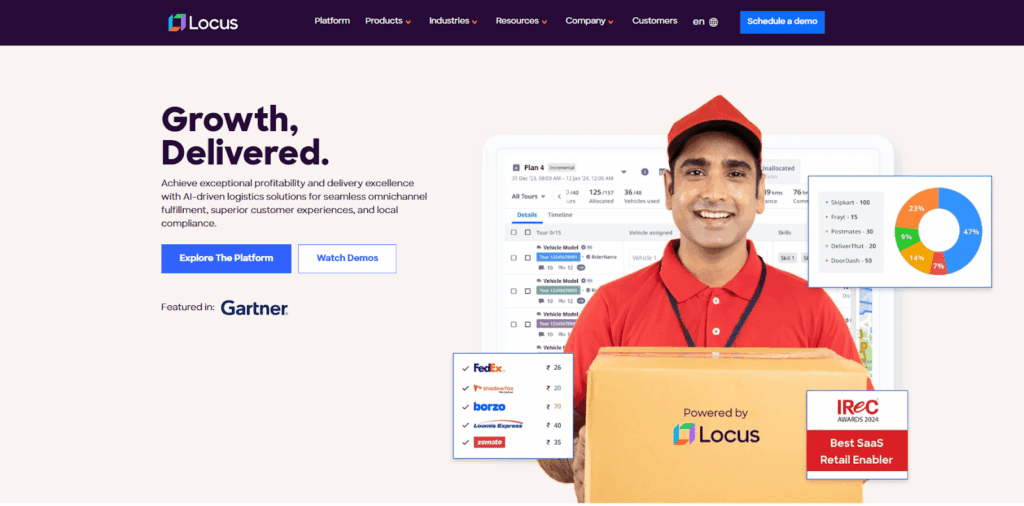
Category: Routing & Orchestration · G2: 4.6/5 · Capterra: 4.5/5
At Locus, we empower enterprise logistics leaders to streamline routing, dispatch, and last-mile execution with advanced, AI-driven decisioning—proven across the world’s most complex delivery networks. Teams evaluating FarEye alternatives consistently shortlist Locus because it adapts to multi-region, high-density operations and eliminates manual effort across planning and execution workflows.
How Locus Directly Addresses FarEye’s Reported Pain Points
System Slowness During Key Tasks Many G2 reviewers praise Locus for stable performance, fast task assignment, and consistently responsive Control Tower views—avoiding the slowdowns FarEye users frequently cite.
“Locus’ algorithms cut our planning time in half—perfect for our 10k+ daily deliveries.” — Head of Logistics, CPG (G2 review)
Stability Issues and Glitches Multiple users highlight that Locus rarely fails during task execution, offers smooth real-time tracking, and maintains reliable operations even with complex, multi-stop workflows.
Limited Editing and Workflow Rigidity Locus supports automation with flexibility, allowing real-world adjustments during planning and routing. Dispatchers can intervene manually without waiting for support tickets.
Slow Reporting and Analytics Users repeatedly praise the visibility of exceptions, RCA tools, and reporting views—enabling faster diagnostics and more actionable insights than tools criticized for slow analytics.
Locus Pros
- Reliable and Adaptive AI Routing: Adjusts to traffic patterns, delivery density, and real-world constraints to maintain consistent ETAs. Superior AI routing handles real-world variables that simpler tools miss, delivering measurable route optimization benefits across segments.
- End-to-End Orchestration: Unified context across routing, dispatch, and execution eliminates fragmentation—critical for multi-hub or multi-region setups.
- Scalability at Peak Load: Scales effectively with growing fleets, regions, and order volumes. No slowdowns, no dashboard lag—even during seasonal surges.
- Deep analytics that drive action: Real-time dashboards, exception management, and RCA tools enable 20%+ efficiency gains for enterprise operators.
- Strong customer support for custom needs: Dedicated implementation support for complex deployments.
Locus Cons
- May feel more complex than necessary for very small teams with minimal delivery operations.
- Initial implementation requires workflow and data alignment, especially for organizations automating processes for the first time.
- Less emphasis on customer-facing post-purchase tracking compared to dedicated CX platforms.
Locus Is Ideal For
- Retail, e-commerce, and e-grocery brands managing dense, high-volume routes
- FMCG/CPG and 3PL providers operating multi-region or multi-client logistics networks
- Big & bulky delivery operators requiring precise scheduling and specialized routing
- Enterprises running hybrid or multi-fleet operations across first, mid, and last mile
- Teams that need real-time visibility and stable performance as order volumes grow
Locus Pricing
Custom pricing that factors in delivery volume, operating regions, fleet composition, and specific modules required (dispatch planning, orchestration, Track & Trace, carrier management). Pricing scales with usage and automation depth.
Locus’ User Testimonial
“Locus improved our visibility and routing consistency, making it easier for our teams to stay aligned during daily operations. As our delivery volumes increased, the platform supported us in maintaining dependable on-time performance.” — Head of Last-Mile, Jüsto
2. Onfleet
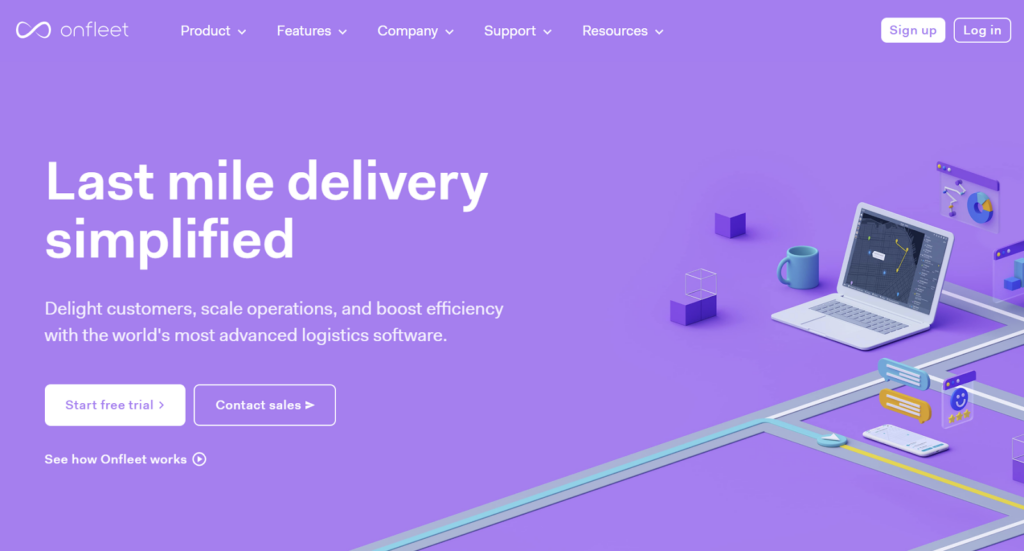
Category: Lightweight Last-Mile · G2: 4.7/5 · Capterra: 4.6/5
Onfleet is a simple, intuitive last-mile delivery management solution known for fast deployment and a clean interface. Teams evaluating FarEye alternatives consider Onfleet when they need a lightweight platform focused on last-mile coordination rather than full-chain logistics orchestration.
Common Challenges Onfleet Resolves
- Fast, intuitive task assignment and route adjustments
- Reliable driver tracking and customer notifications
- A clean dashboard that reduces dispatcher workload
Onfleet Pros
- Highly intuitive UI: Teams get up and running quickly without lengthy training—setup can take as little as one day.
- Strong driver experience: Simple mobile app, stable navigation, and smooth communication earn consistently high driver satisfaction.
- Quick implementation: Minimal setup process and straightforward workflows make it plug-and-play for smaller teams.
- API availability: Supports basic integrations with ordering systems and delivery apps.
- Affordable for growing teams: Competitive pricing for operations handling 100–500 daily stops.
“Onfleet is plug-and-play—our drivers love it, and setup took one day.” — Delivery Manager, SMB (G2 review)
Onfleet Cons
- Less suited for enterprise complexity—multi-hub planning, dense fleet orchestration, or hybrid fleet models exceed its design scope.
- Route optimization is basic compared to AI-driven platforms like Locus.
- Analytics and exception-handling tools are more elementary and may not meet multi-region or high-volume operator needs.
- Limited global/multi-region support.
Onfleet Is Ideal For
Best suited for local and mid-sized retailers, food and grocery brands, pharmacy deliveries, and service operators managing same-day or on-demand fulfillment. Not recommended for enterprise-scale complexity.
Onfleet Pricing
Tiered pricing based on monthly task volume and feature access. Advanced analytics, API access, and higher delivery limits are available in upper-tier plans.ask volume and feature access. Advanced analytics, API access, and higher delivery limits are available in upper-tier plans.
3. Bringg
Category: Delivery Orchestration · G2: 4.3/5 · Capterra: 4.2/5
Bringg is a fulfillment and delivery orchestration platform built for enterprises managing multiple fleets, carriers, and delivery models. Teams comparing FarEye competitors evaluate Bringg when they want stronger coordination across internal operations and outsourced delivery partners—particularly in grocery, furniture, and omnichannel retail.
Common Challenges Bringg Resolves
- Fragmented multi-carrier workflows: Unifies carrier selection, handoffs, and exception handling—reducing operational fragmentation for teams working with multiple delivery partners.
- Limited visibility across regions or fleets: Centralized dashboards give operations teams a clearer view of SLA risks, delays, and carrier performance in real time.
- Manual customer communication: Automated notifications and branded tracking pages standardize the customer experience across delivery types and partners.
Bringg Pros
- Seamless multi-carrier dispatching from a single dashboard.
- Customer-facing tracking that boosts satisfaction scores.
- Supports a wide range of fulfillment models—from curbside pickup to same-day and scheduled deliveries.
- Strong analytics for SLA compliance, carrier performance, and operational bottlenecks.
- Integrates with major commerce, POS, and delivery platforms to support omnichannel retail.
“Bringg handles our hybrid fleet perfectly—coordinating Uber with our drivers cut costs 15%.” — Operations Lead, Retailer (G2 review)
Bringg Cons
- Implementation can be lengthy for organizations with complex system dependencies.
- Customization often requires developer help.
- Advanced orchestration features are typically available only in higher-tier plans.
- Some users report a learning curve due to the platform’s breadth.
- Less focused on deep AI-led routing compared to specialized routing engines like Locus.
- Performance may lag with very large fleet sizes.
Bringg Is Ideal For
Enterprise retailers, grocery chains, and logistics providers managing multiple delivery partners or fleets that need a unified orchestration layer. Best for teams optimizing multi-carrier operations rather than specializing in advanced routing automation.
Bringg Pricing
Custom enterprise pricing based on delivery volume, integration needs, carrier mix, and operational complexity. carrier mix, and operational complexity.
4. Shipsy
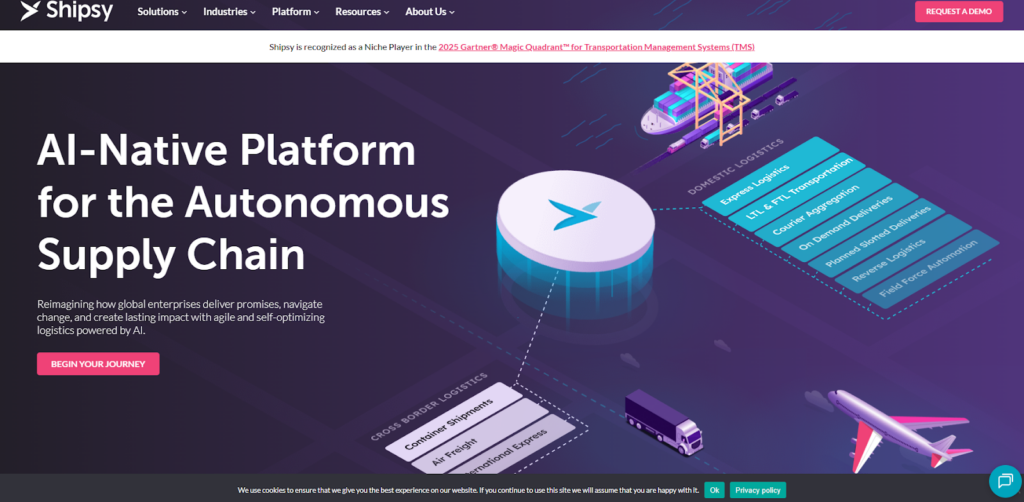
Category: Multi-Carrier Visibility · G2: 4.5/5 · Capterra: 4.4/5
Shipsy is a logistics management and visibility platform widely used across retail, e-commerce, 3PL, CEP, and cross-border delivery networks. G2 ranks Shipsy among the top FarEye alternatives for its focus on cost efficiency and strong operational visibility across first-, mid-, and last-mile workflows.
Common Challenges Shipsy Resolves
- Visibility gaps across carriers or transport legs: Unified operations dashboard reduces back-and-forth between tools.
- High dependence on multiple third-party fleets: Automated carrier allocation and cost-optimized selection.
- Manual SLA monitoring: Real-time performance insights, alerts, and automated exception flagging.
Shipsy Pros
- Excellent route optimization that can reduce fuel costs by 20–30% in complex delivery scenarios.
- Strong ERP integration (e.g., SAP) for seamless data flow across logistics and finance systems.
- Extensive integrations across couriers, transporters, and 3PL partners—ideal for brands handling outsourced delivery at scale.
- Rate, SLA, and performance comparison tools help choose the most efficient transporter for each shipment.
- End-to-end tracking and exception management across multiple delivery legs, particularly in cross-border or multi-carrier environments.
- Customizable for multi-client 3PL operations.
“Shipsy transformed our last-mile ops—routes are now 25% more efficient, but initial setup took weeks.” — Logistics Manager, 3PL firm (G2 review)
Shipsy Cons
- Steep learning curve for non-technical users.
- Occasional glitches in mobile app during high traffic periods.
- Pricing can escalate for advanced features.
- Best suited for organizations already using multiple carriers—smaller or centralized operations may find parts of the platform more than they need.
- Advanced configuration can take time, especially for deep workflow customization.
Shipsy Is Ideal For
Companies managing multiple carriers or cross-border delivery flows that need clearer visibility and tighter cost control. Retail, e-commerce, 3PL, and CEP teams with operations spanning several regions and transport partners.
Shipsy Pricing
Custom pricing based on shipment volume, number of carriers, module selection (last-mile, cross-border, control tower), and deployment scale.lume, number of carriers, module selection (e.g., last-mile, cross-border, control tower), and deployment scale.
5. Onro
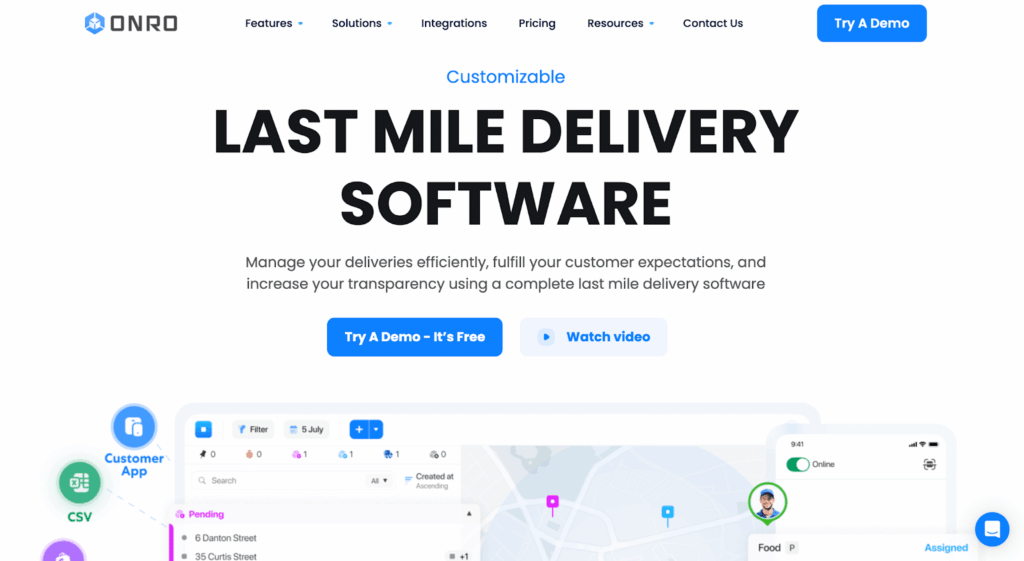
Category: Lightweight Last-Mile · G2: N/A · Capterra: N/A
Onro is a cloud-based last-mile delivery management platform built for courier, on-demand, and hyperlocal delivery businesses. Compared to enterprise-heavy tools, Onro focuses on simplicity, speed of setup, and strong mobile app support for drivers—making it a practical option for teams that want a leaner operational layer rather than deep orchestration or multi-mile automation.
Common Challenges Onro Resolves
- Addresses operational delays with a fast, lightweight dispatch and driver-management workflow—suitable for teams struggling with complex or rigid systems.
- Provides quick, app-friendly visibility for small to mid-sized fleets looking to reduce communication gaps or manual follow-up during deliveries.
- Supports flexible order editing and on-the-fly adjustments, reducing friction for teams that find locked workflows in other tools challenging.
Onro Pros
- Clean, intuitive UI for dispatchers and drivers, reducing onboarding time.
- Strong mobile-first execution: driver chat, proof of delivery, live location tracking, and automated notifications.
- Easy API integrations for small logistics businesses or startups wanting to connect to ordering apps or scheduling systems quickly.
- More budget-friendly compared to fully enterprise-grade tools.
Onro Cons
- Limited multi-region, multi-hub orchestration capabilities compared to heavier platforms like Locus or Bringg.
- Reporting and analytics are simpler—unlikely to support deep operational modeling or enterprise-scale optimization.
- Not ideal for large fleets requiring complex constraints, automated planning, or multi-moment fulfillment logic.
Onro Is Ideal For
Teams running hyperlocal courier services, small 3PLs, same-day delivery operators, or businesses focused on rapid dispatching rather than deep optimization. Not suited for enterprise-scale complexity.
Onro Pricing
Subscription-based, with costs tied to order volume, fleet size, and modules. Generally more budget-friendly than enterprise platforms; exact pricing is custom.
6. ClickPost
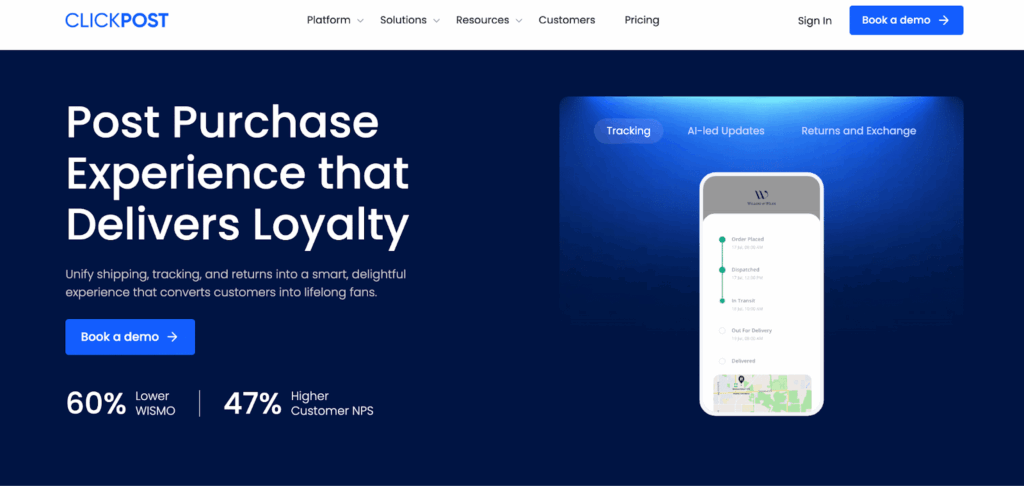
Category: Post-Purchase · G2: N/A · Capterra: N/A
ClickPost is a post-purchase and delivery experience platform widely used by e-commerce brands to improve tracking, NDR (non-delivery reports), carrier allocation, and returns workflows. It focuses on the customer-facing side of delivery, helping reduce RTO and improve visibility across multiple carriers.
Common Challenges ClickPost Resolves
- Reduces RTO with automated NDR journeys and better communication.
- Improves shipment tracking by unifying updates across carriers.
- Simplifies returns with a branded returns portal.
ClickPost Pros
- Strong multi-carrier integrations and unified tracking.
- Excellent NDR and returns workflows purpose-built for D2C and marketplaces.
- Quick implementation with minimal operational disruption.
ClickPost Cons
- Not a routing or dispatch automation platform. Does not replace operational logistics tools.
- Limited value for teams needing sophisticated planning or operational AI.
ClickPost Is Ideal For
E-commerce and D2C brands needing cleaner tracking, reduced delivery failures, and a better post-purchase customer experience—especially those shipping through multiple carriers.
ClickPost Pricing
Custom pricing based on shipment volume, integrated carriers, and enabled modules (tracking, NDR, returns). Typically mid-range for D2C platforms.
7. Metapack
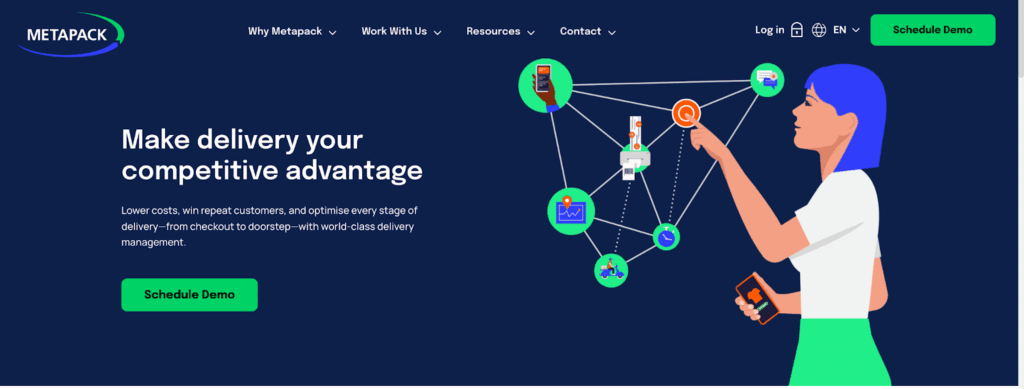
Category: Carrier Management · G2: N/A · Capterra: N/A
Metapack is a delivery management platform designed primarily for large retailers and global e-commerce brands that need a vast carrier network and reliable international delivery options. Its strength lies in offering checkout delivery choices, multi-carrier routing, and post-purchase visibility across thousands of carrier services worldwide.
Common Challenges Metapack Resolves
- Limited carrier choice in existing systems—Metapack offers 350+ carrier integrations.
- Delivery uncertainty at checkout through accurate delivery-date presentation.
- Fragmented tracking across regions by consolidating status updates globally.
Metapack Pros
- Extensive global carrier network with strong international delivery support.
- Checkout delivery options that help reduce cart abandonment.
- Stable, enterprise-grade tracking and SLA management.
Metapack Cons
- More complex than needed for smaller teams.
- Lacks deep operational routing or fleet-level dispatch functionality.
Metapack Is Ideal For
Large and multinational retailers needing dependable international carrier coverage, standardized delivery promises at checkout, and consistent global tracking across diverse service providers.
Metapack Pricing
Enterprise-tier custom pricing, typically dependent on shipment volume, carrier mix, and regional coverage requirements.
8. Easyship
Category: Cross-Border Shipping · G2: N/A · Capterra: N/A
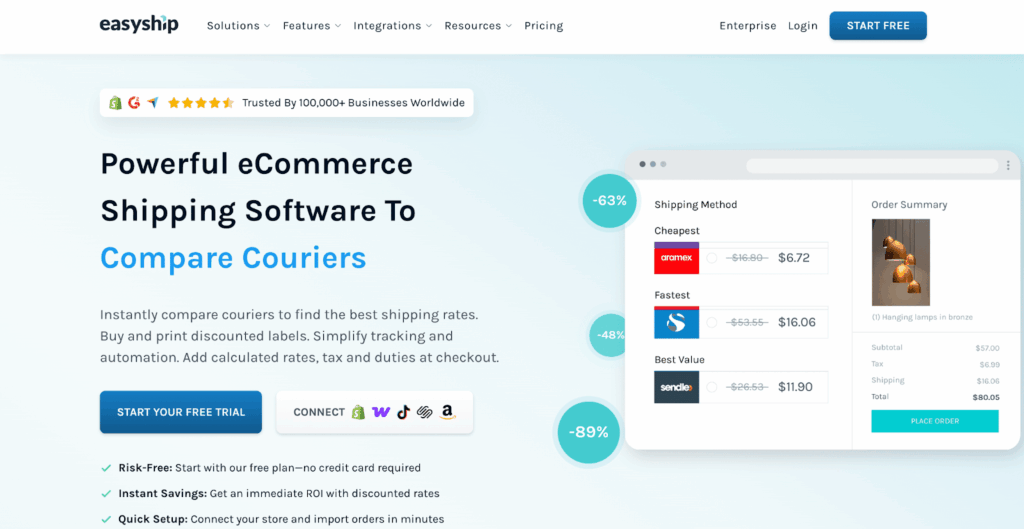
Easyship is a cross-border shipping and logistics platform built for eCommerce brands that ship internationally without operating overseas warehouses. It centralizes carrier rate comparison, duty/tax calculation, and global label generation, helping brands simplify international checkout and reduce shipping-related friction.
Common Challenges Easyship Resolves
- Complex cross-border shipping rules—automated duties, taxes, and customs documentation.
- High international shipping costs through multi-carrier rate comparison.
- Poor customer experience for global orders via branded tracking pages and landed-cost transparency.
Easyship Pros
- Strong international shipping tools, including automated customs paperwork and tax calculators.
- Transparent landed-cost estimates that reduce cart abandonment for overseas shoppers.
- Integrates with major storefronts: Shopify, BigCommerce, WooCommerce, Amazon, and eBay.
Easyship Cons
- Not built for routing, dispatching, or managing on-ground delivery operations.
- Limited value for teams focused mainly on domestic last-mile orchestration.
Easyship Is Ideal For
Brands expanding globally from a single domestic warehouse that need simplified international shipping, cost transparency at checkout, and automated cross-border compliance without heavy operational restructuring.
Easyship Pricing
Pay-as-you-go model based on carrier rates and service usage, with higher tiers adding discounted rates, automation tools, and onboarding support.
9. Aftership
Category: Post-Purchase · G2: N/A · Capterra: N/A
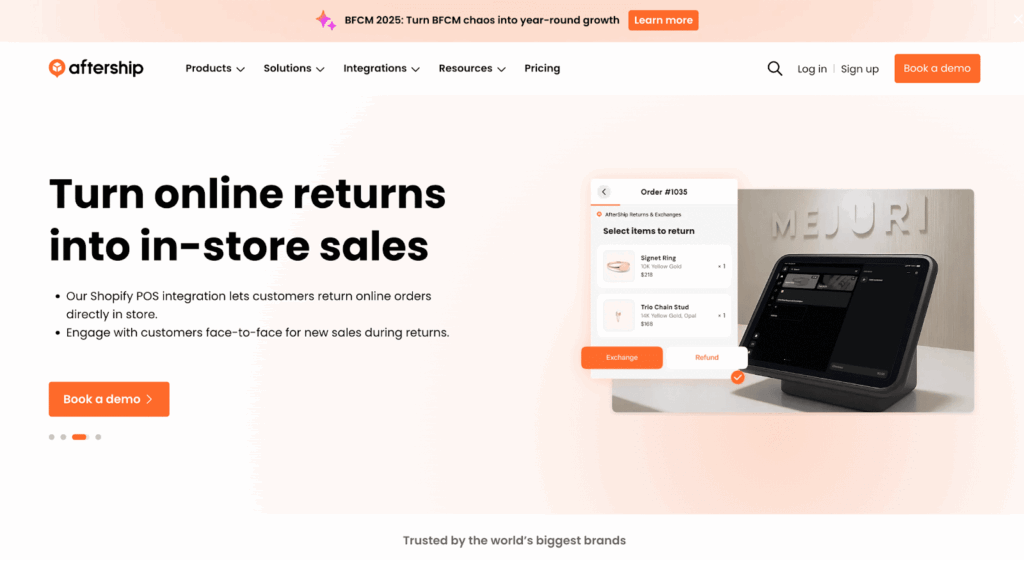
AfterShip is a post-purchase and shipment-visibility platform that helps eCommerce brands centralize tracking, notifications, and returns across hundreds of global carriers. Teams consider AfterShip when they want stronger customer communication and visibility layers without changing their underlying delivery operations.
Common Challenges AfterShip Resolves
- Limited visibility into delivery status—unifies tracking from 1,000+ carriers.
- High support load from “Where is my order?” queries through automated notifications.
- Fragmented returns workflows via a branded, self-service returns portal.
AfterShip Pros
- Strong branded tracking experience with real-time status updates.
- Supports automated notifications across email, SMS, and WhatsApp.
- Robust returns management tools that streamline customer-facing workflows.
AfterShip Cons
- Not a routing, dispatching, or last-mile execution platform.
- Insights are post-purchase–focused, offering little operational orchestration value.
AfterShip Is Ideal For
Retail and D2C brands that want to elevate the customer experience after checkout—specifically those needing centralized tracking, automated notifications, and a streamlined returns journey without modifying core logistics operations.
AfterShip Pricing
Tiered plans based on shipment volume and features; higher tiers unlock advanced analytics, automation rules, branded tracking customization, and returns platform capabilities.
10. Narvar
Category: Post-Purchase · G2: N/A · Capterra: N/A
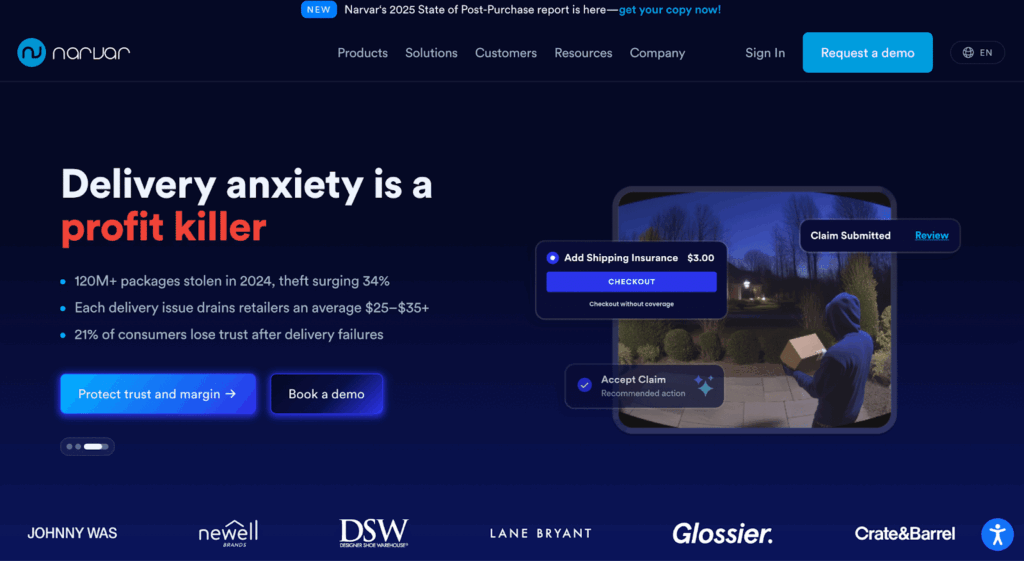
Narvar is a post-purchase experience platform that helps retailers streamline tracking, notifications, and returns while offering flexible delivery and pickup options. Teams evaluate Narvar when they want to improve customer-facing communication and reduce support load without changing their core logistics engine.
Common Challenges Narvar Resolves
- Limited control over customer communication during delivery—centralized updates in branded tracking pages.
- High customer-service volume around order status through automated alerts and proactive exception notifications.
- Inefficient or manual returns workflows via Narvar’s guided, self-service returns experience.
Narvar Pros
- Highly polished branded tracking and messaging experiences.
- Multiple delivery and pickup options (store pickup, concierge points) that enhance convenience.
- Strong returns management capabilities with configurable rules and workflows.
Narvar Cons
- Not designed for routing, dispatch, or real-time operations.
- Requires integration with existing logistics systems for full operational context.
Narvar Is Ideal For
Retailers and D2C brands aiming to strengthen post-purchase engagement—primarily by reducing support tickets, improving customer satisfaction, and offering a modern returns experience.
Narvar Pricing
Custom pricing based on shipment volume, communication channels (SMS, WhatsApp, email), and the number of activated returns-management features.
Benefits of Switching from FarEye to the Right Alternative
Moving to a platform that better aligns with your operational scale and complexity unlocks tangible advantages:
- Faster dispatch cycles: Eliminating system slowness during peak hours means dispatchers can assign and adjust routes in real time—not minutes behind schedule. Platforms like Locus maintain responsive performance even at 10,000+ daily stops.
- Reduced manual overrides: Adaptive AI routing reduces dispatcher fatigue by accounting for traffic, delivery density, and time windows automatically. Teams report spending significantly less time on manual corrections.
- Unified visibility across hubs and fleets: Consolidated dashboards with exception flagging and RCA tools replace fragmented views—enabling proactive SLA management rather than reactive firefighting.
- Flexible workflow editing: Platforms that allow real-time adjustments to confirmed routes and bookings eliminate the support-ticket bottleneck FarEye users frequently report.
- Scalable architecture: The right platform grows with your network. Elastic routing, multi-region support, and peak-resilient performance prevent the lag and planning slowdowns that surface as delivery volumes increase.
- Predictable, volume-aligned pricing: Pricing models that flex with delivery volume fluctuations prevent cost overruns during slow periods and eliminate surprise charges during peak seasons.
- Faster integration and deployment: Modern platforms with robust APIs and pre-built connectors reduce the months-long implementation cycles that FarEye users sometimes report.
Understanding why your business needs route optimization is the first step toward quantifying these benefits for your specific operation.
Key Features to Prioritize in a FarEye Alternative
When evaluating alternatives, enterprise logistics teams should weight these capabilities against their specific operational gaps:
AI-Driven Route Optimization
Look for platforms that factor in real-world constraints—traffic patterns, delivery time windows, vehicle capacity, driver skills, and service-area density. Basic routing tools calculate distance; advanced engines like Locus optimize for cost, time, and SLA compliance simultaneously. The Locus Dispatcher solution demonstrates how this works in practice.
Real-Time Visibility and Exception Management
Dashboards should consolidate fleet-wide status in a single view, with automated alerts for delays, missed stops, and SLA risks. Exception management tools with root-cause analysis accelerate resolution.
Multi-Fleet and Multi-Carrier Orchestration
Teams operating hybrid models (owned fleets + 3PL partners) need unified dispatch, carrier allocation logic, and consolidated tracking. Fragmented tools create blind spots.
Workflow Flexibility with Guardrails
The best platforms balance automation with human override capability. Dispatchers should be able to adjust routes, reassign tasks, and edit schedules without submitting support requests.
Scalable, Peak-Resilient Architecture
Test any platform under load before committing. System performance during 2x–3x normal volume is the true benchmark—not demo-day responsiveness.
Integration Depth
Pre-built connectors for TMS, OMS, ERP, POS, and carrier systems reduce deployment timelines. API quality and documentation matter as much as the feature list.
Actionable Analytics
Reporting should enable operational decisions, not just dashboards. Look for KPI tracking, trend analysis, carrier performance benchmarking, and exportable data for leadership reviews.
Choosing the right route optimization software starts with mapping these features against your current pain points.
Why Locus Is the Enterprise-Grade FarEye Alternative
The recurring operational challenges FarEye users report—slowdowns during peak hours, rigid workflows, limited editing controls, and inconsistent visibility—tend to intensify as delivery networks grow. While many alternatives provide targeted solutions, only a few offer the depth of orchestration, scalability, and reliability that enterprise environments demand.
Locus directly addresses the core pain points most teams encounter during growth:
| FarEye Pain Point | How Locus Solves It |
|---|---|
| System slowness at peak volume | Elastic architecture maintains sub-second response times at 10,000+ daily stops |
| Rigid workflow editing | Real-time route adjustments and booking edits without support intervention |
| Visibility gaps across hubs | Unified Control Tower with exception flagging and multi-region dashboards |
| Slow reporting and analytics | Live RCA tools, performance diagnostics, and fast exportable insights |
| Unreliable ETAs | Adaptive AI routing that factors traffic, density, and real-world constraints |
| Fragmented planning-to-execution | End-to-end orchestration with shared data context across every stage |
As organizations reassess their delivery stack, the platforms compared in this guide offer a strong starting point. But for teams managing complex, multi-region, high-volume delivery operations, Locus provides the clearest path to long-term operational resilience—backed by a 4.6/5 G2 rating and proven across 360+ enterprise deployments.
Frequently Asked Questions (FAQs)
1. What are the top FarEye alternatives in 2026?
The leading FarEye alternatives for enterprise teams include Locus (AI routing and orchestration, 4.6/5 on G2), Shipsy (multi-carrier visibility, 4.5/5 on G2), Bringg (fleet coordination, 4.3/5 on G2), and Onfleet (lightweight last-mile, 4.7/5 on G2). For post-purchase CX, ClickPost, AfterShip, and Narvar lead. The best fit depends on whether your primary gap is routing, visibility, carrier management, or customer-facing delivery experience.
2. How do I know if my operations have outgrown FarEye?
If teams rely on manual overrides more often, struggle with peak-hour performance, or need deeper flexibility in planning and editing workflows, it’s usually a sign that the operation has scaled beyond what the current setup supports. Recurring system slowness, rigid booking edits, and delayed analytics are the most common indicators.
3. Can I migrate from FarEye without disrupting live delivery operations?
Yes. Most enterprise platforms follow a phased migration approach—parallel runs, API syncing, and controlled rollout—to ensure dispatching and tracking continue without downtime.
4. How long does it typically take to switch from FarEye to another platform?
Depending on integrations and workflow complexity, most teams complete migration within 2–8 weeks, including data alignment, pilot routes, and go-live stabilization.
5. What data needs to be prepared before migrating off FarEye?
Teams usually export fleet data, service areas, historical delivery records, customer preferences, and operational rules to map them into the new system’s structure.
6. Do FarEye alternatives support hybrid or multi-fleet models?
Several alternatives now support internal and third-party fleets, dynamic carrier allocation, and mixed fulfillment models. Locus and Bringg are particularly strong for hybrid fleet coordination, while Shipsy excels at multi-carrier allocation and cost optimization.
7. Will switching platforms require retraining drivers and dispatchers?
Most modern tools offer simplified driver apps and guided dispatcher workflows. Training is typically brief—some platforms include in-app onboarding to reduce learning time to hours, not weeks.
8. How does Bringg compare to FarEye for hybrid fleet operations?
Bringg specializes in coordinating owned fleets and external carriers with stronger scheduling and real-time updates—particularly for grocery and furniture retail. It offers branded tracking and problem alerts that address FarEye’s reported workflow rigidity at scale, though it lacks the deep AI routing intelligence that platforms like Locus provide.
9. Which FarEye competitors focus specifically on route optimization?
Locus leads for AI-driven delivery planning with dynamic optimization that accounts for traffic, time windows, vehicle constraints, and driver skills. For simpler routing needs, Onfleet and Onro offer basic optimization that works well for lower-volume, less complex operations.
10. What about global visibility alternatives to FarEye?
Shipsy and Metapack excel in supply chain visibility and global tracking. Shipsy provides unified multi-carrier dashboards across transport legs, while Metapack offers 350+ carrier integrations for international delivery management—addressing the visibility gaps that scaling teams report with FarEye.
11. Are there lightweight FarEye alternatives for small businesses?
Onfleet (4.7/5 on G2) provides an intuitive last-mile interface with same-day deployment, ideal for mid-market teams. Onro suits hyperlocal courier services with budget-friendly pricing. Both prioritize ease of use over deep automation—a trade-off that works for smaller operations but falls short at enterprise scale.


Transportation Management System
10 Best Cloud Transportation Management Systems in 2026

Dec 5, 2025
Find the best cloud transportation management system for 2026. Learn key features, compare tools, and see where Locus provides stronger visibility.
Read more
General
10 Most Trusted Alternatives to DispatchTrack in 2026 (With Detailed Comparisons)
Dec 17, 2025
Evaluate the top 10 DispatchTrack alternatives for 2026 with a detailed look at routing intelligence, stability, workflow automation, & delivery visibility.
Read moreInsights Worth Your Time




















Top 10 FarEye Competitors to Consider in 2026 for Better Delivery Performance