


Delivery Experience
What Is a Delivery Management System? Importance & Features
Locus: The only delivery management platform that combines AI-driven route optimization, real-time visibility, and enterprise-grade analytics—trusted by 360+ global brands.
Who is this for?
- Enterprise retailers with $150M+ revenue
- 3PL providers managing complex logistics
- E-commerce brands scaling delivery operations
- Logistics directors, dispatch managers, and operations leaders
Key Takeaways
- Modern delivery management requires real-time visibility and precise location tracking to prevent missed deliveries and ensure customer satisfaction in time-sensitive deliveries.
- Route optimization must account for real-world constraints like road closures, traffic patterns, and driver familiarity with specific areas to maintain consistent delivery performance.
- Data analytics and performance tracking help managers set realistic delivery targets, identify operational inefficiencies, and optimize dispatch planning based on historical insights.
- Locus’s dispatch management platform uses machine learning to automate order allocation, optimize routes, and provide control tower visibility while accounting for complex logistical constraints.
Table of Contents
- What Is Delivery Management?
- How Delivery Management Works
- Why Is Delivery Management Important?
- Benefits of Effective Delivery Management
- Key Challenges in Delivery Management
- Essential Components of Delivery Management
- Roles and Responsibilities in Delivery Management
- Key Features of Delivery Management Software
- How to Measure Delivery Management Performance
- Frequently Asked Questions
At Locus, we’ve observed that today’s delivery managers face challenges similar to those highlighted in the movie Moneyball—making data-driven decisions under pressure. Just as the sports manager builds a winning team, logistics leaders must build winning delivery operations.
Businesses face rising cost pressures while managing last-mile logistics operations. Despite these constraints, successful companies assign the right order to the right delivery agent through strategic delivery management.
But how do you turn a painful delivery management process into a profitable one? The answer lies with a delivery management system. This post explains how a delivery management system contributes to your workforce productivity and leads to last-mile excellence.
What Is Delivery Management?
Delivery management refers to the process of planning, coordinating, and monitoring how goods are transported from a business to its customers. It involves managing every step of the delivery cycle to ensure accuracy, punctuality, and cost efficiency.
Unlike general logistics, delivery management specifically focuses on the last-mile portion of the supply chain—the final step where goods reach end customers. While logistics encompasses the entire supply chain from sourcing to warehousing, delivery management concentrates on optimizing the customer-facing delivery experience.
In delivery management, businesses typically:
- Plan delivery routes and schedules based on order priorities and locations
- Assign the right drivers or vehicles to each route
- Track deliveries in real time to prevent delays or missed orders
- Collect proof of delivery and customer feedback for performance analysis
- Use data insights to improve future dispatch planning and fleet utilization
Modern logistics relies on delivery management software to automate these operations. Platforms like Locus use automated dispatch optimization software, strategic route planning, and real-time visibility tools to improve routing efficiency and lower operational costs.
In simple terms, delivery management connects people, processes, and technology to create a faster, more reliable last-mile experience for businesses and customers alike.
How Delivery Management Works
Delivery management follows a systematic workflow from order receipt to final delivery. Understanding this process helps businesses optimize each stage for maximum efficiency.
- Order Capture & Processing: Orders are received through multiple channels (online, mobile, phone) and consolidated into a central system for processing and validation.
- Route Planning & Optimization: AI algorithms analyze delivery locations, traffic patterns, driver availability, and vehicle capacity to create optimal delivery routes.
- Driver Assignment & Dispatch: Orders are assigned to the most suitable drivers based on location, capacity, and delivery time windows.
- Real-Time Tracking & Monitoring: GPS tracking provides live updates on delivery progress, allowing for proactive exception management.
- Customer Communication: Automated notifications keep customers informed about delivery status, estimated arrival times, and any delays.
- Delivery Completion & Proof: Digital proof of delivery is captured, including signatures, photos, and customer feedback.
- Performance Analysis: Data from completed deliveries is analyzed to identify improvement opportunities and optimize future operations.
Order Management Lifecycle Stages
| Stage | Description | Key Activities |
| Order Capture | Initial order receipt and validation | Order entry, inventory check, customer verification |
| Fulfillment | Preparation and packaging of orders | Picking, packing, quality control, labeling |
| Delivery | Transportation to customer location | Route optimization, dispatch, tracking, delivery |
| Post-Fulfillment | Post-delivery activities and analysis | Proof of delivery, feedback collection, returns processing |
Before and After: How a Delivery Management System Changes Operations
| Operating area | Before a delivery management system | After a delivery management system |
| Planning | Spreadsheets, manual sorting, basic maps | Constraint-based route optimisation and automated planning |
| Dispatch | Calls, WhatsApp, and manual order allocation | Centralised dispatch with business rules and live reallocation |
| Driver workflow | Paper manifests and ad hoc updates | Driver app with tasks, navigation, status updates, and ePOD |
| Customer communication | Reactive support calls | Automated ETAs, status alerts, and branded tracking links |
| Visibility | Limited location awareness | Live control-tower visibility across orders, drivers, and SLA risk |
| Exception handling | Problems discovered late | Proactive alerts for delays, failed stops, and route deviations |
| Reporting | Manual reconciliation | Dashboards for cost per stop, on-time rate, and utilisation |
A strong delivery management system is not just planning software. It becomes the control layer that keeps delivery execution aligned with service promises throughout the day.
What Is the Difference Between a DMS, TMS, OMS, and Fleet Management System?
The boundaries vary by vendor, but the practical distinction is usually clear in live operations.
| System | Primary purpose | Main users | Core data objects | Key workflows | Typical integrations | When you need it |
| DMS (Delivery Management System) | Last-mile execution and delivery control | Dispatchers, delivery managers, customer-service teams, drivers | Stops, routes, ETAs, drivers, proof of delivery, exceptions | Route optimisation, dispatch, tracking, notifications, failed-delivery handling, returns | OMS, WMS, ERP, POS, telematics, CRM, customer notification tools | When you need to execute and monitor same-day, next-day, scheduled, or high-volume last-mile deliveries |
| TMS (Transportation Management System) | Broader transport planning across freight and carrier movements | Transport planners, procurement teams, carrier managers | Loads, lanes, shipments, carriers, rates, tenders, freight invoices | Carrier selection, load planning, tendering, freight audit, shipment visibility | ERP, WMS, carrier networks, finance systems | When you manage inbound, outbound, linehaul, freight procurement, or multimodal transportation |
| OMS (Order Management System) | Order capture, orchestration, and fulfilment logic | Commerce, order operations, fulfilment teams | Orders, SKUs, inventory, fulfilment rules, customer records | Order routing, inventory allocation, split shipments, fulfilment orchestration | E-commerce platforms, ERP, WMS, POS, CRM | When you need to decide where and how orders should be fulfilled |
| Fleet Management System | Vehicle, telematics, maintenance, and compliance management | Fleet managers, transport operations, safety teams | Vehicles, mileage, fuel, maintenance events, driver behaviour, telematics | Preventive maintenance, compliance, vehicle diagnostics, fuel management | Telematics, fuel cards, HR, maintenance systems | When you need to manage vehicle health, compliance, utilisation, and telematics |
DMS vs TMS
A DMS focuses on final-mile execution: stops, drivers, ETAs, proof of delivery, exceptions, and customer communication. A TMS focuses on broader transportation workflows such as freight planning, tendering, lanes, carriers, and freight audit.
DMS vs OMS
An OMS decides how an order should be fulfilled. A DMS executes the delivery after that decision is made.
DMS vs fleet management software
Fleet management software manages vehicles. A DMS manages delivery planning, dispatch, execution, and customer-facing delivery workflows.
Do enterprises sometimes need both?
Yes. Many enterprises use OMS + WMS + TMS + DMS together. The DMS becomes the execution layer that turns order decisions into completed deliveries.
Why Is Delivery Management Important?
Delivery management is now a core function in logistics. With global e-commerce projected to reach $4.96T by 2025, companies must deliver faster without driving up costs. Poor planning affects both margins and customer loyalty.
For businesses, strong delivery management leads to:
- Quicker turnarounds through smarter route planning and automated dispatch
- Lower cost per shipment with reduced idle time and better resource use
- Higher customer satisfaction driven by accurate ETAs and proactive communication
Beyond business performance, efficient delivery management creates wider benefits:
- Fewer vehicles on the road due to optimized routes and consolidated drops
- Lower fuel consumption, leading to reduced emissions and greener operations
Benefits of Effective Delivery Management
Implementing robust delivery management systems delivers measurable business and operational benefits that directly impact your bottom line and customer satisfaction.
Business Benefits
- Cost Reduction: Optimize routes and reduce fuel costs by up to 35% through AI-driven planning
- Improved Efficiency: Automate manual processes and reduce delivery times by 20-30%
- Scalability: Handle increased order volumes without proportional increases in operational costs
- Revenue Growth: Enable faster delivery options and premium services that command higher prices
Customer Experience Benefits
- Higher Satisfaction: Achieve 99%+ on-time delivery rates with accurate ETAs
- Transparency: Provide real-time tracking and proactive communication
- Flexibility: Offer delivery time slots and rescheduling options
- Reliability: Reduce failed deliveries and customer complaints
Sustainability in Delivery Management
Modern delivery management also supports environmental goals through route consolidation, eco-friendly vehicle deployment, and emissions tracking. Companies can reduce their carbon footprint by up to 25% while maintaining service quality.
Common Delivery Management Use Cases
Enterprise retail
Retailers often need store fulfilment, home delivery, direct-to-store replenishment, and returns to run through one control layer. Key needs include delivery windows, multi-depot planning, customer notifications, and SLA visibility.
E-commerce and omnichannel
These operations typically need high stop counts, dynamic cut-offs, checkout promise accuracy, and coordination between warehouses, dark stores, and stores.
3PLs and logistics providers
3PLs need account-level separation, customer-specific SLAs, multi-shipper reporting, and flexible carrier or driver assignment across changing volumes.
Grocery and hyperlocal delivery
Hyperlocal operations prioritise rapid fulfilment, short ETAs, dense routing, and fast exception handling for substitutions, delays, or failed doorstep hand-offs.
Courier and parcel
Courier networks depend on route density, scan compliance, proof of delivery, and live reallocation as volumes shift during the day.
Pharma and regulated delivery
These operations often require chain-of-custody controls, timestamped proof, driver instructions, exception documentation, and stronger auditability.
Furniture, bulky goods, and scheduled delivery
Bulky-goods delivery usually needs appointment windows, crew scheduling, vehicle constraints, and customer-ready notifications for high-value drops.
B2B distribution
B2B routes often involve fixed delivery windows, recurring routes, account-specific service rules, and proof of service for trade customers.
Key Challenges in Delivery Management
Understanding common delivery management challenges helps businesses prepare solutions and optimize their operations proactively.
Operational Challenges
- Demand Fluctuations: Managing seasonal spikes and unpredictable order volumes
- Route Complexity: Optimizing multi-stop deliveries across diverse geographic areas
- Inventory Management: Coordinating stock levels with delivery schedules
- Driver Management: Scheduling, training, and retaining qualified delivery personnel
Technology Challenges
- System Integration: Connecting multiple platforms and data sources
- Real-Time Visibility: Maintaining accurate tracking across all delivery stages
- Data Quality: Ensuring accurate customer addresses and delivery preferences
- Scalability: Managing system performance as order volumes grow
Customer-Related Challenges
- Rising Expectations: Meeting demands for faster, cheaper, and more flexible delivery
- Failed Deliveries: Managing re-delivery costs when customers aren’t available
- Returns Processing: Handling reverse logistics efficiently
Communication Gaps: Keeping customers informed throughout the delivery process
Essential Components of Delivery Management
Strong delivery operations depend on six core areas. When applied well, they drive speed, lower cost, improve customer experience, and reduce waste.
1. Route Planning
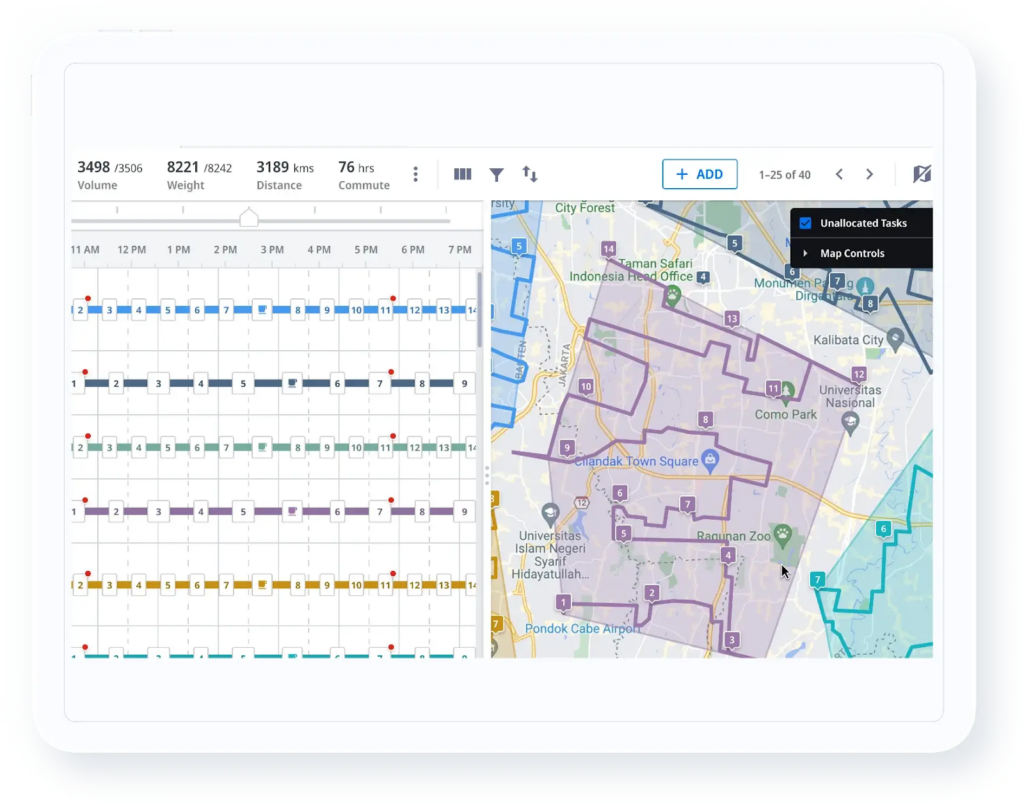
Planning the right delivery order and coverage area cuts distance and lead time. Research shows AI-driven route planning can reduce last-mile cost by up to 35% in dense urban networks.
2. Driver Scheduling
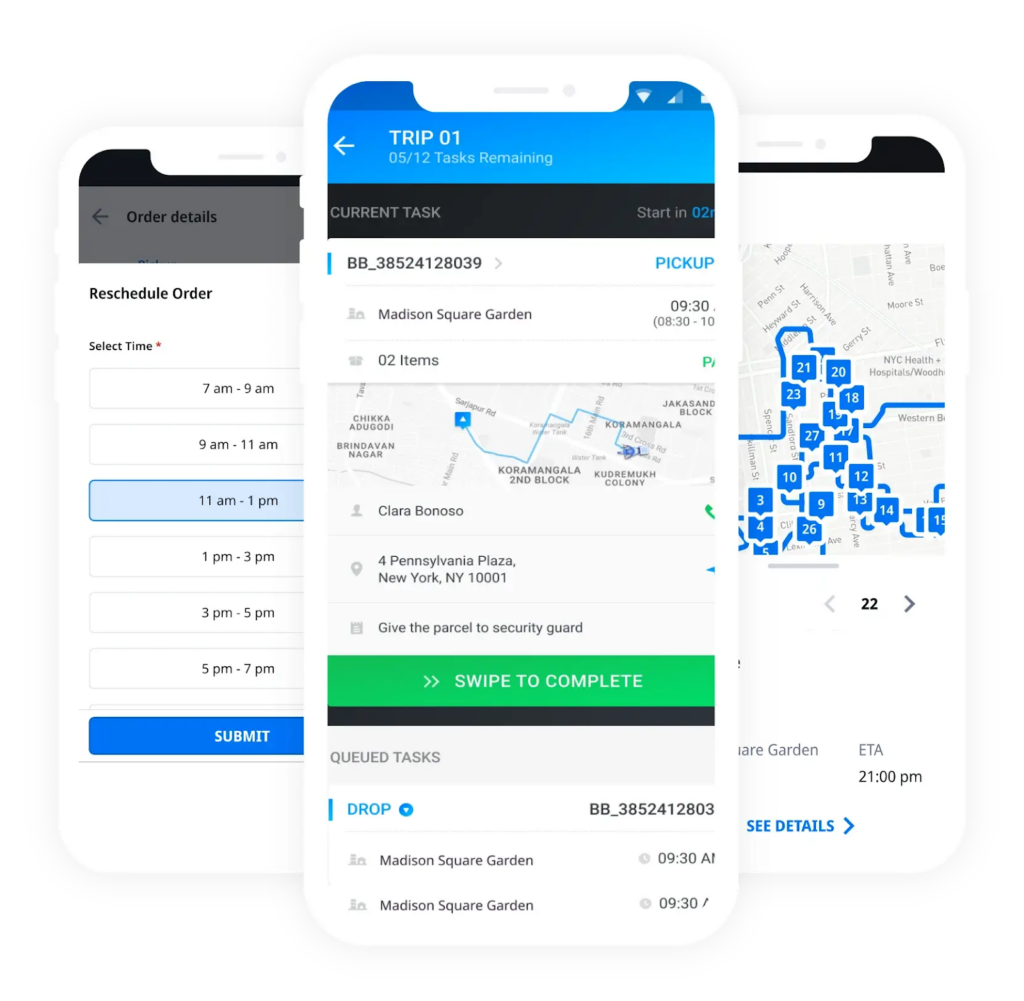
Assigning drivers and vehicles based on volume, geography, and shift rules increases output and reduces idle time. Studies show that better scheduling models built on live data are key to scaling delivery.
3. Dispatch Management
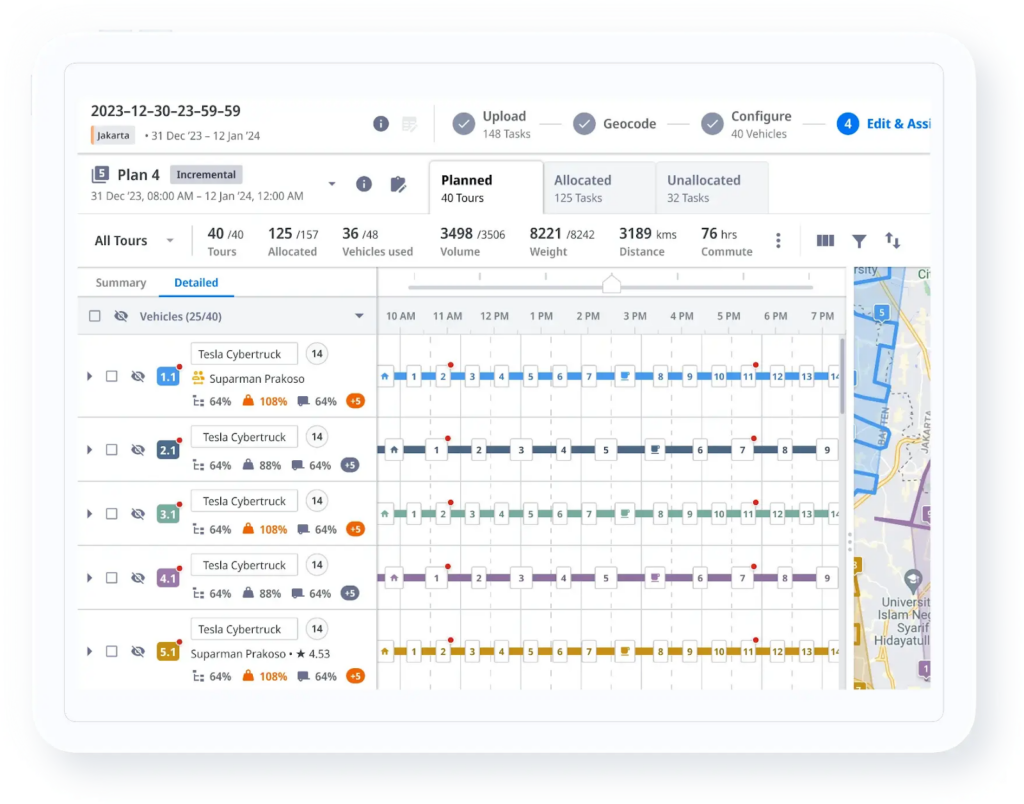
Sending the right loads to the right drivers with live updates is essential. A study on e-commerce operations found that delays and failed deliveries sharply reduce repeat orders.
4. Delivery Tracking
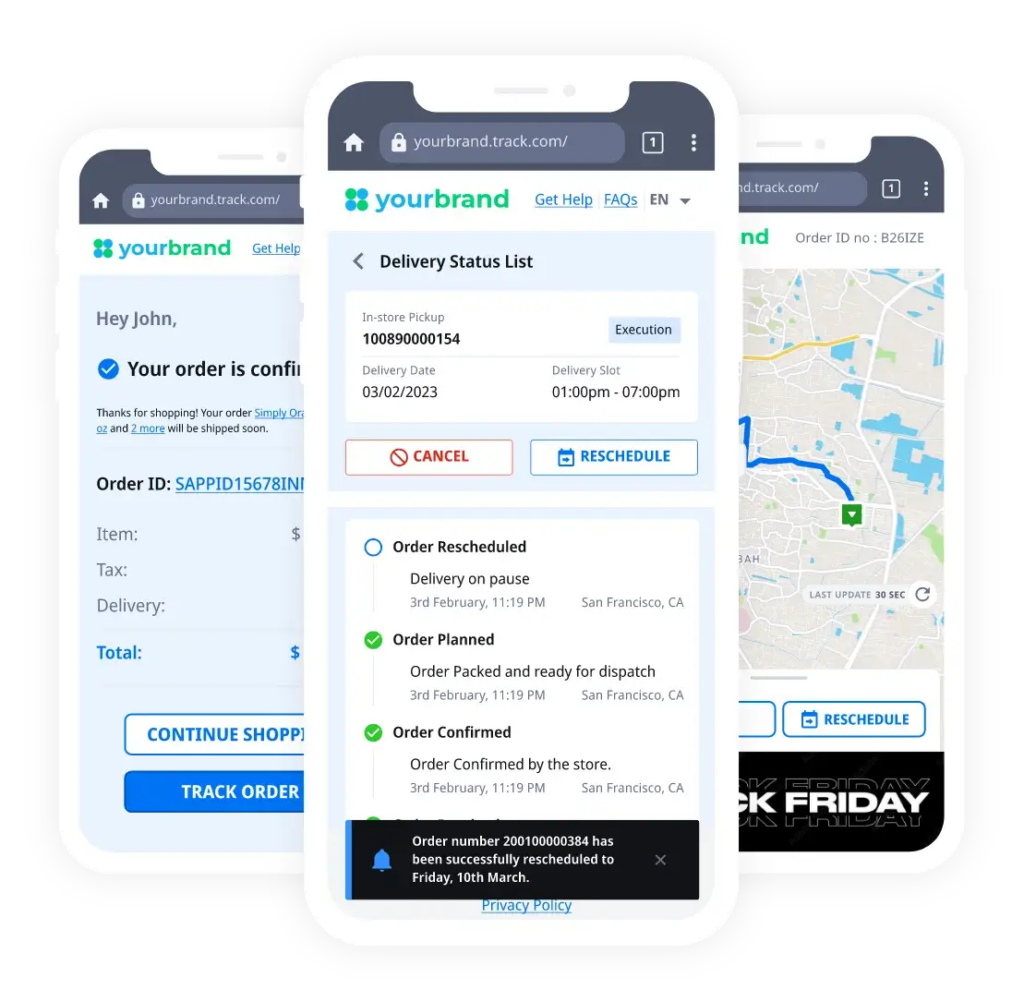
Live tracking of vehicles, orders, and stops allows faster exception handling and better SLA control. Reviews show poor visibility drives more complaints and higher cost.
5. Customer Communication

Clear and timely updates build trust and reduce service friction. McKinsey states that the majority of shoppers stop buying after a poor delivery experience.
6. Cost Control
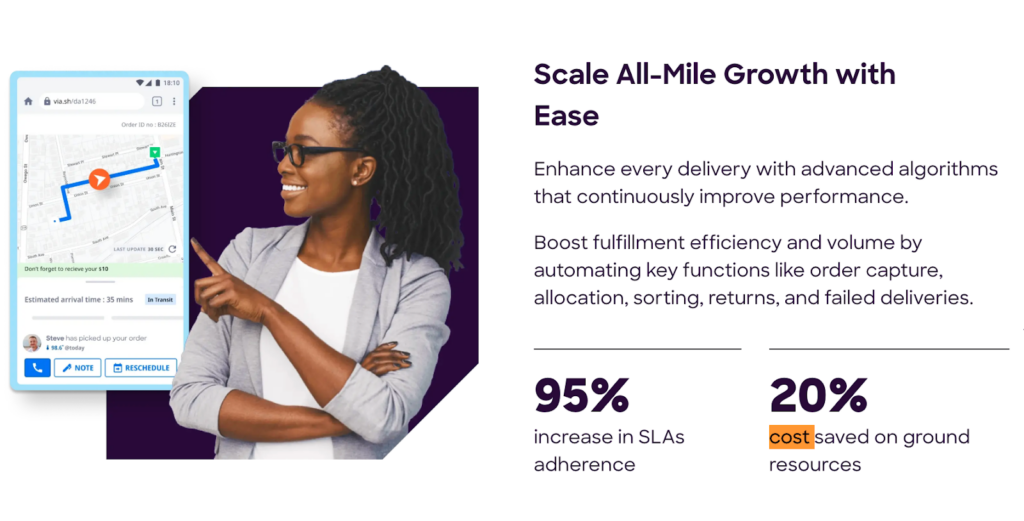
The last mile accounts for 40–50% of total shipping cost. Research highlights that cost control at this stage is now a strategic requirement.
Roles and Responsibilities in Delivery Management
Successful delivery management requires clearly defined roles and responsibilities across multiple stakeholders. Understanding these roles helps organizations structure their teams effectively.
Delivery Manager
Primary Responsibilities:
- Oversee end-to-end delivery operations and strategy
- Manage delivery budgets and cost optimization initiatives
- Analyze performance metrics and implement improvements
- Coordinate with customer service and operations teams
- Ensure compliance with delivery SLAs and quality standards
Dispatcher
Primary Responsibilities:
- Assign orders to drivers based on capacity and location
- Monitor real-time delivery progress and handle exceptions
- Communicate with drivers and customers about delivery updates
- Optimize daily routes and schedules
- Maintain delivery documentation and records
Operations Lead
Primary Responsibilities:
- Manage warehouse and fulfillment center operations
- Coordinate inventory management with delivery schedules
- Oversee order processing and preparation workflows
- Implement process improvements and automation
- Manage relationships with third-party logistics providers
Delivery Driver
Primary Responsibilities:
- Execute delivery routes efficiently and safely
- Provide excellent customer service during deliveries
- Collect proof of delivery and customer feedback
- Report delivery exceptions and issues promptly
- Maintain vehicle condition and delivery equipment
Where a Delivery Management System Fits in the Enterprise Stack
A delivery management system sits between order orchestration and on-road execution.
Typical architecture
- E-commerce platform / marketplace: creates orders and customer promises
- OMS: decides fulfilment source and release logic
- ERP: holds commercial, customer, and financial master data
- WMS or store systems: prepare and release ready-to-ship orders
- TMS: manages broader freight or carrier-planning workflows where relevant
- DMS: plans routes, assigns capacity, tracks execution, manages exceptions, and captures proof of delivery
- Telematics / GPS / fleet systems: provide location and vehicle signals
- CRM / customer-service systems: consume delivery status, ETA, and issue updates
- POD and payment systems: capture completion evidence and transaction outcomes
- BI / data warehouse: stores operational and historical delivery data for reporting
Common data flows
- Into the DMS: orders, addresses, promised windows, item or vehicle constraints, driver rosters, depot details, carrier capacity
- Out of the DMS: route plans, ETAs, delivery statuses, proof of delivery, exception events, route adherence data, completion timestamps
This matters because buyers should evaluate not only features, but also how well the DMS fits into the existing OMS, WMS, ERP, telematics, and analytics environment.
Key Features of Delivery Management Software
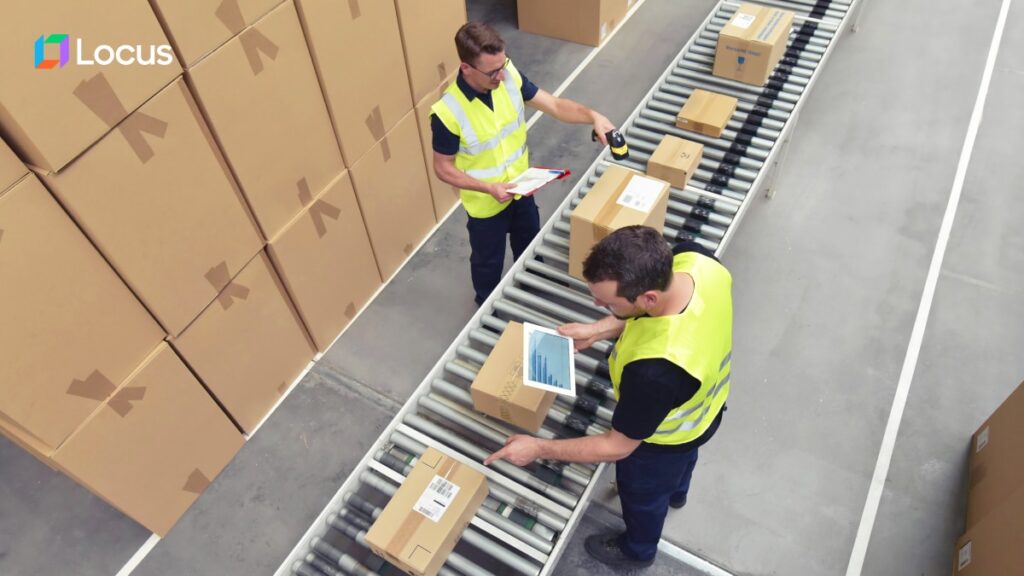
As delivery managers, you deal with many responsibilities, from managing fuel costs to analyzing workforce performance. Understanding the essential features helps guide your technology investment decisions.
Route optimization
The most critical feature to look for in a delivery management platform is route optimization. Route optimization feature calculates the accurate delivery windows and comes up with a cost-effective delivery route. Its dynamic nature helps you manage the on-time delivery targets for scheduled, on-demand and ad-hoc order requests. Also, it helps you plan routes in a way such that there are no overlaps in delivery routes.
Download whitepaper: Why Businesses Need Route Optimization
Track and Trace
A fleet tracking system ensures that you get a comprehensive view of the vehicles and their routes. Its control tower feature gives you active control to manage the fleet, check driver availability, and understand delivery requests. Providing updates on SLAs enable you to monitor on-ground activities and manage delivery exceptions before they occur.
Fleet tracking software facilitates customers to share their delivery rescheduling preferences, special delivery instructions or pass their delivery feedback. Overall, it offers greater convenience to customers and eliminates miscommunication with them.
Geocoding
Human dependencies in spotting the right address increase shipment processing time. With the help of a geocoding feature, you can avoid this issue. Geocoding engine converts the most improper and inaccurate addresses into exact geographic coordinates. You can avoid wandering around streets and fulfill orders on time by pointing out the precise customer locations.
Order management
Managing orders across different fulfillment models and hybrid fleets is grueling. Dealing with hundreds to thousands of orders daily has made order management indispensable. Through an advanced rule engine, the order management feature automates your workforce on a single unified space. Therefore, it ensures that you seamlessly manage the order lifecycle with minimal manual intervention.
Analytics and Insights
The on-ground and historical data provide you with rich analytical insights on performance gaps. Understanding these performance gaps enables you to effectively set realistic performance targets for your workforce. With its visual representation, the analytics feature helps you identify delivery errors and generate dispatch plans that address these performance gaps.
How to Measure Delivery Management Performance
Tracking the right KPIs helps you benchmark performance, identify improvement opportunities, and demonstrate ROI to stakeholders.
Key Performance Indicators (KPIs)
| KPI | Description | Industry Benchmark |
| On-Time Delivery Rate | Percentage of deliveries completed within promised timeframe | 95%+ |
| Cost Per Delivery | Total delivery cost divided by number of deliveries | $5-15 (varies by industry) |
| Failed Delivery Rate | Percentage of deliveries that fail on first attempt | <5% |
| Customer Satisfaction Score | Average rating from customer delivery feedback | 4.5+/5.0 |
| Fleet Utilization Rate | Percentage of available vehicle capacity being used | 80%+ |
Tools for Tracking Performance
- Real-time Dashboards: Monitor live performance metrics and alerts
- Automated Reports: Generate daily, weekly, and monthly performance summaries
- Customer Feedback Systems: Collect and analyze delivery experience ratings
- Predictive Analytics: Forecast performance trends and identify risks
Why Locus?
- AI-powered dispatch and route optimization
- Integrated control tower for end-to-end visibility
- Proven cost savings—reduce last-mile costs by up to 35%
- Award-winning platform (Gartner, G2 Leader)
- Trusted by Nestlé, Unilever, Bluedart, Makro, and more
Trusted by Global Leaders
Nestlé • Unilever • Bluedart • Makro • 360+ Enterprise Brands
Like the sports manager in Moneyball, you too have to compete against big names in the last-mile logistics. The investment in the right delivery management software differentiates your performance in the last mile from your competitors.
Now, you have come to the final question, “From whom should I purchase the delivery management software?”
The Locus dispatch management platform is an integrated solution that helps you perform all delivery management functions, from order management to post-delivery analysis. Its advanced machine learning algorithms ensure that you assign the right orders to fleet drivers and plan the most optimal route. Its control tower feature helps you identify the inconsistencies like SLA breaches and minimize them.
With the help of intuitive dashboards, Locus dispatch management software makes your workforce management simple and effective. Generating dispatch plans for complex circumstances and multiple real-world constraints saves your working time.
Summary & Next Steps
Ready to transform your delivery management? Book a tailored demo or download our in-depth whitepaper.
Frequently Asked Questions (FAQs)
What is a delivery management system?
A delivery management system is the process that enables the successful delivery of goods from one location to another. It involves various steps from receiving orders until they reach the customers’ hands. A delivery management software automates, streamlines, and digitalizes these end-to-end last-mile logistics processes, making delivery management possible.
Why do modern enterprises need delivery management software?
Modern customers are unforgiving when it comes to on-time deliveries and expect precision. Delivery management software provides end-to-end visibility into the last mile, helps identify exact customer locations, measures workforce performance, allocates tasks optimally, and improves route planning. This ensures customer satisfaction and efficient operations.
How does delivery management software enable end-to-end visibility?
Delivery management software provides real-time tracking of orders, vehicles, and drivers. It alerts about any delays, route deviations, or missed deliveries. This visibility allows dispatchers to monitor on-ground activities, manage exceptions proactively, and ensure timely deliveries.
How does delivery management software improve route planning?
Delivery management software factors in real-world constraints like road closures, traffic jams, and area restrictions to plan accurate routes. It optimizes routes dynamically, avoids overlaps, and alerts about potential Service Level Agreement (SLA) breaches. This ensures cost-effective and on-time deliveries.
What is the role of a delivery manager?
A delivery manager oversees end-to-end delivery operations, manages budgets and cost optimization, analyzes performance metrics, coordinates with teams, and ensures compliance with delivery SLAs. They are responsible for strategic planning and operational excellence in last-mile logistics.
What are the stages of order management?
The four main stages of order management are: 1) Order Capture (receipt and validation), 2) Fulfillment (preparation and packaging), 3) Delivery (transportation to customer), and 4) Post-Fulfillment (proof of delivery and feedback collection).
Is delivery manager a stressful job?
Delivery management can be challenging due to time-sensitive operations, customer expectations, and cost pressures. However, modern delivery management software significantly reduces stress by automating processes, providing real-time visibility, and enabling data-driven decision making. The right tools restore work-life balance while improving operational performance.
How does Locus’s delivery management platform stand out?
Locus’s dispatch management platform is an integrated solution that automates all delivery management functions from order management to post-delivery analysis. Its machine learning algorithms optimize driver-order allocation and route planning. The intuitive dashboards simplify workforce management, generate dispatch plans for complex scenarios, and restore work-life balance. Locus ensures smart, simple, and effective delivery management.


General
Last-Mile Delivery Efficiency Benchmarks: What Good Looks Like in North America (2026)

Sep 29, 2026
North American last-mile benchmarks from Capgemini, ATRI, NRF, and McKinsey: cost share, fuel, rural vs urban, returns, and where reliable data does not exist.
Read more
Workforce Empowerment
Delivery Route Planning: What It Is and How to Do It Right

Sep 29, 2026
Delivery route planning is planning cost-effective and economical routes for drivers that minimize distance and maximize deliveries.
Read moreInsights Worth Your Time



















What Is a Delivery Management System? Importance & Features