


Transportation Management System
Best Transportation Management Systems for Warehouse Operations in 2026
Key Takeaways
- A warehouse-ready TMS improves routing accuracy and reduces dock delays.
- Real-time visibility helps teams act quickly on exceptions.
- Integrations with WMS and ERP prevent data gaps during dispatch.
- Automated routing reduces empty miles and improves delivery consistency.
- Locus delivers unified routing, dispatch, and visibility to strengthen warehouse transportation performance.
Every warehouse operations leader evaluating a transportation management system ends up asking these constant questions.
- Will it reduce dock delays or create new bottlenecks?
- Can it connect to the WMS and ERP without long integration cycles?
- Will dispatchers trust it enough to stop relying on spreadsheets?
- And when outbound numbers are reviewed next quarter, will the results justify the investment?
These concerns make sense. When routing is handled manually or warehouse systems don’t share data, dispatching slows, empty miles increase, and visibility drops the moment a truck leaves the dock. You end up spending more time fixing issues than preventing them.
This guide breaks down the best transportation management systems for warehouse operations in 2026. It compares leading platforms and explains how a solution like Locus improves routing accuracy, strengthens real-time visibility, and helps warehouse teams move shipments out on schedule.
Key Features To Look For in a Transportation Management System for Warehouse
A transportation management system for warehouse operations must support accurate routing, fast dispatching, real-time visibility, strong integrations, and predictable outbound performance. Each function reduces dock delays, cuts wasted miles, and helps you move shipments out on schedule.
1. Smooth integration with existing systems
The software should connect quickly with ERP, POS, and CRM tools to keep data aligned. This prevents migration delays, duplicate entries, and gaps between systems.
2. Intelligent, automated dispatching
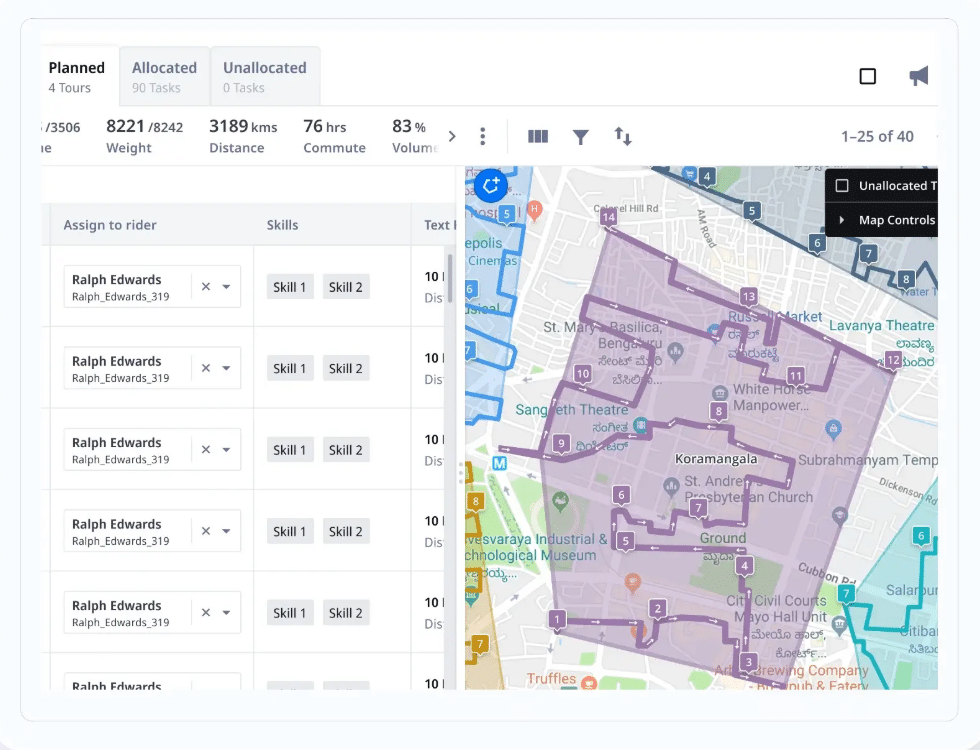
Automation assigns every order to the right driver based on distance, capacity, and urgency. It speeds up dispatch, cuts idle time, and keeps SLA performance steady.
3. Real-time visibility and control
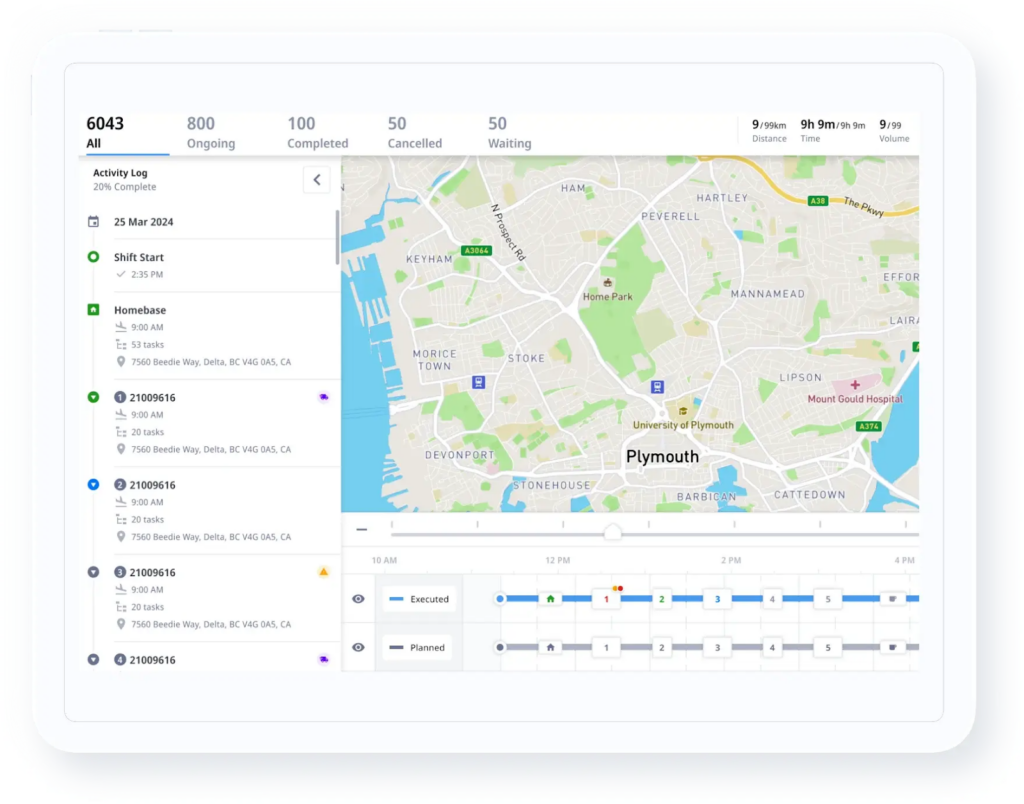
A single dashboard tracks drivers, routes, and orders live. Managers can act fast on exceptions, improve coordination, and build trust through accurate ETAs.
4. Built-in analytics for ROI tracking
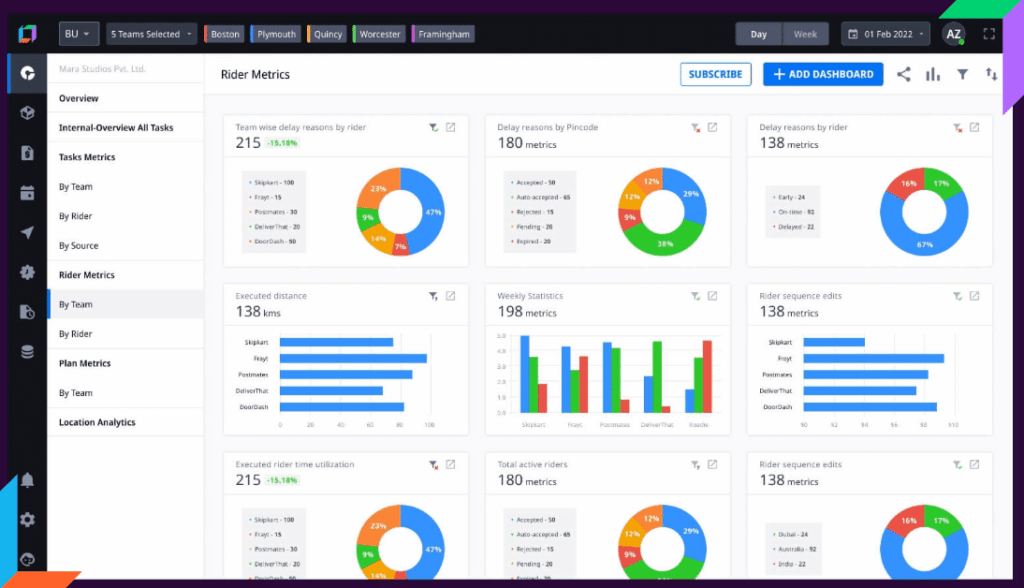
Analytics measure turnaround time, delivery cost, and fulfilment rate. They help leaders prove ROI quickly and identify where processes can improve.
5. Easy adoption for on-ground teams
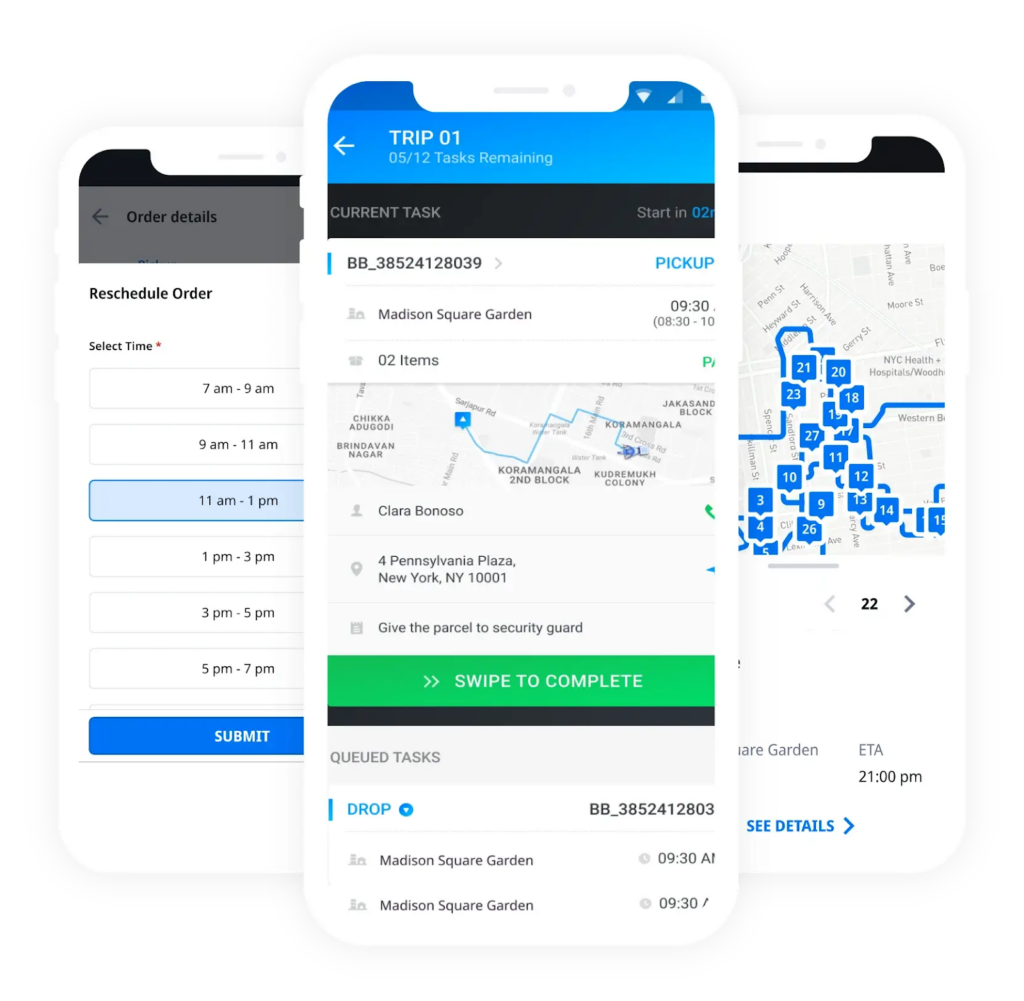
A clear, mobile-first interface helps drivers and dispatchers adapt quickly. Simple workflows encourage daily use without long training cycles.
Q: Is there a single platform that brings integration, automation, and visibility together?
A: Yes, Locus brings integration, automation, and visibility into one connected system. With seamless ERP and POS integrations, AI-based dispatching, and real-time Control Tower visibility, Locus helps enterprises manage hyperlocal deliveries with precision and confidence.
It connects data, people, and decisions, giving logistics leaders complete visibility and measurable ROI across every delivery zone.
Top 10 Transportation Management Systems for Warehouse Operations – Overview
After exploring the key features, the next question is clear:
Which platforms actually deliver on them?
Below is an overview of the top 10 transportation management systems, showing how each one performs in real-world operations across scale, visibility, and automation.
| Platform | Ideal For | Key Strengths | Routing | Pricing | Locus Edge |
|---|---|---|---|---|---|
| Locus | Enterprise warehouses | AI dispatch, real-time visibility | Advanced | Custom | Best routing + warehouse visibility |
| Blue Yonder | Global supply chains | WMS–TMS suite | Basic | Custom | Stronger warehouse outbound routing |
| Oracle TMS | Oracle ERP users | Load + order workflows | Moderate | Custom | Faster warehouse dispatch accuracy |
| Descartes | Freight + customs ops | Compliance + multimodal | Freight | Custom | Better warehouse-to-door routing |
| SAP TM | SAP ecosystems | Freight planning | Linehaul | Custom | Superior warehouse delivery routing |
| Uber Freight | Mid-market shippers | TMS + carrier network | Linehaul | Variable | More precise warehouse dispatch |
| Shipsy | Cross-border ops | Visibility + procurement | Long-haul | Custom | Stronger warehouse routing flows |
| Alpega | EU logistics | Tendering + invoicing | Basic | Custom | Higher dispatch intelligence |
| Rose Rocket | Trucking/LTL | Dispatch + driver tools | Partner-based | Subscription | Better multi-stop optimization |
| MercuryGate | 3PLs + brokers | Intermodal workflows | Freight | Custom | Dock-to-door visibility advantage |
Top 10 Best Transportation Management Software for Warehouse – Detailed Comparison
Each transportation management system supports warehouse operations differently. Some focus on freight planning, others on carrier selection, and only a few handle warehouse-level routing and dispatch needs.
Below is a breakdown of the leading platforms, their core strengths, and how they address real operational challenges inside the warehouse.
1. Locus
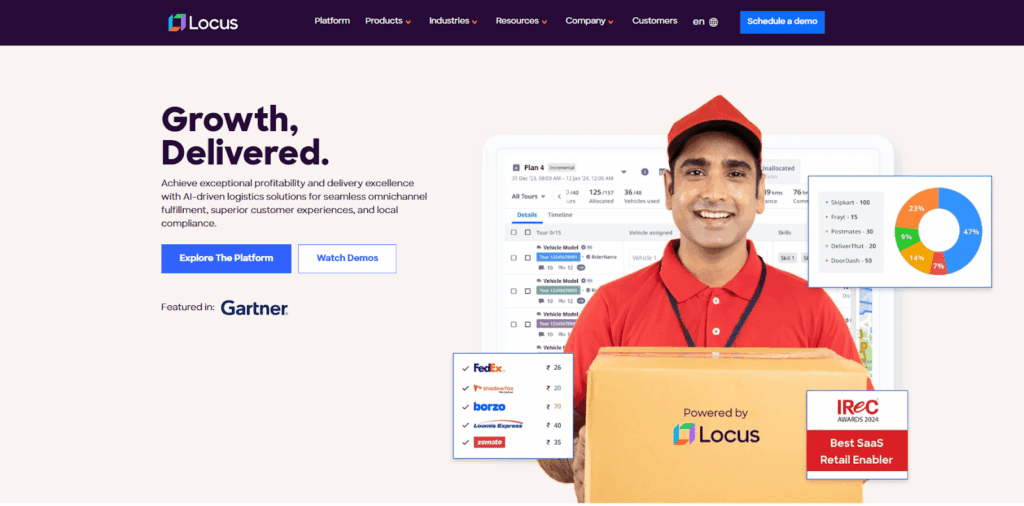
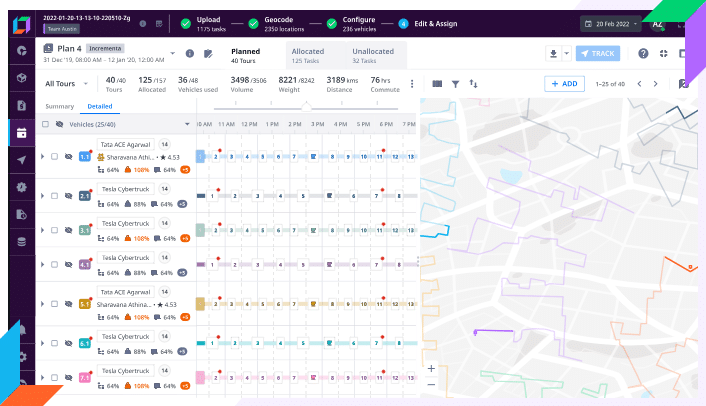
Locus is an agentic transportation management system designed for enterprises managing high-density deliveries across complex geographies. It combines real-time orchestration with automated dispatch, predictive insights, and multi-modal delivery optimization, built to support both middle-mile and last-mile workflows at scale.
Features of Locus
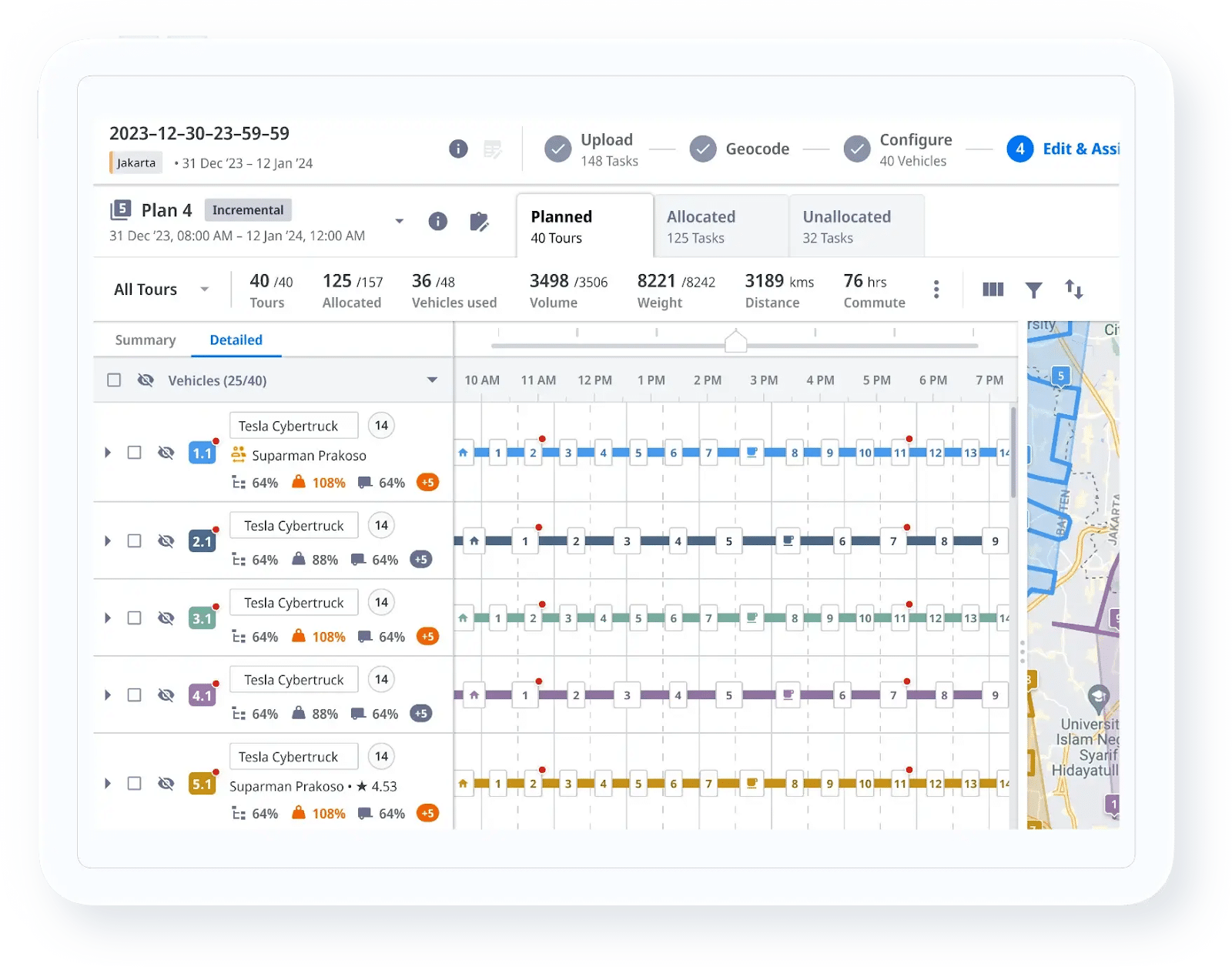
- Auto-dispatch engine: Allocates deliveries using configurable business logic and fleet capacity.

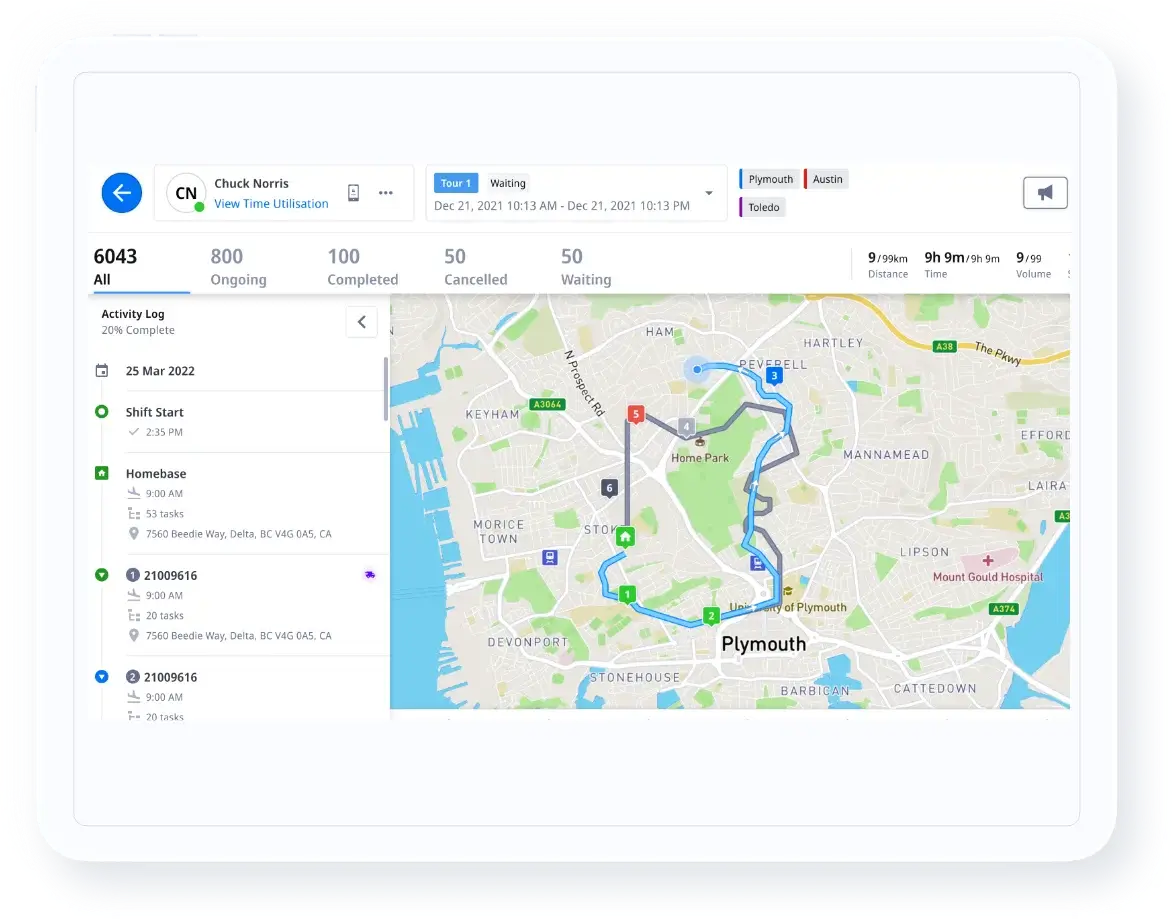
- Real-time Control Tower: Monitors active shipments with dynamic alerts for exceptions and delays.

- Dynamic route optimization: Adjusts based on delivery priorities, traffic, and SLA constraints.

- Smart rider reassignment: Reallocates tasks in response to failed deliveries or last-minute changes.
- Returns and reverse logistics: Automates failed delivery handling and reattempt scheduling.
- ERP/WMS integration: Connects with SAP, Oracle, and legacy systems using robust APIs.
- Carbon tracking and emissions reporting: Measures CO? per route for ESG and compliance reporting.
Suggested read: How Supply Chains can Reduce Carbon Footprint with Logistics Planning Software
Why Locus
Core platform modules
- DispatchIQ — dispatch planning and order-to-driver assignment, dispatch-ready plans in ~2 minutes
- Fireworks — the routing engine, optimising against 250+ real-world operating constraints
- ShipFlex — multi-carrier execution across a 1,000+ pre-integrated carrier network
- Control Tower — consolidated visibility and exception management across owned, contracted and carrier movements
- Transporter Management — contract lifecycle, rule-based allocation on cost/speed/zones/contract/performance, and invoice reconciliation
- Capacity Management — committed vs available capacity planning
- Driver Companion App — first-party driver execution and position feed
- Settlement — freight audit and automated reconciliation
Agentic layer
- SDEL loop — Sense, Decide, Execute, Learn, running continuously
- 8 agents — Capacity, Carrier, Dispatch, Hub, Customer, Settlement, Orchestrator, Mycroft
- DiSCO — the decision-intelligence framework underneath
- 12M+ automated decisions a day
Governance (six mechanisms)
- Explainability — decisions are interpretable
- Traceability — trigger, context, reasoning, action, outcome recorded per decision
- Evaluation — model performance is measurable
- Autonomy Levels — L1 human approval, L2 guardrailed, L3 autonomous, configurable per agent and per domain
- Execution Sandbox — changes tested against live volume before production
- Human Review — explicit escalation pathways
Scale and proof
- 1.5B+ deliveries optimised, 360+ enterprise customers, 30+ countries
- $320M+ in documented client logistics savings, 99.99% uptime
- Route planning outcomes: up to 34% fewer miles, 25% higher drop density, 28% fewer trips, up to 90% fleet utilisation
Locus Is Best for
Retail chains, FMCG, CPG,manufacturers, 3PL providers, and e-commerce businesses operating across regions with high delivery density and fragmented logistics infrastructure.
To explore how Locus optimizes last-mile operations for retail and e-commerce businesses, read the article on its dispatch management enhancements for last-mile logistics, featured by ManufacturingToday.
Locus Pricing
Pricing is based on delivery volume, regional coverage, and system integrations.
Book a personalized demo to get a tailored quote.
2. Blue Yonder
Blue Yonder provides an integrated TMS as part of its larger supply chain execution suite, used by enterprises looking to align transportation planning with inventory, demand, and warehouse operations.
It supports predictive planning and real-time transportation optimization across global networks.
Features of Blue Yonder
- Multimodal optimization: Plans and consolidates shipments across air, ocean, and ground.
- Demand-driven transportation planning: Aligns transport operations with forecasted inventory needs.
- WMS-TMS integration: Seamlessly connects warehouse and transport systems for unified execution.
- Network modeling tools: Simulates cost, route, and carrier scenarios for long-term planning.
- Freight settlement automation: Validates invoices and reconciles carrier payments.
Blue Yonder Is Ideal for
Manufacturers, large retailers, and distribution networks require synchronized planning across warehousing, transportation, and demand forecasting.
Blue Yonder Pricing
Offered through enterprise licensing. Pricing varies based on solution scope, deployment model (cloud/on-premise), and user volume.
3. Oracle Transport Management System (OTM)
Oracle Transportation Management is a cloud-based solution integrated with Oracle’s broader supply chain suite. It supports complex, high-volume shipping operations across global and domestic networks, offering deep planning, execution, and analytics functionality.
Features of Oracle
- Multi-leg shipment planning: Optimizes long-haul and last-mile routes within the same workflow.
- Freight cost management: Tracks, predicts, and reconciles transportation spend across carriers.
- Carrier contract and rate control: Manages rate agreements and automates comparisons.
- Shipment visibility and tracking: Monitors transport events, ETA deviations, and delivery status.
- ERP integration: Connects natively with Oracle Fusion and other SCM modules.
Oracle Is Ideal for
Enterprises using Oracle ERP or managing high-throughput, global logistics operations across multiple transport modes.
Oracle Pricing
Enterprise-level pricing, typically packaged with Oracle Cloud Supply Chain modules. Licensing varies based on shipment volume and features activated.
4. Descartes Systems Group

Descartes offers a comprehensive TMS suite tailored to freight brokers, customs operations, and international logistics providers. Its platform focuses on compliance automation, multimodal visibility, and freight documentation across borders.
Features of Descartes
- Customs and trade compliance: Automates import/export documentation and regulatory workflows.
- Multimodal shipment visibility: Tracks air, ocean, and ground freight movements in real time.
- Carrier and freight management: Manages spot bookings, capacity, and documentation.
- Audit and freight settlement: Verifies invoices and identifies charge discrepancies.
- Global EDI and messaging: Enables seamless communication with partners and customs agencies.
Descartes Is Ideal for
Freight forwarders, customs brokers, and multinational shippers managing cross-border logistics and regulatory complexity.
Descartes Pricing
Pricing is tiered based on selected modules and transaction volume. Custom quotes are available for enterprise-scale deployments.
5. SAP Transportation Management (SAP TM)
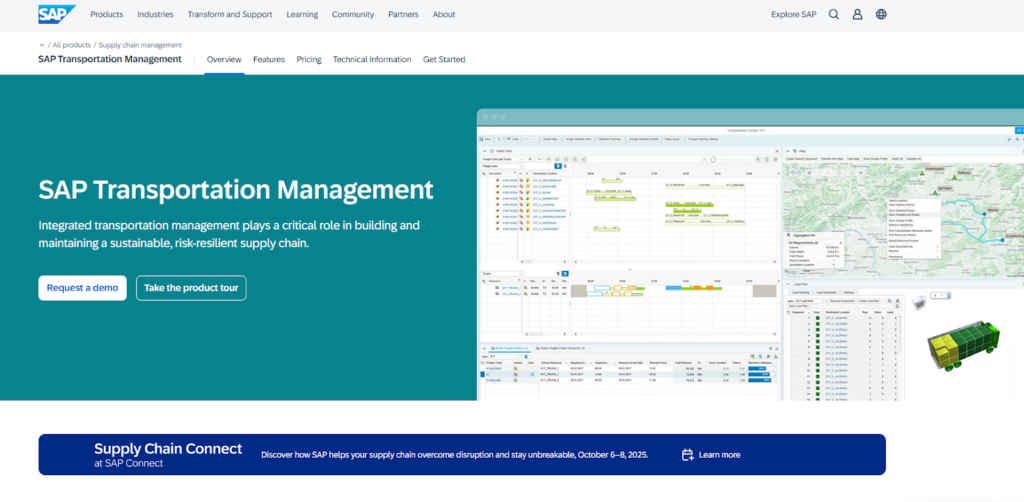
SAP TM is part of the SAP S/4HANA suite and enables integrated transportation planning, execution, and settlement for organizations already operating within the SAP ecosystem. It centralizes transport-related workflows while maintaining alignment with upstream procurement, warehousing, and finance processes.
Features of SAP TM
- Embedded freight planning: Plans full truckload, less-than-truckload, and multi-leg shipments.
- Freight charge calculation and settlement: Automates cost allocation and invoice validation.
- Order and delivery integration: Links transport plans with customer orders and warehouse execution.
- Carrier selection and tendering: Supports spot bidding and contracted rate use.
- Control Tower and tracking: Provides real-time visibility across lanes and shipments.
SAP TM Is Ideal for
Global enterprises using SAP S/4HANA that require transport functionality tightly linked to finance, procurement, and warehouse operations.
SAP TM Pricing
Available as an add-on license within SAP’s modular pricing model. Total cost depends on transaction volume and integration complexity.
6. Uber Freight
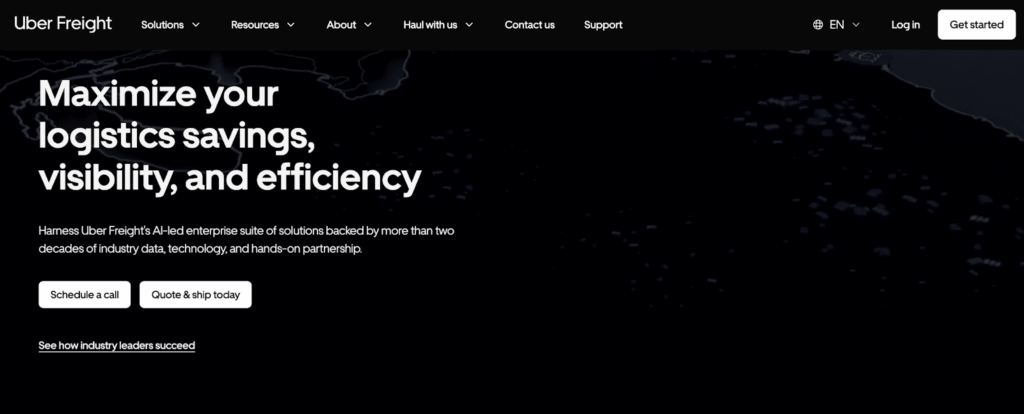
Uber Freight offers a technology-led transportation platform that combines a TMS, a large carrier network, managed transportation services, and AI-driven logistics tools. It supports shipment planning, execution, visibility, and payment workflows, making it suitable for shippers that want both software and operational support.
The system connects procurement, routing, tracking, and analytics in one interface while using data from millions of annual shipments to improve decision-making.
Features of Uber Freight
- End-to-end transportation planning: Manages shipment creation, routing, tendering, and tracking from a central system.
- AI-powered decision support: Uses logistics data and predictive models to improve routing choices, cost allocation, and lane planning.
- Carrier network access: Connects shippers to one of the largest carrier networks for truckload, LTL, intermodal, and cross-border moves.
- Freight audit and payment: Automates invoice validation, cost checks, and financial reconciliation.
- Control Tower visibility: Provides real-time tracking, exception alerts, and lane performance insights across all shipments.
- Parcel TMS & multimodal coverage: Supports parcel, truckload, intermodal, and cross-border workflows inside the same platform.
Uber Freight Is Ideal for
Shippers in retail, CPG, manufacturing, and automotive sectors that need transportation planning with optional managed services, strong analytics, and access to a large carrier network.
Uber Freight Pricing
Pricing varies based on shipment volume, service model (software only or software plus managed transportation), and required integrations.
7. Shipsy
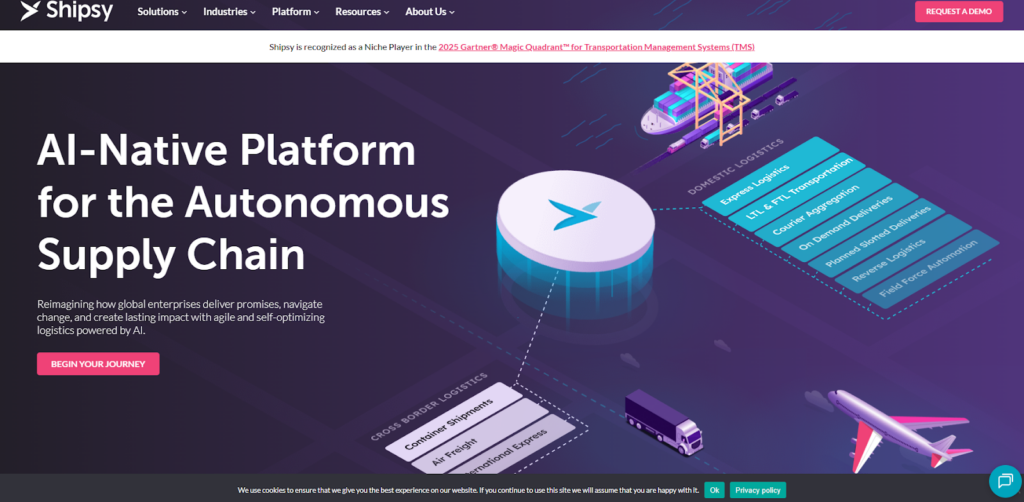
Shipsy is an AI-powered logistics platform that helps businesses automate and optimize their supply chain operations. From route optimization to shipment tracking, Shipsy integrates end-to-end logistics workflows, driving efficiency, sustainability, and cost savings.
Key Features of Shipsy:
- Route optimization and planning: AI tools boost fleet capacity and cut delivery delays across all shipment stages.
- Shipment tracking and visibility: Real-time monitoring across 50+ shipping lines and 40+ 3PLs with proactive delay alerts.
- Freight procurement: AI-driven vendor negotiations and rate benchmarking reduce freight spend.
- Real-time notifications: Automated customer updates improve first-attempt delivery rates.
Shipsy Is Ideal for
Shipsy is ideal for manufacturers and retailers that need complete visibility and real-time tracking for domestic and international shipments, as well as 3PLs and courier companies managing complex, multi-carrier logistics that require precise route optimization and unified control.
Shipsy Pricing
Shipsy offers a tailored pricing model based on the business needs and scope of integration. Interested businesses can contact Shipsy for a demo and detailed pricing information.
8. Alpega TMS
Alpega and E2open offer modular TMS platforms tailored to shippers, freight forwarders, and carriers operating in Europe and other regulated markets. The system emphasizes freight procurement, tendering, and invoice reconciliation across diverse partner networks.
Features of Alpega
- Freight tendering tools: Digitizes bid management across contracted and spot carriers.
- Carrier collaboration portal: Enables real-time updates, status sharing, and document exchange.
- Invoicing and audit automation: Matches invoices with delivery data for reconciliation.
- Modular deployment: Allows companies to adopt only the features they need.
- Load planning and execution: Optimizes shipments across multiple orders and destinations.
Alpega Is Ideal for
European freight shippers, forwarders, and carriers seeking control over procurement and invoicing across large carrier networks.
Alpega Pricing
Subscription-based pricing varies by module and deployment size. Entry-level and enterprise packages available.
9. Rose Rocket
Rose Rocket is a cloud-based TMS built specifically for trucking companies and LTL carriers. Its interface prioritizes usability, with tools for dispatchers, drivers, and customers to manage freight from booking through delivery, all in one platform.
Features of Rose Rocket
- Dispatch management board: Centralizes trip creation, assignment, and real-time status updates.
- Customer portal: Allows shippers to book loads, track freight, and retrieve documents.
- Mobile driver app: Enables POD capture, real-time communication, and route details.
- Billing and invoicing tools: Automates rate calculations and invoice generation.
- Load board integration: Connects with external marketplaces to fill backhauls or gaps.
Rose Rocket Is Ideal for
Small to mid-sized carriers, regional trucking businesses, and LTL providers seeking modern tools without enterprise-level complexity.
Rose Rocket Pricing
Starts at $99/month with tiered plans based on the number of users and required modules.
10. MercuryGate TMS

MercuryGate delivers a multimodal transportation management system used by 3PLs, freight brokers, and carriers managing complex logistics networks. The platform supports high-volume, multi-leg shipments with built-in optimization and event management tools.
Features of MercuryGate
- Intermodal route planning: Supports truckload, LTL, parcel, rail, and ocean transport.
- Carrier booking and rate management: Compares rates and books shipments across providers.
- Event monitoring: Tracks delivery exceptions and triggers automated responses.
- Load consolidation engine: Groups shipments for cost-effective execution.
- Self-service portals: Allows carriers and customers to interact with shipments in real time.
MercuryGate Is Ideal for
Third-party logistics providers, freight brokers, and large shippers coordinating multi-leg transportation across global lanes.
MercuryGate Pricing
Custom pricing based on number of modes used, shipment volume, and platform configurations. Enterprise quotes available on request.
Turn Your Warehouse Transportation Into a High-Performing Operation with Locus
Warehouse transportation should drive reliability, speed, and customer confidence. Locus helps you strengthen warehouse operations by using AI-powered routing, automated dispatching, and real-time visibility to remove the delays that slow outbound movement.
Instead of relying on manual routing or disconnected systems, your teams get a unified platform that improves accuracy and keeps every shipment on schedule.
For retail, FMCG, 3PL, and distribution networks handling high outbound volumes, Locus brings order to the complexity. It connects with your existing WMS and ERP, provides ground-level visibility through the Control Tower, and supports fast decision-making when priorities shift.
With predictive insights, you can reduce empty miles, increase route efficiency, and maintain consistent dispatch performance even as demand fluctuates.
See how Locus fits your warehouse transportation workflows. Schedule a demo today.
Frequently Asked Questions (FAQs)
1. What does a transportation management system do for a warehouse?
A TMS helps plan routes, assign shipments, track drivers, and coordinate outbound movement so warehouse teams dispatch faster and avoid delays.
2. Do warehouses need both WMS and TMS?
Yes. WMS manages storage and picking, while TMS handles routing, dispatching, and transportation visibility. Together, they prevent bottlenecks between order readiness and outbound movement.
3. How long does it take to implement a TMS?
Implementation can take a few weeks to a few months depending on integrations, workflows, and data migration.
4. Can a TMS help reduce transportation costs?
Yes. Better routing, fewer empty miles, and smarter dispatch decisions directly lower transportation spending.
5. Is there a TMS that supports both warehouse operations and last-mile routing?
Yes. Platforms like Locus connect warehouse dispatch, routing, and real-time visibility in one system, helping teams manage outbound transportation more accurately.


General
10 Best routing and dispatching software solutions in 2026

Sep 11, 2026
Discover the best courier software providers in 2025. Compare top 10 solutions and see why Locus is the best choice for enterprises.
Read more
General
An Ultimate Guide to Smart 3PL Delivery Orchestration for Enterprise Logistics Leaders & 3PL Operations Teams

Sep 11, 2026
Learn how 3PL delivery orchestration improves control, cost efficiency, and performance. Explore how Locus helps enterprises orchestrate logistics at scale.
Read moreInsights Worth Your Time



















Best Transportation Management Systems for Warehouse Operations in 2026