


Retail & CPG
Mastering the Unexpected: Four Essential Tactics to Handle Unpredictable Events in Retail
Key Takeaways
- Supply chain disruptions significantly impact retail operations, with 59% of retailers increasing prices and 36% taking margin hits to manage these challenges.
- Weather, routing complexities, hub operations, carrier reliability, and returns management represent major unpredictable challenges that can severely impact delivery schedules.
- Automated hub operations and smart sorting systems significantly reduce human error in package handling, leading to fewer delivery disruptions and smoother logistics operations.
- Locus’s route optimization platform manages over 180 real-world constraints while providing real-time tracking and deviation alerts, enabling retailers to maintain service level agreements despite disruptions.
The vastness of the supply chain can often feel as overwhelming as the ocean’s expanse. And just like the ocean’s unpredictable nature, sudden disruptions within the supply chain are similarly difficult to forecast. This is especially true for retailers, who bear the brunt of customer frustrations when delivery expectations aren’t met.
And it does translate to serious business losses. As per research by supply chain dive, 59% of retail participants that were surveyed told that they would hike pricing to mitigate impact from supply chain disruptions and 36% said they were taking a margin hit to keep price levels.
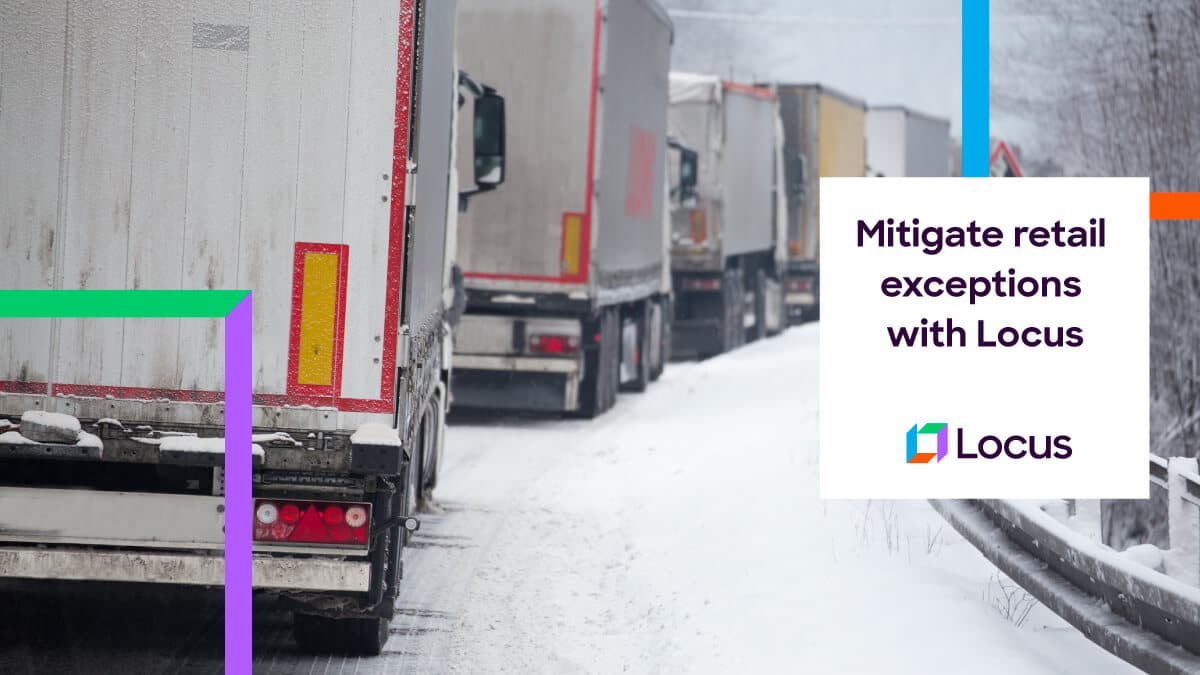
One of the most formidable and unpredictable forces that impact delivery schedules is the weather. Combine this with routing, shipping, and other logistical exceptions, and you’ve got yourself a veritable storm of potential setbacks, including:
Routing Exceptions: Gone are the days of simple, static routing. Urban sprawl, unpredictable traffic conditions, ever-changing, complicated road laws, and the increasing consumer demand for rapid delivery have rendered traditional methods ineffective. Today’s dynamic environments require adaptable routing strategies to keep pace and minimize disruptions.
Read also: Why Do Businesses Need Route Optimization?
Hub Operation Exceptions: Manually sorting packages at warehouses, and fulfillment and distribution centers by various criteria (zip code, package size, or vehicle type) can result in errors, especially as order volumes scale. The more packages moving through, the higher the likelihood of mistakes, leading to costly shipping delays.
Carrier Exceptions: Retailers often have a roster of go-to carriers, but what happens when a transporter backs out at the last minute? Such incidents not only disrupt operations but also directly impact customer perceptions of reliability and promptness.
Returns-Related Exceptions: Returns are a given in retail, yet predicting their volume and managing them efficiently remains a challenge. Inadequate returns processes can lead to delayed deliveries, increased costs, and a tarnished customer experience.
So, how can retailers effectively manage these unpredictable scenarios to safeguard customer satisfaction and reduce operational costs? The answer lies in technology. As we’ve seen time and again, technology stands at the forefront of solving complex challenges. For the logistics sector, embracing cutting-edge solutions is not just beneficial; it’s essential for simplifying these complexities and enhancing overall efficiency. The right solutions can enable:
Route Optimization
Route optimization is a game-changer. Take smart route planning software systems like Locus, for instance. They handle dynamic routing by juggling over 180 real-world constraints to navigate all the on-ground challenges, ensuring timely deliveries with minimal hiccups. If there’s a route breach, it doesn’t go unnoticed. Dispatchers get the heads up to re-optimize or correct deviations via the platform and the same reflects on the drivers’ application, keeping everything tight and aligned with service level agreements.
Streamlined Returns Management
With Artificial Intelligence (AI) and Machine Learning (ML) at the helm, dispatch management platforms like Locus aren’t just about routing efficiently—they’re about smarter vehicle space utilization too. They ensure that vehicles are perfectly sized for returns, merging forward and reverse logistics seamlessly so that no extra vehicles hit the road unnecessarily, all while safeguarding existing delivery commitments.
Shipping With Reliable Carriers in a Jiffy
Comprehensive dispatch management systems come with a built-in carrier management system that’s ready to tackle this challenge head-on. With systems like ShipFlex, retailers can tap into a broad carrier network, leveraging smart rule-based automation to quickly assign orders to carriers and track them just as effectively as captive deliveries.
Automation of Hub Operations
When you automate sorting, scanning, and loading at the hub, you drastically cut down on human error. Everything gets placed in the right vehicle, headed for the right zone, with minimal manual intervention—resulting in fewer slip-ups and smoother operations.
Sure, the retail supply chain will always have its fair share of curveballs, and it’s impossible to predict where they might come from. But with these advanced tools and strategies, retailers are better equipped than ever to turn potential pitfalls into opportunities for customer satisfaction and profitability. It’s not just about fighting fires—it’s about preventing them or being ready for them in the first place, ensuring smooth sailing even in the choppiest waters.


General
5 Reasons Why RFPs Help in Selecting the Right Logistics Technology Platform For Your Enterprise-Level Business

Apr 26, 2024
Key Takeaways More and more companies are looking to digitalization of their end-to-end logistics operations for high efficiencies at optimal costs. The next step involves finding the right partner for this journey. However, with a wide variety of dispatch management, transportation management (TMS), or logistics software providers, this makes the selection process quite challenging. While […]
Read more
Logistics Software
10 Best Retail Software Companies in India

May 14, 2024
TL;DR – Executive Summary India’s retail software market is rapidly evolving with AI-powered platforms leading the transformation. Locus stands out as the comprehensive solution for enterprises, offering 25% cost savings and 95% SLA adherence through advanced automation. This guide covers the top 10 platforms helping Indian retailers optimize operations from inventory to last-mile delivery. Key […]
Read moreInsights Worth Your Time




















Mastering the Unexpected: Four Essential Tactics to Handle Unpredictable Events in Retail