


Logistics Software
Top Reverse Logistics Companies & Software Solutions of 2026
Key Takeaways
- Reverse logistics is now a strategic imperative for global enterprises. Efficient orchestration of returns, repairs, recycling, and disposal directly impacts profitability and customer retention.
- The global reverse logistics market exceeded $872.6 billion in 2025 and is on track to surpass $936 billion in 2026, with retail returns alone projected at $890 billion — making fraud prevention and cost efficiency non-negotiable.
- Enterprise-grade AI-powered orchestration separates leaders from laggards. Brands that simplify returns (Target, IKEA) gain loyalty; those with restrictive or manual processes risk revenue loss.
- Locus stands out as the leading reverse logistics platform for 2026, trusted by 360+ global companies for AI-driven automation, real-time visibility, and scalability across complex, multi-region operations.
For global enterprises managing tens of thousands of returns monthly, reverse logistics — encompassing returns, repairs, recycling, and disposal — has evolved from a back-office nuisance into a board-level strategic priority. Unlike traditional outbound logistics, reverse logistics orchestrates the inbound flow of goods back through the supply chain, and doing it poorly carries severe financial and reputational consequences.
The reverse logistics market exceeded USD 872.6 billion in 2025, and is projected to reach USD 1.75 trillion by 2035 at a 7.3% CAGR. At the same time, Gartner reports that many retailers now see return values growing faster than sales, with returns fraud surging nearly 400% since 2018 in the U.S. These dynamics make efficient, AI-powered reverse logistics orchestration essential to control costs, prevent fraud, and protect customer loyalty at scale.
Some brands have responded by tightening return policies — a move that risks customer churn. Others, like Target with its drive-up returns and IKEA with extended returns for Family members, have turned their reverse logistics infrastructure into a competitive advantage, making returns seamless and even loyalty-building. A strong Reverse Logistics Strategy is now a mandatory requirement for enterprises seeking sustained growth.
This guide examines the leading reverse logistics companies and software solutions for 2026, detailing the capabilities, market positioning, and enterprise fit of each — so you can make a data-driven decision on the right partner for your operations.
Editorial Methodology
Last reviewed: September 2026
Geography covered: Global, with emphasis on enterprise and multi-region reverse logistics requirements
Provider categories included: reverse logistics 3PLs, parcel/carrier networks, returns-management platforms, recommerce/disposition providers, reverse pickup and routing software, and enterprise logistics orchestration platforms
Excluded from “like-for-like” comparison: vendors that only solve one narrow task without broader reverse logistics relevance
How we evaluated providers
We assessed providers on:
- Reverse-logistics scope
- Geographic coverage
- Enterprise scalability
- Industry fit
- Software depth
- Dispatch and routing capabilities
- Integration readiness
- Visibility and analytics
- Sustainability support
- Physical processing capability
- Implementation complexity
- Pricing transparency
Important disclosure
This is a vendor-owned page and includes Locus. Locus is included because it is relevant to reverse pickup orchestration and last-mile reverse movement coordination. It should not be treated as a physical reverse logistics 3PL unless paired with one.
How to read this guide
- Company-reported claims are treated as vendor positioning unless independently verified.
- Editorial fit reflects operational use cases, not a universal “best” ranking.
- Market figures differ by source because definitions of reverse logistics vary across transport, warehousing, returns software, asset recovery, and circular-economy services.
- Update cadence: this guide should be reviewed quarterly during 2026 as network footprints, integrations, pricing approaches, and market conditions change.
The Reverse Logistics Market in 2026: Scale, Growth, and Strategic Urgency
The reverse logistics industry has entered a period of accelerated growth driven by rising e-commerce return rates, tightening sustainability regulations, and mounting pressure on enterprise margins.
Market Size and Projections
| Metric | Value | Source |
| Global Market Size (2025) | USD 872.6 billion | Global Market Insights |
| Projected Market Size (2026) | USD 936 billion | Global Market Insights |
| Projected Market Size (2030) | USD 1.04 trillion | Research and Markets |
| Projected Market Size (2035) | USD 1.75 trillion | Global Market Insights |
| CAGR (2026–2035) | 7.3% | Global Market Insights |
| U.S. Retail Returns (2024) | $890 billion | NRF |
Regional Dynamics
North America remains the largest regional market for reverse logistics, driven by the sheer volume of e-commerce returns and mature logistics infrastructure. Meanwhile, Asia Pacific is the fastest-growing region, fueled by surging online retail adoption and expanding cross-border commerce.
Market Consolidation
The top seven reverse logistics companies — Deutsche Post DHL, UPS, FedEx, C.H. Robinson, Yusen Logistics, Kintetsu World Express, and NFI Industries — accounted for 19.2% of the market in 2025. However, specialized technology providers are capturing high-margin segments through AI-powered orchestration, reCommerce capabilities, and industry-vertical expertise.
For enterprise supply chain leaders, these figures underscore a critical reality: reverse logistics is no longer a cost center to be minimized — it is a strategic function that demands purpose-built technology and an experienced partner.
What Type of Reverse Logistics Company Do You Need?
Many buying teams fail because they compare unlike-for-like vendors. Start by identifying which of these categories matches your bottleneck.
1. Reverse logistics 3PL
Choose this model when you need physical receiving, inspection, warehousing, repair, refurbishment, product disposition, or compliant disposal. This is the right fit when labour, facilities, and operating processes are the main challenge.
2. Parcel or carrier network
Choose this when transportation coverage is the priority — especially parcel returns, label generation, cross-border shipping, customs handling, and backhaul coordination.
3. Returns-management platform
Choose this when the gap is customer-facing workflow: return merchandise authorisation, rules-based approvals, exchanges, refunds, notifications, policy enforcement, and self-service return portals.
4. Disposition or recommerce platform
Choose this when the main objective is recovery value: resale, liquidation, recycling, remanufacturing, end-of-life handling, or circular-economy programmes.
5. Dispatch and route optimisation platform
Choose this when the biggest issue is reverse pickup execution: slot selection, driver assignment, capacity planning, dynamic routing, proof of pickup, failed collections, and reverse-mile reduction.
6. Enterprise logistics orchestration platform
Choose this when you already have carriers, 3PLs, stores, warehouses, or mixed fleets — but lack one control layer for dispatch automation, tracking, exception management, performance reporting, and SLA governance across the network.
When to choose a 3PL vs software vs a hybrid model
- Choose a 3PL if physical processing is the bottleneck.
- Choose software if you want to retain operational control but automate decision-making, routing, visibility, and reporting.
- Choose a hybrid model if you need both outsourced handling and tighter orchestration. This is often the strongest model for enterprises with complex geographies, bulky returns, or multiple carriers and fulfilment nodes.
Other providers often considered in enterprise evaluations include C.H. Robinson, Yusen Logistics, Kintetsu World Express, NFI Industries, CEVA Logistics, DSV, DB Schenker, Kuehne+Nagel, Ryder, GEODIS, Narvar, Loop Returns, ReturnLogic, ClickPost, WeSupply Labs, Inmar Intelligence, and goTRG.
7 Critical Factors for Selecting an Enterprise Reverse Logistics Partner
Consumer expectations shift constantly. Enterprise logistics leaders must select a reverse logistics partner who is flexible, technologically advanced, and aligned with the scale and complexity of global operations.
73% of global shoppers will not purchase from a retailer they don’t trust for delivery, and 75% feel the same about returns providers. Additionally, 53% of shoppers believe that free returns would significantly enhance their shopping experience. These figures confirm that reverse logistics capability directly influences revenue and brand perception.
1. Expertise and Experience
Total returns for the retail industry are projected to reach $890 billion in 2024, a figure that reflects the complexity of managing reverse flows at scale. Partner with providers who bring deep industry knowledge and can address sector-specific challenges effectively.
- Industry Specialization: Deep knowledge of your product category and market — whether retail, FMCG, pharmaceuticals, or electronics.
- Track Record: Proven enterprise deployments and quantifiable results, not just testimonials.
2. Scalability and Flexibility
As your business grows, so will your returns. Select a provider that can scale with your business and handle seasonal peaks without degrading performance or inflating costs.
- Adaptability: Ability to manage fluctuating return volumes — from 10,000 to 100,000+ returns per month — especially during peak seasons.
- Scalability: Capacity to expand services across new regions, channels, and product categories as the enterprise grows.
3. Comprehensive Service Offerings
Your reverse logistics provider should offer a full spectrum of solutions that cover the entire returns lifecycle:
- Returns Processing: Receiving, sorting, inspecting, and dispositioning returns at speed.
- Refurbishment and Repair: Capability to handle product repairs and refurbishment for resale or secondary markets.
- Recycling and Disposal: Sustainable solutions for recycling or disposal that align with ESG commitments.
- Transportation Management: Efficient, cost-effective logistics handling that minimizes reverse miles.
4. Technology and Infrastructure
Your reverse logistics partner must deliver enterprise-grade technology that integrates seamlessly with existing systems and provides actionable visibility:
- Returns Management System (RMS): Real-time tracking, advanced analytics, and native integration with ERP, WMS, and OMS platforms.
- AI and Automation: Machine-learning-driven disposition decisions, automated authorization workflows, and predictive analytics to reduce manual shipment processes.
- Physical Infrastructure: Robust warehousing, secure facilities, and a reliable transportation network for handling returns efficiently across regions.
5. Customer Service and Communication
Effective communication with your reverse logistics partner is essential for smooth operations. Ensure that the provider offers:
- Proactive Communication: Timely updates and prompt issue resolution with dedicated escalation paths.
- Dedicated Support: A dedicated account manager to simplify coordination and ensure SLA adherence.
- Service-Level Agreements (SLAs): Clearly defined performance expectations such as processing times, accuracy rates, and turnaround benchmarks.
6. Cost and Value
While cost is important, it should never compromise quality or capability. Evaluate the total return on investment (ROI), considering impact on customer satisfaction, operational efficiency, and sustainability goals.
- Transparent Pricing: Clear, predictable cost models without hidden fees.
- Tangible Value: Measurable outcomes — increased customer loyalty, reduced cost-per-return, and positive brand reputation. Learn more about sustainable last-mile logistics for ROI.
7. Sustainability Practices
As ESG requirements tighten and sustainability becomes central to supply chain strategy, ensure that your reverse logistics partner aligns with your environmental goals. Prioritize partners committed to Green Logistics practices:
- Sustainable Disposal: Emphasis on recycling, refurbishment, and minimizing landfill waste.
- Eco-Friendly Packaging: Use of environmentally responsible materials in return processing.
- Carbon Footprint Reduction: Route optimization and consolidation that reduces emissions across reverse supply chains.
By evaluating these seven factors through an enterprise lens, logistics leaders can select a reverse logistics partner that drives operational efficiency, reduces costs, and strengthens customer satisfaction at scale.
Software vs Outsourcing Decision Matrix
| Decision factor | Reverse logistics 3PL | Software platform | Hybrid model |
| Need for physical receiving, inspection, or repair | Strong fit | Weak fit | Strong fit |
| Need for operational control | Moderate | Strong | Strong |
| Need for customer-facing return portal | Varies | Strong | Strong |
| Multi-carrier or multi-fleet complexity | Moderate | Strong | Strong |
| High-volume reverse pickup scheduling | Moderate | Strong | Strong |
| Cross-border compliance | Strong with right network | Moderate | Strong |
| Internal logistics capability | Lower requirement | Higher requirement | Moderate |
| Integration complexity | Moderate | Higher upfront | Higher upfront, higher long-term control |
| Speed to outsource processing | Strong | Weak | Moderate |
| Best fit for enterprises | When facilities and labour are bottlenecks | When visibility and orchestration are bottlenecks | When both are true |
Practical guidance: Many enterprise teams end up with a hybrid model: a 3PL or carrier network for physical handling, a returns-management layer for RMAs and customer workflows, and an orchestration platform for dispatch automation, reverse routing, visibility, and KPI governance.
Where Reverse Pickup Software Fits in the Reverse Logistics Workflow
Reverse logistics does not begin in the warehouse. For many enterprises, the real operational failure starts earlier — at pickup scheduling, capacity allocation, and field execution.
Core reverse pickup workflows to evaluate
- Pickup windows: Offer collection slots that reflect real fleet capacity
- Pickup scheduling: Coordinate home, store, locker, branch, and business-location returns
- Driver assignment: Match jobs to the right fleet, carrier, service level, and equipment type
- Multi-stop reverse routing: Consolidate collections to reduce reverse miles and empty miles
- Dynamic rescheduling: Reallocate jobs when customers change slots or drivers run late
- Failed collections: Trigger exception workflows for no-shows, access issues, damage, or incomplete returns
- Customer notifications: Send ETA, reschedule options, and proof-of-pickup confirmation
- Proof of pickup: Capture scans, photos, signatures, timestamps, and geolocation
- SLA adherence: Monitor first-attempt pickup rate, failed collection rate, and turnaround time
The operational handoff
Dispatch software sits between return initiation and physical disposition:
- The customer or agent initiates a return
- RMS or OMS rules approve the return and define service type
- Dispatch software schedules and optimises collection
- Carrier, fleet, or driver completes pickup
- Warehouse or 3PL receives and inspects the item
- Disposition workflows determine restock, repair, resale, recycle, or disposal
This is where orchestration platforms such as Locus add value: they help enterprises coordinate reverse movements across owned fleets, outsourced carriers, 3PLs, stores, and regional networks while improving visibility and reducing manual dispatch effort.
Top Reverse Logistics Software Solutions for 2026
With a wide array of reverse logistics platforms available, enterprise logistics leaders must choose solutions that deliver automation, visibility, scalability, and measurable ROI. The following solutions represent the market’s most capable options — each with distinct strengths suited to different operational profiles.
Solution Comparison Overview
| Solution | Key Strengths | Best For | Pricing | Enterprise Fit |
| Locus ? | AI-driven automation, real-time decision-making, end-to-end visibility, global scalability | Large enterprises in retail, FMCG, e-commerce, 3PL | Custom pricing | ????? — Built for enterprise-scale |
| FarEye | Real-time tracking, predictive delivery optimization, dynamic rescheduling | Mid-to-large businesses focused on last-mile delivery | Subscription-based | ????? |
| DispatchTrack | Real-time tracking, automation, last-mile optimization | Businesses with complex last-mile requirements | Contact for pricing | ????? |
| Onfleet | Route optimization, real-time tracking, intuitive interface | SMBs and mid-market businesses | Starts at $599/month | ????? |
| SmartRoutes | Route optimization, real-time tracking, dynamic scheduling | Small to medium-sized businesses | Starts at $32/month | ????? |
| LogiNext | AI-powered route planning, fleet tracking, data analytics | Enterprises with complex logistics | Contact for pricing | ????? |
| Route4Me | Route optimization, real-time tracking, flexible integrations | Businesses of all sizes | Starts at $60/month | ????? |
| OptimoRoute | Route optimization, AI decision-making, real-time tracking | Mid-market delivery operations | Starts at $35/month | ????? |
| Shipsy | Cross-border logistics, freight management, invoicing automation | Global businesses with international returns | Custom pricing | ????? |
| ShipBob | Integrated 3PL, returns management, restocking, global fulfillment | E-commerce and DTC brands | Contact for pricing | ????? |
Locus — Enterprise-Grade AI-Powered Reverse Logistics
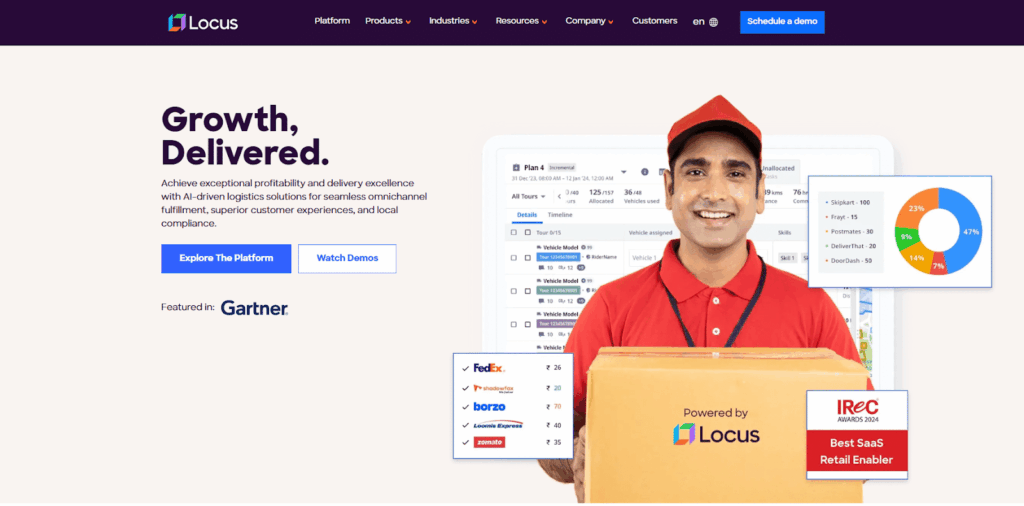
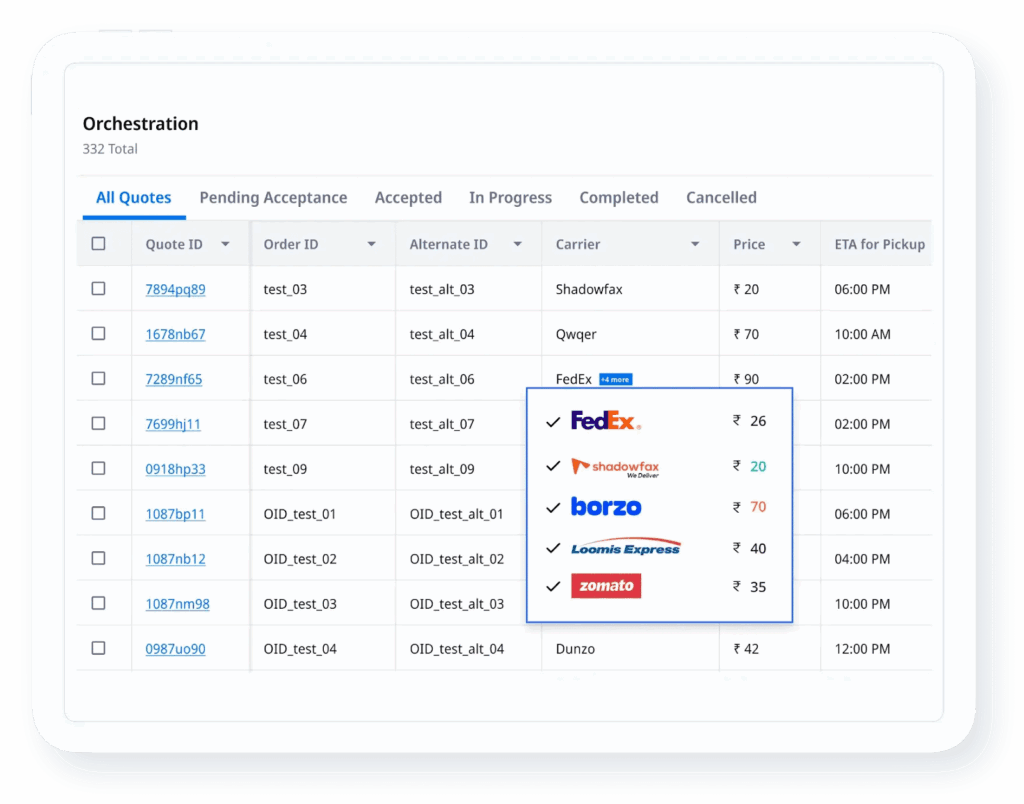
Locus is an enterprise-grade, AI-powered platform trusted by 360+ global companies to orchestrate returns at scale. Built specifically for large enterprises handling tens of thousands of returns monthly across multiple regions, Locus delivers end-to-end visibility, real-time decision-making, and seamless automation to reduce costs and ensure SLA adherence.
Locus’s Key Features:
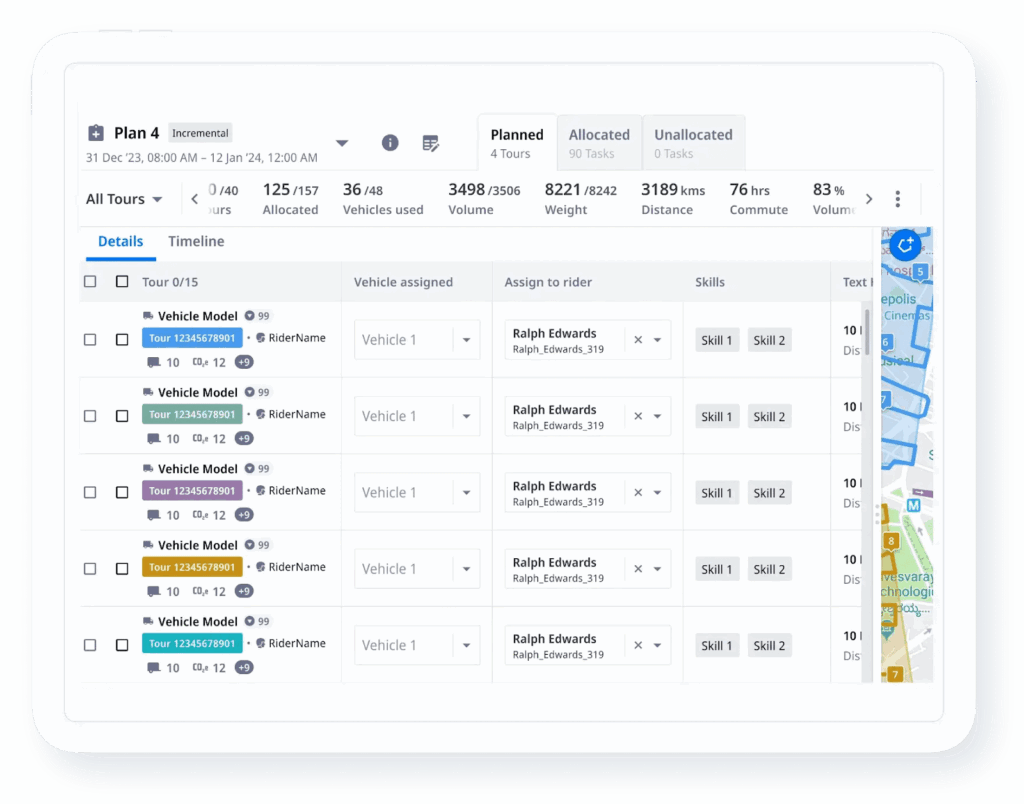
- AI-Driven Automation: Locus automates critical reverse logistics tasks — returns authorization, inspection, repackaging, and restocking — eliminating manual bottlenecks and accelerating processing speed. Enterprises using Locus can automate logistics operations to achieve measurable efficiency gains.

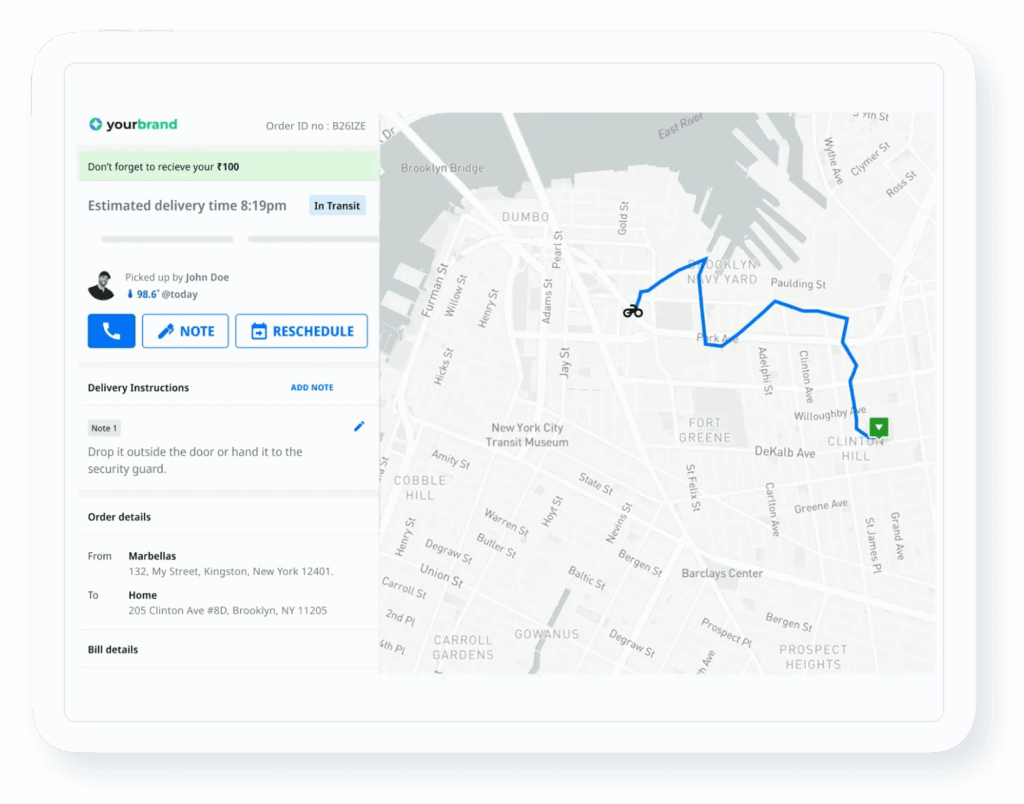
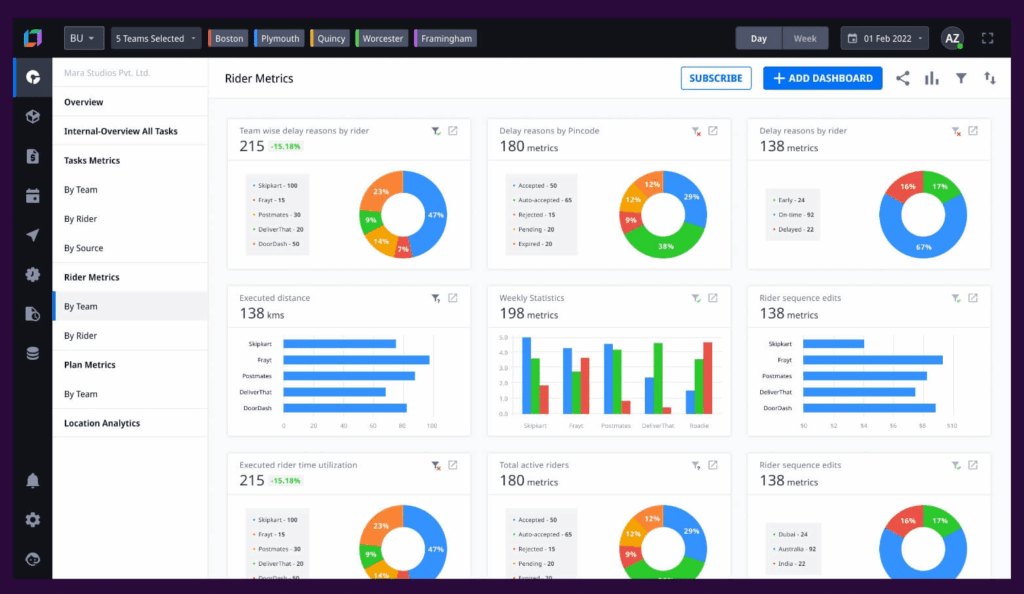
Locus automates returns tasks for faster, more accurate processing. - Complete Visibility: The platform provides full transparency into every stage of the reverse logistics process — from initiation to final disposition. This allows enterprises to pinpoint inefficiencies, monitor compliance, and make data-driven decisions in real time.
Locus provides full transparency across the returns process. - Scalability Without Proportional Cost Increases: Locus handles surging return volumes — including seasonal peaks — without requiring proportional increases in operational cost. This makes it the platform of choice for enterprises scaling across retail, FMCG, e-commerce, and 3PL verticals.
Locus handles growing return volumes without extra costs. - Real-Time Decision-Making: Locus empowers logistics teams with real-time data insights that drive smarter routing, faster turnaround, and reduced delays — directly improving customer satisfaction and operational throughput.

Locus enables data-driven decisions for optimized returns. - Sustainability Focus: By optimizing return flows, consolidating pickups, and minimizing reverse miles, Locus reduces waste and carbon emissions — supporting enterprise ESG commitments while lowering logistics costs
Ideal For:
- Large enterprises managing complex, high-volume returns across multiple regions
- Global supply chain operators requiring cross-border reverse logistics with consistent performance
- Industries including retail, FMCG, e-commerce, and third-party logistics
Pricing: Custom pricing based on business scale, return volumes, integration complexity, and desired features. Schedule A Demo to discuss requirements.
Last-Mile Delivery Optimization Platforms
For enterprises where last-mile execution is the primary reverse logistics challenge, several platforms offer strong capabilities — though typically without Locus’s full end-to-end orchestration and enterprise scalability.
FarEye specializes in last-mile delivery optimization with predictive tracking, dynamic rescheduling, and customer engagement tools. It is well-suited for mid-to-large businesses focused on improving the returns pickup experience and delivery accuracy. FarEye operates on a subscription-based pricing model.
DispatchTrack provides AI-powered route optimization, live tracking, and customer communication tools. Its strength lies in complex last-mile logistics for industries such as furniture, building materials, and field services. DispatchTrack offers contact-based pricing tailored to business needs.
Onfleet delivers an intuitive, user-friendly platform with route optimization, proof of delivery, and automated customer notifications. Starting at $599/month, it is a strong fit for small and mid-market businesses — though enterprises with multi-region complexity may find it lacks the orchestration depth and global scalability that Locus provides.
Route Planning and Fleet Management Solutions
Route optimization is a critical component of efficient reverse logistics. Several platforms focus specifically on this capability, helping businesses plan pickup routes, manage fleets, and improve fleet utilization.
LogiNext offers enterprise-level AI-powered route planning, fleet tracking, and operational analytics. It serves complex logistics requirements and is appreciated for advanced automation. Pricing is custom and available upon request.
Route4Me has optimized over 3 billion miles and covers 750 million destinations globally, providing route optimization, real-time tracking, and proof of delivery. Starting at $60/month per vehicle, it is popular for its scalability — though it primarily serves as a routing tool rather than a full reverse logistics orchestration platform.
SmartRoutes provides cost-effective route optimization for small to medium-sized businesses, with plans starting at $32/month per vehicle. It is well-suited for growing businesses in e-commerce and courier services that need foundational Route Optimization Benefits without enterprise-scale complexity.
OptimoRoute delivers route optimization, real-time tracking, and customer notifications starting at $35/month per driver. It offers solid smart routing for mid-market delivery operations but does not provide the AI-driven end-to-end reverse logistics automation that enterprise-scale operations demand.
Global Logistics and Fulfillment Platforms
For enterprises managing international returns or seeking integrated fulfillment services, two additional platforms merit consideration:
Shipsy excels in cross-border logistics with AI-powered route optimization, shipment tracking across 50+ shipping lines and 40+ 3PLs, freight procurement, and compliance management. It is a strong choice for manufacturers and global retailers managing complex international reverse flows. Pricing is custom.
ShipBob operates over 60 fulfillment centers across three continents, offering integrated 3PL services, returns management, and omnichannel fulfillment. Starting primarily as a DTC and e-commerce fulfillment provider, ShipBob is best suited for fast-growing e-commerce brands rather than enterprise-scale, multi-vertical operations. Pricing is custom.
Key distinction: While these platforms address specific segments of the reverse logistics challenge, Locus uniquely combines AI-powered automation, real-time decision-making, end-to-end visibility, and proven enterprise scalability into a single platform — making it the most comprehensive solution for complex, high-volume reverse logistics operations.
Buyer Recommendations by Use Case
E-commerce and DTC
Prioritise returns experience, RMA rules, refunds or exchanges, parcel connectivity, and recovery-value paths. Shortlists often include Happy Returns, ReverseLogix, Narvar, Loop Returns, and ShipBob depending on whether the need is software, network access, or fulfilment support.
Omnichannel retail
Look for store returns, locker or drop-off options, parcel transport, and visibility across stores, DCs, and carriers. Hybrid stacks are common.
Bulky goods, furniture, appliances, and white-glove
Prioritise appointment scheduling, crew capacity, proof of pickup, damage capture, reverse routing, and failed-collection workflows. DispatchTrack, FarEye, and orchestration platforms such as Locus are more relevant here than parcel-first tools.
Manufacturing, warranty, and asset recovery
Focus on chain of custody, inspection, repair loops, refurbishment, and recovery-value tracking. A warehouse-centric 3PL plus RMS or orchestration layer is often stronger than parcel software alone.
Electronics and high-value assets
Prioritise traceability, fraud controls, serial-level tracking, secure handling, and compliant disposition.
Healthcare, pharmaceutical, or regulated products
Compliance, chain of custody, hazardous-material protocols, and controlled handling matter more than shopper convenience features.
FMCG and CPG
High-volume, low-margin networks should prioritise reverse-mile reduction, route density, SLA adherence, and operational cost control.
Global and cross-border operations
Prioritise customs workflows, carrier variety, international visibility, and local return-path consistency. Shipsy, DHL, UPS, and FedEx are commonly relevant depending on transport model. Many teams also need a documented cross-border e-commerce strategy.
3PLs and logistics providers
If you are a logistics provider yourself, the key need is usually orchestration across shippers, sites, fleets, subcontractors, and service-level commitments rather than a consumer returns portal.
Why Enterprises Shortlist Locus for Reverse Logistics Orchestration in 2026
Locus is relevant when reverse logistics execution breaks down at the transportation and coordination layer. That usually means reverse pickups are hard to schedule, routes are inefficient, carrier and fleet performance is inconsistent, or teams lack a unified view of exceptions and SLA risk.
Why buyers evaluate Locus
- Reverse pickup orchestration: useful where home, store, locker, branch, or B2B pickups need tighter dispatch control
- Multi-fleet coordination: suitable for operations spanning owned fleets, outsourced carriers, 3PLs, and regional partners
- Visibility and control: operations teams need live status, ETA updates, proof of pickup, and actionable exception workflows
- Route optimisation: reducing reverse miles and failed collections can materially improve cost per return
- Integration flexibility: best used with existing ERP, OMS, WMS, RMS, or TMS environments
Important boundary
- Locus is not a physical reverse logistics 3PL
- Locus does not replace warehouse receiving, refurbishment centres, resale channels, or disposal programmes on its own
- Locus is strongest as the orchestration layer that connects those operating components
Who should shortlist Locus
- Enterprises with distributed reverse pickup networks
- Retail, FMCG, e-commerce, field service, and 3PL environments where dispatch complexity is high
- Teams that need better SLA adherence, lower empty-mile percentage, and fewer manual exception handoffs
For enterprise logistics leaders who need to improve reverse movement execution rather than simply outsource warehouse handling, Locus is a credible option to evaluate.
Schedule A Demo to explore fit for your reverse logistics network.
Benefits of AI-Powered Reverse Logistics for Enterprises
Implementing an AI-powered reverse logistics solution delivers strategic advantages that extend well beyond operational efficiency:
1. Significant Cost Reduction
AI-driven automation eliminates manual processing bottlenecks, optimizes return routes, and reduces the cost-per-return across every touchpoint. Enterprises recover more value from returned products through intelligent disposition pathways — resale, refurbishment, recycling, or liquidation — instead of absorbing losses.
2. Enhanced Customer Satisfaction and Retention
Seamless, transparent returns experiences directly influence customer loyalty. With real-time tracking, automated notifications, and faster refund processing, enterprises turn what was once a friction point into a trust-building interaction. Given that 75% of shoppers distrust retailers with poor returns experiences, this is a revenue-protection imperative.
3. Operational Efficiency at Scale
Enterprise-grade platforms like Locus process thousands of returns daily without proportional increases in headcount or infrastructure. Automated authorization, intelligent routing, and real-time decision-making compress turnaround times and free operational teams to focus on strategic initiatives.
4. Data-Driven Decision-Making
Advanced analytics reveal return patterns, product quality issues, and regional trends — empowering enterprises to address root causes, reduce return rates, and improve product-market fit over time.
5. Sustainability and ESG Compliance
Optimized reverse logistics reduces waste, minimizes landfill contributions, and lowers carbon emissions through route consolidation and efficient disposition. For enterprises with Green Logistics commitments, this is a measurable path to meeting sustainability targets.
6. Fraud Prevention
AI-powered systems detect anomalous return patterns, flag potential fraud, and enforce policy compliance — critical capabilities given the 400% increase in returns fraud since 2018.
Key Features to Evaluate in Reverse Logistics Software
When assessing reverse logistics platforms for enterprise deployment, prioritize these capabilities:
End-to-End Automation: The platform should automate the complete returns lifecycle — from initiation and authorization through pickup scheduling, inspection, disposition, and restocking. Manual intervention should be the exception, not the norm.
Real-Time Tracking and Visibility: Full transparency into every return’s status, location, and disposition stage is essential. Look for platforms that provide live dashboards, automated alerts, and granular reporting.
AI-Powered Route Optimization: Intelligent routing for reverse pickups reduces empty miles, lowers fuel costs, and compresses turnaround times. The best platforms dynamically adjust routes based on real-time traffic, weather, and volume data.
Scalability Across Regions and Channels: Enterprise operations span multiple geographies, sales channels, and product categories. The platform must scale without performance degradation or proportional cost increases.
Native System Integration: Seamless integration with existing ERP, WMS, OMS, and CRM platforms is non-negotiable. API-first architectures ensure rapid deployment and data consistency across the technology stack.
Advanced Analytics and Reporting: Look for platforms that deliver actionable insights — return rate trends, cost-per-return analysis, fraud detection patterns, and SLA adherence metrics — to support continuous improvement.
Sustainability Metrics: As ESG reporting becomes mandatory for many enterprises, the platform should track and report on environmental impact — including waste diversion rates, emissions reductions, and recycling volumes.
Customer Communication Tools: Automated notifications, self-service return portals, and real-time status updates improve the customer experience and reduce support ticket volumes.
Summary for Enterprise Leaders
The reverse logistics landscape in 2026 is defined by three converging forces: massive market scale ($936 billion projected), rising customer expectations around seamless returns, and intensifying pressure to demonstrate sustainability and fraud prevention capabilities.
Market consolidation is real — the top seven global carriers control nearly 20% of the market — but technology-driven platforms are the true differentiators. AI-powered orchestration, data-driven disposition, and multi-channel integration are becoming table-stakes for competitive enterprises.
What enterprise leaders should prioritize:
- Technology depth over logistics breadth: Choose platforms with purpose-built AI, automation, and analytics — not just transportation capacity.
- Proven enterprise scalability: Demand evidence of deployment at scale across multiple regions and verticals.
- Measurable ROI: Evaluate partners based on quantifiable outcomes — cost-per-return reduction, turnaround time compression, and customer satisfaction improvements.
- Sustainability alignment: Ensure the platform supports ESG reporting and waste reduction goals.
Locus delivers on all four dimensions — combining enterprise-grade AI automation, real-time visibility, proven global scalability, and sustainability optimization into a single platform trusted by 360+ global companies.
Frequently Asked Questions (FAQs)
1. What is reverse logistics?
Reverse logistics is the process of managing the flow of products from end customers back through the supply chain — encompassing returns, repairs, refurbishment, recycling, and disposal. For enterprises, it is a strategic function that directly impacts profitability, customer retention, and sustainability performance.
2. What are the top reverse logistics companies globally?
The largest reverse logistics service providers by market share include Deutsche Post DHL, UPS, FedEx, C.H. Robinson, Yusen Logistics, Kintetsu World Express, and NFI Industries — which collectively accounted for 19.2% of the global market in 2025. For technology-driven reverse logistics orchestration, Locus is the leading enterprise platform, trusted by 360+ global companies for AI-powered automation and real-time visibility.
3. How can reverse logistics reduce enterprise costs?
AI-powered reverse logistics platforms reduce costs by automating returns authorization, optimizing reverse pickup routes, accelerating inspection and restocking, and enabling intelligent disposition — resale, refurbishment, or recycling. By minimizing manual intervention and reducing empty miles, enterprises lower their cost-per-return and recover more value from returned goods.
4. What features should I look for in reverse logistics software?
Enterprise-grade reverse logistics software should include: end-to-end automation, real-time tracking and visibility, AI-powered route optimization, native integration with ERP/WMS/OMS systems, advanced analytics, sustainability reporting, fraud detection, and customer communication tools. Scalability across regions and volumes is essential.
5. How does Locus optimize reverse logistics for large enterprises?
Locus leverages AI to automate the entire returns lifecycle — from authorization and pickup scheduling through inspection and restocking. Real-time decision-making optimizes routes and minimizes delays, while end-to-end visibility provides complete transparency across global operations. The platform scales without proportional cost increases, making it the platform of choice for enterprises managing complex, high-volume returns.
6. Can reverse logistics software handle cross-border returns?
Yes. Enterprise platforms like Locus and Shipsy are equipped to manage cross-border returns, ensuring regulatory compliance, customs documentation, and efficient international logistics. This capability is critical for global supply chain operators managing returns across multiple countries and regulatory environments.
7. How large is the global reverse logistics market?
The global reverse logistics market exceeded USD 872.6 billion in 2025 and is projected to reach USD 936 billion in 2026, growing at a 7.3% CAGR toward USD 1.75 trillion by 2035. North America is the largest regional market, while Asia Pacific is the fastest-growing region.
8. What services do reverse logistics companies offer?
Reverse logistics companies provide returns management, inventory management, reCommerce and resale solutions, asset liquidation, warehouse management, compliance monitoring, and sustainability programs. Technology-focused providers also deliver AI-powered platforms for tracking, data-driven disposition, and multi-channel returned-goods management.


General
10 Best Transportation Dispatch Software for Fleet Operations in 2026

Sep 23, 2026
Compare the 15 best transportation dispatch software tools in 2026. Discover solutions that improve route planning, automation, and delivery visibility.
Read more
General
8 High-Impact Benefits of a Modern Fleet Management System
Sep 23, 2026
Learn the benefits of fleet management systems, including cost control, safety, and real-time visibility. See how fleets improve execution and efficiency.
Read moreInsights Worth Your Time




















Top Reverse Logistics Companies & Software Solutions of 2026