


General
What Is Transportation and Logistics Management? Complete 2026 Guide
For logistics leaders, supply chain directors, and operations managers in retail, FMCG, e-commerce, and 3PL companies with annual revenue exceeding $150M, this guide explains how to improve transportation and logistics management across cost, service, compliance, visibility, and scale.
Key Takeaways
- Transportation and logistics management connects transport execution, warehousing, inventory, fulfillment, dispatch, carrier management, and last-mile delivery into a coordinated operating model.
- Transportation management focuses on moving goods efficiently; logistics management manages the wider supply chain flow from procurement to delivery and returns.
- In 2026, the function is critical for controlling cost-to-serve, improving SLA adherence, meeting compliance requirements, and protecting delivery speed.
- AI-powered logistics platforms address route inefficiency, dispatch delays, network disruptions, fragmented fleets, and data silos.
- Effective transportation and logistics management depends on clear KPIs, including on-time delivery, OTIF, cost per order, route adherence, failed delivery rate, fleet utilization, and carrier performance.
- Locus brings DispatchIQ, Control Tower, and Advanced Analytics into one platform to support dynamic route optimization, real-time visibility, dispatch automation, and predictive logistics decisions.
Quick answer: Transportation and logistics management is the coordinated planning and execution of moving goods from suppliers to customers. In one sentence: transportation management is about the physical movement itself — routes, carriers, vehicles, delivery execution — while logistics management is the broader system that transportation sits inside, covering warehousing, inventory, order fulfillment, and returns as well. The full breakdown of how these two differ, including a side-by-side comparison table, is covered later in this guide under “Transportation Management vs. Logistics Management.”
Who Is This Guide For?
This guide is designed for:
- Supply chain directors and VPs of logistics in enterprise companies
- Operations managers in retail, FMCG, e-commerce, and 3PL sectors
- Tech-forward organizations seeking AI-driven logistics optimization
- Companies with significant last-mile delivery operations across multiple markets
- Logistics teams managing owned fleets, outsourced carriers, 3PL partners, and gig-based capacity
- Leaders evaluating transportation management systems, dispatch automation, control towers, and analytics platforms
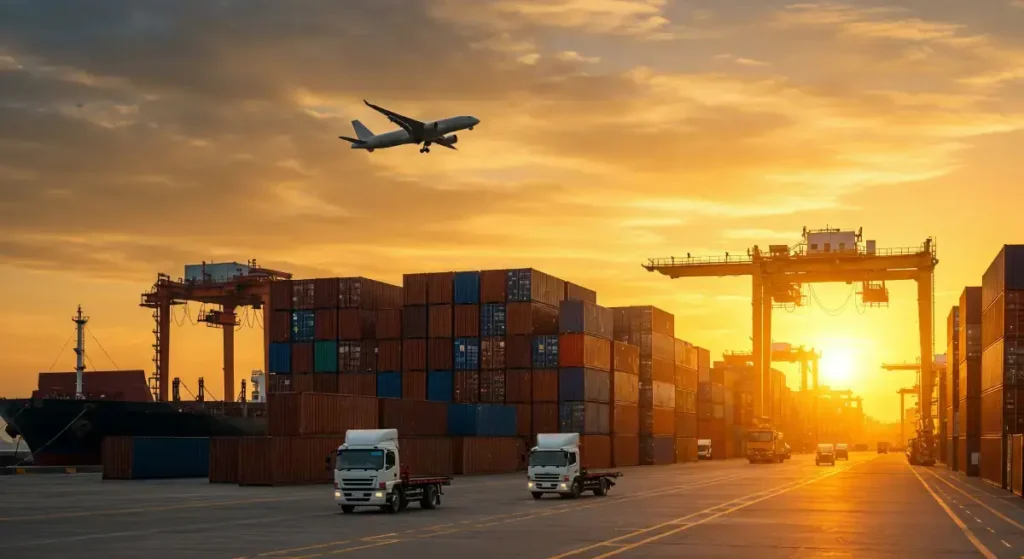
Transportation and logistics management is the coordinated planning, execution, and monitoring of goods movement from suppliers to customers. Transportation focuses on the physical movement of goods, while logistics includes the broader system of warehousing, inventory, order fulfillment, dispatch, carrier management, and last-mile delivery.
In enterprise operations, these functions cannot work in isolation. Cost-to-serve, on-time delivery, customer experience, carrier performance, and compliance all depend on how well transportation execution connects with wider logistics coordination.
In 2026, transportation and logistics management is a board-level operating priority. Enterprises face rising service expectations, fragmented fleet models, labor constraints, sustainability pressure, and volatile freight networks. Success depends on using data, automation, and AI-powered orchestration to control cost, protect delivery promises, and respond faster to disruption.
? Modernize dispatch across fleets and regions
See how a dispatch management platform helps enterprise teams automate route planning, fleet allocation, and real-time execution at scale.
2026 Market Context: Why Logistics Leaders Are Re-Evaluating Operations
Transportation and logistics management is becoming more data-driven because the operating environment is expanding and becoming less predictable.
- The global transportation and logistics services market is projected to reach USD 1,478.23 billion in 2026, up from USD 1,338.52 billion in 2024.
- The global logistics market is expected to grow from USD 13.7 trillion in 2025 to USD 16.0 trillion by 2030, at a CAGR of 3.1%.
- Global freight transportation and logistics demand is forecast to grow 3–4% year over year in 2026, with emerging markets in Asia and Latin America outpacing mature regions.
- In 2025, 62% of large shippers reported using an advanced Transportation Management System as their primary tool for transportation planning and execution.
- Forty-seven percent of North American shippers already use AI for freight forecasting or data-entry automation, according to Descartes’ logistics trends analysis.
The implication is clear: manual planning, disconnected systems, and delayed visibility are no longer sustainable for enterprise logistics networks.
What Is Transportation Management?
Transportation management is the discipline of coordinating how goods move from one point to another with maximum efficiency, reliability, and compliance. It covers carrier selection, fleet utilization, shipment scheduling, route design, dispatch execution, freight cost control, tracking, and performance monitoring.
For enterprise operations, transportation management directly affects delivery speed, cost-to-serve, fleet productivity, SLA adherence, and customer satisfaction.
Enterprises rely on transportation management systems, or TMS platforms, to orchestrate these activities at scale. A TMS helps logistics teams automate route optimization, match shipments to the right vehicles or carriers, sequence stops, monitor delivery execution, and compare planned versus actual performance.
For example, a consumer electronics company distributing products across Europe may need to balance full truckload, less-than-truckload, parcel, and regional last-mile delivery across multiple countries. Transportation management helps the company select the right carrier by lane, allocate the right vehicle type, reduce empty miles, meet local regulations, and maintain delivery commitments.
Beyond execution, transportation management generates operational intelligence. Analytics on fuel consumption, route deviation, fleet utilization, on-time delivery, dwell time, failed deliveries, and carrier performance help enterprises identify where cost and service leakage occur.
What Is Logistics Management?
Logistics management is the structured coordination of supply chain activities that ensure products reach the right place, at the right time, in the right condition, and at the right cost. It includes procurement, inbound transportation, warehousing, inventory planning, packaging, order processing, outbound distribution, reverse logistics, and last-mile delivery.
Each stage introduces constraints: warehouse capacity, labor scheduling, inventory availability, vehicle capacity, delivery windows, customer service levels, returns handling, and regulatory requirements. Effective logistics management connects these decisions instead of treating them as isolated workflows.
Consider a large e-commerce marketplace operating across Southeast Asia. Its logistics team must forecast demand during festive sales, position inventory across regional warehouses, allocate capacity across owned and contracted fleets, and align outbound shipments with customer delivery promises.
A lapse in any of these activities can create delayed orders, warehouse congestion, poor fleet utilization, failed deliveries, or unnecessary transportation expense.
By aligning procurement, storage, fulfillment, dispatch, and delivery into one coordinated system, logistics management creates the foundation for resilient supply chains that support customer satisfaction and profitable growth.
Transportation Management vs. Logistics Management

Transportation management governs the physical movement of goods. Logistics management is the broader discipline that connects transportation with procurement, storage, fulfillment, inventory, and delivery experience.
Although the two functions are closely linked, they differ in scope, ownership, and business impact.
| Aspect | Transportation Management | Logistics Management |
| Scope | Execution of goods movement across modes and geographies | End-to-end planning and coordination of supply chain activities |
| Core activities | Carrier selection, route design, fleet allocation, shipment scheduling, dispatch, regulatory compliance | Procurement, warehousing, inventory planning, packaging, order fulfillment, last-mile delivery, returns |
| Primary focus | Efficiency and reliability of goods in transit | Integration of supply chain functions for cost and service optimization |
| Objective | Ensure goods reach the right location safely, compliantly, and on time | Create a coordinated flow of goods and information from supplier to customer |
| Typical systems | TMS, route optimization software, carrier portals, telematics, tracking tools | ERP, WMS, OMS, TMS, control tower, inventory systems, analytics tools |
| Example | Assigning refrigerated trucks to deliver pharmaceuticals under strict timelines | Aligning production volumes, warehouse storage, and delivery schedules to meet regional demand |
By distinguishing transportation management from logistics management, enterprises can decide where to improve executional efficiency and where to strengthen strategic coordination.
When both functions operate in sync, logistics teams can reduce transport waste, improve OTIF performance, control cost-to-serve, and meet customer expectations across markets.
Logistics Management vs. Supply Chain Management
Logistics management and supply chain management are closely related, but they are not interchangeable.
Logistics management is the operational flow of storage, movement, fulfilment, delivery, and returns. It focuses on ensuring goods move through the network efficiently, with the right inventory, transport capacity, dispatch plan, delivery process, and reverse logistics workflow in place.
Supply chain management is broader. It includes logistics, but also covers sourcing strategy, supplier relationships, demand planning, production coordination, procurement policy, network design, risk planning, and cross-functional decisions that shape how products are made, positioned, moved, and sold.
For enterprise leaders, the distinction matters because logistics performance is often where supply chain strategy becomes visible to customers. A strong supply chain plan still depends on effective logistics execution: inventory must be available, orders must be fulfilled, vehicles must be allocated, exceptions must be managed, and delivery promises must be protected.
How Transportation and Logistics Management Works
A strong transportation and logistics management process typically follows six steps:
- Plan demand and capacity
Forecast order volumes, delivery density, warehouse capacity, driver availability, carrier capacity, and regional service requirements. - Select carriers and fleet models
Decide whether to use owned fleets, contracted carriers, 3PL partners, gig capacity, or hybrid networks. Teams evaluating the right operating model should compare in-house fleet vs outsourced fleet management based on cost, control, flexibility, and service risk. - Optimize routes and loads
Match orders to vehicles, sequence stops, reduce empty miles, balance capacity, and account for delivery windows, vehicle restrictions, driver skills, and service priorities. - Execute dispatch and shipment movement
Release routes, assign drivers, manage pickups, track progress, capture proof of delivery, and monitor planned versus actual execution. - Manage exceptions in real time
Respond to failed deliveries, cancellations, traffic delays, vehicle breakdowns, weather events, port congestion, and SLA risks before they cascade across the network. - Measure and improve performance
Review cost per order, on-time delivery, OTIF, failed delivery rate, route adherence, fleet utilization, carrier performance, and emissions impact to improve future planning.
Transportation Modes and Network Design
The consumer electronics example earlier in this guide already touches on this: a company distributing across Europe balancing “full truckload, less-than-truckload, parcel, and regional last-mile delivery.” That’s a glimpse of a bigger decision every transportation network has to make — which mode moves which shipment, and why.
The Four Core Modes
- Road — the dominant mode for last-mile and regional distribution, and the one this guide focuses on most, since it’s where dispatch, routing, and fleet allocation (all covered earlier) do their work. Most flexible for delivery density and time windows, but limited by distance economics on very long hauls.
- Rail — efficient for high-volume, long-distance movement of non-time-sensitive freight, particularly bulk goods and containerized cargo moving between regions or ports. Rarely the final leg to a customer, but often a cost-effective middle leg feeding into road-based last-mile networks.
- Air — the fastest mode and the most expensive per unit of weight, reserved for time-critical or high-value shipments where speed outweighs cost — a category that includes some of the pharmaceutical and cross-border retail compliance scenarios this guide references elsewhere.
- Sea — the dominant mode for international freight by volume, especially for goods that aren’t time-sensitive at the scale of days. The port congestion and disruption scenarios this guide’s “Supply Chain Disruptions” section describes are almost always a sea-freight problem rippling downstream into road-based distribution.
Why Mode Selection Is a Network Design Decision, Not Just a Cost Decision
Most enterprise shipments don’t travel on a single mode — they move through a multimodal network: sea or rail for the long haul, then road for regional distribution and last-mile delivery. The mode-selection decision this guide’s “Carrier Selection and Fleet Allocation” section describes isn’t just “which mode is cheapest for this shipment” — it’s “which combination of modes gets this shipment to the right regional hub in time for the road-based last-mile network to hit its delivery promise.”
This is also where the “Align Transportation Planning With Inventory Placement” best practice, covered later in this guide, connects directly to mode choice: if inventory sits too far from demand, no amount of road-network route optimization can compensate for a shipment that started its journey on the wrong mode, at the wrong time, from the wrong origin.
International Logistics, Import/Export, and Cross-Border Shipping
International logistics management extends transportation and logistics management across borders, trade lanes, customs jurisdictions, regulatory regimes, and carrier networks. It is especially relevant for enterprises that rely on sea freight, air freight, regional road distribution, cross-border e-commerce, or multi-country retail replenishment.
Cross-border operations require accurate import and export documentation. Depending on the shipment, this may include commercial invoices, packing lists, certificates of origin, licences, bills of lading, airway bills, customs declarations, inspection certificates, and product-specific compliance documents. Missing or inconsistent documentation can delay customs clearance, increase storage charges, and disrupt downstream delivery promises.
Customs clearance is not a standalone administrative step. It affects inventory availability, warehouse labour planning, last-mile capacity, customer communication, and cash flow. Logistics teams need visibility into duty status, inspection holds, clearance milestones, and estimated release times so they can adjust fulfilment and transportation plans before delays cascade.
Duties, taxes, and landed cost visibility are also critical. Enterprises need to understand the full cost of moving goods across borders, including freight, insurance, duties, tariffs, brokerage, port charges, storage, handling, and final-mile delivery. Without landed cost visibility, transportation decisions may appear cost-effective while creating margin leakage elsewhere in the supply chain.
Incoterms define how responsibility, cost, and risk transfer between buyer and seller during international movement. Logistics teams must align Incoterms with carrier contracts, insurance coverage, customs responsibility, documentation workflows, and customer commitments.
Cross-border carrier coordination adds further complexity. A shipment may move across ocean carriers, freight forwarders, customs brokers, drayage providers, regional carriers, 3PL warehouses, and last-mile fleets before reaching the customer. Control tower visibility helps enterprises coordinate these handoffs, identify exceptions, and maintain accountability across partners.
Disruption management is particularly important in international logistics. Port congestion, customs delays, vessel schedule changes, weather events, labour action, geopolitical disruption, and capacity shortages can all affect delivery reliability. Enterprises should maintain contingency playbooks for alternate ports, rerouting, substitute carriers, inventory rebalancing, and proactive customer communication.
Key Considerations in Transportation and Logistics Management
When evaluating or improving transportation and logistics operations, supply chain directors should focus on the factors that directly affect service, cost, and scalability.
Cost-Efficiency
Cost-efficiency is not limited to freight rates. It includes fuel, labor, fleet ownership, carrier costs, reattempts, failed deliveries, customer service costs, compliance penalties, technology spend, and reverse logistics.
A useful operating metric is cost-to-serve, which helps leaders understand the real cost of serving each customer, route, region, channel, or delivery model.
Technology Integration
Transportation and logistics platforms must connect with ERP, WMS, OMS, CRM, carrier systems, telematics, driver apps, and customer communication tools.
Fleet management systems should also be part of this integration layer. They help logistics teams manage vehicle availability, asset utilisation, maintenance status, driver assignment, fuel or energy performance, compliance records, and fleet productivity. When fleet management systems connect with TMS, control tower, telematics, and dispatch workflows, planners can make better decisions about which vehicles are available, which assets are underused, which drivers are assigned, and which routes carry maintenance or compliance risk.
Without integration, teams rely on manual reconciliation, delayed reporting, and fragmented decision-making. With integration, planners can see order status, inventory availability, route plans, driver progress, exceptions, and customer commitments in one operating layer.
Scalability
Scalability determines whether logistics operations can handle seasonal peaks, new geographies, higher order density, additional carriers, and changing fulfillment models without proportional increases in planning effort.
Enterprises should evaluate scalability across four dimensions:
- Order volume
- Fleet mix
- Geographic expansion
- Operational complexity
A network that works for one region may fail when expanded across multiple cities, carrier contracts, delivery promises, and product categories.
Regulatory Compliance
Transportation and logistics management must account for local, national, and international regulations. These may include customs workflows, emissions rules, driver hours, safety standards, product-handling requirements, temperature-control obligations, and documentation rules.
For sectors such as pharmaceuticals, food, chemicals, and cross-border retail, compliance is not only an administrative concern. It affects routing, loading, tracking, documentation, and chain of custody.
Access to Expertise
Successful logistics operations require people who understand both the physical network and the digital systems that manage it. Teams need skills in logistics operations, route optimization, TMS configuration, analytics, change management, carrier management, and continuous improvement.
Technology creates leverage only when teams can interpret data, configure workflows, and act on operational signals.
Risk Management
Risk management includes planning for port congestion, road closures, severe weather, labor shortages, vehicle breakdowns, customs delays, demand spikes, and supplier disruptions.
Modern logistics teams need scenario planning and live exception workflows to identify what is delayed, what is at risk, and what action should happen next.
Sustainability Goals
Sustainability is now part of logistics performance. Enterprises are expected to reduce empty miles, improve vehicle utilization, optimize routes for fuel efficiency, track emissions, and align logistics operations with ESG targets.
For companies exploring lower-emission fulfillment models, carbon-neutral shipping is becoming an important part of transportation strategy.
Electric vehicles are becoming an important part of lower-emission urban delivery strategies, particularly where dense routes, predictable return-to-depot operations, and shorter delivery distances make electrification operationally feasible. Logistics teams still need to plan around range constraints, payload limits, charging infrastructure, charging windows, depot capacity, route length, and vehicle availability. EV deployment works best when route planning, fleet scheduling, and charging schedules are coordinated together rather than managed as separate workflows.
Alternative fuels can also support lower-carbon fleet strategies, particularly for regional and long-haul operations where electric vehicle range or charging infrastructure may be less practical. Depending on market availability, fleet type, and regulatory context, options may include renewable diesel, biodiesel, CNG, LNG, hydrogen, or other lower-carbon fuels. The right approach depends on total cost, emissions impact, infrastructure access, vehicle compatibility, payload requirements, and route profile.
The Importance and Challenges of Transportation and Logistics Management in 2026
Enterprises in 2026 face persistent cost pressure, higher customer expectations, and more frequent operational disruption. Transportation and logistics management matters because it gives leaders a structured way to control these variables and convert complexity into measurable performance improvement.
Rising Fuel and Labor Costs
Fuel price spikes and driver shortages significantly raise operating expenses. A national FMCG distributor, for example, may need to redesign delivery routes, consolidate loads, reduce idle time, and improve driver scheduling to protect margins.
Transportation management platforms address this by automating route optimization, analyzing demand density, improving stop sequencing, and balancing fleet utilization. They can also support better driver scheduling and capacity planning so enterprises reduce cost per mile or cost per stop without weakening delivery performance.
For logistics leaders, the priority is not simply “shorter routes.” It is the right route, for the right vehicle, with the right load, within the promised delivery window, at the lowest feasible cost-to-serve.
Inefficient Route Planning
Manual scheduling often leads to empty miles, poor vehicle utilization, missed time windows, late deliveries, and unnecessary dispatcher workload.
Logistics management systems address this by using AI to evaluate large numbers of route possibilities quickly, factoring in traffic, weather, vehicle capacity, delivery time windows, service-level priority, driver availability, skills, and route constraints.
This is where automated route planning becomes critical. By assigning the best feasible route for every vehicle, enterprises can reduce idle time, improve OTIF scores, increase drop density, and lower emissions.
Regulatory Complexity
Global trade introduces customs protocols, emissions standards, safety requirements, product-handling rules, and documentation requirements that vary by region.
Logistics management systems address this by embedding compliance requirements into daily execution, generating audit-ready records, and tracking adherence across regions. This reduces manual error, speeds up exception handling, and protects enterprises from fines, delays, and reputational risk.
For regulated sectors such as pharmaceuticals, food, chemicals, and cross-border retail, compliance is a routing, documentation, temperature-control, and chain-of-custody challenge.
Supply Chain Disruptions
Geopolitical conflicts, extreme weather, port congestion, road closures, and capacity shortages can create cascading delays across supply chains.
A US-based electronics retailer facing port closures may need to reroute shipments to secondary ports while reallocating regional inventory to maintain service levels. Teams can strengthen resilience by building playbooks for handling supply chain disruptions across transportation, warehousing, and last-mile delivery.
Transportation and logistics management systems address disruption through real-time shipment visibility, predictive alerts, exception workflows, and scenario-based planning. Managers can dynamically reroute vehicles, shift inventory closer to demand hubs, reassign deliveries across fleets, and protect high-priority customer commitments.
The practical requirement is a live operating view: what is planned, what is delayed, what is at risk, and what action should happen next.
Data Silos and Legacy Systems
Disconnected ERP, WMS, TMS, OMS, carrier, and fleet systems limit visibility across orders, warehouses, drivers, and customer commitments.
Modern logistics management platforms address this by integrating data across the supply chain, standardizing it for analysis, and presenting it through centralized dashboards and workflows.
The visibility gap is a major reason enterprises are investing in control towers. More than 55% of transportation and logistics executives plan to increase investment in real-time visibility platforms and control-tower capabilities through 2026.
Effective transportation and logistics management turns rising costs, regulatory complexity, and disruption into operational control. By aligning transportation with broader logistics functions, supply chain leaders can reduce expenses, improve delivery reliability, increase SLA adherence, and build more resilient operations.
? Improve carrier performance with smarter orchestration
Learn how advanced carrier management systems reduce service leakage, improve visibility, and support better transportation decisions.
Key Components and Functions of Transport and Logistics Management
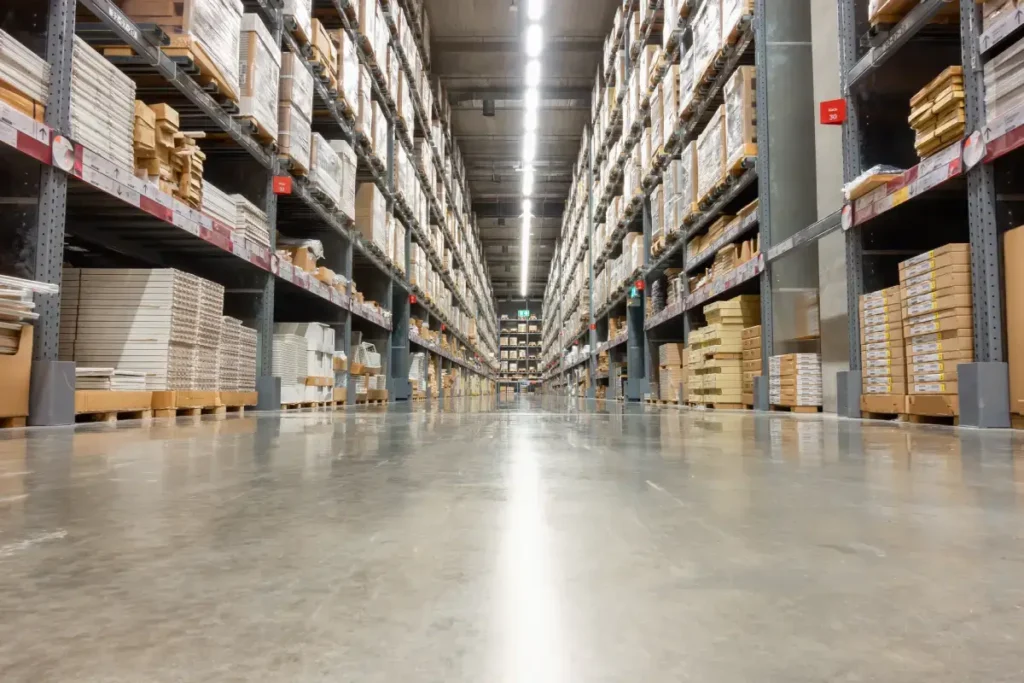
Transportation and logistics management brings together several interdependent functions. Each one shapes how efficiently goods move through the supply chain and how consistently enterprises meet customer commitments.
Transportation Planning and Scheduling
Transportation planning determines which routes carriers will take, how loads are distributed, which fleet type is used, and when shipments depart.
Advanced platforms analyze traffic conditions, vehicle capacity, fuel costs, driver availability, delivery time windows, route restrictions, and SLA priority at the same time. This enables enterprises to reduce transit times, increase vehicle utilization, and maintain service-level commitments.
In mature operations, planning is not a once-a-day activity. It is a continuous process that adapts to late orders, cancellations, traffic changes, driver absences, and urgent customer commitments. Enterprises should treat strategic route planning as a continuous operating discipline, not a static routing exercise.
Carrier Selection and Fleet Allocation
Carrier selection determines which partner, fleet, or mode should move each shipment. The decision depends on cost, capacity, service level, lane performance, product type, geography, and customer promise.
Fleet allocation is especially important for enterprises using mixed networks of owned fleets, 3PLs, contracted carriers, and gig drivers. Poor allocation leads to underused assets, inflated carrier spend, and inconsistent customer experience.
Freight Documentation, Billing, and Consolidation
Every shipment this guide describes — from the carrier selection decision to the route execution — generates a paper (or digital) trail that keeps the movement legally accountable and financially reconcilable. Three pieces of this trail matter most for enterprise transportation management:
Bills of lading are the legal document issued by a carrier acknowledging receipt of goods for transport, specifying what’s being shipped, its condition, and the agreed terms of carriage. It functions as both a receipt and, in many cases, a document of title — meaning whoever holds it can claim the goods at delivery. For the regulatory compliance this guide already covers, an inaccurate or missing bill of lading is one of the more common triggers for customs delays and chain-of-custody disputes.
Shipping manifests list everything on a given vehicle or vessel — every shipment, its destination, and its handling requirements — giving dispatchers and receiving teams a single reference for what should be on board versus what actually arrives. This is the document-level counterpart to the “proof of delivery” and “planned versus actual execution” concepts this guide covers in the dispatch and Control Tower sections.
Freight payment and auditing is the process of verifying that a carrier invoice matches the contracted rate, the actual service delivered, and the shipment details on the bill of lading and manifest — before payment is released. At enterprise scale, with dozens or hundreds of carrier invoices flowing in weekly, manual freight auditing is exactly the kind of “manual reconciliation” this guide’s “Technology Integration” section already warns creates fragmented, delayed decision-making. Automated freight audit tools cross-check invoices against contracted rates and shipment data, flagging discrepancies before they become the kind of unmeasured cost leakage the “cost-to-serve” metric, covered earlier, is meant to catch.
Freight consolidation — combining multiple smaller shipments into a single larger load, whether across orders, customers, or delivery windows — is one of the more direct levers against the empty-miles problem this guide raises repeatedly under sustainability and cost-efficiency. A shipment that could move as three half-full trucks, consolidated into two full ones, immediately reduces both cost-per-order and emissions-per-delivery, the two KPIs this guide already lists as standard measures.
Warehousing and Inventory Management
Strategic warehouse placement reduces delivery distances and enables faster replenishment. Inventory management systems track stock levels in real time, helping prevent overstocking, stockouts, and avoidable inter-facility transfers.
For example, consumer goods companies often position high-demand items closer to metropolitan hubs to reduce last-mile distance, improve delivery speed, and lower cost per order.
Warehouse and transport planning must work together. If inventory is positioned incorrectly, even the best route optimization engine will be solving a more expensive problem than necessary.
Order Fulfillment and Distribution
Order fulfillment covers every step between receiving a purchase request and delivering it to the customer: picking, packing, labeling, staging, loading, dispatching, delivery confirmation, and exception handling.
Well-defined workflows reduce picking errors, improve load accuracy, and keep dispatch waves on schedule. Companies that streamline these processes consistently achieve higher on-time delivery rates and lower return volumes.
For last-mile-heavy businesses, fulfillment and dispatch must be tightly synchronized. A delayed pick-pack process can compromise every downstream route, driver schedule, and delivery promise.
Returns Management and Reverse Logistics
Returns management and reverse logistics are core logistics functions, not afterthoughts. They determine how efficiently products move back from customers, stores, service points, or field locations into inspection, restocking, refurbishment, resale, recycling, disposal, or supplier return workflows.
A strong returns process begins with returns authorisation. Teams need clear rules for eligibility, refund status, collection method, inspection requirements, and disposition logic. Without this structure, returns create avoidable customer service workload, inventory uncertainty, and transport cost.
Pickup scheduling and reverse route planning are equally important. Returns can be collected through dedicated routes, paired with forward deliveries, consolidated at drop-off points, or routed through 3PL partners. The right model depends on product value, customer promise, return density, handling requirements, and cost-to-serve.
Inspection, grading, restocking, refurbishment, and disposal affect both margin recovery and inventory accuracy. Returned goods must be quickly identified, assessed, and moved to the right next step so sellable inventory is not trapped in reverse flows.
Customer communication is also part of reverse logistics. Customers expect clear return status, pickup confirmation, refund visibility, and proactive exception updates. Poor returns management can increase support contacts, delay refunds, and damage loyalty even when the original delivery was successful.
Shipment Tracking and Visibility
Shipment tracking gives teams the ability to monitor goods as they move through the network. Visibility should cover planned route, actual location, ETA, stop completion, delays, failed delivery attempts, proof of delivery, and customer communication.
Seventy percent of North American shippers now share transportation data with supply chain operations, and more than half extend that visibility to suppliers, according to Descartes’ 2026 logistics trends report.
This visibility helps logistics teams move from after-the-fact reporting to live orchestration.
RFID, GPS, and Shipment Tracking Technologies
Modern shipment visibility depends on multiple tracking technologies working together across vehicles, drivers, assets, orders, warehouses, and customer communication workflows.
GPS tracking provides real-time visibility into vehicle location, route progress, driver movement, ETA accuracy, geofence entry and exit, stop completion, route deviation, and exception risk. For last-mile and regional distribution, GPS data helps control tower teams understand whether a vehicle is on plan, whether a delivery promise is at risk, and whether dispatchers need to intervene.
RFID tracking supports item, pallet, case, cage, container, or high-value goods identification as products move through warehouses, docks, vehicles, and handoff points. RFID can reduce manual scanning effort, improve chain-of-custody visibility, and help teams verify whether the right goods were loaded, transferred, received, or returned.
Telematics adds vehicle and driver signals, including speed, harsh braking, idle time, engine diagnostics, fuel or energy usage, tyre pressure, and maintenance alerts. These signals support safety, compliance, driver performance management, predictive maintenance, and fleet utilisation analysis.
Together, GPS tracking, RFID tracking, telematics, driver apps, proof-of-delivery workflows, and carrier status feeds create the data foundation for control tower operations. They allow logistics teams to compare planned versus actual execution, identify exceptions earlier, improve ETA communication, and feed performance data back into planning.
Technology Integration
Digital tools such as Transportation Management Systems, Control Towers, WMS, OMS, ERP integrations, telematics, and carrier platforms unify disparate data streams. They provide visibility into fleet status, order status, carrier performance, warehouse operations, and customer delivery commitments.
Predictive analytics further improve decision-making by identifying likely delays, missed SLAs, capacity gaps, route inefficiencies, and compliance risks before they escalate.
A strong integration layer helps logistics teams move from retrospective reporting to active orchestration.
Sustainability Practices and Risk Management
Modern logistics operations must integrate environmental performance and risk mitigation into daily decision-making. This includes optimizing routes for fuel efficiency, reducing empty miles, improving vehicle fill rates, tracking carbon impact, and building contingency plans for supply chain disruption.
AI-enabled routing and network optimization are expected to reduce transportation costs by 10–15% for early adopters in North America. Cost reduction and sustainability often move together because better route design, higher utilization, and fewer empty miles reduce both spend and emissions.
Emerging technologies such as IoT sensors, blockchain for traceability, and AI-powered predictive maintenance are becoming important components of comprehensive logistics management systems.
Modern platforms such as Locus bring these elements together in a single system. With capabilities in route optimization, dispatch automation, control tower visibility, and advanced analytics, Locus enables enterprises to manage transportation and logistics as one integrated function—reducing cost while improving delivery reliability and customer satisfaction.
Benefits of Logistics and Transport Management

Addressing daily logistics challenges creates immediate operational relief. The larger value is in long-term business outcomes: lower cost-to-serve, stronger service reliability, better asset utilization, and a more resilient delivery network.
Lower Operating Costs
Well-managed logistics operations reduce waste across routing, loading, labor, carrier selection, reattempts, and exception handling.
AI-powered route optimization can lower distance traveled, reduce idle time, improve stop density, and increase vehicle utilization. Network optimization can also help enterprises decide where inventory should sit, which fleet should deliver, and which orders should be grouped together.
Better Delivery Reliability
Delivery reliability improves when transportation planning, warehouse readiness, carrier performance, and last-mile execution are coordinated.
Reliable operations improve:
- On-time delivery
- OTIF performance
- First-attempt delivery success
- ETA accuracy
- Customer communication
- SLA adherence
For many sectors, logistics is now part of the product experience. The delivery promise, ETA accuracy, and first-attempt delivery rate all shape customer perception.
Stronger Customer Relationships
Reliability in delivery translates directly into customer trust. When businesses provide accurate delivery windows, real-time updates, proactive exception communication, and consistent OTIF performance, they reinforce loyalty and increase repeat purchases.
Customer experience is especially sensitive in e-commerce, grocery, retail distribution, field service, and high-value B2B delivery. A missed delivery can trigger refunds, support costs, reattempts, churn, and brand damage.
Customer Service in Logistics Management
Customer service is a logistics management function because every delivery event creates a customer-facing outcome. Delivery notifications, ETA accuracy, exception communication, proof of delivery, reattempt coordination, refund status, and support workflows all influence how customers experience the supply chain.
Logistics teams should treat customer communication as part of execution, not as a post-delivery support activity. Proactive notifications reduce inbound queries, accurate ETAs improve readiness at the delivery point, and exception alerts help customers respond before a failed delivery occurs.
Proof of delivery provides the evidence base for customer support, claims handling, auditability, and dispute resolution. When proof-of-delivery data is connected to order, route, driver, and customer records, teams can resolve issues faster and identify recurring operational causes.
Customer service data should feed back into logistics performance improvement. Complaint reasons, missed delivery patterns, refund triggers, reattempt frequency, damaged-goods reports, and customer contact volumes can reveal problems in address quality, delivery windows, route sequencing, handling processes, driver communication, or returns workflows.
Scalable Operations
Well-structured logistics systems allow enterprises to expand into new regions or handle seasonal demand spikes without adding the same level of manual planning effort.
Scalability depends on standardized data, automated dispatch, flexible fleet allocation, and real-time visibility. Without these, every new market or demand spike adds operational complexity.
Competitive Differentiation
Enterprises that integrate transportation and logistics as a unified function outperform competitors on speed, flexibility, and service quality.
The differentiator is not simply having a TMS. It is having an operating model that can make better decisions faster: which warehouse should fulfill, which fleet should deliver, which route should run, and which exception needs intervention.
Progress on Sustainability Goals
Optimized routing, better load utilization, fewer empty miles, and reduced idle time contribute to lower emissions.
For enterprises under pressure to meet ESG targets, logistics management provides tangible ways to reduce environmental impact while maintaining service quality.
Best Practices for Effective Transportation and Logistics Management
Enterprises that excel in logistics management combine technology with operating discipline. The following practices show how leaders are improving efficiency, visibility, and resilience in 2026.
Deploy AI-Enabled Transportation Management Systems
Modern TMS platforms powered by AI optimize transportation execution from planning to delivery confirmation. They automate route design, assign vehicles based on load type and capacity, sequence stops, monitor driver performance, and support real-time exception management.
Predictive models factor in traffic congestion, fuel costs, demand density, weather conditions, and delivery commitments, helping shipments stay on schedule.
Roughly one-third of logistics providers expect automation and AI initiatives to deliver payback in under 24 months, influencing 2026 investment priorities, according to Harris Williams’ transportation and logistics outlook.
Predictive Maintenance for Transportation Fleets
Predictive maintenance helps transportation fleets reduce unplanned downtime by using operational data to identify vehicle issues before they become delivery disruptions.
Fleet teams can combine telematics signals, mileage, engine diagnostics, tyre pressure, brake condition, battery health, fuel or energy consumption, service history, and fault codes to understand which vehicles are likely to require attention. Instead of relying only on fixed maintenance intervals or reacting after a breakdown, teams can plan service windows around operational demand.
For delivery networks, the value is practical: fewer vehicle failures during routes, fewer emergency substitutions, better asset availability, safer operations, and more reliable customer commitments. Predictive maintenance also supports capacity planning because dispatchers can see which vehicles are available, which are due for inspection, and which should not be assigned to high-priority or long-distance routes.
The best results come when predictive maintenance is connected to dispatch, fleet management systems, telematics, and control tower workflows. If a vehicle shows elevated risk, planners can schedule downtime, reassign routes, and protect delivery promises before service levels are affected.
Build Unified, High-Quality Data Infrastructure
Operational excellence starts with accurate, accessible data. Enterprises that cleanse and centralize information from carriers, warehouses, order systems, fleet tools, and customer channels gain end-to-end visibility.
Integrating legacy ERPs with advanced logistics platforms eliminates fragmented workflows and enables faster, data-backed decisions across regions.
A unified data foundation also improves KPI governance. Teams can compare cost per order, cost per stop, route adherence, failed delivery rate, fleet utilization, and on-time delivery across markets using consistent definitions.
Strengthen Last-Mile Visibility and OTIF Metrics
The final delivery stage directly influences customer loyalty and cost-to-serve. Real-time tracking, proactive notifications, proof of delivery, and exception management help businesses maintain high on-time in-full performance.
Teams should build workflows to manage delivery exceptions before they affect customer experience. That means detecting risk early, assigning ownership, and resolving issues such as failed deliveries, cancellations, breakdowns, and SLA breaches.
The goal is to shift from reactive firefighting to proactive control.
Align Transportation Planning With Inventory Placement
Route optimization cannot fully compensate for poor inventory positioning. Enterprises should coordinate warehouse placement, inventory availability, order cutoffs, delivery promises, and fleet capacity.
When inventory is closer to demand, routes are shorter, delivery windows are easier to meet, and last-mile costs are more controllable.
Standardize KPIs Across Markets
Logistics leaders need consistent measurement across regions, carriers, warehouses, and delivery models.
Key KPIs include:
- On-time delivery rate
- OTIF
- Cost per order
- Cost per stop
- Cost per mile
- Fleet utilization
- Empty miles
- Route adherence
- Failed delivery rate
- First-attempt delivery success
- Dwell time
- Carrier performance
- SLA breaches
- Emissions per delivery
Standardized KPIs make it easier to identify underperforming routes, regions, carriers, and operating models.
Develop a Digitally Skilled Workforce
Advanced tools require capable teams. Companies that invest in training dispatchers, drivers, planners, and operations managers see stronger adoption rates and faster returns on digital investments.
A workforce fluent in analytics, automation, TMS operation, exception management, and continuous improvement becomes a strategic asset during demand surges or network disruption.
Driver Training and Workforce Management Tactics
Driver training is central to safe, compliant, customer-focused transportation execution. Drivers influence route adherence, proof-of-delivery quality, customer interaction, vehicle safety, fuel or energy efficiency, and exception reporting.
Practical driver training should cover route-app usage, navigation workflows, stop sequencing, proof-of-delivery capture, photo standards, signature capture, failed-delivery reason codes, customer communication protocols, and escalation paths. Consistent process training reduces manual errors and gives control tower teams cleaner execution data.
Safety coaching should include defensive driving, loading and unloading procedures, vehicle checks, speed management, fatigue management, and incident reporting. Compliance refreshers should cover driver hours, local road rules, product-handling requirements, temperature-control procedures, and documentation standards where relevant.
Driver scorecards help managers track performance objectively across route adherence, on-time arrival, proof-of-delivery completion, customer feedback, safety events, idle time, and exception accuracy. The goal is not punitive measurement; it is targeted coaching and continuous improvement.
Workforce management should also account for peak-season staffing plans, shift design, dispatcher-driver communication protocols, backup capacity, driver availability, skills-based assignment, regional labour constraints, and fatigue risk. When driver workforce planning is connected to demand forecasting and dispatch planning, logistics teams are better equipped to maintain service levels during volume spikes.
Common Mistakes in Transportation and Logistics Management
Enterprise logistics teams often struggle because the same structural issues repeat across regions and business units.
Treating Transportation as Separate From Logistics
Transportation decisions affect inventory, fulfillment, customer experience, and returns. When transportation is managed separately, teams optimize one function while creating downstream cost elsewhere.
Relying on Static Routes
Static routes may work in predictable networks, but they fail when demand, traffic, capacity, driver availability, and delivery windows change frequently.
Measuring Freight Cost Without Measuring Service Impact
The lowest-cost carrier may not be the best choice if it increases failed deliveries, customer complaints, dwell time, or support costs.
Underinvesting in Data Quality
Poor addresses, incomplete order data, inconsistent SKU dimensions, missing vehicle constraints, and delayed system updates reduce the value of any logistics platform.
Managing Exceptions Too Late
If teams only detect issues after an SLA is missed, they lose the opportunity to reroute, reassign, notify customers, or protect high-priority orders.
Choosing 3PL Partners: Evaluation Criteria
This guide’s second planning step — “Select carriers and fleet models” — already points readers toward comparing in-house fleet ownership against outsourced fleet management. For enterprises that decide to outsource some or all of their transportation to a third-party logistics (3PL) provider, the next question is which partner, evaluated against which criteria.
- Geographic and network coverage — does the 3PL already operate in the regions this guide’s scalability section identifies as growth targets, or would onboarding them mean building new coverage from scratch?
- Service-level track record — can the partner consistently hit the OTIF and on-time delivery benchmarks this guide treats as standard KPIs, not just in a sales pitch but in verifiable historical performance?
- Technology and integration fit — does the 3PL’s system connect cleanly with the ERP, WMS, OMS, and TMS integration layer this guide’s “Technology Integration” section describes, or does it require manual data reconciliation that reintroduces the fragmented visibility this guide warns against?
- Fleet and capacity flexibility — can the partner flex capacity during the seasonal peaks and demand surges this guide’s scalability section raises, without the enterprise having to source emergency capacity elsewhere?
- Compliance and documentation discipline — does the partner handle the bills of lading, manifests, and freight audit processes covered above accurately and consistently, particularly for the regulated sectors (pharmaceuticals, food, chemicals, cross-border retail) this guide names?
- Cost transparency — is pricing structured in a way that supports the cost-to-serve analysis this guide’s “Cost-Efficiency” section describes, or does it obscure true cost behind bundled or opaque rate structures?
Most enterprises don’t end up choosing exclusively in-house or exclusively 3PL. As this guide’s own “Who Is This Guide For?” section acknowledges, the reality for most logistics teams is managing “owned fleets, outsourced carriers, 3PL partners, and gig-based capacity” simultaneously — which is precisely why the “Fleet Support” row in this guide’s Locus capability table specifically calls out support for owned, 3PL, carrier, and gig-based operating models as a single, coordinated network rather than separate silos.
Career Opportunities in Transportation and Logistics Management
Transportation and logistics management offers career paths across operations, analytics, technology, procurement, and strategy.
Common roles include:
| Career path | Core responsibilities | Required skills |
| Supply Chain Director | Network strategy, performance governance, vendor management, cost control | Strategic planning, analytics, leadership, cross-functional coordination |
| Logistics Operations Manager | Daily execution, dispatch oversight, warehouse coordination, service performance | Process optimization, TMS proficiency, problem-solving, people management |
| Transportation Analyst | Route analysis, cost modeling, carrier performance, KPI reporting | Data analysis, route optimization, cost modeling, dashboarding |
| Logistics Technology Specialist | TMS/WMS integration, automation workflows, system configuration | AI literacy, integration knowledge, project management, data quality |
| Carrier Manager | Carrier procurement, SLA tracking, lane performance, issue resolution | Negotiation, contract management, performance analysis |
| Last-Mile Operations Lead | Delivery execution, driver performance, customer promise management | Dispatch operations, exception handling, customer experience management |
For professionals entering the field, the most valuable skills now combine logistics fundamentals with system fluency: TMS operation, route optimization, analytics, automation, data quality, stakeholder management, and AI literacy.
How Technology Is Transforming Logistics Performance
Technology is reshaping transportation and logistics management from a reactive function into a managed performance system.
Global logistics costs and shipment complexity continue to rise. Meeting tighter delivery windows, volatile demand, and compliance requirements requires more than incremental process improvement. Enterprises need integrated systems that connect transportation, warehousing, dispatch, last-mile delivery, and analytics.
Shyft’s logistics transformation with Locus illustrates the impact. By moving from manual planning to an AI-powered platform, the company cut route planning time from hours to minutes, raised fulfillment rates above 90%, and improved on-time delivery to 85–87%.
These results show how AI-powered orchestration helps logistics teams improve planning speed, route quality, delivery reliability, and operating control.
Why Locus: Enterprise Logistics Differentiators
Locus is built for complex, high-volume logistics operations where route planning, dispatch execution, fleet allocation, and real-time visibility must work together.
| Capability | Traditional TMS or manual planning | Locus platform |
| Route optimization | Static, rule-based routing | AI-powered dynamic routing with real-time adjustments |
| Dispatch planning | Manual sequencing and dispatcher judgment | Automated route design, fleet allocation, and constraint-aware sequencing |
| Visibility | Delayed status updates and fragmented tracking | Live control tower visibility across drivers, loads, cancellations, and exceptions |
| Analytics | Historical reporting | Performance dashboards and predictive insights |
| Exception handling | Reactive issue resolution | Real-time detection and intervention workflows |
| Fleet support | Limited flexibility across mixed fleet models | Support for owned, 3PL, carrier, and gig-based operating models |
DispatchIQ
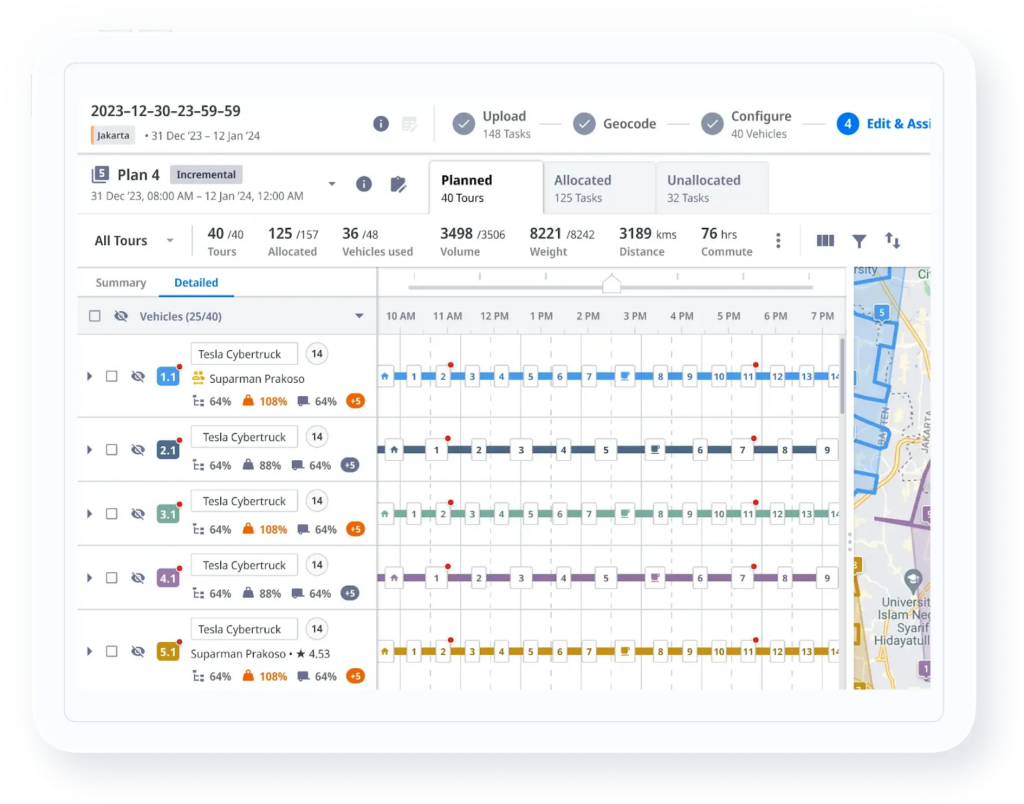
DispatchIQ helps enterprises automate route design, fleet allocation, dispatch sequencing, and real-time adjustments that previously required hours of manual planning.
Orders can be processed in minutes, and routes can adapt as new deliveries arrive, cancellations occur, capacity changes, or service-level risks emerge. This reduces dispatcher workload, improves route adherence, and helps teams scale without adding unnecessary operational complexity.
DispatchIQ supports real-world constraints such as vehicle capacity, customer time windows, driver availability, skills, geography, service levels, and delivery density—critical for enterprises operating across owned, 3PL, and gig fleets.
Control Tower
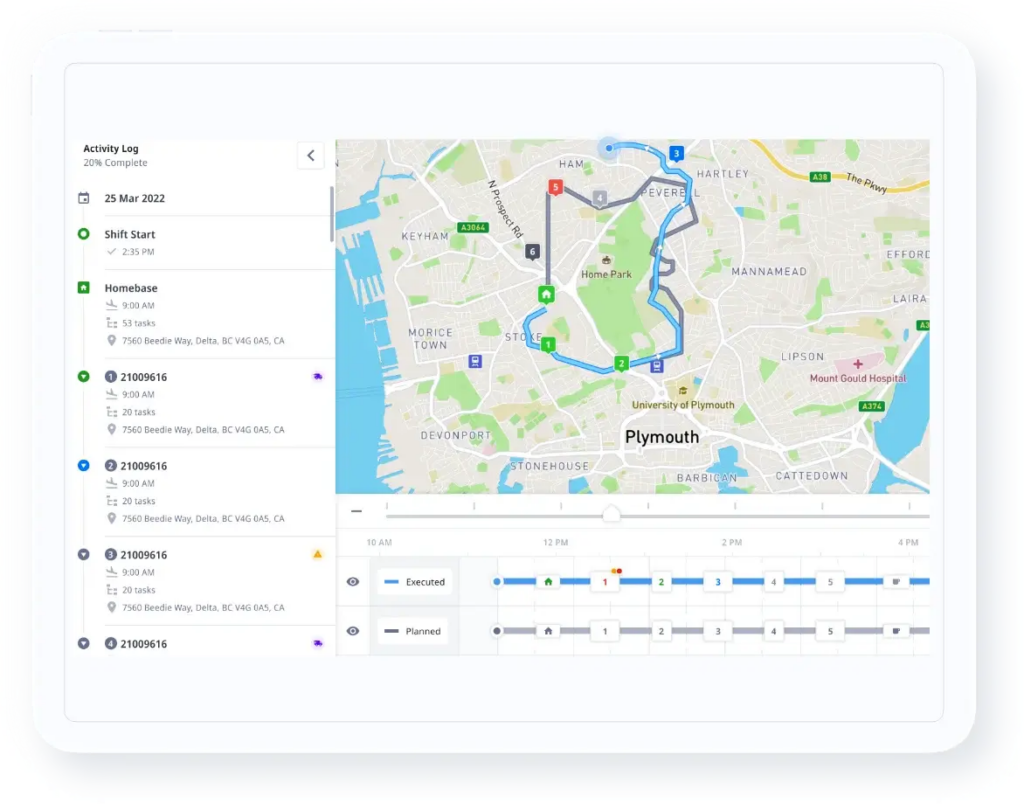
Control Tower gives logistics teams a live view of drivers, loads, cancellations, delivery progress, failed attempts, collections, and exceptions across the network.
Continuous visibility means teams can respond to exceptions as they arise, rather than after service levels have already been missed. During peak periods, this helps protect fulfillment rates, improve ETA accuracy, and maintain customer communication when volumes are at their highest.
For enterprise logistics leaders, Control Tower provides the operating layer needed to manage planned versus actual performance across regions, carriers, and fleets.
Advanced Analytics
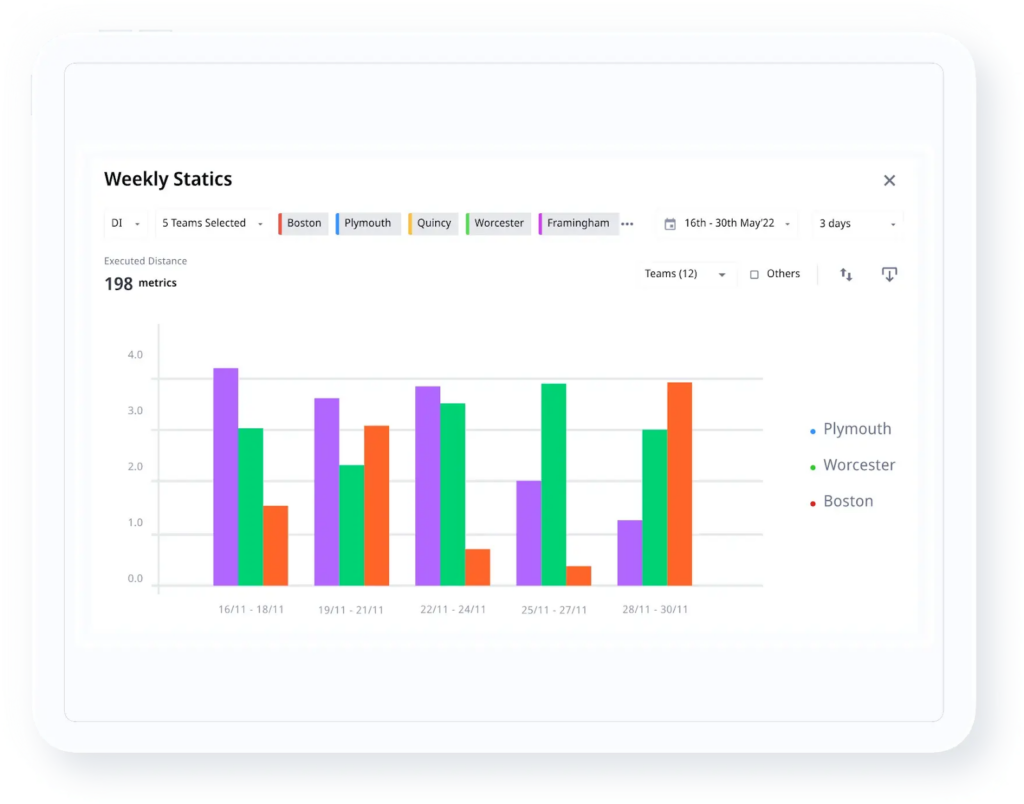
Advanced Analytics equips teams with dashboards and predictive insights that expose inefficiencies and compliance risks before they escalate.
By acting on this data, enterprises can refine route design, benchmark regional performance, identify high-cost delivery patterns, improve on-time delivery, and establish a cycle of continuous improvement.
Useful metrics include cost per stop, cost per order, route adherence, on-time delivery, OTIF, failed delivery rate, vehicle utilization, distance per delivery, driver productivity, SLA breaches, and emissions impact.
? Evaluating logistics platforms for enterprise scale?
Compare the key capabilities to look for in a logistics solution, from integrations and analytics to automation and multi-region scalability.
Summary and Next Steps
Transportation and logistics management has evolved from a cost center into a strategic differentiator. For enterprise leaders, success depends on integrating AI-powered platforms, building unified data infrastructure, and developing digitally skilled teams.
Your next steps:
Establish KPIs for measuring improvement, including on-time delivery, OTIF, cost per order, cost per stop, fleet utilization, empty miles, failed delivery rate, and emissions per delivery.
Assess your current logistics technology stack and identify integration gaps across ERP, WMS, OMS, TMS, carrier, and fleet systems.
Identify your top operational constraints, such as last-mile cost, route inefficiency, failed deliveries, low OTIF, poor visibility, or manual dispatch effort.
Evaluate AI-powered TMS and logistics platforms that align with your scale, fleet mix, regional complexity, and integration requirements.
Build a data foundation that supports consistent KPI measurement across regions, carriers, and delivery models.
Develop a workforce training plan for dispatchers, planners, drivers, and regional operations teams.
Frequently Asked Questions (FAQs)
What is transportation and logistics management?
Transportation and logistics management is the integrated coordination of goods movement, warehousing, inventory planning, fulfillment, and last-mile delivery. Transportation focuses on moving goods from one location to another, while logistics manages the broader flow of products, information, storage, and delivery from supplier to end customer.
What is the difference between transportation management and logistics management?
Transportation management handles the physical movement of goods, including route planning, carrier selection, dispatch, shipment tracking, and freight cost control. Logistics management is broader. It includes transportation plus procurement, warehousing, inventory management, order fulfillment, distribution, reverse logistics, and customer delivery experience.
Why is transportation and logistics management important?
Transportation and logistics management is important because it helps companies reduce costs, improve delivery speed, increase customer satisfaction, meet compliance requirements, and build resilient supply chains. It also helps enterprises control cost-to-serve, improve OTIF performance, and respond faster to disruptions.
What are the main challenges in transportation and logistics management?
The main challenges include rising fuel and labor costs, inefficient route planning, regulatory complexity, supply chain disruptions, fragmented carrier networks, poor last-mile visibility, and data silos from legacy systems. Modern logistics platforms address these challenges through automation, real-time visibility, AI-powered optimization, and integrated workflows.
How does AI improve transportation and logistics management?
AI improves transportation and logistics management by optimizing routes, assigning vehicles, predicting delays, improving dispatch decisions, identifying exceptions, and analyzing performance patterns. AI can evaluate traffic, capacity, delivery windows, driver availability, service levels, and route constraints faster than manual planning.
What are the key components of transportation management?
Key components of transportation management include carrier selection, route planning, fleet allocation, load planning, dispatch scheduling, shipment tracking, freight cost management, compliance management, and carrier performance analysis.
What are the main functions of logistics management?
The main functions of logistics management include procurement coordination, inbound transportation, warehousing, inventory management, order fulfillment, packaging, outbound distribution, last-mile delivery, returns management, and supply chain visibility.
What KPIs are used in transportation and logistics management?
Common KPIs include on-time delivery, OTIF, cost per order, cost per stop, cost per mile, route adherence, failed delivery rate, first-attempt delivery success, fleet utilization, empty miles, dwell time, carrier performance, SLA breaches, and emissions per delivery.
When should an enterprise invest in a TMS or logistics platform?
An enterprise should consider investing in a TMS or logistics platform when manual planning, spreadsheets, or legacy systems begin limiting scale, visibility, cost control, or service quality. Common triggers include rising last-mile costs, poor OTIF performance, high failed delivery rates, fragmented fleets, multi-region complexity, and limited visibility across orders, carriers, and drivers.
How can companies reduce freight and delivery costs?
Companies can reduce freight and delivery costs by improving route optimization, consolidating loads, increasing vehicle utilization, reducing empty miles, selecting carriers based on performance and lane fit, improving dispatch accuracy, reducing failed deliveries, and measuring cost-to-serve across routes, customers, and regions.
What is the role of a transportation and logistics manager?
A transportation and logistics manager oversees the planning, execution, and performance of goods movement across the supply chain. Responsibilities may include carrier management, dispatch oversight, route planning, warehouse coordination, KPI tracking, cost control, compliance, and exception management.
Is transportation part of logistics?
Yes. Transportation is one critical part of logistics. Transportation moves goods between locations, while logistics manages the broader system that ensures the right products are procured, stored, fulfilled, transported, delivered, and sometimes returned efficiently.


CEP and 3PL
3PL Last Mile Delivery: How It Improves Logistics in 2026

Sep 23, 2025
Discover how 3PL last-mile delivery reduces costs and improves efficiency through AI-powered solutions. Learn outsourcing benefits and find the right logistics partner for 2025.
Read more
General
Capacitated Vehicle Routing Problem (CVRP): A Complete Guide
Sep 29, 2025
Learn how to solve the Capacitated Vehicle Routing Problem (CVRP) with AI-powered solutions that reduce delivery costs by 15-30% while optimizing fleet capacity and route efficiency.
Read moreInsights Worth Your Time




















What Is Transportation and Logistics Management? Complete 2026 Guide