


General
10 Best Hyperlocal Delivery Management Software in 2025
Key Takeaways
- Hyperlocal delivery software improves same-day fulfilment through automation, real-time tracking, and faster dispatching.
- Integration with ERP, POS, and CRM systems eliminates data gaps and boosts delivery accuracy.
- AI-based route optimization cuts fuel costs and ensures efficient fleet utilization.
- Real-time analytics help track ROI, improve performance, and enhance customer satisfaction.
- Locus unifies dispatch automation, live visibility, and analytics to deliver reliable, scalable hyperlocal delivery operations.
Every operations leader evaluating hyperlocal delivery management software faces the same questions.
- Will it interrupt active deliveries?
- Can it connect with ERP and POS systems without long integrations?
- Will teams continue using it after rollout?
- And when leadership reviews ROI in the first quarter, will the numbers justify the switch?
These concerns are valid. When systems don’t share data or delivery workflows operate in silos, they result in delayed dispatches, poor visibility, and declining customer satisfaction.
This guide reviews the best hyperlocal delivery management software in 2025. It explains how leading platforms like Locus solve real-world operational challenges and how they help teams achieve reliability, precision, and measurable ROI in local delivery execution.
5 Must-Have Features in a Hyperlocal Delivery Management Software
Hyperlocal delivery management softwares must offer smooth integration, automated dispatching, real-time visibility, ROI analytics, and easy adoption. Each function reduces daily delivery risk and improves consistency.
1. Smooth integration with existing systems
The software should connect quickly with ERP, POS, and CRM tools to keep data aligned. This prevents migration delays, duplicate entries, and gaps between systems.
2. Intelligent, automated dispatching
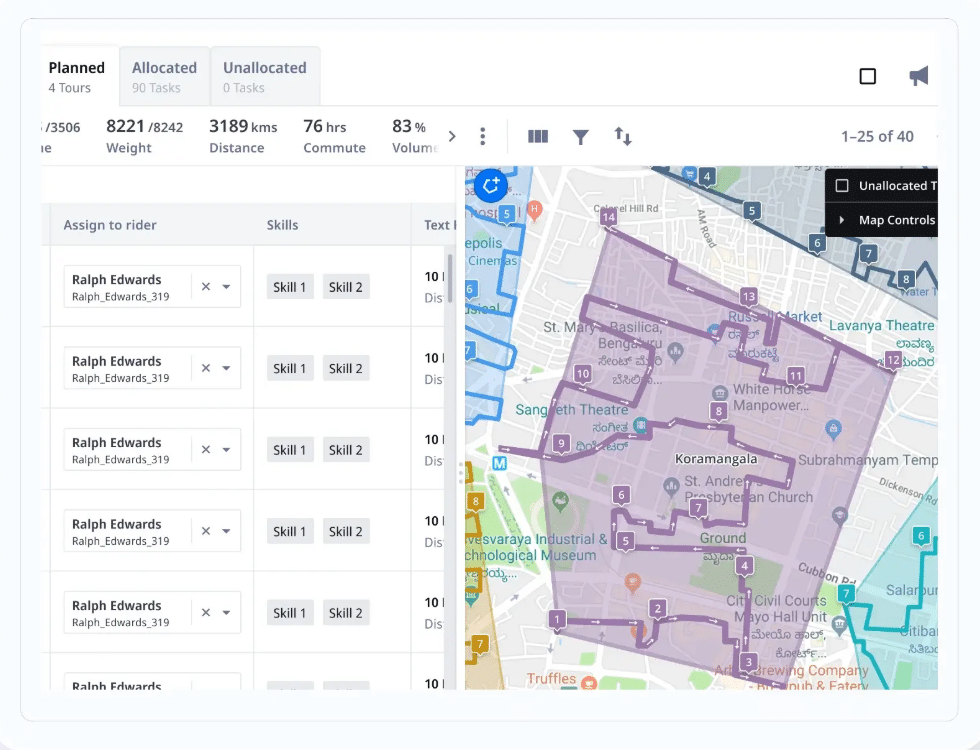
Automation assigns every order to the right driver based on distance, capacity, and urgency. It speeds up dispatch, cuts idle time, and keeps SLA performance steady.
3. Real-time visibility and control
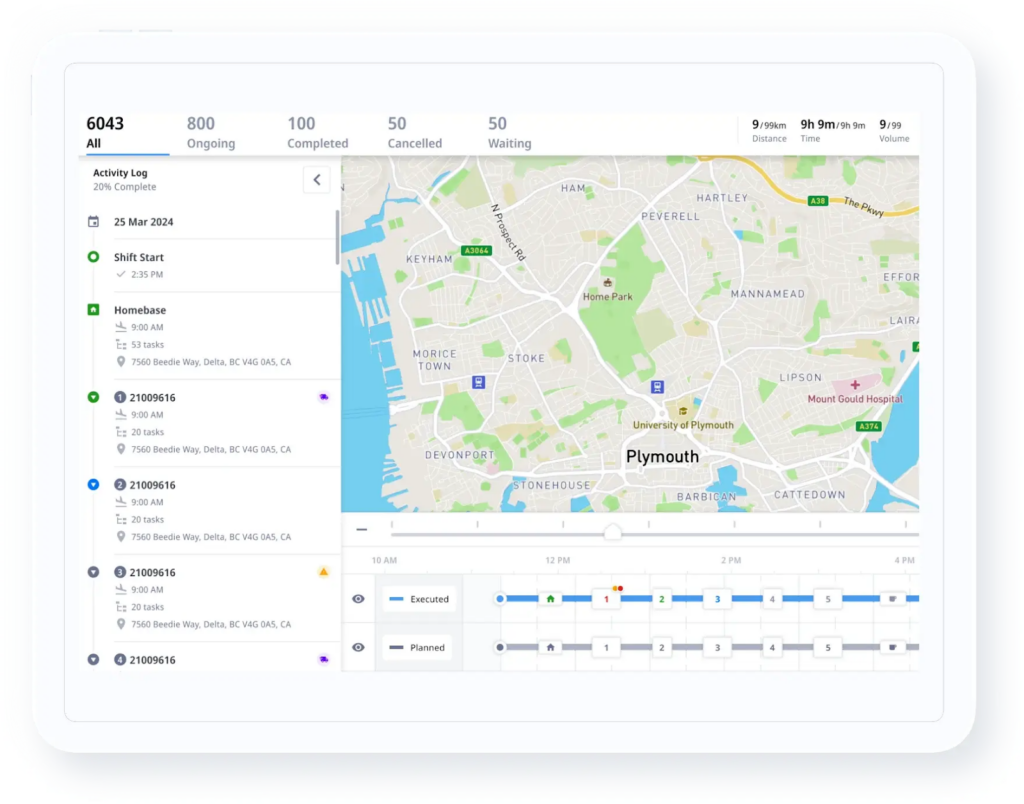
A single dashboard tracks drivers, routes, and orders live. Managers can act fast on exceptions, improve coordination, and build trust through accurate ETAs.
4. Built-in analytics for ROI tracking
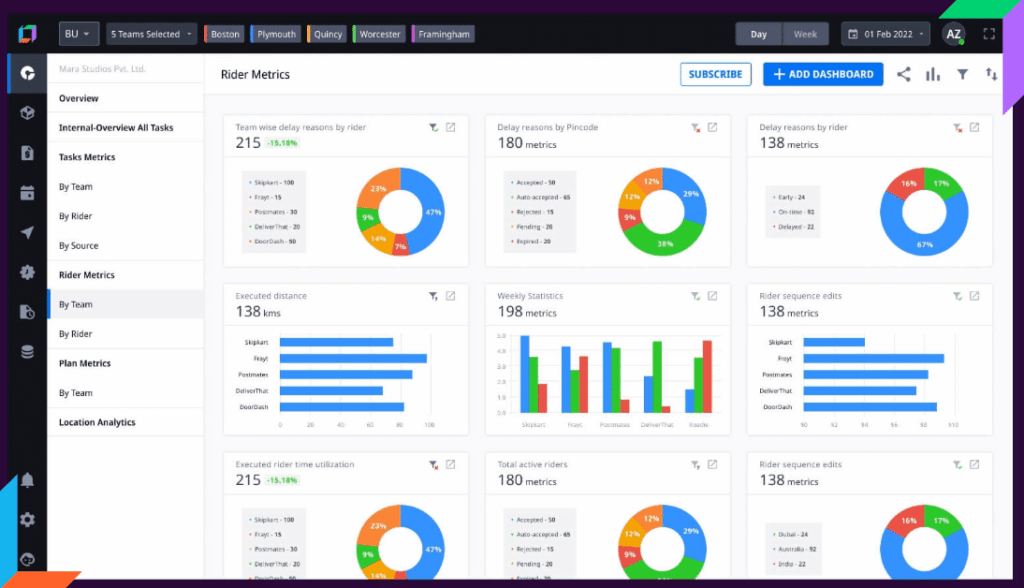
Analytics measure turnaround time, delivery cost, and fulfilment rate. They help leaders prove ROI quickly and identify where processes can improve.
5. Easy adoption for on-ground teams
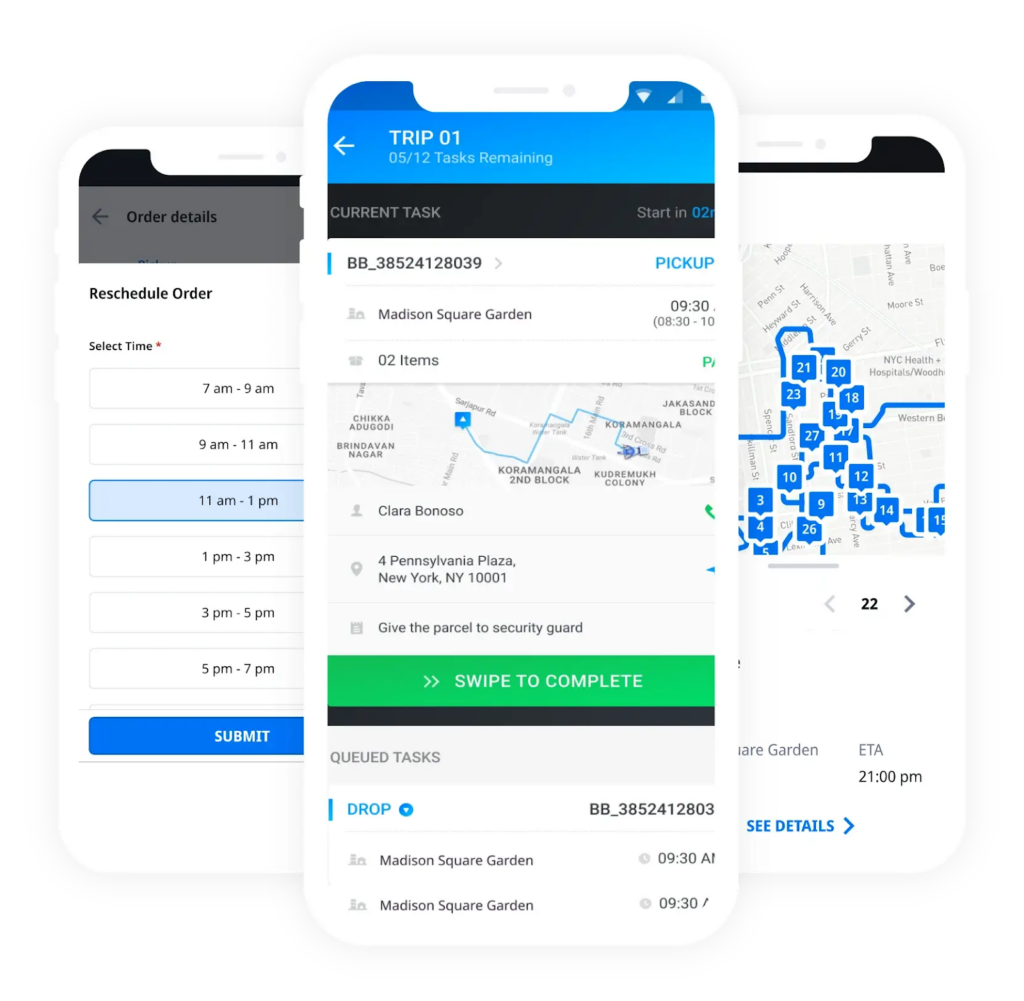
A clear, mobile-first interface helps drivers and dispatchers adapt quickly. Simple workflows encourage daily use without long training cycles.
Q: Is there a single platform that brings integration, automation, and visibility together?
A: Yes, Locus brings integration, automation, and visibility into one connected system. With seamless ERP and POS integrations, AI-based dispatching, and real-time Control Tower visibility, Locus helps enterprises manage hyperlocal deliveries with precision and confidence.It connects data, people, and decisions, giving logistics leaders complete visibility and measurable ROI across every delivery zone.
Top 10 Hyperlocal Delivery Management Software – Overview
After exploring the key features, the next question is clear:
Which platforms actually deliver on them?
Below is an overview of the top 10 hyperlocal delivery management software, showing how each solution performs in real-world operations across scale, visibility, and automation.
| Software | Best For | Core Strength | Pricing |
|---|---|---|---|
| Locus | Enterprise deliveries | AI dispatching, route optimization, real-time tracking | Custom quote |
| HyperZod | Small local businesses | Branded apps, auto-dispatch | Monthly + 0.99% per order |
| LogiNext Mile | Last-mile planning | Route sequencing, live tracking | Quote-based |
| Deonde | Food delivery startups | White-label apps, driver management | Tiered monthly + per order |
| Fynd | Retail and Q-commerce | AI routing, OMS/WMS link | Custom quote |
| Nectarbits | Custom logistics builds | Tailored fleet apps | Project-based |
| FarEye | Reverse logistics | Predictive tracking, rescheduling | Subscription, custom |
| Shipsy | Freight and logistics | Multi-carrier tracking, AI planning | Custom quote |
| SmartRoutes | Route optimization | Live tracking, proof of delivery | From $32/vehicle/month |
| Shippo | eCommerce shipping | Discounted rates, label API | Free or paid plans |
Top 10 Hyperlocal Delivery Management Software – Detailed Comparison
Each hyperlocal delivery management platform offers distinct capabilities tailored to different delivery models and business scales. Below is a breakdown of the leading solutions, highlighting their core strengths and how they address specific operational needs.
1. Locus
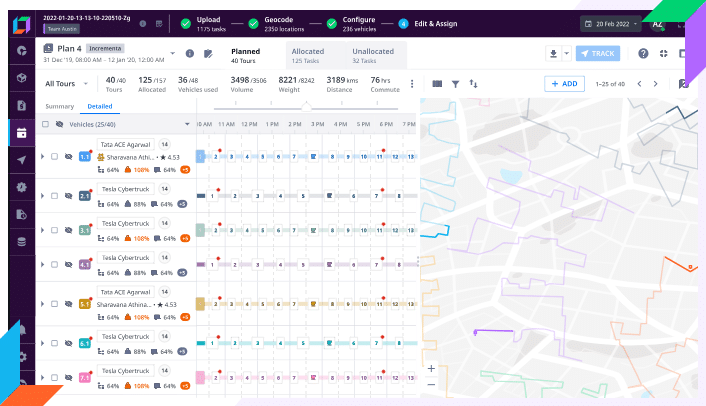
Locus automates dispatching, predicts delays, and optimizes hyperlocal and last-mile routes in real time. It connects middle-mile and local delivery networks, giving teams full visibility and control. Enterprises use it to deliver faster, lower costs, and track performance through clear, data-backed insights.
Key Features of Locus:
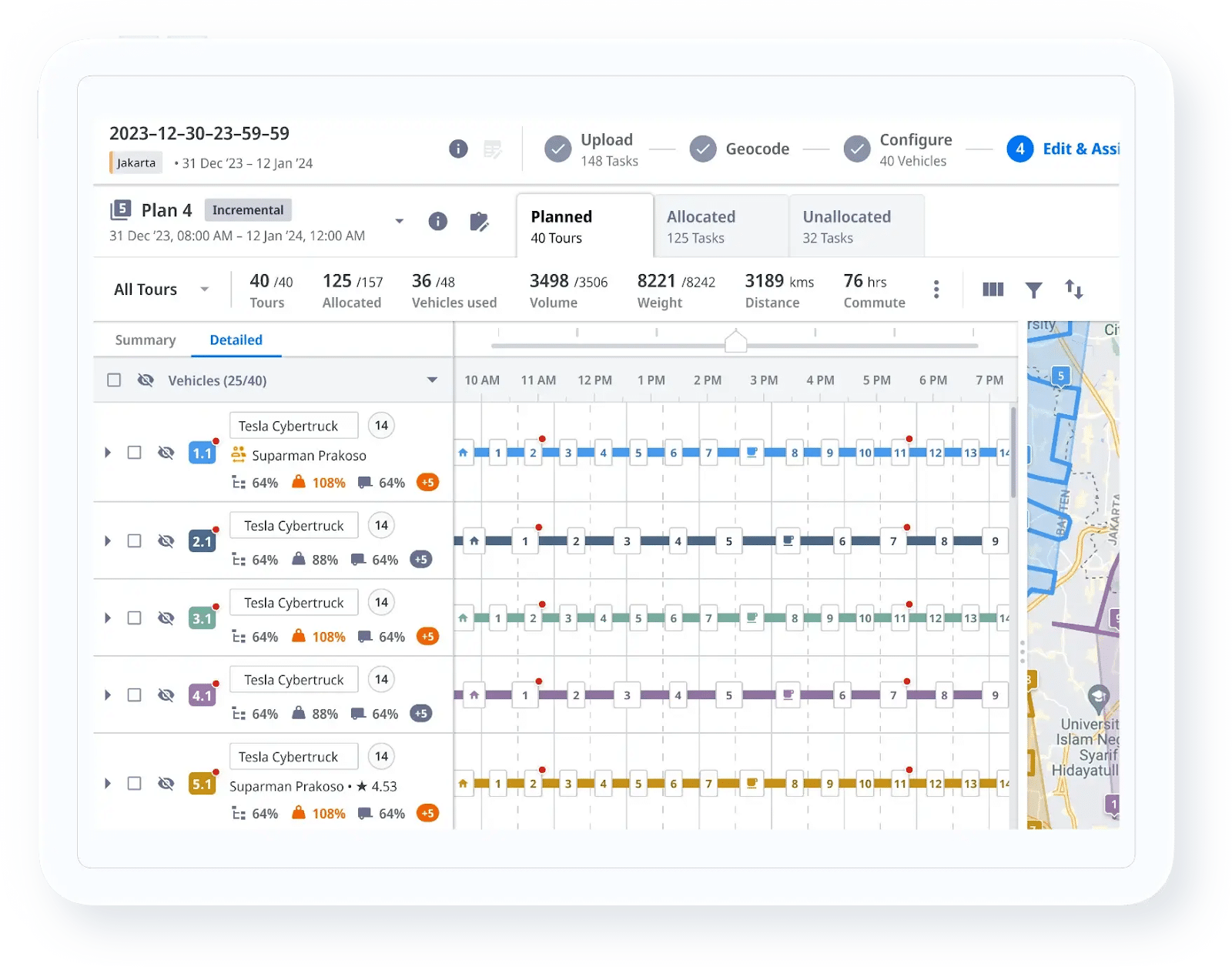
- Auto-dispatch engine: Locus automatically assigns orders to the most suitable driver or vehicle based on distance, delivery priority, capacity, and service constraints. Its configurable logic adapts to each enterprise’s fleet structure and operational rules, minimizing idle time and manual intervention.

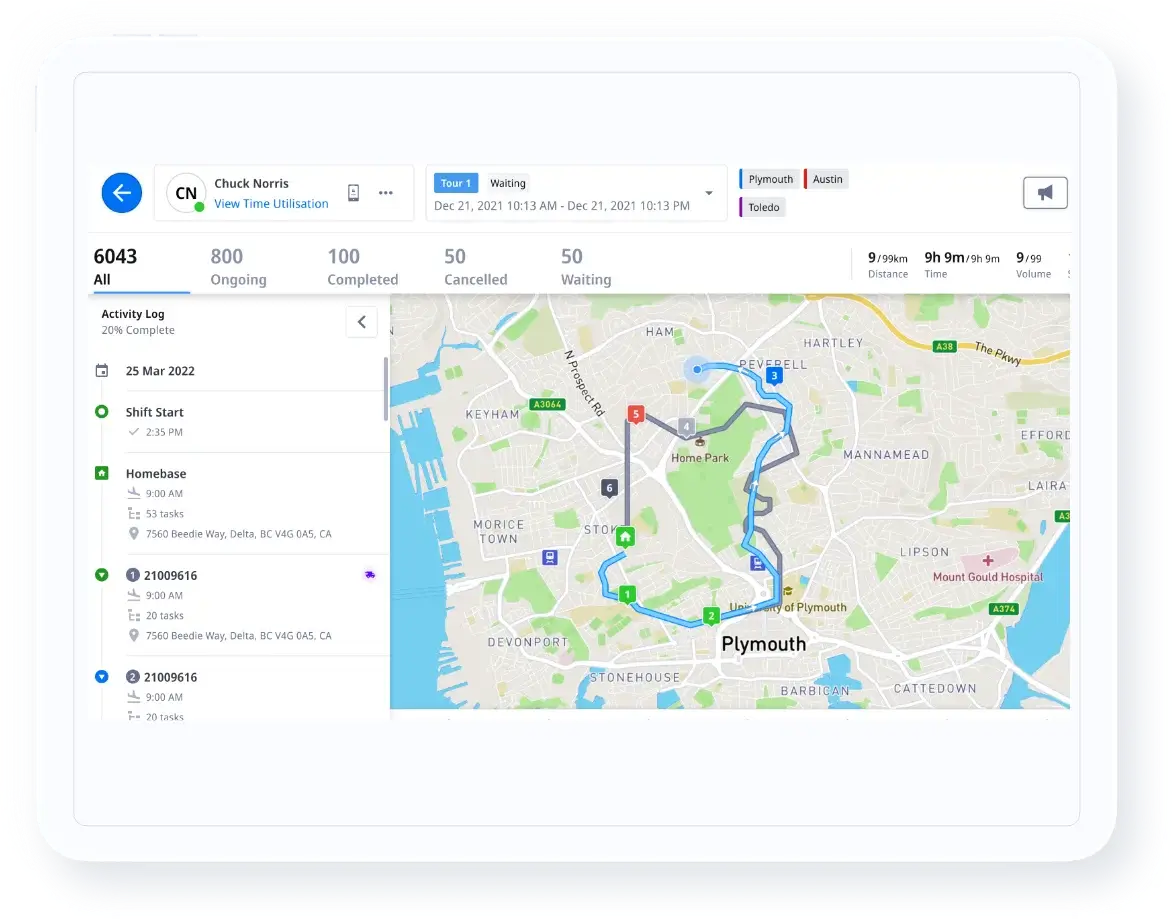
- Real-time Control Tower:Locus gives teams a single dashboard to monitor every shipment, vehicle, and route in real time. Instant alerts identify delays, route changes, or SLA risks, helping managers act quickly and keep deliveries on track with accurate, data-driven decisions.

- Dynamic route optimization: Locus optimizes delivery routes in real time, factoring in live traffic, priority orders, and service commitments. It continually refines routes as conditions change, helping fleets stay efficient without manual re-routing.

- Smart rider reassignment: Locus automatically reallocates deliveries when drivers face delays, capacity issues, or failed attempts. It reassigns tasks in real time to available riders, keeping fulfilment smooth and minimizing delivery backlogs.
- Returns and reverse logistics: Locus automates return workflows by identifying failed deliveries, scheduling reattempts, and routing items back to hubs or sellers efficiently. This minimizes manual coordination and shortens the reverse logistics cycle.
Locus is best for:
- Enterprises managing high-density, short-distance deliveries across multiple zones
- Retail, FMCG, eCommerce, and 3PL networks with complex fulfilment models
- Operations needing AI-driven dispatching and routing precision
- Teams that require real-time visibility and control across fleets and hubs
- Businesses scaling both middle-mile and last-mile workflows efficiently
To explore how Locus optimizes last-mile operations for retail and e-commerce businesses, read the article on its dispatch management enhancements for last-mile logistics, featured in ManufacturingToday.
Locus pricing:
Pricing is based on delivery volume, regional coverage, and system integrations.
Book a personalized demo to get a tailored quote.
2. HyperZod
HyperZod is a quick-commerce platform for businesses launching hyperlocal delivery services fast. It offers branded customer, merchant, and driver apps that simplify order flow and fulfilment. Best suited for single-city and marketplace setups, it prioritizes delivery speed and ease of use over complex, enterprise-scale logistics management.
Key Features of Hyperzod:
- Mobile-first ecosystem including ordering website, customer, merchant, and driver apps
- Autozod auto-dispatch module for city-level order assignment and delivery coordination
- No-code theme builder with white-label customization and drag-and-drop design tools
- Multi-store, multi-vendor, and single-store configurations for flexible business models
- Store-level geofencing, WhatsApp marketing, offers, and push notifications
- Merchant analytics, POS integration, and multilingual support
Hyperzod Is Best for:
Quick-commerce brands, restaurants, grocers, and small to mid-sized retailers wanting an all-in-one ordering and delivery solution.
Hyperzod Pricing:
Monthly per-module subscription (apps, website, admin panel), with a 0.99% success fee on each order and an optional one-time setup fee. A 14-day free trial is available.
3. LogiNext Mile
LogiNext Mile offers a delivery automation platform that combines route optimization, order tracking, and workforce management in one system. It helps logistics and retail teams manage urban deliveries efficiently, focusing on delivery visibility, scheduling, and last-mile performance tracking.
Key Features of LogiNext Mile:
- Route planning engine: Plans and sequences delivery routes with real-time traffic Route Planning Engine: Sequences delivery routes using real-time traffic and distance data.
- Live Delivery Tracking: Gives customers and dispatchers full visibility into shipment progress.
- Proof of Delivery (POD): Captures digital signatures, images, and confirmations for every order.
- Field Force Management: Monitors driver availability, performance, and on-ground activity.
- Customer Notification System: Sends SMS and email alerts for live delivery updates.
LogiNext Mile Is Best for:
Organizations that prioritize structured last-mile delivery planning and visibility but don’t require large-scale AI orchestration or deep integration across middle-mile workflows.
LogiNext Mile pricing:
Available upon request. Pricing varies by delivery volume, number of users, and operational regions.
4. Deonde
Deonde is a SaaS-based delivery platform built for restaurants, cloud kitchens, and hyperlocal businesses that want branded ordering websites and apps without marketplace fees or technical complexity. It supports single and multi-vendor food delivery, subscription plans, and vendor management through connected customer, driver, and partner apps.
Key Features of Deonde:
- Custom-branded website and PWA
- Delivery scheduling and driver settlements
- Subscription management for recurring orders
- Coupons, promotions, and customer ratings
Deonde Is Best for:
Small and mid-sized food and hyperlocal delivery operators seeking a ready-made, white-label system.
Deonde Pricing:
Tiered monthly plans (Pro, Premium, Spark) with per-order fees beyond the included volume. One-time app add-ons and custom deployments are available.
5. Fynd
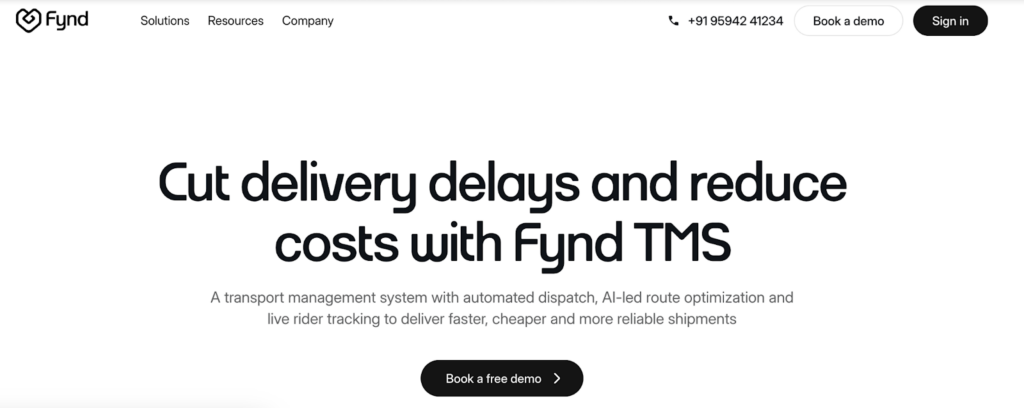
Fynd is a retail and logistics technology platform that offers an AI-powered transportation management system (Fynd TMS) for dispatching, routing, and shipment tracking. It’s designed for urban and regional delivery networks, helping businesses improve delivery speed and visibility across the first, middle, and last mile.
Key Features of Fynd:
- AI route optimization for better fuel efficiency
- Automated dispatching and live rider tracking
- Zone-based delivery control
- AI address enrichment for improved accuracy
- Unified integration with Fynd OMS, WMS, and Logistics modules
- Centralized dashboard for fleet and ETA tracking
Fynd Is Best for:
Retail, fashion, grocery, and quick-commerce brands managing regional networks that need AI optimization without enterprise-scale dispatch complexity.
Fynd Pricing:
Custom quotes based on volume, integrations, and coverage.
6. Nectarbits
Nectarbits is a custom software development company that creates tailored logistics and transport solutions instead of offering a fixed SaaS platform. Its logistics practice focuses on building fleet tracking systems, supply chain movement tools, and on-demand delivery apps for businesses seeking custom-built solutions aligned with their workflows.
Key features of Nectarbits:
- Custom logistics and delivery app development
- Fleet tracking and supply chain visibility solutions
- Integration with existing systems and databases
- AI-based logistics analytics for faster decisions
- On-demand delivery support (logistics, fuel, taxi, etc.)
- Post-launch support and optimization
Nectarbits Is Best for:
Startups, SMEs, and enterprises investing in a fully customized hyperlocal or logistics solution over a pre-built SaaS platform.
Nectarbits Pricing:
Project-based, depending on scope, tech stack, and complexity.
7. FarEye
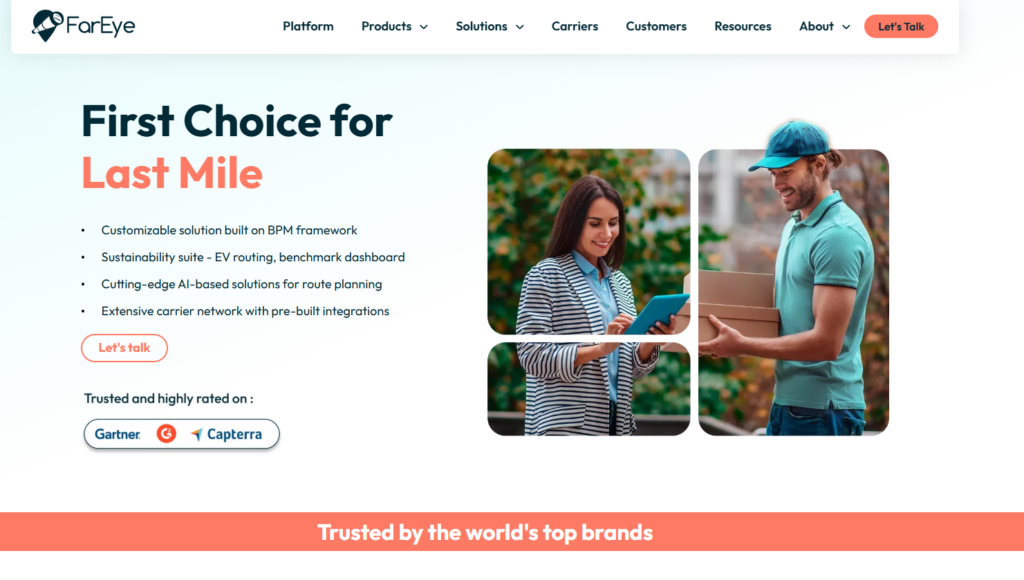
FarEye is a last-mile delivery optimization platform that helps businesses improve delivery accuracy and manage returns efficiently. It combines predictive tracking, dynamic rescheduling, and customer engagement tools to simplify both forward and reverse logistics.
FarEye’s Key Features:
- Real-time tracking for better SLA control and fewer delays
- AI-based route optimization for faster fulfilment
- Automated rescheduling for cancelled or delayed deliveries
- Real-time customer notifications and communication tools
FarEye is Best for:
E-commerce and enterprise retailers managing large delivery networks and returns workflows that need predictive visibility and customer-focused logistics
FarEye’s Pricing:
FarEye offers a subscription-based pricing model, with costs tailored to business needs, including factors like return volumes and required features.
8. Shipsy
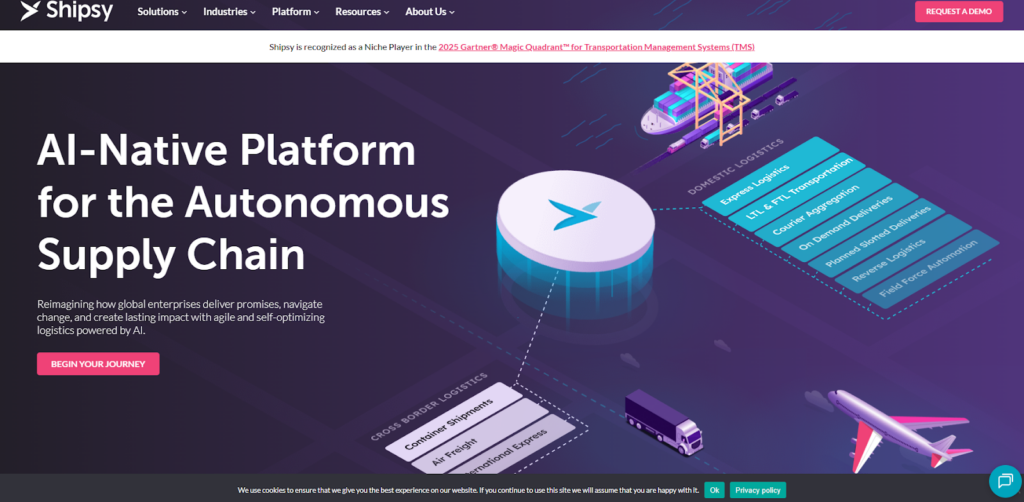
Shipsy is an AI-powered logistics platform that helps businesses automate and optimize their supply chain operations. From route optimization to shipment tracking, Shipsy integrates end-to-end logistics workflows, driving efficiency, sustainability, and cost savings.
Key Features of Shipsy:
- Route optimization and planning: AI tools boost fleet capacity and cut delivery delays across all shipment stages.
- Shipment tracking and visibility: Real-time monitoring across 50+ shipping lines and 40+ 3PLs with proactive delay alerts.
- Freight procurement: AI-driven vendor negotiations and rate benchmarking reduce freight spend.
- Real-time notifications: Automated customer updates improve first-attempt delivery rates.
Shipsy is Best for:
Shipsy is ideal for manufacturers and retailers that need complete visibility and real-time tracking for domestic and international shipments, as well as 3PLs and courier companies managing complex, multi-carrier logistics that require precise route optimization and unified control.
Shipsy’s Pricing:
Shipsy offers a tailored pricing model based on the business needs and scope of integration. Interested businesses can contact Shipsy for a demo and detailed pricing information.
9. SmartRoutes
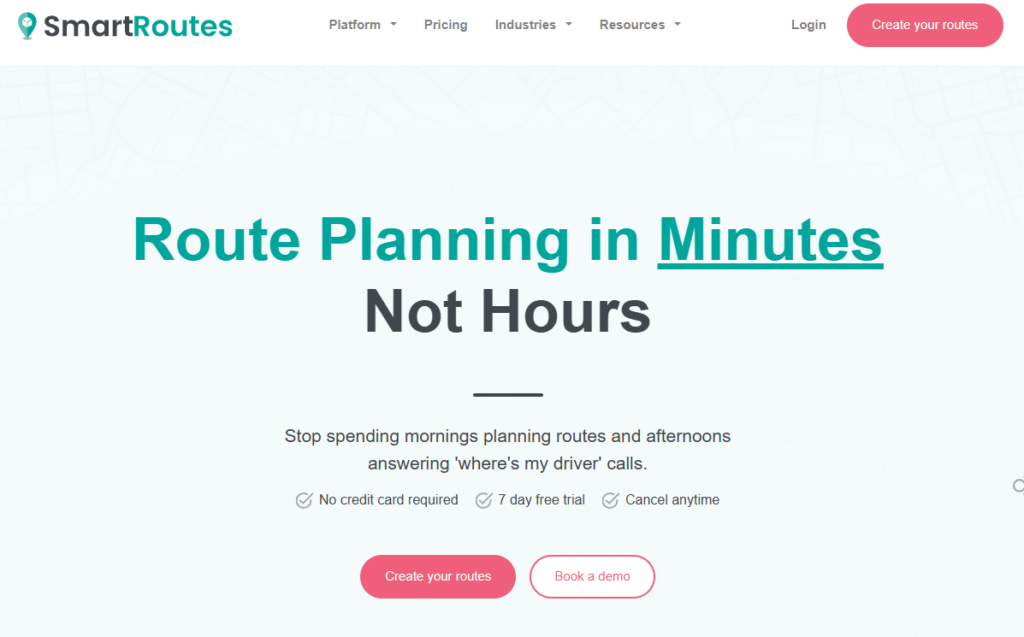
SmartRoutes provides a powerful delivery route planning solution designed to optimize fleet management, reduce operational costs, and enhance customer satisfaction. With AI-driven route optimization and real-time tracking, SmartRoutes helps businesses streamline their delivery processes and improve efficiency.
Key Features of SmartRoutes:
- Route optimization: Plans the most efficient delivery routes to cut fuel use, save time, and improve on-time performance.
- Real-time tracking and visibility: Shares live updates with drivers and customers, increasing transparency and reducing support calls.
- Proof of delivery: Captures e-signatures, photos, or barcode scans to confirm deliveries automatically and maintain accountability.
- Delivery management: Syncs with order management systems to improve scheduling, fleet efficiency, and customer satisfaction.
SmartRoutes is Best for:
This software is ideal for logistics and courier businesses aiming to improve route planning, tracking, and overall delivery performance, as well as furniture and e-commerce companies that need efficient handling of bulky deliveries with real-time visibility and optimized routing.
SmartRoutes Pricing:
SmartRoutes offers flexible subscription plans, starting at $32 per vehicle per month. Pricing scales based on delivery volume and the level of required features, with plans designed for businesses of all sizes.
10. Shippo
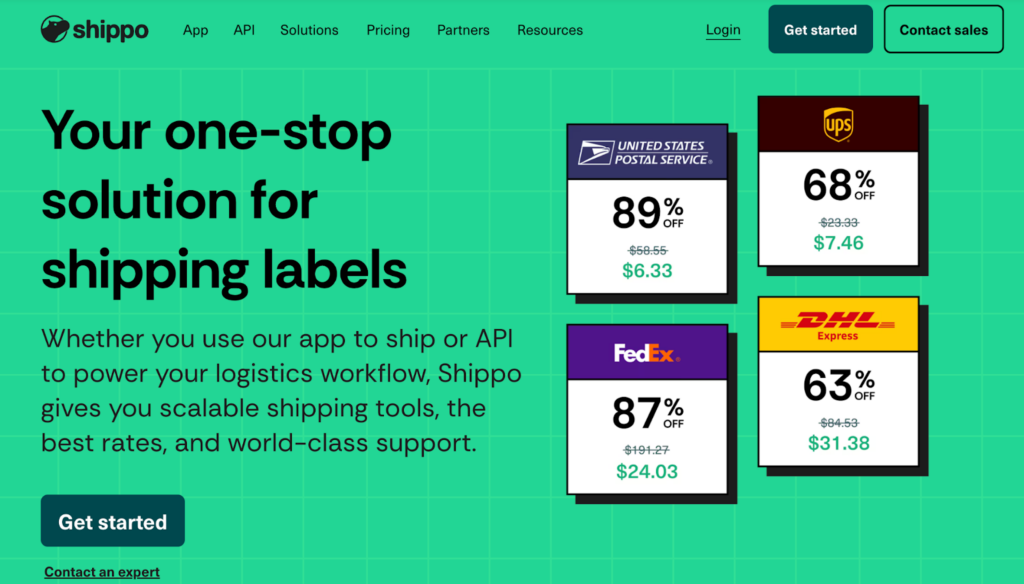
Shippo is a multi-carrier shipping platform that lets businesses create labels, compare discounted rates, and manage tracking and returns from one dashboard. It’s designed for eCommerce brands, marketplaces, and software platforms that want quick access to 40+ global carriers without building complex shipping infrastructure internally.
Key Features of Shippo:
- Shipping labels and rates: Compare rates and create carrier labels in minutes.
- Store and tool integrations: Sync major eCommerce platforms and manage all orders centrally.
- Tracking and notifications: Provide real-time shipment updates and customer alerts.
- Returns management: Automate return labels for a smooth post-purchase process.
- Developer-friendly APIs: Enable rating, tracking, and label creation for custom workflows.
Shippo Is Best for:
Small and mid-sized eCommerce businesses needing fast label creation and discounted carrier rates, high-volume shippers integrating shipping into OMS, WMS, or ERP systems, and marketplaces or SaaS platforms offering native shipping tools to merchants through APIs.
Shippo Pricing:
The Starter plan is free for up to 30 labels per month, with access to discounted rates (fees apply for using own carrier accounts). The Pro plan adds branded tracking, multi-user access, and carrier flexibility. Premier/API Premier tiers offer custom pricing with volume discounts and dedicated support.
Turning Delivery Chaos into Predictable Performance
Every missed delivery or delayed ETA reduces control and weakens customer trust. When systems don’t connect, operations teams lose visibility and can’t respond quickly.
Locus fixes this with one connected platform that unifies AI dispatching, live Control Tower monitoring, and real-time analytics. Teams can spot risks early, act fast, and maintain delivery consistency across every zone.
For high-volume hyperlocal operations, Locus centralizes visibility, control, and reliability in one command center. Deliveries run on time, exceptions stay manageable, and customers remain confident.
Book a demo to see how Locus strengthens delivery control, accuracy, and customer experience.
Frequently Asked Questions (FAQs)
1. What is hyperlocal delivery management software?
It’s a platform that automates order dispatching, routing, and tracking for local deliveries within a small geographic radius, helping businesses fulfil same-day or instant delivery promises efficiently.
2. Who uses hyperlocal delivery software?
Retailers, grocers, restaurants, and courier services use it to manage short-distance deliveries, reduce manual coordination, and improve delivery speed and accuracy.
3. How does AI improve hyperlocal delivery?
AI analyses live traffic, order density, and driver location to optimize routes, cut delivery time, and improve fleet productivity in real time.
4. What’s the difference between last-mile and hyperlocal delivery?
Last-mile covers the final leg of delivery from warehouse to customer, while hyperlocal focuses on short-distance fulfilment within a specific area or city.
5. Why do enterprises choose Locus for hyperlocal delivery?
Locus combines AI-powered dispatching, real-time visibility, and control tower analytics to help enterprises streamline high-volume, short-distance deliveries with precision.

General
Why to Consider Delivery Management System for E-Commerce Business

Nov 26, 2025
Understand the role of e-commerce delivery management in improving operational control, reducing costs, and enabling seamless last-mile delivery.
Read more
E-Commerce
12 Strategies for Ecommerce Shipping in a Changing Landscape
Nov 28, 2025
A strong ecommerce shipping strategy reduces cost per order, improves delivery speed, and supports growth. Learn practical steps and tools to build a more stable setup.
Read moreInsights Worth Your Time




















10 Best Hyperlocal Delivery Management Software in 2025