


General
Top 10 Delivery Experience Optimization Platforms for E-Commerce and 3PLs (2026)
Key Takeaways
- Delivery experience optimization is the practice of improving every customer-facing interaction across the delivery lifecycle, from the promise made at checkout through tracking, arrival, confirmation, and returns, by connecting customer communication to real operational data.
- The category contains three genuinely different platform types: post-purchase experience specialists, delivery orchestration platforms, and fulfilment providers with a technology layer. They are not substitutes, and most buying mistakes come from comparing across the three as though they were.
- Six criteria separate them for enterprise buyers: real-time tracking depth, notification engine sophistication, SLA management, returns handling, analytics, and integration depth.
- Entries below are grouped by primary fit rather than ranked, because a ranking across three platform types and two buyer profiles would be misleading. Every entry, Locus included, carries a stated limitation.
Why Delivery Experience Became a Competitive Line Item
For most of e-commerce history, delivery was a cost centre that occasionally embarrassed marketing. That changed when the delivery experience became the longest sustained interaction a brand has with a customer after purchase, and the only one that regularly fails in public.
The economics are unambiguous. Last-mile carries 41 to 53% of total logistics cost (Capgemini Research Institute), and each failed first attempt costs roughly $17.78 (OrangeMantra) before the relationship cost of a customer who waited in. Locus’s Q2 2026 consumer research found reliability outranking raw speed as a delivery preference, which reframes the investment case: predictability communicated well beats speed communicated badly.
For e-commerce brands, this shows up as repeat purchase rate and support volume. For 3PLs, it shows up in client retention, because delivery experience is increasingly what a retail client evaluates at contract renewal rather than cost per parcel alone.
This guide covers what delivery experience optimization software does, the six criteria that separate platforms, ten platforms grouped by fit, and the different weightings e-commerce brands and 3PL operators should apply.
What Delivery Experience Optimization Software Does
Delivery experience optimization software manages the customer-facing layer of fulfilment: the delivery promise offered at checkout, tracking visibility, proactive notifications, ETA accuracy, exception communication, proof of delivery, and the returns entry point. Mature platforms connect that layer to operational data so what the customer is told reflects what is actually happening.
The category splits three ways, and knowing which type you are evaluating matters more than any feature comparison:
Post-purchase experience specialists own the customer communication layer across carriers the brand does not operate. Strong on tracking pages, notifications, returns, and brand consistency. They do not decide how anything gets delivered.
Delivery orchestration platforms decide the delivery, then communicate it. Routing, dispatch, carrier allocation, and execution, with the customer-facing layer generated from that operational state. Strong where the operation controls fleets or carrier mix.
Fulfilment providers with a technology layer operate the fulfilment itself and expose experience tooling as part of the service. The technology is not separable from the operation.
Also Read: 10 Ways to Boost Delivery Experience in 2026: What Last Mile Leaders Should Know
How to Evaluate Delivery Experience Optimization Platforms
Six criteria, with the question to put to each vendor.
| Criterion | What to look for | Vendor question |
|---|---|---|
| Real-time tracking depth | Live position and progress against plan, not milestone scans replayed | Show me which deliveries are at risk right now, not where vehicles are |
| Notification engine | Event-triggered, multi-channel, with dynamic ETA recalculation and exception logic | What fires the notification, and how is the ETA in it computed? |
| SLA management | Promise tracking per client or channel, with breach prediction | Can you show SLA attainment as a live balance rather than a monthly report? |
| Returns handling | Initiation, routing, and status communication in one flow | Is returns a native flow or a link out to another system? |
| Analytics | First-attempt rate, WISMO deflection, ETA accuracy, cost per delivery | What is measured ETA accuracy at a reference customer, and how is it calculated? |
| Integration depth | Production connectors to OMS, WMS, ERP, carriers, storefronts | Which of our specific systems are you live with in production today? |
Weight these criteria by platform type, since delivery experience optimization software is not one category. Notification engine and returns matter most for post-purchase specialists; tracking depth and integration matter most for orchestration platforms.
The Ten Delivery Experience Optimization Platforms
Grouped by primary fit rather than ranked, because delivery experience optimization means something different in each group. Descriptions are at design-centre level, since specific features and pricing move quickly; verify current detail with each vendor.
Delivery Orchestration Platforms
1. Locus Locus is the world’s first Decision-Intelligent, Agentic Transportation Management System, and its delivery experience layer is generated from the same operational state that plans routes, allocates carriers, and dispatches drivers. That architecture is the differentiator: ETAs communicated to customers are computed from live route progress and learned service times rather than static transit assumptions, and exceptions are detected against promise risk so recovery can be attempted before the customer is told anything. Branded tracking, multi-channel notifications including SMS, email, and WhatsApp where configured, electronic proof of delivery, and delivery analytics all read from one record. Carrier reach comes through ShipFlex, connecting a 1,000+ carrier network with 160+ pre-integrated. Best fit: enterprise retail, CPG, and 3PL operations running owned or contracted delivery capacity where the operation controls how deliveries happen. Limitation: Locus is built for operations that control delivery execution. A brand whose fulfilment is entirely outsourced to parcel carriers and which needs only post-purchase tracking, notifications, and returns messaging will find Locus more platform than the problem requires, and a post-purchase specialist may fit better. It is also not a returns-management specialist, and implementation is a project rather than a signup.
Also Read: Driver Management Communication Infrastructure: Europe 2026
2. Bringg Delivery orchestration for enterprise retail, with carrier network management and customer-facing tracking. Strong where a retailer coordinates multiple delivery providers. Best fit: enterprise retailers orchestrating mixed delivery models. Limitation: evaluate constraint depth and execution control against your specific operation rather than category positioning.
3. FarEye Enterprise last-mile delivery platform with notable retail and e-commerce traction, spanning execution and customer experience. Best fit: enterprise last-mile programmes in retail and e-commerce. Limitation: as with all orchestration platforms, verify the specific integration list against your systems, and confirm returns depth if that is a priority.
4. DispatchTrack Last-mile delivery management with strong presence in retail and big-and-bulky categories, and a well-developed customer communication layer for scheduled deliveries. Best fit: retailers with scheduled, appointment-based, or big-and-bulky delivery. Limitation: the design centre is scheduled delivery operations; high-volume parcel-style flows are a different problem.
5. Onfleet Last-mile delivery management with a clean driver app, routing, and customer notifications, well regarded in small and mid-market operations. Best fit: small to mid-market delivery operations wanting quick deployment and straightforward dispatch. Limitation: the simplicity that makes it fast to deploy means enterprise constraint depth and multi-carrier orchestration are outside its design centre.
Post-Purchase Experience Specialists
6. Narvar Post-purchase experience platform covering tracking, notifications, and returns for retail brands, with emphasis on brand-consistent customer journeys. Best fit: retail and D2C brands shipping via parcel carriers who want to own the post-purchase layer. Limitation: does not decide or execute delivery, so it improves how the experience is communicated rather than how reliably it happens.
7. AfterShip Shipment tracking, notifications, and returns for e-commerce, with broad carrier coverage and strong storefront integrations. Best fit: e-commerce brands, including mid-market, needing multi-carrier tracking and notifications quickly. Limitation: same structural boundary as other post-purchase tools, plus depth of enterprise SLA management is worth testing directly.
8. parcelLab Post-purchase and operations experience management with strong European retail presence, covering proactive communication across the fulfilment journey. Best fit: retailers, particularly in Europe, prioritising branded proactive communication. Limitation: customer-facing layer rather than delivery execution; confirm operational data depth available from your carriers.
Fulfilment Providers With a Technology Layer
9. ShipBob E-commerce fulfilment provider operating warehouses and shipping, with technology and customer-facing tooling included in the service. Best fit: D2C brands outsourcing fulfilment entirely and wanting one provider for warehousing, shipping, and experience. Limitation: the technology is not separable from the fulfilment service, so this is a fulfilment decision rather than a software decision. Not comparable to platforms you run over your own operation.
10. Shipping and label platforms (ShipStation, Shippo and similar) Multi-carrier rate shopping, label generation, and basic tracking notifications for e-commerce operations. Best fit: small and mid-market e-commerce shipping operations. Limitation: built around shipping execution rather than delivery experience; notification and tracking capability is functional rather than a differentiator, and enterprise SLA or analytics needs will outgrow them.
Also Read: Delivery Notification Architecture: European Retail 2026
Delivery Experience Optimization Comparison Table
| Platform | Type | Tracking depth | Notification engine | SLA management | Returns | Integration depth | Best fit |
|---|---|---|---|---|---|---|---|
| Locus | Orchestration | Live, plan-relative | Event-driven, dynamic ETA | Promise-level, predictive | Supported, not specialist | Enterprise OMS/WMS/ERP plus 1,000+ carriers | Enterprise retail, CPG, 3PL |
| Bringg | Orchestration | Live | Strong | Client-level | Supported | Enterprise plus carrier network | Enterprise retail orchestration |
| FarEye | Orchestration | Live | Strong | Enterprise | Supported | Enterprise | Enterprise last-mile retail |
| DispatchTrack | Orchestration | Live | Strong for scheduled delivery | Appointment-level | Supported | Retail systems | Scheduled and big-and-bulky |
| Onfleet | Orchestration | Live | Good | Basic | Limited | Mid-market | SMB and mid-market delivery |
| Narvar | Post-purchase | Carrier-fed | Strong | Limited | Strong | Storefront and carrier | Retail and D2C post-purchase |
| AfterShip | Post-purchase | Carrier-fed | Strong | Limited | Strong | Broad carrier and storefront | E-commerce multi-carrier |
| parcelLab | Post-purchase | Carrier-fed | Strong | Limited | Supported | Retail systems and carriers | European retail communication |
| ShipBob | Fulfilment provider | Within its network | Included | Within service | Included | Storefront | D2C outsourced fulfilment |
| Shipping platforms | Shipping software | Carrier-fed | Basic | None | Varies | Storefront and carrier | SMB e-commerce shipping |
Ratings are relative within the category and reflect design centre rather than tested benchmarks. Use the table to shortlist, then run the six vendor questions above.
E-Commerce-Specific Considerations
D2C versus marketplace. A D2C brand owns the customer relationship and therefore the whole post-purchase experience, which makes branded tracking and notification control genuinely valuable. A marketplace seller often does not control the customer communication layer at all, which changes the calculation substantially and can make investment in it redundant.
Delivery-linked checkout. The most under-built capability in e-commerce delivery experience optimization. Offering delivery windows the operation can actually hold, determined by real feasibility rather than by marketing, prevents failures upstream of any notification. This requires the experience layer and the fulfilment logic to share a feasibility model, which post-purchase-only tools cannot do.
Branded tracking as retention infrastructure. The tracking page is often the most-visited page a brand owns after checkout. Treating it as a retention surface rather than a status utility is a low-cost, high-frequency touchpoint.
Returns as part of the experience. For apparel and similar categories, returns volume makes the returns flow as important as the delivery flow, which argues for weighting returns handling heavily and possibly for a post-purchase specialist even alongside an orchestration platform.
3PL-Specific Considerations
Multi-client separation. A 3PL needs per-client branding, per-client SLA definitions, per-client notification templates, and strict data separation, with all of it manageable without a services engagement per client. This is the single most common gap between a platform that demos well and one that operates at a 3PL.
White-label everything. The end customer belongs to your client, not to you. Tracking pages, notifications, and driver-facing branding all need to carry the client’s identity, configurable per client.
Delivery experience as a commercial asset. For 3PLs, the ability to show a retail client their own delivery performance, first-attempt rates, ETA accuracy, WISMO deflection, is a renewal and new-business instrument. That makes analytics depth a commercial requirement rather than an operational nicety.
Configurability over opinionation. A 3PL cannot adopt a platform with one embedded view of how delivery should work, because each client works differently. Rule-level configurability per client is the requirement, and it is where lighter platforms hit their ceiling fastest.
How Locus Performs
Locus sits in the orchestration group, and the architectural claim is specific: the customer-facing layer is generated from the same operational state that makes delivery decisions, so it cannot drift from what is actually happening.
Promise accuracy at the source. Locus models 250+ real-world constraints when planning, so delivery windows offered at checkout are ones the operation can hold. Most delivery experience failures are promise failures, and they are unfixable downstream of planning.
ETAs from live execution. ETAs are computed from route progress, traffic, and learned service times, and recalculated as routes run, with revised windows pushed when the change is material rather than on every recalculation.
Exception detection before customer impact. Because visibility feeds decisioning, an at-risk delivery triggers recovery, re-sequencing, carrier switching, or reassignment, before it triggers a customer apology.
Multi-client and white-label operation. Branded tracking, configurable notification logic, and per-client separation support 3PL operating models, alongside enterprise retail deployments.
Proof and analytics. Electronic proof of delivery covering photo, signature, OTP, and geo-timestamp, with delivery analytics covering first-attempt rate, on-time performance, and plan execution.
Deployment evidence. A retail enterprise that consolidated six legacy systems onto Locus reduced manual dispatch effort by more than 80%, sustained 99%+ on-time delivery, and reached break-even inside year one. A Fortune 50 logistics provider running 4,500+ drivers lifted plan execution from 75% to 92%, surfacing $14M+ in annualised capacity it already owned. Across the deployed base: 1.5B+ deliveries orchestrated for 360+ enterprise customers in 30+ countries at 99.99% uptime. Locus is designated a Leader in the QKS Group SPARK Matrix for Transportation Management Systems.
For more depth, see the delivery experience optimization page, the delivery experience optimization 2026 guide, the last-mile logistics software guide, and the 3PL software guide.
Four Ways Delivery Experience Optimization Programmes Fail
Platform choice is necessary and not sufficient. Four failure patterns recur regardless of which software was bought.
Buying across platform types. The most expensive mistake, and the reason this guide groups rather than ranks. A brand that controls delivery execution buys a post-purchase specialist, gets better communication about the same unreliable deliveries, and concludes delivery experience optimization does not work. The inverse also happens: a brand fulfilling entirely through parcel carriers buys an orchestration platform and pays for decisioning it has no way to use.
Communicating a promise the operation cannot hold. Notification quality cannot rescue an unachievable delivery window. If checkout is offering two-hour windows the day’s geography does not support, every downstream investment in tracking and messaging is decoration on a failure. This is why delivery-linked checkout, feasibility at the point of promise, sits upstream of everything else in delivery experience optimization.
Instrumenting nothing before go-live. Without a baseline for WISMO contacts per thousand shipments, first-attempt delivery rate, and ETA accuracy, the programme cannot demonstrate value and cannot be tuned. Baseline for at least four weeks before any change, and hold the measurement methodology fixed afterwards so the trend stays readable.
Treating returns as a later phase. In apparel and similar categories returns volume approaches delivery volume, and a customer whose delivery went well and whose return went badly is still a lost customer. Returns belongs inside the delivery experience optimization scope from the start.
How to Run a Delivery Experience Optimization Evaluation
Four steps that avoid the common failure of choosing across platform types:
- Identify your type first. Do you control delivery execution, or only communication about it? That single answer eliminates two of the three platform groups.
- Weight the six criteria before taking a demo, so presentation quality does not set the agenda.
- Run the six vendor questions on live data, particularly measured ETA accuracy at a reference customer and the named production integration list.
- Reference-check on peak, not steady state. Delivery experience platforms are load-bearing exactly when volume concentrates.
Bring your last quarter’s WISMO volume and first-attempt rate, and we will show you where the promise is breaking. Schedule a Locus demo here to see.
Frequently Asked Questions (FAQs)
What is delivery experience optimization?
The practice of improving every customer-facing interaction across the delivery lifecycle, from the promise made at checkout through tracking, arrival, confirmation, and returns, by connecting customer communication to real operational data rather than to a status feed.
What is the best delivery experience optimization software?
It depends which of three platform types fits. Orchestration platforms including Locus, Bringg, FarEye, and DispatchTrack suit operations that control delivery execution. Post-purchase specialists including Narvar, AfterShip, and parcelLab suit brands shipping via carriers they do not operate. Fulfilment providers suit brands outsourcing fulfilment entirely.
What are the best 3PLs for delivery experience optimization?
For 3PL operators the requirement is a platform supporting multi-client separation, white-label tracking and notifications, per-client SLA definitions, and client-facing analytics that can be used commercially at renewal. Configurability per client matters more than any single feature, which favours enterprise orchestration platforms over lighter tools.
What should a 3PL look for in delivery experience software?
Per-client branding and notification configuration without a services engagement, strict data separation, per-client SLA definitions and reporting, white-label tracking, and analytics presentable to the client as evidence of performance.
How does delivery experience affect e-commerce retention?
Delivery is the longest post-purchase interaction and the one that fails visibly. Failed attempts and unexplained delays drive support contacts and suppress repeat purchase, while reliable, well-communicated delivery reinforces it. Locus’s Q2 2026 consumer research found reliability outranking raw speed as a delivery preference, which suggests predictability matters more than pace.
What is the difference between a post-purchase platform and a delivery orchestration platform?
A post-purchase platform improves how the delivery experience is communicated across carriers you do not control. An orchestration platform decides and executes the delivery, then generates the communication from that operational state. The first cannot change delivery outcomes; the second can.
How much does delivery experience optimization software cost?
Predominantly quote-based at enterprise scale, with post-purchase tools more often published on volume tiers. Compare total cost including implementation, integration, and per-client configuration effort for 3PLs, rather than licence alone.

General
Transporter Management Software in 2026: How to Reduce Carrier Costs and Improve SLA Adherence

Aug 6, 2026
How transporter management software reduces carrier costs and improves SLA adherence: why both are outputs of one allocation decision, the capabilities that matter, the performance data set required, and what implementation involves.
Read more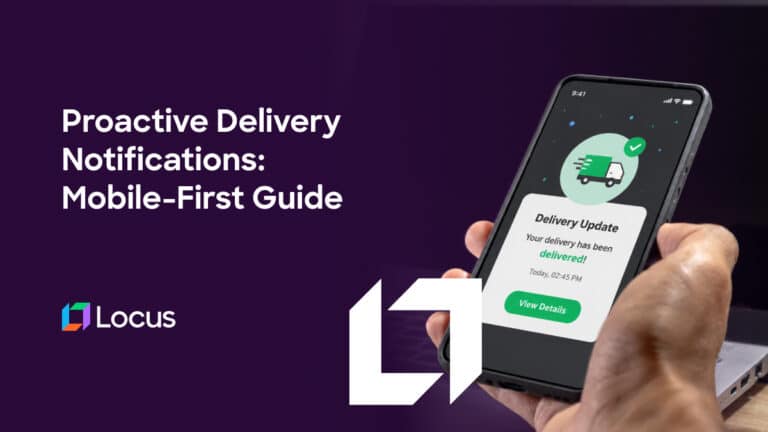
General
Proactive Delivery Notifications in 2026: The Complete Guide to Mobile-First Delivery Experience

Aug 6, 2026
A decision-maker guide to proactive delivery notifications and mobile-first delivery experience: the five notification moments, the five system components, how to measure deflection and first-attempt lift, and how approaches compare.
Read moreInsights Worth Your Time



















Top 10 Delivery Experience Optimization Platforms for E-Commerce and 3PLs (2026)