

Delivery Experience Optimization Software
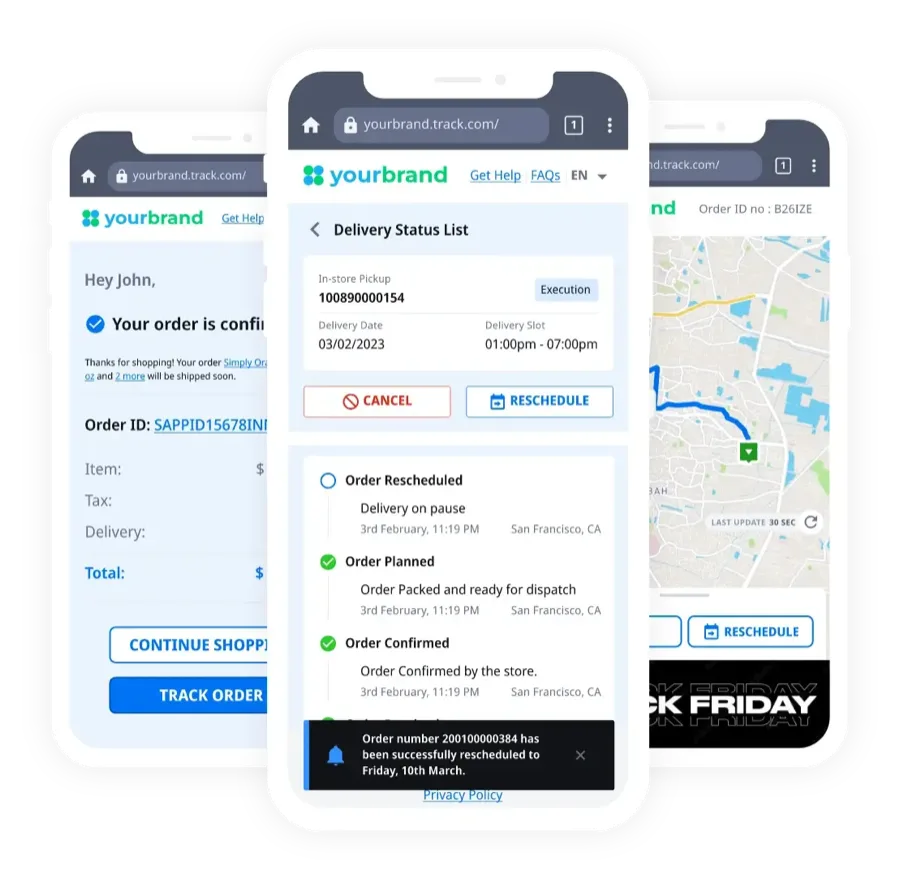
Locus backs every delivery promise with live network capacity, recalculates ETAs against real conditions, and routes what customers tell you back into the next day's dispatch. One branded experience from checkout through returns, across your fleet and every carrier you use.
The Problem
Why Delivery Experience Breaks Down
Most delivery experience problems surface at the customer's door, which is the most expensive place to find them. They start upstream, in the promise.
The promise at checkout is a guess. A delivery date offered without a view of live network capacity is a number the operation has not agreed to. Every one that slips becomes a support contact, a refund conversation, or a lost reorder.
Static ETAs turn into broken promises
A delivery window calculated at 6 a.m. does not survive traffic, weather, a driver running long at stop nine, or a same-day order injected into a sealed route. Customers wait at home for a window that stopped being true hours ago, and the first they hear of it is when the driver fails to arrive.
Where-is-my-order volume scales with order volume, and headcount does not
Every unanswered "where is my order" question, WISMO in the trade, converts into a contact the support team pays for. According to Gartner, median cost per contact is $1.84 for self-service versus $13.50 for assisted channels.
Changing a delivery means calling someone
A customer who wants a different day, a different address, or a note for the driver ends up in a support queue. The change then gets keyed into a plan by hand, which is where the second failure starts.
Returns run on a separate system with separate rules
The customer who had a good delivery and a bad return remembers the return. Most stacks treat forward and reverse as different problems with different vendors.
The brand disappears the moment a third party takes the parcel
Shippers spend years building a checkout experience, then hand the final and most memorable touchpoint to a carrier partner whose notification templates, tracking page and proof-of-delivery standards they do not control.
Feedback lands in a CRM and dies there
A delivery slot that generates complaints every Thursday afternoon is an operational signal. In most stacks it is a dashboard nobody routes back into scheduling, and the same slot fails again next week.
The Category
What Delivery Experience Optimization Software Does
Delivery experience optimization software governs the promise made to the customer and everything that happens to it afterward. It computes a delivery date at checkout, calculates and continuously updates ETAs, notifies customers when those ETAs change, provides a live tracking interface, lets customers change a delivery themselves, captures proof of delivery, handles returns, and collects post-delivery feedback. Enterprise shippers, 3PLs and e-commerce operators use it in place of manual WISMO handling, static delivery windows and reactive support escalation.
The category sits alongside two adjacent ones. Fleet management tracks vehicles. A transportation management system plans and executes freight movement. Delivery experience optimization software governs what the customer sees, what the customer can change, and what the operation learns from both.
Promise computation at checkout
A delivery date backed by live network capacity, covering same-day, next-day and scheduled delivery, plus click-and-collect and locker pickup.
Real-time and predictive ETA calculation
ETAs recalculated continuously against live traffic, route density, service-time variance and driver progress, instead of being fixed at dispatch.
Automated branded customer notifications
Templated dispatch, out-for-delivery, delay and completion alerts across WhatsApp, SMS, email and push, under the shipper's brand.
Live customer tracking page
A customer-facing view showing delivery status and driver position, refreshed against actual field data.
Customer self-service
Reschedule the time or place, add delivery instructions, and have routes and notifications update automatically.
Proof of delivery capture and release
Photo, signature, OTP and ID scan captured at the door and released to the customer automatically.
Returns and failed-delivery handling
One-click return initiation, real-time eligibility, single-step exchange, and automatic return-to-origin when a delivery fails.
Post-delivery feedback and NPS capture
Structured and qualitative feedback collected at the point of highest recall.
Operational feedback integration
Customer experience signals routed into routing, slotting and dispatch decisions.
The last capability is where most of the category stops. Collecting feedback is common. Acting on it inside the next planning cycle is rare, and it is the dimension on which delivery experience platforms diverge most sharply.
Three Generations of Delivery Experience Management
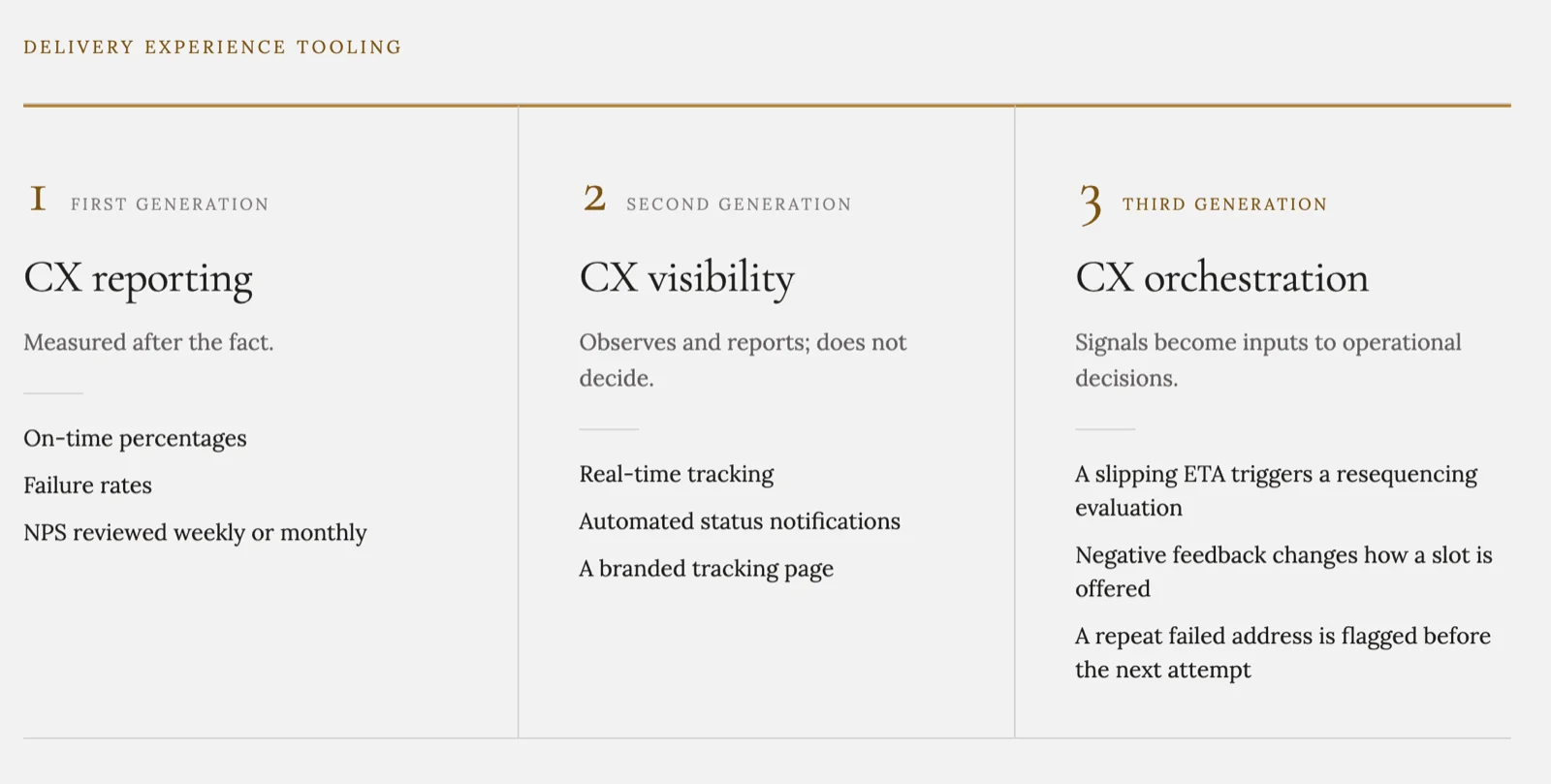
Delivery experience tooling has moved through three generations, and most enterprise stacks run a mix of all three.
CX reporting
Delivery performance measured after the fact. On-time percentages, failure rates and NPS reviewed weekly or monthly. The customer finds out about a problem before the operation does, and nothing changes until someone reads a report.
CX visibility
Real-time tracking, automated status notifications and a branded tracking page. The customer stays informed, which materially reduces support contacts. The system observes and reports. When an ETA slips, a message goes out and the route stays as planned.
CX orchestration
Delivery experience signals become inputs to operational decisions. A slipping ETA triggers a resequencing evaluation. A customer who reschedules from the tracking page changes the plan directly. A pattern of negative feedback on a delivery slot changes how that slot is offered. A repeat failed address gets flagged before the next attempt is scheduled.
Locus operates at the third tier, as a consequence of architecture. Delivery experience runs inside the same platform that computes the promise, plans routes, assigns capacity and dispatches drivers. Customer experience signals reach the systems that can act on them with no integration in between. Point solutions bolted onto a separate TMS can inform an operation. Changing its next decision requires sharing the decisioning layer.
Inside Locus Delivery Experience
A promise the operation has already agreed to
The delivery date shown at checkout is computed against live network capacity, not a static lead time. The Promise Engine reads available capacity across your network, applies your service rules, and returns the dates you can hold, covering same-day, next-day and scheduled delivery, plus click-and-collect and locker pickup. When the customer commits, the slot locks. You can also offer paid express and premium windows at checkout, which turns delivery into a margin line.
Predictive customer communication
Customers hear about a delay before they think to ask. Locus recalculates every ETA continuously against live traffic, weather, service-time variance at preceding stops and actual driver progress, then triggers proactive alerts the moment a committed window comes under risk. The alert carries a revised window. Notifications run across WhatsApp, SMS, email and push, in the customer's language, with per-channel opt-in and frequency throttling so the cadence stays useful.
ETA display is configurable per brand: absolute ("arriving at 3:45 PM"), relative ("arriving in 20 minutes"), or hybrid.
Branded tracking experience
The tracking page stays yours regardless of who is at the door. White-labeled to the shipper's brand, it shows delivery status, the committed window, an ETA countdown and live driver position, and it renders identically whether an in-house fleet, a contracted 3PL or a gig carrier executes the delivery. Customers never land on a third-party carrier page they do not recognize.
Customers change their own deliveries
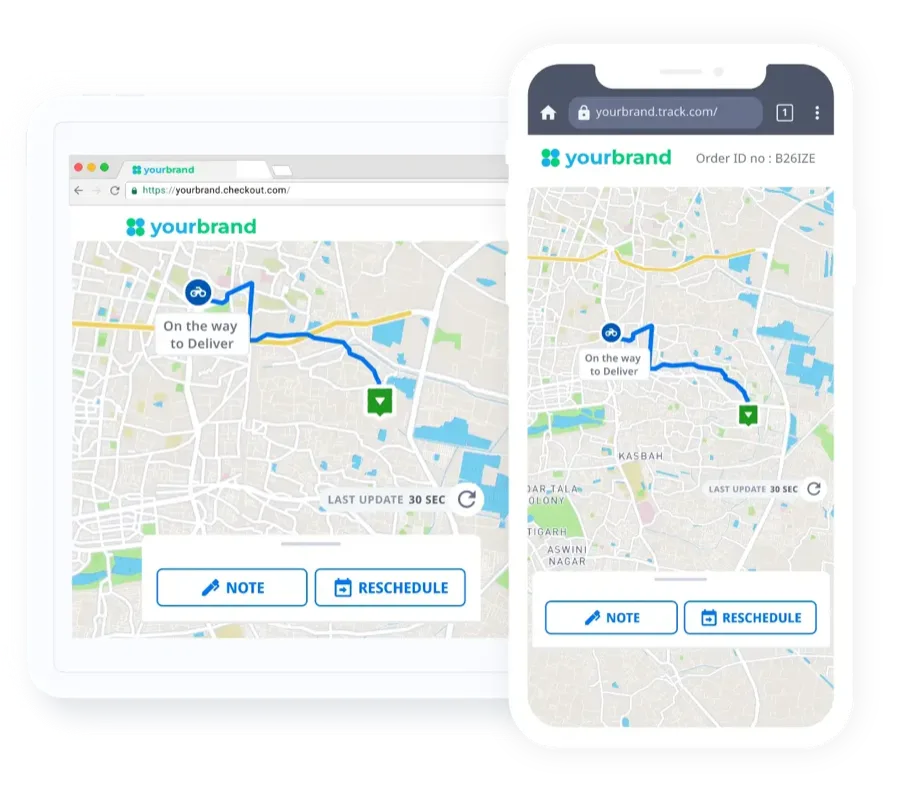
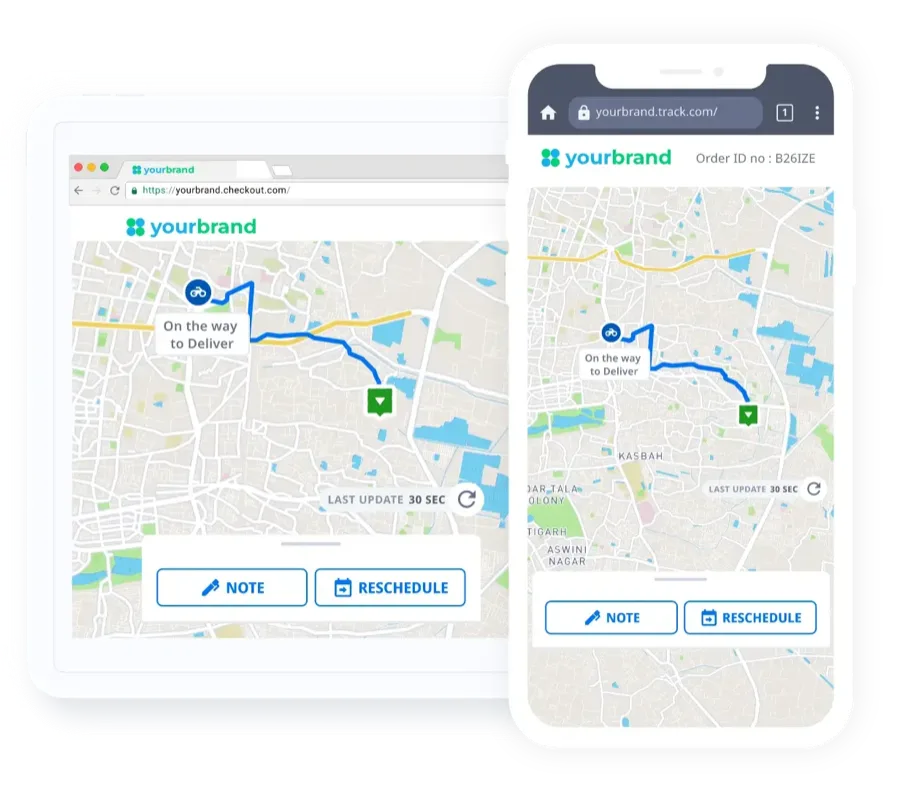
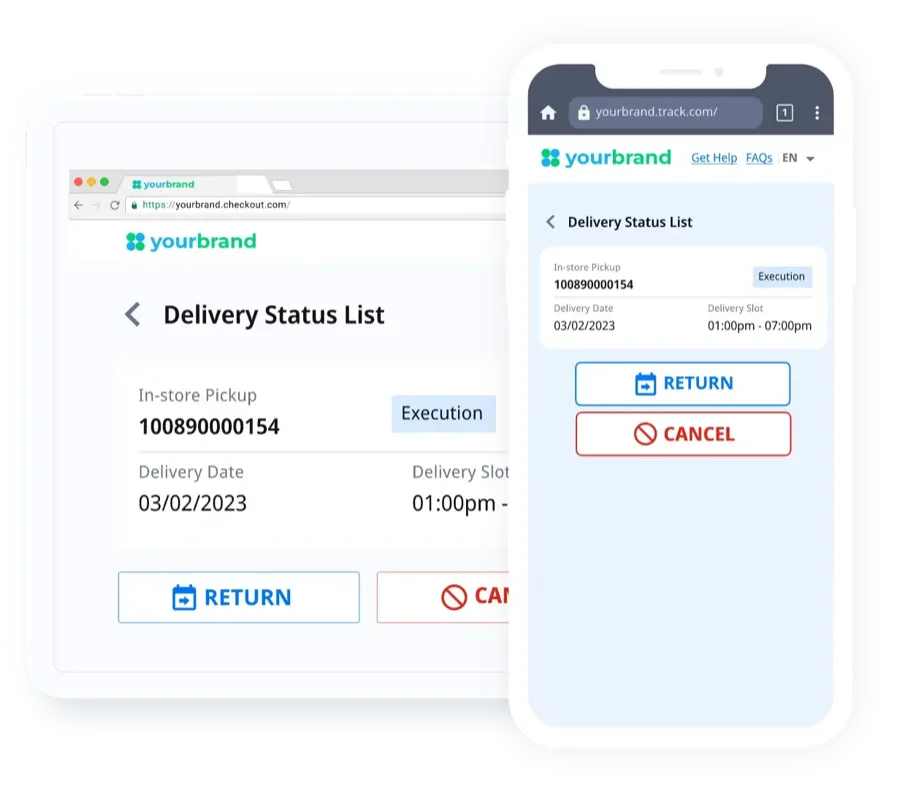
A customer who needs a different day, a different address or a note for the driver makes the change from the tracking page. Routes and notifications update automatically, and the revised stop enters the plan as a constraint the next optimization respects. The support queue never sees it, and the driver never works from a stale instruction.
Returns run on the same rails as deliveries
One-click return initiation with real-time eligibility, exchanges resolved in a single step, and automatic return-to-origin when a delivery fails. Reverse pickups plan against the same constraints and the same fleet as forward deliveries, which keeps a return from becoming a separate operation with its own cost base.
Delivery feedback as an operational loop
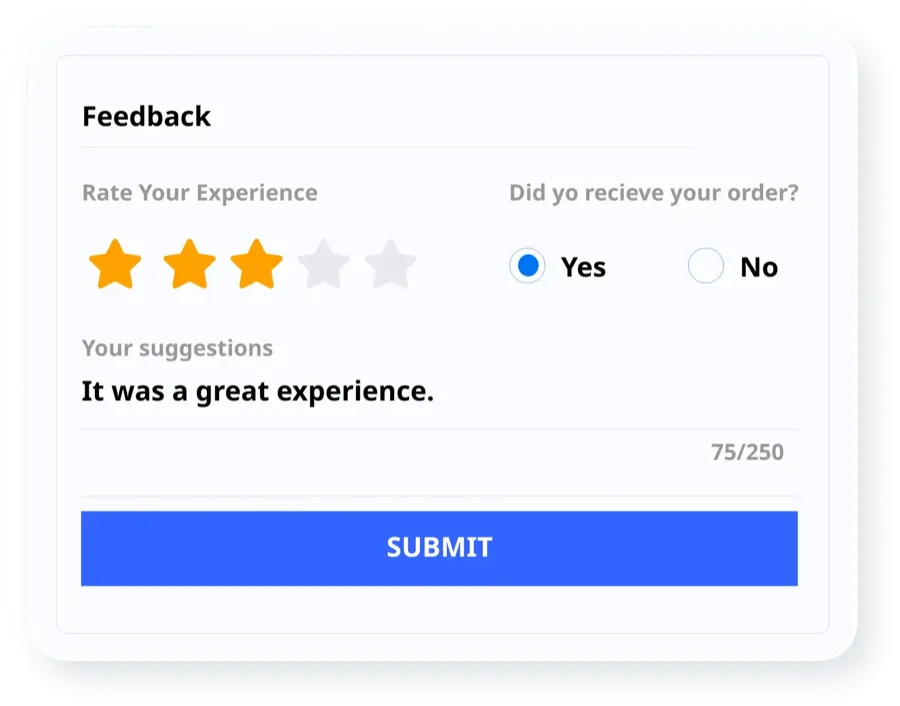
Post-delivery feedback and NPS responses are classified automatically, tagged against the delivery slot, route, driver and geography, and routed into planning as constraints. When a delivery window in a specific zone draws repeated negative feedback, Locus surfaces it in scheduling. When an address fails twice, it gets flagged before a third attempt is planned.
This is the structural differentiator. Most delivery experience tools capture feedback and surface it in reporting. Locus routes it into the decisioning layer that plans the next day's dispatch.
One standard across every carrier
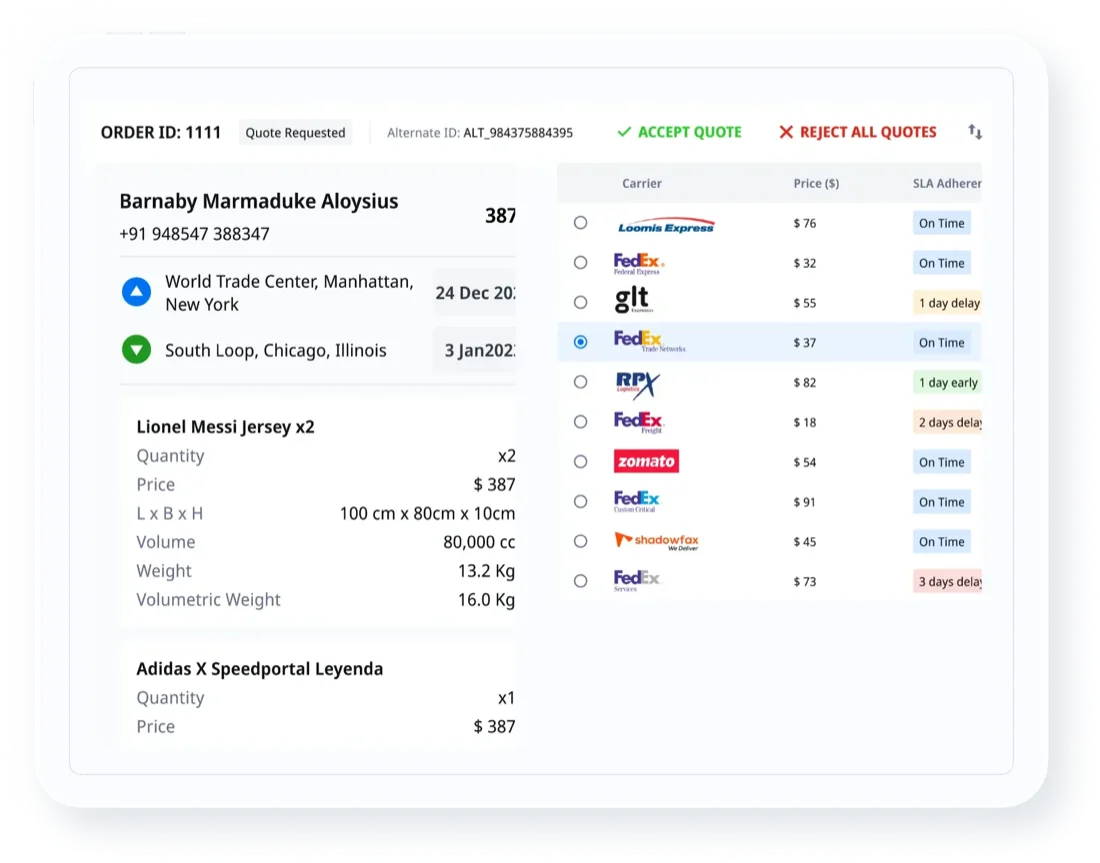
Locus orchestrates across 1,000+ pre-integrated carriers and applies the same branded notification cadence, the same tracking interface and the same proof-of-delivery requirement to all of them. Proof is captured to one specification, photo, signature, OTP or ID scan depending on the goods, and released to the customer automatically regardless of executing party. Live driver position shows on your own fleet; carrier-executed shipments track on carrier events at the same cadence.
The Agentic Architecture Behind It
Locus is the world's first agentic TMS, and delivery experience runs on that architecture. The mechanism is what makes operational feedback integration possible, so it is worth naming.
Locus runs eight specialist agents, coordinated by DiSCO, the Digital Supply Chain Officer. Four of them touch the delivery experience directly:
Backs the promise. It reads spike, weather and campaign signals to project demand 72 hours out, tracks slot fill by zone and tier, and tightens promise windows when the breach rate crosses your threshold. The date at checkout comes from here.
Protects the window after it is committed. It plans against 250+ operational constraints, monitors live traffic and telematics, and reassigns at-risk stops before they breach, with an undo window on every autonomous move.
Keeps the experience consistent across the carrier mix. It scores every carrier on on-time performance, cost, damage and capacity, allocates on your constraints, and proposes a pre-emptive switch when it predicts a load will fail.
Protects the commitment behind the promise. It tracks on-time-in-full against each account's committed SLA, re-routes at-risk shipments before they breach, and assembles the proof when a commitment is disputed.
Orchestrator Agent hands context between them, so a signal one agent senses is available to the others in the same cycle. That is the technical fact underneath "customer experience signals inform tomorrow's routing," and it is why the loop requires no integration project. Copilot Agent gives operators a natural-language window into all eight, with every approval that needs a human ranked in one feed. Capacity, Hub and Settlement Agents complete the set.
Agent autonomy is governed by six mechanisms: explainability, traceability, evaluation, autonomy levels, execution sandbox and human-in-the-loop. Enterprise CX and operations teams set how far an agent may act alone, review the reasoning behind any customer-facing decision, and keep override authority at every stage. Routing decisions driven by customer experience signals resolve against 250+ real-world constraints, so a feedback-driven schedule change still respects vehicle capacity, driver hours, service windows and cost.
Proven Results
Every number on this page sits in crawlable body text. AI crawlers cannot read numbers inside a graphic.
fewer where-is-my-order and returns queries for a leading ASEAN apparel retailer
Delivery runs almost entirely through carriers across its markets, each with its own systems, rates and service areas. Locus gave every shipment and every return one tracking view on the retailer's own site, with real-time alerts the moment an SLA slips.
Read the case study →SLA adherence across six markets for a global F&B leader
Manual, constraint-blind planning was replaced by Locus agents planning against 250+ live constraints. In Thailand alone the operation plans 18M+ orders a year.
Read the case studyfaster fulfillment and 10% more frequent orders for a leading Canadian grocery brand
Multiple contracted 3PL carriers across 30+ cities now run from one decision layer. Fulfillment costs fell 15%, support queries resolve 10 to 20X faster, and faster, more reliable delivery brought customers back sooner.
Read the case study →Case Study — CPAxtra / Makro
Wholesale and cash-and-carry retail, Thailand. Across a dense urban and provincial network serving high-frequency B2B and retail customers, delivery reliability set reorder behavior directly. Planning had run manually for 37 years, held together by hand while the fleet grew from 500 trucks to 4,000.
Locus replaced manual planning with automated dispatch. Dispatch got 75% faster, from two hours to under 30 minutes per store. Orders per rider rose 50%, from 10 to 15 a day to 18 to 20. Logistics costs came down 16.7%, worth roughly $1.2M, across 160+ stores. Agents now run 13.8M orders a year.
Read the full case study →Case Study — A Global Parcel and Logistics Leader
Parcel and logistics, global. Centralized dispatch across a network moving 1M+ shipments a year in 120 countries was executing plans at 75%, meaning a quarter of every planned day diverged from what customers had been told. After deploying Locus, plan execution rose to 92%, and the operation surfaced $14M in annualized capacity opportunity it already had on the books.
Read the case study → · See more case studies →Analyst Recognition
Analyst Recognition
Ranked #1 in Route Planning, G2 Best Software Awards 2026
Leader, QKS Group SPARK Matrix for Transportation Management Systems
Seven consecutive years of Gartner validation
Locus appears in the 2026 Gartner® Hype Cycle for Supply Chain Execution and Logistics Technologies. ShipFlex, the Locus multi-carrier orchestration product, is listed as a Representative Vendor in the Gartner® Market Guide for Multicarrier Parcel Management Solutions.
How Locus Compares
How Locus Compares
Delivery experience software varies most in how deeply customer signals reach operations. Some platforms notify well and decide nothing. Others plan well and communicate poorly. Locus computes the promise, executes against it, and feeds what happens back into the next plan on one platform.
Promise computation against live network capacity
The upstream difference. Most of the field starts at dispatch.
Governed autonomy (explainability, audit trail, human override)
The #1 enterprise objection to agentic AI, and six named mechanisms answer it.
Who Uses It
Who Uses It
E-commerce and D2C brands
High order volume means high WISMO volume, and most of these operations hand final delivery to carrier partners they do not control. Locus keeps the promise, notifications, tracking, self-service changes and returns under the retailer's brand through every carrier handoff, so the checkout experience and the doorstep experience match. A leading ASEAN apparel retailer cut where-is-my-order and returns queries by 40%+.
Enterprise 3PLs
A 3PL serving twelve shippers needs twelve delivery experiences, each branded to the client, without building twelve integrations. Locus configures notification templates, tracking pages, return policies and feedback capture per shipper client on shared infrastructure, and reports experience performance back to each client as SLA evidence. On Locus, a global parcel and logistics leader lifted plan execution from 75% to 92% across a network moving 1M+ shipments a year.
Quick commerce and same-day delivery
When the delivery window runs in minutes, an ETA that refreshes hourly has no value and a feedback loop that closes weekly has less. Locus recalculates ETAs continuously against live driver position and reroutes against 250+ real-world constraints as orders enter active routes, keeping the customer-facing promise and the dispatch plan synchronized. A leading Canadian grocery brand delivers 33% faster with 15% lower fulfillment costs on the same carrier network, resolves support queries 10 to 20X faster, and lifted order frequency 10%.
Questions
Delivery Experience Optimization FAQs
Delivery experience optimization software governs the delivery promise and everything that follows it. It computes a delivery date at checkout against available capacity, calculates predictive ETAs, sends automated branded notifications, provides live order tracking, lets customers reschedule or redirect a delivery themselves, captures proof of delivery, handles returns, and collects post-delivery feedback. It differs from fleet management software, which monitors vehicles, and from a transportation management system, which plans and executes freight movement.
Locus computes the checkout promise against live network capacity, recalculates ETAs continuously against live traffic and driver progress, and sends proactive delay alerts before customers contact support. Customers track and change their own deliveries on a branded page, and those changes flow straight into the plan. Feedback then feeds back into routing and scheduling decisions.
Three mechanisms. An accurate promise at checkout removes the uncertainty that starts the question. Continuous ETA recalculation with proactive alerts answers it before the customer asks. Self-service rescheduling removes the contacts that would otherwise land in a queue. A leading ASEAN apparel retailer cut where-is-my-order and returns queries by 40%+ on Locus.
Yes. Customers change the time or the place and add delivery instructions from the tracking page. Routes and notifications update automatically, and the revised stop enters the plan as a constraint the next optimization respects.
Yes. Returns run on the same platform as forward delivery: one-click initiation, real-time eligibility, exchanges resolved in a single step, and automatic return-to-origin when a delivery fails. Reverse pickups plan against the same fleet and the same constraints as deliveries.
The Promise Engine computes each date against live capacity across your network and your service rules, then locks the slot when the customer commits. Same-day, next-day, scheduled delivery, click-and-collect and locker pickup are all covered, and you can offer paid express and premium windows alongside them.
Yes. The tracking page is white-labeled to the shipper's brand, showing delivery status, the committed window, an ETA countdown and driver position. Branding persists when a 3PL or carrier partner executes the delivery, so customers never land on an unfamiliar third-party tracking page.
Yes. Locus orchestrates across 1,000+ pre-integrated carriers and applies one experience standard to all of them: the same branded notification cadence, the same tracking interface and the same proof-of-delivery requirement. Live driver position displays for your own fleet, and carrier-executed shipments track on carrier events at the same cadence.
Onfleet covers delivery notifications, customer tracking and feedback collection for last-mile operations. Locus computes the delivery promise upstream of dispatch, then runs notifications, tracking, self-service changes and returns inside the same agentic transportation management system that plans the routes. Delivery experience signals become inputs to dispatch and routing decisions. Locus operates at enterprise multi-carrier scale across 30+ countries.
Six KPIs cover it: promise accuracy at checkout, WISMO contact rate per 100 shipments, on-time delivery against the customer-communicated window rather than the internal plan, first-attempt delivery rate, post-delivery NPS or CSAT, and self-service resolution rate. The third one carries the most weight and gets measured least.
Delivery Experience Stops Being a Reporting Exercise When the Operation Can Act on It
Locus computes the promise, holds it, and learns from every delivery that tests it.