


General
How Locus Powers AI Dispatch for 3PL Providers in 2026
Key Takeaways
- For a 3PL, dispatch is not back-office. It is the product, so how well a 3PL dispatches sets its cost, SLAs, and margin.
- AI dispatch is the decision layer that assigns and sequences work automatically, across many clients and a shared fleet, rather than relying on manual planning per account.
- Locus lets a 3PL run multiple clients’ delivery operations as one intelligent, multi-tenant operation, meeting each client’s SLAs while sharing fleet and capacity.
- The 3PL-specific gains: scaling clients without adding a dispatcher per account, allocating scarce capacity by priority and SLA, and absorbing one client’s spike without breaking another’s service.
- On Locus, dispatch planning has optimized 1.22B+ deliveries, driven $303M+ in logistics savings, and sustains 99.5% on-time delivery.
- As the world’s first agentic TMS, Locus makes the dispatch decision autonomously across 250+ constraints, so a 3PL can grow volume and clients without growing dispatch headcount.
What is AI Dispatch?
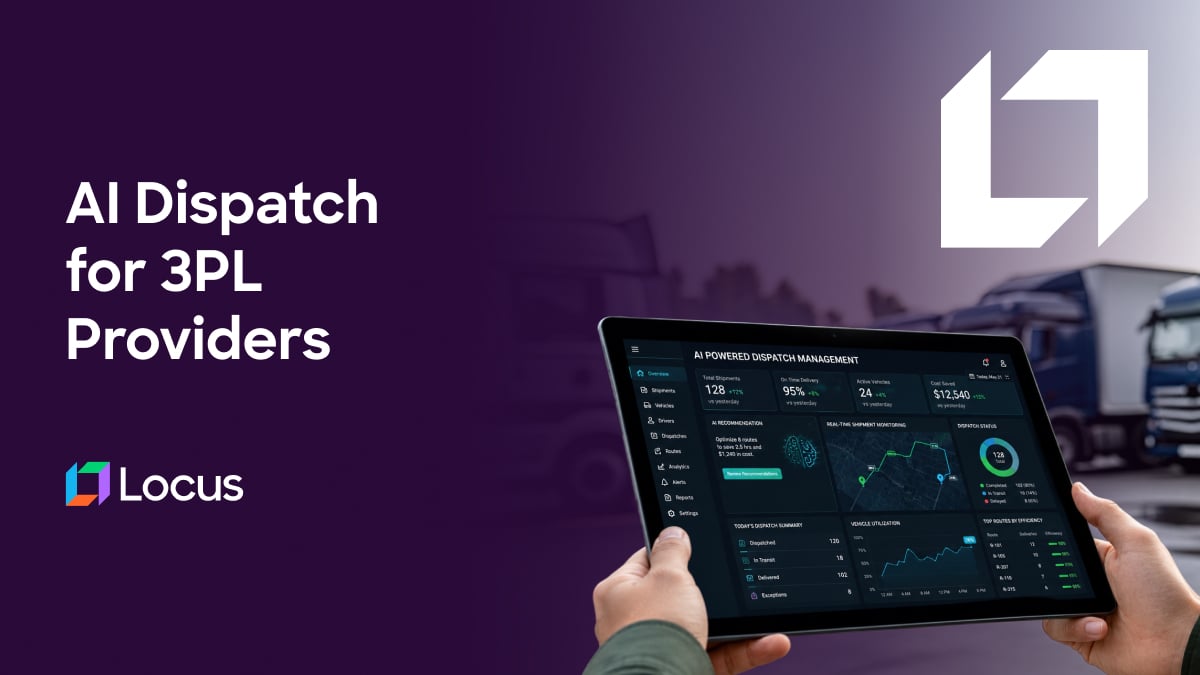
AI dispatch is the automated decision layer of a delivery operation: the system that decides which driver and vehicle handle which orders, in what sequence, on which route, and then re-decides as the day changes. Traditional dispatch makes those calls through a dispatcher’s judgment or fixed rules. AI dispatch evaluates many constraints at once, service windows, drop density, traffic, capacity, vehicle fit, and produces a better plan than a person can build by hand, then adapts it in real time.
For a 3PL, that decision layer is not a convenience; it is the core of the service. A 3PL sells its ability to move other companies’ goods reliably and cost-effectively, and dispatch is where that promise is kept or broken. The quality of the dispatch decision, made hundreds of times a day across every client, is what determines whether the 3PL hits its SLAs and protects its margin. That is why AI dispatch matters more to a 3PL than to almost anyone else: it is optimizing the thing the business actually sells.
Also Read: Intermodal Dispatch Platform Guide: Features, Benefits & Selection Checklist
How Locus Supports 3PL Providers
The defining feature of a 3PL’s operation is that it runs many clients through one business. Each client brings its own delivery profile: different service levels, geographies, order patterns, and expectations. The dispatch challenge is to serve all of them from a shared fleet and workforce without letting one client’s needs degrade another’s service.
Locus is built for exactly that. It runs as a multi-tenant operation, so a 3PL can dispatch for many clients in one system while keeping each client’s rules, SLAs, and visibility distinct. Orders across clients are allocated to the best-suited capacity in the shared fleet, whether that fleet is captive, subcontracted, or gig, so utilization stays high without cross-contaminating service. When one client surges, Locus reallocates and re-optimizes in real time rather than forcing a manual scramble that puts other clients’ SLAs at risk. The 3PL runs one intelligent operation instead of a separate dispatch process bolted on for every account.
Also Read: How AI-Powered Order Orchestration Transforms Fulfillment Speed
Key Features of Locus for 3PL Dispatch
Locus’s dispatch planning gives a 3PL the capabilities that make multi-client operations work:
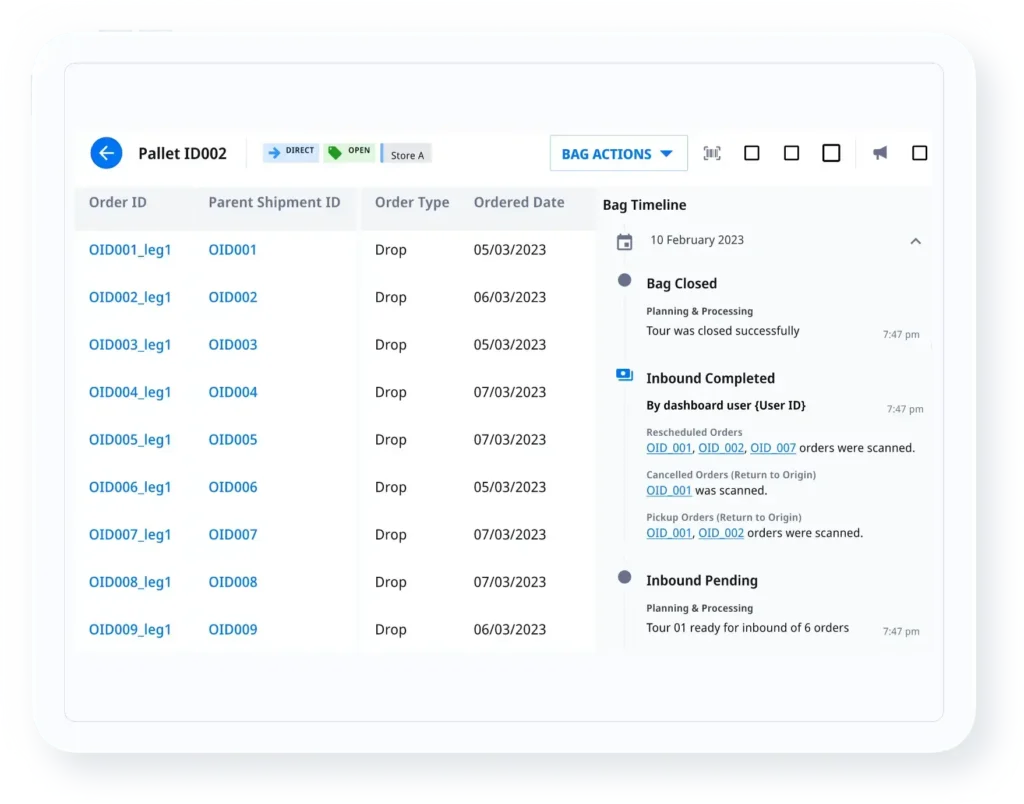
- Intelligent resource allocation. Locus uses on-ground execution data and the properties of each order to assign shipments to the best-suited driver and vehicle, avoiding misroutes and delayed deliveries across a fleet serving many clients.
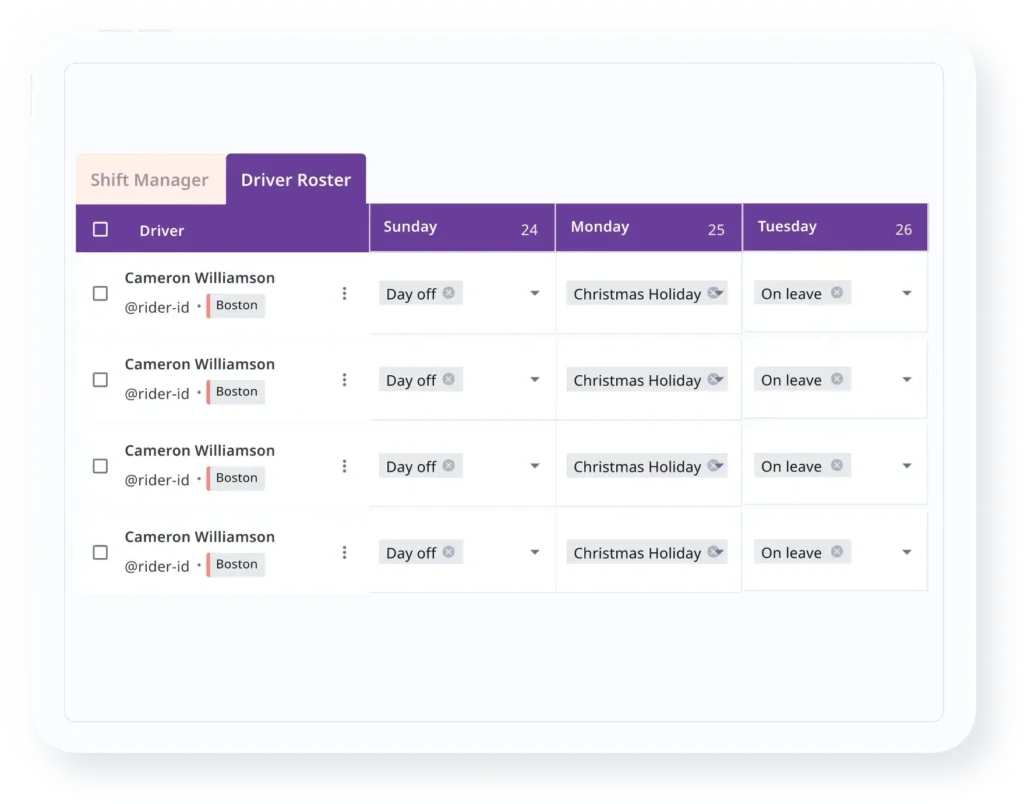
- Integrated roster management. Driver shifts and vehicle availability are planned in advance, accommodating holidays, days off, and sick days, so a 3PL secures the capacity it needs across clients’ peaks.
- Dynamic route optimization. Routes are optimized on service locality, drop density, distance, traffic patterns, and more constraints, unlocking higher first-attempt rates, and re-optimized as ground conditions shift.
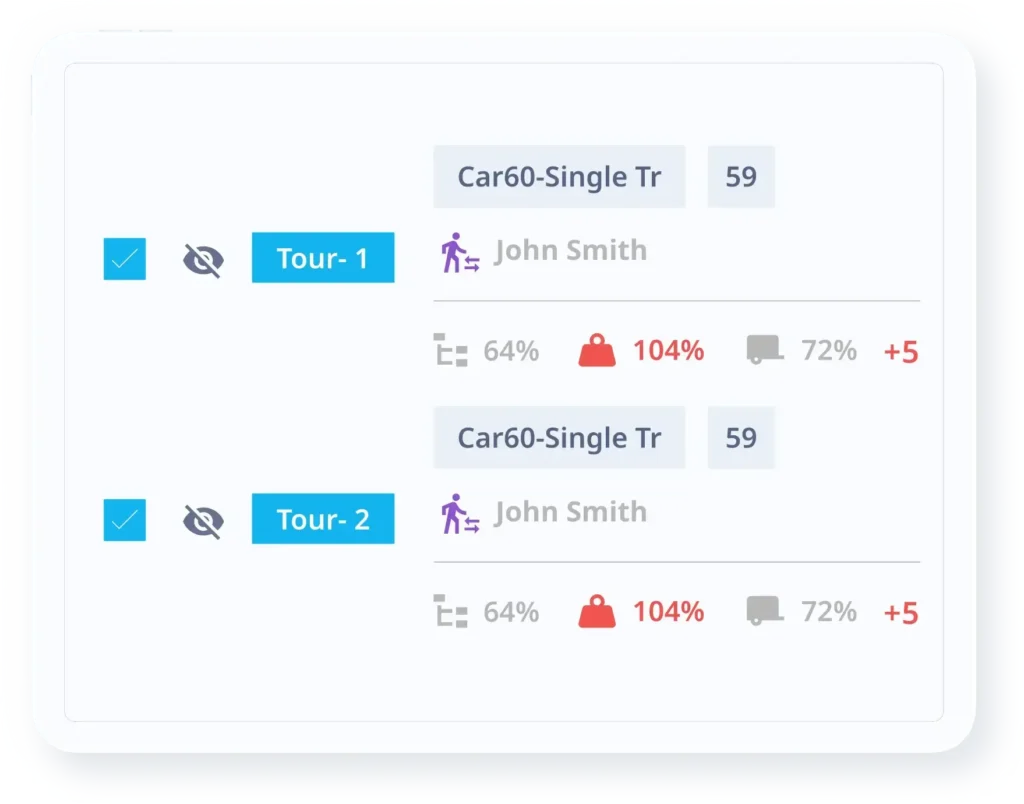
- Capacity management. Capacity is allocated to meet demand at any given time, which for a 3PL means distributing scarce capacity across clients by priority and SLA.
- Real-time re-dispatch. When disruptions hit, Locus re-dispatches in real time, absorbing the change without breaking the service commitments made to other clients.
Benefits of Using Locus for 3PL Operations
The practical payoff is that a 3PL can grow without its dispatch function becoming the bottleneck. Automated, intelligent dispatch means the operation is not limited by how many accounts a dispatcher can manually plan, so the 3PL can take on more clients and volume without adding dispatch headcount in step. Higher first-attempt and on-time rates lower cost per drop and protect the SLAs the 3PL is contractually held to, and real-time re-optimization keeps every client’s service intact when any one client’s day goes sideways. On Locus, dispatch planning has optimized 1.22B+ deliveries, driven $303M+ in logistics savings, and sustains 99.5% on-time delivery. Locus’s standing in the category is reflected in its recognitions: G2’s #1 position for Route Planning, inclusion in the 2026 Gartner Hype Cycle, a Leader placement in the QKS SPARK Matrix for TMS, and seven consecutive years of Gartner recognition.
Also Read: The CXO’s Guide to Implementing Agentic AI for Autonomous Route Optimization
See it on your operation. Request a Locus demo at locus.sh to see AI dispatch running across multiple clients and a shared fleet.
Comparison Table: How 3PLs Run Dispatch
| Dimension | Manual / spreadsheet dispatch | Legacy TMS | Locus (agentic AI dispatch) |
|---|---|---|---|
| Dispatch decision | Dispatcher judgment, per account | Fixed rules and static logic | Autonomous, constraint-aware across 250+ constraints |
| Multiple clients on one operation | Separate process per client | Limited, often per-instance | Multi-tenant, clients isolated in one operation |
| Mixed fleet (captive, 3PL, gig) | Hard to coordinate | Partial | Allocated as one shared fleet |
| Response to disruption | Manual scramble | Batch re-run | Real-time re-dispatch |
| Scaling clients and volume | Adds dispatchers linearly | Adds cost and complexity | Scales without linear headcount |
| Per-client SLA visibility | Manual reporting | Varies | Built in |
Why 3PLs Choose Locus
The 3PLs that get the most from Locus are the ones that recognize dispatch as their operating engine rather than a cost center. Manual dispatch caps how many clients a team can serve; a legacy TMS automates within limits but still struggles to run many clients as one adaptive operation.
Locus makes the dispatch decision itself, across every client and the whole shared fleet, and keeps making it in real time as the day changes. For a 3PL, that is the difference between growth constrained by the dispatch desk and growth limited only by how many clients it can win.
Related reading: Locus 3PL Solutions, AI-Powered Dispatch, and Locus customer results.
Learn more, visit locus.sh.
Frequently Asked Questions (FAQs)
What are the benefits of using Locus for 3PL dispatch?
Locus lets a 3PL run many clients’ delivery operations as one intelligent, multi-tenant operation: it allocates orders across a shared fleet, meets each client’s SLAs, raises first-attempt and on-time rates to lower cost per drop, and re-dispatches in real time when disruptions hit. The largest benefit is scalability, taking on more clients and volume without adding a dispatcher per account.
What is AI dispatch for a 3PL?
AI dispatch is the automated decision layer that assigns and sequences deliveries and re-optimizes them in real time, evaluating many constraints at once rather than relying on a dispatcher’s manual judgment. For a 3PL, it is the core of the service, because the quality of the dispatch decision across every client determines whether SLAs are met and margin is protected.
How does Locus handle multiple clients at once?
Locus runs as a multi-tenant operation, so a 3PL dispatches for many clients in one system while each client’s rules, SLAs, and visibility stay distinct. Orders across clients are allocated to the best-suited capacity in a shared fleet, and when one client surges, Locus re-optimizes without degrading service to the others.
Can Locus scale as a 3PL adds clients?
Yes. Because dispatch decisions are automated and constraint-aware, the operation is not limited by how many accounts a dispatcher can plan by hand. A 3PL can add clients and volume without adding dispatch headcount in proportion, which is what makes dispatch a growth enabler rather than a bottleneck.
Does Locus support mixed captive, subcontracted, and gig fleets?
Yes. Locus allocates work across captive, 3PL-subcontracted, and gig capacity as one shared fleet, assigning each order to the best-suited resource, so a 3PL keeps utilization high without running separate processes for each fleet type.
What results does Locus report for dispatch?
Locus’s dispatch planning has optimized 1.22B+ deliveries, driven $303M+ in logistics savings, and sustains 99.5% on-time delivery, according to its dispatch planning page. Enterprise deployments also show large execution-rate and manual-effort improvements when dispatch moves from manual planning to agentic decisioning.


General
Driver Performance Management: How Locus Tracks and Improves Fleet Output in 2026

Jul 21, 2026
"Driver performance" means two things: safety behavior and delivery output. How Locus tracks and improves fleet output, and how that differs from telematics.
Read more
General
AI-Powered Rider and Driver Management Software

Jul 22, 2026
Locus is AI-powered rider and driver management software: auto-assignment, route optimization, a driver app, GPS tracking, proof of delivery, and analytics.
Read moreInsights Worth Your Time



















How Locus Powers AI Dispatch for 3PL Providers in 2026