


General
Routing and Scheduling Software Compared: 10 Platforms for Enterprise Logistics Teams (2026)
Key Takeaways
- Routing software varies significantly by operational complexity, and picking a tool built for smaller teams will limit you at enterprise scale.
- Enterprise logistics needs continuous re-optimization. Large operations cannot rely on a plan built at the start of the day. Conditions change, and the software needs to keep up.
- How a system manages time windows, driver shifts, and vehicle types reveals how capable it actually is at scale.
- SMB tools prioritize simplicity, mid-market tools add structure, and enterprise platforms handle multi-depot network orchestration.
- Locus connects planning, dispatch, and live execution. This allows logistics teams to make real-time decisions that improve cost efficiency, SLA adherence, and overall network performance.
Your routing software generated a clean plan last night. By mid-morning, six routes are behind schedule. The GPS data shows exactly where things broke down. The dwell time logs show which stops took twice as long as estimated. The driver behavior scores flagged two issues before 9 am. Nobody looked at any of it before building today’s plan.
This is where most enterprise logistics teams get stuck. Feeding execution data back into route planning feels like a data engineering project, a six-month integration, and a budget conversation nobody wants to have.
It does not have to be.
Modern routing and scheduling platforms now do this natively, without a separate analytics layer or a custom build.
This guide evaluates 10 routing and scheduling platforms across constraint handling, real-time re-optimization, integration depth, and how well each one closes the loop between what happens on the road and what gets planned at the depot.
How We Evaluated These Tools
We assessed each platform across five criteria:
- Scalability: Ability to handle high order volumes, multi-depot networks, and large fleets
- Optimization depth: Constraint-based routing, not just distance or time minimization
- Real-time adaptability: Ability to re-optimize routes during execution
- Dispatch & orchestration: Support for allocation, carrier selection, and execution workflows
- Integration & ecosystem: Compatibility with OMS, WMS, ERP, and carrier networks
We also considered verified user feedback and publicly available performance benchmarks where applicable.
The 10 Routing and Scheduling Platforms, Compared
| Tool | Best For | Fleet Scale | AI Optimization | Real-Time Re-Routing | Dispatch Management | Supply Chain Visibility | Pricing Model |
|---|---|---|---|---|---|---|---|
| Locus | Enterprise logistics orchestration | 500+ vehicles | Yes | Yes | Yes (advanced) | End-to-end (all-mile) | Custom |
| Route4Me | SMB route planning | 10–100 vehicles | Limited | Limited | Basic | Limited | Subscription |
| WorkWave | Field service routing | 10–200 vehicles | Limited | Limited | Moderate | Limited | Custom |
| OptimoRoute | Mid-market delivery | 50–500 vehicles | Limited | Limited | Moderate | Limited | Subscription |
| FarEye | Enterprise last-mile visibility | 200+ vehicles | Yes | Yes | Yes | Last-mile focused | Custom |
| LogiNext | Broad logistics management | 100–500+ vehicles | Limited | Yes | Yes | Moderate | Custom |
| Shipsy | Freight & cross-border logistics | 200+ vehicles | Limited | Limited | Moderate | High (freight-focused) | Custom |
| Routific | SMB delivery teams | 10–100 vehicles | Limited | Limited | Basic | Limited | Subscription |
| Onfleet | D2C last-mile delivery | 10–200 vehicles | Limited | Yes | Moderate | Last-mile focused | Subscription |
| Circuit | Individual drivers / micro-fleets | <10 vehicles | No | No | Basic | Minimal | Freemium |
1. Locus – Decision-Intelligent Transportation Management System for Enterprise Logistics
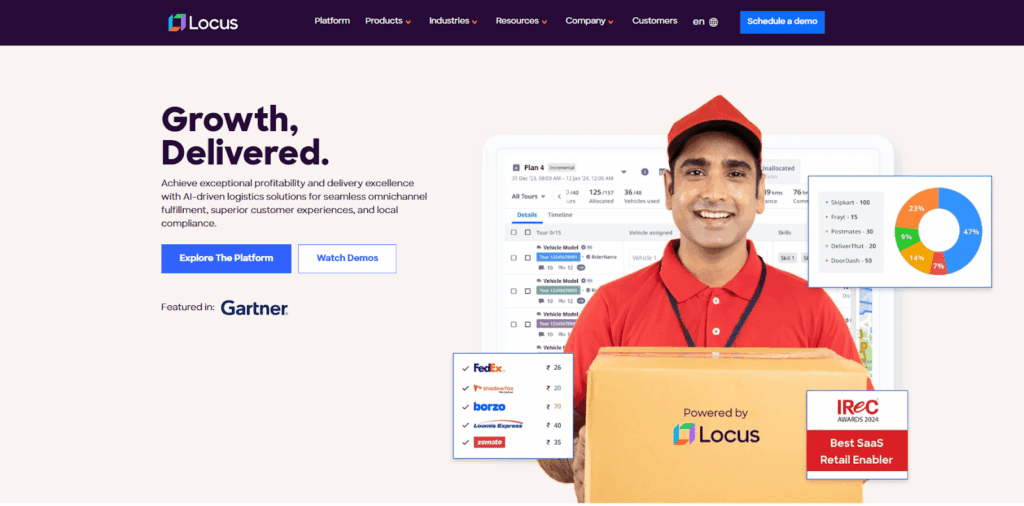
Locus connects routing, dispatch, and execution into a single continuous decision loop, giving enterprise logistics teams real-time orchestration across the full delivery lifecycle rather than a static plan that starts fresh every morning.
You connect your order data, define your constraints across fleet mix, delivery windows, driver shifts, and carrier SLAs, and Locus builds and continuously refines routes across your entire network. Real-time re-optimization, dispatch automation, and execution visibility give you operational signals that go beyond what static route planning can surface. It is end-to-end logistics orchestration that learns and adapts as conditions change.
What Makes Locus Different
1. Orchestrating Every Mile, From First Dispatch to Final Delivery
Locus unifies first-mile, mid-mile, and last-mile operations into a single execution layer. This eliminates the fragmentation that typically exists between warehouse planning, dispatch, and delivery execution.
Orders are allocated to the right fulfillment node, assigned to the right vehicle or carrier, and continuously adjusted based on real-world conditions.
2. Constraint-Based Scheduling at Enterprise Scale
Locus’s routing engine processes 250+ real-world constraints to generate plans that are built for execution from the start.
- Delivery time windows and SLAs: Routes are planned around committed customer windows, accounting for service levels across every stop on every route
- Vehicle capacity, type, and restrictions: Every vehicle’s load limits, dimensions, and operational boundaries are factored into the plan before dispatch
- Driver shifts and compliance requirements: Shift hours, break rules, and regulatory requirements are embedded directly into the routing logic
- Traffic conditions and road restrictions: Live and historical traffic data shapes route decisions before the first vehicle leaves the depot
- Specialized requirements like cold chain or hazmat: Temperature sensitivity, handling protocols, and regulatory constraints are treated as hard parameters within the routing engine
3. Live Decision-Making Across Every Route
Locus continuously evaluates and updates delivery plans as conditions change on the ground. When any of the following occur:
- Traffic delays
- Order cancellations
- New orders added mid-route
The system responds in real time by:
- Re-optimizing routes
- Reassigning deliveries
- Adjusting capacity utilization across the network
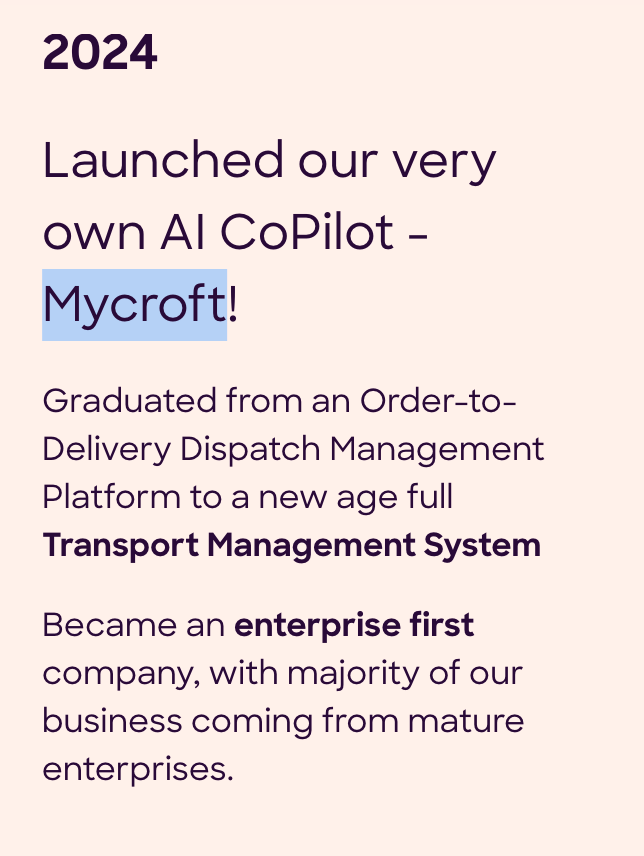
4. Mycroft: AI Co-Pilot for Logistics Decisions
Locus includes an AI co-pilot called Mycroft, built to function as a decision layer within the logistics workflow.
Rather than surfacing data alone, Mycroft actively supports planners by:
- Recommending next-best actions based on current conditions
- Explaining trade-offs across cost, SLA, and capacity in real time
- Helping teams decide whether to reroute, add capacity, or reassign carriers
This keeps planners in control of every decision while significantly reducing the manual effort required to make them.
5. Carrier and Fleet Orchestration Across Your Entire Network
Enterprise logistics operations typically run across captive fleets, contracted fleets, and third-party carriers simultaneously. Locus is built to manage all three within a single orchestration layer.
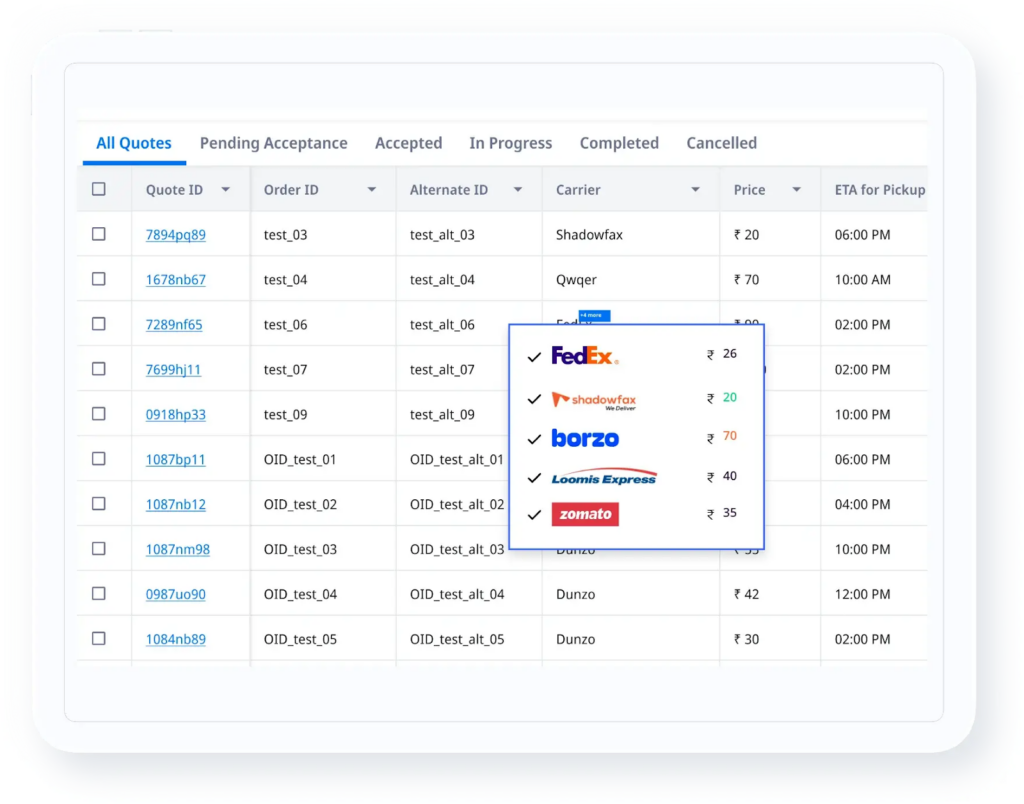
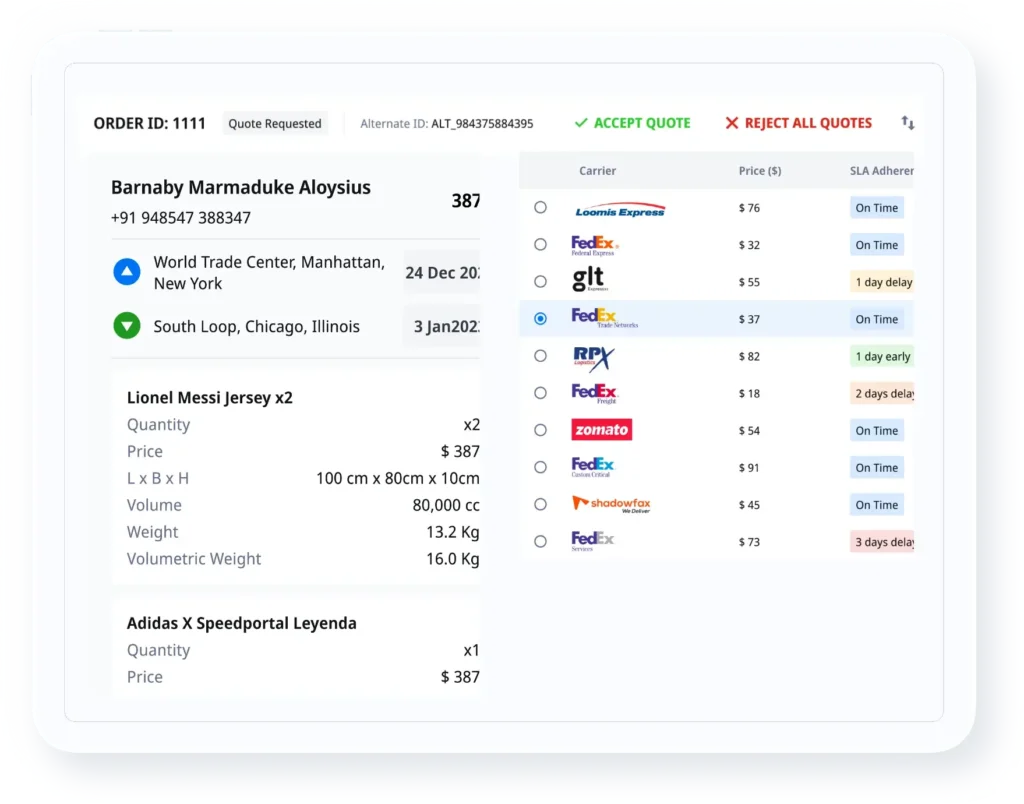
ShipFlex, Locus’s carrier management solution, handles the complexity that comes with running multiple carrier relationships at scale:
- Selecting the optimal carrier for each shipment based on cost, capacity, and service level requirements
- Balancing cost against delivery commitments across every order in the network
- Enabling cross-fleet utilization so capacity is allocated where it is needed most
The result is a unified carrier network that operates with the same visibility and control as a single fleet.
6. End-to-End Visibility with Control Tower
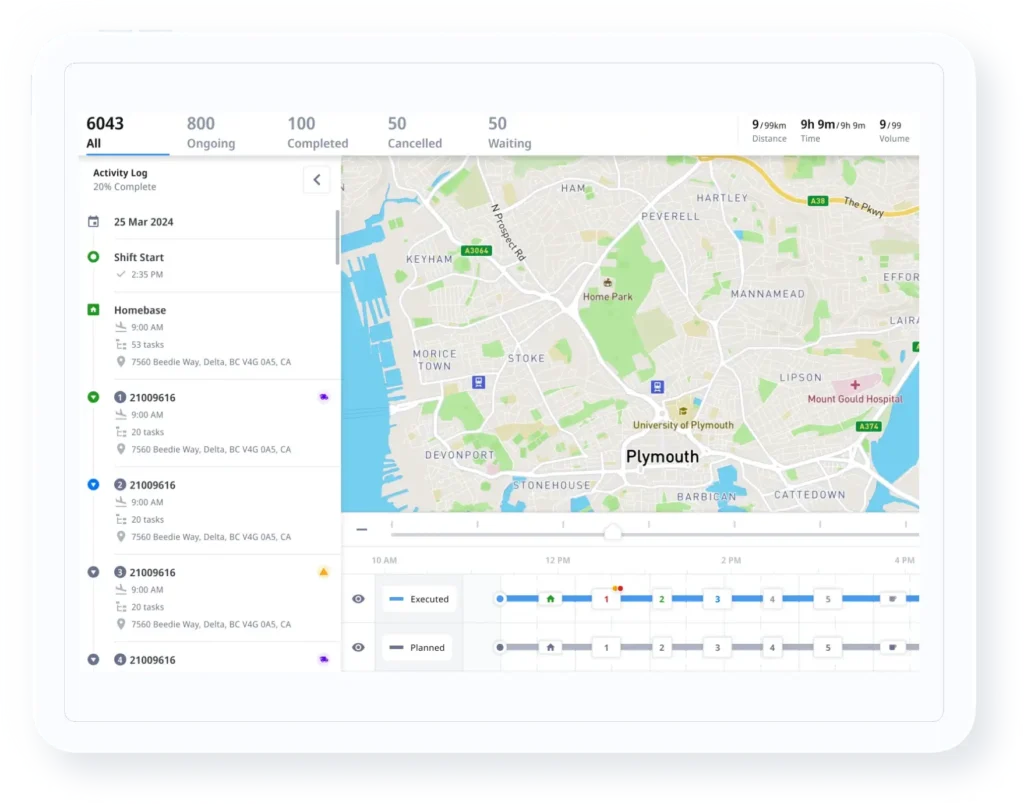
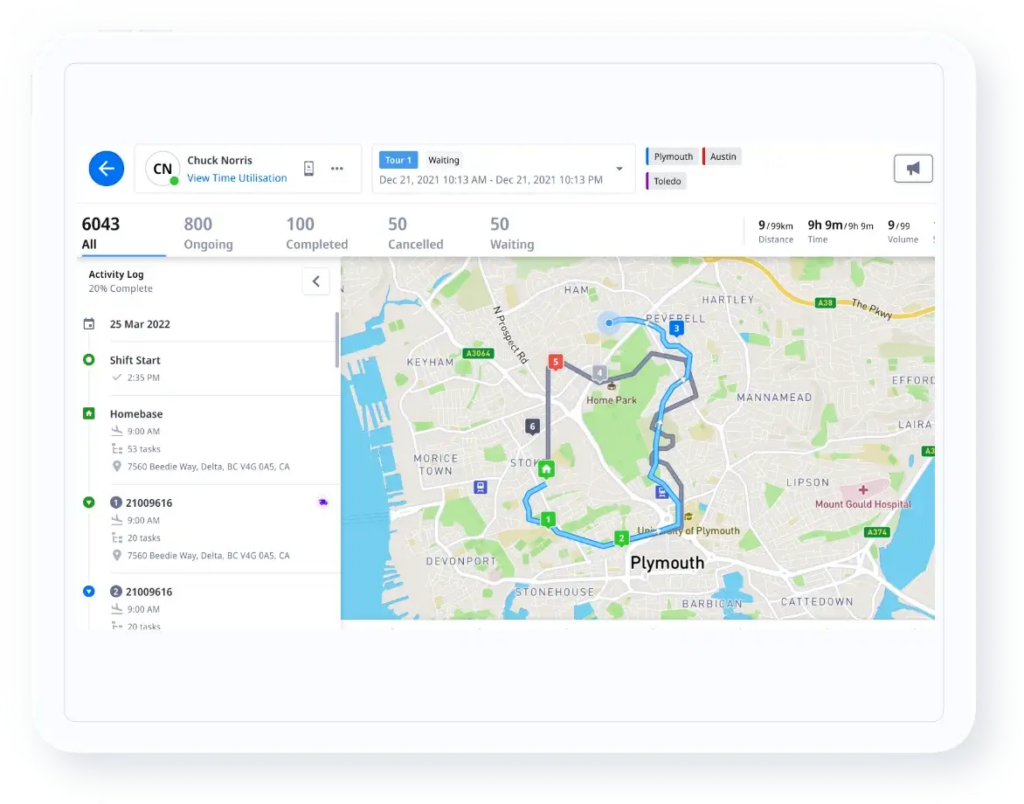
Locus provides a centralized control tower that gives operations teams a live view of:
- Route execution across every active driver and vehicle
- SLA adherence tracked in real time against committed delivery windows
- Delivery exceptions flagged as they occur across the network
- Fleet performance monitored continuously throughout the day
This allows teams to identify and resolve issues before they reach the customer.
7. Proven Enterprise Outcomes
Locus is deployed across large-scale enterprise logistics operations globally, with measurable outcomes across planning efficiency, cost, and service performance:
- 66% faster planning cycles, giving operations teams more time to manage exceptions rather than build plans
- 90% fleet utilization achieved through continuous reallocation of capacity across routes and carriers
- 20% reduction in logistics costs driven by constraint-based optimization across every order
- 99.5% on-time SLA adherence maintained across high-volume, multi-depot networks
- 1.5 billion deliveries optimized across 30+ countries since deployment
- $320 million in logistics savings unlocked across enterprise operations worldwide
Locus’s Limitations
Locus is designed for complex, high-volume logistics environments.
- Requires structured onboarding and configuration
- May be more comprehensive than needed for small fleets or simple routing needs
Locus Is Best For
Large enterprises (500+ vehicles, multi-depot networks, hybrid fleets) in retail, FMCG, e-commerce, and 3PL operations that require continuous decision-making and orchestration at scale.
Locus’s Pricing
Locus pricing is available on request and structured around operational scale, modules activated, and deployment scope. The platform includes what-if scenario simulation within the Control Tower, allowing operations managers to model routing decisions and trace the reasoning behind AI-driven recommendations before applying them live.
2. Route4Me – Multi-Stop Route Planner for SMB and Mid-Market Teams
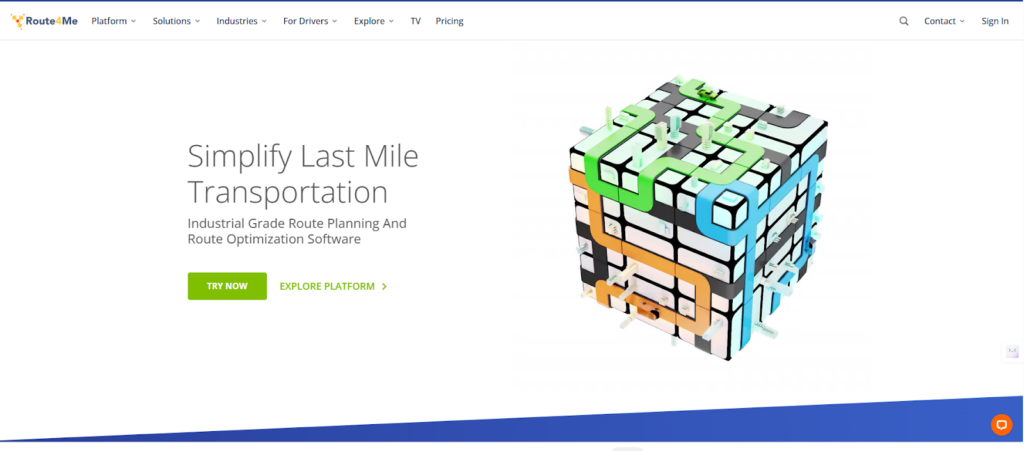
Route4Me is a multi-stop route planning software built for small to mid-sized delivery and field service teams. The platform prioritizes speed and simplicity, allowing teams to upload addresses, generate routes, and dispatch them to drivers within minutes.
Route4Me is particularly well suited for field service businesses like HVAC, pest control, and maintenance operations where territory management and daily route creation are the primary needs rather than complex logistics orchestration.
Key Features of Route4Me
- Multi-stop route optimization across up to 200 stops per route depending on the plan
- Bulk address import via CSV or direct integrations for fast daily planning
- Driver mobile app with turn-by-turn navigation and route execution
- Territory management tools for defining delivery zones and assigning drivers
- Route planning API for integrating routing into existing operational systems
Who Route4Me Works Best For
Teams of 10 to 100 vehicles that need straightforward daily route planning with minimal onboarding. Field service operations where territory-based routing and driver simplicity matter most.
Pros of Route4Me
- Easy to set up with minimal onboarding required
- Fast route generation suited for daily planning cycles
- Strong mobile app experience for drivers on the ground
- Effective for territory-based routing across defined zones
Cons of Route4Me
- Better suited for single-depot operations with lower complexity
- Teams managing multiple depots, mixed carrier networks, or high-volume enterprise logistics will find the platform reaches its limits fairly quickly
Route4Me Pricing
Starts at approximately $99 per month per user, with tiered pricing based on number of users, routes and stops, and API usage.
3. WorkWave – Routing and Fleet Management for Field Service Operations
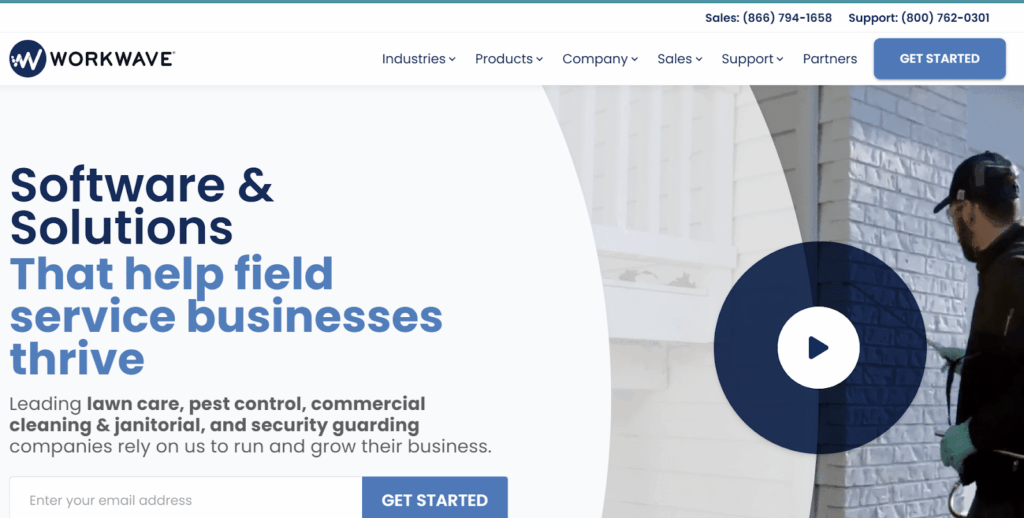
WorkWave is a routing and scheduling platform built primarily for field service businesses, including pest control, lawn care, HVAC, and home services. It combines route planning with fleet tracking and service management, making it useful for teams that need both scheduling and execution visibility within a single platform.
WorkWave is designed around repeatable service routes and workforce coordination, making it a natural fit for businesses where the same locations are visited on a recurring schedule rather than dynamic, high-volume delivery operations.
Key Features of WorkWave
- Route planning and scheduling optimized for daily service routes based on job locations
- Real-time fleet tracking to monitor driver location and job progress throughout the day
- Proof of service and delivery capture for job completion and customer confirmations
- Customer management tools covering scheduling, invoicing, and service history tracking
- Mobile app for drivers with navigation, job updates, and task management
Who WorkWave Works Best For
Field service companies with recurring service routes and appointments. Small to mid-sized fleets that need combined routing and service management without the complexity of enterprise logistics infrastructure.
Pros of WorkWave
- Strong fit for field service workflows that involve recurring scheduling
- Combines routing with customer and service management in one platform
- Real-time fleet tracking with job-level visibility throughout execution
Cons of WorkWave
- Designed for single-depot, recurring service operations rather than large-scale logistics networks
- Teams requiring advanced constraint-based optimization or multi-depot orchestration will find the platform’s scope limited
WorkWave Pricing
Custom pricing based on fleet size, number of users, and modules activated including routing, CRM, and billing. Available on request.
4. OptimoRoute – Route Optimization Software for Mid-Sized Delivery Operations
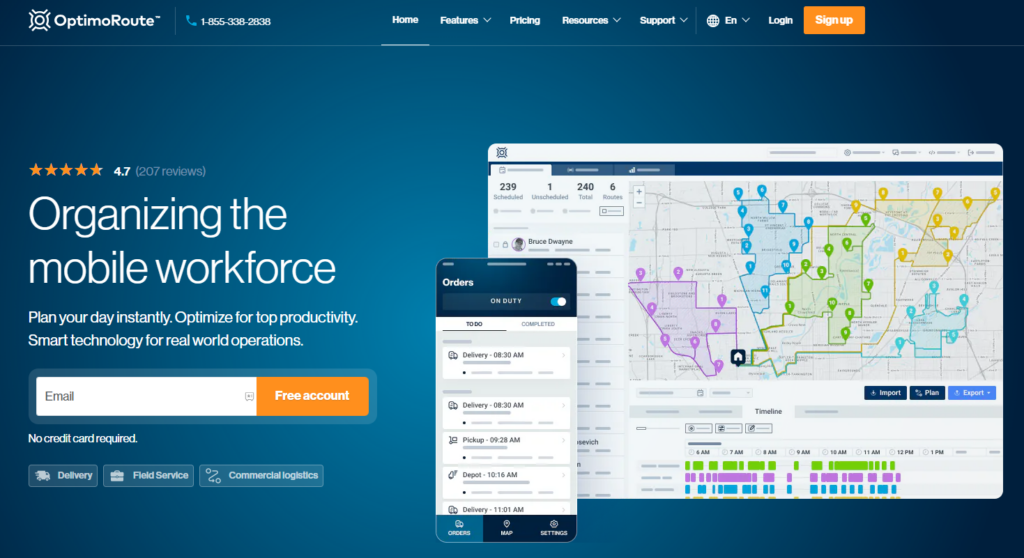
OptimoRoute is a route optimization platform built for mid-sized delivery and distribution businesses. It focuses on workload balancing, multi-constraint route planning, and scheduling efficiency, making it a practical choice for operations that run on predictable delivery patterns and need structured planning across a growing driver base.
The platform is recognized for its clean interface and ability to handle time windows, driver skills, and vehicle capacity constraints without the configuration overhead of enterprise logistics systems.
Key Features of OptimoRoute
- Multi-constraint route optimization supporting time windows, driver skills, and vehicle capacity
- Workload balancing that distributes tasks evenly across drivers for consistent daily efficiency
- Route planning across up to 500 vehicles for mid-sized fleet operations
- Recurring and repeat route planning suited for predictable, structured delivery schedules
- Driver mobile app for route execution, live tracking, and real-time updates
Who OptimoRoute Works Best For
Mid-sized delivery and distribution companies managing between 50 and 500 vehicles. Teams running structured, repeatable delivery operations that need reliable constraint-based planning without full enterprise orchestration complexity.
Pros of OptimoRoute
- Strong support for time windows and workload balancing across driver teams
- Clean and user-friendly interface that reduces onboarding time
- Scales comfortably beyond basic SMB routing tools for growing operations
Cons of OptimoRoute
- Real-time dynamic re-optimization during execution is limited
- Teams managing multiple depots, mixed carrier networks, or highly variable demand will find the platform’s capabilities reach their ceiling relatively quickly
OptimoRoute Pricing
Starts at approximately $50 per month per driver, with pricing varying based on number of drivers and features activated including advanced constraints and analytics.
5. FarEye – Enterprise Delivery Management Platform
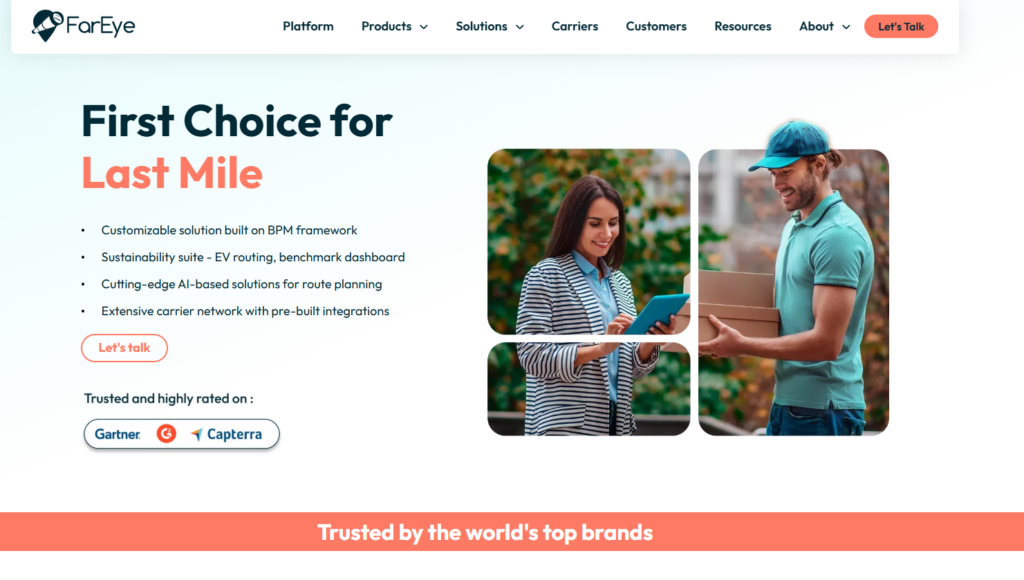
FarEye is an enterprise delivery management platform built around last-mile visibility, customer experience, and workflow automation. It is widely adopted by large retail and e-commerce companies that need strong delivery tracking, proactive customer communication, and flexible last-mile workflows across high-volume operations.
The platform is particularly strong on the post-dispatch side of logistics, where keeping customers informed and managing delivery experience at scale are the primary priorities.
Key Features of FarEye
- Last-mile route planning and optimization for high-volume retail and e-commerce operations
- Real-time tracking and delivery visibility across the entire last-mile network
- Customer communication tools including ETA updates, notifications, and delivery status alerts
- Dynamic delivery rescheduling to accommodate changes during active execution
- Workflow automation for streamlining last-mile delivery processes at scale
Who FarEye Works Best For
Large retail and e-commerce enterprises focused on improving delivery experience and customer communication. Operations that need strong last-mile visibility and tracking alongside post-purchase engagement capabilities.
Pros of FarEye
- Strong customer experience and real-time tracking capabilities across last-mile operations
- Flexible and configurable workflows suited to enterprise retail environments
- Widely proven across large-scale retail and e-commerce deployments globally
Cons of FarEye
- Implementation can be complex and time-intensive, requiring structured onboarding
- Depth of multi-constraint optimization is narrower compared to platforms built for full supply chain orchestration
- Primarily focused on last-mile visibility rather than end-to-end logistics decision-making
FarEye Pricing
Custom pricing based on business size, delivery volume, and modules and integrations required. Available on request.
6. LogiNext – Logistics Management Platform with Routing and Analytics
LogiNext is a logistics management platform that combines route optimization, automated dispatch, and real-time fleet tracking into a single suite. It is designed for mid-to-large enterprises looking for broad logistics workflow coverage across routing, tracking, and analytics without managing multiple disconnected tools.
The platform has strong adoption across retail, e-commerce, and logistics operations in India and Southeast Asia, where it is recognized for its wide functional coverage and integration capabilities.
Key Features of LogiNext
- Route optimization and auto-allocation of orders across drivers and vehicles
- Real-time fleet tracking and visibility across active delivery operations
- Analytics dashboards for monitoring delivery performance and operational metrics
- Delivery scheduling and dispatch automation for daily planning workflows
- Integration capabilities across logistics, e-commerce, and enterprise systems
Who LogiNext Works Best For
Mid-to-large enterprises in retail, e-commerce, and logistics, particularly those operating in India and Southeast Asia markets. Teams that need routing and tracking consolidated into one platform without the complexity of a full enterprise TMS.
Pros of LogiNext
- Covers multiple logistics workflows within a single platform reducing tool fragmentation
- Strong real-time tracking and visibility features across fleet operations
- Good integration capabilities with existing logistics and enterprise systems
Cons of LogiNext
- The suite-based approach means individual modules can lack the depth of specialized platforms, particularly around advanced multi-constraint optimization
- Operations with highly complex, multi-depot, or high-variability logistics requirements may need capabilities beyond what the platform offers out of the box
LogiNext Pricing
Custom pricing based on fleet size, feature modules activated, and deployment scale. Available on request.
7. Shipsy – Logistics Platform for Freight and Cross-Border Operations
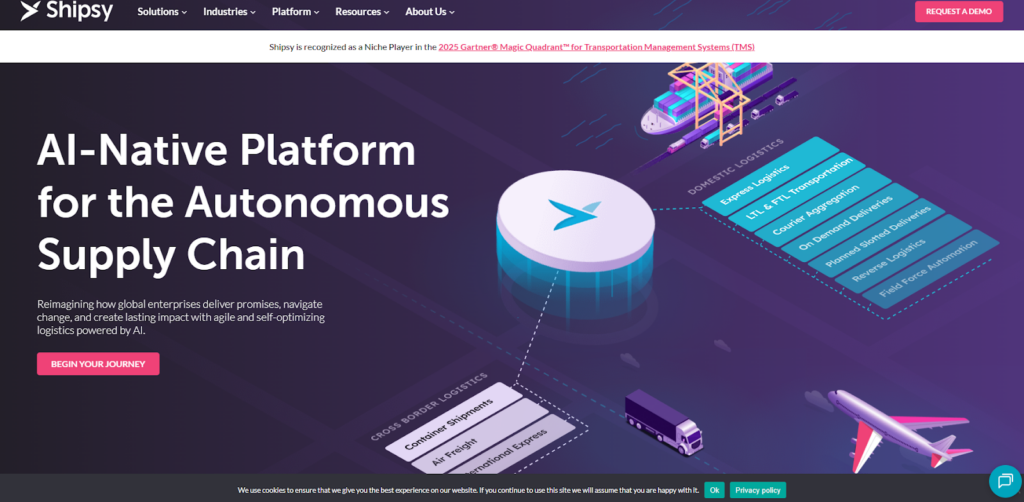
Shipsy is a logistics technology platform built around freight management, cross-border logistics, and multimodal shipment visibility. It provides tools for planning, tracking, and managing shipments across complex international supply chains where compliance, invoicing, and multi-country visibility are the core operational priorities.
The platform is positioned more toward end-to-end logistics visibility than routing-first execution, making it particularly relevant for enterprises managing freight-heavy operations across MEA and South Asian markets.
Key Features of Shipsy
- Freight procurement and rate management across carrier networks and transport modes
- Multimodal shipment tracking and visibility across international logistics operations
- Route planning as part of a broader end-to-end logistics management platform
- Automated invoicing and compliance workflows for cross-border shipment management
- Analytics for monitoring shipment performance and tracking cost across operations
Who Shipsy Works Best For
Enterprises with cross-border logistics and freight-heavy operations, particularly those operating across MEA and South Asian markets. Companies that need strong compliance, invoicing, and multimodal shipment visibility as their primary requirement rather than deep last-mile routing capability.
Pros of Shipsy
- Strong capabilities in freight management and cross-border logistics operations
- Good visibility across multimodal shipments spanning multiple countries and transport modes
- Built-in compliance and invoicing features reduce the need for separate tools in international operations
Cons of Shipsy
- Route optimization and last-mile scheduling are not the platform’s primary strength
- Teams requiring deep constraint-based routing or last-mile delivery orchestration at scale will likely need additional tools alongside it
Shipsy Pricing
Custom pricing based on shipment volume, modules selected, and geographic coverage. Available on request.
8. Routific – Route Optimization Software for Small Delivery Teams
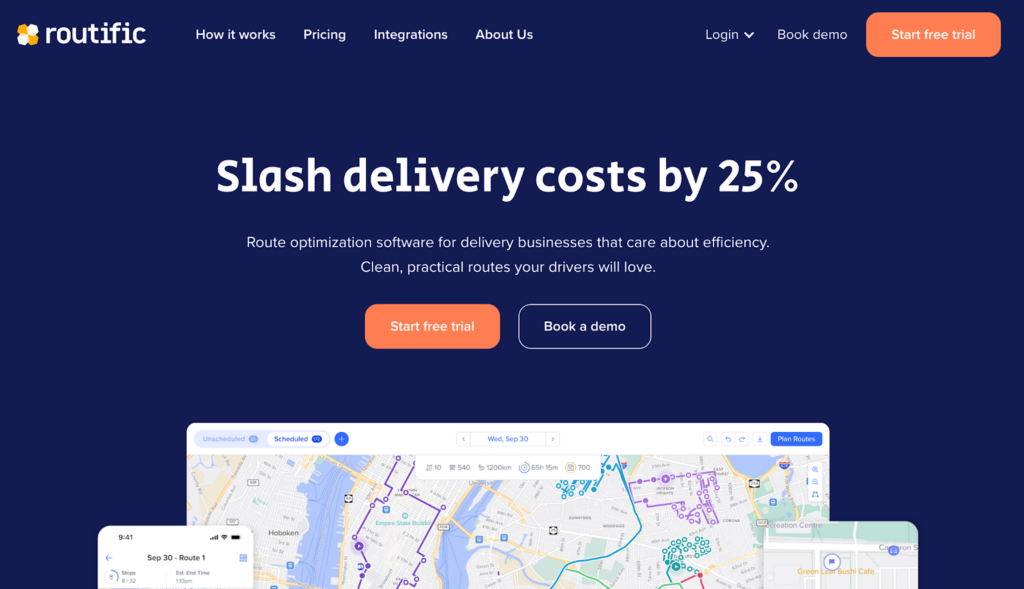
Routific is a lightweight route optimization tool built for small to mid-sized delivery teams. It focuses on simplicity and fast onboarding, making it easy to generate routes, assign stops, and track deliveries without complex configuration or lengthy implementation.
The platform is a practical starting point for businesses moving away from manual planning toward basic route automation, particularly local distribution and courier operations where straightforward daily routing is the primary need.
Key Features of Routific
- Multi-stop route optimization with time window support for daily delivery planning
- Drag-and-drop route adjustments for quick manual changes during dispatch
- Driver mobile app for turn-by-turn navigation and real-time delivery updates
- Delivery tracking and status updates for operations teams and customers
- Simple dispatch and route assignment tools for fast daily planning workflows
Who Routific Works Best For
Small delivery businesses managing between 10 and 100 vehicles. Local distribution and courier operations transitioning from manual planning or spreadsheets to basic route automation, where simplicity and quick setup matter more than advanced optimization depth.
Pros of Routific
- Simple interface with fast onboarding requiring minimal training
- Easy route planning and drag-and-drop adjustments for daily operations
- Transparent and affordable pricing relative to enterprise routing platforms
- Well suited for small and growing delivery teams building their first routing workflow
Cons of Routific
- Scalability is limited as operations grow in volume, complexity, or geographic spread
- Teams managing multiple depots, mixed carrier networks, or dynamic real-time re-routing will find the platform’s capabilities constrained relatively quickly
Routific Pricing
Subscription-based with transparent pricing tiers. Pricing depends on number of vehicles and feature access level selected.
9. Onfleet – Last-Mile Delivery Management Platform for E-Commerce and D2C Brands
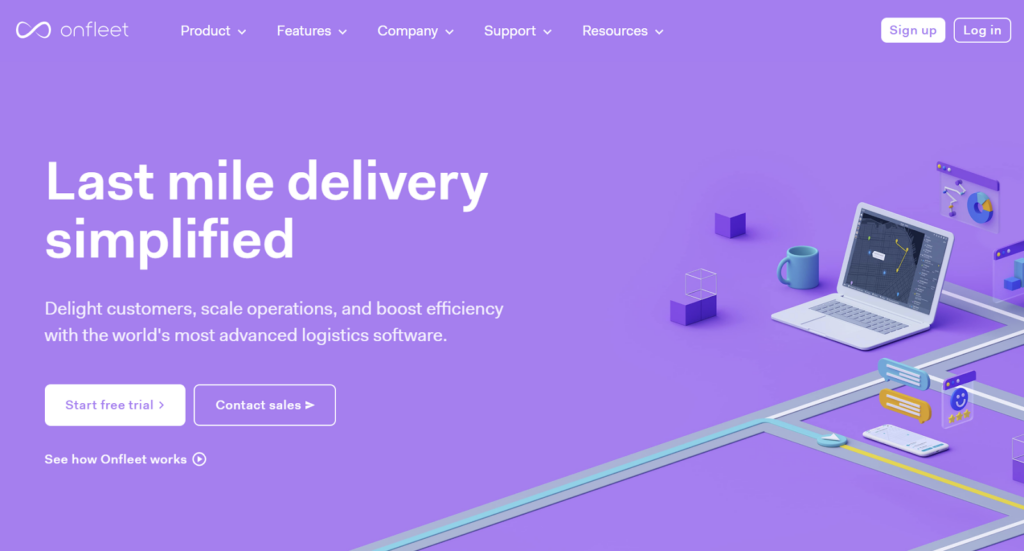
Onfleet is a last-mile delivery management platform built for e-commerce, D2C brands, and local delivery operations. It brings route optimization, dispatching, and real-time tracking together in a single platform, with a strong emphasis on developer-friendly integrations and customer-facing delivery experience.
The platform is widely used by businesses managing their own delivery fleets for same-day or local delivery, where ease of setup, clean tracking, and reliable customer communication are the primary operational priorities.
Key Features of Onfleet
- Auto-dispatch and route optimization for daily last-mile delivery planning
- Real-time tracking with live delivery updates for both operations teams and customers
- Proof of delivery capturing signatures, photos, and delivery notes digitally
- Customer notifications and ETA updates throughout the delivery lifecycle
- API-first architecture with native integrations including Shopify, Zapier, and other e-commerce platforms
Who Onfleet Works Best For
E-commerce and D2C brands managing in-house delivery fleets for same-day or local delivery. Teams that need strong tracking, customer communication, and clean integrations with existing commerce and operations systems without enterprise-level complexity.
Pros of Onfleet
- Strong real-time tracking and customer experience features built for last-mile operations
- Developer-friendly APIs that integrate cleanly with existing e-commerce and operations stacks
- Easy to set up with reliable performance for local and same-day delivery management
Cons of Onfleet
- Focused specifically on last-mile operations, with limited support for multi-depot or multi-leg logistics networks
- Teams managing complex, high-volume enterprise supply chains with advanced constraint-based optimization needs will find the platform’s scope narrow
Onfleet Pricing
Tiered subscription pricing based on the number of delivery tasks, features, and integrations activated. Entry-level plans are available for smaller teams, with pricing scaling up based on delivery volume and operational requirements.
10. Circuit – Lightweight Route Planner for Small Fleets and Individual Drivers
Circuit is a simple route planning tool built for independent drivers and very small delivery teams. It takes a mobile-first approach, allowing users to quickly create optimized multi-stop routes and navigate them directly from their phone with minimal setup required.
The platform is designed for simplicity rather than scale, making it a practical and affordable option for micro-fleets and independent couriers who need basic route planning without operational complexity.
Key Features of Circuit
- Multi-stop route optimization for quick daily route creation on mobile
- Mobile-first route planning and navigation built around the driver experience
- Proof of delivery capturing package confirmations, and delivery updates
- Simple dispatch and route sharing for small team coordination
- Basic delivery tracking and status updates for operations oversight
Who Circuit Works Best For
Independent delivery drivers and small courier teams managing fewer than 10 vehicles. Businesses that need straightforward, low-cost route planning without the configuration or complexity of larger platforms.
Pros of Circuit
- Extremely easy to use with minimal setup and no technical onboarding required
- Mobile-first experience designed around how individual drivers actually work
- Affordable pricing with a free tier available for very small delivery volumes
Cons of Circuit
- Not built to scale beyond small, single-depot operations
- Teams that grow in volume or complexity will quickly outgrow the platform’s optimization and fleet management capabilities
- No integration depth for connecting with enterprise systems or broader logistics workflows
Circuit Pricing
Free tier available with limited features for individual drivers and very small teams. Paid plans unlock advanced functionality at pricing that remains accessible for small operations.
Which Routing and Scheduling Platform Is Right for You
The right routing and scheduling software depends entirely on the complexity of the operation it needs to support. Lightweight tools serve small fleets well. Mid-market platforms add structure as volumes grow. For enterprises managing multi-depot networks, hybrid fleets, and strict SLA commitments across hundreds of vehicles, the requirement moves beyond route planning into continuous decision-making across the full delivery lifecycle.
That is the environment Locus is built for. By connecting routing, dispatch, and execution into a single decision loop, it gives logistics teams the real-time adaptability that static planning tools cannot provide at scale.
If you are managing 500+ vehicles across regions and want to see how constraint-based planning performs against your specific fleet, carrier mix, and delivery commitments, schedule a demo with Locus and see it firsthand.
Frequently Asked Questions (FAQs)
1. How Long Does It Take To Implement Routing And Scheduling Software?
Implementation can take anywhere from a few days for basic tools to several weeks for enterprise platforms, depending on integration depth, fleet complexity, and customization requirements.
2. Can Routing Software Handle Peak Season Volume Spikes?
Yes, but performance depends on the platform. Enterprise systems are designed to scale dynamically, while lightweight tools may struggle with sudden increases in orders and routing complexity.
3. Does Routing Software Support Reverse Logistics And Returns?
Some platforms support returns and reattempts, but advanced solutions handle reverse logistics as part of overall route optimization, ensuring efficient pickup and delivery coordination.
4. How Important Is Geocoding Accuracy In Route Planning?
High geocoding accuracy ensures drivers reach precise delivery locations, reducing failed deliveries and delays. This becomes critical in dense urban areas or regions with unstructured addressing systems.
5. How Do Enterprise Teams Move Beyond Basic Route Planning?
As operations scale, teams adopt platforms like Locus that combine routing, dispatch, and execution into a unified decision layer, enabling real-time optimization across complex delivery networks.


General
Top 10 Last Mile Routing Software for Enterprise Logistics Teams in 2026

Mar 27, 2026
Compare the top 10 last mile routing software tools built for enterprise fleets, from AI-powered dispatch automation to real-time re-routing and deep ERP integration.
Read more
General
Routing Software for Deliveries: Enterprise Buyer’s Guide (2026)
Mar 31, 2026
Routing software for deliveries: A comparison of 9 platforms across enterprise, mid-market, and SMBs. Explore features, scalability, and best-fit use cases.
Read moreInsights Worth Your Time




















Routing and Scheduling Software Compared: 10 Platforms for Enterprise Logistics Teams (2026)