


Retail & CPG
6 Retail Logistics Software for Enterprise Networks in 2026
Key Takeaways
- Retail fulfillment across stores, warehouses, and carrier networks requires coordinated decision-making supported by enterprise retail logistics software.
- This guide evaluates six enterprise platforms: Locus, FarEye, LogiNext, Blue Yonder, Shipsy, and RELEX Solutions.
- Some platforms specialize in last-mile optimization or freight management, while others focus on forecasting, inventory planning, or transportation execution layers.
- Enterprise retailers should prioritize multi-node allocation, carrier orchestration, SLA-based prioritization, and centralized control tower visibility.
- Locus differentiates itself through unified orchestration across allocation, routing, carrier coordination, and real-time execution visibility at enterprise scale.
If you’re managing fulfillment across multiple stores, warehouses, and carrier partners, you’ve probably reached a point where coordination matters more than expansion. Adding new delivery options, regions, or 3PL partners increases reach, but it also increases the number of decisions behind every order.
You gain real control only when those decisions are made within one connected system. The wrong setup can lead to inconsistent allocation, missed SLAs, higher last-mile costs, and limited visibility across regions.
It’s also important to understand that having separate inventory systems, warehouse tools, or carrier integrations does not automatically mean your operations are coordinated. You need capabilities such as multi-node allocation logic, real-time capacity visibility, carrier benchmarking, SLA-based prioritization, and centralized control tower reporting.
This guide reviews leading retail logistics software platforms and explains how enterprise retailers should evaluate them.
But first…
Why Would an Enterprise Retailer Need Retail Logistics Software?
Implementing retail logistics software requires integration and internal alignment. As fulfillment networks grow, managing allocation, carrier selection, and SLA prioritization across disconnected systems becomes more complex because the data required for each decision sits in different platforms and is not updated in real time.
A centralized coordination layer brings inventory availability, node capacity, routing logic, and carrier performance into a single system. This ensures decisions are made using synchronized, real-time operational data rather than fragmented inputs from separate platforms.
That synchronization is what enables consistent execution across distributed retail networks.
What Problem Is Retail Logistics Software Actually Solving?
At scale, retail fulfillment depends on coordinated decision-making across locations, partners, and service commitments.
Every order draws on multiple inputs, including stock position, fulfillment capacity, delivery timelines, and regional service agreements. When these inputs are evaluated separately rather than together, execution becomes inconsistent across the network.
This typically shows up in measurable ways:
- Delivery timelines vary by region because allocation decisions do not account for live carrier capacity or regional constraints.
- Carrier costs increase when orders are assigned without benchmarking performance or evaluating alternative routing options.
- Inventory is shipped from non-optimal locations, even when closer nodes have stock, because allocation logic lacks full network visibility.
- SLA performance is reviewed after delivery, rather than influencing allocation and routing decisions upfront.
The issue is not the absence of tools, but the lack of synchronized decision-making across distributed nodes.
Retail logistics software centralizes these decision inputs so allocation and routing reflect full operational context.
How Does Retail Logistics Software Work Across Enterprise Networks?
Retail logistics software connects inventory, order management, warehouse operations, and carrier networks.
When an order is placed, the system evaluates live inventory availability, node capacity, delivery timelines, carrier performance, and cost constraints within a unified framework. Instead of assigning fulfillment based only on proximity, it selects the node and carrier that best align with service commitments and operational efficiency.
As execution progresses, the platform tracks shipment movement, and SLA adherence across regions. If conditions change, such as capacity shifts or delivery delays, the system adjusts routing and allocation accordingly.
This ongoing coordination ensures fulfillment decisions stay aligned with real-time operational conditions, even as networks expand across geographies and channels.
How the Retail Logistics Software Category Is Segmented
Retail logistics software is not a single category. Different platforms address different layers of fulfillment. Understanding this structure helps enterprise retailers evaluate solutions more accurately.
Category Overview
| Category | What It Covers | Operational Scope | Best Fit |
|---|---|---|---|
| ERP-Embedded Logistics Modules | Basic transportation and fulfillment features within ERP systems | Supports logistics processes linked to finance, procurement, and inventory records | Retailers prioritizing centralized enterprise systems over advanced routing logic |
| Shipping & Parcel Management Tools | Label generation, rate comparison, and carrier integrations | Manages outbound shipping after allocation decisions are made | Retailers with straightforward shipping needs and limited node complexity |
| Last-Mile Optimization Platforms | Route planning, fleet tracking, delivery execution | Optimizes delivery performance at the final stage of fulfillment | Retailers focused on improving fleet efficiency and on-time delivery |
| Enterprise TMS & Orchestration Platforms | Allocation logic, multi-node routing, carrier selection, Service commitments | Governs fulfillment decisions across inventory, warehouses, and carrier networks | Multi-region, high-volume retail networks requiring centralized control |
Some tools support shipping execution. Others optimize delivery routes. Enterprise orchestration platforms coordinate allocation, routing, carrier performance, and SLA commitments within a single decision layer.
For large retail networks operating across multiple nodes and partners, this distinction determines whether logistics is managed as separate functions or as an integrated system.
What Enterprise Retailers Should Look for in 2026
Once you understand how the category is segmented, the next step is evaluating capabilities that support distributed retail networks.
Enterprise retail logistics software should strengthen decision-making across nodes, partners, and regions.
Here are the key capabilities:
1. Multi-Node, Inventory-Aware Routing
Enterprise networks operate across stores, distribution centers, and dark stores. Before assigning an order, the platform should check real-time inventory, available capacity, location, and SLA commitments.
Routing based only on distance is not enough. The system must also consider stock levels, cost impact, and service requirements.
2. 3PL and Carrier Orchestration
Retailers often work with multiple fleets and third-party logistics providers across regions.
The system should:
- Benchmark performance
- Dynamically assign carriers based on cost and SLA adherence
- Standardize workflows across partners
- Provide centralized visibility across all fleets
Without orchestration, multi-carrier environments become fragmented and difficult to optimize.
3. SLA Optimization and Prioritization
Enterprise fulfillment operates with different delivery commitments across regions, customer tiers, and order types.
Retail logistics software should prioritize orders based on service-level requirements and adjust allocation or routing when capacity constraints or delays arise. SLA should influence fulfillment decisions at the time of execution, not be reviewed only after delivery.
4. Control Tower Visibility
Visibility should go beyond tracking dashboards. Enterprise platforms must consolidate:
- Inventory data
- Allocation decisions
- Carrier performance metrics
- Delivery status updates
- Exception alerts
This creates a centralized operational view that allows teams to act early instead of reacting after service issues occur.
5. Reverse Logistics and Returns Coordination
Returns are part of the retail lifecycle.
The platform should support reverse logistics workflows, including pickup scheduling, routing optimization for returns, and reintegration into inventory systems. Managing outbound and reverse flows separately leads to inconsistent performance and reporting.
In 2026, enterprise retailers are not evaluating retail logistics software based on isolated features. They are evaluating whether the platform can standardize fulfillment decisions across their entire network.
6 Best Enterprise Retail Logistics Software Platforms in 2026
With the category defined and evaluation criteria established, the next step is to compare platforms built for enterprise retail networks.
The solutions below support multi-node allocation, carrier coordination, target achievements, and network-wide execution across high-volume operations.
| Platform | Primary Focus | Orchestration Depth | Best Fit | Differentiator |
|---|---|---|---|---|
| Locus | End-to-end retail logistics orchestration | Full multi-node allocation, routing, carrier coordination, SLA governance | Multi-region enterprise retail networks | Unified execution layer across allocation, routing, and control tower visibility |
| FarEye | Last-mile delivery management | Delivery-layer optimization | Retailers focused on post-purchase experience | Strong delivery visibility and customer communication tools |
| LogiNext | Route planning and fleet analytics | Transportation-layer optimization | Enterprises improving fleet efficiency | AI-driven route intelligence and performance dashboards |
| Blue Yonder | Supply chain planning and TMS | Planning + transportation management | Large retailers prioritizing forecasting and inventory alignment | Deep demand forecasting and integrated supply chain planning |
| Shipsy | Multimodal freight and cross-border logistics | Freight orchestration | Retailers with global shipping complexity | Cross-border coordination and multimodal transport management |
| RELEX Solutions | Demand forecasting and inventory optimization | Planning-layer intelligence | Retailers optimizing replenishment and stock positioning | Multi-echelon inventory optimization and retail analytics |
1. Locus
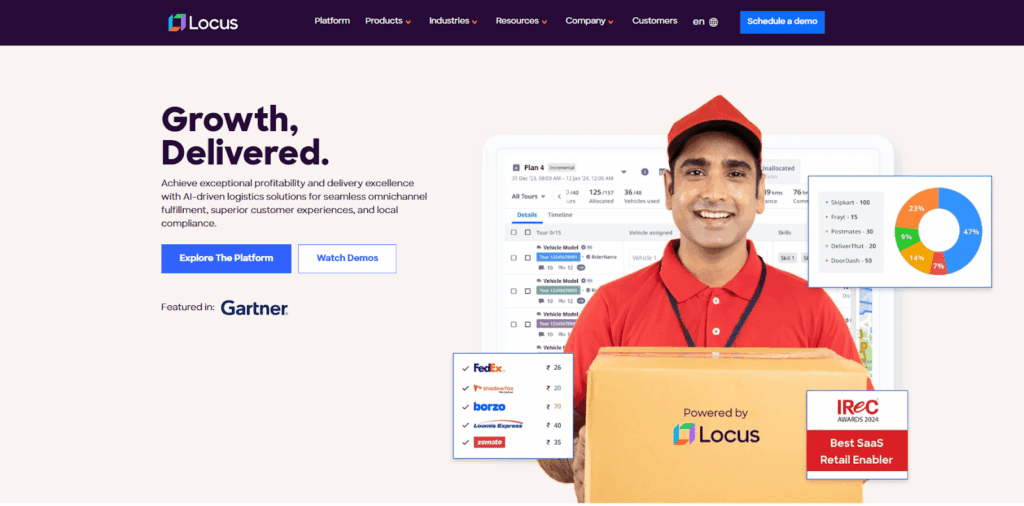
Locus combines AI-driven route optimization, multi-node allocation, and carrier orchestration within a unified logistics execution platform. It is designed for enterprise retail networks that require real-time coordination across stores, warehouses, and third-party delivery partners.
Key Features of Locus
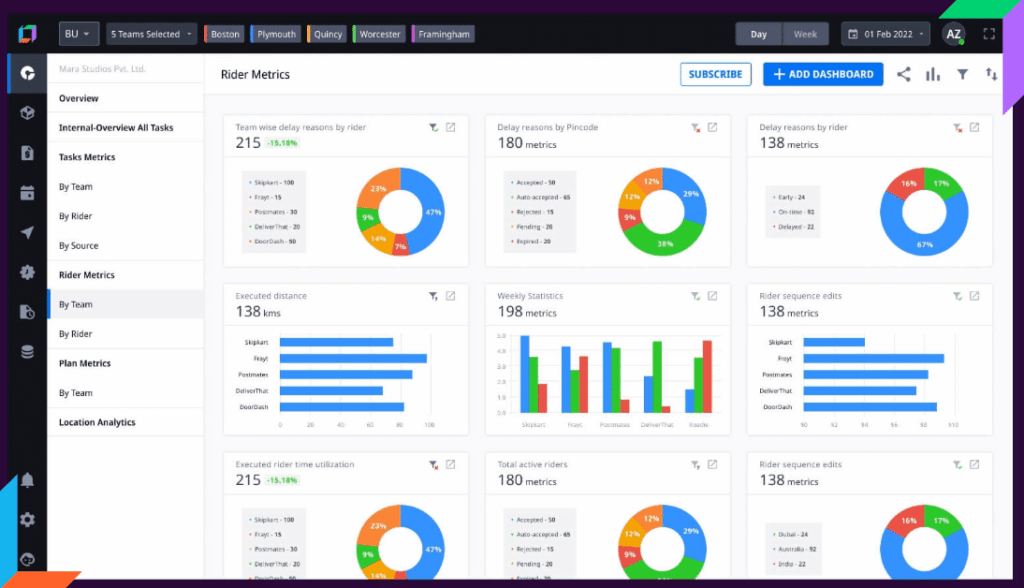
- Multi-node allocation and routing: Evaluates inventory position, fulfillment capacity, delivery timelines, and carrier performance before assigning orders across distributed retail networks.
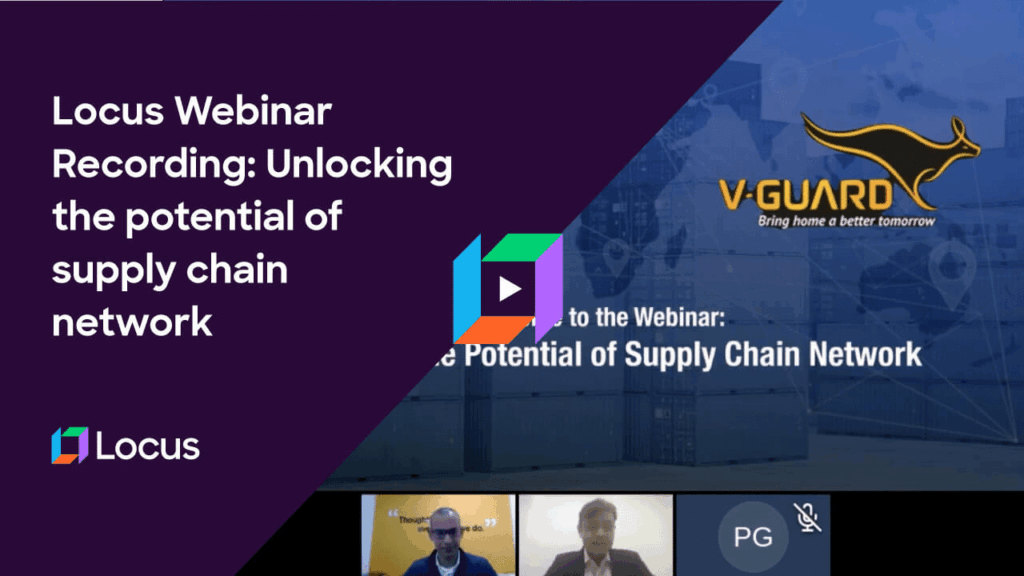
- Carrier and 3PL orchestration: Standardizes workflows across multiple fleets and logistics partners while benchmarking performance and SLA adherence in real time.
- Control tower visibility: Provides centralized monitoring of allocation decisions, shipment movement, and service-level performance across regions.
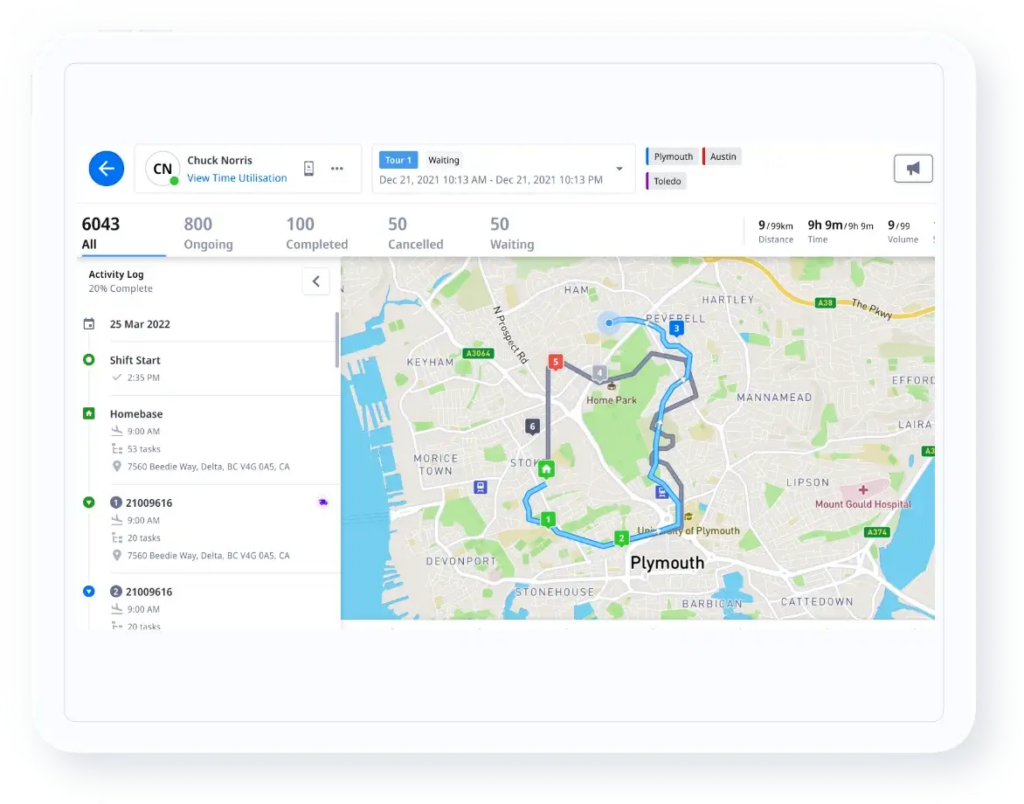
- Scalable automation: Uses rule-based and AI-driven decision logic to reduce manual intervention in high-volume retail environments.
- Enterprise integrations: Connects with retail inventory systems, order management platforms, warehouse management systems, and carrier APIs to enable synchronized execution.
Locus Is Best suited for
Enterprise retail, FMCG, and 3PL networks operating across multiple cities or regions, where orders are fulfilled from distributed inventory nodes and executed through a mix of in-house fleets and third-party carriers. Locus is particularly suited for organizations that need real-time coordination of allocation, routing, and SLA management at scale.
Read more: Captive vs Outsourced Fleet: Math behind Transportation and Distribution
What Makes Locus Different
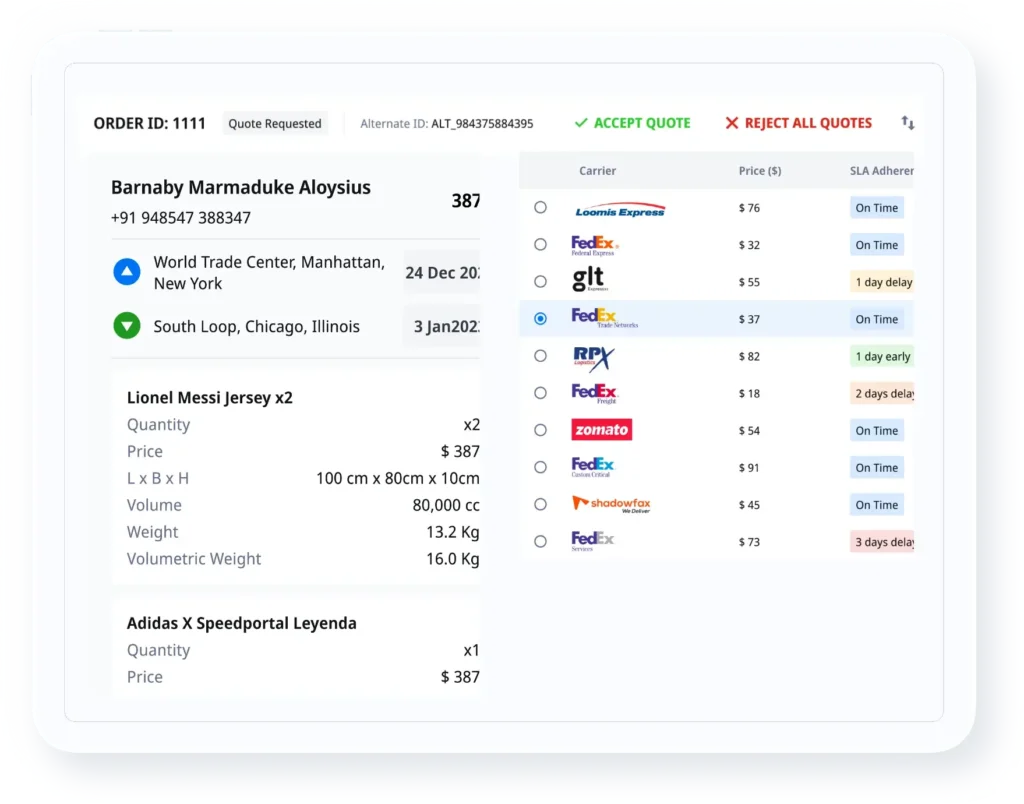
Locus delivers orchestration through purpose-built modules such as DispatchIQ for route optimization, ShipFlex for multi-carrier fulfillment management, fleet management for real-time fleet tracking, and a centralized control tower for operational oversight.
Rather than operating as a single-function routing or shipping tool, these modules work together to coordinate allocation, carrier selection, SLA management, and execution visibility within one platform. This modular structure allows enterprise retailers to manage distributed fulfillment while maintaining centralized governance across regions and partners.
Deployment and Systems Integration With Locus
Locus integrates with ERP, OMS, WMS, and carrier systems to align fulfillment policies with existing enterprise infrastructure. Deployment typically involves configuring allocation rules, SLA thresholds, and carrier selection logic to match regional operating models.
Locus – Operational and Service-Level Outcomes
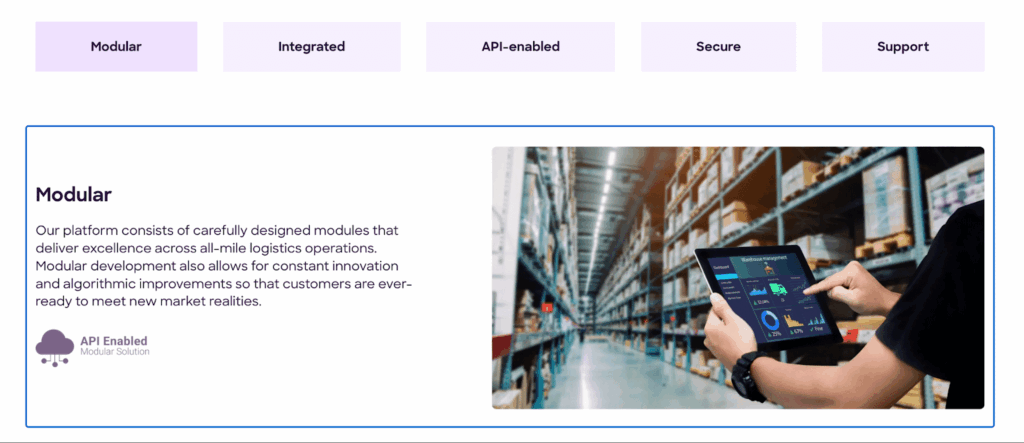
By synchronizing allocation, routing, and SLA management within one system, Locus supports improved on-time delivery performance, better carrier utilization, and more consistent execution across distributed retail networks.
2. FarEye
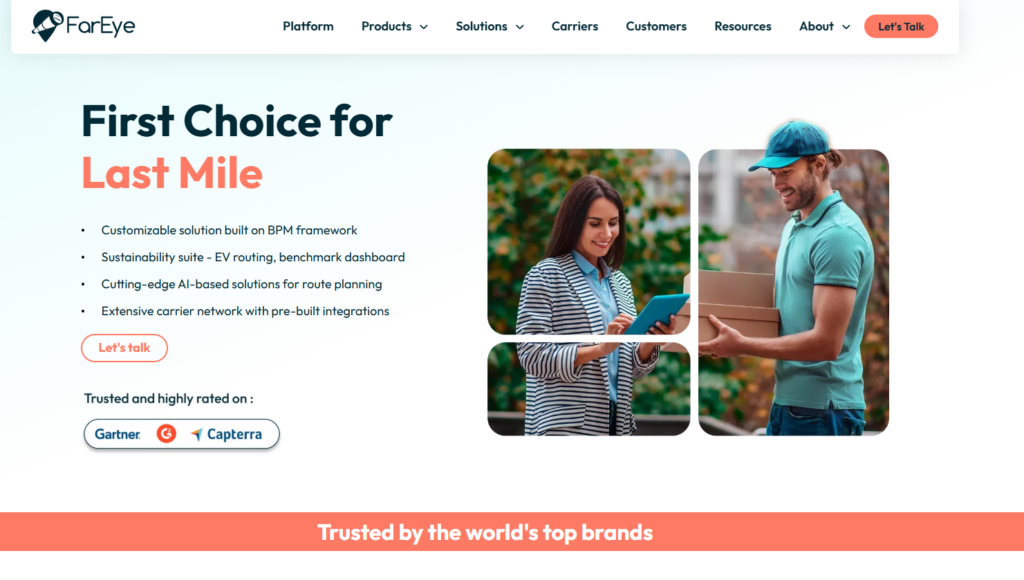
FarEye is a last-mile delivery management platform focused on improving delivery execution, customer visibility, and post-purchase experience. It supports retailers managing large delivery volumes across regional fleets and carrier networks.
Key strengths of FarEye
- Last-mile route optimization: Enhances delivery efficiency through automated route planning and fleet tracking.
- Real-time shipment visibility: Provides live tracking and status updates across delivery operations.
- Customer engagement tools: Enables proactive communication, dynamic delivery rescheduling, and branded tracking experiences.
- Workflow automation: Standardizes delivery processes across internal fleets and third-party providers.
FarEye Is Best for
Retailers prioritizing delivery performance, customer experience, and last-mile efficiency across multi-region networks. Particularly suited for organizations seeking stronger post-purchase engagement and delivery transparency.
Enterprise Deployment and Integration Approach With Fareye
FarEye integrates with order management systems, warehouse platforms, and carrier networks to enable real-time delivery tracking and automated workflow management. Implementation typically centers on enhancing last-mile coordination without replacing upstream allocation systems.
FarEye – Operational and Service-Level Impact
Retailers use FarEye to improve on-time delivery performance, reduce manual coordination in dispatch operations, and enhance customer satisfaction through proactive delivery communication.
3. LogiNext

LogiNext provides AI-driven route planning, fleet tracking, and logistics automation tools for enterprises managing delivery operations at scale. The platform focuses on improving routing efficiency, operational visibility, and transportation analytics across distribution networks.
LogiNext Key Strengths
- AI-powered route optimization: Uses algorithmic planning to improve delivery sequencing, reduce transit time, and optimize fleet utilization.
- Real-time fleet tracking: Monitors vehicle movement, delivery status, and route adherence across regions.
- Analytics and performance dashboards: Provides reporting tools to benchmark delivery performance and identify operational inefficiencies.
- Workflow automation: Automates dispatch processes and delivery confirmations to reduce manual coordination.
LogiNext Is Best for
Enterprise retailers and distribution-focused organizations seeking to improve fleet efficiency, routing performance, and transportation analytics across multi-region operations.
What Differentiates LogiNext
LogiNext concentrates on route intelligence and delivery analytics within the transportation layer. Its primary strength lies in optimizing fleet productivity and improving delivery visibility rather than governing upstream inventory allocation across distributed fulfillment nodes.
LogiNext Enterprise Deployment and Integration Approach
LogiNext integrates with ERP systems, warehouse platforms, and carrier networks to enhance dispatch and routing efficiency. Deployment typically centers on transportation optimization while existing allocation and inventory systems remain unchanged.
LogiNext Operational and Service-Level Impact
Organizations use LogiNext to reduce delivery times, improve fleet productivity, and gain structured performance visibility across regional delivery operations.
4. Blue Yonder
Blue Yonder provides end-to-end supply chain planning and transportation management solutions for large retail enterprises. Its logistics capabilities are typically part of a broader ecosystem that includes demand forecasting, inventory optimization, and warehouse management.
Blue Yonder Key Strengths
- Advanced demand forecasting: Uses predictive analytics to support inventory planning and replenishment decisions.
- Transportation management system (TMS): Supports load planning, carrier selection, and freight optimization.
- Integrated supply chain planning: Aligns procurement, inventory, and logistics decisions within a unified enterprise platform.
- Scalable enterprise architecture: Designed to handle complex, multi-region retail operations.
Blue Yonder Is Best For
Large retail enterprises seeking integrated supply chain planning and transportation management within a single ecosystem, especially those prioritizing forecasting and inventory optimization alongside logistics execution.
What Differentiates Blue Yonder
Blue Yonder’s strength lies in its planning depth. It integrates forecasting, inventory positioning, and transportation management into a broader supply chain framework. Compared to execution-focused logistics platforms, it emphasizes strategic planning and system-wide coordination.
Blue Yonder Enterprise Deployment and Integration Approach
Blue Yonder deployments typically involve integration across ERP, warehouse management, and procurement systems. Implementation may require structured rollout phases due to its broad functional scope.
Blue Yonder Operational and Service-Level Impact
Retailers use Blue Yonder to improve forecast accuracy, align transportation planning with inventory strategy, and optimize freight costs across large-scale supply chain networks.
5. Shipsy
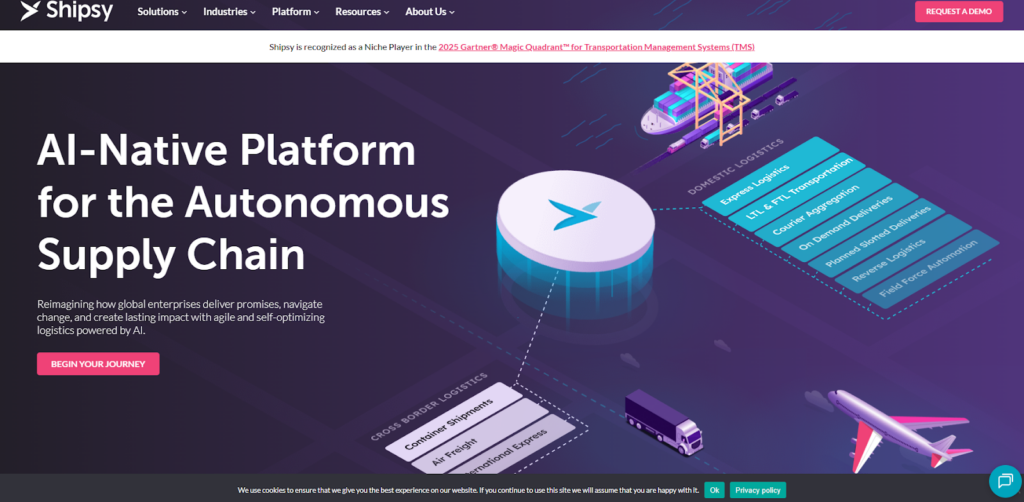
Shipsy provides logistics management software focused on multimodal transportation, cross-border coordination, and shipment visibility. The platform supports enterprises managing complex freight networks alongside retail distribution operations.
Shipsy Key Strengths
- Multimodal transportation management: Coordinates air, sea, road, and parcel shipments within a unified system.
- Cross-border and compliance support: Manages documentation, invoicing, and regulatory workflows for international shipments.
- End-to-end shipment visibility: Tracks freight movement across multiple carriers and transport legs.
- Freight cost optimization: Supports carrier rate comparison and performance benchmarking.
Shipsy Is Best For
Retailers and enterprises with significant cross-border operations or complex freight requirements that extend beyond last-mile delivery into international and multimodal logistics.
What Differentiates Shipsy
Shipsy focuses on freight orchestration and cross-border logistics management. Its strength lies in coordinating complex transportation flows and compliance processes rather than managing retail-specific multi-node allocation within domestic fulfillment networks.
Shipsy Enterprise Deployment and Integration Approach
Shipsy integrates with ERP systems, freight forwarders, customs systems, and carrier networks to enable centralized transportation oversight. Implementation typically centers on freight visibility and compliance alignment across regions.
Shipsy Operational and Service-Level Impact
Organizations use Shipsy to improve shipment transparency, streamline cross-border documentation processes, and optimize freight cost management across global logistics operations.
6. RELEX Solutions
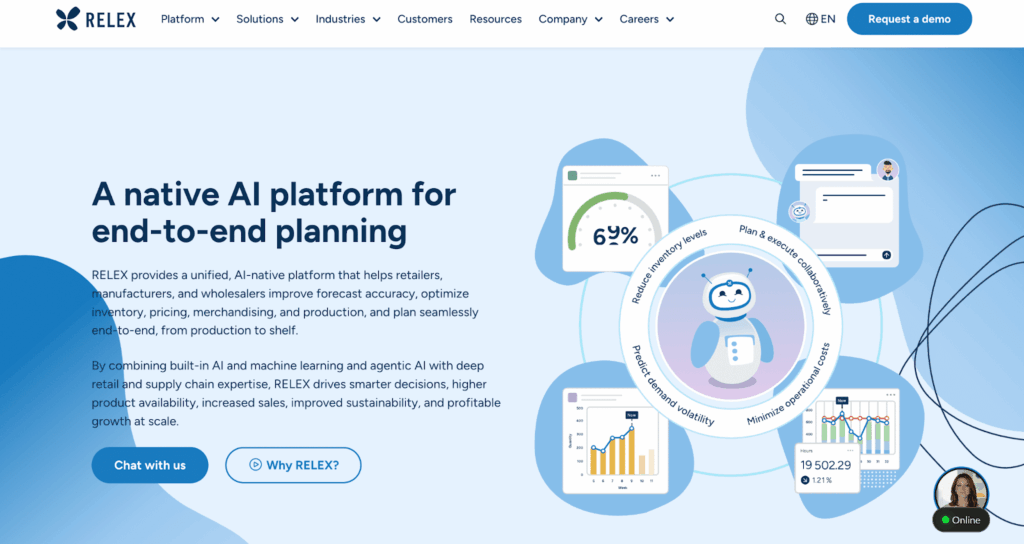
RELEX Solutions provides retail planning and inventory optimization software designed to improve forecasting, replenishment, and store-level inventory management. Its capabilities extend across demand planning and supply chain analytics for large retail enterprises.
RELEX Solutions Key Strengths
- Retail demand forecasting: Uses predictive analytics to improve forecast accuracy across stores and regions.
- Multi-echelon inventory optimization: Aligns stock positioning across distribution centers and retail locations.
- Automated replenishment planning: Supports store-level and warehouse-level restocking decisions.
- Retail analytics and reporting: Provides visibility into demand patterns, stock levels, and replenishment performance.
RELEX Solutions Is Best For
Large retail enterprises focused on improving demand planning, inventory positioning, and replenishment accuracy across distributed store networks.
What Differentiates RELEX Solutions
RELEX Solutions concentrates on planning and inventory intelligence rather than transportation execution. Its strength lies in optimizing stock placement and forecast accuracy, which supports downstream fulfillment performance.
RELEX Solutions Enterprise Deployment and Integration Approach
RELEX integrates with ERP systems, retail inventory platforms, and warehouse management systems to align demand planning with operational execution. Implementation typically centers on improving forecasting models and replenishment policies.
RELEX Solutions Operational and Service-Level Impact
Retailers use RELEX to reduce stockouts, improve inventory turnover, and enhance forecast-driven replenishment across large-scale retail environments.
If You Want Network-Wide Control, Choose Locus
If your retail operations span multiple regions, fulfillment nodes, and carrier partners, coordination becomes the defining factor in performance. Allocation decisions need live inventory inputs. Carrier selection must reflect service commitments. Routing should account for cost, capacity, and SLA impact at the same time.
If you want fulfillment decisions made with that level of alignment, you need more than isolated optimization tools.
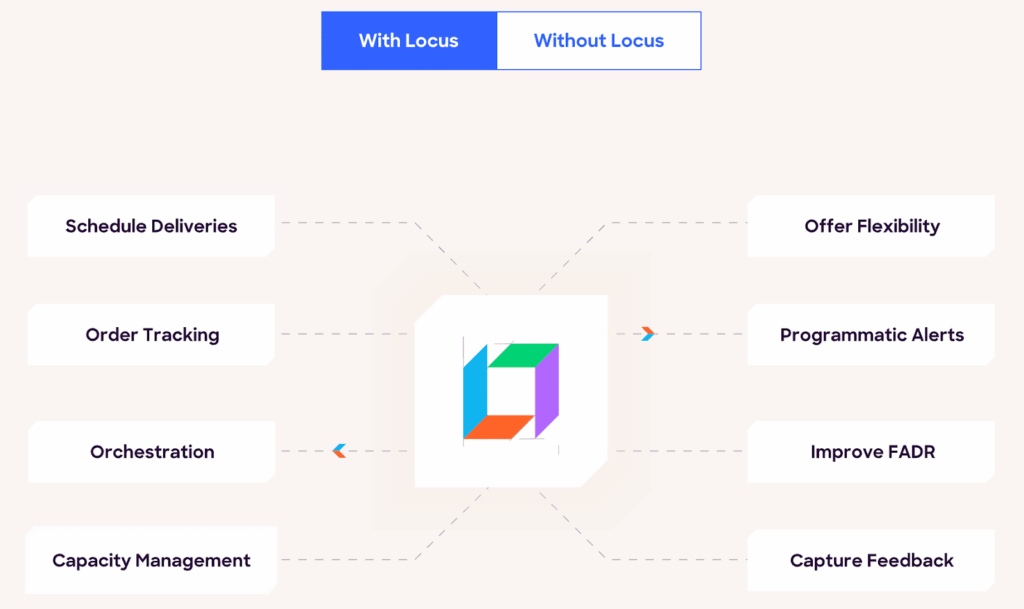
Locus brings allocation logic, routing intelligence, carrier orchestration, and real-time performance monitoring into one execution layer. Instead of managing each stage separately, enterprise teams manage fulfillment as a connected system.
If your priority is consistent service levels, controlled logistics costs, and standardized execution across distributed retail networks, Locus provides the orchestration framework to support that scale.
Book a demo with Locus to evaluate how centralized orchestration can improve delivery performance and cost control across your retail network.
Frequently Asked Questions (FAQs)
1. How long does it take to implement retail logistics software in an enterprise network?
Implementation timelines vary depending on system complexity, integrations, and regional scope. For multi-node retail networks, deployment typically includes integration with retail inventory systems, order management platforms, warehouse systems, and carrier partners. Phased rollouts are common to minimize operational disruption.
2. Can retail logistics software integrate with existing ERP and warehouse systems?
Yes. Enterprise-grade retail logistics software is designed to integrate with ERP platforms, warehouse management systems, carrier APIs, and order management tools. The goal is not to replace core systems but to orchestrate fulfillment decisions across them through a centralized execution layer.
3. How does retail logistics software support demand forecasting and inventory optimization?
While demand forecasting and multi-echelon inventory optimization are often managed through planning systems, retail logistics software uses those signals to guide execution. It ensures allocation and routing decisions align with forecast-driven inventory positioning and regional service commitments.
4. Is retail logistics software suitable for omnichannel retail models?
Yes. Omnichannel retail environments require coordination across ship-from-store, curbside pickup, home delivery, and marketplace fulfillment. Retail logistics software supports these models by standardizing how orders are allocated and executed across different fulfillment paths.
5. How do retailers measure ROI from retail logistics software?
Return on investment is typically evaluated through improved SLA adherence, reduced last-mile costs, optimized carrier utilization, better inventory allocation accuracy, and improved operational visibility. Enterprise retailers often track both cost efficiency and service reliability metrics post-implementation.


AI in Action at Locus
Understanding AI for Retail Logistics: Use Cases, Benefits, and Challenges

Mar 3, 2026
AI for retail logistics improves routing, inventory, and dispatch. Learn benefits, use cases, ROI, and how to get started.
Read more
Retail & CPG
A Complete Guide on Retail Logistics Management
Mar 4, 2026
Retail logistics management guide covering distribution strategy, execution flows, KPIs, and technology to improve cost control and delivery performance.
Read moreInsights Worth Your Time




















6 Retail Logistics Software for Enterprise Networks in 2026