


General
Real-Time Delivery Tracking: What Customers Expect and How to Deliver It
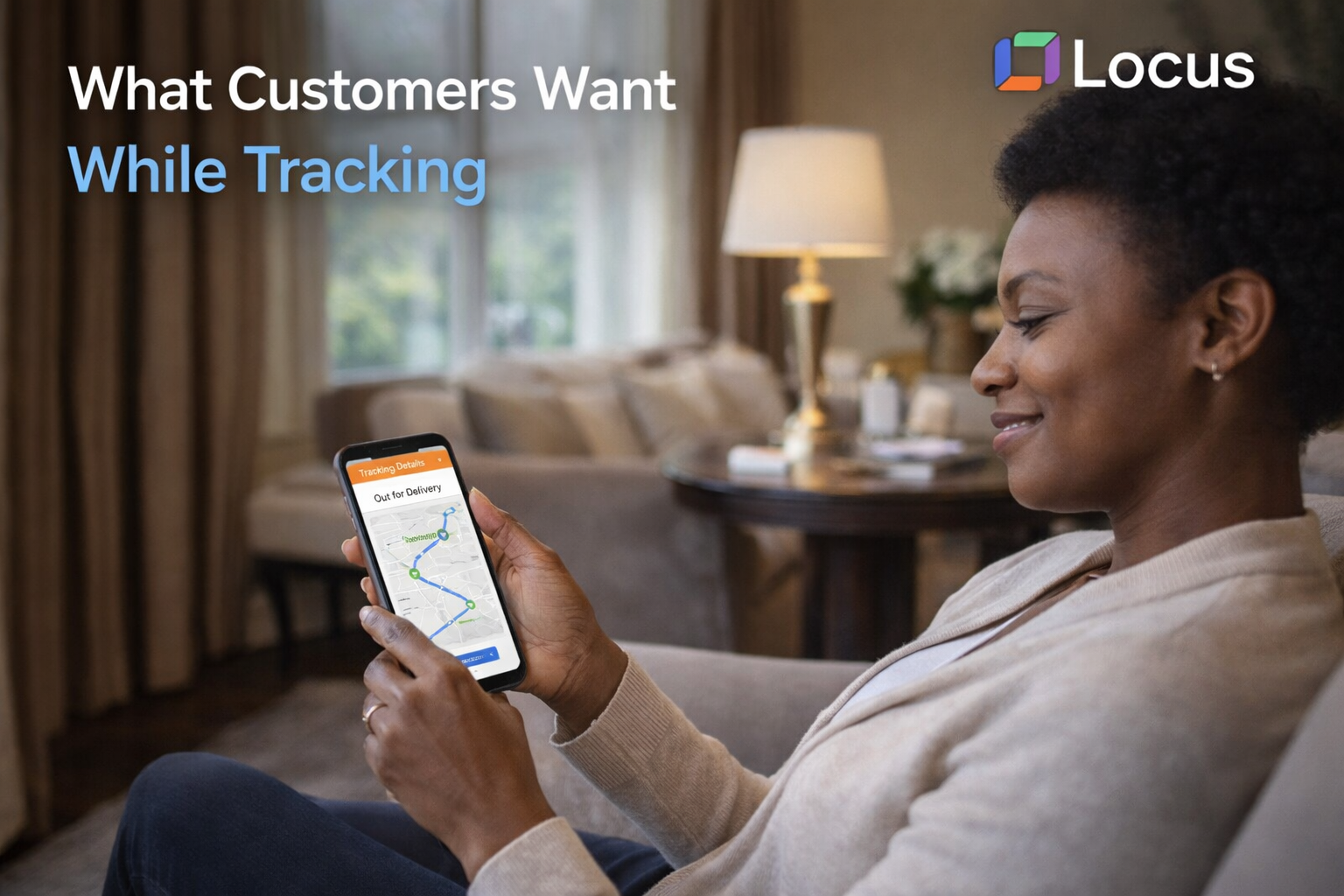
Your customers expect to know exactly where their delivery is at every moment. Not in 30 minutes. Not when the driver calls. In real time.
This expectation is no longer aspirational—it is the operating standard for 2026. When customers can track their ride-hailing vehicle on a live map or watch a food delivery approach their door, static delivery windows and vague “out for delivery” updates are insufficient for today’s enterprise customers. The delivery tracking platform market, valued at USD 11.3 billion in 2025, continues to accelerate as enterprises across retail, e-commerce, FMCG, and 3PL invest in live visibility capabilities.
For logistics operations leaders, real-time delivery tracking is no longer a customer experience initiative alone. It is a lever for reducing operational costs, cutting WISMO (Where Is My Order) call volume, and maintaining competitive advantage in markets where 63% of consumers consider full visibility throughout the delivery process to be essential. Meanwhile, 70% of consumers now use live tracking for last-minute flexibility—proving that tracking directly shapes how customers plan their day around deliveries.
Key Takeaways
- Real-time delivery tracking is a baseline expectation. Driven by ride-hailing and food delivery experiences, 70% of consumers now use live tracking for last-minute flexibility, making static delivery windows obsolete.
- Lack of real-time visibility directly increases costs. Without live tracking, enterprises face elevated WISMO queries, higher customer service expenses, and increased failed delivery attempts.
- Best-in-class tracking combines three capabilities: live location updates, dynamic ETAs, and proactive notifications—improving delivery success and customer trust simultaneously.
- Operational gains are measurable. Companies implementing comprehensive tracking report 40–60% reductions in delivery-related support inquiries, lower redelivery costs, and improved driver accountability.
- Multi-carrier orchestration is the enterprise differentiator. Unified visibility across internal fleets, 3PL providers, and on-demand carriers creates competitive advantage in industries where the retail sector alone holds 28.0% of delivery tracking platform revenue.
- The market is growing rapidly. The live package tracking market reached US$ 4.92 billion in 2025, and the US shipment tracking platform market hit USD 837.9 million—signalling sustained enterprise investment through 2026 and beyond.
Editorial Methodology
This article is written for enterprise logistics leaders and supply chain decision-makers responsible for delivery operations at scale. Our analysis draws on:
- Published market data from Future Market Insights, Coherent Market Insights, Global Market Insights, and ParcelPerform.
- Consumer behaviour research from Bettermile’s Last Mile Delivery Experience Study 2025 and Sifted’s 2025 Consumer Survey.
- Operational benchmarks from enterprise deployments across retail, e-commerce, FMCG, and 3PL sectors.
- Technical architecture evaluation criteria based on API-first integration, multi-carrier orchestration, and scalable infrastructure requirements.
All statistics are hyperlinked to their primary sources. Recommendations reflect enterprise-grade requirements rather than SMB or consumer-only use cases.
The Real-Time Tracking Expectation Gap
The gap between customer expectations and delivery reality creates measurable business problems. Companies without live tracking capabilities report significantly higher customer service call volumes during peak delivery periods. Support teams spend hours answering “where is my order” questions that real-time tracking eliminates automatically—a burden compounded when 63% of consumers consider full delivery visibility essential and expect it as standard.
Customers in 2026 expect three core tracking capabilities:
Live location updates showing actual driver position, not estimated delivery windows. When customers see a delivery vehicle moving toward their location on a map, they stay engaged and available for delivery. This capability mirrors the GPS-driven map views now standard in consumer platforms like ride-hailing apps and food delivery services.
Proactive delivery notifications that arrive before problems occur. Customers expect to know about delays before they happen, not after they have waited at home for hours. SMS and email alerts at key milestones—dispatch, en route, 15 minutes away—reduce anxiety and prevent unnecessary support contacts.
Accurate time estimates that update based on real conditions. Static delivery windows lose credibility when traffic, weather, or route changes affect actual arrival times. Dynamic ETAs that recalculate in real time based on current driver progress and road conditions are now the minimum standard.
Without these capabilities, delivery operations face predictable consequences: higher redelivery rates, increased customer service costs, and lost customer trust that directly affects future purchase behaviour. The US first-attempt delivery success rate reached 99.22% in Q2 2025, demonstrating that leading operators already achieve near-perfect performance—setting the benchmark competitors must match.
What Best-in-Class Real-Time Tracking Looks Like
The most effective real-time tracking systems share specific characteristics that separate them from basic tracking implementations.
Granular Location Accuracy
Best-in-class tracking updates customer-facing maps every 30–60 seconds with actual driver location. This frequency provides smooth map movement without overwhelming mobile data usage or battery drain on driver devices.
Your customers see delivery progress in real time, building confidence that their order is actually en route. This visibility reduces anxiety-driven customer service calls and keeps customers available for delivery—directly improving first-attempt success rates.
Intelligent Delivery Predictions
Advanced tracking systems calculate dynamic ETAs based on current traffic conditions, driver behaviour patterns, and historical delivery data for specific routes. These predictions update automatically as conditions change—a capability that becomes essential when 70% of consumers use live tracking to make last-minute plans around their delivery.
Instead of promising “delivery between 2–6 PM,” customers receive updates like “arriving in 12 minutes” that adjust based on actual progress. This precision reduces failed delivery attempts and improves customer satisfaction scores. Enterprises that pair dynamic ETAs with route optimization further tighten delivery windows and improve prediction accuracy.
Branded Customer Experience
Enterprise tracking platforms provide white-labelled customer tracking pages that match your brand identity. Customers access tracking through your website or mobile app, not generic third-party tracking portals.
This branded experience reinforces your company’s delivery capability and keeps customers engaged with your platform rather than redirecting them to external tracking sites. For enterprises managing last-mile delivery across multiple geographies, branded tracking ensures consistent experience regardless of carrier or region.
Exception Detection and Automated Response
Leading tracking platforms detect delivery exceptions—traffic delays, address issues, or customer unavailability—and trigger appropriate responses automatically. Customers receive immediate notifications about delays with updated delivery estimates, including photographic proof of delivery upon completion.
This exception management capability is particularly critical for enterprise operations handling thousands of daily deliveries, where manual intervention at scale is neither practical nor cost-effective.

Optimize Your Routes with Locus
Enhance efficiency and reduce costs with our advanced route optimization solutions.
The Operational Benefits of Real-Time Visibility
Real-time tracking delivers measurable operational improvements beyond customer satisfaction. Operations teams gain control tower visibility across all deliveries, carriers, and routes simultaneously—critical for enterprises managing complex multi-carrier networks.
Reduced Customer Service Volume
Companies implementing comprehensive real-time tracking report 40–60% reductions in delivery-related customer service inquiries. Customers find answers to location and timing questions through self-service tracking rather than calling support.
This reduction frees customer service teams to handle complex issues that require human intervention while reducing overall support costs. Given that the delivery tracking platform solution segment commands 64.0% of market revenue, the industry clearly prioritises software that displaces manual support workflows.
Improved On-Time Delivery Performance
Real-time visibility enables proactive delivery management. Dispatch teams identify potential delays before they impact customers and reroute drivers or adjust schedules accordingly. The US on-time delivery rate reached 98.5% in Q2 2025—a benchmark that requires real-time operational visibility to sustain at scale.
Operations managers can monitor delivery performance across multiple hubs and carriers from a single dashboard, identifying patterns that affect on-time rates and taking corrective action immediately.
Enhanced Driver Accountability
Live tracking provides objective data about driver performance, route adherence, and delivery completion times. This visibility helps identify training opportunities and recognise top-performing drivers.
Operations teams can also respond quickly to customer complaints or delivery issues with accurate location and timing data rather than relying on driver reports alone. For enterprises managing both in-house fleets and third-party carriers, this unified accountability view ensures consistent service levels across all delivery partners.
Lower Redelivery Costs
When customers receive accurate arrival notifications—particularly the “arriving in 15 minutes” alert—they are far more likely to be present and available. This directly reduces failed delivery attempts and the associated redelivery costs, which compound significantly at enterprise volume.
Technical Requirements for Enterprise Real-Time Tracking
Implementing real-time tracking at enterprise scale requires specific technical capabilities that basic tracking solutions do not provide.
API-First Architecture
Your tracking system must integrate with existing ERP, WMS, and customer communication platforms through robust APIs. Point solutions that require manual data entry or limited integration capabilities create operational bottlenecks.
Enterprise platforms provide published API documentation and support custom integrations that match your existing technology stack rather than forcing workflow changes. When evaluating platforms, assess whether the architecture supports bidirectional data flow—pushing location updates to customers while pulling order and fulfilment data from upstream systems.
Multi-Carrier Orchestration
Large operations use multiple delivery carriers—internal fleets, 3PL providers, and on-demand delivery services. Your tracking platform must aggregate location data from all carriers into unified customer-facing tracking.
This orchestration capability prevents customers from receiving different tracking experiences based on which carrier handles their delivery, maintaining consistent brand experience across your entire delivery network. In 2026, multi-carrier orchestration is the defining enterprise requirement, as fragmented visibility across carriers is one of the most common causes of WISMO escalation.
Scalable Infrastructure
Peak delivery periods test tracking system performance. Your platform must handle thousands of simultaneous location updates without degrading customer-facing tracking page performance or mobile app responsiveness.
Enterprise tracking platforms provide dedicated infrastructure that scales automatically during high-volume periods, maintaining consistent performance when your customers need tracking most. This is particularly important for retail and e-commerce operations during seasonal peaks, flash sales, and promotional events.
Real-Time Notification Engine
A modern notification engine must support SMS, email, push notifications, and WhatsApp delivery across multiple markets and languages. Notifications should be milestone-triggered (dispatch, en route, arriving, delivered) and exception-triggered (delay detected, rerouted, rescheduled).
The best platforms allow enterprises to configure notification rules per delivery type, customer segment, or carrier—ensuring that high-value orders or time-sensitive shipments receive more granular communication without overwhelming routine delivery recipients.
Industry-Specific Tracking Challenges
Real-time delivery tracking requirements vary significantly across enterprise verticals. Understanding these differences is essential for selecting the right platform.
Retail
High-volume delivery complexity during peak seasons demands tracking systems that scale without performance degradation. Retail operations manage multiple fulfilment channels—store-to-door, warehouse-to-door, and marketplace—each requiring consistent customer-facing tracking. The retail sector holds 28.0% of delivery tracking platform revenue, underscoring the sector’s outsized investment in visibility technology.
E-Commerce
Dynamic customer expectations drive the need for granular ETAs and proactive notifications. E-commerce customers compare every delivery experience against Amazon-level visibility, making real-time tracking a competitive necessity rather than a differentiator. Learn how leading retailers use advanced tracking to meet these expectations.
FMCG and CPG
Temperature-sensitive and time-critical deliveries require tracking systems that monitor not just location but delivery condition compliance. FMCG operations benefit from tracking platforms that integrate proof-of-delivery—including photographic evidence and timestamp verification—into the real-time visibility layer.
3PL and Courier
Multi-client networks demand tracking platforms that provide unified visibility while maintaining client-specific branding and notification rules. 3PL providers need white-labelled tracking pages that adapt per client, ensuring each shipper’s customers receive a branded experience despite shared carrier infrastructure.
Building Customer Trust Through Delivery Transparency
Real-time tracking builds customer trust by providing transparency into delivery operations. Customers who can see their delivery approaching are more likely to be available for delivery and more forgiving of minor delays.
Proactive Communication
The most effective tracking systems send proactive notifications at key delivery milestones: when orders leave the fulfilment centre, when drivers begin delivery routes, and when deliveries are 15 minutes away.
These communications keep customers informed without overwhelming them with excessive notifications. Customers stay engaged with the delivery process and plan their availability accordingly—a pattern that explains why 70% of consumers actively use live tracking for last-minute flexibility.
Exception Handling at Scale
Real-time tracking platforms detect delivery exceptions—traffic delays, address issues, or customer unavailability—and trigger appropriate responses automatically. Customers receive immediate notifications about delays with updated delivery estimates, reducing frustration and maintaining trust even when problems occur.
For enterprise operations, automated exception handling eliminates the need for dispatchers to manually monitor and communicate about every delay. Platforms that combine exception detection with automated customer communication and driver rerouting deliver the most significant operational efficiency gains.
Measuring Real-Time Tracking Success
Successful real-time tracking implementations show measurable improvements across multiple operational metrics. Enterprises should establish baselines before deployment and track the following KPIs:
| Metric | What to Measure | Expected Impact |
| WISMO call volume | Delivery-related support inquiries per 1,000 orders | 40–60% reduction |
| First-attempt delivery success | Percentage of deliveries completed on first attempt | Measurable improvement; US benchmark: 99.22% |
| On-time delivery rate | Percentage of deliveries within promised window | Target alignment with US benchmark: 98.5% |
| Customer satisfaction (CSAT) | Delivery experience rating | Increase when visibility and proactive communication are present |
| Redelivery rate | Percentage of orders requiring second attempt | Decrease as customers receive accurate arrival alerts |
| Dispatch efficiency | Time from order to optimised route assignment | Improvement with real-time fleet visibility |
These metrics provide a comprehensive view of tracking ROI, connecting customer experience improvements to quantifiable cost savings and operational gains.
Choosing the Right Real-Time Tracking Platform
Not all tracking solutions provide enterprise-grade capabilities. Evaluate platforms based on their ability to handle your operational complexity and scale requirements.
Look for platforms that offer unified visibility across multiple carriers and delivery methods. Your tracking system should provide consistent customer experience whether deliveries use internal fleets, third-party carriers, or mixed delivery networks.
Consider platforms with proven enterprise customer bases in retail, FMCG, e-commerce, and 3PL sectors. These platforms understand the operational requirements and integration challenges of large-scale delivery operations. Explore how to choose the right route planning software as part of your broader logistics technology evaluation.
Evaluate technical architecture carefully. API-first platforms enable flexible deployment and integration with existing systems, while monolithic solutions often require significant workflow changes.
Key evaluation criteria for 2026:
- Multi-carrier orchestration — Can the platform unify tracking data across all your carriers into a single customer-facing view?
- Branded tracking experience — Does the platform support white-labelled tracking pages that match your brand identity?
- Notification configurability — Can you customise milestone and exception notifications by delivery type, customer segment, or market?
- Scalability under peak load — Has the platform demonstrated performance stability during high-volume delivery periods?
- Integration depth — Does the platform offer published APIs with documented endpoints for ERP, WMS, OMS, and CRM integration?
- Analytics and reporting — Does the platform provide real-time operational dashboards alongside historical performance analytics?
Key Features of Enterprise Real-Time Tracking
Enterprise-grade real-time tracking platforms must deliver capabilities across three layers: customer experience, operational control, and technical infrastructure.
Customer Experience Layer
- Live GPS-based map tracking with 30–60 second refresh intervals
- Dynamic ETA recalculation based on real-time traffic and driver progress
- White-labelled tracking pages with brand-consistent design
- Multi-channel notifications (SMS, email, push, WhatsApp)
- Photographic proof of delivery and digital signature capture
Operational Control Layer
- Unified control tower dashboard across all carriers and fleets
- Real-time exception detection with automated escalation workflows
- Driver performance monitoring with route adherence scoring
- Dispatch optimisation with live rerouting capability
- Historical analytics for route and carrier performance benchmarking
Technical Infrastructure Layer
- API-first architecture with published documentation
- Multi-carrier data aggregation and normalisation
- Auto-scaling infrastructure for peak volume resilience
- Webhook support for real-time event-driven integrations
- Enterprise-grade security with SOC 2 and ISO compliance
Why Locus for Real-Time Delivery Tracking
Locus provides enterprise-grade real-time tracking as part of a unified logistics optimisation platform designed for the operational complexity of retail, e-commerce, FMCG, and 3PL enterprises.
- Unified multi-carrier real-time tracking — A single visibility layer across in-house fleets, third-party logistics providers, and on-demand carriers, ensuring consistent customer experience regardless of delivery partner.
- API-first integration with any ERP/WMS — Flexible architecture that connects with your existing technology stack without forcing workflow changes, supporting bidirectional data flow across systems.
- Proven results at enterprise scale — 360+ enterprise clients with 1.5 billion+ deliveries optimised, demonstrating platform reliability under real-world operational conditions.
- Recognised by Gartner — Locus has been acknowledged as a logistics technology innovator, validating its approach to combining real-time tracking with route optimisation and dispatch intelligence.
- End-to-end delivery experience management — Real-time tracking integrated with route optimization, dynamic dispatch, and automated customer communication—eliminating the need for fragmented point solutions.
“With Locus, we reduced WISMO calls by 70% and improved first-attempt delivery rates across all our retail locations.” — Enterprise retail client
See Locus Real-Time Tracking in Action
Transform your logistics operations with cutting-edge real-time tracking, route optimisation, and unified multi-carrier visibility—purpose-built for enterprise scale.
The Future of Delivery Visibility
Real-time tracking continues evolving beyond basic location updates. In 2026, advanced platforms provide predictive delivery analytics powered by machine learning, automated multi-channel customer communication, and integrated delivery experience management that connects tracking data with customer satisfaction outcomes.
The most sophisticated operations treat delivery tracking as part of a broader customer experience strategy, not merely operational visibility. Tracking capabilities directly impact customer retention, repeat purchase rates, and competitive positioning—particularly in sectors where delivery experience influences purchasing decisions.
Companies that implement comprehensive real-time tracking gain sustainable advantages. Your customers remember delivery experiences long after they forget product prices. The enterprises investing now—across the USD 11.3 billion delivery tracking platform market—are building the operational foundations that will define logistics competitiveness through the rest of the decade.
Summary and Next Steps
Real-time delivery tracking has moved from optional feature to operational necessity for enterprises in retail, e-commerce, FMCG, and 3PL. Customers expect live visibility into delivery progress—63% consider it essential—and operations teams need unified control tower visibility to manage complex multi-carrier networks effectively.
The question is not whether to implement real-time tracking. It is how quickly you can deploy capabilities that match customer expectations while supporting your operational requirements at scale.
Enterprise-grade tracking platforms like Locus provide the technical foundation—API-first architecture, multi-carrier orchestration, and proven scalability—needed to deliver exceptional customer experiences while driving measurable operational efficiency. Your delivery operations deserve tracking capabilities that match the complexity and scale of your business.
FAQs: Real-Time Delivery Tracking
What is real-time delivery tracking?
Real-time delivery tracking monitors the live location, status, and estimated time of arrival of a package or shipment in transit. It uses GPS data from driver devices or carrier systems to provide continuous updates—typically refreshing every 30–60 seconds on a customer-facing map. Aggregator platforms and enterprise solutions consolidate tracking data across multiple carriers, giving both customers and operations teams a unified view of delivery progress.
Why is real-time delivery tracking important in logistics?
Real-time delivery tracking improves customer experience, reduces WISMO inquiries, and enables proactive issue resolution. It also helps operations teams manage deliveries more efficiently and improve on-time performance. With 63% of consumers considering full delivery visibility essential, enterprises without live tracking capabilities face higher support costs and lower customer retention.
How does real-time tracking reduce WISMO tickets?
Real-time tracking reduces WISMO (Where Is My Order) tickets by giving customers instant access to delivery status, live location, and dynamic ETA updates through self-service tracking pages. This eliminates the need for customers to contact support for basic order information. Companies implementing comprehensive tracking report 40–60% reductions in delivery-related customer service inquiries.
What features should an enterprise real-time tracking system have?
A modern enterprise tracking system should include live GPS location updates, dynamic ETA recalculation, proactive multi-channel notifications (SMS, email, push, WhatsApp), white-labelled branded tracking pages, and photographic proof of delivery. It must also integrate with multiple carriers through API-first architecture and provide unified control tower visibility for operations teams.
How does real-time tracking improve delivery success rates?
Real-time tracking improves delivery success by keeping customers informed about precise arrival times and enabling them to be available for delivery. Accurate ETAs and proactive “arriving in 15 minutes” alerts reduce missed deliveries. The US first-attempt delivery success rate reached 99.22% in Q2 2025, demonstrating the impact of visibility on delivery completion.
What is multi-carrier tracking in logistics?
Multi-carrier tracking refers to the ability to track deliveries across different carriers—such as in-house fleets, 3PL providers, and on-demand services—through a single unified platform. This ensures customers receive consistent tracking experiences regardless of which carrier handles their delivery, and operations teams maintain visibility across the entire delivery network from one dashboard.
What are the operational benefits of real-time visibility?
Real-time visibility reduces customer service workload (40–60% fewer delivery inquiries), improves dispatch efficiency through proactive delay detection and rerouting, enhances driver accountability with objective performance data, and enables data-driven decision-making across delivery operations. These benefits translate directly into lower costs per delivery and higher customer satisfaction scores.
How can enterprises implement real-time delivery tracking?
Enterprises can implement real-time tracking by adopting platforms with API-first architecture that integrate with existing ERP, WMS, and OMS systems. The platform must support multi-carrier data aggregation, auto-scaling infrastructure for peak volumes, and configurable notification engines. Begin by establishing baseline metrics for WISMO volume, first-attempt delivery rate, and on-time performance, then select a platform with proven enterprise deployments in your sector.
How does real-time tracking impact customer loyalty and retention?
Delivery experience directly influences repeat purchase behaviour. When 70% of consumers use live tracking for last-minute flexibility, tracking quality becomes a competitive differentiator—not just a support tool. Enterprises that provide transparent, branded, and proactive delivery communication build stronger customer relationships and reduce churn driven by poor post-purchase experience.
What is the market size for delivery tracking platforms?
The delivery tracking platform market was valued at USD 11.3 billion in 2025, with the solution segment commanding 64.0% of revenue. The live package tracking market reached US$ 4.92 billion, and the US shipment tracking platform market hit USD 837.9 million. These figures confirm sustained enterprise investment in real-time visibility technology through 2026 and beyond.


General
MODEX 2026 Preview: The Supply Chain Technologies That Will Define the Next Decade

Apr 8, 2026
Explore key supply chain technologies at MODEX 2026, including agentic AI, cloud TMS, robotics, and real-time visibility shaping future logistics.
Read more
General
How Enterprise E-Commerce Teams Win Peak Season Logistics Without Operational Breakdown

Apr 9, 2026
Learn how enterprise e-commerce teams use AI dispatch, demand forecasting, and route optimization to scale peak season logistics without breaking operations.
Read moreInsights Worth Your Time



















Real-Time Delivery Tracking: What Customers Expect and How to Deliver It