


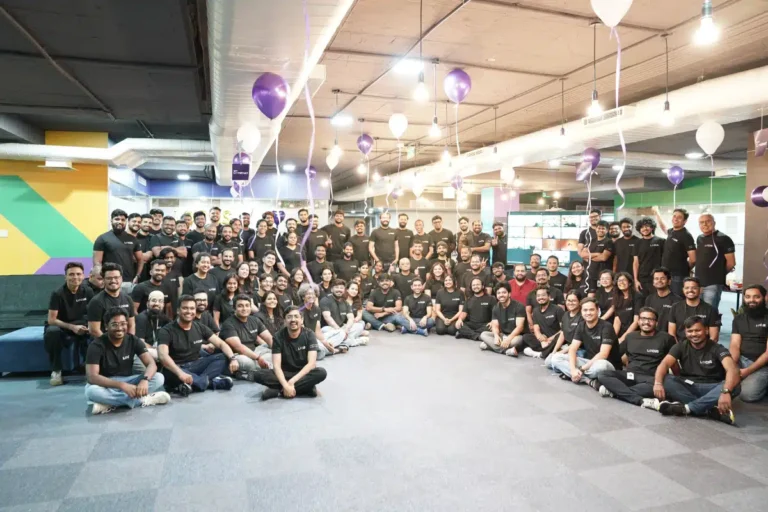
Our First Steps to Perpetuity

Last updated:
Locus is joining Ingka (IKEA Retail) while remaining independent: same team and roadmap, more resources to build an agentic TMS for all miles, all channels.
Read moreLocus latest blogs

Route Optimisation Emission Factors in 2026: Why the Factor You Choose Moves the Number More Than the Route You Plan
Applying UK government conversion factors to one identical distribution operation produces reported emissions ranging across 69%, depending only on legitimate methodology choices. Route optimisation moves the same number by around 21%.

Last updated:

Modal Shift Emissions in 2026: Why the Break-Even Lane is Shorter Than You Think
Using UK government conversion factors, the lane distance at which shifting freight to rail starts cutting emissions is roughly one to two times the drayage distance, a lower bar than a minimum-distance rule written for cost and transit time.

Last updated:

Route Optimisation Emissions in 2026: Why Efficiency is a Stock, Not a Rate
Routing headroom is finite and measurable. Modelling puts it near 21%, which holds absolute emissions flat only up to about 4% annual growth, and extracting it faster does not help because the stock binds rather than the rate.

Last updated:

Cost Versus Carbon in 2026: The Exchange Rate Your TMS Uses When They Disagree
Every TMS claims to optimise cost and carbon together. Modelling 200 operating days shows they agree most of the time and diverge sharply on a few, and the price you put on a kilogram of CO2 swings the outcome by a factor of 791.
Last updated:

Locus vs Oracle TMS vs Descartes: Which Transportation Management System Fits Your Operating Model in 2026?
Compare Locus, Oracle TMS, and Descartes across AI architecture, scalability, integrations, and execution capabilities to find the right transportation management platform for your operating model in 2026.

Last updated:

Delivery Handoffs & First-Time Assembly: The Customer Experience Gap in Furniture Logistics
Learn how proactive delivery communications and dynamic assembly scheduling close the two-hour handoff gap, eliminate failed drops, and protect brand reputation in big-and-bulky logistics.
Last updated:

Crew Pairing & Location Intelligence: The Last-Mile Equation for Furniture Delivery
Discover how dynamic two-person crew pairing and building-level location intelligence eliminate doorstep failures, lower labor costs, and protect CSAT in big-and-bulky furniture distribution.
Last updated:

Direct Store Delivery (DSD) Optimization: From Static Beat Plans to Dynamic Dispatch
Discover how FMCG and CPG distributors modernize Direct Store Delivery (DSD). Learn how dynamic beat planning, real-time re-routing, and constraint-aware dispatch protect retail margins.
Last updated:
Insights Worth Your Time

















